Márquez offers a vivid picture of Colombia’s twentieth century culture in “One Hundred Years of Solitude” but to this reviewer his failure to address Colombia’s lucrative cultural and world’ damaging drug industry is disappointing.
Books of Interest Website: chetyarbrough.blog
One Hundred Years of Solitude
By: Gabriel García Márquez
Narrated By: John Lee
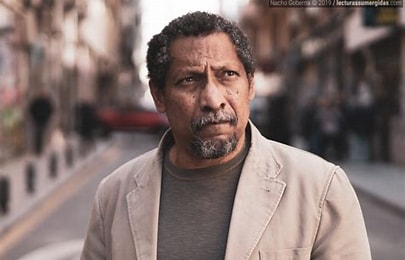
Gabriel García Márquez,(Author, Colombian writer and journalist.)
“One Hundred Years of Solitude” is a fictional representation of the early history and 20th century modernization of Colombia. Those who are not particularly interested in Colombia’s history will listen/read Gabriel García Márquez’sstory because of the author’s skillful storytelling and the intimacies of Colombian culture, its political turmoil, violence during a civil war, and its consequent growth as a modern nation. In some ways it is like the story of America.
Márquez begins his book with the founding of Macondo, a fictional name for a village during the colonial period when the Spanish settled Colombia. Beginning as a small town, Macondo grows to become a city. Macondo represents the journey from isolation as a small town to a city that becomes a part of a vibrant South American country.
Macondo, a fictional village in Colombia.
The modernization of Colombia is addressed with the arrival of the railroad in Macondo that illustrates industrialization and the advance of Colombia’s economy. Macondo becomes a banana producing community that wrestles with the consequences of a civil war, unionization, and a growing economy. The brutality of industrialization is exemplified by the Colombian army’s killing of striking banana plantation workers in 1928. Of course, this is not unlike America’s 1932 Detroit’ Ford manufacturing plant killing of four workers by security guards and the Michigan police.
Colombia’s 50-year long civil war.
Colombia’s growth as a nation evolves with a mid-twentieth century civil war between liberals and conservatives. Márquez creates characters representing both sides of the civil war and their personal, as well as military lives. As is true of all wars, many innocents, as well as participant citizens, are indiscriminately and violently killed. Undoubtedly, a part of what makes the author’s story appealing to listener/readers is the sexuality of his characters. Sex in the novel ranges from close relatives’ intimacy to older women seductions of young men and young men’s seductions of both older and younger women, some of which are incestuous.
Colombian drug cartels are not addressed in Márquez’s story.
Márquez offers a vivid picture of Colombia’s twentieth century culture in “One Hundred Years of Solitude” but to this reviewer his failure to address Colombia’s lucrative cultural and world’ damaging drug industry is disappointing.
On the other hand, what author would want to take the risk of reporting on an industry noted for murdering those who expose its workings?
Paulette Giles offers a story of America’s unique racial, ethnic, religious and experiential culture.
Books of Interest Website: chetyarbrough.blog
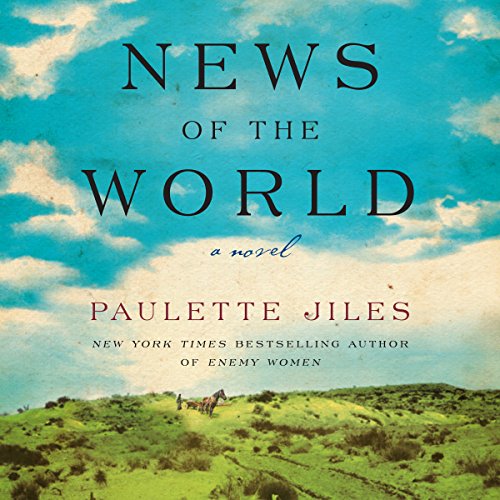
News of the World (A Novel)
By: Paulette Jiles
Narrated By: Grover Gardner
Paulette Jiles (Author, poet, finalist for the National Book Award for “News of the World”)
“News of the World” is a story of a young German American girl abducted by Indians in the 1860s, near San Antonio, Texas. She is recovered by a 71-year-old veteran of the Civil War. The author’s contextual research is impressive. Having personally lived in Texas for several years and knowing there is a small Texas town north of San Antonio with a large German ancestral population,”News of the World” becomes immediately credible.
Jiles fictional story is about a young white girl who is 10 years old when she is recovered from an Indian tribe by a Civil War veteran.
The young girl was abducted when she was six. Her four years of captivity were in the formative years of life. She successfully adapts to her tribal environment but does not completely lose knowledge of her younger past. Jiles hero is a Texas oldster who travels the country making a living as a reader of newspapers to citizens interested in news of the world. Many American citizens did not have the money, or the education, to read news of the world. To have that news read to them became an entertainment for many willing to pay a penny, a dime, or as much as a quarter. The former veteran, as an officer in the Rebel army during the war is well educated with experience of combat during the Civil War. That combat experience becomes important in the return of the captive to her German immigrant family.
A bounty of $50 is offered for return of the abducted girl.
The veteran takes the job. Jiles writing is excellent, but the narration of Grover Gardner gives the story an extra level of interest. Experience of life is a trial by fire for most human beings. Imagine being abducted from your family at the age of six by a culture different than your own and how traumatic it would be but how life expanding it could become. This six-year-old represents the melting pot of America. Jiles creates a fictional representative of three cultures, i.e. German, Indian, and pioneer that influences the melding of American culture.
Though Giles may not have meant to illustrate the melding of cultures by her entertaining story, much of what American culture represents is an amalgam of older cultures.
America’s Civil War, the Indian wars, and living life makes American culture unique. Every nation is made up of different races, ethnicities, religions, and experiences that make them unique. Paulette Giles offers a story of America’s unique racial, ethnic, religious and experiential culture.
“The Nightengale” is a story that shows how occupation begins, how occupation fails, and why it’s tragic economic and human costs never end. Occupation is not an answer for Russia’s war on Ukraine or Israel’s war on Palestine. Occupation is only war by other means.
Books of Interest Website: chetyarbrough.blog
The Nightingale
By: Kristin Hannah
Narrated By: Polly Stone
Kristin Hannah (Author)
History offers an opportunity to recognize mistakes of the past. Fiction offers tests for a future yet to be realized. The experience of history and written fiction offer behavioral change that can alter the future. However, the difficulty of future change is in understanding history and the limits of testing behavioral recommendations. “The Nightingale” is historical fiction.
Importantly, it offers relevance to today’s war in Ukraine and Israel’s actions in the Middle East.
Kristin Hannah creates a French family during Germany’s occupation of France during WWII. The story begins with an elderly woman nearing the end of her life who climbs the stairs into her attic to pull out an old chest filled with memories of her life in France. Isabelle Rossignol is a fictional character who joins the resistance. Isabelle’s experience is a lesson to the world about occupation of foreign countries by others, whether democratic or authoritarian.
“The Nightingale” is about the French reaction to Nazi Germany’s occupation of France during WWII. Germany’s occupation of France did not Nazify the French just as Putin will not Russianize Ukraine or Israel will Israelize Palestine. War is not an act of diplomacy and occupation never offers peace.
Isabelle, from a cultural perspective, is a patriot of France. She fervently believes in the sovereignty of her country just as most who have lived in any culture in which they grow to become adults. A country that tries to dominate another sovereign nation takes on a cultural and economic burden too hard to bear in perpetuity. The difficulty lies in cultural ignorance and the hardship of changing a native population that is culturally reinforced by generations of human life.
(In a recent trip to the Baltics, the dislike of Russians is palpable. Part of the tour is of the terrible Russian jails, the stories of Russian torture and murder of dissidents, and the fear that was felt by the now grown children of parents who lived during the long Russian occupation of their countries. Today the Baltics are among the most modern countries in Eastern Europe, but that accomplishment only began after their liberation from Russian occupation.)
Upon occupation of a French town in which Isabelle lives, German soldiers are billeted in local residences.
Isabelle lives in one of these residences as a teenage sister of Vianne whose French husband is alleged to be a POW in Germany. A German pilot is assigned to Vianne’s home. She has no realistic alternative to accepting the presence of a German officer in her home. He is a young man with a wife in Germany who politely explains he will be staying in their home while assigned to the Luftwaffe that occupies their town. Vianne objects but realizes she has little choice and takes the German officer into her house.
Wolfgang Beck, the German officer, speaks broken French but is able to communicate well enough to make the French family understand his demands. Isabelle, Vianne’s sister, is incensed by the intrusion and objects to his presence but realizes there is nothing she can do about it. As the story progresses, the Germans begin to exercise increasing control over the French population. The newly billeted officer at the Rossignol’ house seems respectful and apologetic as he moves into the family house.
An unspoken reason Vianne cooperates, though she has no choice, is she wishes to know the fate of her husband. A German officer might be able to find what happened to her husband.
The officer recognizes an opportunity to ingratiate himself to the family. He compiles a list of alleged POWs. Vianne finds her husband is at a particular POW camp, along with other captured combatants. The list Beck creates is an opportunity for wives, mothers, children, and girlfriends to send postcards to their loved ones. Vianne asks the German officer if he would send the postcards for wives wishing to communicate with their husbands and lovers who are now POWs. He agrees, and a strained level of cooperation is established.
As a local teacher, Vianne is asked by Officer Beck to provide a list of fellow teachers who are either Jewish or communist sympathizers.
At first, Vianne resists but eventually names names. The identified teachers mysteriously disappear from the school which is explained by known history of Nazi’ gas chambers and mass murders. Vianne belatedly realizes her error and is deeply remorseful for having given the names to the commander. She goes to a Catholic nun to explain her mistake and asks for advice. The nun treats her kindly and tells her to be careful about naming anyone that is requested by the Nazis. The nun offers advice about life being out of her control and that she should pray to God for guidance. This gives Vianne some comfort, but she recognizes her mistake while accepting the nun’s council. One thinks that was good for her but not for the missing Jews and communists. Vianne chooses to hide Jewish children from deportation as a way of compensating for her foolish mistake in listing Jewish teachers.
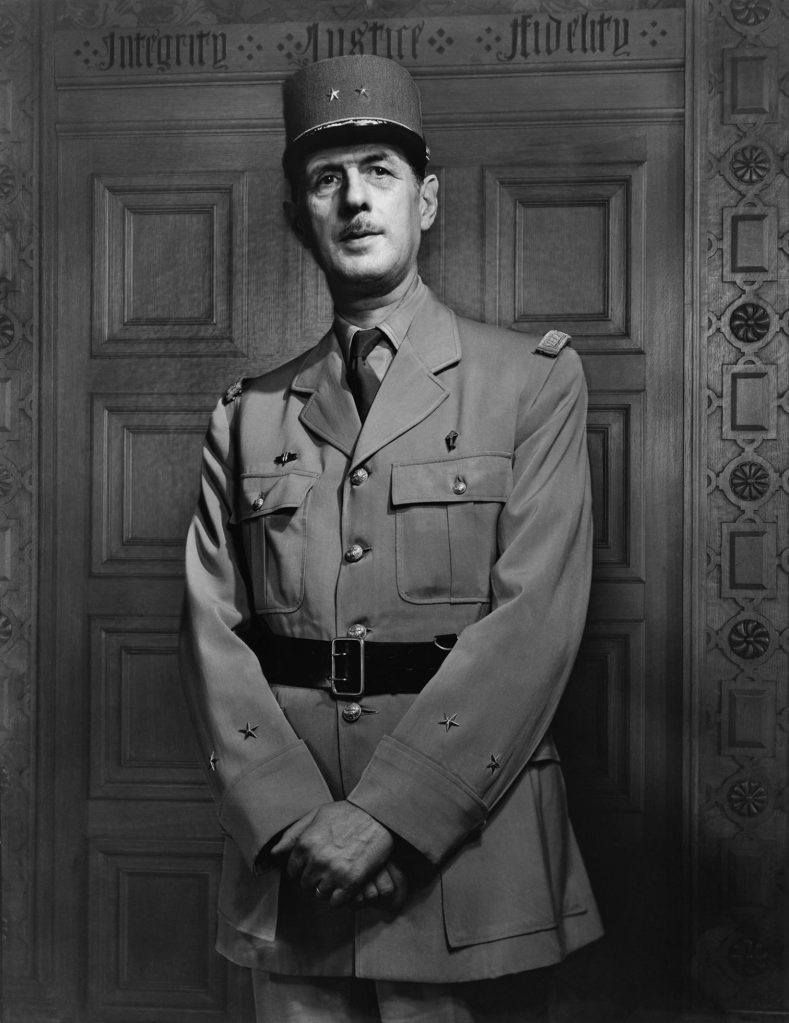
Charles de Gaulle (Leader of the Free French Forces during the Nazi occupation.)
Despite the outward appearing cooperation with German occupiers from some French citizens, there is a growing underground opposition. Isabelle becomes part of that opposition by distributing anti-German posters and aiding French resistance fighters who are wounded by German occupiers. The author offers many stories of the heroism of the French people and its underground during the war.
As the German army is nearing defeat, the brutality of the Germans in France escalates. The brutality of the story becomes numbing but gives one a clearer understanding of how humans endure under circumstances that can hardly be believed. Isabelle is caught, tortured and confesses to her identity as “The Nightingale”. She is sent to RAVENSBRüCK concentration camp. Her older sister is brutalized by her German guest who only becomes more brutal as the war nears its end. Both women survive the war in Hannah’s fictional story while reader/listeners are left to think about the brutality of war and occupation.
War and foreign countries occupation’ costs far exceed their value to either the victim’ countries or their victimizers.
So, what is the lesson of “The Nightengale”. Occupation may work for many years as it did in the Baltic countries. There are three reasons for occupation failures. One is failure to understand cultural difference, two is the rationale for one countries occupation of another, and three–the occupier’s failure to understand the real cost of occupation.
“The Nightengale” is a story that shows how occupation begins, how occupation fails, and why it’s tragic economic and human costs never end. Occupation is not an answer for Russia’s war on Ukraine or Israel’s war on Palestine. Occupation is only war by other means.
Klune’s fantasy offers no clear answer to “the best way” to raise children, but he crystalizes how important they are to the future of the world.
Books of Interest Website: chetyarbrough.blog
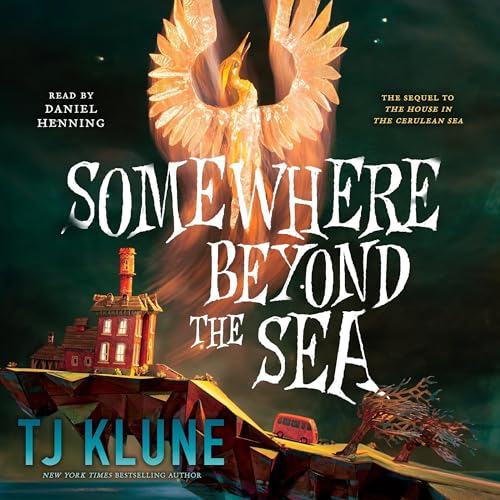
Somewhere Beyond the Sea (Cerulean Chronicles, Book 2)
By: T.J. Klune
Narrated By: Daniel Henning
T.J. Klune (Author, winner of the 2021 Mythopoeic Awards)
“Somewhere Beyond the Sea” is a wild ride by an author with an extraordinary imagination. Some listener/readers will be inclined to reject Klune’s book because its flights of imagination obscure the author’s social criticism. This is a fantasy novel offering a message about mistakes parents and society make when raising children.
One might view “Somewhere Beyond the Sea” as a simple fantasy novel about extraordinary children cared for in orphanages.
However, every parent of a child will see themselves and the mistakes they may have made in raising their children. Though science explains much of who humans become is genetically determined, the influence of parents and acquaintances affect genetic predisposition. A child may mature to become a Jesus or Hitler without human understanding of why they became the best or worst of society.
Klune’s fantasy is about an orphanage populated with magical children that have powers beyond rational belief.
They are morphological creatures with powers capable of destroying or creating reality. Being free of parental guidance and raised in an orphanage, the maturity of these children is institutionally influenced. As is true in any orphanage, or any parental home, there are good and bad management practices. As either an orphanage manager or parent, one wonders if they are making the right decisions in the way they are influencing their children.
Klune obviously believes letting children become who they are, as long as they do no harm to themselves or others, is a life goal.
That seems a fine ideal, but parents and institutions are made of humans who are trapped by personal experiences of their own that influence how they raise their children. Some are disciplinaries, others are not. Some are physical punishers of bad behavior; others believe physical punishment only releases a parent’s anger and actually reinforces bad behavior. Despite bad parenting, some children grow to become great contributors to society, regardless of how they were raised, others become criminals of every type.
Does the way we raise our children make a difference in who they become?
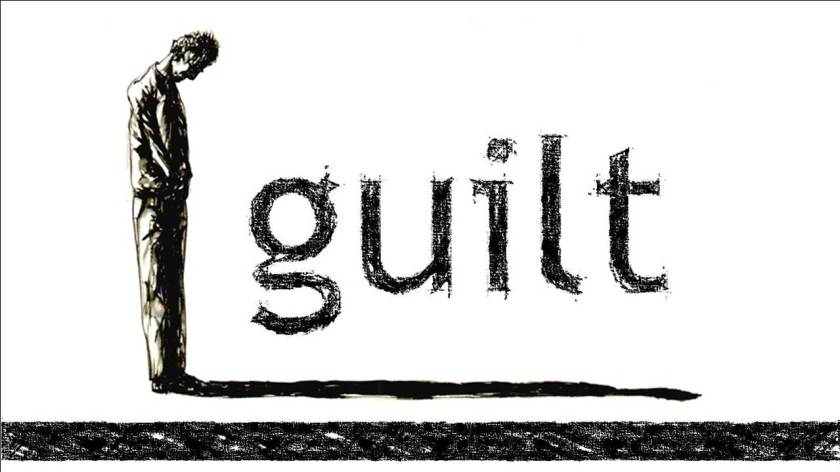
There seems no disciplinary practice that guarantees the best outcome of a child raised by either institutions or parents. This is particularly concerning to parents of children who become unhappy and choose to pursue unhealthy relationships, become drug addicts, criminals, or suicide statistics. Parents become victims of guilt. They wonder how they might have been better managers of their children’s lives, thinking that could have made the difference.
Klune’s fantasy offers no clear answer to “the best way” to raise children, but he crystalizes how important they are to the future of the world.
Is there a line that can be drawn that separates those who should be executed, incarcerated, or rehabilitated by the State?
Books of Interest Website: chetyarbrough.blog
Dark Tide (Growing Up with Ted Bundy)
By: Edna Cowell Martin, Megan Atkinson
Narrated By: Morgan Hallett
“Dark Tide” is a journey into the “Heart of Darkness”. Like Joseph Conrad’s story, Edna Cowell Martin, with the help of Megan Atkinson, tries to make sense of human madness, societal hollowness, alienation, and lies. Edna Cowell Martin is the cousin of the notorious Ted Bundy who admits to and is convicted of the murder, rape, and mutilation of 30 or more women in the 1970s. Ms. Martin is in her 70s when she finally chooses to tell the story of her cousin, Ted Bundy, who was like a brother in her family.
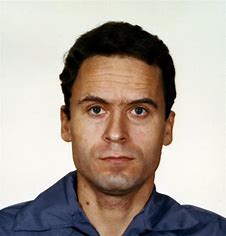
Ted Bundy (1946-1989, American serial killer.)
Bundy was an illegitimate child raised by a mother and stepfather. His mother refuses to reveal who his father was which is of little consequence except to Ted Bundy and the impact it might have had on who he became. Bundy is shown to be a bright student who graduated from the University of Washington, went to Yale to study Chinese, and became close to the Cowell family. The Cowells were an artistic family with a father who was a classical pianist who traveled the world and became a music teacher at “The College of Puget Sound” and professor emeritus and Chairman of Music at the University of Arkansas.
The author, Edna Cowell Martin, interviewed by Piers Morgan.
Despite Ms. Martin’s wide travel experience because of her father’s profession, she appears to have lived a middle-class life in the state of Washington. Many years after Ted Bundy’s execution, Martin finally writes and publishes “Dark Tide” about this American serial killer, kidnapper, and rapist. She explains the close relationship that the Cowell family had with Ted Bundy. Whether it offers any insight to the mind of such a terrible person remains a mystery.
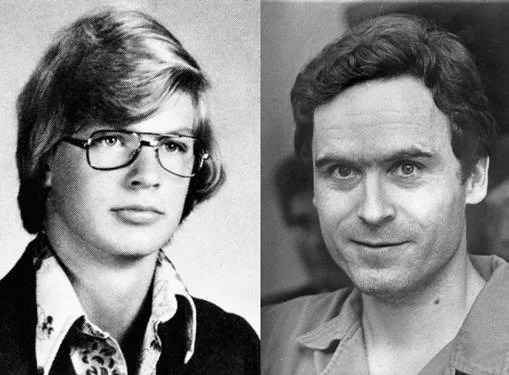
Ted Bundy at trial for murder.
Bundy appears as a relatively handsome, intelligent young man with a girlfriend and potential for becoming a successful American lawyer, businessperson, or professional. He becomes close friends with the Cowell family. When he is arrested as a murder suspect, none of the Cowells believe he is guilty. They support his release and send letters to explain why he could not be guilty of the crimes for which he is accused. Bundy is released on bail and returns as a friend to the Cowell family.
Bundy as a youth and adult.
Edna Cowell and her friends meet with Bundy after his release and gather at a local restaurant.
Bundy appears to be happy and is glad to see everyone. However, his face is recognized by strangers in the restaurant, and they ask him if he is the “Ted Bundy” in the news. Bundy’s response is unexpected. He appears delighted by the recognition and creates a scene in which he extols his notoriety. This is the first time Edna becomes suspicious of Bundy’s innocence. She does not believe he is guilty but that his glorification of association with a murderer makes her uncomfortable. Why would anyone want to be associated with such a horrible crime? Is any kind of fame okay to Bundy? This is not the person she thought she knew.
Edna keeps turning this incident over in her mind. She begins to wonder if Bundy might actually be guilty, rather than just wanting to be the center of attention.
The terrifying aspect of Edna Cowell Martin’s memoir is what does one person really know about another person? Think of all the people you know and what has happened since you first met them that changed your mind about who they are, what they believe, or what they have become, i.e. at least in your mind.
What is somewhat off-putting is that Edna Cowell Martin argues the State should not have the right to take one’s life even if they are guilty of murdering an innocent person.
Bundy killed and raped an unknown number of women. Is there justification for the State to execute someone for a heinous act that is confessed to by a perpetrator? Is it less humane to incarcerate someone for life who has confessed to a heinous crime? Are human beings, regardless of their crime, capable of being rehabilitated? Every human being is guilty of some transgression in life. Is there a line that can be drawn that separates those who should be executed, incarcerated, or rehabilitated by the State? “Dark Tide” raises all these questions in one’s mind.
The truth Everett reveals in “James” is that men and women of color are neither the same nor different than other people of the world.
Books of Interest Website: chetyarbrough.blog
James (A Novel)
By: Percival Everett
Narrated By: Dominic Hoffman
Percival Everett (Author, Distinguished Professor of English at University of Southern California, winner of the Booker Prize in 2024 for “James”.)
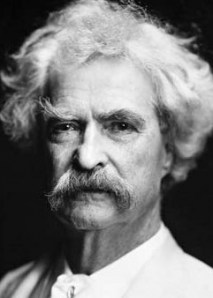
The Booker Prize is a prestigious British literary award for “…the best sustained work of fiction written in English”. The award was first created in 1969. Percival Everett’s “James” is an imaginative work well-deserved of the award. Everett recalls a version of Samuel Clemen’s (Mark Twain’s) character Huckleberry Finn and makes him a white-boy companion of a self-educated slave in the American South. The slave’s name is “James”, called Jim in Everett’s story.
Jim and his family are about to be separated with his sale to a New Orleans slave owner.
Jim finds out that he is to be sold by his owner. Jim chooses to leave the family he loves to avoid separation from his wife and daughter in Hannibal, Missouri. His hope is to reunite with his family by somehow earning enough money to buy his family from their slave owner, i.e. an unrealistic prospect considering the owner’s loss of a slave’s sale. Jim escapes on a raft to an island on the Mississippi river and comes across Huck, a young boy who also escapes to the island. Jim is acquainted with Huck from a friendship he has with Tom Sawyer who plays tricks on people in the neighborhood.
Huck is characterized as Mark Twain described him, i.e., the son of a white father who abuses him. In Jim’s escape to the island, he finds Huck’s father’s body. Huck’s father is dead. Huck is unaware of his father’s death and Jim chooses not to tell him. Huck and Jim decide to leave together on a raft. Jim leaves for obvious reasons. Huck presumably leaves with him because of his troubled relationship with a father who beats him and a mother who has been dead for years.
What is cleverly explained by Percival Everett is how Jim is a teacher to black children in his Hannibal neighborhood.
The essence of Jim’s teaching is to hide the intelligence of black people by teaching children how to hide their intelligence. Jim explains they should talk in the patois of black slang while keeping their own council, appearing respectful to their white enslavers. Everett is symbolically illustrating how slaves were the equals of their slave holders by showing they hid their innate intelligence. Everett’s hero understands the truth of slavery’s iniquity with the story of Jim’s escape and eventual triumph.
What makes Everett’s book an award winner is its pacing and descriptive events that draw reader/listeners into the history of American slavery and the advent of the Civil War.
Everett clearly shows the horror of being a slave. Men and women are beaten, raped, and murdered at the discretion of white people who believe the color-of-one’s-skin marks human beings as property, qualifies them for enslavement, and proves their inequality.
There are a number of incredible surprises at the end of Everett’s story. The Civil War has begun and the fight between North and South are made clear in Jim’s apocryphal return to Hannible with Huck. Huck’s relationship with Jim grows into something Twain never suggests.
The truth Everett reveals in “James” is that men and women of color are neither the same nor different than other people of the world. They are simply human beings.
Everett shows how powerful social interests can grow to treat powerless cultures as property and make them think and feel inferior.
The neglect and brutal treatment of Lithuanian citizens by Russia during WWII is graphically depicted in “Between Shades of Gray”.
Books of Interest Website: chetyarbrough.blog
Between Shades of Gray
By: Ruta Sepetys
Narrated By: Emily Klein
Ruta Sepetys (Author, Lithuanian American writer of fiction, daughter of a Lithuanian refugee.)
This is a novel that many Americans will choose not to read. It is so relentlessly brutal that one is inclined to stop listening to, or reading, the novel. Many Americans take freedom for granted. Sepetys’ story reveals how ignorant the generational free are about what it is like to exist in a nation ruled by an unrestricted authoritarian leader. Sepetys recreates a story from a young girl’s notes and drawings of a Lithuania family’s loss of freedom during Stalin’s authoritarian rule.
The weight of “…Shades of Gray” makes one’s heart go out to the many Ukrainians losing their freedom and lives at Vladimir Putin’s monomaniacal direction.
Sepetys makes one see and understand how fortunate Americans are to live in a democratic country. The broad outline of the story is about the rounding up of Lithuania citizens during WWII to be sent to work camps in Siberia under the control of the Russian NKVD, the precursor of today’s Russian SVR (Foreign Intelligence Service) and GRU (General Staff of the Armed Forces). At the beginning of WWII, Stalin orders the taking of the Baltic States into the U.S.S.R. by dismantling the in-place governments of the acquired countries. Any political opposition is to be arrested and deported to labor camps designed to serve the Russian economy.
Sepety’s novel is the story of one group of Lithuanians that are rounded up, sent to Siberia, and later moved to an even more hostile camp inside the Arctic Circle.
The essence of the story is based on a young girl’s notes and drawings about her experience. The neglect and brutal treatment of Lithuanian citizens by Russia during WWII is graphically depicted in “Between Shades of Gray”. The title alludes to the few Russian guards that surreptitiously aid the work camp prisoners. It is only gray because the help is often in return for cooperation or favor from the un-free.
No one can kill an idea. Ideas come from human beings who believe, rightly or wrongly, they are being victimized.
Books of Interest Website: chetyarbrough.blog
Homeland (The War on Terror in American Life)
By: Richard Beck
Narrated By: Patrick Harrison
Richard Beck (Born in 1987, received a BA from Harvard in 2009, Masters Degree in music from the University of North Texas, and Doctorate in performance and pedagogy from University of Iowa.)
On September 11, 2001, Richard Beck was 14 years old, living in a suburb of Philadelphia. In remembering life before 9/11, Beck looks at that tragedy as a reminder of life and America’s struggle to become a free and independent nation. “Homeland” uses the tragedy of 9/11 as an introduction to what might be interpreted as American Cowboyism.
Beck suggests the myth of American cowboys exemplifies who and what American society has been and will always be.
His recollection of 9/11’s news coverage is a distortion of reality. The reaction of the fire department, rather than heroic, is characterized as a matter of clean-up and ducking from falling debris and bodies, not of climbing stairs or entering buildings engulphed in fire and nearing collapse. Beck suggests like the myth of cowboys ridding America of Indian savages, expanding, and conquering the West, that firemen and rescuers did little to save workers in the towers collapse.
Beck’s history smacks of not being there but watching tv, reading echo chamber books, and listening to and watching news of the 9/11 tragedy.
Heroism is being there when the planes hit the towers, when smoke and debris were choking firefighters and police trying to cordon the area from surrounding businesses and people. This is the same fault Beck has of writing of unreasonably lionized frontiersmen and later leaders of America and the mistakes made by America’s leaders in the Civil War, Korea, Vietnam, Cambodia, Iraq, Iran, and Afghanistan. Horrible things have happened in America’s history that have been caused by humans who are not gods but fallible, self-interested strivers for a better life. The meaning of life in America evolves just as it does in every country of the world. No society is proud of their failures, but failures are part of being human. Obviously, it is how we overcome failures that makes society.
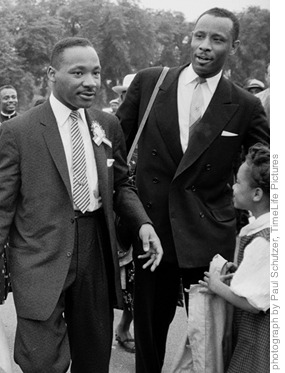
Beck’s inference that Martin Luther King’s “…arc of the moral universe is long but bends towards justice” as a false observation breaks a listener’s heart.
Many would disagree because life for native Americans, women, non-white minorities, and the white majority have improved over the years since the founding of American democracy. This is not to say, there are not miles to go for America to realize equality-of-opportunity for all its citizens.
Beck uses the great tragedy of Gaza and Israel’s occupation and murder of innocents as a primary example of American Democracy’s failure.
There is little to argue that Israel is crossing a Rubicon of regret for their slaughter of Palestinians in Gaza. Palestine has as much right to exist as the nation of Israel.
America’s position has been to support Israel because they are a bastion against systems of government that have little to no interest in equality of opportunity for all. The author fails to appreciate America’s guilt for turning away Jewish immigrants fleeing Europe during WWII when six million Jewish people were slaughtered in concentration camps.
Beck’s history disregards and diminishes the history of Jewish ethnicity that has given so much to societies’ advance of science, literature, and political theory.
This is not to argue Israel is right in thinking that ridding Hamas or Hezbollah leaders can be accomplished with ethnic cleansing while murdering innocent bystanders. No one can kill an idea. Ideas come from human beings who believe, rightly or wrongly, they are being victimized. Israel is making the same mistake Nazi’s made when they began exterminating Jews in WWII.
Sexuality is the boon and bane of human society. The boon is human procreation. The bane is the shame visited upon human beings.
Books of Interest Website: chetyarbrough.blog
“The Mothers”
By: Brit Bennett
Narrated By: Adenrele Ojo
Brit Bennett (Author, New York Times Bestseller, graduate of Stanford University and University of Michigan.)
In one sense, “The Mothers” is about the serendipity of life. In another it is about human shaming. Brit Bennett’s book infers life’s happiness comes as much from chance as by effort. Of course, human life begins with “…Mothers” but as science explains, a part of who we are and who we become is from fathers. Bennett’s story is a view of life through the eyes of a daughter who loses her mother through suicide. The daughter’s genetic inheritance is intelligence and ambition. The daughter is born in a lower middleclass family. She lives through her high school years when her mother dies. She lives with her father and remembers her mother’s disappointment with life. Her mother’s wish for herself and daughter is to become more than what the circumstances of life seem to offer.
The main female characters of “The Mothers” are the daughter, Nadia Turner and her friend, Aubrey Evans.
The main male character is Luke Sheppard, a high school football athlete who is seriously injured in a sports accident. He is 21, living at home with his father who is a minister and his mother who manages the household and helps her husband with the ministry. Nadia is 17 and in high school. She is academically near the top of her class. Luke becomes Nadia’s boyfriend. Nadia becomes pregnant. Aubrey Evans becomes a close friend sometime after Nadia’s abortion. It is Nadia’s decision to have the abortion. Luke is ambivalent about Nadia’s decision but, with the help of Luke’s mother, $600 is given to Nadia for the abortion.
Luke leaves the decision to Nadia on the abortion but limits his involvement to giving her the required $600 fee.
Luke regrets his behavior as the father of an unborn child and his absence during and after the abortion. Nadia goes on to college at the University of Michigan after having become friends with Aubrey in high school. Nadia and Aubrey become close friends. While Nadia is going to college and seeing the world, Luke and Aubrey meet and become a couple. They eventually marry. Nadia never tells Aubrey of her relationship with Luke or the abortion.
Once listeners become acquainted with the three main characters, human shaming takes over the story.
Every major and minor character shames themselves and others by their acts or ignorance. Both mothers and fathers are guilty, but the author infers mothers are the most shaming. Mothers shame children rather than try to understand and guide their human nature.
Human sexuality dominates lives whether male or female, young, middle aged, or old.
The story is well written, but its theme misses the mark. Mothers and fathers (all humans) are equally blame-worthy when it comes to shaming. Sexuality is the boon and bane of human society. The boon is human procreation. The bane is the shame visited upon human beings. Bennett’s characters show there is plenty of shame to go around. Shaming is popular which explains why Bennett’s book became a bestseller.
Alcohol consumption in Russia and a penchant for autocratic government are long-standing societal truths.
Books of Interest Website: chetyarbrough.blog
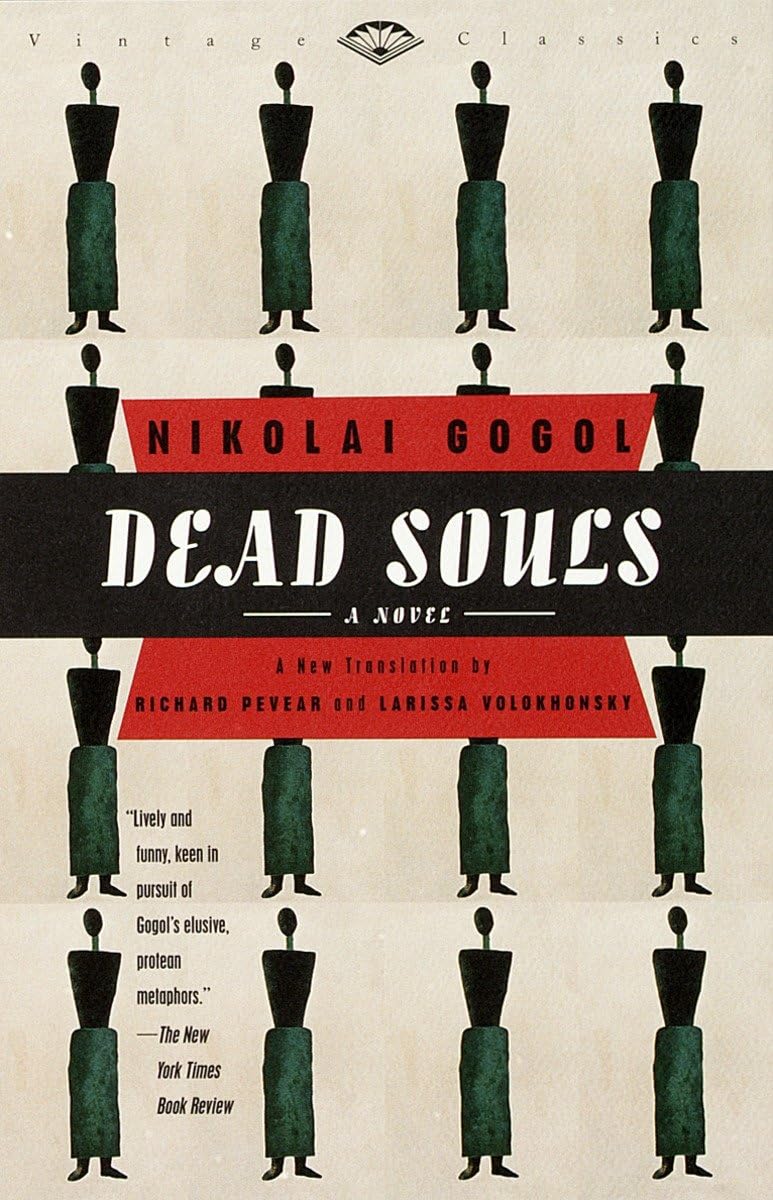
“Dead Souls”
By: Nikolai Gogol
Translated By: Richad Pevear and Larissa Volokhonsky
Nikolai Gogol (1809-1852, Ukranian novelist born in the Russian Empire, short story writer, and playwright.)
“Dead Souls” is not an enjoyable listening experience. Partly, because it is not a completed book. However, it is an insightful examination of a Russian culture in decline. It is an incomplete novel with its main character, Pavel Ivanovich Chichikov, who uses his looks, intelligence, and guile to appear prosperous in a society of rich and poor.
Agriculture is the economic foundation of society in mid-19th century Russia. The industrial revolution is at its beginning.
As a clerk in the government, Chichikov is familiar with government policy of charging a tax for deceased peasants that are owned but have died on Russian’ landowners’ farms. Social position is associated with land and peasant worker’ ownership, i.e., the more land and peasants one owned, the higher a Russian aristocrat is esteemed. Chichikov has no land but has earned and saved enough money through his work with the government to come up with a scheme to improve his status in society. His idea is to travel the country, buy dead souls, and purchase a farm to show society he is an aristocrat of substance. By buying peasant souls and land he creates an image of wealth and aristocracy. His plan is to buy land with the money he has saved over years of work as a clerk. He assumes his position in society will be secured by land ownership and owned peasant’ souls.
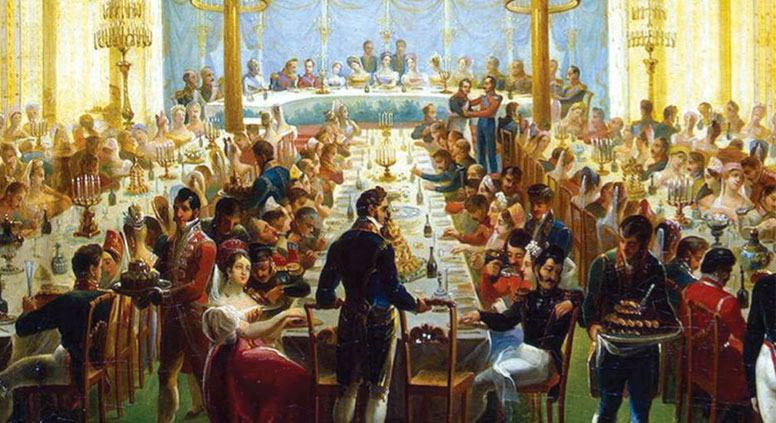
Chichikov’s false image is assumed to be true in a high society soiree.
Chichikov clownishly approaches the daughter of a regional governor because of her beauty. His attention is noticed by some of the wags at the social event. Similar to today’s social media, word spread about Chichikov’s bizarre purchase of dead souls. Rumors about Chichikov proliferate like Alex Jones spread of lies in the 2022 Uvalde school children murders.
Various stories about Chichikov’s history spread from people who were at the governor’s soiree.
Many reasons were given for Chichikov’s purchase of “Dead Souls”. One who was at the dance alleges the purchases were to show Chichikov’s intent to kidnap the daughter of the governor. Chichikov hears of these ludicrous accusations and flees the small town in which the ball had been held. In fleeing, Gogol’s story provides more examples of Chichikov’s nature and reasoning with the objective of showing the dysfunction of Russian society and its aristocratic governance.
Chichikov meets with a successful Russian farmer who capitalizes on what is known of agricultural science of that time and uses that knowledge as an aristocratic owner of many peasants who worked his land.
Chichikov persuades this prosperous farmer to lend him 10,000 rubles to finance the purchase of a failing nearby farm. However, Chichikov’s deceptions catch up with him. He is arrested and judged by a Prince of Russia who plans to make an example of him. The story obscurely ends with the prince inferring a way out of the mess Chichikov’s lies engendered. The story is never finished. Reader/listeners never learn the fate of Chichikov. The high praise of the book rests with its exposure of the societal faults of mid-ninetieth century Russia.
Every national society has strengths and weaknesses. America is as vulnerable to lies and misrepresentation as Gogol shows of Russia. The best one gets from “Dead Souls” is a vague understanding of Russian society. Alcohol consumption in Russia and a penchant for autocratic government are long-standing societal truths.











































 REVIEWS AND VIEWS OF LIFE