2 + 2 Makes 5

Audio-book Review
By Chet Yarbrough

(Blog:awalkingdelight)
Website: chetyarbrough.blog

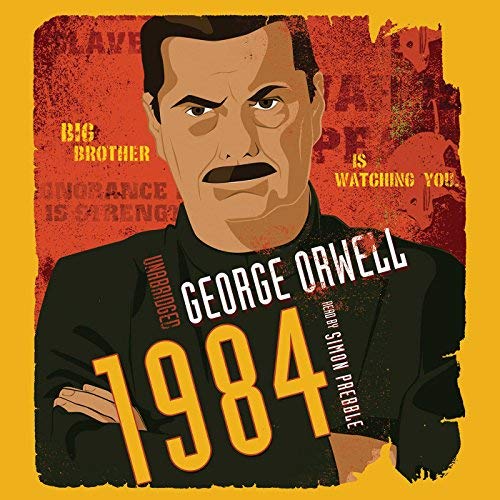
1984


By George Orwell

Narrated by Simon Prebble
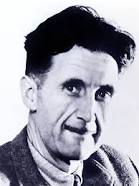
George Orwell (1903-1950, Author born in India, a British Citizen)

Orwell published “1984” in 1949.  Orwell’s vision of totalitarianism, technology, and thought-control match today’s fears and failures in America.

Technology (then and now) is a threat to everyone’s privacy and self-determination.However, technology has a much wider; more intrusive role today than in 1949

Advances in social media through Facebook, Twitter, LinkedIn, and others–with the help of Google, Amazon, and Apple, are encroaching on everyone’s right to privacy and personal thought.

Jingoism, war threats, and propaganda fill newspapers, television reports, and the Internet to influence and manipulate indigenous and exogenous populations. 

7/31/2019-China blames America for Hong Kong demonstrations.

American, Chinese, Iranian, Syrian, Russian and Turkish governments tell the world that their internal turmoil is caused by outside influences.

Truth is hidden by Trump’s divisive diversions and subversions. Trump’s dishonest attack on Georgia’s election process is his latest diversion and subversion of American Democracy.

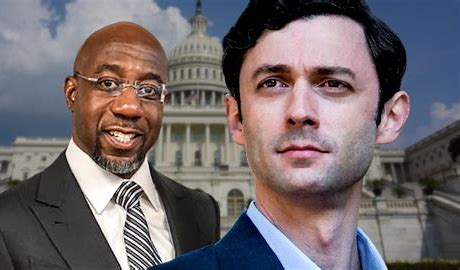
The Republican party can look to Trump to find why Georgia is now represented by two Democrats in the Senate.
Trump and Erdogan are masters of this art. As Lord Acton noted: Power corrupts and absolute power corrupts absolutely.

Today, it is gangster-ism in Ukraine; yesterday it was abandoning Kurdish allies who fought by the side of Americans in Syria; and today it is “don’t be afraid of Covid19” or Erdogan’s intervention in Armenia.

History reveals murders, imprisonment, and rigged elections caused by malignant use of the internet. Though the victim/hero of “1984” is tortured to say “2 + 2 make 5”, the use of the internet gives forum to lies and hate that make the unwary believe “2 + 2 makes 5”.

Putin’s domination of the media in Russia is quintessential Orwellian disinformation. From saying he is defending the homeland to comparing Ukraine leadership to Nazi Germany, Putin distorts the truth of his personal ambition.

Orwell’s vision of totalitarianism and population indoctrination in “1984” is more direct than today’s media manipulations. Google argues that search-engine’ clicks are meant to customize consumer searches for information, but how far is that from thought control?

The inherent subtlety of social media seduces rather than tortures people into thinking in a particular way. 

People are killed by media manipulation of the truth. Media manipulations cause conflict, but rarely cause death on a mass scale.  (Of course, it is a mass scale to the mother, father, grandparent, sibling or friend who loses someone they love.) Orwell is saying there are no ideological differences between a media-manufactured war and a real war when people die.  Is the American government out of control?

Ukrainian Airlines Crash from Iranian missile launch mistake

Orwell points to media-manufactured wars that are not really wars between nation-states. Thought diversions and public-conflict misinformation spread by the government and the media make indigenous populations endorse, obey, and follow their leaders.

Now we have the economic and health threat of Covid19. What measures must be taken to mitigate the economic destruction and death that it causes? Where is the line drawn between autocratic rule and democracy? With a President acting as king, are America’s “checks and balances” strong enough to protect volitional rights?

With arbitrary hiring and firing of critical government administrators there is reason to doubt more economic destruction and death are not inevitable.

Add private sector big data use to government sector misinformation, and individuals lose both privacy and independence.

Acquisition of nuclear weapons to foment a war is a fiction. It is a fiction designed to manipulate public opinion.

The concern over nuclear proliferation is about fear of mistakes and nuclear accidents; not nuclear war.

This is not to say nuclear proliferation is not a danger to the world. It is a danger, but more because of its use as a political weapon than a tool of war.

The fact is, nuclear accidents occur; for example, Russia’s recent nuclear-weapon’s failure in August 2019.

Iran and North Korea incite their people to expand nuclear weaponry to gain status in the world. It is not an irrational move in the real politic of public affairs. A former Israeli spy master (Meir Dagan) noted on national television that Iran’s government officials are rational; mutual nuclear destruction is not rational.

Orwell characterizes nation-state populations as three tiered; e.g. upper, middle, and lower.  The upper class conception is a ruling class that controls a nation; the middle class strives to become a part of the upper class, and the lower class (estimated at 25% in the U.S.) is suppressed by both the upper and middle class to maintain the three tiered structure. 
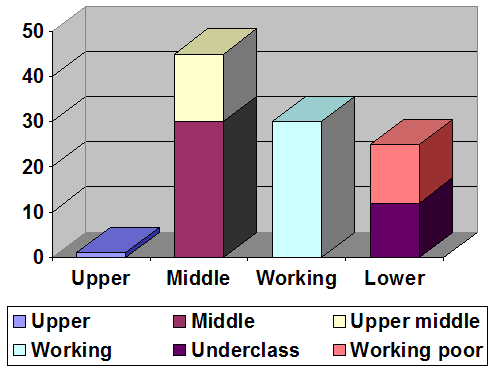
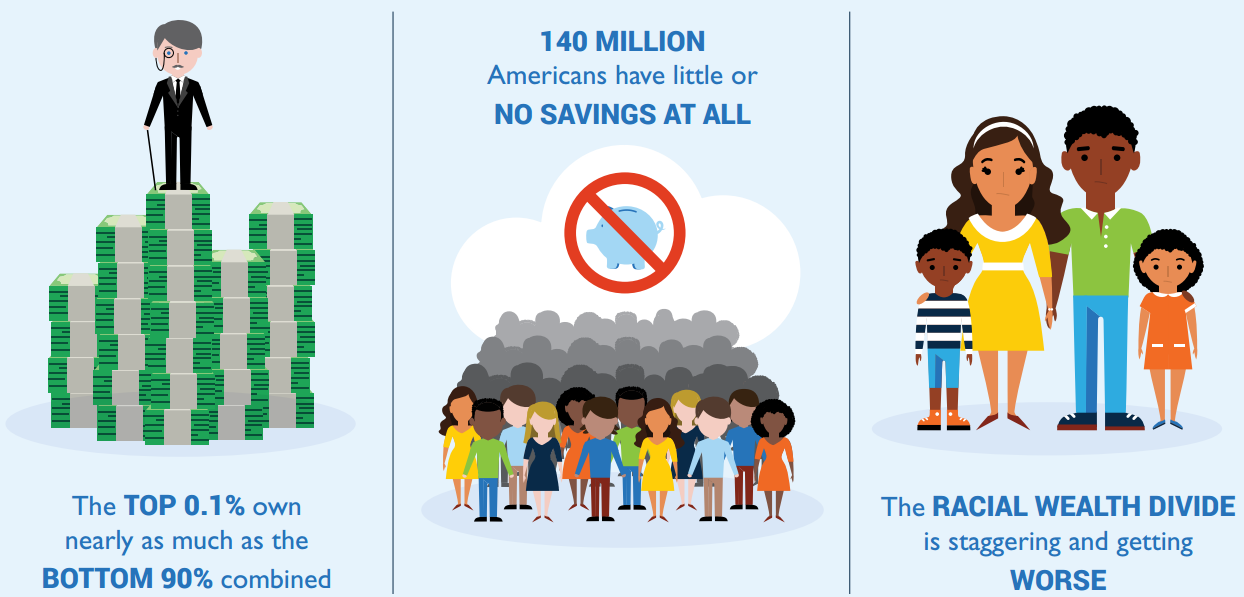
Orwell suggests the upper class becomes a kind of collective with a particular ideology that usurps capitalist ambition by trading wealth for collective power. This is the concern one has over the widening gap between rich and poor.

Piketty argues that the income gap widens once again, after World War II.  He estimates 60% of 2010’s wealth is held by less than 1% of the population; with a lean toward the historical 90% threshold. 

One might say that the “collective” concept has more relevance in a socialist country but money is power in America so Orwell’s upper class definition is equally relevant in a largely capitalist country.   The difference is a matter of degree; i.e. rather than an oligarchy of socialists, America has an oligarchy of wealthy corporations and multi-millionaires.

Today’s Moneyocracy is the upper class described in “1984” and the “Occupy Wall Street” protesters are Orwell’s revolutionary hero/victims

A striking parallel between Orwell’s “1984” and today is western culture’s 21st century “Occupy Wall Street” movement.  The “Occupy Wall Street” movement has protesters but they cannot articulate actions that can practically actualize their revolution.

All revolutionaries cannot be subverted, imprisoned, or murdered. One might argue Orwell’s “1984” torture of revolutionaries is being replaced by corporate use of private data and government propaganda to achieve the same purpose.

Orwell is as prescient today as he was in 1949.

FREEDOM OF CHOICE

Audio-book Review
By Chet Yarbrough

(Blog:awalkingdelight)
Website: chetyarbrough.blog

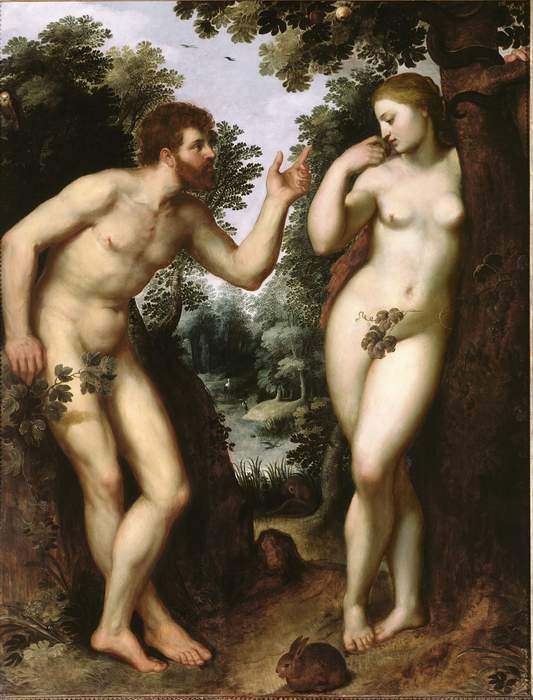
East of Eden


By John Steinbeck

Narrated by Richard Poe

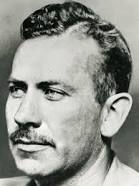
John Steinbeck (1902-1968, Author, Nobel & Pulitzer Prize Winner)

What does Steinbeck’s “East of Eden” have to do with the right to vote? It has to do with freedom of choice. Conservative’s effort to restrict a right to vote is a lie.
The Russian invasion of Ukraine in 2022 is a crisis of this moment. Putin is realizing the mistake he has made. Either through misdirection or a face-saving ploy, Putin is suggesting there be a vote to determine Ukraine’s independence. It is an international mistake not to take Putin’s vote proposal seriously. The only question should be how a plebiscite can be structured for Ukrainians in a war zone.

Now we know, Putin mocks freedom to vote with a gun pointed at your head.

“The Heritage Foundation’s database includes 1,296 ‘proven instances of voter fraud’ out of the hundreds of millions of votes cast going back to 1992. Of those cases identified, 1,120 resulted in criminal convictions. What rational human being would commit voter fraud and how likely is a fraudulent vote likely to change the outcome of a national election?

“East of Eden” is a judgement on the nature of humanity.

In “East of Eden”, every human being has a choice; the choice to be good or evil. An inference in Steinbeck’s “East of Eden” is that individuals choose who they want to be regardless of economic circumstance, or genetic inheritance.

“Black Lives Matter” questions that premise in the face of institutional racism.

Mixing and matching diverse personalities are a part of Steinbeck’s oeuvre.  An audio book listener sinks into the first few chapters of “East of Eden” thinking they know how the story ends.  However, each new character reveals some new facet of humanity that turns and twists the story.

Steinbeck’s anti-hero, Cathy Ames, seems destined for execution; the Trask family for tragedy, the Hamilton family for peace and prosperity, and Chinaman Lee for Saint-hood. What happens is only partly expected.

Steinbeck invents characters that show the best and worst of humankind; without making life a morality play. 

A listener cares what happens to Steinbeck’s characters.  The beauty and transcendence of Steinbeck’s writing informs; sometimes intimidates, those who think they know something about life.

Children of the world are raised in the best and worst conditions of existence.  Children are raised in the happiest families, the saddest families; in enslaved minorities, in blue collar majorities, in one parent, two parent and no parent families. Children die or mature to become someone or no one, but Steinbeck infers chance and choice are theirs to follow. 

Steinbeck raises questions about life and how one lives it.  Steinbeck writes a story showing that becoming oneself is influenced by genetics and environment but not determined by either. In “East of Eden” life’s journey is made of human choices and chances.

The most evil character in “East of Eden” is Cathy Ames.  She comes from a two parent “Ozzie and Harriet” family that owns a relatively successful leather tanning business.  Cathy Ames is loved by her family.  She is an only child that is doted on by her mother and loved by her father.  Cathy Ames chooses to murder her parents, and merry an unsuspecting man.

A good-hearted, trusting man–Adam Trask marries Cathy Ames. The Trasks have two children– twin boys who seem to reincarnate differences in their parents. The boys names are Cal and Aron with each seeming to take a different path in life.

Aron is more like his father. Cal is more like his mother–less trusting, prone to getting in trouble, and intent on finding and understanding the life of his mother.

Cathy Ames shoots her husband after the twin’s birth.  She abandons her wounded husband and newly born children. Cathy chooses to become a prostitute and Madam and lives her idea of the American dream. 

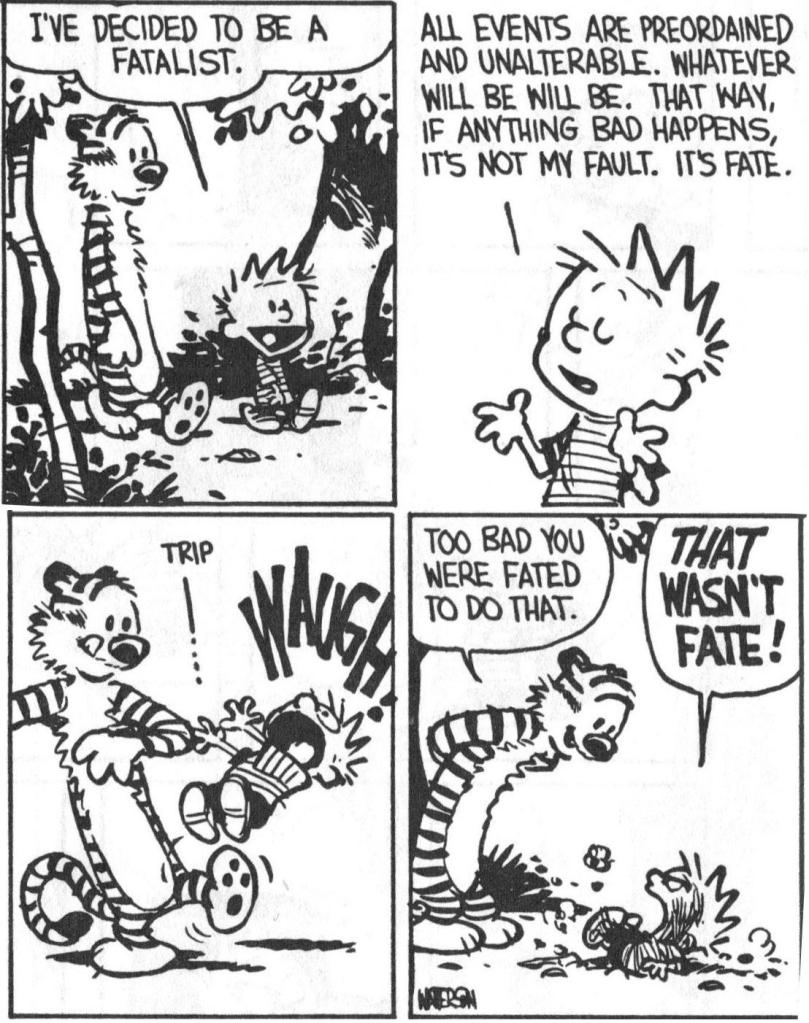
Chinaman Lee is the Trask family’s servant. Lee is an outlier observing the American dream with a philosophical belief that good and evil exist in all human beings. Lee views existence of good and evil as a God-given choice; not a fate or pre-ordination. Lee’s wisdom and philosophical beliefs influence the Trask family sons; particularly as their father’s health deteriorates.

One of the most laudable characters in “East of Eden” is Samuel Hamilton.  He is an Irish immigrant that comes to Southern California, and has a past that touches evil. Hamilton flirts with a “Cathy Ames kind” of relationship, but breaks away from its evil influence to become a sage and seer in Salinas County. 

Hamilton becomes the patriarch of a big family that is poor in wealth but rich in love, respect, and familial affection.  Samuel Hamilton lives a different American dream.

Lee is a cornerstone character in Steinbeck’s story. Lee’s philosophical belief in human choice is illustrated by Cal’s decision to avoid a life lived like his mother. Cal chooses good over evil after finding and recognizing his mother’s poor choices and their consequences.

Freedom of choice is both a human burden and benefit. Steinbeck implies each person chooses their course in life. Their choices are their own responsibility; not genetics, or economic circumstance.

It is ironic. Trump chooses to bargain with Congress on mail-in voting when the unemployed are suffering from hunger and pending homelessness caused by Covid19′ joblessness.

Exception might be taken in poor communities that have no living wage jobs. In light of Steinbeck’s “…Grapes of Wrath”, one might argue there is a false bottom in belief that economic circumstance is irrelevant. One can certainly choose to be good rather than evil, but the consequence of poverty seems to compel evil.

Theft, like selling illegal drugs, is a way of making a living in poor communities that have no jobs. Both illegal enterprises recruit the unemployed by offering jobs, potential wealth, and identity.

Compelled evil is even more starkly reflected in Richard Wright’s “Native Son”. Is evil strictly a choice? Some would argue environment and genetics compel choice.

COLLECTIVIST BELIEF

Audio-book Review
By Chet Yarbrough

(Blog:awalkingdelight)
Website: chetyarbrough.blog

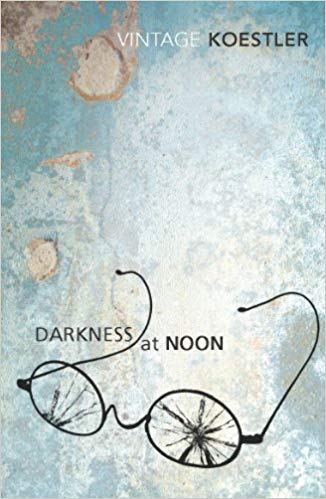
Darkness at Noon

By Arthur Koestler

Narrated by Frank Muller

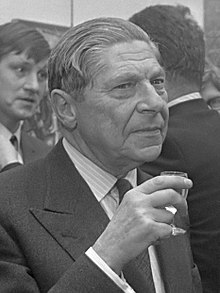
Arthur Koestler (1904-1983, Author)

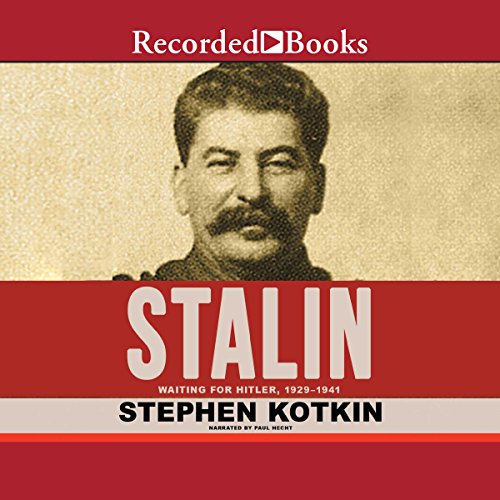
Though Stalin is never named in “Darkness at Noon”, Stalin is the “one” that encapsulates a vision of Communism that demands submission by the individual to the collective. 

When a young communist refuses to distribute Stalinist Party’ literature that ignores Nazi attacks on local Communist’ cells, he is expelled from the Party.

In real life, Koestler joined the Communist Party in Germany in 1931.  His resignation from the Party in 1938 is a likely motivation for writing “Darkness at Noon”.

Koestler’s hero is a young communist leader that disagrees with his Russian controller and is expelled from the Party in the 1930s.  The substance of the disagreement is the heart of the story.

The central character of “Darkness at Noon” is Nicholas Rubashov. Rubashov enforces Stalinist’ Communist belief in the collective, but he has doubts. Rubashov is the apparatchik who is ordered to expel a young German’ Communist because he looks at Russian Communism as a personal rather than collective savior.

Imprisonment of Putin’s political rivals, invasion of Crimea, and buildup of Russian troops on Ukraine’s border is reminiscent of Stalinist tactics before and after WWII.

Increasingly, Vladimir Putin exhibits the same drive for power as that characterized by Stalin, particularly in regard to his action in Chechnya and now Ukraine.

Koestler’s hero is characterized as one of the original participants in the 1917 revolution. As he ages, his blind acceptance of Stalin’s Communist belief in the collective waivers.  Rubashov is imprisoned and ordered to sign a confession.  The interrogators, Ivanov and Gletkin, are responsible for getting a signed confession from Rubashov. 

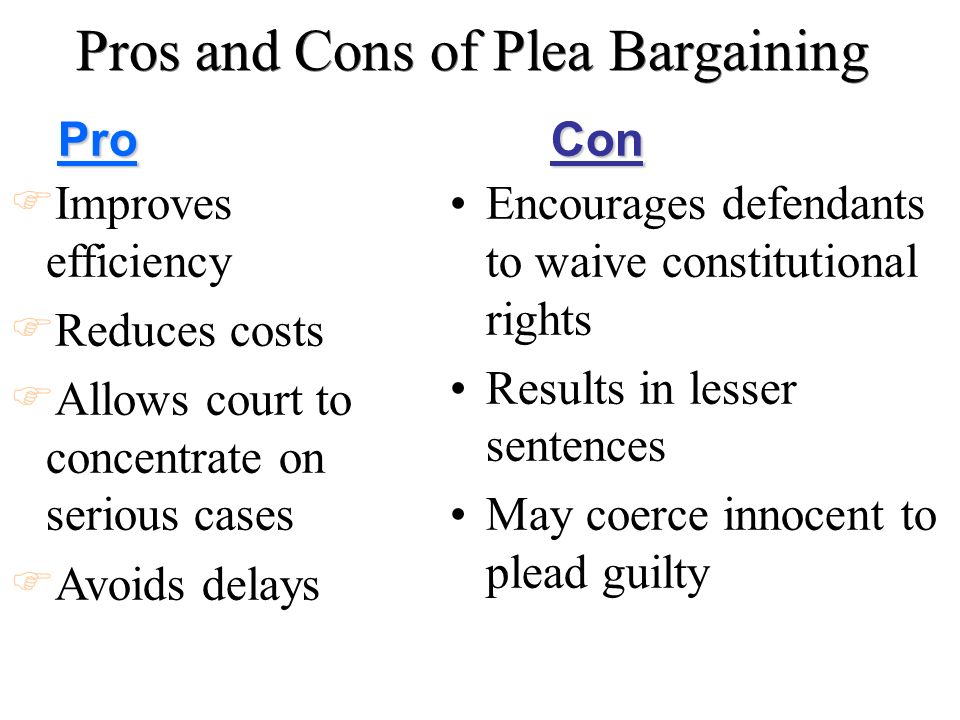
Ivanov, who is a former acquaintance and civil war comrade of Rubashov’s, offers an opportunity for Rubashov to redeem himself. Ivanov suggests that Rubashov confess to a lesser charge to justify incarceration for five years with a chance to return to political power.  Rubashov initially says “no” but Ivanov’s “plea bargain” approach works and Rubashov signs a confession.


However, Ivanov is later removed from power and Gletkin takes charge of Rubashov’s case.  Gletkin argues Ivanov’s approach is a mistake.  Gletkin insists on a complete confession of guilt; i.e. no redemption, only execution.

Much evidence is brought before Rubashov.  The evidence is weak but Rubashov becomes convinced through sleep deprivation, and a clever manipulation of Rubashov’s logic, that he must be executed. Rubashov’s personal feelings of guilt come from his denial of collective good. He reasons–the way he has been judged is the way he has lived his life; therefor his life should be forfeit for the cause; in the interest of the many over the few.

Gletkin might be characterized as a mindless Neanderthal because of his belief in torture, but one of many of his clever manipulations suggests he is diabolically clever.

Gletkin suggests Rubashov was given a watch when he was 7 or 8, which Rubshov acknowledges is probably correct.  Gletkin says he did not have a watch until he was a teenager and that he did not know there were 60 minutes in an hour until then.  No one in his social class looked at time in segments; waiting in line was not characterized by time but by results from waiting in line. 

“Darkness at Noon” implies the end result is what is important; not the means and time that one stands in line. This is a quintessential belief of the “true believer” in Stalinist communism.

WOMEN IN WAR

Audio-book Review
By Chet Yarbrough

(Blog:awalkingdelight)
Website: chetyarbrough.blog

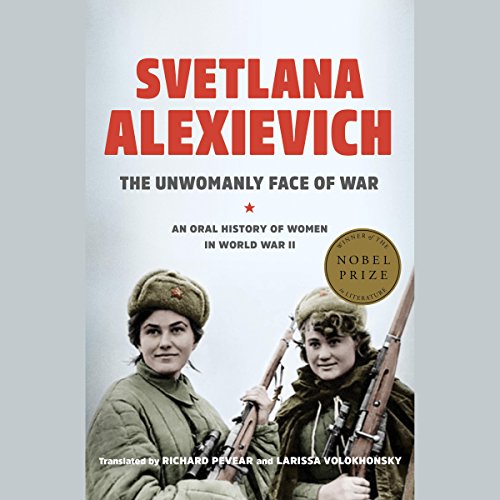
The Unwomanly Face of War–An Oral History of Women in World War II

By: Svetlana Alexievich, Translated by Richard Pevear and Larissa Volokhonsky

Narrated by Julia Emelin, Yelena Shmulenson

Svetlana Alexievich (Author, Belorussian Investigative Journalist, 2015 Nobel Prize in Literature–for her polyphonic writings.)

The author of “The Unwomanly Face of War”, Svetlana Alexievich, suggests women’s deployment in war dates to the Greco-Roman wars.  However, some say Russia is the first nation to deploy women as combat troops.  History shows Russia enlisted women as a fighting force in WWI. 

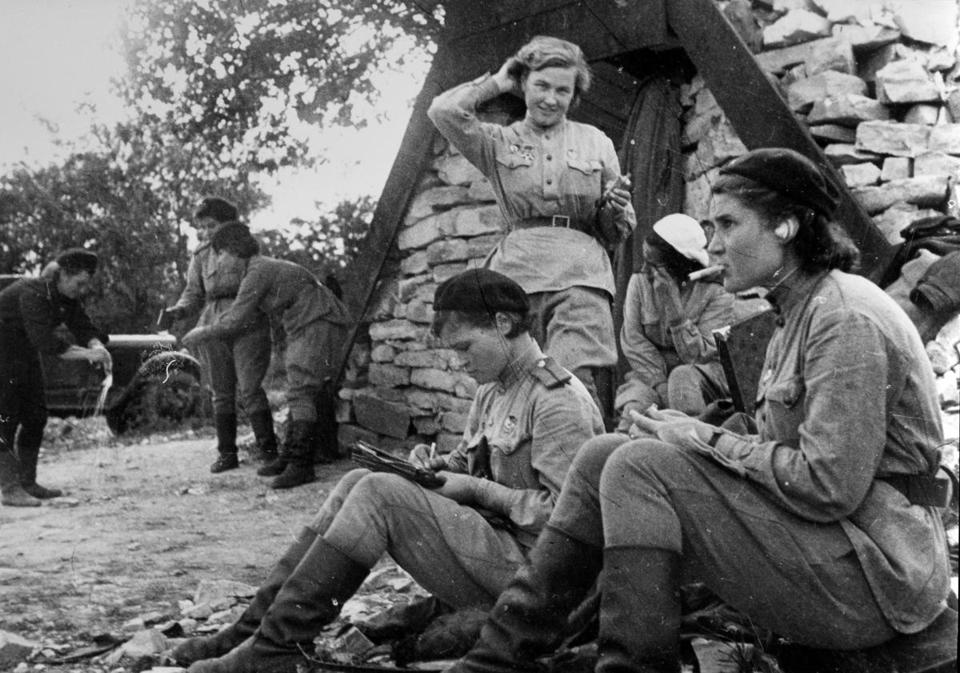
“The Unwomanly Face of War” notes nearly 1,000,000 women joined the Russian military to defeat the German armies in WWII. 

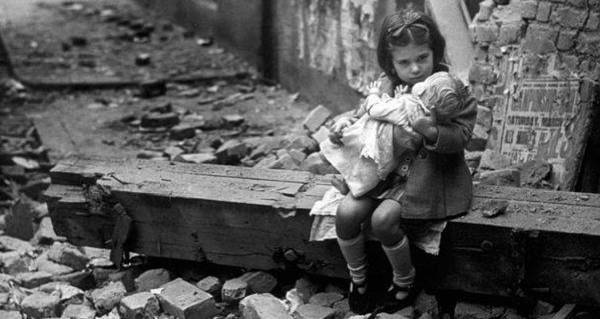
Alexievich interviews former WWII Russian women as pilots, snipers, mine clearing commanders, and military tank leaders. Some were as young as 13; others in their late teens or early 20’s when they joined. At the time of the interviews, all were in their 50’s or older.   By any definition, these Russian women were combat troops.

This is a particularly timely release of a translation of “The Unwomanly Face of War”.  In western nations, as early as the 1940 s, the role of women in the military has been in transition. 

Most countries recognize the immense contribution “women in war” have made since WWI. However, the WWII veterans in Russia’s battles were not fully recognized until the 1950s.

What Alexievich offers is a peek into what Russian women in combat experienced during WWII.  She identifies similarities and differences military men and women experience in war.  To listeners of Alexievich’s interviews, similarities appear much greater than the differences.

The preeminent common characteristic among combat troops is nationalism.  Whether man or woman, the belief in the sovereignty of one’s country supersedes gender.  The disgust for an invading country and its military is equally reviled. 

Alexievich suggests women feel the atrocity of war more than men because women bare and raise children. She argues women are more nurturing and emotion driven than men. 

However, her interviews recount two events that would equally engage and enrage men as women.    

Two interviews reveal a mother’s decision to sacrifice her children.  One circumstance is for a mother to quiet a crying child by infanticide because of an approaching German troop.  The second is a mother who has her child carry a bomb into a military mess hall to kill the enemy as well as the sacrificed child. How does maternal instinct differ from the worst actions taken by men?

The human response to war seems as brutally evident in women as men.  The trauma of war seems to be absorbed in similar ways.  War experience is something never forgotten, and often repressed.  There seems little difference among the sexes based on Alexievich’s interviews of WWII women veterans.

Another example that seems more of a provisioning than sex difference is the reality of menstruation and how it is to be dealt with in combat circumstances.  With proper provisioning the difference between the sexes seems miniscule.

Another circumstance alluded to is the physical strength differences between the sexes.  The circumstance recalled is a woman tank commander who cannot physically rescue an injured tank soldier because she is unable to lift him out of the tank. 

Pulling dead weight is a limit for men as well as women. Though the average strength differences might be true between all men and all women, brute strength is an extraordinary need in war; not a common requirement. If one person is not enough to move a wounded soldier, he/she gets help.

“The Unwomanly Face of War” addresses the reality of conjugal sex in war.  War is little different than life in the civilized world when it comes to the battle of the sexes.  Alexievich recounts affections that rise between men and women in the field of war.  One can appreciate exaggerated interdependence when one’s life is at stake.  Maybe there is a difference, but the difference seems more of imagination than reality.  Peace has its own way of corrupting the relationship between men and women.  One must question how different the battle between the sexes is in war than in peace. 

Common purpose brings the sexes together in both war and peace. When common purpose is absent, the sexes battle for their personal interests.  What distorts the battle is power.

History suggests power more often lies with men than women whether in civilian or military life.  Until there is equalization in power, the potential for fairness among the sexes is unlikely. 

Whether in war or peace, sexual orientation is subject to inequality.  The only remedy is a set of rules and regulations judiciously enforced.

One will draw their own conclusion about the role of women in war after listening to “The Unwomanly Face of War”.  Whether in a time of war or peace, what is incontestable is unequal treatment of women

LONG JOHN SILVER

Audio-book Review
By Chet Yarbrough

(Blog:awalkingdelight)
Website: chetyarbrough.blog

Treasure Island

By: Robert Louis Stevenson

Narrated by Philip Glenister, Daniel Mays, Catherine Tate, Owen Teale

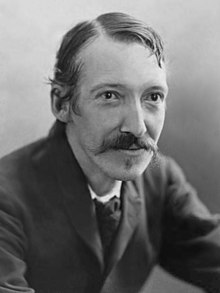
Robert Louis Stevenson (1850-1894, Author died at Age of 44)

Robert Louis Stevenson’s “Treasure Island” is a curious piece of literature that resonates with 21st century calumny.  Humans are not perfect.  There is a bit of Stevenson’s “Long John Silver” in everyone.

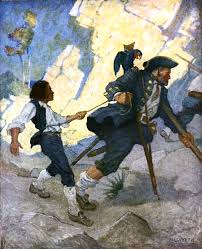
For those unfamiliar with Stevenson’s tale, “Long John Silver” is a pirate who hoodwinks a young boy, a crew of sailors, a doctor, a professional ship’s Captain, and a few others on a voyage to recapture a treasure.  Silver has the “gift of gab”; salted with a lifetime of experience in getting what he wants.

What strikes one about Silver’s character is his ability to see things as they are and change his behavior to suit the circumstance.  If a lie suits his purpose, he lies.  If the truth suits his purpose, he tells the truth.  What he lacks is morality. 

Silver is a narcissist.  He has an egoistic admiration of himself that includes self-flattery, arrogance, and a sharp tongue that cuts like a blade. When confronted with one whom Silver disagrees, he cajoles, belittles, or verbally (sometimes physically) attacks his opposition.

If disagreeing, belittling, and cajoling fail, a narcissist changes the focus of attention with a manufactured distraction.

Putting aside Silver’s narcissistic amorality, he understands a truth about human beings. Silver represents belief that money, power, and prestige rule the high seas and land.  With the skill of a practiced politician, Silver manipulates events to conform to plan. 

The curious piece of Stevenson’s story is Silver’s prediction that Ben Gunn, a stranded buccaneer on Treasure Island, would be cheated out of a share of the treasure even though he played a major part in the treasure hunters’ success. 

Gunn is an anti-hero who has lost his mind because of his isolation on the island.  Gunn is like a modern-day homeless man abandoned by society.

Silver’s plan is to capture the wealth of a buried treasure.  Though not entirely successful, he captures a share of the booty by co-opting Jim Hawkins, a cabin boy with a yearning for the sea.  In the end, Silver escapes the clutches of British authorities who would have convicted him for mutiny, and possibly, attempted murder.

What Silver points out is that the doctor, ship’s captain, and other survivors of “Treasure Island”, will cheat Gunn of his fair share.  Gunn is given 1000 Sovereigns (English pounds) and the rest (hundreds of thousands per person) is distributed to the surviving voyagers.  Silver infers all human beings are pirates. 

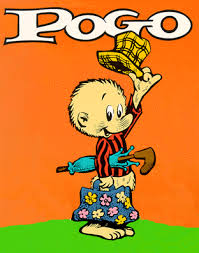
Some pirates wear suits, speak the King’s English, and live in the city; a Pogo version of “We have met the enemy-of-the-people and he is us.”

AMERICAN TAXATION

Audio-book Review
By Chet Yarbrough

(Blog:awalkingdelight)
Website: chetyarbrough.blog

A Fine Mess (A Global Quest for A Simpler, Fairer, and More Efficient Tax System

By: T. R. Reid

Narrated by T. R. Reid

T. R. Reid is a reporter for the “Washington Post”.  He is not an economist.  However, he suggests there are more equitable ways of taxing the American public than presently used by the government.

Reid’s travels around the world investigating other countries tax systems are the basis for his theory for cleaning up America’s “…Fine Mess”. Sadly, Reid has a futile unrealistic attitude that the British characterized as pissing in the wind.

Reid suggests a tax overhaul is due in America.  The last major revision was over 30 years ago.  He argues a mess has been created by incremental tax changes that have greatly exacerbated the wealth gap in America.  Reid illustrates the many ways in which the American tax system is a mess.  An often-quoted factoid is “Warren Buffet is taxed at a lower rate than his secretary”.

There are many economists that would agree with Mr. Reid.  The most famous is the French economist Thomas Piketty who wrote “Capital in the Twenty-First Century”. 

Reid argues the U.S. has the highest corporate tax rate in the world but the lowest corporate taxes collected.  Having the high rate and collecting it are two different things. 

Reid notes corporations like Caterpillar, Apple, Microsoft and others spent millions of dollars to set up legal tax shelters that reduce corporate tax to single digits; to as low as zero for some. 

Reid goes on to explain how billions of dollars are kept in corporate accounts outside of America to avoid taxation, and how that money is not repatriated to the U.S. because of current tax law. 

(Ironically, during Trump’s administration, corporate rate was reduced from 35% to 21%; and continues to be a significantly uncollected tax.) 

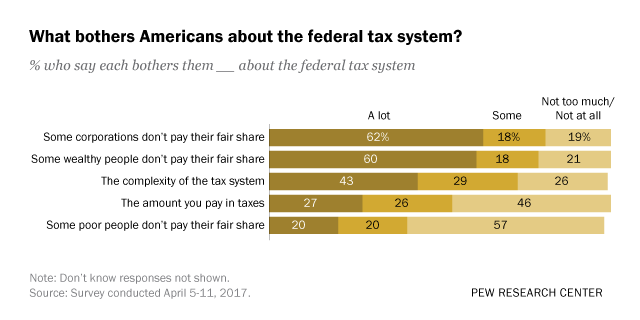
The fact that Trump paid $750 in federal income taxes (either legally or illegally) in the year he became President is an example of corporations’ failure to pay their fair share.

DEFINITION BBLR

Reid persuasively argues that a tax overhaul should be made based on the principle of BBLR, a “Broad Based Low Rate” tax.  The purpose of a tax overhaul would be to eliminate loopholes, broaden and reduce tax rates while equalizing citizen’ tax burden.  Schemes for creating tax shelters would be eliminated.   

As is widely known, millions of dollars are spent by American citizens and corporations to file tax returns.

Preparing and paying taxes is laborious and confusing task for many Americans.  Even basic tax return filings are difficult for many American citizens to complete.  How many do not file because of that difficulty?  Some buy software to file taxes.  Add to software purchases and there is only growing tax-preparation costs to file for others. Those costs are borne by individual tax payers. The expense of our inefficient, and inequitable tax system multiplies geometrically when you add corporation efforts to avoid taxes.

America’s taxing inequity is glaring.  Millions of dollars are spent to avoid taxation through creation of tax shelters.  The formation of these shelters costs millions in lawyer, tax consultant, and auditing fees but save billions of dollars for corporations and the super-wealthy who legally (sometimes illegally) reduce taxable income.

“Occupying Wall Street” is not a hippie “sit in” but a plea for reform of American “moneycracy” just as Thomas Paine’s “Rights of Man” was a plea for reform of Aristocratic inheritance.

Reid’s point is that America’s “…Fine Mess” can be made simpler, fairer, and more efficient by creating a completely new tax system.  He suggests the corporate tax might be eliminated and replaced by a flat rate with no loopholes.

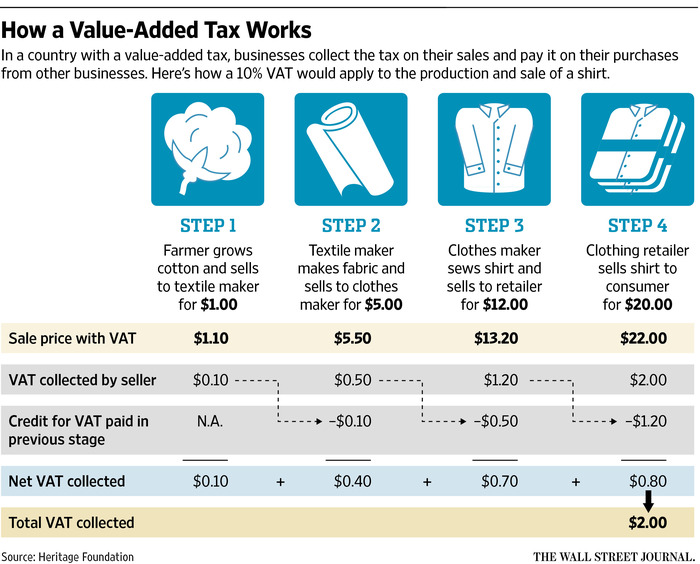
Reid argues for a “Value Added Tax”.  A VAT would be a combination of local taxes and federal taxes on all consumable goods. 

After collection, this tax would be distributed between States, and cities, as well as the Federal Government.  The purpose of these taxes would be for maintenance of local services (like education, public safety, public works, and administration), and Federally mandated services (like national defense, health, education, and public welfare).

Reid’s argument is that VAT’ enforcement would require less supervision by the government because a VAT applies at each stage of the production of goods.  Each stage of production is rebated for taxes paid by the handler that adds value. The VAT is a combination of taxes at each stage of production which is reported to the government for reimbursement.  The reimbursements must add up to the final tax charged to the consumer.  If the numbers are not the same, the IRS will be able to tell which manufacturer failed to pay their tax.

A simple computer program would be able to monitor the collection of the tax because it must balance to all reimbursements of added value.  In theory, a VAT eliminates much of the need for a massive Internal Revenue Service which Reid suggests is unable to adequately monitor the present taxation system.  Reid notes that it is impossible for the IRS to closely monitor today’s taxing system because of the complicated nature of its Congressionally legislated structure.   

Another BBLR tax recommended by Reid is a financial transaction tax that would be low but capitalize on every financial transaction in the United States. 

This transaction tax would be less than a penny per dollar but capable of raising billions of dollars based on the many financial transactions that occur in the U.S. 

Reid offers the example of Hedge Funds that specialize in massive trades for short periods of time.  These Hedge Fund trades move the stock market by fractions that reap millions for traders.  With a tax on financial transactions revenue would be created for Federal Government programs that serve the health, education, and welfare of the nation.

What concerns a listener about Reid’s argument for a Value Added Tax is its potential for continued inequity.  The poor may have to pay the same price for food, energy, and shelter as the rich.  Reid does not adequately address that concern except to suggest a system would be established to offset that inequity.

Another concern, inadequately addressed by Reid, is the impact on Hedge Fund traders business if they lose the advantage of small changes in quick trades. Will Hedge Fund transactions disappear?

Political will is another issue not adequately addressed by Reid.  What majority of congress men and women will stand up to the many lobbyists who support them in their election?   Will most Republicans and Democrats co-opt or fight special interests that object to a massive change in the American tax system? 

Finally, how would America deal with the lost jobs for tax lawyers, tax preparers, software developers, and corporations that benefit from tax preparation and tax avoidance schemes?

One may agree with Reid’s assessment of America’s tax system.  It is a “A Fine Mess”.  The question is–Do our elected representatives have the political will to clean it up; or at least make it fairer? 

Incremental change of the tax code only makes it less intelligible. In Reid’s opinion, it is all or nothing.  Reid implies “go big” or “go home” because nothing will change if the entire tax code is not replaced.

GENETICS ACHILLES HEEL

Audio-book Review
By Chet Yarbrough

(Blog:awalkingdelight)
Website: chetyarbrough.blog

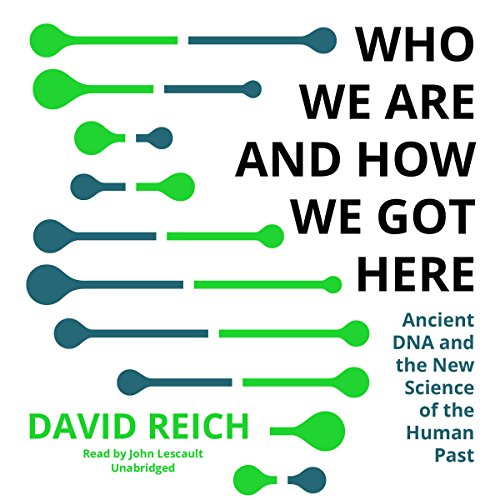
Who We Are and How We Got Here

By: David Reich

Narrated by John Lescault

David Reich (Author, geneticist)

Reich explains how the concept of the origin of homo sapiens has evolved since the discovery of “Lucy” in East Africa in 1974.

Few scientists disagree about humankind’s place of origin.  It may have been somewhere other than East Africa, but human origin is genetically linked to the African continent. 

However, Reich notes that geneticists no longer believe African origin is an adequate interpretation of the wide differentiation of human beings.  The evolution of homo sapiens is not like the branches of a tree but more a tapestry of interwoven threads.

Listening to “Who We Are and How We Got Here” reminds one of the Dragnet’s 1950s-character Joe Friday saying, “just the facts ma’m”.  Aside from Officer Friday’s hint of sexism, it is never just the facts. 

Genetic evolution is always interpretation of facts.  Interpretation is David Reich’s “Achilles heel” for exploring and expanding DNA research to determine “Who We Are and How We Got Here”.

Humans interbred to create a fabric of intermingled genetic characteristics that came together, separated, re-combined and changed over thousands of years.

Genetic discoveries of Neanderthal and Denisovan genetic markers show there is no direct line of descent from the “Lucy” origin of homo sapiens.  Genetic studies show that DNA changed as the human species grew. Some genes survived and evolved while others disappeared. Current theory discounts the principle of an “immortal gene” in the sense that the origin genes changed into something entirely different.

The great controversy that Reich explores is factional resistance to genetic research because of fear of misuse of the data.  There is ample evidence to substantiate that fear.

James Watson (American molecular biologist, Nobel prize winner and co-author of the double helix structure of DNA)

In 2007, Dr. Watson told a British journalist that he was “inherently gloomy about the prospect of Africa” because “all our social policies are based on the fact that their intelligence is the same as ours, whereas all the testing says, not really.”

Reich adds to the “Watson story” by saying he met Watson and was appalled by his comments about Jews being intrinsically smarter than the general population.  

Somewhat disingenuously, Reich notes that a disproportionate number of Ashkenazi Jews have received Nobel prizes. Is that fact relevant to genetic research? Does it apply to all Jews or just Ashkenazi Jews. Reich is an Ashkenazi Jew. Is this a reflection of the same concern over misuse of genetic information?

Genetic facts have been used by prominent scientists, like Watson, and ignorant political leaders, like Adolph Hitler, to falsely interpret genetic evidence. Genetic information opens a door to racist arguments for racial superiority.

Information banks created by Google, Facebook, Microsoft, and Amazon are weapons of privacy destruction. In modern times, the only possible defense is “a right to be forgotten”.

One comes away from Reich’s book only semi-convinced of his search for truth through genetics.  Reich insists that the benefits of genetic research far outweigh the potential harm the research may cause. 

His point is that there are genetic studies that prove some genetic markers make people more susceptible to disease like anemia for blacks and Tay-Sachs disease for Ashkenazi Jews.  With exposure through genetic research, these medical maladies may be cured.  Without knowledge of genetic predisposition, there is less focus on what might cure certain diseases.

The problem always comes back to interpretation of facts; not the facts themselves.  Reich certainly has a point in insisting on continuing genetic research but how does one protect themselves from misinterpretation of facts. 

Dr. Watson is a Nobel prize recipient.  Look at what his interpretation of genetic facts became.   

Six million Jews were murdered by Nazi Germany’s belief in a master race of genetically “pure” Germans.  Reich’s work suggests there are no “pure” races. There are only similar genetic traits among a few isolated populations.

Do potential medical benefits from genetic research outweigh a racist use of genetic facts?  “Who We Are and How We Got Here” seems much less important than “Here We Are and What Can We Do About It”. Particularly considering our experience with the Covid19 pandemic.

AMERICAN JURISPRUDENCE

Audio-book Review
By Chet Yarbrough

(Blog:awalkingdelight)
Website: chetyarbrough.blog

Snow Falling on Cedars

By: David Guterson

Narrated by George Guidall

David Guterson creates a court room drama in “Snow Falling on Cedars”.  The court case is presided over by a competent Judge, a determined prosecuting attorney, and a detail-oriented public defender.

“Snow Falling on Cedars” reflects on a criminal trial’s strengths and vulnerabilities.  It is a story of institutionalized discrimination that is as relevant today as in the 40s and 50s.  Though the author, Guterson, is not a lawyer, he is the son of a criminal defense attorney. 

As an author, Guterson tells the story of a Japanese American citizen accused of first-degree murder.

The story unravels slowly but with beautifully written descriptions of an island community off the Washington coast.  The setting begins in the 1940’s and ends in the 50’s. 

The historical relevance of “Snow Falling on Cedars” may be repeated in the tribulations of Carlos Ghosn; not in the sense of indictment, but for being guilty or innocent based on cultural bias.

Carlos Ghosn–Former CEO of Renault, Nissan, and Mitsubishi Motors (indicted by Japan) who escaped to Lebanon to avoid a trial which he believes is culturally biased.

“Snow Falling on Cedars” is equally a reminder of today’s appalling American attacks on Asian Americans.

The accused, Kabuo Miyamoto, is a gill-net fisherman like the person who is murdered.  The crime allegedly occurs on a foggy night when both fishermen lay their nets in the open sea.

The victim is Carl Heine, a childhood friend of Kabuo before the war.  Kabuo’s wife is Hatsue Miyamoto who also grew up on the island.  A fourth major character is Ishmael Chambers, the local newspaper publisher.  All three men serve in WWII.

In early chapters of Guterson’s story, a young Ishmael falls in love with Hatsue.  However, at a critical point in their burgeoning feelings, Hatsue, her family, and all Japanese-descent Americans are interned in a northwestern camp during the war.  The internment separates Ismael from Hatsue and she eventually marries Kabuo.

A NORTHWEST JAPANESE INTERNMENT CAMP:

This is the era of Pearl Harbor, WWII, and Japanese American internment. 

The story explores the nature of human beings in a small American community.

Kabuo, Carl, and Ismael serve in the military during WWII.  Kabuo serves on the German front; Ismael on the Japanese front.  Carl’s location during the war is superfluous except that he served and was the son of a local strawberry farmer who employed Hatsue’s father.

Before WWII, Americans of Japanese descent were not allowed to own property on the island.  Hatsue’s father makes a deal with Carl’s father to buy 7 acres of land for strawberries on an unrecorded contract. (This private contract violates the intent of the law.)  The last 2 payments on the property are not made because of Japanese American internment during the war. 

A feud rises between the Miyamoto family and the Heine family because the 7 acres is sold to another, based on Miyamoto’s payment default.  There had been a verbal agreement for the last two payments but it is dishonored because Carl’s father, who had made the agreement, died. This is interpreted as Miyammoto’s motive for the murder of Carl on a foggy night of fishing.

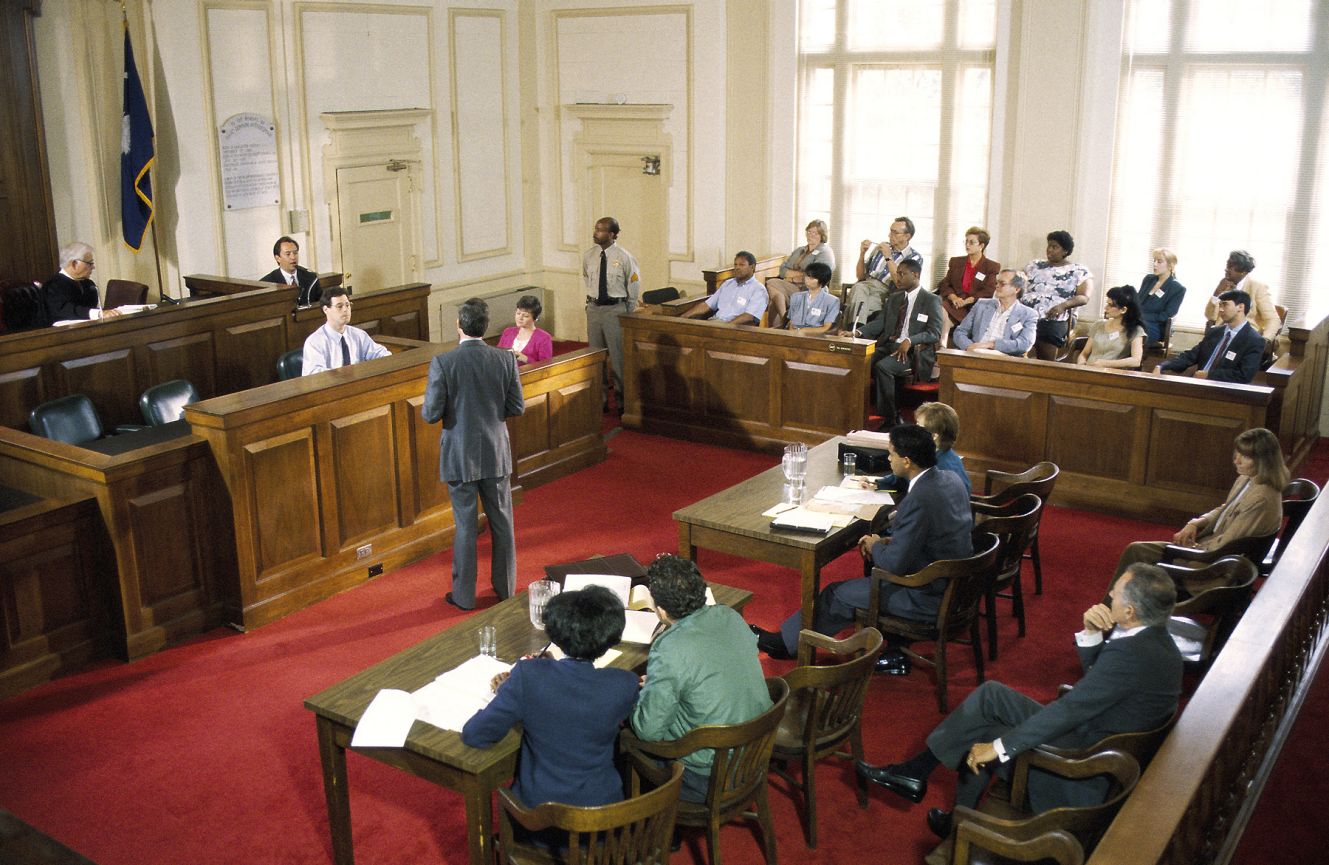
The American judicial system’s intent is to mitigate unfairness by having 12 jurors of one’s peers, competent legal investigators, judges, and attorneys. However, fairness often takes a back seat to politics.

Facts of a trial, whether true or not, are subject to interpretation.  What one sees, hears, or feels affects opinions. 

Guterson creates characters that fulfill the intent of the American judicial system.  The 12 jurors are islanders (though none are Japanese Americans).  The investigators are thorough (though they miss two important but obscure facts).  The judge is competent.  The prosecution and defense attorneys are fully prepared in presenting their arguments.

In spite of America’s intent, Guterson illustrates how America’s judicial system is subverted by human nature.  Guterson peels back the layers of human nature that distort truth. 

Here is where the reinstitution of the death penalty by William Barr raises the question of “common good”. Juries do make mistakes.

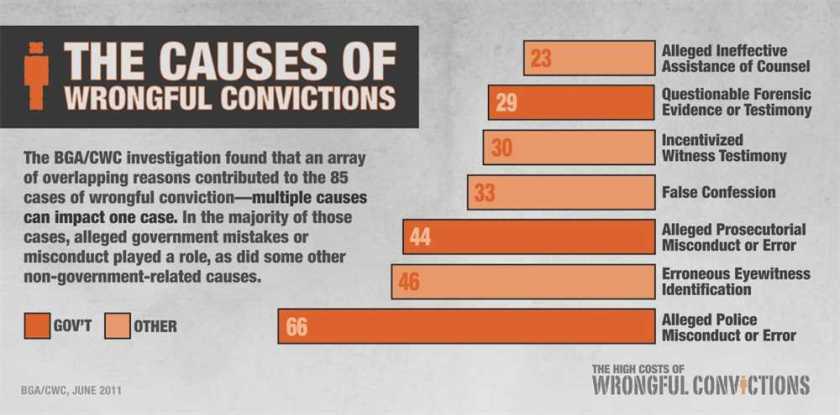
How many innocent people have been convicted and executed in the United States? The Human Rights Foundation reports 31 innocent people were executed between 1973 and 2004.

Facts are immutable but facts are woven into stories by the human mind.

Those stories fit preconceived notions borne from personal experience and internalized opinions.  Personal opinions are a fungible commodity that can distort the truth.

Facts are clear.  Miyamoto is a Japanese American.  Carl Heine is a white American.  However, during the trial these facts are interpreted differently.  The prosecutor points to facts for guilt and the defending attorney points to facts for innocence.  The truth of facts is to be adjudicated by a jury of peers. However, a jury of “peers” listens to prosecution and defense arguments and makes a judgement based on their personal interpretation of the facts and arguments of the attorneys. 

Guterson cleverly interjects the feelings generated by the main characters who served in WWII.  Kabuo feels guilty for having killed a young German soldier who seemed to be asking for mercy.  Kabuo’s guilt for murdering the young German makes him feel a cosmic force, like fate, is leading him to the gallows.  He begins to think he should die.

Ismael lost an arm in the war and led a broken-hearted life because of Hatsue’s marriage to another man.  Ismael resents Hatsue’s rejection of him and chooses to withhold a crucial fact in the trial.

Layers upon layers of human nature’s fragility bares witness to the truth.

A man’s life hangs in the balance.  Will he be convicted for murder based on facts or truth?  Is Miyamoto guilty or innocent?  Or, like all human beings, is he guilty of some things and innocent of others?

In some sense, the American judicial system is on trial in “Snow Falling on Cedars”.  Truth is a slippery slope.  Facts are immutable but interpretation is fungible.  Knowing facts is only part of the truth.  Therein lies the tragic reality of institutionalized discrimination.

WORDS MATTER

Audio-book Review
By Chet Yarbrough

(Blog:awalkingdelight)
Website: chetyarbrough.blog

Milkman

By: Anna Burns

Narrated by Brid Brennan

Anna Burns’ “Milkman” touches on Ireland’s conflict over independence. Though the story is set in Ireland’s period of conflict, the books fundamental message is “words matter”. 

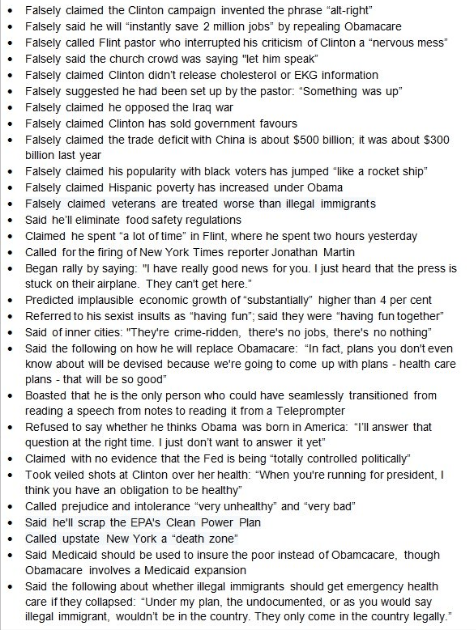
“Words matter” is a timely subject in the era of President Trump’s America. President Trump is a showman with no moral compass. Appearing to be what his constituency wants is his “reason for being”. The consequence of Trump’s words increases extremist actions on both the left and right.

These are the indicted extremists planning to kidnap the governor of Michigan.

From saying Mexico sends their “rapists and criminals” to the United States–to saying he could “…stand in the middle of Fifth Avenue, shoot somebody, and I wouldn’t lose any voters” is absurdist language. It energizes political extremism.

How many people are not wearing masks or practicing social distancing because of Trump’s ambiguous comments about the danger of Covid19? His words have particular consequence because of his position as President of the United States.

Those who are not wearing masks are not entirely Trump’s fault but Burns’ story shows how people fail to think for themselves and are influenced by what people in authority think and say.

Burns tells the story of an 18-year-old girl, a middle child of a presumably Catholic family, who is defined by other people.  She is influenced by others because of their words and the examples they set.

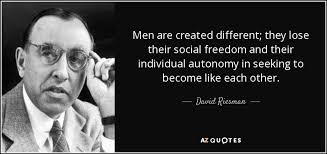
This is an old story; philosophically revealed by David Reisman in a 1950s book, “The Lonely Crowd”. 

Contrary to the main character’s professed independence, this 18-year-old allows herself to be defined by what other people think of her.  Reisman called this malady “other directedness” meaning humans being more concerned about what other’s think of them than what they think of themselves.  This “other directedness” erodes independence. The development of a personal, moral inner compass is subverted by concern over what other’s think.  We become what others want us to be rather than who we choose to be based on a personal moral code.  In Reisman’s language we become “other directed” rather than “inner directed”.

There are two milkmen in Burns’ story.  One is a 30ish leader of a violent Irish independence group; the other is a 30ish bachelor emotionally connected to the 18-year-old’s family.  Rumor is spread that the independence leader, who is married, is sleeping with the young girl. 

The girl’s mother believes the rumor and berates her daughter for an affair that does not exist.  The 30ish bachelor is generally viewed as a maverick in the town who likes no one and chooses to live alone.  In fact, he is a caring human being that decries the violence of Ireland’s conflict and treats people with respect and kindness.  In Reisman’s vernacular, he is “inner directed”.  He lives his life in accordance with a personally developed inner moral compass.

Ironically, the young girl is intimately involved with a young man who she later finds is having an affair with another man.  There are many ways to look at these characters’ circumstances but fundamentally it clarifies the truth that humans are more than what words make them to be.

Words can do great harm when used by a showman who has no inner moral compass.  

Kimberley Strassel’s defense of Trump’s response to Covid19 in the 2/12/21 WSJ editorial is appalling . Most in the medical community emphasized the use of masks while Trump denigrated its importance, conducted rallies without masks, and made wearing one a political statement.

Importantly, a showman’s words reinforce what other people think rather than what a singular person’s inner moral compass would dictate.  Relationships become infected by what people think; more than by what they do.  It is particularly confusing to a young person of 18, but it is a confusion that pervades all human relationships, regardless of age.

“Jane Eyre”, by Charlotte Bronte, is a story about a young woman who listens and follows her inner moral compass.  She refuses to bow to what other people say she should do.  She chooses her own path. 

This is a crossroad that Burns’ 18-year-old is confronted with in “Milkman”.  It is a crossroad that her gay boyfriend fails to negotiate.  It is unclear that Burns’ main character is ready to come to grips with “other directedness” but leaves one with the impression that she is beginning to find her own way.

Former Ambassador of the United States to Ukraine, Marie Yovanovitch.

“Milkman” addresses the human need for an internal moral compass.  Words are weapons of mass destruction in the hands of amoral leaders. (Reference here is to the despicable way the Trump administration treated America’s ambassador to Ukraine.)

CLOSED MINDS

Audio-book Review
By Chet Yarbrough

(Blog:awalkingdelight)
Website: chetyarbrough.blog

The New Jim Crow: Mass Incarceration in the Age of Colorblindness

By: Michelle Alexander

Narrated by Karen Chilton

MICHELLE ALEXANDER (AUTHOR, CIVIL RIGHTS ADVOCATE, VISITING PROFESSOR AT UNION THEOLOGICAL SEMINARY)

Multicultural societies are threatened by closed minds. Michelle Alexander pulls no punches in explaining how American minds are not exempt.  From both conscious and subconscious actions, people who are perceived as different are treated unequally.   

America, like most (if not all) nations, is a failed egalitarian state.  From its early history, America has striven to mitigate inequality but with mixed results, and only marginal successes.

This is not to suggest America is less egalitarian than most nations but that unregulated human nature is a danger to all nations. Witness the murderous regimes of Qaddafi, Saddam Hussein, and more recently, al Assad in Syria.

Two police officers are shot during a public protest over the police shooting of Breonna Taylor (a police raid’s innocent bystander). Where does this end? Public policy failures should not be used as an excuse for violence. No one wins, everyone loses.

Money, power, and prestige corrupt every nation’s leaders; whether well or poorly educated. America is different from many nations because society is subject to a system of checks and balances. However, checks and balances have not saved America from discrimination and inequality.

As memorialized in the Constitution’s 14th Amendment (which requires equality of all before the law) America attempts to treat all people equally.  America succeeds in principle and fails in practice. 

Though the American mind is willing, the will fails to support the mind.  Alexander notes how some laws passed by the American government purposely, and sometimes inadvertently, undermine the Constitutional guarantees of equality for all.

The veil of which Dubois is speaking is the real affect of American laws and customs on black Americans. It is the same veil one sees in history that is written by victors; not the defeated.

Examples of unequal treatment are noted by Alexander.  She exposes the insidious affects of the war on drugs and America’s “3 strikes law” that disproportionately affect the poor; particularly those raised in black communities.

Alexander reflects on America’s failure to address root causes of crime—like unemployment, inadequate medical care, poor education, and racial discrimination.  She suggests those failures are exemplified by “…New Jim Crow” laws.  Her point is that “…New Jim Crow” laws are re-hatched by the War on Drugs and “3 strikes law”. 

Jim Crow laws segregated the Southern United States in the late 19th and early 20th century.  Her argument is that today’s Jim Crow laws are like Dubois’s explanation of the veil of American acts of conscience.  It is a veil in the guise of fighting crime. 

No one wants crime; whether poor or rich. The author does not argue that fewer violent crimes occur in poor communities.  She acknowledges more violent crimes occur in poor communities. But, poor communities, like all communities, abhor the reality of violent crime. 

Whether poor or not, all want protection from violence.  No one wants to see their family threatened.  Those truths make the policies of the War on Drugs and 3 strikes appealing to most Americans.  Alexander’s point is these well meaning policies do not address the root causes of crime. They attempt to treat symptoms rather than offer cures. In treating the symptoms, the underlying causes remain untouched and ever virulent.

Alexander suggests the war on drugs and “3 strikes law” are a return of Jim Crow laws that segregated the Southern United States. 

The War on Drugs and 3 strikes neglect the reality of living in poor neighborhoods.  Poor neighborhoods resort to drug use and sale because it is the only job available, or often the only way of escaping the reality of being trapped in a circle of despair.  

When a person is convicted of a violent crime, manufacture or sale of drugs, or minor drug charges, they are marked for life. 

Job applications ask if they have ever been convicted of a crime. If the answer is yes, most are left with poor prospects for employment or advancement.  No effort is made to rehabilitate but only to isolate. Once a criminal, always a criminal.

America chooses not to spend money to educate the young in poor school districts.  America chooses to ignore the circumstances of drug addiction or the need for medical treatment.  Crime is a zero-sum game with no treatment for the psychologically disturbed. Little investment is made in rehabilitation or re-introduction into society for the first-time offender.  

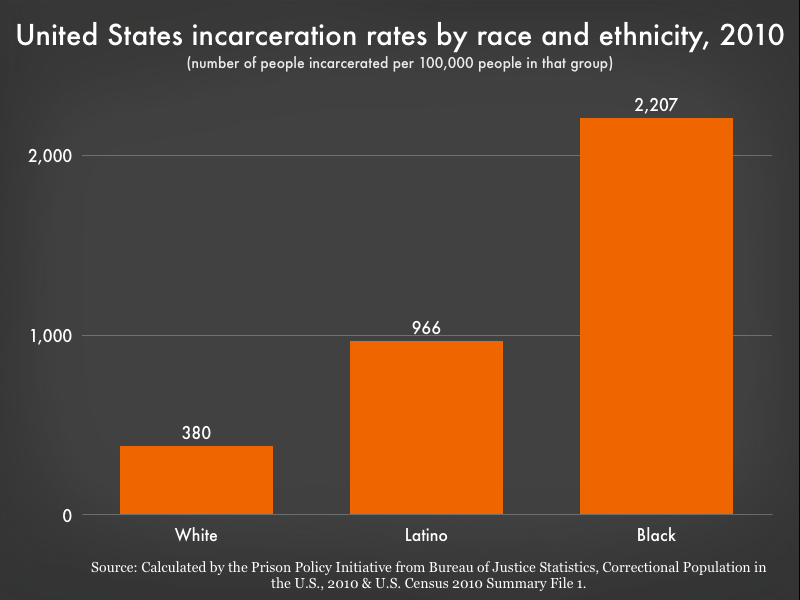
The drug laws and “3 strikes law” dis-proportionally fall on the poor and black as evidenced by America’s prison population.  Alexander argues the real effect of these laws is the same as the historic Jim Crow laws.  They segregate minorities from the dominate American culture.

Alexander’s book is difficult for some to read because it denies the universality of the American Dream.  What is forgotten is how much the luck of race and circumstance play in everyone’s life.  Equally forgotten is the good for those in power is not always good for those without power. 

Dubois and Alexander have something in common.  Minds must be kept open to the truth.  Empathy is needed by both those in power and those without power.  Trust must come from both sides of any power structure. 

No singularly elected person or autocrat will unwind history’s discrimination. Respect for difference and rule of law are the best one can expect. With respect and rule of law, equal opportunity is possible.

Police who brutalize the poor are as guilty of crime as the poor who victimize the rich.  Each needs to put themselves in the other’s shoes to understand their own closed mindedness. 

With better understanding of ourselves and others, more will be done to constructively address public policy failures.  The alternative is increased cultural deterioration, discontent, and violence.