Narrated by Kelvin Harrison Jr., Chris Chalk, Rutina Wesley
Jesmyn Ward (American Author, associate Professor of English at Tulane University)
Songs about poverty are hard to listen to. Like Whitehead’s story about “The Underground Railroad”, one wonders “Is this America”? It is and it is not.
Jesmyn Ward’s song is about an American family. In one sense, the story is unrelatable because most American families escape dire poverty. But Ward’s depicted family is poor with the added burden of being a minority of a minority.
Though every family’s story is unique, there are familial lessons to be learned from Ward’s story. On many levels, the story is about troubles of every poor American family.
Poverty amplifies good, bad, and indifference in all families.
Ward introduces a black family headed by a patriarchal grandfather, a wise and wizened grandmother, a grown daughter, and two grandchildren living under the same roof. The daughter is in a committed relationship to a young white man who is about to be released from prison. He is the father of the two grandchildren.
The boy grandchild adores his grandfather. The girl grandchild adores her brother. Both children are ambivalent about their mother because of her self-absorption and inability to comfort either of them. As her grandmother explains, it is not that her daughter does not love her children. She just does not know how to express her love.
The grandmother is nearing death with regrets about her daughter’s inability to comfort her children and raise them with the values she and the grandfather live by.
The grief of her daughter when her mother dies is palpable. It is a grief borne of self-pity but also of deep love for what her mother knew and tried to teach her.
Life seems bleak. The only ray of light comes from the grandson who copes with the indifference of his mother, and fear of a father he barely knows. This ray of light comes from stories told, and examples set by his black grandfather.
This grim story describes a poverty trap made in America. The father who is being released from jail is estranged from his family because of his relationship with a black family. He is damaged by his experience in jail and the irony of being the son of a bigot.
The downward spiral of this father’s life and his companion appear set in motion. The mother of his children loves and depends on him, but their destiny is bleak. Ward ends her story with the grandmother’s death, and the parents leaving the children with their black grandfather.
One presumes the boy will grow to manhood with the moral compass of his black grandfather, but the fate of the daughter seems as bleak as her parents. Without the guidance of a loving mother or grandmother, it seems the daughter is destined to remain in poverty.
Being black is a struggle not understood by white America. Even with a powerfully good moral compass, a young black boy-man or girl-woman bares the burden of being black in a world of white authority.
This is a beautifully written book of a tragedy, made and remade in America.
Shoshana Zuboff (American author, former Harvard Professor of Business Administration).
Shoshana Zuboff analyzes the evolution of power wielded and enabled by Google, Amazon, Microsoft and other media giant’s that invade personal privacy.
In the October 17-18, 2020 WSJ, the headline is Mark Zuckerberg is “Washington’s New Power Broker”. Reporters Deepa Seetharaman and Emily Glazer note that “…Mark Zuckerberg now takes an active role in the platform’s policy decisions–and checks in regularly with officials like Jared Kushner”.
Zuboff’s scholarly examination of American internet mavens concludes “…Surveillance Capitalism” will lead to Orwell’s “1984” or B.F. Skinner’s “Beyond Freedom and Dignity”.
George Orwell (Writer & Futurist)
B. F. Skinner, Harvard Psychologist and founder of Operant Conditioning movement.
Orwell notes in “1984” that invasion of privacy is a way of conditioning human beings to believe in “truths” manufactured by whoever leads. In contrast, B.F. Skinner’s “Beyond Freedom and Dignity” argues behavioral observation and reward is a tool for making people live morally “good” and peaceful lives.
The words “truths” and “good” are in quotes because they are determined by what Zuboff calls “the big other”. “The big other” is a knowledge leviathan that knows everything about everyone.
In Orwell’s world, humans will be managed by a totalitarian government. The government monitors all private and public actions of its citizens. These governments have a set of propagandized “truths” that demand and compel obedience. Orwell’s world relies on knowledge of every detail of its citizen’s life. When a citizen’s actions do not conform to government rules, they are psychologically bombarded, and re-programmed to believe.
In Skinner’s world, individual citizens will act as they think they want, as though they have free will. However, operant conditioners (“the big other”) will reward citizens for fulfilling desires of respective employers, vendors, and governments which are holders of private information. These operant conditioners will use personal and private data to offer rewards for “good” behavior. (Zuboff calls these holders of private information “the big other”.)
Orwell and Skinner offer views of a future where privacy no longer exists. Orwell’s view is obviously dystopian. Skinner’s view is utopian, hiding in the skin of dystopia. Zuboff explains how either future is conceivable in “The Age of Surveillance Capitalism”. Her conclusion finds both futures reprehensible and possibly inevitable.
“The Age of Surveillance Capitalism” exposes America and the world to the greatest economic and social change since the industrial revolution. In “The Age of Surveillance Capitalism” every human action is catalogued, distributed, and utilized by entities interested in influencing human’ thought and action.
“The big other” is enabled by media giants to seduce the public into buying technical products that are connected to the world wide web. Products, like Nest, Google Search, Amazon, Facebook, Microsoft Word, Microsoft Excel, Quick Books, etc. record everything humans do and see, with extraordinary insight into what they think. That data base becomes a tool for modifying behavior without conscious knowledge of its users.
Is the government’s suit against Google important? Shoshanna Zuboff implies it is monumentally important.
In Skinner’s view, freedom and dignity are a fiction. To Skinner, only behavior is currency for future peace and prosperity. That behavior can be conditioned by “the big other” in Skinner’s world.
In one sense, Skinner’s recognition of positive reinforcement’s value to society is exemplified by moguls like Henry Ford. Ford’s recognition of the value of raising wages for his workers (an operant conditioning reward) increases production and lowers product price.
Zuboff systematically builds her argument with the history of industrialization and the dramatic change it brought to society. Ford grew his fortune by positive reinforcement of worker’s higher wages and the public’s consumption of a lower cost product that revolutionized travel.
The credibility and threat of Zuboff’s argument is reinforced by George Bush’s accelerated invasion of privacy after 9/11, and Barack Obama’s use of technology from Google’s Eric Schmidt (Google’s CEO, at the time) in his run for election.
One might also argue the rise of Donald Trump is a harbinger of the threat of “…Surveillance Capitalism”. Evidence suggests Trump’s election campaign drew on Russian surveillance of Hillary Clinton and political research from Cambridge Analytica to win election.
Cambridge Analytica provided detailed information on voters who agreed with the anti-science convictions of Donald Trump. They voted, and Trump won the election.
(As noted in Wikipedia.org–Analytica is a visual software package developed by Lumina Decision Systems for creating, analyzing and communicating quantitative decision models.)
Zuboff argues the principle of positive reinforcement takes a giant leap forward with the technology of “Capitalist Surveillance. Henry Ford’s personal insight is replaced by “the big other”. Potentially, every capitalist or government entity now has access to the details of everyone’s lives.
In a capitalist country, there is no singular controller but a multitude of public and private entities that manipulate human life like Skinner’s pigeons in a cage.
In a communist or fascist country personal surveillance easily slips into Orwell’s “1984”. Zuboff offers the example of the social categorization of Chinese residents by President Xi’s government. Assigning a number to a Chinese citizen capsulizes their support or opposition to communism. That number influences every aspect of that citizen’s success or failure in China.
Zuboff warns that tools for predicting future behavior are in the hands of “the big other”. Zuboff speaks from her personal experience with Skinner. Skinner was one of Zuboff’s professors during her college days. She infers today’s surveillance economies bend toward totalitarianism borne by behavioral reinforcement.
A fundamental question is: Do we have free will? Or as Skinner and Alex Pentland suggest are we just vessels for behavioral modification?
The other side of “Surveillance Capitalism” is the benefit offered to the general public by data compilation. There is a leveling of cost for consumer items because of pricing and consumer criticism gathered and distributed to the general public when buying a product or service. There is a value in being able to arrive at a destination on time without worrying about getting lost in the country or city. There is the ability to control utility use, and guard one’s house by using tech products like Google’s Nest. There is the potential of producing more product at cheaper price because of “Surveillance Capitalism”. The idea is similar to the way Ford grew his automobile company by rewarding employee behavior and producing lower priced product.
The question remains—what price are humans willing to pay for convenience?
The industrial revolution just as the technological revolution changed society. It seems fair to say the American standard of living has increased as a result of industrialization. Is there reason to believe the same may be true with a technological revolution that makes life easier but less private?
Zuboff questions the trade off but so did the Luddites when they destroyed machines that replaced craftsman. One cannot take Zuboff’s scholarly study lightly, but the genies of the tech revolution are out of the bottle.
If there is a such thing as free will, there seems no harm or foul. However, manipulating human behavior belies Google’s founder’s unofficial slogan of “Don’t be evil”. (Interestingly, in April or May of 2018, Google abandoned the slogan.)
Walter Isaacson (Author, Biographer, Former Chair of Broadcasting Board of Governors)
This is the storied life of a self-educated savant. Walter Isaacson scrupulously details a genius’s life and notes how curiosity and focus inform his intellect. Leonardo da Vinci is an illegitimate child raised by an extended family that includes his educated wayward father and unlettered mother. Born in Florence, da Vinci grows to manhood and follows a path festooned with powerful Italian and French rulers.
Self portraits of Leonardo belie Isaacson’s characterization of him as handsome. However, Isaacson’s supposition is drawn from other people’s perception of him rather than Leonardo’s perception of himself.
Leonardo da Vinci self portrait as an old man
Parenthetically, Isaacson notes that Leonardo is gay and finds the idea of heterosexual acts as volitionally repugnant.
Isaacson suggests every person can reach higher levels of understanding by being acutely observant and curious. He suggests these two characteristics have a yin and yang, a good and bad consequence.
The good comes from a restless desire to understand what one sees. The bad comes from distraction that causes a brilliant mind to wander and fail to complete an idea or finish a project.
Isaacson infers Leonardo’s innate intelligence magnifies his ability to pattern what he observes into insights that are hundreds of years ahead of future discoveries. From observations of nature, the human body, and expressed human emotion da Vinci refines the art of painting.
However, Isaacson notes Leonardo is so much more than an artist. Leonardo is a polymath. Leonardo acquires understanding of cosmic phenomena, the dynamics of water and air movement, the physical expression of human emotion, and the general science of earth’s structure, and substance.
Vitruvian man
Self propelled cart
Geological time
The Ideal city
Helicopter design
Triple Barrel cannon
Glider
Revolving bridge
Scuba gear
Giant Crossbow
Lady with an Ermine
Giant Horse monument
Mona Lisa smile
At the same time, Isaacson notes that Leonardo often fails to publish, or diseminate his findings. Leonardo becomes distracted by new observations that lead to incomplete works of art, science, and engineering. Isaacson explains that some of the incompleteness is a consequence of finding a new discovery that causes Leonardo to rethink how a painting or project is to be completed.
Isaacson notes many paintings were carried with him to his death. Some were never finished. Leonardo continually refines his paintings with new understanding of light and shadow, muscle and bone.
In some cases, painting’ modifications were made years after their initiation because of a muscle, tendon, or ligament discovery from Leonardo’s many human dissections.
Leonardo revised “Saint Jerome in the Wilderness” years after he started it because of research on neck muscles from his numerous dissections of the human body.
Leonardo lived in a time of powerful Italian and French leaders. He serves men of power like Cesare Borgia, Francis I, and Pope Leo X (the son of Lorenzo de’ Medici).
Leonardo serves Cesare Borgia for 8 years as an engineer and artist. He creates the model for a massive horse (a larger mold than had ever been created would be required). It is to be a tribute to Cesare Borgia but it is never cast because of the circumstance of war.
Cesare Borgia (1475-1507, died at the age of 31)
Francis 1 of France (1494-1547, died at the age of 52
Pope Leo X (1475-1521, died at the age of 46, son of Lorenzo de Medici)
By historical account, Cesare Borgia is ambitious and arrogant. Cesare is alleged to have murdered his brother to assume control of a Papal State. He is alleged to have been responsible for several political assassinations. Leonardo seems to have had no compunction for serving Borgia and appears to have been a confident of the brutal dictator.
Two interesting reveals by Isaacson is Leonardo’s willingness to serve whoever would sponsor his work regardless of their good or bad actions, and his role as a scene creator for theatrical productions. Isaacson’s explanation of Leonardo’s scene creations for plays is revelatory because of the many mechanical inventions drawn by this master of innovation.
One can imagine how thrilled an audience would be at a theatre production that showed Leonardo’s skill as an animator of mechanical wonders. It seems a perfect venue for Leonardo’s inventive mind.
Leonardo becomes friends with luminaries like Niccolo Machiavelli and Luca Pacioli (an Italian mathematician).
Niccolo Machiavelli, 1469-1527, died at age 58. Cesare Borgia is said to have been the model for “The Prince”.
Most, but not all, of Leonardo’s patrons and customers were men or women of great power and wealth. Some, like Borgia had little or no moral conscience. Some with great wealth who requested commissions were ignored by Leonardo.
A younger contemporary of Leonardo is Michelangelo Buonarroti.
Michelangelo is a competitor for Art commissions who disdains Leonardo.
Detail of Michelanglo’s “Doubting Thomas”.
Isaacson notes that Leonardo is no less disdainful of Michelangelo but much less confrontational when asked for opinions about his competitor’s work.
Isaacson wrote a biography of Stephen Jobs and often refers to Jobs’ driven personality.
His biography of Leonardo shows a commonality between these two geniuses. They both looked for perfection in their work.
From a painting of the Last Supper, to the image of Saint Jerome in the Wilderness, to the Mona Lisa, Isaacson shows Leonardo to be among the most creative artist of all time. Leonardo’s understanding of light and shadow, human vision, physiology, and facial expression contribute to art what E=MC squared contributed to physics.
(Sadly, Isaacson notes much of “The Last Supper” shows little of Leonardo’s original work because of cleanings and restorations over the centuries.)
Isaacson shows Leonardo is much more than an artist. From the idea of creating power from water movement to the planning of cities for Kings, Leonardo da Vinci is shown to be an insightful civil engineer. In sum, Isaacson implies Leonardo’s insights rival all the savants of history. Leonardo da Vinci is an artist and scientist ahead of his time.
Bill Bryson’s skill as a researcher and writer pleases the mind but as John Milton noted, “the mind…can make a heaven of Hell, a hell of Heaven”.
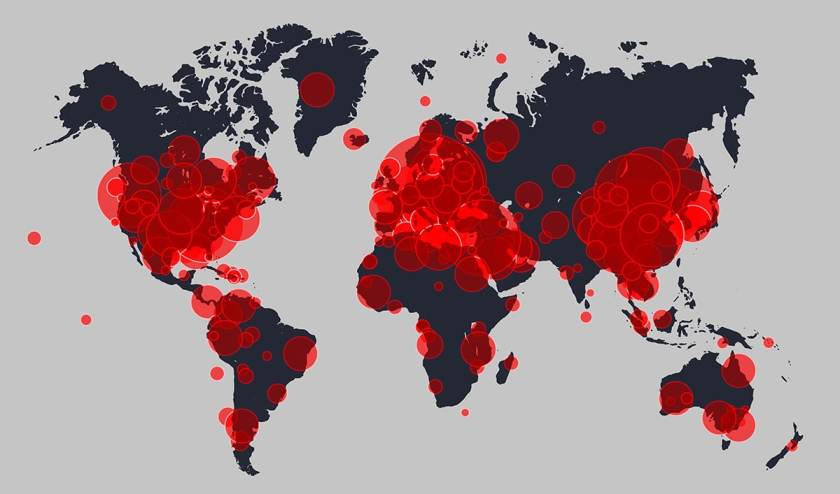
Bryson published “The Body” in 2019, months before Covid19 became known to the world. Bryson’s greatest fear, gleaned from his research, is the potential of a world-wide infection from a flu-like virus. Bryson’s comment about the body’s greatest 21st century risk is prescient. Bryson suggests the United States, and most nations, have not prepared well for national medical crises. This is a particularly poignant observation when one looks into the 1918 flu pandemic. America has lost over 500,000 people to Covid19.
National and international medical crises reach back to antiquity. Among many of Bill Bryson’s insights in “The Body” is his history of medical crises in the world.
The 1918 flu killed more than 600,000 Americans. The difference is that there were only 103 million American citizens in 1918. Today, there are an estimated 331 million.
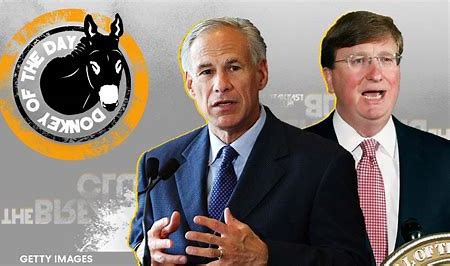
Governors Abbott and Reeves of Texas and Mississippi.
Today is not 1918 but how foolish it is for the Governors of Texas and Mississippi to remove mask restrictions in the face of a pandemic that did kill over a 1,000,000 Americans.
Bryson recalls the Bubonic plague, smallpox, typhus, yellow fever, influenza, Polio, and Ebola and other outbreaks as examples of national unpreparedness. With failure to prepare, nation-state’ responses have ranged from careful, reasonable, and effective, to careless, illogical, and ineffective.
America’s response to Covid19 shows America’s lack of preparation. America’s national response speaks for itself.
This is only a small part of Bryson’s enlightening research on “The Body”. He recounts many incredible medical discoveries made by science. As with all disciplines, some discoveries are made by chance; some by the exigency of illness or medical emergency, others by curiosity, and yes, some by diligent scientific research and experiment.
Alexander Fleming (1881-1955, credited for discovering penicillin.)
A green mold forms on a mistakenly, un-discarded petri dish used to study bacteria.
In 1928, Alexander Fleming discovered penicillin by chance while growing bacteria for research. One of many petri dishes had been accidently contaminated. When Fleming returns to his lab, a mold appears to be killing the bacteria on the dish. Bryson explains the serendipity of the discovery while reflecting on lesser known information about Fleming’s life.
Bryson gives a similar description of the discovery of blood transfusion by Dr. James Blundell in 1818. The first transfusion is a success. However, the success is as much from luck as misfortune because the importance of blood typing was unknown in 1818. The first transfusion was luckily from a donor (Dr. Blundell himself) and patient with type 0 blood.
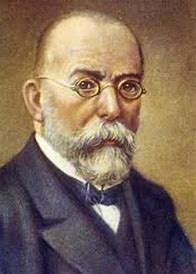
Karl Lansteiner (1968-1943, Austrian biologist, physician, and immunologist, discovers and names blood types in 1900.
Bryson recounts Samuel Pepys diary and his harrowing experience in having a gall stone removed from his bladder in 1658. With no anesthetic, a gall stone the size of a tennis ball was removed. Pepys keeps the gall stone in a glass jar to show others while telling his story. He describes the hellish pain as the scalpel pierces his abdomen.
Not until 1882 does Carl Langenbuch remove the first gall bladder. Langenbuch studied 17th century records of dogs that exhibited gall bladder problems. Langnbush’s experiment on a human body comes from that research. His medical judgment leads to a pragmatically successful surgical treatment.
Mukherjee offers a grim history on the evolution of cancer treatments. Mukherjee details, and Bryson confirms, many errors made by physicians who presume more surgery, more chemotherapy, or more radiation will cure, rather than kill, the patient. Experience shows that presumption incorrect.
William Lane (1856-1943, British surgeon and physician killed many patients with what was called colonic innertia by removing large sections of intestine in the early 1900s.)
With improved knowledge, intestine removal became limited with better recovery statistics for patients.
Bryson notes many medical experiments offered no cure and killed patients in the process. Physicians sometimes ignored their failures and skewed results to reinforce their poor medical decisions. Some patients who did not die, were irreparably harmed by medical practitioners who believed they were right. Practitioners ignored failures and continued to treat patients with medications and treatments that offered no cure but death or disfigurement.
One of many insights Bryson notes is that approximately 50 percent of the cause for premature death in humans is self-inflicted. Poor diet, tobacco use, and lack of exercise are principle causes.
Other chapters cover longevity, predictions of life span, medical symptoms of old age, and the story of telomeres’ role in cell death. Bryson notes some scientists believe scientific research will lead to extended life well beyond current life spans.
One of the most disconcerting observations made by Bryson is that Americans, who pay most in the world for medical service, fall (at best) into the middle of industrialized countries for general public health.
Who should America turn to in the 2020 election?
Bryson infers sociological difference between the United States and other industrialized countries affect the health and longevity of America’s population. The specifics of sociological differences are left unwritten. Having a national health system in those countries with better health care statistics is undoubtedly one of the sociological reasons.
Bryson’s book is an enlightening journey into the mysteries of “The Body”. Bryson gives a good account of the methodologies and myths of the body’s history and its discoveries. There are many discoveries yet to be made that will tell us more about physical existence and our body’s possible future.
Sean Carroll (Author, theoretical physicist in quantum mechanics, gravity, and cosmology.)
Being a fan, Sean Carroll is usually a good source for understanding science but “The Big Picture” is not his best work. Traveling through centuries of discovery and science’ revisions is too broad a picture for a layman’s understanding. Many attempts at clear communication about current physics fail to enlighten “The Big Picture”.
Carroll does clarify the difference between “is” and “ought” that explains why science is important. God may be the origin of life on earth but proof relying on faith is an “ought” without an “is”. Science reduces knowledge to facts based on repeatable experiments and predictable results. If experiments are conducted by different experimenters with the same results, what “is” becomes predictable and more likely correct. Carroll explains science deals with the world as it “is”; not how the world “ought” to be.
The consequence of patterning distorts reality. Eye-witness accounts of events are notoriously misleading because of human patterning.
“The Big Picture” recounts the history of physics and how human understanding has evolved over the centuries. Carroll explains how past discoveries based on science have evolved. Newton lived in the same world as Einstein. Both discovered fundamental truths about “The Big Picture”.
Newton’s laws apply to earth’s realm. Einstein’s laws apply to the universe. Both are correct within their spheres. Carroll notes neither Newton nor Einstein contradict the laws of physics, but their laws are confined by the earth or universe in which they are proven.
SIR ISAAC NEWTON (1642-1727)
ALBERT EINSTEIN (1879-1955)
Carroll believes all essential particles of the atom have been discovered. This reminds one of the scientists in the late 19th century who said, “in this field, almost everything is already discovered, and all that remains is to fill a few unimportant holes”.
It is difficult not to enjoy Carroll’s way with words but with the unexplained essence of gravity, dark matter, and dark energy, it seems premature to suggest no new particle discoveries will change our view of the world and their impact on reality.
Crashes and Crises: Lessons froma History of Financial Disasters
By: Professor Connel Fullenkamp
Great Courses Lecture Series
Connel Fullenkamp (Professor of Economics at Duke University)
Professor Fullenkamp makes one thing clear in “Crashes and Crises”. Financial disasters are an inevitable consequence of all nation-state’ economies, regardless of their form of government. Fullenkamp reaches back to the 1600s to explain how, and why financial disasters are inevitable.
The strength and weakness of Fullenkamp’s view of “Crashes and Crises” is in dwelling on narrow causes of economic disruption. In September 2022’s economy there is no singular cause of the world’s economic crises. Inflation is a symptom of many causes which is why it is so difficult to cure.
It is the nature of humankind that causes world economic crises. Coming from unrestrained power of autocrats like Vladimier Putin to the greed of capitalist freedom, economic crises are born. What the public must do is educate itself.
History is a teacher that tells the public there have always been hucksters that say they can make you rich with little or no risk. From Charles Ponzi to Ivar Kreuger, to Bernie Madoff, there have been “get rich schemes” that victimized the public.
Charles Ponzi (1882-1949, Italian swindler.)Ivar Kreuger (The Match King- misleads investors with over-collateralized assets.)BERNARD MADOFF (AGE 74) SERVING 150 YEAR PRISON SENTENCE
From swindlers, to gamblers, to financial model builders, to inept leaders, Fullenkamp recounts American, French, Zimbabwean, Indian, Japanese, Taiwanese, Mexican, Dutch, and German financial disasters. Fullenkamp’s argument is that crashes and crises are a normal part of financial activity. What he explains is that financial crashes and crises are unavoidable, but he suggests they can be mitigated.
Fullenkamp explains how and why technology increases the potential consequence of human error and criminality in financial crises.
Fullenkamp notes the danger of derivative models. They are packaged investments that can be so complicated that only the creators know how they work.
Major investors, like Warren Buffet called derivatives “financial weapons of mass destruction”.
Fullenkamp notes that investment models are often complex. The personal motives of financial model creators, and the lucrative incomes for investment analysts and sellers can make derivatives dangerous. However, Fullenkamp is not against derivative investments. Fullenkamp’s advice is that if you do not understand a derivative investment, and its potential risk cannot be explained, the investor should walk away.
The 2008 world financial crisis is an example of a derivative model that nearly collapsed the American economy.
The derivative model was based on real estate mortgages that were bundled and analyzed to be worth more than their value; particularly, if individual mortgagees went into default.
Because of imprudent lender qualification of mortgagees by companies like Countrywide, more and more bundled mortgage-backed securities became over valued. Many of these mortgages were sold to FannieMae.
When several mortgages in an investment bundle went into default in 2007, investment bundles crashed. FannieMae held many of the mortgages because they were fobbed off by mortgage lenders as soon as home mortgages were closed.
Because of FannieMae’s relationship with the federal government, the U.S. treasury was at risk when mortgagees defaulted.
The federal government was compelled to buy FannieMae’s defaulted mortgages which exacerbated the 2007-08 financial crises.
The derivative’s crash caused financial institutions, investment houses, and individual investors to either fail, or sell their derivatives at a discount. That caused an international economic crisis. It became an international crises because bundled mortgages had been purchased by world-wide investors and institutions, many of which were also invested in the American economy.
The sellers of these mortgage derivatives failed to clearly understand what they were selling or, more greedily, took advantage of their marketability. Fullenkamp implies it is as much the buyer’s as the seller’s fault by making bad investment decisions.
Fullenkamp reaches into history to show many other financial crises and crashes. He covers economic bubbles in tulips, international trade shares, mining stock investment schemes, the economic panic of 1907, the effect of hyperinflation in Germany and Zimbabwe, the 1929 crash, and more recent events like the dotcom bubble, and rogue trader debacles. Many of the bubbles Fullenkamp identifies are a result of investor’s “irrational exuberance”, a phrase used by the former Chair of the Federal Reserve (Alan Greenspan) in the 1990s.
Today’s economic crises is magnified by the invasion of Ukraine by Russia. Putin chooses to sabotage his own and the world’s economy by shutting down a major energy pipeline to Europe.
There are no singular causes for economic crises. Every economic crisis is increased or diminished by human action, either in cause or response.
Next, Fullenkamp goes into some detail about the danger of shadow banking. Lending without government oversight becomes more tempting during an economic crises. Shadow banking is unregulated lending that theoretically is not subject to government oversight or regulation. Without checks and balances in a market driven world, unregulated lending hides or distorts GNP growth.
Fullenkamp ends his lectures with a warning about China’s shadow banking. He moderates his warning by suggesting China is not near a crisis, at least at the time of these lectures.
To some listeners, his warning gains some urgency based on China’s declining economy during the Covid19 crises. Of course, Fullenkamp implies shadow banking is a risk to all nation-states in 2020.
Fullenkamp acknowledges the importance of government regulation of financial activity. He notes changes in American law after crises have occurred. He notes a primary example in the secrecy of stock listings that was eliminated by disclosure requirements of the federal government.
Some argue government actions, after the 2008 economic crisis, saved the American economy.
GEORGE WALKER BUSH (43RD PRES. OF THE UNITED STATES)No singularly elected person will ever unwind history’s discrimination. HENRY PAULSON (U.S. SEC. OF THE TREASURY 2006-2009)BEN BERNANKE (CHAIRMAN OF THE FEDERAL RESERVE)TIMOTHY GEITHNER (U.S. SECRETARY OF THE TREASURY (2009-2013)
With the economic impact of Covid19, one doubts President Trump, Secretary of the Treasury Mnuchin, and his administration are up to the task of dealing with 2020’s burgeoning financial crises. With the added dimension of Russia’s invasion of Ukraine, social unrest from George Floyd’s murder, and Trump’s obnoxious law and order comments, reliance on world-wide rising interest rates, it is difficult to be optimistic.
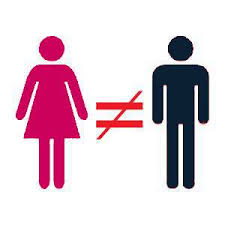
“Fates and Furies” shows how men are not from Mars, and women are not from Venus. Lauren Groff shows how “Adams Rib” is a joke played on women by men who have a false sense of gender superiority.
Groff artfully illustrates how men and women are equal. They are equal in every respect, but particularly Groff shows how they are equal in drive, ambition, ability, and fallibility.
Groff’s artistry is in the beauty and cogency of her writing. She tells the story of a husband and wife’s lives from cradle to adulthood.
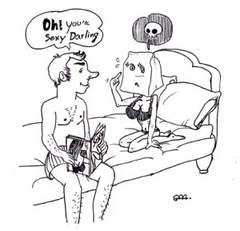
Groff shows how little difference there is between the sexes when new life is hatched but not borne by parents. (This is not to say parents are not important but parents and culture often fail children by training them to be unequal–for example–the picture of marriage shown above.) The first half of her book is told from a husband’s view of himself in the world; the second half is told from a wife’s view of herself in the world.
Every reader/listener will draw their own conclusion about Groff’s view of sexual equality. Her story may not be your story, but it will give every person pause, if not enlightenment.
Power plays a role in every human’s life. Gender is immaterial. Groff shows how a man and woman exercise power between each other and among family, friends, and acquaintances.
Groff focuses attention on one couple, a husband and wife, and their personal relationship. Groff reflects on each of their histories to explain, in part, how they became who they are.
The couple, and outsiders of the couple’s relationship, have little understanding of who they are or why they act as they do.
The beauty of Groff’s writing adds dimension to the truth that men and women are equal. Lancelot (aka Lotto) Satterwhite and Mathilde Yoder (Lotto’s wife) are creative geniuses. One might argue both have character flaws, as all humans do, but that is not the story.
Lotto is a narcissist who thinks the world revolves around him. Mathilde is a narcissist who lets Lotto think the world revolves around him. Both are trapped in their own delusions.
From delusion to reality, Groff shows how deep love can be, even between two narcissists.
Lotto and Mathilde merry, graduate from Vasser (a liberal arts college in New York) and begin their lives together. Lotto is a struggling actor and Mathilde works for an art gallery. In their early years of marriage, Mathilde works to make money they need to keep their household together. Groff changes that condition when Lotto abandons acting to become a playwright. In that change, Groff reveals more of Lotto’s life in flashbacks.
Lotto’s life experience leads him to fame and, to a degree, fortune. In Lotto’s telling-that success is different from the telling given by Mathilde in the second half of Groff’s book.
Lotto and Mathilde are very much alike, aside from gender. Both are abandoned by their parents. Both learn how to cope with life alone. Each draw on their experience as children to learn how to survive in a world driven by money, power, and prestige.
After Lotto’s death, Groff uses flash backs to explain Mathilde’s childhood. In that telling, Mathilde is shown to be an equal to Lotto. Lotto’s mother, who dislikes Mathilde, disowns Lotto from a family fortune. Lotto’s mother plans to rescind the disownment upon her death. As fate (luck) would have it, Lotto’s mother dies before Lotto’s passing. Mathilde inherits her husband’s estate.
The hardship of Lotto’s and Mathilde’s childhoods prepares them to use their gifts of intelligence and sex to survive.
Groff shows little difference in their drive, ambition, and ability to make their way in the world. None of that makes any difference with life’s luck (or, if you wish, fate). That is one of many points Groff makes in “Fates and Furies”. Life is a matter of fate (luck), and fury.
Groff shows how men and women are equal. They have different strengths but equal drive, ambition, ability, and fallibility.
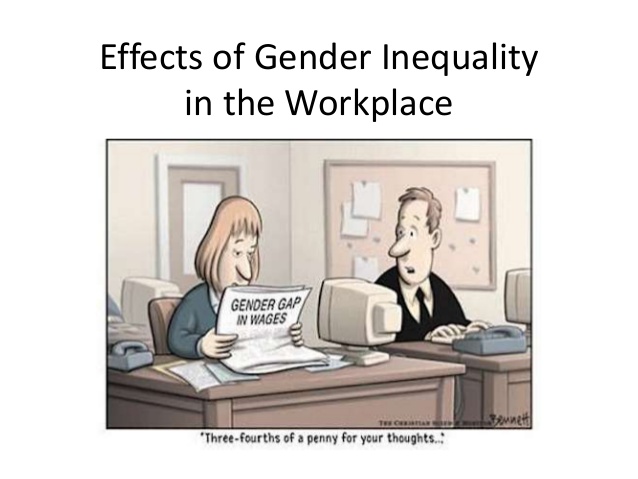
The missing ingredients in the modern world are equal pay for equal work, self-understanding, and public acceptance.
Democracy in Chains: The Deep History of the Radical Right’s Stealth Plan for America
By: Nancy MacLean
Narrated by Bernadette Dunne
Nancy MacLean (American author, historian, professor at Duke University)
Labeling people is mind numbing. Labeling of political and economic interests is a crime against reason. Democrat, Republican, conservative, liberal, libertarian, Tea Partier, right-wing, and left-wing are some of the most common political labels. In the light of reason, none of these labels make consistent sense.
In modern American politics, labels attach themselves to people like Nancy Pelosi, Mitch McConnell, Donald Trump, Joe Biden, and the Koch Brothers.
Nancy Pelosi (Speaker of the U.S. House of Representatives.)
Mitch McConell (Senate Majority Leader.)
THE KOCH BROTHERS (KOCH INDUSTRIES CORPORATE LEADERS)
ADAM SMITH (1723-1790, AUTHOR OF -THE WEALTH OF NATIONS)
LUDWIG von MISES (1881-1973, THEORETICAL ECONOMIST OF THE AUSTRIAN SCHOOLD, INFLUENCED HAYEK AND FRIEDMAN)
JOHN MAYNARD KEYNES (1883-1946)
FRIEDRICH AUGUST von HAYEK (1899-1992)
JAMES BUCHANAN (American Economist, 1910-2013.)
Milton Freidman (1912-2006)
The only common characteristic of these representatives is that they are human’. Their labels only speak of partial truths about what they believe and what economic policies they support. Nancy MacLean uses most of these labels to make her case for “Democracy in Chains”.
Depending on one’s point of view, MacLean enlightens one side of her argument that, indeed, democracy is in chains. The chains of which she writes are manufactured, distributed, and applied by corporate America. MacLean identifies Noble Prize winner in Economics, James Buchanan, as the theorist that gave momentum to the Koch brothers’ political drive for unfettered free-enterprise.
Humans, even historians, are not omniscient. They are burdened with personal experiences that shape their beliefs and often compound their biases. Beliefs are not objective. They are right and wrong within the boundaries of facts and societal norms. Facts are facts, but norms are accepted behaviors that conform to a group, community, or culture.
An appeal Trump has to some Americans has to do with his consistency in denying the truth. Covid19 is a devastating killer but Trump gives comfort to many who want to believe his denial of reality. The same might be said about Trump’s global warming opinions. The science shows his chosen facts are wrong and America will pay for it in one way or another.
Trumpism is a disease of America’s own making but this too will pass. History will reflect how dangerous modern media is in promoting the worst qualities of the American electorate.
Societal norms change with time and human experience. Facts do not change but their interpretation is changed by new societal norms.
A prime example of facts that change, based on social norms, is the fact of world misogyny. “Me Too” has changed the meaning of the fact. Harvey Weinstein is now in prison and Jeffrey Epstein killed himself.
That part of the American Constitution’s preamble that says the purpose of government is to provide for “general welfare” of all, is at issue with political and economic labels.
MacLean creates an argument that sounds like a conspiracy theory, a cabal of rich benefactors and political zealots who collude to reinterpret the American Constitution.
The principals of this conspiracy are the Koch brothers based on a theory grounded on an interpretation of von Mises’ economics.
Ludwig von Mise’s economic theory is artfully resurrected by the economist James Buchanan, modified by Friedrich Hayek, and reinforced by Milton Friedman.
Buchanan’s fundamental argument is that free enterprise should be free. He argues that the profit motive outweighs the negative consequence of social inequity by offering equal opportunity.
In Buchanan’s opinion, the only purpose of government is to provide for the common defense of the country. Education should be financed by private ownership of schools. Buchanan argues government financing of social service interferes with the benefits of a free market.
Buchanan reinforces a Spencerian belief in a “survival of the fittest”, a beggar thy neighbor distortion of Darwinian evolution. MacLean suggests the Koch brothers adopt Buchanan’s economic theory and implement it through clandestine proselytizing of others, and financial support for candidates who will vote for maximal unregulated free enterprise.
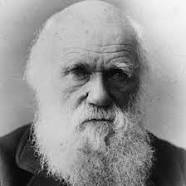
Herbert Spencer (1820-1903) conflates Darwinian evolution with free enterprise.
MacLean points to the folly of Buchanan’s economic policy in his consultation with President Augusto Pinochet in Chile. Buchanan recommends creation of a constitution that establishes and enforces Buchanan’s free-enterprise theories that forbade trade unions and encourage privatized social security. Unlike America, Pinochet’s free-enterprise government had no checks and balances.
Augusto Pinochet (Junta leader, military Commander and Chief, and then President of Chile from 1974-1990, died in 2006.)
With military oversight and control, Pinochet’s government victimized its citizens in the guise of a government that supposedly embraced libertarian free-enterprise. In fact, Pinochet’s constitutional government enriched a small minority and victimized (both economically and physically) the majority of the Chilean population.
Ludwig von Mises, an economics professor of the Austrian school, is the teacher of Friedrich Hayek. MacLean reviews papers written by James Buchanan who endorses von Mises economic theory; without any acknowledgement of Hayek’s tempering of von Mises’ “no quarter” for the poor or disabled. Buchanan becomes a theorist who motivates the Koch brothers to spend millions of dollars to undermine Government regulation of free enterprise.
MacLean explains how the Koch brothers create a non-profit foundation to elect Senators and Representatives to undermine unionization, government support of public health, public education, social security, and other public services supported by government tax dollars. This cabal is formed in the 1960s, particularly after Johnson’s “Great Society” movement. The cabal is built on belief that health, education, and welfare are best served by free enterprise, not government programs.
MacLean notes how this cabal fights increased taxes on the rich to pay for public services that subsidized public health, education, and welfare. Buchanan identifies federal taxes as a form of confiscatory government action, tantamount to a tyranny of the majority over a rich minority.
The cabals’ argument is that private enterprise is the real engine of improved public health, education, and welfare for all Americans. Their supporting evidence is the rising wealth of the economy, and the general health of the American population.
The “libertarian” Koch followers imply the gap between rich and poor is a motivation for climbing the ladder of American opportunity.
Though MacLean labels this cabal as Libertarian in motive, it hides behind a cloak of Republicanism. MacLean argues that Republicans who fight this secret organization either change their tune or lose their public office. Her evidence is Republicans who have lost their seat in Congress, like John Boehner, or switched their tune, like Orrin Hatch, who retired after 42 years as a Republican Senator from Utah.
JOHN BOEHNER (FORMER SPEAKER OF THE HOUSE)
Orrin Hatch (Former U.S. Senator for Utah)
Putting aside labels, “Democracy in Chains” is simply about self-interest. Human nature is to seek one’s own interest whatever one’s political or economic label. Until self-interest becomes care for all Americans, there will be opposition to government tax dollars for public health, education, and welfare.
MacLean implies American Democracy is chained by the self-interest of the rich and industry lobbyists who feed the electoral process. The issue of government competence is deeply affected by dollars spent by corporations and the rich to elect sycophants.
The election process in America needs reform. Government competence in providing public welfare is distorted by lobbyists pursuing their own agenda.
Only competent government can deal with the complex causes of homelessness, a failing public education system, international conflict, pandemics, and environmental disasters.
When homelessness, poor education, crime, a pandemic, or physical disaster directly affects the self-interest of the many, even the …Radical Right…will turn to government for help.
An irony of MacLean’s labeling of the Koch cabal is Donald Trump’s election as the President of the United States.
Trump is his own label, neither Republican, conservative, libertarian, or liberal, but he is a product of the Koch brothers’ division of the Republican party.
Trump’s veto of Congress’s approval of a Defense bill and Covid19 relief reflect the temper tantrum of an eight year old.
Trump’s life may be spared by the experimental medicine he has been given. His response is “don’t be afraid” of Covid19. Whether he lives or dies, all people should be afraid.
Trump is a carnival barker trying to attract patrons to an entertainment venue. He has no particular philosophical underpinning. That may explain why he became the President of the United States. America has lost its way.
Toward the end of MacLean’s book, the libertarian attack on social security is shown as a penultimate example of the threat of ideas in the United States. The irony of that statement is that the U.S. is a monumental beneficiary of ideas in its Constitution.
MacLean explains how Buchanan recognizes how social security in the United States is an election killer for anyone who argues it should be privatized. Buchanan, and presumably the Kochs and their followers, devise a scheme to split the electorate that supports social security.
Co-opt those nearing retirement by making them exempt from any changes in the social security benefit.
Offer IRA’s as an attractive alternative to government subsidized social security.
Enlist the finance industry into a campaign for privatization of social security as a benefit to them for more private investment through their investment houses.
Emphasize the frail financial viability of social security for the younger generation by suggesting it will go bankrupt before they are eligible.
Explain the potential for increase in taxes on the rich to maintain social security when now their contribution is limited to the same payroll contribution as the poor and middle class.
If this divide and conquer scheme works, opposition to privatization of social security becomes less of a problem for “libertarians” who wish to be elected. The principle of divide and conquer exemplifies a nation founded on self-interest. To true believers-everyone needs to fend for themselves. Only the strong (the relatively rich, and/or clever) will survive in Buchanan’s world.
As Supreme Court’ Justice Oliver Wendell Holmes said, “Taxes are what we pay for a civilized society.” That may be liberal jargon, but private enterprise would have foundered, and society would have been less civil without checks and balances written into the Constitution. MacLean makes a strong case for reducing corporate influence in the American electoral process.
All the Single Ladies (Unmarried Women and the Rise of an Independent Nation)
By: Rebecca Traister
Narrated by Candace Thaxton, Rebecca Traister-introduction
Rebecca Traister (American author.)
In a broad context, “All the Single Ladies” is about freedom’s two edges. One edge lets people be themselves. The other edge makes people conform to societies’ rules.
Rebecca Traister begins by summarizing the history of unequal treatment of women. The truth rings loudest because of today’s “Me To” movement.
“Me Too” is a movement long delayed, and figuratively disfigured by a sharp edge of male’ power, domination, and social conformity.
Freedom is a function of power. No one is free. All nations have rules that limit freedom.
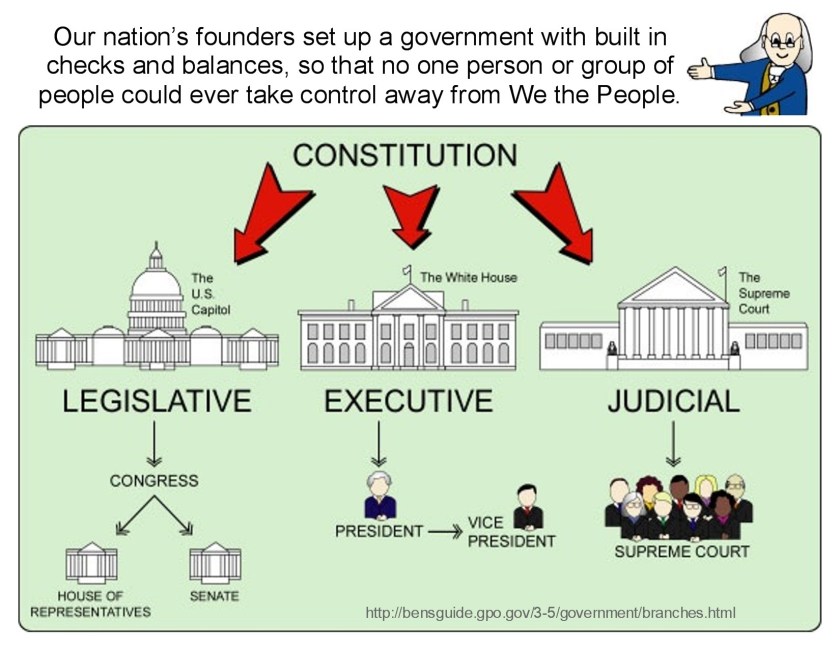
America’s founding fathers recognized freedom is defined by power. That is why government “checks and balances” were created.
The weakness of “checks and balances” is that they continue to be influenced by the power of human (principally male) rationalization.
Human beings do not see themselves as others see them. In that light, Traister notes one of Patrick Moynihan’s blind spots.
Daniel Patrick Moynihan (1927-2003, NY State Senator, author of The Negro Family: The Case for National Action.)
Moynihan affixed “The Negro Family” break-down as a cause of ghetto poverty. The cause of poverty is not single-parent homes. Poverty is a consequence of discrimination.
Singlemom homes are a choice for some mothers. Sometimes for reasons of independence, as explained by the women interviewed by Traister. But also because of a history of misogyny, and dysfunctional marriages or partnerships.
Too often it seems the choice of single-parent homes is because of abuse, loneliness, loss of emotional commitment, adultery, financial crises, or some other extrinsic cause.
Single-parent homes are not a cause of poverty. If women are employed and compensated at the same rate as men, they could afford child care for their children while they work. Like some low wage workers, women may have to take two jobs. (Of course, what’s new?–Working women have always had two jobs. Working at home and working at a job.)
The cause of poverty is systematic discrimination. Discrimination denies educational opportunity. Discrimination denies equal pay for equal work.
The rules of freedom are based on power, not science, not truth, but on human rationalization. Traister indicts male domination of the rules of freedom. She also notes societies’ discrimination based on race.
Discrimination against women may have begun with male domination when physical strength meant survival (not suggested or inferred by the author).
The growth of society, and the ascendance of religion, reinforced gender roles. Gender roles may have had some validity in the stone age, but they became rationalizations as humanity and society developed. Here is where Traister strikes at the heart of gender inequality.
Traister interviews many single women, some high achievers, others just making a living. What she finds is that some women choose to be single because of a lifestyle that offers freedom. It is the freedom of choice.
Freedom requires no cooperation from another to do whatever one wants, with the caveat of doing no harm to others.
With freedom, Traister is not saying single women choose to be anti-social. On the contrary, she argues single women are likely to be more socially connected than married women. In her interviews, Traister notes that single women are likely to have more social contact because they are not constrained by a life-partner’s interest or attention.
An irony of Traister’s observation about the consequence of marriage in “reducing social contacts” is that Traister chooses to marry. Her book is not meant to be anti-marriage, but to recognize the difference between single-hood and life partnership. Her unspoken belief is that both have equal potential for happiness and fulfillment. Her intent is to explain how happiness and fulfillment can be equally satisfied by single-hood.
Traister identifies a social construct that might be labeled “slammed relationships” that are not necessarily sexual but deeply, emotionally connected.
A great number of “…the Single Ladies” interviewed by Traister recount slammed relationships.
Though not suggested by Traister, a slammed relationship between men seems less likely because of the gravitational pull of “power”.
To many humans, the sexual act is pursuit of power over another, not emotional connection.
Real intimacy is not about a player’s control, or an actor’s act. A truly slammed relationship is not about power. A slammed relationship is about common interests and emotional connection.
Traister gives the example of a single lady in Boston that has a slammed relationship with another woman that chooses to move to California because of a job. Their emotional connection is so close that the woman who stays in Boston feels abandoned.
The Bostonian is told, by acquaintances of both people, that her friend will return and their slammed relationship will resume. But, as Thomas Wolfe wrote, “you can’t go home again”. Her friend does return from California. They renew their friendship, but they never reconnect at the same slammed friendship level.
Interestingly, the slammed relationships Traister writes about are between women, not men.
That raises the question of whether men can have slammed relationships, but that is not the subject of Traister’s book.
(From this reviewer’s perspective, most men are unlikely to develop slammed relationships. They have little reason to–because society has been dominated by men since the stone age. Men have power; most women do not. Men have little need for slammed relationships.)
Traister notes many of today’s women gravitate to singlehood because of its freedom. The freedom to stay or leave, to be alone, or to be with someone.
The freedom to choose has consequence. It has the potential of destroying the value of slammed relationships. Losing emotional connection is a criticism of society. One might conclude from Traister’s book, the world needs more “…Single Ladies”. “…Single Ladies” have the tools for slammed relationships.
Men can hugely benefit from women that take control of their lives. It is liberating for a driven man to be married to a driven woman because each takes responsibility for themselves.
Traister acknowledges; from her personal experience and interviews of single women, that there are consequences for choosing single-hood. All singles have vulnerabilities. They are vulnerable to loneliness.
Being single makes one vulnerable to accidents without help from someone living with them. People who are alone have less financial support when they become ill. However, all of these vulnerabilities are common to both sexes. The difference is women receive 73% of what a man gets for the same work. The difference is power of employment, advancement, and financial opportunity remain disproportionately in the hands of men.
Traister notes that loneliness can be equally present in marriage as in single-hood. Vulnerabilities are a consequence of living life whether with someone or no one. The difference is that today’s society has more men than women with power–power that aids or obstructs equality of opportunity for all.
Equality of opportunity is what every man and woman deserve. Life takes care of itself.
There is an increasing lack of empathy from world leaders because they are mostly men. Losing emotional connection is one of the reasons America is unable to eliminate homelessness. This book offers praise to “All the Single Ladies” of the world. Women seem better at emotional connection. It may be why America needs a woman for President.
As many know, the City of Las Vegas is different from the Las Vegas Strip. The City is the city. The Strip is outside the city but in the same county, connected by extensions of north/south streets.
ON THE LEFT IS THE FREMONT STREET EXPERIENCE. IT IS IN THE CITY OF LAS VEGAS. ON THE RIGHT IS LAS VEGAS BOULEVARD WHICH RUNS THE FULL LENGTH OF THE STRIP. BOTH DESTINATIONS ARE IN CLARK COUNTY.
During the pandemic, some take a walk through the city. With Covid19, some residents visit the park.
Like the Strip in Clark County, Fremont Street is deserted. (The distance from the Strip to Fremont Street is 5.4 miles.)
Fremont entrance on east side of the cityContainer Park restaurants and shops closed in the City.Closed night club in the city.Las Vegas Blvd. takes you to the Strip from the Fremont ExperienceThis is a zip line down FremontFremont is blocked off from pedestrians.
Not far from the City is Sammy Davis Jr. Park. Sammy Davis Jr. Park is 3.2 miles from Fremont Street.
Baseball parkTennis courtsPicnic TablesIn the distance is the Strat located on the stripPublic concert shell for live performances is seen behind the tree
Las Vegas is a destination city for the world. How long it will remain a capital of entertainment is solely based on belief in personal safety. Las Vegas is the capital of the gambling industry in America but few want to risk their lives on Covid19 in April of 2020.