SHAMING

Sexuality is the boon and bane of human society. The boon is human procreation. The bane is the shame visited upon human beings.

Books of Interest
 Website: chetyarbrough.blog

The Mothers

By: Brit Bennett

Narrated By: Adenrele Ojo

Brit Bennett (Author, New York Times Bestseller, graduate of Stanford University and University of Michigan.)

In one sense, “The Mothers” is about the serendipity of life. In another it is about human shaming. Brit Bennett’s book infers life’s happiness comes as much from chance as by effort. Of course, human life begins with “…Mothers” but as science explains, a part of who we are and who we become is from fathers. Bennett’s story is a view of life through the eyes of a daughter who loses her mother through suicide. The daughter’s genetic inheritance is intelligence and ambition. The daughter is born in a lower middleclass family. She lives through her high school years when her mother dies. She lives with her father and remembers her mother’s disappointment with life. Her mother’s wish for herself and daughter is to become more than what the circumstances of life seem to offer.

The main female characters of “The Mothers” are the daughter, Nadia Turner and her friend, Aubrey Evans.

The main male character is Luke Sheppard, a high school football athlete who is seriously injured in a sports accident. He is 21, living at home with his father who is a minister and his mother who manages the household and helps her husband with the ministry. Nadia is 17 and in high school. She is academically near the top of her class. Luke becomes Nadia’s boyfriend. Nadia becomes pregnant. Aubrey Evans becomes a close friend sometime after Nadia’s abortion. It is Nadia’s decision to have the abortion. Luke is ambivalent about Nadia’s decision but, with the help of Luke’s mother, $600 is given to Nadia for the abortion.

Luke leaves the decision to Nadia on the abortion but limits his involvement to giving her the required $600 fee.

Luke regrets his behavior as the father of an unborn child and his absence during and after the abortion. Nadia goes on to college at the University of Michigan after having become friends with Aubrey in high school. Nadia and Aubrey become close friends. While Nadia is going to college and seeing the world, Luke and Aubrey meet and become a couple. They eventually marry. Nadia never tells Aubrey of her relationship with Luke or the abortion.

Once listeners become acquainted with the three main characters, human shaming takes over the story.

Every major and minor character shames themselves and others by their acts or ignorance. Both mothers and fathers are guilty, but the author infers mothers are the most shaming. Mothers shame children rather than try to understand and guide their human nature.

Human sexuality dominates lives whether male or female, young, middle aged, or old.

The story is well written, but its theme misses the mark. Mothers and fathers (all humans) are equally blame-worthy when it comes to shaming. Sexuality is the boon and bane of human society. The boon is human procreation. The bane is the shame visited upon human beings. Bennett’s characters show there is plenty of shame to go around. Shaming is popular which explains why Bennett’s book became a bestseller.

DEATH WITH DIGNITY

Tisdale’s book is hard to listen to but worth one’s time and effort for understanding.

Books of Interest
 Website: chetyarbrough.blog

Advice for Future Corpses” And Those Who Love Them, A Practical Perspective on Death and Dying

By: Sallie Tisdale

Narrated By: Gabra Zackman

Sallie Tisdale (Author, essayist, who earned a nursing degree in 1983, born in 1957.)

The title of Sallie Tisdale’s book is off-putting but an apt description of her advice about “…Death and Dying”. Tisdale is a registered nurse who has written several books. Her experience makes her advice about death relevant and important. Those of a certain age or physical condition are shown how to prepare themselves for the inevitability of death.

The Japanese writer Haruki Murakami wrote “Death is not the opposite of life, but a part of it.”

Tisdale explains how a person can manage the inevitability of their death. To some, this seems a macabre thought, but nothing can be depended upon in life except its end. Why not manage that end with at least as much skill as one chooses to live? The reason people choose not to think about planning for death is because they are dealing with the everyday issues of living.

The irony is that Tisdale argues “planning for death” is an everyday issue.

Even if one knows they will eventually die, why care about it? Most lives are unplanned and seem out of our control anyway. How many plans for living are turned upside down by unforeseen events? Unforeseen events like Covid19, the rise of Hitler, WWII, the atomic bomb, and so on and so on. Yes, the occurrences of history change human plans. However, the difference is that death of the individual is a known inevitability. When one knows, their death is going to happen, why not have a plan?

Tisdale gives listeners the details of a plan for death.

Prepare Healthcare Directives

  • Decide to provide or not provide organ donation.
  • Explain burial or cremation wishes.
  • Maintain a financial inventory of accounts and assets.

Create a Will covering heirs and their inheritance. Review the plan based on life changes.

Having a will takes asset distribution out of the hands of a state court system. Health directives show your medical wishes and notes who has the right to make decisions for you in the event of incapacitation. A Health Care Directive stipulates whether extraordinary measures or comfort until death is to be administered. Written directives can explain how the body, after death, is to be cared for, i.e., is the body to be used for medical research, organ transplant, cremation, or burial. Time is of the essence when a person dies because living tissues and organs die soon after death of the person.

Beyond paperwork, Tisdale explains what is important to the dying when diagnosed as terminal.

To a family or caregiver, the hardest part is helping the dying cope with growing incapacity. When one is terminal, providing as much comfort as possible until death is of primary importance. The hardest part to the dying person is loss of control over one’s body. Listening to Tisdale’s real-life experience illustrate how American hospice and hospital care fails the terminally ill.

On the one hand, it is the fault of the dying for not having a clear plan for what is to be done in the event of a terminal diagnosis or illness, but Tisdale’s point is that neither hospice nor hospital’s services offer consistency in their care for the dying. Tisdale believes that once a person is diagnosed as terminal, the obligation of hospice’ and hospital’ care is to give comfort until death. However, institutions and doctors do not have the time nor inclination and American families do not have the money. Tisdale mentions Japanese elder care by noting the majority of those who are dying, die at home. The inference is that institutions are unlikely to provide the same care as the family of one who is dying.

Tisdale believes “Death with Dignity” laws passed in Oregon, Washinton, California, Colorado, Hawaii, Maine, New Jersey, Vermont, and Washinton, D.C. are on the right side of history.

They emphasize the importance of comfort for the terminally ill. A “Death with Dignity” law allows doctors to prescribe lethal drugs to end a terminally ill person’s life as long as the injected drug is not administered by the doctor or institution for which he/she works.

Tisdale’s book is hard to listen to but worth one’s time and effort for understanding.

RUSSIAN SOCIETY

Alcohol consumption in Russia and a penchant for autocratic government are long-standing societal truths.

Books of Interest
 Website: chetyarbrough.blog

Dead Souls

By: Nikolai Gogol

Translated By: Richad Pevear and Larissa Volokhonsky

Nikolai Gogol (1809-1852, Ukranian novelist born in the Russian Empire, short story writer, and playwright.)

“Dead Souls” is not an enjoyable listening experience. Partly, because it is not a completed book. However, it is an insightful examination of a Russian culture in decline. It is an incomplete novel with its main character, Pavel Ivanovich Chichikov, who uses his looks, intelligence, and guile to appear prosperous in a society of rich and poor.

Agriculture is the economic foundation of society in mid-19th century Russia. The industrial revolution is at its beginning.

As a clerk in the government, Chichikov is familiar with government policy of charging a tax for deceased peasants that are owned but have died on Russian’ landowners’ farms. Social position is associated with land and peasant worker’ ownership, i.e., the more land and peasants one owned, the higher a Russian aristocrat is esteemed. Chichikov has no land but has earned and saved enough money through his work with the government to come up with a scheme to improve his status in society. His idea is to travel the country, buy dead souls, and purchase a farm to show society he is an aristocrat of substance. By buying peasant souls and land he creates an image of wealth and aristocracy. His plan is to buy land with the money he has saved over years of work as a clerk. He assumes his position in society will be secured by land ownership and owned peasant’ souls.

Chichikov’s false image is assumed to be true in a high society soiree.

Chichikov clownishly approaches the daughter of a regional governor because of her beauty. His attention is noticed by some of the wags at the social event. Similar to today’s social media, word spread about Chichikov’s bizarre purchase of dead souls. Rumors about Chichikov proliferate like Alex Jones spread of lies in the 2022 Uvalde school children murders.

Various stories about Chichikov’s history spread from people who were at the governor’s soiree.

Many reasons were given for Chichikov’s purchase of “Dead Souls”. One who was at the dance alleges the purchases were to show Chichikov’s intent to kidnap the daughter of the governor. Chichikov hears of these ludicrous accusations and flees the small town in which the ball had been held. In fleeing, Gogol’s story provides more examples of Chichikov’s nature and reasoning with the objective of showing the dysfunction of Russian society and its aristocratic governance.

Chichikov meets with a successful Russian farmer who capitalizes on what is known of agricultural science of that time and uses that knowledge as an aristocratic owner of many peasants who worked his land.

Chichikov persuades this prosperous farmer to lend him 10,000 rubles to finance the purchase of a failing nearby farm. However, Chichikov’s deceptions catch up with him. He is arrested and judged by a Prince of Russia who plans to make an example of him. The story obscurely ends with the prince inferring a way out of the mess Chichikov’s lies engendered. The story is never finished. Reader/listeners never learn the fate of Chichikov. The high praise of the book rests with its exposure of the societal faults of mid-ninetieth century Russia.

Every national society has strengths and weaknesses. America is as vulnerable to lies and misrepresentation as Gogol shows of Russia. The best one gets from “Dead Souls” is a vague understanding of Russian society. Alcohol consumption in Russia and a penchant for autocratic government are long-standing societal truths.

TRAGEDY’S LESSON

The sharpened point of Slade’s story is that, like the sinking of the Edmund Fitzgerald and El Faro, it takes great tragedy before change takes place.

Books of Interest
 Website: chetyarbrough.blog

“Into the Raging Sea” Thirty-Three Mariners, One Megastorm, and the Sinking of the El Faro

By: Rachel Slade

Narrated By: Erin Bennett

Rachel Slade (Author, winner of the Maine Literary Award for non-fiction.)

Rachel Slade begins her book with the last words of a mariner calling for help from a sinking ship in the grip of a Hurricane. The ship is the El Faro. The author writes her story based on the El Faro’s written log during a severe storm somewhere between Florida and Puerto Rico. The storm was Hurricane Joaquin, a category 4 Hurricane that had recorded wave heights of 10 meters (over 32 feet). Winds ranged from 130 to 156 mph with rough seas, roiled by rogue waves. Rogue waves are twice the size of surrounding waves and appear unexpectedly.

Slade methodically sets a table for the El Faro on a “…Raging Sea”.

Slade writes about a mariner’s desperate call for help. In its beginning, the story lags but the author offers cultural insight to the life of merchant marines, the equipment they operate, and the business of international trade. Her story explains how important and dangerous the life of a merchant marine can be, why it is important, and how mariners are dependent on equipment they use, their shipmates’ qualifications, and business owners’ drive for success.

Every person makes decisions about what they are going to do to make their way in life.

Becoming a merchant marine, like every decision in life, is based on personal circumstances, ambitions, and choices. Slade describes the El Faro mariners as adventurous and interested in seeing the world and being paid for what they do. Some are educated, others not, but all learn what they need to do to be part of a mariners’ crew.

There are schools for mariners at all levels of education but like any job, one can start at the bottom as a laborer that learns by doing. What the story of the El Faro shows is that like in any chosen job in life, some become expert at what they do, others try and fail, try again or move on. What Slade infers is that the El Faro sinks because of its crew but also because of others, both on and off the sea. As John Donne wrote in 1624, “no man (or woman) is an island”–emphasizing the interconnectedness of society.

The crew of the El Faro wanted to be paid but to some it was adventure and/or escape from a humdrum of life. Undoubtedly, mariners were motivated for different reasons. Some wished to see the world, be recognized for good work, wished to crew on bigger and better vessels, or be promoted to higher position. Motivation and ambition are different for everyone. What is lost to history are details. Slade tries to reveal some of the details about the El Faro’ crew, its owners, the ship, and the business of international trade. Why did the El Faro sink? Who and what was lost? What is it like to be in a hurricane at sea? Is somewhat at fault?

Slade’s story gains momentum as sinking of the El Faro seems imminent.

The aftermath is a careful and detailed explanation of rescues at sea, why the El Faro sank, what rescue efforts were made, how families of the lost were affected, and what changes were demanded in the industry. The loss of 33 mariners, the entire crew of the El Faro, is a horrible tragedy for the families who lost their loved ones. The causes of the tragedy range from crew mistakes to ship design to corporate malfeasance. The common thread is human nature.

What this review suggests is that the fundamental issue in every form of government and society is balance between public and private good.

One will draw their own conclusions from Slade’s history of the loss of the El Faro. In a capitalist society, balance is dependent on prudent regulation. Prudence is meant to mean the use of human reason to balance the needs of the public with private interests. That balance is complicated by human nature that drives private interests to focus on money, power, and prestige rather than public need.

Slade shows regulation of international trade often conflicts with private interests that object to regulation and improvements in ship design.

Conflict between public good and private interest is not a new discovery. Neither is the sinking of the El Faro. The sinking of the Edmund Fitzgerald in 1975 led to changes in international shipping. Business owners were required to provide survival suits for mariners in their employ, depth finders, positioning systems, improved ship design, and inspections by the Coast Guard became mandatory. These were regulations that increased costs of shipping that rippled through the economy and initially penalized private interests. The public benefits because mariners are safer, and families are less threatened by loss. The public also suffers because transported goods become more expensive. Balance eventually occurs as private interests are compelled to pay more for labor which is part of the public.

Capitalism works because it is a process that balances public need with private interests. Capitalism’s weakness is that the process takes time to balance public needs with private interests.

The sharpened point of Slade’s story is that, like the sinking of the Edmund Fitzgerald and El Faro, it takes great tragedy before change takes place.

KKK

American Democracy is a work in progress and remains at risk of failure.

Books of Interest
 Website: chetyarbrough.blog

“A Fever in the Heartland” 

By: Timothy Egan

Narrated By: Timothy Egan

Timothy Egan (American Author, journalist, former columnist for the New York Times, won the National Book Award, the Carnegie Medal, and a Pulitzer Prize for National Reporting.)

Timothy Egan’s “A Fever in the Heartland” is about the Ku Klux Klan and its growth in Indiana, the American Midwest, and Oregon in the early 1920s. Soon after the Civil War and death of Abraham Lincoln, a group of former Confederate veterans formed a social club in Pulaski, Tennessee.

The Ku Klux Klan grew into an underground movement that peaked in the 1920s with white American membership estimated at over 4 million.

Egan’s history is about the rise and fall of David Curtis “Steve” Stephenson who became the Grand Dragon of the Indiana Klan in 1923. Stephenson endorsed and promoted public hate toward immigrants and minorities. He became a proven liar who lied about his past and his actions as a leader. Egan’s history of Stephenson is an American political’ warning. Egan shows how character and honesty are as important in today’s politics as they were in the 1920s.

Egan’s choice of David Curtis Stephenson as a KKK’ leader illustrates how “A Fever in the Heartland” can grow to threaten American Democracy.

Stephenson is a man who smoothly lies his way to the top of a weak KKK’ chapter in Indiana by pandering to anti-immigration and anti-minority sentiments in the country. (The same sentiment seen in today’s America.) Stephenson became a rich man by recruiting the public into the KKK with a $10 fee for a white hooded garment ($4 for the garment, with $6 in his pocket) for membership to an exclusive group of American white men who would terrorize and murder non-whites, non-protestants, and immigrants. The KKK used secrecy to hide membership in this exclusive white American group.

The KKK hid their private reputations while (as an organization) publicly funding American celebrations and charities to feed its membership.

With membership dues and a persuasive personality, Stephenson (within 3 years) became a powerful and influential KKK’ leader. Stephenson convinced members of the KKK to become elected officials to gain control of government and public offices in Indiana. KKK’ members subsidized and promoted the election of like-minded white Americans. With control of government agencies, public services like the police and judiciary, the KKK controlled much of what happened in the State of Indiana. The wealth and influence of Indiana’s KKK planned a Presidential run in the late 1920s. The Indiana leader of the Republican Party was a member of the KKK and kowtowed to Stephenson as Grand Dragon of Indiana’s KKK.

Egan explains Stephenson was a persuasive carpetbagger who moved to Indiana from Texas while inferring he was an Indianan to become the Grand Dragon of Indiana’s KKK’ chapter.

Stephenson lied about his education and past but with success in increasing membership, he gained support of the National KKK’ organization. The truth of his background is that he abandoned his first wife and child when he left the lone star state. He was remarried to a second wife who leaves him. Stephenson beat his second wife who returned only to be beaten a second time when she attempted reconciliation. Egan noted Stephenson was a heavy drinker and abusive molester of women who worked for him. Stephenson was ultimately convicted of second-degree murder of Madge Oberholtzer, who was the creator and manager of a lending library.

Madge Oberholtzer (Stephenson is ultimately convicted of second-degree murder of Madge Oberholtzer for brutalization and rape.)

In the middle of the night, with the help of fellow Klansman, Madge Oberholtzer was kidnapped by Klansman working for Stephenson to take a train to Chicago. On the train, Stephenson rips Oberholtzer’ clothes off and rapes her. He used his teeth to bite her breast and parts of her body.

After being returned to Indianapolis, Overholtzer went to a drug store to buy bichloride of mercury, a slow acting poison. She chose to take the poison to end her life.

The taller man in this picture is Ephraim Inman, the defense attorney for Stephenson. He is standing next to Will Remy the prosecuting attorney, dubbed the “boy prosecutor” who successfully convicted Stephenson for 2nd degree murder.

Will Remy told the crowded courtroom that Stephenson “destroyed Madge’s body, tried to destroy her soul” and over the course of the trial tried to “befoul her character.” Overholtzer’s left breast and a bleeding right cheek were bitten by Stephenson when she was raped. Remy argues Stepheson’s teeth were a murder weapon. Attorney Asa Smith, a Overholtzer-family’ friend prepared a dying declaration for Madge Oberholzer that was placed into evidence.  Judge Sparks admitted the declaration and allowed Remy to read it to the jurors. (Sparks was not a Klansman.)

Stephenson considered himself, not only above the law, but as the law in Indiana. (That is a familiar refrain in the 21st century.) Stephenson was convicted for second degree murder. It was second degree murder because the cause of death was Madge Oberholzer’s decision to take her own life.

The Klan still exists in America.

James Alex Fields Jr. plowed into a crowd of demonstrators in Charlottsville, Va in 2017. He killed one of the protestors.

Fields admitted to being a member of the KKK. Though the Klan remained a political power in Indiana for some years after Stephenson’s trial and conviction, its Indiana’ power and influence was diminished. The national position of the Klan has declined in America as is believed in modern times, but it still exists.

Speaking about the white nationalist groups rallying against the removal of a Confederate statue, former President Trump said, “You had some very bad people in that group, but you also had people that were very fine people, on both sides.”

As Egan’s history of Grand Dragon Stephenson illustrates, American Democracy is a work in progress and remains at risk of failure. Honesty of elected officials and “there being no person or elected official above the law” remain important for America to remain a Democracy.

TIME TRAVEL

The social implications of time travel are revealed in Bradley’s clever, adventurous, sometimes humorous, and apocryphal story.

Books of Interest
 Website: chetyarbrough.blog

“The Ministry of Time” 

By: Kaliane Bradley

Narrated By: George Weightman, Katie Leung

Kaliane Bradley (Author)

Kaliane Bradley imaginatively writes about the social complications that arise if time travel were found possible in the 21st century. The main characters are an unnamed narrator and a 19th century British Commander named Graham Gore. A key to understanding “The Ministry of Time” is that the narrator is unnamed.

At times, “The Ministry of Time” is difficult to understand because of a perspective that mystifies listener/readers who are not raised in a British culture. However, on balance, comedy, tragedy, romance, and history are universal experiences that pull one into Bradley’s imaginative story.

The story begins with the final interview of a person who is hired by “The Ministry of Time” to become a councilor to one of several characters drawn out of time into the 21st century.

This interviewee is a Cambodian born British citizen. The choice of the person’s birth country is clever for several reasons. One, the interviewee, her mother, and grandfather are born in a country that experienced the killing fields of Cambodia’s Pol Pot. Two, the interviewee is an attractive non-white woman who knows what it is like to work in a country largely controlled by white men. And three, she represents a libertine western world’ lifestyle.
The main character of the story, the interviewee, is to become one of several councilors to stay with individuals who are rescued from assured death in past centuries.

There is a limit to the number of people that can be rescued because of the design of the time-travel’ portal. That limit generates an interest in a time traveler who wishes to control who can use the portal. A surprise is to find who that time traveler is and why he/she is determined to control its use.

The social implications of time travel are revealed in Bradley’s clever, adventurous, sometimes humorous, and apocryphal story.

Along the way, reader/listeners are exposed to the complexity of human beings, the historic recurrence of discrimination, the consequence of despoilation of the world’s environment, and the power of attraction that leads to love, and sometimes tragedy.

CIVILIZATIONS’ FUTURE

“…Western Civilization” and its Christian and democratic foundation gives little comfort to those who are worried about societies’ future.

Books of Interest
 Website: chetyarbrough.blog

“The Foundations of Western Civilization” 

By: Great Books Series

Lecturer: Professor Thomas F.X. Noble

Thomas F. X. Noble (Professor at Notre Dame, Ph.D. from Michigan State University, President of the American Society of Church History, received the Charles Sheedy Prize for Excellence in Teaching in 2011.)

Noble offers a distinctive view of the foundation of Western Civilization in 48-lectures sponsored by the Great Books Series. There is little doubt about the importance of religion in the world. Noble explains how the Bible is a seminal work underpinning one of the two largest religions of the world, Christianity. Noble explains the Bible, just as the Quran in the east, provides a contract between a singular God and humanity. However, the dialectic of religion is that it binds people together as well as rips them apart. On the one hand, religious belief brings people together with belief in something greater than themselves. On the other, Christian and Islamic believers have maimed and murdered millions.

Noble explains Christianity began in the same area of the world as the Muslim religion, but several centuries earlier.

The spread of Christianity begins in the 1st century while Muslimism spread in the 7th. The ministry of Jesus Christ spread Christianity in 30-33 AD. Some would argue the New Testament Gospels of Matthew, Mark, Luke, and John are extensions of the Hebrew Bible. The Jewish Torah and Hebrew Bible emphasize the oneness of God, which is consistent with Christian belief, but the difference is that Jesus was not considered a Messiah by Jews. Jesus was, at most, only a messenger of God to Jews, like Muhammed is considered to Muslims.

Noble notes the spread of Christianity began in the Middle East, centuries before Muhammad’s spread of Muslimism in Mesopotamia.

Noble suggests Christianity’s spread is associated with the advent of Zoroastrianism in Mesopotamia. The prophet Zoroaster believed in a monotheistic faith before the ministry of Jesus in Judea and before the record of Judaism in the Torah of 1400 BC, the later Holy Bible, New Testament, and Quran. The common factor in Judaism, Christianity, and Muslimism is belief in one Supreme Being. Of course, there are numerous differences in these religions after their “One God” similarity. The point is, they all originated in the Middle East according to Noble’s history.

The point Noble is making is that religion is an integral part of the foundation of civilization. Religion brought people together. At the same time, religion became a foundation for difference among people of similar and different cultures. Noble explains those differences helped and hindered the shape of western civilizations.

Religion is not the singular shaper of western civilization. Noble goes on to explain the early stages of democracy that began in Greece. Ironically, democracy was looked down upon by Greeks and much of their criticism holds true in modern times.

Greeks feared the tyranny of the majority and were concerned about the lack of expertise in governance and decision-making on the part of the general population. They saw the risk of demagogues. America and the western world have experienced all of these democratic risks. One could argue America is experiencing those risks in 2024.

As these risks play out in ancient Greece, they were mitigated by pragmatic Athenian leaders like Cleisthenes who respected special interests of his time in office. He introduced a lottery system that gave voice and some influence on policy to representatives of these special interests. The people being governed were recognized in public forums that allowed free expression. On the other hand, Cleisthenes instituted the principle of societal ostracism for aberrant behavior of people who advocated against what was perceived as the common good. Future leaders expanded political rights of Greek residents and created a council of special interests to have a direct role and influence in public policy. Public ostracism of Greek citizens for up to ten years was formalized to maintain government’ stability.

Rather than direct democracy, Rome established a representative system of democratic governance.

Noble moves on to the Roman Empire that adopted many of the principles that advanced Greek civil governance. However, rather than direct democracy, Rome established a representative system of democratic governance. Rome made wealth a more important criteria for serving as a representative of government. However, Rome did not use their citizen representatives to make law but only to give vent to their opinions about leadership’s decisions. Rome extended their empire by military conquest but when battles were won, they appointed governors of new territories that granted citizenship to the conquered. Military control is maintained by Rome for centuries, but a voice is given to the citizens of conquered territories. In a combination of military power, alliances with native rulers, and positive incentives, Rome assimilated foreign cultures into a vast empire.

The power and influence of Rome diminished in the 3rd century. Rome’s diminishing power comes from multiple directions. Noble explains the rise of disparate tribal groups challenged Roman authority. The growing influence of religion and diminished gravitas of its citizens accelerated Romes’s loss of power and influence.

However, it is clear the lessons of Greece’s and Rome’s democratic history are guides to the future of “…Western Civilization”.

One is drawn to a conclusion that America cannot abandon its military investment and strength or its economic support of foreign countries if it wishes to remain a hegemonic power in the world.

China recognizes the importance of investment in their military and its economic investment in other countries (e.g., Road and Belt program) to advance its influence and role in the world.

The difference is that China relies on centralized government control while America relies on the principle of “power to the people”. Dictatorships are inherently limited by military prowess and singular, autocratic leadership. In contrast, the ideals of democracy are humanly limitless. Today’s unknown seems to be religion. In theory, America’s founding fathers recognized religions’ powerful influence by legislating separation of church and state. Religion remains a great force in the world, let alone American society.

Religion brought societies together while splitting human society in ways that maimed and murdered millions of people.

Noble circles back to a more detailed history of religion. As the Roman Empire begins to collapse, dynasties were formed through the 3rd century AD.

As these dynasties collapsed, Christianity spreads across former Roman controlled lands. The Byzantine Empire formed in 395 CE; Christianity grew through the 15th century to become the largest religion in the world. The Frankish dynasty established itself between 750 and 887 CE, with Charlemagne as its most renown leader. In 774 CE., Charlemagne created a papal state in central Italy. A Frankish dynasty was formed by the Carolingian family (756-887 CE) that managed to stabilize and spread Christian religion throughout Western Europe. The Carolingian family constructed churches and schools to teach Christianity. They created a Carolingian army to protect and expand belief in a Christian God. Noble’s lectures show religious belief in a Supreme Being roils the world. From reading/listening to other histories, governments founded on religious belief are destined to fail.

The remaining lectures summarize the history of the Rennaissance, the Reformation, and the split of the Christian church. Noble’s lectures reflect his erudition, multi-lingual expertise, and understanding of the people of those historical events. The underpinning notion is that religion and its permutations will continue to impact the future of the world, let alone “…Western Civilization”.

“…Western Civilization” and its Christian and democratic foundation gives little comfort to those who are worried about societies’ future.

RELIGIOUS DIFFERENCE

Is belief in God worth it? Cook’s history of Muslimism and knowledge of Christianity makes one wonder.

Books of Interest
 Website: chetyarbrough.blog

“A History of the Muslim World From its origins to the Dawn of Modernity” 

By: Michael Cook

Narrated By: Ric Jerrom

Michael A. Cook (British historian, scholar of Islamic History)

Professor Cook overwhelms one with a voluminous examination of the Muslim World. His history really begins before the birth of the Arab prophet, Muhammad (570-632). However, it is after Muhammed’s revelations and his departure from Mecca in 610 CE, when he and his followers settle in Medina (622) that a more documented history is revealed. Arabs are identified as a nomadic tribe who occupied the Arabian Peninsula, Syrian Desert, North, and Lower Mesopotamia in the mid-9th century BCE. However, notable territorial regions first appeared in the 14th century BCE with the Assyrian and Neo-Assyrian Empires. Cook suggests it is in the 7th century CE that Islam became a force in the Middle East. After the Prophet Muhammad’s death in 1632, the Rashidun Caliphate established itself (632-661 CE).

The Rashidun Caliphate boundaries.

The messenger of Allah is Muhammed. Muhammed was an Arab. Born in 540 CE in Mecca, Arabia (now Saudi Arabia), Muhammed is considered by Muslim’s the last messenger of Allah. Though Muhammed could neither read nor write, his counsel with scribes resulted in the equivalent of the Christian Bible, called the Quran, which is alleged to reflect the word of the Supreme creator of life, the world, and the hereafter. This is different than the scribes of the Christian Holy Bible. However, the Holy Bible’ and Quran’ texts offer the same confusion about their meaning because these holy books have first, second, third, and later-hand writings of scribes.

(REVIEWER’S NOTE: Scribes recreated fragmentary writings and legends of long-dead contemporaries of Christ in the case of the Holy Bible, just as the thoughts of the “last messenger of Allah” were recorded by scribes. Modern science experiments explain human minds do not precisely record or recall the past. The human mind recreates the past and fills any gaps that may arise to complete the mind’s imprecise memory. That is why scribes of biblical or unbiblical history are interpretations of facts of the past, and not necessarily accurate facts of the past.)

With the Ottoman Empire’s dissolution, Turkey, Greece, Serbia, Bulgaria, Romania, Albania, Montenegro, and Macedonia were formed. Three Arab nation-states came out of the Ottoman Empire’ dissolution. They were Syria, Iraq, and Transjordan (now Jordan).

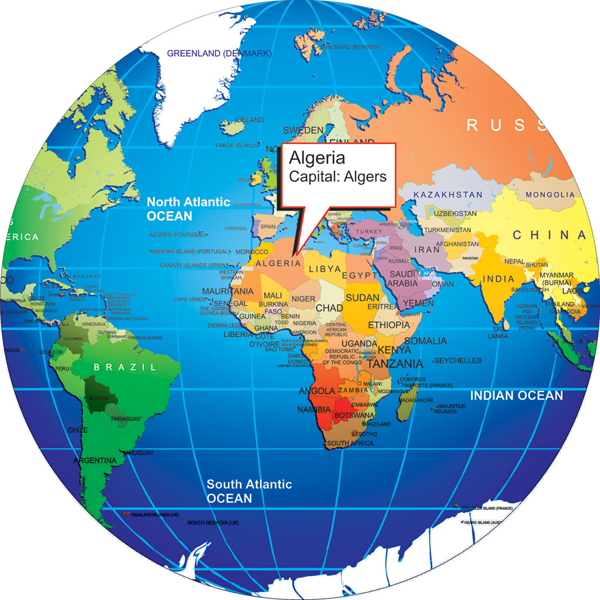
Interestingly, modern states with the highest number of Arab speaking residents are Egypt, Sudan, Algeria, Iraq, Morocco, Saudi Arabia, and Yemen. Only Egypt and Sudan have more than 10% of their population who use Arabic as their primary language. The point of this realization is that Professor Cook is writing a history of the Muslim religion, not Arab culture.

However, there seems little doubt that the 6 major Arab tribes of earlier centuries were the vessels of change for Muslim’ belief and practice. Arab tribes existed as far back as 6000 BCE. By 1200 BCE, they had established settlements and camps that formed into Kingdoms.

Arab tribal land extended from the Levant to Mesopotamia and Arabia.

Cook infers Arabs spread the Muslim religion to northern Africa and throughout the Asian continent while crossing the Mediterranean to influence, but not convert, southern Spain. Cook illustrates how Muslim’ belief shaped human history and culture. An estimated 55% of the world population identifies itself as Christian, or Muslim. Hinduism constitutes 15%, Buddhism 7%, with the remaining religions in lower single digits.

What Cook shows is how Muslim belief (24% of the world population) impacted the world.

Cook begins to explain the split between Sunni and Shia religious belief. In the modern world, only Iran, Bahrain, Yemen, and Iraq have Shia-majority populations with a significant Shia community in Lebanon and Afghanistan. Sunni religious belief is practiced by a majority population in nearly 20 countries with a mixture in Egypt, Turkey, Pakistan, Saudi Arabia, Yemen, Eritrea, Syria, Afghanistan, Lebanon, Turkmenistan, and Azerbaijan.

A surprising observation by Cook is the impact of a language change in the Middle East. Persian (aka Farsi) became a bridge connecting the diverse communities and histories of the Middle East. This change largely took place between the 9th and 11th centuries. It significantly impacted Muslim cultural beliefs and Iranian culture in general.

Cook implies the colloquialization of translations by Farsi (the language of Persia) of Arab Caliphate’ triumphs and failures molded beliefs of Middle Eastern nation-states. Countries like Iran either adopted or rejected Farsi’ stories of accomplishments and failures by Arab Caliphates. Some failure is associated with moral turpitude, a falling away from Qur’anic teaching, translated into Farsi language.

Cook’s next step in the history of Islam is to reveal the impact of Turkey and the Mongol empire’s spread of the Muslim religion. There is a confluence of tribal association and acceptance of the Islamic religion in the military campaigns of Genghis Kahn (1162-1227) followers, some of which were Turkish.

(Genghis Khan’s sons establish four kingdoms in the Middle East that lasted until 1368.)

Though none of the kingdoms practiced a particular religion, each influenced the course of religious acceptance. The environment they created allowed Christian religion to spread from Russian territory, while Turkish influence leaned toward Islam. Cook explains how young rebel leaders gained followers by successfully defeating and pillaging villages that had poor defenses. With each successful raid, more young people would join the raiders. This incremental growth led to the spread of Christian and Islamic religious influence, depending on the religious leaning of raiding parties.

Cook clearly illustrates how Arab culture lies at the heart of Islamic religion despite its nomadic existence. From the first madrasas (Islamic schools) in the Abbasid Caliphate in the 9th century, the teachings of the last messenger of Allah began with Arabs. Cook explains the religion is unlikely to have flourished without other cultures adoption. Without Persian, Turk, Uzbek, and Mongol societies adoption, the spread of Islam would have been minimized. Muslim belief evolved in a cauldron of conflict with Christianity, Judaism, and other indigenous religions but prevailed as a religion with two faces, i.e., the Suni and Shia Divide.

Like the schism between Catholics and Protestants, Sunni and Shia believe in one God but differ in ways that have roiled the world. In the case of Catholics and Protestants, there is the French wars of 1562-1598, the European thirty years war of 1618-1648, and the Troubles in Ireland in 1968-1998. In the case of Sunni and Shia, there was the battle of Karbala in 680 CE, the Safavid-Ottoman wars in the 16th-17th centuries, the Lebanese Civil War of 1975-1990, the Iraq War of 2003-2011, and the Syrian Civil War that began in 2011 and continues through today.

The forgoing were only human deaths within the two major religions of the world, while neglecting the atrocities incurred between Christianity and Islam. There were the Crusades between the 11th and 13th centuries, the Battle of Lepanto in 1571, The Siege of Vienna in 1683, and the Lebanese Civil War between 1975-1990.

Later chapters of Cook’s history reveal the conflicts between the Islamic religion and other major religions in the Middle East, besides Christianity. Many leaders are identified for historians who will be interested in knowing more, but the names become a blur to a dilatant of history.

Is belief in God worth it? Cook’s history of Muslimism and knowledge of Christianity makes one wonder.

HEGEMONY

Every nation in the world can learn from nation-state’ mistakes in history but none can right the wrongs of the past.

Books of Interest
 Website: chetyarbrough.blog

“Empireworld” (How British Imperialism Shaped the Globe)

By: Sathnam Sanghera

Narrated by: Homer Todiwala

Sathnam Sanghera (Author, British journalist, born to Punjabi parents, graduate of Christ’s College, Cambridge with a degree in English Language and Literature.)

“Empireworld” offers a credible explanation of how the white race, which is a mere 16% of the world’s population, has dominated the world since the 17th century. That domination changed in the 21st century. It changed with the power and economic growth of the United States which is being challenged today by the Asian continent.

Prior to the 17th century, an empire’s influence is arguably more local because of transportation and communication limitations. What Sanghera infers is Great Britain’s growing power and influence surpassed others because of its domination of the sea and growing industrialization. The point is all of these 17th century nations were principally white with similar ambitions but only Great Britain influenced all foreign cultures of that period, with remnants extending into modern times.

France, Spain, the Dutch Republic, and Portugal were major 17th century players, but Sanghera argues the imperialist drive of Great Britain surpassed its rivals.

Sanghera focuses on GB, not only because it was white but because it represented a national power’s intent to shape the world in its own image. The image Sanghera creates is not egalitarian, democratic, or sanguine. GB is characterized as dominating, autocratic, and driven by self-interest. He suggests eleemosynary efforts by GB to aid other countries was principally to guild their own lily, not to offer other countries self-determination or freedom. Indigenous populations are inferred to be expendable in Sanghera’s “Empireworld”.

“Empireworld” is a harsh judgement of Great Britain’s history of enslavement, indigenous displacement, colonization, and confiscation of other countries’ natural resources. Sanghera systematically builds a case for GB’s attempt to English-size the world. Parenthetically, this is the same view held by some nations about America.

Sanghera recalls the history of the slave trade, Great Britain’s colonization of India, Nigeria, Australia, New Zealand, North America, and other countries of the world. He reminds listener/readers of the despoiling of the animal kingdom, confiscation of nation-state natural resources, enslavement of Africans, sexual discrimination, suppression of colonial sovereignty, displacement of indigenous peoples, and re-education or extermination of native countrymen who will not accept an English view of superiority and custom.

Sanghera tempers his harsh view of Great Britain in the conclusion of “Empireworld”. He does not deny G.B.’s history but acknowledges his countries’ measured efforts to right the wrongs of the past; which is of course not possible.

Sanghera cites G.B.’s belated effort to preserve animal and plant species, its acceptance of former colonies’ nation-state sovereignty, growing discussion about reparation for profiting from the slavery trade, endorsement of indigenous people’s rights, legislative action for sexual freedom, and support for improved health, education, and welfare of former colonial citizens. All are works in process, far from completion, but progressing. Sanghera’s history of Great Britain is the story of America. Though America avoided the colonial history of England, it has similar challenges.

Every nation in the world can learn from nation-state’ mistakes in history but none can right the wrongs of the past.

BELIEF IS NOT ENOUGH

“Believing” is not enough. The nature of humanity needs to change,

Books of Interest
 Website: chetyarbrough.blog

“Minor Feelings” (An Asian American Reckoning)

By: Cathy Park Hong

Lectures by: Cathy Park Hong

Cathy Park Hong (Author, writer, poet, and professor, graduate of Oberlin College with an MFA from Iowa Writers’ Workshop.)

“Minor Feelings” is a mild representation of a social malady that plagues humanity. Ethnic differences, social hierarchy, and political power create and embolden nation-state’ inequality. It seems in the history of the world, with the exception of most Asian and African countries, the white race rules society. This seems odd when only 16% of the world’s population is white.

Hong offers a memoir of her life in America. Born in Los Angeles, California, Hong notes experiencing discrimination between white Americans and Asians.

Hong acknowledges discrimination within, as well as outside, ethnic cultures by recounting her somewhat comic effort to seek help from a Korean therapist for a recurrent facial tic. The therapist said Hong should seek help from someone else without explaining why. Of course, one wonders if that classifies as discrimination or therapeutic professionalism.

Mosaic of children from around the world, including, Kayapo, Indian, Native American, Inuit, Balinese, Polynesian, Yanomamo, Cuban, Tsaatan, Moroccan, Mongolian, Karo, Malagasy, and Pakistani.

All humans have a tendency to generalize ethnic qualities based on human difference. Those differences can range from the obvious to the miniscule but have the common failing of not seeing the humanity of every human being. Hong notes how Asians are generalized by many ethnic groups, including Asians according to Hong, as industrious, intelligent, and hard working without recognizing the individual. Whether generalization about an ethnicity is true or not, the individual’s success or failure is diminished by generalization.

In what was called social studies in the 1960s, I remember our teacher asking if we were prejudiced. No one commented.

Then, the Social Studies teacher asked the class if any of the boys had asked an Asian girl if she had been asked to go to the prom with them. No one answered but I, for one, felt guilty about not even thinking of it. Though the teacher inappropriately asked the question, he demonstrated how America is as ignorant about Asian discrimination in the 1960s as Hong illustrates in “Minor Feelings”. (Parenthetically, the teacher’s question was even more inappropriate and hurtful because the Asian girl was in the class.)

The truth is every nation-state’ political structure, whether white, off-white, or black, discriminates against whomever is not part of the government in power. In China it is the Han, in Russia it is Aryan Russians, in India it is the Indo-Aryans, in Botswana it is the Tswana. Each of these ethnicity’s discriminate against minorities not in power.

This is not meant to diminish the truth of what Wong explains about her life experience. “Minor Feelings” is a difficult book to read or listen to because it offends many Americans who believe they look at every person as an individual. However, “believing” is not enough. The nature of humanity needs to change.