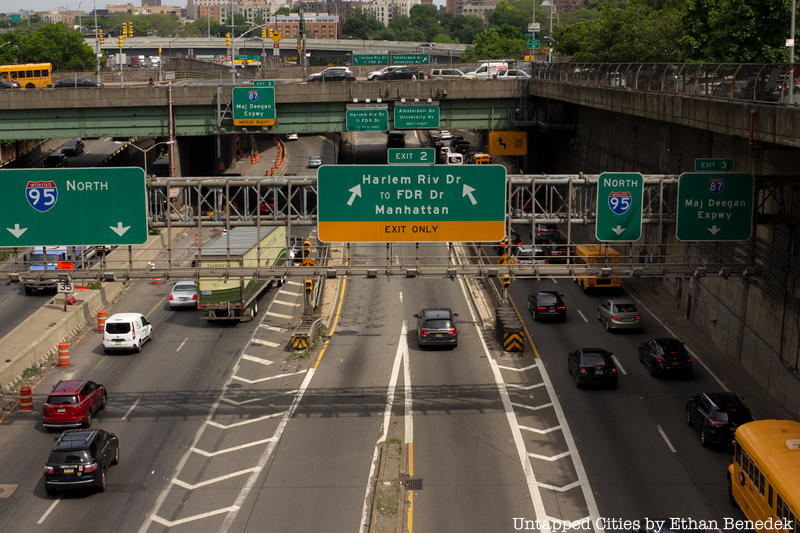
PUTIN & UKRAINE

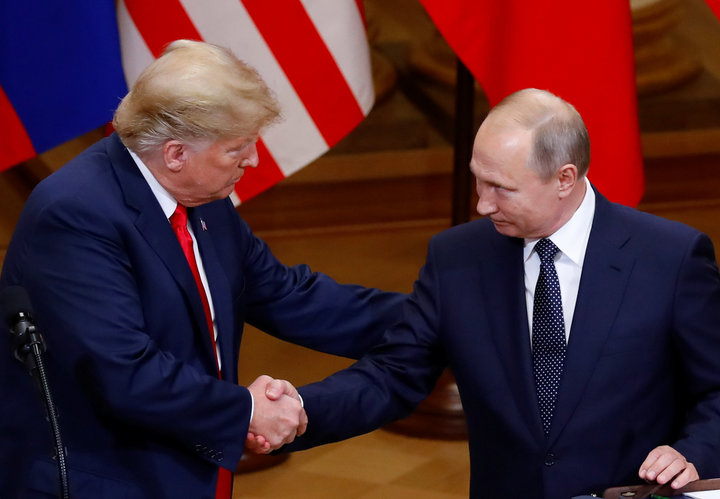
Without checks and balances, autocratic beliefs inevitably lead to conflict and mutually assured destruction, Donald Trump notwithstanding.

Books of Interest
 Website: chetyarbrough.blog

From Cold War to Hot Peace (An American Ambassador in Putin’s Russia)

By: Michael McFaul

Narrated By: L. J. Ganser

Michael McFaul (Author, American academic and diplomat, ambassador to Russia 2012-2014, former Professor of International Studies at Stanford.)

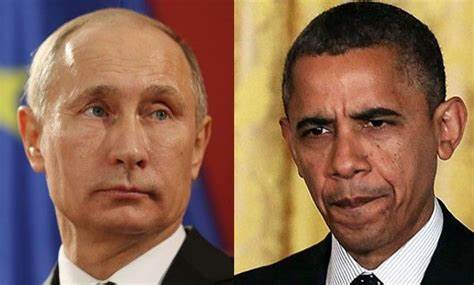
Not since George Kennan’s brief time as Ambassador to Russia in 1952 has an American ambassador been denied access to Russia. Michael McFaul became the second in 2016. McFaul joins the pre- and post-Obama election to become Obama’s ambassador to Russia from 2012 to 2o14. McFaul writes this book to explain his experience in the Obama administration, his understanding of Russia, and his tenure as Ambassador to Russia.

Interestingly, Condoleezza Rice recommends McFaul should join Obama because she was sure he, rather than McCain, would become the next President of the United States.

McFaul follows Rice’s recommendation and joins Obama’s campaign. Mcfaul’s grasp of Russian foreign affairs is insightful and relevant based on his personal experience. McFaul lived in Russia for a period of time when Gorbachev and Yeltsin attempted to liberalize Russia’s autocratic government. McFaul’s time living in Russia, his understanding of Russian language, and his study of Russian history at Stanford make his opinion in “From Cold War to Hot Peace” important.

Gorbachev’ biography shows he experienced the autocratic rule of Stalin’s U.S.S.R. as a young boy and found the courage to open the door to citizen’ freedom.

Mikhail Gorbachev was 22 when Stalin died. His ideal was to maintain the U.S.S.R. but with a system of government that rejected totalitarianism while freeing its citizens to improve their way of life. However, the shock of newfound freedom appeared an economic change too difficult and unfairly remunerative for the U.S.S.R. to survive as one hegemon.

A fundamental ingredient of independence is freedom.

When countries controlled by the U.S.S.R. were offered freedom, they looked to forms of democracy rather than autocracy. Gorbachev’s inability to accelerate economic growth to improve the lives of his country’s citizens doomed his goal to create a freer society within the U.S.S.R. Compounding his failure, Boris Yeltsin usurps Gorbachev’s power by arguing he has a better way of accelerating Russia’s economy to keep the U.S.S.R. together.

Boris Yeltsin talked the talk of democratic government but because of his inability to coopt the underlying authoritarian habits of former KGB operatives, he lost control of the government.

Yeltsin’s rise undermined the influence of Gorbachev, encouraged the departure of U.S.S.R.’ member countries, and gave an opening to Vladimir Putin, a former KGB officer. The KGB changed to the FSB in 1991 (along with Russia’s Foreign Intelligence Service) to become the right and left hand of Putin’s power and influence in the new Russia.

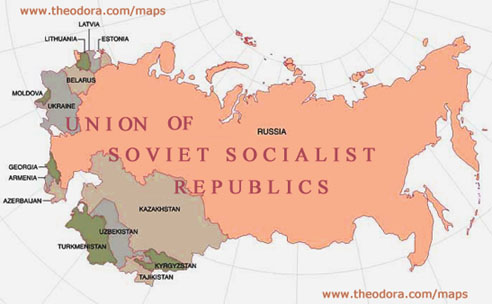
Fifteen countries leave the U.S.S.R. in 1991.

  1. Estonia: August 20, 1991
  2. Latvia: August 21, 1991
  3. Lithuania: March 11, 1990
  4. Armenia: September 21, 1991
  5. Azerbaijan: October 18, 1991
  6. Belarus: August 25, 1991
  7. Georgia: April 9, 1991
  8. Kazakhstan: December 16, 1991
  9. Kyrgyzstan: August 31, 1991
  10. Moldova: August 27, 1991
  11. Russia: December 12, 1991
  12. Tajikistan: September 9, 1991
  13. Turkmenistan: October 27, 1991
  14. Ukraine: August 24, 1991
  15. Uzbekistan: September 1, 1991

Gorbachev effectively ended the cold war, but McFaul argues the cold war turned into a “…Hot Peace”. Gorbachev was the last leader of the Union of Soviet Socialist Republics. His effort to democratize Russia fails even though he fully champions Valdimir Putin to become president of Russia in 2000.

Putin took control of Russia as Prime Minister under Yeltsin in 1999. He later effectively became President of Russia for life.

McFall explains Obama became President of the United States in 2o09. Obama revised America’s relationship with Russia with what became known as the U.S./Russia “Reset” policy.

Obama’s “Reset” policy had some early positive effects. The relationship between America and Russia arguably improved despite their significant political differences. When they disagreed, they agreed to disagree. There were halting steps toward nuclear bomb limitation and greater cooperation on America’s actions in Afghanistan when the Taliban had shown support for Osama bin Laden after 9/11.

Putin rose to the presidency in 2011 and has remained effectively in control of Russia since 1999. Though not argued by McFaul, Putin’s intimate understanding of Russia’s secret service has given him the power to exercise dictatorial control over Russia. The history of U.S.S.R. since the 1917 revolution has been maintained by a secret service used to jail, torture, and murder any opposition to leadership of Russia. Today, that autocratic leader is Putin. There seems little reason to believe kleptocratic control of a massive secret service apparatus will be overcome without revolution. Every Russian knows of the threat the secret service has to any opposition to Putin who controls and has an intimate relationship and understanding of the organizational capabilities of the former KGB.

Gorbachev’s legacy is hope for a better form of government in Russia. Change is possible just as Gorbachev’s history as the secretary of the Communist Party from 1985 to 1991 proved.

One is inclined to believe change will come to Russia from a disaffected communist party leader who rises in the party and taps discontented Russians looking for change. If all one’s life is lived and raised in Russia, a Russian born change-agent like Gorbachev may, once again, be born

As one completes McFaul’s book, the threat of masculine blindness in world leaders is made clear. Leadership entails a power that corrupts leaders who think they know what is best for their citizens. Autocracies concentrate that power in singular human beings. Without checks and balances, autocratic beliefs inevitably lead to conflict and mutually assured destruction, Donald Trump notwithstanding.

TURN EVERY PAGE

Caro’s facts do not prove truth, but they do reveal the means and consequence of political power and influence in American Democracy.

Books of Interest
 Website: chetyarbrough.blog

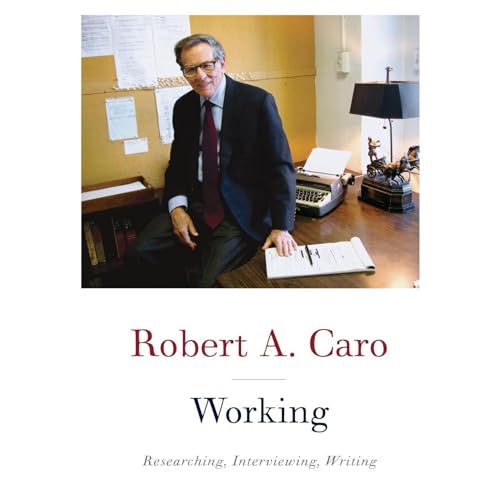
“Working”

By: Robert A. Caro

Narrated By: Robert A. Caro

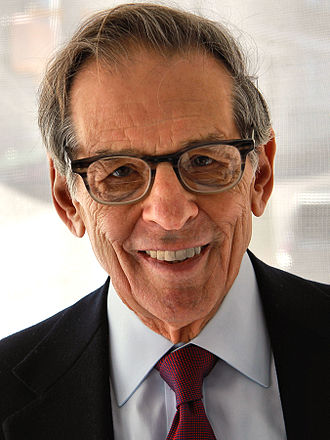
Robert Allan Caro (Author, journalist, winner of 2 Pulitzer Prizes in Biography and many other coveted literature awards.)

Every non-fiction writer can appreciate this erudite and entertaining audiobook, personally written and read by Robert Caro. Caro explains what “Working” means to a non-fiction writer. Caro artfully explains why and how researching, interviewing, and writing a biography is a revelatory experience.

In “Working”, Caro focuses on his two Pulitzer Prize winning books, “The Power Broker: Robert Moses and the Fall of New York” and “Master of the Senate”, one of his four books about Lyndon Johnson. Both biographies are about political power in America.

Robert Moses (1888-1981) was an American urban planner and public official in the New York metropolitan area during the early to mid-20th century.

Moses (among many titles) was the New York City Parks Commissioner and Chairman of the Triborough Bridge Tunnel Authority. His political power and influence are detailed in Caro’s book, “The Power Broker”. Though Moses was never elected to political office, he arguably shaped the infrastructure of New York City as much, if not more, than any elected person in New York. “Working” explains how a reporter from a small Long Island’ newspaper manages to write “The Power Broker” and become one of America’s most famous biographers.

After graduating from Princeton with a B.S. degree, Caro is hired by the Long Island, New York’ newspaper, “Newsday”.

Caro explains he had been a writer for many years as a young boy and college student before getting a scut-work job at “Newsday”. He tells of a breakthrough report he writes that gets attention from the editor of the paper. He is given advice by the editor who recognizes the quality of his writing. The advice is that when writing a piece for the public, be sure of your facts by “turning every page”. Caro takes that advice and explains how it became a mantra, a repeated aid, in his writing.

Caro explains how he and his wife work to “turn every page” in researching the Moses and Johnson biographies.

Even though one may have read Caro’s two Pulitzer Prize winning’ books, “Working” offers a nearly perfect introduction to his biographies of Moses and Johnson that are, to the extent humanly possible, researched by “turning every page”. Caro is hard on himself for taking years to research and write his biographic books. It is a financial hardship for his family, particularly before his first success with “The Power Broker”. They sell their house in Long Island to support his book research. After that first success, the financial insecurity is offset by grants and the support of literary agents. “Turning every page” is a laborious process but it assures and reinforces the facts revealed in his biographies.

Caro explains how he and his wife meticulously researched public documents to confirm facts that corroborate the victimization of some New Yorkers by monied interests that gave Moses the political power to destroy low-income neighborhoods for new thoroughfares through the New York City area.

With the construction of over 600 miles of road many residents, renters and homeowners, were evicted from their homes. Most were left to fend for themselves.

Caro and his wife were willing to disrupt their lives and neighborhood relationships to pursue his obsession with verification of facts. Caro explains that he needed to move to Texas to understand what it was like for Lyndon Johnson to be raised in the Texas Hill Country. He could not just visit because local Texans would not talk to him with the candor he sought to understand where Lyndon Johnson came from. Many revelations are in his book about Johnson that could not have been corroborated without interviews with people who knew the Johnson family.

Caro and his wife move to Austin, Texas to be near the Texas Hill Country to research and understand the society in which Lyndon Johnson is raised.

Many insights are a result of the move. Experiencing the loneliness of the Texas Hill country because of its sparse population helped Caro understand Johnson’s need to be bigger than life. Interviewing Johnson’s brother reveals the tensions that existed between Lyndon and his father. Johnson’s father was heir to the original Johnson ranch that was lost because of the soils’ unproductivity. It had too much caliche, a clay content that would not support a cash crop. When Johnson’s father repurchased the ranch after its loss by the family, he failed to understand the land could not provide enough income to pay its mortgage. The ranch is lost to the bank again. The relationship between Lyndon and his father deteriorated as Lyndon grew older because of Lyndon’s disappointment with his father’s ineptitude and domineering personality. Ironically, Caro notes it is a personality that Lyndon is heir to and for which he is criticized. On the other hand, Caro explains it is also a personality characteristic that makes Lyndon one of the greatest masters of the Senate. No Senate leader since Johnson has as successfully led the Senate in passing government legislation.

Samuel Ealy Johnson Jr. (Lyndon Johnsons’ father. 1877-1937.)

Lyndon’s brother implies Lyndon’s conflicts with his father became part of his drive to be more successful than his father.

Caro infers Johnson and Moses were forces of nature. Both were political power users that understood how to use it to get their way. Obviously political power can be used for ill or good. One can argue New York City open spaces and parks were a great benefit to the city. On the other hand, many people were displaced to provide those open spaces. The Civil Rights Act passed during the Johnson administration benefited millions of minorities in America. On the other hand, an estimated 2,000,000 Vietnamese were killed, 58,000 American soldiers died, and another 288,000 Americans were wounded and/or disabled. How many Vietnamese, and Cambodians were wounded or disabled and how many are still being hurt by leftover landmines?

Caro offers a great service to the public in his writing about political power in American Democracy. Democracy is not a perfect political system, and Caro reveals where that imperfection lies by “turning every page”. Caro’s facts do not prove truth, but they do reveal the means and consequence of political power and influence in American Democracy.

CHICKEN IN EVERY POT

A “Chicken in Every Pot” will not come from fixing food prices or from job creation by reducing taxes on the wealthy.

Website: chetyarbrough.blog

AMERICAN POLITICS

Anyone who has read this blog knows its writer is not a fan of former President Trump. His position on immigration, tax policy, and American Constitutional ideals are only political props for rambling, muddled speeches that dangerously divide America. His promotion of American division was made clear on January 6, 2021.

Trump’s promotion of American division was made clear on January 6, 2021.

His speeches about immigration are only meant to vilify rather than manage its impact on the economy. It is the failure of Congress to approve legislation meant to ameliorate some of immigration policy’s faults. Trump waves a false flag of immigrant invasion when he is only a 2nd generation immigrant himself.

The vilification of immigration is a false flag.

He is supported by some wealthy Americans like Ms. Adelson whose family made a fortune in the Las Vegas casino business. In his 2017 election he was supported by the Koch family, one of the largest privately-owned companies in America. The argument made by many wealthy donors for Trump’s re-election is a belief that with the less taxes they pay, more jobs are created to lift the poor into the middle class. It is the ideal of capitalism and government that creates jobs. It is the ideas and hard work of people, not inherited wealth, that have made America great.

Trump believes in “trickle down” economic policy. His belief in cutting taxes is based on that belief.

Trump forgets where he came from. Despite his family success in America, Trump’s speeches reek with vile comments about immigrants. Without detailing some of the bad things Trump has done to become rich and influential, he lies about his past failures, and the worth of his assets. Trump revels in his moral turpitude. He is found liable for defamation and sexual abuse. He is a convicted of civil fraud for inflating his wealth to gain favorable bank loans. Trump does not represent what makes America great. He represents what makes America and capitalism flawed.

Trickle-down economics to reduce poverty, like the current economic idea of Kamela Harris for regulating food prices to help the poor, is not supported by history.

A “Chicken in Every Pot” will not come from fixing food prices or from job creation by reducing taxes on the wealthy. Roosevelt knew that; hopefully Trump will not be re-elected, and Kamela Harris will not make Hoover’s mistakes.

KKK

American Democracy is a work in progress and remains at risk of failure.

Books of Interest
 Website: chetyarbrough.blog

“A Fever in the Heartland” 

By: Timothy Egan

Narrated By: Timothy Egan

Timothy Egan (American Author, journalist, former columnist for the New York Times, won the National Book Award, the Carnegie Medal, and a Pulitzer Prize for National Reporting.)

Timothy Egan’s “A Fever in the Heartland” is about the Ku Klux Klan and its growth in Indiana, the American Midwest, and Oregon in the early 1920s. Soon after the Civil War and death of Abraham Lincoln, a group of former Confederate veterans formed a social club in Pulaski, Tennessee.

The Ku Klux Klan grew into an underground movement that peaked in the 1920s with white American membership estimated at over 4 million.

Egan’s history is about the rise and fall of David Curtis “Steve” Stephenson who became the Grand Dragon of the Indiana Klan in 1923. Stephenson endorsed and promoted public hate toward immigrants and minorities. He became a proven liar who lied about his past and his actions as a leader. Egan’s history of Stephenson is an American political’ warning. Egan shows how character and honesty are as important in today’s politics as they were in the 1920s.

Egan’s choice of David Curtis Stephenson as a KKK’ leader illustrates how “A Fever in the Heartland” can grow to threaten American Democracy.

Stephenson is a man who smoothly lies his way to the top of a weak KKK’ chapter in Indiana by pandering to anti-immigration and anti-minority sentiments in the country. (The same sentiment seen in today’s America.) Stephenson became a rich man by recruiting the public into the KKK with a $10 fee for a white hooded garment ($4 for the garment, with $6 in his pocket) for membership to an exclusive group of American white men who would terrorize and murder non-whites, non-protestants, and immigrants. The KKK used secrecy to hide membership in this exclusive white American group.

The KKK hid their private reputations while (as an organization) publicly funding American celebrations and charities to feed its membership.

With membership dues and a persuasive personality, Stephenson (within 3 years) became a powerful and influential KKK’ leader. Stephenson convinced members of the KKK to become elected officials to gain control of government and public offices in Indiana. KKK’ members subsidized and promoted the election of like-minded white Americans. With control of government agencies, public services like the police and judiciary, the KKK controlled much of what happened in the State of Indiana. The wealth and influence of Indiana’s KKK planned a Presidential run in the late 1920s. The Indiana leader of the Republican Party was a member of the KKK and kowtowed to Stephenson as Grand Dragon of Indiana’s KKK.

Egan explains Stephenson was a persuasive carpetbagger who moved to Indiana from Texas while inferring he was an Indianan to become the Grand Dragon of Indiana’s KKK’ chapter.

Stephenson lied about his education and past but with success in increasing membership, he gained support of the National KKK’ organization. The truth of his background is that he abandoned his first wife and child when he left the lone star state. He was remarried to a second wife who leaves him. Stephenson beat his second wife who returned only to be beaten a second time when she attempted reconciliation. Egan noted Stephenson was a heavy drinker and abusive molester of women who worked for him. Stephenson was ultimately convicted of second-degree murder of Madge Oberholtzer, who was the creator and manager of a lending library.

Madge Oberholtzer (Stephenson is ultimately convicted of second-degree murder of Madge Oberholtzer for brutalization and rape.)

In the middle of the night, with the help of fellow Klansman, Madge Oberholtzer was kidnapped by Klansman working for Stephenson to take a train to Chicago. On the train, Stephenson rips Oberholtzer’ clothes off and rapes her. He used his teeth to bite her breast and parts of her body.

After being returned to Indianapolis, Overholtzer went to a drug store to buy bichloride of mercury, a slow acting poison. She chose to take the poison to end her life.

The taller man in this picture is Ephraim Inman, the defense attorney for Stephenson. He is standing next to Will Remy the prosecuting attorney, dubbed the “boy prosecutor” who successfully convicted Stephenson for 2nd degree murder.

Will Remy told the crowded courtroom that Stephenson “destroyed Madge’s body, tried to destroy her soul” and over the course of the trial tried to “befoul her character.” Overholtzer’s left breast and a bleeding right cheek were bitten by Stephenson when she was raped. Remy argues Stepheson’s teeth were a murder weapon. Attorney Asa Smith, a Overholtzer-family’ friend prepared a dying declaration for Madge Oberholzer that was placed into evidence.  Judge Sparks admitted the declaration and allowed Remy to read it to the jurors. (Sparks was not a Klansman.)

Stephenson considered himself, not only above the law, but as the law in Indiana. (That is a familiar refrain in the 21st century.) Stephenson was convicted for second degree murder. It was second degree murder because the cause of death was Madge Oberholzer’s decision to take her own life.

The Klan still exists in America.

James Alex Fields Jr. plowed into a crowd of demonstrators in Charlottsville, Va in 2017. He killed one of the protestors.

Fields admitted to being a member of the KKK. Though the Klan remained a political power in Indiana for some years after Stephenson’s trial and conviction, its Indiana’ power and influence was diminished. The national position of the Klan has declined in America as is believed in modern times, but it still exists.

Speaking about the white nationalist groups rallying against the removal of a Confederate statue, former President Trump said, “You had some very bad people in that group, but you also had people that were very fine people, on both sides.”

As Egan’s history of Grand Dragon Stephenson illustrates, American Democracy is a work in progress and remains at risk of failure. Honesty of elected officials and “there being no person or elected official above the law” remain important for America to remain a Democracy.

IMPERIAL ELITE

Kaplan’s last chapters make a powerful statement about what America should do to meet today’s and tomorrow’s challenges.

Books of Interest
 Website: chetyarbrough.blog

“Earning the Rockies” (How Geography Shapes America’s Role in the World)

By: Robert D. Kaplan

Narrated by: William Dufris

Robert Kaplan (American Author, freelance journalist and foreign correspondent.)

The first chapters of Robert Kaplan’s “Earning the Rockies” are a travel memoir about America’s growth from 13 colonies to 50 states, but the last two chapters are a considered view of America’s turbulent history and what its role should be in the world.

Kaplan explains he comes from a working-class family born in New York City.

Kaplan was raised on the East Coast. His father was a local truck driver. However, his son became a world traveler who served in the Israeli Army and worked as a freelance writer for major publications. His travels and professional reporting experience undoubtedly influence his opinions about America’s role in the world.

Kaplan’s book begins with memories of his beloved father who talked to him about many things, one of which is a belief that “Earning the Rockies” requires one to work to make a living before traveling across the country.

Kaplan writes an apocryphal story of traveling from the east to west coast of America. In reflecting on his journey, he recalls the history of America’s growth as a nation state. He writes of white settler’s displacement of Indian tribes, a journey to the northwest by leaders of the Mormon church, and America’s growth and assembly of 50 states.

In his travels, Kaplan recalls:

1) America’s territorial growth with the Louisiana purchase,

2) confrontation with Mexico to expand America’s southwestern border,

3) Civil War for union rather than separation, and

4) Mormon and other pioneer travels on the Oregon Trail to see and settle the Northwest.

America becomes an economic giant, protected from foreign interference by two oceans.

In the creation of this American geographic giant, many territorial, political, and economic conflicts were resolved. Kaplan’s suggests America’s economic growth is based on force and compromise, the keys to America’s future in the world.

Kaplan’s American heroes are George Washington, Abraham Lincoln, Theodore Roosevelt, and George H.W. Bush. He adds the extraordinary insight of Ambassador George Kennan in his analysis of Russia. Kaplan notes other great leaders, but these four Presidents and one diplomat are examples of how American leaders use force and compromise to enhance the power and prestige of democracy in the world.

Kaplan explains prudent use of force and compromise is how the west was won and how America became an economic hegemon, a power and influence in the world.

Union of America’s States was perpetuated with force, while compromise continues to ameliorate the wrongs done to Indians and Blacks in America. Those wrongs will never be removed but compromise inures to the benefit of future generations.

Kaplan argues there is an imperial elite in America, similar to what were the elite and influential intellectuals of ancient Greece.

Many of these elites graduated from Harvard or other ivy league schools. (There is an “echo chamber” risk when too many leaders are educated in the same ivy league school.) Along with this imperial elite, he suggests America’s sea power is as important today as it was for the Greeks in antiquity. Sea power widened the influence of Greece just as it widens the influence of America today.

China is working toward a similar goal with its expansion of aircraft carrier and warship production.

Prudent use of power and compromise will expand the influence of every country that has hegemonic ambition. The operative word is “prudent”, i.e., navigating life with a thoughtful eye toward the future. Of course, there is a difference between China’s and America’s political prudence, but each is able to draw on resources that can change the course of history. The question becomes which has a system of government that can prudently use force and compromise to achieve peace and prosperity?

China’s and Russia’s education system leans toward communism which has not had the same level of success as capitalism.

America’s imperial elite is largely educated in American’ ivy league schools. Kaplan suggests, to the extent that these elitists grasp the importance of using force and compromise through democratic capitalism, the world has a chance for peace and prosperity.

Kaplan notes there is less geographic advantage for America today because of technological interconnectedness.

However, interconnectedness cuts both ways. Force and compromise have wider influence with technological interconnectedness. Whether today’s imperial elitists are prudent in their use of force and compromise is most important. Kaplan strongly suggests America should build the Navy to be a symbol of force and presence around the world. However, leadership of the many as opposed to the one as in in China, Russia, or any autocracy seems equally important.

Kaplan’s last chapters make a powerful statement about what America should do to meet today’s and tomorrow’s challenges.

UNIONIZATION

Nolan clearly illustrates how important political power is in balancing corporate owner/managers’ disproportionate incomes and privileges with labor.

Books of Interest
 Website: chetyarbrough.blog

“The Hammer” (Power, Inequality, and the Struggle for the Soul of Labor)

By: Hamilton Nolan

Narrated by: Franklin Pierson

Hamilton Nolan (Author and free-lance Journalist)

“The Hammer” is a paean to unionization. Unions lost much of their political power in the early 1970s. Political power of labor was diminished by State governments, poor labor union management, and a diminishing number of labor union members. Nolan’s argument is workers have to reestablish political power to change their unfair and inequitable relationship with business.

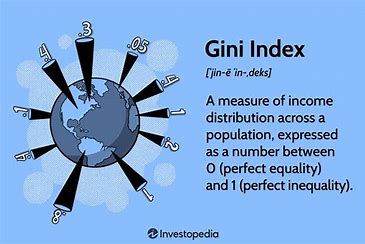
The widening gap between rich and poor is traced to the era of President Reagan when the first deep cuts in corporate taxes occur.

Reagan fought unionization by firing air traffic controllers that sought better wages. Reagan’s supporters believed government social programs were out of control and their cost diminished the power of free enterprise. Much of the American public either agreed or were apathetic. However, as the gap between rich and poor accelerated, Americans began to complain about inequality. With extraordinary income increases for business owners and CEOs, and repressed wages for workers, the need for unionized political power became self-evident. Nolan introduces his book about unionization with a brief biography of Sara Nelson.

Sara Nelson (AFA president of the Association of Flight Attendants.)

Nolan writes about Sara Nelson who became a union member when she worked for United Airlines as a stewardess. Nelson was born and lived in Corvallis, Oregon. She applies for a job with United Airlines in St. Louis. She gets the job but her first paycheck is late. She couldn’t pay her rent. A check is given to her by a union employee to tide her over until her first check is delivered. From that day forward, according to Nolan, Nelson became a supporter of unions. Eventually Nelson becomes the president of the Association of Flight Attendants (AFA).

Liz Shuler (President of the AFL-CIO since 8/5/21.)

Ironically, the first woman President of the AFL-CIO is also from Oregon. Liz Shuler received a bachelor’s degree in journalism from U of O in Eugene, Oregon. She became a union activist after college and worked to organize clerical workers at Portland General Electric. She is elected as the President of the AFL-CIO in 2021 after serving as the first woman Secretary-Treasurer of the organization.

Nolan’s book addresses State conflicts with unionizers and family-income for low-income workers. The first states he addresses are South Carolina and California. Nolan notes South Carolina has become a haven for businesses wishing to avoid unions. South Carolina’ State laws discourage unionization which appeals to businesses wishing to relocate. Nolan notes South Carolina attracts businesses looking to improve profits by reducing labor costs. The consequence of business’s lower labor cost is to reduce South Carolina workers’ standard of living. South Carolina’s workers are among the lowest (19th out of 50 States) paid workers in the U.S. Nolan implies South Carolina’s income inequality is a consequence of the State’s policy of discouraging unionization.

California has the fourth largest income inequality in the U.S.

Nolan notes the cascading negative of unfair compensation for domestic labor. Though California now allows childcare servers to be unionized, their unionization efforts are discouraged by government regulation, as well as the fragmentation of its poorly compensated workers. The consequence of State government regulation keeps wages low and discourages entrepreneurs from starting childcare’ businesses. A compounding negative is created when users of childcare’ service, women in particular, are unable to work in regular work-day jobs. Workers are compelled to stay home to take care of their children, reducing family income and further impoverishing low-income childcare’ workers. It becomes a vicious cycle, hurting entrepreneurs trying to start a childcare service, employees wishing to increase family income, and employers needing more workers.

Nolan expands his argument by noting how service industries in Las Vegas, the State of Florida, New Orleans, and Mississippi are benefited by unionization.

Vacation and gambling meccas like Las Vegas, Florida, New Orleans and Mississippi need service industry employees. These vacation and gambling meccas depend on service quality for visiting tourists. Lack of representation for service employees diminishes employee’ standards of living which indirectly damages the reputation of the entertainment and vacation industry.

In Las Vegas, where Nolan lived for twenty years, the service industry is protected by the Culinary Union.

Nolan notes how strong the Culinary Union has become in Las Vegas and disparages casino owners like the Fertitta’s who have fought unionization. Numerous examples are given to show how union actions have improved the lives of Casino workers, many of which are immigrants from other countries.

Nolan’s argument for the value of unionization is compelling but his encomium for the union movement ignores America’s immigration crises.

The vast need for immigration reform is not being forcefully addressed by unions. Compensation inequity is a noble fight carried out by unionization, but it needs to broaden its role in immigration. Unions need to use their power and influence to change immigration policies to equitably treat a labor force that is sorely needed in America. Unions need to help educate and house legal immigrants, so they do not become a part of America’s growing homelessness. Additionally, unions could use their recruiting expertise to get Americans off the street by providing job training services and gainful employment.

Public perception of unions could be monumentally improved with a program to recruit and indoctrinate the homeless with training for jobs in the 21st century.

There is so much that unions could do to far exceed the minimalist goal noted in Liz Shuler’s plan to add a million union members over the next 10 years. Nolan pitches for Sara Nelson as a more dynamic leader for the union movement. Maybe Nelson would be better than Shuler, but growth, value, and public perception of union members could be monumentally improved with a program to recruit and indoctrinate the homeless with training and jobs for the 21st century.

Whomever the leaders of unionization may be in the future, Nolan clearly illustrates how important political power is in balancing corporate owner/managers’ disproportionate incomes and privileges with labor.

WHO’S LAUGHING

Appelbaum infers no American President has found the magic formula for balancing the needs of its citizens with the concept of Adam Smith’s free enterprise.

Books of Interest
 Website: chetyarbrough.blog

“The Economists’ Hour: False Prophets, Free Markets, and the Fracture of Society

By: Binyamin Appelbaum

Narrated by: Dan Bittner

Binyamin Appelbaum (Author, winner of a George Polk Award and a finalist for the 2008 Pulitzer Prize, lead writer on economics and business for The New York Times Editorial Board)

Binyamin Appelbaum has written an interesting summary of a difficult but immensely important subject. Economic policy and theory are boring, but they touch every aspect of life. Appelbaum shows economic policy magnifies or diminishes the welfare of every American, let alone every economy in the world.

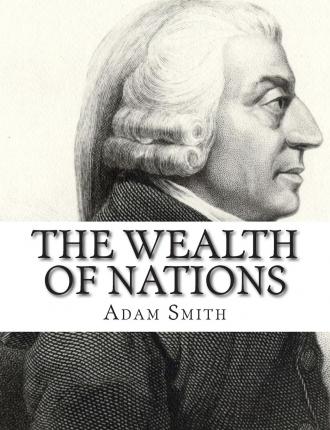
Adam Smith’s foundational theory of economics.

Though only briefly mentioned by Appelbaum, American economic policy begins with Adam Smith (1723-1790), the Scottish philosopher who wrote “The Wealth of Nations”. Smith advocated free trade and argued against parochial maximization of exports and imports that is manipulated by strict governmental regulation meant only to accumulate gold and silver.

Appelbaum illustrates how American policy violated the entrepreneurial freedom that Adam Smith advocated. In contrast to Smith, John Maynard Keynes (1883-1946) advocates government intervention whenever there is an economic downturn. Equally interventionist is Milton Freidman’s (1912-2006) belief that government should increase or decrease the money supply for national economic stability. The point seems to be that every economist thinks they have a magic bullet that will cure the ills of a faltering economy.

To be fair, Friedman did believe in free enterprise in regard to nation-state currencies. He argued for a floating currency rate that ultimately led to President Nixon’s abandonment of the gold standard. However, the nature of human beings led to speculation and manipulation of nation-state’ currencies that exacerbated trade tariffs and defeated the policy’s free-enterprise objective.

One concludes from “The Economists’ Hour…”, there is no magic solution for an economy in crises. Neither Franklin Roosevelt, George W. Bush, Barack Obama, or any American President cured what ails an American economy that succumbs to economic crises. Adam Smith would argue an economic crisis is caused by a governments’ interference with free enterprise.

Applebaum explains how every 20th and 21st century President of the United States placed their faith in economists’ economic assessments of their day. All Presidents have found intervention by the government has unintended consequences.

President Nixon adopted Freidman’s monetary policy by imposing a freeze on prices and wages that squeezed the life out of the business economy and beggared the wage-earning public with job loss.

A decade of stagflation (high inflation and slow growth) followed Nixon’s administration. Stagflation is attacked by the Reagan administration with mixed results. A myth from economists like Arthur Laffer grew in 1974. Laffer believes taxation is either too high or too low for any benefit to society. Laffer argued zero tax and maximum taxation are equally harmful and produce economic stagnation and/or collapse.

ARTHUR LAFFER (American economist and author, served on President Reagan’s Economic Policy Advisory Board 1981-1989, Here illustrating the “Laffer Curve”.)

Laffer argued every government that reduces tax revenue decreases the stimulative effect of government spending. On the other hand, he suggested every tax cut increases income for taxpayers that will stimulate business and increase employment while encouraging higher production. He laughably created the “Laffer curve” to imply there is an optimum balance of tax reduction that would stimulate economic growth with proportionate increases in government revenue to provide for better government services. That balance has never been found. President Ronald Reagan experimented with Laffer’s idea, but it fails from unintended consequences. The principal consequence is to increase the gap between rich and poor.

BENEFIT OF TAX REDUCTION

Reagan accelerated a movement for government tax reduction that ultimately reduced income taxes from 70% to 28%. The result of government tax reduction during the Reagan years increased the U.S. budget deficit from $78.9 billion to $1.412 trillion. The benefit of that tax reduction went to the wealthy while school lunches were cut, subsidized housing declined by 8%, and poor families lost $64 a month in welfare payments. In 2023, the budget deficit stood at $1.70 trillion, an imbalance that shows why the “Laffer curve” is sardonically laughable.

President Reagan’s administration (1981-1989) was influenced by Laffer’s curve.

The joke is “There is no perfect balance on the curve because of the nature of human beings.”

Roosevelt, George W. Bush, and Obama choose to follow Keynesian policy. Roosevelt bloated government employment. All three increased the government deficit.

Some suggest the idea of
“Cost benefit analysis” (CBA) is recommended to the federal government by two law professors, Michael Livermore and Richard Revesz during the George H. Bush administration but Reagan initiated it with an Executive Order in 1981.

Appelbaum notes that “cost benefit analysis” for government is first used during the administration of Ronald Reagan. However, Bill Clinton reifies its use with an Executive Order in 1993 that required covered agencies to do a CBA on “economically significant” government regulations. Ironically, Clinton was the first President in the post 19th century to balance the budget. Andrew Jackson manages to do it in his term between 1829 and 1837.

An irony of using “cost benefit analysis” is that it required a determination of of a human life’s value. Presidents Nixon, Ford, Carter, and future Presidents use value per statistical life during their administrations. High-income earners were worth $10 million to $15 million, middle-income earners $1 million to $2 million, and low-income earners $100,00 to $200,000. Of course, these values were always litigable. The point is that CBA became a tool for government to regulate the costs of government policies, ranging from military expense to the health, safety, and welfare of American citizens.

The remainder of Appelbaum’s book reflects on the experience of America, Chile, and Taiwan in the 20th century. The implication of his review of economic policy is that those countries that align with the free enterprise beliefs of Adam Smith have made mistakes. However, America’s, Chile’s, and Taiwan’s economic policies seem to have had more economic success when following Smith’s beliefs.

Along with CBA, Appelbaum notes the ongoing controversy is about regulation by government when it tries to balance American health, education, and welfare with Adam Smith’s concept of free enterprise. Appelbaum infers no American President has found the magic formula for balancing the needs of its citizens with the concept of Adam Smith’s free enterprise.

RICH AND POOR

Contrary to Leonhardt’s optimism, whether the American power structure continues to shift toward a more equitable treatment of the poor remains to be seen.

Blog: awalkingdelight

Books of Interest
 Website: chetyarbrough.blog

“Ours Was the Shining Future”

By: David Leonhardt

Narrated by: Dan John Miller

David Leonhardt (Author, journalist and columnist, writes “The Morning” newsletter for the “New York Times”, received a BS from Yale in applied mathematics in 1994.)

David Leonhardt writes an encomium to Democratic Capitalism in “Ours Was the Shining Future”. Some of what Leonhardt writes will make conservative Americans gag while liberals will tend to praise his view of American history. The hot button issues of 21st century America are immigration and the rising gap between rich and poor.

“Dallas, Texas, United States – May 1, 2010 a large group of demonstrators carry banners and wave flags during a pro-immigration march on May Day.”

Leonhardt’s selected historical facts argue that immigration has a cost to America that is mitigated by its contribution to the economy by second and later generation immigrants. He resurrects John F. Kennedy’s oft quoted phase about America as “A Nation of Immigrants”. Leonhardt argues the rising gap between rich and poor accelerated with the election of Ronald Reagan and subsequent tax and spend decisions made by later government administrations.

The difficulty one may have with Leonhardt’s reporting is that historical facts do not speak for themselves.

It is the power of Leonhardt’s persuasion rather than the facts of history (and one’s own prejudices) that make a credible argument for

(1) the benefit of unionization in America,

(2) the benefit of intervention by the Franklin Roosevelt administration during the depression,

(3) the aggressive tax reduction for high income earners with government overspending (beginning with Ronald Reagan) that negatively affected the American economy and disproportionately increased the gap between the rich and poor, and

(4) the monumental economic benefits from second generation immigrants like Sundar Pichai (CEO of Google), Indra Nooyi (former CEO of PepsiCo), Elaine Chao (the U.S. Secretary of Transportation under Trump), and Lin-Manuel Miranda (the creator of the Broadway musicals “Hamilton” and “In the Heights”), and others.

Leonhardt recounts the history of the union movement in America that evolved into a political power that improved the income and lives of the working poor.

He touches on the corruption of the union movement but on balance suggests more good than bad came from its representation of labor. Leonhardt argues the decline of unionization and tax policy changes in the late 20th century increased the gap between rich and poor.

Leonhardt argues immigration needs reform and infers it should begin with acceptance of an estimated 340,000 children (dreamers) born in the U.S. to unauthorized immigrants.

He suggests new immigration should be limited to immediate relatives of legal immigrants that presently live in the U.S. He reiterates the value of second-generation immigrants while acknowledging the burden borne by the economy with first generation immigrants. New immigrants generally have a language deficiency, greater education needs, and a willingness to work at jobs for lower pay than non-immigrant workers who also need jobs.

Leonhardt suggests the gap between rich and poor is a function of an unequal distribution of political power.

Leonhard believes improvement is coming from a resurgent union movement and an evolving recognition by both conservatives and liberals of the consequence of inequitable tax treatment that favors the rich.

There is some evidence to support Leonhardt’s belief in a power shift with the recent union actions in automobile, teacher. and nursing services strikes that increased their income. Minimum wages have risen in 22 states that have affected an estimated 10 million workers. The highest are in California ($16), Massachusetts ($15.75), and Washington ($15.50).

However, one is inclined to be skeptical about income gap reduction with Trump’s Presidency that further reduced taxes on the rich and Biden’s reluctance to act on tax inequality.

Leonhardt receives a Pulitzer Prize for Commentary, the Gerald Loeb Award for excellence in reporting on business, finance, and the economy, a New York Time Book Review Editors’ Choice award, and The Atlantic’s Ten Best Books of the Year for the most notable and influential book of the year. These are nice academic rewards but whether Leonhardt’s arguments are anything more than a finger in a dike, near a breaking point, is yet to be revealed.

Contrary to Leonhardt’s optimism, whether the American power structure continues to shift toward a more equitable treatment of the poor remains to be seen. The continued popularity of Trump among conservatives is disheartening and suggests otherwise.

PRICE OF FREEDOM

Mandela’s biography and today’s conflict between Hamas and Israel makes one ask oneself–Is a tenuous and ephemeral peace worth the death of innocents?

Audio-book Review
By Chet Yarbrough

Blog: awalkingdelight
 Website: chetyarbrough.blog

Long Walk to Freedom

By: Nelson Mandela

Narrated by: Michael Boatman

Nelson Mandela, (1918-2013, Died at age 95, South African anti-apartheid activist and politician, President of South Africa 1994-1999)

Nelson Mandela’s autobiography details the life of a remarkable and important leader of South Africa’s revolt against apartheid. Mandela began as a pacifist resister of white repression. However, his autobiography shows a change in belief from passive resistance to violence. (Mandela’s evolution from pacifist to belief in violence for social change is a reminder of the evolution of Malcolm X , the rise of the Black Panthers in America, and the Hamas and Israeli conflict in Palestine and Israel.)

Factions of the world today, like Mandela’s thought and action in the mid-20th century, believe in the utility of violence and terror for social change. The state of Israel, the territory of Gaza, and many countries of the world, like India, Lebanon, Iran, Hong Kong, Sudan, Libya, America, and others have political factions that believe they can change their societies with violence and terror. The conundrum of violence and terror is whether they proffer social gain or loss. The truth of gain or loss from violence and terror is being tested by the Hamas faction of Palestine and the conservative followers of Netanyahu in Israel.

The likelihood of a young African boy raised in a small village becoming President of South Africa beggars the imagination.

Mandela’s autobiography explains how it happened. There are 11 officially recognized tribes in South Africa. Mandela was born into the Thembu royal family, a subgroup of the Xhosa people. He explains his father, though not literate or formally educated, is a leader in his village. Mandela notes that his father had four wives and travelled between villages to spend time with each wife. When his father was away, his birth mother took care of him, but his father, as well as his mother, seem to have had great influence on his life. Mandela tells of walks with his father and the conversations his father has with other village members that mold Mandela’s beliefs and ambition in life.

Mandela notes his mother guides him to an important change in his life. When his father dies, his mother moves to a bigger village where he comes under the care of a regent of the Thembu tribe.

Mandela is effectively adopted into the royal Thembu family and moves into their palace. His ambition seems stimulated by that association and inspires him to become a formally educated South African.

Mandela receives a BA degree from Fort Hare in Alice, South Africa in 1943. He studied law at the University of Witwatersrand in Johannesburg. At that time, Mandela did not receive a law degree but was able to practice law because of a two-year diploma in law as an add-on to his BA. (When imprisoned, he studies, passes his University of South Africa’ law classes, and receives an LLB in 1989.) Mandela chooses to use his two-year diploma in law to become an advocate for Black liberation in South Africa. After graduation and his beginning practice of law, he is counseled by some to abandon politics to avoid arrest and intimidation by the government. However, Mandela chooses to join the African National Congress (ANC) in 1943. He becomes the co-founder of the youth league of ANC in 1944.

In his early ANC years, Mandela emphasized passive resistance like that practiced by Mahatma Gandhi in India. ANC had been formed in 1912 as a South African native congress but grew to become a multi-racial organization including all races and ethnic groups in South Africa. Mandela notes that the communist party was interested in being part of ANC’s role in liberating South Africans from apartheid. Mandela expresses reservation about the CPSA (the Communist Party of South Africa) but acknowledges its help in raising funds for an ANC army that was to be organized by Mandela as a militant resistance force to overcome apartheid. CPSA influence and ANC association became a part of the movement.

As a politician, Mandela had no experience in armed resistance. It is interesting that he is chosen to form the first ANC terrorist cell.

Mandela grows to believe political recognition requires violent resistance but also a personal ability to persuade others to join the ANC’ movement either financially or physically. Mandela is trained in Ethiopia by Col Fekadu Wakene on how to plant explosives and manage a volunteer army.

Col Fekadu Wakene taught South African political activist Nelson Mandela the tricks of guerrilla warfare – including how to plant explosives before slipping quietly away into the night. (BBC Africa by Penny Dale)

Ironically, Mandela is arrested in 1961 after only one action by his gathered volunteer army in December 1961. Whether the action is at the order of Mandela is not revealed but the resistance blows up an electricity sub-station. Mandela is arrested and serves 27+ years in prison for organizing the volunteer army which became known as Umkhonto we Sizwe (Spear of the Nation). Three years of trial led to a guilty verdict.

Mandela was arrested and charged with high treason along with his collaborators. The Rivonia Trial turned Mandela into a symbol of the struggle against apartheid.

The last chapters of Mandela’s autobiography is about his incarceration on Robben Island and Pollsmoor Prison and the conditions of his imprisonment. While in prison, Mandela continues his education to become a licensed attorney.

In the first two years at Robben Island, Mandela and his co-conspirators are restricted to their cells. Methodist religious services were eventually allowed but sermonizing about reconciliation offended Mandela and his fellow prisoners. Though much of what some ministers preached were offensive to the imprisoned, Mandela approves of one minister who looks at his religion through the lens of science as well as faith.

Mandela and his co-conspirators remain at Robben Island for 18 years before being transferred to Pollsmoor Prison in Cape Town. This is a significant improvement in their incarceration because of cell accommodations and food quality. However, his co-conspirators are separated from Mandela. Mandela is released in 1990, over 29 years after arrest.

Mandela explains a door is opened to the government of South Africa by Kobie Coetsee (1931-2000, died at age 69), the South African minister of justice and prisons.

In 1985, Botha was President of South Africa. Botha offered release to Mandela if he would unconditionally renounce violence against the government. Mandela refused and Botha denied Mandela’s release.

When F. W. de-Klerk became President of South Africa, after being Minister of National Education, a possibility for Mandela’s release was reopened.

Later, Mandela negotiated with de-Klerk to have his co-conspirators released from Robben Island and Pollsmoor. Further, Mandela negotiated with de-Klerk to have South Africa’s apartheid policies eliminated. President de-Klerk agreed, and Mandela was released in 1990. Both de-Klerk and Mandela receive the Nobel Peace prize for their negotiated peace agreement.

The last three-hour section of Mandela’s autobiography is about freedom and Mandela’s election as President of South Africa. The price of peace is high because violence seems a requirement for good-faith negotiation between opposing parties. Mandela’s biography and today’s conflict between Hamas and Israel makes one ask oneself–Is a tenuous and ephemeral peace worth the death of innocents?

(There is a brief interview with the author who aided Mandela in completion of his autobiography. It took two years of interviews and research to complete Mandela’s story.)

SEPARATE NOT EQUAL

Reflecting on “Blood Brothers”, a listener understands America is a long way from the ideal of equality. Being equal does not mean everyone can be the greatest heavy-weight boxer in the world. Equality means every citizen can choose to be the best version of themselves without being repressed by the society in which they live.

Audio-book Review
By Chet Yarbrough

Blog: awalkingdelight
 Website: chetyarbrough.blog

Blood Brothers (The Fatal Friendship Between Muhammad Ali and Malcolm X)

By: Randy Roberts Johnny Smith

Narrated by: David Drummond

Randy Roberts and Johnny Smith offer a nuanced and well-written view of Muhammed Ali, his fame, his skill as a heavy weight boxing champion, and figure head for the Nation of Islam (NOI). The author’s juxtapose Ali and Malcolm X as “Blood Brothers” who shed light on the unquestionable value and horrendous harm religious belief can impose on society.

Roberts and Smith show human nature is an unconquerable beast that both leads and misleads humanity. The maturity and personal growth of Muhammed Ali and Malcolm X is revealed in “Blood Brothers”. They both become members of NOI, an American faction of Islam, that preaches Black America can only be equal through separation from non-black people. Elijah Muhammed, a self-proclaimed Messenger of Allah, creates a fellowship of Black Muslims (NOI) who insist on a Black American nation, independent of American governance. Elijah Muhammed insists–in order to become democratically free and equal to non-Black American citizens, an independent Black American nation must be formed.

What Roberts’ and Smith’s history shows is NOI’s flaw is in belief that separate can ever be equal based on race, religion, or color.

Though self-worth and pride can be immeasurably enhanced by exclusionary race, religion, or difference what is missed is the truth of human nature. Human nature is riven with self-interest based on money, power, and/or prestige. Elijah Muhammed and other leaders of religion are human. Religious leader’s self-interest drains the life out of Divinities force. In one sense, NOI offers a sense of pride and equality for Black Americans but in another, it creates further discrimination and inequality with separation and distinction from others.

Roberts’ and Smith’s story of Malcolm X, and to a lesser extent, Muhammed Ali’s friendship, show how religion can bring people together, but also tear them apart. Malcolm X evolves from an intelligent street punk to an insightful leader of the Muslim religion. Malcolm becomes a favorite of NOI until he challenges its leader (Elijah Muhammed) for abandoning what he believes is a fundamental tenant of the faith, marriage chastity. Malcolm X exposes extra-marital affairs of Elijah Muhammed as evidence of the leader’s fall from faith. As his disaffection grows, Malcolm X begins to believe separate cannot be equal and that NOI’s belief in separation of the races is a violation of a faith that says Allah or God created all humankind.

Elijah Muhammad (Leader of NOI 1934-1975, Born in 1897 as Elijah Robert Poole, Died at age 77 in 1975.)

Malcolm X is a teacher of Ali before his break with the leader of NOI. Malcolm X appeals to Ali’s innate ability as a fighter and doggerel actor for truth and justice. Ali is put in the position of following Malcolm’s differences with Elijah Muhammed or staying within the Nation of Islam. The authors infer Ali looks at Elijah Muhammed as the father he wishes he had while Malcolm X as a brother who has been led astray.

To the authors, the assassination of Malcolm X by NOI’s followers is inferred by Ali to be a threat to his life if he forsakes NOI’ beliefs. When Elijah Muhammed dies, some years after Malcolm’s assassination, Ali revises his view of NOI and leans more toward the teachings of his former friend, Malcolm X. Ali moderates NOI’s anti-white sentiment.
Reflecting on “Blood Brothers”, a listener understands America is a long way from the ideal of equality. Being equal does not mean everyone can be the greatest heavy-weight boxer in the world. Equality means every citizen can choose to be the best version of themselves without being repressed by the society in which they live.