One suspects Musk is at a crossroad. He will either sell X at a loss or figure out how the forum can provide a service to the public for which it is willing to pay.
Books of Interest Website: chetyarbrough.blog
“Extremely Hardcore” (Inside Elon Musk’s Twitter)
By: Zoë Schiffer
Narrated by: Jame Lamchick
Zoë Schiffer (Author, senior reporter at “The Verge”, freelance journalist, experience as a tech content manager.)
Zoë Schiffer’s “Extremely Hardcore” is a send-up of Elon Musk’s takeover of Twitter. Elon Musk believes in freedom of speech with a commitment that results in the dismantling of Twitter. What Schiffer makes clear to some who listen to her book is that the failure of Twitter is not because of Musk but because of the ideal of free speech.
Musk made an error in trying to shift Twitters’ income source from advertising to users. Only with advertiser revenues could Twitter pursue the ideal of free speech.
Musk’s task should not have been to do what has not been possible because of the nature of human beings. Free speech is a laudable but unachievable goal because human beings are influenced by the way they are raised and the experience of living. Advertisers want to know that the media on which they advertise is not going to offend its customers. Musk is unquestionably a genius and a credit to human progress but creating a forum for free speech is an unachievable goal.
Jack Dorsey (American internet entrepreneur, philanthropist, and programmer.)
The co-founder of Twitter, Jack Dorsey, was no better at creating a free-speech forum than Elon Musk. Dorsey was liberated from the struggle to achieve the unachievable by Musk when Twitter was sold. The only chance for X’s survival is for Musk to offer a service that goes beyond the ideal of free speech to a forum that acknowledges some free speech is harmful and that X’s media forum can serve the public in some other way.
Twitter appeared to be a bloated organization that was organized to do the impossible. Monitoring and regulating free speech bureaucratized Twitter in ways that made profitability difficult, if not impossible. On the other hand, Twitter offered a free service to a public that craves attention and recognition. X cannot survive as a free speech forum because it cannot survive its debt service based on people who are only seeking attention and recognition.
Musk’s choice to change Twitter to an organization called X is only going to succeed if he manages to either return it to a monitored public forum or a service beyond the unachievable principle of free speech.
The history of Reddit and its successful public stock offer earlier this week shows that a monitored public forum can be successful. One wonders if Musk will take the hint and emulate Reddit’s success. His mistaken belief about freedom of speech suggests he will not invest in re-bureaucratization of what is now called X.
One suspects Musk is at a crossroad. He will either sell X at a loss or figure out how the forum can provide a service to the public for which it is willing to pay.
“Drucker” is an interesting book about an important 20th century professor and storied business consultant.
Books of Interest Website: chetyarbrough.blog
“Drucker” (The Man who Invented the Corporate Society)
By: John J. Tarrant
Published in 1980–No picture available of the author, John J. Tarrant.
Peter Drucker was a world-renowned business and government management consultant in the mid-twentieth century. John J. Tarrant’s personal memoir is about Peter Drucker’s business and government management beliefs. A lack of approval or acknowledgement of Tarrant’s book by Drucker reinforces one’s belief in Tarrant’s objectivity.
With my personal experience as a neophyte business manager in the 1970s, Peter Drucker was a business consultant we studied in management development classes.
There were several group meetings with other managers in the company for which I worked. In those meetings we discussed Drucker’s views on business management and practice. Drucker had a profound effect on me and how I managed my part of the business.
A fundamental point made by Drucker is that a business’ manager must focus on strengths, not weaknesses of people reporting to him or her.
The principle of that focus is that every manager is charged with setting goals while recognizing he/she needs to build around personal weaknesses with direct report’ employee’s strengths. The point is that a manager and/or employee in an organization is unlikely to know all there is to know to achieve a company’s goals. Drucker argues the purpose of business is to sustain itself by achieving determined objectives. It is not about profit but about sustaining a business’s future. That principle applies to government departments as long as they continue to serve the needs of the public. When businesses or government departments fail to preserve their future or purpose, they deserve dissolution.
What Tarrant notes in his memoir is that Drucker believes government departments do not have the same incentives as businesses and tend to become self-perpetuating when their original purpose is achieved. Businesses disappear or go bankrupt because they do not generate enough revenue to sustain their future. Drucker suggests government departments rarely disappear. They become self-perpetuating. They are protected by public taxes, not the principle of free market revenue. Tarrant infers Drucker believes government departments should be dissolved when their goals are achieved.
Tarrant categorizes Drucker as a conservative but not in a 21st century Republican sense but in a belief that government tends to waste public taxes because their goals tend to evolve from service to the public to employment-preservation. Government departments should not exist as an employment haven without public purpose.
Tarrant notes Drucker voted as a Democrat. As an Austrian born American, Tarrant notes, he only voted for a Republican President twice in his lifetime. Drucker is alleged to regret having voted Republican the two times he did. One was for Nixon and the second I can’t remember. This is not to suggest Drucker was partisan because his focus was on management, not politics. “Drucker” is an interesting book about an important 20th century professor and storied business consultant.
Nolan clearly illustrates how important political power is in balancing corporate owner/managers’ disproportionate incomes and privileges with labor.
Books of Interest Website: chetyarbrough.blog
“The Hammer” (Power, Inequality, and the Struggle for the Soul of Labor)
By: Hamilton Nolan
Narrated by: Franklin Pierson
Hamilton Nolan (Author and free-lance Journalist)
“The Hammer” is a paean to unionization. Unions lost much of their political power in the early 1970s. Political power of labor was diminished by State governments, poor labor union management, and a diminishing number of labor union members. Nolan’s argument is workers have to reestablish political power to change their unfair and inequitable relationship with business.
The widening gap between rich and poor is traced to the era of President Reagan when the first deep cuts in corporate taxes occur.
Reagan fought unionization by firing air traffic controllers that sought better wages. Reagan’s supporters believed government social programs were out of control and their cost diminished the power of free enterprise. Much of the American public either agreed or were apathetic. However, as the gap between rich and poor accelerated, Americans began to complain about inequality. With extraordinary income increases for business owners and CEOs, and repressed wages for workers, the need for unionized political power became self-evident. Nolan introduces his book about unionization with a brief biography of Sara Nelson.
Sara Nelson (AFA president of the Association of Flight Attendants.)
Nolan writes about Sara Nelson who became a union member when she worked for United Airlines as a stewardess. Nelson was born and lived in Corvallis, Oregon. She applies for a job with United Airlines in St. Louis. She gets the job but her first paycheck is late. She couldn’t pay her rent. A check is given to her by a union employee to tide her over until her first check is delivered. From that day forward, according to Nolan, Nelson became a supporter of unions. Eventually Nelson becomes the president of the Association of Flight Attendants (AFA).
Liz Shuler (President of the AFL-CIO since 8/5/21.)
Ironically, the first woman President of the AFL-CIO is also from Oregon. Liz Shuler received a bachelor’s degree in journalism from U of O in Eugene, Oregon. She became a union activist after college and worked to organize clerical workers at Portland General Electric. She is elected as the President of the AFL-CIO in 2021 after serving as the first woman Secretary-Treasurer of the organization.
Nolan’s book addresses State conflicts with unionizers and family-income for low-income workers. The first states he addresses are South Carolina and California. Nolan notes South Carolina has become a haven for businesses wishing to avoid unions. South Carolina’ State laws discourage unionization which appeals to businesses wishing to relocate. Nolan notes South Carolina attracts businesses looking to improve profits by reducing labor costs. The consequence of business’s lower labor cost is to reduce South Carolina workers’ standard of living. South Carolina’s workers are among the lowest (19th out of 50 States) paid workers in the U.S. Nolan implies South Carolina’s income inequality is a consequence of the State’s policy of discouraging unionization.
California has the fourth largest income inequality in the U.S.
Nolan notes the cascading negative of unfair compensation for domestic labor. Though California now allows childcare servers to be unionized, their unionization efforts are discouraged by government regulation, as well as the fragmentation of its poorly compensated workers. The consequence of State government regulation keeps wages low and discourages entrepreneurs from starting childcare’ businesses. A compounding negative is created when users of childcare’ service, women in particular, are unable to work in regular work-day jobs. Workers are compelled to stay home to take care of their children, reducing family income and further impoverishing low-income childcare’ workers. It becomes a vicious cycle, hurting entrepreneurs trying to start a childcare service, employees wishing to increase family income, and employers needing more workers.
Nolan expands his argument by noting how service industries in Las Vegas, the State of Florida, New Orleans, and Mississippi are benefited by unionization.
Vacation and gambling meccas like Las Vegas, Florida, New Orleans and Mississippi need service industry employees. These vacation and gambling meccas depend on service quality for visiting tourists. Lack of representation for service employees diminishes employee’ standards of living which indirectly damages the reputation of the entertainment and vacation industry.
In Las Vegas, where Nolan lived for twenty years, the service industry is protected by the Culinary Union.
Nolan notes how strong the Culinary Union has become in Las Vegas and disparages casino owners like the Fertitta’s who have fought unionization. Numerous examples are given to show how union actions have improved the lives of Casino workers, many of which are immigrants from other countries.
Nolan’s argument for the value of unionization is compelling but his encomium for the union movement ignores America’s immigration crises.
The vast need for immigration reform is not being forcefully addressed by unions. Compensation inequity is a noble fight carried out by unionization, but it needs to broaden its role in immigration. Unions need to use their power and influence to change immigration policies to equitably treat a labor force that is sorely needed in America. Unions need to help educate and house legal immigrants, so they do not become a part of America’s growing homelessness. Additionally, unions could use their recruiting expertise to get Americans off the street by providing job training services and gainful employment.
Public perception of unions could be monumentally improved with a program to recruit and indoctrinate the homeless with training for jobs in the 21st century.
There is so much that unions could do to far exceed the minimalist goal noted in Liz Shuler’s plan to add a million union members over the next 10 years. Nolan pitches for Sara Nelson as a more dynamic leader for the union movement. Maybe Nelson would be better than Shuler, but growth, value, and public perception of union members could be monumentally improved with a program to recruit and indoctrinate the homeless with training and jobs for the 21st century.
Whomever the leaders of unionization may be in the future, Nolan clearly illustrates how important political power is in balancing corporate owner/managers’ disproportionate incomes and privileges with labor.
Appelbaum infers no American President has found the magic formula for balancing the needs of its citizens with the concept of Adam Smith’s free enterprise.
Books of Interest Website: chetyarbrough.blog
“The Economists’ Hour: False Prophets, Free Markets, and the Fracture of Society“
By: Binyamin Appelbaum
Narrated by: Dan Bittner
Binyamin Appelbaum (Author, winner of a George Polk Award and a finalist for the 2008 Pulitzer Prize, lead writer on economics and business for The New York Times Editorial Board)
Binyamin Appelbaum has written an interesting summary of a difficult but immensely important subject. Economic policy and theory are boring, but they touch every aspect of life. Appelbaum shows economic policy magnifies or diminishes the welfare of every American, let alone every economy in the world.
Adam Smith’s foundational theory of economics.
Though only briefly mentioned by Appelbaum, American economic policy begins with Adam Smith (1723-1790), the Scottish philosopher who wrote “The Wealth of Nations”. Smith advocated free trade and argued against parochial maximization of exports and imports that is manipulated by strict governmental regulation meant only to accumulate gold and silver.
JOHN MAYNARD KEYNES (1883-1946, CONSIDERED FOR NOBEL 3 TIMES FOR DIPLOMACY BUT NEVER AWARDED.)MILTON FRIEDMAN (1912-2006, 1976 NOBEL PRIZE FOR ECOOMIC SCIENCES.)
Appelbaum illustrates how American policy violated the entrepreneurial freedom that Adam Smith advocated. In contrast to Smith, John Maynard Keynes (1883-1946) advocates government intervention whenever there is an economic downturn. Equally interventionist is Milton Freidman’s (1912-2006) belief that government should increase or decrease the money supply for national economic stability. The point seems to be that every economist thinks they have a magic bullet that will cure the ills of a faltering economy.
To be fair, Friedman did believe in free enterprise in regard to nation-state currencies. He argued for a floating currency rate that ultimately led to President Nixon’s abandonment of the gold standard. However, the nature of human beings led to speculation and manipulation of nation-state’ currencies that exacerbated trade tariffs and defeated the policy’s free-enterprise objective.
FRANKLIN ROOSEVELT (32ND PRESIDENT OF THE UNITED STATES, INTHE DEPRESSION, BANKS FAILED, UNEMPLOYMENT AND POVERTY SKYROCKEDTED.GEORGE W. BUSH (43RD PRESIDENT OF THE U.S. 3 MILLION JOBS LOST IN THE 2001 RECESSION)
One concludes from “The Economists’ Hour…”, there is no magic solution for an economy in crises. Neither Franklin Roosevelt, George W. Bush, Barack Obama, or any American President cured what ails an American economy that succumbs to economic crises. Adam Smith would argue an economic crisis is caused by a governments’ interference with free enterprise.
Applebaum explains how every 20th and 21st century President of the United States placed their faith in economists’ economic assessments of their day. All Presidents have found intervention by the government has unintended consequences.
President Nixon adopted Freidman’s monetary policy by imposing a freeze on prices and wages that squeezed the life out of the business economy and beggared the wage-earning public with job loss.
A decade of stagflation (high inflation and slow growth) followed Nixon’s administration. Stagflation is attacked by the Reagan administration with mixed results. A myth from economists like Arthur Laffer grew in 1974. Laffer believes taxation is either too high or too low for any benefit to society. Laffer argued zero tax and maximum taxation are equally harmful and produce economic stagnation and/or collapse.
ARTHUR LAFFER (American economist and author, served on President Reagan’s Economic Policy Advisory Board 1981-1989, Here illustrating the “Laffer Curve”.)
Laffer argued every government that reduces tax revenue decreases the stimulative effect of government spending. On the other hand, he suggested every tax cut increases income for taxpayers that will stimulate business and increase employment while encouraging higher production. He laughably created the “Laffer curve” to imply there is an optimum balance of tax reduction that would stimulate economic growth with proportionate increases in government revenue to provide for better government services. That balance has never been found. President Ronald Reagan experimented with Laffer’s idea, but it fails from unintended consequences. The principal consequence is to increase the gap between rich and poor.
BENEFIT OF TAX REDUCTION
Reagan accelerated a movement for government tax reduction that ultimately reduced income taxes from 70% to 28%. The result of government tax reduction during the Reagan years increased the U.S. budget deficit from $78.9 billion to $1.412 trillion. The benefit of that tax reduction went to the wealthy while school lunches were cut, subsidized housing declined by 8%, and poor families lost $64 a month in welfare payments. In 2023, the budget deficit stood at $1.70 trillion, an imbalance that shows why the “Laffer curve” is sardonically laughable.
President Reagan’s administration (1981-1989) was influenced by Laffer’s curve.
The joke is “There is no perfect balance on the curve because of the nature of human beings.”
Roosevelt, George W. Bush, and Obama choose to follow Keynesian policy. Roosevelt bloated government employment. All three increased the government deficit.
Some suggest the idea of “Cost benefit analysis” (CBA) is recommended to the federal government by two law professors, Michael Livermore and Richard Revesz during the George H. Bush administration but Reagan initiated it with an Executive Order in 1981.
Appelbaum notes that “cost benefit analysis” for government is first used during the administration of Ronald Reagan. However, Bill Clinton reifies its use with an Executive Order in 1993 that required covered agencies to do a CBA on “economically significant” government regulations. Ironically, Clinton was the first President in the post 19th century to balance the budget. Andrew Jackson manages to do it in his term between 1829 and 1837.
An irony of using “cost benefit analysis” is that it required a determination of of a human life’s value. Presidents Nixon, Ford, Carter, and future Presidents use value per statistical life during their administrations. High-income earners were worth $10 million to $15 million, middle-income earners $1 million to $2 million, and low-income earners $100,00 to $200,000. Of course, these values were always litigable. The point is that CBA became a tool for government to regulate the costs of government policies, ranging from military expense to the health, safety, and welfare of American citizens.
The remainder of Appelbaum’s book reflects on the experience of America, Chile, and Taiwan in the 20th century. The implication of his review of economic policy is that those countries that align with the free enterprise beliefs of Adam Smith have made mistakes. However, America’s, Chile’s, and Taiwan’s economic policies seem to have had more economic success when following Smith’s beliefs.
No American President has found the magic formula for balancing the needs of its citizens with the concept of Adam Smith’s free enterprise.
Along with CBA, Appelbaum notes the ongoing controversy is about regulation by government when it tries to balance American health, education, and welfare with Adam Smith’s concept of free enterprise. Appelbaum infers no American President has found the magic formula for balancing the needs of its citizens with the concept of Adam Smith’s free enterprise.
In the 21st century, actions and policies of one nation are not local. Like a ripple in water, the world can be changed by one stone thrower.
Blog: awalkingdelight Website: chetyarbrough.blog
Crashed: How a Decade of Financial Crises Changed the World
By: Adam Tooze
Narrated by: Simon Vance, Adam Tooze
Adam Tooze (British Author, Historian, professor at Columbia University, Director of the European Institute.)
“Crashed” is a book about the 2008 financial crash. Though it is old news, Adam Tooze offers historical perspective and a cautionary tale about America, the E.U., China, India, Russia, Spain, and other nations of the world. Interconnectedness is greater now than any time in history. The surprising realization in Tooze’s analysis of the financial crash is that America caught a fiscal infection like Covid19, and it spread across the world.
These securities were purchased and re-sold among big banks, wealthy investors, and investment houses. The lax oversight of the quality of the combined mortgages led to a cascade of bank and investment house failures that nearly collapsed the world financial system.
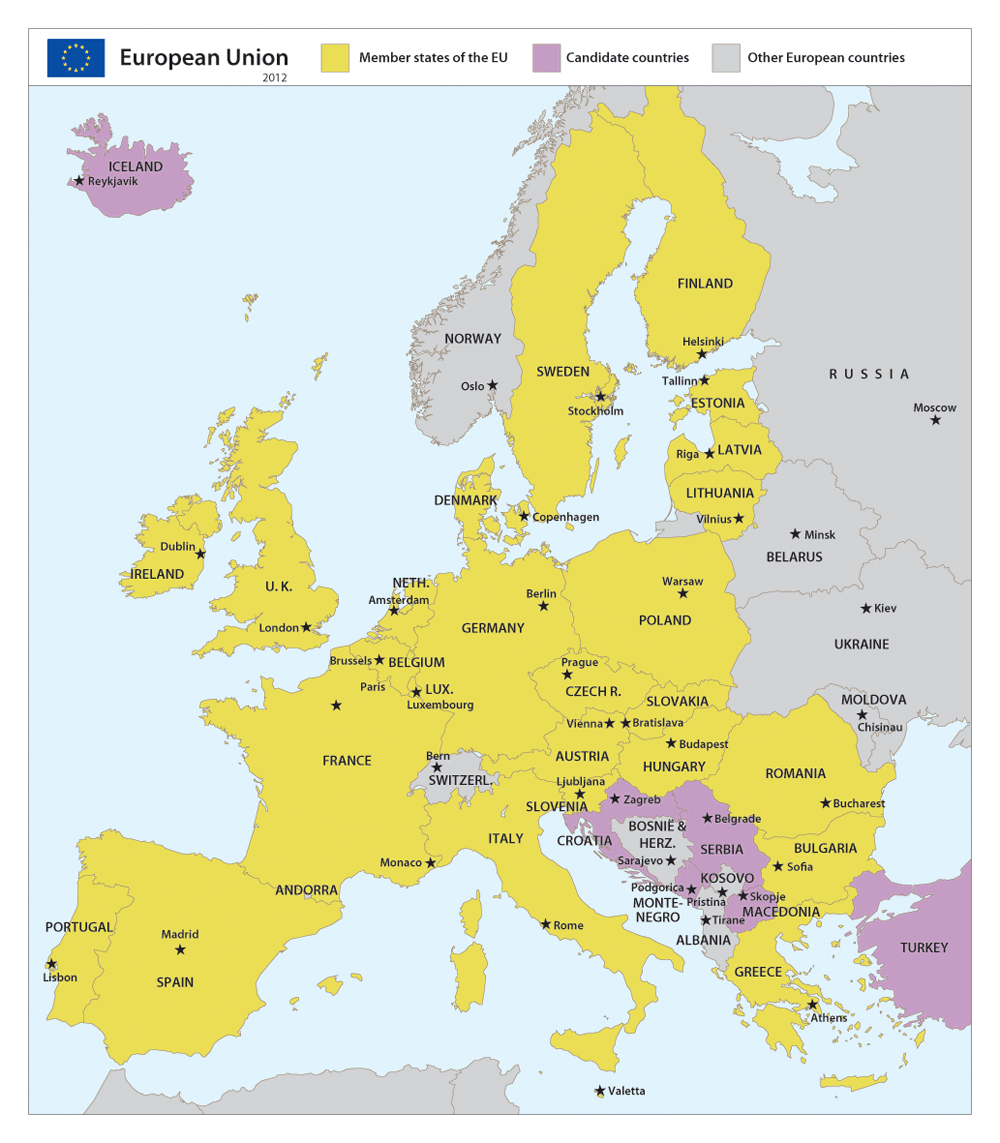
Though the western world was more directly affected by purchases of these mortgage packages, countries like China, Russia, South Korea, Ireland, Spain, and Greece were severely, if not equally, impacted.
Nations’ financial crises were not solely because of purchases of these mortgage packages but because of world economic interconnectedness. Nations of the world, as users of energy and product purchases, quit buying. At the same time, Tooze notes the American dollar was hoarded by some countries for protection from devaluation of local currencies. With America’s financial crises, the dollar became a source of devaluation rather than protection.
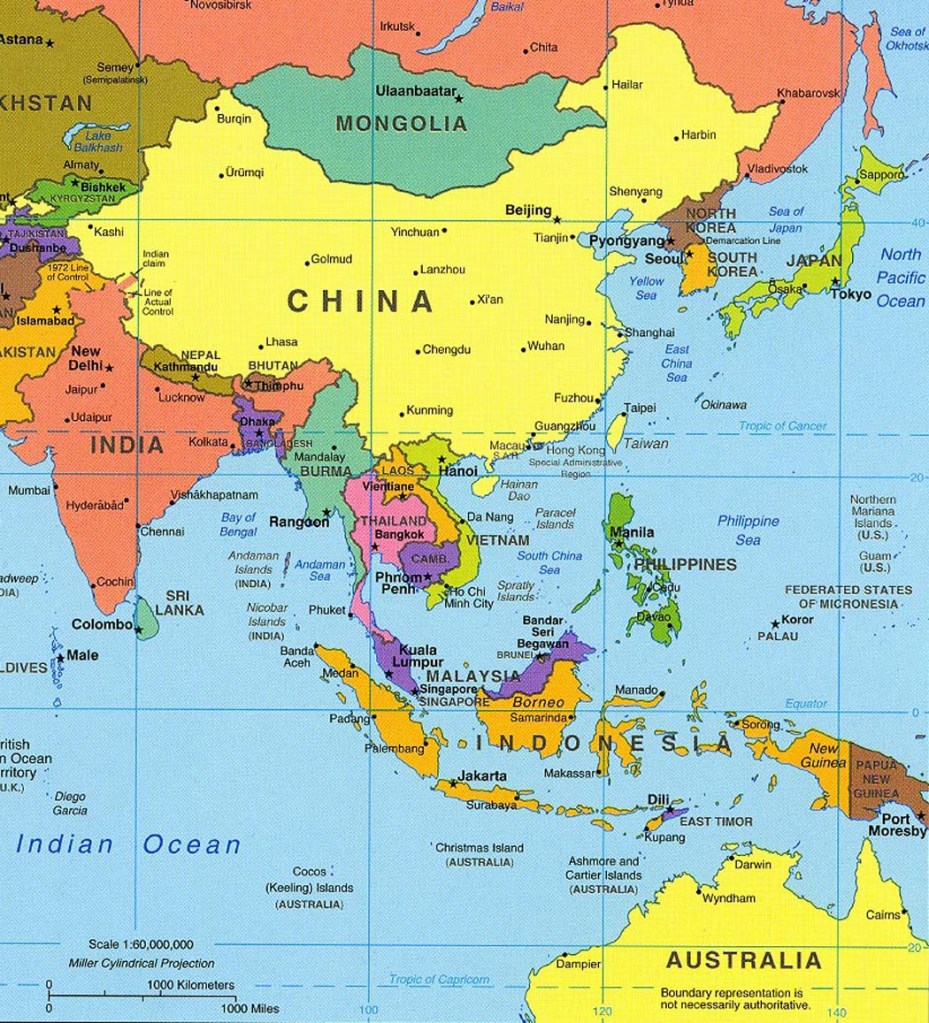
China chose to invest in domestic infrastructure projects like dams, high speed rail, and bridges. China chose to increase product production (at lower labor costs) for the worldwide market. In contrast, Russia reinforced kleptocracy, before, during, and after the 2008 crisis, by rewarding Russian oligarchs who became a wealthy and powerful cadre of supporters of the government. With favored treatment of the oligarchs, Vladimir Putin recognized he had the power to act as he wished whether it was in the best interest of Russian citizens or not. (This is similar to the repressive reign of Kim Jon-un who spreads the wealth of his nation on a relatively small cadre of North Korean protectors while many citizens live in poverty.)
Ben Bernanke (American economist, 14th chairman of the Federal Reserve.)
In America, Tooze deconstructed the complicated negotiation process between banking industry independence and federal government oversite by the Obama administration. The range of disagreement is from nationalization of the banking industry to a direct bailout of overextended banks. Though the government bluntly accused banking executives of overpaying themselves for the mistakes they made, Obama and Geitner recognized the importance of industry independence in making complicated decisions to get America out of its financial ditch. The decision is made to bailout the banks. The American government loaned enough money to banks and select companies to maintain American lenders’ and industries’ liquidity.
Timothy Geithner (Former central banker, 75th U.S Secretary of the Treasury under President Obama.)
In order to stabilize the economy, 320 billion euros were lent to Greece by the European Union and the IMF. As of 2019, only 41.6 billion had been paid back to reduce that debt. The E.U. and IMF imposed austerity measures that principally hurt the poor by reducing retirement pensions and employment opportunities. Greece fell into a recession that lasted until 2017. The poor became poorer because of pension reductions and loss of jobs. (Full repayment of the 320-billion-dollar loan is not expected until 2060.)
Tooze tells a similar story about Spain. The 2008 crises caused a 3.6% reduction in GDP in 2009. Spain’s response was similar to Greece’s in that the poor were more likely to have been hurt than the rich because of implemented austerity measures that reduced public spending, and job creation that impoverished a wide swarth of society.
The final chapters of Tooze’s history severely criticizes the rise of Trump and his extremist rhetoric about helping the working poor when in fact he is only interested in himself, his power, and his wealth. Tooze implies Trump uses American belief in free speech, and the power of public office to distort the truth of immigration, poverty, and equality to mislead the public. Historically, this is not a new American phenomenon but in this technological age, the damage political leaders can inflict on the public is multiplied.
In explaining the impact of the 2008 financial crises, Tooze shows how one nation’s actions and policies can roil the world. In the 21st century, actions and policies of one nation are not local. Like a ripple in water, the world can be changed by one stone thrower.
Gorbachev freed the Russian economy and Putin capitalized on that freedom. However, both reached beyond their grasp and damaged Russia’s standing in the world.
A History of Russia: From Peter the Great to Gorbachev
By: Mark Steinberg, The Great Courses
Narrated by:Mark Steinberg
Mark David Steinberg (History Professor at University of Illinois specializing in the cultural, intellectual, and social history of Russia.)
Professor Mark Steinberg’s history of Russia is an informative tour of Russian history that gives some context to the perplexing, contradictory, and murderous behavior of Vladimir Vladimirovich Putin. Though Steinberg’s history focuses on Tsarist Russia, a little research reveals why Putin argues Ukraine is historically a part of Russia.
Russia is an ancient nation that reaches back to the year 862.
The northern and southern lands were combined in 882 by Prince Oleg of Novgorod upon the seizure of Kiev in what is today the capital of Ukraine. Kiev becomes the capital of the combined lands. Eastern Christian religion is adopted from the Byzantine Empire by Russia in 988. Upon the Mongol invasion in 1237-1240, Russia’s size diminishes, and Russia’s capital moves to Moscow.
The first leader to be titled Tsar of Russia is Ivan the Terrible in 1547.
Ivan IV (Called Ivan the Terrible’s visage is forensically reconstructed by Mikhail Gerasimov)
Ukraine emerges as a nation in the mid-18th century, but large portions of the country remain under the control of Russia.
It is not until 1991, that Ukraine’s independence is recognized by America, Poland, and Canada.
Steinberg’s history addresses the time of Peter the Great through Mikhail Sergeyevich Gorbachev. What one hears from the lectures is the vacillation of Russian leadership from Europeanization to de-Europeanization. The primary interest of non-aristocratic Russians is in the political principle of socialism.
Autocracy is a common thread in Steinberg’s history of Russia. However, beginning with Peter the Great, that thread is frayed by changes that modernize Russian government management of its citizens. It remains autocratic but recognizes the country is behind Europe in its economic and cultural improvement.
Tsar Peter the Great (As Tsar from 1682 to 1721, Pyotr I Alekseyevich leads Russia as a harsh autocrat with the goal of defeating Ottoman and Swedish control of the Sea of Azov and the Baltic.
Steinberg explains Peter the Great’s objective is to create a new Russia by replacing its traditionalist and medieval social and political systems with enlightened public policies. He plans to modernize Russia by promoting education and industrialization. His objective is to emulate and compete with European modernization. The Russian Academy of Science and Saint Petersburg State University are founded in 1724. Peter the Great creates a governing Senate in 1711 and other institutions to improve the administration of the Russian autocracy.
Peter the Great dies unexpectedly and fails to designate an heir to the throne. Succession founders for several years with little progress toward modernization until Catherine II becomes Catherine the Great, empress of Russia from 1762 to 1796.
Catherine the Great II (Born 1729, dies in 1796 at age 67.)
Catherine the Great marries the grandson of Peter the Great who died months after becoming Emperor of Russia. Catherine the Great is of the same mind as Peter the Great in modernizing Russia. New Russian cities, universities, and theatres are created by Catherine the Great. With the help of fellow nobles, Grigory Orlov and Grigory Potemkin, and Russia’s generals of that time, Russia expands their territory and continues its Europeanization. Western philosophers like Voltaire become friends of Catherine the Great.
After Catherine the Great, her son Tsar Paul I takes control of the Russian government. Steinberg characterizes Paul I as a despotic ineffectual leader who projects an authoritarian and patriarchal image and reverses many of the liberal policies initiated by Catherine the Great. He is assassinated by the elite guards of the Russian military and his son, Alexander I, becomes Tsar.
With the rise of education, Steinberg explains the creation of what is called the “intelligensia”, a class of younger Russians interested in social change. Some were largely self-educated like Vissarion Belinsky, the son of a rural physician and Nikolai Gogol, born into the Ukranian family gentry (a class below aristocracy). Others were from the aristocratic class like Alekasndr Pushkin.
From left to right, Belinsky, Gogol, Pushkin–associated with the Russian Intelligesia in the early and mid-19th century.
Alexander I (reigned 1801-1825) is described by Steinberg as a leader of two minds that on the one hand reestablishes many of the reforms of his grandmother, Catherine the Great.
On the other hand, Steinberg suggests Alexander I resists revolutionary movements that were roiling Europe during his reign. Alexander, I joins Britain in 1805 to defeat Napoleon Bonapart. Alexander switches sides and forms an alliance with Napoleon in the Treaty of Tilsit in 1807. However, in 1810, Alexander abandons Napoleon over disagreement on Polish territory. Napoleon’s invasion of Russia in 1812 is a disaster for the French and Russia gains territory in Finland and Poland.
Nicholas I (Reign 1825-1855, Grandson of Catherine the Great.)
Serfdom is a troubling social problem in Russia that is acknowledged by Catherine the Great but not resolved until after an 1861 decree for abolition by Alexander II. Though Catherine and Allexander II are not related, it is Alexander II who initiates what Catherine the Great recognized as the iniquity of Russian inequality. Though it is many years before the reality of abolition of Serfdom is truly addressed, Alexander II is the first to begin its reversal. His predecessor, Nicholas I did nothing to eliminate serfdom and in fact tried to re-establish aristocratic privilege.
Mid-day meal for peasants in 1860s Russia
Inequality in Russia, just as is true in America, remains a work in progress. Steinberg offers more detail of Russia’s drive toward modernity, but the next great change is of course the revolution of 1917. Steinberg explains Russia’s growing interest in socialism and its conflict with patriarchal rule. He notes the two major factions that wished to change the course of Russian history. One is the Bolshevik movement. The other is the Menshevik movement. But, before we get to 1917, it seems the 1904-1905 Russo-Japanese war is important because of its relevance to Putin’s decision to invade Ukraine.
The last Tsar of Russia is Tsar Nicholas II. Nicholas II’s reign is from 1894 to 1917, after which his entire family is murdered by Bolshevik revolutionaries.
A precursor to the 1917 revolution is the 1905 uprising of Russian citizens who are unhappy with Tsar Nicholas II’s leadership. Growing inflation, poverty and hunger, a defeat in the Russo-Japanese War, and widespread discontent lead to a revolt. A workers demonstration leads to “Bloody Sunday”. An estimated 1,000 to 4,000 Russian citizens are murdered by Russian soldiers.
Of particular interest is the loss of the Russo-Japanese war. Both Russia and Japan want warm-water ports in the Pacific Ocean. A port that served that purpose is on the Korean peninsula, either off Manchuria or Korea. Tsar Nicholas’s inept management and the superior military actions of the Japanese defeat Russia.
The relevance of that defeat is the position Putin has put the Russian government in with the invasion of Ukraine. The question is whether Ukraine will be as successful as Japan in defeating Russia. The west must ask itself whether they have a dog in this fight or let Ukraine bear the brunt of an unjust war.
The exclusiveness of being a member of Lenin’s red party undoubtedly aided the ultimate success of the revolution because it required committed enforcers to rally the Russian people.
Steinberg explains Lenin clearly understood that authoritarian force would be required for communist’ socialism to succeed. The future of the revolution became dependent on a leader like Stalin who exemplified a party member that understood the importance of authoritarian command. The test of that truth comes in 1924 when Lenin dies from a brain hemorrhage.
Joseph Stalin (1878-1953, died at age 74, ruled Russia from 1929 to 1953.)
Authoritarian leadership, with its history of competent and incompetent Russian Tsars, is not new to the Russian people. With an improved education system in the 18th century, Steinberg explains even the intelligentsia accepted authoritarian rule. Adding to Russian’ acceptance of authoritarian rule is the belief that something had to change because life in Russia during Tsar Nicholas II’s rule is abysmal for the majority of Russian people.
Mikhail Gorbachev (1931-2022, died at age 91. Ruled the U.S.S.R. from 1985-1991 and served as President of Russia 1990-1991.)
Nearing the end of Steinberg’s lectures, the rise of glasnost with Mikhail Gorbachev is addressed. Between the death of Stalin and the rule of Gorbachev, 5 men ruled the U.S.S.R. Gorbachev wishes to keep the U.S.S.R. together but fails. His failure, in part, seems related to Steinberg’s history. Rather than glasnost, the U.S.S.R. seems to have needed a more authoritarian leader. Not in the sense of repression but in a demand to keep the U.S.S.R. together until the government’s effort at reform has time to be enacted. America had a civil war to prove it is one nation. That may have been a possibility with a more authoritarian Russian leader but that appears not to have been in the nature of Mikhail Gorbachev.
The U.S.S.R. dissolves in 1991. Since that dissolution, Russia has occupied some of the eastern territory of Ukraine and Crimea.
Though Steinberg does not fully address Vladimir Putin in his history of Russia, he sets the table for understanding why a reader/listener might think there is no way out for Vladimir Putin. The history Steinberg suggests Putin in one sense is the perfect transitional leader of the territorially reduced Russia. The firm hand of a secret police officer, with 16 years’ experience as a former KGB agent, and a position as Deputy Mayor of St. Petersburg’s seems an apt formula for success for a future President of Russia. Putin did well in his first years as President of Russia but seems to have made a career, if not life ending, error in his invasion of Ukraine.
Steinberg illustrates how Russia’s leaders range from enlightened to repressive managers of government. At different times in history, that management style served Russia’s economy and citizens, sometimes well and sometimes poorly. It is up to Russian citizens to decide which government actions and leaders best serves their needs.
From a western perspective, both Gorbachev and Putin served Russia well.
The question of whether the free world should support Ukraine in every way possible can be answered. The answer is yes because Putin like Hitler will not stop.
John Julius Norwich (Author, English historian, travel writer, television personality, Royal Navy veteran with degrees in French and Russian from Oxford.)
John Norwich’s “A History of France” is an intimidating summary of a country that makes one understand how young and inexperienced America is in the history of nations.
France is recognized as a nation in 987 with its first King, Hugh Capet, born in 939-died in 996 at the age of 56 or 57. (King of the Franks from 987-996.)
The actual title King of France is not used until the crowning of Phillip II in 1190 (a descendant of Capet) who died in 1223 at the age of 57. Norwich’s “…History…” recounts the many Kings of France since Phillip II.
The longest serving King is Louis XIV (the Sun King) who ruled from 1643 to 1715 (a total of 72 years).
King Louis XIV moved the center of French government to the Palace of Versailles in 1682. He is the third of five Bourbon Kings of France. King Louis XIV is noted to have expanded France’s borders while centralizing power in France. Norwich notes Louis XIV’s wife, Maria Theresa of Austria, plays a significant role in France’s history. Theresa’s three major accomplishments are to create education for serfs, consolidate the French government’s financial system, and create a unified judicial code that became a foundation for Central European Laws.
The last Bourbon King of France is Louis XVI and his queen, Marie Antoinette, who are deposed and beheaded after the 1789 revolution.
The brutality of the revolution is exemplified by factions called Royalists, Jacobins, and Montagnards. The Royalists supported monarchy and the Catholic Church. The Jacobins founded the 1789 Nation Constituent Assembly that wished to moderate authoritarianism, offer equal rights to French citizens with government intervention to insure social change. The Montagnards campaigned for the needs of the working and poorer classes of French society.
The 1789 revolution eventually led to the rise of Napoleon Bonaparte who through ascension and a series of military conquests reestablishes a French monarchy under his rule.
Charles-Louis Napoleon Bonaparte becomes the first president of France which is recognized as a Republic. However, though France is a Republic between 1848 and 1852, Charles reestablishes the monarchy in 1852 until he is deposed in absentia in 1870.
A new faction is formed called the Bonapartists. This faction roiled France throughout the 19th and into the early 20th century.
As the nephew of Napoleon, King Charles oversaw the modernization of the French economy. However, reestablishing the monarchy and his failure in the Franco/Prussian war led to a famine that permanently turned the French against monarchal rule.
Seven French revolutions finally ends France’s monarchy. However, each revolution precipitated chaos, and declarations of war from other monarchies. The final death of French monarchy did not occur until liberation after WWII.
Norwich explains there were actually seven revolutions before France becomes a permanent republic.
The first is the 1789 revolution which is most widely known by Americans. The irony of that revolution’s importance is France’s considerable support of America’s revolution in 1776. The newly established French government did not have a leadership group that could create a republic that could manage the monumental inequities of its long-established French culture. The repression of the poor created by centuries of royal leadership entailed too much animosity to avoid the Reign of Terror that caused the execution of thousands of French citizens. As many as 40,000 people were said to have been killed. It would take six more revolutions to create the lasting Republic of France.
The French Revolution (1789-1799)
The Napoleonic Era (1799-1815)
The July Revolution (1830), a 3 day uprising that overthrew King Charles X because he tried to restore absolutism and censor the press.
The February Revolution (1848), based triggered by economic hardship, discontent, and social unrest.
The Second Empire (1852-1870), a coup against Napoleon III despite the improvements made to France, he poorly manages and loses the Franco-Prussian War of 1870.
The Third Republic (1870-1940) did establish a parliamentary democracy but is tarnished by antisemitism, and WWI that killed millions of French soldiers.
The Vichy Regime that collaborated with Nazi Germany led to the 7th and final revolution against monarchy and for a Republic.
The collaboration of France’s Vichy Regime and Chamberlain’s appeasement agreement with Hitler’s Germany are lessons for today’s handling of Russia and the invasion of Ukraine.
The world did not fully respond to Hitler with force when Germany invaded Poland. Hitler, like Stalin and Putin, presumed the world would not respond to Germany’s taking of a sovereign country.
Whether Putin directs the murder of any opposition to his rule is not a question that can be answered but the imprisonment of Navalny and the death of Yevgeny Prigozhin is reminiscent of Hitler’s lies to the world.
The question of whether the free world should support Ukraine in every way possible can be answered. The answer is yes because Putin like Hitler will not stop.
Walter Russell Mead (American Author, Professor of Foreign Affairs and Humanities at Bard College, taught American foreign policy at Yale.)
Walter Russell Mead hardens the consequence of race and creed in the history of the modern world. Mead offers a biblically influenced history of human progress in “The Arc of a Covenant”. One cannot diminish the value of human diversity, but Mead implies millions who were murdered, maimed, or imprisoned in history have paid a price for human progress. Mead suggests the greatest price paid is by Jews who were largely abandoned by Franklin Roosevelt’s America and imprisoned, gassed, and murdered in WWII.
Despite America’s decisive role in WWII, largely orchestrated by Franklin Roosevelt, Mead suggests President Truman’s actions to end the war and gain the peace shine as brightly as the social programs created by his predecessor.
As is widely known, the Ark of the Covenant carried two stone tablets that were given to Moses by God that contain the Ten Commandments.
Mead implies these commandments were adhered to by Truman more than any President before or after his presidency. He notes that despite Truman’s lack of a college degree and inexperience as a politician, he utilized the universal values of the ten commandments to guide America out of war into a peace meant to reinforce the “…Covenant” given to Moses by God. It is clear from Mead’s history, that Truman did not do it alone, but he led the effort with the support of his predecessors, direct reports, and successors.
As the 33rd President, Truman re-engaged the U.S. in internationalist foreign policy, adopted Kennan’s recommendation of containment of U.S.S.R. during the Cold War, passed the Truman Doctrine that helped eliminate the communist threat in Greece and Turkey, responded to the Berlin Wall crises with the Berlin Airlift, and passed the $13 billion dollar Marshall Plan to aid Western European recovery after WWII. Truman also ended racial segregation in the Armed Services, and established the NSC, the CIA, and the NSA.
In America, Henry Cabot Lodge and evangelist, William Blackstone, were two predecessors to Truman that martialed American opinion to support the Balfour proposition of Englishman Arthur Balfour who recommended support for a Jewish homeland in Palestine. To an evangelist, one presumes the motivation is biblical belief in the prophecy of Armageddon that is to occur in the Middle east with the return of Jesus Christ to save believers in the faith. Lodge supports Zionism (a 19th century plan for a Jewish homeland in Palestine) as the Chairman of the Senate Republican Conference from 1918 to 1924.
In 1946, Palestinians refuse to agree to a separate Jewish homeland in their country. They would only agree based on a one state solution where Jews would be a minority in a Palestinian controlled state. The consequence of that refusal is to diminish the territorial control of the Palestinian people.
Mead notes the British walked a fine line between their need for oil from the Middle East and their effort to fulfill the promise of the Balfour agreement.
The conflict between Jews and Palestinians is initially controlled by the British military when the Jewish settlements first came to Israel. In the end, the British need for oil is greater than their continuing act as arbitrator for the Palestinian/Jewish conflicts.
The British decide to turn the conflict over to the United Nations which was formed in 1945 as a replacement for the League of Nations.
Though this body is meant to resolve international conflicts, it has five permanent members that have veto powers over its policies. They are China, France, Russia, the UK, and the US. Russia for a short time supports an independent Jewish State but becomes a notorious abuser and murderer of Russian Jews during the Stalinist years.
By a slim margin, with Stalin’s real-politic support, a UN resolution is passed to create a Jewish state in Palestine.
Stalin’s goal is to drive a wedge between Western powers like the UK and the US by supporting the resolution. The UK needs Arab oil even at the expense of the Balfour plan and the UN resolution. In enforcing the partition, Mead notes Truman is caught between the jaws of Cerberus guarding what is the hell between Arab states and a boundary line for Israel.
Mead explains Eleanor Roosevelt is a major force in politics of the U.S., particularly after the death of President Roosevelt.
She supports the UN resolution and expects the American government to enforce its implementation. In 1948, Mead notes Truman plans to enforce the UN resolution with the American military, if necessary, which is not popular with some American leaders and U.S. voters.
Mead illustrates how America aided Israel in its early formation, but notes Israel grew strong on its own. After the end of the Cold War, the world enters a Cold Peace. Mead drops a cultural bomb on his readers by noting America’s role as western world savior morphs into western world goat. Mead infers that transmogrification is the base upon which Donald Trump is elected. He suggests the fall of the U.S.S.R. seemingly created a bed of roses but turned into a crown of thorns.
Mead suggests America in in a post-cold-war era. America’s left-wing support of Israel is now Right-wing support.
Deregulated growth of the economy is a causal factor in the widening gap between rich and poor. 9/11 destroyed America’s self-confidence by suggesting America cannot protect itself, let alone spread democratic values in the world. American power emulates authoritarian government with slogans like “Make America Great” with an underlying disregard for foreign relations and world peace. Mead suggests there is a growing loss of faith in American government.
It is sad to think how vilified and unfair history has been to such a small ethnic minority.
What seems glaringly obvious in Mead’s “too long” story is the immense contribution Jews have made to the United States. As a small minority, their contribution to the world outstrips any ethnic group in this dilatant’s flawed memory. Mead gives some perspective to that realization.
Scaling People (Tactics for Management and Company Building
By: Claire Hughes Johnson
Narrated by: Claire Hughes Johnson
Claire Hughes Johnson (Author, former chief operating officer of Stripe, lecturer on management of companies, former technology and operations manager.)
In “Scaling People”, Claire Hughes Johnson offers an insightful and actionable skill-set for both creators and managers of eleemosynary, government, and business organizations. She explains how large and small organizations can become more effective in executing their plans for development.
Johnson suggests every successful organization must have a clear statement of mission. “Mission” statements are the beginning of an entrepreneur’s creation of a company, a non-profits’ purpose, or a government’s departmental objective.
Every effective manager within an organization begins with a clear understanding of mission. Small and large organizations become successful when managers understand their organizations’ mission. The only difference is an entrepreneur’s mission is to prosper and grow a business, a minister’s mission is to ameliorate sin and grow a congregation, a charities mission is to grow and do good for others, and a government agency is to provide public service and grow as needed for those who cannot help themselves.
Johnson explains a manager’s success begins with self-understanding.
Johnson notes the ancient saying inscribed on the Oracle of Delphi in ancient Greece, “know thyself”. Knowing oneself is being aware of one’s nature and limitations. Johnson infers every good manager is a leader because, by definition, managers and leaders lead people.
Johnson works in the high growth industry of technology but her book applies to all organizations whether staid and maintenance driven or growth oriented.
When addressing growth companies, Johnson explains high performers fall into two categories. She classifies the first as “pushers” and the second as “pullers”.
Both are valuable employees but Johnson notes pushers want more money and power while pullers are subject to burn-out. Though their reasons are different, both may leave the organization. The potential cure Johnson suggests is a biannual review, designed in different ways, to motivate them to stay. The pushers should be counseled on what they can do within the company that trains them to take on more responsibility in return for more pay and power. Johnson’s counsel to pullers is to acknowledge their contribution and offer a new challenge that benefits the company and their skill without taxing their life/work balance. Johnson notes this does not always work but it directly confronts, and tries to serve the needs of employees and the organization.
Once a mission is understood by a manger, organizational missions are accomplished with the help of others.
A large part of Johnson’s book is how to make organization’ managers effective leaders of their respective management teams. Johnson explains teams are organized to achieve goals to meet an organization’s mission as a sin quo non of success. Johnson’s book about organizational management is based on her challenging experience as a manager for Google and as the Chief Operating Officer for a successful tech company called Stripe.
Johnson addresses work horses of organizations that at times are low performance employees. Johnson argues their biannual reviews require recognition of measured performance deficiencies with constructive conversation about how they can improve. Johnson suggests it is important to recognize their longevity as employees and their cultural value as longer-term employees. However, if performance does not improve by the next review, a performance plan is written that offers what may be a final opportunity for a low performance employee. If that fails, the employee may be discharged. (Second chances are in the best interest of organizations because of the investment they make in hiring and training employees, let alone continued employment for the worker.)
“Scaling people…”, is about measuring yourself as a manager and others that are a part of a companies’ team. The first step is scaling yourself and your own strengths and weaknesses. That is Johnson’s insight to her own organizational effectiveness. Good managers and leaders build on their strengths. That is why Johnson explains how important it is to know yourself. To Johnson “knowing yourself” is the source of an effective manager’s productivity. By knowing yourself, one can overcome personal weaknesses with people who have complementary skills. The key to success is in team building that achieves an organization’s defined mission.
The hard part of Johnson’s insight is in having self understanding. It is made harder by a willingness to reveal it to others. In that willingness, team cohesion is formed. Team members experience self-understanding’s value by fulfilling an organization’s mission.
Only with self-realization, does one focus on mission with the energy and will needed for organizational success. Achieving an organization’s defined mission requires team work.
A manager/leader needs to focus on strengths and weaknesses of teams in the same way he/she understands their own strengths and weaknesses.
Johnson notes self-understanding is only a beginning. “Scaling people…” requires measurement of performance against goal. Teams have to be monitored, measured, and adjusted to more effectively achieve the organization’s defined mission. Johnson offers a number of tools that can be used to monitor, measure, and adjust a team’s effectiveness.
“Scaling people…” is a great addition to the literature of organizational management. “Scaling people…” is an excellent tool for forward thinking organizations interested in growing and improving their performance.
Narrated by: Suzanne Torne Narrated by: Alex Allwine, Kati Marton
Maureen Quilligan and Kati Marton illustrate how mistaken society is in forsaking women as leaders of the world. Quilligan argues four famous women “…Ruled the World” in the 16th century. “The Chancellor” addresses one woman who “…Ruled the World” in this century.
Quilligan explains an overriding conflict in the 16th century is a schism in the church. In 1517, Martin Luther posts the 95 Thesis that accuses the Catholic Church of selling indulgences to forgive sin to pave the way to heaven.
During Henry VIII’s reign (1509-1547) his first marriage to Catherine of Aragon does not produce a male heir to the throne. Henry wishes to dissolve his marriage to Catherine and marry Anne Boleyn. However, he needs an annulment from the Pope to marry Boleyn. The Pope resists.
Henry the VIII takes advantage of the growing schism in the church, exemplified by the 95 thesis. At the same time, as some historians note, Henry wishes to confiscate Catholic property in England to replenish the royal treasury. Henry the VIII creates the “Church of England” in 1534 as an alternative to the Papal Church in Rome. The Church of England annuls Henry VIII’s marriage to Catherine and the confiscation of Catholic Church property begins.
With the formation of the Anglican Church, England becomes Protestant which is the faith of Elizabeth I, the daughter of King Henry and Anne Boleyn.
Still, even after the marriage to Boleyn, there is no male heir. Catherine of Aragon remains Catholic, along with her daughter who becomes Queen Mary I of England after Henry’s death. Mary I, as a Catholic, is half sister to Elizabeth I who is Protestant. Mary I rules as a Catholic despite her half sister’s insistence on remaining Protestant.
Quilligan recounts the religious differences between Queen Mary I and Elizabeth, but Quilligan suggests they remain close, bound by their father and their sisterhood.
Queen Mary I of England (1516-1558)
Upon the death of Mary I, Elizabeth I ascends the throne as a Protestant Queen replacing England’s Catholic Queen. Quilligan explains religious differences were important but Mary I and Elizabeth I maintain a sister to sister relationship despite there religious difference. Quilligan implies Elizabeth I knew that maintaining a good relationship with Mary meant she would one day become Queen of England.
Quilligan then turns to Scotland’s monarch. Scotland’s history shows Mary Queen of Scots is a committed Catholic leader. She brutally persecutes Protestants during her reign and becomes known as “bloody Mary”.
Mary Queen of Scots (1542-1587)
Quilligan characterizes the relationship between Mary Queen of Scots, and Elizabeth I as friendly (almost sisterly), but a plot to assassinate Elizabeth I leads to the beheading of Mary Queen of Scots. The irony of that act is that Elizabeth paves the way for Prince James, the son of Mary Queen of Scots, to become James I, King of England after Elizabeth’s death.
The beheading of Mary Queen of Scots is said to have required two strokes with the first not completely severing her head. To some, Mary Queen of Scots became a martyr.
Elizabeth is known as the virgin queen but her sister-like relationship with the beheaded Scottish Queen gave Elizabeth a somewhat motherly relationship with James. However, Elizabeth (after her long reign) refuses to identify an heir at her death. Other historians note that James I ascends the throne by presumption and selection by remaining leaders of England, after Elizabeth’s death. Quilligan notes James I is a committed Protestant rather than a Catholic like his mother.
Maureen Quilligan’s history is less convincing about women who ruled the world because it relies on recollected details from scant original documents and facts proffered by other historians.
Quilligan’s book about women that ruled the 16th century world seems hyperbolic and only marginally convincing. Quillian’s argument for at least one woman of the 16th century who ruled the world is credible–based on Elizabeth I’s long reign and her acclaim by most historians.
Quilligan explains Elizabeth I, Mary I, Mary Queen of Scots of (bloody Mary), and Queen Catherine de’ Medici of France are world leaders.
Queen Catherine de’ Medici (1519-1589)
They were leaders in the 16th century but the author’s reported facts only fit the book’s catchy title. Quilligan’s history fails to convince listener/readers that women ruled the 16th century world. Spain is noted as the strongest world power of the 16th century. Spain was largely ruled by Kings with only one Queen (Queen Isabella) who ruled for four years of the 16th century.
In contrast to Quilligan’s the gathered historical facts of 16th century leadership by women, Kati Marton has the good fortune of first person interviews of Angela Merkel’s leadership in the 21st century.
There are boat loads of original source material that confirm Merkel is a great ruler of the world. Merkel serves Germany while 3 Presidents (George W. Bush, Barack Obama, and Donald Trump) are elected in the U.S. Marton convincedly explains why Merkel is a great woman leader of the 21st century world. Marton explains how Merkel comes to power in Germany. Merkel’s remarkable rise beggars imagination.
The fall of the Berlin wall in 1989 reunites Germany.
Merkel is raised in East Germany as a scientist, fluent in Russian and German, and then as an English speaker, when she chooses to become a national politician. In 16 years Merkel, an unknown quantum chemist, becomes leader of the third wealthiest country in the world with only the U.S. and Japan having higher GNPs.
Marton notes Helmut Kohl is Chancellor of West Germany when the Berlin Wall is taken down. Kohl became Chancellor of the entire country in 1990 (originally elected in 1982) and remained Chancellor until 1998.
Kohl recognized the political value of Merkel early in her political career. She represented East Germany’s zeitgeist because she lived the life of an East German. When Kohl loses the Chancellorship to Gerhard Schroeder, the table is set for Merkel to challenge Schroder for Germany’s seat of power.
Kohl’s last race is against Schroeder. Kohl is expected to be reelected. An exposed financial scandal ruins Kohl’s chance. He is beaten by Gerhard Schroeder.
Gerhard Schroeder (Former Chancellor of Germany.)
Marton explains what you see is what you get with Angela Merkel. Though much of Merkel’s rise in politics is due to Helmut Kohl’s support and sponsorship, she forthrightly and publicly criticizes Kohl for using an intricate web of secret bank accounts to illicitly finance the party that had got him elected. Schroeder beats Kohl but is challenged by Merkel for Chancellor in 2005. Schroder loses re-election and Merkel becomes the first woman in history to become Chancellor of Germany.
Marton explains how Merkel abjures the macho machinations of Vladimir Putin and directly confronts Putin’s lies about Russia’s Ukraine incursion in 2014.
Marton shows Merkel is not a glib politician but a highly intelligent leader, with immense energy, who does what she believes has to be done. Merkel is shown to be an independent thinker who represses her emotions when confronted with the exigencies of political conflict.
Marton goes on to explain her admiration of George H.W. Bush, and Mikhail Gorbachev and their support of independence. In the beginning of Obama’s administration, Merkel initially feels Obama talks a good game but she reserves judgement until she sees positive results. Merkel grows to respect Obama’s intelligence and what he accomplishes but nearly breaks with him when she finds her personal cell phone had been tapped by the U.S.
Marton shows the humanity of Merkel by noting her decision to accept 1,000,000 Muslim refugees from the war torn Middle East in 2015.
Thousands of German citizens welcomed the refugees and offered clothes, food, and support. At the same time there is German opposition to Muslim immigration. Merkel notes the human need of her action but also explains the value of the refugees to an ageing German population that needs more young workers.
Marton’s book reveals a concern that Merkel has about the hardening of German opposition to non-German immigrants. Merkel’s concern is the rise of a right wing party like that which brought Hitler to power.
Marton reveals one of Merkel’s speeches in Israel that addresses the Holocaust. Marton implies it is the first speech by a German Chancellor in Israel since WWII.
Marton implies Merkel views Trump as trouble for American democratic values.
Marton gives some insight to reader/listeners on Merkel’s perception of Trump. Trump reinforces beliefs of right wing Germans by denigrating immigrants and supporting right wing authoritarians like Putin in Russia and Pen in France.
One comes away from Marton’s book with admiration for Angela Merkel. Merkel appears to be one of the few politicians in the world that have a “superior perception of reality”, a phrase made famous by the American political strategist Lee Atwater. (One may like the phrase but Atwater is considered by some as the most devious campaign strategist in America. He played a role in electing Republicans Ronald Reagan and George H.W. Bush. Atwater died in 1991 at the age of 40.)
What both Quilligan and Marton make clear is that the world loses half the world’s intelligence and capability by not recognizing women are equals of men. There are no giants among us. We are all human, neither omniscient nor unerringly correct.