ADAM ONE AND TWO

David Brooks (Author, Political and social commentator) Of course, Brooks means both men and women in his singular reference to Adam. In David Brook’s “The Road to Character”, the forces of nature are classified as Adam one and Adam two. Adam one is characterized by logic, and rationality. Adam two is characterized by sex-drive, instinct, … Continue reading “ADAM ONE AND TWO”

  • Audio-book Review
  • By Chet Yarbrough
  • (Blog:awalkingdelight)
  • Website: chetyarbrough.blog
  • The Road to Character
  • Written by: David Brooks
  • Narration by:  Arthur Morey, David Brooks
DAVID BROOKS (AUTHOR, POLITICAL AND CULTURAL COMMENTATOR-WRITES FOR THE NYT AND OTHER DAILY PAPERS)

David Brooks (Author, Political and social commentator)

In “The Road to Character”, David Brooks refers to Adam one and two (a nod to biblical creation) as two forces of nature embodied in all human beings. 

Of course, Brooks means both men and women in his singular reference to Adam.

In David Brook’s “The Road to Character”, the forces of nature are classified as Adam one and Adam two. Adam one is characterized by logic, and rationality. Adam two is characterized by sex-drive, instinct, and emotion. Brooks suggests these characterizations apply to both sexes.

Of course, categorization of logic and instincts in human beings is not a revelation.  But, Brooks notes these categorizations are the foundation for character.  Brooks does a masterful job of recalling several historical figures that are the gravel base and pavement for his “…Road to Character” argument.

Because Brooks turns to the past, there is an inference, and some suggestion, that the present and future are threatened by an imbalance between logic and instinct; with a result that implies diminished character in modern times. 

The seemingly erratic behavior of the past President of the United States offers evidence to support Brooks’ observation.

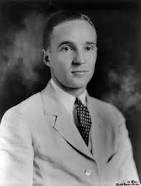
FRANCES PERKINS (1880-1945, SERVED AS U.S. SECY. OF LABOR 1933-1945)

Brooks recalls the first woman Cabinet Member, the U.S. Secretary of Labor, Francis Perkins.  Perkins is raised in a wealthy family in Maine, educated at Mount Holyoke College, University of Pennsylvania, and Columbia.  Perkins becomes the woman behind the New Deal of Franklin Delano Roosevelt.

FRANCES PERKINS (1880-1945, SERVED AS U.S. SECY. OF LABOR 1933-1945)

In spite of her wealthy upbringing, Perkins is incensed by poverty and its causes.  Her “Adam one” tells her that poverty is not caused by lethargy or want of ambition but by social circumstance. 

Perkins is drawn to this conclusion by the struggles of her own life and those around her.  Perkins becomes engaged with humanity while struggling with a mentally deranged husband and a financially and emotionally dependent daughter.  Perkins lives a life that shows she is not in control of “Adam two” but that “Adam one” can ameliorate through hard work and service to others.  Perkins is a consummate organizer; i.e. an essential manager needed to make Roosevelt’s New Deal effective.  She supports her husband and daughter throughout the struggles of her life.

Brooks goes on to give thumb nail histories of Dwight Eisenhower, George Marshall, Bayard Rustin, Mary Ann Eliot (aka George Eliot), Samuel Johnson, and others.  In each vignette, Brooks outlines a struggle between “Adam and Eve one” and “Adam and Eve two” views of the world.

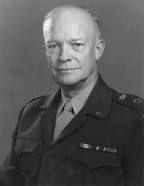
DWIGHT EISENHOWER (1890-1969)

Brooks notes Eisenhower’s caddish dismissal of his long-term mistress as evidence of a character formed by an “Adam one” view of the world.  The importance of Eisenhower’s duty to family, to position as President, and as example to country outweigh “Adam two” emotions of an illicit affair; i.e. he summarily dismisses his mistress with a memo.

DWIGHT EISENHOWER (1890-1969)

Brooks suggests the importance of Eisenhower’s duty to family, to position as President reflect “Adam one” behavior that outweighs “Adam two” emotions of an illicit affair.

Brooks stories reflect on the agony felt by human beings struggling with logic and rationality, and its conflicts with spirit, sex drive, instinct, and emotion.

Eisenhower engages Civil Rights conflicts during his presidency.  However, his engagement is principally based on upholding “rule of law” when the Supreme Court settles Brown v. Board of Education.

One presumes Eisenhower’s political decisiveness is based on an “Adam one” belief in Constitutional enforcement of the law of the land.  Eisenhower’s road to character is paved with “Adam one” duty.  Jean Edward Smith’s “Eisenhower in War and Peace” reinforces Brook’s assessment.

The same case is made for General George Marshall.  Duty-to-country is at the base of Marshall’s public “…Road to Character.”   

GENERAL GEORGE C. MARSHALL, 
(1880-1959)

Like George Washington, Marshall serves his country without desire for fame or fortune but with a reasoned need to do what they perceive is right. 

GENERAL GEORGE C. MARSHALL (1880-1959)

Like Washington, Marshall is a hard task master.  He expects much from his army and from himself.  He is confident, without being arrogant.  He suppresses “Adam two” emotions to do his duty.  He confronts obstacles directly.  Outwardly, Marshall neither fears any man or position.

The folly of hubris is never evident in either Washington’s or Marshall’s actions but each is willing to do what their country asks of them.  Brooks tells the story of Marshall wanting to lead the D-Day invasion but agreeing with Roosevelt’s decision to appoint Eisenhower, Marshall’s subordinate.

Harry Truman (1884-1972. 33rd President of the United States.)

Marshall intends to retire after the war but is called to duty by Truman to form the Marshall Plan for the recovery of Europe.

Ironically, the Marshall Plan cements Marshall’s name in history.  The point being made by Brooks is that seeking fame is a fool’s road to character.  Marshall did his duty.  He did not seek fame.  Fame found him through good works based on character.

Brooks notes how Marshall confronts General Pershing when he criticizes Marshall’s lesser command; and later, confronts Roosevelt when the suggestion is made that WWII will be a war of machines rather than men.

A surprising thumb nail history is given of Bayard Rustin, a black activist that happens to be gay.  Rustin is compelled by “Adam two” emotions that drive him to serial relationships with men.   Rustin is shut out of King’s march on Washington because of a threat from Adam Clayton Powell Jr. to expose an intimate King-Rustin relationship.  Rustin remains in the movement but is forced to reduce his profile. 

BAYARD RUSTIN (1912-1987, Social Movements leader for civil rights, nonviolence, and gay rights.)

Brooks notes that Rustin is a primary influence in Martin Luther King’s non-violence, pacifist movement, founded on Gandhi’s philosophy of resistance. 

BAYARD RUSTIN (1912-1987, SOCIAL MOVEMENTS LEADER FOR CIVIL RIGHTS, NONVIOLENCE, AND GAY RIGHTS)

Though Rustin’s “Adam two” sex-drive besmirched his character, “Adam one” logic placed him on the right side of history.

Another fine vignette is the story of Mary Ann Eliot; better known as George Eliot.  Mary Ann is raised in a strict catholic environment.  She rebels by denying the myths of Christ’s story of resurrection and healing.  She firmly believes in God but not the truth of biblical apocryphal stories. 

After Eliot’s father’s death, Mary Ann is driven by her emotions and sex-drive to become serially involved with men for gratification, attention, and recognition.  This insatiable desire continues until she meets the love of her life, George Lewes. 

George Eliot

It is Mary Ann Eliot’s courage to flaunt convention that paves her “…Road to Character.”  Like Rustin, Eliot struggles with her personal life but through hard work and insight to human nature, she becomes a woman of substance and a writer of great human understanding.

George Lewes becomes Eliot’s muse, constructive critic, and eternal admirer.  Eliot becomes the famous writer of “Middle March” and “The Mill on the Floss”.  Lewes is characterized as a lesser light but exactly what Eliot needs to realize her literary gift. 

George Henry Lewes (1817-1878, Philosopher, literary, theatre critic.)

Lewes is married but has a reputation for philandering.  Eliot chooses to become Lewes companion in Europe in spite of the harm it would do her reputation.

Brooks profiles Samuel Adams and Montaigne in the last chapters of his book.  They are equally well-formed men of character; forged in the face of human struggle. 

In the end, Brooks suggests “The Road to Character” is defined by the base upon which the pavement is laid.  What is troubling about Brooks’ conclusion is the inference that the way children were raised in the past is better than they are raised today.  The inference is that children are not punished enough or are too coddled with praise to be motivated to achieve great and good things.  Further, that today’s environment fails to build character because there is less understanding or appreciation of hard work and its rewards.

Brooks may be misreading today’s youth.  Today’s youth are children longer than in the past.  They also have more years to live.  Human hardship will always be with us and even the coddled learn from mistakes made in their youth. 

The substance of character has not changed but it may take more years to reveal it.

GLOBAL WARMING

Audio-book Review
By Chet Yarbrough

(Blog:awalkingdelight)
Website: chetyarbrough.blog

The Sixth Extinction: An Unnatural HistoryThe Sixth Extinction

Written by: Elizabeth Kolbert

Narration by:  Anne Twomey

ELIZABETH KOLBERT (AUTHOR,AMERICAN JOURNALIST,PROFESSOR AT WILLIAMS COLLEGE)

Homo sapiens are the only species that has the capacity to change events to conform to plan.

Elizabeth Kolbert argues that the fate of life on earth is subject to the randomness of nature’s cataclysmic events and the will of society.

“The Sixth Extinction” recounts the history of five worldwide extinctions.  In recounting that history, Kolbert and most scientists suggest there is a pending sixth extinction.  The difference between the first five and a presumed sixth is the birth and maturity of humankind.

To some listeners, this story is tiresome.  It is tiresome because the future seems so far away.  It is tiresome because some think it a hoax.  It is tiresome because humans are an adaptive species.  It is tiresome because some believe it is God’s plan.  It is tiresome because science says extinction is a part of evolutionary science.
TRUMP’S VIEW ON CLIMATE CHANGE:  trump and climate change

A fatalist might read Kobert’s book and think it implies a “…Sixth Extinction” is inevitable, regardless of one’s belief.  President Trump and other “do-nothings” sing “Be Happy, Don’t Worry”.  There is nothing that can be done; so why try?

The truth is– much can be done to abate the consequence of wild fires, hurricanes, and other cataclysmic events.

  1. Cities can be hardened against flooding.
  2. Forests can be better managed.
  3. At risk populations can be permanently relocated.                                                                                                                                                                                                                It’s a matter of recognition of threat and political will to mitigate environmental consequence.

hurricane

global warming evidenceIn spite of, earth’s rising average temperatures, melting icebergs, and seashore flooding, the story of extinction offers no sense of urgency.

Some believe wildlife extinction is a part of the natural order of existence; others, a cataclysm of human-caused events, while coreligionists believe it is a part of “God’s” plan.  And finally Kolbert and others believe science will provide a solution for humans to escape extinction.

Kolbert’s book is popular, and is awarded the 2015 Pulitzer Prize for general non-fiction because she writes well and has a point of view that offers hope for the future of humanity.  She infers science will provide a plan for humans to escape extinction.  On the one hand, Kolbert decries the death of bat species, the acidification of earth’s oceans, and the loss of coral reefs.  On the other, she suggests human life prevails because it has shown capacity to change.

TRUMP AND CLIMATE CHANGE
The real fear that Kolbert, and many other journalists, scientists, and politicians talk about, is that society will not respond to manmade degradations of earth’s environment soon enough to delay an inevitable “…Sixth Extinction”.

Kolbert infers artificial preservation of endangered species is a fool’s errand in the face of habitat destruction.  After all, what is the point of preserving a species in a zoo or in a frozen state of animation if natural habitats are destroyed?

SPECIES EXTINCTIONS
Another way of interpreting Kolbert’s theme is to argue that loss of life’s diversity is a consequence of earth becoming an island of sameness.  She calls loss of diversity is an island of sameness because environmental degradation introduces the same bacteria, the same pollutants, and the same adaptive needs to survive.

Biodiversity becomes less possible because of the interconnectedness of continents, consequent to international travel and species introduction to all continents of the world.

One may argue this is the fault of human civilization.  That seems wasted intellectualization.  The advance of civilization naturally induces loss of biodiversity.  But, Kolbert’s theme suggests interconnectedness is only a proximate cause of loss of biodiversity.  She argues it does not have to be a cause for a “…Sixth Extinction”.

Kolbert’s argument reminds one of the Serenity Prayer:

“God, grant me the serenity to accept the things I cannot change,

The courage to change the things I can,

And the wisdom to know the difference.”

CHANGING EVENTS TO CONFORM TO PLAN

“The Sixth Extinction” notes that human beings are the only species that shows the capacity to change events to conform to plan.

What humanity needs is the political will to mitigate the causes of human environmental pollution.  It is not that a “…Sixth Extinction” will not occur, but human beings need not be the proximate cause.

GOD IS NOT THERE

Audio-book Review
By Chet Yarbrough

(Blog:awalkingdelight)
Website: chetyarbrough.blog

Go Tell It on the MountainGo Tell It On the Mountain

Written by: James Baldwin

Narrated by: Adam Lazarre-White

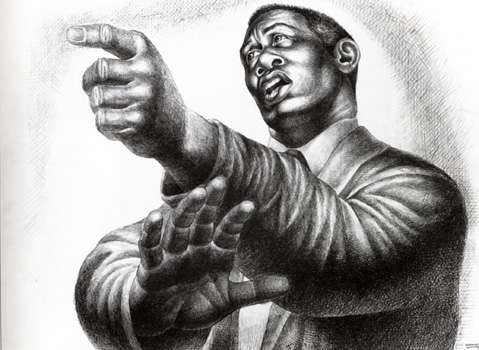
JAMES BALDWIN (1924-1987 AMERICAN NOVELIST & SOCIAL CRITIC)
JAMES BALDWIN (1924-1987 AMERICAN NOVELIST, SOCIAL CRITIC)

Go Tell It on the Mountain because God is not there.  Go Tell It on the Mountain because no one listens.  Go Tell It on the Mountain because no one cares.  James Baldwin rages against culture that makes one, what one is not.  Baldwin wins fame from a book that defines the chains of discrimination.  He explains why and how culture is a curse.  Baldwin tells a story that explains why being different denies equal opportunity.

Go Tell It on the Mountain is partly auto biographical.  It tells of the author’s remembrance of his childhood and formative years.  In broad perspective, Go Tell It on the Mountain shows how Americans are born as equals but deprived of potential by culture.  Though published in 1953, the truth of Baldwin’s observations about culture is institutionalized in America.

Baldwin writes a story about three economic opportunities for early 20th century black Americans.  They are announced by Baldwin as robber, pimp, or preacher.  Today, some believe blacks are still not suited for more.

STEREOTYPING
Only when human beings are treated as equal will stereotypes disappear.

Baldwin’s story is about two fathers of the same boy.  One is the natural father; the other is a stepfather.  The birth father is characterized as naturally smart.  He moves from the rural south to the urban north with a woman he does not marry.  The father is arrested for being at a store when two black men rob it.  Because the father is in the wrong place at the wrong time, he is sent to jail for trial.  The father is accused but not convicted.  He is so shaken by the experience; he slits his wrists and dies.  What would this father have become if he had not been arrested and jailed?  The innate skill of a human being may be a combination of genetics and environment but if one’s color says you can only be a robber, a pimp, a preacher, a sports star, or an entertainer; being smart is not enough.  Only when human beings are treated as equal will stereotypes disappear.

BLACK PREACHER
The irony of a stepfather/ preacher’s abuse is that he is biblically as sinful as most human beings.  (In retrospect, knowing that Baldwin is gay, one surmises how abusive a religious stepfather might be.)

The second father of the same boy, a stepfather, also gravitates from the rural south to the north but he is older and knows success as a preacher.  He is not characterized as particularly smart but he believes in God and talks the talk of a good man who will rescue an unwed mother and her child from a life of despair.  However, the stepfather is a martinet.  He severely punishes his wife and children for what he considers sin or disrespect.  The irony of the preacher’s abuse is that he is biblically as sinful as most human beings.  (In retrospect, knowing that Baldwin is gay, one surmises how abusive a religious stepfather might be.)

What makes Baldwin’s book important is its reflection on a part of American culture that denies equal opportunity for all.  A smart man kills himself because he is black and has experienced the hate and inequality of discrimination.  A preacher beats his wife and sons because he believes he has a right, given by God, to assay sin and punish those who violate his limited understanding.

EQUAL OPPORTUNITY
What makes Baldwin’s book important is its reflection on a part of American culture that denies equal opportunity for all.

INSTITUTIONAL DISCRIMINATION

Being smart or being religious is not enough; particularly if you are a minority or a woman because cultures stultify individuality and restrict opportunity.  Individuality and opportunity are hindered by poor education and biases that are eternally engendered (institutionalized) by discrimination.  Blacks have shown they are more than criminals, preachers, sports stars, and entertainers.  And women have shown they are more than child bearers and housewives but America continues to struggle with equal opportunity for all.  Baldwin exemplifies America’s struggle in Go Tell It on the Mountain.

THE NATURE OF CORRUPTION

Audio-book Review
By Chet Yarbrough

(Blog:awalkingdelight)
Website: chetyarbrough.blog

Thieves of State: Why Corruption Threatens Global Security

Written by: Sarah Chayes

Narration by:  Sarah Chayes

SARAH CHAYES (AUTHOR, SENIOR ASSOCIATE IN THE DEMOCRACY AND RULE OF LAW PROGRAM AT CARNEGIE ENDOWMENT FOR INTERNATIONAL PEACE)

SARAH CHAYES (AUTHOR, SENIOR ASSOCIATE IN THE DEMOCRACY AND RULE OF LAW PROGRAM AT CARNEGIE ENDOWMENT FOR INTERNATIONAL PEACE)

Unquestionably, Hamid Karzai and his administration were corrupt during his ten years as President of Afghanistan.  There is ample proof of corruption.  “Thieves of State” is a tiresome revelation by an author one admires for confronting state sanctioned corruption.  However, Sarah Chayes etiology for corruption is askew.

As Sarah Chayes notes, Mubarak’s government in Egypt was comparably corrupt.  Chayes ten years in Afghanistan and her ability to speak Arabic offer tremendous credibility to her observations.  However, her suggestion that corruption threatens global security is tiresome because “Thieves of State” exist in all forms of government, including the United States.

HOSNI MUBARAK (FOURTH PRESIDENT OF EGYPT 1981-2011)

HOSNI MUBARAK (FOURTH PRESIDENT OF EGYPT 1981-2011)

Most, if not all, governments have some level of corruption because their leaders are human.  In Afghanistan, Karzai protects his family’s interest by allowing his brother to sell land at high prices when it is virtually given to him by the government. 

TRUMP'S EMPIRE

President Trump chooses to stay involved in the management of his corporate interests around the world.  His justification is day-to-day management is in the hands of his sons.  How credible is that argument?

HAMID KARZAI (PRESIDENT OF AFGHANISTAN 2004-2014) Karzai protects government functionaries that require bribes for favors because they are loyal to him. 

Trump has tweeted that loyalty, above all, is expected from the people who report to him.  Trump chooses to use government functionaries that are closely tied to industries that the government intends to regulate.  When does loyalty become more important than fair-dealing? 

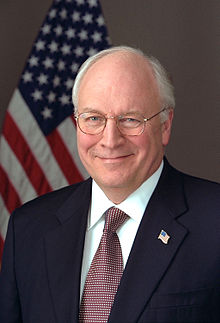
Greed is a part of human nature.  It is disingenuous to think Vice President Cheney did not have an interest in seeing his former employer become the military supplier in the Iraq war. 

Money, power, and prestige motivate all human beings.  Societies only defense is government regulation but even that is subject to human nature and motivational force.

Rod Blagojevich (Former Governor of Illinois)

Desire for money, power, and prestige has no political party.  It is in the nature of all humankind.  Ironically, President Trump sets Rod Blagojevich free at the end of his presidency.

The irony is multifold. Trump is elected as a Republican, Blagojevich is elected as a Democrat. Trump is alleged to have tried to bribe a foreign head of state. Blagojevich is alleged to have tried to bribe a former President. Both choose use their elective offices to advance their ambition for more money, power, and prestige.

Chayes is absolutely right when writing about how important it is to listen to the general population about their government and its affect on their lives.  Only then can one gain some understanding of a nation’s corruption.  The consequence of human nature’s truths are dire.  Human nature’s truth, when added to an outsider’s cultural misunderstandings, can be catastrophic.

IED

Chayes suggests that an Afghani citizen will refuse to warn Afghani policemen of an IED “…because policemen require bribes to do their job”.  Chayes concludes “…corruption is a threat to global security”. 

This is a reasonable conclusion but what can an outsider do about it?  Correction of corrupt practices can only come from the people who are governed. America can only lead by example; not by force of arms. America fails itself and the countries it forcefully tries to change. Yesterday it was Vietnam, Iran, and Iraq– today it is Afghanistan.

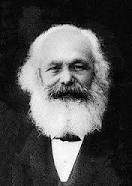
KARL MARX (BORN TRIER, GERMANY 1818-DIED LONDON, ENGLAND 1883)

KARL MARX (BORN TRIER, GERMANY 1818-DIED LONDON, ENGLAND 1883) History shows that cultural outsiders destroy national comity and identity.  Marx was an outsider in the Russian revolution but he formed the basis for communism’s takeover of Russia.

Lenin, Stalin, and to a lesser extent, Trotsky (all indigenous Russians) changed the government based on an outsider’s machinations.  The same can be said of Mao’s China and Castro’s Cuba.  Change comes from an outsider’s interference; while revolution only comes from within.  The only consequential role an outsider like Chayes can play is publicizing indigenous public discontent.  That is the true value of her observations in “Thieves of State”.

Chayes points to a Nigerian oil CEO who makes $1,000,000 per year.  Chayes exposure of kleptocracy in Nigeria is only legally different from that which exists in the United States.  The difference is that kleptocracy in America is legalized by a stable government.  Robert Walker of Andarko Petroleum makes over $15,000,000 per year.  American tax subsidies and American tax policy subsidize the oil industry. THIS TYPE OF CORRUPTION IS LEGAL IN AMERICA.

US-POLITICS-TRUMP-CABINET

The American government protects CEO incomes that reinforce a widening gap between rich and poor.  At least two of President Trump’s cabinet are billionaires and most are multi-millionaires.  Few of the super-rich have much interest in, or concern for, the poor.

Chayes’ book would be more interesting if she had contrasted America’s corruption with Afghanistan’s.  She limits her comparisons to medieval Eastern, African, and European cultures.  Listening to “Thieves of State” is off-putting because America, like all nation-states, have some level of corruption; i.e. legalized corruption is still corruption.

HEARTS AND MINDS

Invading Afghanistan is understandable because of its role in harboring terrorists.  However, it is a waste of American lives to believe an outsider’s intervention will change the hearts and minds of an indigenous population.

If America makes the mistake of invading Iraq or throwing money at the Afghanistan economy, it is only we Americans who are to blame.    It is not only the fault of Afghani or Iraqi corruption.  It is the innate nature of humanity.  Fault lays at the feet of an outside country invading a foreign culture.

Respectfully, Chayes invested her time in understanding Afghanistan which puts her far and away ahead of most Americans but she misses the root cause of corruption which is unregulated human nature.  That is why many countries that have poor government regulation turn to religion. 

If a secular government cannot regulate human nature, Taliban-like martinets fill the vacuum with public executions or Mullah Dictates.  Neither secular nor religious governance is a guarantee of perfect human justice, equality, or equity.  Justice, equality, and equity must come from the desire of indigenous populations.

A CHILLING VIEW

Audio-book Review
By Chet Yarbrough

(Blog:awalkingdelight)
Website: chetyarbrough.blog

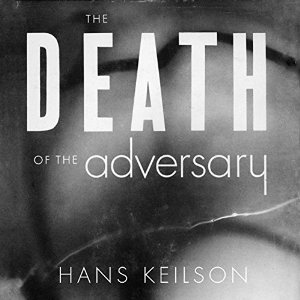
the death of the adversary

 The Death of the Adversary: A Novel

Written by: Hans Keilson, Ivo Jarosy

Narration by:  James Clamp

HANS KEILSON (1909-1970)

“The Death of the Adversary” is a chilling view of the rise of Nazism in Germany.  Hans Keilson never mentions the word Jew or Hitler in his novel about the 1930s but notions of history inform the listener of what Keilson is writing about.  Names are not named because Keilson writes the story while hiding during WWII.  He flees Germany to join the Dutch resistance when denied the opportunity to practice medicine as a Jew.

The main character of Keilson’s novel refuses to believe his father or acquaintances at work and school of the threat of the unnamed adversary in Germany.  This anti-hero pursues his life as though the threat of Nazism would pass without affecting his life.  However, as events unfold, the anti-hero hears the radio voice of “…the Adversary” and begins to understand the underlying murderous intent of a charismatic political actor who will turn German lives upside down.

words matter
The realized terror is that spoken words by one actor can lead to a genocidal mania on the part of a chosen people.

Keilson writes of a speech given by “…the Adversary” to give the reader/listener some insight to the power of words in the hands of a consummate actor.  It is a terrifying realization both to the anti-hero and the reader/listener of Keilson’s book.  The realized terror is that spoken words by one actor can lead to a genocidal mania on the part of a chosen people.

There is relevance in Keilson’s story for events today.  Pundits and politicians use words to victimize and terrify immigrants, and minorities in the same despicable language of yesterday.

Next, Keilson tells a story of a meeting at a friend’s house where several young men congregate to discuss a local incident participated in by one of the young men.  The anti-hero’s friend is a woman who is employed at his place of work.  One of the young men is her brother.  It appears the young men are relatively close friends that choose to allow the anti-hero into their conversation.  One of the youngest tells of his recruitment in an obscure organization.  He volunteers to go on a night mission under the organization’s leader.

The recruitment is for a team of hooligans to desecrate the graves of a cemetery which one presumes is a particular ethnic graveyard.  The purpose is to defile the memory of a particular graveyard and the common beliefs which it represents.  Some of the participants are ambivalent about the mission but go along with the leader’s direction.  Head stones are overturned and graves are shat on.

GRAVEYARD DESECRATION
The anti-hero of Kielson’s story volunteers to go on a night mission under the organization’s leader.  The recruitment is for a team of hooligans to desecrate the graves of a cemetery which one presumes is a particular ethnic graveyard.
BATTERED SUIT CASE
Keilson recounts the love and guilt of his anti-hero by explaining how his father prepares a suitcase for himself, his wife, and his son.

Keilson recounts the love and guilt of his anti-hero by explaining how his father prepares a suitcase for himself, his wife, and his son.  The suitcase for the parents is preparation for the knock on the door in the middle of the night.  The parents do not plan to leave their country in spite of the danger which the father knows.  The suitcase for the son is for him to escape the country.  The son seems resigned to let life happen.  He is an anti-hero that is prepared to let events control his life; even though the consequence may be the loss of his parents.

The final chapters offer the anti-hero the opportunity to kill “…the Adversary”.  He chooses not to and history shows his decision to be both right and wrong.  It is right in light of the ultimate death of “…the Adversary” because of actions of others to stop his reign of terror.  It seems wrong because of the death of many (particularly the anti-hero’s parents), and his failure to confront “…the Adversary” before it was too late.

One is compelled to wonder about oneself in listening to Keilson’s story.  Who will choose to confront the adversary?  Who will “go along to get along”?

A MISOGYNIST SEA

Audio-book Review
By Chet Yarbrough

(Blog:awalkingdelight)
Website: chetyarbrough.blog

A Room of One’s Own

Written by: Virginia Woolf

Narration by:  Juliet Stevenson

VIRGINIA WOOLF (1882-1941, BRITISH AUTHOR, A WOMAN AHEAD OF HER TIME)

Virginia Woolf is a woman outside of time.   As Woolf implies in the early twentieth century, women are drowning in a misogynist sea.  Woolf is born when female inequality breaches the existential threat with a first wave; i.e. Women’s Suffrage in 1920.  The preeminent feminist, Betty Friedan, is just born (actually, 1921).  (Friedan later writes “The Feminine Mystique”–published in 1963.)

“A Room of One’s Own” is a contemplation on why women are underrepresented as great poets or fiction writers.  With the exception of Harriet Beecher Stowe, Woolf suggests there are no 19th century women renowned for fiction.  Apocryphally, the unlikely story of Lincoln saying “So you’re the little woman who wrote the book that made this Great War” is an apt coda for the insignificance of the public’s view of women writers.

EMILY DICKINSON (1830-1886, AMERICAN POET, PRODUCED 1,800 POEMS IN 40 HANDBOUND VOLUMES)

(As one listens to her complaint, one thinks about Emily Dickinson.  However, Dickenson did have a room of her own.)

Woolf wittily skewers male paragons of the pen and their misogynist comments about women.  She sets the table for an explanation of why there is no female Shakespeare’, erudite Johnson’, or Longfellow word smiths. 

Woolf’s point is that women had no money because they were dependent on men or family inheritance.  Often, young ladies are discouraged from college by their families who feel marriage and bearing of children are their primary duties.  Without educational support and few opportunities for gainful employment, women only had money if they inherited it or married a wealthy husband.  Without money, there is little opportunity for independence; without money, there is little chance of having “A Room of One’s Own”.

MeToo

There are many examples to support Woolf’s observation about money and the luxury of contemplation, having a room of your own.  Michel de Montaigne’s essays are spectacular observations of life and living but the key to his success is in wealth that allows him time for observation and contemplation of life.  He had a room of his own.  In Woolf’s lifetime there were few women who had such luxury.  Have things changed?  Maybe, but #MeToo suggests women’s independence and wealth still involves misogyny.

In the last section of her lecture Woolf notes women write fiction with a mixture of public disdain and admiration.  Disdain from implied colorlessness in writing but admiration for a twist in a story that suggests a first-time female author has potential.

MISOGYNY

Misogyny still roils the sea but more women writers have a room of their own.  The second wave is forty years in the future but Friedan steadies the helm-bearing toward equality.  At $.79 cents to the dollar in the 21st century, there is still a long way to go.

The frightening prospect of a Taliban government in Afghanistan is more threatening than wage differences in the U.S. The only concession they have recently made is to ban forced marriage of women. This is not to diminish America’s misogynist history but to show how backward and unfair the world can be to women.

However, for realization of potential, Woolf suggests the author needs to have a room of her own to have time to think and reflect.  To prove Woolf’s bona fides, she ends “A Room of Her Own” with short stories.  They are beautifully written and worthy of the theme of which she writes. 

As Aristotle once said, contemplation is the highest form of activity for the soul.  Woolf implies great literature; great fiction, and poetry come from authors who have time and a room of their own.

WIRED TO CREATE

Audio-book Review
By Chet Yarbrough

(Blog:awalkingdelight)
Website: chetyarbrough.blog

Wired to Create: Unraveling the Mysteries of the Creative MindWired to Create

Written by: Scott Barry Kaufman, Carolyn Gregorie

Narration by:  Nick Podehl

CAROLYN GREGORIE (SCIENCE WRITER FOR THE HUFFINGTON POST)

SCOTT BARRY KAUFMAN (AMERICAN PSYCHOLOGIST, AUTHOR, SCIENCE WRITER)

The book “Wired to Create” is an internet sensation.  It began as an article in the Huffington Post; written by Carolyn Gregorie.  Based on the article, she co-writes a book with psychologist Scott Kaufman.  The book is promoted as a loss leader (no charge) to attract customers to Google e-books and other internet savvy vendors.  The book’s popularity is in the argument that intelligence is only one characteristic of a creative mind.  With IQ as only one characteristic of creativity, the field of human subjects who fit the definition of creative is broadened.

PICASSO'S BULL'S HEAD
PICASSO’S BULL’S HEAD

Scientists, inventors, artists, sales people, mechanics, technicians, sports stars, and other unnamed categories of people are “Wired to Create”.  This is no revelation.  It is not unusual to find friends or acquaintances that are able to think in three dimensions, rotate objects in their mind, come up with solutions to complex problems, or create art out of ordinary things.  Some of these creative people are great explainers; others are introverted and non-communicative.  Some recall events in perfect detail; others only remember broad outlines.  Some create art out of nothing; others say nothing about art but build cathedrals.

ST. SERNIN, TOLOUSE, FRANCE
ST. SERNIN, CATHEDRAL IN TOLOUSE, FRANCE

Kaufman and Gregorie identify some characteristics of creative minds.  There is the ability to hold opposing concepts in mind while rendering something never thought of before; i.e. like a work of art that shows planes of a human face from every angle in two dimensions.  There is a disruptive quality in a person with a creative mind.  That disruption is often seen in school students who cannot sit still, are always talking, and are constantly interrupting class activities.  It is the creative teacher who handles the disruption to gain participation of all students, including the disrupter.

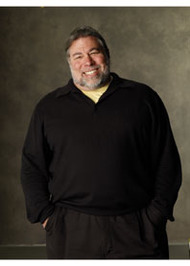
STEVE WOZNIAK
STEVE WOZNIAK

STEVE JOBS (1955-2011)

Kaufman and Gregorie mention famous creative geniuses like Einstein, Edison, Wozniak, and Jobs who exhibit creativity in varied but similar ways.  Einstein may rise above the others because of a creative universality but each exhibit a passion and intensity for what they think and do.  Edison and Jobs are super salesmen; Wozniak is a tinkerer; Einstein is a conceptualizer. To varying degrees each practices the others’ skills.

“Wired to Create” notes that creativity is not restricted to either introverts or extroverts.  Creativity encompasses all sociological categories.  Creativity comes from persistence and resilience; driven by passion.

MIND DECONSTRUCTION AND RECONSTRUCTION OF EVENTS
(Competing theories of learning suggest human brain interaction with environment is too complex to measure; i.e. the way the brain reacts when stimulated by the environment is, at best, an evolving mystery.)

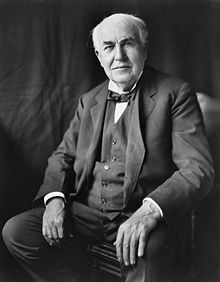
THOMAS EDISION (1847-1931, AMERICAN INVENTOR, BUSINESSMAN CONSIDERED BY SOME TO BE AMERICA'S GREATEST INVENTOR)
THOMAS EDISION (1847-1931, AMERICAN INVENTOR)

The authors note the many failures of creative people; e.g. people like Edison and J. K. Rowling.  The authors note that only a handful of Edison’s thousands of patented inventions were successful.

J. K. ROWLING (MOST FAMOUS FOR THE HARRY POTTER SERIES)

Rowling had many publishers turn Harry Potter down until one publisher accepted her work. The tortured personality theory of creativity is addressed by the authors but it is only one of many factors that make people think what they think and do what they do.  As noted with Einstein, Edison, Wozniak, Jobs and Rowling not all creative people are aberrantly affected by hyper activity, repeated failure, or intense focus.   Kaufman and Gregorie imply some creative people may have tortured personalities but correlation is not causation.

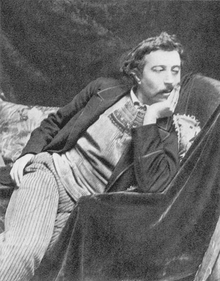
PAUL GAUGUIN (1848-1903, PAINTER, SCULPTUR)
PAUL GAUGUIN (1848-1903, PAINTER, SCULPTOR)

Gauguin is financially unsuccessful as an artist in his lifetime because of the public’s rejection of his work.  Gauguin’s paintings are sold for millions today.  Kaufman and Gregorie imply creativity is no guarantee of money, success, or happiness. Gauguin’s lack of success may have led to use of drugs but it seems as likely that penury and failed acceptance, rather than misunderstood creativity, is the proximate cause of death.  Taking drugs is a malady of the uncreative as well as the creative.

Vincent van Gogh, a contemporary of Gauguin, commits himself to an asylum in which he paints one of his most revered works of art, “The Starry Night”.  However, like Gauguin, van Gogh is never financially successful.  Gauguin and van Gogh succumb to the stresses of life; not because they are creative but because they are poor and unable to cope with their perceived failure.

VINCENT VAN GOGH (ONE OF MANY RENOWNED SELF PORTRAITS BECAUSE VAN GOGH COULD NOT AFFORD MODELS.)

Kaufman and Gregorie broaden the definition of creativity.  However, there seems little revelation in their suggestion that creativity comes from intense interest, average or higher IQs, hard work, and persistence in the face of rejection.  Talk of left brain, right brain activity, and frontal lobe brain waves are unconvincing physiological origins of creativity.  Play theory seems passé.  Competing theories of learning suggest human brain interaction with environment is too complex to measure; i.e. the way the brain reacts when stimulated by the environment is, at best, an evolving mystery.  Mysteries of the creative mind remain undiscovered.

UNDERRATED MASTERPIECE

Audio-book Review
By Chet Yarbrough

(Blog:awalkingdelight)
Website: chetyarbrough.blog

Breakfast of Champions

Written by: Kurt Vonnegut

Narration by:  John Malkovich

KURT VONNEGUT (1922-2007)

KURT VONNEGUT (1922-2007)

The author, Kurt Vonnegut, offers a fascinating glimpse of a mind teetering on, and then falling over the edge of reality into insanity.  One might classify “Breakfast of Champions” as a surreal satire but that diminishes its insight to insanity.

JOHN MALKOVICH (ACTOR, DIRECTOR WHO HAS APPEARED IN OVER 70 MOTION PICTURES)

“Breakfast of Champions” is an imaginative and underrated masterpiece.  The underestimation is realized by the listener in John Malkovich’s excellent narration. 
There are no heroes in “Breakfast of Champions”.  There are three main characters.  There is the teller of the tale, Kilgore Trout, and Dwayne Hoover.

Vonnegut clearly satirizes the maladies of the American twentieth century but he concretely reveals how wealth, poverty, and escapism grind people down and compel abhorrent, often violent, and insane acts.  He exposes the American dream’s illusion of happiness. 

In Vonnegut’s story, our Creator is a tinkerer who creates machines that are known as human beings.  These human beings are set in motion, endowed with consciousness, and no longer controlled by the Creator.  They are machines that follow the laws of physics and are self-sustaining, reincarnating machines that live forever without recollection of past lives.

CREATOR.png

The teller of the tale is not revealed until the last chapters of the book.  It is the Creator of humankind. 

Kilgore Trout is a science fiction writer who is invited by an admirer of his books to receive an award, in a coal mining town, for his pornographic science fiction stories.  The award is for the greatest writer of all time.  Trout is at first reluctant to take the trip to the coal mining town but succumbs to their acclaim for his fame and begins hitchhiking across the country to receive the award.

COAL MINERS

Dwayne Hoover is one of the richest men in the coal mining town from which Trout is receiving the award.  Hoover is an auto dealer.  He is the best employer in town, with the best employment package; including employee health plans.

However, the largest employer in town is a coal producer.  The coal company is an environmental polluter, low wage provider, and the biggest cause of citizen illness in town.

Trout and Hoover may or may not know each other but the Creator knows what is going to happen when Trout finally arrives.  In Trout’s hitchhiking progress he meets fellow machines (people who are coping with life).  Their stories are of middle class lives that remind reader/listeners of the passions, weaknesses, and desires of all human beings.  At the same time, the Creator explains what it is like for people that live in coal mining towns.  There is Hoover’s “girl Friday”, the homosexual piano player, and an artist who is recently awarded $5,000 for a painting.  Each machine (person) plays a role in a developing crisis that approaches at the speed of Trout’s hitchhiking progress.

BAD THINGS WILL HAPPEN

A reader/listener feels bad things are going to happen as the story progresses.  Hoover is taking what the Creator calls “bad chemicals”. 

At one point Hoover cannot speak except to repeat one word of a sentence said to him by another.  Hoover crosses the street and feels, with each step, he is sinking into the earth.  Hoover returns to his office, calls his girl Friday, and says he needs her to come with him to a local motel room to relieve a persistent erection.  Both Hoover and his girl Friday have lost their spouses; i.e. Hoover’s wife by suicide; girl Friday’s by war.  They have been lovers for some time.

BAR PIANO PLAYER

Hoover continues taking bad chemicals.  The Creator arrives at a bar in town.  Trout arrives at the same bar.  The piano player is playing.  It is somewhat unclear but Hoover shoots the piano player in the back of the head, and bludgeons his girl Friday. 

Trout tries to stop the beating of the girl, and the tip of Trout’s finger is bitten off by Hoover.  Hoover is arrested.  The piano player is dead.  Girl Friday is concussed, and Trout has his hand wrapped in a bloody handkerchief.  Hoover is taken to jail; girl Friday, the dead piano player, and Trout are on their way to the hospital.
FREEWILL

Vonnegut seems to be explaining that money is not happiness.  Human beings have free will to be good, bad, morally upright, or insanely brutal. 

Having a job that barely offers the basic necessities of life only reinforces machine-like living.  Destruction of the environment diminishes those who work for dirty industries and those ancillary businesses that suck off polluter’s productivity.  Drugs are a way of escaping reality but they have consequences. Some machines (people) fall off the edge of sanity, become violent, and sometimes murder innocent bystanders.

STEPHEN CRAIG PADDOCK (PERPETRATOR OF THE LAS VEGAS, NEVADA MASSACRE.)

STEPHEN CRAIG PADDOCK (PERPETRATOR OF THE LAS VEGAS, NEVADA MASSACRE.)

“Breakfast of Champions” is not only a story of the 1970s.  It is the story of yesterday’s school shootings, postal syndrome killings, the Paddock atrocity in Las Vegas, and Donald Trump’s delusional attempt to void America’s 2020 Presidential election.  Vonnegut suggests a human being, whether there is a Creator or not, has free will.  Vonnegut implies humans are choosing to be machines.

THE CAPITALIST VEIL

Audio-book Review
By Chet Yarbrough

(Blog:awalkingdelight)
Website: chetyarbrough.blog

THE SOULS OF BLACK FOLK

The Souls of Black Folk

Written by: W. E. B. Du Bois

Narration by:  Mirron Willis

W. E. B. DU BOIS (1868-1963, AUTHOR, SOCIOLOGIST, HISTORIAN, CIVIL RIGHTS ACTIVIST, CO-FOUNDER OF NAACP)

W. E. B. DU BOIS (1868-1963, AUTHOR, SOCIOLOGIST, HISTORIAN, CIVIL RIGHTS ACTIVIST, CO-FOUNDER OF NAACP)

Eventually, doctors will find a coronavirus vaccine, but black people will continue to wait, despite the futility of hope, for a cure for racism.

Editorial comment in the NYT Sunday edition 5/21/2020 by Roxane Gay.

“The Souls of Black Folk” describes a veil of discrimination that covers the face of white America.  Published in 1903, it reflects on the 1863 Emancipation Proclamation, America’s reconstruction failures after the civil war, and a veil that fell like an iron curtain between black and white America.  It is a veil that distorts the truth of human equality.

Slave Family In Cotton Field near Savannah

W. E. B. Du Bois is a great American who finally abandoned his country late in life because he could no longer tolerate the capitalist consequence of social, political, and economic discrimination. He describes discrimination in “The Souls of Black Folk” as a veil, a fine gauzy material that hides the details of black Americans who have the same potential as white overlords. The details are political, social, and economic discrimination imposed by a majority on a minority.  Du Bois identifies that minority as people of color; i.e. specifically black Americans.

THOMAS JEFFERSON AND SLAVERY

THOMAS JEFFERSON AND SLAVERY (Slave owner that believed blacks are inherently less equal than whites.)

Du Bois is the first black American to receive a PhD from Harvard University.  First he received a bachelor’s degree from Fisk University, a storied black college; went to Harvard to receive a second bachelor’s degree, and on to a PhD.  Du Bois studied black history and wrote “The Souls of Black Folk” to explain what it is like to be black in America.  He began with the end of the civil war and carries it through 1903 when the book is published.

PRISON

Du Bois studied black history and wrote “The Souls of Black Folk” to explain what it is like to be black in America.

Du Bois explains how black Americans are treated, how they feel about it, and how they react to it.  In the clarity of his writing, Du Bois presumes readers will understand humans, of any color, are the same.  Du Bois notes that black Americans are offered freedom without a way of making a living, without education, without any respect by fellow Americans.  Though they were no longer slaves by law they remain slaves to potential employers who see them as less equal, and less capable.  Du Bois notes blacks are denied the tools of education, opportunity for work at a living wage, and the right to participate in the politics of leadership.

SHUCK & JIVE

Without money, power, or prestige blacks are left with deception as their only defense against oppression.  “Shucking and jiving” became a pejorative description of black behavior without white’s understanding its necessity.

Without money, power, or prestige blacks are left with deception as their only defense against oppression. 

COMMUNISM IN THE USA

Du Bois misunderstood the difference between Russian and Chinese revolutions and American capitalism.  The future proved promises of communism were false.  This does not change the truth of Du Bois’s realization that a white majority denies minorities with false promises of capitalist equality of opportunity.

It is little wonder that Du Bois wandered to the idealism of communism with its false promise of equality for all.  White America gave Negroes little alternative.  However, Du Bois misreads history.  The revolution of 1917 may have started with a minority of people called Bolsheviks but they were a part of a white majority.  They promised a future of plenty to an uneducated population who were members of a majority. 

Du Bois clearly shows how black American education, employment, and political participation are subverted at every turn in American history.  Du Bois chastises Booker T. Washington for being an apologist for white suppression. Du Bois sees that, though education is improving for black Americans, they are still denied equal opportunity for employment, and are failing to capitalize on the potential of political power.  Nearing 90 years of age, Du Bois gives up on America.  Ironically, this is in the 1960’s when the Black Panther’s movement is forming.

GREED

The inherent nature of man “to be greedy” makes fools of us all.

Du Bois is a great American because he understood how American capitalism undermines core political beliefs like equality of opportunity and the equality of all human beings.  Du Bois understood the importance of education, equal economic opportunity, and political power.

Du Bois misunderstood that the drive for money, power, and prestige distorts pursuit of the “good” in all forms of government.  Communism, socialism, and capitalism require a Hobson’s choice; i.e. “a choice of taking what is available or nothing at all”.  Even for minorities, it seems capitalism offers the best hope because it attempts to regulate the worst parts of human nature.

ARE YOU BLACK ENOUGH

Audio-book Review
By Chet Yarbrough

(Blog:awalkingdelight)
Website: chetyarbrough.blog

Negroland: A Memoir

Written by: Margo Jefferson

Narration by:  Robin Miles

MARGO JEFFERSON (AUTHOR, FORMER THEATRE CRITIC FOR NYT, PULIZER PRIZE WINNER FOR CRITICISM, PROFESSOR @ EUGENE LANG COLLEGE)

Margo Jefferson’s memoir is a perspective on growing up in America.  Jefferson is born in 1947.  She is raised in Chicago by two professional middle class parents; i.e. one is a doctor; the other a teacher.  What makes Jefferson’s memoir interesting is her middle class upbringing.  It sharply defines answers to many questions never asked by Americans.

Are you black enough?  Are you white enough?  Are you female enough?  Are you male enough?  Are you American enough? 

MARGO JEFFERSON (CLASS OF '71 COLUMBIA UNIVERSITY GRADUATE)
MARGO JEFFERSON (CLASS OF ’71 COLUMBIA UNIVERSITY GRADUATE)

Jefferson wrestles with many of the same baby to teenage insecurities all Americans face in their generation.  However, there is an extra layer of complexity for Jefferson because of her color.  Jefferson lightly touches on the history of slavery and its societal consequence but she personalizes that history in explaining how she became Margo Jefferson, an accomplished theatre critic and professor.

Chicago is a microcosm of America.  Discrimination, crime, poverty, and failure in equality of opportunity are the same in Chicago neighborhoods as anywhere in America. 

MARGO JEFFERSON AS CHEERLEADER IN THE 60'S (CENTER, TOP ROW)

What Jefferson does in “Negroland” is explain how American society makes her life different because of her color.

Like most girls and boys in high school, Jefferson wants to be popular.  She tries to become a cheerleader.  With success in her senior year, she wonders about the reasons for it taking so long.  Is it because she is not pretty enough?  Is it because she is nearsighted and has astigmatism?  Or, is it because she is not white enough?

RACISM

Jefferson recalls her family’s trip to Atlantic City for a doctor’s conference.  Reservations were made but when they arrive, the hotel gives the family a poorly appointed room and suggests the restaurant would be off-limits for dining.  They checked out of the hotel the next morning.

Jefferson notes concerns of her mother about how other people of color talk and act while warning her daughter not to emulate their speech or style.  Jefferson becomes aware of the potential stigma of not being black enough among people who are proud to be black.

Jefferson explains how she becomes best friends with a handsome gay white man and revels in the looks black men give that seem to question her interest in being with a white man when she is black.  At the same time, she notes how beautiful women hit on her friend without understanding that he has no interest in them.

LARRY WILMORE (COMEDIAN AND SOCIAL CRITIC)

In listening to Jefferson’s memoir the day after Larry Wilmore’s routine about Obama at the White House Correspondents’ Dinner, one gains better insight to Wilmore’s send-up of President Obama.  Wilmore is unfairly criticized for his tart-tongued stand-up when thought of in light of Jefferson’s memoir.

The last part of Wilmore’s presentation seriously praises Obama’s accomplishment and then uses a pejorative word for black Americans to categorize Obama.  Wilmore’s comment is badly interpreted by some.  Wilmore is saying Obama is great enough to be both the President of the United States (in the sense of acceptance by all Americans) and black enough (in the sense of being accepted by blacks).

Jefferson’s memoir, and Wilmore’s routine shows that being American enough, black enough, white enough, male or female enough, is just being a part of the human race.