WAR’S HARD PART

Audio-book Review
By Chet Yarbrough

(Blog:awalkingdelight)
Website: chetyarbrough.blog

Fives and Twenty-Fives Fives and Twenty-Fives

Written by: Michael Pitre

Narration by:  Kevin T. Collins, Nick Sullivan, Jay Snyder, Fajer Al-Kaisi

MICHAEL PITRE (AUTHOR, FORMER MARINE)

The simple part of any war is having friends and enemies; the hard part is in knowing the difference.  “Fives and Twenty Fives” shows the simplicity and complexity of all wars.  Any veteran of the American military knows that part of basic training is building a team of soldiers to form a comradeship as strong as civilian friendship.  However, the difference between civilian and military friendship is the underlying command and control requirements of military organizations.

The author of “Fives and Twenty Fives” is an ex-Marine.  His novel is about friendship; i.e. more fundamentally about friendship on both sides of a war.

IRAQ INVASION
The author of “Fives and Twenty Fives” is an ex-Marine.  His novel is about friendship; i.e. more fundamentally about friendship on both sides of a war.
IRAQ INTERPRETERS
Unlike the American Civil War, the war in Iraq requires language interpreters.  Most interpreters are in-country natives and have not gone through conventional military basic training.

The theater of war in Michael Pitre’s novel is Iraq.  Unlike the American Civil War, the war in Iraq requires language interpreters.  Most interpreters are in-country natives and have not gone through conventional military basic training.  Command and control is learned by most of these interpreters “on the fly”.  Friendship is earned by experience rather than training.  Pitre introduces Dodge, the Iraqi interpreter, for a Marine team led by Lieutenant Donovan.

Dodge introduces an underlying theme of “Fives and Twenty Fives” in a conversation with Lieutenant Donovan.  Dodge explains that he has no friends because when one chooses friends, the choice entails responsibility and accountability.  Dodge is a Sunni, the religious faction associated with Saddam Hussein.  He speaks fluent English and studies Huckleberry Finn, a book he carries with him everywhere, to better understand American culture.  There are several allusions to the story of Huckleberry Finn that reinforce the theme of friendship; i.e. its implied responsibility and accountability.

US INTERPRETER IN IRAQ DENIED AMERICAN GREEN CARD
During his nearly four years as a translator for U.S. forces in Iraq, Saman Kareem Ahmad was known for bravery and hard work.  However, like one of Pitre’s  main characters, “Dodge”, Ahmad is denied an American green card at the end of the war.
COMPASSION ON THE BATTLEFIED IN IRAQ
COMPASSION ON THE BATTLEFIELD IN IRAQ – It is not exactly clear but Dodge seems to have chosen, by circumstance of war, to support freedom by making friends with a platoon medic that is singularly focused on saving lives.

Dodge’s father led the Agricultural Ministry of Saddam Hussein.  His father became a leader of the resistance to America’s invasion of Iraq.  Dodge loves his father but chooses to stay at an Iraqi university rather than follow him into the resistance.  It is not exactly clear but Dodge seems to have chosen, by circumstance of war, to support freedom by making friends with a platoon medic that is singularly focused on saving lives.

drug use in war
When a platoon soldier is ambushed, Dodge’s medic-friend is restrained by Lieutenant Donovan because he believes the soldier is dead.  After the incident, the medic turns to drug addiction to escape the reality of his friend’s death.

When a platoon soldier is ambushed, Dodge’s medic-friend is restrained by Lieutenant Donovan because he believes the soldier is dead.  After the incident, the medic turns to drug addiction to escape the reality of his friend’s death.  The medic is brought up on charges when the Lieutenant reports him for suspected drug use.  He receives a general discharge which affects his future civilian life.  The Lieutenant chooses not to be the medic’s friend in that arrest incident but meets the medic after the war with a different perspective; maybe not as friends, but as fellow human beings intimately affected by war.

ZINE EL ABIDINE BEN ALI (2ND PRESIDENT OF TUNESIA SENTENCED FOR MONEY LAUNDERING AND DRUG TRAFFICING)
ZINE EL ABIDINE BEN ALI (2ND PRESIDENT OF TUNISIA SENTENCED FOR MONEY LAUNDERING AND DRUG TRAFFICKING) Later in Pitre’s story, a reader listener finds Dodge chooses to become a part of a resistance to the repressive regime of Ben Ali in Tunisia.

Later in the story, a reader listener finds Dodge chooses to become a part of a resistance to the repressive regime of Ben Ali in Tunisia.  Dodge becomes friends with the resistance movement that needs his English-speaking voice to tell the world of Ben Ali’s repression.  Dodge is not a Tunisian but recognizes the human drive to resist oppression, and the need to be part of something greater than oneself.  Dodge chooses to be a friend of the oppressed.
Michael Pitre compels a listener to look at mistakes made by America in Iraq.  It may have been morally right to remove Saddam Hussein.  However, the decision to deny participation by Hussein’s army officers and Hussein’ administrative personnel in government transition was an error of epic consequence.

Vetted Hussein army officers and administrative personnel, with monitored performance measures, might have avoided Iraq’s spiral into chaos.  One considers the value of interpreters like Dodge who are from families that worked in the corrupt Hussein administration.  Dodge appears to have an inner moral compass that could have helped America in its intent to provide a pacific transition from totalitarianism to peace in Iraq.

There are good and bad people in every government.  Undoubtedly, there were some Iraqi Army leaders and Hussein administrators that could have become friends rather than enemies of fellow Iraqis and American’ invaders.   If America’s leaders had been more discriminating and understanding, ISIL may have never risen.  The simple part of any war is having friends and enemies; the hard part is in knowing the difference.

Post script: Now America is leaving Afghanistan.  One hopes those Afghani’s that served NATO and America’s involvement in Afghanistan will not be treated as forgotten friends.  Since Vietnam,  one doubts history will either justify or vindicate American military intervention in other countries.

OTHER gods

Audio-book Review
By Chet Yarbrough

(Blog:awalkingdelight)
Website: chetyarbrough.blog

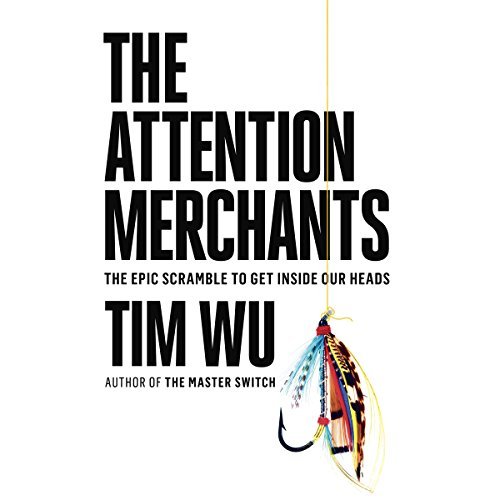
The Attention Merchantsthe attention merchants

By Tim Wu

Narrated by Marc Cashman

TIM WU (AUTHOR, PROFESSOR OF LAW AT COLUMBIA )

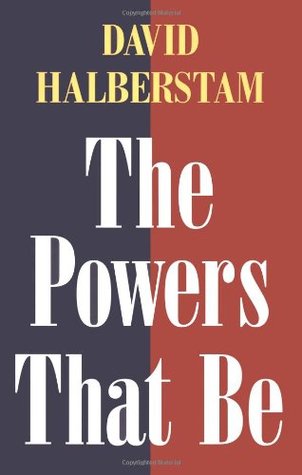
Not since “The Powers That Be” (published in 1979) has there been a better history of the media industry.  Tim Wu is heir to David Halberstam.  First there were newspapers, then radio, then television, and now the world-wide web.  Wu offers a modern vision of media’s impact on society in “The Attention Merchants”.

Gone are many of the famed “…Attention Merchants” like Bill Bernbach, Neil French, and David Ogilvy.   They were the early influencers; i.e. the copy writers, and agents that created consumer advertising for Sulzberger, Chandler, Hutchins, Paley, and Luce.  They worked for founders of some of the most influential newspaper, radio, television and magazine outlets of the 19th and 20th centuries. They were the “gods” of a newly formed consumer society. Consumers read, watched, and listened to pitches for everything from votes to vitamins to the latest model Cadillac.  Wu shows pitches remain the same, but methods have changed.

DAVID HALBERSTAM'S SEMINAL WORK ON THE MEDIA INDUSTRY (PUBLISHED 1979)
DAVID HALBERSTAM’S SEMINAL WORK ON THE MEDIA INDUSTRY (PUBLISHED 1979)  Gone are many of the famed “…Attention Merchants” like Bill Bernbach, Neil French, and David Ogilvy.  They were the “gods” of a newly formed consumer society. Consumers read, watched, and listened to pitches for everything from votes to vitamins to the latest model Cadillac.

Today’s social, political, and economic consumers are recorded, manipulated, spindled, and controlled by “other gods”.  Modern “…Attention Merchants” are internet entrepreneurs like Amazon’s Jeff Bezos, Google’s Larry Page & Sergey Brin, Microsoft’s Bill Gates & today’s CEO Satya Nadella, Apple’s (now deceased) CEO, Steve Jobs & today’s CEO Tim Cook, Facebook’s Mark Zuckerberg, and Netflix’s Reed Hastings. Television, newspapers, radio, and magazines still capture our attention but not like past “…Attention Merchants”.  Old media are still with us, but computer screens and mobile phones have joined the mix.  Wu shows how the public’s decisions have become less volitional, more manipulated, and addictive as www. sites came into being and technology matured.

INTERNET LOGO
Old media is still with us, but computer screens and mobile phones have joined the mix.  Wu shows how the public’s decisions have become less volitional, more manipulated, and addictive when www. came into being and technology matured.
MARLBORO MAN
Neither smoking or “free” access to information is without harm or cost.  The Marlborough man is dead, and “free” internet information is not free.

Wu recounts how advertising became a critical part of early media’s power, influence, and profit.  Just as advertisers promoted false benefits of smoking in the 20th, internet advertisers promote false benefits of free access to information and entertainment in the 21st century.  Neither smoking or “free” access to information is without harm or cost.  The Marlborough man is dead, and “free” internet information is not free.  “Fake news” has always been in the “…Attention Merchant’s” tool box but Wu shows that a new dimension is created with the rise of “free” information technology.

The internet not only informs the public, i.e., it distracts society, distorts facts, and reveals intimate details of personal lives. Internet users become products, rather than just consumers. Information gathered on consumers is provided to government and sold to private enterprise.

More ominous than media distortion by capitalist manipulators is government-controlled media that distorts truth to justify the Ukraine war.
ukraine bombing

Personal information is used by governments, and private sector businesses to achieve their own purposes.  Power and control become centered on organizations rather than individuals.  Data mining is a new industry. Decisions are less determined by personal being and private belief.  Today, decisions are shaped by a society “under the influence” of government, and private sector’s “…Attention Merchants”.

data mining
Personal information is used by governments, and private sector businesses to achieve their own purposes.  Power and control become centered on organizations rather than individuals.  Data mining is a new industry.
facebook
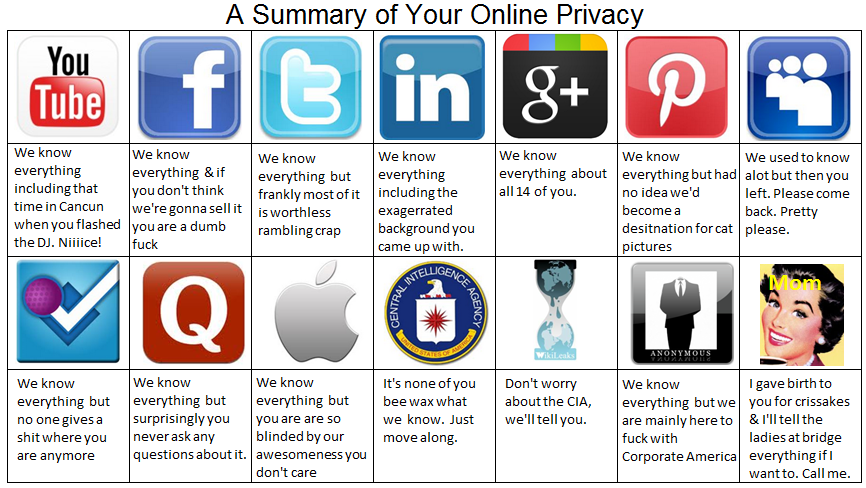
In this Facebook age, there are few secrets about what one likes and what one is willing to pay for product.

Wu notes how today’s “…Attention Merchants” are different.  Advertisers have always tried to influence individuals.  Advertisers have always told lies or distorted truth to get buyers to buy and believe.  Wu explains the difference.  Now personal information is acquired with confused consent by users of the internet. In this Facebook age, there are few secrets about what one likes and what one is willing to pay for product.

Customers are no longer just consumers.  Wu notes customers have become products.  Customers are sold to the highest bidder without customer awareness or compensation.  Today’s “…Attention Merchants” argue that sales pitches are customized to what the customer wants.  Businesses rationalize access as the customer’s compensation.  Government rationalizes access as a way of staying in touch and understanding the public.  Wu implies both arguments are willful misrepresentations.


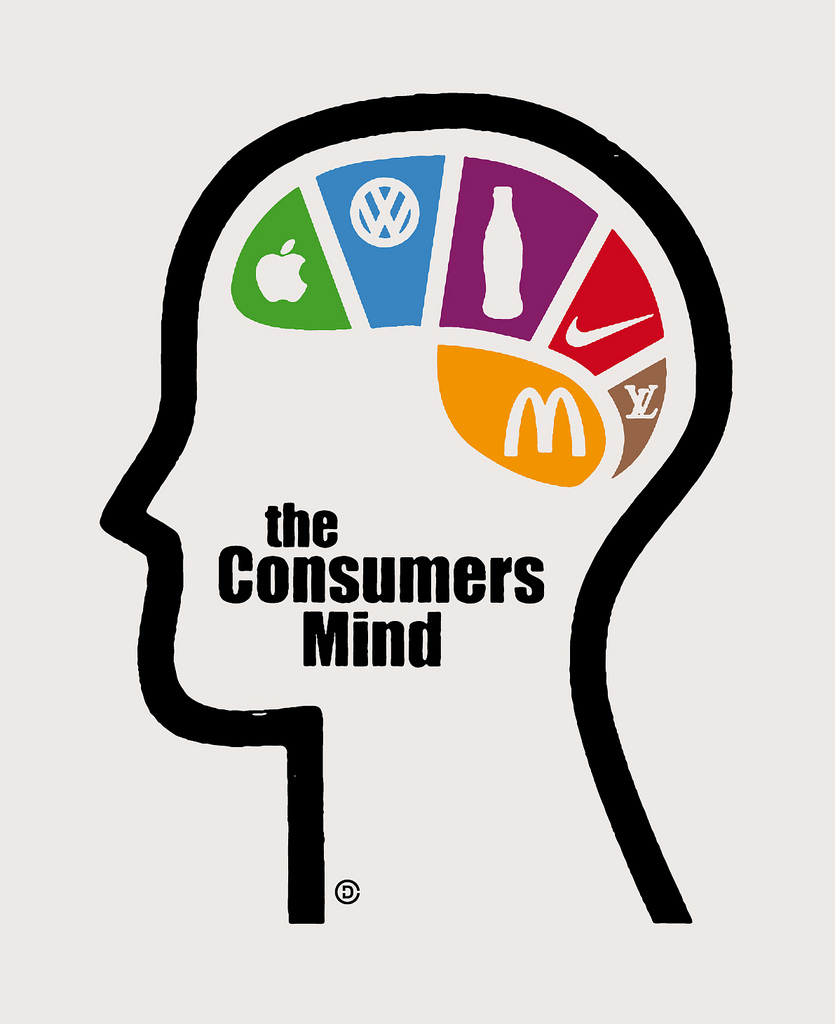
consumer's mind
Consumers have less control over their decisions because “…Attention Merchants” use intimate personal information to seduce conscious and unconscious motivation.

There is a cost to voters and consumers because personal information is being sold without pay for product that enriches “…Attention Merchants”, private enterprise, and government.  The product delivered is the personal information that reveals who we are, what we think, what we desire, and what we are willing to pay.  Consumers have less control over their decisions because “…Attention Merchants” use intimate personal information to seduce conscious and unconscious motivation.

The sinister aspect of Wu’s explanation is that “…Attention Merchants” now have tools that exaggerate the impact of “fake news”.  By knowing intimate beliefs of consumers, “…Attention Merchants” are able to create algorithms that funnel “fake news” that feeds what consumer’s may either accurately or inaccurately believe.  Prejudices and discrimination are reinforced.  The worst characteristics of political populism are reinforced.  “The Attention Merchants” expand control of individual thought so that the course of democratic elections, government policies, or business successes can be unduly influenced by false or misleading information.

wikipedia
The positive aspect of the internet is shown by sites created without advertising input; e.g. Wikipedia and some blogosphere creations abjure advertising as a source of compensation.

Wu notes there are glimmers of hope with a growing recognition of the impact of the internet. The internet broadens human understanding of the world. The positive aspect of the internet is shown by sites created without advertising input; e.g. Wikipedia and some blogosphere creations abjure advertising as a source of compensation.

Exposure of blind spots in acquisition of personal data are currently being exposed in congressional hearings with Facebook CEO, Mark Zuckerberg.  At the same time, Russian interference in American elections is being more seriously investigated.

As Marie Currie is to have said— “Nothing in life is to be feared.  It is only to be understood.  Now is the time to understand more, so that we may fear less.”  Of course, one might remember, she died from the radiation she received from her discoveries.  (Ironically, Marie Currie’s death was found not to be from radiation exposure.  In autopsy, her body radiation levels were within normal range.)

ADDICTION

Audio-book Review
By Chet Yarbrough

(Blog:awalkingdelight)
Website: chetyarbrough.blog

Infinite JestInfinite Jest

By David Foster Wallace 

Narrated by Sean Pratt

DAVID FOSTER WALLACE (1962-2008)

Great credit is deserved by the publisher and editor of “Infinite Jest”.  It is unlikely that most publishers would stick with “Infinite Jest’s” stream-of-consciousness journey.  It is too long.  As one of Wallace’s characters observes, the explanation has “too many words”.  “Infinite Jest” is disjointed and comes together late in its narrative.  “Infinite Jest” takes fortitude to complete.  It is an excruciating story of a closely examined life.  The author is testing the reader to see if he/she would rather escape than stick with David Foster Wallace’s examined life.

David Foster Wallace frustrates and fascinates readers with several extraordinary but flawed human beings.  The main character in Wallace’s book is Hal Incandenza.  But every created character is a part of who David Foster Wallace is or wants to be.  Wallace’s self-absorption, destructive behavior, and vulnerability seep from every ink-stained page; from every enunciated sentence. His “Infinite Jest” becomes real and complete with his wasted suicide at age 46.

DRUG ADDICT
“Infinite Jest” is about addiction. It argues that modern civilization is jaded by plenty, i.e., movies, sex, drugs, and other distracting entertainments are so plentiful that escape from the trials of life becomes the purpose of life.

“Infinite Jest” is about addiction. “Infinite Jest” argues that modern civilization is jaded by plenty, i.e., movies, sex, drugs, and other distracting entertainments are so plentiful that escape from the trials of life becomes the purpose of life. Human success is redefined.  Escape from conflict replaces drive for money, power, and prestige.  Obsessive/compulsive behavior focuses on immediate gratification.

Hal Incandenza’s father, named “Himself” in Wallace’s book, creates a movie that has the seductive and destructive characteristics of an addictive drug.  The movie becomes a secret weapon of destruction that stimulates the pleasure foci of the brain that destroys human interest in anything other than its replay.  The jest is that pleasures, though ephemeral, are pursued without end and at any cost (including dismemberment and death).  The pleasure of a watched movie leads to self-destruction.

the attention merchants
Wallace’s book suggests a movie (media in general) has the seductive and destructive characteristics of an addictive drug.

In real life, Wallace achieves fame and financial stability with his writing.  Retrospectively, “the jest” is that Wallace’s literary achievement is not enough to sustain his life because continued life demands work rather than Wallace’s chosen escape from reality.  He lives the life and dies the death of his characters in “Infinite Jest”.

Wallace’s main character, Hal Incandenza, is a self-destructive, amateur, world-class tennis player in “Infinite Jest”. (Wallace was a competitive tennis player in real life.)  Himself, Hal’s overachieving and failed-athlete father, is a wildly successful inventor and optics expert. Hal has two brothers.  One is Mario, a middle son of the Incandenza family that reminds one of Dostoevsky’s main characters in “The Idiot”.  The second is Hal’s older brother who is a star punter for a professional football team.  All of the Incandenza characters are aspects of an examined life of David Foster Wallace.

Himself (Hal’s nicknamed father) makes a movie entertainment with a beautiful young woman who is half his age who disastrously couples with Hal’s older brother Orin.  The beautiful young woman is so beautiful that she bargains with Himself to offer her naked image in his film in return for Himself’s abandonment of drugs.  An irony of the bargain is that the beautiful young woman is a drug addict herself (another jest).  Himself chooses to commit suicide by sticking his head into a microwave.  Himself finds it easier to avoid rather than challenge the stresses of life.

stresses of life
Wallace implies in today’s culture; it is easier to avoid rather than challenge the stresses of life.

Playing competitive tennis, writing a book, or making a movie is not as easy as hitting the re-play button for a movie, snorting a line of cocaine, sniffing a bong, or offing oneself.  There is prescient insight here that resonates with today’s growing escapist drug use.

Mario, the younger brother of Hal, is a mentally challenged, strangely insightful, angelic character that reflects an altruistic aspect of life. One wonders if that is a part of what David Foster Wallace wishes himself to be.  Competing, writing, and movie making require thinking, working, creating, with all its pains, disappointments, failures, and ephemeral successes.  As an addict, the experience of drugs, alcohol, sex, gaming, etc. are great pleasures in the beginning, faltering pleasures in the middle, and killers in the end; at least it became so for David Foster Wallace.

CDC WONDER Data for Website_02-04-15.pptx
Increasing drug use and overdosing statistics suggests Wallace knew what he was writing about.

“Infinite Jest” is a brilliant piece of work.  However, it is David Foster Wallace’s view of life.  It is sad that Wallace ends his life because the meaning of life is trivialized by his suicide.

If brilliant minds like Wallace conclude that suicide is a preferred end to life’s journey than perfecting humanity is a delusion.  If society is addicted to entertainment, then Wallace infers suicide is a harbinger of the future.  Are we all becoming addicts?  Increasing drug use and overdosing statistics suggest Wallace knew what he was writing about.

DECRIMINALIZATION

Audio-book Review
By Chet Yarbrough

(Blog:awalkingdelight)
Website: chetyarbrough.blog

flowers in the blood

Flowers in the Blood: The Story of Opium

By: Jeff Goldberg, Dean Latimer, William Burroughs (Introduction

Narrated by Stephen McLaughlin

JEFF GOLDBERG (AMERICAN JOURNALIST, STAFF WRITER FOR THE ATLANTIC)
JEFF GOLDBERG (AMERICAN JOURNALIST, STAFF WRITER FOR THE ATLANTIC, & POLITICAL PUNDIT)

Published in 1981, “Flowers in the Blood” argues for decriminalization of opiates.  The idea remains controversial in 2018, and 2022.  Written by Jeff Goldberg and Dean Latimer, a listener feels misdirected by historical information.

DEAN LATIMER (WRITER FOR THE EVO, AKA EAST VILLAGE OTHER-WENT ON TO EDIT HIGH TIMES)

The feeling of misdirection is reinforced by a languid, seemingly opiated, performance of the narrator, Stephen McLaughlin. It is not that one is seduced by Goldberg and Latimer’s writing, but a listener feels cornered in a room of opium eaters.  Goldberg and Latimer reveal how opium is extracted from a flower to offer a tranquil escape from life’s stresses, with a tantalizing peek at world clarity.  Opiate extraction seems simple; the consequence of use, not.

OPIUM POPPY
Goldberg and Latimer reveal how opium is extracted from a flower to offer a tranquil escape from life’s stresses, with a tantalizing peek at world clarity.  Opiate extraction seems simple; the consequence of use, not.
brave new world
Goldberg and Latimer argue that opiates enhance natural neurotransmitters, like endorphins, to reduce stress and depression caused by living life.  This argument reminds one of a “Brave New World” where every stress in life is characterized as negative.

Goldberg and Latimer argue that opiates enhance natural neurotransmitters, like endorphins, to reduce stress and depression caused by living life.  This argument reminds one of a “Brave New World” where every stress in life is characterized as negative.

Goldberg and Latimer note that refinement of opium into morphine and heroin increases its addictive power.  They extol the pleasure of opiates while cataloging its history of addiction.  Goldberg and Latimer reflect on opium’s effect in altering cerebral states of being.  Their argument seems counter intuitive.

They note its use by artists ranging from Charles Dickens to Elizabeth Barrett Browning.  They infer opiates enhance artist’s abilities.  They realistically identify opiates’ medical benefit, while exposing its potential for addiction.  Goldberg and Latimer suggest opiates enhance artistic sensibility, and temper sociopathic homicidal acts. They begin an argument for legalizing opiates.

OPIATE LEGALIZATION
Goldberg and Latimer extol the pleasure of opiates while cataloging its history of addiction.  Their argument is counter intuitive. They begin a defense for legalizing opiates.

Goldberg and Latimer argue that there are three options.  One, continue jailing narcotic purveyors and users.  Two, legalize opiates and let the free market determine use.  Three, decriminalize opiates and offer treatment to those who become addicted.

Their argument is for number three; they suggest number one (the American standard) is ineffective, and number two would be a disaster in the making.  Goldberg and Latimer argue that America should legalize and regulate opiates and treat those who become addicted.

DRUG TREATMENT AND COUNCILING
America regulates alcohol and tobacco, both proven addictions.  Alcohol and tobacco are regulated by the market, with education on their harmful effects and government taxation to increase prices that affects consumption.  Goldberg and Latimer argue that America should legalize and regulate opiates and treat those who become addicted.

America regulates alcohol and tobacco, both proven addictions.  Alcohol and tobacco are regulated by the market, with education on their harmful effects and government taxation to increase prices that affects consumption.  These regulations have had some success, but people still have the right to drink and smoke to excess.

The option of opiate legalization is troubling because it infers substituting inner-direction of human beings for other-direction by government.  It increases the potential of a “Brave New World” where human choice is no longer individual but collective.

DRUG USERS
Goldberg and Latimer point out that punishing the addicted with prison is a mistake.  Those who succumb to addiction need help; not punishment.

Goldberg and Latimer point out that punishing the addicted with prison is a mistake.  Those who succumb to addiction need help; not punishment.  One can readily accept that argument but opiate regulation by the government is a step too far.  This may be a distinction without a difference but Alcohol and cigarettes are still a private sector choice with government intervention (principally tax increases and education) based on political input.

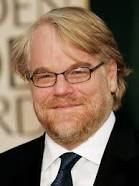
PHILIP SEYMOUR HOFFMAN (1967-2014)
The loss of Seymour Hoffman in February 2014 was a tragic loss.  Hoffman dies at the age of 46, John Belushi at 33, Kurt Cobain at 27, Billie Holiday at 44, River Phoenix at 23; all from opiate overdoses.  If opiates were legalized, would these artists have been saved—who knows?

The loss of Seymour Hoffman in February 2014 comes to mind.  Hoffman dies at the age of 46, John Belushi at 33, Kurt Cobain at 27, Billie Holiday at 44, River Phoenix at 23; all from opiate overdoses.  If opiates were legalized, would these artists have been saved—who knows?  They chose addiction to escape the insecurity and stress of life.  Their choice is their choice.  Insecurity and stress are facts in every human’s life.  America’s failure is related to treatment, not government control of human choice.

WAR ON DRUGS
With treatment programs, the government will make the objective of addicting users a waste of manufacturer’s and seller’s time.  It may not eliminate illegal drug activity but it will make it less financially viable.

America needs to continue their fight against illegal opiate manufacturers and sellers.  Threat of punishment is not the key but reduction in profitability will drive illegal manufactures out of the market.  With treatment programs, the government will make the objective of addicting users a waste of manufacturer’s and seller’s time.  It may not eliminate illegal drug activity but it will make it less financially viable.  Addiction treatment programs and substance abuse’ education are legitimate roles for state governments.  Opiates should be subject to the same laws that presently govern drug research and development.

Unfortunately, “Flowers in the Blood” fails to nuance legalization of opiates.  It leans more toward influencing uneducated poor, educated middle class, and idle rich to experiment with addictive drugs.  Goldman and Latimer are on the right track with regulation and treatment of addiction, but their book encourages drug experimentation in a culture that needs no encouragement.  Stress is a part of life and being drugged into obliviousness diminishes humanity.

APARTHEID

Audio-book Review
By Chet Yarbrough

(Blog:awalkingdelight)
Website: chetyarbrough.blog

Cry, the Beloved CountryCry, the Beloved Country

By Alan Paton 

Narrated by Michael York

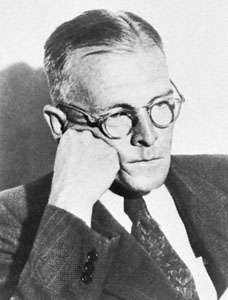
ALAN PATON (1903-1988, SOUTH AFRICAN AUTHOR)
ALAN PATON (1903-1988, SOUTH AFRICAN AUTHOR) “Cry, the Beloved Country” is less brutal than Wright’s “Native Son” or Morrison’s “Beloved” but it strikes at the heart of apartheid and the insidious nature of discrimination and slavery.

In reading “Cry, the Beloved Country”, one should remember it was published in 1948. Alan Paton’s book updates Stowe’s “Uncle Tom’s Cabin”. It is less brutal than Wright’s “Native Son” or Morrison’s “Beloved” but it strikes at the heart of apartheid and the insidious nature of discrimination and slavery.

Paton was a South African white man who lived the life he wrote about. Paton, among other things, managed a black reform school in South Africa in the early 40s. One is reminded, in some ways, of Nelson Mandela’s life in Paton’s main character, Stephen Kumalo. In other ways, Mandela moves way beyond Kumalo.

uncle tom's cabin
One can argue Paton’s main character, Kumalo, deserves the pejorative meaning of a modern “Uncle Tom”.  Maybe Kumalo is a black man considered to be excessively obedient or servile. On the other hand, Kumalo is a hero—the best of what a black person can be in the circumstance of apartheid.

Contrary to one’s belief about Mandela, Kumalo is like Uncle Tom in Harriet Beecher Stowe’s book. He is a good man; a wise man, but he fails to understand the terrible truths of discrimination and its insidious effect on society–both on the discriminated and the discriminator. One doubts that Mandela ever had any misunderstanding of discrimination’s effect on society.

One can argue Kumalo deserves the pejorative meaning of a modern “Uncle Tom” definition. But Paton makes the reader or listener walk in Kumalo’s shoes. Maybe Kumalo is “a black man considered to be excessively obedient or servile”; on the other hand, Kumalo is a hero—the best of what human beings can be in the circumstance of history. Therein lays a comparison with Mandela and his decision to invite a suppressive white government into his administration. The goal of Paton, his character Kumalo, and Mandela was to preserve a beloved country.

The execution of Kumalo’s son, the prostitution of his sister, the corruption of his brother are consequent behaviors of discrimination; Kumalo sees but fails to act because he is seduced by faith and constrained by white suppression.

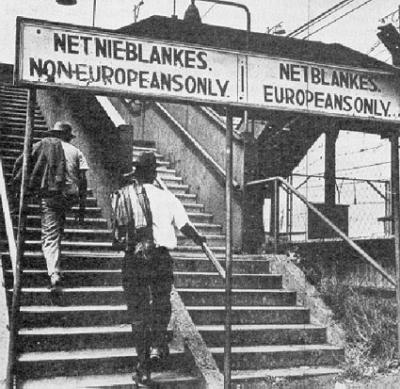
SOUTH AFRICAN APARTHIED
Apartheid (Discrimination is shown by Paton to be a complex evil.)

Life is full of compromise; full of good and evil. The fictional Kumalo and real Mandela did the best they could in the circumstance of their lives; which seems better than can be said of 99% of the human race.

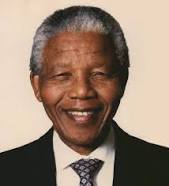
NELSON MANDELA (1918-2013)

“Cry, the Beloved Country” begs the question of what is right by inferring much of South Africa’s suppression was driven by white’ fear.  More succinctly, discrimination is shown by Paton to be a complex evil.

Paton creates characters with a growing white understanding of the damage caused by discrimination while subtly injecting a more militant black movement. Again, one is reminded of Mandela’s early life which led to imprisonment.

“Cry the Beloved Country” gives one some sense of what life must have been like for Nelson Mandela.

A PHILOSOPHY OF LIFE

Audio-book Review
By Chet Yarbrough

(Blog:awalkingdelight)
Website: chetyarbrough.blog

The Complete Essays of Montaignethe complete essays of montaigne

By: Michel Eyquem de Montaigne, Donald M. Frame (translator)

Narrated by Christopher Lane

MICHEL DE MONTAIGNE (1533-1592)

Michel Eyquem de Montaigne, a sixteenth century philosopher and writer, wrote and re-wrote “Essays”, originally published in the 1580s.  Essay was a new form of writing.  Montaigne’s subject is the philosophy of life and death.

Montaigne writes his collection of essays while cloistered in a château in southwest France.  Donald Frame translates and compiles three volumes of Montaigne’ essays into one book–“The Complete Essays of Montaigne”, first published in 1957.

contemplation
Montaigne, born into a family of wealth, affords the luxury of time for personal reflection and contemplation.

Montaigne, born into a family of wealth, affords the luxury of time for personal reflection and contemplation.  Not surprisingly, Aristotle wrote that life depends upon awareness and the power of contemplation.  In one respect, this quiet life is a contradiction in Montaigne’s philosophy.  Montaigne reflects on history and ancient times to explain how life should be lived when his life seems a shadow of most people’s reality, the reality of a day-to-day fight for survival.  There is reader skepticism about the 1% life of Montaigne versus the 99% life of most people.

Montaigne, with great family wealth and a storied education, becomes a Mayor of Bordeaux.  He draws on a privileged life and recorded lives of great philosophers and leaders to create insight about lives of those that “do”, and have little time, or no time, to contemplate.

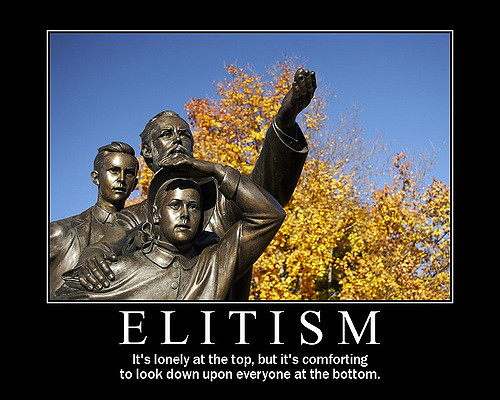
ELITISM
Montaigne is modest about his erudition but there is an elitist odor that clings to his self-effacing commentary.

Montaigne suggests the appeal of his essays lies in the middle of the human population.  Montaigne suggests the in-between are those who are not highly intelligent, who are abysmally ignorant; preferentially plebeian, and ordinary.  In other words, people of course nature and manner, like this critic.  In spite of this elitist leaning, the wisdom noted in Monsieur Montaigne’s essays is enlightening.

This is a one thousand page journey with something for everyone.  Montaigne suggests humans need to embrace life and eschew tragic interpretations of death.  Life and death are only stories of being.  Death is inevitable and should not be feared.  Death should be embraced like life; it is merely a final act, a denouement of life; well or poorly lived.  In Montaigne’s opinion there are justifications for ending one’s life volitionally but only for valued reason.

LIFE AND DEATH
Montaigne suggests humans need to embrace life and eschew tragic interpretations of death. Death should be embraced like life; it is merely a final act, a denouement of life; well or poorly lived.

euthanasia
The interpretation of justification and value are lines un-clearly drawn by Montaigne.

Montaigne suggests women may choose to kill themselves rather than be raped.  Men may choose to kill themselves and murder their families to avoid enslavement by an enemy.  The defeated may kill themselves if mortally ill or wounded.  To Montaigne, euthanasia is permissible at death’s door.  Today, the lines are only slightly more clearly drawn and only in a few of the American States (like Washington, Oregon, Montana, Vermont, and California).

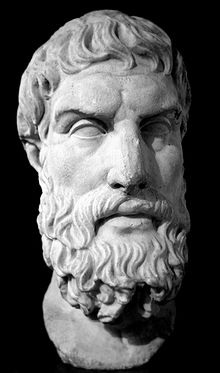
EPICURUS (341 BCE-270BCE).jpg died at age 72
EPICURUS (341 BCE-270BCE). Founder of one who believes living life is meant to be the pursuit of pleasure.

Montaigne is Epicurean in the sense that he believes living life is meant to be a pursuit of pleasure.  However, the pursuit of pleasure is not defined by money, power, or prestige.  Those pleasures are diminished by their attainment because they are insatiable human desires.

HUMAN NATURE HANDCUFFS
“Not-needed” things become human’ handcuffs. Life becomes an unending accumulation of things that fail to satiate desire.

When one makes more money than needed to sustain life, he/she buys more of what is not needed.  Those “not-needed” things become human’ handcuffs. Owners worry about losing things; worry about replacing things; worry about keeping up with neighbors. Life becomes an unending accumulation of things that fail to satiate desire.

Power never rests.  Power is always moving like an electron around a nucleus of followers.  Leaders are enslaved by followers.

Leaders worry about followers, worry about competition for position, worry about their place in history; they die alone just like every human being.  Power is an ephemeral pleasure that never rests in one place.

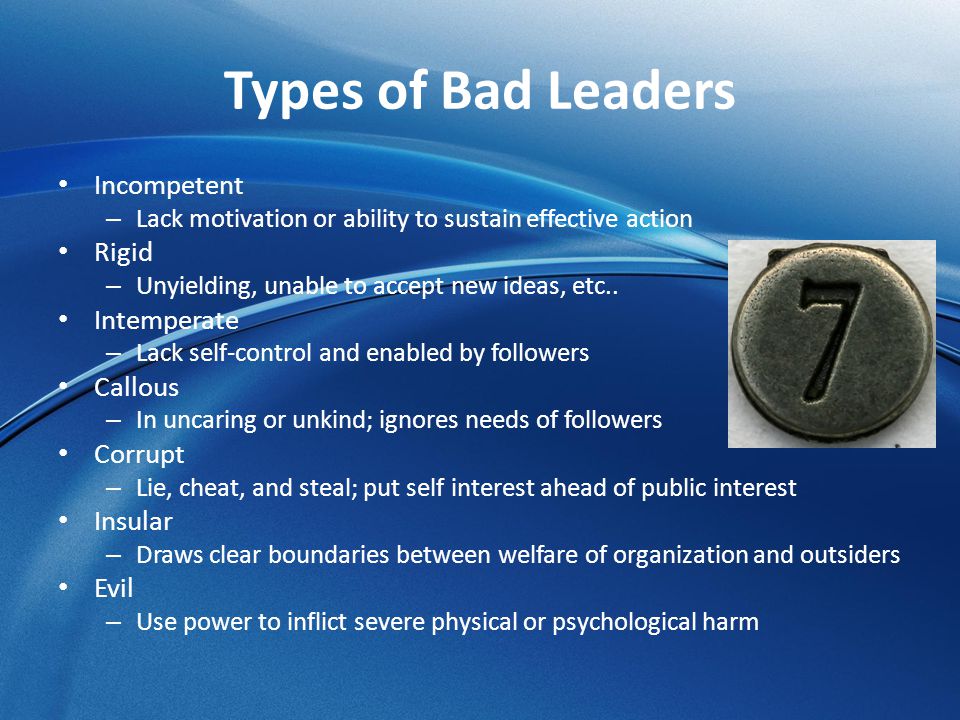
LEADERSHIP
Leaders with power are targets for support or destruction. Power is an ephemeral pleasure that never rests in one place.

Prestige comes from respect of fellow human beings.  It is outside the control of the seekers or the chosen; it is limited by the opinion of others; it changes like the direction of the wind or the habits of the culture within which one lives.

PRESIDENTS 4
Life is not an either/or proposition despite Kierkegaard’s philosophy. Humans are good and bad; no one is totally one or the other–not even America’s challenged leaders.

habit
Montaigne disdains habit because it contains un-grounded reason that distorts nature.

Montaigne attacks cultural shibboleths that are based on unfounded reason.  Because one says the earth is the center of the universe does not make it so but a universe of fiction may grow around a culture of mysticism that defies the natural state of being.  Montaigne insists on skepticism when confronted with culturally reinforced habit that is not bound by nature.

MirrorWhoAmIWoman
To Montaigne, pleasure lies in self-understanding; doing what one is best at; and letting go of life when it fails to improve self-understanding or keeps one from valuing existence.

Pleasure lies in self-understanding; doing what one is best at; and letting go of life when it fails to improve self-understanding or keeps one from valuing existence. Montaigne cites many ancient philosophers like Plato, Aristotle, Epicurus, and Lucretius that reinforce his arguments.

Plato drives the point of virtue as the human characteristic of doing what one is best at doing.  Montaigne notes that both Plato and Aristotle emphasize the importance of education for self-understanding.  Self-understanding inures to the benefit of humankind by revealing to each what they are best at and giving them tools (through education) to be the best they can be.  Montaigne insists on learning; not rote memorization, but clear understanding.  Montaigne argues that it is not reciting what someone has said but understanding what is meant by what is said.  This is a somewhat ironic statement in view of Montaigne’s voluminous quotes from dead philosophers.

EDUCATION
Montaigne infers education opens all doors to self-understanding and the pleasures of a good life and honorable death.

Montaigne reflects on his upbringing and his Father’s drive to educate his son by making Latin Montaigne’s first language, the language of scholarship in the 16th century.  Montaigne did not only live the life of a scholar.  He was elected mayor of Bordeaux before retiring to his cloistered existence as a writer of the “…Essays…”  Montaigne applauds his father for providing him an education and infers that every family is obligated to support education of their children.

Montaigne died from complications of tonsillitis at the age of 59.  Frame’s translation of Montaigne’s essays offers a philosophy of life in a horse-size pill.  It encourages the old but escapes the young because life happens too fast.

As George Bernard Shaw notes, youth is wasted on the young; probably because they are too busy for contemplation.  “The Complete Essays of Montaigne” is an insightful guide for the conduct of life and the acceptance of death.

SOVEREIGNTY

Audio-book Review
By Chet Yarbrough

(Blog:awalkingdelight)
Website: chetyarbrough.blog

The Origins of Political Order: From Prehuman Times to the French RevolutionTHE ORIGINS OF POLITICAL ORDER

Written by: Francis Fukuyama

Narrated by: Jonathan Davis

FRANCIS FUKUYAMA (AMERICAN POLITICAL SCIENTIST, POLITCAL ECONOMIST, AND AUTHOR)
FRANCIS FUKUYAMA (AMERICAN POLITICAL SCIENTIST, POLITICAL ECONOMIST, AND AUTHOR)

Francis Fukuyama’s analysis of state and government formation is both insightful and politically actionable.  In “The Origins of Political Order” and “Political Order and Political Decay” Fukuyama provides a basis for understanding politics and its contribution to society.

THOMAS HOBBES (1588-1679)
THOMAS HOBBES (1588-1679) Hobbes generally considered humankind to be both good and evil with a need for regulation of his/her evil instincts through government.

In previous book reviews, references have been made to Thomas Hobbes’ theory of the nature of man.  Hobbes generally considered humankind to be both good and evil with a need for regulation of his/her evil instincts through government.  He identifies government as “The Leviathan”.  Hobbes suggests “The condition of man…is a condition of war of everyone against everyone”.

PREHISTORIC HUMAN KIND
Fukuyama finds a singular and significant flaw in Hobbes’ observation.  From the beginning of time, humans associated with other humans to survive the brutish nature of life.  He suggests humans are by nature violent with that violence becoming ingrained as a societal meme to cope with the exigencies of life.  Fukuyama goes on to suggest violence and change are intertwined.

Fukuyama finds a singular and significant flaw in Hobbes’ observation.  Though Fukuyama may agree with Hobbes’ view of individual humans, he tempers it by noting humans have always been social beings.  From the beginning of time, humans associated with other humans to survive the brutish nature of life.  He suggests humans are by nature violent with that violence becoming ingrained as a societal meme to cope with the exigencies of life.  Fukuyama goes on to suggest violence and change are intertwined.

The significance of humans as societal creatures is that governments are formed by dominant tribes. Politics is the language of tribes negotiating with each other to preserve status.  However, Fukuyama notes that cultural norms are dramatically different in governments that evolve over time.  These cultural differences play out in the history of Russia, China, France, Great Britain, Italy, America, the countries of Africa, and the Middle East.

world map
Fukuyama notes cultural differences play out in the history of Russia, China, France, Great Britain, Italy, America, the countries of Africa, and the Middle East.

RELIGIOUS BELIEF
A counter-intuitive note by Fukuyama is that religion plays a significant role in civilizing, rationalizing, and establishing state governments.

A counter-intuitive note by Fukuyama is that religion plays a significant role in civilizing, rationalizing, and establishing state governments.  It is counter-intuitive because it seems in the present-day religion is tearing the world apart.  However, in the context of history, the size of tribes within countries hugely increases with the spread of religion.  Religion becomes a cultural phenomenon that ameliorates (but does not eliminate) violence among different tribes within wider territories that evolve into nation-states.

Fukuyama implies nation-state development is a living organism that evolves in the manner of natural selection identified by Darwin in the “Origin of Species”.  Characteristics of effective governments perpetuate themselves through adaptation to respective societal norms.  In other words, every society grows via its own cultural norms which suggests sovereignty should be inviolable.

Fukuyama is saying that American democracy, Chinese socialism, Russian federation, India democracy or any other system of government will be different because of their social history.  In other words, India may be classified as the world’s largest democracy but not as an American democracy because of its different societal norms.

WORLD WIDE WEB
Can the World Wide Web, the growth of science, and recognition of environmental interdependence overcome the nationalist stupidity of government leaders?

In one sense, the complexity of Fukuyama’s theory makes one less optimistic about the future of the world.  What can take the place of religion to meld societies into a common tribe?  Can the World Wide Web, the growth of science, and recognition of environmental interdependence overcome the nationalist stupidity of government leaders?

If Trump, Putin, al-Baghdadi, and Kim Jong-un represent the future, the answer is no.  On the other hand, one may argue survival of humans is dependent on experimentation by governments, enhanced by nation-state societal differences.

Just as one species evolves into an improved human, one species of government may evolve into an improved government (presuming humans survive an interregnum).

PEELED ONION

Audio-book Review
By Chet Yarbrough

(Blog:awalkingdelight)
Website: chetyarbrough.blog

The Human Stain

By Phillip Roth

Narrated by: Dennis Boutsikaris

PHILLIP ROTH (WINNER OF THE PULITZER PRIZE FOR FICTION, MAN BOOKER INTERNATIONAL PRIZE AND MORE)

PHILLIP ROTH (WINNER OF THE PULITZER PRIZE FOR FICTION, MAN BOOKER INTERNATIONAL PRIZE AND MORE)

Figuratively, Phillip Roth skins an onion in his book, The Human Stain.  He exposes the invidious nature of discrimination and truth’s distortion in a story about a college professor’s life.

In an ironic Buddhist’ way, Roth’s writing stings the eyes of wisdom and the material world; i.e. The Human Stain offers a nuanced explanation of human nature.

Roth exposes layers of who we are by recounting President Clinton’s contretemps with Monica Lewinski; stories of a “free” but tainted press, the many forms of discrimination, and incidents of sexual exploitation.  Each peel of the onion reveals a stinging criticism of human beings and the material world.

Roth’s story is about Coleman Silk, a tenured professor, nearing the end of his career at a small university.  He is seventy-one years old.  His career is ended in disgrace.  The disgrace is caused by the use of words, taken out of context, and given dishonest meaning by others.

objective truth

Today appears no different from yesterday.  Humans lie through conscious and subconscious selection of facts.  People looking at the same event view that event differently.  Each person creates their own story based on their life experience. 

Silk resigns from the university.  His wife dies.  In general, he blames the world; more specifically the press and university, for his wife’s death.  He has an affair with a 35-year-old woman; they die in a mysterious accident that is inaccurately reported by newspapers reporting rumor and colleague’ distortion rather than fact.

selective facts

Phillip Roth implies objective truth is an oxymoron. Are good and evil in the world only defined by society’s acceptance?  Is the same true for morality and amorality?

That is the basic outline of The Human Stain but Roth peels layers of life off twentieth century history with fictional characters who illustrate and argue that stains are an inevitable consequence of living any life.  His hero, Silk, tells a white lie near the beginning of adulthood and is pilloried for a Black accusation near the end of his life.  Roth’s story infers every lie leaves a stain and every human being is a liar.

PTSD

PTSD -The veteran husband, now ex-husband, is stained as a soldier trained to kill by the military.  He is expected to return from Vietnam as though the past is past.  However, the past is never past; it lives in memory and acts on the future.  It is his stain.

Silk’s lover, in Roth’s depiction, is a woman stained by abuse of a stepfather, and later in life, by a husband.  The abused child, and wife, carries her stains and spirals down to a dark place filled with despair.  The veteran husband, now ex-husband, is stained as a soldier trained to kill by the military.  He is expected to return from Vietnam as though the past is past.  However, the past is never past; it lives in memory and acts on the future.  It is his stain. He is diagnosed with PTSD.

A colleague of Silk’s is stained by a failure to come to his aid when Silk is unjustly vilified by the University.  Monica Lewinski’s stain is literal and figurative with a soiled dress and the public’s vilification.  President Clinton’s stain is weakness of character, lying about an affair, cheating on a wife.  Every human being in Roth’s story is stained by life and must choose to live with it or die from it.

By the end of The Human Stain, one is reminded of the biblical phrase, “he who is without sin can cast the first stone”.  How ridiculous was it to impeach President Clinton?  How stupid is it to believe returning from a war is like turning off a light?  Roth’s story infers every lie, and we are all liars, leaves a stain; every human experience leaves an imprint, some of which are stains.

GOD’S EXISTENCE

Audio-book Review
By Chet Yarbrough

(Blog:awalkingdelight)
Website: chetyarbrough.blog

36 Arguments for the Existence of God36 Arguments for the Existence of God
By Rebecca Newberger Goldstein
Narrated by Stephen Pinker, Rebecca Newberger Goldstein, Oliver Wyman

REBECCA NEWBERGER GOLDSTEIN

Rebecca Goldstein writes like Stephen Pinker on steroids.  (Coincidentally,  Goldstein is married to Pinker.)  Goldstein’s novel is not the story one expects from its title because “36 Arguments for the Existence of God” is about denial; not affirmation of existence.

STEVEN PINKER (Cognitive psychologist, linguist, and author)
STEVEN PINKER (Cognitive psychologist, linguist, and author who wrote “How the Mind Works”, “The Blank Slate”, “Angels of Our Better Nature”, etc.)

A more apt title for Goldstein’s book might be “The Science of Human Nature Denies the Existence of God”.

Goldstein has done a masterful job of creating “fear and trembling” in believers.  This is “fear and trembling” in the opposite sense of Soren Kierkegaard’s meaning. Kierkegaard’s meaning awakens believers in God.  Kierkegaard, an author, theologian, and philosopher, argues one should fear and tremble at the truth of God’s existence.

SOREN KIERKEGAARD (1813-1855, DANISH PHILOSOPHER, AUTHOR, THEOLOGIAN)
SOREN KIERKEGAARD 1813-1855 (Kierkegaard, an author, theologian, and philosopher, argues one should fear or tremble at the truth of God’s existence.)

On one level this is a story about a man named Cass Seltzer and his personal (sometimes romantic) relationships.

On a second level it is about human ethnocentrism. Characters, including Cass Seltzer, see through myopic eyes based on who they have become and what peer group they belong to.

On a third level “36 Arguments…” is about human nature and cultural memes (Richard Dawkins defines a cultural meme as an inherited learned behavior).

On multiple levels, Goldstein’s writing is about the elephant in the room; i.e. mankind’s belief in a Supreme Being.

The story of Cass Seltzer’s life is absorbing.  The women he loves are monumentally independent, fantastically alluring, and maddeningly self-centered (as self-centered as Cass Seltzer).  Each character believes what they believe with conviction that directs their lives.

The introduction of Felix Fidley exemplifies tribal ethnocentrism and conviction; i.e. a believer who says one way is the only way.

RELIGIOUS BELIEF
Goldstein’s introduction of Felix Fidley in her novel exemplifies tribal ethnocentrism and conviction; i.e. a believer who says one way is the only way.

Ms. Goldstein cleverly introduces the town of New Walden.  Its isolated belief system reflects the heritability of good and bad genetic markers and memes that trap people in worshipful repetition.  One might categorize it as a cult or, more politely, a commune.

Finally, Goldstein creates a straw man debate about God,  The debate is conducted in the next to last chapter.  It pits Cass Seltzer against a purportedly renowned debater. Seltzer beats his debate opponent.  Believers in God lose.  In the last chapter, 36 arguments for belief in God are stated and refuted.

SCIENCE AND RELIGION
One doubts Goldstein will change the world with her book but its rational arguments are a big add to the non-believing world’s arguments for a scientific theory of the world that explains everything about everything.

One doubts Goldstein will change the world with her book but its rational arguments are a big add to the non-believing world’s arguments for a scientific theory of the world that explains everything about everything.

PREACHER PREACHING
Faith is always a refuge but is it enough?

If you are a believer, “36 Arguments…” is a clear explanation of your battleground; it reveals the manifesto, strategy, and tactics of a non-believer.  Faith is always a refuge but is it enough?

“36 Arguments for the Existence of God” is a fascinating piece of literature.

RISE AND FALL

Audio-book Review
By Chet Yarbrough

(Blog:awalkingdelight)
Website: chetyarbrough.blog

Asabiyyah: What Ibn Khaldun, the Islamic Father of Social Science, Can Teach Us About the World Today

Written by: Ed West 

Narrated by:  P. J. Ochlan

ED WEST (ENGLISH AUTHOR, JOURNALIST, BLOGGER)

ED WEST (ENGLISH AUTHOR, JOURNALIST, BLOGGER)

IBN KHALDUN (STATUARY SYMBOL OF ISLAMIC HISTORIAN BORN 1332, DIED 1406 AT 73 YEARS OF AGE.)

IBN KHALDUN (STATUARY SYMBOL OF ISLAMIC HISTORIAN BORN 1332, DIED 1406 AT 73 YEARS OF AGE.)

Ed West offers a brief introduction to the life of an ancient historian.  His name is Ibn Khaldun.  Khaldun describes the first known evolutionary theory of human origin.  West also notes this 14th century scholar creates the first known socio/political theory of the rise and fall of civilizations.

Khaldun explains life’s origin as a aggregation of chemicals and minerals that create organic life and, in turn, evolve into different species. 

DESCENT OF MAN

West notes that Khaldun suggests humankind evolved from monkeys. This is four centuries before Darwin’s “Origin of Species”.

Ibn Khaldun is considered by some to be the first person to write foundational theories for modern sociology, economics, and demography.  West notes that Khaldun explains how nations are formed, maintained, and destroyed by sociological, economic, and demographic forces.

Khaldun offers counsel to the great conqueror, Amir Timur (aka Tammerlane), who plans to resurrect the 13th century Mongol empire built by Genghis Khan.  

TIMUR (AKA TAMMERLANE, 1336-1405)

TIMUR AKA TAMMERLANE IS COUNCELED BY IBN KHALDUN  (1336-1405–(Timur is said to have caused the death of over 17 million people in the effort.)

West suggests that Khaldun explains how Timur and other rulers, from the Roman empire to Genghis Kahn to Timur successfully conquered great areas of the known world.  His explanation is “Asabiyyah” (aas-sah-bee-ah), a theory that all successful conquerors establish a social environment that creates solidarity among a group of people sharing understanding, purpose, and achievement.

West explains that Khaldun expands “Asabiyyah” to a theory of civilization’s rise and fall.  Humans proliferate based on family affiliations.  Religion widens family relationships to create tribes. Tribes become a congregation of different families with common beliefs.  Tribes come into conflict and eventual settlements that grow into larger groups based on evolved common beliefs. 

At each step of widening common interest, a leader rises from the ranks.  With an accretion of social ties, villages, towns, and cities are formed with a leader at its head.  As the ties that bind continue to expand, nation-states are formed.

RISE AND FALL OF CIVILIZATIONS

Ibn Khaldun’s explanation is “Asabiyyah”, a theory that all successful conquerors establish a social environment that creates solidarity among a group of people through shared understanding, purpose, and achievement.

West shows that Khaldun goes on to explain how civilizations decline. First, Khaldun notes that sons and daughters of great leaders rarely exceed their parent’s leadership success.  Khaldun posits the current social and scientific belief of “reversion to a mean”. 

REVERSION TO THE MEAN

Each subsequent offspring of a great leader comes closer to the average of a civilization’s population.  Leadership diminishes in succeeding generations.

Second, Khaldun suggests diminished common beliefs lessen a civilization’s cohesion.  Religious differences rise, economic circumstances change, social groups fracture, family ties reassert themselves as ties that are more important than community.  The example that Khaldun gives is Rome’s decline as a world power. West suggests the same may be said of the United Kingdom’s decline.

AMERICAN DREAM

Has the American Dream become a lie few believe in?  Are elected officials withdrawing to their families at the expense of nation-state’ leadership?

West’s “Asabiyyah” makes one think of America.  Does today’s political conflict reflect diminishment of commonly held nation-state belief?  Is the increasing gap between rich and poor destroying the social fabric of America?  Is the divisiveness of former President Trump a reflection of a nation in decline?

Is nationalism dead, or are we crossing a threshold where the principals of nation-state need to be expanded to include a wider community?  Is the next step reflected by the E.U. or some similar congregation of nation-states?

EUROPEAN UNION

According to West, Khaldun believes nationalism is critically important for a civilization to remain strong.  In the time of Khaldun, there was no vehicle for common beliefs except a leader’s influence over conquered nations. 

Today, there is an internet.  It seems the human family may once again be expanded.  Nation-states may not be prepared for “space-ship-earth” but there may be an interim step.

That interim step was tried during the cold war with the U.S.S.R.  It failed.  The E.U. is facing challenges today.

U.S.S.R. BREAK-UP

Trump’s America is regressing from comity to disparity with emphasis on making itself great again.  A leading question today is whether civilizations are competing to be in decline or ascendance?

Of course, leadership is key to any future.  Right now, there seem few leaders that can make civilizations grow beyond their borders. Khaldun seems as relevant today as he was in the 4th and early 5th centuries.