WOMEN IN WAR

Audio-book Review
By Chet Yarbrough

(Blog:awalkingdelight)
Website: chetyarbrough.blog

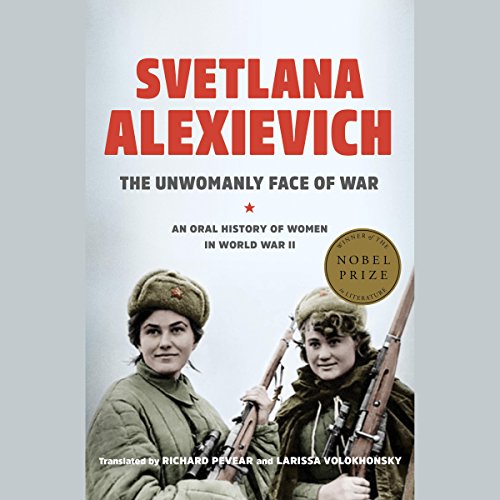
The Unwomanly Face of War–An Oral History of Women in World War II

By: Svetlana Alexievich, Translated by Richard Pevear and Larissa Volokhonsky

Narrated by Julia Emelin, Yelena Shmulenson

Svetlana Alexievich (Author, Belorussian Investigative Journalist, 2015 Nobel Prize in Literature–for her polyphonic writings.)

The author of “The Unwomanly Face of War”, Svetlana Alexievich, suggests women’s deployment in war dates to the Greco-Roman wars.  However, some say Russia is the first nation to deploy women as combat troops.  History shows Russia enlisted women as a fighting force in WWI. 

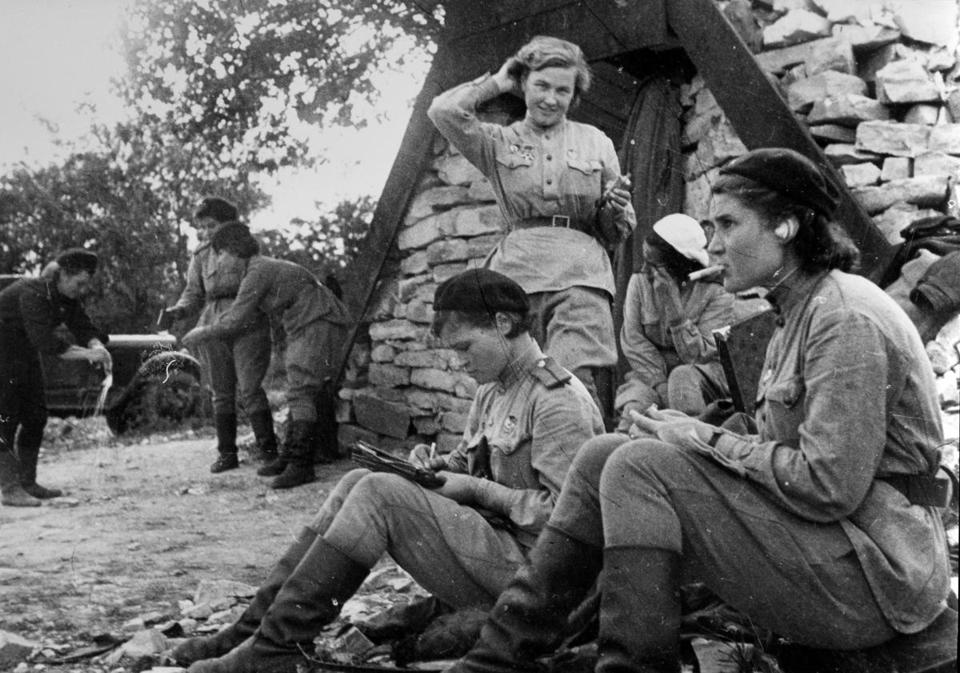
“The Unwomanly Face of War” notes nearly 1,000,000 women joined the Russian military to defeat the German armies in WWII. 

Alexievich interviews former WWII Russian women as pilots, snipers, mine clearing commanders, and military tank leaders. Some were as young as 13; others in their late teens or early 20’s when they joined. At the time of the interviews, all were in their 50’s or older.   By any definition, these Russian women were combat troops.

This is a particularly timely release of a translation of “The Unwomanly Face of War”.  In western nations, as early as the 1940 s, the role of women in the military has been in transition. 

Most countries recognize the immense contribution “women in war” have made since WWI. However, the WWII veterans in Russia’s battles were not fully recognized until the 1950s.

What Alexievich offers is a peek into what Russian women in combat experienced during WWII.  She identifies similarities and differences military men and women experience in war.  To listeners of Alexievich’s interviews, similarities appear much greater than the differences.

The preeminent common characteristic among combat troops is nationalism.  Whether man or woman, the belief in the sovereignty of one’s country supersedes gender.  The disgust for an invading country and its military is equally reviled. 

Alexievich suggests women feel the atrocity of war more than men because women bare and raise children. She argues women are more nurturing and emotion driven than men. 

However, her interviews recount two events that would equally engage and enrage men as women.    

Two interviews reveal a mother’s decision to sacrifice her children.  One circumstance is for a mother to quiet a crying child by infanticide because of an approaching German troop.  The second is a mother who has her child carry a bomb into a military mess hall to kill the enemy as well as the sacrificed child. How does maternal instinct differ from the worst actions taken by men?

The human response to war seems as brutally evident in women as men.  The trauma of war seems to be absorbed in similar ways.  War experience is something never forgotten, and often repressed.  There seems little difference among the sexes based on Alexievich’s interviews of WWII women veterans.

Another example that seems more of a provisioning than sex difference is the reality of menstruation and how it is to be dealt with in combat circumstances.  With proper provisioning the difference between the sexes seems miniscule.

Another circumstance alluded to is the physical strength differences between the sexes.  The circumstance recalled is a woman tank commander who cannot physically rescue an injured tank soldier because she is unable to lift him out of the tank. 

Pulling dead weight is a limit for men as well as women. Though the average strength differences might be true between all men and all women, brute strength is an extraordinary need in war; not a common requirement. If one person is not enough to move a wounded soldier, he/she gets help.

“The Unwomanly Face of War” addresses the reality of conjugal sex in war.  War is little different than life in the civilized world when it comes to the battle of the sexes.  Alexievich recounts affections that rise between men and women in the field of war.  One can appreciate exaggerated interdependence when one’s life is at stake.  Maybe there is a difference, but the difference seems more of imagination than reality.  Peace has its own way of corrupting the relationship between men and women.  One must question how different the battle between the sexes is in war than in peace. 

Common purpose brings the sexes together in both war and peace. When common purpose is absent, the sexes battle for their personal interests.  What distorts the battle is power.

History suggests power more often lies with men than women whether in civilian or military life.  Until there is equalization in power, the potential for fairness among the sexes is unlikely. 

Whether in war or peace, sexual orientation is subject to inequality.  The only remedy is a set of rules and regulations judiciously enforced.

One will draw their own conclusion about the role of women in war after listening to “The Unwomanly Face of War”.  Whether in a time of war or peace, what is incontestable is unequal treatment of women

GENETICS ACHILLES HEEL

Audio-book Review
By Chet Yarbrough

(Blog:awalkingdelight)
Website: chetyarbrough.blog

Who We Are and How We Got Here

By: David Reich

Narrated by John Lescault

David Reich (Author, geneticist)

Reich explains how the concept of the origin of homo sapiens has evolved since the discovery of “Lucy” in East Africa in 1974.

Few scientists disagree about humankind’s place of origin.  It may have been somewhere other than East Africa, but human origin is genetically linked to the African continent. 

However, Reich notes that geneticists no longer believe African origin is an adequate interpretation of the wide differentiation of human beings.  The evolution of homo sapiens is not like the branches of a tree but more a tapestry of interwoven threads.

Listening to “Who We Are and How We Got Here” reminds one of the Dragnet’s 1950s-character Joe Friday saying, “just the facts ma’m”.  Aside from Officer Friday’s hint of sexism, it is never just the facts. 

Genetic evolution is always interpretation of facts.  Interpretation is David Reich’s “Achilles heel” for exploring and expanding DNA research to determine “Who We Are and How We Got Here”.

Humans interbred to create a fabric of intermingled genetic characteristics that came together, separated, re-combined and changed over thousands of years.

Genetic discoveries of Neanderthal and Denisovan genetic markers show there is no direct line of descent from the “Lucy” origin of homo sapiens.  Genetic studies show that DNA changed as the human species grew. Some genes survived and evolved while others disappeared. Current theory discounts the principle of an “immortal gene” in the sense that the origin genes changed into something entirely different.

The great controversy that Reich explores is factional resistance to genetic research because of fear of misuse of the data.  There is ample evidence to substantiate that fear.

James Watson (American molecular biologist, Nobel prize winner and co-author of the double helix structure of DNA)

In 2007, Dr. Watson told a British journalist that he was “inherently gloomy about the prospect of Africa” because “all our social policies are based on the fact that their intelligence is the same as ours, whereas all the testing says, not really.”

Reich adds to the “Watson story” by saying he met Watson and was appalled by his comments about Jews being intrinsically smarter than the general population.  

Somewhat disingenuously, Reich notes that a disproportionate number of Ashkenazi Jews have received Nobel prizes. Is that fact relevant to genetic research? Does it apply to all Jews or just Ashkenazi Jews. Reich is an Ashkenazi Jew. Is this a reflection of the same concern over misuse of genetic information?

Genetic facts have been used by prominent scientists, like Watson, and ignorant political leaders, like Adolph Hitler, to falsely interpret genetic evidence. Genetic information opens a door to racist arguments for racial superiority.

Information banks created by Google, Facebook, Microsoft, and Amazon are weapons of privacy destruction. In modern times, the only possible defense is “a right to be forgotten”.

One comes away from Reich’s book only semi-convinced of his search for truth through genetics.  Reich insists that the benefits of genetic research far outweigh the potential harm the research may cause. 

His point is that there are genetic studies that prove some genetic markers make people more susceptible to disease like anemia for blacks and Tay-Sachs disease for Ashkenazi Jews.  With exposure through genetic research, these medical maladies may be cured.  Without knowledge of genetic predisposition, there is less focus on what might cure certain diseases.

The problem always comes back to interpretation of facts; not the facts themselves.  Reich certainly has a point in insisting on continuing genetic research but how does one protect themselves from misinterpretation of facts. 

Dr. Watson is a Nobel prize recipient.  Look at what his interpretation of genetic facts became.   

Six million Jews were murdered by Nazi Germany’s belief in a master race of genetically “pure” Germans.  Reich’s work suggests there are no “pure” races. There are only similar genetic traits among a few isolated populations.

Do potential medical benefits from genetic research outweigh a racist use of genetic facts?  “Who We Are and How We Got Here” seems much less important than “Here We Are and What Can We Do About It”. Particularly considering our experience with the Covid19 pandemic.

CLOSED MINDS

Audio-book Review
By Chet Yarbrough

(Blog:awalkingdelight)
Website: chetyarbrough.blog

The New Jim Crow: Mass Incarceration in the Age of Colorblindness

By: Michelle Alexander

Narrated by Karen Chilton

MICHELLE ALEXANDER (AUTHOR, CIVIL RIGHTS ADVOCATE, VISITING PROFESSOR AT UNION THEOLOGICAL SEMINARY)

Multicultural societies are threatened by closed minds. Michelle Alexander pulls no punches in explaining how American minds are not exempt.  From both conscious and subconscious actions, people who are perceived as different are treated unequally.   

America, like most (if not all) nations, is a failed egalitarian state.  From its early history, America has striven to mitigate inequality but with mixed results, and only marginal successes.

This is not to suggest America is less egalitarian than most nations but that unregulated human nature is a danger to all nations. Witness the murderous regimes of Qaddafi, Saddam Hussein, and more recently, al Assad in Syria.

Two police officers are shot during a public protest over the police shooting of Breonna Taylor (a police raid’s innocent bystander). Where does this end? Public policy failures should not be used as an excuse for violence. No one wins, everyone loses.

Money, power, and prestige corrupt every nation’s leaders; whether well or poorly educated. America is different from many nations because society is subject to a system of checks and balances. However, checks and balances have not saved America from discrimination and inequality.

As memorialized in the Constitution’s 14th Amendment (which requires equality of all before the law) America attempts to treat all people equally.  America succeeds in principle and fails in practice. 

Though the American mind is willing, the will fails to support the mind.  Alexander notes how some laws passed by the American government purposely, and sometimes inadvertently, undermine the Constitutional guarantees of equality for all.

The veil of which Dubois is speaking is the real affect of American laws and customs on black Americans. It is the same veil one sees in history that is written by victors; not the defeated.

Examples of unequal treatment are noted by Alexander.  She exposes the insidious affects of the war on drugs and America’s “3 strikes law” that disproportionately affect the poor; particularly those raised in black communities.

Alexander reflects on America’s failure to address root causes of crime—like unemployment, inadequate medical care, poor education, and racial discrimination.  She suggests those failures are exemplified by “…New Jim Crow” laws.  Her point is that “…New Jim Crow” laws are re-hatched by the War on Drugs and “3 strikes law”. 

Jim Crow laws segregated the Southern United States in the late 19th and early 20th century.  Her argument is that today’s Jim Crow laws are like Dubois’s explanation of the veil of American acts of conscience.  It is a veil in the guise of fighting crime. 

No one wants crime; whether poor or rich. The author does not argue that fewer violent crimes occur in poor communities.  She acknowledges more violent crimes occur in poor communities. But, poor communities, like all communities, abhor the reality of violent crime. 

Whether poor or not, all want protection from violence.  No one wants to see their family threatened.  Those truths make the policies of the War on Drugs and 3 strikes appealing to most Americans.  Alexander’s point is these well meaning policies do not address the root causes of crime. They attempt to treat symptoms rather than offer cures. In treating the symptoms, the underlying causes remain untouched and ever virulent.

Alexander suggests the war on drugs and “3 strikes law” are a return of Jim Crow laws that segregated the Southern United States. 

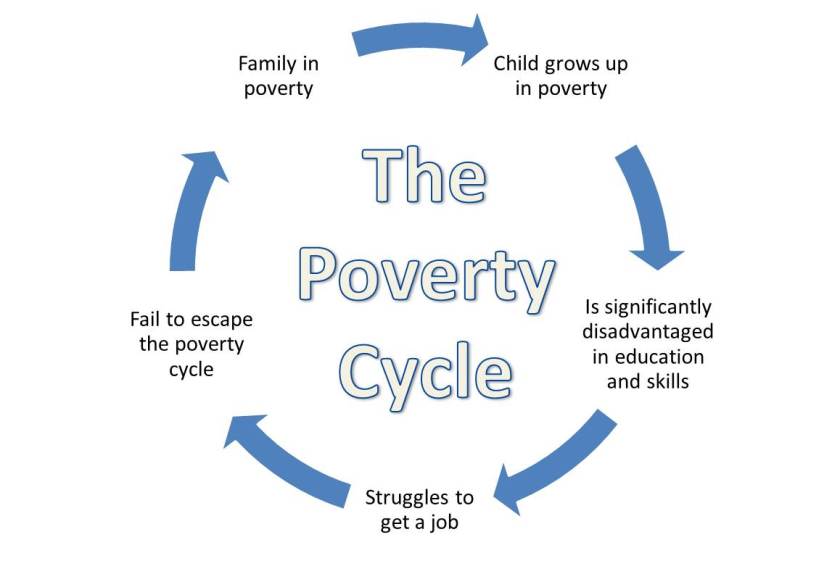
The War on Drugs and 3 strikes neglect the reality of living in poor neighborhoods.  Poor neighborhoods resort to drug use and sale because it is the only job available, or often the only way of escaping the reality of being trapped in a circle of despair.  

When a person is convicted of a violent crime, manufacture or sale of drugs, or minor drug charges, they are marked for life. 

Job applications ask if they have ever been convicted of a crime. If the answer is yes, most are left with poor prospects for employment or advancement.  No effort is made to rehabilitate but only to isolate. Once a criminal, always a criminal.

America chooses not to spend money to educate the young in poor school districts.  America chooses to ignore the circumstances of drug addiction or the need for medical treatment.  Crime is a zero-sum game with no treatment for the psychologically disturbed. Little investment is made in rehabilitation or re-introduction into society for the first-time offender.  

The drug laws and “3 strikes law” dis-proportionally fall on the poor and black as evidenced by America’s prison population.  Alexander argues the real effect of these laws is the same as the historic Jim Crow laws.  They segregate minorities from the dominate American culture.

Alexander’s book is difficult for some to read because it denies the universality of the American Dream.  What is forgotten is how much the luck of race and circumstance play in everyone’s life.  Equally forgotten is the good for those in power is not always good for those without power. 

Dubois and Alexander have something in common.  Minds must be kept open to the truth.  Empathy is needed by both those in power and those without power.  Trust must come from both sides of any power structure. 

No singularly elected person or autocrat will unwind history’s discrimination. Respect for difference and rule of law are the best one can expect. With respect and rule of law, equal opportunity is possible.

Police who brutalize the poor are as guilty of crime as the poor who victimize the rich.  Each needs to put themselves in the other’s shoes to understand their own closed mindedness. 

With better understanding of ourselves and others, more will be done to constructively address public policy failures.  The alternative is increased cultural deterioration, discontent, and violence.  

MORAL FRAGILITY

Audio-book Review
By Chet Yarbrough

(Blog:awalkingdelight)
Website: chetyarbrough.blog

The Age of Innocence

By: Edith Wharton

Narrated by Lorna Raver

Edith Wharton (American novelist, playwright, and designer, Pulitzer Prize winner, 1862-1937.)

Wharton’s “The Age of Innocence” exposes false notions of equality of the sexes in America and reflects on the human frailty and strength of men and women.

Edith Wharton lived through the turn of the 19th and 20th century in America.  She lived an adult life of luxury in New York, and later in France. 

Wharton writes about American society; i.e. she exposes New York’s “upstairs, downstairs” snobbery in the early 20th century.


Newland Archer is engaged to be married to May Welland when a childhood friend comes to visit relatives in New York.

In telling the tale, Wharton sharply defines the battle of the sexes, duplicity of romance, and folly of youth.  Though writing of a sliver of wealthy American’ society in the early 20th century, Wharton’s story rings as true about men and women today as it did when she won the Pulitzer Prize.

The battle of the sexes is repeated today in the Gates’ divorce. Their wealth and notoriety make them news. News that is invisibly repeated in many American households.

This is Wharton’s story, maybe a fiction, but as true to life yesterday as it is today. A childhood friend is Ellen Olenska, a 30-year-old married countess that left New York in her youth.  Newland begins to question his love for May Welland.  His reasons for questioning are not clear to himself.  Wharton infers the reasons are idealized romance and lust.

Archer idealizes Olenska.  His idealization comes from unrequited lust.  Olenska is a married woman.  She is not available.

Archer knows his soon-to-be wife, May, is committed to him and takes her for granted.  Archer’s lust for Olenska conflicts with Archer’s morals. The nature of unrequited lust is that the thought or idea of sex is perfect.  In Archer’s mind, Olenska becomes an objectified sex object (a perfect fantasy), and May will never be good enough.  Archer is psychologically prepared to abandon May and pursue a “perfect” relationship with Olenska.

Olenska, in one respect, is Archer’s alter-ego.  She views Archer as a perfect companion because Archer is not available.  Archer is committed to another woman.  Olenska lusts for Archer but with better insight to the truth.  Her life experience tells her to resist infatuation.  She knows that once lust is satisfied, social reality returns.

Archer views May as a complacent woman that will make a boring wife.  In contrast, Wharton shows May to be a perceptive woman that understands Archer’s and Olenska’s relationship.  May correctly diagnoses Archer’s false idealization and subtlety maneuvers Archer to quash the burgeoning affair with Olenska.

In the end, Wharton shows Archer to be morally shallow.  Archer chooses to keep his innocent memory; i.e. his deluded vision of romance, commitment, and love.

Governor of New York–Andrew Cuomo

Cuomo reflects much of what Edith Wharton illustrates in “The Age of Innocents”. Power and inequality distorts the relationship between men and women today, just as it did in the early 20th century.

May and Olenska are shown to understand the difference between lust and romance; commitment, and love.  Archer never does.  Archer never gets over “The Age of Innocence”.

CHAUCER-AHEAD OF TIME

Audio-book Review
By Chet Yarbrough

(Blog:awalkingdelight)
Website: chetyarbrough.blog

The Modern Scholar: Bard of the Middle Ages: The Works of Geoffrey Chaucer

By: Michael Drout

Lectures by Michael Drout

Michael Drout (Professor of English and Director of the Center for the Study of the Medieval at Wheaton College).

Geoffrey Chaucer (1343-1400, author, poet, philosopher, bureaucrat, diplomat).

Geoffrey Chaucer is a master of ambiguity.  Michael Drout, in the Modern Scholar series, offers an informative and laudatory appreciation of Chaucer as the Bard of the Middle Ages.  Drout notes that Chaucer’s view of life is best revealed in The Canterbury Tales.

Drout offers high praise for Chaucer, suggesting The Canterbury Tales seeds centuries of fictional narratives; in part because of Chaucer’s prescient understanding of human nature but also because of life’s ambiguous truths.  Drout considers Chaucer equal to William Shakespeare, widely believed the greatest poet and playwright of all time.

Drout gives a brief narrative about what is known of Chaucer’s life.  Chaucer mingles with all classes of society.  From an upper middle-class upbringing as the son of a wine merchant, Chaucer bridges lower and upper-class English life. 

Chaucer went to war for England in France.  He was captured but freed with the payment of ransom because of his family’s royal connections.  Through marriage and familiarity, Chaucer begins a career in the English court. 

Hundred Years War between England and France (1336-1453).

Clockwise, from top left: The Battle of La Rochelle,
The Battle of Agincourt,
The Battle of Patay,
Joan of Arc at the Siege of Orléans

Though Drout touches on other Chaucer works, particularly Troilus and Cressida, Drout’s primary focus is on The Canterbury Tales.

Drout explains that Chaucer’s wide social experience, and ability to charm the upper class appeals to the general public. It affords him income as an appointed representative of the government.  He works as a diplomat, and later Justice of the Peace.  His positions allow him time to observe and write about English life.  The culmination of Chaucer’s observations about life is in The Canterbury Tales. 

In reviewing The Canterbury Tales, Drout notes how Chaucer cleverly conceals his opinions by distancing himself from the characters he creates. One can look at the tales and see an underlying criticism of the church, support for women’s rights, seeds of class conflict, and nascent relativism.

Chaucer was ahead of his time.


One clearly sees how Chaucer must have been an extraordinary diplomat.  All of these tales suggest seditious acts; each in opposition to the culture of Chaucer’s time.  If not presented in the entertaining and ambiguous guise of The Canterbury Tales, Chaucer may have been ridiculed rather than lauded.

Take heart Dave Chappelle.

Poets Corner in Westminster Abby.

Geoffrey Chaucer is buried in the south transept (or south cross) of Westminster Abbey, now known as Poets’ Corner.

Though Drout does not suggest Chaucer endorses cultural’ transgressions, it appears Chaucer is ambiguous about his character’s opinions.  Drout suggests Chaucer may have been repentant in The Parson’s Tale (the last of the Canterbury Tales that endorses the religion of Chaucer’s era) because he is nearing the end of his life.  In any case, it is clear that Chaucer is ahead of his time; earned his place in West Minster Abbey (the first poet to be buried there), and deserved his reputation as the Father of English Literature.

BLACK FACE

Audio-book Review
By Chet Yarbrough

(Blog:awalkingdelight)
Website: chetyarbrough.blog

Uncle Tom’s Cabin 


By Harriet Beecher Stowe

Narrated by Richard Allen

The meaning of words changes with the generations.  An “Uncle Tom” became a pejorative description of any oppressed minority that accepts slavery and maltreatment as a God given burden, a condition of natural life.  (See “Freedom and Equality”.)

The rise of black face minstrels and college party jokers carry through to the 20th century. The “Uncle Tom…” in Harry Beecher’s book is no minstrel and no joke.

In the context of the 20th and 21st centuries Beecher’s book is taken out of context.

“Uncle Tom’s Cabin” is written in an era, brutally described by Frederick Douglas (see “Frederick Douglas”), when human beings are traded as futures commodities. Douglas, a great American black leader, who personally knew Stowe, praises her for writing this book.

In the 18th and 19th centuries, the slave trade lines the pockets of slave traders, plantation owners, and industrialists.  Black degradation is reinforced by laws of the land; i.e. slave owners could shackle, whip, sell, rape, and murder slaves with little censure and no penalty. In that context, Harriet Beecher Stowe’s “Uncle Tom…” is a Black Saint.

This is not only a book about slavery; i.e. it is a book about humankind and how abominably one ethnic group can treat another. It is a story told many times in history and in the present day.

The apocryphal story of Abraham Lincoln having said “So this is the little lady who started this great war” is undoubtedly un-true, but for the 1850’s, “Uncle Tom’s Cabin” is a revolutionary book used to fuel the abolitionist cause in America and around the world. 

The role of religion has a mixed history in the story of slavery.  Religion plays roles in advancing and abolishing slavery.  Religion serves as a refuge for slaves by preaching the gospel of forgiveness and an afterlife while many Catholic and protestant religions promote slavery as a biblical right of the white race.

The irony of religion’s followers is that it mollifies Black resistance for those who believe in a Divine Creator. At the same time, biblical writings are used by white supremacists to justify unequal treatment. 

Some religions rose above religion’s ugly endorsement of slavery; most did not.  Quakers in the 1850s fought slavery in the United States, as is shown in Stowe’s story. Some Quaker households became a refuge for runaway slaves.

At bottom, Stowe shows commerce and greed are pillars of slavery.  The farmers, businesses, and industrialists that strove to improve their bottom line directly or indirectly abetted slavery, just as the temptation of cheap labor in China and India seduce today’s American entrepreneurs and consumers. 

More broadly, one realizes human nature is good and evil.  Most members of society succumb to temptation in life.  No human is purely good or evil but a mixture. Human nature blurs the line between right and wrong because every human is tempted by money, power, and/or prestige.

“Uncle Tom’s Cabin” is as relevant today as it was in the 1850s.

PRISON REFORM

Audio-book Review
By Chet Yarbrough
(Blog:awalkingdelight)
Website: chetyarbrough.blog

Newjack: Guarding Sing Sing


By Ted Conover
Narrated by Ted Conover

TED CONOVER (AUTHOR, JOURNALIST)

On December 18, 2018, Congress approved a prison reform bill which is signed by President Trump. In this bill, Congress takes a first step in turning prisons into institutions of reform rather than isolation and punishment. The bill’s purported intention is to return prisoners to productive society by 1) improving prisoner treatment, 2) treating the drug addicted, 3) monitoring those put on probation to reduce recidivism, and 4) improving pretrial services for the arrested.

Clanging prison doors and simmering discontent are evident in Ted Conover’s book but it is not a polemic for prison reform.

Conover surreptitiously becomes a Corrections Officer at a storied New York prison called Sing Sing (30 miles north of NYC).  He enters a seven week boot camp and four week “On-Job-Training” program to become a C.O. for one year, including his 11 week training period.

Conover exposes many dysfunctions that are inherent in a system that isolates human beings from society. The American prison systems’ principle function is to punish the convicted with confinement. Criminals are then released into society based on time served.  What Conover’s experience shows is that Corrections Officers are as likely to be changed by their roles as gate keepers as prisoners are by their confinement.   

Both C.O. and prisoner roles increase human frustration.  Corrections Officers, by training and experience, become martinets that focus on control of human nature, their own and the prisoners.  COs are directed to control their emotions regardless of verbal abuse they hear from internees.  Prisoners are treated like herd animals to be corralled, fed, and released at a master’s discretion.  

A Correction Officer enforces rules, written and unwritten, and prisoners break rules. Both factions vie for respect.  It becomes a “zero-sum” game with marginalized losers and short lived winners.  The losers are prisoners and the winners are COs.   

Rules become symbols of authority and control rather than guidelines for human reform.  Conover gives the example of a rule that says a Correction Officer, under no circumstance, is to assist a prisoner with his duties.  When a prisoner is told to carry a bundle of laundry that is too big for him to carry, the CO is not to assist him because it violates a code of conduct that might compromise security.  Offering help may engender friendship which may lead to collusion, corruption, and/or escape.  Cognitive dissonance causes some COs to question their humanity.  Outside of prison, man is encouraged to help his fellow man; inside prison, it is a sign of forbidden vulnerability.

Prisoners are being taught to believe that helping one’s fellow man is not a societal benefit. Prisons do not reform prisoners; i.e. prisons warehouse human beings and return most of them to society after time served.

MEN

Audio-book Review
By Chet Yarbrough

(Blog:awalkingdelight)
Website: chetyarbrough.blog

The Sports Writer
By Richard Ford
Narrated by Richard Poe

JOHN FORD (AMERICAN AUTHOR)

Selecting books from book lists like Random House’s Modern Library is not a full proof method for making good choices.  The decision to listen to Richard Ford's “The Sportswriter” came from one of those lists.  "The Sportswriter" deserves its place on the list because it offers societal insight.
The initial impression of "The Sportswriter" is that it is a story about wandering through life.  But as it progresses, the listener begins to realize that Richard Ford is writing about men and how some view life.
The main character is a guy's guy because he has the ability to charm women into thinking he is the man of their dreams.  He does not convince every woman of his commitment and interest but he manages to touch all the bases before he is called out.     
This is not a story that makes one proud to be a man but it offers insight to why the cliché "men are from Mars" has some truth. Ford's main character is a guy's guy named Frank Bascombe.  He is a traveling sports writer and a divorcée of his own making, a fool that fails to understand what is important in life.  After his marriage break up, he is cast adrift to find the next best thing which never turns into anything important.
Relationships for Bascombe become momentary escapes from real life, real life where good and bad things happen.  Real life for Bascombe is romance and break up without commitment.  What he does not understand is commitment helps humans work through the bad things in life to get to the next good.  Women seem to understand that better than men.  Women may wonder why men think seduction skill is the key to paradise.  Some would say it is 3000 years of genetic inheritance and experience.  Of course, that is a Martian's perception of reality.
The irony of a guy's guy skill to seduce is that it leads to a lonely and empty life. David Riesman characterized this phenomena as people becoming "other directed" rather than "inner directed"; i.e. looking to society to determine who you are; rather than looking within oneself. 
 
In Ford's story, “The Sportswriter”, Bascombe drifts through life from relationship to relationship to nowhere.  He never comes to grips with what is wrong with his life.  He drifts to Retirementville, Florida to think about the next best thing.  That is how the story ends.  It is a rather depressing exploration of how vacuous life can be.
This is a book that gives a concrete explanation of what some men are looking for in life.
When listening to The Sportswriter, you may find someone you know; hopefully not you.

A MORE PERFECT UNION

Audio-book Review
By Chet Yarbrough

(Blog:awalkingdelight)
Website: chetyarbrough.blog

A People’s History of the United States

Written by: Howard Zinn

Narrated by:  Jeff Zinn

Howard Zinn (American Historian, Author) November 19, 2009. Photo By: Rob Kim/Everett Collection

The pitfall of history is subjectivity.  Howard Zinn offers a coda for history’s myopia.  Harry Truman is alleged to have said “There is nothing new in the world except the history you do not know”.  Zinn shows how little Americans know about America’s failure to create a “…more perfect union” (a name given to a speech delivered by Senator Barack Obama on March 18, 2008).

No American institution is untarnished by Zinn’s rumination.  Zinn challenges every aspect of American culture.  The malpractice of American businesses, politicians, and society are exposed by Zinn.  Neither Republicans, Democrats, or other party affiliates, escape responsibility for America’s abhorrent actions. 

Unadorned historical facts show Indians indiscriminately isolated and murdered, Blacks treated as property and hung, immigrants vilified for being different, wars being waged on the innocent, women being treated unequally, and greed being praised as virtue–all in the face of professed American freedom and equality.
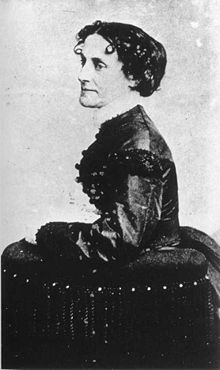
Zinn implies all Presidents; including Lincoln, Roosevelt, Truman, Carter, Reagan, Clinton, the Bushes, and Obama buy into an economic principle that the business of America is business.  (He certainly could have included President Trump.) 

With few exceptions, Zinn argues every President tacitly or overtly supports corporate America.  The only Presidential exception Zinn notes is Eisenhower’s expressed concern about the military/industrial complex and its penchant for distorting American values.

Zinn recounts Andrew Jackson’s isolation and murder of Indians, Lincoln’s willingness to preserve the union at the cost of slavery, Andrew Johnson’s southern sympathies, Roosevelt’s incarceration of American Japanese, Harry Truman’s decision to nuke Nagasaki and Hiroshima, Carter’s support for Iran’s military dictatorship, Reagan’s expansion of the military/industrial complex, Clinton’s cuts in taxes and welfare, the Bushes’ wars, and Obama’s rescue of the banking industry. 

Zinn argues—both Republican and Democratic presidents endorse corporate control of America at the expense of citizen values written into the Constitution. 

From discrimination against minorities to unequal pay for women, America has failed to follow the ideals of the Constitution of the United States.

Zinn implies there is never a justification for war; presumably even in the case of WWII. 

Some Americans would agree that Vietnam, Korea, Iraq, Syria, and Afghanistan wars were and are a waste of human lives. 

This is a hard argument to dispute when seen in the context of a burgeoning gap between rich and poor, and man’s inhumanity to man.  One might argue as some historians do, sovereignty of a country is an inalienable right, even when it is ignored or used as an excuse for war.

Zinn argues there is no moral or ethical justification for political repression, murder, slavery, sexual or racial discrimination.  (That begs the question of a war’s justification in light of Nazi Germany’s intent to exterminate all Jews.)

But, Zinn argues the right of sovereign nations to choose their own government.  Genocide is a potential consequence of such a hard rule when a minority only has a right to resist and/or revolt. That is in the news today in regard to Myanmar and the Rohingya.

Suu Kyi Defends Myanmar from the accusation of genocide.

What nation (based on its own cultural belief) has the right to invade another country that chooses to victimize its own citizens.

Zinn is not suggesting countries should become isolationists. He argues that to the extent that humanitarian relief may be offered by an outside country, it should be offered.  Relief would not include transfer of weapons of war, but aid in goods and services meant to sustain life.  Outside military intervention in a sovereign country seems destined only to lead to more loss of innocent life.

Taking Zinn’s observations to heart suggests there is no justification for war or violence against our fellow man.  However, human nature is what it is.  Humans choose what they choose; often out of the instinctual desire for money, power, and prestige, rather than any common good.  Individual cultures are based on memes of the country in which they were born. 

Invasion of a sovereign country is a slippery slope that only leads to more death and destruction.  However, Zinn’s review of history seems to deny all reasons for war. There seem two modern exceptions to Zinn’s argument.

Nazi Concentration Camp WWII

WWII and the way H. W. Bush handled the invasion of Kuwait.  These two exceptions are clearly related to one country’s violation of another’s sovereignty. In both cases, America’s Presidents enlisted cooperation from other countries, before taking any military action.

It is a dangerous world, but the danger is in human beings and their quest for personal gain; i.e. their greed for money, power, and prestige.  America needs to look at itself and its reliance on corporate excess.  The gap between rich and poor must be addressed in all nations; not the least of which, the United States.  Zinn reminds America of how flawed we are in “A People’s History of the United States”.

FREEDOM AND EQUALITY

Like Malcolm Little (aka Malcolm X), Martin Luther King, and Barrack Obama, Douglass faces down poverty and demonstrates the equality of all human beings.

Audio-book Review
By Chet Yarbrough
(Blog:awalkingdelight)
Website: chetyarbrough.blog

Fredrick Douglass

Narrated by: Prentice Onayemi

Written by: David W. Blight

DAVID BLIGHT (AUTHOR, PROFESSOR OF AMERICAN HISTORY)

DAVID BLIGHT (AUTHOR, PROFESSOR OF AMERICAN HISTORY)

David Blight offers a nuanced biography of Frederick Douglass, a great 19th century American leader. Blight shows Douglass to rival the intelligence and charisma of the best known 20th and 21st century black Americans. Like Malcolm Little (aka Malcolm X), Martin Luther King, and Barrack Obama, Douglass faces down poverty and demonstrates the equality of all human beings. Malcolm Little, King, and Obama never face the lash of slavery, but Blight shows how Douglass pushes aside physical and cultural cruelty to demand freedom and equality of all.

JOHN BROWN (AMERICAN ABOLITIONIST 1800-1859)

JOHN BROWN (AMERICAN ABOLITIONIST 1800-1859) Brown is neither lionized or vindicated by Blight but is shown as a turning point in Douglass’s life; a turning from moral suasion to action by people of color against slavery.

Ethan Hawke as John Brown.

Though shown to begin in peace, Blight shows how Douglass grows to understand peace will not come from words alone but must come from action. Douglass came to revere the anti-slavery violence of John Brown. Courageously, Douglass attacks the institution of slavery before, during, and after the American Civil War. Douglass becomes the conscience of white and black America.

ABRAHAM LINCOLN (1809-1865, 16TH PRESIDENT OF THE UNITED STATES. )

Blight explains how Douglass came to revere Abraham Lincoln; not in Lincoln’s beginnings, but in Lincoln’s life of struggle for the true meaning of the American Constitution.

After Lincoln’s assassination, Douglass is shown to decry President Johnson’s abandonment of reconstruction in the south. Douglass offers unstinting support for Ulysses Grant’s election because of his commitment to the abolitionist cause.

Blight shows Douglass, like all human beings, is imperfect. He has blind spots when speaking of freedom and equality. Douglass discounts America’s decimation of native Americans and denial of women’s rights by arguing neither compares to slavery, subjugation, and murder of blacks.
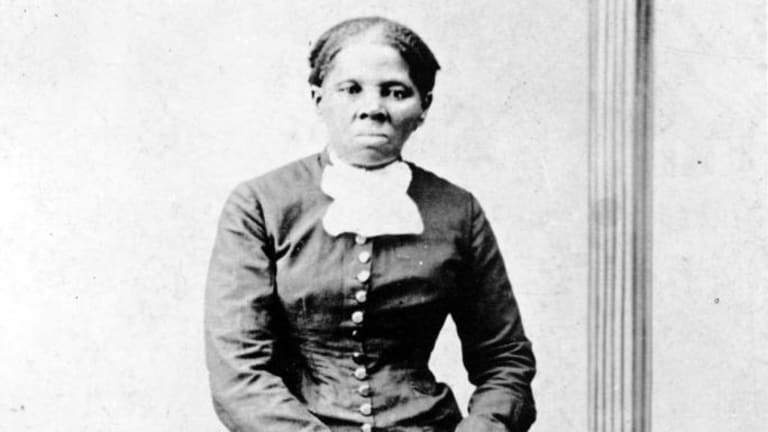
The irony of Douglass’s imperfect argument is in native Americans who are murdered and restricted to reservations that are indiscriminately encroached upon by free and enfranchised Americans.

TRAIL OF TEARS

Indian families are regularly isolated, displaced, and murdered at the whim of white men in power.

In women’s rights, Douglass discounts the same inequality trap that captures black Americans; i.e. the disenfranchisement trap. Women have no power. Women without power, just as any separated classification of humanity, are looked at as less equal by some measure. How many women are treated by men as property in the history of civilization? How many women are abused, and/or raped by men without consequence? How many women are unable to find work or are not paid the same wage for the same job? The bible is one of many records of discrimination faced by women.

FAMOUS WOMEN IN HISTORY

FAMOUS WOMEN IN HISTORY (History, as well as this pictorial, shows many women are as intellectually strong and mentally tough as men; e.g.  Cleopatra, Sojourner Truth, Indira Gandhi, Golda Meir, Benazir Bhutto, Malala Yousafzai, and others.)

Blight fairly describes Douglass’s blind spots while clearly identifying his remarkable insight and intelligence. Douglass’s many speaking engagements, published books, and newspaper articles graphically and forthrightly explain the plight of black Americans in the 19th century. Blight explains how Douglass manages to survive slavery, educate himself, forgive (but not forget) his oppressors, and become one of the greatest Americans of his time.

BLACK SLAVES LYNCHED IN AMERICA

SLAVES LYNCHED IN 19TH CENTURY AMERICA

It is sad to know so many of Douglass’s observations remain true in the 21st century. Much of white America still fears the rise of black freedom and equality. “All men are created equal…” is preached but remains un-practiced in today’s America.


RODNEY KING (APPEARANCE 3 DAYS AFTER BEATING 3.6.92--KING DIES IN JUNE 2012 @ 47 YEARS OF AGE)

RODNEY KING (APPEARANCE 3 DAYS AFTER CAR-CHASE BEATING 3.6.92–KING DIES IN JUNE 2012 @ 47 YEARS OF AGE

The lessons of history show that people are not to be feared; they are to be offered equal opportunity to become all they can be. By nature, human beings are equally free and capable of being incredibly good and disastrously evil. It is the purpose of government to protect the rights of each from the other when evil takes hold of the governed. A moral life requires equal treatment of all. That is the essence of what Blight is writing about in the story of Frederick Douglass’s life.