HAPPY,HEALTHY,OR DEAD

Breaking the genetic code becomes a matter of human volition rather than nature’s decree. In whose hands will humans choose to be?

Audio-book Review
 By Chet Yarbrough

Blog: awalkingdelight)
 Website: chetyarbrough.blog

The Code Breaker

By: Walter Isaacson

Narrated by: Kathe Mazur, Walter Isaacson

Walter Isaacson (American author, journalist, and professor.)

Walter Isaacson is an interesting and thorough historian as shown in his biographies of Steve Jobs and Leonardo DaVinci. “The Code Breaker” is a history of the human genetic code’s discovery and its societal importance. The stories of Francis Crick, and James Watson are fairly well known because of their discovery of the structure of DNA. They received the Nobel Prize for their discovery in 1962. Less well known are Rosalind Franklin, and Maurice Wilkins.

There are three avenues of knowledge in the book’s title “The Code Breaker”. One is the brief bios of the human genetic code breakers, two, the monumental risk in genetic code’s discovery and three, the potential reward of its discovery.

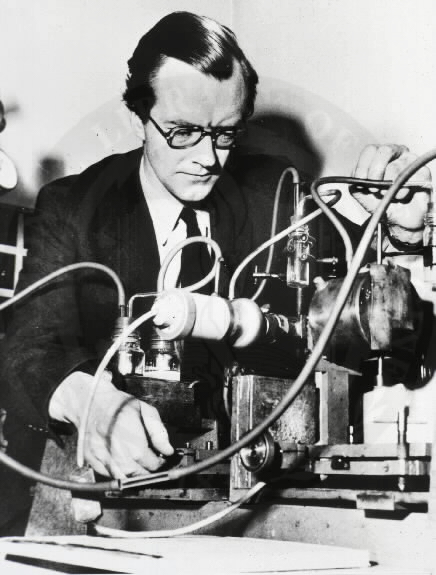
Maurice Wilkins (1916-2004)

In the late ’40s and early ’50s, as a biophysicist, Maurice Wilkins did diffraction studies of DNA.

Isaacson suggests Wilkins’ studies aided Crick’s and Watson’s discovery of DNA’s structure in 1953. However, Crick and Watson were at a standstill and may never have discovered the structure of DNA if Rosalind Franklin had not introduced X-ray crystallography to their search. Isaacson implies Franklin would have received the Nobel Prize for DNA’s structure but she died at age 37 in 1958. Isaacson notes the Nobel is not given posthumously. (That is not quite true because the Nobel Prize had been awarded posthumously, twice, i.e., once for literature and once for physiology. One wonders if inequality may not have had something to do with the Nobel decision. Isaacson notes Ms. Franklin was somewhat prickly in her relationship with others, not that it would be a reason for Franklin’s lack of Nobel recognition.)

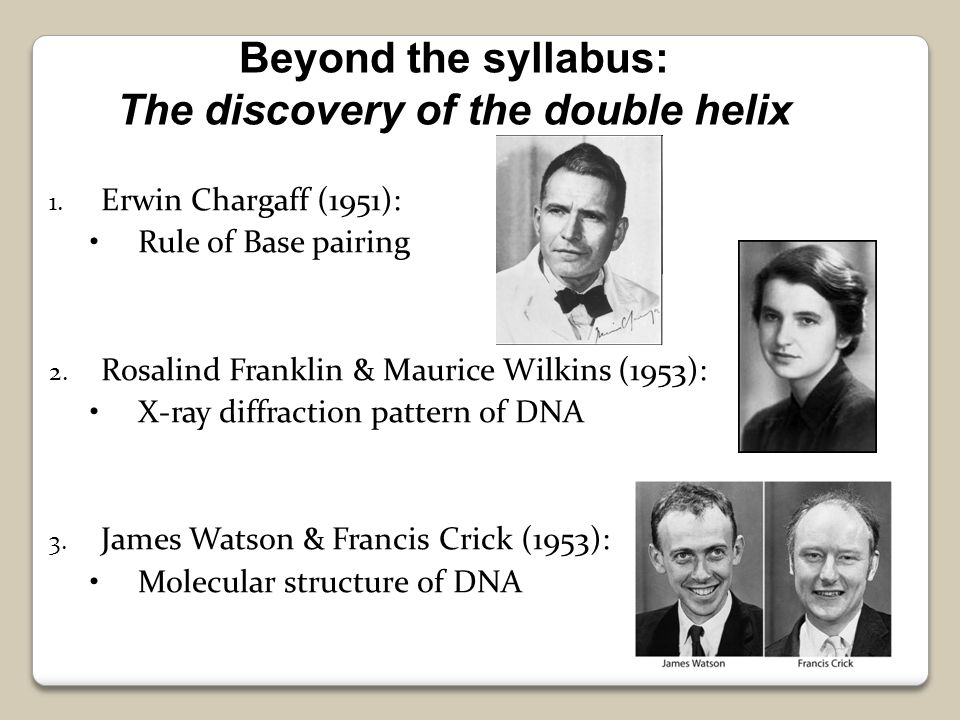
Beyond the syllabus: The discovery of the double helix. Erwin Chargaff (1951): Rule of Base pairing. Rosalind Franklin & Maurice Wilkins (1953): X-ray diffraction pattern of DNA. James Watson & Francis Crick (1953): Molecular structure of DNA.

After discovery of the structure of DNA, the next great advance in science is made by a Spanish microbiologist, Francisco Mojica. Mojica discovers what becomes known as CRISPR in 1993. CRISPR is an acronym for “clustered regularly interspaced short palindromic repeats”. It is the arrangement of the genetic code letters in the structure of DNA that can be read forward and backward. It is a written code for the description of a single gene.

Isaacson introduces Jennifer Doudna and Emmanuelle Charpentier to his biographic history of DNA. They are co-discoverers of what becomes known as CRISPR-Cas9. This is a gene editing tool discovered by Doudna’s team of scientists that could find anomalies in a gene’s genetic code and, with the aid of a virus, implant a revised code or modify a gene that causes harm to its host. That discovery opens a door to human control of genetic code. In principle, CRISPR-Cas9 takes the place of nature’s random selection of who or what a living thing becomes. It is a tool that can change the course of life for all living things; more particularly the lives of human beings who suffer from diagnosed diseases or illnesses.

Doudna and her scientific team’s work is with prokaryotic cells rather than eukaryotic cells.
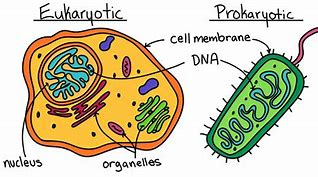
Eukaryotic cells have a nucleus with genetic material while prokaryotic cells have no nucleus with free floating genetic material. Humans have many prokaryotes but they are not enclosed within a nucleus. That leaves a door open to other scientists to claim precedent over Doudna’s pioneering work on the genetic code.

Feng Zhang (Chinese American biochemist.)

Zhang opens the door to eukaryotic cell modification with CRISPR-Cas9 which suggests he becomes the discover of human genetic code breaking before Doudna.

Doudna takes Zhang to court over a patent issue on CRISPR-Cas9 and eventually wins the patent right for genetic code breaking and its medical potential. There are a number of other scientists involved in Isaacson’s book but Doudna, Charpentier, and Zhang seem most consequential for understanding the significance of genetic code breaking.

CRISPR-Cas 9’s discovery and use gives science a tool for human’ control of evolution rather than Darwinian natural selection’s control .
The remainder of Isaacson’s history is an exploration of the good and bad potential of that discovery for the human race. Without doubt, the world’s recovery from Covid19 is due to CRISPR Cas9’s use in finding a vaccine for the pandemic. On the other hand, Cas9 opens the door to indiscriminate gene modification.

This brings up the story of Jiankui He who modified the genetic code of one of the twins of a Chinese family whose husband had AIDs.

Jiankui’s medical intervention violated Chinese law and ethics rules set by the Academic Committee of the Department of Biology. At the same time, it was found that Jiankui botched the use of the CRISPR Cas9 tool. He was sentenced to three years in prison and the equivalent of a $430,000 fine.

James Watson is now in his 90s.

The last chapters of Isaacson’s book address the controversial comments of James Watson about race and intelligence and his fall from grace despite being co-discoverer of the structure of DNA.
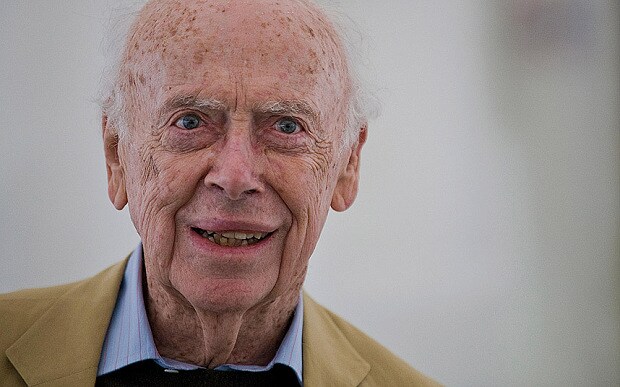
At a visit by Isaacson and Doudna to Watson’s home when he is 90, one cannot forget nor forgive Watson’s blind spot about race but understand his unshakable belief in the value human modification of genes to cure disease and his admittedly controversial ideas of enhancing human looks and intelligence.

Is behavioral hope a genetically identifiable characteristic by CRISPR-Cas9? Is it possible to modify human genes to create a more empathetic world? Or is gene manipulation a Mary Shelley nightmare with societies’ death like Dr. Frankenstein’s monster that dies from sorrow and guilt from the death of its creator?

The final significant note of “The Code Breaker” is Doudna’s and Emmanuelle Charpentier’s receipt of Nobel Prizes in 2020 for their discovery of CRISPR-Cas 9. By the end of “The Code Breaker”, a listener understands how the human race may become happy, healthy, or dead with control of the genetic code. Breaking the genetic code becomes a matter of human volition rather than nature’s decree. In whose hands will humans choose to be?

BEHAVIORAL HOPE

Audio-book Review
 By Chet Yarbrough

Blog: awalkingdelight)
 Website: chetyarbrough.blog

Of Fear and Strangers (A History of Xenophobia)

By: George Makari

Narrated by: Paul Heitsch

George Jack Makari (American author, psychiatrist and historian, professor at Weill Cornell Medical College.)

George Makari notes his family emigrated from Lebanon to the United States when he was a young boy. This is an interesting note because of the diverse cosmopolitan history of Lebanon that reaches back more than 5,000 years. Lebanon is a country of many cultural, religious, and ethnic groups including Arabs & Syriac, Armenians, Kurds, Turks, and others.

Makari’s education and family background are well-suited for his explanation and history of the psychology of race and ethnicity. For Beirut to have become a cultural center for a period of time must have required high tolerance for difference among its residents.

Beirut got the name “Paris of the Middle East” following WWII when it became a vibrant cultural and intellectual center, largely influenced by the French.

Makari notes WWII’s end and implies society’s relief ameliorated conflict between Lebanon’s disparate cultures. However, that relief falls away in the 1970’s Lebanese civil war.

Beirut, Lebanon’s capitol, is a city some 40 miles from Makari’s hometown. It became a graveyard and failed state after the Lebanese civil war.

As Franklin Delano Roosevelt said in his 1933 inauguration, “The only thing we have to fear is fear itself.” Roosevelt is, of course, referring to fear felt by Americans during the Great Depression.

In “Of Fear and Strangers”, Makari suggests fear is at the heart of race and ethnic discrimination. Undoubtedly, the end of WWII reduced fear in the people of Lebanon. Reduction in fear might be the motivation for Beirut’s acceptance of cultural diversity, peace, and prosperity between 1945 and the 70s.

As a psychiatrist and historian, Makari offers a theory of how and why people become xenophobic.

He suggests it begins early in life. Makari argues the rise of Hitler and the horrid reality of the Holocaust lay at the feet of an authoritarian culture that suppressed freedom, demanded conformity, and used vilification of the “other” to reinforce a false belief in superiority.

Makari explains discrimination is largely based on fear of those who are different from us, i.e., us being anyone of a different race or ethnicity.

Makari’s history is about xenophobia, i.e., the fear or hatred of people who are different. The definition of xenophobia is first noted in 1880 with the combination of two ancient Greek words, i.e., “Xenos” meaning stranger and “Phobos” meaning fight or fear.

Makari argues the key to ameliorate fear of strangers or the “other” lies in the way parents raise their children.

Realigning fear of the stranger will not change the past and seems unlikely to change the future. However, Makari argues the key to ameliorate fear of strangers or the “other” lies in the way parents raise their children. He argues parenting that is less authoritarian and more open and nurturing will fundamentally change society to be more empathetic. Makari persuasively argues the rise of Hitler is partially related to German culture and the relationship between parents and their offspring. He suggests only with childhood experience of freedom will equal rights and equal opportunities be realized by society.

Makari suggests that family dynamic before WWII created German psychological projections for distrust of “others” and displacement that exhibits itself as anger and sometimes rage.

Makari suggests German family’ dynamics are culturally stricter and more demanding than those of many countries. He implies relationship change between parents and children would create a more empathetic generation in Germany.

Makari’s theory goes beyond individual psychological projection (an ego defense mechanism against unconscious impulses) by explaining how group psychology works to heighten rage against the “other”. Displacement (a redirection of a negative emotion) takes the form of rage against the “other”. Makari argues distrust of the “other” and rage is magnified by group hysteria. That hysteria is exhibited by Hitler’s followers. German rage led to the genocidal murder of Jews. Makari suggests one who is empathetic no longer fears the stranger and welcomes others as fellow humans–living lives, both different and the same as themselves. There is no motivation for displacement rage among those who are empathetic.

(Before this book was published, America experienced group rage in the January 6, 2021 attack on the capitol.)

The last chapters of Makari’s history of xenophobia explain how psychiatric and philosophical theories of mostly men (like Kraepelin, Freud, Adorno, Marx, Locke, Sartre, Camus, Foucault, and Simone de Beauvoir) provide a basis for his beliefs about histories’ recurrence of xenophobia.

Humanity will never become egalitarian without a common purpose.

What is ironic about Makari’s theory of the history of xenophobia is that it offers hope for the future. The experience of Lebanon after WWII suggests global warming, like WWII, may give common purpose to many, if not all, peoples of the world. (An exception would be those nations that insist on adherence to myths of hegemonic power and religious zealotry.)

According to Kamari’s theory, it begins with parenting. If he is right, change will begin with how future generations are raised. Might does not make right. Less authoritarianism will allow the world to more constructively address global warming’s world-wide risk.

Of course, this book was written before Russia invaded Ukraine. Kamari notes the rise of Trump, and his supporters implies group rage and xenophobia remain a clear and present danger in America.

In listening/reading Kamari’s book, one chooses to either be a pessimist or optimist about our world’s future.

The hope is that an interregnum (a gap in government and social order) is created to allow Makari’s theory of improving parental care of children is implemented. If Makari is right about how parents should raise their children, a more empathetic society may emerge to proffer a more egalitarian society. On the other hand, humanity may continue down the road of self-destruction, fueled by unregulated self-interest and diminishing human empathy.

HUMANITY’S TRIAL

Audio-book Review
 By Chet Yarbrough

Blog: awalkingdelight)
 Website: chetyarbrough.blog

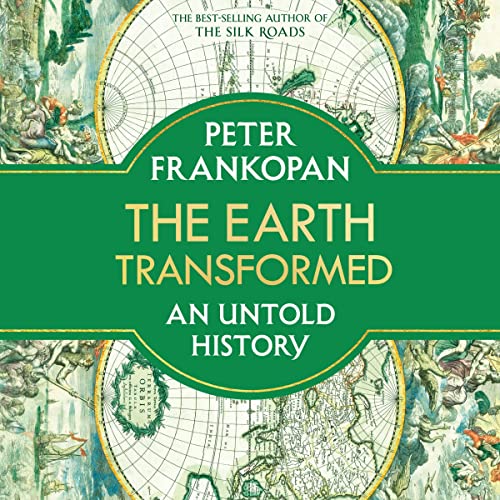
The Earth Transformed: An Untold History

By: Peter Frankopan

Narrated by: Peter Frankopan

Peter Frankopan, (Author, Professor of Global History at Oxford University, Director of the Oxford Centre for Byzantine Research.)

Peter Frankopan journeys from pre-history to the present to offer perspective on the earth’s global warming crisis. He reviews what is either speculated or known of disastrous world events. Frankopan recalls histories of major volcanic eruptions, earthquakes, tsunamis, droughts, famines, pandemics, and epidemics that have changed the course of history.

In the beginning, one thinks Frankopan is setting up a rationalization to argue global warming is just another world changing crisis that will be managed by humanity.

However, Frankopan is explaining the history of world crises and how humanity dealt with its eternal recurrence. In broad outline, he suggests world crises are dealt with in two ways, i.e., one, with religion or mysticism, and/or two, with adaptation. In every historical crisis, leadership is the presumed key to survival.

Frankopan explains the common denominator for crises that change the world is death.

Just as America and the world recovers from Covid-19, millions have died. We who remain carry on.

Whether a catastrophic event is geological, climatological, or pathogenic, life is a victim. Before history is written, Frankopan offers explanations of what happened to life based on fossilized remains. Causes for death are either geological (like earthquakes), climatological (like volcanic dust that blocks the sun), pathogenic (like the plague or a virus), or manmade (like the nuclear bomb). When written history begins, Frankopan’s evidence of world crises is more precisely explained. (From an objective perspective of any historian’s story, any history of the past is trapped in His/Her’s interpretation of other’s reported facts.)

Frankopan argues life on earth has come and gone through centuries of crises.

The evolution of human beings shows they have managed to ameliorate past crises by meeting them head-on. Humans have overcome crises by adapting to change, whether manmade or environmental. If the past is prologue to life’s survival, global warming’s threat will be met and ameliorated by human response. Just as all crises in world history have ended lives, the same is true of global warming. That does not necessarily mean all human life ends. Frankopan’s history infers life will be changed by global warming but leaves unanswered whether human life will end.

Jumping ahead in Frankopan’s scholarly review of history, the age of Sputnik emphasized the growing importance of science in the ecology of the world.

The Russian Launch of Sputnik in 1957.

Ironically, Russia’s giant step ahead of America in the space race awakened the world to the importance of science. Frankopan notes the hubris of humanity taking center stage with Khrushchev’s comments about humankind’s need and ability to control nature. To Frankopan, control of nature is a turning point in the hubris of humankind. He notes the U.S.S.R. experiments with weather control as a way to improve agricultural productivity. Frankopan suggests the real objective is to realize the potential of weather control as a weapon of war and goes on to explain how America capitalizes on that idea in the Vietnam war.

The irony and hubris of humanity in believing it can control the weather is evident in the despoiling of earth by human ignorance and action.

The profligate use of carbon-based energy for industrial growth far outstrips any science driven effort by humanity to control the weather. World ecology has proven too complex for constructive control by human beings. It is as though the world is being turned back to religion and myth to explain the phenomenon of world existence.

The last two chapters address overwhelming evidence for causes and consequences of late 20th and early 21st century world’ environmental damage.

From deforestation in the Amazon, to automobile increase in China, to waterway dams and aquifer depletion, a listener/reader’s fear and depression are kindled.

Harvard educated politicians like Ted Cruz and poorly educated Presidents like Donald Trump insist global warming is a hoax. As political power representatives of the wealthiest country in the world, one cannot but be appalled by climate change deniers.

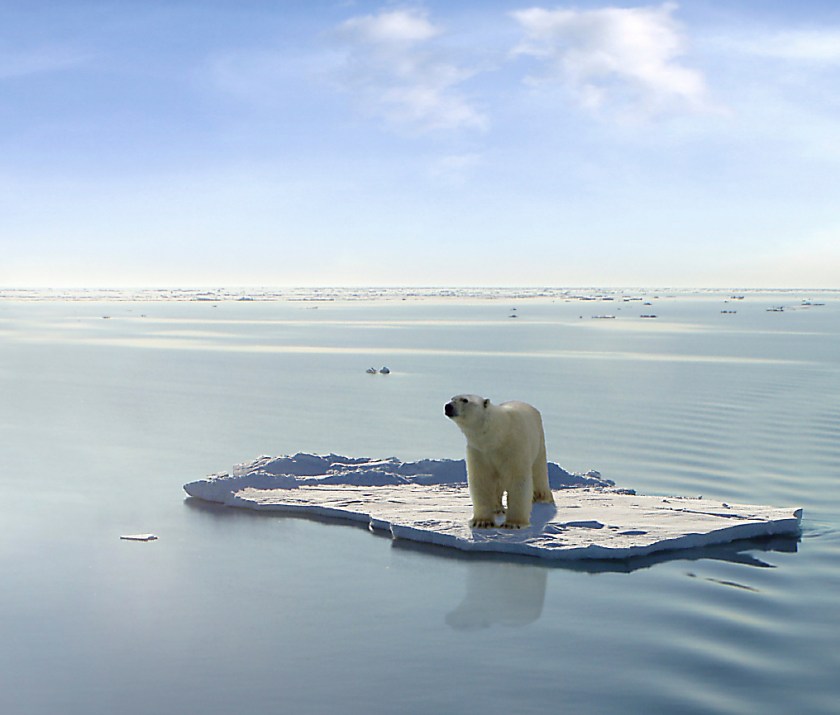
The world’s future is based on an unknown solution to global warming.

Some suggest A.I. is key to solving global warming. Frankopan’s history suggests it is human beings that gave humanity the ability to overcome past crises. A.I. is one of humanities tools. It seems fair to suggest today’s crises will be another difficult chapter in the history of humanity. Judging by Frankopan’s history of human adaptation, global warming may not be humanities last chapter. However, Frankopan warns listerner/readers against the hubristic belief that nature can be controlled by humankind.

Stephen Hawking suggested humanity will not survive another 1,000 years on Earth and that human survival depends on colonization elsewhere in the Solar System. Frankopan seems to infer, humanity does not have that much time.

Frankopan wryly observes global warming is a crisis, but that human life is more likely to end from some other cataclysmic natural event like that which killed the dinosaurs (a meteor strike), a massive underwater volcanic eruption, or nuclear war before global warming kills us all.

One hopes histories past lessons inform a future that includes a place for the youth of this, the next, and future generations. World change brought on by crises have been overcome in the past through human adaptation. It seems reasonable to presume, despite the ignorance of some national leaders, that humanity will survive today’s global warming crisis.

FEELING & KNOWING

Audio-book Review
 By Chet Yarbrough

Blog: awalkingdelight)
 Website: chetyarbrough.blog

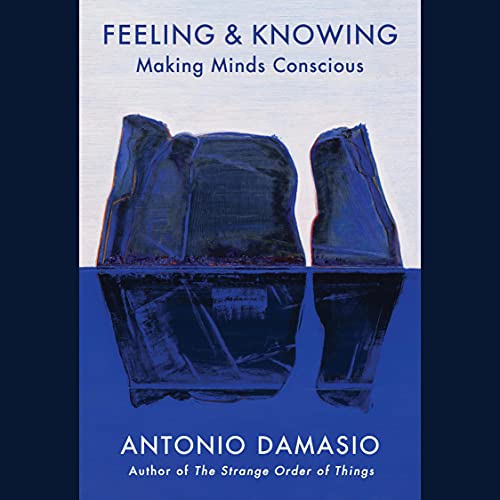
Feeling & Knowing

By: Antonio Damasio

Narrated by:  Julian Morris

Antonio Damasio (Author, Portuguese American neurologist, Professor at the University of Souther California.)

Antonio Damasio refines the definition of consciousness in “Feeling & Knowing”. Damasio offers a more science based, experiment driven, view of consciousness than Helen Thompson’s “Unthinkable…” “Feeling and Knowing” is a shorter version of Anil Seth’s book “Being You” that also addresses consciousness.

Both Damasio and Seth argue consciousness comes from feelings.

Thompson offers a less science driven view of consciousness based on patient interviews that reinforce Damasio’s and Seth’s views. There seems a slight difference between Damasio’s and Seth’s view of consciousness in the belief that emotions or feelings are the source of thought and knowledge origination. Seth argues emotions originate in the organs of the body and inform the brain. Damasio is more circumspect and seems to argue emotions come from the body and brain in a synchronous way.

However, Damasio’s and Seth’s beliefs about consciousness seem entirely compatible. That composite view changes with additional input which suggests consciousness is not a precise representation of reality.

To Damasio, one’s view and understanding of the world comes from feelings processed and imprinted on, and by, the brain. This is not to say that the brain is only a processor but that it works synchronously with the organs of the body.

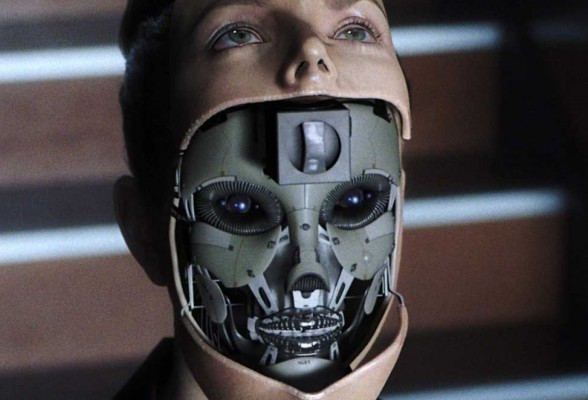
Damasio emphasizes feelings as the primary knowledge source of the human experience. Damasio’s theory suggests artificial intelligence will always be artificial because it relies on the logic of ones and zeros rather than the dynamic process of emotion interface with brain processing.

If Damasio is correct, for A.I. to become a learning machine, emotion must be a part of its programming.

If emotion can be and is programmed into a machine, there seems a probability that humanity will become servant rather than master of the universe.

APPARITION & NUISANCE

Audio-book Review
 By Chet Yarbrough

Blog: awalkingdelight)
 Website: chetyarbrough.blog

Out of Mesopotamia

By: Salar Abdoh

Narrated by: Sean Rohani

Salar Abdoh (Author, Iranian American, family forced to leave Iran when he was 14, Graduated from U.C. Berkley and City College of New York.)

Salar Abdoh’s book title, “Out of Mesopotamia”, implies an opinion about the Middle East. Abdoh entertains a listener/reader with his wry sense of humor, colored by the tragedy of political turmoil, murder, and martyrdom in the Middle East. His personal life and academic education infer a better understanding of western and middle eastern cultures than most Americans.

Abdoh’s novel idealizes a belief in pan Arabism with return of a borderless Middle Eastern area like Mesopotamia. His novel expresses love for Arab culture.

Whether Mesopotamia may have been a land of erudition, agriculture, domesticated animals, and social classes its culture changed with the creation of nation-states rather than singular settled communities. But, that change is unlikely to have been as quiescent as Abdoh implies.

Mesopotamia means between rivers which are known today as the Tigris and Euphrates. It was originally made of city states peopled by Sumerians between the sixth and fifth millennium BC. These city states each had their own king which implies there were borders and undoubtedly periodic conflicts.

As noted by Abdoh, the level of conflict remains today. The difference is, rather than combat with words, fists, and clubs, today’s nation-states use guns, bombs, and weapons of mass destruction to resolve disputes.

Abdoh’s main character is a reporter, sometimes combatant, who decries Iranian religious rule and Syrian slaughter of innocents. One senses the author’s visceral love for Arab culture and a yearning for return to his native country.

A large part of Abdoh’s story is to explain martyrdom to its listeners.

Most understand religious beliefs are the proximate and most obvious reason for martyrdom. Participants of a holy war are memorialized by dedicated monuments to their deaths. Their belief is that they arrive in paradise while being memorialized by those remaining in life. Abdoh explains paradise and earthly memorialization are only two of many reasons people seek martyrdom.

For some, martyrdom is penitence for a sinful life. For others, it is to escape from what they view as a meaningless existence. For a few, it is a choice to end one’s life for what they believe is a meaningful purpose.

From soldiers, to sinners, to artists, and the remaining living, Abdoh infers martyrdom is a wasted life.

Abdoh’s writing is engaging, in part because of its substance but also because of his sense of humor and point of view. He weaves a story of emotion, and disgust by using irony, humor, affection, love, disgust, and intellect of characters who keep one entertained and engaged. The engagement comes from agreement and disagreement with his character’s point of view.

The relationship between America and the Middle East is complicated.

America and the Middle East’s relationship is challenged by cultural differences that seem irreconcilable because of national and individual self-interests, made even more difficult by language. The failure of most Americans to understand more than their own language breeds ignorance and arrogance. As noted by other authors, the story of the Arab world is tightly woven into the fabric of their language.

Abdoh’s story reflects the ignorance of American policy and how it deals with the Middle East.

He does not suggest it is because of malevolence but infers it is from not caring enough and being consumed by American national self-interest. America is described by Abdoh as an apparition and nuisance to the Middle East. Without mutual cultural understanding, there is, nor will there be, peace in the Middle East or world.

CULTURAL INTEGRITY

Audio-book Review
 By Chet Yarbrough

Blog: awalkingdelight)
 Website: chetyarbrough.blog

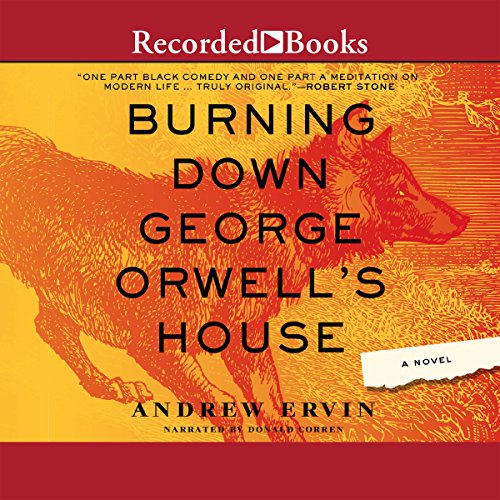
Burning Down George Orwell’s House

By: Andrew Ervin

Narrated by: Donald Corren

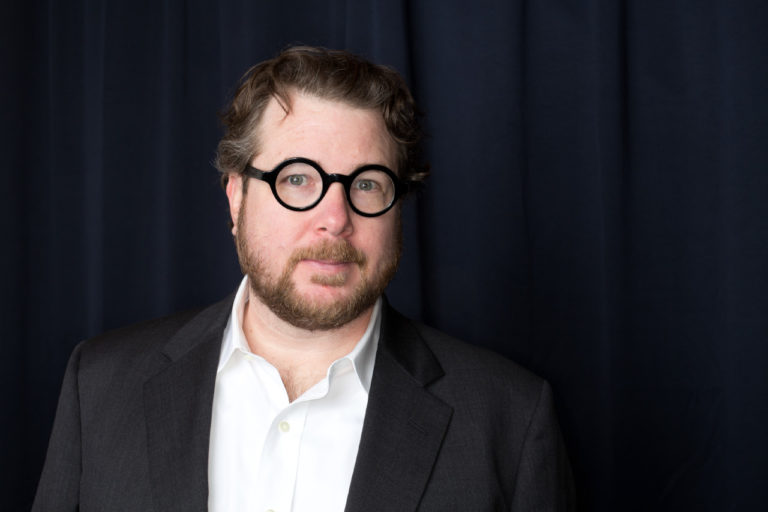
Andrew Ervin (Author, Fictional debut.)

“Burning Down George Orwell’s House” seems a reification of John Ford’s “The Sports Writer”. Ervin’s main character, Ray Welter, is like Ford’s Frank Bascombe, but Welter is an alcoholic with a particular taste for aged whiskey.

Both Welter and Bascombe tend to look at women as sex objects, but Ervin characterizes women as equally capable of treating men as sex objects.

By the end of Andrew Ervin’s story, one realizes “Burning Down…” is not just about a man’s view of the world but about human nature and cultural difference. Ervin gives listeners a glimpse of Emily Fridlund’s “History of Wolves” by creating self-actualized women, one an adult, the other a teenager.

The island of Jura, aside from the location of George Orwell’s house, is known for its natural beauty, soaring mountains, and seasoned whiskey. Welter is an advertising executive with an obsession with Orwell who wrote about “newspeak” (a form of persuasion like advertising) and its influence in the world.

The story of culture is woven into “Burning Down George Orwell’s House” by Welter’s decision to leave America and spend several months on a Scottish Island where Orwell wrote “1984”.

Welter is at a crossroads in life. He has been a successful advertising executive but is soon to be divorced by his wife. He is unsure of what to do with his life. He chooses to escape to Jura to better understand the meaning of Orwell’s “1984” but finds a culture that is uniquely different from the life he lived in Chicago.

Welter chooses to let himself be seduced by a 17-year-old islander who is being raised by a violent father who gives her a black eye. The father tries to murder Welter. The young girl is a talented, head strong, graphic artist who is at the beginning of her adult life. She is unsure of what she should do with her life which seems entirely plausible for a 17-year-old. She is torn by her desire to be more than a young woman living her whole life on Jura or one who leaves Jura to see what else life has to offer.

There are many threads of life and culture in Jura that are similar but different than the American life Welter lived in Chicago. There is an underlying belief of Jura’s citizens that their culture is being destroyed by visiting foreigners and the ocean’s rising tides.

The Aisle of Jura’s culture is threatened by both foreign influence and its disappearance from the world by a rising sea.

Greta Thunberg – Swedish Environmental Activist who also happens to be a teenager.

Her father’s attempts to murder Welter based on two concerns. The father’s motive is a mixture of rage over the presumed seduction of his daughter and a wish to have his daughter remain in Jura for as long as he is alive. Jura’s culture is quite different from America’s. Welter decides to leave Jura but arranges for a full scholarship for the Jura teenager at his former wife’s university in Chicago.

Welter’s former employer plans to re-start an advertising business specializing in environmental preservation and wishes Welter to become a limited partner to manage the vaguely defined new business.

There are several transgressions and ironies that a listener will choose from Ervin’s story. The teenager decides to stay in Jura and not travel to Chicago despite her father’s bizarre physical abuse and murderous proclivity. Is there any justification for a 30- or 40-year-old man from Chicago to have sex with a 17-year-old girl? (Welter’s age is undisclosed.) Can Orwell’s “newspeak” help an advertising company make money while saving the environment? Are foreigners’ visits to other cultures a benefit or detriment to indigenous cultures? Is it in the best interest of humanity for all cultures to become less indigenous and more acculturated?

This is a well written story that resonates with life as it is rather than how life should be. Alcoholism and wanton sexual relations are two of many sources of human weakness and conflict in society; neither are likely to disappear, regardless of whether cultures remain distinct or unified.

BEAST MACHINE

Audio-book Review
 By Chet Yarbrough

Blog: awalkingdelight)
 Website: chetyarbrough.blog

Being You (A New Science of Consciousness)

By: Anil Seth

Narrated by: Anil Seth

Anil Seth (British professor of Cognitive and Computational Neuroscience at the University of Sussex.)

Anil Seth’s “Being You” is a difficult book to understand, in part because of its subject, but also because it requires a better educated reviewer. Consciousness is defined as an awareness of yourself and the world, a state of being awake and aware of one’s surroundings that emerges from one’s brain. Seth explains neuronal activity of the brain correlates with what “Being You” is you. Seth argues that without neuronal activity, there is no you.

Seth suggests the conscious self operates with a Bayesian view of the world.

Bayes’ theory is that decision making is based on rules used to predict one’s decisions. The example Seth gives is a person living in the desert who sees droplets of water on his lawn and presumes it either rained, or his sprinkler was left on when it should have been turned off. He looks outside and sees his neighbor’s lawn is wet and, with that added information, decides it must have rained. Then he notes his window is dirty and maybe he is not seeing water on his neighbor’s lawn. This reduces the possibility that it rained but not enough to change his mind about it having rained last night. The point is that one continually changes their state of understanding (their consciousness) based on added information.

The difficulty of a Bayesian view of consciousness is that human decisions are a function of human perception of data that is never 100 percent complete.

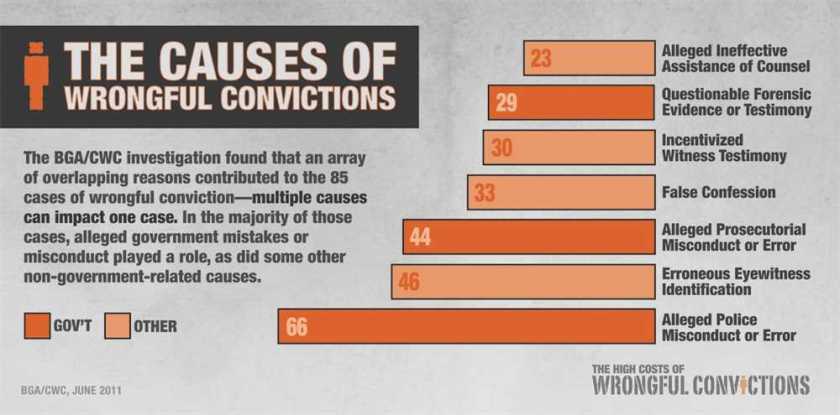
There are three fundamental weaknesses with a Bayesian view of the world as the prime mover of consciousness. One, humans do not always see clearly. Two, all that is seen is never all that there is to be seen. And three, human minds tend to pattern what they see to conform to their personal bias. The third is the most troubling weakness because, like in police line-ups used for eyewitnesses to identify perps when a crime is committed, mistakes are made. Eyewitnesses are no guarantee for identification of a criminal’s crime. None of this is to suggest Seth is wrong about what consciousness is but it shows consciousness is eminently fallible and only probabilistic.

Seth’s theory of consciousness reinforces the public danger of social websites that influence the public, particularly young adolescents trying to find their way in life. Their search for social acceptance leads them to internet sites that may lead or mislead their lives.

Another fascinating argument by Seth is that the mind is not the source of emotion. He suggests the mind is informed by the organs of the body. The heart begins to race, and adrenalin is released as somatic markers that send signals to an area of the brain that makes fight or flight decisions. Emotions do not originate in the brain. The brain responds to the cumulative effect of the body’s physical and chemical signals.

Seth notes various studies of human decision making that are based on external stimuli with a belief that the primary purpose of consciousness is to survive. Two methods of consciousness measurement are IIT (Integrated Information Theory) and PHI, a number meant to measure quality interconnections between bits of information of a given entity. The resulting number — the Phi score — corresponds directly to a measurement of an entities level of consciousness. A reader/listener should not be discouraged by this technical digression. Much remains in Seth’s book that is more comprehensible and interesting.

Seth explores some of the tests used for consciousness. The mirror test is one in which a living thing is shown itself in a mirror to see if it recognizes the image of itself.

Monkeys show some signs of recognition (dogs do not) which suggests a greater level of consciousness among primates. He notes the evolution of human perception of the world through the eyes of artists like Monet, Mach, and Picasso who see nature’s colors and planes of the face or body in the material world. One thinks of Monch’s insightful “Scream” that reminds some of life’s terror. He shows how a stationary drawing seems to have movement because of a trick of consciousness.

Seth shows how an inanimate rubber hand can be made to feel like a part of the human anatomy by stroking one’s real hand at the same time the experimenter strokes a rubber hand.

Seth expands that principle to show how consciousness can create a full body illusion like that of a Star Trek transporter that sends their body to another planet. A whole host of social problems can be created by image teleportation. Being able to create a perfect duplicate of one person that is televising false information might start a rebellion or start a war.

Seth argues humans have free will and that the brain’s pre-cognition for action is not because of pre-determination of life but a delay inherent in consciousness which is gathering information before acting, just like the sprinkler story alluded to earlier. As noted earlier, to Seth, consciousness is a Bayesian process, not a predetermination of action.

The end of “Being You” addresses Ray Kurzweil’s “singularity”, “a future period during which the pace of technological change will be so rapid, its impact so deep, that human life will be irreversibly transformed. Seth expresses concern and an element of optimism. The evolution of the beast machine bodes a possible end, an adaptation, or an evolutionary change of humanity.

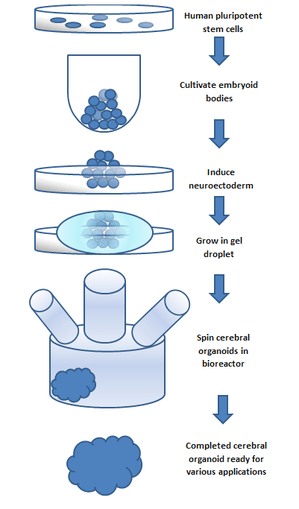
Seth touches on research being done on cerebral organoids, artificially grown miniature organs resembling the brain.

Presently they are being used to model the development of brain cancer to aid in its cure but how far is this from the next step in machine learning, supplemented by the implantation of cerebral organoids?

The beast machine is consciousness.

Genetics discoveries and research hold the potential for creation, manipulation, and destruction of human life. Artificial Intelligence is on the precipice of a marriage between all information in the world and sentient existence of beast machines. The beast machine will have greater potential for creation, manipulation, and destruction of life.

Human consciousness has created the agricultural age, the industrial revolution and now the information age. Humans have nuclear weapons of mass destruction that can end our world’s human habitation. The only note of optimism is that the history of human consciousness has generally led to positive changes for humanity, i.e., longer life spans, improved economic and social conditions, and new discoveries about life and living. The world is at its next great social and economic change.

THE BUSHY TREE OF LIFE

Audio-book Review
 By Chet Yarbrough

Blog: awalkingdelight)
 Website: chetyarbrough.blog

The Story of Evolution in 25 Discoveries

By: Donald R. Prothero

Narrated by: Tom Parks

Donald Prothero (Author, Amerivcan geologist, paleongologist,)

Donald Prothero provides a mountain of evidence informing the skeptical of the truth of evolution. Prothero explains evolution is a random and bushy process requiring time, heat, and a few basic chemicals to produce life. On the one hand, that makes life probable somewhere else in the universe. On the other hand, it implies human beings may be as ephemeral as dinosaurs, and dodo birds.

Prothero’s name makes one think of the Greek god, Prometheus, the creator of fire and mortals.

From the primordial soup of four or five billion years ago, the chemicals of life combine to create a self-reproducing cell. Within that cell, the genetic material of life is formed. As time passes, these cells combine to form life that adapts to its environment. This adaptation is the definition of evolution.

Prothero explains evolutionary adaptation both resists change, and commands change.

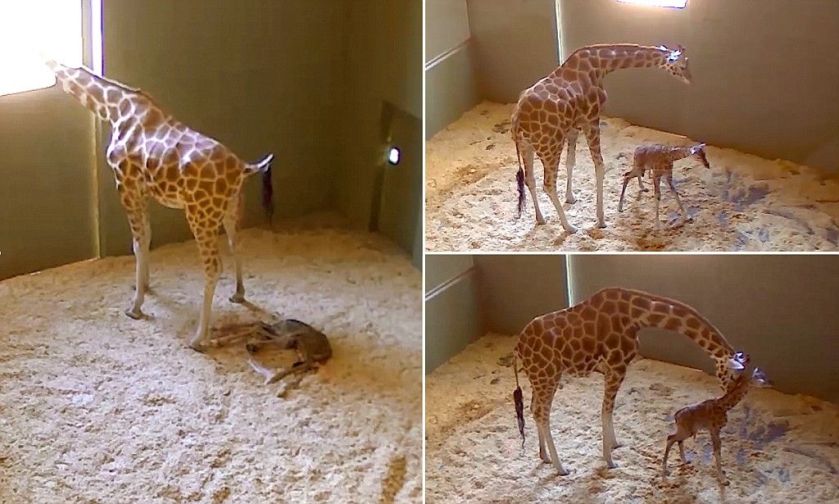
He gives the example of Giraffes that grow long necks but retain a nerve fiber that is longer and poorly located for its purpose. In battles for female attention, the evolutionary change of longer necks increases dominance of an evolved Giraffe over other male Giraffes with shorter necks. Though neck length improves procreation potential, the adaptive failure of the nerve fiber makes a long-necked Giraffe more vulnerable to injury. In a sense, evolution is an arbitrary process that often leaves useless remnants of body parts that do not serve a purpose and may hasten extinction.

What comes to mind as one listens to Prothero is that human beings are still evolving. Whether evolution will ensure survival or hasten extinction is unknown.

How are the human brain and body evolving? This is particularly important with a growing understanding of DNA and sciences’ ability to change DNA in a human subject. Is knowledge of DNA modification a function of evolution or revolution? Evolution has historically been a long-term process that may be less long term in the modern age.

What about Artificial Intelligence? Will A.I. become a part of human evolution? Is A.I. the next stage of human evolution or its replacement?

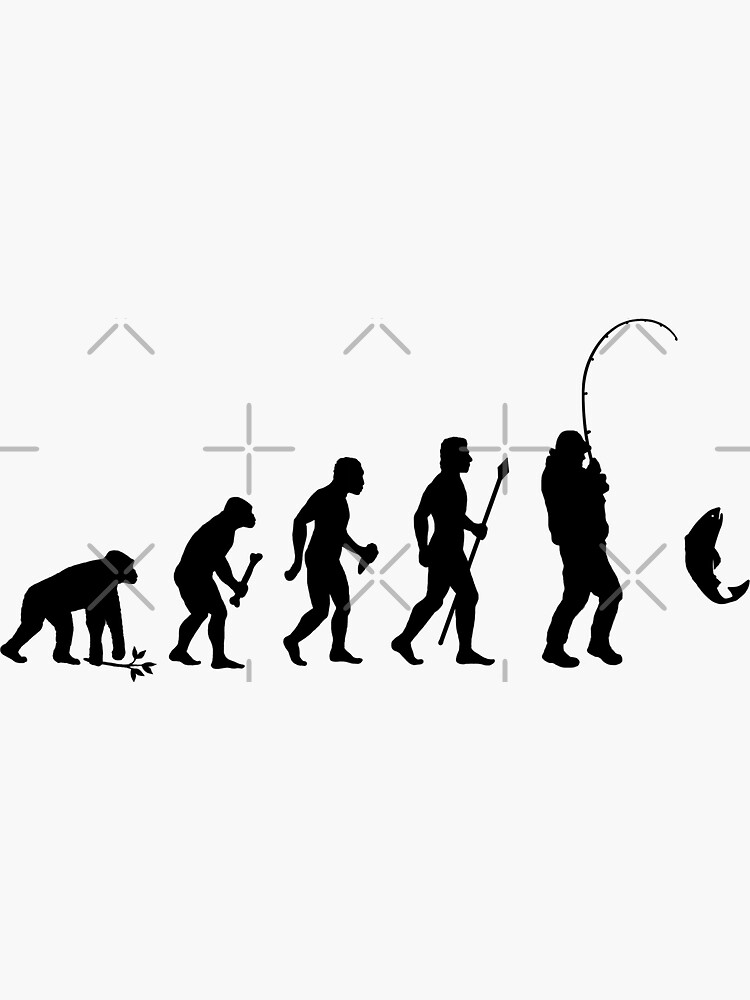
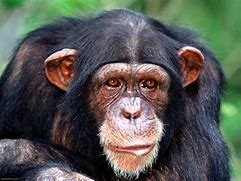
Prothero notes evolution is a bushy process meaning that variations of living organisms remain alive at the same time. Like whales, elephants, giraffes, and humans there are different evolutionary examples within species. Will there be humans that become a part of A.I. existence and others who will be exclusively human? Will one form of human become dominant? Prothero’s point is that evolution is not a linear process. There is no missing link that shows man evolving from apes. There is only one tree of life showing bushy branches with similar genetic material. Prothero notes 99.99 percent of human’s genetic make-up is the same. Chimpanzees are 98.8 percent similar, cats 90%, and honeybees 44%.

The close association of human DNA with chimpanzees shows who’s bushy tree to which we belong.

As Prothero notes, nature’s evolutionary change is not moral. Evolution is change based on nature’s random selection. Prothero suggests natural selection is a two-way street. Humans may have come from the sea, but whales are likely to have come from the land.

Homo Sapien image 100,000 years ago.

Prothero suggests humans have not changed much in the last thousand years. Memes have changed but little physical changes are evident. When human genetic manipulation takes control, morality becomes a human decision. With A.I., who knows where or how moral decisions will be made?

FEAR AND TREMBLING

Audio-book Review
 By Chet Yarbrough

Blog: awalkingdelight)
 Website: chetyarbrough.blog

River out of Eden

By: Richard Dawkins

Narrated by: Richard Dawkins, Lalla Ward

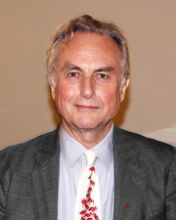
RICHARD DAWKINS (ENGLISH ETHOLOGIST AND EVOLUTIONARY BIOLOGIST WHO INFERS A GENE MAY BE THE SOURCE OF CONSCIOUSNESS.)

As Dawkins’ clever title infers, “River out of Eden” is a scientist’s explanation of how life began and proliferates whether God exists or not. One can argue it is neither a refutation nor affirmation of God, only that God has nothing to do with life’s persistence. Dawkins’ explanation is based on Darwinian evolution and what he characterizes as the immortal gene. A human gene’s immortality is being tested by earth’s environmental degradation. On the other hand, immortal genes may adapt to earth’s degradation.

One cannot help but think of the potential of artificial intelligence and the future of human beings as they may evolve.

The discovery of DNA by Francis and Crick may change the course of human evolution. With the discovery of CRSPR, the medical community acquired tools that can modify genes. With those discoveries, it became possible to rid humanity of disease and hasten human evolution. Some argue these discoveries will improve human life; others suggest it will end it.

The discovery of the double helix. Erwin Chargaff (1951): Rule of Base pairing. Rosalind Franklin & Maurice Wilkins (1953): X-ray diffraction pattern of DNA. James Watson & Francis Crick (1953): Molecular structure of DNA.

Dawkins offers numerous examples of species that have evolved over millenniums of earth’s existence. He argues that survival is a result of an innate characteristic of genetic material that has the sole purpose of self-preservation. Genes are reproducing engines of life based on the environment in which they exist. Dawkins argues genetic materials’ ability to modify and replicate themselves are the essence of life’s continuation.

Evidence of Dawkins belief began with Darwin and is reinforced by numerous science experiments showing generations of birds, bees, and other forms of life that have inherited behaviors through generations of existence. His argument is that life is a matter of genetic predilection and preservation, more than learning.

The unexplored consequence of Dawkins’ belief is–what nature has provided to evolution, may soon be controlled by human beings. Genetic manipulation will no longer be determined by nature’s circumstances but by humankind’s limited knowledge. Considering human decisions that have murdered millions, earth’s ecological crisis, and human nature’s innate desire for money, power, and prestige, humanity should sense what Kierkegaard called fear and trembling.

STORY TELLING

Audio-book Review
 By Chet Yarbrough

Blog: awalkingdelight)
 Website: chetyarbrough.blog

Fault Lines (The Social Justice Movement and Evangelicalism’s Looming Catastrophe)

By: Voddie T. Bauchham

Narrated by: Mirron Willis

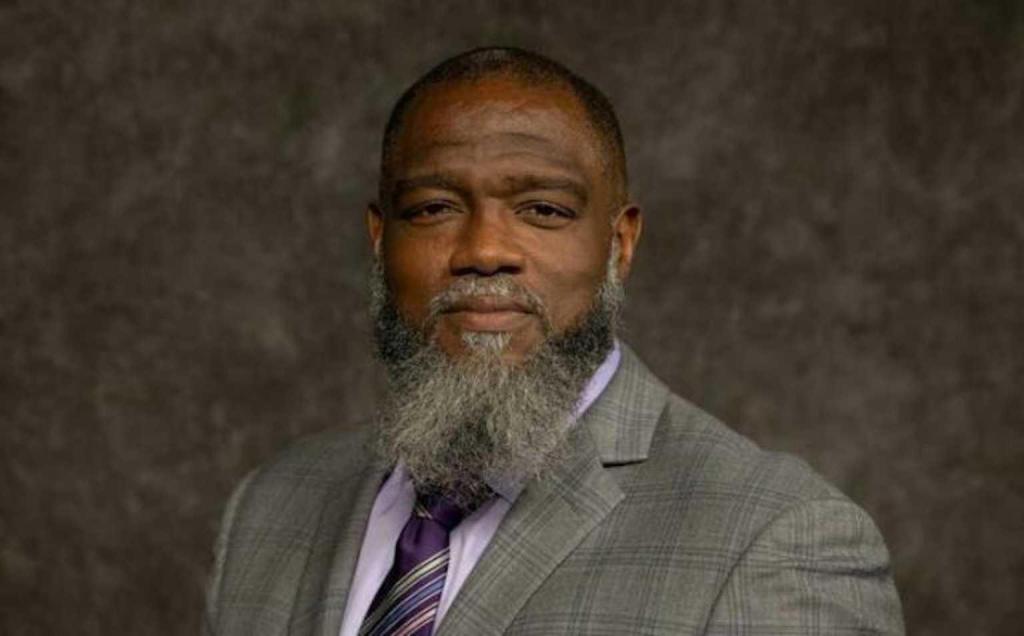
Voddie Baucham (Author, pastor, educator, BA from Houston Baptist Univ. and M. of Divinity from SWestern Baptist Theological Seminary.)

“Fault Lines” is a troubling book. It gives too much shade to racial and ethnic inequality in America. On the one hand, Voddie Baucham relies on story telling to counter the singular atrocity of George Floyd’s murder and on the other he tells stories of inaccurate accusations of police discrimination during traffic stops. White America has enough shade without being forgiven by a black preacher for hundreds of years of discrimination.

George Floyd’s murder.

Baucham implies unequal treatment is less odious because white people are killing white people at a higher rate than white people are killing black people. How does that look when a young teenage black boy knocks on a front door and is shot in the head by a 84-year-old white man because he is afraid?

Ralph Yarl shot in the head for knocking on a front door.

Baucham is right when he argues facts matter but untextualized facts fail to reveal the whole truth. As a preacher, Baucham chooses scriptural text from bibles that have been interpreted in many ways by different preachers and scholars. A skeptic credibly argues truth is fungible in the Bible.

Some would argue the Bible is a proximate cause for belief in inequality of the sexes and races in the world.

Baucham’s story telling may be factually correct while being fundamentally wrong. When the proof he reveals comes from the Bible, a skeptic cringes. That may be because of a skeptic’s own biases and beliefs but how many people in history have justified murder of innocents because of religious belief and biblical interpretation?

It comes as no surprise that Bauchham is a strong proponent and supporter of Thomas Sowell, an American author, political conservative, and social commentator.

Sowell espouses many of the same views of American society that Bauchham endorses. Both are anti-abortionists despite over-population and America’s history of child neglect. Both opposed the election of Barack Obama. Both decry the absence of black Fathers from their families and the consequence to their children. (There is little doubt that absence of fathers in black families is an important issue but the poverty cycle in which black families are trapped is of greater consequence.) They may come to their political views from different angles but undoubtedly voted for Donald Trump in 2017 (Bauchham because of the abortion issue and Sowell for his political party).

Human nature drives us all.

Humans, whether Believers or heathens, strive for money, power, or prestige to differentiate themselves from others. To a humanist, belief in God and the Bible or the devil and purgatory are only tools of human nature. Baucham is a human who believes in God and the Bible who uses those tools to unjustifiably shade the iniquity of humankind.