MOST INTERESTING ESSAYS 2/5/26: THEORY & TRUTH, MEMORY & INTELLIGENCE, PSYCHIATRY, WRITING, EGYPT IN 2019, LIVE OR DIE, GARDEN OF EDEN, SOCIAL DYSFUNCTION, DEATH ROW, RIGHT & WRONG, FRANTZ FANON, TRUTHINESS, CONSPIRACY, LIBERALITY, LIFE IS LIQUID, BECOMING god-LIKE, TIPPING POINT, VANISHING WORLD, JESUS SAYS
The Other Slavery (The Uncovered Story of Indian Enslavement in America)
By:Andrés Reséndez
Narrated by: Eric Jason Martin
Andrés Reséndez (Author, Historian, Ph.D. in history from the University of Chicago.)
One suspects “The Other Slavery” is unknown or misremembered by most Americans. “The Other Slavery” is not about America’s civil war, the Emancipation Proclamation, or Abraham Lincoln. It is about indigenous peoples and their adaptation to a world turned upside down by newcomers from foreign lands.
Andrés Reséndez mostly focuses on the North American continent, particularly west and southwestern American territories and Mexico, but he also touches on slavery in Chile.
As is well known, slavery has been a societal constant since the beginning of recorded history. Today, it appears in pornography, low wage peonage, so-called re-education camps, and political/social incarcerations. What Reséndez explains is that Indian tribes of the west are increasingly incentivized by slavery with the arrival of foreigners. Though slavery may have been used by Indians earlier in history, it became a significant source of revenue for warring tribes.
Hernán Cortés de Monroy y Pizarro Altamirano (aka Cortez), 1st Marquess of the Valley of Oaxaca.
Reséndez reminds listeners of internecine wars of early America when conquistadores and Indians ruled the American southwest.
One Indian tribe captures a different tribes’ sons, and daughters to trade for money, horses, guns, and butter from the Spanish or later settlers who need cheap labor or who seek domestic help and/or carnal pleasure. Reséndez notes young women’s slavery prices are higher than young men’s because of their dual service as domestic laborers and sex objects. Over time, as Spanish land holders are replaced by American land holders, Indians remain a source and victim of the slave industry.
Men, women, and children are used by land holders and competing Indian tribes as barter for trade.
Though slavery is the primary story, Reséndez notes wars between Spanish land barons and Pueblo Indians occur over rights to the land.
Santa Fe, New Mexico becomes a focal point of conflict between Pueblo Indians and the Spanish. The victimization of Pueblo Indian slaves leads to a rebellion that removes Spain from the New Mexico territory, at least for several years. However, the lure of silver brings Spain back with a slave trade resurgence in southwestern territories of America. Reséndez explains the slave trade becomes endemic as silver is discovered in Mexico and the southwest territories.
The need for cheap labor in silver mines multiplies the value of Indian slaves in the southwest.
The slave trade never dies. Greed drives Indian tribes to steal people from different Indian’ tribes to profit from human sales to landowners looking for cheap labor. Reséndez notes it is not just Indians victimizing Indians but American and Spanish landowners buying young men and women Indians and other human victims to serve as low-cost labor for silver mining, farming, and domestic service.
Reséndez notes male slaves were more difficult to manage than women slaves but for strength males were coveted for their labor in silver mining. Some of the mines were deep in the earth, all were dangerous. Underground mines were flooded with carcinogenic mercury tailings that shortened the lives of those who worked there.
Slavery goes by many names. As is known by historians, the Dawes act further victimizes native Americans.
Reséndez reveals how slavery has always been a part of society. Self-interest is a motive force of human nature. Slavery is found in penal colonies of authoritarian governments to provide cheap labor. Slavery is also found in democratic governments that legislatively reduce the cost of labor based on corporate influence on public policy. A free market, not lobbyist influence, should determine public policy.
The hope for elimination of slavery lies in government policy that reinforces belief in human equality and a balance between corporate profit and cost of labor as determined by a free market.
East West Street (On the Origins of “Genocide” and “Crimes Against Humanity”)
By: Philippe Sands
Narrated by: David Rintoul, Philippe Sands
Philippe Sands (British Author, attorney, specialist in international law.)
“East West Street” is narrated by two people, the first narrator defines the origin and legal definition of “Genocide” and “Crimes Against Humanity”. The second narrator recounts real-life’ details that relate to those definitions.
The defendants at the Nuremberg Nazi trials. Pictured in the front row are: Hermann Goering, Rudolf Hess, Joachim Von Ribbentrop, Wilhelm Keitel and Ernst Kaltenbrunner. In the back row are: Karl Doenitz, Erich Raeder, Baldur von Schirach, and Fritz Sauckel.
The first public use of “genocide” is introduced in the Nuremberg Trials of former Nazi administrators. Raphael Lemkin (1900-1959) wrote a book, “Axis Rule in Occupied Europe”, that introduces the term “genocide” in 1944. He becomes a needling gadfly in the Nuremberg trials. The word “genocide” is initially rejected but becomes a part of the trial as it proceeds.
Sands suggests Lemkin’s role is diminished by his uncooperative behavior when first selected to serve on the Nuremberg’ adjudication team. Lemkin is relegated to a lesser role as a consulting attorney, in part because of his insistence on the use of “genocide” in the Nuremberg trials.
Raphael Lemkin (1900-1959, Polish lawyer, coined the word-genocide.)
Regardless of Lemkin’s alleged attitude, one is compelled to agree–the perpetrators of the holocaust committed both “genocide” and “crimes against humanity”. Individual men, women, and children were murdered. At the same time, specifically identified groups of people were murdered by the Nazis. The largest group is Jewish, but many groups were not affiliated with religion. Poland lost an estimated 3 million Polish Jews, but Poland also lost an estimate 1.8 million Poles with no Jewish heritage. An estimated 3,000,000 Ukrainians were enslaved and/or murdered, some undoubtedly were Jews, many were not.
Hans Frank (German governor of Poland 1939-1945).
On several occasions, the son of Hans Frank (the German governor of Poland during WWII) is interviewed. Frank’s son believes his father knew nothing of the atrocities of Poland’s concentration camps when first interviewed. In subsequent interviews, Frank’s son realizes his father enforces orders of the Third Reich to exterminate the Jews of Poland. His son begins to realize his father is not who he thought him to be. The former governor of Poland is convicted and executed after his Nuremberg trial.
In the end, defendants in Nuremberg are accused of “crimes against humanity”. “Genocide” is a group accusation while “crimes against humanity” is a person-specific indictment. What makes “East West Street” more than a definition of words and indictment is the detailed research that illustrates war’s personal consequence to innocent men, women, and children who suffer from war.
The author notes “Genocide” has become international law used for the first time in 1998 to convict Jean-Paul Akayesu for Rwandan murders. Sands suggests the concept of genocide remains controversial in the sense that it magnifies potential for conflict between groups.
There is no question that Jews were the largest singular group to be systematically tortured and murdered by the Nazis, but Lemkin’s definition of “genocide” is a label applicable to other groups of humanity. We have ample examples in the 21st century. There are the examples of indigenous Indians and Black slaves in America, and Uighurs and Tibetans in China.
The truth that Sands reveals is that every rape, torture, enslavement, and murder is individual, personal, and tragic. Sands meticulous research shows how brutal and singular “crimes against humanity” are to the individual. He finds his family is torn apart by Hitler’s Jewish obsession. The wounds engendered by Hitler’s leadership are shown unhealable to generations of Jews.
Hitler’s abhorrent beliefs festers in the 21st century.
Sands captures the true threat of authoritarianism in “East West Street”. One person can enslave, torture, or kill another person. More ominously, one person can influence a government to become an enslaver, torturer, and killer of millions. The first is a crime against humanity; the second portends genocide. Of course, today we see Putin’s attempt to eradicate the Ukranian nation and its people. One must ask oneself, is this not the genocide of which Lemkin wrote?
Stephen Jay Greenblatt (Writer, Harvard University Professor.).
Shakespeare’s plays expose the perfidy of tyrants that reminds one of Vladmir Putin’s actions in 2022. Greenblatt notes Shakespeare explains tyrants rise when governments show weakness at their center. One can conclude the economic collapse of the U.S.S.R. is the proximate cause of Putin’s ascension.
Stephen Greenblatt offers a clever summary of tyrants in Shakespeare’s plays. Greenblatt’s book is published in 2018.
Shakespeare’s tyrants are destined to fail in a variety of ways. One must remember that Shakespeare’s plays are not history but have elements of history in their story. Dramatic affect and a livable wage are what motivate Shakespeare to write for the theatre.
Prescient insight to the nature of human beings is what makes Shakespeare a seer whose prose and plays survive centuries of analysis and earned adulation.
King Richard III is a martinet who barks orders for little reason other than to exercise power. He acts with the arrogance of a narcissist. He murders brothers, nephews, and subordinates who get in his way or refuse to obey his orders. He expects loyalty first, with any opposition viewed as disloyalty.
King Richard cares nothing for rules or human life. His followers are sycophants at best and enablers at least. King Richard III murders brothers and confidents to secure the throne.
He marries for lust and control, murders King Henry VI, marries the assassinated King’s widow, and dies in an ignominious battle. Having killed everyone near him, he grows paranoid of those around him. That paranoia cripples his effectiveness as a sovereign. He may have lost his crown in battle, but his murder of followers and managerial incompetence destine him for failure.
Russian Kleptocrats
Greenblatt recounts the many tyrants exposed in Shakespeare’s plays but none, other than Richard III, seem comparable to Putin. Putin gathered support of kleptocratic sycophants that are beginning to recognize their wealth and success is threatened by Putin’s foolish attempt to re-annex Ukraine.
Like Shakespeare’s Richard III, Putin is alienating followers and murdering or imprisoning competitors who challenge his leadership.
Greenblatt summarizes events of Shakespeare’s plays to show how tyrants are editors of their own defeat. One hopes there is enough Russian resistance to forestall a nuclear war caused by a tyrant who cares nothing for human life, other than his own.
Robert Gerwarth (German Author, historian, specializing in European history, graduate of University of Oxford.)
At times, a reader/listener becomes jaded by books written about war. However, Robert Gerwarth’s “…Vanquished” is a timely review of the origin of war, particularly with Vladmir Putin’s invasion of Ukraine.
Vladmir Putin’s invasion of Ukraine.
Gerwarth implies all wars come from unravelling empires. He argues post 20th century wars are a result of the Austro-Hungarian, Ottoman, Japanese, French, Romanov (Russian), and British empires demise. Gerwath explains future generations of fighters from these former empires live on. Many continue to bare grudges for their lost existence as part of an empire. This reminds one of Vladimir Putin’s life as a KGB agent in the former U.S.S.R.
Gerwarth implies all wars come from unravelling of empires.
Gerwarth explains in detail the wandering fighters of dismantled empires who do not accept their defeat. They raid, rape, and pillage countries (often as mercenaries) that were part of their former empire. Of course, there are other circumstances that motivate these fighters, but loss of empire demeans and unmoors identity which energizes anger, motivates reprisal, and initiates atrocity.
Few historians disagree about the unfair reparations demanded from Germany after WWI. That unreasonableness weakens the post war German government which is soon overrun by Nazis; ironically, not led by a German citizen, but by an Austro-Hungarian citizen named Adolph Hitler. Hitler is a former fighter for the Austro-Hungarian empire.
Hitler’s extraordinary ability to martial rage with his rabid antisemitism rallies German extremists to believe Germany can establish a new European empire.
Hitler’s success is largely made possible by a weak German government and Germany’s war-ravaged poverty, exacerbated by worldwide depression.
Vladimier Putin is not Hitler. However, Putin’s view of the world is that of a former KGB agent of the U.S.S.R.
Putin is a fighter for an empire that lives in his heart and mind but not in reality. One might conclude from Gerwarth’s view of history that Putin will fail in his effort to make Ukraine a part of Russia.
British Empire–Empires are passe in the 21st century. Colonization is the history of the past.
None of the 20th century empires have been resurrected, and like Thomas Wolfe’s novel, “You Can’t Go Home Again”, only force of arms can hold empires together. Empires are too big and culturally diverse to remain one entity.
Though Gerwarth does not address China, it seems China’s effort to gain control of outlying China interests is limited to government will and martial suppression.
Uighur Re-education camp in China.
The suppression of Uighurs is a first step to concentration camps.
It seems cultural difference and interests between Xi’s followers, and Uighurs, Tibetans, Hong Kong residents, and Taiwanese will require suppression to make them part of the supersized Chinese nation-state. It is likely that future generations of fighters will resist China’s enforcement if it pursues its present course.
Map of the United States of America with state names.
Gerwarth offers an interesting historical perspective; supported by a lot of detail. It would seem the only hope for peaceful empires is through federalism. There needs to be an acknowledgement of cultural difference, with access to equality of treatment and opportunity for all citizens, regardless of race, religion, or ethnicity. Of course, that is what America has tried, and only partly achieved, among States. It would seem a greater task for empire, or within large multi-ethnic nation-states like China.
Learning from the Germans (Race and the Memory of Evil)
By: Susan Neiman
Narrated by: Christa Lewis
Susan Neiman (Author, Moral Philosopher).
Not many authors are more qualified than Susan Neiman to write about “Learning from the Germans”. As an American moral philosopher and cultural commentator who lives in Germany, Neiman offers an analysis of race and evil. One may disagree with her conclusion but not with her understanding of the subject.
Neiman notes being raised in Atlanta, Georgia by her Jewish mother, and father. Regarding race and evil, Neiman understands what it is like to be white in America and Jewish in Germany. Southern discrimination and religious persecution are vivified by Neiman’s experience in both cultures.
What comes as a surprise to some is Neiman’s argument that Germany handles guilt and shame for the holocaust better than America handles guilt and shame for racism, slavery, unequal treatment, and murder of people of color.
The primary theme of Neiman’s book is that post WWII Germany dealt with the history of the holocaust more forthrightly than America has dealt with racism and its evil.
Neiman explains memory of the holocaust is memorialized in Germany after the war. It has only been in the twentieth century that America has begun to memorialize 200 years of black slavery, lynching, and murder.
Pictures below are German sites preserved showing concentration camps, a prison, a museum, as monuments and reminders of holocaust atrocities. In Germany, by 1950, reparation for holocaust survivors is being negotiated.
With the exception of the Thomas Ball memorial to Emancipation in 1876, no monuments of slavery’s horrendous history are noted in America until the mid-1900s. What Neiman shows is that, only in this American generation, have reparations for slavery been seriously considered.
In the 1950s Germany began to deal with financial reparations for holocaust victims. In the 21st century, America is just beginning to discuss reparation for slavery. Even in 2022, most Americans reject reparations. However, a well-known American, David Brooks, changed his mind in 2019.
David Brooks (Writer, conservative political and cultural commentator, reporter, editor.)
Brooks writes:
“Nearly five years ago I read Ta-Nehisi Coates’s Atlantic article “The Case for Reparations,” with mild disagreement. All sorts of practical objections leapt to mind. What about the recent African immigrants? What about the poor whites who have nothing of what you would call privilege? Do we pay Oprah and LeBron?”
“The need now is to consolidate all the different narratives and make them reconciliation and possibility narratives, in which all feel known. That requires direct action, a concrete gesture of respect that makes possible the beginning of a new chapter in our common life. Reparations are a drastic policy and hard to execute, but the very act of talking about and designing them heals a wound and opens a new story.”
Robert Jones, the Founder of the Public Religion Institute, and a graduate of the Baptist Theological Seminary, wrote a book suggesting reparations are the only way white America can find forgiveness. Neiman acknowledges the high cost of determining fair reparations for American slavery but implies money spent on defense would be a good place to search for money to invest in white America’s forgiveness for slavery. Neiman notes Germany rebuilt itself after WWII. Her inference is that America has enough wealth to do the same with reparations for slavery.
Neiman notes Germany, like America, has right wing extremists who continue to vilify ethnic minorities, but discrimination is institutionally rejected by German government leadership while American leaders like former President Donald Trump say there are very fine people on both sides of racial discrimination.
Trump refers to the 2017, Charlottesville, Va. alt-right and white nationalist rally where a white supremacist plowed his car into a group of counter-protesters to the racist rally, one of which is killed.
Neiman recalls the murder and torture of a Black 14-year-old boy, Emmitt Till, in Mississippi for allegedly whistling at a white woman in 1955.
Two white Americans admitted their guilt in Till’s torture and murder, after being acquitted for the crime by an all-white jury. The murderers went free to live their remaining lives in Mississippi.
Neiman reflects on the murders of nine African Americans in Shelby, North Carolina by Dylann Roof in 2015. Roof self-identifies as a white supremacist and neo-Nazi.
Neiman’s point is that Germany has done better to acknowledge and repair their relationship with holocaust survivors than America has done in reconciling its racist and evil actions regarding slavery and what has become institutionalized racism. Germany’s success has been in the face of an east and west Germany reconciliation after the fall of the Berlin wall.
Neiman notes the difference in east and west German survivors’ beliefs while showing they acted to reconcile their Nazi past with memorialization, and demonstration of shame and guilt for the holocaust. A significant part of that reconciliation is legislated reparation for holocaust survivors.
Neiman explains, just as there remain Nazi collaborators in the East and West, there are racist collaborators in the northern and southern United States. Neiman infers if Germany could reunify within 40 years after WWII, the U.S. should be able to reunify after the end of the civil war. Why is it taking the U.S. over 150 years to get to the point of just talking about reparations for slavery, let alone memorializing its evil?
Narrated by: Cassandra Campbell, Kathleen Gati, Kathrin Kana, Martha Hall Kelly
Author
“Lilac Girls” is a long historical novel. Some may be tempted to quit but may be drawn back by its message to the future. It is a reminder of WWII. It is a warning to our present and future. Martha Hall Kelly’s extensive research on the Ravensbrück concentration camp offers relevance to Uighur re-education camps, Taliban repression, Russian/Ukraine atrocities, and the consequence of human isolation and incarceration.
Kelly’s book is about Ravensbrück rabbits, young women experimented on by Germany’s Nazi leaders.
The Ravensbrück concentration camp evolves into a chamber of horrors. It is managed by Nazi physicians and followers who purposely create damaged human bodies to test drugs and medical treatment for war wounds. A number of healthy young women have their bodies mutilated to test the efficacy of drugs and surgery to repair damaged limbs. They become known as the Ravensbrück rabbits
Ravensbrück is in northern Germany. The concentration camp was created exclusively for women. At its peak it housed 132,000 women, of which an estimated 48,500 were Poles, 28,000 Russians, 24,000 Germans, 8,000 French and a few other nationalities. Their incarceration is for reasons ranging from resistance to Nazi governance to disbelief in the false notion of race purity.
Kelly contrasts New York’ socialite living in the 1930s through the 1950s with European and war veteran survival. The author begins her story with the rise of Hitler, and Germany’s invasion of Poland, France, and Russia. As the German invasion of Russia portends defeat of Germany, Kelly unravels the atrocity of the Ravensbrück concentration camp, the ignominious defeat of France, the unjust western and Russian split of Poland after the war, the subjugation of Poland to Russia, and the rise of the U.S.S.R.
The unjust western and Russian split of Poland after the war.
It is the intimacies of living that give Kelly’s book weight. For the romantic, there is some romance. For the historian, there are the revelations of Ravensbrück, for the futurist, there is the warning of the risks of human isolation and confinement based on race, religion, or ethnicity.
Uighur re-education camp in China.
Many countries, including the United States, have made the mistake of isolating and confining human beings based on race, religion, or ethnicity. This is the first step that may lead to Ravensbrück’ atrocity.
Kelly shows there is no redemption, either for victims or perpetrators. At the end of her novel, what happened to the primary victims of Ravensbrück stays with those who survived. The primary victim loses her mother in the camp. Her life after the war leaves her crippled emotionally and physically because she was one of the Ravensbrück rabbits.
TO GO WITH AFP STORY – Photographs of prisoners murdered at the Ravensbrueck concentration camp for women line a wall in the “Place of Names” memorial at the camp in Fuerstenberg February 24, 2009. The “Sex Slavery in Nazi Concentration Camps” exhibition which opened at the Ravensbrueck concentration camp memorial, sheds light on the fate of women prisoners, many of which came from the Ravensbrueck camp, forced to provide sex to inmates in other concentration camps. AFP PHOTO JOHN MACDOUGALL (Photo credit should read JOHN MACDOUGALL/AFP via Getty Images)
Herta Oberheuser (1911-1978, died at age 66, physician at Ravensbruck concentration camp.)
As Germany nears defeat, the doctor who manages surgery tries to murder the women who were mutilated because they are witnesses to Ravensbrück atrocities.
She is convicted at Nuremberg. She serves 5 years of a 20-year sentence. Her ambition seduced her into atrocity at Ravensbrück. Her wish to be a surgeon, when there are few women surgeons in Germany, outweighed the guilt of her actions. After serving her sentence in prison, she starts a medical practice. She is tracked down by a primary victim of her surgical mutilation. Kelly writes about the rise and fall of Herta Oberheuser. With her exposure by a victim of Oberheuser’s surgical work at Ravensbrück, her medical license is revoked. Ms. Oberheuser dies in obscurity.
There is no redemption for atrocity. All human beings in the Russia/Ukrainian war, as well as the rest of the world, need to remember the lessons of WWII.
John Hersey (1914-1993, Author and journalist, won a Pulitzer for–“A Bell for Adano”.)
John Hersey is the son of American Protestant missionaries who was born in China.
Hersey is considered one of the first journalists to use a “storytelling” style for news reports. His most well-known news story is published in a 1946 “New Yorker” article, later published and expanded as “Hiroshima“, a book about the consequence of the first nuclear bomb blast of WWII.
“Hiroshima” is printed by Alfred A. Knopf and has never been out of print. Hersey reports an estimated 100,000 were killed by the bomb. His book tells the story of the long-term impact of nuclear fall-out on six Japanese survivors of the June 6, 1945’ blast. (Today, the estimate of those who died from the bomb’s long-term impact is 140,000 to 350,000.)
One hopes 9/11/22 #rumors of former Russian supporters of Putin’s Ukraine/Russian War are asking him to resign. Putin’s decision to reinstitute the draft may be a turning point in the Ukrainian war based on his Czarist behavior.
In looking back at Russia’s 1917 revolution, it is discontent of the military and resistance to participation in WWI that aided Lenin’s overthrow of Czar Nicholas. Putin may be repeating that history. Many kleptocratic leaders of his administration are in the same spot as wealthy landowners of the Czarist era.
It seems appropriate to review “Hiroshima” today because of the Russian/Ukrainian war, and Vladmir Putin’s un-wise threat to use a nuclear bomb as a strategic weapon of war.
At least three of the six survivors in Hersey’s story are searching for solace by turning to belief in a Christian God. One presumes, these survivors were chosen by Hersey because of his life as a son of missionaries. As you listen to the six personal stories of Hersey’s choice, one wonders how non-believers cope with the aftermath of the bomb.
Hersey’s report of six survivors tells of broken bones, burned flesh, scarring, chronic fatigue, social isolation, and concomitant unemployment because of symptoms of these six survivors.
THESE ARE THE SIX SUBJECTS CHOSEN BY JOHN HERSEY FOR HIS STORY.
Left to Right–Reverend Kiyoshi Tanimoto (3,500 yards from explosion, Methodist), Mrs. Hatsuyo Nakamura (1,350 yards from explosion, Widow of a tailor with 3 children), Dr. Masakazu Fujioio (1,550 yards from explosion center, a live in the moment hedonist), Father Wilhelm Kleinsorge aka Makoto Takakura (1,400 yards from explosion, a German priest of the Society of Jesus), Dr. Terufumi Sasaki (1,650 yards from explosion, young surgeon at Red Cross Hosp.) and Miss Toshiko Sasaki (1,600 yards from explosion.)
Hersey notes some women who are pregnant when the bomb bursts have children who suffer from the consequence, even though not yet born. He tells of a formally successful physician who must start over again to establish his practice. He has little money and no credit but needs to have a place to treat patients for income. He must work from his home which is only rented because he cannot afford to buy.
Regardless of one’s religious belief, Hersey shows how six victims cope with the debilitating effects of a nuclear blast.
Hersey writes of a woman who is too fatigued to work at a regular job and decides to use her sewing machine to work at a pace her health will allow. She finds she cannot make enough money to house and feed herself. She sells the sewing machine and finds part time work collecting subscription payments for a newspaper that pays her fifty cents per day.
Hersey writes of recurring scars that occur from the flash and burn of the nuclear bomb explosion. The disfigurement requires plastic surgery.
Without money needed for cosmetic surgery, the young are reliant on financial gifts from others. Some Americans rise to the occasion.
In one instance, the TV program, “This is Your Life” generates contributions for a few victims’ who need plastic surgery.
Incongruously, on “This is Your Life”, the co-pilot of the Enola Gay meets with a survivor of the Hiroshima nuclear blast. Some consider this among the most awkward TV appearances of all time.
The fundamental point of Hersey’s stories is a nuclear weapon in war goes beyond immediate physical destruction and mental injury. Radiation from a nuclear bomb stays with victims for their entire, often shortened, and always compromised lives. It is more than the death of thousands, it is the remaining lives of every human being, whether born or yet to be born, who is exposed to the flash and burn of nuclear detonation.
King Richard: Nixon and Watergate-An American Tragedy
By: Michael Dobbs
Narrated by: Mark Bramhall
Michael Dobbs (Author, British member of the House of Lords, graduate of Oxford and Tufts University.)
Appropriately, it is a British citizen who writes a biography that focuses on Nixon’s years as President of the United States. An American is much less likely to be objective about Nixon’s Presidency.
Like yesterday’s Richard Nixon and today’s Donald Trump, Americans love or revile former Presidents.
The title of Dobbs’ book exemplifies a legitimate view of Richard Milhouse Nixon as an American tragedy. One doubts history will ever consider Trump’s fall from power as a tragedy. Both Nixon and Trump act like Kings but Nixon served America in ways that justify Dobb’s book title for Nixon as “…American Tragedy”.
Dobbs reminds Americans of Nixon’s prescient understanding of China by opening China to the west.
Nixon extricated America from Vietnam, a war that could not be justified or defeated by the delusional beliefs of past Presidents who believed in the domino theory of communist expansion.
Though Dobbs did not write about Nixon’s domestic policies, it was his presidency that formed the Environmental Protection Agency and instituted the war on cancer with a $100-million-dollar subsidy creating national cancer research centers. Nixon signed the Title IX civil rights law preventing gender bias at colleges and universities receiving federal funds. Nixon provided Native Americans the right of tribal self-determination. Nixon expanded social security benefits for working families.
Dobbs notes Nixon exhibits a kind of insecurity that clouds his judgement. That insecurity leads to the foolish decision to invade the Watergate Democratic headquarters; compounded by a cover-up that ends with Nixon’s resignation.
The prestige of office magnifies strengths and weaknesses of one who becomes a national leader. The potential for abuse of power by authoritarians has been demonstrated many times in world history. America is no exception. Dobbs details Nixon’s fall from the Presidency.
Dobb’s story of Nixon is an interesting contrast to Trump’s rise and fall. In no way is that to suggest there is any equivalence in intellect or contribution of these two Presidents because one is a tragedy while the other is a farce.
It is not a surprise that Trump is still being supported by many Republicans. Republicans supported Nixon until the truth is revealed by John Dean and the Nixon recordings. One suspects that will be true of Trump when the FBI investigation is completed.
Dobb’s paints a picture of Nixon that is at times imperious and, at other times, endearing and vulnerable. Nixon seems a lonely man who loves his children but seems distant from his wife. Nixon has few friends.
Those who remain close to Nixon seem remote from his rise to the Presidency. He gains respect from those who report to him but more because of position than intellect or emotional attachment. It will take an outsiders view of Trump to objectively assess his contribution to America.
A fundamental difference between Nixon and Trump is that Nixon rose to fame from nothing while Trump is born to wealth. Nixon earned his education. Trump bought his education.
To Nixon, Dobb’s shows money is a means to an end. To Trump, money seems all there is, and value is only measured by how much you have.
Nixon appears to have useful friends, not pleasant friends. The few pleasant friends are like Bebe Rebozo who never challenges his opinion and listens rather than asks questions. Useful friends are protected or abandoned based on personal loyalty. Any disagreement by useful friends with Nixon’s or Trump’s public pronouncements is perceived as disloyalty.
Both Nixon and Trump revile criticism, particularly from the press. Nixon is willing to sacrifice his closest subordinates if required to protect his position. Both ex-Presidents of the United States were willing to use the power of their office to pardon the guilty who have followed their orders.
All who become close to Nixon or Trump have been positively and negatively infected by their association. “King Richard” is a reminder of America today.
Odd Arne Westad (Norwegian author, historian, professor of History and Global Affairs Yale University.)
Westad argues “The Cold War” rises from the industrial revolution.
Od Arne Westad’s book is summarized here but not fairly assessed based on his erudition and the book’s voluminous facts and opinions. He argues the industrial revolution improves economic conditions of the world’s population via two fundamental forms of government, i.e., one Democratic and the other Socialist.
Westad notes America and the U.S.S.R. are principal representatives and antagonists of “The Cold War” because of their way of capitalizing on the industrial revolution.
Westad implies communism is a form of extreme Socialism. Some might argue America is a form of extreme Democracy. The facts Westad reveals show both countries have autocratic tendencies and have made historical mistakes that have cost millions of lives. The irony of those mistakes is that America became a more socialist-capitalist country and the U.S.S.R., now Russia, became a more capitalist-socialist country.
In broad outline, Westad’s historical facts define “The Cold War” as it developed in the 20th century. Westad covers most of the world in recounting the consequence of “The Cold War”. He notes key players like Indira Gandhi, Mikhail Gorbachev, Nikita Khrushchev, Mao Zedong, Richard Nixon, John Kennedy, Lyndon Johnson, Ayatollah Ruhollah Khomeini, Joseph Stalin, Josip Broz Tito, Jomo Kenyatta, Patrice Lumumba, Kwame Nkrumah, Yasser Arafat, David Ben-Gurion, Gamal Abdel Nasser, and others.
There are so many stories of so many leaders, one may lose sight of Westad’s argument–“The Cold War” is defined by the industrial revolution. In some ways, Westad gives short shrift to the significance of one person’s impact on “The Cold War”. However, historians choose their facts to make their point.
The importance of Gorbachev is perfectly identified by Westad’s characterization of the Gorbachev era. The impact of glasnost on world history is a book by itself.
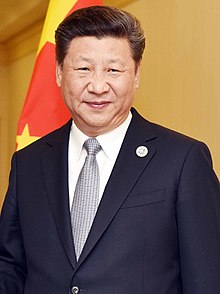
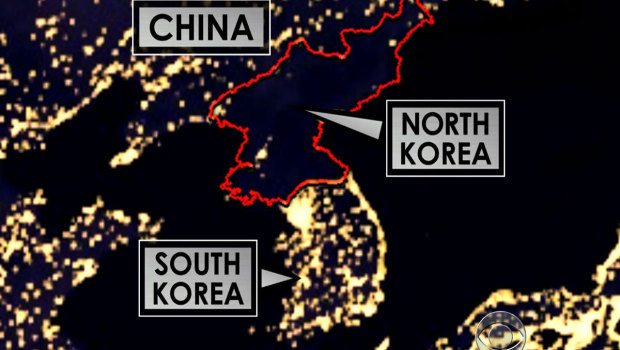
When Khrushchev gave his speech that revealed Stalin’s atrocities, Mao lost all respect for U.S.S.R. leadership. President Xi is a strong proponent of the ideals of Maoist communism which implies Russian/Chinese’ relationship is utilitarian more than ideological. The same might be said of Russia’s and China’s support of North Korea.
Westad implies Mao considered Stalin a near God.
The rift between China and Russia that developed when Khrushchev demeans Stalin’s role in the growth of U.S.S.R.’ communism will never be mended even in the era of reproachment between Xi and Putin.
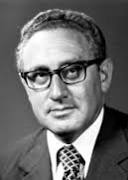
The importance of Gamal Abdul Nasser to the Arab world is exemplified by Westad’s explanation of Nasser in Egypt. A similar misreading of history is dispelled about Indira Gandhi and the lack of respect given by Nixon and Kissinger of her role in India.
Westad’s explanation of Stalin’s disrespect of Tito is enlightening. Tito idolizes Stalin but that feeling is not reciprocated by Stalin because, to Stalin, there could only be one leader of the communist movement.
In a trip to the countries formed out of Yugoslavia, it is interesting to note the respect the older generation had for Tito. That respect for authoritarian leaders is noted by Wested when he writes of Stalin. In spite of the millions of Russians murdered or incarcerated by Stalin, improvement in living standards of many Russians endeared him to many citizens.
Wested’s history reminds one that autocracy is not limited to any particular form of government. Just as Tito was an autocrat of Yugoslavia, one might view Trump as a Wanna-Be autocrat of America. Both had their committed followers.
In the modern age, Russia’s hegemonic role in the world has been replaced by China. Like Russia, China adopted a more socialist/capitalist economic system. “The Cold War” continues but the major representatives have changed.
The only political ideal that saves humanity from tyranny is freedom within rule-of-law.
Russian People protest the Ukrainian war.
A peaceful settlement of the #RussianUkrainianWar will be difficult. It is not America’s or other countries’ job to pick winners and losers. Ultimately, it will be Ukraine’s decision whether the #PutinWarCriminal prevails or fails.
What one is left with after finishing Westad’s history is the belief that neither Democracy, Socialism, nor Communism offer final answers for the future. Autocracy infects all three systems of government.
Stephen Nowicki (Professor of Biology at Duke University.)
Professor Stephen Nowicki offers a 36.5-hour lecture on Biology. From the origin and growth of life to the chemical and neuronal function of living things, Nowicki systematically reveals experimentally tested knowledge of the “…Science of Life”. This brief review only addresses a few of the many fascinating details Nowicki explains.
Science argues the beginning of life began with cells.
Nowicki suggests, cells evolve from the agglomeration of detritus from the “Big Bang”.
The early formation of these cells is missing two ingredients for life. Nowicki explains these early cells evolve from violent volcanic and electrical activity of the “Big Bang”, an environment in which those two missing ingredients are created.
Nowicki explains early non-living cells are bombarded by electrical storms that generate amino acids (organic compounds) and sugar from violent atmospheric conditions that include water.
In the early 1950s, these conditions were tested in laboratory conditions and found to create two essential building blocks of life. Nowicki explains, these building blocks (amino acids and sugars) became part of non-living cells.
Experiments show these non-living cells transformed into prokaryotic and eukaryotic cells.
The eukaryotic cells had a nucleus containing genetic material while prokaryotic cells carried free-floating genetic material without a nucleus. Nowicki then explains the role nucleotides (protein) play in activating genetic material within these cells.
Nowicki notes DNA is present in both prokaryotic and eukaryotic cells, but they need to have a way of being activated. With replication, molecules (chemical compounds) could form. Nowicki explains living matter originated from the clumping and replication of these molecules.
Nowicki explains ribonucleotides (proteins) were created in the primordial soup of early earth. These ribonucleotides transformed into RNA which activated DNA genetic material and replicated both prokaryotic and eukaryotic cells.
Evolution of species, established by Darwin in the 19th century, appears quite consistent and reminiscent of the primordial process Nowicki outlines.
With that reflection, Nowicki reminds listeners that evolutionary process should not be thought of as a necessarily progressive improvement. Evolution is chancy. It can either preserve or destroy species. Nowicki wanders back in history to explain classification of species as theorized by Linnaeus in the early 18th century.
Carl Linnaeus (1707-1778, Swedish botanist, zoologist, taxonomist, physician.)
A particularly fascinating lecture is given about embryo development. A zygote is a fertilized egg. The zygote begins as a singular cell and splits into two cells.
The second doubling of a zygote creates four cells separated in a vertical axis with all genetic material present in each cell. Subsequent doubling is separated on a horizontal axis. These new cells do not have all genetic material enclosed. The new cells have a more limited genetic role. There is significance in that axis change because of the location of genetic material in respective cells. With a change in axis, the viability of one cell carrying all the characteristics of its host goes from certainty to doubtful. The specialization of cells removes some of the genetic material that would contain all the characteristics of the life form.
Zygote Evolution
The zygote at four cells is mature. The next doubling becomes an embryo. All four cells have the genetic material of a male’s and female’s contribution. Each multiplication reduces the size of sister cells until they form a mass that surrounds a vacant space within its middle. This vacant space is the blastocyst stage. The blastocyst is made up of an exterior shell, a middle shell, and an inner shell. Each shell becomes the seat of design for what is to be born.
After a Zygote split into 4 cells, it becomes an embryo.
All amassed cells around the blastocyst carry site specific genetic material of life that forms a living thing.
The process of design in a human begins with an intrusion into the blastocyst without breaking its shells. That intrusion (a human gastrula), around the 7th or 8th day, uses the membranes as laboratories within which genetic codes create skin, bone, internal organs, and the digestive system.
Each of the three membranes are the laboratories of creation. The exterior or outer shell for example would become skin, the middle shell would become organs, the inner shell would become the digestive system.
The key to activation of this process is protein. Protein is the messenger of genetic material (DNA and RNA) from cells that create the tissue and organs of the body. Proteins are the elemental particles that activate genetic morphology. Without protein activation, there is no life.
The next exploration of biology by Nowicki is more suited to students of biology. Nowicki makes a valiant effort to explain the chemistry of ADP and ATP phosphates that provide energy needed for growth and maintenance of life. This part of the lecture series becomes too technical.
In general, Nowicki explains growth and maintenance of life requires energy. That energy comes from the hydrolysis of ATP and ADP. Hydrolysis is the chemical breakdown of molecules as they interact with water.
As molecules of ATP and ADP break down, they fuel cells of life to act in specific ways to promote growth and maintenance. Like the importance of protein messengers for activation of genetic material, life cannot exist without the energy provided by ATP and ADP. Nowicki diligently tries to explain the mechanics of this phosphate process but loses this reviewer’s interest.
Next, Nowicki lectures on photosynthesis and how plants use sunlight to synthesize foods from carbon dioxide and water.
The first inkling of cause for plant growth is noted by Jan Baptist van Helmont in the 17th century. Nowicki explains Helmont planted a tree in a tub of soil. He carefully weighed the soil and tree at the time of planting. Over several years, he observed the growth of the tree. At the end of those years, Helmont weighed the soil and tree. He found a small decrease in the soil’s weight and a gigantic increase in the tree’s weight. Helmont speculates the difference is from water added over the years. Though his conclusion is only partly correct, he paved the way for discovery of photosynthesis.
Jan Baptist van Helmont , a Dutch chemist and physician (1580-1644, On the left with his son on the right.)
That synthesis is a more complete explanation of the weight gain noted in Helmont’s experiment. The fundamental point being made by Nowicki is that species growth and demise is based on resource availability. Jan Ingenhousz completes Helmont’s theory with the discovery of photosynthesis.
Jan Ingenhousz (1730-1799, Dutch physiologist.)
Around 1779, A Dutch physician named Jan Ingenhousz found that green plants use sunlight to synthesize food for plants from carbon dioxide and water.
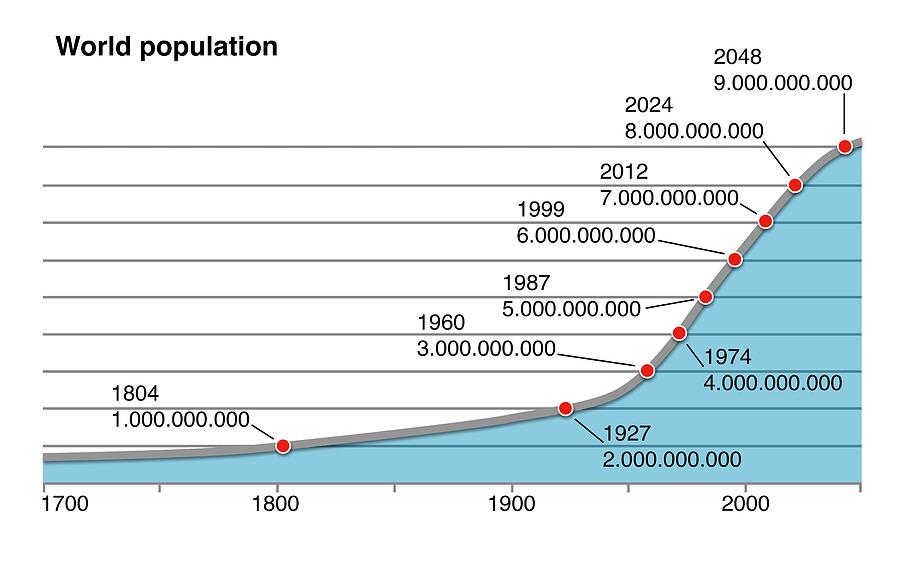
The remaining lectures are about Malthusian limits to life. There are natural and societal actions (meaning acts of war) that affect species survival. For natural calamities, one is reminded of the Black plague in the 14th and 17th centuries, the Spanish flu after WWI., the Irish famine in 19th century, the great Chinese famine during the “Great Leap Forward”, and now Covid19.
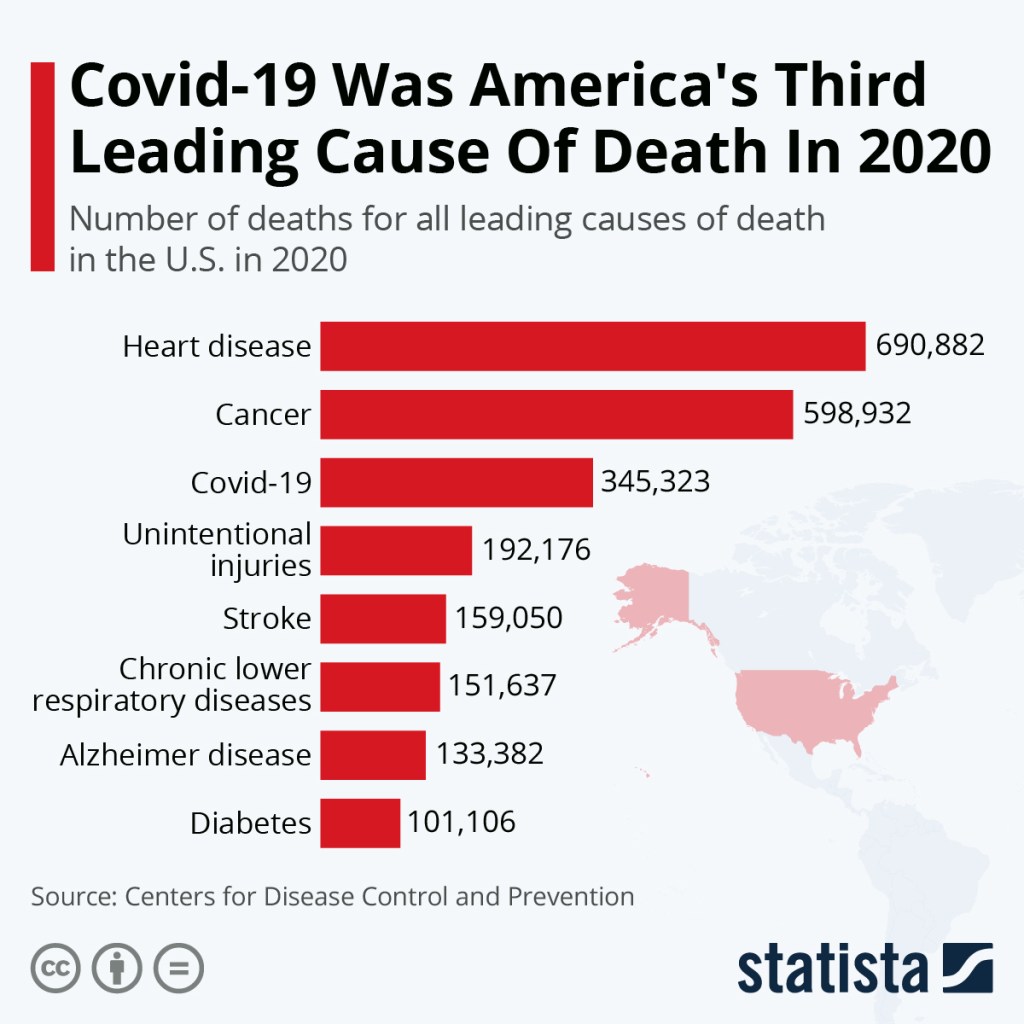
And today, the Covid19’ pandemic. (As of August 2022, world-wide deaths are estimated by WHO at over 6,000,000 with the U.S. at 1,032,820, Brazil at 679,536, and India at 526,689. This does not account for undiagnosed deaths from the virus.)
From man’s inhumanity to man, there is the Mongol invasion of Europe in the 13th century, two 20th century World Wars, the holocaust atrocity of WWII that murdered 11,000,000 (6,000,000 of which were Jews), and most recently, an estimated 600,000 dead in the Syrian Civil War.
How many more deaths will there be from Russia’s invasion of Ukraine?
Of course, Nowicki’s attention is on the biology of life. Nowicki explains, the key to balance of nature is biodiversity. Nowicki notes the unprecedented loss of species in the post 20th century world risks life’s future. Nowicki briefly explains how drug discoveries and loss of genetic material from species extinction affects the balance of nature by diminishing the sources and utility of future medical discoveries.
The fundamental point of Nowicki’s view is that no species escape the natural biological limits of life. Nature balances life based on resources available. A listener may imply Nowicki believes humanity is threatened as much by ignorance of biology as of “man’s inhumanity to man”.