DEATH WITH DIGNITY

Tisdale’s book is hard to listen to but worth one’s time and effort for understanding.

Books of Interest
 Website: chetyarbrough.blog

Advice for Future Corpses” And Those Who Love Them, A Practical Perspective on Death and Dying

By: Sallie Tisdale

Narrated By: Gabra Zackman

Sallie Tisdale (Author, essayist, who earned a nursing degree in 1983, born in 1957.)

The title of Sallie Tisdale’s book is off-putting but an apt description of her advice about “…Death and Dying”. Tisdale is a registered nurse who has written several books. Her experience makes her advice about death relevant and important. Those of a certain age or physical condition are shown how to prepare themselves for the inevitability of death.

The Japanese writer Haruki Murakami wrote “Death is not the opposite of life, but a part of it.”

Tisdale explains how a person can manage the inevitability of their death. To some, this seems a macabre thought, but nothing can be depended upon in life except its end. Why not manage that end with at least as much skill as one chooses to live? The reason people choose not to think about planning for death is because they are dealing with the everyday issues of living.

The irony is that Tisdale argues “planning for death” is an everyday issue.

Even if one knows they will eventually die, why care about it? Most lives are unplanned and seem out of our control anyway. How many plans for living are turned upside down by unforeseen events? Unforeseen events like Covid19, the rise of Hitler, WWII, the atomic bomb, and so on and so on. Yes, the occurrences of history change human plans. However, the difference is that death of the individual is a known inevitability. When one knows, their death is going to happen, why not have a plan?

Tisdale gives listeners the details of a plan for death.

Prepare Healthcare Directives

  • Decide to provide or not provide organ donation.
  • Explain burial or cremation wishes.
  • Maintain a financial inventory of accounts and assets.

Create a Will covering heirs and their inheritance. Review the plan based on life changes.

Having a will takes asset distribution out of the hands of a state court system. Health directives show your medical wishes and notes who has the right to make decisions for you in the event of incapacitation. A Health Care Directive stipulates whether extraordinary measures or comfort until death is to be administered. Written directives can explain how the body, after death, is to be cared for, i.e., is the body to be used for medical research, organ transplant, cremation, or burial. Time is of the essence when a person dies because living tissues and organs die soon after death of the person.

Beyond paperwork, Tisdale explains what is important to the dying when diagnosed as terminal.

To a family or caregiver, the hardest part is helping the dying cope with growing incapacity. When one is terminal, providing as much comfort as possible until death is of primary importance. The hardest part to the dying person is loss of control over one’s body. Listening to Tisdale’s real-life experience illustrate how American hospice and hospital care fails the terminally ill.

On the one hand, it is the fault of the dying for not having a clear plan for what is to be done in the event of a terminal diagnosis or illness, but Tisdale’s point is that neither hospice nor hospital’s services offer consistency in their care for the dying. Tisdale believes that once a person is diagnosed as terminal, the obligation of hospice’ and hospital’ care is to give comfort until death. However, institutions and doctors do not have the time nor inclination and American families do not have the money. Tisdale mentions Japanese elder care by noting the majority of those who are dying, die at home. The inference is that institutions are unlikely to provide the same care as the family of one who is dying.

Tisdale believes “Death with Dignity” laws passed in Oregon, Washinton, California, Colorado, Hawaii, Maine, New Jersey, Vermont, and Washinton, D.C. are on the right side of history.

They emphasize the importance of comfort for the terminally ill. A “Death with Dignity” law allows doctors to prescribe lethal drugs to end a terminally ill person’s life as long as the injected drug is not administered by the doctor or institution for which he/she works.

Tisdale’s book is hard to listen to but worth one’s time and effort for understanding.

BIODIVERSITY

Human population growth is slowing, and awareness of biodiversity is improving but is the trajectory of global warming outpacing human action?

Books of Interest
 Website: chetyarbrough.blog

Biology: The Science of Life

Author: Great Book Series

Narrated By: Professor Stephen Nowicki

Stephen Nowicki, Ph.D. (Bass Fellow and Professor of Biology @ Duke University, Associate Chair of the Dept. of Biology and Neuroscience.)

This is a dauting series of lectures with a theory of the beginning of life. It addresses living things in general but more specifically what is known about human life. Not surprisingly, it is immensely complicated.

There may have been an Adam and Eve in history, but Science infers any garden of Eden had to have been long after the beginning of life on earth.

Nowicki explains how Stanley Miller conducted an experiment in 1952 that simulated conditions of the early days of earth’s formation. Methane, ammonia, hydrogen, and water were present in those early days. These ingredients were used in a controlled environment, with the help of energy (primordial lightening), to combine into amino acid compounds that are essential to life. These basic chemicals were present in the early days of earth. These amino acid compounds are the building blocks of life.

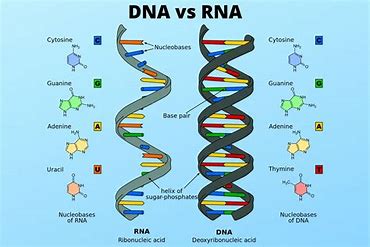
With amino acids, it became possible for DNA and RNA formation. DNA and RNA are shown to synthesize proteins leading to cellular process and organic development.

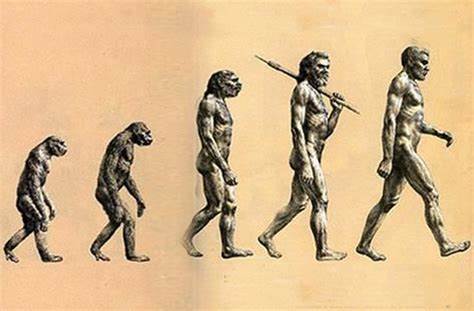
From these early beginnings, a natural selection process is initialized, i.e. evolution began which led to complex organisms like viruses, bacteria, animals, and eventually humans. Nowicki goes on to explain the complex biology of science. This is a point at which understanding by a lay reader/listener becomes difficult and only partially comprehensible. He begins with a detailed discussion of genetics, the study of genes, their discovery and function.

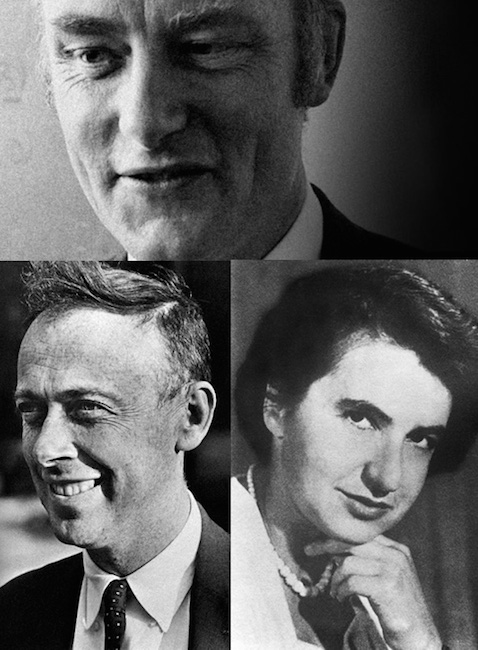
With the help of Rosalind Franklin (lower right), Watson (lower left) and Crick came up with the double helix model made of deoxyribose sugar that alternates with phosphate group strands.

The most famous pioneers of genetics are James Watson and Francis Crick. The genetic model they created reveals the backbone (organizational structure) of genes. With addition of nucleotides (adenine, thymine, guanine, and cytosine) to the gene backbone, genetic instructions are encoded by single strands of RNA into double strands of DNA. RNA’s single strands direct ribosomes that prevent mutation and maintain genetic integrity.

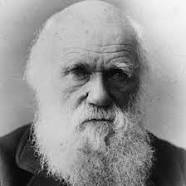
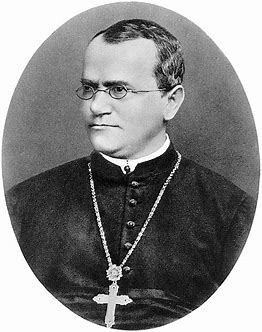
Nowicki jumps back in history to explain Darwin’s theory and proof of evolution. In addition, he recounts Gregory Mendel’s discovery of genetic inheritance. (Though Darwin and Mendel were contemporaries, it is not believed they ever met.) Mendel found, in breeding pea plants, that pea plants inherited certain traits of their parent plants with first generation plants having one color flower while second generation had 1/3rd to 2/3rd color differences that experimentally suggest inheritability of appearance. Mendel had no knowledge of genetics but was aware of Darwin’s writing. Ironically, Mendel discovered that inheritance had distinct genetic units of dominant and recessive characteristics explained how second-generation pea plants had mixed colors. This inheritable element of a gene became known as an “allele”, a word coined by British geneticist William Bateson in the early 1900s.

A listener/reader is only 1/4 of the way through Nowicki’s lectures at this point. Many of the remaining lectures delve into the details of gene function that will be interesting to biology students but only confuse and tire a dilettante.

To this reviewer, the two most enlightening features of Nowicki’s lectures are his views on the origin of human life and the ecological loss of biodiversity that threatens human existence. Nowicki challenges religious belief in the origin of life with a convincing argument for nature’s creation of human existence. His last lecture addresses global warming, reduced biodiversity, and the consequences of a loss of earth’s laboratory of medicinal cures for human ailments.

Nowicki leaves listener/readers with belief in humanity’s and earth’s environmental correction but with reservation. Human population growth is slowing, and awareness of biodiversity is improving but is the trajectory of global warming outpacing human action?

SAPIEN RELATIONSHIP

There is much to be learned about human behavior and relationship from Leary’s lectures.

Books of Interest
 Website: chetyarbrough.blog

“Understanding the Mysteries of Human Behavior” 

By: Mark Leary

Great Books Lecture: Professor Mark Leary

Mark Richard Leary (Professor of psychology and neuroscience at Duke University.)

Professor Leary offers an introduction to the psychology of who we are and why we act the way we do. Leary takes a Darwinian, as well as clinical, view of human nature. He attempts to unravel the mystery of personality, why humans are different, what self-esteem is and why it is important, and how understanding psychological process may help us become more self-aware, and emotionally healthy.

Homo sapiens have only been on earth an estimated 300,000 years on a planet estimated to be 4.6 billion years old.

Leary suggests the psychology of homo sapiens is probably not much different today than when they first became sentient. The inference made is that our emotional and intellectual framework evolved from ontological experience and genetic inheritance. The history of human nature is written in our genes and the memes created by the nurturing of human life. Our nervous system evolved through Darwinian natural selection intent on preserving itself. Along with genetic evolution of the human neurological system, social and emotional responses to the environment were formed by inherited memes. (Richard Dawkins, an evolution biologist, defined “meme” as an inheritable behavior.)

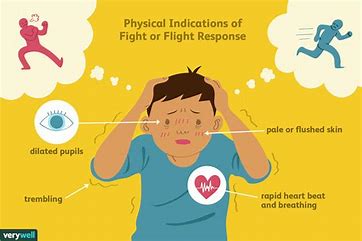
Leary explains fear, fight, or flight responses are heritable behaviors.

Dawkins suggests they are inherited memes and Leary suggests they are why most humans fear snakes, the dark, approaching strangers, and the unknown. Leary goes on to explain emotional responses like embarrassment, stress, and hurt feelings are inheritable physiological responses to inter and intra social relationships. He also explains more people, more noise, more urbanization subliminally affects human behavior.

Interestingly, Leary notes hurt feelings are shown to stimulate portions of the human nervous system that literally register physical pain.

That pain can make mountains out of mole hills and cause disproportionate physical response and verbal abuse. He notes human’ self-control is often difficult to exercise when feelings are hurt.

Somewhat bizarrely, Leary notes California tried to legislate self-esteem in school curriculum.

California reasoned feeling good about oneself would instill confidence and self-worth. The mistake is that self-esteem does not mean the same thing to everyone. It is not like gas that powers an automobile. Self-esteem comes from the many experiences children have with parents, teachers, other people, and personal accomplishment. Government cannot legislate all of the interactions in one’s life. It is not that self-esteem is unimportant, but it comes from broad societal experience and personal accomplishment. A classroom education is only a small part of life’s experience, let alone accomplishment.

Leary touches on memory and why we forget. Humans see an event but only recall events by reconstructing their occurrence. In that reconstruction, details are often manufactured rather than accurately recalled. Reconstruction rather than precise memory is the reason for mistakes made by eyewitnesses to events, and more particularly, crime.

There are many more insights to human behavior in Leary’s lectures.

He suggests dreams are not a source of discovery but a way of clearing one’s brain of errant, inconsequential fragments of synaptic events. A surprising lecture suggests there is experimentally proven existence of humans having psychic abilities. There is much to be learned about human behavior and relationship from Leary’s lectures.

CYCLE OF ABUSE

“The Beauty in Breaking” is about life as an eternal recurrence that offers some peace of mind in a world troubled by its inhumanity.

Books of Interest
 Website: chetyarbrough.blog

“The Beauty in Breaking” (A Memoir)

By: Michele Harper

Narrated by: Nicole Lewis

Michele Harper (Physician, Author, Public Speaker.)

Leaves fall from the tree to expose the bark and bite of life. Michele Harper’s memoir shakes the tree of American life. Relying on the veracity of Harper’s story, she is raised in a family with a physically abusive father who divorces her mother, an art dealer.

Harper notes her paternal father was physically abusive.

After Harper’s paternal father leaves Harper’s mother, Harper notes he offers some financial assistance to Harper in college. Harper explains she passes some of that assistance on to her mother while attending Harvard. Harper earns a BA in psychology. She goes on to acquire a medical degree from a New York university to become an emergency room physician.

Harper’s story touches on the complexity of life as a Black American. She marries a white man while at Harvard, but they divorce at his choice. The failure of their marriage is shown to be hard for Harper, but she is driven to succeed and moves on to educate herself in her chosen field of work.

Harper’s experience of childhood abuse, her personal marriage break-up, and work as a physician in three different emergency room positions, are lessons for life and living.

Her focus is on overcoming her trials to be good at her job even though much is beyond her control. The notion of not knowing what crises you will face in a medical emergency room, let alone a doctor’s experience as a Black American, offers a unique perspective to Harper’s memoir.

Abuse comes in many forms.

There is child abuse that occurs in many homes throughout the world. There is being a minority in a culture controlled by a majority that discriminates against those who are different. There is inequality of opportunity that creates an underclass that is trapped in an eternal cycle of poverty. Harper is denied promotion to Administrator in her first hospital job because she is a woman. Her supervisor notes a woman, let alone a Black woman, has never had the Administrator’ job in that hospital. Misogyny triumphs once again.

Harper chooses to leave the hospital that denied her the promotion.

As an administrator in another hospital Harper sees the consequence of poverty. Poverty seeps into nearly every culture in the world with its accompanying violence, compounded by weak to non-existent gun control laws in the United States. Harper writes about her encounter with a young boy who has his sneakers stolen by a bully at school.

Harper interviews the young Black grade school child who is thinking about getting his shoes back with a gun.

Harper calls a child services employee to explain her concern about the child’s access to a gun at his home. The child service’s person explains she sees this in many children’s homes where poverty is one lost job away from a family being on the street. This young boy’s parents both work to keep the family housed and fed. The social services person explains gun accessibility and violence are common in poor black neighborhoods. Where poverty is a fact of life, child services can only go so far to change what is toxic in a child’s environment. Gun availability is beyond the control of Harper or child service’s employees. The extent of Harper’s intervention is limited to raising the issue with the young boy’s parents–with the hope that they will act to be sure no gun becomes available.

Harper finds a third job as a VA hospital administrator. She interviews a female patient seeking psychological help. In the interview, Harper is told by the patient she had been raped by her supervising sergeant and another soldier in Afghanistan.

She became pregnant and decided to have an abortion. That experience continues to traumatize her life. She seeks help to overcome its affects. Harper becomes the patient’s lifeline for the counseling she needs to overcome her abuse.

There seems no “…Beauty in Breaking” as one nears the end of Harper’s memoir but one begins to realize the “Beauty…” is “…in Breaking” the cycle of abuse.

The cycle can be broken with exposure, rehabilitation, caring, and acting to remove the causes of abuse. Harper’s memoir shows how it is done. Breaking the cycle of abuse is a long, laborious process that begins with people focusing on incidents of abuse and acting to mitigate its causes and consequences. “The Beauty in Breaking” is Harper’s way of exposing abuse and illustrating what can be done about it.

Harper’s ultimate theory for the resolution of human abuse is belief in Lifes’ recurrence. Her theory is that every life is eternal. When one dies, they will be reborn into another life. Harper comes to grips with her life as it is and makes it better through meditation. Her belief about life as an eternal recurrence offers her peace of mind about the people she saves or loses in a hospital emergency room.

RESPECT

Every human being has a life story. A few human beings like those in Verghese’s book show that respect for every life carries the hope of civilization.

Blog: awalkingdelight

Books of Interest
 Website: chetyarbrough.blog

“The Covenant of Water”

By: Abraham Verghese

Narrated by: Abraham Verghese

Abraham Verghese (Author, American physician, Professor of the Theory and Practice of Medicine @ Stanford University Medical School.)

As an immigrant, Abraham Verghese began working in America as a hospital orderly. His hospital experience led him to pursue a medical degree. His experience as a world traveler and physician gives weight to his writing about medical diagnosis, brutal loss of life, societal norms, the importance of belief, and human vulnerability. Verghese tells a story from the beginning of the twentieth century through two world wars. Its story is of two physicians (one from Sweden another from Scotland), and a resolute lower caste family in India.

Water surrounds the world like an agreement that ties all people together, for better or worse.

The author of “The Covenant of Water” emigrated to America when Haile Selassie was replaced by a Marxist military government in Ethiopia. One wonders if cultural conflict of interest may be more pernicious when land masses are separated by bodies of water. “The Covenant of Water” implies otherwise. Like any lasting covenant between parties, respective self-interests must be addressed and respected. When they are not, all parties suffer. At one point, Verghese suggests “The Covenant of Water” washes away life’s troubles. The tragedies he recounts suggest the real truth is that life’s troubles never wash away. Troubles remain within us in memory and only truly disappear in death.

India’s Saint Thomas Christians date back to the 3rd century. An estimated 4,000,000 St. Thomas Christians live in 21st century India.

Verghese’s story holds together through the generations of an Indian Christian family from the early 1900s through two world wars and the beginning of the 70s. Part of the story’s interest is in Great Britain’s colonization of India and its historical perspective. At the forefront of the story, there is the inevitable cultural conflict in any countries’ colonialization of another. Verghese shows no clear line can be drawn between exploitation and improvement of a colonized society whether its native American in North America, Aboriginal in Australia or of a lower caste family of a minority religion in India. Verghese interweaves an insightful story that magnifies reasons why cultural difference is only overcome on a person-to-person basis. India will always be India to its native citizens. Today, a similar truth is being played out in Gaza and Israel. Palestine will always be Palestinian just as Israel will always be Israeli.

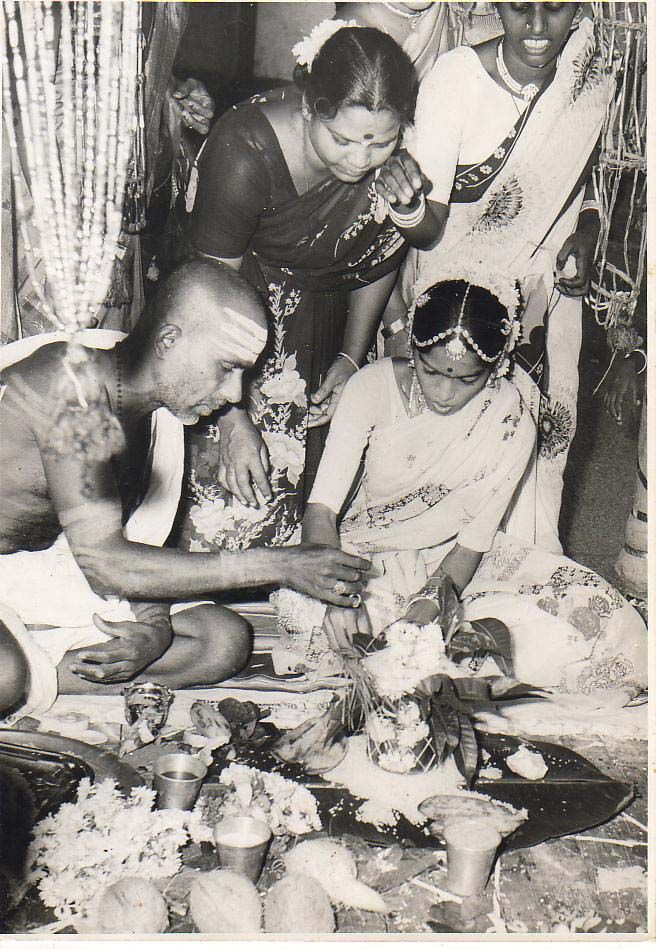
Verghese’s story begins with an India wedding betrothal of a 12-year-old girl to a 40 something widow who has lost his wife to illness.

The betrothal is made at the recommendation of the husband’s relative who as a matchmaker researches the background of the betrothed’s family. The chosen bride is naturally afraid to leave her family and the groom is unsure of what he wishes to do. The matchmaker assures the groom the betrothal is a good one for him, and the marriage is consummated. The young girl travels from her home to her new husband’s property many miles away. Her greatest unhappiness is in leaving her mother but she is greeted by her new household by a helpful older woman. The young girl is comforted by her Christian beliefs and receives an omen of welcome by a massive bull elephant that had been saved by her new husband. 

The incongruity of ages in this marriage is disconcerting to many listener/readers. Verghese non-judgmentally explains the culture of India in the early 1900s.

(World travelers will recognize remnants of that betrothal culture exist in India today.) The husband has a two-year-old son from his former marriage. He is a landowner as a result of personal ambition and hard work. He is not rich but is well respected by the people that know him. The husband treats his new bride with respect, and she begins to care for the household and her new stepson. They first have intimate relations when she turns 17. Their first child is a daughter who has a developmental problem that limits her intellectual growth. After two miscarriages, she has a boy who is a binding connection for the story. She grows to love her husband who dies when his child wife reaches her thirties. She becomes the matriarch of the clan.

This sets the tenor of Verghese’s story. It is a long, long, some might say too long story that repeatedly reminds one of how important it is to respect other people’s cultural beliefs while all life is filled with hardship and change.

Listener/readers will get a glimpse of India’s, as well as Great Britain’s, and Sweden’s cultures with the introduction of a Scottish and Swedish surgeon. What the main characters hold in common is that they have underlying respect for the life of others in any culture, whether rich, poor, educated, or unschooled. The two doctors, the child bride and her son are heroes and victims of their times.

Each of the main characters in Verghese’s book have unique life stories but a common thread of belief is respect for the life of all, cultural acceptance and understanding, and life-long pursuit of education.

The Swedish doctor travels the world to settle in a remote part of India to recreate a refuge for victims of leprosy.  The Scottish doctor, after a life-threatening injury, becomes a patient of the Swedish doctor to be figuratively reborn by his experience after the Swede’s death. As true of the India family, the Scottish doctor’s life is dramatically changed by tragedy. The Swede dies at the refuge after having rehabilitated the Scottish physician’s burned hands. The Scott has been introduced to supporters of the Swede’s practice at the Leper colony and he evolves into a business owner/manager that makes him wealthy.

The son of the India child-bride saves a young child from drowning in a flood that whisks him and a nearly dead victim to the Swedish doctor’s clinic where the physically unable Scottish surgeon directs the boy in how to incise the babies throat to save the baby from asphyxiation. The young boy saved the babies life and overcame a hearing deficiency to become a social leader of his village in India during and after WWII.

The young boy, now a man, falls in love with a woman of his age that he had met when he saved the nearly drowned baby. They marry and have a child of their own. The child dies in a tragic accident. The loss of the child is felt to be the fault of each parent which tears their relationship apart. It never mends as the tragedy of their relationship continues to unfold. Their marriage falls apart. At this point the Scottish doctor re-enters the story with an unexpected revelation about the wife who leaves and returns because of the loss of their child. What is meant by “…loss of their child” is an added chapter to this tragedy that extends the story beyond one’s imagination.

Verghese shows himself to be an excellent writer but to some listener/readers the denouement of his story is a step too far for one’s imagination.

Every human being has a life story. A few human beings in Verghese’s book show that respect for every life carries the hope of civilization. Without respect between those who are different, Verghese shows why human dysfunction and tragedy will remain a condition of human society.

LETTING GO

One can choose the life of Buddha, Muhammed, Jesus Christ, Zoroaster, Rishabhanatha, Maimonides, Saint Francis of Assisi, Confucious or some other spiritual figure but it is one’s individual memories and our ability in “letting go” that will give one peace of mind and happiness in life.

Audio-book Review
 By Chet Yarbrough

Blog: awalkingdelight
 Website: chetyarbrough.blog

The Untethered Soul (The Journey Beyond Yourself)

By: Michael A. Singer

Narrated by: Peter Berkrot

Michael Alan Singer (American Author, journalist, motivational speaker, software developer.)

Michael Alan Singer’s audiobook is a reification of “Letting Go” written by David Hawkins. Hawkins, a medical practitioner, and Singer, a successful tech entrepreneur, come to similar conclusions about how to live life. Singer offers a more spiritual and ritualistic approach in working through remembered, and often suppressed, experiences of life by confronting them and letting them go.

Dr. David Hawkins posits the idea of a cosmic mind that can be tapped into by one’s thoughts to mitigate negative feelings. Singer’s approach is more direct and based on actual experience revealed by conscious thought and conscious rejection.

Singer believes every experience in one’s life is recorded by the mind, either correctly or falsely.

Singer suggests, through meditation, harmful or distorted memories can be revealed and discarded as inconsequential by the process of “letting go”. This is the same “letting go” referred to by Hawkins but located in a cosmic mind (the totality of human thought) rather than the individual mind argued by Singer.

Singer’s idea for treatment seems more therapeutically practical than Hawkins.

Both writers offer a solution to many human problems, but Singer suggests a therapeutic process exercisable by the individual, without the mysticism of a cosmic mind.

Singer introduces the idea that every experience in an individual’s life is consciously or subconsciously recorded in one’s mind.

Singer’s suggestion is that all negative feelings from life experience can be eradicated by letting them go. By “letting go” of accurate or inaccurate memory, Singer suggests one’s peace of mind, energy, and happiness improves.

One can choose the life of Buddha, Muhammed, Jesus Christ, Zoroaster, Rishabhanatha, Maimonides, Saint Francis of Assisi, Confucious or some other spiritual figure but it is one’s individual memories and our ability in “letting go” that will give one peace of mind and happiness in life.

HEART RENDERING

Live as healthy a life as you can because death is a part of every life, and fulfillment is in one’s health.

Audio-book Review
 By Chet Yarbrough

Blog: awalkingdelight)
 Website: chetyarbrough.blog

Heart: A History

By: Sandeep Jauhar

Narrated by: Patrick Lawlor

Sandeep Jauhar (Author, Cardiovascular Physician, opinion writer for The New York Times.)

“Heart” is a history of cardiovascular medicine, personalized by Sandeep Jauhar, a cardiovascular physician. Jauhar’s history of cardiovascular medicine is not for squeamish listeners. It is a personalized account of advances in cardiovascular medicine by a physician whose personal life is interwoven with the ravishes of heart disease. Jauhar addresses the history of heart ailments, his family, his patients, and physician/inventors who advanced the treatment of heart disease.

Heart disease remains the top medical cause of death according to the Centers for Disease Control and Prevention (CDC) and other statistical agencies.

Jauhar notes the heart is a critical organ of the human body, but its essential function is as a pump for blood. It is a muscle. With its contraction, blood carries the nutrients and oxygen of life to organs of the body. When that pump malfunctions or stops, life is in jeopardy. Jauhar’s history of the “Heart” recounts advances in medical treatment for the heart’s repair and maintenance.

There are several reasons why Jauhar’s history is difficult for listeners to hear.

  1. Many of the most important advances in cardiology are dependent on animal experimentation before human application. To animal lovers, the thought that animals, whether they have awareness or not, are used to test pacemakers, heart transplants, and human drug treatments for heart ailment. Their earts are stopped and restarted. Animals die from tests being run by doctors and clinicians searching for answers and treatments for heart disease and other medical maladies. The human reason for this method of research poses the question–who would want sons, daughters, or parents treated without tests for the unknown consequences of experimental drug treatments and physical interventions?
  2. Descriptions of pain and anxiety of heart disease symptoms are explained with details that may scare listeners who have been diagnosed with heart disease.
  3. The balance between living and dying, pain and nothingness, is a constant presence in conversations between physician and patient. Stories of individual patient and mass casualty events are a part of Jauhar’s history of “Heart” disease and treatment.
  4. Jauhar views major advances for heart disease treatment are near their end in the 21st century.

Jauhar offers many stories showing how research and great inventions have mitigated the consequences of heart disease. The key to that observation is that inventions and interventions mitigate but do not cure the disease.

Jauhar explains an abnormal heartbeat called an arrhythmia led to the invention of an implanted mechanical electrical conduction system to automatically shock the heart when an arrhythmia occurs in a patient. The shock can be painful. However, without that shock, an arrhythmia stops the flow of blood to vital organs which may lead to death or disability. The idea of the shock creates anxiety in some patients that can induce further arrhythmia which repeats the shock. Jauhar reports one patient asks to have the implant removed because of its repeating shocks. Jauhar notes the patient dies soon after the removal of the implant.

Three-dimensional echocardiography has significantly improved diagnosis of cholesterol build-up in blood vessels that can be mitigated with drugs. Statins have been shown to reduce high cholesterol. As with any drug therapy, there are unintended consequences when something new is introduced to one’s blood stream. Muscle pain, digestive problems, and mental fuzziness can be side effects from statin treatment. As one grows older, the first two may be manageable but with age who wants to be fuzzy headed. Clarity of thought seems more and more a sadly missed luxury as we age.

Jauhar notes better diet and exercise, and no smoking are important benefits to those who have hereditary heart disease. Jauhar suggests anger management and quieting one’s thoughts through meditation offers benefits to those who suffer from heart disease. Don’t get mad and don’t try to get even because both aggravate the heart muscle.

Jauhar explains a number of inventions have led to short- and long-term treatments for cardiovascular diseases. From the example of stab wounds to congenital heart malfunction, the medical profession has invented machines that can take over the hearts’ function during surgery. More time for operation on the heart is provided to the surgeon with the use of the artificial heart pumping machines.

Christian Barnard (Resident surgeon at Grotte Schuur Hospital in Cape Town, S. Africa, Born 1922. Died 2001.)

Heart transplantation’s history is reviewed by Jauhar. The first heart transplantation was by Christiaan Barnard in 1967. The patient lived for 18 days after the surgery. The average life span for a heart transplant has risen to 10 years but the supply of healthy human hearts limits its potential. Jauhar notes the Jarvik-7, named after its inventor, is the first mechanical heart pump but its refinement has failed to repeat the success of human heart transplants. Its practical use has been limited to short term use for time to find donated hearts and extend patients’ lives during surgery.

Jauhar tells of his experience in New York on 9/11. It is a horrific story told by many writers but not with any more stomach-turning clarity than that which a participating doctor imparts.

Jauhar ends his book with the loss of his mother who may have died from a heart attack. He suggests there are other conditions that may have led to her death, but his point seems to be–live as healthy a life as you can because death is a part of every life, and fulfillment is in one’s health.

CHOICE

Audio-book Review
 By Chet Yarbrough

Blog: awalkingdelight)
 Website: chetyarbrough.blog

What Are You Going Through

By: Sigrid Nunez

Narrated by: Hillary Huber

Sigrid Nunez (American Author, novelist, editorial assistant at The New York Review of Books.)

Sigrid Nunez’s “What Are You Going Through” resonates with many who are dealing with terminal illness or the infirmity of old age. Nunez creates a story of a friend dealing with the debilitating effects of cancer treatment. The treatment is prolonging her life but at a cost her friend is increasingly unwilling to bare. Her friend has a plan to quit the treatments and either let nature take its course or swallow a pill to end her suffering.

The friend approaches close friends to ask them to live with her for the time she has left with the understanding that she will take the pill at some point during their time together. Her close friends decline but Nunez’s main character, who is a more distant acquaintance, agrees to stay with her until the end.

The author’s subject is about life and choices humans may or may not have a right to make.

Nunez writes a story that leaves the sole choice of living or dying in the hands of women, more particularly a woman who has terminal cancer. It doesn’t seem a coincidence that a woman is the writer, and her subject is a woman’s choice of living or dying. An inference one might draw is that the choice of life is more a woman’s than a man’s decision. Of course, that raises questions beyond “right to die“.

In the main character’s agreement to live with the cancer patient, the author implies those suffering from a fatal illness do have a right to take their own life.

Euthanasia is currently illegal in all 50 states of the United States, but 10 jurisdictions, including Washington D.C., California, Colorado, Oregon, Vermont, New Mexico, Maine, New Jersey, Hawaii, and Washington allow assisted suicide. Presumably, Nunez’s character is in one of the 10 jurisdictions that allow assisted suicide.

Of course, the question left unanswered is assisted suicide a choice that should be left in the hands of an individual.

Obviously, not everyone agrees because most American states do not authorize assisted suicide. Nunez offers no definitive opinion. Her main character is helping a friend make a choice about a cancer patient’s own life, but the author leaves the choice unmade at the end of her story.

At best, Nunez’s story leaves reader/listener’s on their own about a person’s right to take their own life. Maybe that is her point, but it leaves this critic unsatisfied.

THE CUT

This is a brave story of a great woman who demonstrates the truth that all humans beings are equal, while a very few are the greatest among us.

Audio-book Review
 By Chet Yarbrough

Blog: awalkingdelight)
 Website: chetyarbrough.blog

The Girls in the Wild Fig Tree (How I Fought to Save Myself, My Sister, and Thousands of Girls Worldwide.)

By: Nice Leng’ete

Narrated by: Nneka Okoye

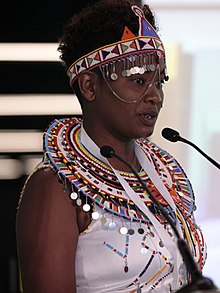
Nice Nailantei Leng’ete (Author at Age of 31 or 32, Graduate of Kenya Methodist University.)

Nice Leng’ete offers the story of her life in “The Girls in the Wild Fig Tree”. A large part of her story is about her life from age 4 to 10 years of age. She is born into a Christian family in Kenya. The final chapters address the lessons of her life and her journey to adulthood. Her father and mother die early in Leng’ete’s life. She explains both her parents died from AIDs. (Auto Immune Disease is first diagnosed in Kenya in 1984. By 1996, it is estimated that 10.5% of Kenyans were living with HIV, the virus that causes AIDs. The virus weakens a person’s immune system by destroying cells that fight disease and infection.)

Leng’ete is born into a blended family of two mothers. She explains the patriarchal Maasai culture is polygamous and her father had children from another wife.

Though her father dies when she is but 6 or 7, she recalls him as a leader of his village. Her father enriches their Maasai community by working with the Kenyan government to establish a natural preserve managed by local young men of their village. Leng’ete’s memory of both her father and mother seem to have formed her character. Her memory of her parents is that they loved each other and raised her to become the woman of this story.

Leng’ete is from southern Kenya, born into an East African tribe of the Maasai people.

Leng’ete shows herself to be an unconventional woman as well as an extraordinary Maasai. She breaks many international misogynist beliefs as well as Maasai traditional roles for women in her native country.

Coming from a rural area of Kenya, she moves to the capitol city of Nairobi, Leng’ete confronts the anonymity of big cities with a mentality to “do what ever it takes” to succeed.

Leng’ete’s poverty, youth and ambition lead her to live with three young men to afford a place to live in Kenya’s capital city. She is at once encouraged by the help she receives. On the other hand, she is surprised by the duplicity of a Nairobi’ con man that dupes her into believing he is an agent for international models. What Leng’ete does not forget is her village and Maasai traditions that suppress women and her village’s potential for cultural change.

Leng’ete returns to her village to work with local leaders to change the tradition of female genital mutilation (FGM). Leng’ete understands her culture and recruits a local male friend to open a door to some of the village elders. That door could not be opened by a woman without the help of her male friend. At the beginning of Leng’ete’s return she notes none of the elders would stay when she began to speak. With the help of her male friend’s participation in the meetings, a few elders began to listen. Without the elders’ understanding, she knows there is little chance for cultural change. The elders power and influence were needed.

Cultural change begins to show promise when a few elders stay and begin to listen to Leng’ete. Her objective is to explain how the the tradition of FGM diminishes Maasai’ culture.

Based on the advice of Leng’ete’s deceased father, she begins by asking questions of the elders to get them to think about the consequence of genital mutilation of women. She asks elders of the village if they think their partners enjoy sex. When they say no, she asks would they like their partners to enjoy sex? They say, yes. These questions open a door to understanding the consequence of women’s genital mutilation.

Leng’ete notes in her book that men are circumcised as a traditional path to manhood but the consequence is rarely death.

There are various reasons for genital cutting in different cultures. In the Maasai, FGM is a rite of passage into adulthood and a pre-requisite for marriage. In men, it is penile foreskin cutting but in females it is removal of the clitoris, a female sex organ that is a source of female sexual pleasure. Leng’ete explains to the elders how genital cutting of women’s genitals often cause excessive blood loss, infection, and high fevers that cause the death of women in their tribe. In the past, such deaths were believed to be unrelated to the cutting but to supernatural causes. In truth, Leng’ete notes many of the deaths are from unsterile instruments and imprecise cutting of the clitoris.

The broader cultural reality of FGM is that it reinforces sexual inequality.

Leng’ete tells the story of her older sister, Soila, who survives FGM and has children but is brutally abused by her husband. Her husband beats her and blames it on his drinking when it is implied to be related to Maasai patriarchal culture. Soila is trapped in the tradition of Maasai culture that says when a woman is married she is married for life. Leng’ete confronts Soila’s husband with the truth of his abuse. Surprising to Leng’ete, the husband gives up the tradition of life-long servitude of a wife by saying Soila is now Leng’ete’s responsibility. He releases Soila from their marriage, contrary to Maasai cultural tradition.

Leng’ete manages to get a college education but on her way she is hired as a social case worker in Kenya. That experience leads to organizational success that leads her to become a public speaker at a Netherlands event about women’s sexual and reproductive rights. She returns to Kenya to give another speech about the same subject to the Maasai, including village elders.

Leng’ete becomes the first woman to ever receive Kenya’s Black Walking Stick award which signifies leadership, respect and power within her community.

This is a brave story of a great woman who illustrates the truth that all human beings are equal, while a very few are the greatest among us.

BEHAVIORAL HOPE

Audio-book Review
 By Chet Yarbrough

Blog: awalkingdelight)
 Website: chetyarbrough.blog

Of Fear and Strangers (A History of Xenophobia)

By: George Makari

Narrated by: Paul Heitsch

George Jack Makari (American author, psychiatrist and historian, professor at Weill Cornell Medical College.)

George Makari notes his family emigrated from Lebanon to the United States when he was a young boy. This is an interesting note because of the diverse cosmopolitan history of Lebanon that reaches back more than 5,000 years. Lebanon is a country of many cultural, religious, and ethnic groups including Arabs & Syriac, Armenians, Kurds, Turks, and others.

Makari’s education and family background are well-suited for his explanation and history of the psychology of race and ethnicity. For Beirut to have become a cultural center for a period of time must have required high tolerance for difference among its residents.

Beirut got the name “Paris of the Middle East” following WWII when it became a vibrant cultural and intellectual center, largely influenced by the French.

Makari notes WWII’s end and implies society’s relief ameliorated conflict between Lebanon’s disparate cultures. However, that relief falls away in the 1970’s Lebanese civil war.

Beirut, Lebanon’s capitol, is a city some 40 miles from Makari’s hometown. It became a graveyard and failed state after the Lebanese civil war.

As Franklin Delano Roosevelt said in his 1933 inauguration, “The only thing we have to fear is fear itself.” Roosevelt is, of course, referring to fear felt by Americans during the Great Depression.

In “Of Fear and Strangers”, Makari suggests fear is at the heart of race and ethnic discrimination. Undoubtedly, the end of WWII reduced fear in the people of Lebanon. Reduction in fear might be the motivation for Beirut’s acceptance of cultural diversity, peace, and prosperity between 1945 and the 70s.

As a psychiatrist and historian, Makari offers a theory of how and why people become xenophobic.

He suggests it begins early in life. Makari argues the rise of Hitler and the horrid reality of the Holocaust lay at the feet of an authoritarian culture that suppressed freedom, demanded conformity, and used vilification of the “other” to reinforce a false belief in superiority.

Makari explains discrimination is largely based on fear of those who are different from us, i.e., us being anyone of a different race or ethnicity.

Makari’s history is about xenophobia, i.e., the fear or hatred of people who are different. The definition of xenophobia is first noted in 1880 with the combination of two ancient Greek words, i.e., “Xenos” meaning stranger and “Phobos” meaning fight or fear.

Makari argues the key to ameliorate fear of strangers or the “other” lies in the way parents raise their children.

Realigning fear of the stranger will not change the past and seems unlikely to change the future. However, Makari argues the key to ameliorate fear of strangers or the “other” lies in the way parents raise their children. He argues parenting that is less authoritarian and more open and nurturing will fundamentally change society to be more empathetic. Makari persuasively argues the rise of Hitler is partially related to German culture and the relationship between parents and their offspring. He suggests only with childhood experience of freedom will equal rights and equal opportunities be realized by society.

Makari suggests that family dynamic before WWII created German psychological projections for distrust of “others” and displacement that exhibits itself as anger and sometimes rage.

Makari suggests German family’ dynamics are culturally stricter and more demanding than those of many countries. He implies relationship change between parents and children would create a more empathetic generation in Germany.

Makari’s theory goes beyond individual psychological projection (an ego defense mechanism against unconscious impulses) by explaining how group psychology works to heighten rage against the “other”. Displacement (a redirection of a negative emotion) takes the form of rage against the “other”. Makari argues distrust of the “other” and rage is magnified by group hysteria. That hysteria is exhibited by Hitler’s followers. German rage led to the genocidal murder of Jews. Makari suggests one who is empathetic no longer fears the stranger and welcomes others as fellow humans–living lives, both different and the same as themselves. There is no motivation for displacement rage among those who are empathetic.

(Before this book was published, America experienced group rage in the January 6, 2021 attack on the capitol.)

The last chapters of Makari’s history of xenophobia explain how psychiatric and philosophical theories of mostly men (like Kraepelin, Freud, Adorno, Marx, Locke, Sartre, Camus, Foucault, and Simone de Beauvoir) provide a basis for his beliefs about histories’ recurrence of xenophobia.

Humanity will never become egalitarian without a common purpose.

What is ironic about Makari’s theory of the history of xenophobia is that it offers hope for the future. The experience of Lebanon after WWII suggests global warming, like WWII, may give common purpose to many, if not all, peoples of the world. (An exception would be those nations that insist on adherence to myths of hegemonic power and religious zealotry.)

According to Kamari’s theory, it begins with parenting. If he is right, change will begin with how future generations are raised. Might does not make right. Less authoritarianism will allow the world to more constructively address global warming’s world-wide risk.

Of course, this book was written before Russia invaded Ukraine. Kamari notes the rise of Trump, and his supporters implies group rage and xenophobia remain a clear and present danger in America.

In listening/reading Kamari’s book, one chooses to either be a pessimist or optimist about our world’s future.

The hope is that an interregnum (a gap in government and social order) is created to allow Makari’s theory of improving parental care of children is implemented. If Makari is right about how parents should raise their children, a more empathetic society may emerge to proffer a more egalitarian society. On the other hand, humanity may continue down the road of self-destruction, fueled by unregulated self-interest and diminishing human empathy.