
Audio-book Review
By Chet Yarbrough
(Blog:awalkingdelight)
Website: chetyarbrough.blog
Your Deceptive Mind: A Scientific Guide to Critical Thinking Skills
Recorded by: Professor Steven Novella
Produced by: The Great Courses
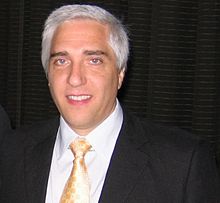
STEVEN NOVELLA (AMERICAN CLINICAL NEUROLOGIST, ASST. PROFESSOR AT YALE UNIVERSITY SCHOOL OF MEDICINE)
“Your Deceptive Mind” offers lessons for two paradigm shifts occurring in America today. One is gun control; the other is sex discrimination. Professor Steven Novella’s lessons apply to other important issues, but none seem to have the same political momentum for change.
Novella begins by inferring we all deceive ourselves. Novella explains it is caused by the nature of human consciousness. Novella argues that human brains are designed to make coherent sense of remembered experience; not to necessarily recount accurate details of events. We often add facts and change details to improve coherence of our memories.
Memory does not work like a film clip. It is not caste on celluloid that can be replayed as a memory. Memory is re-invented by reconstruction of facts to fit a story that makes sense to the person who remembers.

AR-15 (Type of semi-automatic rifle used in Florida High School shooting.)
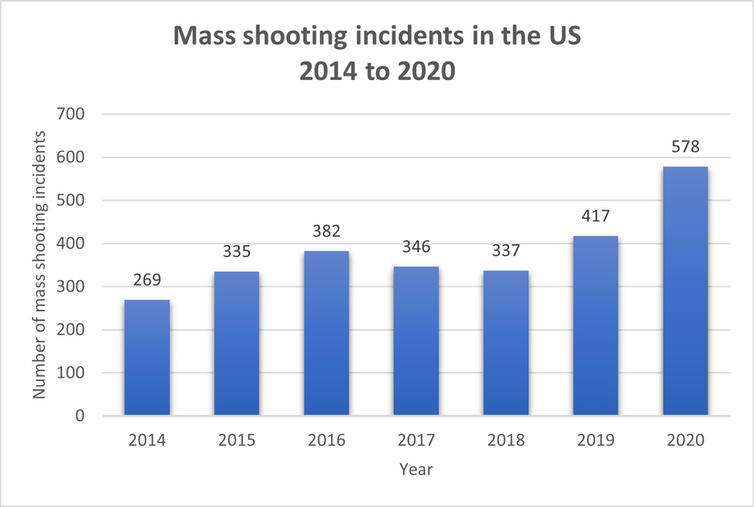
As of April 15, 2021 there have been 148 people murdered and 485 injured in mass shootings. The most recent is at the Indianapolis FedEx facility that killed eight people. One is reminded of William Butler Yeats:
Turning and turning in the widening gyre
The falcon cannot hear the falconer;
Things fall apart; the centre cannot hold;
Mere anarchy is loosed upon the world,
The blood-dimmed tide is loosed, and everywhere
The ceremony of innocence is drowned;
The best lack all conviction, while the worst
Are full of passionate intensity.
The 17-people murdered in a Florida high school in 2018 raises the issue of gun control in America one more time. Americans see this incident from three views. One, from the perspective of people who heard it on the news; two from the perspective of people who responded to the event; and three from the perspective of victims. Based on Novella’s assessment of critical thinking, all three views distort reality.

The 17-people murdered in a Florida high school 2018 raised the issue of gun control in America one more time.
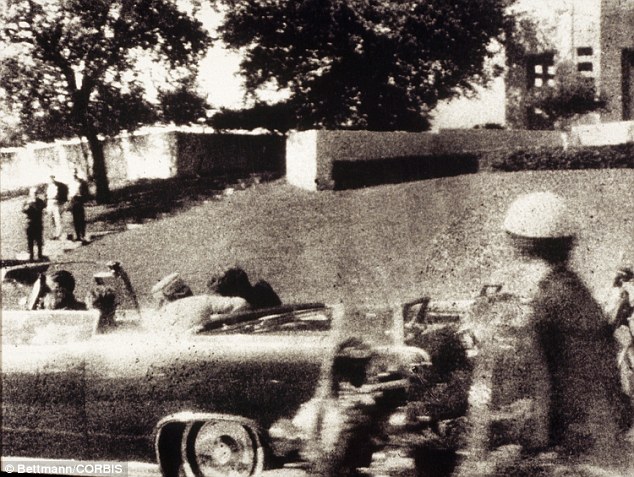
JOHN F. KENNEDY ASSASSINATION – Memory does not work like a film clip. It is not caste on celluloid that can be replayed as a memory. Memory is re-invented by reconstruction of facts to fit a story that makes sense to the person who remembers.
Novella tells a story of a woman accompanying the John F. Kennedy trip to Dallas, Texas. Soon after Kennedy’s death, she explains that she did not see anything that happened. As the years pass, she recalls seeing smoke from a grassy knoll near the shooting. Novella explains that each time she tells the story more details are revealed. No evidence is ever found to suggest a shot is fired from anywhere but the Dallas, Texas book-depository. What she is doing is creating facts to improve the coherence of a memory.
Facts of Florida’s murders and other gun-related incidents are remembered differently. All who heard of, responded to, or are victimized by guns tell different stories. There is no singular consensus on what caused it to happen, who is responsible, or what can be done. Facts seem not to matter. In Florida, seventeen human beings are dead. One person killed them. One automatic weapon is used by a troubled high school student who used a gun designed ONLY to kill people.
Victims of the school shooting ask why America cannot protect their children. A flood of responses is given but each person at the school is influenced by a subjective recollection of events. In many cases, facts are ignored because they do not fit the narrative of the person telling his/her story. It has little to do with facts; i.e. except as those facts fit the re-created memory of a horrific event. Like the woman seeing smoke coming from a grassy knoll, some facts just fit a reconstructed story; not the truth.
Critical thinking skills mean addressing facts, using those facts to create a constructive analysis, a plan of action, and implementation. Seventeen people are dead in Florida from one shooter. They are dead at the hand of a troubled teen. The weapon used is only designed to kill people. Everything else is irrelevant. Those are the facts. That is the truth. What is needed now is constructive analysis, a plan of action, and implementation.

The same can be said of sex discrimination. An example is the King’s law that particularly applies to women who speak insolently. They are to have their mouths scoured with salt; i.e. a law applying only to women slaves. Of course, the law begs the question of why women are slaves.

Novella’s argument that every memory is a subjective recollection may mean testimony of women who are abused and/or discriminated against are misreading the facts of their recollection. However, many facts are independent of recollection.
There is overwhelming evidence; i.e. fact-based films, recordings, physical examination records, and statistical studies that show women are abused and discriminated against all over the world. Those are the facts. That is the truth. What is needed is constructive analysis, a plan of action, and implementation.
Gun control and women’s rights: Has America reached the tipping point for acting on critical thinking? Have we finally reached the threshold for a paradigm shift in gun control and women’s rights? Doubtful.

















 Even in these troubled times, the messiness of American Democracy bends toward a resolution of intractable social ills.


































 REVIEWS AND VIEWS OF LIFE