TSAR PUTIN?

Audio-book Review
By Chet Yarbrough

(Blog:awalkingdelight)
Website: chetyarbrough.blog

The New Tsar: The Rise and Reign of Vladimir Putin

Written by: Steven Lee Myers

Narration by:  Rene Ruiz

STEVEN LEE MYERS (DIPLOMATIC CORRESPONDENT, WASHINGTON BUREAU, THE NEW YORK TIMES)

Steven Lee Myers, NYT’s reporter and author.

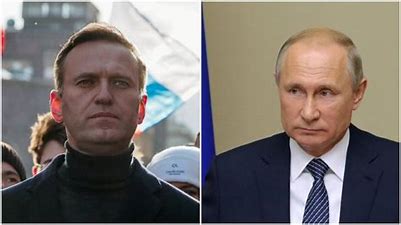
Steven Lee Myers has written a highly polished and informative biography but fails to convince one that Putin is a Tsar.  Putin is more Richard Nixon than Catherine the Great.   Putin, like Nixon, is smart and thin-skinned.  Putin, like Nixon, makes personnel decisions based on loyalty, and views the world in real-politic terms.

Myers shows Putin comes from a family of Russian patriots with a grandfather and father that fought in Russian armies in different generations.  Each lived during the Stalinist years of Gulags and terror but none rebelled against the power of Russia’s leadership.

Myers explains how Putin becomes interested in the KGB at the age of 16 and grooms himself for a life in the secret service.  Putin’s KGB-influenced’ career-path is to become an attorney.  He learns German and is assigned to East Germany in his first years as a KGB agent.

Myers explains how Putin’s steely disposition grows in East Germany, and later St Petersburg, Russia. Putin keeps a low profile but exhibits bravery, independence, and initiative when his country’s leaders are overwhelmed by the fall of the Berlin Wall and the Iron Curtain.

ANATOLY SOBCHAK AND VLADIMIR PUTIN (ST. PETERSBURG, RUSSIA)

Putin becomes the “go-to” guy for the Mayor of Leningrad (aka St. Petersburg).  Putin’s relationship to the Mayor of Leningrad, Anatoly A. Sobchak, is founded on loyalty. 

Sobchak is initially recognized as a representative of new Russia but the power of his position is diminished by the ineptitude of his administration.  In spite of Sobchak’s mistakes, Myers shows that Putin stands by him.  Loyalty is a characteristic of Putin that is expected of all who work with him.  Eventually Sobchak is electorally defeated and Putin is left out of a job.  

Putin’s relationship with the mayor of Leningrad reminds one of his support for Lukashenco, the President of Belarus, who illegally diverted a commercial airline to capture a government political dissident (Roman Protasevich). 

Roman Protasevich (Belarusian journalist and political dissident.)

Alexander Lukashenko (President of Belarus)

In a televised June 4th, 2021 confession by Protasevich, Lukashenco embarrasses himself and his country with coerced praise by the Belarus President. This reminds one of Stalin’s show trials.

Russia is unlikely to return to hegemonic control of adjacent countries. Ethnic nationalism and desire for greater freedom are unquenchable thirsts.  Ukraine, Georgia, and even Belarus, seem unlikely to rejoin Russia in a new Socialist Republic.

FORMER U.S.S.R.

Russia is equally unlikely to be ruled by a Tsar again because its population is better educated; aware of the value of qualified freedom, insured by relative social stability, and security.

Russia will remain a major international power and influence in the world.  Nuclear capability and cybernetics (particularly as a weapon of political and economic disruption) guarantees Russia’s position in world affairs.

Forcing Ukraine or Georgia to return to the Russian block is beyond the military strength of Russia’s Putin or his successors.  Putin successfully destroyed Chechen resistance in Russia but only by severe repression within the Russian state’s border, mobilization of the press against Chenchen terrorism, and co-optation of a Chechen leader who is now a Putin’ mercenary in Ukraine. Reassembly of a form of the U. S. S. R. is only conceivable based on political accommodation based on economic influence or volitional federation.  Neighboring countries can only be seduced, i.e., either by economics, or cybernetic influence.  A majority vote of neighboring countries; not military dominion, will be the “modus vivendi” for Russian expansion.

But what about the Crimea.  It is a part of the Ukraine.

An argument can be made that territory of the Crimea is not an exception.  Millions of dollars were spent by Russia to modernize Crimea for the Olympics.  Undoubtedly, a great deal of time was spent influencing Crimea’s population (which is ethnically 65% Russian).  It is conceivable that a majority of the Crimea residents voted to become part of Russia.

Of course, this sets aside the truth of Crimea’s territorial and nationalist connection with Ukraine.  One might argue this is analogous to Hitler’s invasion of Czechoslovakia.  Hitler used the excuse that ethnic Germans were being abused in the Sudetenland.  In this view, Putin is no Tsar; i.e. he is more Stalinist accolade.

(To make Crimea the equivalent of the Sudetenland one might ask oneself if the majority in the Sudetenland were ethnic Germans, and was there a vote by Sudetenland residents.)

Crimea

Undoubtedly, a great deal of time was spent influencing Crimea’s population. 65% of the Crimea’s population is ethnically Russian.  It is not inconceivable that a majority of Crimea residents voted to become part of Russia

Myers cogently reveals the strengths and weaknesses of modern Russian rule.  In a limited sense (limited by Myers’ independent research and fact checking), Myers’ corroborates the experience noted in William Browder’s book, “Red Notice”.  Putin is certainly capable of undermining the influence or action of any person who chooses to challenge his authoritarianism.

WILLIAM FELIX BROWDER (AKA BILL BROWDER-CEP AND CO-FOUNDER OF HERMITAGE CAPTIAL MANAGEMENT, NOTED CRITIC OF PUTIN)

American-born British financier and political activist.

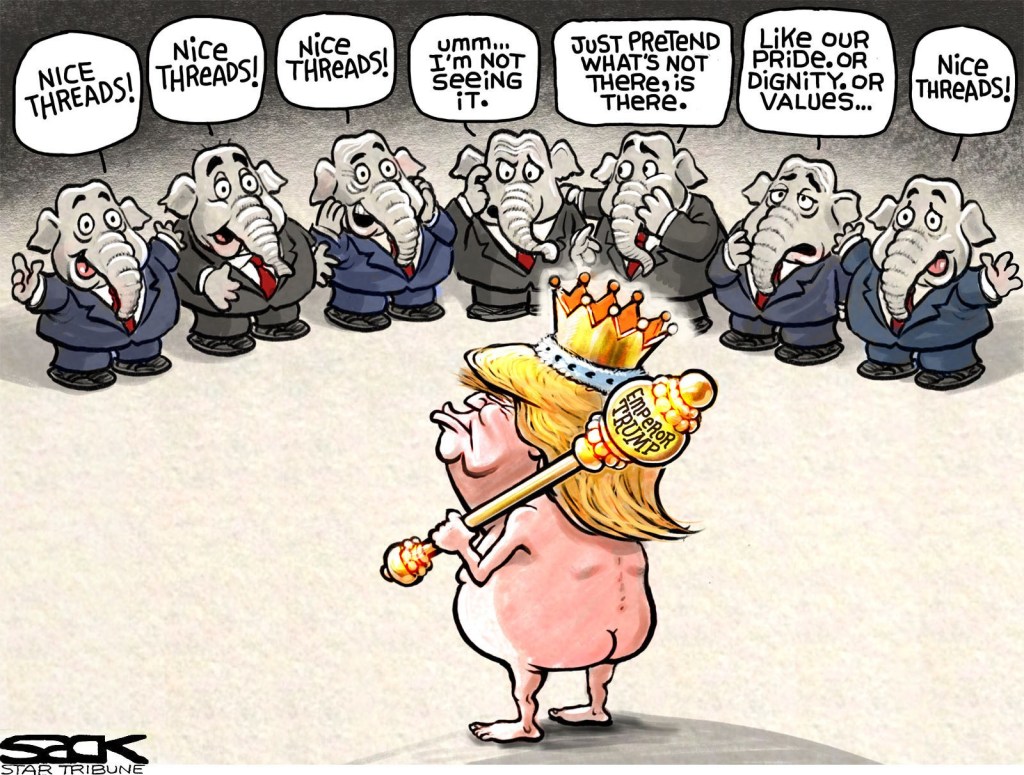
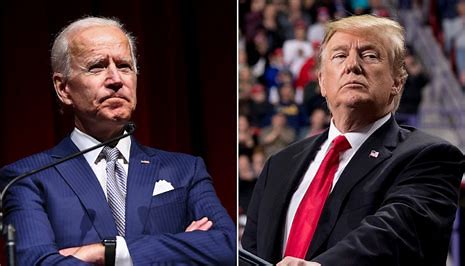
In spite of Putin’s great power, Myers shows there are chinks in his invincibility.  Putin’s sly manipulation for re-election after Medvedev’s only term as President fails to quell the desire for freedom of Russian citizens.  Just as Watergate exposed the hubris of Nixon, Putin will suffer from the sin of being a flawed human being.  Putin, like Nixon, is a great patriot of his country but neither exhibit the inner moral compass that make good leaders great leaders.  This is a reminder of the 45th American President who focused on the business of America; not its role as a beacon for freedom and equality of opportunity.

An odd article in the NYTs (4/6/22) notes America is perplexed by what Putin owns in order to punish him with confiscation or restriction of assets. Putin is a true believer in communism. His position and property are owned by the State. In one sense that makes Putin vulnerable because his money, power, and prestige is dependent on his government’ position. In another, his position insulates him from international economic sanction.

U.S. President Donald Trump and Russian President Vladimir Putin shake hands as they hold a joint news conference after their meeting in Helsinki, Finland, July 16, 2018. REUTERS/Leonhard Foeger

Trump-Putin summit in Helsinki

Myers creates a convincing portrait of a man who is subject to the sins of most who rise to power.  Putin believes he has become a god among men.  He rationalizes his greed by thinking the fate of Russia’s re-ascendance lies in his hands.  Even in the days of Stalinist governance, relationship to the leader was the sine ne quo of wealth and power.  Putin carries on that tradition.  Putin’s friends and associates from the KGB and his tenure in St. Petersburg are critical components of Putin’s control of the economy and government.

Putin is no Tsar but he could have been if education had not advanced society and freedom of expression  had not entered the internet age.

DEMOCRACY

Audio-book Review
By Chet Yarbrough

(Blog:awalkingdelight)
Website: chetyarbrough.blog

Political Order and Political Decay: From the Industrial Revolution to the Globalization of Democracy

Written by:  Francis Fukuyama

Narrated by:  Johnathan Davis

FRANCIS FUKUYAMA (AMERICAN POLITICAL SCIENTIST, POLITCAL ECONOMIST, AND AUTHOR)

FRANCIS FUKUYAMA (AMERICAN POLITICAL SCIENTIST, POLITICAL ECONOMIST, AND AUTHOR)

Francis Fukuyama offers a benediction and warning about democracy in “Political Order and Political Decay”.  His book is difficult to absorb because of its wide view of politics and a listener’s sense that political theory is being justified as much as proven.  However, Fukuyama impressively argues that democracy is the best form of government in the world and may evolve into a form of government that is best for all modern societies.

Fukuyama writes this with an examination of the current state (actually pre-Trump) of American democracy.  He addresses other forms of democracy developed, or developing, in other countries.

Fukuyama explains there are three pillars of democracy. 

First, a state must be formed to protect its citizens and its territory.

Second, rule of law must be established to constrain power held by the few over the many.

ACCOUNTABILITY

And three, accountability must be established for policies that serve the interest of all the people; not only factions or special interests.  When any of these supports are weakened, democracy decays.

Many examples of good and bad democracies are given by Fukuyama.  To narrow the territory, this review will focus on the United States but the author offers many more examples that reinforce his theory.

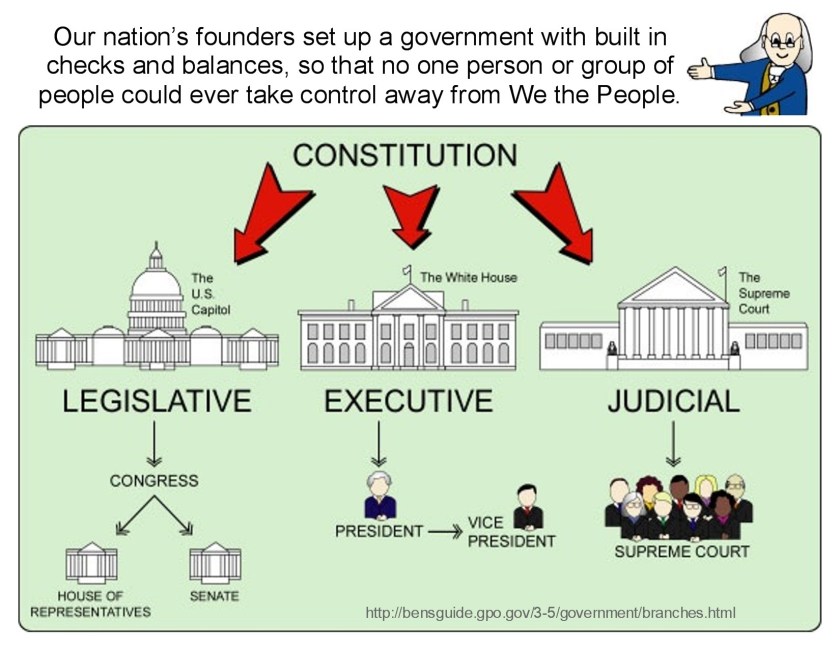
In the U. S., the founding fathers address forming a nation-state with rule of law and a balance of power formula intended to serve the interest of all of its citizens.  For over two hundred years, America has adhered, in principle, to these three pillars of democracy. 

CHECKS AND BALANCES

However, America has failed, at different times, in different degrees, in ways that have shaken each of democracy’s pillars.

The iniquity of slavery is played out.  The right of national governance of all states of the union is clarified and mandated by the victory of Union forces.  Through the blood and treasure lost in the war, the nation became one.

AMERICAN CIVIL WAR

The nation-state is nearly destroyed by the American civil war. 

There have been numerous attacks on the rule of law when addressing equality of opportunity, the right to vote, and freedom of expression.  Victories and losses are referred to in Fukuyama’s book with a trend toward betterment in America but still as a work in progress.  Fukuyama notes that many nations are not ready for democracy because they have not adopted rule of law that requires human rights for all citizens.

MONEY

Accountability has been distorted by political gerrymandering, special interest influences, patronage, and what Fukuyama calls “clientism” (selling one’s vote for reward).

Concern is expressed over the role of special interest money in its distortion of the political will of the many by the few.

Fukuyama decries the growing extremism in America because of political parties that rely on local political caucuses controlled by minorities, or special interests.  These special interests nominate candidates who are not qualified to be leaders but are beholding to small interest groups.  If elected, they become clients of special interests rather than representatives of their districts.

Fukuyama spends a good deal of time giving examples of Presidents like Jackson (a President which some compare to Trump) who strongly endorses patronage appointments based on relationship rather than merit.  Fukuyama notes that patronage is significantly changed when a disgruntled acquaintance is denied a foreign post by President Garfield.  The denied acquaintance assassinates the President.

The Pendleton Act is passed and a merit system of appointment is established for government positions.  Fukuyama notes that the Pendleton Act did not eliminate patronage but it reduced its use–the Civil Service came into being.

Fukuyama makes the point that institutionalization of the ideals of the three pillars of democracy ensures government stability and longevity.  The Civil Service is an example of another step taken by America to preserve democratic government. 

Trump-Putin summit in Helsinki

Fukuyama implies vilification of civil service employees undermines democratic stability.

At a Summit, Trump discounts the CIA’s intelligence system.

Marie Yovanovitch (Former Ambassador to Ukraine is summarily fired by President Trump.)

The main points of “Political Order and Political Decay” revolve around the pillars of democracy.  Fukuyama shows that there are many democracies in the world but those that violate any of the three pillars are likely to decay over time. 

Fukuyama argues–when institutions fail to maintain the state as sovereign, defensible, and dependent on the good will of many, willing to guarantee individual rights by rule of law, and accountable for political leader’s actions, democracy decays.

Fukuyama infers countries that choose not to be democratic, based on the three pillars he describes, will not rival the success of modern nation-states that have achieved economic and political stability.

Fukuyama suggests the United States will not necessarily remain the super power it has become.  Fukuyama argues that warning signals are flashing in America because of changes occurring in its political system.  Recognition of corporations as individuals by the Supreme Court opens the door wider for special interest influence on public policy. 

Corporations are able to contribute as much money as they want to super-pacs as clients for political representatives who are primarily influenced by corporate interests rather than public good.  History has made it clear that what is good for General Motors is not necessarily good for the country.

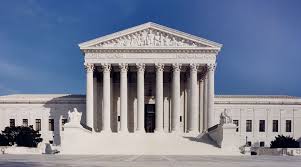
The Supreme Court’s decision to recognize corporations as people opened the flood gate to corporate influence in government.

Another warning bell in America is the blurring lines for separation of powers.  The Supreme Court is entering the realm of legislature.  Veto power has disrupted compromise between the Legislature and Presidency.  Rules in Congress are being used to block negotiation that results in “do-nothing” legislation.

Confidence in the American Federal Government is diminishing.  Belief in the legislative process is at an all-time low.  The public grows to believe government serves special interests more than the common good.

Fukuyama suggests every developing sovereign country should be treated with respect based on their road to nationhood.  Governments will form based on acquiring their own state identity.   America’s role should be support of nations trying to establish rule of law that serves the interests of their citizens.   Finally, America’s role is to demonstrate, encourage, and supplement other nations’ efforts to create institutional organizations that promote the pillars of democracy.

Trump relationship with traditional democratic allies is considered by some to be more confrontational than friendly.

President Trump’s vilification of traditional democratic allies  bodes ill for Fukyama’s theory of “Political Order and Political Decay”.  Trump diminishes America’s example as a good democracy.

If Fukuyama’s theory is correct, it offers a road map for how America can recover and retain a leadership role in the world.  The road map starts with America righting its own ship of state by being a good example of democracy.  If one accepts Fukuyama’s theory, America should support outside countries efforts to become independent democracies.

SUDAN’S RELEVANCE

Audio-book Review
By Chet Yarbrough

(Blog:awalkingdelight)
Website: chetyarbrough.blog

What Is the What

By: Dave Eggers

Narrated by Dion Graham

As Ronald Reagan famously said in his successful campaign against Jimmy Carter, “There you go again”.

Dave Eggers writes another book about a tragic human event. However, Eggers avoids character controversy like that which followed “Zeitoun”, a story about the Katrina disaster.

Eggers classifies “What Is the What” as a novel, without any claim to source-vetted facts or the integrity of its primary character.

SUDAN IN THE WORLD

SUDAN IN THE WORLD 

“What Is the What” is about Sudan and its 20th century genocidal history. This is a story of the complex religious, ethnic, and moral conflict that exists in Sudan and in all nations peopled by extremes of wealth and poverty.

“What Is the What” is a tautology exemplified by a story of one who has something, knows it, and another that has nothing, and knows not why. 

Valentino Achak Deng, the hero of Eggar’s story, tells of his father. Achak’s father explains the story of “What is the What”.

God offers man a choice of cows or something called the What.  God asks, “Do you want the cows or the What? 

But, man asks, “What is the What”?  God says, “The What is for you to decide.” 

Achak’s father explains that with cows a man has something; he learns how to care for something; becomes a good caretaker of a life-sustaining something, but a man who has no cows has nothing, learns nothing about caring; and only becomes a taker of other’s something.

By mixing truth with fiction, Eggers cleverly reveals the story of Sudan’s “lost boys”, refugees from the murderous regime of President Al-Bashir in Sudan.  At every turn, Achak is faced with hard choices. 

Omar Al-Bashir is deposed in April 2019 after almost 30 years in power.

Omar Al-Bashir, a Muslim Sudanese military leader who becomes President, releases dogs of war by condoning the rape and pillage of indigenous Sudanese by Muslim extremists.  It is partly a religious war of Muslims against Christians but, more fundamentally, it is about greed.

Greed is engendered by oil reserves found in southern Sudan in 1978.  Bashir strikes a match that ignites a guerrilla war.  Eggers reveals the consequence of that war in the story of Achak, one of thousands of lost boys that fled Sudan when their parents were robbed, raped, and murdered.  Bashir’s intent was to rid Sudan of an ethnic minority that held lands in southern Sudan.

Eggers cleverly begins his story with Achak being robbed in Atlanta, Georgia.  But, this is America; not Sudan.

Robbers knock on Achak’s door with a request to use his telephone.  Achak is pistol whipped, tied, and trapped in his apartment while his and his roommate’s goods are stolen.

There is much to be taken from the apartment.  The robbers leave a young boy to guard Achak while they leave to get a larger vehicle to remove the stolen goods.

SUDAN'S LOST BOYS

Achak identifies with the young boy.  Achak recalls his life in Sudan and his escape to America; i.e.the  land of the free; the land of opportunity.  Achak sees the young boy as himself, victimized by life’s circumstances, hardened by poverty, and mired in the “What” (the takers of other’s something).

Eggers continues to juxtapose the consequence of poverty and powerlessness in Atlanta with Achak’s experience in Sudan. Achak’s roommate returns to the apartment to find Achak tied and gagged in an emptied apartment.  He releases Achak.

They call the police to report the robbery and assault.  An officer arrives to investigate.  The police officer listens, takes brief notes, offers no hope for the victims, and leaves; i.e., just another case of poor people being victimized by poor people.

The episode reminds one of the Sudanese government’s abandonment of the “lost boys”.  They are citizens governed by leaders who look to rule-of-law for the rich, and powerful; not the  poor and powerless.  They are leaders of the “what” (takers of other’s something); rather than leaders of all citizens.

Crowded emergency room waiting area.

Achak has been injured in the robbery.  He goes to a hospital emergency room for help.  Achak waits for nine hours to be seen by a radiologist.  He presumes it is because he has no insurance but it is really because he has no power. 

He has enough money to pay for treatment but without insurance, this emergency room puts Achak on a “when we can get around to it” list.  The doctor who can read the radiology film is not due for another three hours; presumably when his regular work day begins.  Achak waits for eleven hours and finally decides to leave.  It is 3:00 am and he has to be at work at 5:30 am.

As Achak waits for the doctor he remembers his experience in Sudan.  When the Muslim extremists first attack his village, many boys of his village, and surrounding villages are orphaned.  These orphans have nowhere to go.  By plan or circumstance the lost boys are assembled by a leader who has the outward-appearing objective of protecting the children.  The reality of the “what” (takers of other’s something) raises its head when the children are recruited by this leader for the “red army” of South Sudan (aka SPLA or Sudan People’s Liberation Army).

SUDAN'S BOY ARMY

The reality of the “what” (takers of other’s something) raises its head when Sudanese children are recruited by this leader for the “red army” of South Sudan (aka SPLA or Sudan People’s Liberation Army).

SUDAN'S 700 MILE WALK

These are boys of 8, 9, 10, 11 years of age.  This army-of-recruits begins a march from South Sudan to Ethiopia, a journey of over 700 miles, gathering more orphans as they travel across Sudan.  Along the way, they become food for lions, and crocodiles; they are reviled as outsiders by frightened villagers and, unbeknownst to Achak and many of the boys—they are meant to become seeds of a revolution to overthrow Al-Bashir’s repressive government.  These children are to be educated and trained in Ethiopia to fight for the independence of South Sudan.  They are led by leaders of the “what” (takers of other’s something).

The lost boys are victims of believers in the “what”.  Achak and other Sudanese’ refugees walk, run, and swim a river to arrive in Kenya, hundreds of miles south of Ethiopia.  Some Sudanese were shot by Ethiopians; some were eaten by crocodiles; some died from disease and starvation.

KENYA'S REFUGEE CAMP

Then, in 1991, Ethiopia’s government changes.  The lost boys, a part of an estimated 20,000 Sudanese’ refugees, are forcibly ejected by the new government.

The Sudanese’ refugees arrive in Kakuma, Kenya.  Achak says Kakuma is a Swahili word for “nowhere”.  In 1992, it becomes home to an estimated 138,000 refugees who fled from several different warring African nations.  The SPLA remains a part of the refugee camp but their recruiting activity is mitigated in this new environment.  The camp is somewhat better organized but meals are limited to one per day with disease and wild animals as ever-present dangers.  Education classes are supported by Kenya, Japan, and the United Nations to help refugees manage themselves and escape their past.

Achak survives these ordeals and reflects on his unhappiness in Atlanta, Georgia.  Achak clearly acknowledges how much better living in America is than living in Africa. However, Achak makes the wry suggestion that Sudanese settlement in America changed his countrymen from abusers to killers of their women.

He suggests Sudanese killing of their women is because of freedom.  He explains freedom exercised by women in America is missing in Sudan.  In Sudan, Sudanese women would not think of doing something contrary to wishes of their husbands.  Achak infers Sudanese women adapt to freedom while Sudanese men feel emasculated.  The emasculation leads to deadly force in Sudanese families; a deadly force that includes murder of wives or girlfriends and suicide by male companions.

AMERICAN DREAM

Eggers successfully and artistically reveals the tragedy of Sudan.  Cultural and religious conflict in the world and American freedom are called into question.  The cultural belief of parts of the Middle East, Africa, and America drive Achak from nation to nation.  Achak, despite misgivings, appears to love America.  But, American democracy is no utopia. Achak realizes no system of government is perfect.  His ambition is to educate himself and his home country.  Achak realizes education is the key to a life well lived.

What is the What?  Ironically, it is more than cows; it is education that combats cultural ignorance and celebrates freedom and equal opportunity for all.

Eggers story implies America needs to re-think its policy on immigration.  We are a nation of immigrants.  Achak’s story highlights what is wrong with America and other parts of the world.  But it also shows the “what” (“the ‘what’ that is for you to decide”) can be made better because it is more than cows.

BROKEN TRUST

Audio-book Review
By Chet Yarbrough

(Blog:awalkingdelight)
Website: chetyarbrough.blog

Ghettoside: A True Story of Murder in America

Written by: Jill Leovy

Narration by:  Rebecca Lowman

JILL LEOVY (AUTHOR)

JILL LEOVY (AUTHOR)

Broken families, broken hearts, but most of all, broken trust are described in Jill Leovy’s book, “Ghettoside”.

Leovy’s “true story”, somewhat surprisingly, deals mostly with the relationship between Black communities and local law enforcement in an area known as South Central Los Angeles. The surprise in the story is that the 2000 census shows 87.2% of the population of South Central Los Angeles is Latino–only 10.1% is Black; the remainder white, Asian, or other.

SOUTH CENTRAL LOS ANGELES (51 SQUARE MILES, 25 NEIGHBORHOODS)

SOUTH CENTRAL LOS ANGELES (51 SQUARE MILES, 25 NEIGHBORHOODS)

The 2000 census shows of 49,728 people live on 2.55 square miles of land, made up of nine communities.  One presumes Leovy chooses the relationship between Blacks and the police because it fits the particular facts of her story.

Food distribution as a result of Covid19 and unemployment.

It seems fair to suggest broken families, hearts, and trust are equally true for Latin South Central Los Angeles families because poverty and gang violence are common denominators of its residents.

EXTREMES OF AMERICAN GOVERNANCE

Though Leovy’s story is not about poverty, “Ghettoside” (a coined word for ethnic groups killing themselves) is partly related to poorly regulated capitalism; just as genocide is partly related to totalitarianism.  The poor in American cities have few legal means of escape.

Exploring Exotic Hong Kong

“Ghettoside” appears most obviously in modern cities because of population concentration.  The poor have few available living-wage jobs.  The poor congregate in run down inner-city neighborhoods because that is all they can afford.

Decent education is a cost without immediate benefit; i.e. robbery, extortion, prostitution, and other illegal activities provide gainful employment, put food on the table, and pay the rent.  On-job-training is provided by street gang activities.

Violence provides “street-cred” and gang affiliation provides power.  Money, power, and prestige, the hallmarks of capitalism, are as coveted by the poor as the middle class and rich.

GANGS IN SOUTH CENTRAL LOS ANGELES

GANGS IN SOUTH CENTRAL LOS ANGELES  (A son rejects the gang culture but, like all teenagers, craves his own identity.  He ignores gang-culture rules of living in South Central.  Standing on a corner, with a hat that is the wrong color, he is shot in the head by another teenager that presumes gang affiliation.)

This story about South Central is primarily told from the perspective of the police department.  Leovy tells the “true story” of a black South Central Los Angeles’ cop who works and lives in a South Central L.A.’ community.  He is an exception to the rule of most South Central policemen because he lives in the neighborhood he polices.  He is an excellent homicide detective, who works hard to solve crimes in a city he loves.  He raises a family that exemplifies the American dream.  He comes from a lower middle class family, marries a Costa Rican wife while in the marines, and returns to South Central to become a cop.  They raise three children; two younger children went to college while the oldest struggled in school.  With extra effort, the oldest finishes high school.  He is not interested in college but is a conscientious, hardworking young man; much like his father.  The oldest son rejects the gang culture but, like all teenagers, craves his own identity.  He ignores gang-culture rules of living in South Central.  Standing on a corner, with a hat that is the wrong color, he is shot in the head by another teenager that presumes gang affiliation.

LAPD IN SOUTH CENTRAL LOS ANGELES

LAPD IN SOUTH CENTRAL LOS ANGELES (Leovy explores police department reaction to inner-city homicide to reveal how good cops are overwhelmed by a culture that victimizes itself.)

Leovy explores police department reaction to inner-city homicide to reveal how good cops are overwhelmed by a culture that victimizes itself.  As the story unfolds, the police officers’ oldest son dies.  The investigation is turned over to a different department that initially fails to solve the crime; not because of lack of effort but because of a bureaucratic way of conducting the investigation.  The officer in charge is a meticulous detective but the record of his investigation shows he repeatedly knocks on doors of possible witnesses without actually making contact.  The effort is duly noted in the “murder book” but no new evidence is found.  A new officer is assigned to the case that is equally organized but pursues witnesses until he finds them.  A record of attempted contacts is not acceptable to this detective.

POLICE INTERROGATION

Leovy provides detail of the new officer’s interrogation of a suspect that rivals the skill of the investigator of Raskolnikov in Dostoyevsky’s classic fictional story of “Crime and Punishment”.

The interrogation description is a pleasure to listen to and a high commendation by Leovy for the investigating detective.  The case is solved but one is left with the feeling that justice is not done.  A young man, a teenager, is dead.  The killer is also a teenager.  When asked why he murdered the police officer’s son, he said he shot him with his eyes closed; he only did it because the officer’s son looked like he belonged to a rival gang, and, after all, he is Black, so who cares?

Leovy systematically reveals how difficult it is for a good police officer to keep up with the murder rate in South Central L.A.  Everything from budget cuts, to bureaucratic “cover your ass” investigation, to a culture that feeds on itself, makes a good policeman’s job un-doable.

POLICE MURDER INVESTIGATION

Leovy explains how Black families believe they do not matter to the police because murders do not get solved.

Police officers are faced with mistrust that makes solving murders less important than bureaucratic record keeping that shows they are working

no exit

“Ghettoside” is a picture of hell; i.e. a picture of broken families, broken hearts, and broken trust.
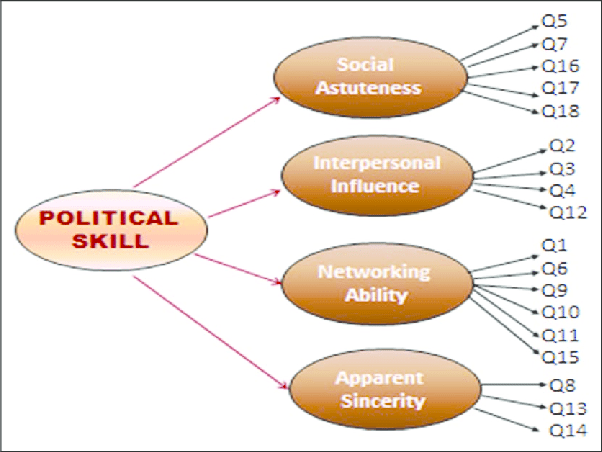
When trust between citizens and police is broken, witnesses will not cooperate because they fear reprisal from the accused. 

Ineffective police bureaucracy is compounded by officers that are not part of the community for which they are responsible.  The irony of that observation is made obvious in Leovy’s story of a good officer who lives in the community and has a son murdered for being part of the community.

Being a cop in South Central L.A. looks like the hell described in Sartre’s play, “No Exit”.  It is a play where three dead characters are locked in a room with no exit.  In Leovy’s story, there are the police, the citizens, and the perpetrators.  Sartre is saying “hell is other people” because each is perpetually viewed by the other as the worst part of themselves. 

ORGANIZED RELIGION

Audio-book Review
By Chet Yarbrough

(Blog:awalkingdelight)
Website: chetyarbrough.blog

The Pope and Mussolini: The Secret History of Pius XI and the Rise of Fascism in Europe

Written by: David I. Kertzer

Narration by:  Stefan Rudnicki

DAVID KERTZER (AUTHOR, ANTHROPOLIGIST, PAUL DUPEE UNIVERSITY PROFESSOR, HISTORIAN SPECIALIZING IN ITALIAN STUDIES)

DAVID KERTZER (AUTHOR, ANTHROPOLIGIST, PAUL DUPEE UNIVERSITY PROFESSOR, HISTORIAN SPECIALIZING IN ITALIAN STUDIES)

David Kertzer reminds society that organized religion is only human.  Religions are subject to the goodness and sins of human nature.  Whether one believes in a Supreme Being or not, actions of organized religion are freighted with human error.

Kertzer is only one of many who have exposed the perfidy of organized religion.  His target, in “The Pope and Mussolini, is the Roman Catholic Church.

Cardinal Ratti becomes Pope Pius XI during the ascension of European Fascism and Nazism in the 1920s and 30s.  Ratti is characterized as a pedantic, conservative, and sometimes bellicose Christian believer in the Roman Catholic Church.  As a religious pedant rather than trailblazer, Pope Pius XI focuses on returning Roman Catholicism to a former time of independence and influence.  No price appears too high; Pope Pius XI’s purchase price paves the way for state Fascism (total control of government and society) in Italy.

POPE PIUS XI (1857-1939)

POPE PIUS XI (1857-1939) Cardinal Ratti becomes Pope Pius XI.  Ratti is characterized as a pedantic, conservative, and sometimes bellicose Christian believer in the Roman Catholic Church.

Kertzer recounts early 19th century history of the Roman Catholic Church.  The secular government of Italy confiscates Church lands. That taking decimated Catholic wealth, restricted Popes to the Vatican grounds, and reduced Papal control of the Holy See.  More significantly, it reduced the church’s power to influence believers.  After 1860 and until the Lateran Treaty negotiated between Mussolini and Pope Pius XI, the Church is treated as a part of the state of Italy, subject to secular rule.

Pope Pius XI agrees to support the government of Benito Mussolini in 1929 in return for the creation of an independent Papal State in Rome.  Mussolini agrees to pay the church approximately $100 million for formally confiscated church land.  Pope Pius XI acquires for himself and future Popes the right of independent rule, religious interpretation, and Catholic dictation.  In return Mussolini gains the support of the Roman Catholic Church, the dissolution of Catholic political parties, and a title as II Duce, “The Leader” of Italy.   At the stroke of a pen, Mussolini becomes a hero of Italian Catholics (over 90% of the population) and the totalitarian leader of Italy.

BENITO MUSSOLINI (1883-1945, PRIME MINISTER OF ITALY 1922-1943, LEADER OF NATIONAL FASCIST PARTY)

BENITO MUSSOLINI (1883-1945, PRIME MINISTER OF ITALY 1922-1943, LEADER OF NATIONAL FASCIST PARTY)

Kertzer notes there are common goals for Mussolini and Pius XI in the Lateran treaty which separates church from state.  Both covet power.  Both dislike the idea of a Catholic party interfering with religious or state matters.  Both desire elimination of factional interference in government and religion; i.e. Mussolini’s Fascist control of government and the Pope’s control of Church doctrine.

Seeking sovereign independence of the Holy Sea. Pius XI becomes head of state of the smallest state in the world.  $100 million is paid to the church for confiscated land since 1860.

Pius XI is the first Pope to broadcast on radio in the early 1920s.  With the Lateran Treaty of 1929, the Papal State is created; after 58 years of refusal to become part of Italy.  Prisoners in the Vatican before 1929, the Lateran Treaty required elimination of the Catholic Italian Popular Party, a political organization.

DAVID KERTZER “THE RELATIONSHIP OF BENITO MUSSOLINI AND POPE PIUS XI (1922-1939):

An unintended consequence was to reinforce Fascism in Italy.  With the ascension of Pope Pius the XII, the Nazi government is solidified.  The trade-off for the Roman Catholic church  is an increase in international influence.   At the same time, pagan worship of fascism by Church youth groups diminishes the church’s moral stature. 

POPE PIUS XII (1876-1958, FORMERLY CARDINAL PACELLI)

POPE PIUS XII (1876-1958, FORMERLY CARDINAL PACELLI)
Pope Pius XI refuses to excommunicate Hitler, Mussolini gravitates to Nazism, and Pius XII ignores Nazi atrocity.

The Lateran treaty is a slippery slope for both Nazi Germany and the Roman Catholic Church.  Mussolini and Pius XI are blinded by hubris and false piety.

BENITO MUSSOLINI HANGING BY HIS HEALS NEXT TO HIS MISTRESS

Mussolini is shot by his countrymen, hung by his heals for destroying people’s freedom, and losing a war that compromised and betrayed his county.  Pius XI compromises his morals and paves the way for Pius XII, a closet Christian anti-Semite, who becomes a Hitler’ stooge by tacitly endorsing the immorality of belief in ethnic purity.

The closing years of Pius XI’s reign is marked by a closer association with democracies as the Western nations and the Vatican found both were threatened by totalitarian regimes and ideologies of Hitler, Mussolini, and Stalin.  However, with Pius XI’s death and ascension of Pope Pius XII, distinction between totalitarianism and democracy diminishes.

Pope Pius XII—Hitler’s Pope.  FORMER CARDINAL PACELLI Hitler and the roman catholic church: <iframe width=”854″ height=”510″ src=”https://www.youtube.com/embed/2x_MdS88qr8&#8243; frameborder=”0″ allowfullscreen>

***IRONIC SPEECH  POPE PIUS XII SPEAKING ENGLISH TO TROOPS WHO LIBERATED ROME:

Kertzer offers insight to what really happened in Italy in the 1920s, 30s, and early 40s but the story resonates with all organized religions.  Jewish isolation of Palestinians, ISIL’s attempt to resurrect the Caliphate, Muslim repression of Kurds, Taliban Muslim cruelty in Afghanistan, Chinese suppression of Uighurs, and Protestant proselytizing around the world are cut from the same flawed fabric; i.e. the flawed fabric of human interpretation of humanly manufactured texts and religions. 

RELIGIOUS BELIEF

In the name of God, organized religion’s killings continue.  If there is a God, he/she is not evil; i.e. only humans are evil.

NATIONALIZED MEDICINE

Audio-book Review
By Chet Yarbrough

(Blog:awalkingdelight)
Website: chetyarbrough.blog

Do No Harm: Stories of Life, Death, and Brain Surgery

Written by: Henry Marsh

Narration by:  Jim Barclay

HENRY MARSH (BRITISH NEUROSURGEON AND AUTHOR)

HENRY MARSH (BRITISH NEUROSURGEON AND AUTHOR)

An interesting insight offered by Henry Marsh’s memoir, “Do No Harm”, is a contrast between American and British Medicine.  Marsh’s candor about his life and profession surprise his audience and endear his curmudgeonly personality.  The surprise is in Marsh’s profound empathy and personal conflicts over neurosurgical decisions.

Marsh’s endearment comes from explicit “f-word” rants about incompetence, technology, and bureaucracy.  In addition to his rants, Marsh endears himself to an audience by explaining the distinction between a physician’s self-confidence and hubris.  Marsh suggests physicians need understanding and competence; not undue preciousness, and pride-full medical knowledge.  Jim Barclay’s narration perfectly suits the tone of Marsh’s memoir.

Caduces

Marsh is able to enter into medicine with little pre-medical education in the sciences.

Either by dint of a formidable intellect or a quirk of the British education system (maybe both), Marsh takes all his science courses after deciding to become a doctor.  One doubts an American medical school would have considered his application in the 1960 s.

Marsh graduates and begins his career in medicine under the guidance of experienced physicians.  As he acquires experience, he chooses to specialize in neurosurgical medicine under the supervision of a Consulting Neurological Physician.  The Consultant (a neurology physician trainee’s guide) works within the English national health care system as a qualified physician who supervises aspiring neurological physicians.  This consultant chooses cases for trainees; under varying levels of supervision.

Though a neurological procedure may be done by a trainee, the consulting physician is responsible.  This appears to be similar to internships in the United States.  However, an interesting difference is in the insurance for interns.

MEDICAL INTERNSHIP

MEDICAL INTERNSHIPS- English hospitals carry a trust to protect physicians from mistakes made in treating patients.

The UK’s physician-group self-insurance may be a distinction without a difference but, as in all medical insurance systems, mistakes do occur, and patients are harmed. The difference between physician-group self-insurance and American physician’ private insurance raises the specter of limited settlement for egregious mistakes.  On the other hand, it suggests British physicians are more likely to be more forthcoming on mistakes that are made.

Marsh completes his trainee experience and decides to become a Consulting Neurological Physician in the national health care system.  Marsh interestingly reveals several mistakes he and his trainees make during his years of consultancy.  In revealing those mistakes, a listener pauses to think about risks of patients who depend on English’ or American’ medical services.  Marsh’s stories of mistakes reflect on medical training, family apologies, and personal anguish over patient’ quality-of-life and death issues. 

MEDICAL MALPRACTICE IN THE UNITED STATES

Marsh explains, at best a Consultant Surgeon expects to learn from surgical mistakes to avoid repetition. 

The worst, for Marsh, is the apologies to families for the mistakes that are made.  In contrast to Marsh’s way of addressing mistakes, American physicians seem more likely to avoid family apologies; while hiding behind legal and insurance company shields.

MEDICAL TREATMENT-WAITING FOR TREATMENT IN ENGLAND

A more subtle message in Marsh’s book is the failure of the English National Health Service to provide adequate care for the general population; e.g. its long lines of patients who wait for attention when rapidly growing tumors are destroying a patient’s neurological system. 

Doctor/patient ratios in 2016 were 2.6/1,000 people in America. In 2018, the doctor/patient ratio was 2.8/1,000 in the United Kingdom. This raises the question of how long would Americans have to wait in line with a national health care system? Some argue physician assistants could be trained to take care of less serious medical issues. That would spread the burden of patient treatment.

Marsh complains of inadequate bed availability for patients that need operations.  Financing for the National Health Service is inadequate for the number of patients that need help. This seems a likely consequence of an American national health care system.

Marsh notes that he carries private health insurance to supplement his family’s medical needs.  At the same time, he infers private hospital services tend to gouge patients for their medical service; in part, from charges for unnecessary tests and superfluous operations. 

Marsh attacks the bureaucratic nature of the National Health Service that hires hospital administrators who are directed to reduce costs; regardless of patient’ load or patient’ need.  Technological improvements for England’s National Health Service are delayed because of lack of financing, poor administration, and inadequate training. These are maladies that will plague a national health care system in the United States.

U. K. HEATH CARE SYSTEM

Marsh leavens his criticism of England’s national health care by writing of his experience in the former U.S.S.R. (specifically Ukraine) where problems are monumentally greater. 

In the end, America’s effort to improve national health care is tallied in one’s mind against the current English picture painted by Marsh.  For medical patients, the English system seems riskier than the American system.  Doctors in England seem more insulated from medical mistakes.  If doctors are more insulated, they may take more risks; i.e. risks that can lead to patient’ disablement or death.  The American system, if one can afford the service, seems more conservative and less likely to take risks.

It seems England’s national health care offers a level of societal comfort because there is hope for affordable treatment.  On the other hand, Marsh clearly shows how government bollixes National Health Care with inadequate funding and a bumbling administrative system.  Some would say this is why the U. S. should not nationalize health care.

Marsh notes England’s private system has not met the needs of citizens who can afford additional service.  The private system suffers from human nature’s folly; i.e. the lure of wealth at the expense of fairly priced or truly needed medical treatment.

U.S. HEALTH CARE

Marsh suggests the private system suffers from human nature’s folly; i.e. the lure of wealth at the expense of fairly priced or truly needed medical treatment.

Is medical health service a human right or privilege?  One draws their own conclusion about British and American Medicine.  Marsh shows the monumental problems of affordable health care in England. 

A listener of “Do No Harm” infers problems of the British system for medical care will challenge America’s desire for universal health care. Dr. Marsh’s answer seems to revolve around empathy for all human beings; i.e. regardless of whether a country has a nationalized or private health care system.

MASOCHIST’S GUIDE TO AFRICA

Audio-book Review
By Chet Yarbrough
(Blog:awalkingdelight)
Website: chetyarbrough.blog

A Primate’s Memoir: A Neuroscientist’s Unconventional Life Among the Baboons

A PRIMATE'S MEMOIR

3 star symbol
Written by: Robert M. Sapolsky

Narration by: Mike Chamberlain

ROBERT SAPOLSKY (AMERICAN NEUROENDOCRINOLGIST, PROFESSOR OF BIOLOGY, NEUROSCIENCE, AND NEUROSURGERY AT STANFORD UNIVERSITY)
ROBERT SAPOLSKY (AMERICAN NEURO-ENDOCRINOLGIST, PROFESSOR OF BIOLOGY, NEUROSCIENCE, AND NEUROSURGERY AT STANFORD UNIVERSITY)

Robert Sapolsky’s “A Primates Memoir” is a masochist’s guide to Africa. (Our 2017 trip to Africa was luxurious in comparison.)  Sapolsky’s trip is what you would expect from a biological anthropologist who sojourns to Africa in the early 80s.  Sapolsky lives in a tent while studying baboons.

AFRICA JULY 2017_7695.JPG
Our stay in Africa is luxurious in comparison to Sapolsky’s in the 1980s.

At the age of 12, Sapolsky appears to know what he wants from life. In his middle-school years, he begins studying Swahili, the primary language of Southeast Africa.

Sapolsky’s career is aimed at understanding Southeast Africa.  Sapolsky’s 1984 PhD. thesis is titled “The Neuro-endocrinology of Stress and Aging”. Presumably, his trip to Africa became the basis for his academic thesis. Sapolsky’s experience in Africa is recounted in “A Primate’s Memoir”.

AFRICA JULY 2017_8101.JPG
Animal preserve in Southeast Africa

While studying Baboons, Sapolsky is exposed to the worst of African society. His memoir of those years touches on the aftermath of Africa’s colonization, Africa’s ubiquitous diseases, its governments’ instability, and its abundant and frequently poached wildlife.

SOUTHEAST AFRICA
SOUTHEAST AFRICA

Robert Mugabe (President of Zimbabwe)
Robert Mugabe (Former President of Zimbabwe)

JACOB ZUMA (FORMER PRESIDENT OF SOUTH AFRICA)

Though some of what Sapolsky writes has  changed, today’s news shows characters like Robert Mugabe, and Jacob Zuma, who are accused of victimizing the poor to enrich themselves.

Some African, and other nation-state leaders around the world, are corrupt.  Many Southeastern African bureaucrats, foreign business moguls, indigenous apartheid promoters, and wildlife exploiters still walk, drive, and bump down streets and dirt trails of this spectacular continent.

Self-interest often conflicts with general economic growth and stability.  Today’s Southeast Africa is great for tourism (one of the three biggest industries) but the poor remain poor, the rich richer, and the middle class nearly non-existent.

AFRICA JULY 2017_7219.JPG
Today’s Southeast Africa is great for tourism (one of the three biggest industries) but the poor remain poor, the rich richer, and the middle class nearly non-existent.

Sapolsky returns to Africa after marrying. He squires his science and marriage partner to revisit a baboon troop he was studying in the 1980s. At the same time, he touches on the cultural norms of a society that seems little changed from his early years in Africa.

Sapolsky recounts the melding of a tragi-comic story of an African who is mauled by a Hyena. In telling the story, he reveals the stoic acceptance of life as it is. However, each time the story of the mauling is told by different people, it changes. The change comes from a blend of truth and fiction that conforms to the tellers’ view of themselves. The essence of the story is that an African man sleeping in a tent is mauled by a Hyena looking for food.

CHANGING STORY
Re-telling of an African story changes with each narration–The change comes from a blend of truth and fiction that conforms to the tellers’ view of themselves..

When the story is told by Masai warriors hired by a company to protect its employees, the victim is saved when the Hyena is speared by the Masai warrior’s courage. When the story is told by the victim, it is a company cook who bashes the Hyena that runs away. When the story is told by a newspaper reporter, the Masai warriors were drunk and not doing their job; the cook bashed the Hyena, and the victim survived. When the story is told by the cook, the victim’s yell brings the cook to the tent; the cook grabs a rock, bashes the Hyena, and the Hyena flees. Finally, when the story is told by the company employer, the victim is not an employee, the Mesai warriors did spear the Hyena, and the employer had no responsibility for the victim.

A cultural interpretation is inferred by these many versions of the same story. Some humans indulge in alcohol to escape reality. Most humans wish to protect an idealized version of their existence. News coverage is sometimes a mix of truth and fiction to make stories more interesting than accurate.

Life is happenstance with each human dealing with its consequence as an end or beginning that either defines, or extends their understanding of life. Truth is in the eye of the beholder. Some people are willing to risk their lives for others. Private companies focus on maximizing profit and minimizing responsibility.  Life is not an either/or proposition despite Kierkegaard’s philosophy.  Humans are good and bad; no one is totally one or the other–not even America’s morally corrupt and ethically challenged leader.

BABOONS
Sapolsky shows that baboon families, like all families, are born, mature, and die within a framework of psychological and physical challenges imbued by culture. All lives face challenge but culture can ameliorate or magnify the intensity and consequence of the challenge.

The overlay of Sapolsky’s memoir is the research and reported evolution of a baboon family in Southeast Africa. He shows that baboon families, like all families, are born, mature, and die within a framework of psychological and physical challenges imbued by culture. All lives face challenge but culture can ameliorate or magnify the intensity and consequence of the challenge.

Sapolsky gives the example of Kenyan “crazy” people who are hospitalized, treated, and fed to deal with their life circumstance. In America, it seems “crazy” people are left to the street. The inference is that Kenyan “crazy” people live a less stressful life than American “crazy” people. This is a positive view of Kenyan culture but there are ample negative views in Sapolsky’s memoir. Rampant poverty, malnutrition, and abysmal medical treatment are Sapolsky’s recollected examples.

Sapolsky’s memoir shows he clearly lives an unconventional life, but it seems a life of purpose. What more is there?


INSTITUTIONAL FAILURE

Audio-book Review
By Chet Yarbrough

(Blog:awalkingdelight)
Website: chetyarbrough.blog

Fourth of July Creek: A Novel

By Smith Henderson

Narrated by MacLeod Andrews, Jenna Lamia

SMITH HENDERSON

SMITH HENDERSON (Author, Screenwriter)

On a scale of 1 to 10, with 1 the least trustworthy, a random audience survey marks trust in government as 1. Therein lies the fear of government intervention in the ideals of capitalism. It strikes at the heart of today’s public concern over economic stimulus, the environment, voting rights, equality of opportunity, police reform, and freedom.

Smith Henderson’s Fourth of July Creek is about broken lives and institutional failure.  After two chapters, a listener wonders, “Is this America”?  Henderson vivifies a part of America conditioned by high divorce rates, sexual exploitation, substance abuse, and institutional apathy.

In Henderson’s story Pete Snow is a divorced, alcoholic social worker.  Snow works in child welfare services, covering a large area of Montana. Snow makes a point of saying he is not a cop whenever he is investigating a home with children that are suspected of being neglected. 

Snow is a character that sees the worst side of human nature; i.e. like a cop, Snow is exposed to a world of human’ degradation that fills and empties his life.

Though Snow is careful to distance himself from police, he is mired in the same dark side of humanity. 

Henderson’s point is human apathy grows in some social service jobs because government lacks oversight and public accountability.  The public feels the job is getting done because there is an institution to serve the need. Henderson’s story implies the public is apathetic. The public becomes apathetic because government has a department to do the job. The public might trust but does not verify. (Even more likely, the public is consumed by their own needs and wants and ignores social services that do not directly affect them.)

DONALD TRUMP (REPUBLICAN NOMINEE FOR PRESIDENT OF THE U.S. 2016)

Fourth of July Creek infers that Presidents make no difference when it comes to broken lives of abandoned and abused children.  However, Trump has shown (often in a negative light) that Presidents do make a difference.

Over 400 immigrant children remain separated from their families because of Trump’s enforcement of a flawed immigration policy.

Henderson’s story shows that child welfare services, like many public service jobs, attract employees with good intention who succumb to apathy and routine.  The job becomes a paycheck rather than a calling.  It is not that an employee is necessarily bad or incompetent but public service goals are often not humanly achievable within strict use of institutional rules.  Institutional rules are made by people who often only preserve institutions.  The institution survives whether or not it solves human problems.

The story begins with the case of a single mother, a teenage son, and a pre-school daughter.  The mother and son are brawling with each other.  A cop is at the scene when Snow arrives.  Snow is a case worker for the family.  The mother is a drug addict.  She cannot manage her son for reasons greater than her drug habit.  The solution is to remove the son from the family to live with a relative but the relative does not want the boy. 

Children in Jail

Snow finds a foster family that takes the boy but the boy ultimately runs away after the foster family decides he is too ungovernable.

The boy is caught.  He is placed in something like a reform school.  He is institutionalized.  The boy is abandoned.

In the boy’s mind, Snow betrayed him.  Snow is remorseful but has no realistic alternative.  He cannot find the boy’s mother.  She has moved on.  Even if she had not moved on, Snow finds that the boy’s mother had sexualized her relationship with the son and could not be any part of the boy’s life.  Divorce, sexuality, substance abuse, and institutionalized apathy swallow this American boy’s life.

This sexually abused son is only a small part of Henderson’s story.  The main story revolves around family dysfunction in America.  Child abuse is bred by single parent families, sexual exploitation, substance abuse, and ineffectual public service institutions.  Several families, including Snow’s own family, are battered by divorce, sexual depredation, drug and alcohol abuse, and unavailable or ineffectual public services.

CHILD ABUSE STATISTICS

A deranged woman is married to a man who loves her deeply.  The husband is unable to comprehend or deal with her psychosis.  The husband enables his wife by isolating her and their family in the wilderness.  The children are raised like animals in the forest.  A myth about the family is created by the Bureau of Alcohol, Tobacco, Firearms and Explosives, the FBI, and DEA.  The ATF begins a covert operation to investigate the family.  In the course of the investigation, the husband is betrayed by an undercover ATF agent and becomes a conspiracy-of-government’ believer.

RUBY RIDGE (RANDY WEAVER, SURVIVOR)

RUBY RIDGE (RANDY WEAVER, SURVIVOR)

Snow comes across one of the husband’s sons and begins a case file on the family.  Snow becomes a friend of the son and eventually the husband.  This journey to friendship and understanding reveals a part of Henderson’s theme about American extremism and how it germinates and grows.

Henderson frames a story that captures American government failure.  The book can be listened to as a cautionary tale, a call to action, or just a well written tale of travail.  It is no wonder that government trust is at such a low ebb. The events of January 6, 2021 are a reflection of loss of trust in American government.

At the very least, one comes away with the feeling of how lucky they are to have NOT lived the life of one of Henderson’s characters.  MacLeod Andrews’ and Jenna Lamia’s narration add to the drama of Henderson’s expertly written fiction.

In spite of Henderson’s heart breaking story, America remains among the best places in the world to live. In retrospect, only a small number of U.S. Presidents have managed to restore trust in government. In 2021, a new President has an opportunity to restore that trust.

PRACTICAL PHYSICS

Audio-book Review
By Chet Yarbrough

(Blog:awalkingdelight)
Website: chetyarbrough.blog

Physics for Future Presidents: The Science Behind the Headlines

PHYSICS FOR FUTURE PRESIDENTS

4 Star Symbol

By Richard A. Muller

Narrated by Peter Larkin

RICHARD A. MULLER (PROFESSOR OF PHYSICS @ UNIVERSITY OF CALIFNIA, BERKELEY)
RICHARD A. MULLER (PROFESSOR OF PHYSICS @ UNIVERSITY OF CALIFORNIA, BERKELEY)

“Physics for Future Presidents” suggests understanding of practical physics is critical for future Presidents.  Richard Muller’s argument is that Presidents need to know some physics to comprehend the utility of everything from energy, to manned space flight, to satellite surveillance, to terrorist use of nuclear bombs.  Muller is not arguing that future Presidents need to understand the science of physics but the practical limitations of manned space flight, carbon-based energy, satellite intelligence, and weapons of mass destruction (WMD).

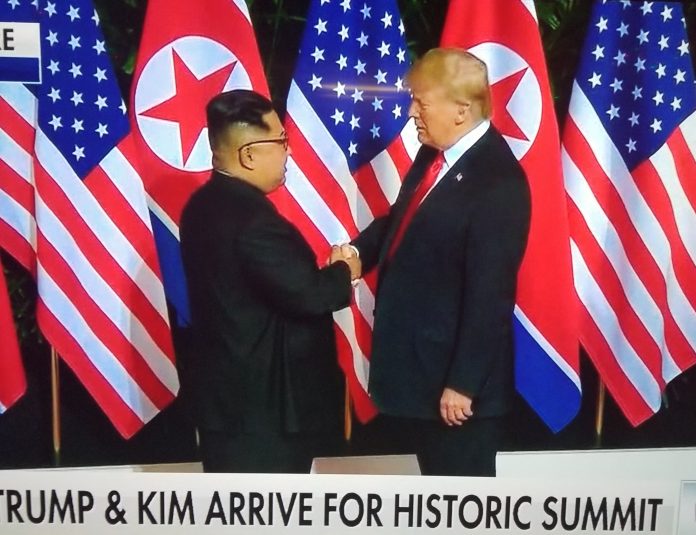
Muller begins his book with the modern world’s effort to understand and contain terrorism.  Muller’s book seems apropos based on President Trump’s effort to limit science research, discount CIA and FBI intelligence, and denuclearize North Korea.

TRUMP AND KIM MEETING
President Trump’s effort to limit science research, discount CIA and FBI intelligence, and denuclearize North Korea.

Muller explores the possibility of a terrorist organization building a nuclear bomb and detonating it in the middle of an American City.  He looks at the possibility from three perspectives.  One, difficulty in acquiring fissionable material; two, difficulty of building a nuclear device and three, difficulty in delivering a weapon of mass destruction to a desired location.

Surprisingly, Miller suggests a greater danger is terrorist attack by private planes, loaded with highly flammable fuel.  Or, for a terrorist organization to use chemical and biological agents that directly or indirectly infect population centers.

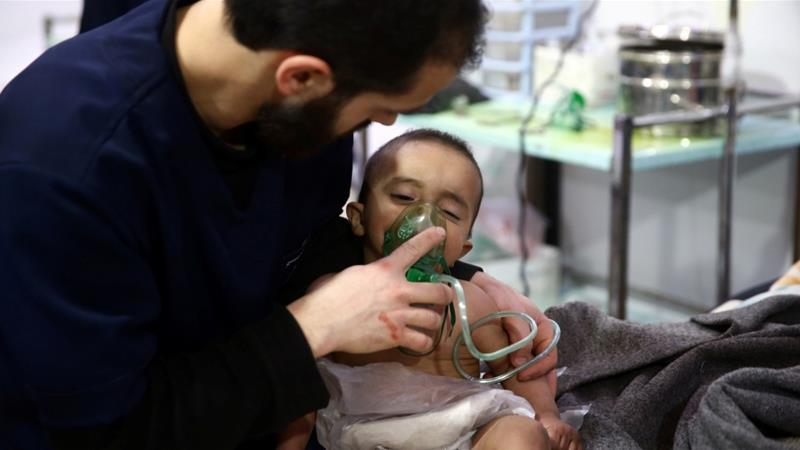
CHEMICAL ATTACKS
Surprisingly, Miller suggests a greater danger is terrorist attack by private planes, loaded with highly flammable fuel.  Or, for a terrorist organization to use chemical and/or biological agents that directly or indirectly infect population centers.

9.11.01TRADE CENTER ATTACK
Muller reasons a future terrorist attack (with 1000s killed) will be like 9/11, but with a private plane filled with fuel (not a nuclear bomb) flown into a major entertainment event.

Miller believes practical physics will determine the next world terrorist attack.  Miller argues that the simplest plan will have the greatest impact.  (Of course, there is also the implied psychology of terrorism.)  Muller reasons a future terrorist attack (with 1000s killed) will be like 9/11, but with a private plane filled with fuel (not a nuclear bomb) flown into a major entertainment event.

There are a number of counter-intuitive insights in “Physics for Future Presidents”.  Muller believes manned space flight is a waste of money.  He argues that most of the greatest innovations in science have come from unmanned space flight.  Weather satellites, spy satellites, entertainment satellites, global positioning satellites, drones, exploration of planets and the solar system have all come from unmanned space flight.  Muller believes there is a time for manned space flight but not now.  It is too dangerous and produces little new-science.  He implies America should primarily invest in unmanned space flight.

CURIOSITY--FIRST -SELFIE- IN 2015 ON MARS
CURIOSITY–FIRST -SELFIE- IN 2015 ON MARS (Muller believes there is a time for manned space flight but not now.  It is too dangerous and produces little new-science.  He implies America should primarily invest in unmanned space flight.)

DR. STRANGLOVE
Dr. Strangelove- Richard Muller, at times, seems to stand at the side of fictional character Dr. Strangelove.(Movie titled “How I Learned to Stop Worrying and Love the Bomb)

Richard Muller, at times, seems to stand at the side of fictional character Dr. Strangelove.  He describes historical information about radiation poisoning from nuclear bombs and accidents.  Muller notes that statistical deaths from war (the Nagasaki and Hiroshima bombing), Three Mile Island, and Chernobyl show that deaths from nuclear radiation is small in comparison to terrorist events initiated by simple, practical, and conventional physics.

Muller argues that nuclear power can be used as a fail-safe source of energy by using the latest technology for nuclear power plants.  The latest technology (actually first used in the 1960s by Germany) is a pebble bed reactor (PBR).  It is considered safe because it does not rely on water cooling of the nuclear core in the event of an accident.

PEBBLE BED REACTOR IN WEST GERMANY
PEBBLE BED REACTOR IN WEST GERMANY – Muller argues that nuclear power can be used as a fail-safe source of energy by using the latest technology for nuclear power plants.  The latest technology (actually first used in the 1960s by Germany) is a pebble bed reactor (PBR).  It is considered safe because it does not rely on water cooling of the nuclear core in the event of an accident.

YUCCA MOUNTAIN NUCLEAR WASTE DEPOSITORY NEAR LAS VEGAS, NEVADA
YUCCA MOUNTAIN NUCLEAR WASTE DEPOSITORY NEAR LAS VEGAS, NEVADA (Richard Muller believes Yucca Mountain is an adequately safe repository for nuclear waste that should be reopened.)

This is unlikely to be a popular book in Las Vegas, Nevada. Among other controversial subjects, Richard Muller believes Yucca Mountain is an adequately safe repository for nuclear waste that should be reopened.  His argument largely rests on the science of probability.  Muller infers that natural radiation in Colorado is as toxic as the probability of radiation leaks from stored nuclear waste at Yucca Mountain.

Muller argues that revision of nuclear construction standards in the United States would make construction of pebble bed reactors less expensive than conventional American nuclear facilities.  The added benefit is a safer energy source that reduces the need for carbon based energy supplies that increase global warming.  A large part of Muller’s argument for the use of more nuclear power is based on the generally accepted scientific belief that global warming exists and is most likely caused by human activity.

GLOBAL WARMING
A large part of Muller’s argument for the use of more nuclear power is based on the generally accepted scientific belief that global warming exists and is most likely caused by human activity.

Muller spends a great deal of time explaining that global warming is not a 100% certainty but, in probability terms, is highly likely and largely related to carbon-based energy use.  He notes that use of carbon-based energy is likely to increase with China and India’s continued economic growth.  Muller creates a sense of urgency in creating other sources of energy.  He strongly urges increasing motor vehicle mileage requirements but questions the viability of battery operated vehicles.  Muller believes the costs of battery replacement will drive consumers back to carbon-based energy models.

ELON MUSK ROLLS THE DICE AGAIN BY PURCHASING SOLAR CITY, THE LARGEST SOLAR CONVERSION COMPANY IN THE U.S.
ELON MUSK ROLLS THE DICE AGAIN BY PURCHASING SOLAR CITY, THE LARGEST SOLAR CONVERSION COMPANY IN THE U.S.–Muller sees potential in solar and wind energy production but believes conservation will do more short-term good than any new source of energy.

Muller sees potential in solar and wind energy production but believes conservation will do more short-term good than any new source of energy.  He clearly sees that the cost of energy is the primary driver of technological innovation.  As long as oil and coal are less expensive than other sources of energy, they will remain the primary source of power.  With that realization, Muller insists on technological innovation in conservation because it motivates the consumer to become a part of the energy-crises’.  Consumer’ participation is guaranteed by savings received from use of more energy-efficient devices.

The key to the world’s future is energy.  Muller believes the short-term solution is conservation.  He believes long-term solution revolves around nuclear fission and fusion.  Fusion is a longer term prospect but offers an infinite source of energy.  Fission is shown to work now, with probabilities of failure that can be improved upon.

This circles back to the critical importance of storing nuclear waste.  Muller notes that the fragmented system of nuclear storage in the United States is a bigger risk to the environment than having it located in a limited number of specifically designed storage locations.  Yucca Mountain fits Muller’s criteria for safe storage of nuclear waste.  He acknowledges that nuclear accidents may occur but the probability of an accident at Yucca Mountain is less than the probability of accident at other relatively unsecured and fragmented sites.

PROBABILITYThe physics that Muller insists Presidents must understand is that scientific proof is a matter of probability; not absolute certainty.  Muller warns Presidents to not be misled by cherry-picking fact finders that have objectives that are not related to practical physics.  Even if there is no certainty in science, knowing probabilities offer a basis for informed decision.


TODAY’S LUDDITES

Audio-book Review
By Chet Yarbrough

(Blog:awalkingdelight)
Website: chetyarbrough.blog

The Glass Cage-Automation and Us

By: Nicholas Carr

Narrated by: Jeff Cummings

NICHOLAS G. CARR (AMERICAN WRITER-FORMER EDITOR OF HARVARD BUISNESS REVIEW)

NICHOLAS G. CARR (AMERICAN WRITER-FORMER EDITOR OF HARVARD BUSINESS REVIEW)

The Glass Cage, written by Harvard alumnus Nicholas Carr, ironically places him in the shoes of an uneducated English textile artisan of the 19th century, known as a Luddite.

Luddites protested against the industrial revolution because machines were replacing jobs formerly done by laborers.  Just as the Luddites fomented arguments against mechanization, Carr argues automation creates unemployment and diminishes craftsmanship.

WORKMEN TAKE OUT THEIR ANGER ON MACHINES DURING THE INDUSTRIAL REVOLUTION. (Just as the Luddites fomented arguments against mechanization, Carr argues automation creates unemployment and diminishes craftsmanship.)

Workmen take out their anger on the machines

Carr carries the Luddite argument a step further by inferring a mind’s full potential may only be achieved through a conjunction of mental and physical labor.  Carr posits the loss of physical ability to make and do things diminishes civilization by making humans too dependent on automation.

There is no question that employment was lost in the industrial revolution; just as it is in the automation age, but jobs have been and will continue to be created as the world adjusts to this new stage of productivity.

INDUSTRIAL REVOLUTION

Unquestionably, the advent of automation is traumatic but elimination of repetitive industrial labor by automation is as much a benefit to civilization as the industrial revolution was to low wage workers spinning textile.

The Covid19 pandemic of 2020 will accelerate world’ transition to automation. Though this book is written earlier than the pandemic’s economic consequence, corporations are reevaluating the necessity for office buildings to conduct their business. More and more employees will work from home.

Employment adjustment is traumatic.  The trauma of this age is that work with one’s hands is being replaced by work with one’s brain.  The education of the world needs to catch up with socio-economic change; just as labor did in the 20th century.  To suggest humans do not learn when they cannot fly a plane, build a house, or construct an automobile with their own hands is a specious argument. 

Houses and cars have not been built by one person since humans lived in caves and iron horses replaced carriage horses.  Houses and cars were built by teams of people who worked with their hands but only on specific tasks.  Those teams of people were managed by knowledge workers.

ASSEMBLY LINE WORK

Service and education for society are the keys to the transition from industrialization to automation.

QUANTS

Automation of tasks reduces the mind numbing, low pay work of laborers.  Automation turns manual labor into the development and education of people who design hardware and software to execute tasks that result in more safely flown planes, new houses, new cars, new refrigerators, so on and so on.

Carr suggests that airplane pilots should be given more control over automated planes they fly despite the facts he quotes that clearly show plane crashes kill fewer people today than ever in history.  They are bigger, faster, and more complicated to fly.  The argument that pilots need to learn how to fly a jumbo jet when automation fails is like telling a farmer to pull out his scythe to harvest the wheat because the thresher quit working.

Carr’s argument is that pilots have forgotten how to fly because automation replaced their skill set.  To state the obvious, planes are not what they were 100 or even 10 years ago.

WRIGHT UNPOWERED AIRCRAFT

One might argue that Boeing’s 737 Max mistakes are evidence that Carr is correct in suggesting planes have become too complicated, but it ignores the reality of mistakes have always being made by humans. Humans are preternaturally motivated by self-interest.

Boeing’s leaders made mistakes in not fully analyzing and disclosing risks of 737 changes, and in not adequately training airline pilots on the safety features of the plane.

Carr raises a morality argument for not saving life when an automated machine makes a decision rather than a human being.  One can suggest an example of how an automated machine is more likely to make the right decision than a human.

For example, presume a driver-less car is programmed to save its occupant when an injured bicyclist is laying in the street around a blind curve. A fast moving automated car with a family inside, with mountain cliffs on both sides of the road, will drive over the bicyclist without conscience.  The bicyclist is dead but the car passengers are alive.   If the car is driven by a person, both the cyclist and the family are likely dead. 

THINKING SLOW
Carr’s argument is that humans need to make their own intuitive decisions.  As pointed out by Daniel Kahneman in “Thinking Fast and Slow”, the primary “think fast” mode in humans is intuition, which is often wrong.

Without doubt, many automation errors (e.g., the 737 Max) have been and will be made in the future, but to suggest automation is not good for society is as false as the Luddites arguments about industrialization.

This period of the world’s adjustment is horrendously disruptive.  It is personal to every parent or person that cannot feed, clothe, and house their family or themselves because they have no job.

Decrying the advance of automation is not the answer.  Making the right political decisions about how to help people make job transitions is what will advance civilization.