NO EASY SOLUTION

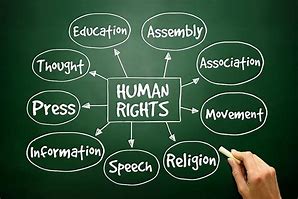
“Everyone Who Is Gone Is Here” is an indictment of American foreign policy. There are no easy solutions for immigration, deportation, or human rights in the world.

Books of Interest
 Website: chetyarbrough.blog

Everyone Who Is Gone Is Here (The United States, Central America, and the Making of a Crises)

By: Johnathan Blitzer

Narrated By: Jonathan Blitzer, Andre Santana

Johnathan Blitzer (Author, American journalist, staff writer for The New Yorker.)

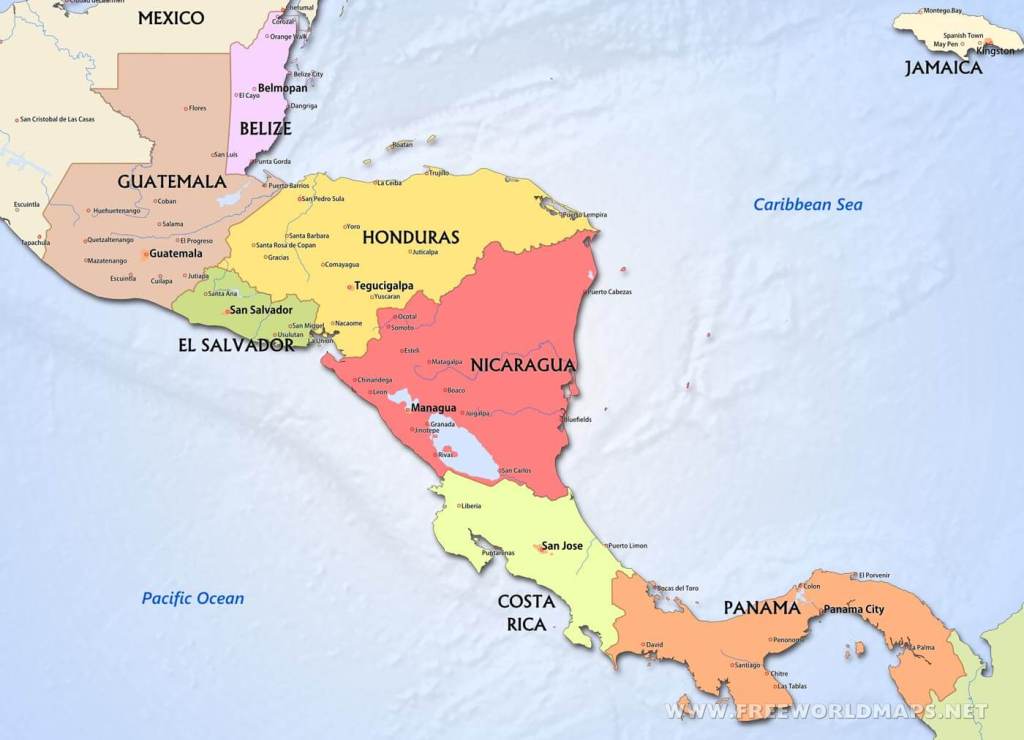
“Everyone Who Is Gone Is Here” is an indictment of American foreign policy. There seems a loss of a moral center in America with its support of other governments based solely on government type, national security, or economic interest. That is not to suggest national security and economic interest are not critically important but Blitzer’s history of America’s support of Central American governments is appalling. El Salvado, Guatemala, Honduras, and Nicaragua are democracies in title but not in reality.

Blitzer tells the story of migrants from El Salvadore and Guatemala who are imprisoned, tortured, and sometimes raped or murdered by their government’s functionaries.

El Salvadoran and Guatemalan governments purport to be representative democratic republics. They are not. They have been dictatorial and punitive victimizers of their citizens. The picture drawn by Blitzer is that both are highly autocratic and riven with exploitation and arbitrary treatment of their Latino populations.

Some immigrants came to roil American communities with the only tools they were familiar with in their native countries.

Many immigrants came to America to escape arbitrary treatment by their governments. America has benefited from its immigrant labor, but some turned to street drugs and violence because of their poverty and the experience their families lived with in their native countries. Driven by self-interest, a survival instinct, and ignorance, America has deported many Latino immigrants who chose the gang life in the California suburbs. Gang life offered identity and income. Gangs like MS-13, the 18th Street Gang and other street name gangs terrorized L.A. and Southern California. The police reacted with violence by rounding up Latinos based on gathered photographs and lists of their families and friends. Some who had proven records of crime were imprisoned or deported to their families’ countries even though they may have been born in America.

America has financially and militarily supported Central America without regard to human rights.

There is a taint of McCarthyism in America’s communist categorization of Central American countries because false categorizations hides the truth. The truth is that democratic countries like El Salvadore and Guatemala have treated citizens as harshly as yesterday’s Stalin, today’s Ayatollah in Iran, and the two Assads in Syria. Reagan’s willingness to sell arms to Iran in the 1980s for money to send to Nicaragua because communism was allegedly opposed by those in power is an example of America’s political blindness. Nicaraguan, Salvadorian, and Guatemalan leadership was as corrupt as many communist countries that practiced violence, imprisonment, torture, and murder of their citizens. Whether one’s government is communist or democratic, the important issue is how its citizens are treated, not its form of government. Bad forms of government will eventually fall from the weight of their citizens’ unequal treatment, just as Syria fell in 2024. The sufferers are always the oppressed citizens and, as interestingly noted by the author, the government perpetrators who live with the guilt they feel when they retire from their military or government jobs.

What Blitzer infers in his history of Central America is that human rights of citizens should be the primary criteria for American financial and/or military support for foreign governments whether democratic, communist, socialist, or other.

National stability comes from citizens’ support of their government. Stability is compromised when human rights are denied. Blitzer implies–America should only financially or militarily support another country only if the nativist nation and culture is working toward equal human rights for its citizens. The immigrant crises in America and the world is caused by nations that do not work toward equal human rights for their citizens.

One is somewhat conflicted by Blitzers’ argument. The conflict is in an outsiders’ understanding of a foreign countries’ culture.

Human rights may be universal, but culture is made of beliefs, values, norms, customs, language, art, literature, food, fashion, social institutions, and unique symbols and artifacts of particular nation-states. This great host of characteristics is not easily quantifiable. No nation can justify rape, torture, or murder but they do exist in all cultures. Ignorance of culture is at the heart of why any country that invades, or militarily and financially supports another country, risks failure.

There are no easy solutions for immigration, deportation, or human rights in the world.

SOCIAL BLINDNESS

Criminal imprisonment, gun control, and drug addiction solutions are elusive, just as America’s eradication of discrimination is, at best, only a work in progress.

Books of Interest
 Website: chetyarbrough.blog

Locking Up Our Own (Crime and Punishment in Black America) 

By: James Forman Jr.

Narrated By: Kevin R. Free

James Forman Jr. (Author, professor of law and education at Yale Law School)

James Forman Jr. argues Washington D.C. is a multi-ethnic democratic example of what is wrong with the American penal system, gun control, and an addiction crisis. Forman offers an eye-opening recognition of America’s social blindness. The 2019 estimated population of Black residents in D.C. is approximately 44%. Forman suggests D.C. constitutes a representative sample of what has happened and is happening to Black Americans in “Locking Up Our Own”.

Forman addresses three social issues with Washington D.C.s’ effort to legislate against the consequences of crime associated with a Black population’s gun possession, and drug addiction. America’s history of Black discrimination is well documented. The issues of gun control and drug addiction are top-of-mind issues in all American communities. What makes Forman’s book interesting is his analysis of what he argues is a nascent conservative movement in Black American society.

Forman’s argument is based on statistics and the history of Black discrimination. The American incarceration rates for Black citizens are six times higher than for white citizens. Today’s statistics show 33% percent of the prison population is Black when it is only 12% of the U.S. adult population. White prisoners account for 30% of America’s prisoners but amount to 64% of the adult population.

The fundamental issue of Forman’s book is that more Black Americans are being imprisoned for crimes of addiction and theft than those committed by white Americans.

Forman uses Washington D.C. as evidence for a Black conservative movement because of its high percentage of Black residents. He notes D.C.’s effort to legislate gun control and regulate drug addiction are arguably more restrictive than other parts of the country. Firearms must be registered with the police department. A permit is required to purchase a firearm. Concealed weapons require a license. Assault weapons are banned. Magazine capacities are limited. Safe storage requirements are mandated. In the case of addiction, the “Office of National Drug Control Policy”, ONDCP is established in D.C. The program is instituted to provide funding to support communities heavily impacted by drug trafficking. A “Drug-Free Communities Program” offers grants to community coalitions to prevent youth substance abuse. The city expands Naloxone access to citizens to reverse opioid overdose.

Forman explains these policies are supported by D.C. residents in the face of national opposition to gun control. Forman notes the proactive drug control programs of D.C.

The obvious irony of D.C.’s policies is that they do not reflect what white America promotes but suggests Black America is likely more victimized by lax gun controls and drug regulation. White America needs to get on board.

Several chapters of Forman’s book explain the difficulties of integrating minorities into local police forces.

Police department managers opened their hiring practices to Blacks based on growing Black neighborhoods and belief that police services would be improved with officers who would be more racially and culturally suited to understand policing in minority neighborhoods. Forman recounts 1940s through the 1960s police force integration. He notes police department integration is fraught with discriminatory treatment of Black recruits.

Of course, the idea of crime in a Black neighborhood being better understood by Black officers is just another form of discrimination.

Crime is crime, whether in a minority neighborhood or not. Relegating Black police to Black neighborhoods only reinforces racial discrimination. Integrating the police only became another example of racial discrimination in America. Paring white and Black policemen on petrol became difficult. Getting white and Black policemen to work together becomes even more problematic when promotions are denied qualified Black officers. As with all organizations, police promotions were based on experience and standardized testing. What police departments would typically do is promote white officers over Black officers whether their experience rating or test scores were better or not.

The irony of white resistance to gun control and ineffective drug addiction policies has had an adverse impact on Black-on-Black crime.

The culture created in formally white police departments adversely condones harsh treatment of minorities. Black officers buy into a police department’s culture and begin discriminating against Black residents in the same way as white policemen.

The 2003 brutal beating and killing of Tyre Nichols by 5 Black Police Officers.

Drug addiction is the scourge of our time. Its causes range from the greed of drug company executives to poor policy decisions by the government to escapist and addictive desires of the public. Addictive drugs are the boon and bane of society. On the one hand, they reduce uncontrollable pain and anxiety; on the other they are often addictive, causing incapacity or death.

Discrimination can only be ameliorated with education, understanding, and governmental regulations that are consistent with the rights written in the American Constitution.

Criminal imprisonment, gun control, and drug addiction solutions are elusive, just as America’s eradication of discrimination is, at best, only a work in progress. Guns in the hands of American citizens are not guaranteed except as noted in the Constitution which infers “A well-regulated Militia…” is the only reason for “…people to keep and bear Arms…” How many more school children have to be killed by guns before the lie of American gun rights is dispelled.


The last chapters of Forman’s book address his experience as a public defender in Washington D.C. This is the weakest part of his story, but it points to the theme of an incarceration system in America that is broken. Prisons are not meant to reform criminals. They are overcrowded, violent, understaffed and, most damagingly, lack rehabilitative programs for re-education and vocational training that could reduce recidivism and return former prisoners to a socially productive society.

SERVICE TO HUMANITY

Harari explains why bureaucracy and A.I. can mislead as easily as inform. A.I. should never be considered a decision maker but a tool for human understanding of a complex world.

Books of Interest
 Website: chetyarbrough.blog

Nexus (A Brief History of Information Networks from the Stone Age to AI)

By: Yuval Noah Harari

Narrated By: Vidish Athavale

Yuval Noah Harari (Author, Israeli medievalist, historian, and public intellectual serving as a professor in the Department of History at Hebrew University of Jerusalem)

Yuval Noah Harari’s “Nexus” is a perspective on information networks and how they evolve from neanderthal grunts to the fundamental link of society. Harari dissects human history and information networks with an eye toward the existence and future of Artificial Intelligence. Harari’s point is that information networks create, control, and compel change. Civilization began with verbal, then written, then video, and finally digital information that brings human beings together into larger and larger groups.

Networked information creates interest groups. Harari explains these interest groups rise from the evolution of information networks.

With written documents and invention of the printing press, the influence of information spreads across the world. Reproduced documents like government Constitutions, the Bible, Quran, The Torah, The Vedas, The Tripitaka, The Guru Granth Shib, The Tao Te Ching, and The Bhagavad Gita create followers whose understanding of society is reenforced by bureaucratic organizations. Villages, towns, cities, and nations grow from religious organizations and government bureaucracies.

Harari notes how information network’s compel obeisance to group think.

Human conflicts may be based on the desire for money, power, and prestige, but Harari’s point is that the agency of change is the information network. Without cohesiveness of an information network, governments, rebellions, and invasions fail. Successful governments, whether formed from rebellions, or invasions succeed or fail based on bureaucracies that use information networks to influence and indoctrinate citizens of established or acquired territories. The power of information networks is exponentially increased by A.I.

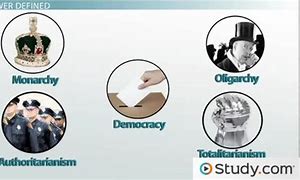
The crux of Harari’s concern is the difference between autocracy and democracy and the harmful potential of a digital age that uses information networks to weaponize and control society with the addition of A.I.

The next great economic revolution, after the Agricultural and Industrial Revolutions is today’s Information Age. I would argue America nearly lost control of the great wealth it created by making the rich richer and the poor unchanged. American democracy’s inequality of opportunity remains a work in process.

America’s failure to provide income equality.

Providing equal economic opportunity is a complicated achievement because it begins with the birth of newborns, acceptance of legal immigration and an education system that fairly serves the needs of society. America is among the wealthiest nations in the world but unlike the Nordic countries and its northern neighbor, Canada, it ranks below the middle for income equality. America’s economic tide is not raising all boats. The Information Age provides an opportunity for America to get its economy right by using A.I. to create a more equal income opportunity for its citizens.

We are moving out of the industrial age.

We are entering the human services age. A.I. presents a second opportunity for America to address income inequality by educating young Americans, immigrants, and citizens to serve the needs of themselves and the people of society. America needs to smooth the transition from being just a product producer to both a producer of goods and services. As A.I. reduces employment for product production, workers should be reeducated to become workers in service to society.

Harari’s book is erudite, enlightening, and worth one’s time to read and understand. He advises of many things beyond what is mentioned in this brief review. Harari explains why bureaucracy is both a good and bad thing and that A.I. can mislead as easily as inform. A.I. should never be considered a decision maker but a tool for human understanding of a complex world.

POLITICAL CHAOS

Tariffs to restrict foreign production is shooting citizens in the foot by artificially increasing the cost of living.

Books of Interest
 Website: chetyarbrough.blog

Edge of Chaos: Why Democracy Is Failing to Deliver Economic Growth – and How to Fix It

By: Dambisa Moyo

Narrated By: Pamala Tyson

Dambisa Moyo (Zambian-born economist and author with a BS and MBA from Harvard, former World Bank consultant to Europe, Central Asia and Africa.)

“Edge of Chaos” is a revelatory and intelligent analysis of economic rewards and risks of democracies and dictatorships. Fundamentally, Moyo argues failures of government economies are related to societal instability and short-term government economic policies that are disproportionately influenced by monied interests and kleptocratic political leaders. Rich corporations and kleptocratic leaders distort economic opportunity, create chaos while producing and exacerbating economic inequality. She argues America is at the edge of chaos because of a flawed democratic election system that is biased toward short-term rather than long term economic policy.

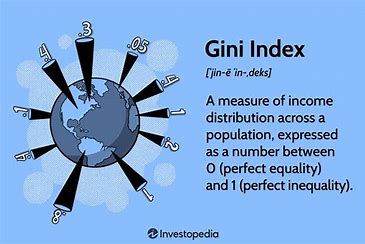
Moyo identifies the Gini index of income inequality to show that there is little difference between the rich and poor in China and the United States despite their government leaders’ differences.

China is a dictatorship while America is a form of democracy. They are nearly the same on the Gini index scale of citizen inequality while South Africa, Zambia and Brazil are at the bottom. Slovenia, the Czech Republic, Slovakia, Belarus and most of the Scandinavian countries show the lowest differences in citizen’ economic inequality. Mayo argues the difference has little to do with their forms of government except in relation to their government policies. In her opinion, China and the United States could improve their citizen’s Gini index position if their government policies would focus on income equality.

Both China and America have relative stability but with different forms of government.

Unquestionably, freedom is the sine non quo (indispensable ingredient) of America, but it is income inequality that causes the chaos Moyo alludes to in her book. That chaos is not overtly apparent in China because of dictatorship but one who has traveled to China feels there is a similar level of discontent, if not chaos, among its citizens over economic inequality.

Moyo’s solution for reducing America’s growing chaos seems difficult but not impossible to implement.

Dambisa Moyo’s solution revolves around the following 8 recommendations.

  1. Make voting compulsory to increase voter participation more representative of the people.
  2. Make election to the House of Representatives a six-year term like the Senate to encourage longer term economic goals but limit the number of terms one can be in office. (Eliminate career politicians.)
  3. Increase the pay of politicians to what successful private sector leaders receive.
  4. Establish policy making agencies that can focus on long-term policies without being threatened by near term election cycles.
  5. Invest in the education of future leaders of the political system.
  6. Encourage public officials to focus on economic diversification with an educated understanding of technological change in the world.
  7. The wealth of the nation should be focused on reduction of economic inequality.
  8. Strategies to manage natural resources should be developed to focus on sustainability.

Fair trade is where America is on the wrong side of history according to the author.

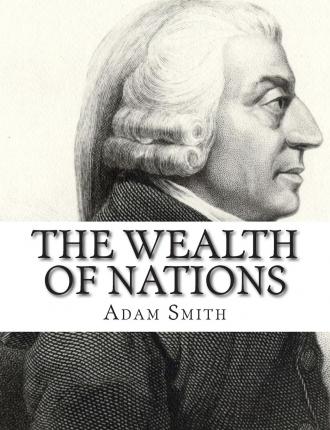
Adam Smith believed in fair trade.

Adam Smith argued for removing trade barriers like tariffs and quotas because of limited natural resources. He explains resources are more efficiently allocated, product production is increased, and economic growth is improved with free trade. As inferred by Moyo, American chaos is partly a result of ignoring Adam Smith’s prescient understanding of economics.

America democracy has journeyed a long way since 1776.

America’s fundamental success came from its emphasis on freedom within rules-of-law organized around the “checks and balances” of three distinct branches of government, i.e., the executive, congressional, and judicial branches. This is the strength of American Democracy that has offered stability. The inference made in “Edge of Chaos” is that America’s stability is at risk if it does not adapt to technological change wrought by A.I. and global interconnectivity.

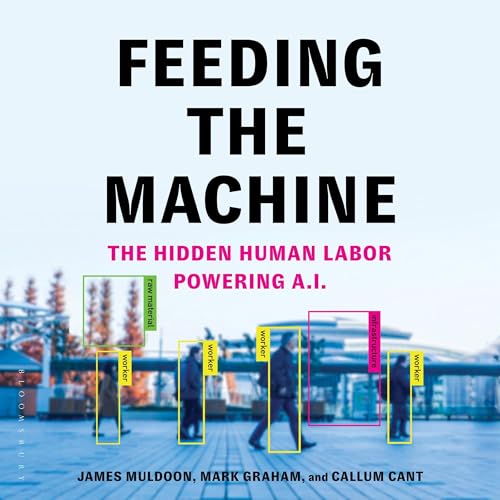
Technology is changing the nature of American productivity from material products to service. With the help of A.I., America can begin to address many of the service needs of its citizens. From aid to the homeless, to education for service to others, to drug treatment of the addicted, to improved health care for all, the prosperity and income of Americans can be more equitably shared.

Global interconnectivity requires greater acceptance of fair trade as originally described by Adam Smith.

Today’s alleged protection of worker employment by using tariffs to restrict foreign production is shooting citizens in the foot by artificially increasing the cost of living. Re-education for service to the public by using A.I. to make citizens more human-centered offers an alternative to 21st century American chaos.

These are intelligent observations by a very young and well-educated author.

DEMOCRACY’S IMPERFECTION

There are many reasons why America continues to prosper despite elections of inept political leaders.

Books of Interest
 Website: chetyarbrough.blog

America’s Deadliest Election (The Cautionary Tale of the Most Violent Election in American History)

By: Dana Bash, David Fisher

Narrated By: Dana Bash

Dana Bash is an American journalist and news anchor for CNN. David Fisher is an accomplished author who has written twenty New York Times bestsellers.

“America’s Deadliest Election” reaches back to 1868 in Louisiana to tell the story of Henry C. Warmoth who was elected governor and later, a Congressional representative of Louisiana. Warmoth’s election in Louisiana reminds one of Donald Trump’s election in 2017. Warmoth manages to become the 23rd Governor of Louisiana in 1868. His election at the young age of 26 made him one of the youngest governors in U.S. history. Of course, age is not the reason one might compare Trump’s election to Warmoth’s, but it is Warmoth’s unrestrained rhetoric and purposeful lies that got him elected.

Henry C. Warmoth (1842-1931, died at age 89. He was the Reconstruction governor of Louisiana and later Louisian State Representative.)

In Louisiana a large unrepresented minority were black Americans. Warmoth’s term ended with allegations of corruption and dishonesty but his rhetoric for disenfranchised blacks gave him the governorship and later a position as Louisian State Representative in congress. His political career extended through 10 years of Civil War Reconstruction and corruption.

Depiction of a US Army Officer Meeting with African Americans in Louisiana after the Emancipation Proclamation.

As a wealthy American, Trump and many rich business leaders and industrialists believe lower taxes and less government regulation improves opportunity and raises the living standards of the poor. Many wealthy Americans believe John F. Kennedy’s 1963 line that “a rising tide lifts all boats”. History shows a different picture, i.e. with lower taxes, the rich got richer, the middle class remained middle class, and the poor increased. America is nearing the point where it will have its first trillionaires while this richest country in the world has an increasing number of poor and a burgeoning homeless crisis.

In modern times, Trump’s rhetoric disingenuously appeals to blue-collar workers but with an underlying appeal to the rich who believe in “trickle down” economics.

Freedom allows American citizens to lie as well as tell the truth. The problem with truth is “truth is in the eye of the beholder” or what Timothy Leary called a human’s “reality tunnel”. Warmoth and Trump had their own “reality tunnels” with the objective of getting them elected. Their objective is to gain power, money, or prestige. Both Warmoth and Trump are willing to lie to themselves and others to gain their objective.

In American democracy, freedom is the holy grail of its success.

As pointed out in “The Economist” earlier this week, Democracy is messy. Democracies like France, Great Britain, and the European Union are struggling to find their way in the 21st century. Representative government is difficult because voters cannot know if candidates for office are telling a follower only what they want to hear or if what is said is what the candidate believes. Additionally, voters cannot be sure an elected person is capable or willing to walk the talk after their election.

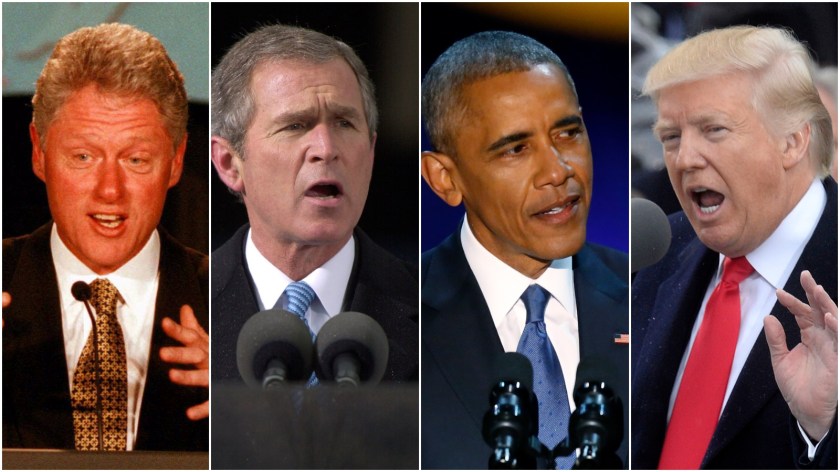
Recent Presidential elections in America before Biden replaces Trump.

Many Blacks had never been able to vote but Warmoth (a former Union Civil War’ veteran) became instrumental in supporting the 15th amendment that prohibited states from denying the vote based on race, color, or previous condition of servitude. For the first time in America, Blacks could vote. Naturally, Blacks voted for Warmoth despite his reputation for corruption. However, Warmoth’s support and actions create a split between his Republican followers and slavery proponent Democrats that remind listeners of today’s political party intransigence.

An irony of the story of Governor Warmoth is that he is clearly a scofflaw, but his lawlessness helped bring black Americans into the electoral process.

Warmoth was a criminal. He speculated in state bond and treasury notes which were a conflict of interest for a governor. He profited from a partnership given by a newspaper that had a contract for state printing. Warmoth created what was called the “State Returning Board” that had the authority to discard legitimate votes to keep Louisiana Republicans in power. One might suggest President Trump had similar conflicts of interest.

The authors explain what made Warmoth a crook. It was for the reward of money and power.

Inept and unethical practices are mitigated by the foresight of the framers of the Constitution. The acts of legislators since the beginning of America’s creation have bent the arc of history toward freedom and equality. Balance of power between branches of government, election of honest and ethical leaders, media that exposes political rhetoric for its understanding of truth and lies have helped Americans to live free and prosper. America is blessed with natural resources that have made America become a great Democratic success.

There are many reasons why American Democracy continues to prosper despite elections of inept and unethical political leaders.

The last chapters of Bash’s and Fisher’s book show what can happen when there is a sharp split between Democrats and Republicans that roils the American democratic process. What this history shows is that we have been at this crossroad before, and America pulled itself together. Warmoth was not the ideal representative of American Democracy, but he played a part in history that began the movement for Black freedom in the South and their right to vote.

Trump reminds one of Warmoth’s history. One hopes the split between political parties will be mended by the election of a President that can heal the vituperative factionalism of the Democratic and Republican parties in 2025.

RULE BY THE ONE

With rule by the one there are no checks and balances which threatens war and discounts peace.

Books of Interest
 Website: chetyarbrough.blog

Autocracy, Inc. (The Dictators Who Want to Run the World)

By: Anne Applebaum

Narrated By: Anne Applebaum

Anne Applebaum (Author, journalist, historian, wrote Pulitzer Prize for Non-Fiction with “Gulag: A History” Also wrote “Red Famine”, both of which have been reviewed in this blog.)

“Autocracy, Inc.” infers there are two forms of government in the world, one is autocratic, the other democratic. Applebaum shows autocracies are often venal and kleptocratic. One might agree, but immorality and greed are a part of human nature in every form of government. This is not something Applebaum denies, but all forms of government have experienced excesses of wealth and power that have led to autocracy. What Applebaum argues is that autocracy is more threatening today than at any time in history.

The prestige of national leaders is by definition power.

As the British Lord Acton noted in 1887–“Power tends to corrupt, and absolute power corrupts absolutely”. Both democratic and autocratic leaders are subject to Acton’s aphorism. This is not to say Applebaum’s argument is not important, but no form of government, including democracy, has been found to fairly regulate the faults of human nature.

What Applebaum makes clear is that autocracy magnifies the faults of human nature because in countries like China, North Korea, Myanmar, Russia, parts of Africa, and similar autocracies, there are no checks and balances.

Imprisonment, torture, and murder for challenges to leadership are condoned, and commonplace. Applebaum’s added dimension is that many autocratic nations have begun aligning themselves to split the world between the lands of the relatively free and the chained.

Applebaum offers many examples of imprisonment, torture, and murder in autocratic countries. Some of the most famous are Navalny in Russia, the Nobel Prize laureate Liu Xiaobo in China, Jang Song-thaek, the second most powerful leader in North Korea, and of course, Aung San Suu Kyi in Myanmar. However, what makes Applebaum’s history terrifying is the calculated and cooperative effort by aligned autocracies to subvert freedoms offered in America and other democratic countries.

The author argues many autocratic leaders have become so powerful that no fellow countryman, regardless of their location, is safe from incarceration or assassination.

Assassination of Kim Jon Un’s brother.

Vladimir Putin is believed to have ordered the assassination of a number of Russian citizens around the world. Autocracies use the tools of State to directly or indirectly threaten or assassinate dissidents anywhere in the world.

Facial recognition in China.

The advance of Artificial Intelligence has magnified the strength of autocratic rule with tools of surveillance, assassination, and indoctrination that reach around the world. Applebaum argues the line between democracies and autocracies is hardening to the point of irreconcilable difference, leading to wars between states and territories like Syria, Ukraine, Sudan, and Gaza.

Democracy has its problems which includes dalliance with autocracy, but rule by the one where there are no checks and balances threatens war and discounts peace.