MOST INTERESTING ESSAYS 12/4/25: THEORY & TRUTH, MEMORY & INTELLIGENCE, PSYCHIATRY, WRITING, EGYPT IN 2019, LIVE OR DIE, GARDEN OF EDEN, SOCIAL DYSFUNCTION, DEATH ROW, RIGHT & WRONG, FRANTZ FANON, TRUTHINESS, CONSPIRACY, LIBERALITY, LIFE IS LIQUID, BECOMING god-LIKE, TIPPING POINT, VANISHING WORLD
America cannot pass essential legislation that fairly addresses the burden and potential benefit of immigration.
Books of Interest Website: chetyarbrough.blog
“A Map of Future Ruins” (On Borders and Belonging)
By: Lauren Markham
Narrated by: Gilli Messer
Lauren Markham (Author, reporter on issues about migration and human rights.)
Immigration is a hot subject around the world.
Lauren Markham writes a somewhat disjointed book about immigration to a Greek island between Turkey and Greece.
Lauren Markham offers a report of a fire in a Lesbos refugee camp in the small town of Moria on September 9, 2010. There were no deaths from the fire but the conditions of the encampment and the government’s response to the crises tell of unfair and inadequate treatment of refugees–reminiscent of other countries dealings with unwanted immigrants.
The camp was designed to hold 3,000 people but grew to nearly 13,000. Seventy percent of the migrants were from Afghanistan. A fire of unknown origin destroyed the immigrant’s shelter that gave notice to the world of the inadequate care offered refugees fleeing crime, poverty, and displacement in their home countries.
Turkey and Greece have a storied history of conflict that is reminiscent of the Afghanis flight from Afghanistan. Turkey’s most revered leader, Mustafa Kemal Ataturk, ordered Greeks to leave Turkey in a mass exodus during his reign. Ethnic and religious differences between the Ottoman Empire and Greece came to a boil in 1923. Those differences are reminiscent of the escape of Afghanis from the restrictive life of the Taliban in Afghanistan. Afghanis chose a route from Afghanistan through Iran to Turkey to the Greek Island of Lesbos to escape the Taliban.
Markham shows the initial response of the Greeks was to aid the Afghanis in their flight but as the number of refugees grew, the burden became too great. The conditions of the encampment deteriorated, and the anger of the Greek government escalated. A fire of unknown origin began in the camp. Six Afghanis, two of which were minors under 18 years of age, were arrested and found guilty of setting the fire. Markham shows the evidence for conviction had nothing to do with truth but was manufactured by the Greek Court to find a verdict of guilt.
“Dallas, Texas, United States – May 1, 2010 a large group of demonstrators carry banners and wave flags during a pro-immigration march on May Day.”
The inference from Markam’s report is that America’s border state conflicts will, and undoubtedly have, resulted in unjust treatment of emigrants. The irony is that America needs emigrants to meet the needs of its economic future. America seems to be doing as poor a job of addressing immigration as the story of the Afghanis in Moria. America cannot pass essential legislation that fairly addresses the burden and potential benefit of immigration.
One suspects Musk is at a crossroad. He will either sell X at a loss or figure out how the forum can provide a service to the public for which it is willing to pay.
Books of Interest Website: chetyarbrough.blog
“Extremely Hardcore” (Inside Elon Musk’s Twitter)
By: Zoë Schiffer
Narrated by: Jame Lamchick
Zoë Schiffer (Author, senior reporter at “The Verge”, freelance journalist, experience as a tech content manager.)
Zoë Schiffer’s “Extremely Hardcore” is a send-up of Elon Musk’s takeover of Twitter. Elon Musk believes in freedom of speech with a commitment that results in the dismantling of Twitter. What Schiffer makes clear to some who listen to her book is that the failure of Twitter is not because of Musk but because of the ideal of free speech.
Musk made an error in trying to shift Twitters’ income source from advertising to users. Only with advertiser revenues could Twitter pursue the ideal of free speech.
Musk’s task should not have been to do what has not been possible because of the nature of human beings. Free speech is a laudable but unachievable goal because human beings are influenced by the way they are raised and the experience of living. Advertisers want to know that the media on which they advertise is not going to offend its customers. Musk is unquestionably a genius and a credit to human progress but creating a forum for free speech is an unachievable goal.
Jack Dorsey (American internet entrepreneur, philanthropist, and programmer.)
The co-founder of Twitter, Jack Dorsey, was no better at creating a free-speech forum than Elon Musk. Dorsey was liberated from the struggle to achieve the unachievable by Musk when Twitter was sold. The only chance for X’s survival is for Musk to offer a service that goes beyond the ideal of free speech to a forum that acknowledges some free speech is harmful and that X’s media forum can serve the public in some other way.
Twitter appeared to be a bloated organization that was organized to do the impossible. Monitoring and regulating free speech bureaucratized Twitter in ways that made profitability difficult, if not impossible. On the other hand, Twitter offered a free service to a public that craves attention and recognition. X cannot survive as a free speech forum because it cannot survive its debt service based on people who are only seeking attention and recognition.
Musk’s choice to change Twitter to an organization called X is only going to succeed if he manages to either return it to a monitored public forum or a service beyond the unachievable principle of free speech.
The history of Reddit and its successful public stock offer earlier this week shows that a monitored public forum can be successful. One wonders if Musk will take the hint and emulate Reddit’s success. His mistaken belief about freedom of speech suggests he will not invest in re-bureaucratization of what is now called X.
One suspects Musk is at a crossroad. He will either sell X at a loss or figure out how the forum can provide a service to the public for which it is willing to pay.
“Drucker” is an interesting book about an important 20th century professor and storied business consultant.
Books of Interest Website: chetyarbrough.blog
“Drucker” (The Man who Invented the Corporate Society)
By: John J. Tarrant
Published in 1980–No picture available of the author, John J. Tarrant.
Peter Drucker was a world-renowned business and government management consultant in the mid-twentieth century. John J. Tarrant’s personal memoir is about Peter Drucker’s business and government management beliefs. A lack of approval or acknowledgement of Tarrant’s book by Drucker reinforces one’s belief in Tarrant’s objectivity.
With my personal experience as a neophyte business manager in the 1970s, Peter Drucker was a business consultant we studied in management development classes.
There were several group meetings with other managers in the company for which I worked. In those meetings we discussed Drucker’s views on business management and practice. Drucker had a profound effect on me and how I managed my part of the business.
A fundamental point made by Drucker is that a business’ manager must focus on strengths, not weaknesses of people reporting to him or her.
The principle of that focus is that every manager is charged with setting goals while recognizing he/she needs to build around personal weaknesses with direct report’ employee’s strengths. The point is that a manager and/or employee in an organization is unlikely to know all there is to know to achieve a company’s goals. Drucker argues the purpose of business is to sustain itself by achieving determined objectives. It is not about profit but about sustaining a business’s future. That principle applies to government departments as long as they continue to serve the needs of the public. When businesses or government departments fail to preserve their future or purpose, they deserve dissolution.
What Tarrant notes in his memoir is that Drucker believes government departments do not have the same incentives as businesses and tend to become self-perpetuating when their original purpose is achieved. Businesses disappear or go bankrupt because they do not generate enough revenue to sustain their future. Drucker suggests government departments rarely disappear. They become self-perpetuating. They are protected by public taxes, not the principle of free market revenue. Tarrant infers Drucker believes government departments should be dissolved when their goals are achieved.
Tarrant categorizes Drucker as a conservative but not in a 21st century Republican sense but in a belief that government tends to waste public taxes because their goals tend to evolve from service to the public to employment-preservation. Government departments should not exist as an employment haven without public purpose.
Tarrant notes Drucker voted as a Democrat. As an Austrian born American, Tarrant notes, he only voted for a Republican President twice in his lifetime. Drucker is alleged to regret having voted Republican the two times he did. One was for Nixon and the second I can’t remember. This is not to suggest Drucker was partisan because his focus was on management, not politics. “Drucker” is an interesting book about an important 20th century professor and storied business consultant.
Nolan clearly illustrates how important political power is in balancing corporate owner/managers’ disproportionate incomes and privileges with labor.
Books of Interest Website: chetyarbrough.blog
“The Hammer” (Power, Inequality, and the Struggle for the Soul of Labor)
By: Hamilton Nolan
Narrated by: Franklin Pierson
Hamilton Nolan (Author and free-lance Journalist)
“The Hammer” is a paean to unionization. Unions lost much of their political power in the early 1970s. Political power of labor was diminished by State governments, poor labor union management, and a diminishing number of labor union members. Nolan’s argument is workers have to reestablish political power to change their unfair and inequitable relationship with business.
The widening gap between rich and poor is traced to the era of President Reagan when the first deep cuts in corporate taxes occur.
Reagan fought unionization by firing air traffic controllers that sought better wages. Reagan’s supporters believed government social programs were out of control and their cost diminished the power of free enterprise. Much of the American public either agreed or were apathetic. However, as the gap between rich and poor accelerated, Americans began to complain about inequality. With extraordinary income increases for business owners and CEOs, and repressed wages for workers, the need for unionized political power became self-evident. Nolan introduces his book about unionization with a brief biography of Sara Nelson.
Sara Nelson (AFA president of the Association of Flight Attendants.)
Nolan writes about Sara Nelson who became a union member when she worked for United Airlines as a stewardess. Nelson was born and lived in Corvallis, Oregon. She applies for a job with United Airlines in St. Louis. She gets the job but her first paycheck is late. She couldn’t pay her rent. A check is given to her by a union employee to tide her over until her first check is delivered. From that day forward, according to Nolan, Nelson became a supporter of unions. Eventually Nelson becomes the president of the Association of Flight Attendants (AFA).
Liz Shuler (President of the AFL-CIO since 8/5/21.)
Ironically, the first woman President of the AFL-CIO is also from Oregon. Liz Shuler received a bachelor’s degree in journalism from U of O in Eugene, Oregon. She became a union activist after college and worked to organize clerical workers at Portland General Electric. She is elected as the President of the AFL-CIO in 2021 after serving as the first woman Secretary-Treasurer of the organization.
Nolan’s book addresses State conflicts with unionizers and family-income for low-income workers. The first states he addresses are South Carolina and California. Nolan notes South Carolina has become a haven for businesses wishing to avoid unions. South Carolina’ State laws discourage unionization which appeals to businesses wishing to relocate. Nolan notes South Carolina attracts businesses looking to improve profits by reducing labor costs. The consequence of business’s lower labor cost is to reduce South Carolina workers’ standard of living. South Carolina’s workers are among the lowest (19th out of 50 States) paid workers in the U.S. Nolan implies South Carolina’s income inequality is a consequence of the State’s policy of discouraging unionization.
California has the fourth largest income inequality in the U.S.
Nolan notes the cascading negative of unfair compensation for domestic labor. Though California now allows childcare servers to be unionized, their unionization efforts are discouraged by government regulation, as well as the fragmentation of its poorly compensated workers. The consequence of State government regulation keeps wages low and discourages entrepreneurs from starting childcare’ businesses. A compounding negative is created when users of childcare’ service, women in particular, are unable to work in regular work-day jobs. Workers are compelled to stay home to take care of their children, reducing family income and further impoverishing low-income childcare’ workers. It becomes a vicious cycle, hurting entrepreneurs trying to start a childcare service, employees wishing to increase family income, and employers needing more workers.
Nolan expands his argument by noting how service industries in Las Vegas, the State of Florida, New Orleans, and Mississippi are benefited by unionization.
Vacation and gambling meccas like Las Vegas, Florida, New Orleans and Mississippi need service industry employees. These vacation and gambling meccas depend on service quality for visiting tourists. Lack of representation for service employees diminishes employee’ standards of living which indirectly damages the reputation of the entertainment and vacation industry.
In Las Vegas, where Nolan lived for twenty years, the service industry is protected by the Culinary Union.
Nolan notes how strong the Culinary Union has become in Las Vegas and disparages casino owners like the Fertitta’s who have fought unionization. Numerous examples are given to show how union actions have improved the lives of Casino workers, many of which are immigrants from other countries.
Nolan’s argument for the value of unionization is compelling but his encomium for the union movement ignores America’s immigration crises.
The vast need for immigration reform is not being forcefully addressed by unions. Compensation inequity is a noble fight carried out by unionization, but it needs to broaden its role in immigration. Unions need to use their power and influence to change immigration policies to equitably treat a labor force that is sorely needed in America. Unions need to help educate and house legal immigrants, so they do not become a part of America’s growing homelessness. Additionally, unions could use their recruiting expertise to get Americans off the street by providing job training services and gainful employment.
Public perception of unions could be monumentally improved with a program to recruit and indoctrinate the homeless with training for jobs in the 21st century.
There is so much that unions could do to far exceed the minimalist goal noted in Liz Shuler’s plan to add a million union members over the next 10 years. Nolan pitches for Sara Nelson as a more dynamic leader for the union movement. Maybe Nelson would be better than Shuler, but growth, value, and public perception of union members could be monumentally improved with a program to recruit and indoctrinate the homeless with training and jobs for the 21st century.
Whomever the leaders of unionization may be in the future, Nolan clearly illustrates how important political power is in balancing corporate owner/managers’ disproportionate incomes and privileges with labor.
America and every nation must believe in themselves until, like all changes in society, the proof of an energy’s value becomes self-evident
Books of Interest Website: chetyarbrough.blog
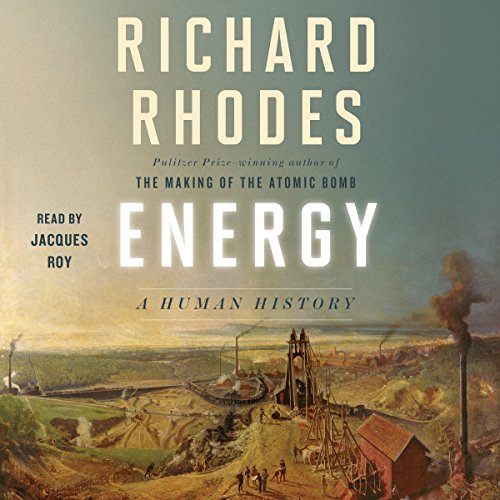
“Energy” (A Human History)
By: Richard Rhodes
Narrated by: Jacques Roy
Richard Rhodes (American journalist, historian, and author.)
Richard Rhodes explains the many forms of “Energy” that have changed the course of history. The one constant is human ingenuity. The source of energy evolves over centuries of civilization. The source of energy has changed from human hands to fuel burning machines to atomic fission to fusion to information. The back and forth of human thought and action have used sources of energy to remake the world. Rhodes’ history shows progress is not always forward. Change is often resisted until results outweigh failures.
Having just gone through the first chapters of Rhode’s excellent history of energy, this review was prematurely completed because of the TikTok controversy noted in the news.
It is important to complete Rhodes’ history to have some understanding of why information is the energy of modern times. Citizens of the world are facing many of the same obstacles Rhodes wrote about in his book. That energy is information may seem incongruous to some but, Rhodes’ history about wood, coal, oil, electricity, nuclear power, and the current state of renewables is like the energy crises of information today. Rhodes does not consider what some argue is tomorrow’s energy source. Tomorrow’s energy source is information. The many trials, the fits and starts, of the energy sources Rhodes explains are the same trials facing today’s world with information as the most current iteration of “Energy”.
Energy is fuel for doing work. Its early forms are those noted in Rhodes’ history. Earlier forms of energy are still relevant, but their utility is being challenged by the immense growth of information and how information drives the future.
There are lessons to be learned about the challenges of information as energy from the experiences noted in Rhodes’ history. This is a bumpy time that shares the trials and tribulations of wood, coal, oil, electricity, nuclear power, and renewable energy of the past. Each energy source has improved the lives of its users but not without trial and error. The world is in the midst of a transition from the industrial age just as the industrial age transitioned from the agricultural age. The world is entering the information age.
The energy change today is information, most recently multiplied by artificial intelligence.
The paranoia of today is that foreign governments will use information to disrupt the progress of nations that have their own forms of government. The controversy of TikTok is a case in point. On the one hand TikTok is being used by small entrepreneurs in America to conduct their businesses. On the other, TikTok’ popularity is spreading the equivalent of porn to the public, distorting the perception and education of children. There is the added threat of influencing the public to overthrow governments. The question is would TikTok be any less a threat if it were owned and restricted to one country or another? Facebook offers the same potential as TikTok. Facebook, Google, and Amazon are energy sources for distorting truth and influencing the public in the same way as TikTok. Domestic ownership does not cure the negative potential of information distortion or abhorrent political influence.
Is TikTok going to change democratic capitalism or is it going to change Chinese communism? One suspects, it will change both. The information highway cannot be blocked. Information energy, like water, will find its own way through cracks in its environment.
The fundamental point made in the last two chapters of Rhode’s excellent history is that the world, and America, need to increase the number of nuclear energy plants based on the need to curb environmental pollution. His argument is based on learning from the nuclear accidents that have occurred, and designing nuclear power plants to mitigate the consequence of failure. He notes no energy source in the world has succeeded without learning from producer’s mistakes. Our mistakes at Chernobyl, 3-Mile Island, and Fukushima are correctable. Environmental degradation is the crises of the 21st century that threatens human existence.
America and every nation must believe in themselves until, like all changes in society, the proof of an energy’s value becomes self-evident.
Capitalism is not a partisan issue but a social imperative for both Republicans and Democrats to work together to benefit all Americans.
Books of Interest Website: chetyarbrough.blog
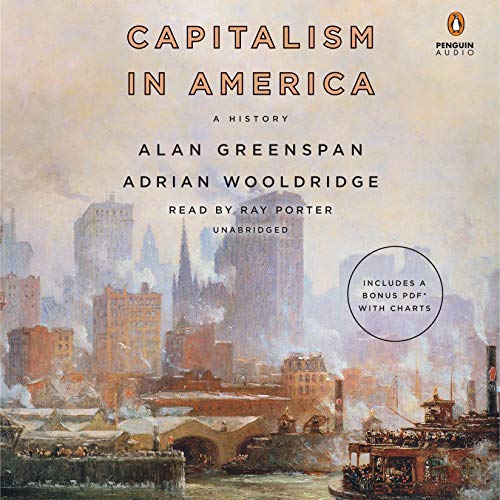
“Capitalism in America” (A History)
By: Alan Greenspan, Adrian Wooldridge
Narrated by: Ray Porter
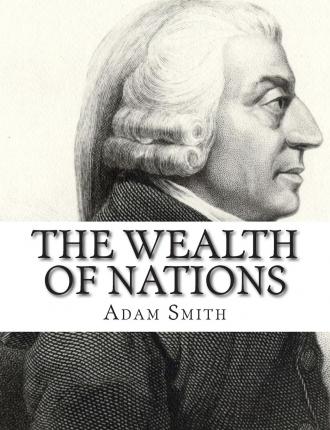
As one would expect, “Capitalism in America” begins with the British economist, Adam Smith, who defined capitalism in 1776 with “An inquiry into the Nature and Causes of the Wealth of Nations”.
Alan Greenspan (on the left) is an American economist who was chairman of the Federal Reserve from 1987-2006. Adrin Wooldridge (on the right) is a British economist and journalist who wrote for “The Economist”. Wooldridge has a doctorate in philosophy and has co-written several books with Richard Micklethwait, the editor-and-chief of Bloomberg News. One might argue Greenspan has a conservative bias but Wooldridge’s experience as a British journalist gives one a sense of balance in this informative and well-written history of American capitalism.
“Capitalism in America” reveals tumultuous times for the American economy but with positive forward momentum. The public in all countries have experienced hard times from market forces. Some countries, like Israel, India, and the U.K. have experimented with socialism as an alternative to capitalism. Communist countries like Russia and China flirt with capitalism and one may argue–benefited from its market results. The author’s history shows capitalism as the primary reason for America’s economic growth and success. However, that’s getting ahead of their story.
Hamilton, as Secretary of the Treasury, presented a “Report on a National Bank” to President Washinton and the House of representatives in 1790. This report notes that Congress, with its authority to collect taxes, could fund the bank and lend money to the government to pay foreign creditors, public services, and private businesses to grow the economy. Jefferson opposed the idea, but Hamilton’s broad interpretation of the Constitution allowed his idea of a national bank to be created. In 1791 the First Bank of the United States is established in Philadelphia and remained chartered for 20 years. This became a giant step for America’s economic growth.
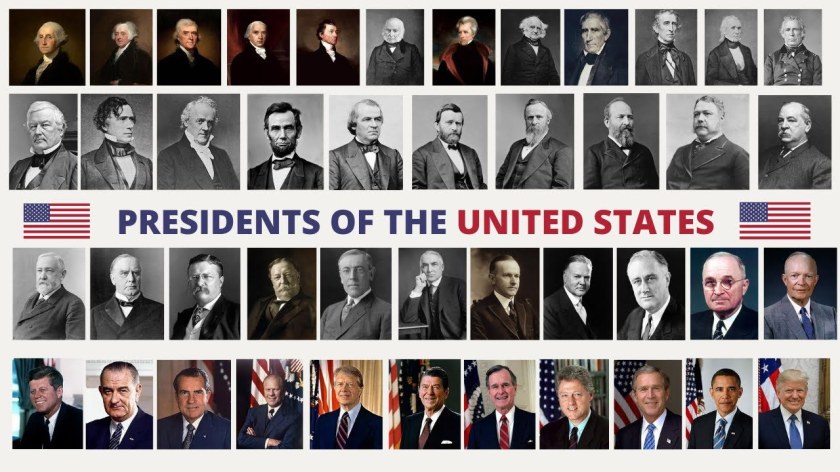
Several future Presidents opposed an American national bank. Of course, Jefferson was one because of his belief in an agrarian future for America. Jefferson’s friend and future President, Madison (the 4th President of the U.S.) opposed the idea of a national bank, and Andrew Jackson (the 7th President of the U.S.) used his power as President to oppose the “Second Bank of the United States” in 1833.
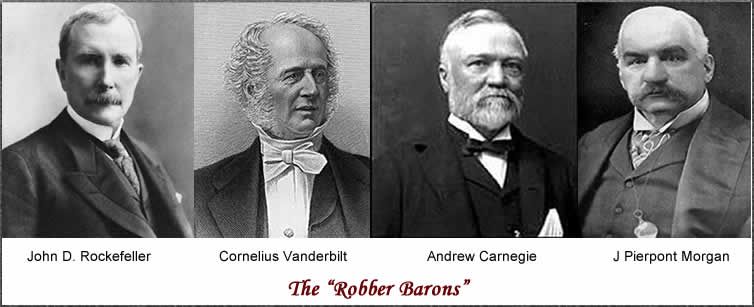
The authors note the successful industrialists of the 19th century capitalized on Hamiltonian creation of an American banking system. They became known as the robber barons of America. Rockefeller, Vanderbilt, Carnegie, and J.P. Morgan used capital to produce oil, expand rail transportation, make steel, and provide bank capital to grow the economy.
And then, WWI drew America into events that roil the course of its economic history.
An American economic boom occurs in the first two years of the war with America choosing neutrality. Exports surged from $2.4 billion to $6.2 billion in 1917. Everything from cotton, to wheat, to automobiles, to food, to machines were exported during those years. After joining the war, 3 million Americans were mobilized. When the war was over, the world and the American economy faltered. Recession (1918-1921) hit the world after the war, though America showed it had become a major world power.
As America recovered from WWI, their prowess as a producer of goods and services led to the roaring 20s and a runaway stock market that eventually crashed at the beginning of the Great Depression (1929-1939).
The authors note President Roosevelt is a great salesman who provides relief to many Americans with government employment programs during the depression. However, the authors note Roosevelt’s inept management delays America’s recovery by instituting price controls that distort market forces. Overt price control is a recurring mistake of national economies. The authors are not saying that price control is a singular cause of America’s continuing economic crisis, but it makes market recovery more difficult and longer to achieve.
The authors explain reparations for WWI’s winners helped set the table for WWII.
Germany’s inability to pay reparations, the growth of Antisemitism, and German inflation led to the rise of Hitler. Though not addressed by the authors, Japan felt threatened by American, Chinese, and Russian influence in Asia that led to Pearl Harbor and America’s entry into WWII.
The point is made that America’s depression before the war is not cured by Roosevelt’s economic intervention. The advent of war mobilized American industry.
The authors suggest market interference delayed recovery from the Great Depression. On the other hand, Roosevelt gave hope to the country with his speeches and employment programs. Citizens underlying faith in America’s ability to overcome hardship, and their response to Pearl Harbor reinvigorated the economy. Industries were retooled to meet the demands of war.
The authors argue mistakes in America’s capitalist history have been made by both Democratic and Republican Presidents who interfered with naturally occurring market forces. From Roosevelt to Nixon to Reagan to Obama to Trump, Presidents who institute price controls and/or tariffs interfere with free trade. America’s capitalist economy suffers from those actions. This is not to argue all legislation and federal action on the economy constitutes capitalist interference. Fundamental human rights that ensure freedom to vote, speak one’s mind, practice one’s own religion, work in industries one chooses, while seeking peaceful resolution of differences, are interferences that sustain capitalism.
When natural market forces are interfered with by business leaders and public legislators, capitalism suffers. An inference one may draw from the authors is that legislated programs that aid Americans who are unable or unwilling to participate in the capitalist economy are an interference with capitalism. That raises legislated issues of emigration, social security, health insurance, education, defense, transportation, veteran’s benefits, housing, environmental protection, occupational safety, and other public benefit programs. This is where there is continuing disagreement among Americans. These are not party issues because both Republican and Democratic leaders have both positive and negative arguments for and against these policies.
There is the law of unintended consequences that plague government policies. Some argue Reagan reinvigorated the American capitalist economy by reducing taxes, cutting government programs, reducing government employment, and busting union strikes. He did those things and government debt skyrocketed to a level greater than ever in the history of America. The gap between rich and poor was set on a path that beggared the poor and enriched business managers without comparable enrichment of labor. Like Roosevelt, Reagan sold ideas that had unintended consequences that were not in the long-term interest of Americans.
Democratic capitalism is the most likely form of government to assuage our worry and find a rational solution for our right to privacy.
Books of Interest Website: chetyarbrough.blog
“TECHNO-FEUDALISM” (What Killed Capitalism)
By: Yanis Varoufakis
Narrated by: Yanis Varoufakis
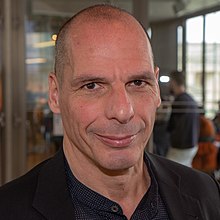
Yanis Varoufakis (Author, Greek economist and politician, Minister of Finance of Greece for 7 months in 2015, launched Diem25, the “Democracy in Europe Movement 2025” in February 2016.)
Yanis Varoufakis’s “Techno-Feudalism” argues the advance of technology is killing capitalism. Varoufakis’s argument is that democratic capitalism is either dying or dead. He suggests a survival plan in the last chapter of his book. This misguided book reminds one of Mark Twain’s response to news of his illness, i.e., “The reports of my death are greatly exaggerated”.
Varoufakis argues the advance of technology and its intrusion into private lives of citizens will destroy freedom of the individual and result in a government ruled by authoritarian, undemocratic, feudal oligarchs.
Varoufakis infers technology is the cause of the rise of new robber barons that have struck it rich in the internet era. He largely disparages the great wealth accumulation by the founders of Amazon, Google, Microsoft, Apple, and other tech leaders in the 21st century. His argument is based on belief that these new robber barons became rich without the hard work of laborers like those during the industrial revolution. The error in his argument is that labor is adjusting from work with one’s hands to work with one’s mind.
Freedom is the keystone of democracy.
Freedom and democracy have been limited and abused over the centuries but have ultimately led to the wealthiest countries in the world. When freedom is overregulated by democratic leadership, economic progress is diminished. Democracy has historically mitigated mistakes of overregulation with human nature’s desire for freedom. There is no reason to believe human nature will change.
In one sense, Varoufakis’s argument is correct. There is a greater risk of loss of freedom with the advance of technology, i.e., particularly with the rise of artificial intelligence. The evidence of that risk is seen in China and North Korea’s surveillance capabilities today.
As inferred by Varoufakis, authoritarian risk is greater in the 21st century because of surveillance technology and the predictive power of artificial intelligence. Surveillance does not change the nature of humankind. Democratic government only becomes more important. The juggernaut of technology will not be stopped, and our lives will be more intimately understood by strangers than ever before. That truth only means democracy, freedom of choice, and equal opportunity are made more consciously recognized as important.
All forms of government have winners and losers. What democracy does is level the playing field. It is a raucous governing system that leaves some out of success, but it beats any known alternative for broader human opportunity. Democracy will always be a work in progress. America needs better health care for all citizens. America needs improvement in equal rights and opportunity for all citizens. No Americans should be homeless or hungry. Few countries, if any, have adequate health care, equal rights, and opportunities for all its citizens. Most realize, America must do better.
The resurgence of labor unions in America is a good sign for American peace and prosperity.
Varoufakis suggests democracy can be saved by bringing it down to an individual level within companies that generate wealth for the country. In one sense, he is right but his idea of giving one vote to every employee in determining wages, and the direction of a company are a step too far. Labor is a critical part of yesterday’s, today’s, and tomorrow’s economic prosperity. Owners and managers of companies need to include union representation in their corporate decisions. Neither labor nor management have all the answers, but all have money, commitment, and labor in the game. Each should have their say. That is a part of Democracy’s success in the world.
The intimate knowledge of personal behavior is a valid concern in the modern world. In the hands of authoritarians, the risks of surveillance technology are multiplied. In democracy, risks are not eliminated but can be judiciously regulated. Democracy has the best chance of determining how a surveillance economy needs to be handled. Democracy will continue to make mistakes, but historically, its successes outweigh its failures.
Citizens should worry about what others know about their personal lives, but the advance of technology will not be stopped. Democratic capitalism is the most likely form of government to assuage our worry and find a rational solution for our right to privacy. Varoufakis’s “Techno-Feudalism” is more wrong than right, but he makes one think about our future.
Contrary to Leonhardt’s optimism, whether the American power structure continues to shift toward a more equitable treatment of the poor remains to be seen.
Blog: awalkingdelight
Books of Interest Website: chetyarbrough.blog
“Ours Was the Shining Future”
By:David Leonhardt
Narrated by: Dan John Miller
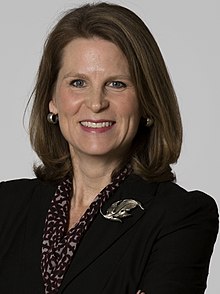
David Leonhardt (Author, journalist and columnist, writes “The Morning” newsletter for the “New York Times”, received a BS from Yale in applied mathematics in 1994.)
David Leonhardt writes an encomium to Democratic Capitalism in “Ours Was the Shining Future”. Some of what Leonhardt writes will make conservative Americans gag while liberals will tend to praise his view of American history. The hot button issues of 21st century America are immigration and the rising gap between rich and poor.
“Dallas, Texas, United States – May 1, 2010 a large group of demonstrators carry banners and wave flags during a pro-immigration march on May Day.”
Leonhardt’s selected historical facts argue that immigration has a cost to America that is mitigated by its contribution to the economy by second and later generation immigrants. He resurrects John F. Kennedy’s oft quoted phase about America as “A Nation of Immigrants”. Leonhardt argues the rising gap between rich and poor accelerated with the election of Ronald Reagan and subsequent tax and spend decisions made by later government administrations.
The difficulty one may have with Leonhardt’s reporting is that historical facts do not speak for themselves.
It is the power of Leonhardt’s persuasion rather than the facts of history (and one’s own prejudices) that make a credible argument for
(1) the benefit of unionization in America,
(2) the benefit of intervention by the Franklin Roosevelt administration during the depression,
(3) the aggressive tax reduction for high income earners with government overspending (beginning with Ronald Reagan) that negatively affected the American economy and disproportionately increased the gap between the rich and poor, and
(4) the monumental economic benefits from second generation immigrants like Sundar Pichai (CEO of Google), Indra Nooyi (former CEO of PepsiCo), Elaine Chao (the U.S. Secretary of Transportation under Trump), and Lin-Manuel Miranda (the creator of the Broadway musicals “Hamilton” and “In the Heights”), and others.
Leonhardt recounts the history of the union movement in America that evolved into a political power that improved the income and lives of the working poor.
He touches on the corruption of the union movement but on balance suggests more good than bad came from its representation of labor. Leonhardt argues the decline of unionization and tax policy changes in the late 20th century increased the gap between rich and poor.
Leonhardt argues immigration needs reform and infers it should begin with acceptance of an estimated 340,000 children (dreamers) born in the U.S. to unauthorized immigrants.
He suggests new immigration should be limited to immediate relatives of legal immigrants that presently live in the U.S. He reiterates the value of second-generation immigrants while acknowledging the burden borne by the economy with first generation immigrants. New immigrants generally have a language deficiency, greater education needs, and a willingness to work at jobs for lower pay than non-immigrant workers who also need jobs.
Leonhardt suggests the gap between rich and poor is a function of an unequal distribution of political power.
Leonhard believes improvement is coming from a resurgent union movement and an evolving recognition by both conservatives and liberals of the consequence of inequitable tax treatment that favors the rich.
There is some evidence to support Leonhardt’s belief in a power shift with the recent union actions in automobile, teacher. and nursing services strikes that increased their income. Minimum wages have risen in 22 states that have affected an estimated 10 million workers. The highest are in California ($16), Massachusetts ($15.75), and Washington ($15.50).
However, one is inclined to be skeptical about income gap reduction with Trump’s Presidency that further reduced taxes on the rich and Biden’s reluctance to act on tax inequality.
Leonhardt receives a Pulitzer Prize for Commentary, the Gerald Loeb Award for excellence in reporting on business, finance, and the economy, a New York Time Book Review Editors’ Choice award, and The Atlantic’s Ten Best Books of the Year for the most notable and influential book of the year. These are nice academic rewards but whether Leonhardt’s arguments are anything more than a finger in a dike, near a breaking point, is yet to be revealed.
Contrary to Leonhardt’s optimism, whether the American power structure continues to shift toward a more equitable treatment of the poor remains to be seen. The continued popularity of Trump among conservatives is disheartening and suggests otherwise.
“Girl Decoded, A Scientist’s Quest to Reclaim our Humanity by Bringing Emotional Intelligence to Technology”
By: Rana el Kallouby with Carol Colman
Narrated by: Rana el Kallouby
Rana el Kallouby (Author, Egyptian-American computer scientist and entrepreneur, founder and former CEO of Affectiva, Executive Fellow at Harvard Business School.)
Rana el Kallouby offers an autobiographical story of her personal journey from Egypt to America and her evolution from scientist to CEO of a facial recognition tech company. Though Kallouby’s story is personal, her experience shows what determination and commitment is required to start a tech company and grow it into something more than an idea. Of course, the underlying story is about American assimilation.
Egyptian women protesting inequality.
Growing up in Egypt in the 20th century, Kallouby experiences an upper middle-class life with a father who taught tech coding and a mother who works as a computer programmer for a bank. These were years of upheaval in Egypt and the Middle East for both men and women. Many educated Egyptian’s hired themselves out to work in other countries that needed technological help in business and finance. Women in the workplace in Egypt were less common than in the U.S. Kallouby’s mother chose to be both a housewife and a working mother who inspired her daughter to be more than a barer of children, homemaker, and companion to a husband.
Part of Kallouby’s early education is in Kuwait while her father works for the government.
She and her parents are there when Iraq invades Kuwait and when Gaddafi sets fire to the Kuwait oil fields when his invading army is ejected by American forces. Kallouby’s family returns to Egypt where Rana continues her education at the American University of Cairo. She earns a BA and Master of Science degree, and is subsequently admitted to Cambridge to pursue a Ph.D.
The tech experience of Kallouby’s parents lead her to an interest in coding.
That interest evolves into an idea about modern communication and its reflection in face behavior. The growing popularity of the internet diminishes personal contact that gives emotional context through facial expression. Kallouby begins spending a great deal of time coding facial expressions with the idea of creating recognition software to give more clarity to human communication.
Hosni Mubarak (1928-2020, Fourth President of Egypt.)
As a young Egyptian woman and as a devout Muslim, Kallouby chooses to marry a fellow Muslim who has his own tech business in Cairo. They buy a house and eventually have two children, a boy and a girl. As she commutes between Boston and Cairo, President Hosni Mubarek resigns under political pressure fomented by the Muslim Brotherhood. Mohammed Morsi is elected in 2012 as the new leader of Egypt. Morsi becomes Egypt’s President because of his religious background and support by the Muslim Brotherhood. Because of Morsi’s inexperience as a government leader and its troubled economy, Egypt’s military re-takes control of the government under Abdel Fattah el-Sisi in 2014. Though little is said by Kallouby about these events, her life’s journey continues.
Kallouby becomes obsessed with the idea of coding facial expressions.
That single-minded focus leads to further education in England and the U.S. After receiving a master’s degree, Kallouby chooses to seek a PhD at Cambridge with facial recognition as her thesis. Because of her chosen thesis, Kallouby’s education and drive lead her to an MIT lab in Boston.
This begins Kallouby’s Americanization which carries good and bad consequences.
Kallouby’s single-minded focus is two-edged. As a devout Muslim, she marries a fellow Muslim in Egypt. The person she marries is in the tech industry. He manages his own business in Egypt.
Kallouby’s travels between Egypt, England, and the U.S. create a growing disaffection in their marriage.
Though they manage to have two children, the strain of separation leads to divorce. The good that comes from Kallouby’s focus and ambition is evidenced by her success in being a co-founder of Affectiva. She did not do it alone and was aided by Dr. Rosalind Picard (the other founder), both of which were researchers at the MIT Media Lab. The bad is the personal price Kallouby pays in a divorce from her Egyptian husband and the hardship of being a single mother with two children.
Kallouby’s journey illustrates the great value of immigration to America.
Immigration comes with a personal price, but America is blessed by those who have the will and drive to make a better life for themselves and others. Kallouby’s story shows how religion, nationality, and personal ambition add to America’s prosperity. Kallouby became an Egyptian American with a foot in each country. Both Egypt and America are better for it.
CEOs and their Boards need to compensate workers equitably.
Blog: awalkingdelight Website: chetyarbrough.blog
“The Golden Passport: Harvard Business School, the Limits of Capitalism, and the Moral Failure of the MBA Elite”
By: Duff McDonald
Narrated by: George Newbern
Duff McDonald (Author, Canadian American, University of Pennsylvania graduate in Finance.)
“The Golden Passport” explains how Duff McDonald believes America got to today’s state of income inequality. McDonald argues that inequality is largely created by one education system, Harvard Business School, founded in 1908. According to a team of academics that publishes “Academic Influence”, HBS produces most of the Fortune 500 companies’ CEOs. With an estimated 70,000 HBS alumni, there is some merit to McDonald’s argument, but the fundamental cause is not education but human nature.
The extent of HBS’s impact on business practices certainly has influence on business leaders and teachers around the world. This is a similar argument made by William Deresiewicz in “Excellent Sheep” about America’s political leaders and administrators who were educated in exclusive ivy league universities.
Both authors suggest Ivy league universities are turning out management automatons that tend to think inside the same box, i.e., a mind-set that perpetuates income and power as the primary motivations of those who manage the business economy. Both authors argue Ivy league’ graduates permeate the management structure of the largest businesses and most powerful political offices in the world. The graduates of the Ivy league have common backgrounds and education with predictable answers for thought and action that have accelerated and reinforced income inequality in America.
Ayn Rand (1905-1982, Russian-born American writer and philosopher associated with capitalist’ self-interest. Though not educated at Harvard, Rand is considered a philosophical precursor to a belief that one should have liberty of thought and action, i.e., the libertarian view of society.)
Though HBS may be a promoter and reinforcer of income inequality, it is only an influencer of what makes humans acquisitive. The majority, if not all humans, are self-interested. Though self-interest varies among individuals, wealth is power–particularly in capitalist countries. The more money one has the more freedom and independence accompanies their lives.
McDonald’s point is that the HBS’s business model focuses on profitability as the only measure of business success. Because of that focus, business executives myopically view workers as a cost rather than source of company profitability. By reducing worker costs, executives are rewarded with uncapped compensation policies.
Business decisions are always made without knowledge of all information needed to direct an organization’s actions.
The case study method of education, pioneered by the Harvard Business School, focuses on profitability as the primary, if not singular, goal of a business enterprise. Efficiency becomes the mantra of business management which discounts, often ignores, workers’ compensation within corporations. By focusing on profitability, there is a point of diminishing return because of its impact on workers’ motivation. Pressing for higher productivity and reducing labor costs have diminishing rates of return that are not taken into account by CEOs interest in cost cutting. CEOs are incentivized to choose efficiency over worker welfare and productivity.
Robert McNamara (U.S. Secy. of Defense in the Kennedy administration.)
The real-world example McDonald uses to make his point is the war in Vietnam and the role of U.S. Secretary of Defense, Robert McNamara. McNamara is a Harvard graduate that by any measure was a brilliant student. He outclassed most of his business class students in his ability to bolster arguments with recalled information that most would have to look-up to use as part of their policy decisions.
Henry Ford (1863-1947, American industrialist and business magnet who founded Ford Motor Company.)
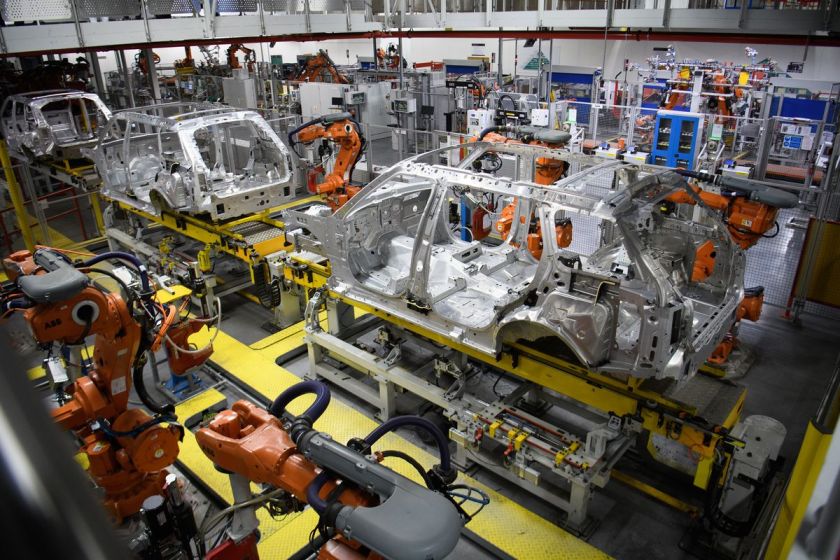
McNamara accepted the Controller’s job at Ford Motor Company when Henry Ford’s son took over the company. His education at Harvard led him to focus on efficiency as a primary tool for improving the business performance of Ford. His drive for efficiency is based on reducing costs of labor and material while increasing automobile production.
McNamara developed what became known as the “Whiz Kids” of management that carried out his drive for efficiency to increase corporate profits.
By the measure of profitability, the “Whiz Kids” were extraordinarily successful. The drive for efficiency increased corporate officer salaries because of corporate profits. What is not taken into consideration is that it disproportionately depressed worker compensation increases. The long-term worker’ effects were not part of the “Whiz Kids” concern; in part because those effects are difficult to measure. There are many reasons why Ford’s profits fell after McNamara left the company, but McDonald implies an underlying cause is Ford’s penchant to address worker income as only an efficiency measure. Ford loss of profit rises in the early 1970s and reaches $2.3 billion in 1991.
McNamara became Ford’s General Manager in 1949 and served as President in 1960. He left Ford in 1961 to become President Kennedy’s Secretary of Defense.
McDonald writes that McNamara’s experience at Ford led him to believe statistical analysis is the only basis upon which success may be measured. That focus discounted human intensity of belief in the political cause of the Vietcong. American superiority on the battlefield could not defeat Vietcong political intensity. McDonald’s point is that a CEO who looks at employees as only cost centers rather than humans with a social underpinning will eventually cause business failure.
The difficulty is in measuring worker social impact on performance. A CEO is unable to make rational decisions about employee compensation without better understanding of workers’ needs. With CEO emphasis on corporate profits, the inclination is to either to ignore or minimize workers’ compensation when making business decisions. The end result is to widen the compensation gap between CEO pay and most employees of the company. McDonald argues the 1970s became the beginning of a pig feeding for corporate CEOs that has only accelerated with further influence by HBS’ education changes.
McDonald explains how business education at Harvard created a self-perpetuating engine for CEO salary acceleration with HBS Directors like Michael Porter who created the Five Forces Framework. The Five Forces Framework is a statistical analysis of the competitive environment of specific industries. By using that analysis, business mergers and divestiture decisions could be made based on profitability.
Michael Porter (Born in 1947–appointed Bishop William Lawrence University Professor at Harvard in 2000. Considered the strategy guru at Harvard that led to mergers and acquisitions around the world.)
The net effect certainly increased business profits but minimized employee enrichment while multiplying CEO compensation.
The Five Forces Framework led to a spate of mergers that continued to accelerate CEO compensation without commensurate salary increases or, in some cases, continued employment of workers.
Before beginning “The Golden Passport”, one might think the unconscionable incomes of CEOs of large corporations is a moral, not pecuniary, observation. However, CEO’s pay in relation to salaries of working men and women is not about morality. It is about money, worker employment, and the work contribution a motivated worker offers to business. There are many variables to the profitability of a corporation with a CEO’s contribution being management judgement, time, and skill. The argument based on morality ignores the truth that one person’s role as CEO cannot be justified when it is 300 to 400 times the annual salary of a worker (an estimate noted by Statistica, a global analytics software package).
How can any human being be worth 30 to 40 million dollars a year–even if he/she is expected to work every hour of a 24-hour day as a CEO? McDonald suggests HBS’ educated CEOs press for short term profitability because it offers outsize rewards for their performance. Workers are laid off when mergers occur and they never receive compensation increases equal to bonuses paid CEOs.
McDonald goes on to give many examples of the evolution of HSB curriculum for students. The emphasis remains based on statistical analysis of profitability because it is an easily measurable criterion. Corporate performance improvement, whether it is improved profit or an industry’s ability to stay in business, CEOs and their Boards need to compensate workers equitably.