A WRITER’S LIFE

Bogg’s biography of James Baldwin shows human beings should not be judged by their racial identity or sexual orientation.

Books of Interest
 Website: chetyarbrough.blog

BALDWIN (A Love Story)

AuthorNicholas Boggs

Narration by: Ron Butler

Nicholas Boggs (Author, born in Washington D.C., a civil rights activist, raised in Cleveland as the son of a civil rights lawyer who was also a music teacher. Received a BA from Yale and PhD in English from Columbia University.)

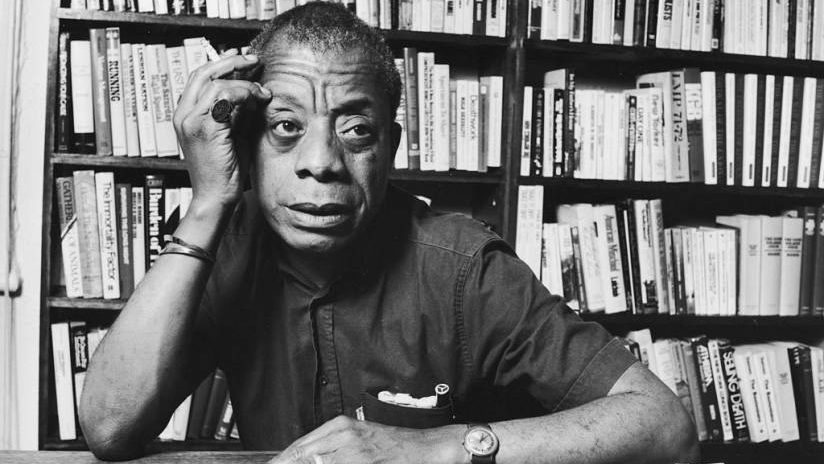
Nicholas Boggs shows why his biography of James Baldwin is “A Love Story”. Baldwin’s difficult life as a young Black American raised in Harlem offers speculative insight to homosexuality and racism. Baldwin grew up with a stepfather he feared. His stepfather was a stern, authoritarian, and abusive man who worked as a Pentecostal preacher who “raised” James from the age of two or three. His stepfather is said to have beaten him, told Baldwin he was ugly and would never amount to anything. His stepfather died in 1943 when James Baldwin was 19 years old, James became caregiver for his mother and eight siblings.

Treavor Noah’s autobiography writes of his abusive stepfather.

As a voracious reader of books and early sexual liaisons, Baldwin leaves Harlem to go to Paris.

As a 24-year-old, Baldwin scrapes enough money together to travel to Paris where he grew to become a great writer, not just another Black American. Despite a stepfather who disliked white people, James grew to overcome physical and mental abuse through belief in God in his youth and belief in humanity as an adult.

In Paris, the 24-year-old Baldwin falls in love with a white 17-year-old youngster who influences his life with experiences that lead to his success as a writer. Lucian Happersberger and Baldwin become life-long friends.

Lucien Happersberger and James Baldwin in their youth.

Having lived in the household of a Pentecostal Preacher, James initially chose to become a preacher. But, at the age of 17, he left the pulpit and rejected belief in God. Boggs infers Baldwin’s pursuit of literature replaced his belief in God because Christianity sanctifies rather than condemns racism. He felt the church was limiting and dogmatic. His stepfather embodied a religion of fear and bitterness that his stepson would not accept.

The themes of “Go Tell It on the Mountain”, Baldwin’s first published book, is about faith, religion, sin, morality, race, racism, gender, patriarchy, and one’s search for identity.

“Go Tell It on the Mountain” is an autobiographical view of life and growth to manhood as a child raised in Harlem. It took ten years to write “…the Mountain”. It released him from the ghost of his stepfather’s cruelty and set the stage for his exploration of race, religion, sexuality, and personal identity.

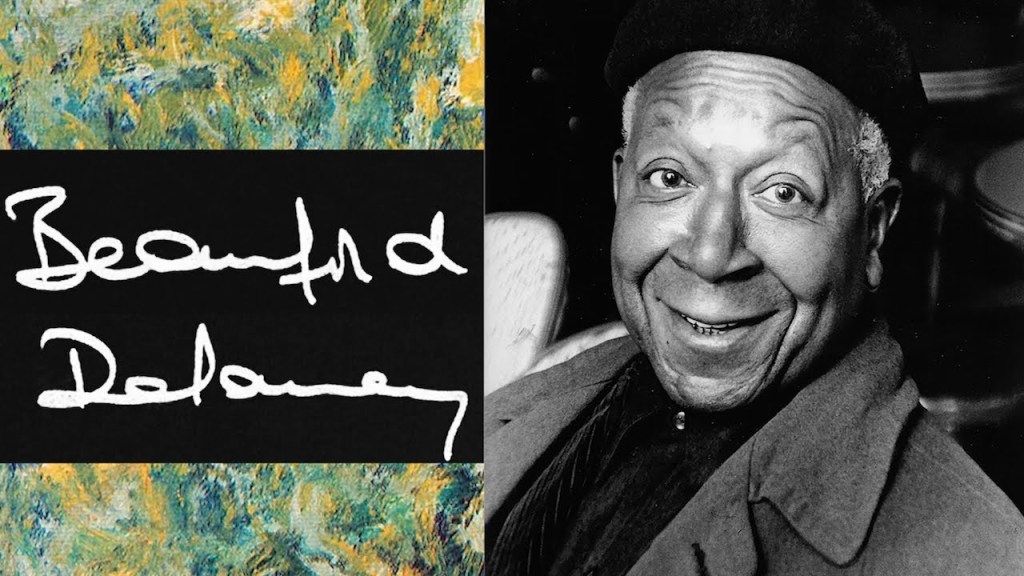
Beaufort Delaney (Artist who befriended and became a mentor to James Baldwin.)

Boggs identifies four men that had the greatest influence on Baldwin’s life. His mentor becomes Beauford Delaney, a gay Black American painter he met when he was 16 years old. Delaney was 39 when he met Baldwin. Delaney became a major figure in American modernist painting and the Harlem Renaissance in the 1930s and 40s. He introduced Baldwin to life and encouraged him to become an artist. Delany’s homosexuality helped Baldwin deal with his race and sexual orientation. He helped Baldwin believe in himself and put him on a path toward becoming a literary artist. They were friends for forty years when Delaney died in 1979. Baldwin died 8 years later, acknowledging Delaney as his mentor and guide through his tumultuous life.

Lucien Happersberger (On the far left of James Baldwin.)

The success of “Go Tell It on the Mountain” confirmed Baldwin’s reputation as a writer. Baldwin found truth in the books he read and the life he began to live in Paris. At the age of 24, Baldwin left his family in Harlem to become a writer in Paris. In Paris he falls in love with Lucien Happersberger, a 17-year-old white bisexual who became more relevant to his life than the fire and brimstone of religion. Baldwin grew to believe in the underlying equality of all human beings regardless of the color of their skin or their sexual orientation. His journey to this understanding is what makes the biography the “…Love Story” of Baldwin’s life. Though Lucien and Baldwin remain lifelong friends, Lucien chooses to marry an actress in 1964 which ends Baldwin’s romantic relationship but not Lucien’s outsized influence on his life.

An ironic vignette in Boggs story is Baldwin meeting Richard Wright in America, and later in Paris. Wright’s published book “Native Son” made him famous. “Native Son” is published in the 1940s. The main character in Wright’s book is Bigger Thomas, an impoverished, unemployed, African American, 20-year-old living in a 1930’s Chicago ghetto.  He lives with his mother, sister, and brother in a rat infested one room tenement, owned by a wealthy family that is about to offer him a job. Though Baldwin admired Wright’s achievement, he felt “Native Son” identified Bigger Thomas (Wright’s main character) as a symbol of oppression rather than a fully realized human being. This is an interesting insight to what Baldwin does in “Go Tell It on the Mountain”. Baldwin introduces more complexity to the Black experience of life. I’m not sure either Boggs or Baldwin are offering a fair assessment of “Native Son” because Wright clearly shows the environment in which Bigger Thomas lives. Any human being raised in Bigger Thomas’s circumstance is likely to be emotionally challenged and unbalanced.

Richard Wright (Author of “Native Son”)

History shows a rift is created between Wright and Baldwin because of Baldwin’s criticism. To this reader/listener, both are great writers of what is wrong with white or any dominant sexually or racially dominant society.

Baldwin’s abusive domineering stepfather and submissive mother.

Boggs explains why Baldwin’s biography is “A Love Story”. The cruelty of his stepfather drove Baldwin away from belief in God to a love for humanity. One wonders what his stepfather’s cruelty may have had to do with Baldwin’s sexual orientation. The artist, Beaufort Delaney, offers a refuge to Baldwin from his stepfather’s cruelty and helps him reconcile to his sexual identity and a belief in all humans’ equal rights. Lucien helped Baldwin understand love, intimacy, and the equality of human beings. Lucien decides to marry an actress in 1964 but remains a lifelong friend to Baldwin.

Boggs’ biography of Baldwin shows sexual orientation is not, and should never be, a crime. One cannot know what makes a person homosexual, bisexual, asexual, or heterosexual. Bogg’s biography of James Baldwin shows human beings should not be judged by their racial identity or sexual orientation.

PARENTS

William Wilde, Jane Wilde, and John Stanislaus Joyce fit the description of “Mad, Bad, Dangerous to Know”. However, John Butler Yeats seems somewhat less dangerous while contributing to the life and intellectual development of W.B. Yeats.

Books of Interest
 Website: chetyarbrough.blog

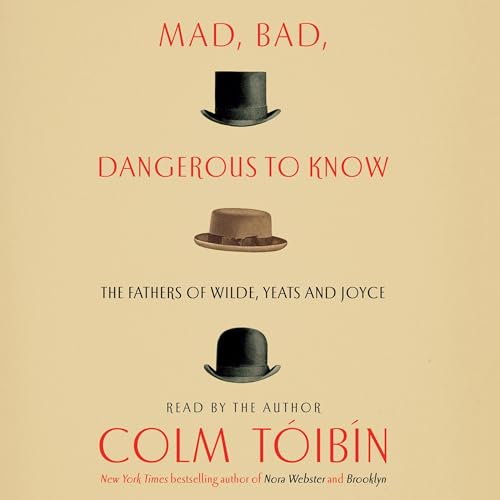
Mad, Bad, Dangerous to Know

AuthorColm Tóibín’s

Narrated By: Colm Tóibín

Colm Tóibín (Author, Booker Prize winner in 2006, journalist, essayist and short story writer.)

Mad, Bad, Dangerous to Know” as an audiobook is a bit difficult to understand because of Colm Tóibín’s Irish accent but as one adjusts to its cadence and inflexion, it offers interesting information about the families of Oscar Wilde, W.B. Yeats, and James Joyce.

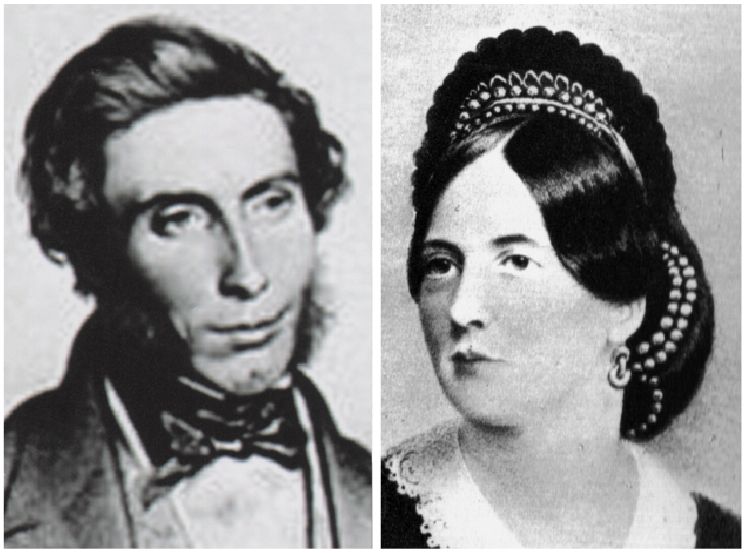
William and Jane Wilde (Parents of Oscar Wilde.)

William Wilde, the father of Oscar, is an important figure in Victorian Ireland. He was a renowned eye-and-ear surgeon who aided the medical profession by compiling statistical information about diseases and mortality of medical treatments as a gauge for human health. His wife, Jane Wilde (pen name-Speranza) was a nationalist poet and political writer. Some characterized her as a radical in comparison to her establishment husband.

Jane Wilde’s husband is accused of sexual misconduct in the treatment of a young female patient in his practice. Mary Travers had accused Dr. Wilde of drugging and seducing her when seeking help for a medical problem. Dr. Wilde is indirectly drawn into court to settle a lawsuit filed by the female patient’s father because of a publicly exposed letter by Jane Wilde about Ms. Travers. The court finds that Dr. Wilde’s wife libeled Ms. Travers in a publicly exposed letter that criticizes her sexual assault claim. The court found Jane Wilde guilty of libel and awarded Travers a symbolic sum of 2 pounds for public humiliation.

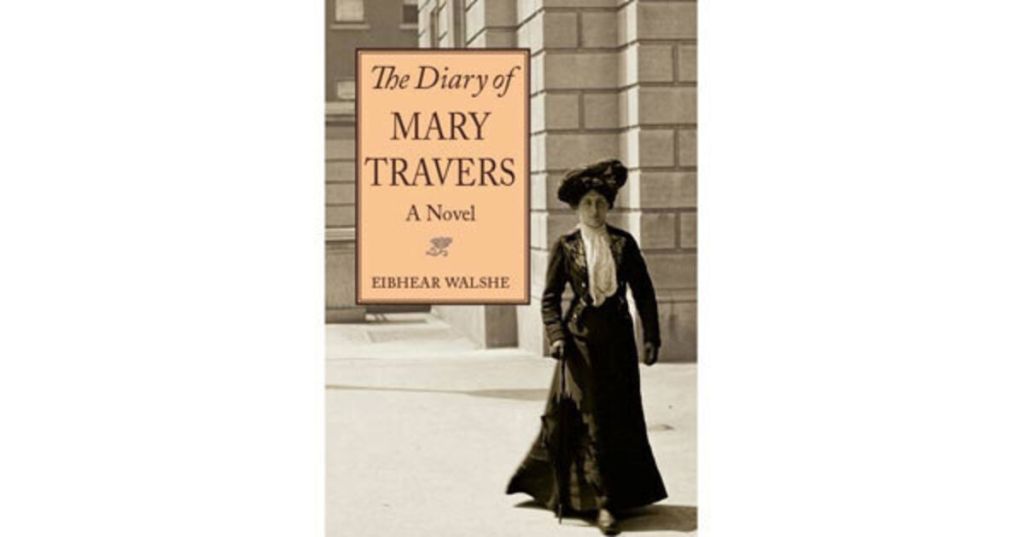
In the 19th century, Eibhear Walshe writes a book about the trial brought against Jane Wilde for libelous comments about the sexual abuse of Ms. Travers.

Though Oscar’s father never faced criminal prosecution, his reputation and standing in the community declined. Despite the blow to Dr. Wilde’s reputation, Tóibín argues Ireland’s medical profession benefited from William Wilde’s statistical analysis of medical practice in 19th century Ireland. Nevertheless, the Travers’ trial infers gender discrimination was then and remains a serious problem in modern times.

The Travers’ trial reminds one of gender discrimination in modern times.

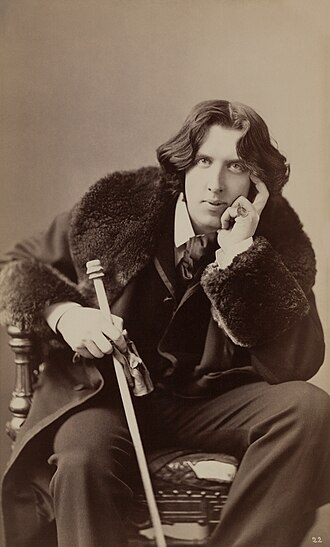
Oscar Wilde (1854-190o, the son of Dr. Wilde and Jane Wilde died at the age of 46, Oscar Wilde was an Irish author, poet, playwright who wrote “The Picture of Dorian Gray”. He became famous in London and around the world, convicted in 1895 for gross indecency for homosexual acts.)

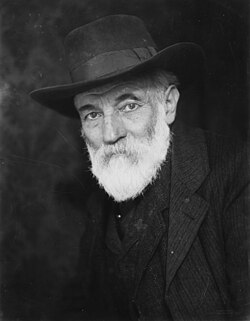
John Butler Yeats (1839-1922, W.B. Yeat’s father.)

The next family examined by the author is John Butler Yeats. Little is said about J.B.’s mother but his father was an aspiring portrait artist. This is an equally interesting story. J.B. is characterized as an artist but with a gift of gab and an interesting philosophy of life. John Butler Yeats is identified as a procrastinator that often started painting a portrait but as often failed to finish it. He and his wife had four children, i.e. two girls and two boys. Each contributed to Irish cultural life. Jack, their first son, became one of Ireland’s most celebrated painters. He also illustrated books and wrote plays and novels. He painted in the expressionist style. Susan Mary Yeats was a leader in the Arts & Crafts movement in Ireland. She co-founded the Cuala Press that published works by W.B. and other writers. She helped revive Irish decorative arts but was overshadowed by the brothers. Elizabeth Yeats was a co-founder of the Cuala Press. A little research shows the children had some formal education but as Tóibín suggests, with the exception of W.B.’s formal training at the Metropolitan School of Art in Dublin, the other 3 children were largely self-trained in art, writing, and Irish crafts.

Tóibín shows W.B. had a somewhat rocky relationship with his father when he was younger, but it evolved into a respect for his father’s philosophical view of the world.

When his father lost his wife, he chose to move to New York. Tóibín explains John Butler Yeats was more than a portrait artist. Though he was undisciplined in completing his artistic works, he scraped by with the help of his children’s support. John Yeats had attended Trinty College in Dublin studying the Classics and Law. He used that education to write letters to his children and friends after he moved to New York. The author infers some of W.B.’s poetry is based on ideas gleaned from his father’s philosophical musings. Tóibín notes several books have been published that compiled many of W.B.’s letters.

Rosa Butt portrait painted by J. B. Yeats.

Tóibín characterizes John Butler Yeats as emotionally and financially unreliable but a deeply influential father in W.B.’s life. J.B. exposes W.B. Yeats to the aesthetic and intellectual currents of the time. Tóibín infers J.B. had an extramarital affair with Rosa Butt. Ms. Butt was an acquaintance J.B. made when he painted a portrait of her in his studio. J.B. wrote many letters to Ms. Butt that reflect on his emotional attachment. However, he never returns to Ireland despite many intimations that he would. John Butler Yeats dies on February 34, 1922, in New York City. He was 82 years old, living in a boarding house at 317 West 29th Street. As true to his habits in life, he is said to have died with an unfinished self-portrait beside his bed. He is buried in Chestertown Rural Cemetery in Chestertown, New York.

James Joyce, leaning on his mother, with his father at the right (John Stanislaus Joyce).

John Stanislaus Joyce (1849-1931, died at the age of 82

The final chapters of Tóibín’s book are about James Joyce’s family. His father is John Stanislaus Joyce. Tóibín suggests James had an ambivalent opinion of fathers and particularly his own father. John Joyce is characterized as an abusive, alcoholic husband, and incompetent manager of his inheritance. With ten children and a wife, John Joyce loses his inheritance and effectively drives his son away from Ireland. James is the oldest, born in 1882. Tóibín explains that his voice and personality are ever present in James Joyce’s famous characters in both “Ulysses” and “A Portrait of the Artist as a Young Man“. Both books take a dim view of fatherhood while exemplifying an erudite father who projects a “man about town” image. However, Tóibín shows John Joyce to be an incompetent money manager and abusive family man.

James Joyce (1882-1941)

In “A Portrait…” Stephen’s biological father is depicted as charming but irresponsible. Like James Joyce’s father, his main character’s father is financially unstable and an emotionally distant, abusive parent. In “A Portrait…” Stephen Daedalus is alienated and chooses a life independent of the Catholic Church because he views it like a surrogate father that imposes moral and spiritual authority without justification.

In “Ulysses”, James Joyces’s main character argues paternity is a fiction while maternity is merely a biological function. At best, one sees James Joyce is ambivalent about his dad. James experiences episodes of camaraderie when socializing with his father as a drinker and as a tenor singing partner. Both are supporters of Parnell, the Irish nationalist leader who supported Home Rule and independence from England.

Tóibín suggests James Joyce’s feelings about his mother are marked by guilt, presumably for not protecting her from her abusive husband but also because of her belief in God and patriarchal authority. In reading Joyce’s works, particularly “A Portrait of the Artist as a Young Man” and “Ulysses”, one can see James Joyce’s as a son of a loving, religious mother and abusive father who drank too much. James knew his mother loved him, but his father could not manage his or his family’s welfare.

May Murray Joyce (James Joyce’s mother, 1859-1903, died at the age of 44.)

William Wilde, Jane Wilde, and John Stanislaus Joyce fit the description of “Mad, Bad, Dangerous to Know”. However, John Butler Yeats seems somewhat less dangerous while contributing to the life and intellectual development of W.B. Yeats.

ALEXANDER HAMILTON

It is interesting to be reminded of the danger of a strong executive branch and the consequence of rule by an authoritarian President. Trump shows loyalty to his beliefs, rather than competence, as the primary qualification for appointment to America’s federal government bureaucracy.

Books of Interest
 Website: chetyarbrough.blog

Alexander Hamilton

Author: Ron Chernow

Narrated By: Scott Brick

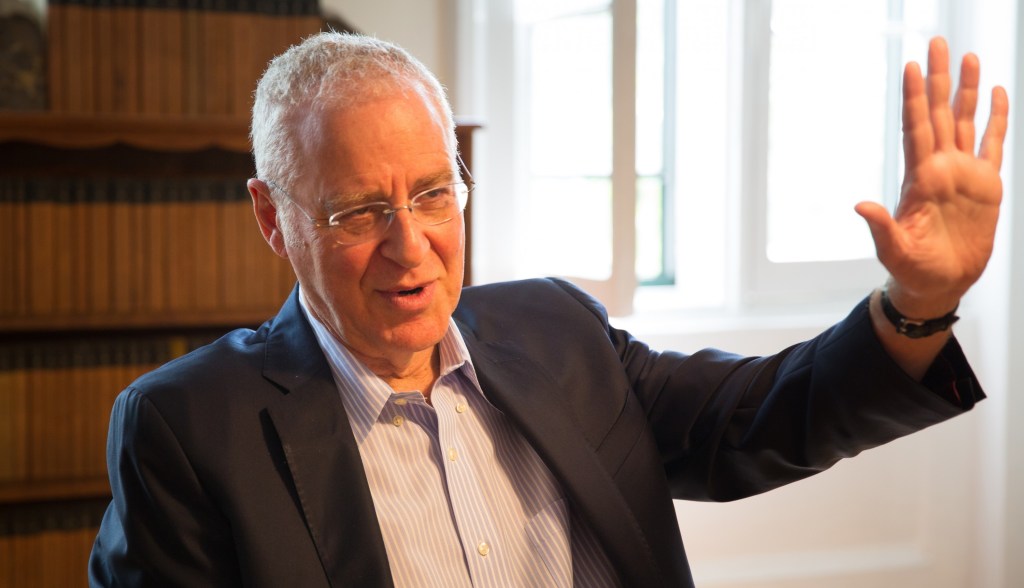
Ron Chernow (Author, biographer of Alexander Hamilton, George Washington, Ulysses Grant, and Mark Twain.)

Though this critic did not care for Chernow’s biography of Washington, his examination of Alexander Hamilton is of some value. Chernow’s attention to detail is impressive. Considering the detail of Chernow’s biographies, it is quite an achievement for Chernow to have had the time to fully research and write histories of one, let alone four, important American’ leaders and influencers.

Traditionally, Alexander Hamilton’s father has been identified as James A. Hamilton, a largely unsuccessful Scottish trader in the British West Indies (approximately 1,000 miles from the American’ continent–made up of the islands of Cuba, Jamaica, and the Lesser Antilles.)

However, Chernow suggests James Hamilton may not have been the father of Alexander because his mother, Rachel Faucette, may have had sexual relations with other men. Ms. Faucette had become James’ lover while being married to Johann Lavien. Faucette had become unhappy and left Lavien in 1750 to take up with James Hamilton. Lavien had Faucette imprisoned for adultery. Lavien eventually divorces Faucette in 1759.

Chernow suggests Faucette, at some point, may have had an affair with Thomas Stevens, a successful merchant and landlord, while living with James Hamilton.

Chernow’s evidence is primarily from reports of Alexander’s close physical appearance to a son of Thomas Stevens. These two young men, Alexander and Thomas Steven’s son, Edward, were about a year apart in age with Edward being the older. Alexander and Edward became close friends, and Thomas Stevens played an important role in Alexander’s life when his mother died. Stevens took Hamilton into his household on St. Croix. Alexander became part of the Stevens’ family.

In Hamilton’s time with the Stevens family, he became educated by reading books and being employed in the mercantile trades of the West Indies.

By any measure, whether Alexander is the son of Stevens or Hamilton makes little difference. By definition, Alexander’s paternity is illegitimate. One asks oneself–so what? Alexander’s genetic inheritance from Faucette and either father leads him to become one of the most important historical influences in the creation of the American Constitution.

Hamilton arrives in New York City in 1772. Hamilton is only 17. The American Constitution is adopted, signed and ratified on September 17, 1787, and implemented on March 4, 1789.

Hamilton’s influence as a representative of New York is to create a centralized government with taxation authority.

This national government is to have the right to enforce national laws that apply to all citizens according to enumerated powers of a federal government under the direction of a President and Congress elected by American citizens. Chernow notes that George Clinton, the governor of New York, is opposed to the strengthening of the federal government because of his interest in maintaining his power as Governor of New York. Hamilton is one of the three representatives of New York at the convention, two of which were opposed to strengthening the federal government.

Chernow explains how the convention succeeded in strengthening the federal government.

The two framers that are shown to have the greatest impact on the draft of the Constitution are Alexander Hamilton and James Madison. Chernow explains Hamilton pushed for a strong centralized government with broad powers to tax, regulate commerce, and enforce laws. Madison supports a strong federal government but argues for states’ rights and strict limits on federal authority. Hamilton wishes for broad flexibility for the federal government in the interpretation of implied powers while Madison insists on an explicit statement of the powers of the federal government to limit its implied powers. Hamilton looks to America as an industrializing nation that should be supported by a national bank with federal support for infrastructure improvements while Madison sees America as the agrarian breadbasket for the world with limited banking and industrial’ support by the federal government. Hamilton believes in rule by an educated elite while Madison is concerned about concentration of power in an elitist aristocracy. In the end, Madison takes on the role as the principal author of the Constitution which is intended to limit Hamilton’s expansive interpretation of federal government control of State governance.

It is interesting to be reminded of the danger of a strong executive branch and the consequence of rule by an authoritarian President.

Trump shows loyalty to his beliefs, rather than competence, as the primary qualification for appointment to America’s federal government bureaucracy. Chernow successfully reminds listener/readers of the history of early American government creation, but “Hamilton” is not a page turner like his biography of Mark Twain.

MARK TWAIN

Chernow’s biography is a mirror of Twain’s time and life. Chernow implies Twain could see imperfections of society without seeing his own. Twain’s genius to entertain America and readers around the world is not diminished by Chernow’s well written book.

Books of Interest
 Website: chetyarbrough.blog

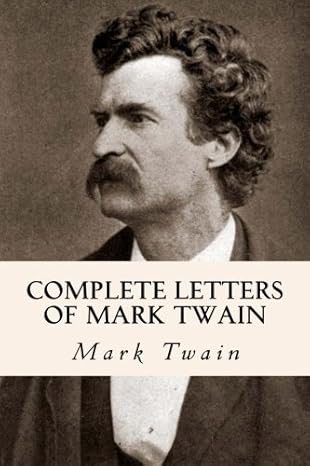
Mark Twain 

Author: Ron Chernow

Narrated By: Jason Culp

Ron Chernow (Author, journalist, biographer, winner of the 2011 Pulitzer Prize for Biography and the American History Prize for his 2010 book “Washington: A Life”.

No stranger to historical biographies, Ron Chernow has written an interesting biography of the peripatetic humorist Samuel Clemens, aka Mark Twain. Samuel Clemens was born in Florida, Missouri, two weeks after Hailley’s Comet passed Earth in 1835, he died in 1910 when Hailey’s Comet made its closest approach to Earth in 1910. Chernow’s biography explains how Clemens became a steamboat pilot, frontier journalist, author, and American gadfly in his journey through 74 plus years of life.

Chernow’s biography of Mark Twain reminds one of Donald Trump without the power of the Presidency.

Clemens is noted as a stretcher of truth who told stories of his time that illustrated the contradictions of race, slavery, and morality that live through today. Twain is shown to express himself in humorist ways that challenged racial norms and societal conflicts which made some laugh, and others cringe with disgust or anger. Chernow argues Twain’s use of language shaped American literature. He gave American literature a unique voice that blended humor with criticism. Twain humanized the Black community and the iniquity of slavery, but Twain’s upbringing suggests he did not escape the false belief of innate Black’ inequality. Chernow painted a picture of Twain that showed how society was filled with the promise and pitfalls of Americans’ character.

Chernow shows how Clemens reinvents himself, not from formal education but from life experience.

At 21, Clemens begins training himself as a steamboat pilot on the Mississippi river, a highly praised, prized, and well-compensated position. Chernow suggests Clemens found his nom deplume, Mark Twain, based on the language of riverboat pilots. (“Mark Twain” is the 12 feet of depth needed for safe navigation of a riverboat.) As material transport changed after the steamboat era, Twain had to find a new career. He traveled to Nevada with the hope to become rich as a silver baron during the gold and silver rushes of the late 1850s. However, he never struck it rich, lost other people’s money, and turned to earlier work experience in newspapers when he lived in Missouri. He had learned the typesetting business and had written a few articles for the paper in his hometown. He settled in Carson City, Nevada, eventually becoming a journalist. On the one hand his stretching of the truth got him in trouble as a journalist but, on the other, it opened him to another career. His wit and way with words led to a role as lecturer and performer.

Chernow shows Twain changes jobs based on his innate abilities and external events.

The development of mass media, America’s Civil War, the industrialization of America, and the growth of a celebrity’ culture influence Twain’s life and made him a cultural symbol of America in the same way Dickens, Dostoevsky, and Chinua Achebe became symbols of their countries. Twain exemplified American life, its contradictions, its greed, and its biases that were blended into the personal tragedies and experiences of his own life. He turned his life experience into an art that reflected America’s growth as a nation. He became a writer and lecturer.

Chernow explains how Twain did not just read his lectures, i.e., he performs and acts their meaning to an audience.

Twain blends storytelling with satire and theater to entertain his audience. His reputation as a public speaker is made in California, but he becomes a global star. He performs in London, Berlin, and Bombay with what became cultural events about American humor and American foibles. His lectures are folksy with tinges of intellectualism that make him revered, respected, and laughed about by his audiences. Chernow believes he created an image of one who speaks truth to power about imperialism, religion, and human folly.

Chernow does not sugar coat truth about Twain.

Like all human beings, Twain had his blind spots. He was silent about lynching and its immorality, and he was trapped in his vision of racism by treating it as a troubling fact of American life despite his championing of civil rights. At best, he appears to be an agnostic when it comes to religion. There is criticism of Twain’s close relationship with teenage girls that he dismisses as a public concern by saying “It isn’t the public’s affair”. Twain is reckless with other people’s and his own money and investment. He exhibits behavior that suggests a gambler’s view about getting rich quickly. Twain could be vindictive, and melancholic because of his gloomy view of humanity. His family life suffers from his impulsivity and emotional distancing toward his wife and daughters. In one sense, Chernow makes Twain more human by noting he is like most of us except for his insightful sense of humor and talent for extemporaneous public speaking.

The archive of Twain’s letters is in the thousands which spans his entire adult life.

Chernow gathers much of his understanding of Twain from his personal letters rather than his books. He does note a number of Twain’s family members and friends are models for characters in his novels. However, Chernow’s focus is on Twain the man who appears morally inconsistent, a poor manager of other people’s money, and prone to anger when aggravated by other’s opinions. Whether this is fair or not, it describes many people today.

Chernow’s biography is a mirror of Twain’s time and life. Chernow implies Twain could see imperfections of society without seeing his own. Twain’s genius to entertain America and readers around the world is not diminished by Chernow’s well written book.

CARTOON

Nadel reports Robert Crumb’s life and antics without criticism which seems appropriate because he is simply recounting a human beings’ life. Nadel does not act as a judge but as a reporter of a lived life.

Books of Interest
 Website: chetyarbrough.blog

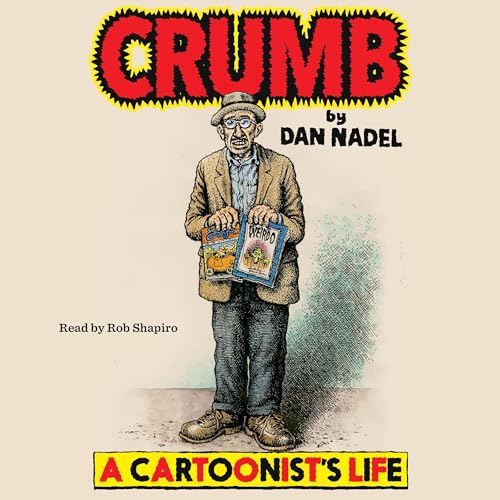
Crumb 

Author: Dan Nadel

Narrated By: Ron Shapiro

Dan Nadel (Author, curator-at-large for the Lucas Museum of Narrative Art in Los Angeles.)

“Crumb” is a well written biography of Robert Crumb, the cartoonist. The subject matter is of interest to me because of the remarkable talent of a disheveled young man with coke bottle glasses that has a gift of drawing. That gift provides him wealth and success despite coming from a troubled household that gives him an eye for the weirdness of life. He and his brother, Charles who was 1 year older, began a monthly hand-drawn comic book when he is 15 years old. They sold it door to door in the late 1950s. Charles wrote the stories and Robert illustrated them. Nadel shows how that early life experience sharpened Robert’s artistic skills and planted the seeds for his future success.

R. Crumb drawing of himself.

Nadel notes how Crumb’s drawings are deeply personal and sometimes disturbing because they capture the inner conflicts within Crumb’s life while tapping into the undercurrents of postwar America. Crumb’s work delves into the male id and its impulses exposing sexual obsession, neurosis, and human alienation. Crumb’s life story borders on a confessional and makes one confront their own obsessions. His comics delve into consumerism and conformity about race and gender with a biting satire that makes one realize the absurdity of American, if not all, human life. Nadel suggests Crumb’s work is an unfiltered chronical of the life he lived and lives.

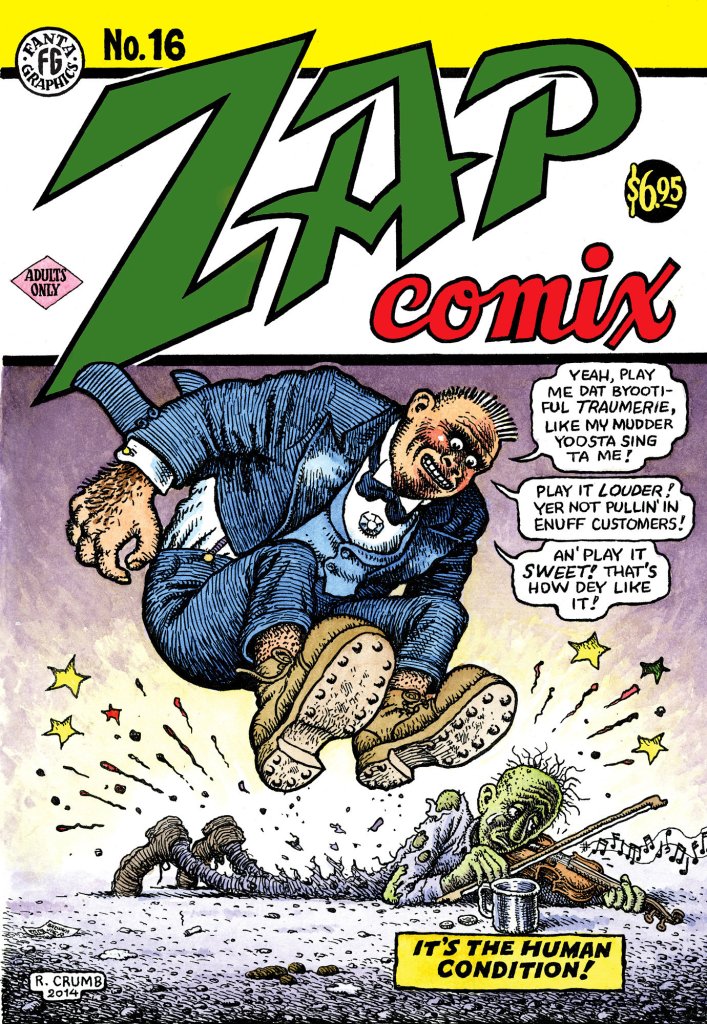
Robert Crumb gained fame in the 1960s counterculture when Zap Comix was released in 1967.

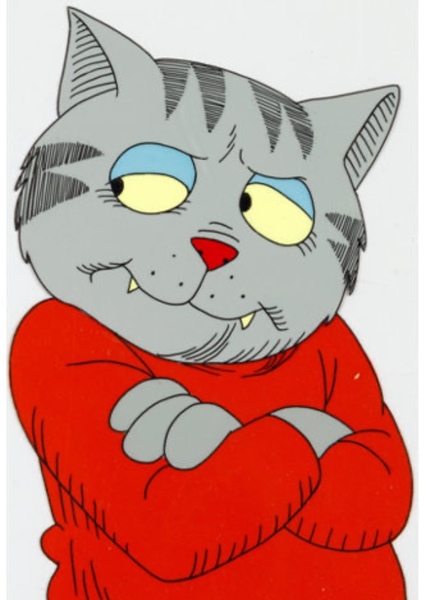
“Mr. Natural” and “Fritz the Cat” became cult icons illustrating the absurdity of life. Nadel suggests Crumb’s subjects are expressions of his working through his personal demons. Some of his images are racist and misogynistic which paints a picture of a troubled society. His subject matter ranges from popular music, counterculture, the history of comics, to graphic satire.

Nadel explains Crumb is married twice. His first marriage to Dana Morgan falls apart in part because of Crumb’s emotional volatility, but also because of the cultural upheaval of the 1960s. Nadel explains Morgan was the first woman Crumb had sex with which is complicated by Crumb’s confusion about sex. Crumb’s fame increases. He experiments with LSD. These dramatic changes in his life increase his discontent. There seems no single reason for the divorce. Crumb moves to San Franciso in 1967 to immerse himself in a counterculture and the comix scene.

Crumb meets Alaine Kominsky in 1972, and they marry in 1978. Their creative partnership blossoms with the creation of autobiographical comics that reveal the quirks, conflicts, and affections of their relationship. Their joint work is “Dirty Laundry Comics”. Ms. Kominsky dies in 2022.

Nadel notes that Crumb insisted on honesty when he agreed to have his biography written. Aline Kominsky is acknowledged as a stabilizing force in Crumb’s life. Crumb lived through America’s wars, the psychedelic age of the 60s and has now has reached the age of 81. Nadel explains much about Crumb’s turbulent life and how that turbulence shaped him and his art. Nadel offers a layered and empathetic portrait of R. Crumb, the ups and downs of his life, without excusing or condemning the beliefs, actions, or art of his long life.

Crumb’s behavior like jumping on the backs of women for piggyback rides and his racially charged imagery is uncritically reported.

Some of what Crumb illustrated in his art and what he did with his piggyback rides undoubtedly insults the public. In many ways, Crumb marginalizes society with his racist and misogynistic comics. Nadel reports Robert Crumb’s life and antics without criticism which seems appropriate because he is simply recounting a human beings’ life. Nadel does not act as a judge but as a reporter of a lived life.

Crumb’s parents were poor. He lived in poverty but overcame its limitations with the art of drawing that opened the world of commerce to him. From comics to greeting card drawings and back to comics, Crumb became a maven of the art of irreverent behavior.

UNDERCOVER

Scott Payne’s story makes one proud to be an American because of his bravery and willingness to risk his life for what is good about being in the land of the free.

Books of Interest
 Website: chetyarbrough.blog

 Code Name: Pale Horse (How I Went Undercover to Expose America’s Nazis)

Author: Scott Payne, Michelle Shephard

Narrated By:  Scott Payne

Scott Payne is a former undercover FBI agent who retired from the agency after 23 years of service. Michelle Shephard is an independent investigative reporter, author, and Canadian filmmaker.

Scott Payne’s history as an undercover FBI agent offers a dark picture of a part of America that one hopes and presumes most Americans revile.

With the help of Michelle Shepard, Payne reveals how a part of American society believes in white supremacy and an inherent right to victimize the public. Some people seek the reward of money and power, along with the prestige of being members of a miscreant minority, to murder, rob, and sell illicitly gained drugs and merchandise to enrich themselves. This minority demeans the ideals of American democracy.

America is founded on a government with power that comes from the consent of the people.

America is managed with belief in the rule of law, individual rights, a separation of powers to prevent tyranny, the equality of all people, and the right to vote for its leadership. Payne’s service in the FBI as an undercover agent shows how a minority of Americans violate these founding principles. Payne’s story reminds one of what many Americans think they are and should be. He, like most Americans, comes from the middle-class, finishes high school and grows into adulthood. He chooses to go to college, has found God to be important in his life, gets married, has children, and gets on with life. He comes across as an “everyman” American; although at 6′ 4″, he is taller and more athletic than most. He chooses to become a policeman and is later hired by the FBI.

Texas Motorcycle Club’ Patches.

Payne chooses to become an undercover agent for the FBI and becomes acquainted with a motorcycle group in Texas that is being investigated. Payne spends many months to ingratiate himself to the group and eventually becomes a member of the Outlaws, one of the “Big Four” clubs in America. This particular chapter deals in stolen goods and drugs. Payne’s entry as an undercover agent was in the stolen vehicles business with the intent of becoming undercover in their drug business. What is made clear in Payne’s story is how dangerous the drug business is and how he is nearly killed when a body search is conducted in a dark basement.

The personal stress of an undercover agent is made clear in Payne’s story.

Payne’s belief in God, FBI support, and his wife’s commitment to their marriage save him from a mental breakdown. After arrests of the biker gang members that were breaking the law in Texas, Payne moves on to an undercover assignment in Tennessee to infiltrate a white supremacist group. Like Germany’s Nazi movement, white supremacy in America is a sore that never heals and can grow to threaten a country’s life. The disgusting delusion that “all people are not equal” penetrates society like a contagious disease. Payne shows how white supremacists recruit and train followers that infect society. Humans have a desire to become a part of something greater than themselves. Sadly, that desire works for and against the American ideal of freedom.

Payne’s story makes one proud to be an American because of his bravery and willingness to risk his life for what is good about being in the land of the free.

LSD

Some academics considered Timothy Leary a visionary thinker who pioneered consciousness expansion, psychedelic therapy, and transhumanism. Others argue he lacked scientific rigor.

Books of Interest
 Website: chetyarbrough.blog

The Acid Queen (The Psychedelic Life and Counterculture Rebellion of Rosemary Woodruff Leary)

Author: Susannah Cahalan

Narrated By:  Susannah Cahalan

Susannah Cahalan (Author, journalist for the New York Post)

Susannah Cahalan has written a titillating story of the 60s and 70s and Americans burgeoning experimentation with illicit drugs. It focuses on Rosemary Woodruff Leary, the fourth wife of the LSD guru, Timothy Leary. Leary’s first wife committed suicide, his second seemed a rebound companion, his third is to Nena von Schlebrugge, and then Rosemary who eventually becomes his lover, fourth wife, and supporter during their 9 years of marriage. His last marriage was to Barbara Chase in 1978 which lasted for 14 years until 1992. Leary died in 1996 at the age of 75.

Timothy Leary’s time with Rosemary is filled with mutual infidelity but with freely given support by Rosemary of a diminishing intellectual who promoted hallucinogens and their mind-altering effects. The handsome Leary became a significant influence on the use of hallucinogens like LSD and psilocybin as tools for expanding human consciousness. He believed psychedelics could unlock deeper levels of self-awareness, creativity, and spiritual enlightenment. An interesting point about LSD and other hallucinogens is how they have become useful drugs for modern treatment of psychological dysfunctions like schizophrenia and PTSD. On the other hand, Cahalan shows indiscriminate use of LSD can diminish social propriety and become an escape from or harmful distortion of consciousness.

Putting aside the value of hallucinogens, “The Acid Queen” is about the life of Rosemary Woodruff Leary.

Rosemary was born in 1935. Growing into a beautiful woman, she was drawn into the counterculture movement of the 60s and 70s in her travels to San Francisco, Southern California, and New York. Her beauty opened doors of opportunity for Rosemary. She became an airline stewardess until retirement in her early 30s that were required by age limits of airlines in those years. Cahalan infers Rosemary’s attractiveness and free-spirited beliefs led her to use sex as a useful way of getting what she wanted through relationships with men. She joined the beatnik generation because it fit her style of living. This is a generation that rejected mainstream American culture with an interest in artistic self-expression, non-conformity, and spirituality. This was in the 1950s and early 60s.

Rosemary meets Timothy Leary in 1965.

Leary’s use of LSD as a transformative experience fit into Rosemary’s lifestyle. She became one of Leary’s devoted followers. They married in 1967. Art Linkletter’s daughter died in 1969 by suicide and blamed it on LSD. Not surprisingly, the conservative President, Richard Nixon, called Leary “the most dangerous man in America”. In 1968 Timothy Leary was arrested in Laguna Beach, California and charged with marijuana possession. He was tried in 1970 and sentenced to 1o years in prison. He escaped prison with the help of the Weather Underground but was recaptured in 1973. His sentence, in conjunction with his former conviction, was extended to 20 years. He was released in 1976, after 3 years, when he cooperated with authorities by offering information on the counterculture movement.

Cahalan shows how Rosemary followed and supporter Leary in his escape from prison and how their relationship fell apart.

It is somewhat unclear from Cahalan’s story about why Rosemary gave up on Leary. One may have been because of his and her self-absorption or their penchant for attachment to others for the support they believe they deserved. Cahalan’s story of Rosemary is interesting because of her association with Leary. Though Rosemary is self-educated, she appears to have limited formal education with her claim to fame largely based on the men with whom she became intimately involved.

In contrast, Timothy Leary earned a B.A. in psychology from the University of Alabama in 1943, a master’s degree in psychology from Washington State University in 1946, and a Ph.D. in psychology from the University of California, Berkeley in 1950.

Leary had many intimate women friends and five wives. He had two children, a girl born in 1947 and a boy born in 1949, with his first wife, Marianne Bush. Leary’s daughter died at age 42. She hung herself with her shoelaces tied to a jail bar while waiting to be charged for shooting her boyfriend. His son Jack, at 25 years of age, is noted in a NYT’s article in 1974. The article clearly implies Jack had become estranged from his father.

“The Acid Queen” is a sad story of two self-absorbed people who had exciting and tragic lives.

Timothy Leary had fame and fortune. Rosemary Woodruff Leary had beauty and tenacity. Neither seem paragons of virtue and both seem much less than they could have been. The underlying message of “The Acid Queen” is we need to be more connected to the world, less self-absorbed, and more other-directed. (Easy to say or write, but unlikely to be.)

Some academics considered Leary a visionary thinker who pioneered consciousness expansion, psychedelic therapy, and transhumanism.

Timothy Leary showed himself to be a charismatic and persuasive speaker. However, critics argue he lacked scientific rigor and had little foresight or objectivity about the effects of drugs on consciousness. Rosemary may have been “The Acid Queen” but never achieved the sobriquet of “Queen of Hearts”.

SOCIAL CROSSROAD

There is enough abundance in the world to create opportunity for all, but Ernaux’s history implies people must change their ways.

Books of Interest
 Website: chetyarbrough.blog

The Years

By: Annie Ernaux

Narrated by: Anna Bentinck

Annie Ernaux (Author, French writer, 2022 Nobel Prize winner, born in 1940.)

Annie Ernaux offers a perspective on history from the experience of her life as a French woman in the mid 20th to 21st century. Though born before the beginning of World War II, Ernaux matures as a young woman in the 1950s. A striking difference between the history of this time is the difference between Algeria’s drive for independence and American’s mistakes in Vietnam. French Algeria is less understood in American memories than its troubled history in Vietnam. Aside from misunderstanding France’s Algerian experience, the social changes Ernaux’s notes are similar to many Americans’ experiences in Vietnam.

Eisenhower’s, Kennedy’s, and Johnson’s leadership in the Vietnam war seem, in some respects, similar to Ernaux’s memory of Charles de Gaulle’s leadership in Algeria.

Eisenhower and Kennedy were veterans of war who became leaders of their countries. Though Eisenhower and Kennedy believed Vietnam was a threat as a communist Domino, de Gaulle believed Algeria was a threat to France’s right to colonize. These famous nationalist leaders were wrong. Southeast Asian countries had a right to choose their own form of government, and Algeria had a right to choose self-government.

Though Annie Ernaux was born just before 1946, she matured during great changes in the world.

Her experience of post-war reconstruction, the rise of consumerism, women’s rights, sexual liberation, social class differentiation, and societal norms changed in America, France, and most nations of the world.

George Marshall was Secretary of State from 1947 to 49 and headed the Marshall Plan to reconstruct Europe after the war.

America played a great part in the financial reconstruction of Europe, Japan, and Germany after the end of WWII. America’s goal was to prevent future conflicts, promote economic recovery, and counter the influence of communism, but in that process, America influenced social norms throughout the world. Some of the influences created clear lines of opposition between communism, socialism, and capitalism. However, all economic systems influenced societal change. Whether communist, socialist, or capitalist there were changes in normative social values. Societies increased consumerism, instituted policies for equal rights to some degree, and made class distinctions based on money, or its equivalent, i.e., power. In capitalist and socialist societies, social position became more about money and the power of its influence. In communist societies, it was more about power and the influence of money. Political differences remained sharply divided in ways that influenced social norms, but the general direction was similar. Communism, socialism, capitalism, and all its derivations focused on consumerism, women’s rights, and class differences that changed the world during Annie Ernaux’s “…Years” of life.

Feckless leaders, deluded authoritarians, and a few truly service-oriented leaders rose in every system of government, including American, English, Japanese, Chinese, French, Russian, and other nations. The main differences lay in leader’s longevity, and their economic policies. Leaders of China and Russia having fewer leadership changes between 1946 and 2006 than most nations were largely authoritarian. There were 6 leadership changes in China and 9 in the Soviet Union. Only 1 of 6 in China and only 1 of 9 in the Soviet Union leaned toward capitalism.

From 1946 to 2006, there were 11 presidents in America, 13 prime ministers in England, 32 prime ministers in Japan, and 6 presidents in France. All of these democratic nations exclusively leaned toward capitalism.

However, Ernaux’s history infers every nation shows social norms changing in similar ways. Even China and Russia show changes in consumerism, women’s rights, sexual liberation, and class differentiation. Unquestionably, the societal changes did not change to the same degree, but they were similar. Maladies of society are common in all forms of government, only the degree of change in societal norms is different. All nations have more or less consumer opportunities, more or less human equality, all have class distinctions, but normative change is a work in progress, not an end but a beginning process.

Annie Ernaux in earlier years of her life.

Ernaux’s trip down memory lane is interesting but not particularly revelatory. Her remembrance of the past is helpful because she shows how social change evolved in both good and bad ways in her own life. Consumerism seems on the edge of being out of control with money and wealth being the “sine qua non” of the good life. Without money, life seemed not worth living to some. Ernaux suggests America has become an arrogant example of wealth and privilege that diminishes civility. Ernaux is not suggesting she is above the fray of wealth as privilege and reveals her own character flaws by noting affairs with younger men in what seems a wasted attempt to reclaim youth. She implies a prejudice against Arabs and Africans who she believes wrongly consider themselves as French. She infers they are not French because they are not white Christians, even if they are born in France.

One comes away from “The Years” with a feeling that societies of the world are at a crossroad.

Wealth should not be the measure of one’s social value and privilege. Inequality is a sin against humanity. Prejudice is the cause of much of the world’s conflict. Immigration is a misunderstood value of societal comity. Tolerance of all religious beliefs has been an unresolvable puzzle but a desirable societal goal. There is enough abundance in the world to create opportunity for all, but Ernaux’s history implies people must change their ways.

MOZART

This review does not do justice to Swafford’s excellent history of Mozart. One of the most revelatory and entertaining parts of Swafford’s history is the bawdy, funny, and clever poetry that Wolfgang’s letters reveal about his personality. Genius takes many forms.

Books of Interest
 Website: chetyarbrough.blog

Mozart (The Reign of Love)

By: Jan Swafford

Edited By: Tim Cambell

Jan Swafford (Author, American composer, lecturer and writer.)

Jan Swafford has written a magnificent biography that diminishes and reinforces the comedic/tragic/brilliant characterization of Mozart in the film Amadeus. By any measure, Mozart is shown by Swafford to be a funny and brilliant musician while widely considered by musicologists as one of the greatest composers of all time.

Tom Hulse as Mozart in the movie “Amadeus”.

Vaguely remembering the film, the comedy enacted by Tom Hulce was hilarious, but Swafford shows how truly remarkable Mozart was as a violin and piano musician who began at the age of seven to tour Europe with his eleven-year-old sister, and their father, in 1762. The film is entertaining but misses the immense talent of this family’ trio in his book “Mozart”.

Maria Anna Mozart (1751-1829) Sister of Wolfgang Mozart was a highly talented musician who played piano and toured with Wolfgang when he was 7 and she was 11.

Though Maria Anna Mozart may not have been a genius like her brother, Swafford explains she was a piano prodigy as a result of her father’s guidance as a music teacher. Leopold Mozart may have been a helicopter father who dominated his children’s lives but his contribution to their success is made clear by Swafford.

Leopold Mozart (1719-1787, father of Wolfgang and Maria Anna Mozart.)

Though Leopold Mozart is criticized by some as an over controller of his son’s life, it seems unlikely that Wolfgang Mozart would have become such a great musician and composer without his father. Wolfgang came to revile his father’s control of the family’s income that is largely a result of his daughter’s and son’s talents. Swafford shows how instrumental Leopold was in creating Mozart’s legendary abilities. Leopold was a great teacher who adjusted his teaching methods to the innate interests of his son and daughter. His daughter’s precocity did not reach the level of her brother’s success, but one wonders how much of her fame and ability is related to societal misogyny?

This remarkable history of the Mozart family makes one wonder what makes the difference between geniuses like da Vinci, Newton, Einstein, Dickinson and others and those of us who are ordinary. One presumes it is a combination of genetic disposition, education, and luck. All of these circumstances are presumed and revealed by Swafford in Wolfgang Amadeus Mozart’s life.

Swafford notes two women in Wolfgang’s life that were important. They were sisters. In 1777, Wolfgang sent a letter to his father about Aloysia Weber (on the left) and the possibility of her traveling with him to Paris. Aloysia is alleged to have rejected his advances, but Wolfgang’s father wrote a letter that vociferously objected to his son’s dalliance with the Weber’ daughters. Leopold implies Aloysia was a gold-digger and would ruin Wolfgang’s career. One may interpret the letter as more of a concern with Leopold’s son’s ability to raise money for the family, i.e. not the scandal of her travelling with Wolfgang. In any case, Wolfgang marries Constanze Weber (on the right), the younger sister, in 1782. It has been characterized as a marriage filled with love and mutual support.

Swafford explains why Wolfgang leaves Salzburg for Vienna, Austria in 1781.

Mozart felt his music was undervalued and constrained by the archbishop he worked for in Salzburg. To the disappointment of his father, Wolfgang moves to Vienna to pursue his career. His father’s disappointment was both financial and social. Because Leopold had been a guiding force in Wolfang’s life and career, not to mention the wealth he brought the Mozart family, his move to Vienna became a break from his father’s influence. They continued to correspond, but the familial and financial bond were broken with growing hostility felt by Leopold toward his son.

Wolfgang Amadeus Mozart (1756-1791 died at the age of 35.)

Wolfgang lives until 1791. His exact cause of death is unknown, but he had endured many illnesses in his 35 years of life. There is speculation that it was a recurrence of rheumatic fever or complications of strep throat. Some suggest it may even have been poisoning. The reality of that time is that the average life expectancy in the 18th century was 25 to 40 years of age. Some certainly lived to 50 or 60 but they lived most of their lives within a wealthy or privileged group. Wolfgang had some wealth in his last years of life, but not without a great deal of hard work as a master musician, composer and son of a near-do-well father.

One of the most revelatory and entertaining parts of Swafford’s history is the bawdy, funny, and clever rhymes that Wolfgang’s letters reveal about his personality. Two examples: “Oh my dear little cousin, I send you a thousand kisses, And if you don’t like them, Send them back with your wishes.” or “To every good friend I send my greet feet; addio nitwit. Love true true true until the grave, if I live that long and do behave.”

As noted in an earlier audio book review of Professor Robert Greenberg’s lectures on classical music the innovations of great composers were greatly enhanced by audio supplements.

This review does not do justice to Swafford’s excellent history of Mozart. Swafford’s audio book would be hugely improved for lay listeners with audio examples of Mozart’s noted contributions to classical music.

ERASMUS

George Faludy suggests the most popular books written by Erasmus were “The Praise of Folly” and “Colloquies” which are similar in that they offer humorous and insightful stories of the human condition. One leaves Faludy’s biography of “Erasmus” with the thought that these two should be read, particularly because of the time in which we live today.

Books of Interest
 Website: chetyarbrough.blog

ERASMUS

By: George Faludy

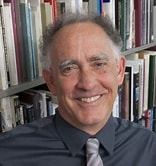
György Bernát József Leimdörfer aka George Faludy (1910-2006) Author, Hungarian poet and translator.

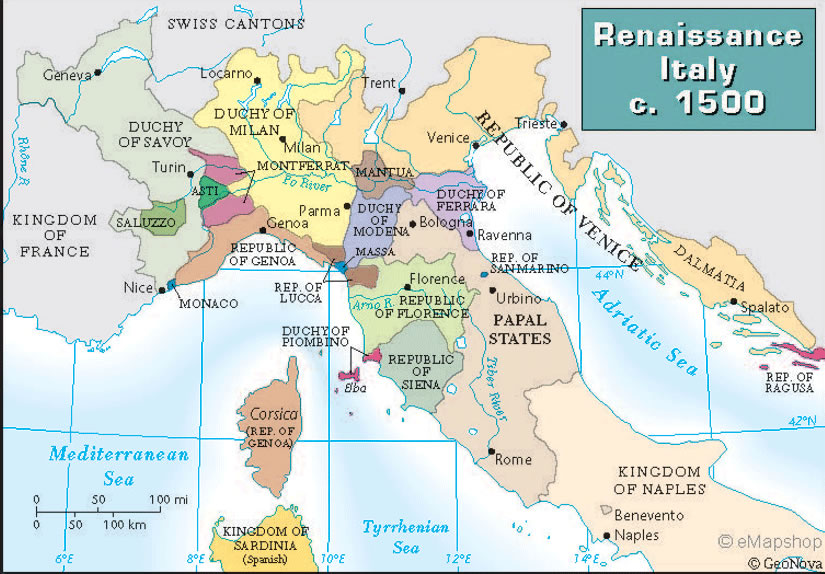
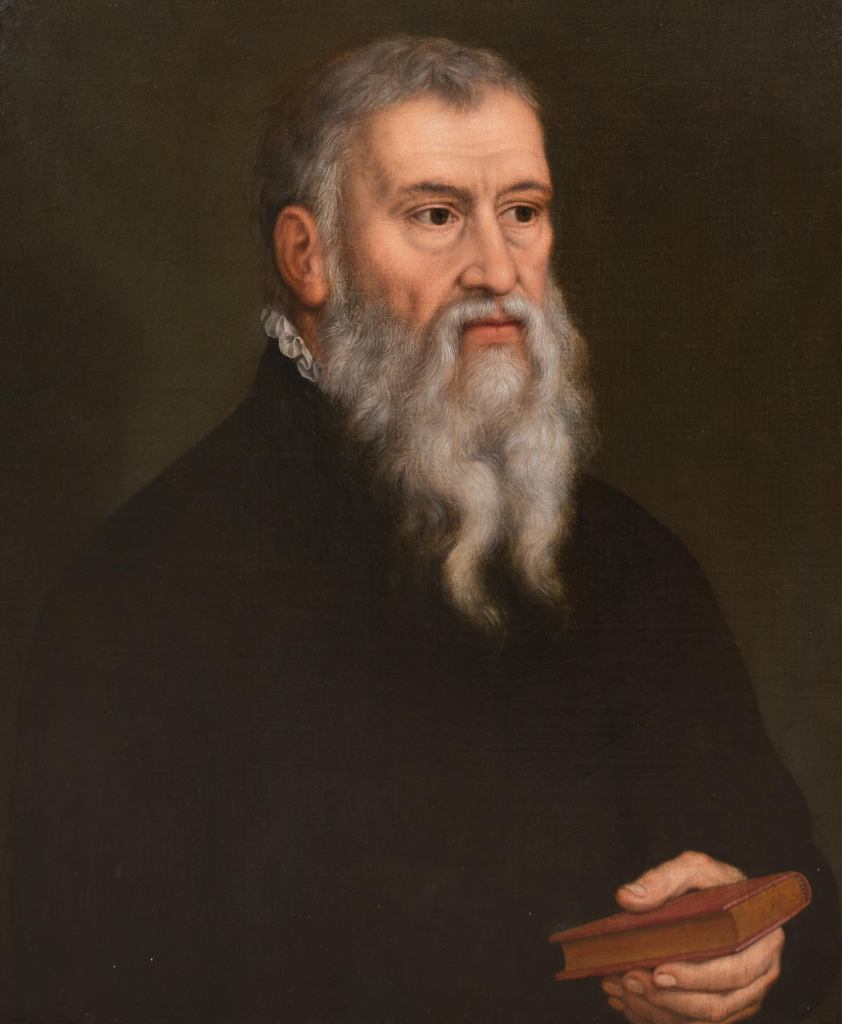
George Faludy’s biography of Erasmus was published in 1970. A few years ago, I purchased a paperback edition of Faludy’s book because of an interest in a 16th century “man of the cloth” (an ordained Catholic priest) who became a devotee of Francesco Petraca (better known as Petrarch who is considered the father of humanism). Erasmus was born in 1466 and died in 1536. He believed in the value, dignity, and potential of human beings. Petrarch had been dead for a hundred years when Erasmus became a proponent of humanism at a time when Catholic’ Indulgences were challenged by Martin Luther. Luther’s Ninety-Five Theses led to a schism in the church leading to the establishment of Protestantism.

Martin Luther (1483-1546)

Luther’s Ninety-Five Theses led to a schism in the church leading to the establishment of Protestantism.

It is hard to imagine how Erasmus managed to become a leader in reforming the Catholic Church with his humanist beliefs. Erasmus walks a fine line between the schism fomented by Martin Luther and his belief in reform. Erasmus wrote the famous work “The Praise of Folly” that was a satirical critique of societal and ecclesiastical practices of the Catholic church without joining the movement started by Luther. On the one hand, Erasmus agreed with Luther on the importance of faith and the perfidy of “indulgences” sold by the Church. Indulgences were to raise money with alleged religious guaranties for a Catholic’s admittance to heaven. On the other, Erasmus insisted on faith in God and reform, not abandonment of the Catholic church. Erasmus’s academic and scholarly review and interpretation of religious texts convinced him that the Church only needed reform, not schism.

Faludy carefully explains the tumultuous relationship between Erasmus and Luther that at times seemed to break but survived their fundamental disagreement on reform versus schism.

Erasmus acknowledged many misrepresentations of religious text with an unwavering belief in the divinity of their origin. As one who is skeptical about the divinity of religious texts, it is encouraging to read of this highly respected scholar’s belief in their truth. Faludy’s biography of Erasmus may not change an agnostic’s mind about God, but it will give one pause because of Erasmus’s reported research of original religious works in Greek, Latin, and other languages, i.e., a skill beyond most peoples’ capabilities.

Faludy does not write of Erasmus as a saintly person but as a well-educated and diligent scholar.

A surprising note by Faludy is that Erasmus suffered from syphilis which suggests something less than perfection in Erasmus’s character. However, Faludy’s note is not corroborated by any other information known to this reviewer.

Faludy suggested the most popular books written by Erasmus were “The Praise of Folly” and “Colloquies” which are similar in that they offer humorous and insightful stories of the human condition. One leaves Faludy’s biography of “Erasmus” with the thought that these two should be read, particularly because of the time in which we live today.