Graduate Oregon State University and Northern Illinois University,
Former City Manager, Corporate Vice President, General Contractor, Non-Profit Project Manager, occasional free lance writer and photographer for the Las Vegas Review Journal.
Fault Lines (The Social Justice Movement and Evangelicalism’s Looming Catastrophe)
By: Voddie T. Bauchham
Narrated by: Mirron Willis
Voddie Baucham (Author, pastor, educator, BA from Houston Baptist Univ. and M. of Divinity from SWestern Baptist Theological Seminary.)
“Fault Lines” is a troubling book. It gives too much shade to racial and ethnic inequality in America. On the one hand, Voddie Baucham relies on story telling to counter the singular atrocity of George Floyd’s murder and on the other he tells stories of inaccurate accusations of police discrimination during traffic stops. White America has enough shade without being forgiven by a black preacher for hundreds of years of discrimination.
George Floyd’s murder.
Baucham implies unequal treatment is less odious because white people are killing white people at a higher rate than white people are killing black people. How does that look when a young teenage black boy knocks on a front door and is shot in the head by a 84-year-old white man because he is afraid?
Ralph Yarl shot in the head for knocking on a front door.
Baucham is right when he argues facts matter but untextualized facts fail to reveal the whole truth. As a preacher, Baucham chooses scriptural text from bibles that have been interpreted in many ways by different preachers and scholars. A skeptic credibly argues truth is fungible in the Bible.
Some would argue the Bible is a proximate cause for belief in inequality of the sexes and races in the world.
Baucham’s story telling may be factually correct while being fundamentally wrong. When the proof he reveals comes from the Bible, a skeptic cringes. That may be because of a skeptic’s own biases and beliefs but how many people in history have justified murder of innocents because of religious belief and biblical interpretation?
It comes as no surprise that Bauchham is a strong proponent and supporter of Thomas Sowell, an American author, political conservative, and social commentator.
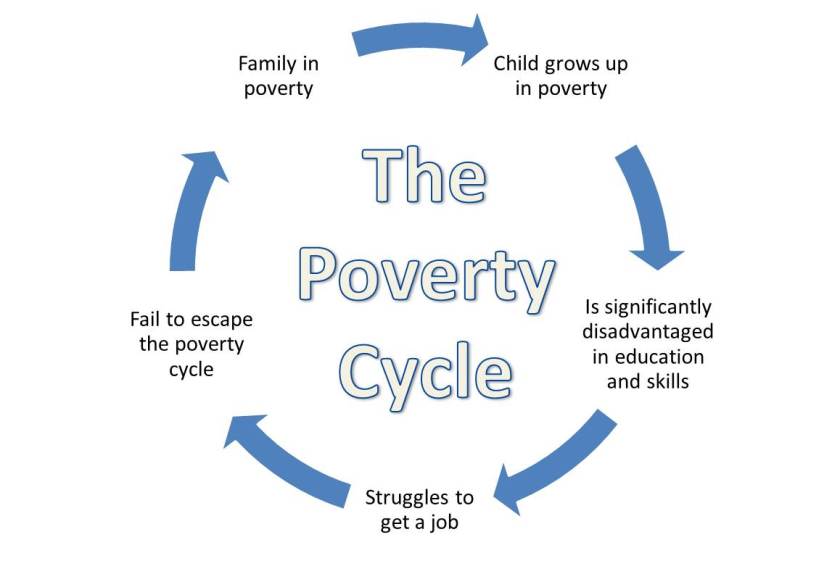
Sowell espouses many of the same views of American society that Bauchham endorses. Both are anti-abortionists despite over-population and America’s history of child neglect. Both opposed the election of Barack Obama. Both decry the absence of black Fathers from their families and the consequence to their children. (There is little doubt that absence of fathers in black families is an important issue but the poverty cycle in which black families are trapped is of greater consequence.) They may come to their political views from different angles but undoubtedly voted for Donald Trump in 2017 (Bauchham because of the abortion issue and Sowell for his political party).
Human nature drives us all.
Humans, whether Believers or heathens, strive for money, power, or prestige to differentiate themselves from others. To a humanist, belief in God and the Bible or the devil and purgatory are only tools of human nature. Baucham is a human who believes in God and the Bible who uses those tools to unjustifiably shade the iniquity of humankind.
Rebellion, Rascals, and Revenue: Tax Follies and Wisdom Through the Ages
By: Michael Keen, Joel Slemrod
Narrated by: Walter Dixon
Michael Keen (Co-Author, Michael Keen. former deputy director of the Fiscal Affairs Department at the International Monetary Fund.)Joel Slemrod (Co-Author, Professor of Business Economics and Publice Policy at Univ. of Mich.)
“Rebellion, Rascals, and Revenue” is a painful and laborious book to listen to, in part, because of its length but mostly because of its subject. Few citizens appreciate having their hard-earned wealth and income reduced by government taxation. However, the co-authors are well qualified and informative in explaining how important taxes are to every form of government to insure citizen’s peace, welfare, and protection. More importantly, they show how countries of the world have both aided and diminished prosperity of nation-state’ economies with good and bad tax policies.
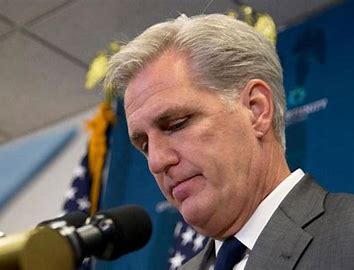
Kevin McCarthy (Speaker of the House.)
As noted by McCarthy, the deficit exceeds the annual gross national product of the United States.
Keen’s and Slemrod’s book is timely. The wide gap between America’s two major political parties is partly because of America’s deficit, which has not been higher since WWII. The solution lies in the political will to increase taxes and reduce government expenditure. The difficulty is finding an equitable balance between tax revenues and the health, education, and welfare of America’s citizens.
However, America’s homelessness is evidence of a gap between rich and poor that belies America’s great wealth.
Keen’s and Slemrod’s book illustrate the folly of many nations that have inexpertly balanced tax policy with the health, education, and welfare of their citizens. From before the French revolution to modern times, the authors recount errors made by governments that bumble their way from forcing tax collection to passing confiscatory laws that support bureaucracies that beggar rather than serve the public. Along the way, the authors show how tax collection is conducted, how some improvements were made, and how citizens were both benefited and harmed by tax policies.
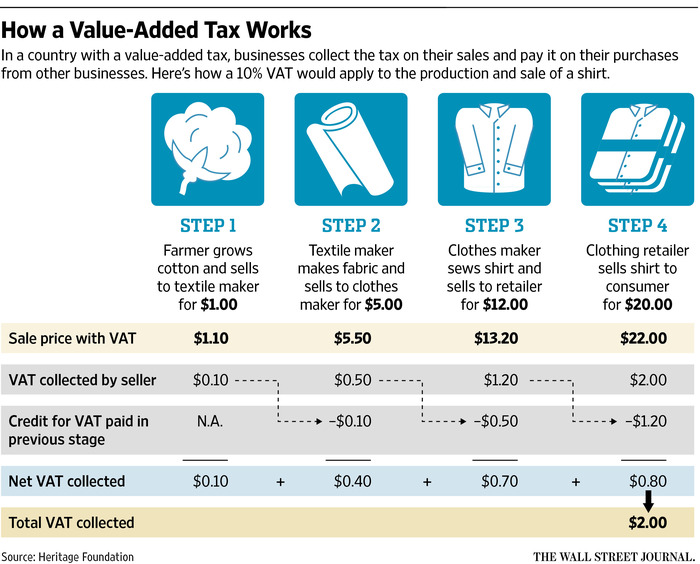
After wading through the author’s history of nation-state’ tax hijinks, Keen and Slemrod conclude America’s tax system should be overhauled. Their solution is a value added tax. This is an interesting conclusion that is reinforced by T. R. Reid’s book, “A Fine Mess” which suggests the same thing. However, Reid is a reporter for the “Washington Post”, not an economist with experience like Keen’s and Slemrod’s.
Keen and Slemrod do not clearly explain why they think a VAT is the solution to a better tax system than America’s current policy. Reid explains a VAT is a broad-based low-rate tax that will reduce the need for a tax collection bureaucracy because it eliminates corporate loopholes, broadens, and reduces tax rates, and equalizes citizens’ tax burden. Reid believes more revenue would be produced to reduce America’s debt. It would also reduce the expense of America’s tax collection bureaucracy. In theory both government expense and the deficit would be aided by a VAT tax policy.
Eve Babitz (1943-2021, Author, novelist, essayist raised and died in Los Angeles at the age of 78.)
“Eve’s Hollywood” is Eve Babitz’s memoir of life in southern California. Some names are undoubtedly changed to protect the not-so innocent. Babitz’s picture of Hollywood and her recalled life seems like a fantasy. Her story is filled with the glamour of life when young–with the 60s’ experiences of sex, drugs, and rock-and-roll.
There seems a hint of self-delusion as one hears of hook-ups, enlightenment from LSD, and her struggling year in New York.
Babitz story is of her life in Hollywood among women coveted for looks more than brains by predominantly male rainmakers. The irony is their brains, not their beauty, were the source of their success. Good looks opened doors but being a good Hollywood actor or writer required brains.
Babitz’s Hollywood is an entertaining memoir, but it is a tale that exposes the well-known character of a patriarchal world.
Babitz seems to use sex to open doors to experience and opportunity. With opened doors and intelligence, Babitz achieves a level of economic success as a writer and trend setter. Likely, even today, Hollywood women’s good looks help get jobs.
JEFFREY EPSTEINHARVEY WEINSTEIN(COMBO): This combination of pictures created on October 13, 2017 shows US producer Harvey Weinstein (L) taken on March 10, 2015; (1st row from L) US actress Rose McGowan taken on April 3, 2016, US actress Angelina Jolie taken on September 13, 2017 in New York City, Italian actress Asia Argento taken on May 17, 2017, US actress Gwyneth Paltrow taken on May 6, 2017, US actress Ashley Judd taken on July 25, 2017, (2nd row fromL) French actress Lea Seydoux taken on May 19, 2016, US actress Mira Sorvino taken on December 7, 2015, US actress Rosanna Arquette taken on February 25, 2017, US actress Louisette Geiss taken on October 10, 2017, British actress Kate Beckinsale taken on on August 7, 2017, (3rd row fromL) Television reporter Lauren Sivan taken on July 26, 2014, US actress Jessica Barth taken on June 21, 2012, US producer Elizabeth Karlsen taken on January 4, 2016, French actress Emma De Caunes taken on October 17, 2016, and French actress Judith Godreche taken on October 19, 2015.
An avalanche of claims of sexual harassment, assault and rape by hugely influential Hollywood producer Harvey Weinstein have surfaced since the publication last week of an explosive New York Times report alleging a history of abusive behavior dating back decades. / AFP PHOTO / GETTY IMAGES NORTH AMERICA AND AFP PHOTO / STAFF
It might be that looks are less important today as powerful moguls like Epstein and Weinstein are exposed but looks still matter but more for women than men.
EVE BABITZ IN HER YOUTHEVE BABITZ LAST INTERVIEW
There seems an underlying sense of despair in Babitz memoir for women who lose their looks as they age. The doors of opportunity that once opened for women among the beautiful are discarded as their youth fades. This seems less true for Hollywood men with long careers like Robert Redford, Cary Grant, Harrison Ford, and so on.
In both the beginning and end of Babitz story, the gap between rich and poor in Los Angeles is briefly touched, though not fully explored.
Her first vignette addresses a beach in Los Angeles that is visited by gang members and how Babitz becomes friends with a young woman who introduces her to one locally famous and violent hood who returns from prison and is soon murdered.
In the last chapter, Babitz describes Watts where rich and poor meet. A married man in his forties has a two nightstand with a twenty-year-old.
He returns to his wife. That might be the end of the story, but the young woman finds he has divorced his wife. The man tries to rekindle the relationship with the young woman from Watts. She is initially overwhelmed by his renewed interest in her but senses something is not right. She plans to break the relationship with a final dinner at a Japanese restaurant, but a comedy of errors interrupts her decision to break the relationship. It is an unfinished story, but one presumes the age difference between the young beauty and the wealthy businessman dooms its consummation.
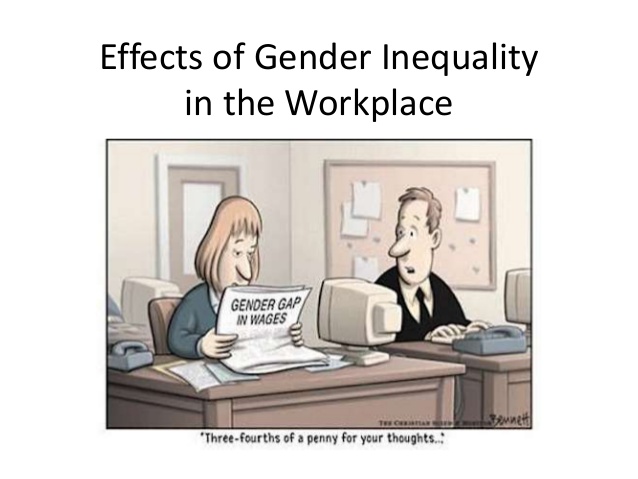
The underlying truth in Babitz memoir is that there is no difference between the sexes, whether living and working in Hollywood, New York, Seattle, Miami, Dallas, Atlanta, or elsewhere.
Each sex wishes for equal opportunity in their pursuit for money, power, or prestige (hopefully within the boundaries of rule-of-law). Coming to grips with the consequence of men and women being equal is a hard subject for men to accept. Babitz memoir may or may not help men understand that women’s ambitions and capabilities are no different than men.
The Man from the Future: The Visionary Life of John von Neumann
By: Ananyo Bhattacharya
Narrated by: Nicholas Camn
Ananyo Bhattacharya (Author, science writer based in London, PhD in biophysics from Imperial College London.)
Hungarian-American mathematician, physicist, computer scientist, engineer and polymath.
Another alumnus of the golden era of education in the Austro-Hungarian Empire of the early 20th century is John von Neumann. Ananyo Bhattacharya’s biography recounts Neumann’s giant contribution to mathematics in WWII explosives analysis, atom bomb design, computer functionality, and game theory. Von Neumann is formally educated as a chemist and mathematician.
In von Neuman’s early career, before the war and while still in school (1923), wrote a published paper titled “The Introduction of Transfinite Ordinals”.
The “…Transfinite Ordinals” paper introduces the now commonly defined understanding that an ordinal number is the set of all smaller ordinal numbers. To mathematicians, this concept simplified the concept of transfinite numbers. Von Neumann’s genius is in his uncanny ability to simplify complexity.
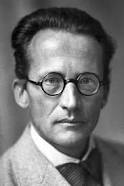
Austrian physicist who revolutionized quantum mechanics with his wave equation in 1926German theoretical physicist and one of the main pioneers of the theory of quantum mechanics in 1925
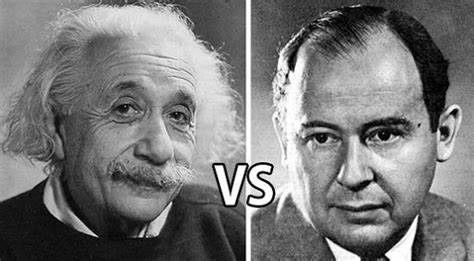
A further example of von Neuman’s genius is in a theoretical reconciliation of Erwin Schrodinger’s and Werner Heisenberg’s differing views on quantum mechanics. Von Neuman theorized “hidden variables” could not resolve the reality of indeterminacy of quantum phenomena. (Von Neumann disagreed with Einstein who believed determinacy is only a matter of not having found “hidden variables” in quantum phenomena.)
(Von Neumann disagreed with Einstein who believed determinacy is only a matter of not having found “hidden variables” in quantum phenomena.)
John Stewart Bell backhandedly affirms von Neumann’s conclusion by finding “hidden variables” are unnecessary in proving indeterminacy of quantum phenomena making the difference between Schrodinger’s and Heisenberg’s views moot.
John Stewart Bell FRS (28 July 1928 – 1 October 1990) was a physicist from Northern Ireland and the originator of Bell’s theorem, an important theorem in quantum physics regarding hidden-variable theories.
Bhattacharya notes von Neumann is asked to lecture at Princeton in 1929. He is appointed as a visiting professor (1930 to 1933) and marries Mariette Koevesi in 1930. The marriage ends in 1937 with one daughter who becomes an economist.
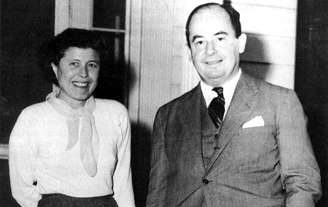
Von Neuman remarries in 1938 to Klára Dán who became a coder for Eniac during WWII.
In 1933, the same year Hitler rises to power in Germany, von Neumann became one of the first professors at Princeton’s Institute for Advanced Study (IAS). One of his famous colleagues is Albert Einstein.
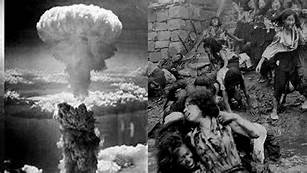
After the beginning of WWII, Bhattacharya notes von Neumann becomes a member of the “Manhattan Project” when contacted by J. Robert Oppenheimer. Because of von Neumann’s help with the British on the physics of shock waves and chemical explosives, Oppenheimer asked von Neumann to analyze the structure and altitude requirements of an atom bomb. Bhattacharya explains the atom bomb is an implosion device that is layered in different metals that have chemical reactions that emit neutrons toward the center of fissionable uranium which is meant to create an explosive chain reaction. The height of the explosion has an effect on the area of damage. Von Neumann’s experience and education are a perfect fit for that analysis. The rest is the history of war’s destruction and the Hiroshima and Nagasaki bombings.
Japan after WWIIHiroshima and Nagasaski
The consequences of the zero-sum game theory of war.
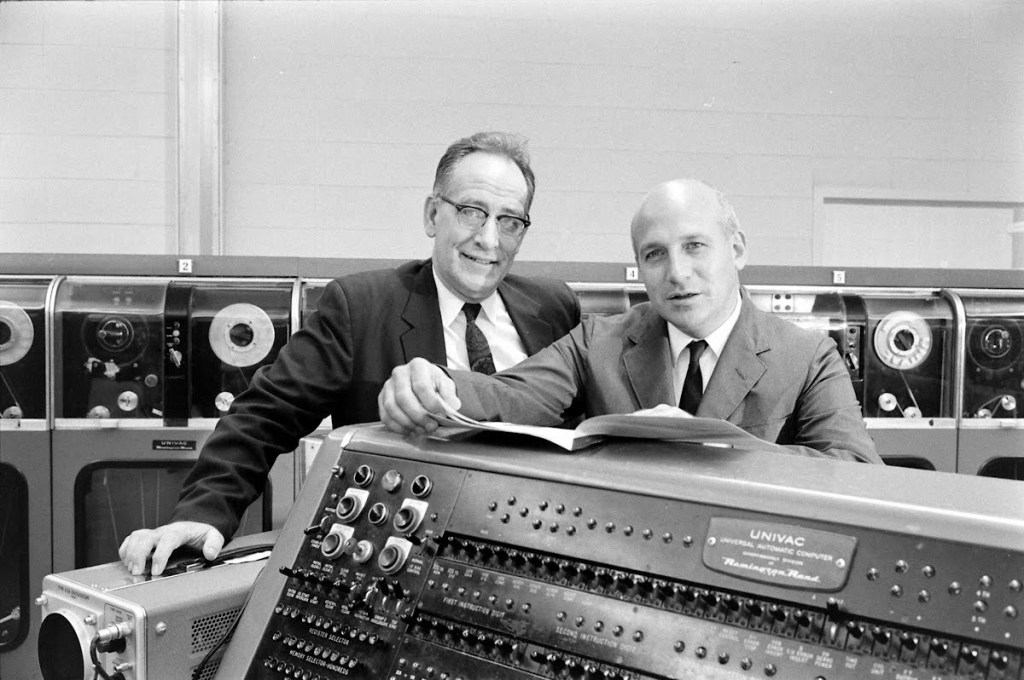
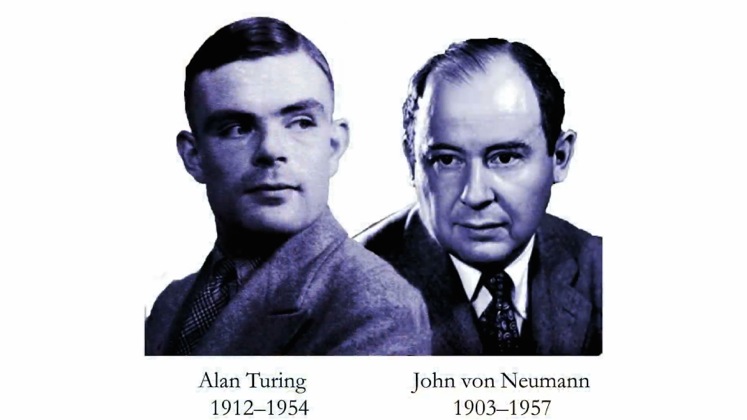
After the war, von Neumann becomes a government and industry consultant. He was acquainted with Alan Turing and viewed the computer as a critical part of the world’s future. His experience with ENIAC made him understand its potential but, at the same time, its design limitations. Von Neuman simplified computer processing by creating the idea of a stored-program computer that led to a cache system of data retrieval that reduces the time it takes to get a computed answer. Von Neumann’s idea turns ENIAC into a library of information rather than a processor. Here is where patent issues are raised by two fellow developers named Eckert and Mauchly. They were working on the same design idea as von Neumann.
J. Presper Eckert and Alfred Eisenstaedt believe they were the first to originate stored-program computers.
Bhattacharya argues von Neumann deserves the credit but Eckert and Mauchly feel they were the true originators of a stored-program computer patent. Some would agree with Eckert and Mauchly. An earlier collaboration between Alan Turing and von Neumann is the basis for Bhattacharya’s belief in von Neumann’s origination.
Von Neuman is recruited in 1948 to work on military doctrine to be used in the event of a conflict between countries. A rather astounding conclusion from von Neuman’s game theory is to use the American nuclear arsenal to eliminate Russia because he felt Russia was an imminent threat to peace. He is alleged to have said “If you say why not bomb them tomorrow, I say why not today?” This became moot when von Neuman found Russia had their own nuclear weapons and would be able to retaliate.
Bhattacharya summarizes von Neumann’s game theory beliefs. Game theory applies mathematics to analyze how decisions are made by people competing to win.
In 1954, von Neumann is appointed to the Atomic Energy Commission but within a year he is diagnosed with bone cancer. One wonders if von Neumann’s exposure to radioactive fallout from the atomic tests he witnessed on the Bikini atoll.
The last chapters of Bhattacharya’s book are terrifying. Nearing death, von Neumann speculates on the valuable discovery of the structure of DNA and suggests it is the missing link for the future of cellular level replication of artificial intelligence.
Bhattacharya reveals the two-dimensional creations of computer game theorists that focus on a replicating code that simulates creation of life. This is a fear that some scientists suggest will create an alternative form of life that will compete with human existence.
A listener who understands life comes from the evolution of DNA over centuries and has resulted in the strengths and weaknesses of who we are today, thinks machine coding that does the same may create a competitor to life as we know it. This is the essence of the concern some scientists have about the growth of artificial intelligence.
Bhattacharya biography of John von Neumann being “The Man from the Future” rings loud and clear. It reminds one of Oppenheimer’s quotes from the Bhagavad Ghita after the first test of the atom bomb–“I am become death, the destroyer of worlds.”
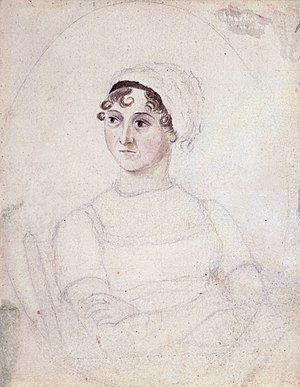
Jane Austin (English Author, 1775-1817, died at the age of 41.)
Though “Sense and Sensibility” was published in 1811, it is an eternal story. Though not intending to diminish the emotional relevance of Jane Austin’s characters, the story is about the rich and poor. Jane Austin’s book reminds modern readers of the universal truth of inequality. “Sense and Sensibility” touches customs of all cultures, governments, and societies.
The concept of “unequal” began with inequality of the sexes.
Inequality may have originated because of physical strength differences between men and women but it evolved to encompass most, if not all, social, cultural, and economic activities.
The title of Jane Austin’s book could have been “Cents and Sensibility”. Women who have no “Cents…” are slaves to wealth. Austin illustrates how the patriarch of the Dashwood family impoverishes his second wife’s daughters by bequeathing his family’s wealth to the guardianship of his only son from his first wife.
Two of the Dashwood’ daughters, Marianne and Elinor are of marriageable age. Marianne is 17 and Elinor is in her early twenties. Marianne falls in love with John Willoughby and Elinor has strong feelings for Edward Ferrars (one of two sons that are children of the grown Dashwood estate’s heir and wife.)
John Willoughby, who is in his early twenties, appears to court Marianne in the first chapters of the book. Willoughby is a profligate debtor with a handsome face and smooth-talking demeanor.
Marianne is also being courted by a wealthy 35-year-old former officer and landowner whom she feels is too old. Marianne believes Willoughby is to become her future husband, but he abruptly leaves to marry a woman of wealth. As found later, Willoughby is a debtor and may have been in love with Marianne but realizes she cannot help him with his indebtedness. Marianne is crushed because she feels betrayed by Willoughby’s abrupt departure.
It is the “Cents…” more than “Sense…” that get in the way of Marianne’s relationship.
The real truth of Austin’s story is that to live one must have income more than love because love does not put food on the table. This is as true today as it was in Jane Austin’s time. It is not the absolute difference between wealth and poverty. It is for men and women who choose to marry to have enough wealth to allow love to flourish. Without “Cents…” love does not survive. Even Elinor and Edward realize they cannot marry without a living-wage income.
Some say, Jane Austin’s book has a happy ending because Marianne and Elinore marry men who have “Cents…” Elinore marries Edward, a minister who has a modest income and a bequest from his formally estranged mother but may never be rich. However, he is near Elinore’s age and with “Cents…” seems destined to live a happy life.
Marianne, spurned by young John Willougby, marries the 35-year-old Colonel Brandon, a man who is rich but nearly 20 years older.
Though this may diminish what current readers feel they know about Jane Austin’s story, it idealizes what it means for a 17-year-old to marry a 35-year-old. In today’s age, a 50-year marriage would mean at least 10 years of that marriage will be of one person taking care of an older person. This is not to say love does not grow but age difference at the time of marriage has a consequence.
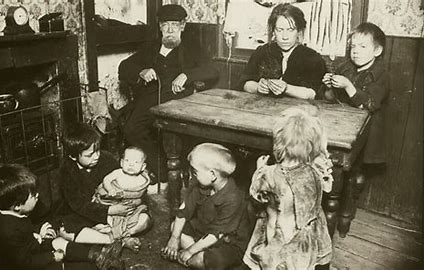
Poverty is a harsh task master. Without enough income to feed one’s family, the worst parts of human nature ruins lives.
All citizens, of any nation or form of government, must achieve a standard of living that meets the needs of the poorest in society. Peace among nations is dependent on cents as well as “Sense and Sensibility”.
Unthinkable: An Extraordinary Journey Through the World’s Strangest Brains
By: Helen Thompson
Narrated by: Helen Thompson
Helen Thompson (British Author, journalist with a bachelor’s degree in Neuroscience.)
“Unthinkable” is a series of interviews of people who have a reputation for seeing the world and their place in it, differently. The author is a journalist.
As an investigative reporter, Helen Thompson elicits human perceptions of the world that are different from what most people perceive.
Thompson argues perception of the world comes from the mind. As synaptic activity of the mind is better understood, she infers what is real or false may become more universally understood.
Though Thomson’s interviews are anecdotal, they suggest the mystery of consciousness holds a key to mental health.
An interesting highlight of Thompson’s investigation is the existence of synesthesia in some people. Synesthesia is a neurological condition where information meant to stimulate one of your senses, actually stimulates more than one of your senses. Thompson notes people who have synesthesia may be able to hear colors, feel sound, or taste shapes. Two people with the same diagnosis may not perceive the world in the exact same way but their brains are stimulated to see more than what most people see, hear, or feel.
Synesthesia may be a mixed blessing in that it can overwhelm one’s senses, but it implies a more multifaceted view of reality.
One of Thompson’s last interviews is of a doctor who has a form of synesthesia that magnifies his empathy for patients. He actually feels some of what a patient is experiencing. Presuming the doctor’s senses are not overloaded by empathy, the patient seems more likely to be better served. If the mind’s neurological pathways for synesthesia can be identified, could empathy become instilled in every thinking being? Possibly, but the question remains whether that would enhance or burden humanity by making people who serve society emotionally drained, tired, and demotivated.
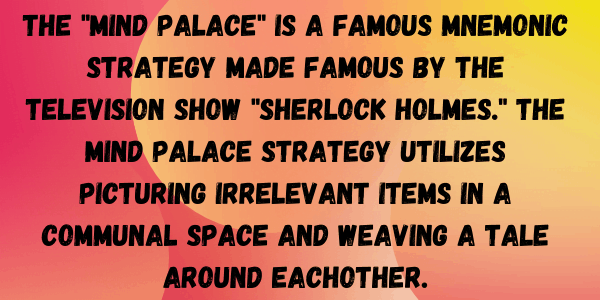
An earlier chapter addresses people who can develop “mind palaces” like the fictional character Sherlock Holmes.
They can recall the minutest details of an incident and compare it with information and experience they have acquired over the breadth of their life. If neurological pathways of a mind palace can be replicated in every human mind, could humans use those pathways to recall what they have learned from past experience and education to solve human problems?
One wonders if that is not the direction of A.I. in the future. This leads to concern of life becoming more machine-like than human with the added dimension of life as machine.
A third story is of the man who believes he is dead. His conception of himself is reinforced by brain scans that show very little neuronal activity though he continues to wake up every morning and function like a human during the day. He has little emotion or hunger and feels comfortable spending the day in a cemetery among those whom he feels are fellow travelers. Through medication, his neuronal activity is re-established, and he becomes more aware of his existence among the living.
A third story is of the man who believes he is dead. This anecdotal story reinforces belief that life is all in the mind.
There are more bizarre stories, but the underlying theme is life is defined by consciousness. Examples are given to show how parts of the brain are interconnected by neurons that pass information to the body about human existence in the world. The inference is that as humanity gains knowledge of how this interconnection works and which parts of the brain control neuronal activity, it will be possible to change human life. The impossible question to answer is whether that change will have good or ill effects on society. Of course, that may be moot if humanity cannot come to grips with the harm that is being done to the world’s environment.
This is a book one may set aside as an anecdotal journey into bizarre human anomalies. On the other hand, it affirms the importance of understanding everyone is part of humanity. It seems search for understanding of consciousness is essential for the continuation of human beings, whether mentally disabled, psychotic, neurotic, or diagnostically normal.
As most know, “A Tale of Two Cities” was first published as a series in the U.K. in the 19th century. Its formal publication date was 1859. In comparison to some novels, “A Tale of Two Cities” is difficult to follow because of the many characters who play important roles in Dicken’s story.
The setting is in two cities, London and Paris before, during, and after the French revolution of 1789.
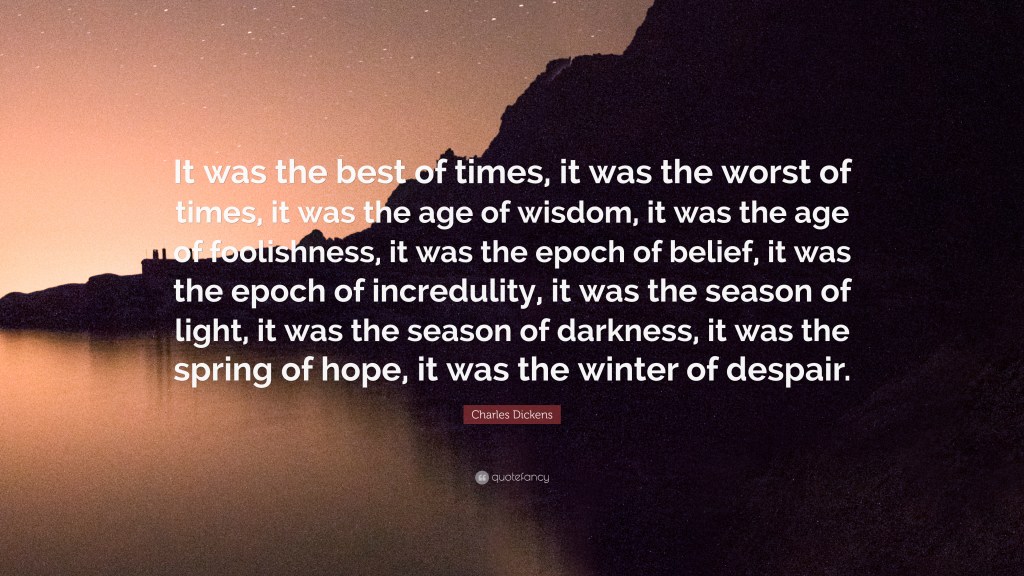
The famous beginning of Dicken’s story of the French revolution is “It was the best of times, it was the worst of times….” Most of the tale is about “…the worst of times…” in France.
The picture of the London and Paris cities is dismal because of its citizens who were either very rich or very poor. The seat of power in Paris is teetering on the edge of a coming revolution. The focus of the story turns to its main theme with Alexandre Manette, a French physician, heard to be alive after being unjustly imprisoned for 18 years in Paris. The story of Manette’s imprisonment is revealed to Jarvis Lorry, a London bank manager. Lorry arranges a meeting with the jailed Manette in Paris with his daughter who lives in London.
Manette’s daughter is Lucie. She goes to Paris with her governess, Miss Pross. Lucie meets with her father whom she thought was dead. Lucie brings her father back to London, but he suffers periodic mental lapses that return him to a shoemaking trade he learned while in prison. We get a glimpse of London on Manette’s return but it is of a trial that reminds one of the gaps between haves and have-nots in London. There is a trial for a spy named Charles Darnay, the nephew of a French aristocrat.
London in the 18th Century.
Lucie is a witness to Darnay’s alleged spying. She knows nothing about Darnay’s activity, but he had helped her in some minor way when he was accused of being a spy. Because of her testimony, Darnay’s character seems less spy-like and more gentlemanly. Darnay is acquitted because his defense attorney notes one of his colleagues, Sydney Carton, looks much like Darnay and could have as easily been the person accused. Darnay is released. The person, Sydney Carton, looks like Darnay but is loosely characterized as an undisciplined young bon vivant.
London court 18th century.
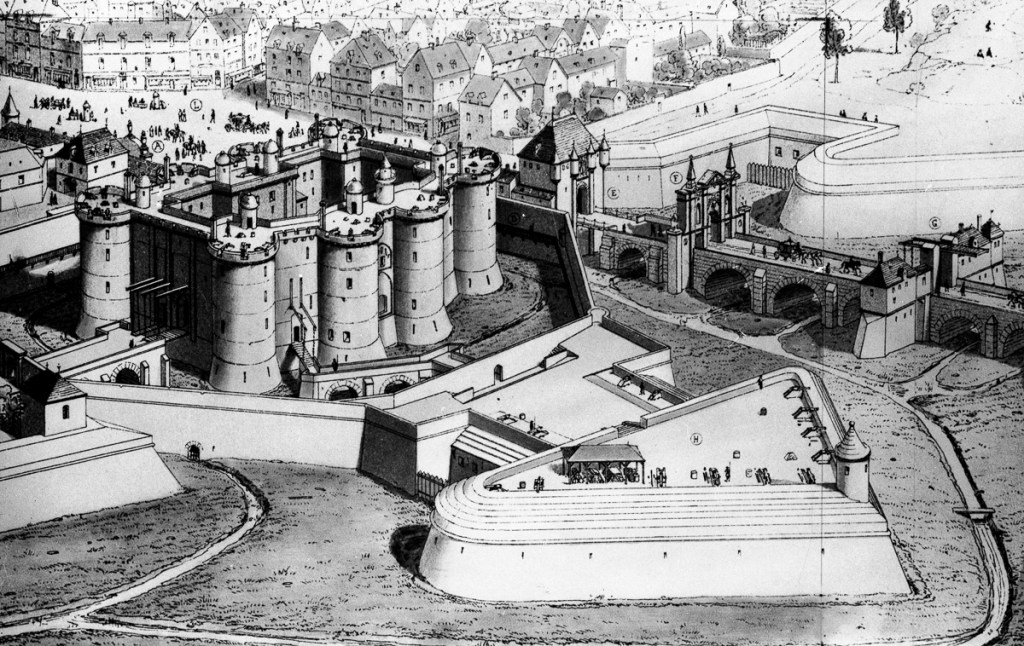
The main characters of the story are Dr. Manette, and Darnay but each character noted in these first chapters play important roles in the story. Dr. Manette had been unjustly imprisoned in the Bastille because of the death of a son and his mother caused by two French aristocrats. The remaining story largely takes place in Paris.
Dickens brings Darnay and Lucie together as husband and wife in London before the revolution in France. They have a son and daughter. The son dies, which reflects upon child mortality which is rather common in that time of the world’s history.
The reasons for the French Revolution, inferred by Dickens, are from harsh, unfair, and unequal treatment of the poor by the aristocracy. The examples given range from an aristocrat’s comment to the poor and hungry to “eat grass”, to the murder of a young boy and his mother by two “bon vivants” who hide their crime, to a murdered boy killed by an errant carriage accident caused by Darnay’s French Uncle.
Dickens creates the story of Darnay’s uncle flipping a coin to the father of a boy killed by his carriage’s collision. Darnay’s uncle is later murdered at his home by the father of the boy.
The table is set for the French Revolution of 1789. Dickens introduces the Defarge’s, Madame and Monsieur Defarge. They are republicans planning to kill as many of the French aristocracy as they can. Interestingly, the strongest and most violent of the revolutionaries is Madame Defarge.
As they storm the bastille, Monsieur Defarge demands a visit to Dr. Manette’s former cell. He knows of a secreted letter that explains why Manette is jailed and wishes to recover it. That letter incriminates Darnay’s Uncle and, by association, blames anyone that is part of that family.
Reconstitution de la prison de la Bastille. Paris.Cell in the French Bastille
Two years after the 1789 revolution in Paris, Darnay receives a letter from a servant of his murdered uncle asking for his help to be released from the Bastille. Darnay journeys to Paris and is imprisoned in the Bastille because of his association with French aristocracy. The remainder of the story is about the effort to get Darnay released. As true of other Dicken’s novels, there is a bitter-sweet happy ending.
Dickens is a masterful writer but to this reviewer, “A Tale of Two Cities” is not his best work. It is easy to lose the thread of the story because of its many characters. On the other hand, the characterization of Madam Defarge is one of the most terrifying written descriptions of revenge for social inequality. The terror of the French revolution and its causes are frighteningly vivified by Dickens’ creation of the Defarge’s.
“The Fifth Risk” is an inadequate reveal of President Donald Trump’s administration. It barely scratches the surface of the incompetence and ineptest of an American President’s view of government, let alone world affairs.
Trump is not the only American president who prized loyalty above competence, but he unfairly degraded federal government managers and employees who serve America.
Lewis implies “The Fifth Risk” for American government is distrust of the founding tenants of American government. The American Constitution relies on a balance of power between three branches of government. Trump sees and acts like there is only an Executive branch that counts. His appointment of department heads in the Executive branch is largely based on private business experience and loyalty to one person, without any understanding of government purpose.
The American Constitution relies on a balance of power between three branches of government.
To avoid the principle of monarchy, three branches of government were created to balance the power of a singular President. What Lewis reminds reader/listeners of is that many government employees have spent their life in government to serve the needs of the American people. Just as in any organization, some government employees do a better job than others. Lewis cherry-picks a few government employees to illustrate how great a job they have done in serving Americans.
The American Federal Government is not a business. It was never organized as a business but as representative and aid to the people of the United States.
Trump’s decisions for choice of leaders of various Executive Branch offices were based on their success as business leaders that understood the importance of reduced cost and loyalty. These business leaders did not look at the bureaucracy of government as a consistent and dependable way of providing service to American people. Businesses survive based on dollars and cents. Government is not a dollar and cents enterprise where profit is its only reason for existence and survival.
Trump’s greatest failure as a President is in not understanding or caring about the difference between running a government and running a business.
Lewis infers much more than he explains. One may question whether Trump is a good business manager, but it is quite clear he was not a good American government leader. Trump had no appreciation of the difficulty of being a server of the American people while being the leader of a democratic country.
Tim Harford (British Author, Master’s degree in economics, journalist.)
Tim Harford gives listeners a practical application of “Thinking Fast and Thinking Slow” in the art of statistical analysis. Sounds boring, just as the title “The Data Detective” but in this day of media overload Harford castes a warning. Be skeptical of conclusions drawn by statistical data, whether accumulated by business interests, science nerds, or algorithms. Think slow because thinking fast obscures understanding of statistical analysis. Above all, be curious when reading a statistical analysis that either adds or subtracts from your understanding. With that admonition, Harford offers ten ways to question the veracity and truthfulness of statistical analysis.
Harford argues it is important to investigate a writer’s qualifications as an analyst, and the “how, why, and when” data is collected. As the famous economist Milton Friedman said, “Statistics do not speak for themselves.” Or, as Mark Twain made famous, “There are three kinds of lies: lies, damned lies, and statistics.” It appears Harford agrees with Friedman, but not Twain, because he believes understanding a statistical study can reveal possible or at least probable truth.
Dr. Cuyler Hammond and Dr. Daniel Horn were smokers up until they finished their statistical report that correlated smoking with cancer.
Harford gives an example of statistical reports that correctly correlated smoking with lung cancer. Cuyler Hammond’s and Daniel Horn’s 1952 statistical study led to the 1964 Surgeon General report that confirmed cancer’s correlation with smoking. The disheartening story Harford tells is the tobacco industry’s purposeful effort to deny correlation. The tobacco industry’s methods were to suggest other causes, like auto exhaust or other carcinogens, as likely causes of lung cancer. They created doubt, whether true or false, which poisons belief in statistical studies.
Like the cowboy Marlboro smoker demonstrating a healthy image of a smoker, advertising obscures facts. The smoking industry successfully created doubt.
Harford explains personal investigation based on curiosity and detective work is necessary if one is looking for a probability of truth.
American free enterprise is created to produce product, service and jobs while making enough profit to stay in business. Sometimes those goals interfere with truth.
As human nature would have it, some businesses care less about truth than profit. This is not meant as a criticism but as an affirmation of human nature.
Harford explains there are many statistical studies purporting rises in crime, inequality, poverty, and medical health that need to be closely examined for validity. He argues every conclusion drawn from statistical surveys that contradict interest-group’ or individual’ belief should be closely examined. The methodology of a good statistical study must be understood within its era, its compiler’s biases, its stipulated human cohort, its conclusion, and its tested repeatability by others.
Harford challenges the supposition that violence has increased in America. This is undoubtedly music to the ears of elected officials who resist national gun control measures. Harford and the famed psychologist, Steven Pinker, suggest statistical analysis shows violence of earlier history is greater than in the 21st century. Harford acknowledges this is no comfort to the heart-rending reality of a child lost to suicide by gun or the horrendous school shootings of the last 3 years. As Horford explains statistics do not register human grief. Statistics are an impersonal unfeeling view of human life.
Harford does not read statistical surveys as truth but as a roadmap for discovery. He looks at a statistical survey like a detective searching for details. Who are the gatherers of the statistics? How were they collected? Why are they relevant? What period do statistics represent and do they relate the present to the past? Without answers, Harford argues statistical surveys are no better than propaganda.
Harford offers a graphic example of the context needed to clearly illustrate the value of statistical studies. The history of America’s invasion of Iraq and its human cost is dramatically and comprehensively revealed in one statistical picture.
Harford’s story shows how graphics can capsulize a statistical truth that shocks one’s senses. Simon Scarr summarizes a statistical report on deaths from the Iraq war with one graph.
Harford advances his view of the metaverse and its growing role in the world. He gives examples of Target’ and Costco’ algorithms that tells a father his daughter is pregnant, and infers a wife’s husband is cheating. A Target algorithm sends a note to a father about the pending birth of a baby based on his daughter’s purchases at the store. Costco sends a rebuy message for condoms to a wife when she calls and explains they never use condoms. Both stores apologize for sending their notes and say their stores made auto-response mistakes. Harford notes email apologies are a common response of stores that use similar algorithms.
Harford notes the irony of a metaverse that invades privacy with algorithms that can easily mislead or affirm societal trends or personal transgressions.
The last chapters of Harford’s book reinforce the importance of statistical studies by recounting the history of Florence Nightingale’s heroic hospital service in Turkey during the Crimean war (1853-1856). Harford explains Nightingale’s interest in mathematics and association with luminaries like Charles Babbage (an English polymath that originated the concept of a digital programmable computer). Nightingale’s hospital service and interest in mathematics lead her to correlate patient’ diseases with causes. The hospital to which she was assigned by the U. K. was without proper food and water. The hospital was dirty, and disease ridden. She had two objectives. First to have food and water supplied, and second to clean the hospital. Her statistical analysis made her realize cleaning was as important as food and clean water in reducing contagion among her patients. Like the statistical analysis of smoking and cancer changed smokers, Nightingale changed nursing.
Florenvce Nightingale (1820-1910, English social reformer born in Italy, Founder of modern nursing.)
“The Data Detective” is a disturbing book that shows the power of media and how it can mislead as well as inform the public.
This is a disturbing book that shows the power of media and how it can mislead as well as inform the public. With poorly or intentionally misleading statistical studies, opposing interest groups harden their political beliefs.
Harford concludes with an appeal to discordant interest groups to be curious about why they disagree with each other. Reputable statistical analysis can improve one’s belief in probable truth and decrease echo chamber‘ adherence of disparate interest groups.
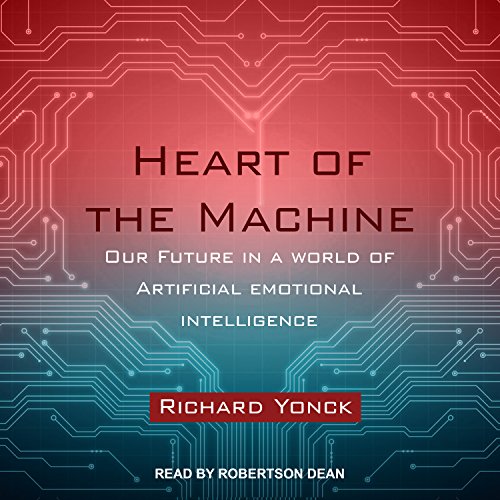
Heart of the Machine (Our Future in a World of Artificial Emotional Intelligence)
Release Date 3/14/17
By: Richard Yonck
Narrated by: Robertson Dean
Richard Yonck (Author, futurist, consultant, TED speaker, MA from London Film School 1981-1983, Attended Univ. of Wa. 1977-1980.)
Richard Yonck argues the next step in technology is to program emotion into machines. As a skeptic, one’s first reaction is to search for information on Yonck’s background. One finds it is eclectic and more literary than science driven.
Yonck notes human learning is intimately connected with emotion. Emotions of parents and offspring arguably shape children’s view of the world as much as genetic inheritance. Yonck explains parents’ and people’s faces become a school from which children learn the characteristics of emotion. Yonck explains emotional signals reinforce human’ memory, belief, and behavior.
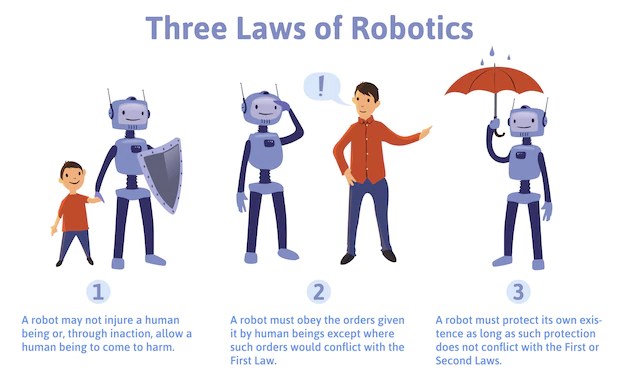
Yonck notes as the growth of facial recognition expands, facial expressions can be programmed into machines to interpret human emotion. The troubling thought is that machines programed with emotions may either negatively react to human facial expression or worse, become unbalanced, like children who act out of anger. With the addition of emotion, machines become capable of learning but also of becoming psychotic just like humans. Yonck suggests a safeguard like Asimov’s three robot rules that argues for programing machines to protect humanity. These rules are meant to deny machines any right to harm humans.
ASIMOV ROBOT RULES
Assimov creates a fourth rule to preserve humanity, but a recurrent theme in his stories show ways in which these rules fail. In the real world, even if the rules were effective, who ensures all machines are programmed with Asimov’s rules?
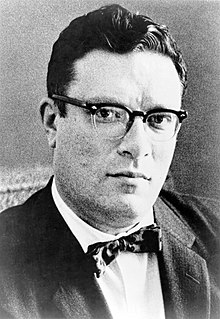
Isaac Asimov (1920-1992, Russian born American author and professor of biochemistry.)
Programming emotions into machines gives them an essential requirement for learning but that learning can be subverted. Human nature accompanies every decision made by human beings, whether a Hitler or Mahatma Gandhi. A non-conforming leader could refuse to program machines with Asimov’s rules. Government leaders could have machines programmed to kill anyone who disagrees with their leadership.
Money, power, and prestige incentivize both good and bad leaders. The same might be said for learning machines.
Putting concern with the history of human nature aside, Yonck notes some benefits from programming emotions into machines. Machines will be able to think and learn on their own with emotion programming. The demographics of countries like China and Japan suggest an aging cohort will hinder economic growth and diminish needed help for relatives of the working population. Much of that help could be provided by programmed intelligent’ machines. Just as happened with the industrial revolution, jobs will be lost, and retraining will be required. But, a benefit will inure to the elderly who need assistance and the working young who do not have the time or inclination to care for the elderly.
Yonck suggests machines will be partners and companions of human beings. Psycho-sexual relationships will develop between machines and humans. Machines will replace work for humans while increasing product research, development, and production. Machines will reduce social inequality by increasing the general wealth of the world. That is a best-case scenario.
A consequence of thinking-machine programming is that machines will either outlast their human companions or break down and be grieved by their survivors. Of course, machine death is not much different than the birth and death of humans. Humans break down (die) and are grieved by those left behind.
Another evolutionary possibility suggested by Yonck is the melding of human mind and machine. He notes a treatment for PTSD (actually approved by FDA) that involves electrical stimulation of a portion of the brain that appears to activate anxiety from recalled traumatic events. Yonck suggests continuing brain research will reveal neuronal pathways of thought and action that can be modified by electrical stimulation. He infers this is a first step in a journey toward a human/machine singularity like the transition from ape to humanoid to homo sapiens in geological history. He suggests a new human/machine society might be the next evolutionary change of humankind.
In the last chapters of Yonck’s book several examples of brain intervention are noted. Two interventions are direct with invasive insertions of wire into the brain and electrical stimulation from skull caps and clothing. A third type of intervention is with drugs. All have mixed results.
Yonck is a TED conference speaker. His writings have a quality of entertainment that makes him interesting if not steeped in science. On balance, Yonck appears more optimistic than pessimistic about the future of A.I. whether emotion programing for machines occurs or not.