Audio-book Review
By Chet Yarbrough
(Blog:awalkingdelight)
Website: chetyarbrough.blog
Native Son & Lolita
Native Son
By Richard Wright
Narrated by Peter Francis James
The review of these books is combined because they are disturbing classics about the nature of man and society. They are alike in regard to their genius, but their stories are difficult to write in one review; let alone two.

“Native Son” was published in the 1940s and “Lolita” in the 1950s but either could have been written earlier or later because their stories are not of the past but of today and tomorrow.

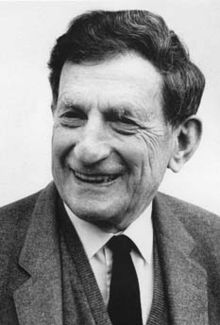
RICHARD WRIGHT (AMERICAN/FRENCH WRITER,1908-1960 WROTE-NATIVE SON)
Story lines have many origins but Wright and Nabokov have tapped into some of the darkest parts of human nature with themes of mayhem, murder, misogyny, and misanthropy. They created characters that reflect human nature; inherent in mankind and affected (or infected) by society.
The main character in Native Son is Bigger Thomas, an impoverished, unemployed, African-American, 20-year-old living in a 1930’s Chicago ghetto. He lives with his mother, sister, and brother in a rat infested one room tenement, owned by a wealthy family that is about to offer him a job.
Bigger Thomas considers himself rich if he has 50 cents in his pocket. However, he does not want to work for a living because he sees it as a dead-end street, controlled by rich white people who will never let him follow any road beyond a limit set by white America. Bigger Thomas’s understanding is shaped by 20 years of living in substandard housing, ghettoized isolation from white society, and an education that did not go beyond the 8th Grade.
Thomas is given an opportunity to work for the owner of the tenement in which he lives. The offer is $35 per week ($10 more than average) to be a chauffeur for the family. Bigger takes the job but on the same night of the day he is hired, he murders his new employer’s daughter. It shocks the listener because the listener’s anticipation is that Bigger Thomas is on his way to breaking the cycle of poverty and becoming a part of the American Dream. But no, he chooses to kill his employer’s daughter.
The shock of the murder is so overwhelming that there is an inclination to stop listening. The shock becomes a Richter scale earthquake when Bigger rapes, bludgeons, and throws his black girl friend down an elevator shaft (while still alive) because she can finger him for the crime. Bigger Thomas is a rapist and a double murderer. What redemption can there be? What is Wright’s point?

WATTS RIOTS 8.11 TO 8.16 IN 1965. MARQUETTE FRYE, AN AFRICAN-AMERICAN MOTORIST ON PAROLE FOR ROBBERY IS PULLED OVER FOR RECKLESS DRIVING. THE RIOTS RESULT IN 34 DEATHS AND 40 MILLION DOLLARS IN ESTIMATED DAMAGES.) The credibility of Wright’s observation is visited in America’s future (25 years later) by the Watts’ riots of 1965, and the 2020 George Floyd Murder by Derek Chauvin.
The answer is difficult and not entirely comprehensible to a privileged majority. But Wright’s story explains that a person who lives a minorities’ life creates an environment that breeds anger, frustration, and violent action; i.e. violent action that can be directed at an ignorant majority, or anyone who threatens one’s inner-directed life.
Bigger Thomas is convicted and sentenced to death. Thomas is defended by a technically persuasive lawyer but prosecuted by a rebel rousing, emotionally righteous, prosecuting attorney who inflames public fear and anger. The prosecutor ignites public condemnation, and effectively dictates a judge’s decision.
Native Son is mostly written and spoken in one and two-syllable words (the only exception is Bigger Thomas’ intellectualized legal defense). Thomas’s defender pricks a listener’s conscious. One begins to feel some sympathy for this terrible criminal.
Peter Francis James’ bass voice brings Richard Wright’s characters to life, but this is not a story to listen to for pleasure. It is a story that improves understanding of discrimination, isolation, and poverty (social ills still evident in the world) and their unintended consequences.
Lolita
By Vladimir Nabokov

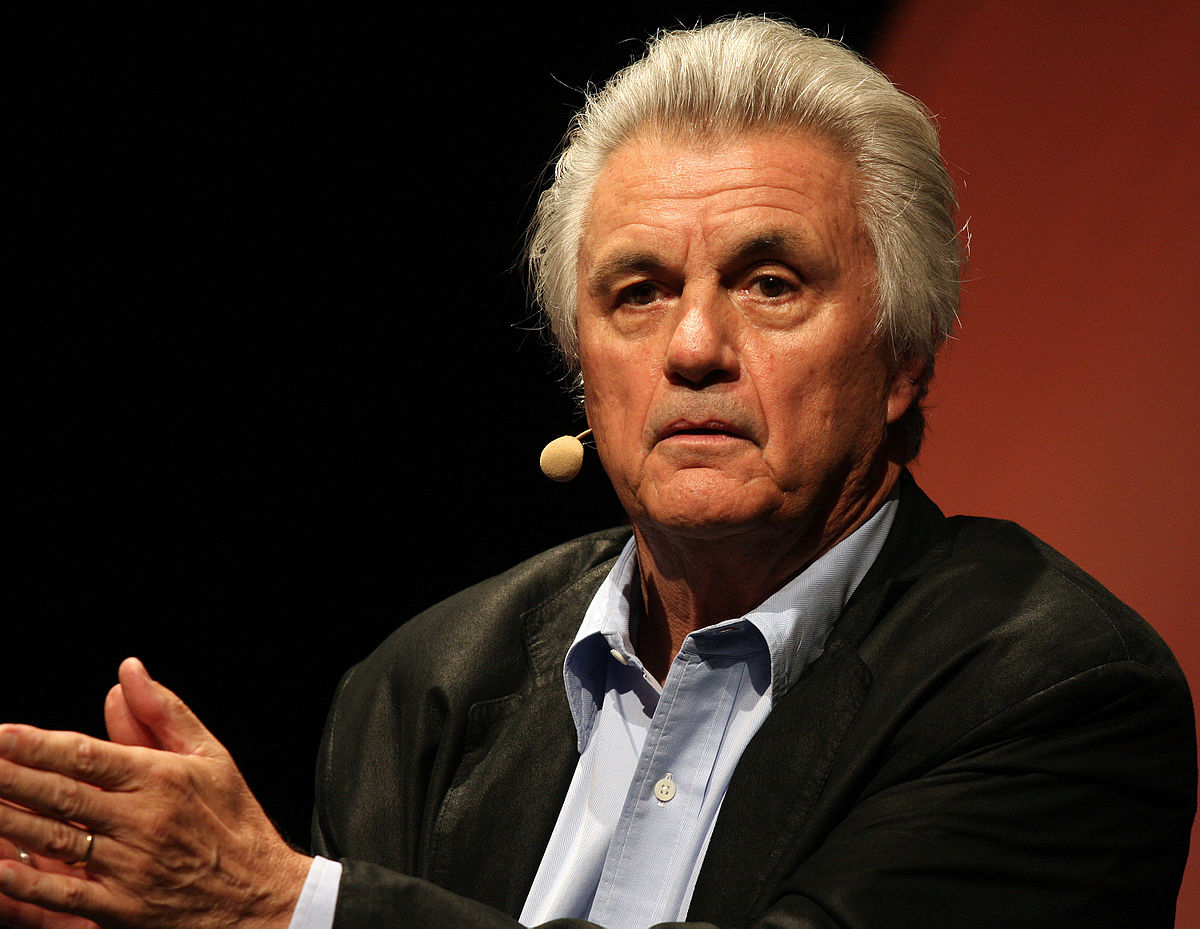
VLADMIR NABOKOV (RUSSIAN AUTHOR, 1899-1977, WROTE LOLITA)

An equally reprehensible story is told in Nabokov’s book, Lolita. Lolita burns in your mind like Native Son, with a kindred repulsiveness. Lolita sears your conscience because it speaks like an apology for pedophilia.
Jeremy Irons’ spoken interpretation of Lolita is breath-taking. His voice captures the licentious nature of the main character, Humbert Humbert. He reads Nabokov’s lines with a beautiful alliteration that reveals the poetry in Nabokov’s prose.
The subject is inherently repulsive. The rationalizations of a confessed pedophile who admits his guilt, is difficult, if not impossible, to understand. As with Bigger Thomas’ murder of two women, Humbert Humbert’s seduction of a 12-year-old girl makes the listener want to quit listening. Iron’s skillful narration seductively draws the listener into an intimate appreciation of Nabokov’s prose. But, it’s a life of a truly despicable and tragic human being.
There is no justification for pedophilia though Humbert Humbert makes his plea. Humbert’s observation that pedophilia has been present since time began is not a plausible justification for its continuation. The argument that some psychological trauma in one’s youth takes control of one’s libido is “psycho-babble”. The argument that some 12 year olds are what Humbert Humbert classifies as “nymphet’s” is in the mind of a sick person.
Humbert’s unbalanced mind projects an ignorance of the difference between a child and an adult. The argument that Humbert Humbert truly loved Lolita, even after she is 31 years old, and married to a person of her own age, is preposterous. Based on the character’s own explanation of his child fixation, Humbert’s characterization of love is despicable.
So, what is the point of the book? The best face is that Nabokov reveals the depth of a pedophile’s sickness, some of its causes and consequences, and the utter futility of psychological examination; the worst face is that Nabokov justifies pedophilia based on human nature. For my own conscience, and for respect to a literary genius, I pick the first rather than the second reason for Nabokov’s decision to write this book.
The story is enlightening as well as repulsive. It tells the story of the length that a pedophile will go to satisfy an abhorrent sexual desire. It suggests that a psychiatric examination of an intelligent psychopath is a waste of time. It gives a face to pedophilia and evidence of how it permeates human culture, from advertising, to magazines, to movies. And, it shows, with a character like “Q” (a movie producer), how salacious and jaded a human being can become.
Both of these books are brilliantly written. Native Son is a masterpiece of simple and direct prose that is a literary lesson for aspiring writers. Richard Wright is an efficient user of words to tell a story with brutal clarity.
Both are horrific stories of human nature. Listening to them is enlightening but only our future will demonstrate whether enlightenment leads to improvement in human nature or a repeat of the bestiality we have shown so many times during, before and after the 20th century.

































 Impey notes that science is exploring alternatives like sail power, nuclear fission, radiation collection systems, and the physics of teleportation, via