LIFE IS LIQUID

Miodownik explains liquids are everywhere and influence every aspect of life on earth. As a scientist, Miodownik explains understanding liquids is understanding life.

Books of Interest
 Website: chetyarbrough.blog

Liquid Rules: The Delightful and Dangerous Substances That Flow Through Our Lives

Author: Mark Miodownik

Narrated By:  Michael Page

Mark Miodownik (Author, British materials scientist.)

Mark Miodownik offers some interesting information about liquids in “Liquid Rules”. It seems Miodownik had some spare time on a long plane trip. Though many know some of what the author explains, it is interesting for listener/readers who don’t think about the importance of liquids in our lives. For example, Miodownik notes how and why Kerosene is the fuel that powers jets.

The qualities of kerosene make it an optimum choice for jet propulsion.

Kerosene is safer to handle because high temperatures are required for ignition which makes it safer than gasoline. It has a low freezing point that allows high-altitude flight where sub-zero temperatures exist. Its viscosity allows it to flow in cold or hot conditions which reduces risk for fuel line’ clogging. Kerosene carries high energy production per unit of volume for longer flights. It is cheaper to refine than other fuels. And most importantly, it is chemically stable which reduces risks of vapor lock or premature combustion.

As Miodownik wings his way across the earth, he casually mentions Susan is a passenger on the same transatlantic flight who is offered a glass of wine.

She suggests wine testing is really a performance art. Her remark is an introduction to Miodownik’s more scientific examination of the sensory and symbolic dimensions of wine tasting. Miodownik explains the role of tannins, taste, and the rituals around drinking a glass of wine. He explains a connoisseur’s way of swirling a glass of wine before his/her nose to sense the bouquet of the libation. One imagines Susan looking askance at Miodownik’s academic review of her off-the-cuff remark. Who is this guy? Is he hitting on me?

Presumably, Miodownik sits back and contemplates the creation of a book about liquids.

Miodownik seems slightly discomfited by his seatmate’s look at him. Does he regret his forwardness in addressing her comment like a nerd? There is a sense of humor and a touch of irony in Miodownik’s choice of subject. One wonders what a woman’s response might be to a person she does not know explaining what she intended when she spoke of wine tasting as an art. In any case, Miodownik has introduced his subject.

As Miodownik’s thoughts move on about a book about liquids, he recalls the invention of ink.

Here is an invention with purpose. He notes the creation of ink that is made to flow predictably, dry quickly, and remain legible for years. The idea of a liquid that makes history, science, and art for the ages, i.e., an eternal gold mine for future generations. Ink reaches back to the caliphs of the Maghreb, rulers of Islamic caliphates in 7th century, northwest Africa. Ink connects with the evolution of the colors of red, green, and blue. From fountain pen writings to pointillist art the creation of ink plays a critical role in modernization of the world.

Water is the foundation of life.

Most know water is an essential need for life as we know it. What is often less thought of is that water is a universal substance that underlies world climate and biological life. Miodownik notes that water is a universal substance that underpins life and the climate systems of the world. It is the vehicle of human metabolism, emotional expression of fear, pain, happiness, and the world’s climate.

Production sweat shops.

Humans produce sweat and a quart of saliva per day. Saliva aide’s digestion, hygiene, health, and emotional expression like crying, anger, or embarrassment. Sweat regulates the bodies temperature. Water plays a role in the advance of technology with the creation of liquid crystal displays (LCDs) and OLEDs that power modern screens in phones and aircraft panels. Digital watches, cell phones, movies and general entertainment are a result of liquid’s existence. The irony of water as a liquid is that it can nurture as well as destroy. It refreshes life through cleaning, and food production, but also floods land, drowns life, and erodes soil upon which life depends. Water is an agent of comfort as well as chaos.

Miodownik explains liquids are everywhere and influence every aspect of life on earth. As a scientist, Miodownik explains understanding liquids is understanding life.

Aside from global warming, Miodownik notes the growing issue of plastics pollution and potable water availability will plague humanity. He argues humanity needs to come to grips with earth’s need for natural sustainability. Roads, houses, food, and potable water need to be designed to renew themselves without introduction of new materials or resources.

VANISHING WORLD

Murata’s satire infers obsession with sex for pleasure, child rearing collectivization, gender dysphoria, and pregnancy equalization are pathways to societal destruction.

Books of Interest
 Website: chetyarbrough.blog

Vanishing World (A Novel) 

Author: Sayaka Murata

Narrated By: Nancy Wu

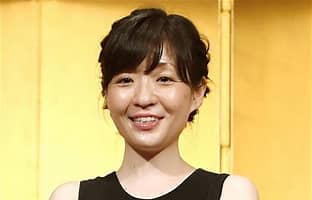
Sayaka Murata (Author, Japanese novelist.)

Sayaka Murata’s subject is clearly revealed in its title, “Vanishing World”. “Vanishing World” is a provocative assessment of how sexual relationship and sex education has changed. Murata satirically reveals how human reproduction, objectification of life, motherhood, and technology may dehumanize society.

Murata’s fictional story is highly informative in regard to sexual difference and similarity between men and women.

In one sense, Murata’s fictional story is highly informative in regard to sexual difference and similarity between men and women. As a reader/listener, Murata offers a detailed description of the physical difference between the sexes. Many who think they know something about sexual difference will find the author’s candor enlightening. However, her depiction of social relationship is off-putting with a satirical exaggeration of socio/sexual objectification.

Murata writes about a single parent family with a young daughter who lives with her mother and is nearing the age of puberty.

(Though not mentioned in Murata’s story, single family homes in America have grown by nearly 30% in the 21st century.) The main character’s name is Amane and Murata’s story is about Amane’s sexual awakening and how she views social relationship. Amane is infatuated with an animated male character on television. She imagines being married to this character before puberty but holds this character in her mind throughout childhood and later life.

Murata suggests reproduction may evolve into a preferential desire for artificial insemination rather than sexual intercourse between a man and woman.

This idea feeds into a listener/reader’s mind as a diminishment of the need for emotional attachment to the opposite sex for procreation. Sex becomes detached from procreation, evolving into only “hooking up” for sexual stimulation and/or personal gratification. Murata infers desire is no longer needed for procreation but only to experience intercourse as an emotional and physical pleasure. Consequently, it seems perfectly natural to transfer sexual desire to a fictional character because it becomes unnecessary to have emotional attachment to humans when a figment of one’s imagination is available.

Murata creates a bizarre world.

The bizarro world that Murata creates is an extension of a belief that society is becoming less attached to their humanity. Marriage, human relationship, and motherhood are replaced by mindful personal’ inwardness and endless pursuit of physical stimulation without emotional entanglement. By extension, Murata suggests science will create wombs for men so that the difference in sexes equalizes childbirth and care of children. Caregiving becomes bureaucratic and collective because caregiving is no longer personalized.

Murata suggests that a new system of childcare will evolve into collective training camps for working parents who are too self-absorbed to raise their own children.

Collective childcare disconnects parents from the management and development of their children. The sterility of conception by artificial insemination, collective childcare, and social acceptance of multiple sex partners diminishes both familial relations and child development. Birthing and raising children becomes a clinical process, i.e., less personal with both men and women capable of experiencing pregnancy and delivery; all without responsibility or obligation for childcare.

In some sense, this satire illustrates the negative potential of socio/sexual equality.

Murata’s story ends with the birth of their first child from a man who is Amane’s husband. She is torn over not being able to take the baby home because the child is already being “cared for” in a ward meant to raise and nurture all newly born children. A final point is made in the story by a visit from Alane’s mother after the birth. She asks Amane where the child is, and Alane explains the child will not be raised by her and her husband. Alane’s mother is aghast. Her mother falls to the floor and dies without any apparent familial concern for her sudden collapse and presumably, death. The next thing to happen is a visit from one of the children born in this new world. Alane chooses to have sex with him and the story ends.

“Vanishing World” implies 21st century science, organizational bureaucracy, and social change threatens survival of humanity. Murata’s satire infers obsession with sex for pleasure, child rearing collectivization, gender dysphoria, and pregnancy equalization are pathways to society’s collapse.

CYCLE OF ABUSE

“The Beauty in Breaking” is about life as an eternal recurrence that offers some peace of mind in a world troubled by its inhumanity.

Books of Interest
 Website: chetyarbrough.blog

“The Beauty in Breaking” (A Memoir)

By: Michele Harper

Narrated by: Nicole Lewis

Michele Harper (Physician, Author, Public Speaker.)

Leaves fall from the tree to expose the bark and bite of life. Michele Harper’s memoir shakes the tree of American life. Relying on the veracity of Harper’s story, she is raised in a family with a physically abusive father who divorces her mother, an art dealer.

Harper notes her paternal father was physically abusive.

After Harper’s paternal father leaves Harper’s mother, Harper notes he offers some financial assistance to Harper in college. Harper explains she passes some of that assistance on to her mother while attending Harvard. Harper earns a BA in psychology. She goes on to acquire a medical degree from a New York university to become an emergency room physician.

Harper’s story touches on the complexity of life as a Black American. She marries a white man while at Harvard, but they divorce at his choice. The failure of their marriage is shown to be hard for Harper, but she is driven to succeed and moves on to educate herself in her chosen field of work.

Harper’s experience of childhood abuse, her personal marriage break-up, and work as a physician in three different emergency room positions, are lessons for life and living.

Her focus is on overcoming her trials to be good at her job even though much is beyond her control. The notion of not knowing what crises you will face in a medical emergency room, let alone a doctor’s experience as a Black American, offers a unique perspective to Harper’s memoir.

Abuse comes in many forms.

There is child abuse that occurs in many homes throughout the world. There is being a minority in a culture controlled by a majority that discriminates against those who are different. There is inequality of opportunity that creates an underclass that is trapped in an eternal cycle of poverty. Harper is denied promotion to Administrator in her first hospital job because she is a woman. Her supervisor notes a woman, let alone a Black woman, has never had the Administrator’ job in that hospital. Misogyny triumphs once again.

Harper chooses to leave the hospital that denied her the promotion.

As an administrator in another hospital Harper sees the consequence of poverty. Poverty seeps into nearly every culture in the world with its accompanying violence, compounded by weak to non-existent gun control laws in the United States. Harper writes about her encounter with a young boy who has his sneakers stolen by a bully at school.

Harper interviews the young Black grade school child who is thinking about getting his shoes back with a gun.

Harper calls a child services employee to explain her concern about the child’s access to a gun at his home. The child service’s person explains she sees this in many children’s homes where poverty is one lost job away from a family being on the street. This young boy’s parents both work to keep the family housed and fed. The social services person explains gun accessibility and violence are common in poor black neighborhoods. Where poverty is a fact of life, child services can only go so far to change what is toxic in a child’s environment. Gun availability is beyond the control of Harper or child service’s employees. The extent of Harper’s intervention is limited to raising the issue with the young boy’s parents–with the hope that they will act to be sure no gun becomes available.

Harper finds a third job as a VA hospital administrator. She interviews a female patient seeking psychological help. In the interview, Harper is told by the patient she had been raped by her supervising sergeant and another soldier in Afghanistan.

She became pregnant and decided to have an abortion. That experience continues to traumatize her life. She seeks help to overcome its affects. Harper becomes the patient’s lifeline for the counseling she needs to overcome her abuse.

There seems no “…Beauty in Breaking” as one nears the end of Harper’s memoir but one begins to realize the “Beauty…” is “…in Breaking” the cycle of abuse.

The cycle can be broken with exposure, rehabilitation, caring, and acting to remove the causes of abuse. Harper’s memoir shows how it is done. Breaking the cycle of abuse is a long, laborious process that begins with people focusing on incidents of abuse and acting to mitigate its causes and consequences. “The Beauty in Breaking” is Harper’s way of exposing abuse and illustrating what can be done about it.

Harper’s ultimate theory for the resolution of human abuse is belief in Lifes’ recurrence. Her theory is that every life is eternal. When one dies, they will be reborn into another life. Harper comes to grips with her life as it is and makes it better through meditation. Her belief about life as an eternal recurrence offers her peace of mind about the people she saves or loses in a hospital emergency room.