PEACE IN ISRAEL

Like America’s Civil War and the issues of slavery and independence, peace will only come to Israel with a political and territorial agreement based on human equality.

Books of Interest
 Website: chetyarbrough.blog

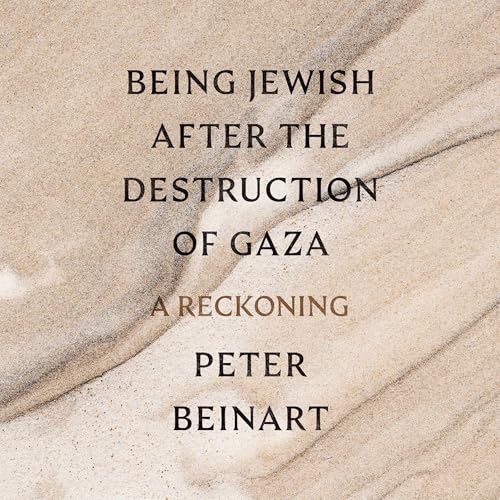
BEING JEWISH AFTER THE DESTRUCTION OF GAZA (A Reckoning)

AuthorPeter Beinart

Narration by: Malcolm Gladwell

Peter Beinart (Author, journalist, political commentator, professor, former editor of the New Republic, born in Cambridge, Mass. to Jewish immigrants from S. Africa.)

This is a surprising Jewish author’s analysis of Israel’s response to the horror of Hamas’ murders/rapes of 1200 people and the taking of 251 Jewish hostages on October 7, 2023. Peter Beinart appears to be a devout Jew and journalist who criticizes Israel’s response to Hamas’s brutal attack and hostage taking. He believes, as current news reports confirm, Hamas will return to control and influence Gaza and West Bank Palestinians after Israel’s brutal response to the Hamas’ atrocity.

NYT’s Picture of Grief over the Hamas attack on October 7th, 2023.

Without reservation, Beinart condemns Hamas for their war crime on October 7th. However, his book equally condemns Netanyahu’s response. Beinart points to the Israeli government’s destruction, murder, and starvation of thousands of Palestinian men, women, and children who had nothing to do with the planning or execution of the Hamas horror of October 7th. The author argues Israel must focus on a political, non-military solution to Palestinian human rights. He believes Netanyahu’s actions only perpetuate a cycle of violence in Israel which will not achieve security for either the Israeli or Palestinian people.

One wonders how unpopular Beinart’s opinion may be among Israel’s Jewish population. As a blogger who received written comments from a devout Jewish person who supports Trump and Netanyahu’s actions in Israel, it is surprising to hear Beinart’s analysis of the Gaza war and his criticism of Israel’s actions. As the reviewer of this book who admittedly has little respect for religion and its history of atrocities, it is encouraging to hear from one who believes in their religion and condemns those who have no empathy for other religions. God is a universal concept with religions that worship His existence in different ways. Beinart makes one wonder why there is so little room for a “let it be” attitude toward different religious beliefs.

Empathy.

Beinart argues for Jewish empathy toward Palestinians while condemning Hamas’ actions in Israel. He believes long-term peace requires political compromise and a recognition of Palestinian rights. Military actions only guarantee rather than deter future violence and injustice. Beinart’s plan is to end Israeli’ occupation of Gaza and expand the rights of Palestinians to control Gaza and the West Bank. He argues it can be either a one-state or two-state solution. Beinart argues ground invasion by Israel in Gaza must stop. He recommends forthrightly engaging the humanitarian crises in Gaza by providing aid and rebuilding what has been destroyed.

Pursuit of peace is not easy.

None of this is easy because of the enmity that remains. The complications of political opposition, and security are ongoing concerns for Israelites and Palestinians, but Beinart believes the risks of a negotiated political, religious, and territorial settlement is worth it. Human equality is a work in progress for all nations in the world. Beinart persuasively argues a political and territorial agreement between Palestinians and Israelites is the only possible path to peace. Like America’s Civil War and the issues of slavery and independence, peace will only come to Israel with a political and territorial agreement based on human equality. Of course, the drive for equality remains a work in progress for America. That will be true in Israel for generations to come, but peace can be restored with pursuit of equality for Palestinians and Jews.

PREJUDICE

Unless or until our prejudices are eradicated, man’s inhumanity to man will continue. The truth is that “The World After Gaza” will be the same as “the world before Gaza” but with a different order of prejudice.

Books of Interest
 Website: chetyarbrough.blog

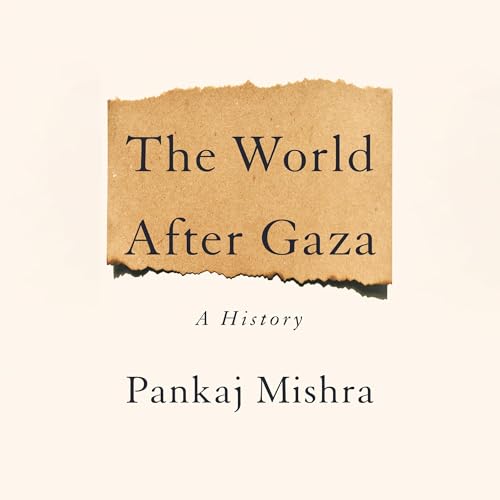
The World After Gaza (A History)

AuthorPakaj Mishra

Narrated By: Mikhail Sen

Pakaj Mishra (Author, Indian essayist. He wrote “Age of Anger” reviewed in this blog.)

As pointed out in a previous review of Mishra’s book “Age of Anger”, “…unless or until human beings see themselves as part of the same society, the world will end in the Armageddon of biblical imagination.”

Leadership prejudice.

Mishra is born in a prosperous Brahmin family that becomes poor after India’s land distribution in 1947 which was meant to reform feudal landholding practices in India. Undoubtedly, the harshness of that reform has some influence on Mishra’s expressed views in “The World After Gaza”. Mishra’s father has a Brahmin Hindu background which suggests his son is raised in an upper caste in Hindu society that falls into hard times.

“The World After Gaza” is categorized by Mishra as a history.

Mishra recalls the horrendous past of Germany’s holocaust where 6,000,000 Jews were murdered by Hitler’s followers. He infers that horrendous event is reminiscent of what Israel is doing to Palestinians in Gaza. His point is not to vilify Israel but to suggest societies are inherently prejudiced and inclined to discriminate against those who are not a part of their belief system. In essence, Mishra offers a view of history that corroborates Mark Twain’s belief that “History never repeats itself, but it does rhyme”.

Whether one agrees with Mishra’s view of Israel’s actions in Gaza or not, prejudice is an undeniable truth of human societies.

There are many Jews who are undoubtedly appalled by what is happening in Gaza but there are Israeli’ leaders who believe what they are doing is in the best interest of their country. One may associate Israel’s, America’s, or any country’s leadership as either right or wrong from a personal perspective, but the nature of humanity is what it is. Prejudice is an equal opportunity exploiter of human’ equality. Unless or until our prejudices are eradicated, man’s inhumanity to man will continue. The truth is that “The World After Gaza” will be the same as “the world before Gaza” but with a different order of prejudice.

ISRAEL

Many soldiers and victims of war are teenagers, coping with life and death on a daily basis. They wonder, what is the point? We who sit on the sidelines because of age, agnosticism, or an unfettered life read or write about war as though it is just a story.

Books of Interest
 Website: chetyarbrough.blog

Beaufort (A Novel)

Author: Ron Leshem

Narrated By: Dick Hill

Ron Leshem (Author, born in 1976, recieved Sapir Prize, a top literary award in Israel, his book, Beaufort, is turned into a movie and is nominated for an Academy Award.)

Ron Leshem’s book “Beaufort” helps one understand why the idea of Gaza becoming a Palestinian state is anathema to a majority of Israeli citizens. Beaufort is located in southern Lebanon, on the border of Israel. In the 1970s Beaufort was used by the PLO as a base for operations against Israel. In 1982 Israeli forces capture Beaufort and it became an operating base for defense of Israel until their withdrawal in 2000. Lesham served in the intelligence corps during the time of the fight for control of Beaufort. He was not directly involved in the fighting but had an intimate understanding of the conflict. What “Beaufort” makes clear to Americans who are ignorant of what it is like to live in a country surrounded by militant minorities who wish to obliterate Israel.

Israel has a right to its existence on Israeli lands based on its ancient occupation of the land in 1200 BCE.

The proof of early occupation of Israel by Jews is in an inscription on a 1209 BCE Egyptian’ Merneptah Stele, a black granite slab. Though they were a tribal community, they had a form of governance that pre-dates nation-state development. Though one may argue Palestinians had lived in the lands of Israel since the 7th century, they were late comers to the land. The Palestinians were a nomadic Arab population that came nearly 600 years after settlement by the Israelites. The point made by the story of “Beaufort” shows why no rational human being would want another hostile haven for antisemitic opposition to Israel as a legally recognized nation-state.

“Beaufort” shows the human and psychological toll of an unjustified “forever war” conducted by two militant factions in Arab nations surrounding Israel.

Hamas and Hezbollah are two militant Islamist organizations deeply committed to destroying Israel and creating an Islamic state in the territory known as Isreal and Gaza. In 1947, a UN partition plan between Palestine and Israel was proposed but Arab leaders rejected it, while Israel accepted it. One can consider the history of the lands’ longer occupation by Jews of the holy land and Palestinians and wonder why partition was rejected by the Arabs.

The conflict revealed by “Beaufort” is a message to the world about life in Israel. Warfare is a fact of life for those who choose to live in Israel. Soldiers become disillusioned about why they are at the frontlines of an irreconcilable conflict. Kill or be killed becomes the mantra of their lives at the front. Unquestionably, it does have something to do with ideology or religion. How many soldiers and victims of war are teenagers, coping with life and death on a daily basis? Some must wonder, what is the point? We who sit on the sidelines because of age, agnosticism, or an unfettered life read or write about war as though it is just a story. It is not a story to Israelites or Palestinians. It is living life when surrounded by others who want to kill you.

ANARCHY

In reading/listening to Chomsky some will conclude he is wrong about there ever being a nation-state that will be successfully governed as an Anarchy because of the nature of human beings.

Books of Interest
 Website: chetyarbrough.blog

On Anarchisn 

Author: Noam Chomsky, Nathan Schneider

Narrated By: Eric Jason Martin

When one thinks of a political system called Anarchism, the first thing that comes to mind is a vision of rampant disorganization where there is no sense of direction or social cohesion.

Noam Chomsky is a polarizing figure who is admired as an anti-capitalist and anti-imperialist who fiercely criticizes U.S. and Israeli foreign policy. He views Israel as a client state of the U.S. that relies on authoritarianism to manage their countries roles in the world. He notes America’s interventions in Vietnam, Central America, Iraq, and Afghanistan as evidence of America’s failure as a democracy. He views Israeli foreign policy in regard to Gaza as infected with hypocrisy and violence with a narrow view of territorial expansion. He feels both America and Israel are driven by strategic and economic interests, not by the idealism of democracy.

Chomsky is a fierce critic of capitalism and imperialism because both marginalize citizens’ freedom of thought and action.

Chomsky’s view is that anarcho-syndicalism is a better form of government where power is decentralized and citizens can and should collectively manage their own affairs through direct democracy and cooperative organizations. He argues for participatory democracy by voluntary associations that are freely formed into cooperative communities. There should be no centralized authority with all workplaces and production controlled by the workers themselves. He believes in libertarian socialism because he sees it as the most humane and rational extension of Enlightenment ideals in society. Any authority exercised by a government entity in a libertarian socialist country, in Chomsky’s opinion, is the most humane and rational extension of the ideals of the Enlightenment.

The Age of Enlightenment or sometimes called the Age of Reason was a movement in the late 17th century that extended into the 19th century.

It emphasized the power of reason, science, and individual liberty as the tools for the reform of society. The tools of reason, science, and liberty were believed to be the natural rights of humanity, and the possibility of improving society through education and reform based on science.

Francisco Franco (Spain’s dictator 1939-1975.)

Chomsky argues those tools were engaged by Spanish revolutionaries during Franco’s dictatorship in Spain. Chomsky notes workers took control of factories and farms in Catalonia and Aragon that were run collectively and democratically by workers. He believes voluntary cooperation thrived. He believes the anarchist movement grew through three generations based on education and considered organization of Spanish interest groups. However, Franco’s forces with the help of England, Germany, and Italy defeated the movement.

Republican factions fought against Franco’s government in the 1930s.

Chomsky believes revolutionaries against Franco were practical visionaries that showed how anarchy could be a legitimate and superior way of governing a nation.

Surprisingly, there are several examples besides Spain’s revolution that were collectivist organizations that could be classified as anarchies. From 1918-1921, the free territory of Ukraine was led by Nestor Makhno during Russia’s Civil War. It was ended by Russian communism after its ascension in 1917. Modern communes were set up in Mexico’s Zapatista territories with autonomous zones that had collective farming and indigenous self-rule. Of course, in ancient times there were hunter-gatherer societies that shared norms, and governance through consensus decision-making and resource sharing. However, there is a history of atrocity, failure, and disruption by governing bodies that have tried Anarchy. Spain’s effort fell apart in 1939. Freetown Christiania in Denmark, in a neighborhood in Copenhagen has struggled with Anarchy since 1971. A number of legal battles have been fought over commercial ownership and control. By some measures, the kibbutz movement in Israel has been successful. However, even Chomsky notes friction comes within kibbutz communities over disagreement with elected leaders. Research shows that some kibbutzim are privatizing and paying differential wages for communal services. Collectivism is becoming harder to maintain.

Chomsky is considered by some to be the most important intellectual alive today. He is highly respected for theories on the understanding of language based on modern cognitive science.

Chomsky has shaped how we think of human capabilities. He is famous for his dissents which are naturally about government control and media manipulation. He was against the Vietnam war and opposed Israeli occupation because of his libertarian socialism, a form of anarchy or a collective that is purely democratically determined. He is reported to be an excellent lecturer and capable of going toe to toe with experts in linguistics, philosophy, political science, and education. His opinions have global reach with translations in many languages.

In reading/listening to Chomsky some will conclude he is wrong about there ever being a nation-state that will be successfully governed as an Anarchy because of the nature of human beings. Whether one believes in Hobbes’ view of selfish humans, Rousseau’s belief in people being corrupted by society, Kant’s belief in rationality, or Sartre’s belief in human choices and actions, there will always be dominant personalities who will victimize those whom they commune. Human nature as defined by Hobbes, Rousseau, Kant, Sartre, and other brilliant philosophers infer there will always be miscreate leaders that will destroy egalitarianism, the foundational principle of anarchy. Human nature, as it exists today, is unlikely to change.

FEAR & TREMBLING

America made many mistakes after the 9/11 terrorist attack. One hope’s Israel does not make the same mistakes after the 10/7/23 atrocity. Most Americans’ hearts go out to Israel despite fear and trembling for the world’s future.

Books of Interest
 Website: chetyarbrough.blog

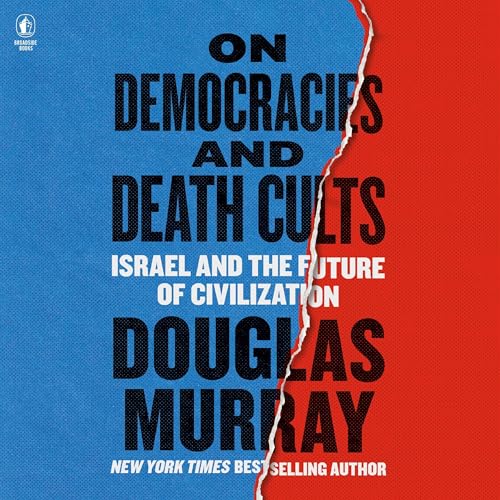
On Democracies and Death Cults (Israel and the Future of Civilization)

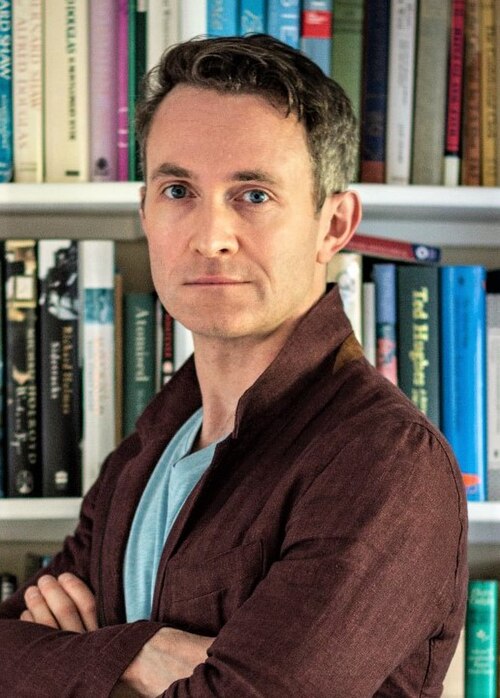
Author: Douglas Murray

Narrated By:  Douglas Murray

Douglas Murray (Author, Bristish political commentator, cultural critic, and journalist.)

“On Democracies…” is an important book because it offers perspective on what happened in Gaza on October 7, 2023, and the aftermath that leads to the bombing of Iran by Israel. In that October day, over 1,200 Israelis were killed including civilians, children, and elderly people. At least 251 hostages were taken. Photos of the aftermath show multiple signs of sexual assault. A woman survivor reports seeing Hamas fighters gang rape a woman before the last of her attackers shoots her in the head. The terror and destruction of the attack is as horrible as one can imagine. It reminds one of men and women jumping out of windows at the New York World Trade Center on 9/11.

As one listens to Murray’s book, one begins to understand why Israel is responding to the October 7th atrocity by attacking Gaza and bombing Iran.

Murray explains the idea of a proportional “tit for tat” response is absurd. Does a rational person expect Israel would respond to the Gaza atrocity by killing and/or raping 1,200 men, women, and children. What is not understood by many is that Israel recognizes October 7th as an attack on its existence as a nation. It is the same concern Ukrainians have in their war with Russia. The fundamental issue is sovereignty, not revenge.

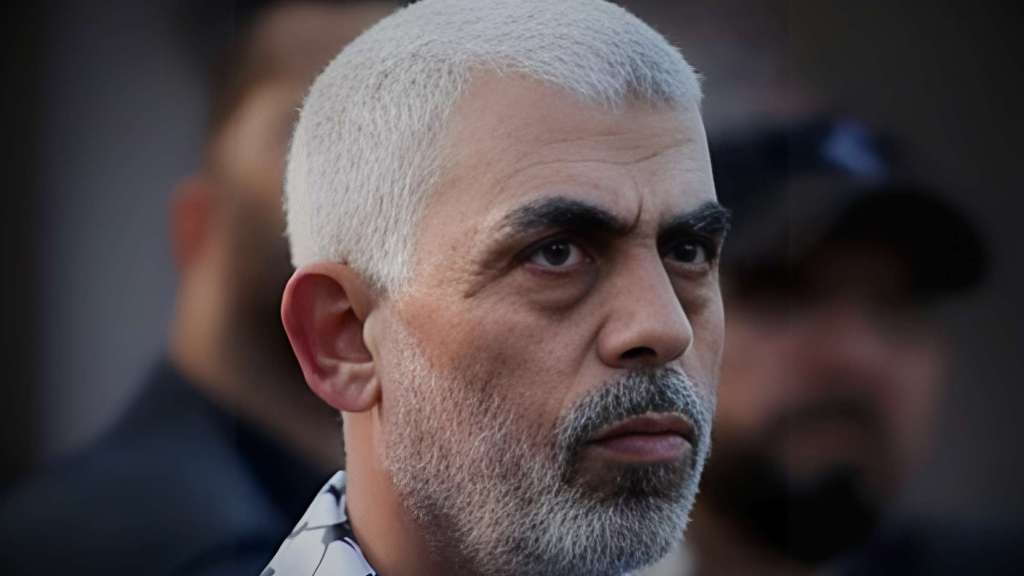
Like Osama bin Laden on his 9/11/01 attack on America, Yahya Ibrahim Hassan Sinwar, organized the massacre of 10/7/23. Both men were stateless terrorists who believed the U. S. and Isreal had no right to exist. Neither terrorist had an interest in the hard work of creating their own nation but only in destroying another. In the early days of the establishment of Israel, there was a drive to create an independent Palestinian state. Both Palestinian leaders and Arab states rejected proposals for a Palestinian state. In contrast, Israel chose to accept an opportunity to become an independent state in 1948. With the leadership of David Ben-Gurion, Israel declared independence and began the hard work of creating a nation. With a beginning population of 806,000, Israel grew to a prosperous nation of 9.7 million with over 73% being Jewish and the remainder being Arab or other nationalities. One must ask oneself, why have the Palestinians not taken the same path as Israel?

Murray makes one understand Israel is fighting for their lives to remain an independent nation.

It is the same fight Ukraine is waging. The bombing of Iran is based on Israel’s belief that Iran has supported Hamas throughout their terrorist war against Israel. Without honest recognition of Israel’s right to be an independent nation, there can be no peace. The continuing massacre in Gaza is a terrible consequence of the destructive intent of Hamas leadership that wishes to destroy Israel.

The sad realization coming from Murray’s book is that Palestinians and their supporters are not willing to do the hard work of creating an independent nation. The time may be past for that to ever occur because Israel is unlikely to agree to another neighboring nation being hostile to Israel’s existence.

America made many mistakes after the 9/11 terrorist attack. One hope’s Israel does not make the same mistakes after the 10/7/23 atrocity. Most Americans’ hearts go out to Israel despite fear and trembling for the world’s future.

THE WHITE HEGEMON

Muslim Palestinians, like the Indians of America and the Jews of Israel, believe they have the same rights to the lands of their ancestors. In history, that seems to have never been true for any indigenous or displaced culture.

Books of Interest
 Website: chetyarbrough.blog

One Day, Everyone Will Have Always Been Against This 

By: Omar El Akkad

Narrated By: Omar El Akkad

Omar El Akkad (Author, lives in Oregon, winner of the 2021 Giller Prize. Became a Egyptian Canadian citizen and now lives in Oregon.)

Omar El Akkad expresses the frustration of being an American citizen of an ethnicity and race that has little power as a minority in today’s world. He writes of life being out of one’s control. Akkad’s story is partly about his family’s life as they leave Egypt for Canada, and then America. However, his primary purpose is to write of the atrocity of the Palestinian/Israeli war. On the one hand it is a terrifying example of the domestic trials of his father and family in moving from Egypt to America. On the other, it is a heartbreaking review of slaughtered innocents in Gaza.

Ironically, the phrase “from God’s mouth to our ears” comes from a Jewish and Arabic religious expression.

Contrary to Omar El Akkad’s book title, the history of white society suggests the belief that “One Day Everyone Will Have Always Been Against This” will likely never come. The title of Akkad’s book is about how leadership in America and Israel has failed. As Lord Acton said in the 19th century “Power tends to corrupt, and absolute power corrupts absolutely”. President Trump, former President Biden, and Benjamin Netanyahu are proving Acton’s observation.

Social and cultural differences have always roiled world history.

Jews believe they have the right to live in peace in Israel because of their culture and the history of their settlement in the land of their forefathers. Muslim Palestinians, like the Indians of America and the Jews of Israel, believe they have the same rights to the lands of their ancestors. In history, that seems to have never been true for any indigenous or displaced culture.

The slaughter of Indians, enslavement of minorities by white America, and the slaughter of innocent Muslims by Netanyahu and his followers are all reprehensible examples of the misuse of government power. This is not to say Hamas is not guilty of crimes against humanity, but their evil acts do not warrant evil reactions. The power of Israel is being used for evil, not the return of peace.

Netanyahu’s refusal to settle with Hamas over unjustly murdered, imprisoned, and abused hostages does not justify the killing of Palestinian innocents in Gaza. The power of Netanyahu’s military actions and Trump’s support for taking Gaza land from the Palestinians is evil and unjust. That evil and injustice must be replaced with a negotiated settlement that releases Hamas’ hostages and returns Gaza to the Palestinian people. Humanity cannot wait until “…Everyone Will Have Always Been Against This”. Power lies in the hands of Israel’s leaders to negotiate a settlement.

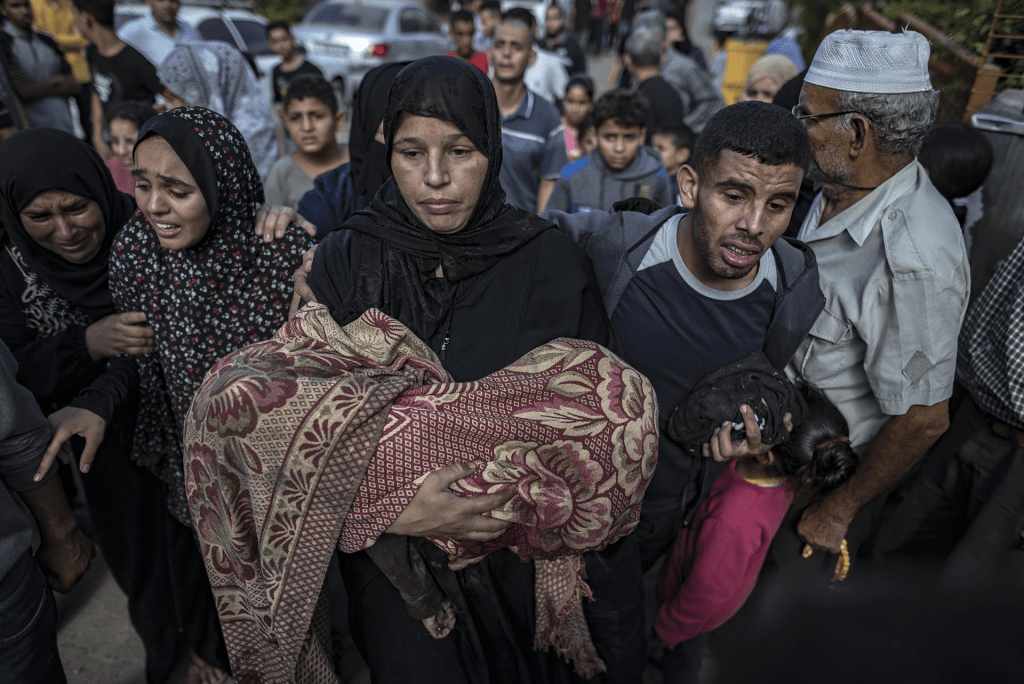
The common denominator of the war in Gaza is the power being held by white people who refuse to believe all human beings are equal. It is partly a religious issue, but it is a human issue aggravated by religious difference and the self-interests of people of different races and cultures. The white world hegemon needs to come to its senses because at some point in the future, “being white” will not be where the power rests. Power will shift to other races and cultures just as Mesopotamians, Egyptians, Mongols, Chinese Dynasties, and Islamic Caliphates once changed the course of history.

Omar El Akkad pleads for peace and human equality in One Day, Everyone Will Have Always Been Against This. From El Akkad’s words, the white hegemon should hear and obey.

AGGRESSION LOSES

The war in Ukraine will be settled through negotiation. The same can be true in Gaza with the creation of a Palestinian state. It certainly will not eliminate conflict, but it offers a path for peace.

Books of Interest
 Website: chetyarbrough.blog

All Quiet on the Western Front

By: Erich Maria Remarque

Narrated By: Frank Muller

Image result for erich maria remarque

Erich Maria Remarque (1898-1970, Author, German born novelist and survivor of WWI.)

Revisiting Erich Remarque’s “All Quiet on the Western Front” is a reminder of today’s wars in Ukraine and Gaza. As a former soldier in the German army of WWI, Remarque explains how brutal war is for soldiers and their families. He shows there are no winners in war. The victims of war are the same whether they are aggressors or defenders. Putin’s ambition to restore the empire of Russia appears as foolish as Hamas’s determination to destroy Israel. The result is injury and death for all. Neither Germany nor defending Allied Powers escaped the loss of soldiers and civilians in the two 20th century wars against Germany.

The estimated injury of 109,000 and killing of 46,000 Palestinian citizens is not justified by the atrocity of October 7, 2023, when 1,200 people were killed and 253 were taken hostage by Hamas in Isreal.

Israeli leadership disagrees because of factions in Palestine, Syria, and Lebanon that intend to eliminate Israel from the middle eastern world. Rather than killing and injuring indigenous peoples of the Gaza strip, a diplomatic solution should be pursued to establish a Palestinian State. Every nation-state in the world has militant factions within their borders. Palestine, as a nation-state, would have the responsibility for controlling their militant factions just like every nation-state in the world.

Twentieth century Isreal is formed out of Egypt, Jordan, and Syria after the 1948 Arab Israeli War.

Egypt lost the Gaza Strip, Jordan the West Bank, and Syria the Golan Heights with the formation of Israel. Palestinians, like Israelis, lived in those areas for centuries. With creation of a Palestinian State, International Law and UN Resolutions can aid and diplomatically pressure governments to address nation-state claims.

History of the 20th and now 21st century show war has defeated aggressor governments but at an unconscionable cost to humanity. War’s cost is illustrated by Remarque as injury and death of aggressors, defenders, parents, and children. No one wins and everyone loses. Neither peace nor war have ended human inhumanity. Remarque clearly illustrates the folly of war, but human nature infects peace with a war mentality and ferocity. Diplomacy and negotiation for the creation of a Palestinian state is the only pragmatic solution for peace in the Middle East.

Aggressor nations, as shown by 20th century history, are eventually defeated.

Israel’s military reaction is as dishonorable as the Hamas attack on October 7th. Both are unjustifiable. Creation of a Palestinian state offers a pragmatic solution to the control of Hamas. The need for nation-state control is equally true in Syria’s and Lebanon’s Hezbollah factions. International pressure can only be exerted with nation-state recognition. Only with the creation of ethnically viable nation-states is their hope for peace among peoples of different cultures.

The war in Ukraine will be settled through negotiation. The same can be true in Gaza with the creation of a Palestinian state. It certainly will not eliminate conflict, but it offers a path for peace.

HOSTAGE

Over 230 human beings remain political hostages in this unpredictable world.

Books of Interest
 Website: chetyarbrough.blog

In the Shadows (True Stories of High-Stakes Negotiations to Free Americans Captured Abroad)

By: Mickey Bergman, Ellis Henican

Narrated By: Assaf Cohen, Mickey Bergman

Mickey Bergman tells a fascinating personal story about his life as a political hostage negotiator. He and a mysterious Lebanese friend he names “George” met at Georgetown University and became interested in political hostage negotiations. A precipitating event that led to their early friendship is the kidnapping of an Israeli soldier by a Palestinian Hamas faction in Lebanon. As a former Jewish military soldier, Bergman became friends with “George”, a Lebanese Muslim student at George Washington University. With similar beliefs about the unfairness and human tragedy of hostage taking for political purpose, they become partners in the release of the Israeli soldier from Hamas.

As a reminder of the of the October 7, 2023, kidnaping of over 100 Jewish hostages by Hamas, Israel has occupied Gaza and murdered an estimated 4o,000 Palestinians.

In the kidnaping of one Israeli soldier, Bergman explains that murder or kidnapping of 1 Israeli is viewed by some in the government and Israeli citizens as not 1–but six million and 1 atrocities.

A singular kidnaping, let alone the October 7th Hamas attack, gave warrant to some in Israel’s government to wage occupation and war on Gaza.

(This reasoning gives a sense of the current state of the Gaza war but also explains why hostage negotiation is such a complicated and lengthy process that can as easily end in failure as success.)

From Bergman’s friendship with “George”, he gathers interest in the pursuit of peace, regardless of social, religious, economic, or political difference. As a twenty something graduate, Bergman receives a call from the Clinton Global Initiative to join their organization after graduation. CGI was formed by former President Clinton and his family in 2005. Its stated purpose was to devise and implement solutions to world challenges like climate change, health equity, world economic growth, and peace among nations. It gave Bergman his first thoughts about what would become his mission in life, i.e., the liberation of hostages unjustly held by factions of countries or governments for political rather than criminal infraction. “In the Shadows” explains how suited Bergman is for the life he chooses. Raised in Israel, highly educated, experienced as a soldier, from a stable and loving family, Bergman understands the grief and joy of families dealing with and hoping for their mothers, fathers, sons or daughters release from a foreign prison.

Formed in 2005 to address world problems.

Bergman’s early experience as a go-between for the release of the Israeli soldier, with the help of his Lebanese friend from college, show how important non-governmental citizens can be in freeing political prisoners. Bergman and his friend’s families have important indirect contacts at high levels in the Israeli and Lebanese governments. The two young graduates create back-channel contacts to Jewish and Lebanese governments that eventually get Hamas to release the Israeli soldier. They found it a slow, tedious process of give and take allowing political points to be made by factions and governments while providing an opportunity to free a hostage who was only doing his government ordered job.

Bergman is everyman who wishes to be the best he can be within their natural gifts of birth, education, and experience.

Bergman is drawn into the circle of Governor Bill Richardson of New Mexico who formed the Richard Center in 2011. Bergman learns how to become a more effective hostage negotiator. Richardson’s methodology in negotiation is a post-graduate course in effective international negotiation.

The Richard Center was formed in 2011 to focus on promoting international peace and dialogue; particularly to negotiate hostage and prisoner releases. The Richard Center continues its work today.

Bill Richardson (1947-2023, died at age 75, a former Governor of New Mexico, 9th US Secretary of Energy, US Ambassador to the UN, who was elected to the U.S. House of Representatives for New Mexico.)

Richardson’s rules of negotiation:

  1. Never close the door to your contacts.
  2. Deflect attention from yourself with the people you take with you when you negotiate.
  3. As leader of a mission, observe reactions of your opposing audience to associates’ arguments, i.e. the same arguments you discussed with your associates before the meeting.
  4. Present a final pitch for hostage release based on what you have learned from the audiences’ reactions to your support staff’s arguments.

Richardson is shown by Bergman to be a master of negotiation and a great teacher of the art. You will not always win the argument, but you will have used the most persuasive details based on seeing and hearing the oppositions’ reactions to associates’ arguments.

“In the Shadows” tells the hostage stories of Brittney Griner, Danny Fenster, Otto Warmbier, Trevor Reed, Paul Whelan, and Kenneth Bae.

Bergman does a great job of explaining how difficult, dangerous, and often unsuccessful hostage negotiations can be. The release of Griner is heartwarming. The death of Warmbier is heart breaking. The delay of Paul Whelan’s release is frustrating and indicative of the complexity of hostage negotiation.

The many stories Bergman tells are interspersed with hardship in his own life that show how human and vulnerable we are despite our intelligence, experience, and education. Over 230 human beings remain political hostages in this unpredictable world. Though Governor Richardson recently died, Bergman carries on with the Richardson Center for Global Engagement.

FRANTZ FANON

Frantz Fanon decried colonization and racism to promote individual dignity and family reconnection in his psychiatric practice

Books of Interest
 Website: chetyarbrough.blog

The Rebel’s Clinic” The Revolutionary Lives of Frantz Fanon

By: Adam Shatz

Narrated By: Terrence Kidd

Adam Shatz (Author, editor, professor at Bard College)

Adam Shatz introduces Frantz Fanon to listeners. Fanon was a Black Frenchman, born in the colony of Martinique, an island in the Lesser Antilles of the West Indies. Fanon may be classified in many ways but first and foremost one understands he would want to be known as a Frenchman, i.e., a Black individual of French heritage.

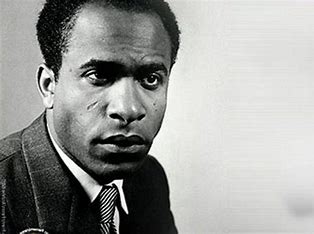
Frantz Fanon (1925-1961, graduated from the University of Lyon in France.)

Shatz tells the story of Fanon’s life. Fanon is educated as a psychiatrist who was influenced by Aimé Césaire, a leader of a movement titled Négritude. Négritude was a protest against French colonial rule and assimilation in the early to mid-twentieth century. Fanon lives life by asserting himself as a Black Frenchman with a sense of Black cultural pride.

After an affair with Michele Weyer in college, a daughter is born. The daughter becomes Mirelle Fanon Mendes-France.

Mirelle Fanon Mendes-France (Born in 1948 to Michele Weyer and Frantz Fanon.)

Fanon later marries Marie-Josephe Duble in 1952. Duble was an intellectual, a journalist, and liberation fighter who died in 1989. Fanon and Duble have a son named Olivier who is thought to be engaged with his father’s legacy. Weyer’s and Fanon’s daughter is a scholar and member of the Frantz Fanon Foundation who also works with a United Nations Working Group on African Descent.

Fanon marries a Marie-Josephe Duble. Duble, aka Josie, married Fanon in 1952.

Shatz explains how much more Fanon was than a psychiatrist. Some suggest Fanon was a Marxist because of his anti-colonial beliefs but Fanon’s philosophy extended far beyond Marxist belief in society as an economic class struggle. Fanon was equally concerned about sexism, racism, and colonialism. He embraced a form of humanism. Fannon believed in self-identification as an acculturation process. He considered himself a Black Frenchman, born on a French colonialist island in the West Indies. His life experience as a minority in a colonial country led him to become a practicing psychiatrist in Algeria.

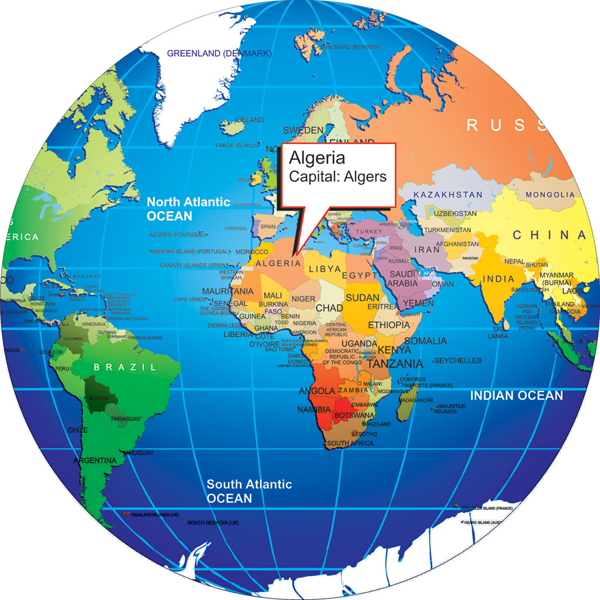
In the 1950s, Algeria was largely populated by Muslim Arabs with a minority of European nationalities.

Arabs in Algeria were poorly treated at a hospital Fanon joined in 1953. He gradually improved their treatment by opening doors to their ethnic identify. Algeria began a fight for independence in 1954. The movement was for social democracy within an Islamic framework that would offer equal citizenship for all citizens of the country. Fanon did not align himself with any religion in what became a violent conflict between French colonization and those who identified themselves as Algerian.

Fanon conflated imperialism and colonialism with racism by institutionalizing control over another based on cultural and/or racial bias.

Shatz shows who Fanon became in the way he treated his patients in Algeria. Fanon argued mentally troubled patients needed to be reconnected to their families and community rather than institutionalized.

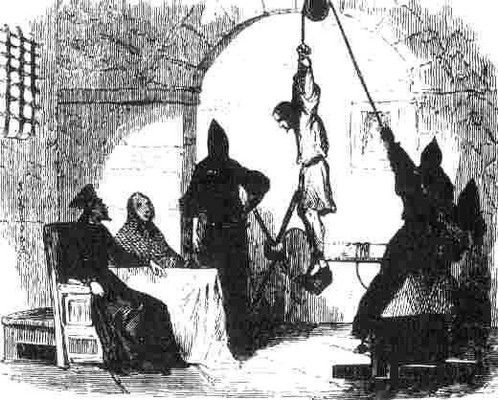
Fanon’s focus was on the psychological impact of human torture and the tit for tat revenge of French occupiers and the Algerian resistance.

Fanon was sympathetic to the Arab desire for freedom and independence for citizens of a country searching for its own identity. Shatz shows Fanon abhorred colonization and its social restrictions. Shatz infers he equally abhorred the revolution’s leaders and followers who tortured and murdered non-combatants, including children. What happened in Algeria reminds one of today’s daily slaughter of children and non-combatants in Ukraine and Gaza.

Algeria became an independent nation in 1962 with its own government, culture, and identity. Its ethnic and cultural identity remains the same today as then. It is considered a Muslim country with a majority being Sunni Muslims whose practices play a prominent role in their daily life.

Frantz Fanon dies at the age of 36 from leukemia in 1961, 7 years after the Algerian uprising.

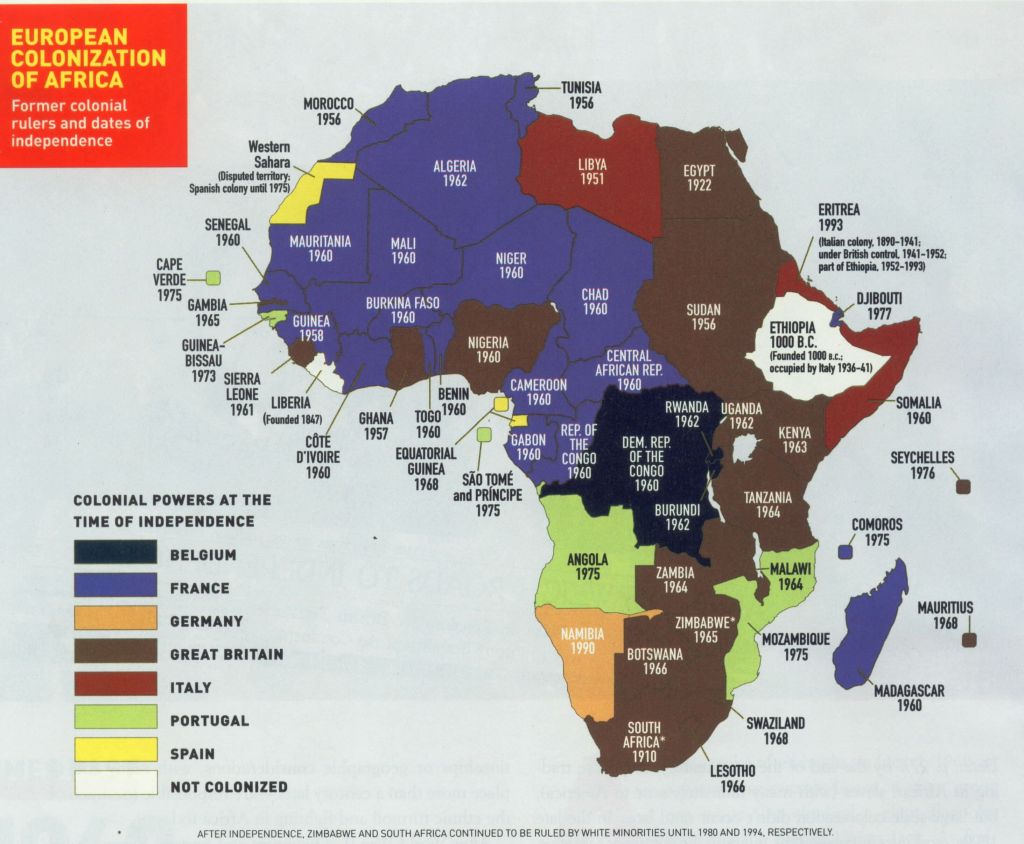
An interesting point in the biography of Fanon is that he recognizes himself as Black in a country that does not commonly describe themselves as people of color but as Algerian Arabs, Berbers, or Europeans. Fanon grows to believe he is Algerian but identifies himself as Black. Black is a broader category of race that makes his story applicable to a wider world but magnifies real-world discrimination based on the color of one’s skin rather than the truth of equal humanness. Of course, as the author notes, the color of skin in Africa is predominantly black and became a frontier for colonization between 1884 and the 1960s.

AFRICA BECAME THE FRONTIER FOR COLONIZATION BETWEEN 1884 AND THE 1960s.

Shatz infers Fanon fought the good fight. He decried colonization and racism to promote individual dignity and family reconnection in his psychiatric practice. He wrote about and aided people who were different, underserved, and underrepresented. He wrote two books about his life experience to explain why colonialization and racism were culturally wrong and socially destructive. “Black Skin, White Masks” was published in 1952, and “The Wretched of the Earth” in 1961.

OCCUPATION

“Apeirogon” is a little too repetitive for this reviewer, but it is cleverly written and shows why political and military occupation is a fool’s leadership style.

Books of Interest
 Website: chetyarbrough.blog

“Apeirogon” (A Novel)

By: Colum McCann

Narrated by: Colum McCann

Colum McCann (Author, Irish writer living in New York.)

At first the idea of an Irish author writing a book about Israel seems incongruous. After the first few paragraphs, one realizes Colum McCann grasps a truth about religious conflict that is far better than most because of Ireland’s “Troubles” between the 1960s and 1990s.

“Apeirogon” is timely novel in regard to Israel’s response to the October 7 Hamas attack in Gaza. A little history helps one understand the complexity and terrible consequence of the slaughter of innocents.

An estimated 30,228 people have been killed in Gaza, 12,000 of which are thought to be Hamas combatants.

Gaza dates back to Egyptian times, populated by Canaanites who share an ancestral connection to Israelites. Gaza later became part of the Assyrian Empire in 730 BC. Assyrians intermixed with Canaanites, Israelites, Philistines and undoubtedly Palestinians. History shows historical connection between ancient Assyrians and Palestinians just as there were with Israelites. However, Israelites were forcibly relocated to Assyria from the Kingdom of Israel. Because the Israelites were descendants of the Canaanites, they predated Palestinian settlement in Gaza. Ethnic precedent and the want of land area is a part of what complicates the idea of a separate Palestinian state. Where is a homeland for a Palestinian state going to come from?

McCann chose a perfect title for his novel. An apeirogon is a geometric shape that has an infinite number of sides; just like the many sides of Israeli/Palestinian arguments for a homeland. Column McCann cleverly explores these arguments in his novel. He creates a series of Israeli/Palestinian incidents that show how each ethnic culture believes and acts in their perceived self-interests. Every chapter is titled as a series of numbers that begin with the number 1, jumps from 500 to the number 1001; then jumps back to 500 and descends to number 1 to end his story. Revelation comes in 1001. Occupation is an evil that cannot stand.

America’s civil war carries some parallels to what is happening in Israel and Gaza.

What is revelatory about McCann’s novel is its similarities to America’s civil war that ended the lives of too many Americans. Today’s conflict in Gaza is instigated by Hamas just as the Civil War was instigated by southern slave holders. America eventually forgave southern slave holders, but Black Americans continue to suffer from institutional racism. Can a one state solution as demanded by Israel’s conservatives serve Palestinians any better than white America has served Black Americans? America’s civil war ended in 1865-1866, some 158 years later, Black Americans are still discriminated against. Can Palestinians wait more than 158 years to have equal rights in an Israeli nation?

McCann’s novel repeats, too many times, the unfairness of Israel’s occupation of Gaza. Hamas has its rebellious leaders like America had John Brown who killed one Marine, wounded another, and killed six civilians. Neither Brown nor the Hamas leaders can justify their murders though both argue with righteous conviction. The United States could have split between abolitionist and non-abolitionist states, or they could move toward reconciliation. Obviously, the U.S. government prevailed with reconciliation. It seems imperative for Israeli and Palestinian leaders to take the same road as Abraham Lincoln. Hamas is a splinter group like that led by America’s John Brown. Their objective is as horribly misguided as Brown’s. Hamas’s hostage taking and murder of Jewish settlers is as reprehensible as Brown’s murders of a Marine and six civilians.

ISRAEL’S OCCUPATION OF PALESTINE

As difficult as it may be, a two-state solution seems unlikely. What American history suggests is as difficult as America has found reconciliation to be for white America’s murder and unjust treatment of Black Americans. That reconciliation remains a work in progress. However, only union offers a way toward peace. America is not there yet but it is making progress.

Two political factions, bound by both religion and ethnicity, must learn to live with each other for peace to be achieved.

There is no other land for Palestinians. Israel may have the older of the two cultures, and both Israelites and Palestinians have a much longer history of religious and ethnic difference than America. America is founded on religious freedom and equality, though not perfect in either principle. In contrast, religion is a primary determinant in Palestinian and Israeli cultures while equality seems a less prominent concern. Peace will not come without hardship, but a beginning is dependent on Israel’s abandonment of occupation. It will be one country’s leaders’ imperative to provide equal opportunity for all its citizens. The struggle will be long as is shown by America’s history but what realistic alternative is there for the Israeli and Palestinian people? What neighboring country is likely to give up their land to create a two state solution?

“Apeirogon” is a little too repetitive for this reviewer, but it is cleverly written and shows why political and military occupation is a fool’s leadership style. Israel, like white America, needs to do better in reconciling ethnic differences.