ECONOMIC CRISES

Sorkin’s “1929” makes one think about 20th and 21st century American Presidents who may have set a table for a second economic crisis. As the Turkish proverb says “…fish stinks first at the head.”

Books of Interest
 Website: chetyarbrough.blog

1929 (Inside the Greatest Crash in Wall Street History–and How It Shattered a Nation)

AuthorAndrew Ross Sorkin

Narration by: Andrew Ross Sorkin

Andrew Sorkin (American author, journalist, and columnist for The New York Times.)

“1929” is a history of the build-up to the stock market crash and the advent of the depression with opinions about how today’s economy compares and what should be done to keep it from happening again. Though Sorkin is not an economist, he has written an interesting history of the build-up to the 1929 depression.

Faltering economies.

There is a sense of danger being felt by some today when reading/listening to Sorkin’s history of the 1920s. Few seem to have a clear understanding of world market forces and whether we are heading for an economic catastrophe or a mere hiccup in the growth of the economy. Neither bankers, regulators, nor politicians in the 1920s (or for that matter now) seem to have a clue about the economy’s trouble and what can be done to ameliorate risks. Like 1929, today’s insiders, power brokers, and rich have more options to protect themselves than most of the world’s population.

Increasing homelessness in America.

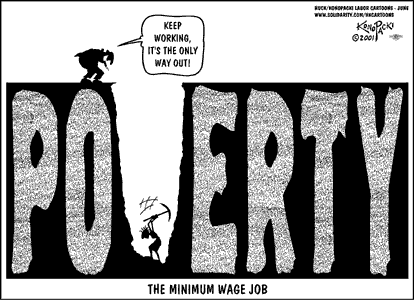
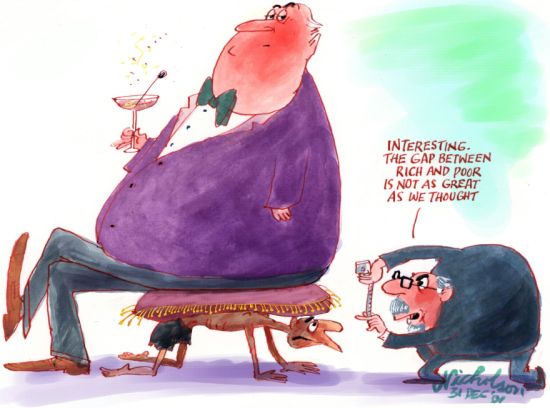
In America, it seems those in power have no concern about the rising gap between rich and poor or the immense increase in homelessness. Without a plan by those in power, there seems little concern about reducing inequality, the common denominator for the wealth gap and homelessness. Sorkin’s book outlines the reality of 1929 that gives reader/listeners a feel of history that may repeat itself.

Sorkin’s history seems credible as he notes human nature does not change.

Today’s leaders are like yesterday’s leaders. Not because they are venal but, like most if not all human beings, leaders in power are concerned about themselves and what there is in life that serves their personal needs and wants. Of course, the difference is that leaders that are power brokers affect others that do not have the same influence or options to protect themselves. We all have blinders that keep us from seeing the world as it is because human nature is to ask what is in it for me, i.e., whatever “it” is. The 1920s had a merger bubble in manufacturing and communication that is fed by the industrial revolution. Today, we have a merger bubble with mega-corporations like Tesla, Apple, Amazon and others that are mega-corporations capitalizing on a new revolution coming with A.I., the equivalent of the Industrial Revolution. Some critics argue mega-corporations, like what happened with the oil industry could be broken up to increase competition which is the hallmark of improved production, cost reduction, and lower consumer prices.

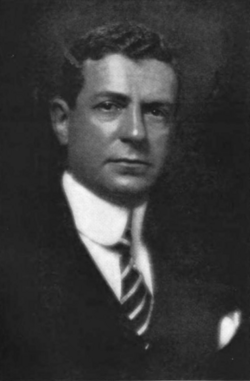
Charles E. Mitchell (American banker, led the First Nation City Bank which became Citibank.)

What makes this history interesting is Sorkin’s identification of the most responsible power brokers who bore responsibility for the stock market crash. Charles Mitchell of Nation City Bank is identified as the central driver of the stock market bubble. Mitchell denied the reality of the financial systems fragility. His ambition and unfounded optimism magnified the systemic risk of the financial crises. He openly defied the Federal Reserve’s warning to curb margin lending that risked other people’s money and their financial stability. He continued to promote purchase of stocks on credit that were fueling the stock market bubble. Mitchell appears to have misled the public in order to increase his power and protect his personal wealth by creating the illusion of market stability and his bank’s profitability. Though Mitchell is not the sole villain, he became the most powerful banker in the nation while breaking the financial backs of many Americans. In general, it is the self-interest of those who listened to him that have responsibility for their financial collapse, but it is always hard to know who is lying to you. Part of the blame is the hesitation of the Federal Reserve Board to act because the people in charge could not agree but that was more a matter of omission than commission which Mitchell was charged with but not convicted. Of course, the political leaders of that time also failed but hindsight is a lot easier than foresight.

Artificial Intelligence is today’s equivalent of the Industrial Revolution of the twentieth century.

Similar to the corporate mergers and investment from growing industrialization of the 1920s, today’s mania is mega corporation’ investment in Artificial Intelligence. Sorkin notes the ease of trading stocks, expectations of crypto investments, and A.I. hype may well move the market beyond its value. He argues for stronger guardrails on speculative investments, more limits on margin lending, and transparency on high-risk investments. He cautions easier credit as seen this Christmas season with buying based on delayed payment incentives and increasing credit card availability, card balance increases, and more liberal repayment terms. In general, Sorkin wants to see more, and better government oversight and regulation of credit offers. He believes too many lenders are overly optimistic about the future with the gap between rich and poor widening and trending to get worse. That inequality threatens the success of capitalism as a driver for shared prosperity, and economic growth.

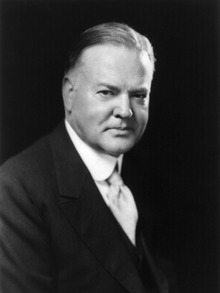
Herbert Hoover (President 1929-1933, though characterized as the primary villain for the depression, Sorkin identifies his role as one of omission rather than commission.)

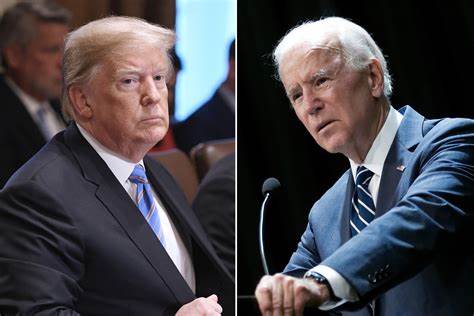
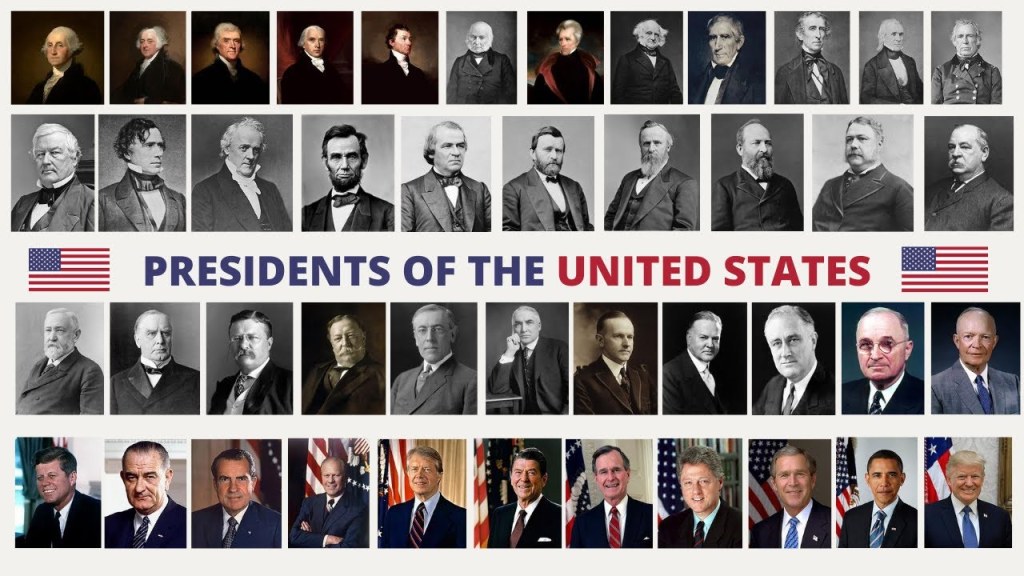
The Presidents shown below carry some responsibility for where the American economy is today but that would be another book.

Clinton, the first Bush, the second Bush, Obama, Biden, Trump.

Sorkin’s “1929” makes one think about 20th and 21st century American Presidents who may have set a table for a second economic crisis. As the Turkish proverb says “…fish stinks first at the head.”

U.S. WEALTH GAP

Capitalism should be designed to ameliorate the wealth gap, not exaggerate it to the point of people going hungry in one of the richest countries in the world. Capitalism is the greatest economic system in the world, but equality of opportunity remains a work in progress that is made worse by poor government policies and the inherent faults of human nature.

Books of Interest
 Website: chetyarbrough.blog

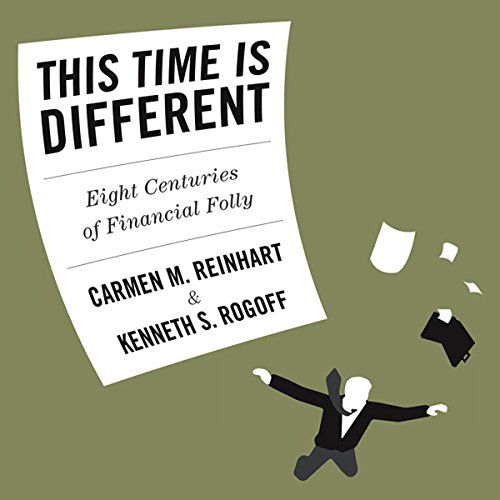
This Time is Different (Eight Centuries of Financial Folly)

Author: Carmen Reinhart, Kenneth Rogoff

Narration by: Sean Pratt

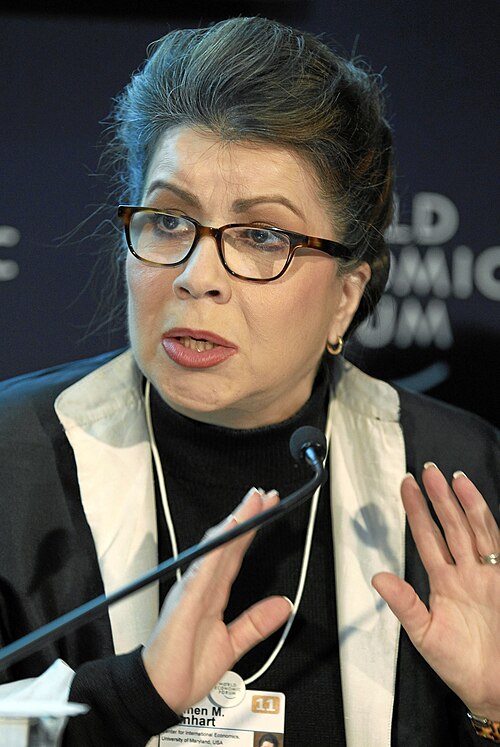
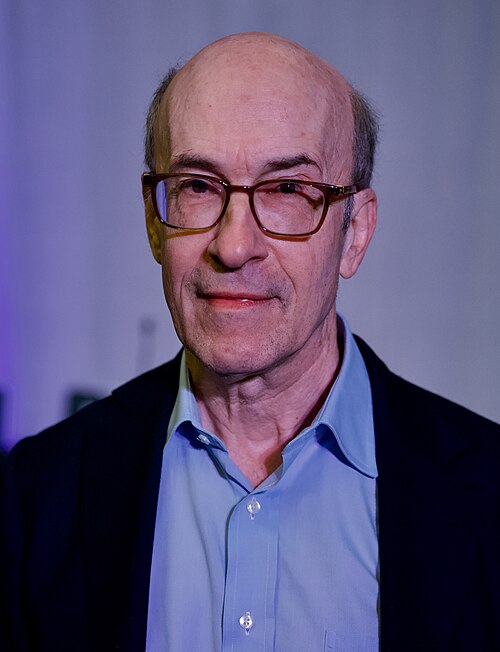
Carmen Reinhart (on the left) is a Cuban American economist and Professor of the International Financial System at Harvard Kennedy School of Business. She has a Ph.D. from Columbia University. Kenneth Rogoff is an American economist and chess Grandmaster who received a B.A. and M.A. from Yale and a PhD in Economics from MIT.

Two well educated academics try to explain why world economies are not unique by arguing the patterns of financial crises are similar, if not identical.

They argue heavy borrowing, inflated optimism, bank collapses, high inflation and currency devaluations are common characteristics of nation-state financial crises. These nation-state government actions and reactions are a result of innate human behaviors. They argue recurrent financial crises feed off of each other to spread economic chaos that creates panic among economic movers and shakers of national economies.

Our American government.

The importance of Reinhart’s and Rogoff’s observation is particularly interesting in light of the economic disruptions of the current American government. History shows America is not exempt from economic crises. In 2008’s economic crises America carries a large responsibility for itself and other nations near collapse. The 2008 economic crisis shows how domestic debt can threaten the world, let alone one country.
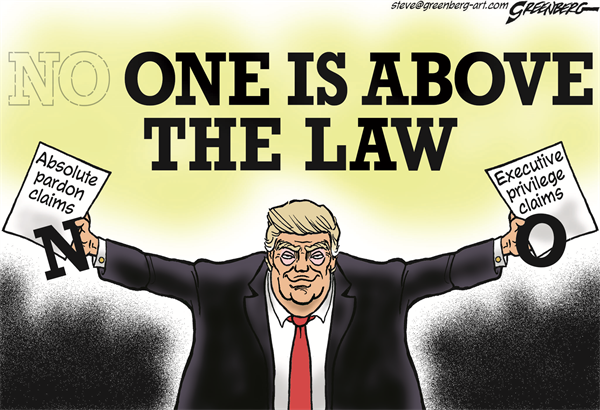
Maybe American government is not above the law, but a President shows he is capable of bending it.

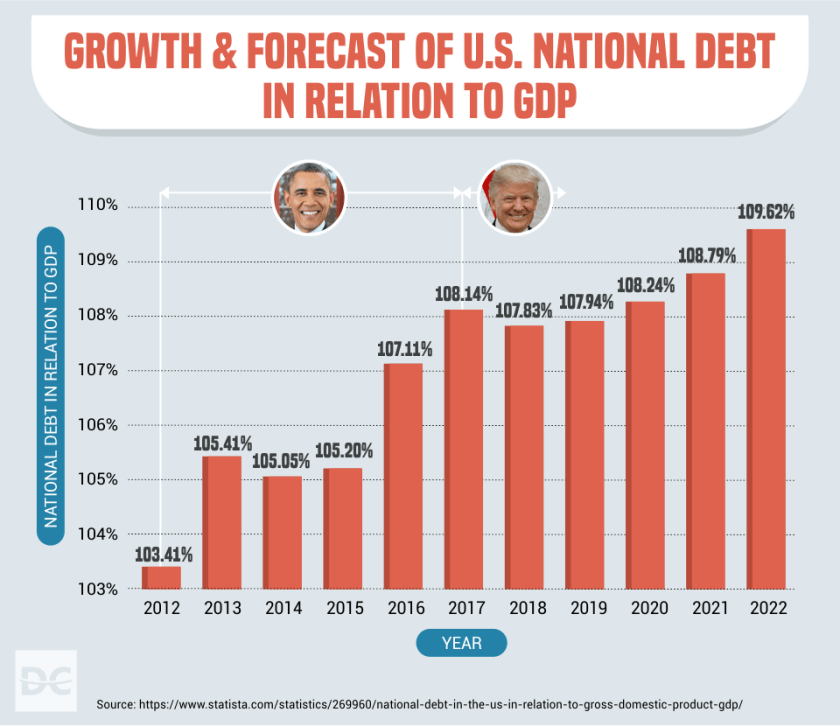
In light of Donald Trump’s directed tariff war and his “…Big Beautiful Bill Act” that eliminates federal income taxes on Social Security, tips, and overtime pay, America’s national debt is likely to balloon. He is gambling American citizens’ future on belief that tax reductions will be offset by economic gains from improved industrial development. This is at a time when industrial development is being impacted by arbitrary firing of government employees, AI innovations that reduce employment, and industry employees retiring or transitioning to a service economy that pays less livable wages.

Trump’s tax policy will continue its top tax rate at 37% despite the government’s earlier intent to have it revert to 39.6%.

The effect of these tax policy changes is expected to reduce tax revenues by 4 to 5 trillion dollars at a time when America’s debt has never been higher. It is estimated at $38 Trillion dollars today. America’s interest rate on that debt is 3.393%, more than double the rate of five years ago. The increasing rate is related to the believed risk of U.S. default which will most likely rise with Trump’s tax breaks. U.S. debt has never been higher. Interest at its present rate will consume 14% of the federal government’s outlay in 2028. That 14% could help pay for the Affordable Care Act that is opposed by the Republican majority. The Trump tax policy implies continued heavy borrowing, an inflated optimism that threatens bank collapses, high inflation, and currency devaluations. Though the authors are not writing that America is on the verge of economic collapse, their observations infer a crisis is nearing, if not inevitable.

Capitalism should be designed to ameliorate the wealth gap, not exaggerate it to the point of people going hungry in one of the richest countries in the world. Capitalism is the greatest economic system in the world, but equality of opportunity remains a work in progress that is made worse by poor government policies and the inherent faults of human nature.

WEALTH

What is wrong about Housel’s investment recommendations is that his life experience sets a table that is not the same table as those who have much less to eat.

Books of Interest
 Website: chetyarbrough.blog

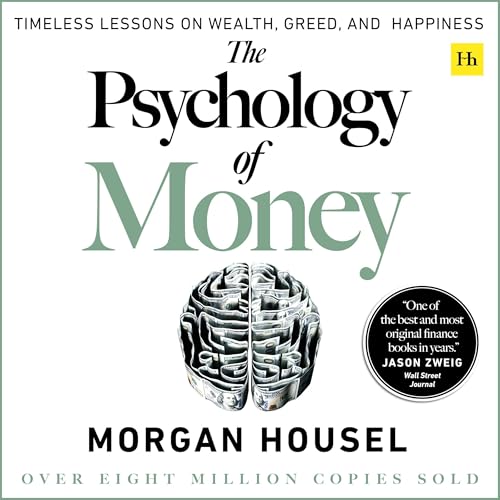
The Psychology of Money (Timeless Lessons on Wealth, Greed, and Happiness)

Author: Morgan Housel

Narrated By: Chris Hill

Morgan Housel (Author, two-time winner of the Best in Business Award from the Society of American Business Editors and Writers.)

“The Psychology of Money” is a plain-spoken examination of the value of wealth, how it is attained, retained or lost, and why its’ real value is independence. A superior perception of reality would certainly be ideal, but Housel implies no such thing exists, and that the presumption is too theoretical to be useful. Every human being becomes a product of their life experience. Unquestionably, all human beings have genetic inheritance, but Housel suggests personal life experience molds that genetic inheritance. All true, but it helps if your parents are upper middleclass and have a mindset for saving rather than spending their income.

Housel argues high intelligence is no guarantee of success in achieving wealth.

To achieve wealth, Housel argues one needs to be a consistent saver, a long-term thinker, an index fund investor in the stock market, and one who resists impulsive decisions to sell investments or use savings during financial instability. These guidelines are based on a wealth-seeker’s “margin of error” calculation of financial need during market weakness. One’s objective is to maintain one’s independence and freedom to live as they wish without risking that freedom by buying luxuries from short-term gains to only appear wealthier than others.

Cutting through the lessons that are listed by Housel’s suggestions is the ancient Greek recognition of the importance of “knowing thyself”.

Are you a crazy risk taker, do you think about the value of wealth, are you more interested in what others think of you than who you are to yourself, are you goal oriented or a “go along to get along” kind of person? These are clues to who you are and whether you should change to assure a life of freedom to live as you wish.

Janitor Ronald Read Leaves Behind $8,000,000 Fortune at his death

Housel gives the example of the janitor millionaire from Vermont who had no formal financial education. Ronald Read worked as a janitor and gas station attendant during his working life. He lived frugally while investing in blue-chip stocks that he held until his death. He amasses a fortune because of small savings and investments while never having high income but investing unneeded cash based on the way he chose to live. By being patient and disciplined over the course of his life, Read died in 2014 at the age of 92, donating $4.8 million to Brattleboro Memorial Hospital, $1.2 million to Brooks Memorial Library, and $2 million to his stepchildren, caregivers, and friends. Like Ben Franklin, Read lived a long life, accumulated great wealth while living the life he wanted. Just like Franklin, Read lived his life as he wanted and contributed his savings to eleemosynary institutions and people who were important to him during his lifetime.

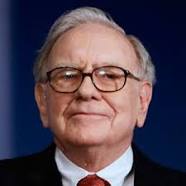
Warren Buffett (The Oracle of Omaha.)

Warren Buffett is another example offered by Housel to explain that time and compounded returns on investment are key to one’s independence and success for living as one chooses. Buffet’s genius is not in just choosing the right stocks, but in staying with investments over the long term. Housel notes 96% of Buffett’s immense wealth came after his 65th birthday.

The discipline outlined by Housel is difficult for a young person to accept because of the tendency of human nature to impress others with their success.

When young, image is important for reasons ranging from attracting desirable partners to impressing others with one’s success by driving expensive cars, wearing elegant clothes, and living in luxurious homes. Many people believe image is as important as substance and fail to realize its folly when they are too old to do much about it. Freedom to live as we choose is a mixed blessing. Being disciplined about money and investment when one is young is an important lesson but hard to follow, particularly in a free society.

Piketty argues that the income gap widens after World War II.  He estimates 60% of 2010’s wealth is held by less than 1% of the population.

Housel comes from a family of savers who appear to have followed the path he recommends in his book. Though what he recommends makes sense, his starting point seems better than most middleclass or poor families in America. He chooses a very conservative investment strategy because of his life experience. He only invests in index funds and lives in a house without a mortgage. His story is not a typical American middleclass family story. What works for him is based on his personal life experience. What is wrong about Housel’s investment recommendations is that his life experience sets a table that is not the same table as those who have much less to eat. This is not to say Housel’s advice is wrong in recommending living within one’s means, investing for the long term, and letting wealth accumulate over time. It is good advice but where one starts in life makes a difference because your life experiences mold a large part of who you become and how you choose to save or spend your money.

INDUSTRY GREED

Sir John Anderson Kay calls for more training in ethical behavior and fiduciary responsibility in the financial industry. Kay believes “too big to fail” financial institutions should be broken up to reduce risk and encourage competition.

Books of Interest
 Website: chetyarbrough.

Other People’s Money  (The Real Business of Finance)

By: John Kay

Narrated By: Walter Dixon

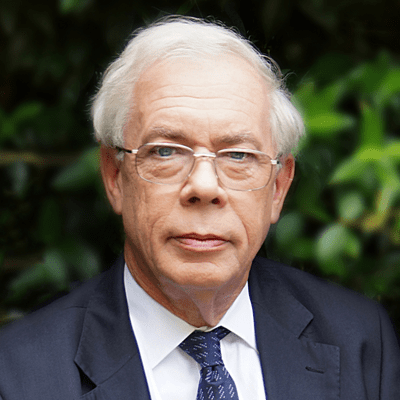
Sir John Anerson Kay (Author, CBE, FRSE, FBA, FAcSS, British economist, dean of Oxford’s Said Business School.)

John Kay explains how the world’s finance system was designed to support national economies and international trade. However, he argues the world’s financial system, though designed to improve the lives of everyone, has evolved into a system that primarily benefits those within the financial industry, not everyone.

Kay offers the example of Ponzi schemes like that created by Bernie Madoff, and mortgage derivatives created by financial quants. Unlike Madoff’s personal enrichment, the financial industry’s’ mortgage derivatives enriched mortgage lenders, banks and brokers who sold them to other financial institutions like hedge funds, investment banks, mutual funds, foreign and retail investors. Mortgage derivatives were a national Ponzi scheme, greater than Madoff’s, that only enriched the financial industry. In 2008, the financial industry nearly bankrupted the world. The finance managers served no jail time while poorly qualified homeowners were thrown into the street because they could not afford their home mortgages.

What is puzzling is how so many people lost their homes in 2008 despite government regulation of the financial industry, which was ostensibly designed to protect consumers and stabilize the housing market.

“Other People’s Money” is managed by financial institutions that have nothing to lose if other people’s money is lost. A poor finance industry manager might lose his/her job because of poor sales received for selling financial products to other financial companies. However, if their sales are good, huge bonuses are given to top earners. Kay notes three faults in this system. One, it is a closed system that primarily feeds on itself as an industry. Two, the product of sale can as easily be worthless as valuable. And three, the money that is being used is primarily the public’s money, not the financial industries’ money. Mortgage derivatives became weapons of mass financial destruction. The public suffered more than the financial industry for the obvious reason that it was the public’s money.

In theory client funds are kept separate from a firm’s own assets. Though that may be true, the equity of lenders is small in relation to the loans made to others because the loan actually comes from “Other People’s Money”, i.e., those who deposit their paychecks in a financial institution. There are government entities like the SEC in the US that enforce separation of a lender’s equity from other people’s money but so what? Other people’s money is the bulk of what is lent out to others.

An example of the perfidy of the financial industry is the creation of mortgage derivatives that resulted in big bonuses to financial industry employees while many American citizens lost their homes.

Government regulations require record-keeping, transparency and risk management. So why did so many people lose their homes in 2008 while lenders were bailed out? If the Government regulated how other people’s money was being invested, how did the 2008 mortgage crises occur? It occurred because of the way the financial industry is regulated and the greed of financial institutions in selling a product that had less value than realized until it was too late. The fault within the industry grew bigger based on the packaging and resale of other people’s money in a product that became worthless.

The point is that there is little equity from money lenders that use “Other People’s Money” to invest in the economy. Financial institutions are required to have as little as 4.5 percent to 6 percent equity in loans for what they lend to others. The remainder is “Other People’s Money”. Most of the risk of institutionally loaned money is born by the public. Of course, there are insurance guarantees from the government, but they are limited.

Kay notes financial industries are motivated to expand their businesses by capitalizing on short-term gains for profit rather than long-term stability and growth.

Kay goes on to explain that financial institutions are the biggest contributors to candidates for public office. Just as the Supreme Court’s decision to give corporations personhood, the influence of corporate America distorts the influence of American citizens. Naturally, financial institutions push for favorable regulations designed to benefit owners and managers of the finance industry. He explains how financial risk is designed to fall back on taxpayers and less informed investors. Because financing institution managers are using other people’s money, they are more concerned about lender profit and their bonuses than loan default. Kay suggests there is a lack of transparency that hides the exploitive nature of lending that has minimal personal risk to lending institutions, its managers, and loan officers.

Kay argues financial products and services need to be simplified and made more transparent so consumers can understand how lending institutions and insiders are benefiting from their transactions.

Kay explains the primary functions of the financial industry should be focused on making payments simple with clearer explanations of risks so that capital is efficiently and wisely allocated. Government oversight should be exercised to promote transparency, accountability and long-term stability of the economy. Training in ethical behavior and financial responsibility is needed for agents of the financial industry so that incentives and rewards balance with the needs of the economy.

Kay suggests regulatory reform is necessary with greater transparency, and accountability for long term financial stability. He calls for more training in ethical behavior and fiduciary responsibility in the financial industry. Kay believes “too big to fail” financial institutions should be broken up to reduce risk and encourage competition.

FINANCIAL LITERACY

What Professor Fullenkamp makes clear is information is key to understanding financial markets, but human judgement is the difference between investor’ success or failure.

Books of Interest
 Website: chetyarbrough.blog

Financial Literacy (Finding Your Way in the Financial Markets)

By: The Great Courses

Lectures By: Professor Connel Fullenkamp

Professor Connel Fullenkamp (Lecturer at Duke University, economist and director of undergraduate studies in economics.)

“Financial Literacy” may put some listeners to sleep but there is a lot to be learned from Connel Fullenkamp’s lectures. He gives a lengthy description of financial markets extending from Stocks to Bonds, Forex, Commodity, and Derivative Markets. He offers information about how money is used and made in financial markets. Fullenkamp addresses banks, stocks, selling and buying securities, expected returns on investments, how they are priced, controlled, and how information about them is important for personal financial decisions.

It is no surprise to find that banks play a critical role in financial markets.

They provide personal banking services by accepting deposits and providing loans to individuals and businesses. They smooth the flow of money in the economy. Banks can help companies raise capital by offering advice and services for the issuance of stocks and bonds to finance businesses. They offer advisory services for mergers, acquisitions, and other financial strategies. Banks can act as market makers by buying and selling securities for their clients. They can provide asset management services, research and analysis, and ensure legal regulation and compliance with government and international laws. Banks are the backbone of financial markets when they provide efficient allocation of resources and ensure the smooth functioning of the financial system. All of this is true in concept.

However, banks, savings and loan companies, and mortgage lenders are run by human beings who are subject to all the risks of human nature that can lead to catastrophic financial collapse as it almost did in the 2007-2010 mortgage derivative crises.

To be fair to the professor’s presentation, the 2007-2010 crises is not only because of the bad mortgages generated by financial institutions like Countrywide, New Century and Ameriquest. Goldman Sachs, Lehman Brothers, Bear Stearns, and Merrill Lynch investment banks are equally guilty. They packaged bad mortgages with high-risk mortgages to be sold to the public as safe collateralized securities that were far from safe and ultimately unsound. The result was a near worldwide financial collapse.

The government compounded the failure of 2007-2010 by guaranteeing poorly justified mortgages that were included in the packaged securities.

Rating agencies like Moody’s Standard & Poor’s, and Fitch ratings misled investors about the risks of the packaged mortgage securities. Government oversight organizations like the Federal Reserve and Department of the Treasury did not adequately do their job. Ironically, banks like Wells Fargo resisted the mortgage derivatives while banks like JPMorgan Chase bought and sold them but was too big to fail. Ironically, both banks became vehicles for recovery by taking over some of the lenders that had to0 many mortgage derivatives in their portfolios. (As noted in earlier book reviews, many families lost their homes because of foreclosures caused by lenders who originated the mortgages in these securities.) Fullenkamp explains financial markets are based on information. However, as noted by information computer geeks, “garbage in, garbage out” sunk lenders and victimized many investors, lenders, and homebuyers.

In explaining the stock market, Fullenkamp notes an investor becomes a partial owner of a company which gives them a stake in a company’s future profits, either from dividends or market performance.

Stocks have a dual identity. The difficulty for the investor is in understanding the information provided by the company to predict company performance and reap the benefits of stock appreciation. Fullenkamp gives some insight on assessment of that information, but most listeners seem most likely to pay less attention to professors of finance than to their own judgement.

Fullenkamp goes on to discuss Forex (Foreign Exchange). This is a global marketplace for trading national currencies.

Unlike stock and bond markets, a Forex market operates 24 hours a day because currency is an international trading market with centers in different cities like New York, Tokyo, and London. In the case of Europe and the U.S., the trade would be in Euros and US Dollars or in Japan and the U.S., the trade would be in Dollars and Yen. Exchange Rates fluctuated based on nation-state events. Strategic buying and selling based on those events can create profits and losses for exchange traders. Unlike a singular centralized stock market, Forex is decentralized and conducted electronically over the counter (OTC) by a network of banks, brokers, and dealers.

Fullenkamp also defines commodities markets. There are hard and soft commodities. Hard are like gold, oil, and other naturally produced materials. Soft are agricultural products like wheat, coffee, or cotton.

Most commonly, trading in these products is done with futures contracts. Futures are agreements to buy or sell a commodity at a predetermined price on a future date. The investor is gambling on the commodity to be either worth more or less than what the product is expected to cost at the actual time of purchase or sale. There are several exchanges around the world. The participants are speculators that either take the commodities at the agreed upon price or simply gain or lose money based on the actual price of the commodity when it is deliverable.

There is a great deal to absorb from Fullenkamp’s lectures. The last lecture is on “The Future of Finance”.

He suggests the technology of mobile phones has expanded the lending industry to individuals from institutions. It has already begun in less successful economic societies. Mobile money platforms and digital financial services are being used in Africa. Users of these platforms store, send and receive money by mobile phone owners because traditional banking services are not available. Fintech companies are formed to assess creditworthiness of individuals and small businesses. The vast amount of personal information becoming available with the internet becomes a source of customer approval or rejection of small companies and individuals seeking loans.

What Professor Fullenkamp makes clear is information is key to understanding financial markets, but human judgement is the difference between investor’ success or failure.

FOUR MORE YEARS

Andrew Leigh’s brief history of economics reminds listeners of a threat America faces in the next four years.

Books of Interest
 Website: chetyarbrough.blog

How Economics Explains the World (A Short History of Humanity)

By: Andrew Leigh

Narrated By: Stephen Graybill

Andrew Leigh (Author, Australian politician, lawyer, former professor of economics at the Australian National University, currently serving as Assistant Minister for Competition, Charities and Treasury and Assistant Minister for Employment in Australia.)

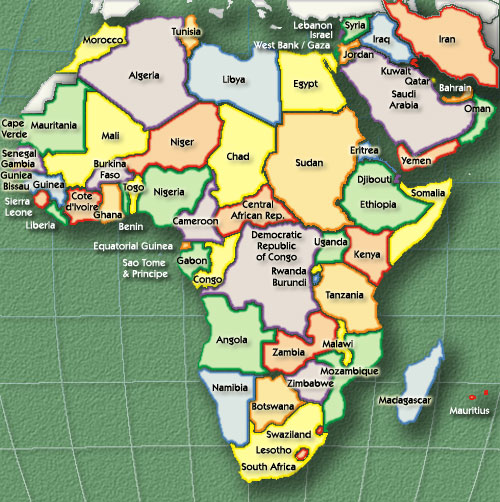
Andrew Leigh offers a bird’s eye view of the history of economics. He provocatively explains why the European continent, rather than Africa (the birthplace of the human race) came to dominate the world. He suggests it is because of economics and the dynamics of the agricultural revolution.

Because Africa offered a more conducive environment for natural food production, Leigh infers natives could live off the fruits and nuts of nature. He infers farming and agricultural innovations (like the plow) were of little interest to Africans.

One may be skeptical of that reasoning and suggest the primary cause is sparse arable land for early African inhabitants. Without arable land, there was little advantage from the agricultural revolution.

Nevertheless, Leigh’s history is a wonderful reminder of great economic theories that improved the lives of an estimated 8.2 billion people on this planet. He touches on the lives of Adam Smith, David Ricardo, John Maynard Keynes, and Milton Friedman. Each made great contributions to the history of western economics.

Adam Smith is considered the father of modern economics. (1723-1790)

Leigh notes Smith was a deep thinker who sometimes neglected the world he lived in by forgetting to properly dress himself or falling into a hole while thinking about economic theories. Some of his key theories were “Division of Labor”, the “Invisible Hand”, “Labour Theory of Value”, “Free Markets and Competition”, and “Capital Accumulation”; all of which remain relevant today. One that seems so important today is “Free Markets and Competition” and the disastrous idea of tariffs that are being promoted by the pending Trump administration.

Smith notes natural resources are not equally distributed in the world. Some countries have more raw material than others, more available labor at a lower cost, and can produce product at lower prices. With free trade, all citizens of the world are benefited by lower costs of goods. With tariffs, product costs are artificially increased when they could reflect actual costs of production. Of course, the producer can increase costs, but the market will find an alternative if the costs become too high.

David Ricardo (1772-1823)

Ricardo’s theory of competitive advantage suggests some countries can produce product at less cost than others. This reinforces the critical importance of free trade. Free trade flies in the face of both the Biden’s passing administration and Trump’s future administration; both of which believe tariffs protect jobs in America. They don’t; because tariffs artificially increase product costs while protecting labor inefficiency that increases consumer prices. Tariffs are a lose-lose proposition. It may affect jobs in the short term but there are many jobs that can be created by government and private companies in human and public service industries. Those investments would offset inefficient product production and ensure future jobs.

John Maynard Keynes (1883-1946)

Leigh notes that Keynes was bisexual and a pivotal figure in modern economics. He believed in the theory of Aggregate Demand meaning that “…spending in an economy is the primary driver of economic growth.” He advocated government intervention when demand was low, and that government should increase spending and cut taxes to increase demand when a recession or depression threatens the health and welfare of the public. Interestingly, Trump believes in reducing taxes but objects to government spending that improves employment. The effect of reducing taxes only increases income inequality and does little for employment because the rich are wary of investing in a weakening economy.

Milton Friedman (1912-2006)

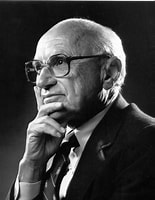
Both Keynes and Friedman believe in government intervention, but Friedman exclusively believes in using only monetarism as a tool. Keynes agrees but had the added dimension of government spending that creates jobs. In contrast, Friedman argues there is a natural rate of unemployment and when government intervenes it creates inflation. He strongly agreed with free markets which suggests he would be against tariffs but at the expense of higher unemployment. The cloying part of that argument is it increases income inequality by making the rich richer, the unemployed and middle-class worker poorer.

Leigh’s book is a brief review of western economics. It glosses over much of the science, but it is highly entertaining and worth listening to more than once. Additionally, Andrew Leigh’s brief history of economics reminds listeners of a threat America faces in the next four years.

VENGEFUL IDEALIST

The election results are in, and Trump is our President once again. This is a sad commentary on the will of the American people and the threat America is to world economic comity.

Books of Interest
 Website: chetyarbrough.blog

People, Power, and Profits (Progressive Capitalism for an Age of Discontent)

By: Joseph E. Stiglitz

Narrated By: Sean Runnette

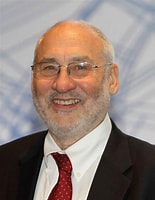
Joseph Stiglitz (Author, American economist, public policy analyst, received a Nobel Memorial Prize in Economic Sciences in 2001.)

With reservation, Joseph Stiglitz’s book “People, Power, and Profits” is reviewed here. The reservation is because of the risk of succumbing to echo-chamber’ belief. That belief is that corporations and wealthy individuals should not be able to pour as much money as they want into the American election process, that bankers unjustly escaped punishment for the 2008 financial crises, and that Donald Trump should never again be elected President of the United States.

Stiglitz is considered a “New Keynesian” economist which puts him at odds with famous economists like Milton Friedman and Friedrich Hayek. Friedman believes the most effective fiscal policies comes from monetary policy control by the government. Hayek believed in a market economy with as little government intervention as possible. Stiglitz flatly disagrees with Hayek and only agrees with Friedman in that government has a responsibility to intervene in government economic policy. Stiglitz identity as a “New” Keynesian is because, unlike Keynes’ economic theory, there is no waiting for an economic crisis for government to intervene but to intervene now to make future economic crises less likely.

John Maynard Keynes (English, Eton and King’s College graduate, mathematician, economist, 1883-1946, died at age 62.)

Why I am concerned about listening to Stiglitz’s book about the economy is that I am listening to some things I already believe. I believe the gap between rich, and poor is the greatest threat to, not only American democracy, but all forms of government. Stiglitz may be my echo chamber.

Stiglitz believes in democratic government intervention to ameliorate the wide gap between rich and poor.

Stiglitz has an idealist platform to cure what he views as the solution to narrowing the gap between rich and poor in America. Stiglitz makes five policy recommendations to reduce the gap between rich and poor in America.

  1. Increase taxes on income from capital gains and inheritance.
  2. Use tax revenues to improve public education in ways that equalize costs between the rich and poor.
  3. Refine anti-trust laws to prevent monopolies and promote competition.
  4. Intervene in corporate governance to ensure fairer compensation between management and labor.
  5. Regulate banks to prevent exploitation of the public.

These are defensible polices but they have to survive the give and take political process of American democratic government.

However, that process is unfairly biased by allowing corporations and the wealthy to pour disproportionate amounts of money into the American election process. Contribution by corporations and the wealthy should be limited because candidates are beholding to big financial donors with little concern for the poor.

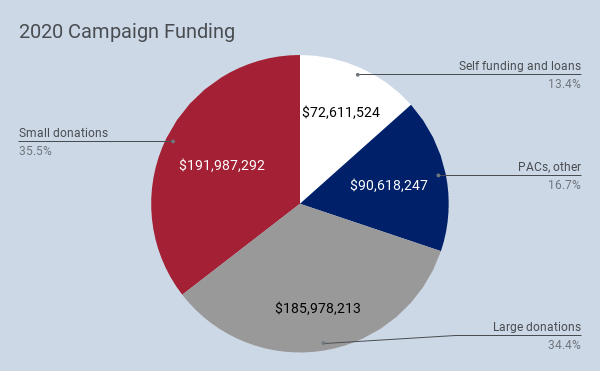
Small donors driving 2020 presidential race

In the 2020 and 2024 election cycle, big donors contributed from 75 to 78 percent of campaign donations.

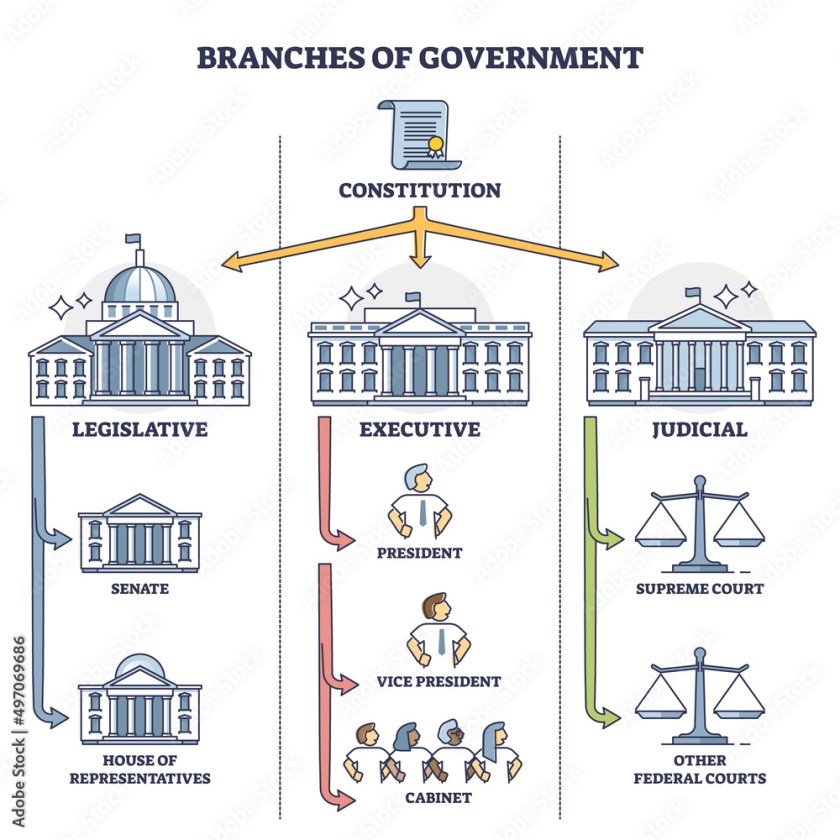
The problem with Stiglitz’s book is not in his recommendations but in his vengeful angel’ rhetoric. America is founded on freedom, not revenge. It is the give and take of differences of opinion and “checks and balances” of the Constitution that have made America great. Many mistakes have been made and are still being made by our government but even a horrible President like Trump cannot change the fundamental direction of our democracy.

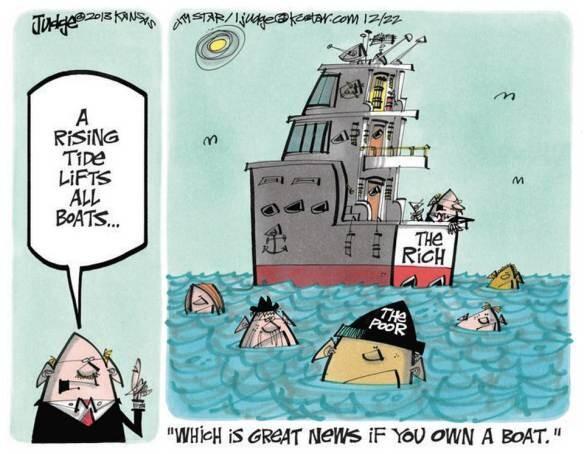
John F. Kennedy’s belief that a rising tide lifts all boats has not provided life vests to the poor in America.

The gap between rich and poor in America must be resolved. Neither Harris nor Stiglitz may be the answer, but Trump is only going to try to resurrect a past that has led our government in the wrong direction. The unconscionable cost of medical services and drugs, extraordinary compensation for executives, regressive taxes, election financing bias, and financial industry greed must be addressed through the American political process.

American democracy’s failures will not be cured, but they must be addressed and ameliorated to remain a beacon for freedom in the world. The election results are in, and Trump is our President once again. This is a sad commentary on the will of the American people and the threat America is to world economic comity.

WHO’S LAUGHING

Appelbaum infers no American President has found the magic formula for balancing the needs of its citizens with the concept of Adam Smith’s free enterprise.

Books of Interest
 Website: chetyarbrough.blog

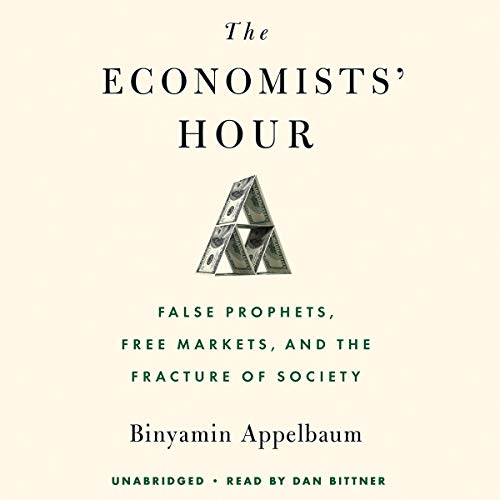
“The Economists’ Hour: False Prophets, Free Markets, and the Fracture of Society

By: Binyamin Appelbaum

Narrated by: Dan Bittner

Binyamin Appelbaum (Author, winner of a George Polk Award and a finalist for the 2008 Pulitzer Prize, lead writer on economics and business for The New York Times Editorial Board)

Binyamin Appelbaum has written an interesting summary of a difficult but immensely important subject. Economic policy and theory are boring, but they touch every aspect of life. Appelbaum shows economic policy magnifies or diminishes the welfare of every American, let alone every economy in the world.

Adam Smith’s foundational theory of economics.

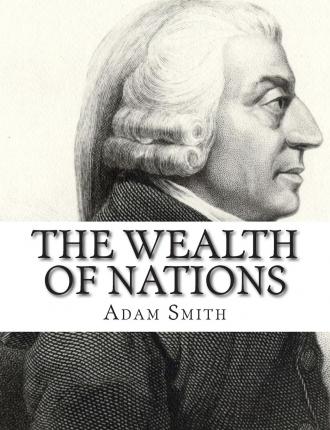
Though only briefly mentioned by Appelbaum, American economic policy begins with Adam Smith (1723-1790), the Scottish philosopher who wrote “The Wealth of Nations”. Smith advocated free trade and argued against parochial maximization of exports and imports that is manipulated by strict governmental regulation meant only to accumulate gold and silver.

Appelbaum illustrates how American policy violated the entrepreneurial freedom that Adam Smith advocated. In contrast to Smith, John Maynard Keynes (1883-1946) advocates government intervention whenever there is an economic downturn. Equally interventionist is Milton Freidman’s (1912-2006) belief that government should increase or decrease the money supply for national economic stability. The point seems to be that every economist thinks they have a magic bullet that will cure the ills of a faltering economy.

To be fair, Friedman did believe in free enterprise in regard to nation-state currencies. He argued for a floating currency rate that ultimately led to President Nixon’s abandonment of the gold standard. However, the nature of human beings led to speculation and manipulation of nation-state’ currencies that exacerbated trade tariffs and defeated the policy’s free-enterprise objective.

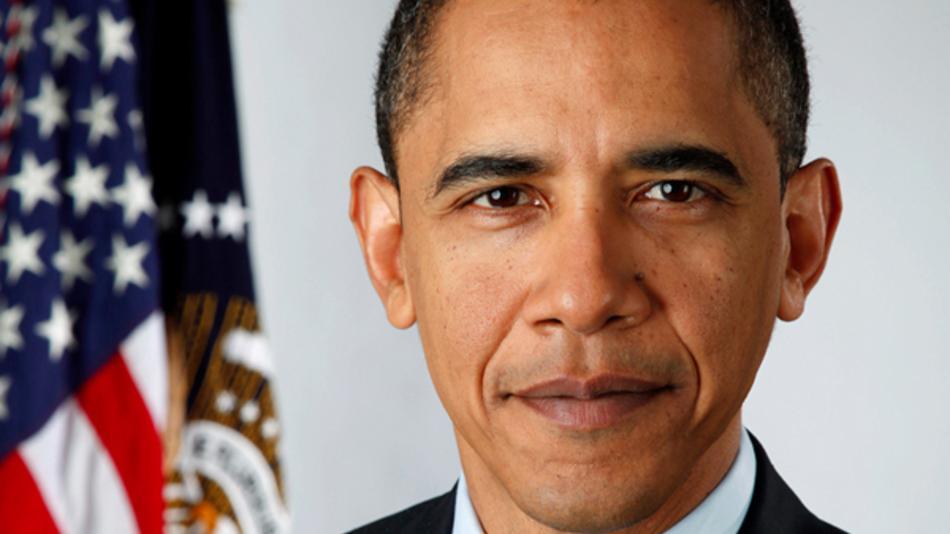
One concludes from “The Economists’ Hour…”, there is no magic solution for an economy in crises. Neither Franklin Roosevelt, George W. Bush, Barack Obama, or any American President cured what ails an American economy that succumbs to economic crises. Adam Smith would argue an economic crisis is caused by a governments’ interference with free enterprise.

Applebaum explains how every 20th and 21st century President of the United States placed their faith in economists’ economic assessments of their day. All Presidents have found intervention by the government has unintended consequences.

President Nixon adopted Freidman’s monetary policy by imposing a freeze on prices and wages that squeezed the life out of the business economy and beggared the wage-earning public with job loss.

A decade of stagflation (high inflation and slow growth) followed Nixon’s administration. Stagflation is attacked by the Reagan administration with mixed results. A myth from economists like Arthur Laffer grew in 1974. Laffer believes taxation is either too high or too low for any benefit to society. Laffer argued zero tax and maximum taxation are equally harmful and produce economic stagnation and/or collapse.

ARTHUR LAFFER (American economist and author, served on President Reagan’s Economic Policy Advisory Board 1981-1989, Here illustrating the “Laffer Curve”.)

Laffer argued every government that reduces tax revenue decreases the stimulative effect of government spending. On the other hand, he suggested every tax cut increases income for taxpayers that will stimulate business and increase employment while encouraging higher production. He laughably created the “Laffer curve” to imply there is an optimum balance of tax reduction that would stimulate economic growth with proportionate increases in government revenue to provide for better government services. That balance has never been found. President Ronald Reagan experimented with Laffer’s idea, but it fails from unintended consequences. The principal consequence is to increase the gap between rich and poor.

BENEFIT OF TAX REDUCTION

Reagan accelerated a movement for government tax reduction that ultimately reduced income taxes from 70% to 28%. The result of government tax reduction during the Reagan years increased the U.S. budget deficit from $78.9 billion to $1.412 trillion. The benefit of that tax reduction went to the wealthy while school lunches were cut, subsidized housing declined by 8%, and poor families lost $64 a month in welfare payments. In 2023, the budget deficit stood at $1.70 trillion, an imbalance that shows why the “Laffer curve” is sardonically laughable.

President Reagan’s administration (1981-1989) was influenced by Laffer’s curve.

The joke is “There is no perfect balance on the curve because of the nature of human beings.”

Roosevelt, George W. Bush, and Obama choose to follow Keynesian policy. Roosevelt bloated government employment. All three increased the government deficit.

Some suggest the idea of
“Cost benefit analysis” (CBA) is recommended to the federal government by two law professors, Michael Livermore and Richard Revesz during the George H. Bush administration but Reagan initiated it with an Executive Order in 1981.

Appelbaum notes that “cost benefit analysis” for government is first used during the administration of Ronald Reagan. However, Bill Clinton reifies its use with an Executive Order in 1993 that required covered agencies to do a CBA on “economically significant” government regulations. Ironically, Clinton was the first President in the post 19th century to balance the budget. Andrew Jackson manages to do it in his term between 1829 and 1837.

An irony of using “cost benefit analysis” is that it required a determination of of a human life’s value. Presidents Nixon, Ford, Carter, and future Presidents use value per statistical life during their administrations. High-income earners were worth $10 million to $15 million, middle-income earners $1 million to $2 million, and low-income earners $100,00 to $200,000. Of course, these values were always litigable. The point is that CBA became a tool for government to regulate the costs of government policies, ranging from military expense to the health, safety, and welfare of American citizens.

The remainder of Appelbaum’s book reflects on the experience of America, Chile, and Taiwan in the 20th century. The implication of his review of economic policy is that those countries that align with the free enterprise beliefs of Adam Smith have made mistakes. However, America’s, Chile’s, and Taiwan’s economic policies seem to have had more economic success when following Smith’s beliefs.

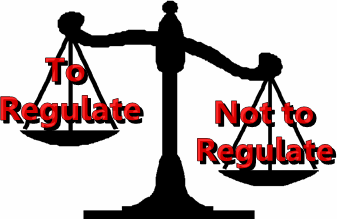
Along with CBA, Appelbaum notes the ongoing controversy is about regulation by government when it tries to balance American health, education, and welfare with Adam Smith’s concept of free enterprise. Appelbaum infers no American President has found the magic formula for balancing the needs of its citizens with the concept of Adam Smith’s free enterprise.