Levi makes we who follow rather than lead ashamed. “Theo of Golden” shows human value is in the kindnesses we offer other people.
Books of Interest Website: chetyarbrough.blog
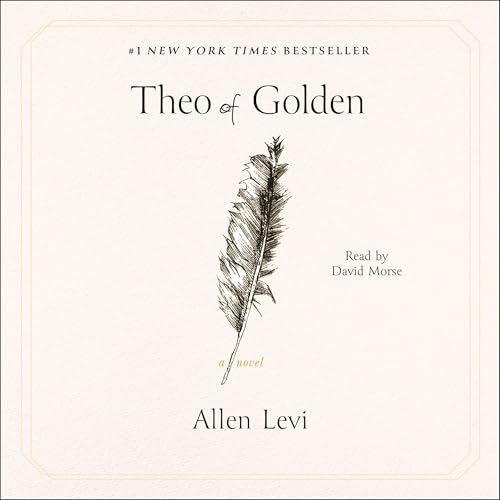
Theo of Golden (A Novel)
Author: Allen Levi
Narration by: David Morse
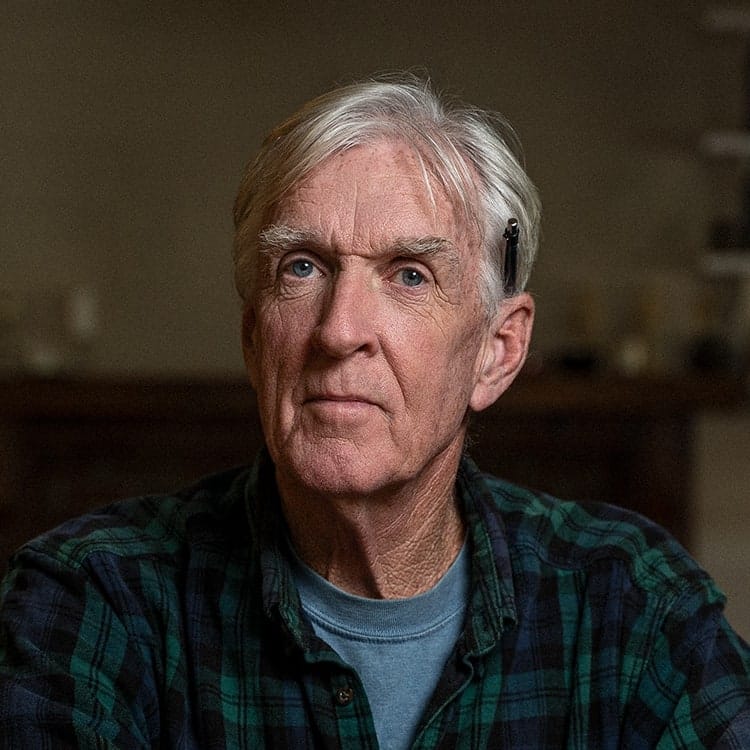
Allen Levi (Author, songwriter, blogger, former lawyer, University of Georgia graduate.)
“Theo of Golden” offers a view of human society. It seems based on a conversationally gifted businessperson who reaches an age of maturity that encourages reader/listeners to contemplate belief in God and heaven. Allen Levi creates Theo, a name undoubtedly chosen because of its Greek language equivalent to God. The chosen name shows where the author and his main character stand in their beliefs.
“Theo of Golden” is about the value of life.
Theo is an independently wealthy octogenarian who has lost his wife and beloved child in an auto accident. After working through the grief of his personal loss, he chooses to use his wealth and remaining life to influence others by simple measures of kindness. Theo believes in the value of the life people live and the importance of small kindnesses they extend to others. Levi’s story illustrates a belief that even small kindnesses are a powerful influence on society. At the same time, he is setting a table for societal belief in God, heaven, and presumably an afterlife.
American immigrants.
In the age of Trumpism immigrants are treated poorly, bombing another country is acceptable, and wealth is considered a measure of human value. Levi’s story condemns the Trump-s, Putin-s, and Xi-s of the world. The power of national leaders multiplies the strength and weakness of societies. The leaders of America, Russia, and China are in the same age group as Mr. Levi but their impact on society is immense in comparison. Levi makes we who follow rather than lead ashamed. “Theo of Golden” shows human value is in the kindnesses we offer other people.
This is a well written and fascinating story. On the one hand, it shows the adventurous nature of human beings. On the other hand, it shows the absurdity of a human goal that can kill you with no value beyond personal achievement.
Books of Interest Website: chetyarbrough.blog
Into Thin Air (A Personal Account of the Mt. Everest Disaster)
Author: Jon Krakauer
Narration by: Philip Franklin
Jon Krakauer (Author, American writer, journalist, and mountaineer. Raised in Corvallis, Or., lives in Boulder Co.)
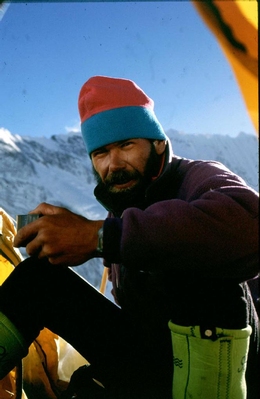
Human beings test themselves in many ways, some of which make little sense. Jon Krakauer is a mountain climber. Why does one choose to climb a mountain? Well, he is a writer and a magazine offers to pay the $65,000 fee required by an expedition leader to climb Mt. Everest in Tibet. At least, Krakauer has a purpose which undoubtedly is to have an adventure to write about that might offer monetary reward. It appears others have other motives but at least Krakauer took the trip for a reason that makes some logical sense. Considering the reward, one comes away from his book with the feeling that no amount of money is worth the trial he experienced and the lives lost in a climb to the pinnacle of Mt. Everest.
Mt. Everest is 29,032 feet high, located in the Himalayas of Nepal and Tibet.
Krakauer writes that he idolizes mountain climbers. He believes the opportunity of climbing the tallest mountain in the world seems worth the risk. Mount Everest is 29,032 feet high, located in the Himalayas of Nepal and Tibet. Krakauer introduces reader/listeners to Rob Hall, the expedition leader and guide who heads the adventure. Hall, a New Zealander, had created a company that offers mountain climbing expeditions. Andy Harris, who also comes from New Zealand, is Hall’s employee and an additional guide.
Rob Hall (1961-1996, New Zealand mountaineer, led the Mt. Everest climb in 1996 where he and two clients died.)
Scott Fischer, an entrepreneur and guide with his own company has another Everest climbing group. Fischer dies on a descent during the same time as Krakauer’s group climbs Everest. This is a brutal reminder of the great risk being taken by Krakauer.
Yasuko Namba (1949-1996, the second Japanese woman to climb the Seven Summits, the tallest mountains in the world.)
Yasuko Namba, a Japanese climber joins the Krakauer group. Namba is motivated to join the group because of her interest in completing the climbs of the seven tallest mountains in the world. She is 47 years old. Though not as strong as some of the younger climbers, Mt. Everest is the last of the Seven Summits she is determined to conquer. Hall, Harris, Namba, and Fischer die from the climb, either from the exertion, a storm, or their descent from Everest.
Campsites on Mt. Everest.
It is interesting to find there are many Mt. Everest expeditions that occur at the same with different companies. They camp in the same areas as they attempt their ascent. Krakauer writes of Scott Fischer’s Mountain Madness group, a Taiwanese National Expedition, an IMAX Filming Expedition, a South African Expedition, and their Sherpa support teams who aid all of the climbing groups. Krakauer notes how coveted the Sherpa are by companies that are dependent on their skills.
Doug Hansen, an American postal worker who joins the Hall expedition
Doug Hansen, an American postal worker joins the Hall expedition. Hansen dies in a storm before reaching the summit and had to be carried by the group to the summit at the insistence of Hall. Hansen had attempted to climb the peak the year before with a Hall group. Surprisingly, the group leader Hall dies on this 1996 climb from altitude sickness which confuses his sense of direction. He loses his way as they descend from the South Summit. In the descent from Everest, Harris and Fischer die during another mountain storm. The only woman on the trip, Yasuko Namba dies on the descent because of exhaustion and exposure that had killed Hall. Beck Weathers, an American climber survives after appearing to die twice. Weather’s experience leaves him with severe frostbite and requires major surgery after the climb.
Sandra Pittman
The oddest adventurer that Krakauer writes about is Sandy Pittman who is in the Mountain Madness group. Pittman is a New York socialite who is known in the fashion world. In Krakauer’s telling, Ms. Pittman seems representative of the commercialization of mountain climbing. Pittman manages to make the mountain top and survives the storm that kills some of Krakauer’s group. However, Pittman became exhausted during the descent. She requires rescue. She survives but became a symbol of privilege and wealth to some who are offended by those who can afford the extravagance she represents in climbing famous mountains. Krakhauer does not criticize her despite her wealth and privilege because he sees her as no better or worse than every person looking for adventure.
This is a well written and fascinating story. On the one hand, it shows the adventurous nature of human beings. On the other hand, it shows the absurdity of a human goal that can kill you with no value beyond personal achievement, and of course, survival.
Our decisions, when faced with good and bad events, make us who we are in life.
Books of Interest Website: chetyarbrough.blog
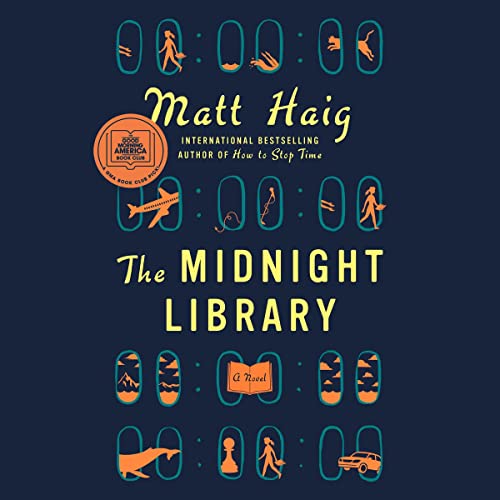
The Midnight Library (A Novel)
Author: Matt Haig
Narration by: Carey Muligan
Matt Haig (Author, English journalist.)
Looking back at one’s life one wonders what our lives may have been if we chose differently. “The Midnight Library” cleverly explores that idea with a character named Nora. Nora decides to commit suicide by overdosing. With the effect of whatever drugs Nora has chosen, she enters a state between life and death. The reader/listener and Nora enter a surreal library filled with books about Nora’s many lives. It is called “The Midnight Library”. It is a library of books about an infinity of lives that Nora has lived and different decisions she has made when faced with good and bad events in her life.
The decisions we make as we grow older change our lives in an infinite number of ways. Every book in “The Midnight Library” is based on different lives Nora has lived. Her age and experience in each book differ based on decisions she has made during each life she has lived. Her decisions and their consequences are recorded in the books of her “…Midnight Library”.
Nora enters an in-between world managed by a librarian named Mrs. Elm. Elm is a guide or gatekeeper of Nora’s many lives based on decisions she has made in each singular life. Mrs. Elm is a re-creation of Nora’s school librarian who had given her attention, advice, and care as a schoolgirl. Mrs. Elm becomes Nora’s guide in “The Midnight Library”. The library is filled with books of an infinite number of Nora’s lives based on different personal decisions she has made in her nuclear family, i.e., in each library book, Nora is a daughter with the same mother, father, and brother.
History of one person’s life with many different outcomes.
Mrs. Elm appears to be the embodiment of Nora’s will to live and would undoubtedly disappear if Nora dies from her attempt at suicide. It seems Elm is trying to show Nora life’ opportunities are infinite based on the smallest and biggest decisions she makes in her life. Of course, this is meant to suggest a truth about all lives. However, one wonders how human beings can know their future based on decisions they have made in their life. Knowing that one will either regret, despair, or benefit from big and small decisions seems dependent on too many variables for our intelligence or nature to know or predict.
The author argues every decision we make has a consequence in our lives.
A midnight library illustrates the value of knowing the results of our decisions in life, but it tells little about the cumulative impact of regrets that accompany those decisions. Making decisions in life may end with regret because of unexpected consequences to ourselves or those close to us. The result of decisions we make in our lives unfold slowly. In that unfolding, we change our minds, we adapt to new circumstances that were unforeseen. There are too many things that happen in the course of one’s life to assure any end result we seek. Perfect understanding of the consequences of decisions we make is impossible to know. What Haig infers is that life and living are imperfect, often filled with pain, and unanticipated consequences. It is how we deal with good and bad events in our life that make us who we become.
Nora risks her life to enter “The Midnight Library”. The consequence of overdose can be incapacity, brain damage, or death.
One continues to listen to Haig’s story and wonders if Nora survives her overdose. One may think this is a novel about a “many worlds” hypothesis created by Hugh Everett III in 1957, but it is not a story about alternative universes. It is a story about human beings on earth with a point of view about human decision making and its consequence in our lives. One comes away from “The Midnight Library” knowing no life is perfect. Just being alive and learning how to cope with what is good and bad in life is all that counts.
All humans make decisions based on incomplete information. Our ability to cope, our curiosity, and participation in life keeps us connected with society. Haig implies being connected to our humanity is the best we can do as human beings. Our decisions, when faced with good and bad events, make us who we are in life.
Van Pelt shows human connection comes from unexpected places. Her story shows what it means to belong to a family and how truth, as painful as it may be, is something one must accept and move on. One can imagine the book being read to or by all generations.
Books of Interest Website: chetyarbrough.blog
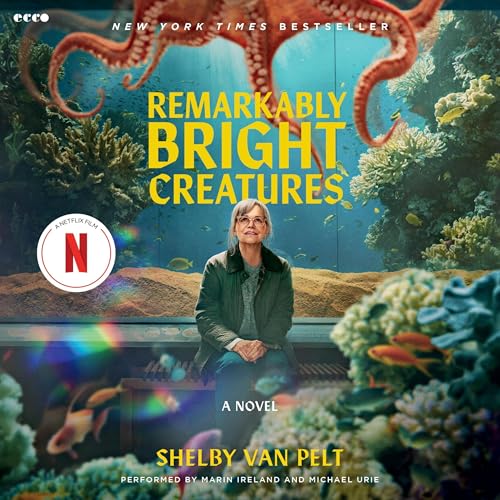
Remarkably Bright Creatures (A Novel)
Author: Shelby Van Pelt
Narration by: Marin Ireland, Michael Urie
Shelby Van Pelt (Author, debut novel for American author who was raised in the Pacific NW but now lives in the Chicago area with her husband and children.)
Van Pelt’s first book is an entertaining novel about every generation of conscious living things in the world. The main characters are Tova Sullivan, Cameron Cassmore (both of which are humans), and Marcellus who is an octopus living in an aquarium. One can imagine reader/listeners from children to adults being entertained by the author’s view of sentient life.
Van Pelt’s story is about every generation of life.
Tova is a 70-year-old widow who works as a cleaner for an aquarium in which Marcellus, the octopus, lives. Tova has lost her husband and son but chooses to work at an aquarium until she has a tripping accident that makes her realize it is time to retire. Tova learns of Marcellus’s consciousness when the octopus reaches out to grasp her arm. He leaves suction marks on her arm but does no harm.
Cameron Cassmore is 30, mostly unemployed and a directionless adult looking for a father he has never known. He is abandoned by his mother at age 9 to an aunt that looks after him and wonders about a father he knows nothing about. He finds his mother’s high school yearbook to find a picture that suggests his mother dated a boy that might be his father. The boy who might be his father had become a well-known and successful developer in the state of Washington, so he decides to track him down.
A story about life and living.
A reader/listener gets drawn into the story because of Marcellus, the octopus, that happens to be in the Washington town Cameron travels to in search of his father. Cameron is characterized as a person with high intelligence and a photographic memory. He needs a job when he arrives in Washington because his effort to find his father is taking more time than expected. He contacts his alleged father’s corporation, but contact is delayed by the corporation’s slow response to his request for a meeting. The reason for the delay is unclear but eventually they meet.
Octopus aquarium.
The job Cameron finds in the meantime is at the Washington aquarium while Tovah is recovering from an injury to her ankle that keeps her from her job as a custodian. Cameron is introduced to Marcellus who preternaturally knows about a secret about Tovah’s relationship to Cameron. Tovah is Cameron’s grandmother.
The story retains its interest because of the characterization of Marcellus and the fate of Cameron and his grandmother, but its complexity is a bit tiresome. “Remarkably Bright Creatures” is a story that suggests all life in the animal kingdom has consciousness that is underestimated by human beings.
FAMILY.
Van Pelt shows human connection comes from unexpected places. Her story shows what it means to belong to a family and how truth, as painful as it may be, is something one must accept and move on. One can imagine the book being read to or by all generations.
Serpell has written an excellent review of Morrison’s work as a novelist. It illustrates the great power and importance of literature to reveal an understanding of ourselves and humanity.
Books of Interest Website: chetyarbrough.blog
On Morrison
Author: Namwali Serpell
Narration by: January LaVoy
Namwali Serpell (Author, Zamian/American, professor of English at Harvard.)
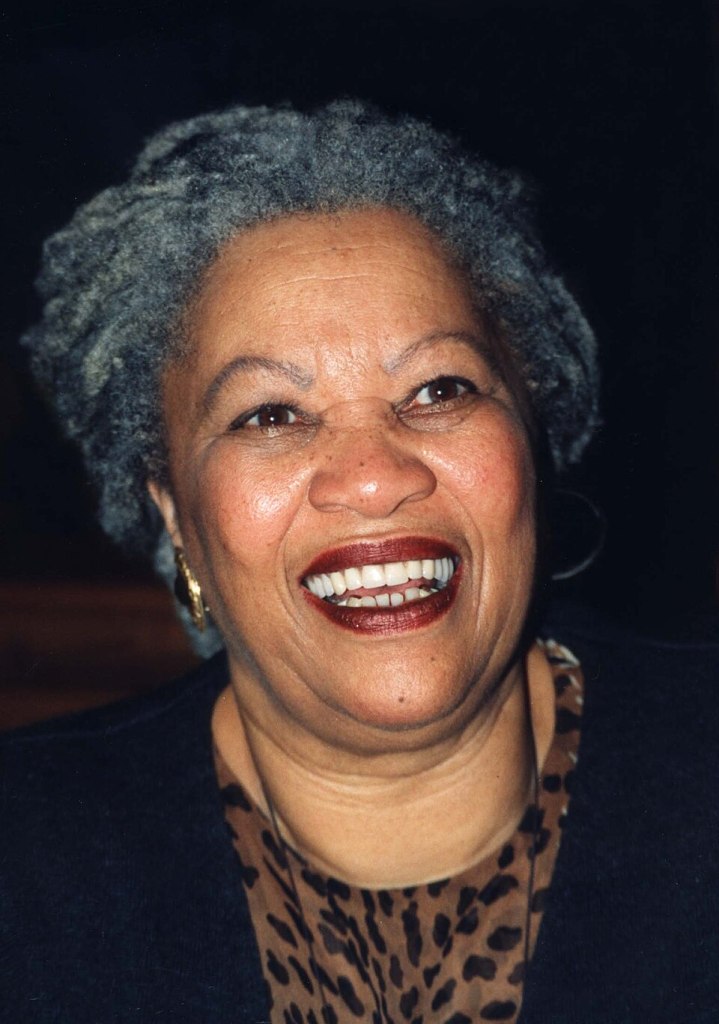
Ms. Serpell has written an insightful and informative review of Toni Morrison’s written works. Morrison died on August 5, 2019. She was awarded the Nobel Prize in Literature in 1993. She also won a Pulitzer Prize for “Beloved” in 1987. Morrison graduated from Howard University in 1953 and received a master’s degree in American Literature from Cornell in 1955. Her writing is partly about racism in the United States, but her story telling is about human beings, regardless of their race.
Toni Morrison (1931-2019, American novelist, professor of literature, and editor.)
Serpell explains how one can understand the brilliance of Morrison as a writer of great fiction. Morrison’s reading of literary classics is a part of her success as a writer. Serpell’s explanation of the many allusions in Morrison’s books show how brilliant both Serpell is in her understanding of literature and Morrison’s success as a literary Nobel Prize winner.
Tolstoy and Morrison are among the great writers of their times
What comes through to this critic is how ignorant one can be about what makes a writer great. Morrison is a writer that in someways removes the color of one’s skin from society by creating stories that are true about every American today. The story in “The Bluest Eye” of a father who rapes and impregnates his own daughter is an appalling truth about world gender discrimination and human degradation. It illustrates the brutality and inequality of gender discrimination in society. Societal inequality is not just about the color of one’s skin but in the false belief of racial and gender superiority.
Serpell reveals the many allusions to classic literature in Morrison’s work. From Shakespearean drama to the modern literature of Eliot and Joyce, Morrison draws on behaviors, and social strategies that shape her stories. Morrison gives the same depth to Black life as all human life. Serpell shows Morrison draws on singular heroes and forces that have driven the characters of other famous and successful writers.
Morrison’s Published Books
The Bluest Eye (1970)
Sula (1973)
Song of Solomon (1977)
Tar Baby (1981)
Beloved (1987)
Jazz (1992)
Paradise (1998)
In the last chapter of “…Morrison”, Serpell visits a memorial to Morrison. Serpell explains that reading Morrison is like developing a relationship with her. The author notes Morrison did not shy away from the truth of discrimination. She explains Morrison looks at monuments to discrimination like the statue of Robert E. Lee in Richmond, VA. and believes they should be left in place to remind society of stories that show how unjust inequality is to humanity (the statue is removed in 2021). Morrison is shown to be a great Black writer with a clear understanding of what it is to be an American.
Toni Morrison Memorial.
Interestingly, Serpell is highly critical of Morrison’s poetry. Serpell suggests Morrison has great poetic power in her prose but fails when she tries to write poetry. (Not being a follower of poetry, this reviewer is no judge.) What one can read in Morrison’s prose shows an imaginative density that seems the equal of what people say about poetry. It is somewhat surprising that Morrison could not be a good poet. In any case, Serpell has written an excellent review of Morrison’s work as a novelist. It illustrates the great power and importance of literature to reveal an understanding of ourselves and humanity.
What one finds in “Funny Story” is that human relationships are always works in progress. Nothing in a long-term relationship is without conflict.
Books of Interest Website: chetyarbrough.blog
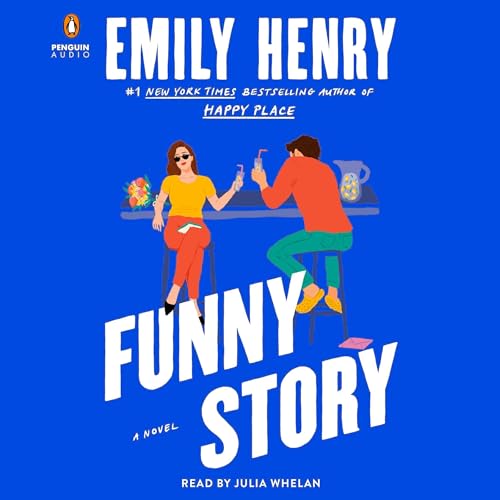
Funny Story
Author: Emily Henry
Narration by: Julia Whelan
Emily Henry (Author, American writer of NYT’s bestselling romance novels.)
This is a “Funny Story”, written with the same skill that is noted in a previous review of this author’s writing in, “Great Big Beautiful Life“. “Funny Story” reminds one of human relationships when one is young and unattached. Of course, it is written from a woman’s point of view, but it reveals some truths about love, partnering, and marriage.
For some people, living life alone is liberating but emotionally unfulfilling. Living with or marrying someone is like placing a bet on a roulette table. It can reward or deprive you of some level of joy. Henry’s story begins with a single woman, with modest ambition and little money, who falls in love with a wealthy, handsome man whom she marries. The woman’s name is Daphne. Her new husband, Peter, buys a house but soon chooses to leave and divorce Daphne to marry another woman. The other woman, named Petra, is a childhood friend raised in a family of similar wealth. Petra had been living with a male lover named Miles, a working man of modest means who is employed at a winery. Miles is a friend of Peter and sexual partner of Petra but is yet to meet Daphne.
Love and marriage.
Once one knows of the relationships between the main characters, the story moves along with the jilted wife, Daphne, and Miles’s becoming housemates after the abrupt departure and divorce by Peter who believes he is in love with Petra. The author creates a “Funny Story” with an odd arrangement with Daphne becoming a house mate with Miles because she is broken hearted and too broke to be able to live on her own. One can quit listening to the book because the table seems set to show the jilted wife will fall in love with Miles and live happily ever after.
One who believes “birds of a feather flock together” presumes two wealthy families are more likely to have offspring who marry each other because of their similarities of experience and wealth in their families’ backgrounds. One may either quit the book or keep listening to the story in expectation of a “happy ever after” ending.
What “Funny Story” says about life is that marriage between people of similar backgrounds is more likely to be happy than marriage of people with different backgrounds. Of course, this is not a hard and fast rule. Good relationships or marriages can be based on complimentary ways of dealing with life where two people make each other more complete human beings. The accoutrements of similar wealth and education aid compatibility but are not sole determinants of intimate relationship success. A listener/reader stays with “Funny Story” to find out which social relationship the main characters achieve, i.e., complimentary partners, partners in misery, or single unattached loners.
What one finds in “Funny Story” is that human relationships are always works in progress.
Nothing in a long-term relationship is without conflict. Those who recognize their complimentary compatibility are more likely to remain attached through marriage, partnership, or long friendship. Those who have too much in common and too little that complements their differences seem more likely to part company.
Tana French’s story is a thriller that exposes the illusion of life’s predictability. Control of one’s life is shown to be a fiction. Life is unpredictable regardless of one’s economic circumstances, physical appearance, apparent health, education, or power.
Books of Interest Website: chetyarbrough.blog
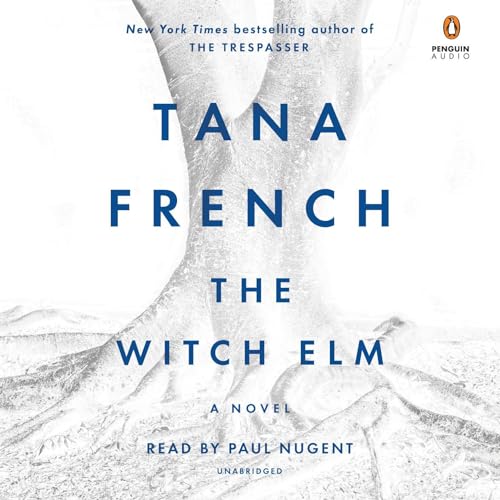
The Witch Elm (A Novel)
Author: Tana French
Narration by: Paul Nugent
Tana French (Author, America-Irish writer and actress, born in Burlington, Vermont, lives in Dublin, Ireland.)
In “The Witch Elm” Tana French ponderously begins with a young man considering a change in jobs. As one continues reading/listening, it gains momentum and specificity as a story of a handsome, financially secure, young white man who is attacked and nearly killed in a home invasion. The attack is brutal; nearly ending his life. The details of his recovery and his family’s history expose the social and moral blindness of humanity. “The Witch Elm” reveals many truths about people who consciously or subconsciously bury facts about themselves, their families, and their past to happily live their lives.
Human identity.
We do not see ourselves or others as we are because of human nature, culture, and social conditioning that begins with birth and ends at death. French writes “The Witch Elm” to explain how human beings keep secrets from their consciousness and conceal their human acts in a hollow of their mind, i.e., like things placed in the hollow of a “…Witch Elm” tree.
The patience of Job.
French’s writing is excellent, but her book requires the patience of Job. The author gives listener/readers an insightful view of life. However, the theme of her story is too repetitive. The story of her hero, Toby, is not “everyman” because of the wealth of his family, the privilege of being white, good looking, and employed in the prime of his life. With the exception of being white, all of these privileges are lost when he is nearly beaten to death.
Human control.
In recovery, Toby is physically damaged, fearful, confused, and, at times, loses control of himself. He returns to his family home which gives him the illusion of safety but finds something happened in his past in which he played a part that accidently killed a playmate. Though he did not remember the incident, two siblings had hidden a young boy’s body in the hollow of a tree in front of the family home. When Toby is confronted, in his diminished mental condition (from the home invasion beating), he gets into an argument with his uncle about the earlier unremembered accident and wraps his hands around his uncle’s throat and strangles him to death.
Life’s luck.
Every life is filled with good and bad luck, but most are blind to the privileges they have over others. Being white, rich, handsome, or beautiful is taken for granted which creates a moral blindness toward those who do not have those characteristics. Toby’s life seems perfect before he is attacked in his home. He is nearly killed and rendered mentally damaged in the beating he receives from unknown assailants.
The illusions of life.
Life is mostly taken for granted. The consequence of that truth is humans have a distorted view of life. We measure everything we know and do against a distorted view of ourselves and measure others against that false image. French gets close to what leads to the cause of social dysfunction in the world.
French’s story is a thriller that exposes the illusion of life’s predictability. Control of one’s life is shown to be a fiction. Life is unpredictable regardless of one’s economic circumstances, physical appearance, apparent health, education, or power. The title of French’s book alludes to the folkloric myth of a “…Witch Elm”, i.e., associated with secrets, spirits, and things concealed in the hollow of a tree.
Susan Choi shows how trust and experience change human lives. She illustrates how power, desire, memory, and storytelling are engines of that change.
Books of Interest Website: chetyarbrough.blog
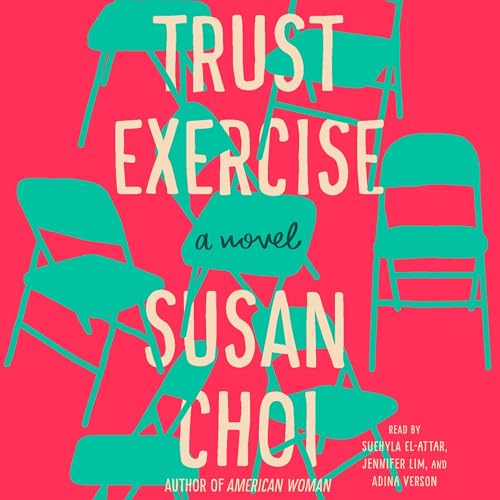
Trust Exercise (A Novel)
Author: Susan Choi
Narration by: Adina Verson, Jennifer Lim, Suehyla El-Attar
Susan Choi (American novelist, received the Nation Book Award for Fiction with “Trust Exercise”)
Susan Choi attended a High School of Performing Arts in Texas. “Trust Exercise” is a reminder of life as a teenager in America. There are a number of High Schools of Performing Arts in America. Having personally visited Las Vegas’s High School, Choi’s story reminds one of the remarkable students who choose to supplement their education in a performing art’s school.
Choi’s story shows the hyper emotional character of teenage life. Placing her characters in a Performing Arts’ high school makes her story somewhat more plausible but teenage sex in a school hallway when classes are in session seems more imagination than reality. On the other hand, it reminds one of fantasies that run rampant in one’s teenage years.
The importance of teachers in the world.
Getting past Choi’s sensationalism, there is an underlying truth in her story. Teachers in our high school years can have a great impact on who we become as adults. Choi creates a charismatic teacher who conducts a theatre class for high school students. His influence demonstrates how power shapes teenager’s lives in both good and bad ways. The memories of childhood are shown to be unreliable, but their impact on a mature adult’s life is immutable whether their memory is accurate or not.
Growing to adulthood.
From high school and other life experiences a teenager grows to adulthood, in part, through exercises in trust. Often children consciously or unconsciously note power imbalances between themselves and others. One thinks they are not as smart, sexually attractive, or capable as someone else. Choi shows human nature grows based on relationship trust even though trust is ambiguous. Trust begins between parents and children, grows between friends, our teachers, lovers, book readers and listeners. Choi’s point is that adults become who they are through trust relationships.
Versions of who we are.
Choi creates versions of people to show how they process trust with others. Choi’s main characters are Sarah, David, Karen, and Mr. Kingsley. Sarah is a secret keeper who is highly vulnerable to what others think of her. David is closed into himself and looks to others for what life can offer him. Karen is a steady observer who becomes confrontational in accordance with her perception of other’s beliefs or criticisms. Mr. Kingsley is a manipulative and, at times, coercive teacher. He challenges his students to expose their emotions to strengthen their character but creates dependence on himself more than themselves.
There is a sense of being back in high school in Choi’s novel.
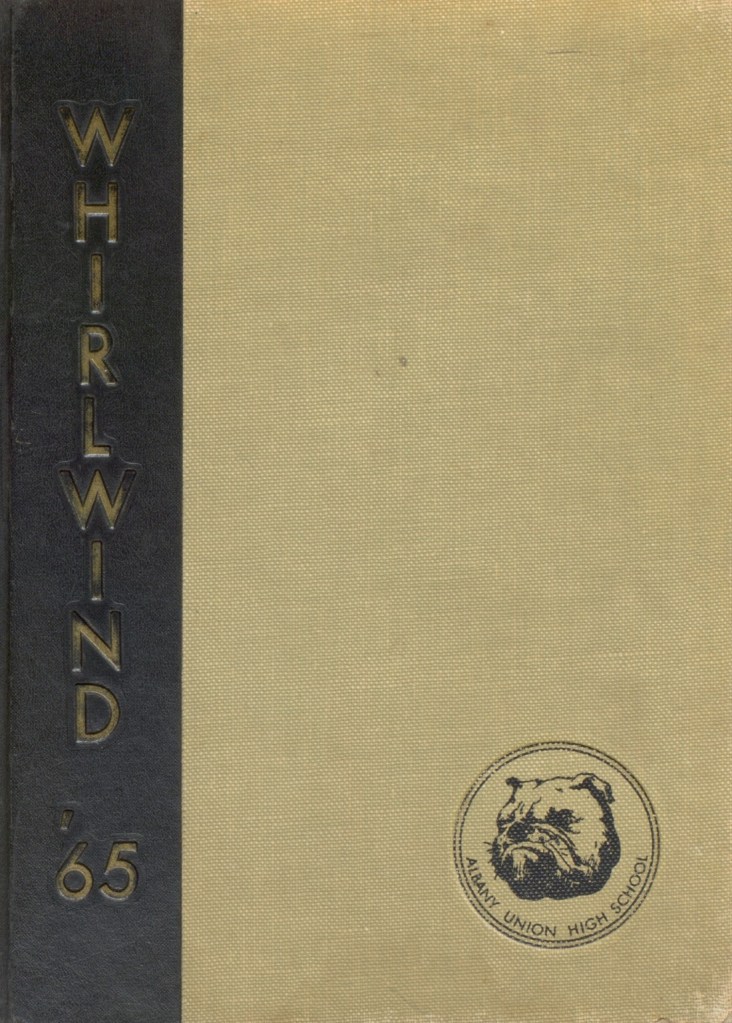
High School Year Book Albany Union High School, Albany, Or. 1965.
Choi’s novel shows people, even in a high school for the performing arts rarely achieve fame. Presuming Choi is telling a story of people she knew in high school, none appear to become famous. Neither Sarah, Karen, David, nor Mr. Kingsley seem to achieve much public recognition. Karen becomes a therapist. David seems to have exceptional talent, charisma, and potential in high school but becomes another faceless American worker. Interestingly, the most successful character is Sarah who becomes a published novelist. Choi infers the scale of her success is ambiguous at best, but she does have a career that seems more successful than many who are classmates. (Good for Sarah or is her name Susan?) “Trust Exercise” reminds reader/listeners of their high school years and makes one wonder what happened to their classmates.
Choi shows how trust and experience change human lives. She illustrates how power, desire, memory, and storytelling are engines of that change. Teenagers trust too easily, some adults exploit trust, and some story tellers manipulate the truth. One can only learn from life and experience what we should or should not trust.
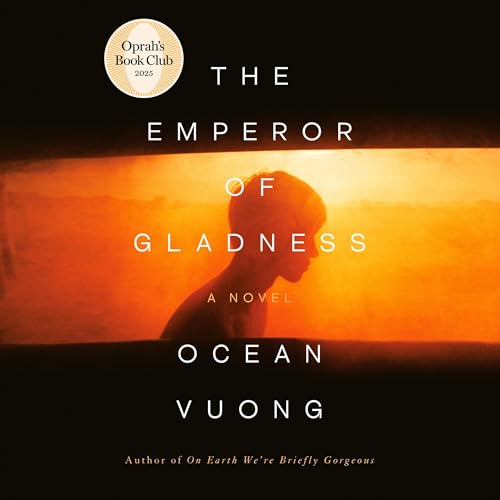
One can appreciate Vuong’s picture of two immigrant Americans lives but his story is too maudlin for this listener.
Books of Interest Website: chetyarbrough.blog
The Emperor of Gladness
Author: Ocean Vuong
Narration by: James Aaron Oh
Vương Quốc Vinh (Author, poet, professor at NYU and the University of Massachusetts, born and raised in rural Vietnam who is now an American citizen.)
“The Emperor of Gladness” is like “Alice in Wonderland”. The author’s story draws one down into a rabbit hole of personal experience and imagination. It tells what life is like for people who become lost to themselves because of advanced age or youthful experiment with drugs and addiction. It begins with a young addict who is teetering on suicide and is rescued by an old woman nearing senile dementia. It is largely the backstory of two immigrants and their lives in America.
American immigrants.
The old woman is from Lithuania. The young boy is a Vietnam immigrant brought to the United States by his family near the end of America’s misbegotten war. Both live in poverty in America. Their stories tell how they survive the grief and trauma of their lives. The elderly woman has lost her husband, lives alone, and had a social services person visit her for a time but is never replaced. Some of the trauma that occurs in the boys and aged mother of a daughter is brought on by themselves, particularly with the young boy. For the elderly woman, it seems brought on by living in poverty in a country that has great wealth but is unable to offer adequate care for the elderly poor.
One who has traveled to Lithuania has some understanding of the tragedy of Stalin’s dictatorial control and displacement of the Lithuanian people. That is partly what draws one to stay in the story. However, it is not enough to maintain this listener’s interest in the story. The young boy is raised in poverty and succumbs to addiction which is hard for some to understand because they have not fallen into that addictive trap. The author does a fine job of showing how these two characters meet each other and become a family that cares for each other. The growing dementia of the old woman is managed by the young boy in a way that is endearing and insightful for those who do not have the patience to deal with infirmity and elderly dementia.
There are lessons about being poor in America in Vuong’s story.
Vuong notes immigrants who have reached a certain age in their native countries are faced with learning a new language and culture when they arrive in a foreign country. All human beings gain understanding from the experience of living, but post-infancy immigrants are faced with translating language and experience understood in their home countries that are different in American culture. That by itself is a struggle.
Immigrants often grow up in silence because they are unsure of unaccustomed experiences that native-born children take for granted. Translation seems a matter of survival for an immigrant whereas a native feels experience is just part of living life that one runs from or towards.
The details of being a poor immigrant in America seem the same as a natives’ views of life but Vuong explains why they are not. To those who have been born and raised in a white privileged but economically challenged society, discrimination associated with being an immigrant minority or drug user is too unrelatable. The underlying message by the author is that in the age of “Make America Great Again”, being an immigrant makes one feel even more of an outsider.
Like being raised in India by a single parent, Roy shows parallels of what it’s like to be raised in America. We all become who we are by genetic inheritance, socialization, experience, choice, and chance.
Books of Interest Website: chetyarbrough.blog
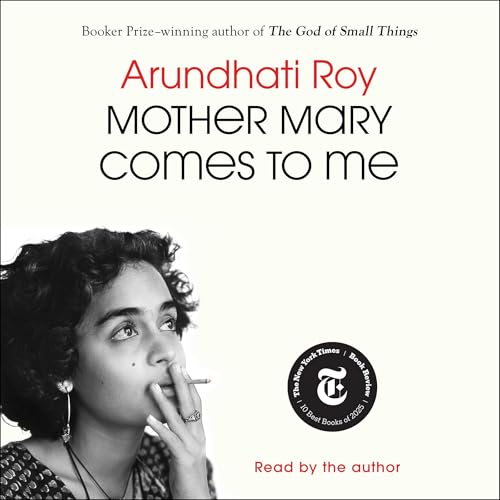
Mother Mary Comes to Me
Author: Arundhati Roy
Narration by: Arundhati Roy
Arundhati Roy (Author, Booker Prize for Fiction awarded in 1997 for “The God of Small Things”.)
Born in India in 1961, Arundhati Roy offers a memoir of her life. Roy is born into a Christian family in a country that is 79.8% Hindu while only 2.3% Christian. Roy suggests her early life is shaped more by instability than penury. Her mother is a teacher who becomes a founder of a school. It seems Roy’s young life is filled with emotional turbulence with a fierce and complicated mother who greatly influences her.
The poverty of India.
The facts of Roy’s memoir are straightforward but the presentation and supporting examples of a mother who is fierce and complicated are both humorous and foreboding. One can understand why Roy is capable of overcoming the hardship of life to become an accomplished writer.
Arundhati Roy’s mother Mary.
Roy explains her mother and father were divorced when she was two years old. Her father was a Bengali Christian who managed a tea plantation but appears absent from most of Roy’s young life. Her mother, Mary Roy, seems a great part of who she became and what she believes. Her mother seems both a source of terror and inspiration. Her mother’s rages and criticism had an immense impact on who Roy became as an adult. Her mother had a reputation as a celebrated educator, and a women’s rights activist who was politically active in Indian rights. Her mother’s education and activism became a gravitational center for Arundhati Roy.
Cremation preparation for burial in the Ganges River in India in 2018.
A part of what makes Roy’s memoir interesting is her perspective on India’s culture. Having traveled to northern India, the harsh climate, overcrowded streets, Ganges burial ceremonies, and obvious poverty juxtaposed with fine hotels and great restaurants is disturbing to a traveler who can afford to see the world.
Single parent homes in America.
However, Roy’s story shows being raised by a single parent (most often a single mother) is not uncommon and the influence of a one parent family appears the same in India as in America. The unique experience Roy has in India is interesting because of its similarity to a single-parent child’s experience in America. Roy is highly influenced by the mother who raised her. Roy is reflecting on truths that apply to children’s experiences in America. Though a single parent to a child is a primary influence, there are others like teachers, mentors, friends, and extended family members that influence who we become. However, being raised by a mother who is responsible for your education and survival tempers your feelings about parenting. You realize how hard a single parent’s life can be with responsibilities beyond taking care of themselves.
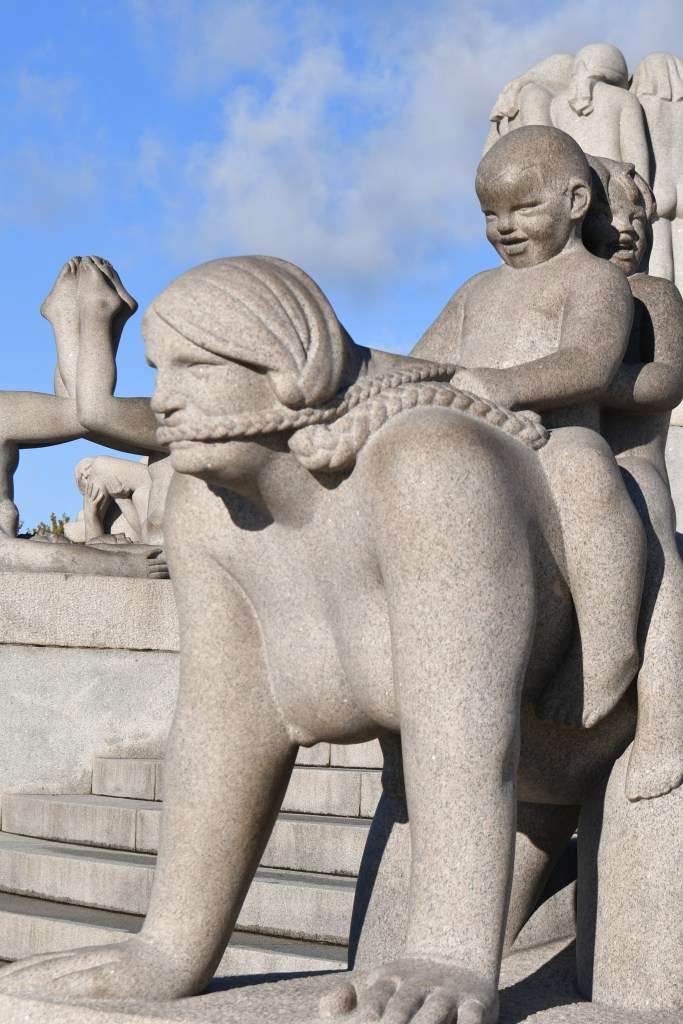
A circle of life statue in Norway reflects the importance of mothers in raising children in the world.
Roy, as an adult, recognizes her mother as a sun around which her life revolves. Roy’s mother divorces when Arundhati is two years old. Her father is characterized as an alcoholic and not part of Roy’s life as a child. Her mother is a model of independence, activism, and defiance. Her mother understood, despite male dominance in Indian society, a woman must have grit, political courage, and belief in their role in society. That attitude shaped Roy as a writer and activist. Roy’s mother gave her a sense of self, partly from love but also from respect for independence from the harsh realities of life. Roy’s mother died in 2022 which undoubtedly explains a part of why this memoir is written.
Women’s impact on the world.
Roy explains her mother was intense, intelligent, and emotionally volatile. In Roy’s life, her mother is a source of terror and inspiration. On the one hand, her mother frightened her and her brother but on the other she fueled Roy’s courage and creativity as an independent human being. As she approaches her own adulthood, fear of her mother changes to overt resistance. Roy leaves home at the age of 18 which undoubtedly represents her drive for independence, but she fully realizes her mother’s example made her the adult she became.
Not surprisingly, Roy objects to Hindu authoritarian nationalism represented by India’s political leader, President Narendra Modi.
Roy feels Modi’s BJP party discriminates against women and uses religion as a political tool to weaponize Hindu nationalism that shapes its authoritarianism. She argues dissenters, and minorities are being silenced when seeking equal rights for all. Roy is not writing about her spiritual beliefs but about India’s use of religion, politics, and its legal system to restrict equal rights for all. Roy shows she is her mother’s daughter who is a fierce and opinionated feminist.
Raising children of the world.
In pointing to life in India and Roy’s upbringing, she humorously addresses her mother’s contradictions, her theatricality, and the chaos of her upbringing. What is missing are examples of personal relationships her mother had with others after her divorce from an alcoholic husband. (The truth is that the book is long enough as it is.) Like being raised in India by a single parent, Roy shows parallels of what it’s like to be raised in America. We all become who we are by genetic inheritance, socialization, experience, choice, and chance. It is the parent who stands with us through our childhood that gives us what is good and bad about who we become.
Imagining a single mother raising a child, working full time, and trying to be happy is an arduous task in itself.
Roy’s mother prepared her daughter for the hardship of life with a decent education and the toughness needed to cope with both failure and success. Roy shows her mother succeeded in making her daughter a tough independent adult in “Mother Mary Comes to Me”. Roy’s life seems to repeat some of the mistakes of her mother’s life while forging her own success as a writer and opinionated activist.