REBELLION

Audio-book Review
 By Chet Yarbrough

(Blog: awalkingdelight)
 Website: chetyarbrough.blog

The Year of Lear: Shakespeare in 1606

By: James Shapiro

Narrated by: Robert Fass

James Shapiro (Author, Shakespeare Scholar, Professor at Columbia University.)

As a Shakesperean scholar, James Shapiro addresses Shakespeare’s plays during King James I’s reign. His history reveals the times in which Shakespeare is producing his most memorable plays. The three most relevant in this review are King Lear, Hamlet, and Macbeth.

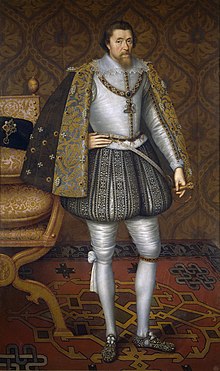
King James I (Scottish King of England 1603-1625, Succeeded by Charles I.)
Part of Shapiro’s theme is the use of the word equivocation. The word first appears in Shakespeare’s Macbeth. It is a common technique used in Shakespeare’s plays to avoid giving definitive answers to questions. Shakespeare is purposefully obscuring some unclearly expressed truth. It is a way of misleading without flatly lying. Shakespeare conceals the evil nature of the witches. Their predictions of Macbeth’s existence are true, but they obscure the precise truth of events that unfold.

King James I is possibly best remembered by Americans as the English King who commissioned the first English translation of the bible.

King James also lent his name to the first permanent English colony in America. Shapiro reminds reader/listeners King James I was the first joint ruler of Scotland and England and was nearly assassinated by treasonous Catholic terrorists in the gunpowder plot of 1605.

A presumed rendering of the House of Lords (where the gunpowder plot was to be executed).
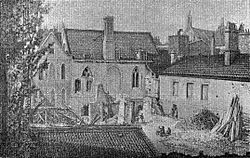
Though Shapiro’s book is about Shakespeare’s plays, it is also about the history of that era in which the gunpowder plot of 1605, the plague, and the reign of James I occur. The events of that time offer precedent for today’s makers of history.

Most interestingly, today’s master of equivocation is former President Trump.

In a January 26, 2017, article in GQ by Jay Willis, the following examples were noted as Trump’s classic use of equivocation:

  • If people are registered wrongly, if illegals are registered to vote, which they areif dead people are registered to vote and voting, which they do. There are some. I don’t know how many.
  • Our country has enough problems without allowing people to come in who, in many cases or in some cases, are looking to do tremendous destruction.
  • You’re looking at people that come in, in many cases, in some cases with evil intentions. I don’t want that. They’re ISIS.
  • I had a tremendous victory, one of the great victories ever. In terms of counties I think the most ever or just about the most ever.
  • There are millions of [illegal] votes, in my opinion. … I didn’t say there are millions. But I think there could very well be millions of people.

And of course, there is the 2021 “stolen election” equivocation that misled thousands of Americans who storm the US Capitol. None of these Americans committed treason but all appear to have fallen prey to Trump’s equivocations that led to the January 6, 2o21 rebellion.

Another parallel to the King James I era to modern times is Covid19’s impact on today’s society and economy. London’s social interactions became hostile as the spread of plague diminished care and respect for others. Violence became commonplace as plague attacks neighbors and diminishes social gatherings. Shakespeare’s plays and other entertainments were no longer conducted. The London economy spiraled downward. These events are repeated today as Covid19 subsides, with a rise in violent crime and a halting return to economic growth. Today is not yesterday but, as Mark Twain suggested, history may not repeat itself, but it certainly rhymes.
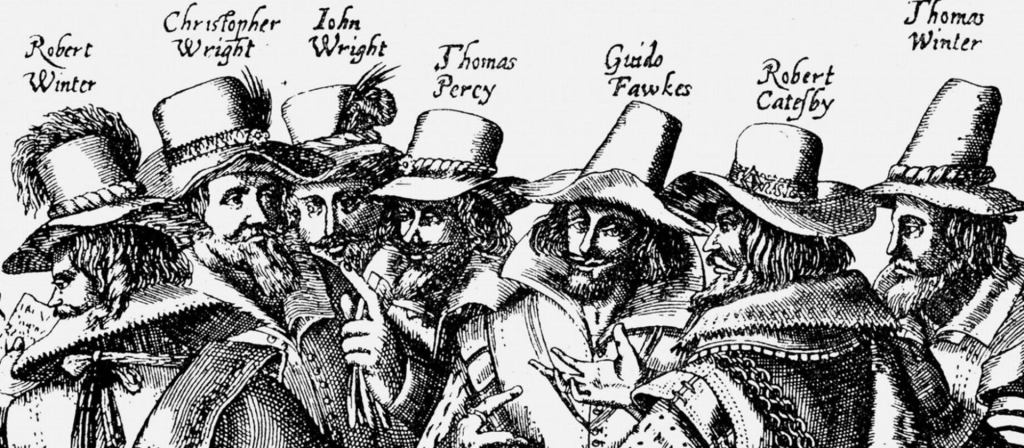
Treason is a proper appellation for Robert Catesby and the Wintour brothers in Shapiro’s Shakespearean history. They hatched a plan to bomb The House of Lords, the seat of English government, in London.

Guy Fawkes is caught in the basement of the House of Lords with barrels of gunpowder and fire ignitors that would have killed or injured anyone meeting at this chamber of government. Shapiro explains many, if not all, who had a hand in the conspiracy were caught, tried, hung, and quartered when the plot was revealed.
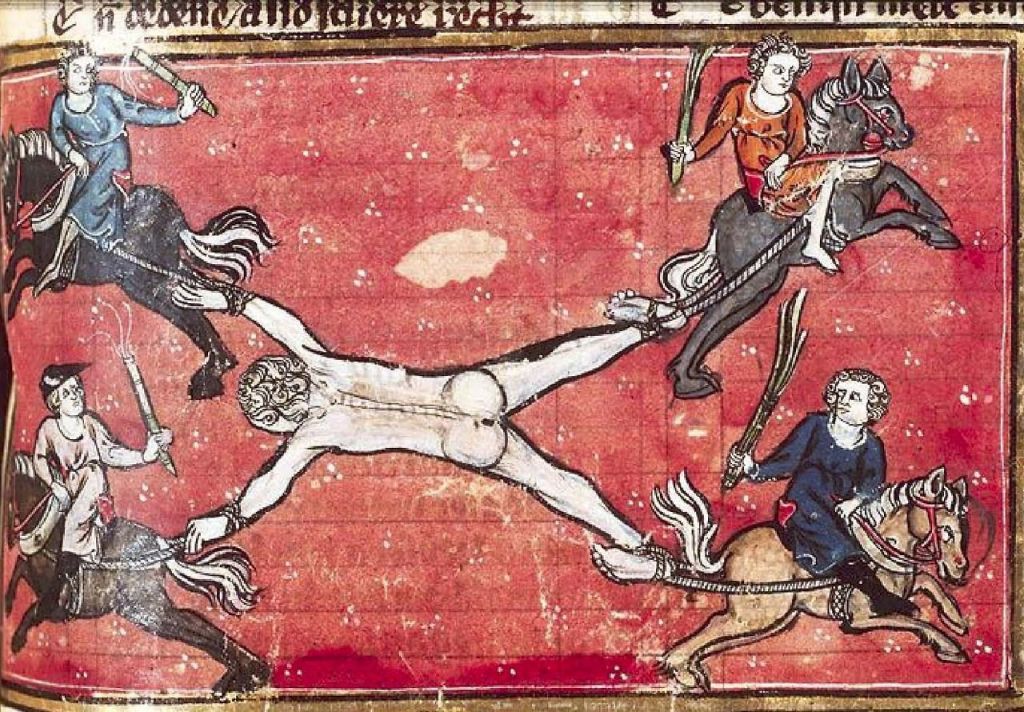
The gruesome detail of quartering is explained by Shapiro. While still conscious after being hung, bodies are castrated and then dismembered. (Shapiro notes Fawkes avoids the conscious brutality of castration and dismembering because his neck is broken when he is hung.)

Protestant discrimination of Roman Catholics and religious intolerance motivate the gunpowder rebellion. Religion plays a part of Americans’ discontent in modern times but not to the degree of treasonous acts; undoubtedly, because of America’s Constitutional guarantee of religious freedom.

The 1605 gunpowder rebellion is principally motivated by different religious belief. In England, Catholics suffer from discrimination because of the dominance of the royally mandated Church of England and the control of a Protestant King.

The gunpowder rebellion’ conspirators are relentlessly pursued by officers of James I’s rule. Though the conviction consequence is not the same for America’s January 6 ,2021 rebellion, the perpetrators are relentlessly pursued.

Many of the January 6’ participants have been arrested and taken to court. Some have been jailed and fined. Others have been reprimanded and released. Some are still in court or at large.

Though Spiro is not addressing any of what has happened in America today, it seems relevant to consider Donald Trump as the “equivocator and chief” that fomented America’s January 6,2021 rebellion.

Another interesting parallel revealed in Shakespeare’s plays is America’s aged Presidents in the last two elections.

Like the story of King Lear, one wonders if dementia is not a threat to American governance.

James Spiro offers an insightful history of the greatest playwright of all time. For today’s events, Shakespearean plays are as relevant today as in the 1600s.
WRITING INTIMACY

Audio-book Review
By Chet Yarbrough

(Blog: awalkingdelight)
 Website: chetyarbrough.blog

Priestdaddy: A Memoir

By: Patricia Lockwood

Narrated by: Patricia Lockwood

Patricia Lockwood (Author, poet, novelist, and essayist. Winner of the Thurber Prize for American Humor, and the Dylan Thomas Prize.)

This is the second Lockwood’ book listened to with interest and limited praise. Praise is limited because Lockwood writes with a customized perception of the world that diminishes its broad appeal. Like this critic’s review of “No One is Talking About This”, “Priestdaddy” reinforces Lockwood’s singular perception of the world. However, “Priestdaddy” adds depth to her personalized view of life. “Priestdaddy” has broader meaning than “No One is Talking…” but its appeal remains singular more than universal.

The broad meaning of “Priestdaddy” is that children are genetically marked and shaped by their parents in good and bad ways.

Lockwood’s literary success is remarkable considering the life she reveals. Lockwood’s sense of humor seems inherited from her mother, but her view of the world seems locked in a struggle with perception of her “Priestdaddy” father. Her father became a Catholic Priest, which is possible after marriage with the support of the church. In Lockwood’s struggle with her “Priestdaddy” and unrelated 20th century revelations about Catholic Bishop’ pedophilia, she loses faith in organized religion.

Relationship with one’s parents and the church are only part of Lockwood’s world view. Personal life experiences revealed in “Priestdaddy” also affect Lockwood’s perception of the world.

Reference to the author’s rape and miscreant priests that abuse children is a reminder of the horrors of human perversion. The broader contribution Lockwood offers is the extreme intimacy required to achieve success as an acclaimed writer. Not everyone has the courage, willingness, or skill to tell stories of their personal lives to the public. A listener will agree or disagree with Lockwood’s personal view of the world based on their own parental inheritance and life experience.

Praise is something all writers seek but few achieve. Lockwood is an interesting writer, recognized with national awards for her writing, and praise by many of her readers.

To some extent, one’s interest in Lockwood’s writing is because of the intimacy of her stories. Others fail to have wider appreciation of Lockwood’s writing because her story is not their story. When reading or listening to a book, many are looking for a broader understanding of life, not necessarily revealed by perceptions of a writer’s intimate experience.

SKEPTICAL OR STUPID

Audio-book Review
 By Chet Yarbrough

(Blog: awalkingdelight)
 Website: chetyarbrough.blog

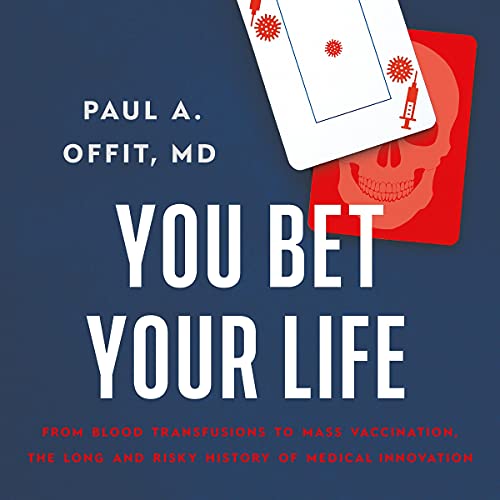
You Bet Your Life (From Blood Transfusions to Mass Vaccination, the Long and Risky History of Medical Innovation)

By: Paul A. Offit, MD

Narrated by: James Hoban

Paul Offit (Author, American pediatrician specializing in infectious diseases, vaccines, immunology, and virology.)

Like Siddhartha Mukherjee’s “The Emperor of All Maladies”, Paul Offit reflects on patients who risk their lives based on medical treatment and prescribed drugs by educated scientists, physicians, and drug manufacturers. Both Mukherjee and Offit write of the medical causes of death and attempts made by the medical profession to save lives. What both books have in common is that the medical industry, just as in all life’s work, is influenced by money, power, and prestige. Those influences carry risks and rewards.

Both Mukherjee and Offit are doctors with wide expertise in their respective fields. Offit’s book is shorter but equally important and impactful. Medical practice is just what the words mean.

Both physician/authors imply the word “practice” entails experiment on human beings. A physician can only be sure of successful medical procedures and treatment based on repeated healthful results for human beings.

Doctors, scientists, drug manufacturers, and medical employees make good and bad decisions based on educational achievement, hands-on medical experience, and personal motivation. That is true in all forms of work employment. The difference is we who are not part of the medical industry are intimately and mortally affected by its practice and advertisement.

Bad medical decisions can end a life; good medical decisions can save a life.

As a surgeon, Mukherjee reviews the history of cancer treatments and medical decisions that both killed and saved lives. Offit, a pediatrician, and member of the Centers for Disease Control (CDC), reviews the history of medical innovations and treatment of infectious diseases that killed and saved lives. In the age of Covid19, Offit’s history is enlightening and somewhat frightening.

The hard push (called “warp speed) for a vaccine that treated Covid required risks to be taken. Putting aside the politics enshrined in American freedom of choice, in 2020 nearly 700,000 Americans may not have died if the vaccine had been accepted more quickly by the public. On the other hand, Offit’s history shows errors have been made by both physicians and drug manufacturers that have killed Americans in search for cure. Even with the great success of polio elimination in America, some died from improperly manufactured vaccines.

Offit reminds listeners of the history of heart transplants, blood transfusions, and anesthesia that reminds one of the gruesome details reported by Mukherjee about cancer in the early days of a search for cure.

Louis Washkansky lived for 18 days after having his heart replaced by a human donor’s heart. Only after years of research on rejection, did heart transplants give years of life to recipients.

Ryan White, a teenage Indiana boy, is saved from hemophilia after being given a blood transfusion that infects him with HIV. He was diagnosed in 1984 and given six months to live. He lived until 1990 but was ostracized by schools and society because of American fear of the disease. Too little was known about how the Auto Immune Deficiency was transmitted.

The search for a way to conduct surgery without pain led to the use of chloroform in the 1800s. Hannah Greener, a 15-year-old, dies from application of chloroform for surgical removal of an infected toenail in 1848. Offit does go on to explain chloroform became notorious for criminal use in robberies. In any case, the principle of anesthesia made a great contribution to surgical practice.

Hannah Greener (1833-1848, dies from an overdose of chloroform when anesthetized.)

Contrary to Offit’s claim of an overdose, the cause of death may have been aspiration of fluids in trying to bring her back to consciousness.

There are many more interesting stories from Offit’s historical account of medical innovation. The fundamental point of both Offit and Mukherjee is that errors will be made by the medical industry. Risks are taken by patients who rely on the industry to cure or ameliorate the ravishes of ill health. Government oversight, like the FDA, CDC, USDA, and the World Health Organization, work on minimizing risk to society but risk reduction is a work in progress. Offit notes there are many ways for medical cures to go wrong. From misleading advertising to poor medical practice, to human greed for money-power-prestige, human risk abounds. Of course, the ultimate risk is the patients.

The lesson one draws from these two physicians is that the public has a right to be skeptical but there is no right to be stupid. Dying will always be a part of our lives, whether mistakes are made or not.

OPPORTUNITY & FAILURE

Audio-book Review
By Chet Yarbrough

(Blog: awalkingdelight)
 Website: chetyarbrough.blog

Out of the Gobi (My Story of China and America)

By: Weijian Shan

Narrated by: David Shih

Weijian Shan (Author, CEO of a private equity firm PAG, former partner in TPG Asia, holds a Ph.D. from Univ. of CA.)

Weijian Shan is a capitalist, a Chinese economist, CEO of an Asian investment company, and former professor at the University of Pennsylvania, Wharton School. Weijian Shan was born and raised in China during the Mao era.

Shan has written a memoir of his experience in the Chinese Cultural Revolution which began in 1966 and ended with the death of Mao Zedong in 1976. Shan writes about China’s and America’s economic and political differences.

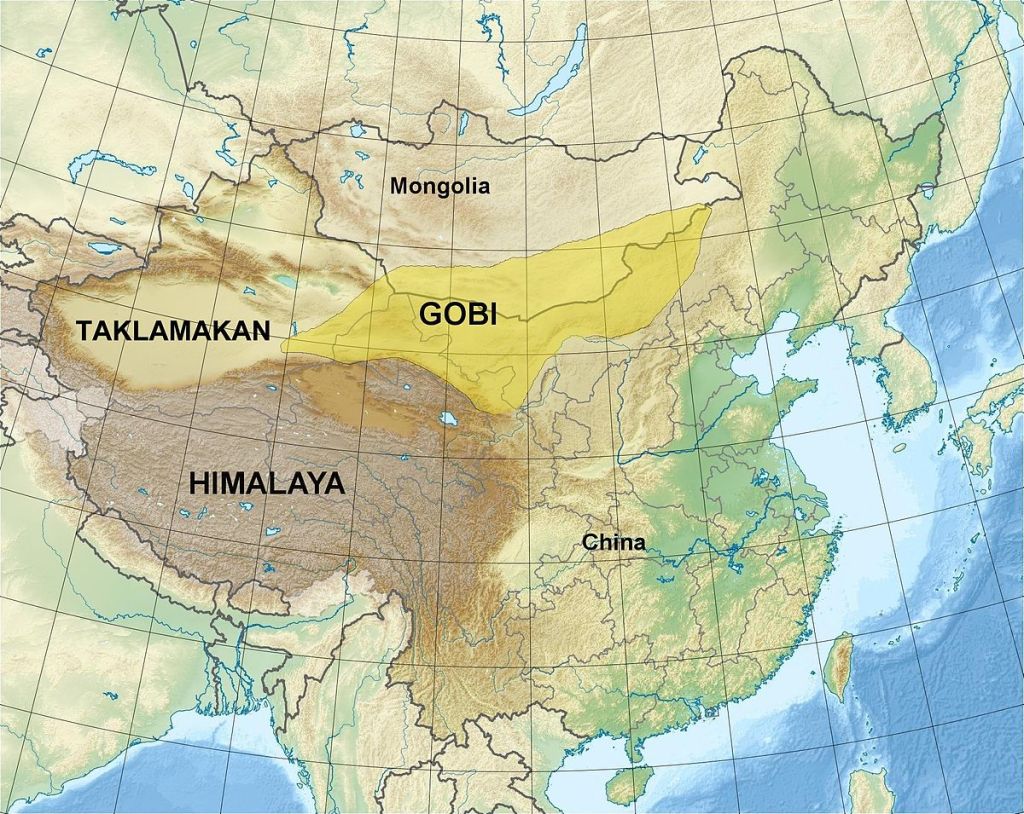
In 1966, Shan is barely a teenager, having only completed his grade school years. Shan, and many other teenagers, are sent to the Gobi Desert during the Cultural Revolution in China. Shan’s compelling story tells of his experience during the Revolution with an explanation of how he is chosen, at the age of 21, to go to college in Beijing. “Out of the Gobi” is published in 2019. Shan offers insight to Mao’s communist political ideas and gives listeners some thoughts about what Mao’s politics mean in the age of Xi Jinping’s rule of China.

Shan’s experience in the Gobi Desert is among many Chinese citizens who are ordered to leave their city homes to experience rural China’s farm life. The irony is that neither China’s Gobi Desert farmers, the bourgeoise, nor displaced youth were culturally, intellectually, or financially benefited. Rural farmers were victimized because citizen relocations impacted food availability for what were subsistence farms. Many farmers were barely able to feed themselves, let alone thousands of relocated city dwellers. Relocated youth were denied higher education and forced into labor camps that had a negative effect on rural prosperity.

From a political perspective, Mao’s Cultural Revolution is a brilliant idea.

This is not to praise Mao as an intellectual but as a pragmatic politician who understood the value of the Cultural Revolution’s youth-relocations to advance his vision of Chinese communism. Mao cleverly instills a sense of discipline and teamwork by indoctrinating China’s next generation with Maoist communism. Today’s Xi benefits from Mao’s Cultural relocation with a generation raised in the time of the 1966 Revolution.

Shan’s story is the triumph of Weijian Shan’s intellectual development without a structured pre-college education.

(Uighur re-education camp in the 21st century.)

Shan’s memoir is a tribute to his personal strength and determination. Reaching the age of 21 in the Gobi Desert did not impede his intellectual development. Through work experience, social engineering among peers, and a commitment to read everything he could find, Shan overcame his Gobi Desert relocation and lack of a high school education.

With little English language skill, Shan begins his education at a Beijing college to become a student of foreign trade relations.

This educational opportunity is presented to Shan at the time of Nixon’s opening of Mao’s China to the world. Shan had firsthand experience of Mao’s communist mistakes. Shan tells the story of lost prosperity and peace for Gobi Desert dwellers and intruders.

In the Gobi Desert, Shan experiences the deficiency of a government system based on bureaucratic control that distorts productivity reports to make superiors look good. The disconnect between real progress and reports of progress hides the truth of economic waste and deterioration. Shan shows how orders from above depress productivity in two ways. One, by government superiors being ignorant of true productivity, and two, by discouraging the value of competition.

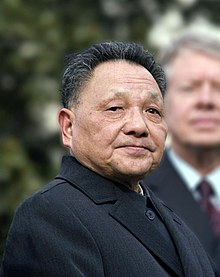
Shan reveals the strength and weakness of Deng Xiaoping’s opening of China after the death of Mao.

Without question, Deng contributed to China becoming the world’s second largest economy by GDP in 2010. On the other hand, Shan suggests Deng’s decision to crush the Tiananmen Square demonstration is the Communist Party’s misreading of demonstrators’ intent and support of economic revisionism. Deng (though reported to have given the order to jail or kill demonstrators) is revealed as a foil to Mao’s dictatorial beliefs in communism. Shan points to the odd fact that Mao removes Deng from leadership but refuses to remove Deng from the Party. The inference is that Mao may have understood the value of capitalism as a communist precursor (as noted by Marx).

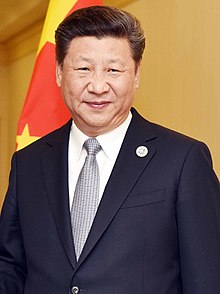
XI JINPING (GENERAL SECRETARY OF THE COMMUNIST PARTY OF CHINA AND PRESIDENT OF THE PEOPLE’S REPUBLIC OF CHINA)

President Xi is reestablishing communist party authoritarianism and may make the same mistakes Mao made, without a foil like Deng. Singular authoritarian leaders in the 21st century often deny the merits of democratic free enterprise that reduces the threat of kleptocratic bureaucracy.

ONE DROP

Audio-book Review
By Chet Yarbrough

(Blog: awalkingdelight)
 Website: chetyarbrough.blog

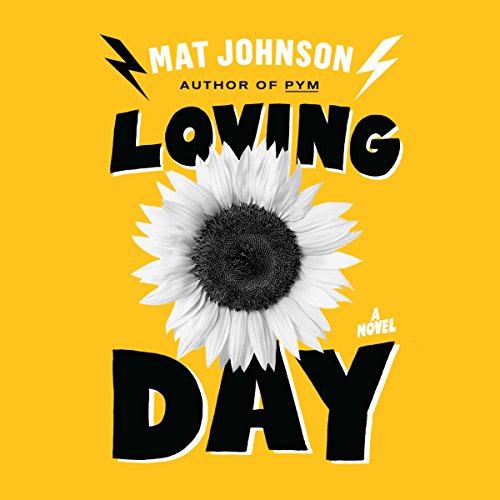
Loving Day

By: Mat Johnson

Narrated by: J. D. Jackson

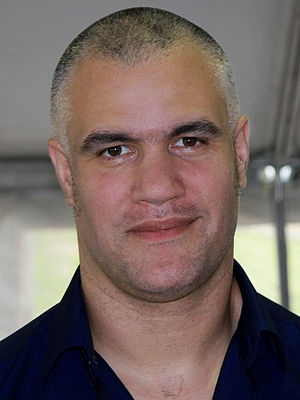
Mat Johnson (American novelist).

“Loving Day” is a rambling novel about discrimination. Mat Johnson’s main character, a son of a white father and black mother, inherits a dilapidated mansion from his father who dies during its renovation. The house has many doors. Johnson creatively assembles a variety of characters who figuratively knock on those doors to define and find a way to erase discrimination.

Johnson’s novel sets a table for understanding the many forms of discrimination hidden behind closed doors.

Every human has an ethnic and sexual identity whether recognized or not. Johnson’s story illustrates the inequality of the sexes while sidestepping any solution or answer for societal accommodation to ethnic difference. His host of characters range from transexual to sexual, from black to white, to mixed race, from married to divorced, from Jew to gentile. Each character might be classified as ethnic, but still a part of larger society that is burdened by inequality and discrimination.

Though Johnson’s primary focus is on discrimination, his many examples are a hot mess. There are too many to list in one review. There are many causes of discrimination. Children of unwed mothers are unerasable consequences of unsafe or forced conjugal relations. Children of un-wed mothers often become latch-key kids because their single parent has to work to pay rent and put food on the table. Some are sent to grandparents who may or may not be able to handle the responsibility of another person to feed, clothe, and educate. Homelessness is a consequence of many human causes, ranging from economies in crises to discrimination to medical or mental disability.

Schools created out of heart felt belief in eradication of inequality create an atmosphere of privilege that exacerbates discrimination.

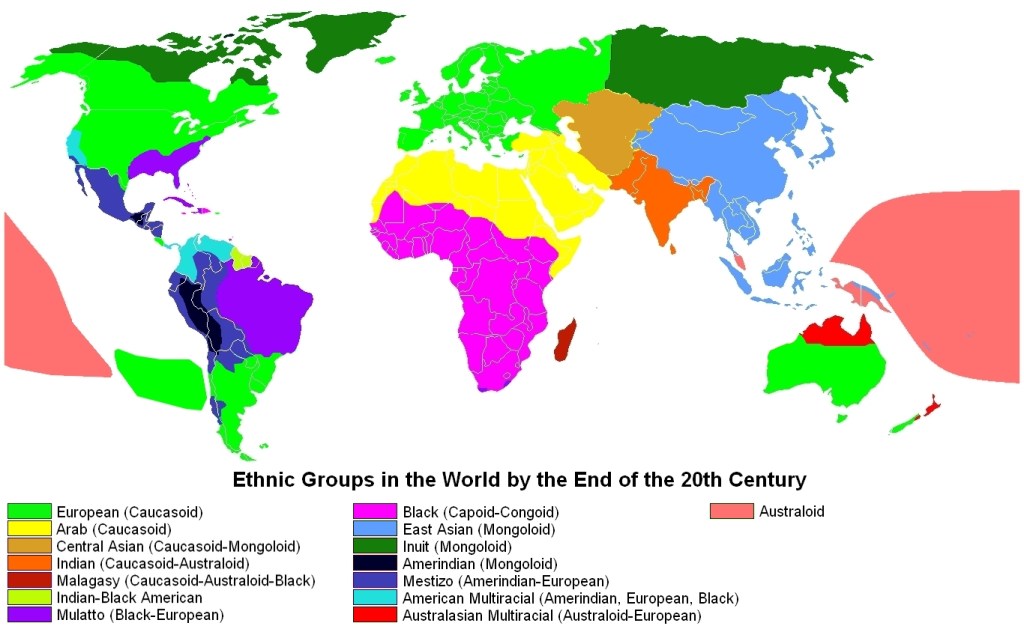
A marker for discrimination is illustrated by the author’s character named “One Drop”. One Drop is a human label associated with birth of a child from parents with different ethnicities. One drop of blood or semen between a black person and a white person, in the eyes of some, makes that person Black. In Nazi Germany, a gentile who marries a Jew identifies their children as Jewish. A man or woman may have conjugal relationships with others while married and are judged untrustworthy as future monogamous partners.

Society organizes itself without understanding or constructively dealing with inequality engendered and perpetuated by poor judgement.

Genetic/Socio/ethnic differences are the thematic subject of Johnson’s story. Society judges human difference as good or bad. The author’s conclusion is that people are people. Society should accept people for what they are; until then, discrimination and unequal treatment will be like an unrenovated house that will either be moved from one place to another or destroyed.

A FARMER’S LIFE

Audio-book Review
By Chet Yarbrough

(Blog: awalkingdelight)
 Website: chetyarbrough.blog

Dirt to Soil (One Family’s Journey into Regenerative Agricultural

By: Gabe Brown

Narrated by: Gabe Brown

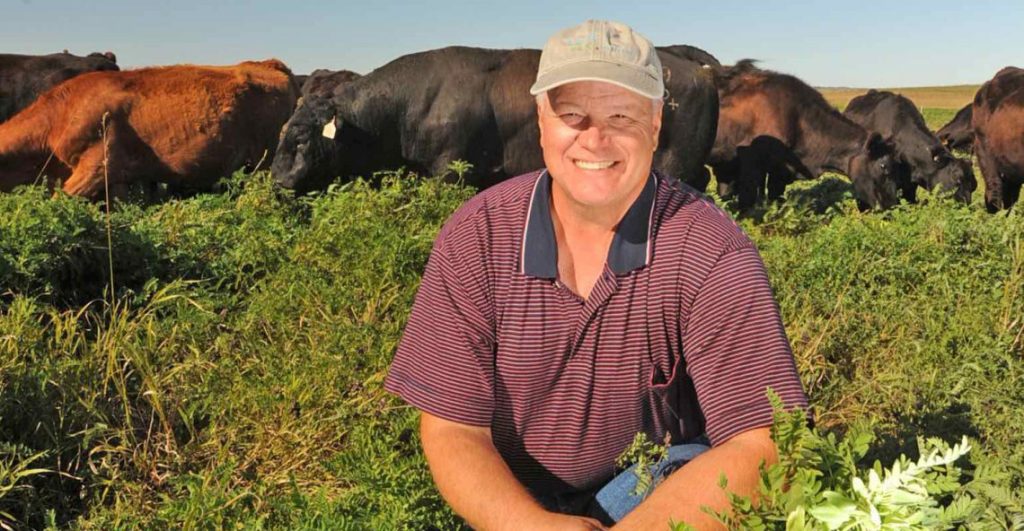
Gabe Brown (Author, farmer.)

“Dirt to Soil” offers a glimpse of a farmer’s life. Gabe Brown’s family manages a 5000-acre farm in North Dakota. Brown and his son’s farming experience offer insight to a branch of biology that addresses the relationship of a farm environment’s organisms. Brown is not a scientist or academic. He is a farmer.

Gabe Brown became an expert in soil conservation based on experience and insatiable curiosity. Though he went to college, it is four years of hardship that gave Brown an understanding of farming. From that experience, Brown reordered his practice of farming based on five principles.

  1. No soil disturbance (no-till, no-synthetics).
  2. Reinforce Soil’s Natural Defenses (the outer layer of soil protects all life)
  3. Promote biodiversity (marry species nature’s way to keep soil healthy)
  4. Keep living roots in the ground as long as possible and use cover crops with seasonal diversity.
  5. Animal & Insect integration (both predator and protector) to promote natural diversity.

Brown’s journey to understand and practice these farming principles increased the profitability and durability of farmland. “Dirt to Soil” is a record of Gabe Brown’s personal farming and educational journey. Though Brown admits to being a city boy, his experience in 4H, some academic classes, and visits to his future wife’s farm sparked a lifelong interest in farming. When his wife’s parents retired from their 1700-acre farm, Gabe Brown and his wife took over management.

Gabe Brown’s farming education came from 4 years of weather-related catastrophes that nearly ended his career as a farmer. He notes his wife appeared ready to give up farming life, but he refused to give up. His experience in those years re-focused his attention on the intimate relationship between nature and farming.

Brown explains, in “non-wilding” words, how it is necessary to rewild his farm. By watching how nature preserves itself, he changes his farming practices. Without plowing, furrowing, and fertilizing with chemicals designed by farming industry, Brown rejects practices that artificially enhance dry soil that exposes it to natural diseases and the exigencies of weather. He turns to observing nature to find how it replenishes soil’s natural nutritional condition. His objective is to turn “Dirt to Soil”.

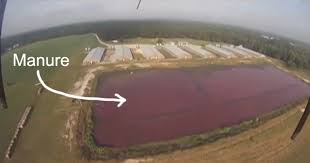
Brown reasons that raising cattle on the farm would fertilize its soil. (A caveat to Brown’s observation is that fertilization by cow manure requires frequent grazing rotation, not industrial manure concentration.)  

(There is a concern about carbon dioxide increase and ground water contamination from livestock. In a 2019 overnight stay with a farm family in New Zealand, there was objection to the former Prime Minister’s attempt to burden farmers with the cost of better livestock control.)

With natural fertilizer and cultivation of different plant species, Brown finds soil nutrient value improves. That soil improvement is absorbed by newly planted crops that benefit both livestock and consumers. The planting is done without tilling the ground but planting seedlings in unplowed ground. After experimentation, Brown begins rotating crops based on soil enrichment objectives.

Brown experiments with different species of plants to find which types replenish the soil in his area of North Dakota. With these discoveries and changes in practice, Brown’s farm prospers.

Brown notes change in farming practices is a slow process because of a false belief that high productivity is more important than nutritive value. When a film crew interviews Brown, one of the film’s producers is asked to buy a dozen eggs at the market and bring them to the farm to show the difference between eggs from “free range” chickens vs. caged chickens.

This is a comparison of a cracked egg from a free-range farm and an egg from a caged chicken farm. Brown notes his rewilded farm shows a brighter yellow yoke.

“Dirt to Soil” goes on to become a teaching facility for future farmers. Brown’s son works on the farm and will inherit it when his mother and father pass. In the meantime, an internship program is started to pass on the educational experience of Gabe Brown’s farming life. Rewilding farms means paying attention to the diversity and value of nature. Brown explains the nutritive value of food has fallen in America because artificial fertilizers have replaced the natural processes of nature.

Brown’s story about eggs reminds one of a trip to a Norwegian fish farm last year. One of our fellow travelers asked the employee of the farm if there is any difference between fish-farm’ salmon and a wild salmon. His answer is there are very few wild salmon left in the sea. However, he notes wild salmon have more Omega-3 per serving than farmed salmon which have less protein.

Gabe Brown explains his goal has always been to make a good living at farming and pass that skill on to his family and every American interested in that life. He concludes the success of farmers should not be based on crop yield but on profitability. His experience shows there are many ways to make a profit in farming.

Brown explains that high crop yield is not a measure of success. With the creation of alternative income practices, he believes a small farm is as capable of making a profit as a large farm. Observing nature and farm diversity (both human and ecological) is Brown’s guide for farming success and profitability.

Rewilding farming appears to be as important as rewilding the planet.

FINANCIAL TRUST

Audio-book Review
By Chet Yarbrough

(Blog: awalkingdelight)
 Website: chetyarbrough.blog

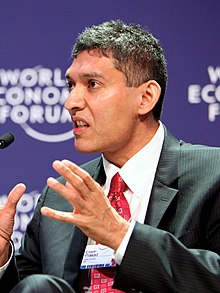
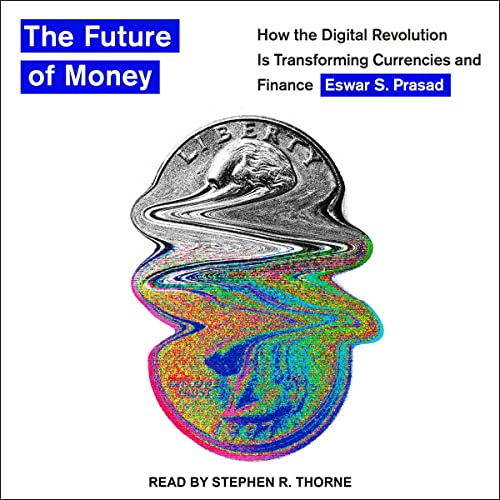
The Future of Money (How the Digital Revolution is Transforming Currencies and Finance.)

By: Eswar S. Prasad

Narrated by: Stephen R. Thorne

Eswar Prasad (Author, Economist.)

“The Future of Money” offers a short history and long explanation of the strengths and weaknesses of filthy lucre.

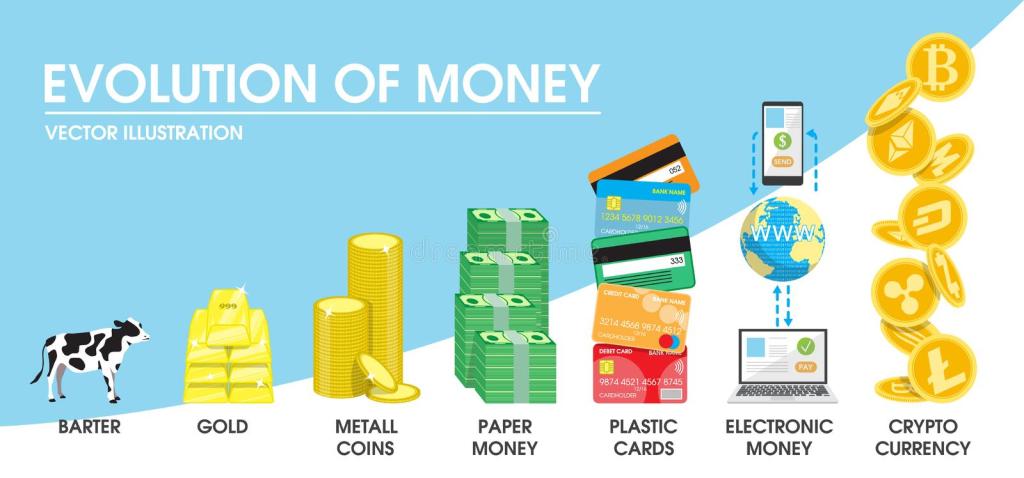
Prasad begins with the often-told story of how money began as a precious metal transforming to paper for easier exchange between seller and purchaser. The value of money has always been malleable. Its value changed in early times based on authoritarian rule and later in ways Prasad’s book explains as an evolutionary trust of money.

Genghis Khan is at one end of the spectrum where currency value is based on the value set by the ruler. If one disagrees with money’s mandated value, you are executed. Later the value of money is supported by full faith and credit of respective governments, inferring execution is less likely.

In modern times, value of money is turning to technology. Still, in every case, Prasad notes money’s value is based on trust.

Eswar Prasad explains money’s transformation from coin to paper to digital exchange. Prasad shows digital money is less tactilely filthy, but its form and value is as impactful as ever. In the remainder of Prasad’s long book, reader/listeners find how difficult it is to provide foundational legitimacy for digital currencies.

A number of chapters of Prasad’s book reveals the many financial transaction rails (electronic payment methods) that have been created with the widening use of the internet.

A cashless society began with credit cards and has proliferated to where “coin of the realm” is not accepted by some vendors. Prasad explains transaction fees on credit cards have led to alternative payment rails to reduce costs to both vendors and buyers.

As of 2021, the most commonly used alternative methods of payment are PayPal, Apple Pay, Google Pay, Bizum, WeChat, and Alipay. The number of users of these payment rails is increasing because of credit card’ fees.

Two with the most customers, WeChat and Alipay have over a billion users each.

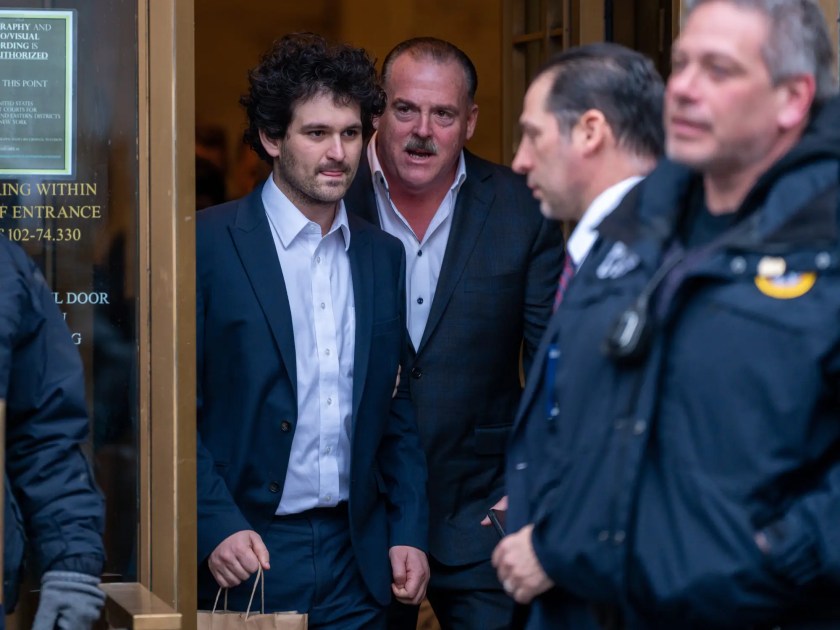
Today, particularly after the FTX fiasco, digital money’s value has lost trust. All forms of value in money are subject to human fallibility. The fallibility of any form of money is in humankind’s nature which is subject to ignorance, greed, and power.

An attempt is made to mitigate greed and power with bitcoin. One suspects ignorance of digital currency remains for most of the public. Anyone can access the bitcoin platform. Theoretically no one can identify a singular person’s account without that person’s personal access code that can only be entered from the owner’s computer device. However, there remain fundamental reasons for one to be skeptical of a bitcoin owner’s security. Trust continues to be a concern for cryptocracy’s utility and value.

Aside from business ineptitude, having one’s own key to a bitcoin entity is no guarantee of security, even if any entry from another computer cannot use the key? What keeps a hacker from capturing a user’s code in blockchain and cloning a bitcoin computer to use the key to steal bitcoin value?  

Theft of passwords and private keys is hackable if information is kept anywhere in a computer file. This is not to mention the capability of social engineering by smooth-talking hackers.

FTX is in court today. Value of bitcoin assets has fallen to the point of FTX’s possible bankruptcy. It is unclear if the FTX collapse is from weakness of bitcoin transparency or its founder’s ineptitude. In any case, there is a precipitous loss of trust in bitcoin value.

How is bitcoin blockchain security significantly different in today’s tech-savvy world? One argument is that its control is decentralized rather than centralized. So what? Decentralized control carries its own set of risks.

The reality is bitcoin’ blockchain use and creation is part of what has led to the FTX mess. The so-called strength of not having centralized regulation of digital currency is shown to be a weakness. The pitch is that bitcoin is designed and intended not to require government regulation because of the mystical belief that regulation magically appears because of user transparency. Blockchain security does not appear to be any more trustworthy than a paper dollar in a tech-savvy world.

Another issue raised by Prasad is value instability of bitcoin.

Crypto currency is being tested by different governments around the world. These governments are trying to widen crypto currencies trust and value through greater diversification of support from nation-state’ assets. The idea may reduce instability, but there remains a question of oversight. Yes, oversight–that dreaded function labeled government regulation. User transparency is not enough as is proven by the failure of FTX.

Prasad tackles the complexity of inflation and the difficulty of controlling its negative impact on public welfare and economic health. Inflation often leads to a cycle of impoverishment that hits those who are poorest the most.

When inflation occurs, the cost of living (particularly food and shelter) is disproportionally lost by the poor. What is called helicoptering of money to families below a certain income level mitigated the worst consequence of unemployment during Covid in the United States. Covid’s impact and the decision to helicopter money caused a cycle of inflation in America, but it also reduced hardship and stabilized the economy.

Prasad notes inflation is being mitigated by Federal Reserve’s tightening of monetary policy by raising interest rates. The risk of that action is that those at the lowest end of the income market may lose their jobs because of industry layoffs. Prasad explains rising interest rates reduce business investment which can trigger a downward spiral in the economy.

It seems no coincidence that homelessness has become a national problem in America at the time of monetary policy disruption. Some argue change in monetary policy and Covid recovery have nothing to do with homelessness. Some argue citizens have just lost their motivation to work. Believing it is a loss of motivation seems ridiculous when one looks at conditions in which the homeless live. Whatever the cause, America is the wealthiest nation in the world and can reduce homelessness by acting responsibly.

Though not addressed by Prasad, homelessness is a national problem that should be funded by the national government at a local level so cities can adequately attack its multiple causes.

Prasad notes helicopter funding is only one arrow in monetary policies government quiver. Digital currency has made some people rich, but its control needs to be regulated to serve the needs of society more broadly.

One idea Prasad explains is the idea of a central bank digital currency (aka CBDC), presently being studied by the Federal Government.

Bitcoin, under the supervision of government, is a contradiction of the original inventor’s intent. However, the idea of blockchain, technology, and bitcoin opens a door to improving economic conditions of the poor around the world. The potential for CBDC, in concert with today’s access to internet payment rails, is a growing 21st century economic opportunity. It is not because of the idea of CBDC alone, but CBDC in concert with the internet and mobile phones could change the course of economic history. The evidence Prasad points to is Africa and the creation of a mobile phone service that offers the poor a way to pay bills without a checking account and collect income for product created for sale.

Prasad explains how people in the lowest economic classes have gained access to money for pay and income by using features of mobile phones.

Prasad explains the many experiments with digital currency are changing the world’s economy. Prasad notes the general concern is the amount of influence and regulation a government digital currency might have on its country of origin. On the one hand it offers opportunity for economic improvement. On the other, it creates a vehicle for an intrusive invasion of privacy. Anything entered into a computer potentially becomes public knowledge.

Further, Prasad notes the American dollar is already the most influential currency in the world. The idea of an American controlled digital currency is threatening to many countries, both in western and eastern blocs.

One who reads Prasad’s book is likely to conclude America will eventually create a digital currency. FTX shows digital currency cannot regulate itself without oversight. Whether America will remain the big dog in currency influence depends on an unknown future. No government’s digital currency has been successful as of this date.

REWILDING THE WORLD

 Audio-book Review
 By Chet Yarbrough

(Blog: awalkingdelight)
 Website: chetyarbrough.blog

A Life on Our Planet (My Witness Statement and Vision for the Future)

By: Sir David Attenborough, Jonnie Hughes

Narrated by: Sir David Attenborough

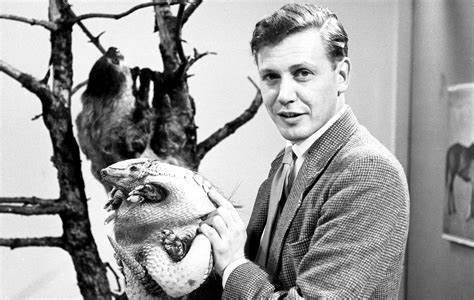
In a memoir of one man’s life, David Attenborough (with the help of Jonnie Hughes) reviews earth’s degraded environment and humanity’s future. Sir Attenborough tells a personal story of his life as an English broadcaster, biologist, natural historian, and author.

Attenborough recalls his education as a naturalist, BBC commentator, and program producer of travels, the environment, and species decline around the world. His career spans over 50 years of experience–from meeting famous conservationists like Jane Goodall to exploring remote islands in search of native culture.

In nearly a century of life, Attenborough reflects on what he has personally experienced on earth with a life-long interest in environment. The first half of the book is about the beginning of civilization and environmental despoliation. The last half of Attenborough and Hughes’ story is about their “…Vision for the Future”.

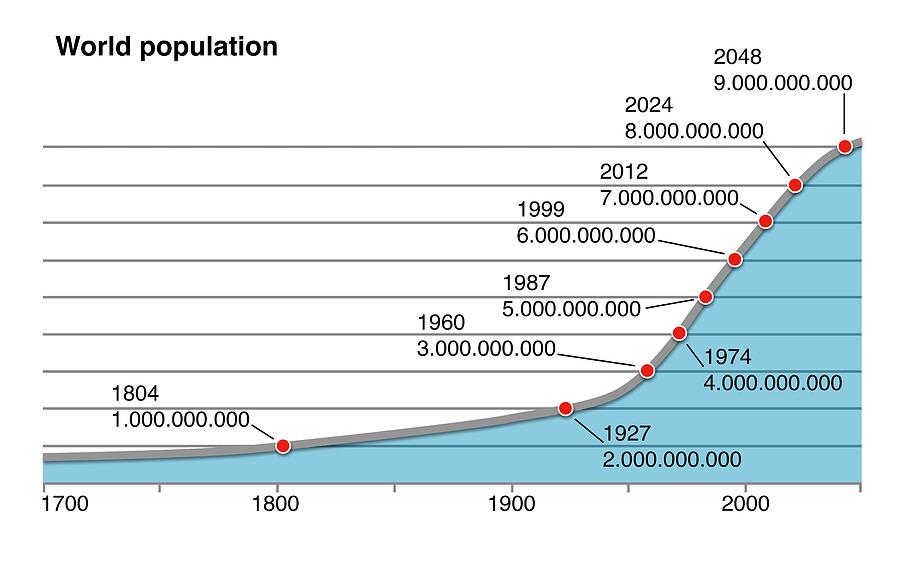
From recollections of the 1950s to the present, “A Life on Our Planet” is earmarked by population growth and wilderness decline.

Attenborough and Hughes describe earth as a closed system. His analogy is that earth is a petri dish that grows bacteria that will consume the world if humans fail to change their ways. Interspecies dependance is challenged and changed by environmental degradation caused by human activity. From the destruction of whales in the era of whale hunting to deforestation of land by farming and industry, the authors argue the earth is being murdered by humanity.

Global warming from industrialization and deforestation accelerates earth’s death by warming oceans. Just as the cycle of life in the sea is disrupted by global warming–removing forests, overhunting, and species extinction disrupt life on land.

Coral turns from a living, colorful paradise to a dead and crumbling, bleached underwater forest. Great Barrier Reef in Australia

Much of what Attenborough notes is evident when one personally travels the world. In a recent trip to Southeast Asia, a Hmong guide explains how diet of people in Cambodia changed because of the loss of wild game in the country. Snakes and spiders were rarely eaten by native Cambodians. Now they are considered a delicacy and a source of income for people who raise them for consumption. In visiting Norway, fish farming is a growing industry to replenish depleted salmon stock, and despite Norway’s oil wealth, wind farms are seen throughout the country.

Listening to “A Life on Our Planet”, one holds their breath to hear the last half of Attenborough and Hughes’ book for their “…Vision for the Future.” So many authors decry the fate of humanity, one becomes jaded by dire predictions of ecologists and environmental experts.

Is there a solution that does not end with the extinction of human life? Life on earth is unlikely to end from human environmental mistakes, but human beings are one of many species on earth that will disappear if humanity fails to respond to the environmental crises of its own making.

The author’s “…Vision for the Future” gives one hope.

Except for their mistaken belief that measuring GDP (gross domestic product) as success, there is an underlying singular cause of the world’s environmental disaster. They offer the idea of re-wilding the world. GDP will always be a part of societies’ measurement of success. However, the idea of re-wilding earth is a realistic solution to human life’s environmental Armageddon.

The principle of re-wilding the world is a practical solution that does not deny the natural instincts of humankind. The authors are suggesting countries of the world need to focus on bio-diversity policies that re-introduce lost species and promote current species of life.

A big step would be international agreement on fishing restrictions in different areas of the world (for enforced periods of time) that will allow ocean and waterway fish and mammal species to naturally propagate.

Similar to that is happening with Western Australia Fishing Restrictions.

According to science and experimental proof of established fishing area restrictions, food availability for a rising human population will improve.

A second point made by the authors is that women around the world must be liberated.

Repression of women has kept half the world from realizing its full potential. With free choice, women will be able to make their own decisions about work, family, and productivity. It is no coincidence that population growth in America slowed with the liberation of women who chose to have or not have children.

A third visionary idea is a nation’s choice on sources of energy.

Geothermal energy in New Zealand as an example.

Choosing to abandon fossil fuels will improve the air we breathe and reduce overheating of land and sea. In choosing renewable energy sources, the authors note two small countries have abandoned fossil fuels. Surprisingly, one is Albania. Having traveled there a few years ago, one could see how enterprising and vibrant the economy of Albania appears to be. The other fossil fuel independent country is Iceland which uses earth’s thermal energy to warm their homes from a sustainable, pollution free energy source.

A concern is raised about an aging population like that in Japan where women have chosen not to have children. What is unwritten by the authors is that many countries fail to open their borders to young people from other countries that have no work and limited opportunity in their home countries. There needs to be a growing understanding that all people of the world are on the same spaceship. In a perfect world, all people would be treated equally. It is not a perfect world, but GDP can drive countries to be more open to immigration.

“Dallas, Texas, United States – May 1, 2010 a large group of demonstrators carry banners and wave flags during a pro-immigration march on May Day.”

Attenborough has lived a long and interesting life. He offers listeners wisdom from being a witness to the truth about the world in which we live. This is not a story of the end of “…Life on Our Planet” but a formula for humanity’s continuation.

Humans can continue to despoil the environment. The consequence only makes human habitation impossible. Trees and wildlife are rewilding Chernobyl. Only humankind is unable to return.

METAVERSE

Audio-book Review
 By Chet Yarbrough

(Blog: awalkingdelight)
 Website: chetyarbrough.blog

The Metaverse (And How It Will Revolutionize Everything)

By: Matthew Ball

Narrated by: Luis Moreno

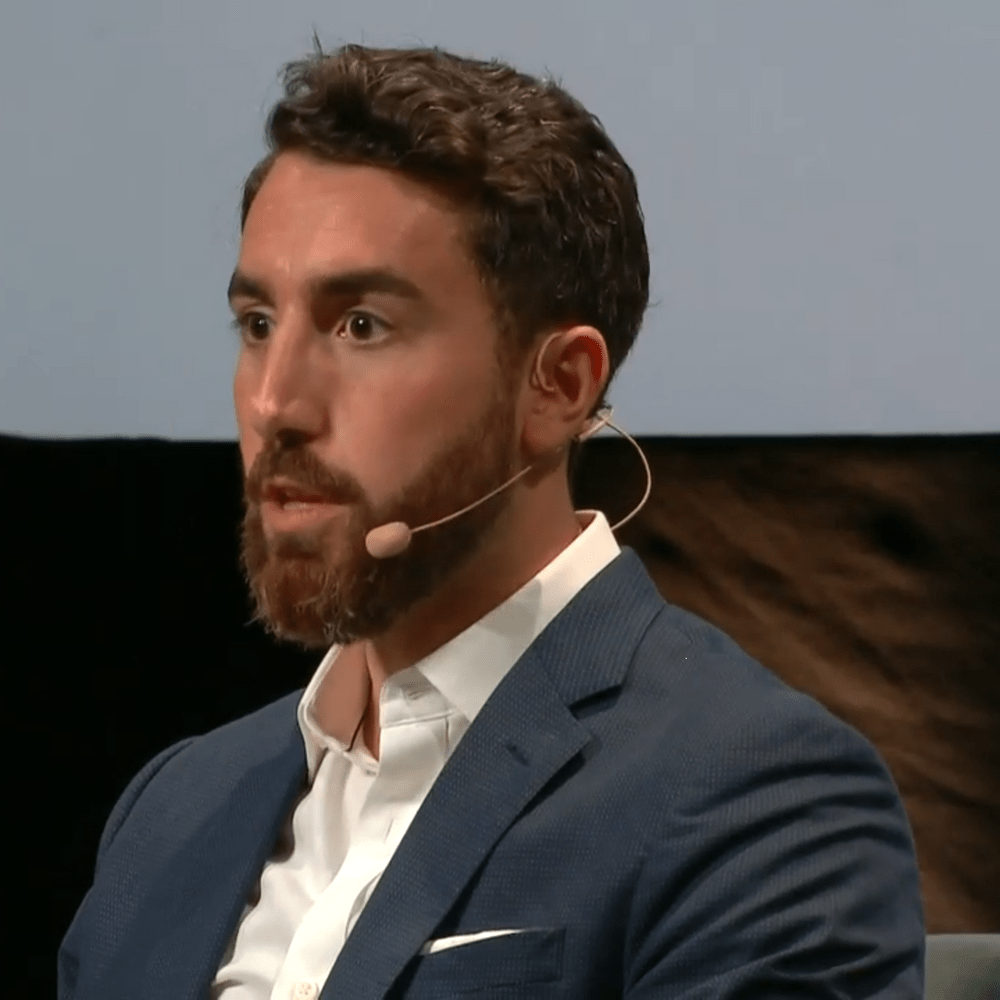
Matthew Ball (Author, Managing Partner Epyllion Industries.)

“The Metaverse” is widely talked about but little understood by the public. In Matthew Ball’s densely packed review of todays and tomorrow’s tech future. Listeners will be surprised to find how far the metaverse is from today’s world but how life-changing it will be in the future. The metaverse has not achieved its potential but when fully developed, Ball implies the metaverse will be the most revolutionary societal change since the industrial revolution.

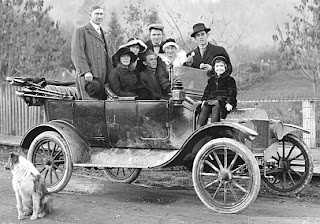
Ball infers metaverse’ virtual and augmented reality are at a “model T” stage of development.

Model T Ford built in October 1908.

For we who are ignorant of the inner workings of coding and computer hardware, Ball implies metaverse’ virtual and augmented reality are at a “model T” stage of development. Having to use a cumbersome headset or computer aided eyeglasses are far from accurately creating or recalling reality. Ball explains, to achieve reality in the metaverse, hardware and software development is many years from success. The computer power and coding requirements, not to mention political regulation, of a metaverse are limited by current human capability and knowledge. However, Ball notes that capability and knowledge are works in progress.

Today’s metaverse is constrained by headset utility and code limitations.

The metaverse is an expansion of the internet. Once a metaverse reaches its full potential, it will create a three-dimensional network that will be different, if not new, reality. It will encompass the world as it was, as it is, and as it will be. Ball’s explanation of the metaverse is optimistic but burdened by an unlikely change in human nature.

The internet, Facebook, Apple, Amazon, Google, and Microsoft seem at the head of the class for today’s metaverse.

Facebook creates social connection. Apple creates hardware with IPhone portability, Amazon creates a marketplace, Google and Microsoft create software. They all capitalize on internet use. They coordinate lesser-known businesses and code creators to chip away at the complexity of creating a virtual 3D world. Because five mega-corporations are at the center of metaverse’ research, they are an indicator of a political danger. Having singular controllers of the metaverse threaten societal independence and choice. Later chapters suggest a key to containing that danger is block chain computing.

Block chain is a list of interconnected records that everyone can see but cannot change. It offers transparency that theoretically allows one to judge its validity. What it does not consider is the oversight of records and how information may be hacked to distort reality or steal value.

The collapse of FTX in 2022/2023 is a prime example of block chain risk.

As coding achieves the goal of three-dimensional creation, the idea of augmented reality becomes real. The simple idea of replicating a 3D piece of clothing requires reams of ones and zeros written by teams of coders. No singular company can hire enough coders to create three dimensional animate and inanimate objects. Ball explains the key to successful metaverse creation is capitalist freedom. Coders are media users, some of which become independent contractors who create ones and zeros that detail characteristics of the world for established internet companies. They are compensated for code that details objects like a shoe with shoelaces, eyelets, a corrugated sole, colors for its various parts and everything that makes a shoe a real thing.

The roadblock to achieving virtual reality is in the laborious task of coding to replicate details of life in three dimensions.

Ball explains gaming is at the front end of today’s metaverse because it is a first step that does not require the massive input needed to create a three-dimensional world.

The irony of this observation is that the best future coders are today’s youth who are captured by the gaming industry. As these young people mature, their coding experience reinforces the future of the metaverse. Ball notes the gaming industry opens the door to a two-dimensional world which infers potential for creating the third dimension, i.e., the world in which we live.

Ball argues a key to create the metaverse is capitalism and its practice in a free society.

The wealth of nations owes its prosperity to the industrial revolution. Ball’s argument for “capitalism in a free society” as the prime mover for the metaverse is weakened by recorded history.

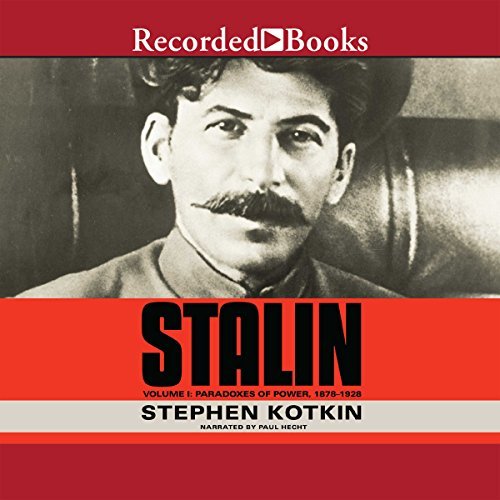
Authoritarian leaders like Joseph Stalin used force to industrialize Russia into the U.S.S.R. Not just capitalism in a free society is a prime mover for the metaverse. Authoritarianism is an equivalent (much harsher) prime mover for the potential of the metaverse.

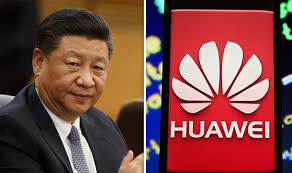
President Xi in the 21st century appears to be heading in a more Stalinist authoritarian direction.

The metaverse may be the equivalent of the industrial revolution but whether that will be a good or ill omen is as difficult to know as whether A.I. will be an enhancement or threat to society.

Will the metaverse change human nature–doubtful. Money, power, and prestige have ruled the world since the beginning of history.

The metaverse is unlikely to change human nature. What Ball makes clear is the metaverse is here in a two-dimensional, gaming and internet sense. It will only become more powerful as the third dimension is added.

I Am What I Am

Audio-book Review
 By Chet Yarbrough

(Blog: awalkingdelight)
 Website: chetyarbrough.blog

We Cast a Shadow

By: Maurice Carlos Ruffin

Narrated by: Don Graham

Maurice Carlos Ruffin (Author, fiction writer, finalist for the PEN-Faulkner Award and others.)

Maurice Carlos Ruffin’s story is about understanding discrimination and where it stands in America today. Ruffin’s creativity as a writer of fiction is on display in “We Cast a Shadow”.

Though Ruffin’s imagination rambles too far at the end of his story, he offers a strong opinion about his generation’s view of 21st century America.

The book title and the author’s characters flood a listener with thoughts of history, worry, and hope. Ruffin writes a story about four generations of a fictional black family. He reaches back to the main character’s grandfather, his father, the main character (a successful lawyer practicing law), and his young son. Worry comes from how far social and economic equality must go to be real. Hope comes from believing America will get there.

Ruffin creates a family in a southern community. The father is a black lawyer struggling for partner in a successful southern white law firm. His wife works in a hospital.

They live a middle-class life in a white suburban community. The son has a birthmark on his face that is slightly darker than the rest of his skin. The birth mark turns darker when exposed to the sun. The father is obsessed with the birthmark and wishes to have it surgically removed to give his son a more even Mediterranean appearance. The boy’s red headed mother views her husband’s concern as an absurd obsession.

The father of the black lawyer in Ruffin’s story is raised in a lower-income black community in the south. His father is serving time in prison. His mother owns and runs a restaurant in which he worked while growing to manhood. His father is highly educated with a PhD received in his 21st year of life. His grandfather is described later in the story and reflects on the age of slavery that gives weight to the author’s perception of America’s generational change in discrimination.

The professional lawyer’s young life exposes him to good and bad influences in a low income, minority neighborhood. He possesses the intelligence of his father and expositive experience to become a successful lawyer. A part of his experience is to use drugs as a way of coping with life’s stress. He is deeply influenced by the loss of his father’s guidance because of an interminable prison sentence based on unequal treatment by the police.

Ruffin’s main character is the only black lawyer in the southern firm.

At an annual review of the firm’s lawyers, one person may be promoted to partner, while others may be fired. Ruffin’s main character is neither fired nor made partner but is taken under the wing of an ambitious white woman law partner who promotes him to a newly formed Diversity Division in the firm. The woman’s ambition is to become leading partner of the firm by increasing its revenue with a broader appeal to all ethnicities in the firm’s market. She recognizes the competence and potential of the rising black lawyer.

Ruffin somewhat comically sets this table but prepares one for a meal of many tastes. “We Cast a Shadow” reflects on what it means to be black in America and married to a white woman with a son who has a symbolic birthmark.

The “…Shadow” Ruffin casts is discrimination’s continuation in both black and white America. Discrimination is different today than when the lawyer’s grandfather lived. Through four generations, black perception of discrimination changes from a grandfather who says the way for black folks to get along is by making white America feel guilty for discrimination. In contrast, the lawyer’s father (serving an interminable prison sentence) raises his son to understand he is as smart and capable as any white person. However, due to circumstances of his era, his father is thrown in jail for talking back to the police while standing up for his rights as a citizen of the country. (Of course, this is a part of the unequal treatment that exists in today’s America.)

The jailed father’s son resents the absence of his father despite his father’s principled stand that led his father to jail. In spite of that resentment, the lawyer is shown to feel and exhibit both his grandfather’s and father’s influence.

The lawyer feels trapped by his profession and beholding to white people in the firm. He recognizes (just as his father taught him) he is as good as any lawyer in the firm and better than some.

The generational change between the grandfather, the father of a successful black lawyer, the father and his son show an evolution occurring in America. The lawyer’s son represents today’s generation that rejects his grandfather’s belief, accepts his innate ability and equality, and proffers hope for equal treatment in life that is not based on the color of one’s skin.

The irony of the lawyer’s belief is his obsession with his son’s birthmark. The birthmark is a reminder to the lawyer of unequal treatment in America. The lawyer is discriminating against his own son because of a birthmark that identifies him as something less than white.

In the end, a conclusion one draws from “We Cast a Shadow” is that every parent comes to a point of realizing Glory Gaynor’s truth—“I am what I am.”

Lyrics

I am what I am

I am my own special creation

So come take a look

Give me the hook or the ovation

It’s my world that I want to have a little pride in

My world, and it’s not a place I have to hide in

Life’s not worth a damn till you can say

“I am what I am”

Every parent makes mistakes in raising their children. This father’s mistake is to obsess over a birth mark without recognizing what is most important, i.e., a parent must love a child, while allowing them to become who they choose to be.