GREEN ON BLUE

Audio-book Review
 By Chet Yarbrough

Blog: awalkingdelight)
 Website: chetyarbrough.blog

Green on Blue

By: Eliot Ackerman

Narrated by: Peter Marek

Eliot Ackerman (Author, former Marine Corps Special Operations Team Leader who served in Afghanistan.)

“Green on Blue” is about America’s military experience in Afghanistan. Like America’s experience in Vietnam and Iraq, knowing one’s enemy is shown to be difficult, at the least, and impossible at the most. Whether the American military is “Green on Blue” or not, it alludes to the fog of war and complications of knowing the color of your enemy.

Ackerman gives a first-hand account of what it was like to serve as a field commander in America’s intervention in Afghanistan. As a Marine Corps Special Operations team leader in Afghanistan, he knows the subject of which he writes.

Ackerman’s novel is a fiction but bells truth and understanding of America’ intervention in Afghanistan.

Just as Ackerman explains the complexity, folly, and error of America’s good intention, he clearly criticizes American leadership’s decision to invade Afghanistan. America’s intent is to dismantle al-Qaeda leadership and possibly capture bin-Laden. It seems the mistake is not about crushing al-Qaeda but in not understanding the culture in which al-Qaeda received support from Afghanistan’s Taliban.

Ackerman creates a story of an older brother that is fatally injured by a bomb blast and is taken to a hospital for treatment.

This is a frontline hospital in Afghanistan like that in Ackerman’s story.

The younger sibling, who had been cared for, and protected by his older brother, pleads with the hospital to save him. To be saved, because the injuries are severe, requires expensive long-term care which his younger brother cannot pay. A Pashtun visitor at the hospital offers to pay for the older brother’s treatment in return for the younger brother’s recruitment into his “army”. The younger brother appeals to a person who appears to be Pashtun, the same culture of the two brothers.

This Pashtun is actually a leader of an Afghanistan military group.

The Pashtun military leader assures the younger brother of his financial support for the older brother to receive the required treatment. The younger brother agrees. The younger brother’s name is Azize. As Ackerman’s story continues, one finds leaders in Afghanistan use America’s intervention only to reinforce their self-interest. Of course, self-interest is a universal human characteristic, but in war, its dimension becomes life and death.

As one continues listening to Ackerman’s book, one doubts the older brother is alive or that any support is provided by the recruitment leader. The recruiter simply uses the hospital as a tool to acquire and retain recruits from relatives grieving for lost or injured family members. The end of Ackerman’s story tells the tale.

This is a harsh story that reminds America of how risky and unwise it is to believe America knows best for what another culture has grown to believe.

Soldiers like Ackerman remind us of how hard it is to help other countries be the best they can be. It requires more than bravery. It requires understanding of another’s culture and a willingness to let go of one’s own preconceived notions.

ONLY FREEDOM

Audio-book Review
 By Chet Yarbrough

Blog: awalkingdelight)
 Website: chetyarbrough.blog

The Dream Palace of the Arabs

By: Fouad Ajami

Narrated by:  Qarie Marshall

Fouad Ajami (Author, Lebanese-born American University Professor, former senior fellow at Stanford University’s Hoover Institution.)

Fouad Ajami offers a glimpse of Arab history in “The Dream Palace of the Arabs”. It is a glimpse because of Ajami’s personal view of Arab history as an Americanized Lebanese Christian. This is not to minimize his scholarly review but to contextualize objectivity, a weakness of all chroniclers of history.

A few years ago, having met and talked to a professor raised in Lebanon, the disruption of his homeland’s current internecine conflicts mystifies understanding.

The amount of detail offered by Ajami is difficult for a listener because of the many nuances of his enlightening history of the Middle East. The complicated mixture of different religions and Arab identities overwhelm a listener’s thoughts. Putting aside that concern, Ajami’s book is a treasure of facts and information a reader/listener will appreciate.

Arab culture is steeped in language as has been noted by other historians and writers.

One remembers the remarkable international, cosmopolitan, and sophisticated reputation of Lebanon. Some of Lebanon’s troubles are explained by Ajami. Lebanon, like Ajami’s history of the Middle East, is a complex ethnic, religious, and political country. Like the youthful history of America, the ancient history of the Middle East is riven with conflict. Ajami explains Arab identity often conflicts with religious differences in the Middle East.

Khalil Hawi (Poet, 1919-1982, Lebanese poet,)

Ajami often refers to the beauty of Arab poetry and its reflection on and understanding of the complex relationship between being an Arab, a Muslim, a Christian, some other religion, and/or part of a particular familial sect. Ajami writes of Kahlil Hawi, one of the most famous Lebanese poets of the 20th century. Hawi commits suicide in 1982. Some say it was because of his resentment of other Arab government’s silence about the Israeli invasion of Lebanon in the so-called “Operation Peace of Galilee”, led by former Israeli Prime Minister Ariel Sharon.

Nizar Qabbani (1923-1998, Syrian diplomat, poet, writer and publisher.)

Ajami also recalls Nizar Tawfiq Qabbani, a Syrian diplomat, poet, writer, and publisher. Qabbani wrote about Arab empowerment against foreign imperialism and dictatorship.

Naguib Mahfouz (1911-2006, Egyptian Novelist.)

Ajami refers to Naguib Mahfouz Abdelaziz Ibrahim Ahmed Al-Basha, an Egyptian writer who won the 1988 Nobel Prize in Literature. He is more colloquially known as Mahfouz and is known for realist literature and existentialism.

Money is power and, as Lord Acton said, power corrupts.

Ajami’s references to Arab poets are not a mere side story. The poets offer insight into the tumultuous history of the Middle East. Ajami also addresses the impact of oil’s discovery on the political nature and culture of the Middle East. He argues the discovery and wealth of oil changed Middle Eastern culture that took on a more aggressive government posture toward modern borders, many of which were created by foreign governments.

Ajami addresses Saddam Hussein and his invasion of Kuwait.

He explains Saddam Hussein denied the history of borders among some Middle Eastern nations. Ajami notes Hussein looked at Kuwait’s oil riches as something due Iraq for its longer role as an independent nation. Of course, many Middle Eastern borders were changed by foreign powers. Ironically, Iraq only became an independent nation in 1932, Kuwait in 1961. The attempt by ISIS and Abu Bakr al-Baghdadi to create their own autocratic state out of existing bordered countries is another example of Arab leaders’ desire to rule the Middle East.

Anwar Sadat (1918-1981, President of Egypt 1970-1981, Assassinated.)

Ajami argues the assassination of Sadat reflects Arab discontent with ancient Middle Eastern countries history. Ajami acknowledges Sadat’s death is seen by some as a penalty for American influence in the Middle East. Many Arabs felt Sadat was an out-of-control authoritarian ruler in Egypt. Sadat’s imperial control was increasingly rejected by Egyptian citizens. Sadat’s peace agreement with Israel may have been a last straw.

Ajami believes Sadat became isolated from Middle Eastern intellectuals which made many more ambivalent about his leadership. There was a growing feeling that Sadat had abandoned his people, particularly poor and disaffected Egyptians.

On the other hand, Ajami notes Sadat’s assassination reinforces ISIS’ objective of consolidating Middle Eastern countries into one power bloc. Middle Eastern conflicts are shown to be more than differences in religions. The drive for independence from the West and consolidation of Middle Eastern political interests is an on-going movement.

Hosni Mubarak takes and holds the title of Egyptian President for 30 years after Sadat.

For a brief time, Mohammed Morsi and the Muslim Brotherhood ruled Egypt. After one year, the Brotherhood was overthrown by the military. The military intervened because they felt the Brotherhood did not have the experience needed to operate as a governing body.

The Muslim Brotherhood lasted for one year when the former military officer, Abdel Fattah el-Sisi, took power.

Having visited Egypt (if our guide is a believable measure of El-Sisi’s acceptance) governance improved. However, as tourists, we were told not to walk freely in the city without accompaniment. There was a tourist-bus bombing around the Egyptian pyramids when we were there. There is little doubt that conflict between secular and religious leadership in Egypt remains.

An insight Ajami offers about Egypt is its immense population growth and the impact it has had on governance. Employment for those who immigrated, some of which were highly educated, could not keep up with population growth.

Ajami infers discontent with Mubarak is only partly related to his authoritarianism. One might argue that the characteristic of power is that it corrupts fair and equal treatment of the governed. Governance, whether secular or religious, seems increasingly unmanageable in Egypt– causing citizen discontent before revolution, later, and now. One wonders how long El-Sisi, or any leader will be able to govern Egypt with the challenge of its population growth and high unemployment.

Religion will continue to roil the Middle East because equal opportunity and economic poverty leave few options to its citizens. Citizens often turn to religion when faced with insurmountable problems.

The last chapter of Ajami’s book eviscerates the Israeli/Palestinian “Declaration of Principles” agreement of 1993. It was a land for peace agreement. In retrospect, Ajami notes the agreement offered little peace and no lasting benefit for peace between Israel and Palestine. He notes the widening gap in economic growth between Israel and Palestine and adjacent countries like Jordan. Ajami notes Israel holds all the cards in the deal because Palestine only falls deeper into poverty and down a blind alley of dysfunctional statehood.

If human leaders cannot ameliorate the hardship of life, citizens are often left with only hope, faith, and belief in religion. Arabs, like all people of the world, are on their own. Their customs and beliefs are what they are because of the circumstance of their lives. Belief and hope in religion will evolve based on what works to reduce human hardship. One may turn to religion or secularism with each to play their part in human survival. The key is in the freedom to choose, without fear or favor, those aspects of religion or secularism that serve human peace and happiness.

CULTURAL INTEGRITY

Audio-book Review
 By Chet Yarbrough

Blog: awalkingdelight)
 Website: chetyarbrough.blog

Burning Down George Orwell’s House

By: Andrew Ervin

Narrated by: Donald Corren

Andrew Ervin (Author, Fictional debut.)

“Burning Down George Orwell’s House” seems a reification of John Ford’s “The Sports Writer”. Ervin’s main character, Ray Welter, is like Ford’s Frank Bascombe, but Welter is an alcoholic with a particular taste for aged whiskey.

Both Welter and Bascombe tend to look at women as sex objects, but Ervin characterizes women as equally capable of treating men as sex objects.

By the end of Andrew Ervin’s story, one realizes “Burning Down…” is not just about a man’s view of the world but about human nature and cultural difference. Ervin gives listeners a glimpse of Emily Fridlund’s “History of Wolves” by creating self-actualized women, one an adult, the other a teenager.

The island of Jura, aside from the location of George Orwell’s house, is known for its natural beauty, soaring mountains, and seasoned whiskey. Welter is an advertising executive with an obsession with Orwell who wrote about “newspeak” (a form of persuasion like advertising) and its influence in the world.

The story of culture is woven into “Burning Down George Orwell’s House” by Welter’s decision to leave America and spend several months on a Scottish Island where Orwell wrote “1984”.

Welter is at a crossroads in life. He has been a successful advertising executive but is soon to be divorced by his wife. He is unsure of what to do with his life. He chooses to escape to Jura to better understand the meaning of Orwell’s “1984” but finds a culture that is uniquely different from the life he lived in Chicago.

Welter chooses to let himself be seduced by a 17-year-old islander who is being raised by a violent father who gives her a black eye. The father tries to murder Welter. The young girl is a talented, head strong, graphic artist who is at the beginning of her adult life. She is unsure of what she should do with her life which seems entirely plausible for a 17-year-old. She is torn by her desire to be more than a young woman living her whole life on Jura or one who leaves Jura to see what else life has to offer.

There are many threads of life and culture in Jura that are similar but different than the American life Welter lived in Chicago. There is an underlying belief of Jura’s citizens that their culture is being destroyed by visiting foreigners and the ocean’s rising tides.

The Aisle of Jura’s culture is threatened by both foreign influence and its disappearance from the world by a rising sea.

Greta Thunberg – Swedish Environmental Activist who also happens to be a teenager.

Her father’s attempts to murder Welter based on two concerns. The father’s motive is a mixture of rage over the presumed seduction of his daughter and a wish to have his daughter remain in Jura for as long as he is alive. Jura’s culture is quite different from America’s. Welter decides to leave Jura but arranges for a full scholarship for the Jura teenager at his former wife’s university in Chicago.

Welter’s former employer plans to re-start an advertising business specializing in environmental preservation and wishes Welter to become a limited partner to manage the vaguely defined new business.

There are several transgressions and ironies that a listener will choose from Ervin’s story. The teenager decides to stay in Jura and not travel to Chicago despite her father’s bizarre physical abuse and murderous proclivity. Is there any justification for a 30- or 40-year-old man from Chicago to have sex with a 17-year-old girl? (Welter’s age is undisclosed.) Can Orwell’s “newspeak” help an advertising company make money while saving the environment? Are foreigners’ visits to other cultures a benefit or detriment to indigenous cultures? Is it in the best interest of humanity for all cultures to become less indigenous and more acculturated?

This is a well written story that resonates with life as it is rather than how life should be. Alcoholism and wanton sexual relations are two of many sources of human weakness and conflict in society; neither are likely to disappear, regardless of whether cultures remain distinct or unified.

The Anti-Christian

Audio-book Review  By Chet Yarbrough


Blog: awalkingdelight) Website: chetyarbrough.blog


The Four Books

By: Yan Lianke, Translated by Carlos Rojas

Narrated by: George Backman

Yan Lianke (Chinese author of novels and short stories based in Beijing. Received the Franz Kafka Prize in 2014. Winner of the Man Booker International Prize twice.)
“The Four Books” is a satire exposing the fallibility of belief in a Christian God. Yan Lianke is a Chinese author living in Beijing whose books and short stories are banned by the government.
Lianke’s book satirizes most religions and government leaders.
The main character in Lianke’s story is called “Author” who is charged with responsibility for two of “The Four Books”. Two books are titled “criminal records” and “secret reports” written by “Author” for a camp commandant to know who and what everyone is thinking and doing in a prison camp. The other two books are less clearly identified but there is the “Scholar’s” book and presumably, the Christian Bible. The main characters in Lianke’s book are the “Boy”, the “Scholar”, the “Musician”, and the “Author”.
The character named “Author” reports thoughts and actions of fellow re-education prisoners in return for special privileges. The “Boy” is the camp commandant. The “Scholar”, “Musician”, and “Author” are college educated prisoners, along with other city intellectuals, who are sent to re-education camps in the country. Their jobs are to farm the land and manufacture steel from black sand deposits in the country. The idea is to re-educate scholars on the importance of serving the economic advancement of their country with labor, rather than thought.
The setting of Lianke’s story is the Chinese famine during the “Great Leap Forward” which occurred between 1958 and 1962.
Neither the “Great Leap Forward” nor Mao are mentioned in Lianke’s book. Undoubtedly it is because of personal risk that such mention might have for Lianke. However, “The Four Books” universal appeal goes beyond Mao’s mistakes in China.
Most, if not all, religions and governments fail to provide an economic and social environment in which prosperity and peace can be equitably maintained.
Lianke chooses one period in China’s history as an example of religions’ and governments’ failure to peacefully guide or manage society. Undoubtedly, Lianke chooses China’s story because that is the culture he most intimately understands.
Lianke shows how religion and government ineptly handle human nature.
Whether one is rich, poor, formally educated, or uneducated–the masculine, feminine, neuter, and common person is motivated by self-interest. Religions and governments have tried to deal with human nature by preaching belief in something greater than the individual. Religions have threatened, cajoled, and forgiven society in a vain attempt to control human self-interest. Governments have done the same with similar mixed and failed results. “The Four Books” uses the history of the “Great Leap Forward” because human nature is at its worst in times of great upheaval.
What Lianke reveals is the reality of human nature when neither religion nor government forthrightly deals with human nature under stress. The philosophy of leadership in “The Four Books” is to mandate economic development at whatever cost society is compelled or willing to bear. The choice of China’s leadership is to turn all formally educated urban citizens into rural workers by moving them from whatever jobs they may have had to jobs needed by leadership to rapidly advance China’s economic growth. Little consideration is given to the self-interest of individuals by government leaders’ preaching “the good of the country”.
What Lianke’s story shows is that government uses the same tools as organized religion to advance institutional rather than the self-interests of its people.
Religion preaches heaven, like government preaches economic growth. Religion and government do not deal with realities of today but with a future to be realized. Human beings are viewed as means to an end rather than ends in themselves.
There is no supreme God or deity in Buddhist’ teaching.
Is it possible to serve society with a belief system that equitably treats individual self-interest? Lianke implies Christian religion, other religions, and government cannot offer a solution. However, Lianke implies Buddhism may be a solution. A Buddhist, in contrast to other religions or governments, seeks enlightenment in this world through an individual’s search for inner peace and wisdom. Lianke’s answer to individual self-interest is Buddhist belief in achievement of inner peace and wisdom.
The weakness in Lianke’s argument is that self-interest is an individual human characteristic. Self-interest is unlikely to be erased by Buddhism, Taoism, any religion, or government. Buddhist and Taoist beliefs do not ameliorate aberrant self-interests (most common in human beings) that deviate from those wishing and trying to seek peace and wisdom through Buddhism or Taoism. It may be that there are two types of self-interest, one hostile and the other enlightened. Of course, the weakness of the second is the same as the first. Can human nature, any religion, or government elicit enlightenment?
Self-interest can generate great economic wealth but when unregulated it diminishes peace and often leads to unwise choices and ends. History shows neither government, deistic religion, or contemplation of the “Way” moderates nor contains individual self-interest. A governing system of checks and balances may be a step in moderating and containing self-interest, but it (at best) is a work in progress.
Lianke shows in a famine, self-interest offers two choices. Either one gives up or fights for survival. There is no middle ground.
Self-interest in a famine leads some to prostitute themselves, murder their equals, inferiors or superiors, and become cannibalistic or some combination thereof. No widely accepted religion or government seems to have found a solution to equitably treat individuals’ self-interest. Lianke believes Buddhism may be an answer, but one wonders how an individual’s search for peace and wisdom will feed the hungry.

BEAST MACHINE

Audio-book Review
 By Chet Yarbrough

Blog: awalkingdelight)
 Website: chetyarbrough.blog

Being You (A New Science of Consciousness)

By: Anil Seth

Narrated by: Anil Seth

Anil Seth (British professor of Cognitive and Computational Neuroscience at the University of Sussex.)

Anil Seth’s “Being You” is a difficult book to understand, in part because of its subject, but also because it requires a better educated reviewer. Consciousness is defined as an awareness of yourself and the world, a state of being awake and aware of one’s surroundings that emerges from one’s brain. Seth explains neuronal activity of the brain correlates with what “Being You” is you. Seth argues that without neuronal activity, there is no you.

Seth suggests the conscious self operates with a Bayesian view of the world.

Bayes’ theory is that decision making is based on rules used to predict one’s decisions. The example Seth gives is a person living in the desert who sees droplets of water on his lawn and presumes it either rained, or his sprinkler was left on when it should have been turned off. He looks outside and sees his neighbor’s lawn is wet and, with that added information, decides it must have rained. Then he notes his window is dirty and maybe he is not seeing water on his neighbor’s lawn. This reduces the possibility that it rained but not enough to change his mind about it having rained last night. The point is that one continually changes their state of understanding (their consciousness) based on added information.

The difficulty of a Bayesian view of consciousness is that human decisions are a function of human perception of data that is never 100 percent complete.

There are three fundamental weaknesses with a Bayesian view of the world as the prime mover of consciousness. One, humans do not always see clearly. Two, all that is seen is never all that there is to be seen. And three, human minds tend to pattern what they see to conform to their personal bias. The third is the most troubling weakness because, like in police line-ups used for eyewitnesses to identify perps when a crime is committed, mistakes are made. Eyewitnesses are no guarantee for identification of a criminal’s crime. None of this is to suggest Seth is wrong about what consciousness is but it shows consciousness is eminently fallible and only probabilistic.

Seth’s theory of consciousness reinforces the public danger of social websites that influence the public, particularly young adolescents trying to find their way in life. Their search for social acceptance leads them to internet sites that may lead or mislead their lives.

Another fascinating argument by Seth is that the mind is not the source of emotion. He suggests the mind is informed by the organs of the body. The heart begins to race, and adrenalin is released as somatic markers that send signals to an area of the brain that makes fight or flight decisions. Emotions do not originate in the brain. The brain responds to the cumulative effect of the body’s physical and chemical signals.

Seth notes various studies of human decision making that are based on external stimuli with a belief that the primary purpose of consciousness is to survive. Two methods of consciousness measurement are IIT (Integrated Information Theory) and PHI, a number meant to measure quality interconnections between bits of information of a given entity. The resulting number — the Phi score — corresponds directly to a measurement of an entities level of consciousness. A reader/listener should not be discouraged by this technical digression. Much remains in Seth’s book that is more comprehensible and interesting.

Seth explores some of the tests used for consciousness. The mirror test is one in which a living thing is shown itself in a mirror to see if it recognizes the image of itself.

Monkeys show some signs of recognition (dogs do not) which suggests a greater level of consciousness among primates. He notes the evolution of human perception of the world through the eyes of artists like Monet, Mach, and Picasso who see nature’s colors and planes of the face or body in the material world. One thinks of Monch’s insightful “Scream” that reminds some of life’s terror. He shows how a stationary drawing seems to have movement because of a trick of consciousness.

Seth shows how an inanimate rubber hand can be made to feel like a part of the human anatomy by stroking one’s real hand at the same time the experimenter strokes a rubber hand.

Seth expands that principle to show how consciousness can create a full body illusion like that of a Star Trek transporter that sends their body to another planet. A whole host of social problems can be created by image teleportation. Being able to create a perfect duplicate of one person that is televising false information might start a rebellion or start a war.

Seth argues humans have free will and that the brain’s pre-cognition for action is not because of pre-determination of life but a delay inherent in consciousness which is gathering information before acting, just like the sprinkler story alluded to earlier. As noted earlier, to Seth, consciousness is a Bayesian process, not a predetermination of action.

The end of “Being You” addresses Ray Kurzweil’s “singularity”, “a future period during which the pace of technological change will be so rapid, its impact so deep, that human life will be irreversibly transformed. Seth expresses concern and an element of optimism. The evolution of the beast machine bodes a possible end, an adaptation, or an evolutionary change of humanity.

Seth touches on research being done on cerebral organoids, artificially grown miniature organs resembling the brain.

Presently they are being used to model the development of brain cancer to aid in its cure but how far is this from the next step in machine learning, supplemented by the implantation of cerebral organoids?

The beast machine is consciousness.

Genetics discoveries and research hold the potential for creation, manipulation, and destruction of human life. Artificial Intelligence is on the precipice of a marriage between all information in the world and sentient existence of beast machines. The beast machine will have greater potential for creation, manipulation, and destruction of life.

Human consciousness has created the agricultural age, the industrial revolution and now the information age. Humans have nuclear weapons of mass destruction that can end our world’s human habitation. The only note of optimism is that the history of human consciousness has generally led to positive changes for humanity, i.e., longer life spans, improved economic and social conditions, and new discoveries about life and living. The world is at its next great social and economic change.

GOVERNMENT IDEALISM

Audio-book Review 
By Chet Yarbrough 

Blog: awalkingdelight) 
Website: chetyarbrough.blog 

Cuba (An American History) 

By: Ada Ferrer 

Narrated by: Alma Cuervo, Ada Ferrer- prologue. 

Ada Ferrer (Author, historian, winner of the Pulitzer Prize for her American History of Cuba.)

Ada Ferrer’s “Cuba” offers an insightful history of Cuba. She reveals how this island nation became a Spanish and American obsession and explains its complicated relationship with the world and America. In Cuba, Columbus finds three Indigenous inhabitants, the Tainos, the Ciboneys, and the Guanajatabeyes. Though Columbus may have tasted the sweetness of sugarcane, he was looking for gold and failed to appreciate sugar’s commercial value.  

The Italian explorer, Christopher Columbus, lands in Cuba on his historic and misguided exploration of the Western world in 1492.

Ferrer notes Spanish conquistador, Diego Cuellar, arrives in 1511 to establish a Spanish settlement in Baracoa, Cuba.

Spain becomes the de facto ruler of this island, less than four hundred miles off Florida’s coast. With Cuba’s declaration of independence in 1868, Spain’s control is challenged by years of Cuban rebellion until American intervention in 1898. Spain had colonized and controlled Cuba for over three hundred years. In 1898, America declares war on Spain and ejects Spain’s suzerainty in the Spanish-American War. However, Cuba fails to become truly independent until 1902 when the U.S. ends its military occupation. Ferrer notes in the years between 1898 and 1902, American leaders like John Quincy Adams covet American assimilation of Cuba. However, Cubans had other ideas.  

Ferrer infers Cubans felt the same about America’s control of Cuba as they did of Spain’s. With liberation of Cuba in 1898, America chose to appoint the same Spanish bureaucrats to manage the country as when Spain controlled Cuba.

America influences election of a President of Cuba’s new Republic by supporting Thomas Palma. Palma lasts for 4 years. In general, Ferrer implies Cubans were glad to see America withdraw in 1909. However, American withdrawal is tempered by the Platt Amendment that would allow American military intervention if American leadership believed Cuban independence was at risk. 

Cuba neglected to form a government that could or would govern the inherent self-interest of human beings.

Failure to understand human self-interest exacerbates the economic challenge of the Great Depression. The first act of one of Cuba’s kleptocrats in the early 1930s is to pilfer the treasury, escape to America, and build what became known as “Little Havana” in Florida; leaving Cuba without funds to govern their newly formed government. 

Cuba’s kleptocratic government copes through the years of the depression to become fertile ground for the American mob, led by Lucky Luciano and Myer Lansky. Lansky meets with Batista and hands over suitcases of money to cement a relationship between the mob and the Cuban government. Lansky establishes a Cuban gambling industry and makes Cuba a transportation hub for illegal drug distribution. 

Ferrer notes at times in history, the conflict between Black and white citizens becomes as violent in Cuba as in America.  

In subsequent years, Cuba writes a new constitution that theoretically guarantees social equality but fails to enforce its idealistic intentions. Considering Ferrer’s studied and detailed history of Cuba’s government struggles, a reader/listener recognizes the wisdom of America’s founding fathers in creating a government of checks and balances. One realizes Cuba runs through several Presidents that fail to achieve the ideals of their Constitution. The ideal of equality among men and women of all races and creeds, though preached in both Cuba and America, is not achieved in either country.

Ferrer recounts the story of Lucky Luciano carrying suitcases filled with money to corrupt Batista’s government to transform Havana into a mecca for gambling and prostitution. 

Fulgencio Batista (1901-1973) U.S. backed dictator of Cuba.

After a series of difficulties in the economy, Fulgencio Batista becomes President in 1940 and again in 1955 after a seven-year interregnum with two other Cuban Presidents.

Ferrer notes Cuba in later days of Batista and during the depression is a kleptocratic state. The failure to establish a government that serves its people rather than its corrupt leaders, and Batista’s cruel administration set the table for citizen’s discontent and rebellion. That discontent led to Fidel Castro’s rise to power in 1976. 

Fidel Castro (1926-2016) Photograph in 1959. Castro served as President and then Secretary of the Central Committee of the Communist Party of Cuba but always considered himself a Socialist.

Ferrer clearly explains Castro was a committed revolutionary socialist, not a communist. Castro makes the same mistake China and Russia are making in understanding the economics of Karl Marx. This is not to say Marx is right about the evolution of government but that the ideal of a socialist’s or communist’s success is dependent upon economic growth. Without wealth, there is no equity to equally distribute.  

Ferrer shows Castro to be an idealist, a person committed to the equality of humanity but unable to create the economic viability needed for socialism to work.

Fidel Castro is both revered and reviled by Cubans, let alone many Americans. The inherent self-interest of humanity makes socialism and communism an ideal, not a reality. Neither China, Russia, nor Cuba, seem to understand, as Marx infers–to become either a socialist or communist state, a state must begin with capitalism.  

Self-interest will always interfere with the idealism of socialism and communism. The missing requirement of all forms of government is the perfection of checks and balances that can fairly mitigate inherent human self-interest. 

“Cuba” is an excellent historical account that illustrates the strength and weakness of autocratic leaders and government idealism.  Ferrer’s work deserved the Pulitzer Prize.

RISK OF DEMOCRACY

Audio-book Review
 By Chet Yarbrough

Blog: awalkingdelight)
 Website: chetyarbrough.blog

Hubert Humphrey (The Conscience of the Country)

By: Arnold A. Offner

Narrated by: Jonathan Yen

Arnold A. Offner (Author, American historian, president of the Society for Historians of American Foreign Relations.)

Arnold Offner offers a biography of Hubert Humphrey, a former Minneapolis, Minnesota Mayor, U.S. Senator, and Vice President of the United States. Offner notes Humphrey ran for President in 1960 but was defeated by John F. Kennedy.

Hubert Humphrey (1911-1978, died at age 66, V.P. 1965-1969, Senator 1971-78)

What makes this biography interesting is that few American V.P.s are remembered, let alone biographized. The V.P.s who are remembered are only those who become Presidents. Even then, most American Vice Presidents are not remembered. Three exceptions are Theodore Roosevelt, Harry Truman, and Lyndon Johnson.

There are 16 V.P.s to become Presidents of the United States. Out of 46 Presidents, 16 V.P.s (approximately 34%) became President. Eight became President because of a President’s death in office.

  1. John Tyler-Only 1 month as V.P. when William Harrison died from an illness contracted at his inauguration.
  2. Millard Fillmore became President after the death 1.5 years into Zachary Taylor’s presidency.
  3. Andrew Johnson replaced Abraham Lincoln.
  4. Chester A. Arthur replaced James Garfield after he was assassinated by Charles Guiteau, only 6 months after serving as President.
  5. Theodore Roosevelt replaced William McKinley in his second term when he was assassinated by an anarchist.
  6. Calvin Coolidge replaced Warren Harding who died halfway through in first term.
  7. Harry S. Truman replaced Franklin Roosevelt after he had served 3 months in his 3rd term.
  8. Lyndon B. Johnson replaced John Kennedy after his assassination.

The strength of democracy is in a candidates’ skill in representing the will of his/her supporters. The weakness of democracy is in a candidates’ dependence on the wealth of special interests that contribute to their candidacy.

Humphrey’s biography is an interesting example of the strength and weakness of American Democracy. On the one hand, one person can change the course of democratic government.  On the other hand, a candidate for President cannot be elected without the support of people and businesses that contribute a lot of money.

Money comes with strings. The influence of special interests and the power of elected representatives distort objectivity.

Offner shows the choice of running mates for Vice President in an American democracy is based on two qualities. The first is how a V.P. candidate increases voter base for the prospective President. The second is the skill that a V.P. may have in rallying political support for the President’s ticket. V.P.s in their positions as possible President replacements have little visibility to the public. Vice Presidents are forgotten in public memory unless they become President. Even as Presidents, if they fail to become impactful, they are forgotten.

Offner shows Humphrey wished to be President, but he had little chance of achieving that goal for two reasons.

One, he did not come from a wealthy family and two, his political base came from his experience as a mayor of Minneapolis, Minnesota and as a relatively new Senator for the State. Though Offner shows Humphrey had great political skill, his only realistic avenue to the Presidency is by being Vice President.

Offner shows Humphrey as a prime mover in civil rights.

Fight for civil rights is not shown as a singular political maneuver but a lifelong pursuit by Humphrey. Offner shows how Humphrey became a civil rights leader in his home State. After becoming Vice President, Humphrey successfully pushed for the greatest civil rights legislation since Reconstruction after the civil war.

The importance of money in American elections is made clear when Humphrey runs for President against John Kennedy. The wealth of the Kennedy family doomed Humphrey’s chances.

Humphrey is characterized as an indefatigable debater and negotiator in a Congress held hostage by a 2/3’s cloture rule that gave civil rights legislation little chance of passage because of southern opposition. With the help of Mike Mansfield, the Democratic Senate Majority Leader, Humphrey maneuvers the Senate to approve the Civil Rights Act of 1964 despite the 2/3s cloture rule. It prohibited discrimination in public places, provided for integration of schools and other public facilities. It also made employment discrimination illegal.  

Then Offner’s subject becomes the great escalation of American involvement in Vietnam. Offner explains Lyndon Johnson made the decision to turn America’s military role into a pro-active rather than defensive action. Johnson deployed over 23,000 soldiers to Vietnam.

American involvement in Vietnam did not begin with Johnson. America’s entry into Vietnam began soon after WWII because of America’s paranoia over Russian Communist infiltration in Asia and the 1950s growth of the Viet Minh’ guerillas. The Viet Minh were a guerrilla force led by Ho Chi Minh to contest French colonization of Vietnam. The Viet Minh were supported by both Stalin and Mao and their respective communist beliefs.

After Johnson’s American expansion into North Vietnam, Offner notes Ho Chi Minh demanded total withdrawal of America, the right of South Vietnam to vote on whether they wished to be a part of one country, and Vietnam to be left to govern their own territory.

Ho Chi Minh (1890-1969, died at age 79, President of the Democratic Republic of Vietnam.)

These terms were unacceptable to Johnson. Retrospectively, that would have been the best, least costly, and most diplomatic action that could have been taken by America.

Offner explains President Johnson requires his Vice President, above all, to be loyal. Offner shows Humphrey was loyal, at least until 1965, when he sent a memorandum to Johnson recommending an exit strategy. Johnson ignores Humphrey’s memorandum. The rest is history. Therein lies the risk of Democracy in America.

The checks and balances of Democracy fail to protect America from the mistakes of Vietnam, Iraq, and Afghanistan because money and power influence Democratic elections, policies, and Presidents. This is the risk both Republican and Democratic Presidents have noted. (Dwight Eisenhower’s comments about the Military/Industrial Complex, and Barack Obama’s address to the Senate on campaign finance reform.)

The last chapters of Offner’s book recount the race for the Presidency after Johnson’s speech saying he will not run for another term. Humphrey chooses to run for President with Muskie as his choice for V.P. In the end, Humphrey and Muskie are defeated with the return to political office of Richard Nixon and his soon to be revealed corrupt V.P., Spiro Agnew.

As Churchill noted in 1947, “Democracy is the worst form of government, except for all the others.”

WHO ARE YOU

Audio-book Review
 By Chet Yarbrough

Blog: awalkingdelight)
 Website: chetyarbrough.blog

Build Your House Around My Body

By: Violet Kupersmith

Narrated by: Quyen Ngo

Violet Kupersmith (American Author, Taught English in the Mekong Delta on a Fulbright Program.)

This is the debut novel of Violet Kupersmith. “Build Your House Around My Body” is an interesting title that cleverly infers human life is built around women, not because of their role in birthing but because of their influence on the other half of humanity.
Kupersmith’s novel suggests the male half of humanity is more maleficent than beneficent. Women are characterized as diabolical in pursuit of revenge for their treatment as less equal human beings and sex objects of men.

Kupersmith’s story is complicated and surreal which may discourage many listeners. On the other hand, its history reminds one who may have visited Vietnam or Cambodia of Southeast Asia‘s different cultural history and mythology. Though animism and the supernatural are less present in America, Kupersmith implies they are ever-present phenomena in the lives of indigenous Vietnamese.

Animism and the supernatural are a distinct part of southeast Asian culture.

There are two main characters, but the most prominent character is Winnie, a woman of mixed southeast Asian and American parentage. She travels from America to Vietnam to become a teacher of English in an adult education class. She seems ill suited for a teacher’s job but perseveres and becomes the mistress of one of the teachers. Kupersmith’s story revolves around the disappearance of Winnie from a house in which she cohabits with this fellow teacher. The story begins with the mysterious disappearance of Winnie. Winnie becomes a vehicle of revenge through possession by a spirt who lives in the body of a dog.

With various journeys through time from the date of Winnie’s disappearance, a listener is given a history lesson on the iniquity of Vietnam’s foreign occupation.
French Rubber Plantation in Vietnam.

During France’s occupation of Vietnam, rubber plantations were formed by French colonists who employed Vietnamese laborers to harvest their crops. Kupersmith implies Vietnamese men and women who worked on these plantations were underpaid and abused by plantation owners.

Kupersmith implies the folly of foreign occupation of an indigenous people’s culture.

What foreign invaders often do not understand of countries they occupy is that occupiers are as likely doomed to failure as assimilation and success. Both occupied and occupier become victims of cultural ignorance. “Build Your House Around My Body” is a cultural tautology. One becomes who they are by the culture in which they live.

Kupersmith introduces soothsayers and spirits who can change their form, occupy other life forms, deform themselves, and find those who are lost while liberating or condemning those whom they choose.

Animist Celebrations in Modern Vietnam.

During Kupersmith’s explanation of colonial times, one is entertained and horrified by indigenous peoples’ belief in animist spirits who wreak havoc upon the world.

“Build Your House Around My Body” is bizarrely addictive. Winnies experience in Vietnam exposes her to poverty, sexual exploitation, and belief in a spirit world that influences, if not controls, all that happens in people’s lives. Reader/listeners of Kupersmith’s story find how potent animist and spirit-world’ belief can be while revealing the iniquity of sexual inequality.

OUR WORLD

Audio-book Review
 By Chet Yarbrough

Blog: awalkingdelight)
 Website: chetyarbrough.blog

Pacific: Silicon Chips and Surfboards, Coral Reefs and Atom Bombs, Brutal Dictators, Fading Empires, and the Coming Collision of the World’s Superpowers

By: Simon Winchester

Narrated by: Simon Winchester

Simon Winchester (English American author, National Book Award Winner for Non-Fiction).

“Pacific” is an entertaining and tragic reminder of earth’s despoliation and man’s inhumanity to man. Simon Winchester begins his story by explaining the Pacific Ocean is the largest ocean on Earth, bounded in the south by Antarctica, in the west by Asia and Europe (sparsely dotted by Oceania), and in the east by the Americas.

Winchester begins with Bikini Island’s 23 nuclear bomb tests between 1946-1958.

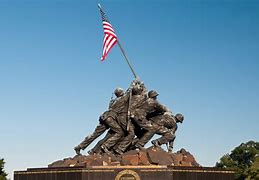
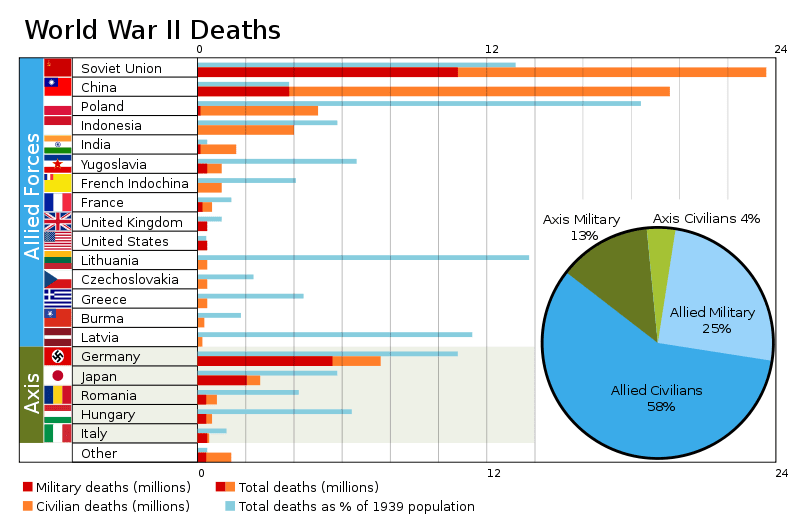
The tests were codified by four titles: Operations Crossroads, Castle, Redwing, and Hardtack. The objective was to find an explosive device that would end WWII. Two fundamental flaws in the plan are the iniquitous displacement of indigenous people on Bikini Island and the consequence of nuclear fission on humanity. One rationalizes both by believing actions taken saved the future. The saving came at the expense of a small island’s contamination, its inhabitant’s displacement, and the mitigated losses of Allied soldiers in a protracted Japan invasion. And, of course, the estimated 80,000 people killed in Japan within one year of the two atomic bombs, and the 90,000 to 166,000 that it grew to in years to come.

The rationalization is capsulized by Oppenheimer’s quote after detonation of the first atomic bomb. That seems the truth, without any rationalization. The reality of science trumps rationalization. The numbers of dead and injured is science. Bomb blasts are the science of numbers vs. the less-definable rationalization of survivors. Belief in the value of killing people is rationalization. What is not believed to be true from science or faith is only proven after its consequences are experienced.

From the Bhagavad Gita, Oppenheimer notes “I have become Time, the destroyer of worlds”.

Much of the history of the 20th century is artfully recounted by Winchester’s “Pacific”. From the growth of computers to the serendipitous creation of surfboards, Winchester reminds listeners of our changing world. Much of what science has found has hugely benefited humanity but we never know it’s true impact in advance. The atomic bombs invention is a blessing and curse. It may lead to the discovery of a new source of pollution-free power or the end of civilization.

Though Winchester’s book is written before Russia’s invasion of Ukraine, it reveals the likelihood of coming collisions between nation-states.

Winchester reminds us of the USS Pueblo incident in 1968 and its boarding and threats by North Korean soldiers. Though it was a spying mission it was conducted in neutral waters off of Korea. The inept Captain of the vessel allows the illegal boarding by North Korean forces. North Korea commandeered the vessel and unjustly incarcerated 83 seaman. Winchester notes no one is killed but the North Koreans held the seaman in poorly maintained facilities for 338 days.

Pueblo Vessel remains in the hands of the North Koreans. (Picture Taken in 2012.)

Even though education levels and science will rise among nations, each has cultural and political beliefs that are different. Those differences give rise to inevitable conflict. Winchester infers the need for recognition of human equality. He argues individuated cultural and political beliefs will continue to collide in a post-nuclear world where human life’s survival is threatened.

Winchester adds the well-worn story of environmental degradation caused by humanity.

The world’s continued use of fossil fuels is slowly changing the ecology of the Pacific Ocean. The coral that is dying provides nutrients for fish and wildlife that sustain one of humanity’s primary food sources.

“Pacific” is another story that warns of humanities folly. Winchester’s story reinforces growing understanding that we all live on one planet. Life will not end from human despoliation, but human beings will disappear if we continue to ignore nature’s balance. What will remain is life that survives in a different world.

AMERICAN IMMIGRATION

Chet Yarbrough (Book Reviewer and Critic)

As I near the age of 76, as a third generation American of Finnish grandparents, it is disappointing to see Americans’ attitude toward immigration.

America’s economic and social environment is among the best in the world. Of course, other countries have environments that are as conducive to a decent life as America. However, in 2023 world population data (noted by “Worldometer”) shows the median age of Americans is the same as China’s at 38.

With China’s repression of Uighurs and preferential treatment for Han ethnicity (91.6% of the population), Thomas Christiansen suggests China’s economic prosperity and hegemonic ambition are challenged.

“The China Challenge” by Thomas Christensen notes China is faced with a greater aggregate aging population than America.

Though the aggregate number of aging in America is less, America has its own challenge with its reluctance to admit refugees.

There are only four countries with populations nearer America’s that have a median age below 30. Those countries are India, Pakistan, Nigeria, and Mexico. Having been to some of those countries, none compare well with America’s economic and social environment. Young refugees are an American opportunity, not a burden. Refugees have always been an important part of American economic and social progress.

Thinking machines will undoubtedly change the labor needs of the world economy.

However, machines are unlikely to exhibit the empathy and care needed for an ageing human population. Much of that empathy and care can only come from younger and more fit workers.

These observations are not to presume all refugees will become laborers or care-workers, but the young are the raw material of humanity that makes nations great because they are striving to make a better life.

Americans sleeping on the street are not there because of immigration.

Some are out of work because of technology but many are there because of Covid’s interruption of their lives. The business community needs to come to grips with the needs of recovering pandemic survivors by re-training the unemployed for new jobs. Undoubtedly, some homeless are sleeping on the street because of drugs because it is their way of escaping a grim existence. That does not imply, they do not wish to escape that life. It means they need help.

The world is just beginning to recover from Covid. Recovery is a process that takes time. The loss of more than a million Americans means many are grieving over their loss of friends, families, and jobs.

America remains a land of opportunity. That is why America’s borders are being overwhelmed by refugees. Immigration is an opportunity, not a problem for America.