Books of Interest
Website: chetyarbrough.blog
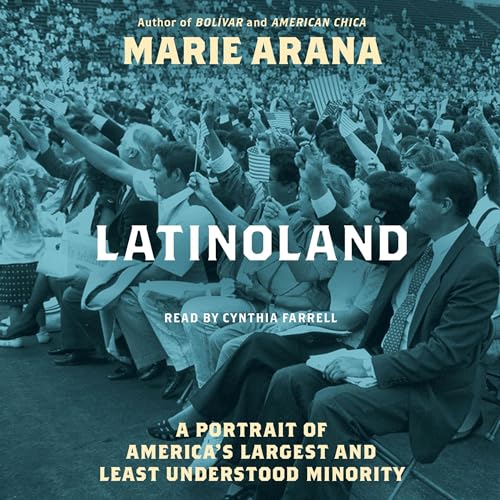
“LatinoLand” (A Portrait of America’s Largest and Least Understood Minority)
By: Marie Arana
Narrated by: Cynthia Farrell

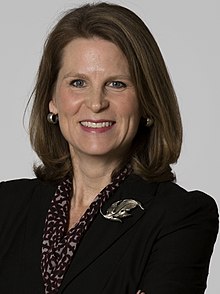
Marie Arana (Author, graduate of Northwestern University of Hong Kong with a BA in Russian Language and Literature and an MA in Linguistics.)
“LatinoLand” begins shakily with what seems an exaggeration of international Latino cultural influence in the world. However, as Marie Arana continues her report a listener/reader appreciates her knowledge of American Latino history. Her argument is that Americans have little understanding of the largest and least understood minority in the continental United States. If one continues the book beyond the first chapters, her argument about Latino culture in America becomes clear and compelling.

Presuming from Arana’s education in Hong Kong, she speaks and understands several languages. From her book, it appears she was born into an upper-class Peruvian family who could afford a superior education for their children. Her father was a successful civil engineer who married an American from Kansas. She moved with her parents to Summit, New Jersey when she was nine years old. Arana earned two college degrees from the Northwestern University of Hong Kong.

In one sense, “LatinoLand” is about America’s greatest 21st century challenge, immigration.
More importantly, it is about human discrimination, ignorance, and inequality. Discrimination begins with perceived difference. The greatness visible marker of difference is the color of one’s skin. Arana argues discrimination begins with skin color. She explains how inequality grows from discrimination, and cultural ignorance. (Though not mentioned, human self-interest plays a role in the creation of inequality.) A mixture of ignorance and not caring for others creates fear and potential for violence.

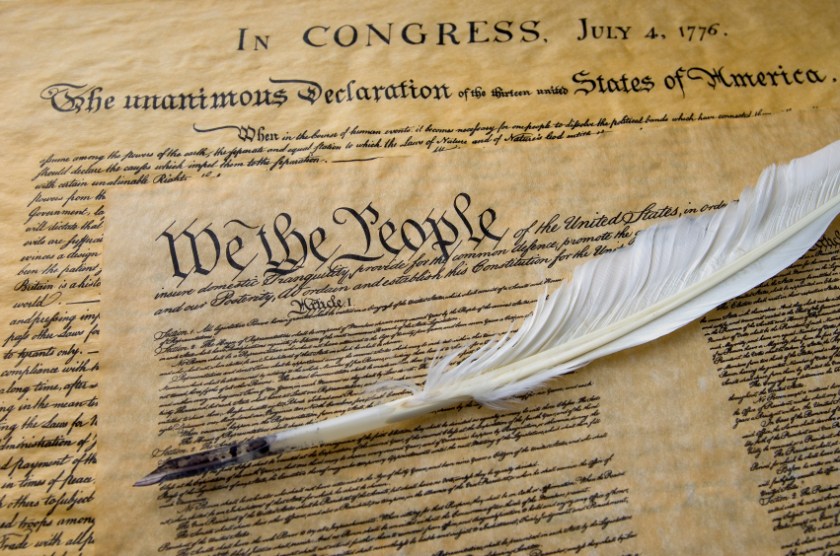
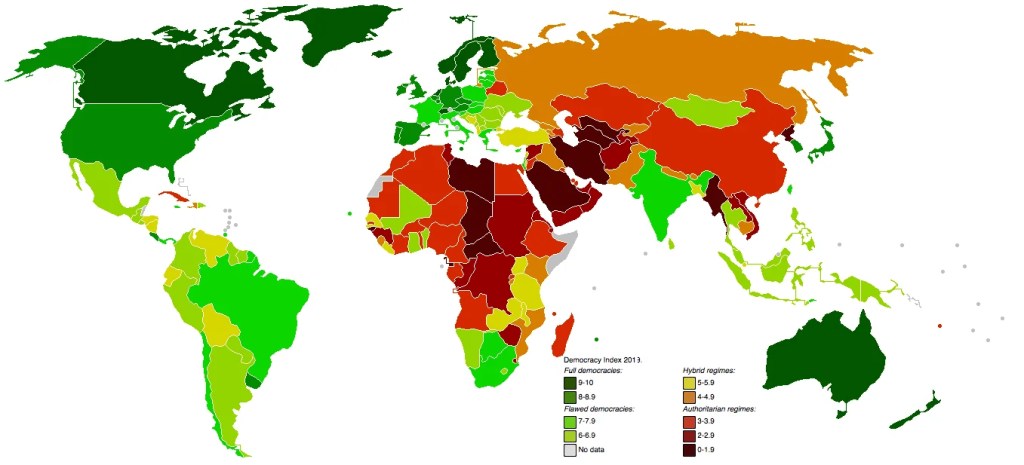
Arana notes how the color of one’s skin is one of the most prominent features of difference among humans. Skin color differences, lack of caring, self-interest, and ignorance breed economic inequality. Arana implies the American Constitution ameliorates some human failings but does not achieve its ideals. She suggests American democratic ideals have been used by some political leaders as a Trojan horse for authoritarianism. She particularly points to the difference between what Fidel Castro said about creating a Cuban democracy when he overthrew Batista, i.e., he claimed to want a democratic haven for its people. However, under Castro, Arana notes Cuba became an authoritarian dictatorship that victimized its citizens by taking their assets and using their value to create and maintain a government-controlled economy.

Arana recounts the history of Cuba, Haiti, and Puerto Rico as examples of countries that preached democratic ideals but became authoritarian dictatorships that eschewed freedom and impoverished its citizens.
Many Cubans, Haitians, and Puerto Ricans fled to the U.S. to escape authoritarian victimization. What many found was American discrimination made it difficult, if not impossible, to achieve the American ideal of freedom and independence. Immigrants could not escape poverty because of the color of their skin, their language difference, and a lack of caring by white Americans pursuing their own dreams.
She goes on to explain the first Latino becomes part of President Reagan’s cabinet as the Secretary of Education in 1988. Of course, Arana acknowledges many Latinos have succeeded in America. From sports stars to musicians to military heroes to Supreme Court justices, America has benefited from the Latino diaspora. But Arana suggests many more Latinos have not achieved the American dream because of the color of their skin.
Arana notes the Nixon Administration is the first President to recognize a separate and distinct ethnic group labeled Hispanic.

Arana suggests the labeling of ethnic groups is a chimera, a fabrication of the mind. People are a mixture of different ethnicities. She implies no one is a pure anything because of the nature of humankind. The inference is that all humans are just humans, and the only difference is in their respective cultures. Cultural differences are relevant but the color of one’s skin is the mark that bodes ill for societies’ future.

In her review of history, Arana notes how a Latino child was discriminated against by having to play in different playgrounds than white children. Only with the advance of Brown v. Board of Education in 1954 did that wrong get righted.
The proximate and initial cause of discrimination always seems to be the color of one’s skin. Interestingly, Arana notes that white skin makes a difference in many cultures, including her native culture in Peru where white skin was highly coveted and sought through marriages with white skinned relations.
Arana points to the great contributions that have been made and continue to be made by Latinos to American growth and prosperity.

Discrimination has always been a struggle because of inherent human self-interest, regardless of the ideals of the American Constitution. Arana notes the hurdles that immigrants face in getting to America, let alone becoming free and independent. Many Americans, from Presidents to Congressman to individual American citizens fight newcomers who are struggling to find a better life, employment, security, and peace.
Arana notes more Latinos are coming to America, but from other countries than Mexico. It is surprising to find more Mexican citizens are choosing to leave than come to America. This is not changing the struggle, but it clarifies Arana’s many reasons for writing her book. The ideals of the American Constitution and America’s economic wealth offer hope to immigrants.

Marie Arana clearly argues the color of one’s skin has given great advantage to white citizens of the world.