The future of the Metaverse is unwritten. Ball’s book about the Metaverse is somewhat enlightening but not comforting.
Blog: awalkingdelight
Books of Interest Website: chetyarbrough.blog
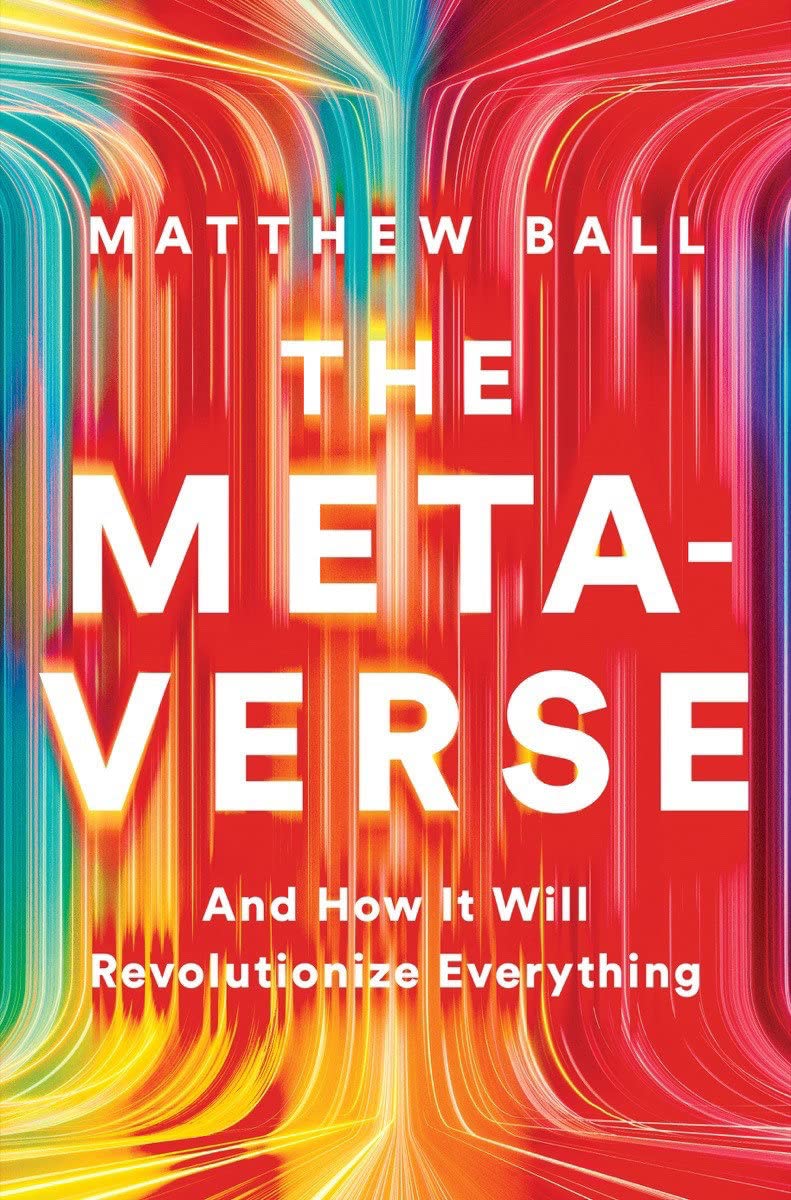
“The Metaverse” And How It Will Revolutionize Everything
By:Matthew Ball
Narrated by: Luis Moreno
Matthew Ball (Canadian Author, CEO of Epyllion an investment and consulting firm.)
As many tech people know, the word Metaverse originated in the 1992 science fiction novel “Snow Crash”. The idea of “The Metaverse” has influenced big tech businesses like Amazon, Google, Facebook, Microsoft, and smaller start-ups with the idea of linking the virtual and physical worlds into an extended, and some argue, a new world of reality. The reality is considered new because it is a view of converging perceptions of reality by combining the digital world with the natural world of things.
Ball explains gaming is the digital world’s laboratory for virtual reality.
Gamers create virtual universes with big tech adding real world experience to create a new, and different understanding of reality. The power and potential of this new understanding bends the future in ways that may be good or bad for society. The potential for good is illustrated by virtual training for everything from teaching pilots with flight simulators to a general contractor’s and land planner’s design for environmentally friendly cities. The bad is illustrated by the expanded potential for misleading and damaging society by distorting basic truths about human equality, fraternity, religion, and politics. Pundits and bad actors can use lies and partial truths to recruit and foment violence that influences the public to act against societal interests.
LAS VEGAS, NV.
The potential of the Metaverse is partially realized when one experiences an event at the Las Vegas Sphere. The creator’s presentation of earth’s environment is an immersive (near 3-dimensional) experience that immerses an audience in a virtual world that reminds one of real-world travel. One envisions the potential for the Metaverse to give one a personal experience of life and world travel while sitting in the comfort of a theater chair. The Sphere’s experience overwhelms the senses. It demonstrates the educational power of a Metaverse experience.
The bad that can be generated by the Metaverse is the aberrant destructive potential for training and development of terrorists around the world.
The idea of the Metaverse can be used for training and solicitation of terrorists who can disrupt and harm society. On the other hand, the metaverse can be a persuasive, and positive influence for environmental recruitment and action, as inferred by the Las Vegas’ Sphere experience.
Ball notes the future of the Metaverse is as unknown as the future was for the internet when the Department of Defense first created ARPANET that allowed multiple computers to communicate on a single network.
The World Wide Web became a phenomenon that revolutionized the way society communicates, works, and lives. Ball notes the same can be said of the invention of the iPhone that magnified use of the internet. The power of the iPhone changed society in both good and bad ways. On the one hand, it put a world of information at our fingertips. On the other, it provided a vehicle to disrupt society through recruitment of bad, as well as good, societal influencers.
VIEWING THE METAVERSE
The future of the Metaverse is unwritten. Ball’s book about the Metaverse is somewhat enlightening but not comforting.
Contrary to Leonhardt’s optimism, whether the American power structure continues to shift toward a more equitable treatment of the poor remains to be seen.
Blog: awalkingdelight
Books of Interest Website: chetyarbrough.blog
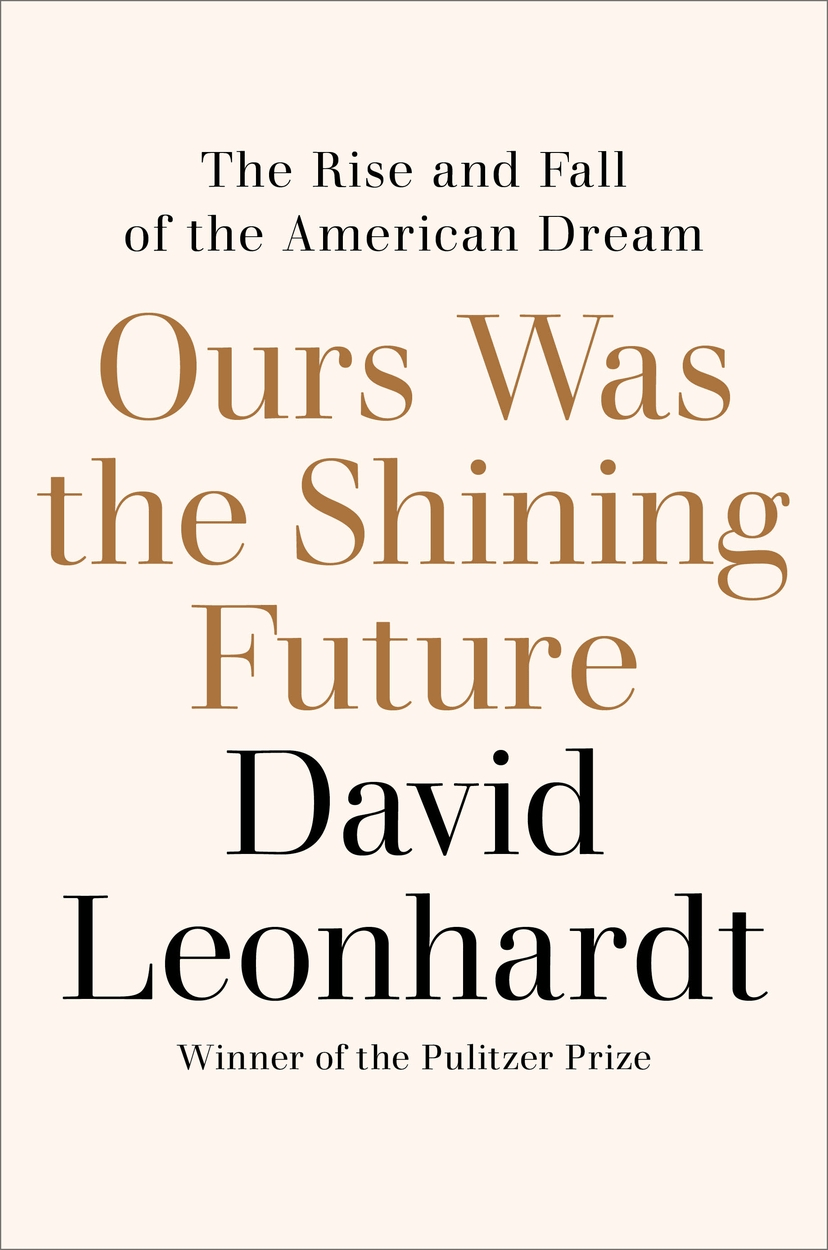
“Ours Was the Shining Future”
By:David Leonhardt
Narrated by: Dan John Miller
David Leonhardt (Author, journalist and columnist, writes “The Morning” newsletter for the “New York Times”, received a BS from Yale in applied mathematics in 1994.)
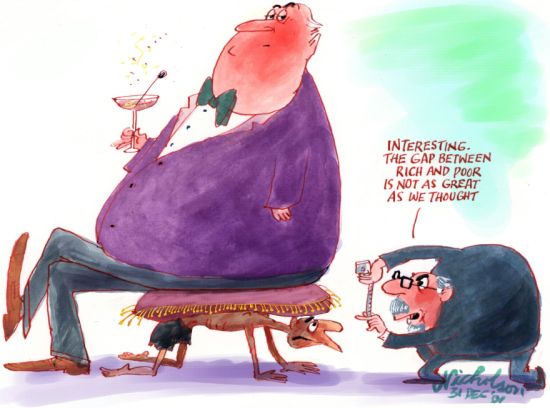
David Leonhardt writes an encomium to Democratic Capitalism in “Ours Was the Shining Future”. Some of what Leonhardt writes will make conservative Americans gag while liberals will tend to praise his view of American history. The hot button issues of 21st century America are immigration and the rising gap between rich and poor.
“Dallas, Texas, United States – May 1, 2010 a large group of demonstrators carry banners and wave flags during a pro-immigration march on May Day.”
Leonhardt’s selected historical facts argue that immigration has a cost to America that is mitigated by its contribution to the economy by second and later generation immigrants. He resurrects John F. Kennedy’s oft quoted phase about America as “A Nation of Immigrants”. Leonhardt argues the rising gap between rich and poor accelerated with the election of Ronald Reagan and subsequent tax and spend decisions made by later government administrations.
The difficulty one may have with Leonhardt’s reporting is that historical facts do not speak for themselves.
It is the power of Leonhardt’s persuasion rather than the facts of history (and one’s own prejudices) that make a credible argument for
(1) the benefit of unionization in America,
(2) the benefit of intervention by the Franklin Roosevelt administration during the depression,
(3) the aggressive tax reduction for high income earners with government overspending (beginning with Ronald Reagan) that negatively affected the American economy and disproportionately increased the gap between the rich and poor, and
(4) the monumental economic benefits from second generation immigrants like Sundar Pichai (CEO of Google), Indra Nooyi (former CEO of PepsiCo), Elaine Chao (the U.S. Secretary of Transportation under Trump), and Lin-Manuel Miranda (the creator of the Broadway musicals “Hamilton” and “In the Heights”), and others.
Leonhardt recounts the history of the union movement in America that evolved into a political power that improved the income and lives of the working poor.
He touches on the corruption of the union movement but on balance suggests more good than bad came from its representation of labor. Leonhardt argues the decline of unionization and tax policy changes in the late 20th century increased the gap between rich and poor.
Leonhardt argues immigration needs reform and infers it should begin with acceptance of an estimated 340,000 children (dreamers) born in the U.S. to unauthorized immigrants.
He suggests new immigration should be limited to immediate relatives of legal immigrants that presently live in the U.S. He reiterates the value of second-generation immigrants while acknowledging the burden borne by the economy with first generation immigrants. New immigrants generally have a language deficiency, greater education needs, and a willingness to work at jobs for lower pay than non-immigrant workers who also need jobs.
Leonhardt suggests the gap between rich and poor is a function of an unequal distribution of political power.
Leonhard believes improvement is coming from a resurgent union movement and an evolving recognition by both conservatives and liberals of the consequence of inequitable tax treatment that favors the rich.
There is some evidence to support Leonhardt’s belief in a power shift with the recent union actions in automobile, teacher. and nursing services strikes that increased their income. Minimum wages have risen in 22 states that have affected an estimated 10 million workers. The highest are in California ($16), Massachusetts ($15.75), and Washington ($15.50).
However, one is inclined to be skeptical about income gap reduction with Trump’s Presidency that further reduced taxes on the rich and Biden’s reluctance to act on tax inequality.
Leonhardt receives a Pulitzer Prize for Commentary, the Gerald Loeb Award for excellence in reporting on business, finance, and the economy, a New York Time Book Review Editors’ Choice award, and The Atlantic’s Ten Best Books of the Year for the most notable and influential book of the year. These are nice academic rewards but whether Leonhardt’s arguments are anything more than a finger in a dike, near a breaking point, is yet to be revealed.
Contrary to Leonhardt’s optimism, whether the American power structure continues to shift toward a more equitable treatment of the poor remains to be seen. The continued popularity of Trump among conservatives is disheartening and suggests otherwise.
Every human being has a life story. A few human beings like those in Verghese’s book show that respect for every life carries the hope of civilization.
Blog: awalkingdelight
Books of Interest Website: chetyarbrough.blog
“The Covenant of Water”
By:Abraham Verghese
Narrated by: Abraham Verghese
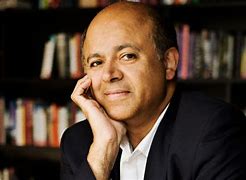
Abraham Verghese (Author, American physician, Professor of the Theory and Practice of Medicine @ Stanford University Medical School.)
As an immigrant, Abraham Verghese began working in America as a hospital orderly. His hospital experience led him to pursue a medical degree. His experience as a world traveler and physician gives weight to his writing about medical diagnosis, brutal loss of life, societal norms, the importance of belief, and human vulnerability. Verghese tells a story from the beginning of the twentieth century through two world wars. Its story is of two physicians (one from Sweden another from Scotland), and a resolute lower caste family in India.
Water surrounds the world like an agreement that ties all people together, for better or worse.
The author of “The Covenant of Water” emigrated to America when Haile Selassie was replaced by a Marxist military government in Ethiopia. One wonders if cultural conflict of interest may be more pernicious when land masses are separated by bodies of water. “The Covenant of Water” implies otherwise. Like any lasting covenant between parties, respective self-interests must be addressed and respected. When they are not, all parties suffer. At one point, Verghese suggests “The Covenant of Water” washes away life’s troubles. The tragedies he recounts suggest the real truth is that life’s troubles never wash away. Troubles remain within us in memory and only truly disappear in death.
India’s Saint Thomas Christians date back to the 3rd century. An estimated 4,000,000 St. Thomas Christians live in 21st century India.
Verghese’s story holds together through the generations of an Indian Christian family from the early 1900s through two world wars and the beginning of the 70s. Part of the story’s interest is in Great Britain’s colonization of India and its historical perspective. At the forefront of the story, there is the inevitable cultural conflict in any countries’ colonialization of another. Verghese shows no clear line can be drawn between exploitation and improvement of a colonized society whether its native American in North America, Aboriginal in Australia or of a lower caste family of a minority religion in India. Verghese interweaves an insightful story that magnifies reasons why cultural difference is only overcome on a person-to-person basis. India will always be India to its native citizens. Today, a similar truth is being played out in Gaza and Israel. Palestine will always be Palestinian just as Israel will always be Israeli.
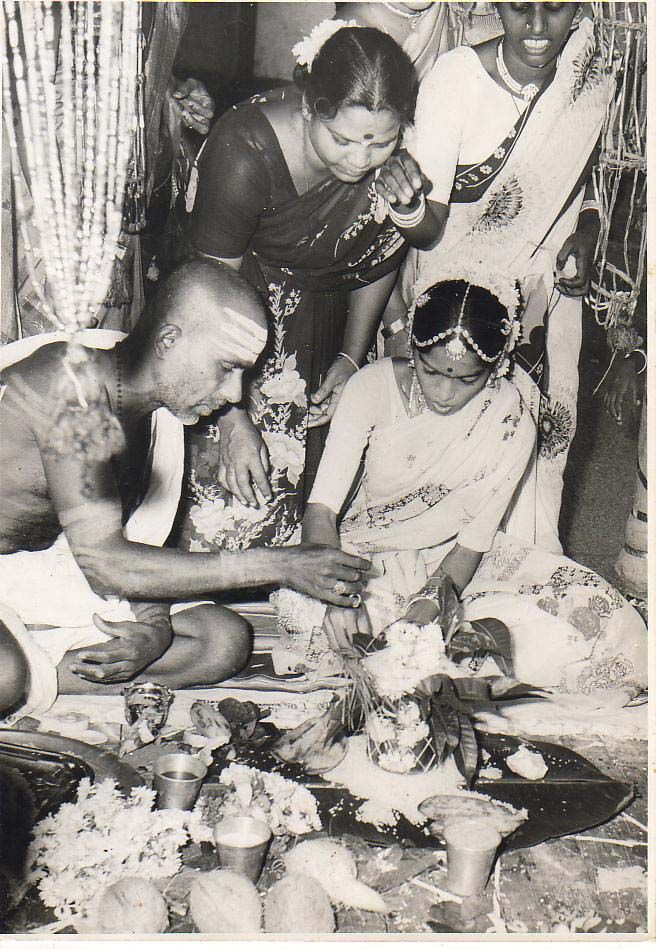
Verghese’s story begins with an India wedding betrothal of a 12-year-old girl to a 40 something widow who has lost his wife to illness.
The betrothal is made at the recommendation of the husband’s relative who as a matchmaker researches the background of the betrothed’s family. The chosen bride is naturally afraid to leave her family and the groom is unsure of what he wishes to do. The matchmaker assures the groom the betrothal is a good one for him, and the marriage is consummated. The young girl travels from her home to her new husband’s property many miles away. Her greatest unhappiness is in leaving her mother but she is greeted by her new household by a helpful older woman. The young girl is comforted by her Christian beliefs and receives an omen of welcome by a massive bull elephant that had been saved by her new husband.
The incongruity of ages in this marriage is disconcerting to many listener/readers. Verghese non-judgmentally explains the culture of India in the early 1900s.
(World travelers will recognize remnants of that betrothal culture exist in India today.) The husband has a two-year-old son from his former marriage. He is a landowner as a result of personal ambition and hard work. He is not rich but is well respected by the people that know him. The husband treats his new bride with respect, and she begins to care for the household and her new stepson. They first have intimate relations when she turns 17. Their first child is a daughter who has a developmental problem that limits her intellectual growth. After two miscarriages, she has a boy who is a binding connection for the story. She grows to love her husband who dies when his child wife reaches her thirties. She becomes the matriarch of the clan.
This sets the tenor of Verghese’s story. It is a long, long, some might say too long story that repeatedly reminds one of how important it is to respect other people’s cultural beliefs while all life is filled with hardship and change.
Listener/readers will get a glimpse of India’s, as well as Great Britain’s, and Sweden’s cultures with the introduction of a Scottish and Swedish surgeon. What the main characters hold in common is that they have underlying respect for the life of others in any culture, whether rich, poor, educated, or unschooled. The two doctors, the child bride and her son are heroes and victims of their times.
Each of the main characters in Verghese’s book have unique life stories but a common thread of belief is respect for the life of all, cultural acceptance and understanding, and life-long pursuit of education.
The Swedish doctor travels the world to settle in a remote part of India to recreate a refuge for victims of leprosy. The Scottish doctor, after a life-threatening injury, becomes a patient of the Swedish doctor to be figuratively reborn by his experience after the Swede’s death. As true of the India family, the Scottish doctor’s life is dramatically changed by tragedy. The Swede dies at the refuge after having rehabilitated the Scottish physician’s burned hands. The Scott has been introduced to supporters of the Swede’s practice at the Leper colony and he evolves into a business owner/manager that makes him wealthy.
The son of the India child-bride saves a young child from drowning in a flood that whisks him and a nearly dead victim to the Swedish doctor’s clinic where the physically unable Scottish surgeon directs the boy in how to incise the babies throat to save the baby from asphyxiation. The young boy saved the babies life and overcame a hearing deficiency to become a social leader of his village in India during and after WWII.
The young boy, now a man, falls in love with a woman of his age that he had met when he saved the nearly drowned baby. They marry and have a child of their own. The child dies in a tragic accident. The loss of the child is felt to be the fault of each parent which tears their relationship apart. It never mends as the tragedy of their relationship continues to unfold. Their marriage falls apart. At this point the Scottish doctor re-enters the story with an unexpected revelation about the wife who leaves and returns because of the loss of their child. What is meant by “…loss of their child” is an added chapter to this tragedy that extends the story beyond one’s imagination.
Verghese shows himself to be an excellent writer but to some listener/readers the denouement of his story is a step too far for one’s imagination.
Every human being has a life story. A few human beings in Verghese’s book show that respect for every life carries the hope of civilization. Without respect between those who are different, Verghese shows why human dysfunction and tragedy will remain a condition of human society.
Do humans upset nature or are they another victim of nature’s balance?
Blog: awalkingdelight
Books of Interest Website: chetyarbrough.blog
“Drive Your Plow Over the Bones of the Dead”
By:Olga Tokarczuk, Antonia Lloyd-Jones
Narrated by: Beata Pozniak
“Drive Your Plow Over the Bones of the Dead” is well narrated, but its appeal seems lost in translation. The book is written with financial support from the Czech Republic. It makes a fundamental point about the animal world, but its story is diminished by its main character’s representation.
WINTER IN THE CZECH REPUBLIC
The heroine of the story believes in astrology. Those who are non-believers are distracted by the heroine’s constant reference to what many, if not most, consider a pseudo-science. Janina is an older woman who lives in a small settlement in the Czech Republic. She is a schoolteacher who has responsibility for the caring of second homes in a wilderness settlement when not in use by their owners. There are only a handful of residents that stay in the settlement during harsh winters.
The story begins with the death of a year-round resident. It appears the death is an accident from choking on a deer bone, but several mysterious deaths occur in that winter that make the local police realize a murderer is in the area.
The schoolteacher argues the deaths are a result of a rebellion against hunters by deer and wolves that have been indiscriminately hunted and killed for sport. She supports her argument with evidence of deer and wolf tracks near the death scenes. She reinforces her unwavering belief with astrological observations of the planets, human’ dates of birth, and the solar system’s orbital interference with each other.
The schoolteacher argues to all who would listen that indiscriminate human predation is causing an animal rebellion in their remote location.
She has mysteriously lost two pet dogs in this winter of death. The truth of her theory of rebellion becomes less believable and more mundane with the discovery of more human deaths and her characterization of her pets as lost daughters. Her dogs may have just run away or been eaten by wolves. With more human deaths, the police are convinced there is a human murderer in their midst. The story becomes a murder mystery, not a conspiracy foretold by the heavens.
What actually happened to her dogs is the clue that solves the case.
One surmises the underlying meaning of the story is that human beings are indiscriminate murderers of nature.
How many buffalo, elephants, lions, wildebeests, rhinos, tigers, boar, elk, and deer have been hunted and killed by humans for their ivory or trophies with carcasses left to rot?
In one sense, all predation is simply a way of keeping nature in balance. In another, human predation upsets the balance of nature by volitional choice. To the author, it is the second sense that tells listeners–humans do not preserve but arbitrarily upset the balance of nature.
The murder mystery is solved in the end, but the question lingers. Do humans upset nature or are they just another victim of nature’s balance? Time, not religion, science, or fiction, will tell.
The implication of “Queenie” is that who we become is highly influenced by how we are raised and treated as children.
Blog: awalkingdelight
Books of Interest Website: chetyarbrough.blog
“Queenie”
By: Candice Carly-Williams
Candice Carly Williams (British Author, writer for “The Guardian” and “The Sunday Times”.)
Candice Carly Williams story will trouble every parent of conscience about their behavior when raising children. Williams adds an extra dimension to her story because it is about a woman of color.
Queenie, the heroine of Williams’ story, is a college educated writer for a British newspaper. She is the first person in her family’s history to have graduated from college. Queenie is in the midst of a breakup with her white boyfriend. She is pregnant but loses her pregnancy soon after her boyfriend decides they should take a break from their relationship. Her boyfriend keeps the flat they are renting by saying she cannot afford the rent so she should be the one to move out, either to her family or to a boarding house that she can afford. Queenie chooses to rent a room in a boarding house with other women. This is the beginning of Queenie’s journey down a Rabbit Hole of a psychic/neurotic breakdown that nearly destroys her life.
Queenie appears to use the break-up as license to exploit unattachment. She goes through a series of male acquaintances who capitalize on her vulnerabilities. Her sexual liaisons are for pleasure and pain, not affection or what might be considered love. Her ethnic beauty is shown as a curse and attraction to the worst nature of men. The men she chooses have little to no interest in who she is or why she allows them to treat her as a sex object. To Queenie, it is a matter of personal attention, pleasure, and pain that motivate her choice of mates. Queenie finds there are consequences for her behavior that range from hurting her women friends to diminishing belief in herself as an independent and competent human being.
Being Black in a white community magnifies Williams’ diminished self-esteem by illustrating how disrespected a person of color and a woman is in society.
However, Queenie’s sexual adventures and exploitation are applicable to many women in a misogynistic world. Being a woman in this world is hard but “Queenie” shows being a woman of color is even harder. The history of Queenie’s childhood is explained after events of her adult life are told. Childhood history is the base upon which the story of Queenie’s life has value to a reader/listener.
After being suspended from her job for an unjust stalking accusation, Queenie is compelled to move in with her grandparents. Williams offers a backstory of Queenie’s childhood. Her mother is in an abusive relationship with a second husband. She has no contact with her natural father who abandoned Queenie’s mother. Her mother re-marries. She is turned out of the house by her abusive stepfather when she is eleven years old. To a person of such a young age (despite help from grandparents) her stepfather’s rejection is unconscionable. It makes Queenie untrusting of everyone she meets but particularly men who have their own motives.
The “Queenie” story makes one think of what it is like to be raised in a broken family and how it impacts a child’s adult life. In Queenie’s case, she feels she can trust no one. Her many hook-ups are just a way of connecting with others to feel something other than being alone.
There are many lessons in Williams’ story. Men and women have a lot in common. Most, if not all human beings have some level of wanton desire.
Self- control is a power one can choose to use or ignore. Respect of every person is an ideal one strives to achieve but rarely accomplishes. When we lose self-control or when we fail to respect others, we diminish ourselves and society. Queenie grows to learn how to cultivate self-control with the help of therapy and the support of her friends, her grandmother, grandfather, and mother.
Like the longevity of Putin, and Assad, Kim Jung-Un is as likely to stay in power as long as the people who protect him are living better lives than the majority of their country’s citizens.
Blog: awalkingdelight
Books of Interest Website: chetyarbrough.blog
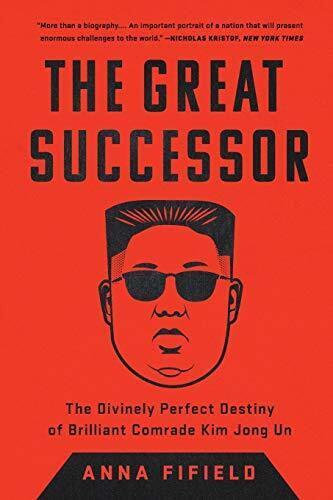
“The Great Successor”
“The Divinely Perfect Destiny of Brilliant Comrade Kim Jung Un”
By: Anna Fifield
Anna Fifield (Author, Asia-Pacific editor at The Washington Post.)
PYONGYANG, NORTH KOREA: This file picture dated 15 April 1992 shows North Korean President Kim Il-Sung waving during the celebration marking his 80th birthday at Kim Il-Sung stadium in Pyongyang. The Chinese government announced last week it would not send “anyone” to attend Il-Sung’s 92nd anniversary in response to North Korea’s refusal of international nuclear inspections. (Photo credit should read JIJI PRESS/AFP/Getty Images)
Anna Fifield offers a cloudy picture of today’s authoritarian leader of North Korea in “The Great Successor”. The reclusive and secretive nature of North Korea’s leadership makes Fifield’s analysis of Kim Jung-Un somewhat compromised. Her analysis is based on interviews of estranged North Korean’ exiles, other book writers, and news reporters about a regime that is notoriously opaque.
Despite the potential bias of secondhand information, Fifield shows a leader who exercises despotic control over 26 million people.
Kim Jung-Un (Supreme leader of North Korea.)
Fifield argues that North Korea’s government control is based on a cadre of carefully screened and highly benefited sycophants that obey Kim Jung-Un’s orders. At the age of 28 or 29, on December 17, 2011, Kim Jong-Un became the leader of North Korea after the death of his father, Kim Jong-il.
Kim’s most definitive action after appointment is to discredit his uncle, Jang Song-thaek who had government power and great influence in North Korea’s relationship with China and other sympathetic countries.
Fifield suggests Kim Jong-Un’s youth required assertiveness for him to show leadership legitimacy. The 67-year-old, Jang Song-thaek is accused by Kim of attempting to overthrow the state. He is executed on December 11, 2013, two years after Kim’s ascension. Fifield argues this action by Kim sent a message to his government employees and the public that he is in charge of North Korea.
Though the North Korean economy is nearer third world standards, the underground economy helps the poor raise their standard of living.
Fifield notes two critical factors that aid Kim Jong-Un’s control of North Korea. One is the fear created by his governments control of surveillance and propaganda. The other is his tolerance for an underground capitalist movement that bribes public officials while providing citizens added income.
Kim Jong-Un’s successful drive for a nuclear bomb gave him a position in the world of nuclear threat that tempers any nation-state’ action against his regime.
Fifield infers Kim Jong-Un is smart, his actions calculated, and his control of the country formidable. A primary example of Kim’s calculation is the story Fifield tells of his negotiation with President Trump. Kim manages to be the first leader of North Korea to meet with a President of the United States. Trump complimented Kim as a “strong guy”, a “great negotiator” and that he had a “very good relationship with him”. Fifield explains Kim’s success with the nuclear bomb program encouraged him to redirect his focus to modernizing the country and its economy.
Kim praised President Trump while leaving the idea of nuclear disarmament as a possible negotiable issue in return for American help with the economy. Fifield suggests Kim has no intention of abandoning his nuclear bomb program.
Fifield suggests Kim’s focus became the economy with an increased incentive to normalize relations with America. (In 2023, Kim’s failure to improve relations seems to have reignited his nuclear bomb ambitions with more testing and further rocket delivery tests.)
Very little was known about Kim Jung-Un before his ascendence to leadership. He received his early education in North Korea and Switzerland. He was strongly supported by his mother who promoted him to the then leader of North Korea, Kim il Sung, who wanted continuation of the Sung dynasty, the Mount Paektu bloodline, of which Kin Jun-Un represents.
Kim Jung-Un has two sisters, one half-brother, and one brother. The younger brother, born in 1981, Kim Jong-chul (on the lower right), lives a low-profile life in Pyongyang with no interest in government. The half-brother, Kim Jon-nam, was assassinated in Malaysia in 2017. The older sister, Kim Sul-song (upper left) is a worker in the propaganda department that supports Kim Jong-Un and his leadership but has more recently been sidelined. A sister who is younger than Kim Jung-Un is characterized as a publicity diplomat. She appears accommodating within the limits of Kim Jun-Un’s influence and control.
Fifield’s book is interesting but not particularly enlightening. Kim Jung-Un may be on the world stage for a long time. The Ukraine invasion by Russia, along with China’s support gives North Korea added weight in world affairs. Like the longevity of Putin, and Assad, Kim Jung-Un is as likely to stay in power as long as the people who protect him are living better lives than the majority of their country’s citizens.
“Girl Decoded, A Scientist’s Quest to Reclaim our Humanity by Bringing Emotional Intelligence to Technology”
By: Rana el Kallouby with Carol Colman
Narrated by: Rana el Kallouby
Rana el Kallouby (Author, Egyptian-American computer scientist and entrepreneur, founder and former CEO of Affectiva, Executive Fellow at Harvard Business School.)
Rana el Kallouby offers an autobiographical story of her personal journey from Egypt to America and her evolution from scientist to CEO of a facial recognition tech company. Though Kallouby’s story is personal, her experience shows what determination and commitment is required to start a tech company and grow it into something more than an idea. Of course, the underlying story is about American assimilation.
Egyptian women protesting inequality.
Growing up in Egypt in the 20th century, Kallouby experiences an upper middle-class life with a father who taught tech coding and a mother who works as a computer programmer for a bank. These were years of upheaval in Egypt and the Middle East for both men and women. Many educated Egyptian’s hired themselves out to work in other countries that needed technological help in business and finance. Women in the workplace in Egypt were less common than in the U.S. Kallouby’s mother chose to be both a housewife and a working mother who inspired her daughter to be more than a barer of children, homemaker, and companion to a husband.
Part of Kallouby’s early education is in Kuwait while her father works for the government.
She and her parents are there when Iraq invades Kuwait and when Gaddafi sets fire to the Kuwait oil fields when his invading army is ejected by American forces. Kallouby’s family returns to Egypt where Rana continues her education at the American University of Cairo. She earns a BA and Master of Science degree, and is subsequently admitted to Cambridge to pursue a Ph.D.
The tech experience of Kallouby’s parents lead her to an interest in coding.
That interest evolves into an idea about modern communication and its reflection in face behavior. The growing popularity of the internet diminishes personal contact that gives emotional context through facial expression. Kallouby begins spending a great deal of time coding facial expressions with the idea of creating recognition software to give more clarity to human communication.
Hosni Mubarak (1928-2020, Fourth President of Egypt.)
As a young Egyptian woman and as a devout Muslim, Kallouby chooses to marry a fellow Muslim who has his own tech business in Cairo. They buy a house and eventually have two children, a boy and a girl. As she commutes between Boston and Cairo, President Hosni Mubarek resigns under political pressure fomented by the Muslim Brotherhood. Mohammed Morsi is elected in 2012 as the new leader of Egypt. Morsi becomes Egypt’s President because of his religious background and support by the Muslim Brotherhood. Because of Morsi’s inexperience as a government leader and its troubled economy, Egypt’s military re-takes control of the government under Abdel Fattah el-Sisi in 2014. Though little is said by Kallouby about these events, her life’s journey continues.
Kallouby becomes obsessed with the idea of coding facial expressions.
That single-minded focus leads to further education in England and the U.S. After receiving a master’s degree, Kallouby chooses to seek a PhD at Cambridge with facial recognition as her thesis. Because of her chosen thesis, Kallouby’s education and drive lead her to an MIT lab in Boston.
This begins Kallouby’s Americanization which carries good and bad consequences.
Kallouby’s single-minded focus is two-edged. As a devout Muslim, she marries a fellow Muslim in Egypt. The person she marries is in the tech industry. He manages his own business in Egypt.
Kallouby’s travels between Egypt, England, and the U.S. create a growing disaffection in their marriage.
Though they manage to have two children, the strain of separation leads to divorce. The good that comes from Kallouby’s focus and ambition is evidenced by her success in being a co-founder of Affectiva. She did not do it alone and was aided by Dr. Rosalind Picard (the other founder), both of which were researchers at the MIT Media Lab. The bad is the personal price Kallouby pays in a divorce from her Egyptian husband and the hardship of being a single mother with two children.
Kallouby’s journey illustrates the great value of immigration to America.
Immigration comes with a personal price, but America is blessed by those who have the will and drive to make a better life for themselves and others. Kallouby’s story shows how religion, nationality, and personal ambition add to America’s prosperity. Kallouby became an Egyptian American with a foot in each country. Both Egypt and America are better for it.
CEOs and their Boards need to compensate workers equitably.
Blog: awalkingdelight Website: chetyarbrough.blog
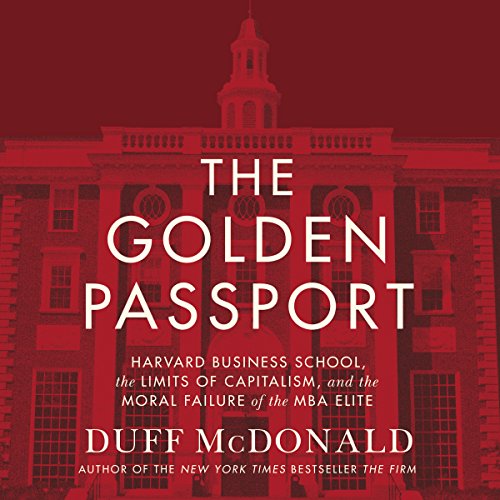
“The Golden Passport: Harvard Business School, the Limits of Capitalism, and the Moral Failure of the MBA Elite”
By: Duff McDonald
Narrated by: George Newbern
Duff McDonald (Author, Canadian American, University of Pennsylvania graduate in Finance.)
“The Golden Passport” explains how Duff McDonald believes America got to today’s state of income inequality. McDonald argues that inequality is largely created by one education system, Harvard Business School, founded in 1908. According to a team of academics that publishes “Academic Influence”, HBS produces most of the Fortune 500 companies’ CEOs. With an estimated 70,000 HBS alumni, there is some merit to McDonald’s argument, but the fundamental cause is not education but human nature.
The extent of HBS’s impact on business practices certainly has influence on business leaders and teachers around the world. This is a similar argument made by William Deresiewicz in “Excellent Sheep” about America’s political leaders and administrators who were educated in exclusive ivy league universities.
Both authors suggest Ivy league universities are turning out management automatons that tend to think inside the same box, i.e., a mind-set that perpetuates income and power as the primary motivations of those who manage the business economy. Both authors argue Ivy league’ graduates permeate the management structure of the largest businesses and most powerful political offices in the world. The graduates of the Ivy league have common backgrounds and education with predictable answers for thought and action that have accelerated and reinforced income inequality in America.
Ayn Rand (1905-1982, Russian-born American writer and philosopher associated with capitalist’ self-interest. Though not educated at Harvard, Rand is considered a philosophical precursor to a belief that one should have liberty of thought and action, i.e., the libertarian view of society.)
Though HBS may be a promoter and reinforcer of income inequality, it is only an influencer of what makes humans acquisitive. The majority, if not all humans, are self-interested. Though self-interest varies among individuals, wealth is power–particularly in capitalist countries. The more money one has the more freedom and independence accompanies their lives.
McDonald’s point is that the HBS’s business model focuses on profitability as the only measure of business success. Because of that focus, business executives myopically view workers as a cost rather than source of company profitability. By reducing worker costs, executives are rewarded with uncapped compensation policies.
Business decisions are always made without knowledge of all information needed to direct an organization’s actions.
The case study method of education, pioneered by the Harvard Business School, focuses on profitability as the primary, if not singular, goal of a business enterprise. Efficiency becomes the mantra of business management which discounts, often ignores, workers’ compensation within corporations. By focusing on profitability, there is a point of diminishing return because of its impact on workers’ motivation. Pressing for higher productivity and reducing labor costs have diminishing rates of return that are not taken into account by CEOs interest in cost cutting. CEOs are incentivized to choose efficiency over worker welfare and productivity.
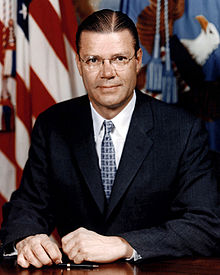
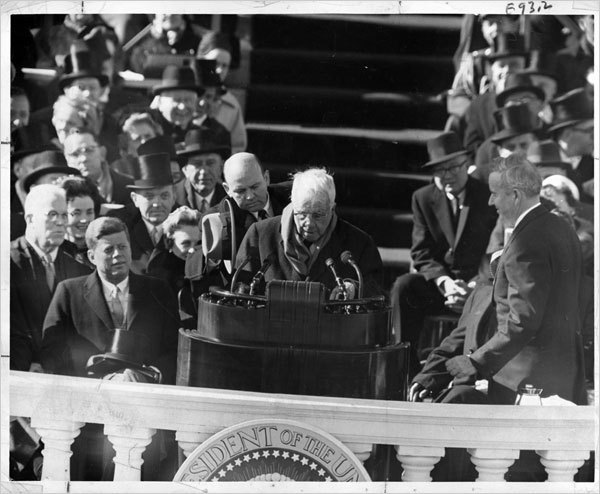
Robert McNamara (U.S. Secy. of Defense in the Kennedy administration.)
The real-world example McDonald uses to make his point is the war in Vietnam and the role of U.S. Secretary of Defense, Robert McNamara. McNamara is a Harvard graduate that by any measure was a brilliant student. He outclassed most of his business class students in his ability to bolster arguments with recalled information that most would have to look-up to use as part of their policy decisions.
Henry Ford (1863-1947, American industrialist and business magnet who founded Ford Motor Company.)
McNamara accepted the Controller’s job at Ford Motor Company when Henry Ford’s son took over the company. His education at Harvard led him to focus on efficiency as a primary tool for improving the business performance of Ford. His drive for efficiency is based on reducing costs of labor and material while increasing automobile production.
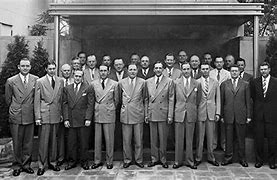
McNamara developed what became known as the “Whiz Kids” of management that carried out his drive for efficiency to increase corporate profits.
By the measure of profitability, the “Whiz Kids” were extraordinarily successful. The drive for efficiency increased corporate officer salaries because of corporate profits. What is not taken into consideration is that it disproportionately depressed worker compensation increases. The long-term worker’ effects were not part of the “Whiz Kids” concern; in part because those effects are difficult to measure. There are many reasons why Ford’s profits fell after McNamara left the company, but McDonald implies an underlying cause is Ford’s penchant to address worker income as only an efficiency measure. Ford loss of profit rises in the early 1970s and reaches $2.3 billion in 1991.
McNamara became Ford’s General Manager in 1949 and served as President in 1960. He left Ford in 1961 to become President Kennedy’s Secretary of Defense.
McDonald writes that McNamara’s experience at Ford led him to believe statistical analysis is the only basis upon which success may be measured. That focus discounted human intensity of belief in the political cause of the Vietcong. American superiority on the battlefield could not defeat Vietcong political intensity. McDonald’s point is that a CEO who looks at employees as only cost centers rather than humans with a social underpinning will eventually cause business failure.
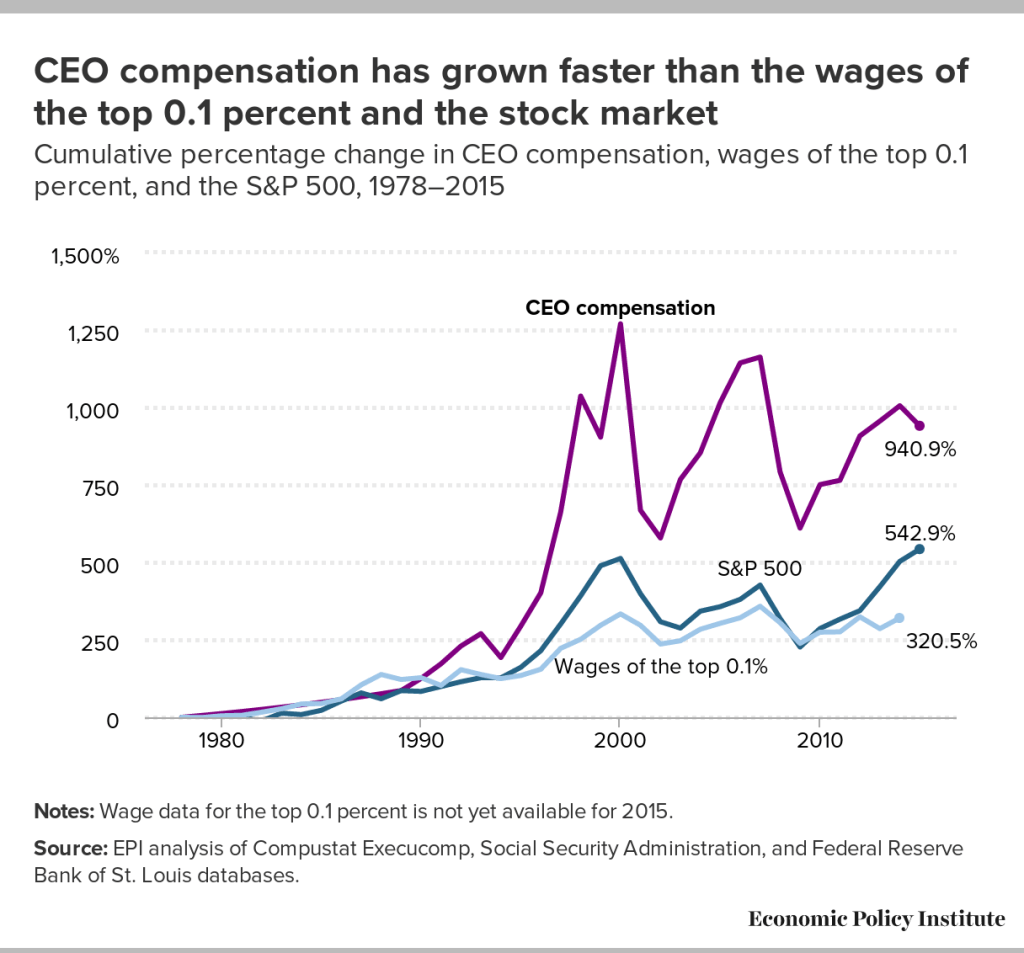
The difficulty is in measuring worker social impact on performance. A CEO is unable to make rational decisions about employee compensation without better understanding of workers’ needs. With CEO emphasis on corporate profits, the inclination is to either to ignore or minimize workers’ compensation when making business decisions. The end result is to widen the compensation gap between CEO pay and most employees of the company. McDonald argues the 1970s became the beginning of a pig feeding for corporate CEOs that has only accelerated with further influence by HBS’ education changes.
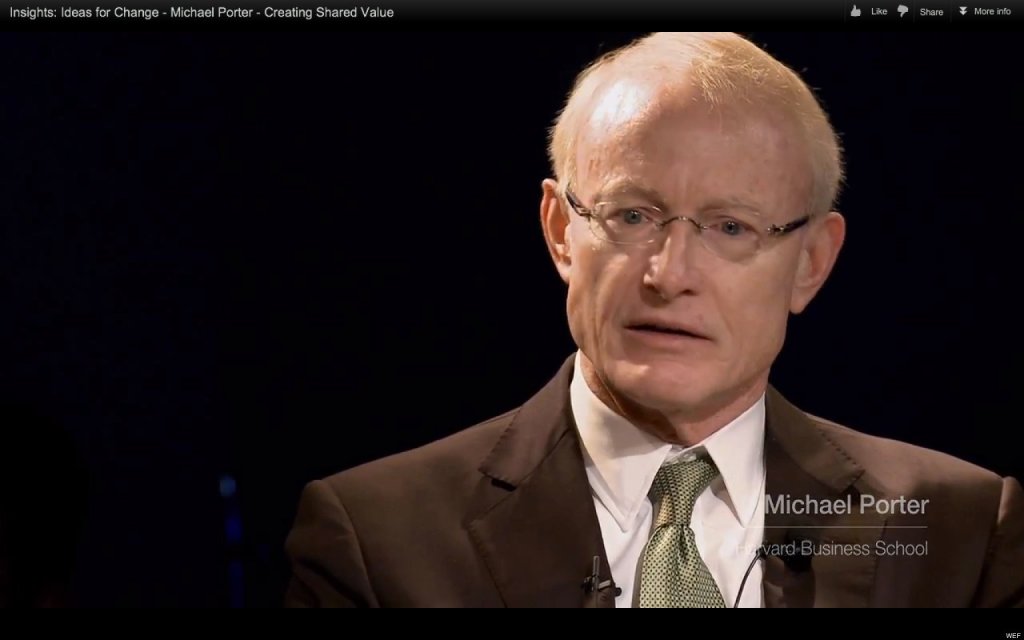
McDonald explains how business education at Harvard created a self-perpetuating engine for CEO salary acceleration with HBS Directors like Michael Porter who created the Five Forces Framework. The Five Forces Framework is a statistical analysis of the competitive environment of specific industries. By using that analysis, business mergers and divestiture decisions could be made based on profitability.
Michael Porter (Born in 1947–appointed Bishop William Lawrence University Professor at Harvard in 2000. Considered the strategy guru at Harvard that led to mergers and acquisitions around the world.)
The net effect certainly increased business profits but minimized employee enrichment while multiplying CEO compensation.
The Five Forces Framework led to a spate of mergers that continued to accelerate CEO compensation without commensurate salary increases or, in some cases, continued employment of workers.
Before beginning “The Golden Passport”, one might think the unconscionable incomes of CEOs of large corporations is a moral, not pecuniary, observation. However, CEO’s pay in relation to salaries of working men and women is not about morality. It is about money, worker employment, and the work contribution a motivated worker offers to business. There are many variables to the profitability of a corporation with a CEO’s contribution being management judgement, time, and skill. The argument based on morality ignores the truth that one person’s role as CEO cannot be justified when it is 300 to 400 times the annual salary of a worker (an estimate noted by Statistica, a global analytics software package).
How can any human being be worth 30 to 40 million dollars a year–even if he/she is expected to work every hour of a 24-hour day as a CEO? McDonald suggests HBS’ educated CEOs press for short term profitability because it offers outsize rewards for their performance. Workers are laid off when mergers occur and they never receive compensation increases equal to bonuses paid CEOs.
McDonald goes on to give many examples of the evolution of HSB curriculum for students. The emphasis remains based on statistical analysis of profitability because it is an easily measurable criterion. Corporate performance improvement, whether it is improved profit or an industry’s ability to stay in business, CEOs and their Boards need to compensate workers equitably.
Evolution may ultimately reveal the truth of life and death but neither religion nor science have been historically infallible nor unerring.
Blog: awalkingdelight Website: chetyarbrough.blog
Scientism and Secularism: Learning to Respond to a Dangerous Ideology
By: J.P. Moreland, Dan Egeler-Forward
Narrated by: Mathew McAuliffe
J. P. Moreland (Author, American philosopher, theologian and Christian apologist.)
“Scientism and Secularism” is a disappointing polemic on an important but highly biased assessment of religion and science. No one escapes the bias of belief because of their life experience. J. P. Moreland’s life experience leads him to believe God is the proven origin of life. For many that is not how they became believers or non-believers. Belief in God is an evolutionary belief just as truths of science have evolved with newer discoveries.
The horrible consequences of religious belief have murdered millions of human beings.
Moreland’s book is a tiring replication of faith not factual certainty or proof of God’s existence. Religion, like science, has evolved over centuries of human existence.
Maybe there is God, but Moreland’s God is only Moreland’s God, a God founded on faith not proof.
Who in their right mind would not want a God that is omniscient and omnipresent that ultimately ensures the fair treatment during life and after death?
As a discipline, philosophy addresses fundamental questions about the nature of reality, knowledge, and existence. It plays an important role in science because it provides a framework for empirical evaluation, but categorization as a philosopher is not evidence of truth. At best, Philosophy is only a beginning of knowledge, not proof of knowledge.
Moreland denies evolution but history shows both religion and science have evolved over the centuries with immeasurable pain and gain for society. Moreland argues Darwin is wrong about the evolution of man. Moreland argues the randomness of genetic selection and time are not an experimentally proven explanation of the perfection and distinction of animal species. Really?
The only area of agreement one may have with Moreland is that great achievements in the world of ideas and things could not have been created without the existence of both religion and science. Evolution may ultimately reveal the truth of life and death but neither religion nor science have been historically infallible nor unerring.
The power of belief in science or religion both leads and misleads humanity. Humans may not forgive but they often forget.
Blog: awalkingdelight Website: chetyarbrough.blog
The Hiding Place
By: Corrie ten Boom, Elizabeth Sherrill, John Sherrill
Narrated by: Wanda McCaddon
Corrie ten Boom (Dutch watchmaker, Christian writer and public speaker.)John Sherrill and Elizabeth Sherrill (Christian writers.)
This is the life story of Corrie ten Boom and her experience in WWII. It is an autobiography written with the help of the Sherrills who have written or co-authored over 30 books translated into more than 40 languages. Though Ms. ten Boom and the Sherrills have passed, “The Hiding Place” is a paean to religious belief that has sustained civilization.
The belief eulogized in “The Hiding Place” is Christian, but it could be any faith. Whether Islamism, Hinduism, Buddhism, Shintoism, Sikhism, Judaism, Taoism, Confucianism, Caodaism, humanism, naturalism, “…ism” is belief in something greater than oneself.
The rise of Nazism in Germany was a political ideology, secular in its origin, and loosely based on belief in science.
Science is a systematic method of gaining knowledge about nature, its causes and consequence. Like every belief system, science is based on human cognition which can lead or mislead humanity. Neither science nor religion have omniscient or omnipresent insight to the nature of the universe because of the human mind’s limitations and interpretations of facts and events. Religion, like science, can lead and mislead civilization because of human limitation and interpretation.
Thankfully, Corrie ten Boom’s family’s belief in the Bible led them to aid Jews when they were persecuted by the false science of German Naziism.
The relevance of “The Hiding Place” resonates today in the conflict between Palestinians and Jews in Israel and Palestine. One can see a conflict between religion and science in the tragedy that is unfolding in Gaza. Both Hamas and the Jews use their religious beliefs and the science of war to kill each other. As in all war, there is no winner. The death of 6,000,000 Jews in WWII and the slaughter of Jews at the festival in Israel are horrid and unforgivable, but can they or should they be used as justification for the horror of what is happening in Gaza?
She follows her religious belief to do what she could to save her Catholic family and Netherland’s Jews from Nazi’s societal and science ignorance. What forgiveness there is in Corrie ten Boom’s book is only in the acceptance of the Word in her Bible. The power of belief in science or religion both leads and misleads humanity. Humans may not forgive but they often forget.























































 REVIEWS AND VIEWS OF LIFE