Like the number 47 in “Guardians of the Galaxy”, the 27 books of the New Testament offer no answer to the meaning of life.
Books of Interest Website: chetyarbrough.blog
“The History of the Bible” (The Great Book Lectures)
By: Bart D. Ehrman
Narrated by: Bart D. Ehrman Lectures
Bart Denton Ehrman (American New Testament Scholar, Wheaton College BA, Princeton Theological Seminary received a Master of Divinity and PhD.)
Bart D. Ehrman’s lectures are a revelation to one who knows little about either the Bible or the New Testament. As a scholar, Ehrman views the New Testament as history, not a religious covenant. The New Testament, as differentiated from the Holy Bible (a covenant with Israel), is a later covenant with Jesus that extends religion to all humankind.
Ehrman’s lectures are not about religious belief but about the history of the New Testament.
Removing the ideas of religious belief from his lectures will undoubtedly offend many who believe in God’s and/or Jesus’s divinity. What Ehrman does is explain how the New Testament is a flawed recollection of historical figures. The flaws come from scribes who interpret three contemporaries of Jesus–Matthew’s, John’s, and Peter’s fragmentary writings of Jesus’ ministry and teachings.
The 27 books of the New Testament are written by scribes of later centuries that are interpretations of Matthew’s, John’s, and Peter’s interpretations of Jesus’s beliefs and history on earth.
Because scribes and contemporaries’ recollection of Jesus are human, truth is in the eye and limitations of its beholders. The inference from Ehrman’s lectures is that truth is distorted by interpretations of interpretations.
Ehrman systematically reveals how the story of Jesus’s life and beliefs change over the centuries.
He gives listeners a better understanding of the complexity and false interpretations of religion that accompany the many atrocities committed by believers who foolishly murder fellow human beings. These great historical conflicts are based on interpreters’ interpretations of interpretations.
God may or may not exist, but human beings insist on their beliefs to the detriment of humanity.
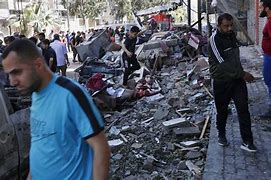
History unreservedly shows–believing in religion, without concern for society leads to discrimination, mayhem, and murder. That is as clear today in the Israeli/Palestinian conflict as in the history of the Jewish holocaust and pogroms of the past.
Like the number 47 in “Guardians of the Galaxy”, the 27 books of the New Testament offer no answer to the meaning of life.
“Apeirogon” is a little too repetitive for this reviewer, but it is cleverly written and shows why political and military occupation is a fool’s leadership style.
Books of Interest Website: chetyarbrough.blog
“Apeirogon” (A Novel)
By: Colum McCann
Narrated by: Colum McCann
Colum McCann (Author, Irish writer living in New York.)
At first the idea of an Irish author writing a book about Israel seems incongruous. After the first few paragraphs, one realizes Colum McCann grasps a truth about religious conflict that is far better than most because of Ireland’s “Troubles” between the 1960s and 1990s.
“Apeirogon” is timely novel in regard to Israel’s response to the October 7 Hamas attack in Gaza. A little history helps one understand the complexity and terrible consequence of the slaughter of innocents.
An estimated 30,228 people have been killed in Gaza, 12,000 of which are thought to be Hamas combatants.
Gaza dates back to Egyptian times, populated by Canaanites who share an ancestral connection to Israelites. Gaza later became part of the Assyrian Empire in 730 BC. Assyrians intermixed with Canaanites, Israelites, Philistines and undoubtedly Palestinians. History shows historical connection between ancient Assyrians and Palestinians just as there were with Israelites. However, Israelites were forcibly relocated to Assyria from the Kingdom of Israel. Because the Israelites were descendants of the Canaanites, they predated Palestinian settlement in Gaza. Ethnic precedent and the want of land area is a part of what complicates the idea of a separate Palestinian state. Where is a homeland for a Palestinian state going to come from?
McCann chose a perfect title for his novel. An apeirogon is a geometric shape that has an infinite number of sides; just like the many sides of Israeli/Palestinian arguments for a homeland. Column McCann cleverly explores these arguments in his novel. He creates a series of Israeli/Palestinian incidents that show how each ethnic culture believes and acts in their perceived self-interests. Every chapter is titled as a series of numbers that begin with the number 1, jumps from 500 to the number 1001; then jumps back to 500 and descends to number 1 to end his story. Revelation comes in 1001. Occupation is an evil that cannot stand.
America’s civil war carries some parallels to what is happening in Israel and Gaza.
What is revelatory about McCann’s novel is its similarities to America’s civil war that ended the lives of too many Americans. Today’s conflict in Gaza is instigated by Hamas just as the Civil War was instigated by southern slave holders. America eventually forgave southern slave holders, but Black Americans continue to suffer from institutional racism. Can a one state solution as demanded by Israel’s conservatives serve Palestinians any better than white America has served Black Americans? America’s civil war ended in 1865-1866, some 158 years later, Black Americans are still discriminated against. Can Palestinians wait more than 158 years to have equal rights in an Israeli nation?
McCann’s novel repeats, too many times, the unfairness of Israel’s occupation of Gaza. Hamas has its rebellious leaders like America had John Brown who killed one Marine, wounded another, and killed six civilians. Neither Brown nor the Hamas leaders can justify their murders though both argue with righteous conviction. The United States could have split between abolitionist and non-abolitionist states, or they could move toward reconciliation. Obviously, the U.S. government prevailed with reconciliation. It seems imperative for Israeli and Palestinian leaders to take the same road as Abraham Lincoln. Hamas is a splinter group like that led by America’s John Brown. Their objective is as horribly misguided as Brown’s. Hamas’s hostage taking and murder of Jewish settlers is as reprehensible as Brown’s murders of a Marine and six civilians.
ISRAEL’S OCCUPATION OF PALESTINE
As difficult as it may be, a two-state solution seems unlikely. What American history suggests is as difficult as America has found reconciliation to be for white America’s murder and unjust treatment of Black Americans. That reconciliation remains a work in progress. However, only union offers a way toward peace. America is not there yet but it is making progress.
Two political factions, bound by both religion and ethnicity, must learn to live with each other for peace to be achieved.
There is no other land for Palestinians. Israel may have the older of the two cultures, and both Israelites and Palestinians have a much longer history of religious and ethnic difference than America. America is founded on religious freedom and equality, though not perfect in either principle. In contrast, religion is a primary determinant in Palestinian and Israeli cultures while equality seems a less prominent concern. Peace will not come without hardship, but a beginning is dependent on Israel’s abandonment of occupation. It will be one country’s leaders’ imperative to provide equal opportunity for all its citizens. The struggle will be long as is shown by America’s history but what realistic alternative is there for the Israeli and Palestinian people? What neighboring country is likely to give up their land to create a two state solution?
“Apeirogon” is a little too repetitive for this reviewer, but it is cleverly written and shows why political and military occupation is a fool’s leadership style. Israel, like white America, needs to do better in reconciling ethnic differences.
The story of la Drang shows how all wars are crimes against humanity. There are no winners, only losers and grief.
Audio-book Review By Chet Yarbrough
Blog: awalkingdelight Website: chetyarbrough.blog
We Were Soldiers Once…and Young (la Drang-The Battle That Changed the War in Vietnam)
By:Harold G. Moore, Joseph L. Galloway
Narrated by: Jonathan Davis
Harold Gregory Moore Jr. (1922-2017)Nov. 17, 1965Joseph Lee Galloway (1941-2021)
Today, on Veterans’ Day, after starting and stopping this book several years ago, it is finally completed and being reviewed. This is a harsh story for soldiers enlisted or drafted during Vietnam. It is harder for families that lost their sons (over 58,000) and daughters (8 women) in the war.
Moore, a graduate of West Point, was the lieutenant colonel in command of the 1st Battalion at la Drang in what is considered by some as “The Battle That Changed the War in Vietnam”.
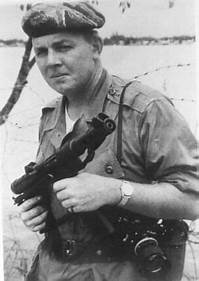
Joseph Galloway, the co-author, was a civilian journalist and correspondent that accompanied the Battalion at la Drang.
Harold Moore and Joseph Galloway recount the battle of the 7th Calvary Regiment at the Battle of la Drang in 1965. Moore was awarded the Distinguished Service Cross for valor and Galloway was the only civilian ever awarded a Bronze Star for combat valor for carrying a wounded soldier back to safety during the la Drang battle in Vietnam.
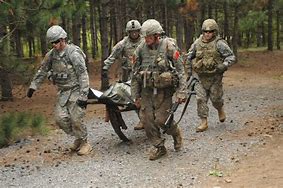
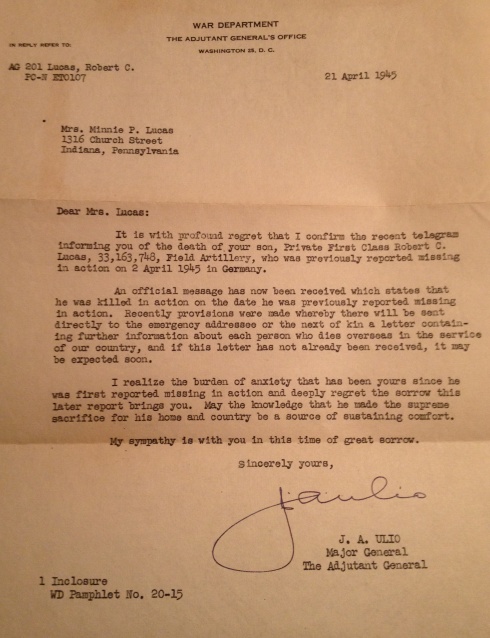
Fellowship of war.Medics in war.Notice of war death.
Three things stand out to this reviewer of Moore’s and Galloway’s explanation of America’s war in Vietnam. One is the fellowship of soldiers that comes from a common threat to their lives. Two is Moore’s observation that there were not enough medics in Vietnam in 1965, and three, the mishandling of family notification of lost soldiers in the early years of the war. Two and three were presumably corrected in later years.
The story of la Drang shows how all wars are crimes against humanity.
Use of napalm in Vietnam.
There are many inferences one may draw from “We Were Soldiers Once…” but Moore and Galloway write about one battle in the early years of Vietnam’s escalation that foretells that war’s futility. What about today’s battles in Ukraine and Palestine. What do those early battles foretell?
It is disturbing to look back on what happened in the early years of America’s Vietnam war. There are too many mistakes and battle tragedies to be clearly understood. Yesterday it was Vietnam. Today it is the Ukraine-Russian and Palestine-Israel wars. At their ends, one doubts there will be winners but is assured there will be losers.
The question of whether the free world should support Ukraine in every way possible can be answered. The answer is yes because Putin like Hitler will not stop.
John Julius Norwich (Author, English historian, travel writer, television personality, Royal Navy veteran with degrees in French and Russian from Oxford.)
John Norwich’s “A History of France” is an intimidating summary of a country that makes one understand how young and inexperienced America is in the history of nations.
France is recognized as a nation in 987 with its first King, Hugh Capet, born in 939-died in 996 at the age of 56 or 57. (King of the Franks from 987-996.)
The actual title King of France is not used until the crowning of Phillip II in 1190 (a descendant of Capet) who died in 1223 at the age of 57. Norwich’s “…History…” recounts the many Kings of France since Phillip II.
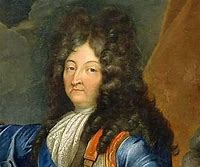
The longest serving King is Louis XIV (the Sun King) who ruled from 1643 to 1715 (a total of 72 years).
King Louis XIV moved the center of French government to the Palace of Versailles in 1682. He is the third of five Bourbon Kings of France. King Louis XIV is noted to have expanded France’s borders while centralizing power in France. Norwich notes Louis XIV’s wife, Maria Theresa of Austria, plays a significant role in France’s history. Theresa’s three major accomplishments are to create education for serfs, consolidate the French government’s financial system, and create a unified judicial code that became a foundation for Central European Laws.
The last Bourbon King of France is Louis XVI and his queen, Marie Antoinette, who are deposed and beheaded after the 1789 revolution.
The brutality of the revolution is exemplified by factions called Royalists, Jacobins, and Montagnards. The Royalists supported monarchy and the Catholic Church. The Jacobins founded the 1789 Nation Constituent Assembly that wished to moderate authoritarianism, offer equal rights to French citizens with government intervention to insure social change. The Montagnards campaigned for the needs of the working and poorer classes of French society.
The 1789 revolution eventually led to the rise of Napoleon Bonaparte who through ascension and a series of military conquests reestablishes a French monarchy under his rule.
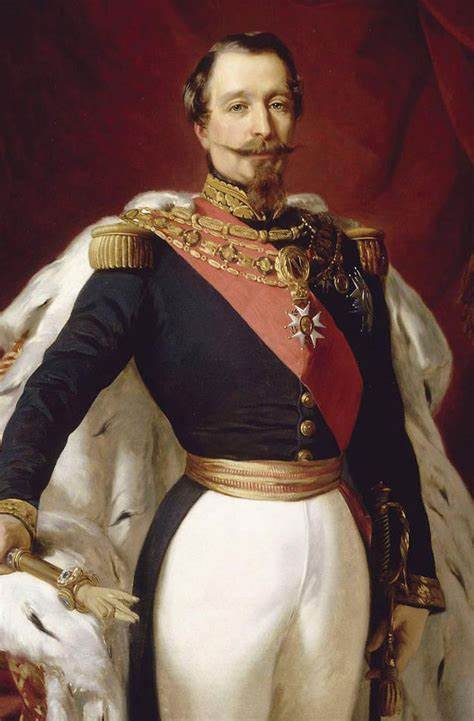
Charles-Louis Napoleon Bonaparte becomes the first president of France which is recognized as a Republic. However, though France is a Republic between 1848 and 1852, Charles reestablishes the monarchy in 1852 until he is deposed in absentia in 1870.
A new faction is formed called the Bonapartists. This faction roiled France throughout the 19th and into the early 20th century.
As the nephew of Napoleon, King Charles oversaw the modernization of the French economy. However, reestablishing the monarchy and his failure in the Franco/Prussian war led to a famine that permanently turned the French against monarchal rule.
Seven French revolutions finally ends France’s monarchy. However, each revolution precipitated chaos, and declarations of war from other monarchies. The final death of French monarchy did not occur until liberation after WWII.
Norwich explains there were actually seven revolutions before France becomes a permanent republic.
The first is the 1789 revolution which is most widely known by Americans. The irony of that revolution’s importance is France’s considerable support of America’s revolution in 1776. The newly established French government did not have a leadership group that could create a republic that could manage the monumental inequities of its long-established French culture. The repression of the poor created by centuries of royal leadership entailed too much animosity to avoid the Reign of Terror that caused the execution of thousands of French citizens. As many as 40,000 people were said to have been killed. It would take six more revolutions to create the lasting Republic of France.
The French Revolution (1789-1799)
The Napoleonic Era (1799-1815)
The July Revolution (1830), a 3 day uprising that overthrew King Charles X because he tried to restore absolutism and censor the press.
The February Revolution (1848), based triggered by economic hardship, discontent, and social unrest.
The Second Empire (1852-1870), a coup against Napoleon III despite the improvements made to France, he poorly manages and loses the Franco-Prussian War of 1870.
The Third Republic (1870-1940) did establish a parliamentary democracy but is tarnished by antisemitism, and WWI that killed millions of French soldiers.
The Vichy Regime that collaborated with Nazi Germany led to the 7th and final revolution against monarchy and for a Republic.
The collaboration of France’s Vichy Regime and Chamberlain’s appeasement agreement with Hitler’s Germany are lessons for today’s handling of Russia and the invasion of Ukraine.
The world did not fully respond to Hitler with force when Germany invaded Poland. Hitler, like Stalin and Putin, presumed the world would not respond to Germany’s taking of a sovereign country.
Whether Putin directs the murder of any opposition to his rule is not a question that can be answered but the imprisonment of Navalny and the death of Yevgeny Prigozhin is reminiscent of Hitler’s lies to the world.
The question of whether the free world should support Ukraine in every way possible can be answered. The answer is yes because Putin like Hitler will not stop.
War is hell by any definition, but it gave philosophers focus for understanding the meaning of life. Sadly, that understanding did not change the future course of history.
Audio-book Review By Chet Yarbrough
Blog: awalkingdelight Website: chetyarbrough.blog
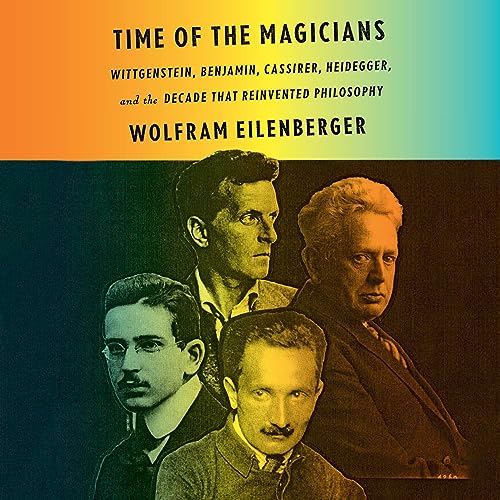
Time of the Magicians: Wittgenstein, Benjamin, Cassirer, Heidegger, and the Decade that Reinvented Philosophy
By: Wolfram Eilenberger, Shaun Whiteside
Narrated by: undisclosed.
Wolfram Eilenberger (German Author, award winning writer and philosopher.)
“Time of the Magicians” is particularly interesting because it tells the stories of four philosophers after WWI when Hitler is beginning his rise to power. Philosophers will undoubtably get more out of this book, but life experiences of these four men make it more interesting to the general public. The primary focus of “Time of the Magicians” is on Ludwig Wittgenstein and Martin Heidegger.
Ludwig Wittgenstein (1889-1951, Austrian-British philosopher of logic, mathematics, mind, and language, died at age 62.)
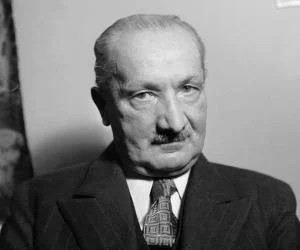
Martin Heidegger (1889-1976, German philosopher of phenomenology, existentialism, and hermeneutics, died at age 86)
Three of the four men who live in “Time of the Magicians” have a Jewish background. The two most famous philosophers are Ludwig Wittgenstein and Martin Heidegger. Heidegger supports Hitler, chooses to join the Nazi Party, and refuses to write or say anything about the Holocaust after the war. The other three philosophers leave their home countries before Hitler becomes Chancellor. Wittgenstein, as a world traveler, becomes a student of Bertrand Russell in 1911 at Cambridge. Walter Benjamin and Ernst Cassirer travel a good deal while choosing to leave Germany in 1933.
One of many interesting points in “Time of the Magicians” is that Hannah Arendt was a student of Martin Heidegger’s at the University of Marburg in Germany.
Despite Heidegger’s antisemitism, at 35 he has an affair with the 18-year-old Arendt who came from a Jewish/Catholic household. This is in the early 1920s, before Hitler’s rise, but it reflects the intellectual compartmentalization of life and human weakness that exists when it comes to sex. (At the time of the affair, Heidegger was married to Elfride Petri in 1917 and remained married until his death in 1976.)
Aside from sexual transgressions noted in “Time of the Magicians”, the biographies of these four men are about their philosophical beliefs. WWI like all wars affects people in different ways. Some, like Wittgenstein, and Cassirer join the military and fight for their countries, while others like Benjamin look for ways to avoid conscription. Heidegger didn’t join the military but served the Nazis as an academic.
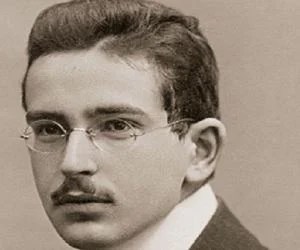
Walter Benjamin (1892-1940, German Jewish essayist, philosopher, and cultural critic, commits suicide at age 48)
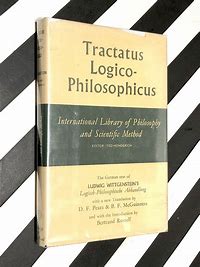
Joining or avoiding military service may come from good and bad motives. Wittgenstein and Cassirer fought for the Central Powers for reasons undisclosed. “Time of the Magicians” suggests Wittgenstein fought valiantly for the Central Powers and became a P.O.W. in Italy. While in prison, Wittgenstein began writing his most famous book on philosophy, “Tractatus Logico-Philosophicus”. However, the Central Powers lost to the Allied Powers (the U.K., France, and Russia) in WWI.
Heidegger supported Hitler through the end of World War II. One might conclude joining a war is a bad idea in any circumstance. As some authors have noted, there are no “good” wars. In any case, wars had a great deal to do with the philosophes of these four men.
Ernst Alfred Cassierer (1874-1945, German Jewish philosopher of phenomenology, and culture, died at age 70.)
The experience of war undoubtedly affected all four philosopher’s beliefs. Wittgenstein came from a wealthy industrial family. Wittgenstein is heir to a multi-million-dollar industrial empire. After the war, he chooses to give any fortune he might inherit to his mother, sisters, and brothers. He refuses his wealth and becomes employed in a small town in Austria where he teaches grade school. Wittgenstein refuses any financial help from his family or fellow philosophers. He is mired in poverty that remains his condition until his return to Cambridge.
Wittgenstein is characterized as a martinet but committed teacher of his young students.
His poverty and isolation seem surreal considering his education and family background. He actually has an engineering degree from the Technical University of Berlin which he received in 1908. His commitment to his young students forms a background to his belief in science with the dissection of animals and his focus on human language.
Today, we take dictionaries for granted, but they were nearly non-existent in Germany after WWI. Wittgenstein begins collecting words used by his students in class to create a dictionary that he intends to have published for schools in his area. The idea is nixed by the school administration.
Wittgenstein leaves the grade school he is teaching after an incident that involves a student who feints after being struck by Wittgenstein. This martial treatment of students is not particularly uncommon, but the parent of the student is a wealthy matron who complains to the school. The school does not discharge Wittgenstein, but he chooses to leave in the middle of the night and abandon his teaching career.
Wittgenstein’s “Tractatus…” is published in 1921 without compensation to its author.
The purpose of the book is to explain the relationship between language and reality. At the same time, it is an attempt to show the limits of science. It is characterized as a difficult book to understand but becomes highly regarded at Cambridge University in England and becomes the basis for Wittgenstein’s return to England where he is called the “God” of philosophy. This is an interesting appellation but equally interesting is the appellation given to Heidegger as the “King” of philosophy. Obviously, both men were highly regarded at Cambridge in the 1920s, but in quite different ways.
THE HELL OF THE UKRAINE WAR 2022-2023
“Time of the Magians” is a fascinating glimpse into the lives of storied philosophers and the impact on their understanding of life which appears based on their experience in the “Great War”. War is hell by any definition, but it gave philosophers focus for understanding the meaning of life. Sadly, that understanding did not change the future course of history.
War is only a destroyer, not a builder of society. Samet implies the truth of war will continue to be distorted by both victors and losers who tell the tale.
Looking for the Good War: American Amnesia and the Violent Pursuit of Happiness
By: Elizabeth D. Samet
Narrated by: Suzanne Toren
Elizabeth D. Samet (Author, Professor of English at West Point.)
Elizabeth Samet’s “Looking for the Good War” tells a hard truth about war. Samet’s history of war is like the refrain from the Temptations’ song:
War, huh yeah What is it good for? Absolutely nothing, oh hoh, oh War huh yeah What is it good for? Absolutely nothing, say it again y’all
THE FEAR OF WAR IN VIETNAM
As a professor at West Point, it seems incongruous for Samet to write this book. On the other hand, who would better understand a career for future military officers than a West Point’ professor? The command structure of the military requires soldiers do what they are ordered to do. In that doing, they may lose their minds, their lives, or their physical health. Samet raises the hard truth of every war, i.e., a soldier’s duty is to follow orders and when necessary, kill or be killed.
Samet questions stories, films, and images that glorify war.
Samet implies, once war is declared, its causes and consequences become fictionalized tales.
Once a country is compelled to defend itself in war, like Ukraine, Samet infers a “…Good War…” becomes fiction.
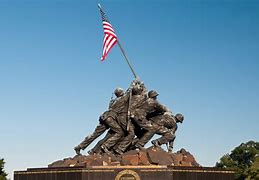
Truth of war becomes distorted by memory, and human bias that is memorialized by the visual arts and literature. The support for Samet’s view of war is in art and media representations of its history. From Picasso’s Guernica that illustrates the real horror of war to movies like Sands of Iwo Jima, war’s reality is distorted. Art and literature tell different truths.
Samet often refers to Shakespeare’s plays and his many observations about war, i.e., about its perpetrators and victims. From Julius Caesar to Richard III, to Henry IV, to Henry V, to Henry VIII, Samet quotes Shakespeare’s lines like
“Cry havoc’ and loose the dogs of war, That this foul deed shall smell above the earth With carrion men, groaning for burial.”
Samet argues Tom Brokaw, and Robert Rodat (screenwriter for “Saving Private Ryan”) glorify the winning side of WWII by choosing narratives that distort the true nature of war.
Samet is not alone in her opinion about the history of war distorting truth. American author and television writer, Rebecca Serle says the same. To Serle and Samet, history is a personalized perception, a truth imprinted on the minds of combatants. This personalized truth is an interpretation of what one experiences. War’s events are interpreted by the understanding of those who choose to write, paint, or film war’s events. War’s events become interpretations of interpretations. Samet implies a “…Good War…” is oxymoronic, a contradiction of words because there are no good wars.
American author and television writer, Rebecca Serle, wrote “History, memory is by definition fiction. Once an event is no longer present, but remembered, it is narrative. And we can choose the narratives we tell–about our own lives, our own stories, our own relationships.”
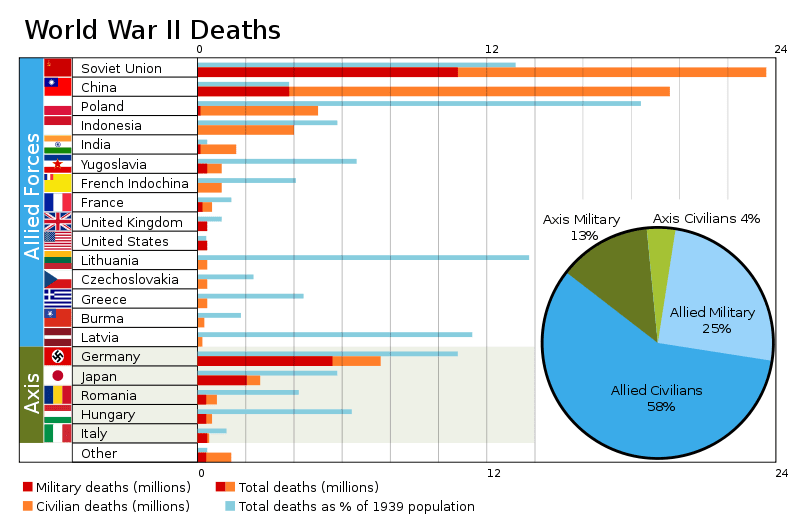
Samet is arguing no war is a good war because war is inherently bad for the mental and physical existence of human life. She argues narratives of America’s Civil War are prime examples of the distortion of truth about a “…Good War…” in the same sense as Brokaw’s WWII narrative. Samet coldly notes America’s idealization of rebel opposition to union and civil rights falls into the same category as the idealization of America’s role in WWII. There were singular brave actions in both wars, but those stories of bravery distort the reality of death and destruction, murder of human beings, an aftermath of coping with loss or permanent injury of loved ones, and the consequence of destroyed homes and economies of warring nations. Both WWII and America’s civil war solved nothing. Discrimination has not disappeared. Mass killings still occur. The only difference is in the organization, execution, and volume of deaths and injuries. There is no “…Good War…”
Samet explains neither WWII or the American Civil war were examples of a “…Good War…”. That statement shocks the senses.
Just as America did not save the world for democracy in WWII, America’s Civil War did not erase institutional racism. Racism hardened after America’s civil war and continues to this day.
Axis powers chose to wage war just as Allied powers chose to defend themselves. The story told by victors tends to view war by focusing on heroic events of conflict rather than war’s atrocity and aftermath. The story told by losers is one of blame for miscreant leaders who misled their countries into war. Both stories are fictions to justify new leader’s perceptions of reality. More importantly, Samet clearly explains how memory distorts the truth of what is accomplished by waging war.
Samet is simply writing about the fundamental truth–war is hell for all human beings, whether victors or losers.
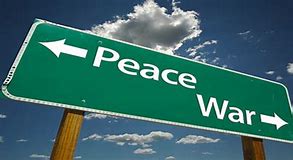
The upside-down world of George Orwell notes “War is peace, Freedom is slavery. Ignorance is strength.” This is the world of which Samet writes. Samet explains what Orwell satirizes. War is hell. “Equal rights” are an unaccomplished ideal. Ignorance of war’s truth is compounded by distorted memories of the past.
As seen in Ukraine, Myanmar, Ethiopia, and Sudan–wars continue to roil the world. War is only a destroyer, not a builder of society. Samet implies the truth of war will continue to be distorted by both victors and losers who tell the tale.
Windfall (How the New Energy Abundance Upends Global Politics and Strengthens American Power.)
By: Meghan L. O’Sullivan
Narrated by: Eliza Foss
Meghan L. O’Sullivan (Author, Harvard professor, Former deputy national security adviser on Iraq and Afghanistan, worked in the George Bush administration.)
Meghan O’Sullivan offers an intelligent but flawed view of today’s world. It is true that energy is critical for economic growth and improved human life. It is also true that energy need and development cause international conflicts in the post-industrial world. O’Sullivan does a masterful job explaining the role of energy, noting its cost while explaining fossil fuels are at a turning point in history.
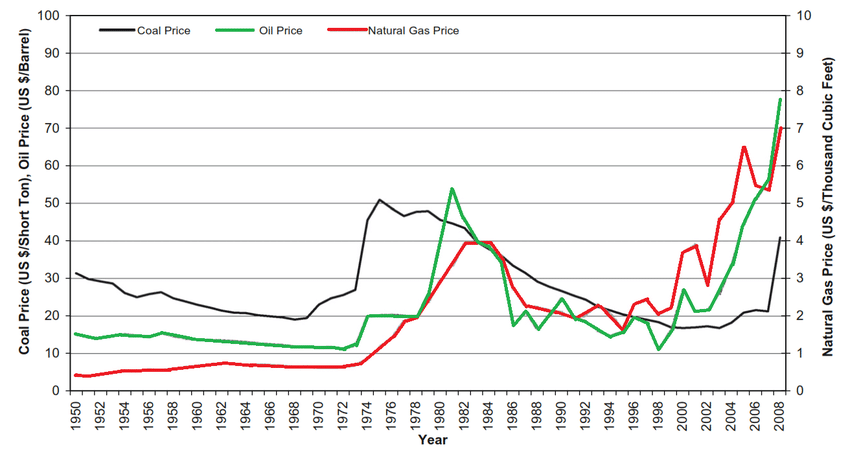
Fossil fuel prices fluctuated dramatically in the 20th century but O’Sullivan suggests the trend in the 21st century, despite the rise between 2000 and 2008, will trend downward for three reasons.
One is the recognition of energy’s environmental consequence and conservationists’ political response; two, energy’s extraction is becoming less costly for most fossil fuels. And three, technological advancement offers alternative sources of energy.
What O’Sullivan correctly notes is that energy will remain a driving force behind international relations.
However, her argument is flawed by suggesting governmental restrictions on discovery and growth of fossil fuels should be weakened. Even in the few years since publication of O’Sullivan’s book, the science of fossil fuel pollution is showing accelerating global warming with potential for a “no-return” human’ consequence. Global warming seems self-evident. That evidence does not change O’Sullivan’s insight to the outsize role energy plays in the real-politic world of today, yesterday, and tomorrow.
O’Sullivan loses a bet with a colleague that Russia would challenge world peace within five years of 2013. She was right, but it took a couple years longer for Russia’s re-invasion of Ukraine.
O’Sullivan correctly foretold Putin’s kleptocratic government’s intent to re-establish Russia’s place in the world by using its fossil fuel abundance to lure Europe and Asia with their need for energy. Putin’s drive to offer oil and/or gas pipelines to Germany, China, and Turkiye are meant to assuage their opposition to Ukraine’s invasion. Though China is somewhat supportive of Putin, it has little to do with its energy need but more to do with China’s opposition to U.S. involvement in their sphere of influence. In response to the Ukraine invasion, Germany found alternative sources for Putin’s pipelined energy with imported LNG (liquified natural gas). To some extent, Putin’s energy ploy worked. China, India, and Turkiye continue to buy oil from Russia despite its invasion of Ukraine. Their national interests outweigh their concern about Russia’s invasion, just as Putin undoubtedly calculated.
Energy’s role in the modern world is well documented by O’Sullivan. She notes the history and future of energy and how it will continue to roil international relations.
The cost of energy influences world leaders to exploit the environment despite its harm to society.
Exxon Valdez Oil Spill.
Coal continues to be burned for energy around the world because it is the least expensive.
Malaysia coal fire plant.
Technological innovation is decreasing natural gas costs which, though less environmental damaging than oil or coal, is becoming more widely used. Natural gas remains a pollutant. It is estimated to be 50-60 percent less polluting than coal and 20-30 percent less polluting than oil. (A caveat to the less pollution from natural gas is that it is being used in newer and more efficient energy producing facilities.) This argument does not change O’Sullivan’s flawed argument that restrictions should be removed, weakened, or moderated for further fossil fuel technological development and extraction.
Weather around the world, forest fires, and northern arctic warming are dramatic 21st century proof of continuing global warming. Science and nature tells us the world is warming. That warming is, at the least, greater because of fossil fuel use.
O’Sullivan remains correct in noting how energy is key to peace in the world. The vast natural gas find by Israel, called the Leviathan Reservoir, makes Israel’s influence in the Middle East much greater. Israelis use their natural gas’ find to improve their relationship with Middle East powers. On the other hand, it seems to give license to Israel to repress dislocated Palestinians as irreconcilable enemies.
Energy is both a weapon and tool of peace.
Where O’Sullivan’s book is less convincing is in its inference that the energy industry should be given free rein to continue developing fossil fuels. Even if energy is critical to the sovereign right of every country in the world, degradation of today’s environment makes fools of us all.
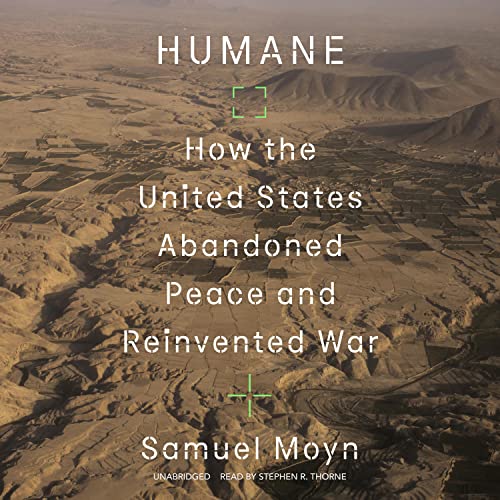
Humane (How the United States Abandoned Peace and Reinvented War)
By: Samuel Moyn
Narrated by: Stephen R. Thorne
Samuel Moyn (Author, Chancellor Kent Professor of Law and History at Yale University.)
Sameul Moyn’s “Humane” shows America is one of many passengers on a train bound for Armageddon. The idea of a humane war is oxymoronic. War cannot, by definition be humane. There is no denying America’s war against Indians, Filipinos, Japanese, and Germans, with a history of mass violence against Blacks and other American minorities, is inhumane. The reasons for war’s violence range from defense of country to racism, to self-interest, to greed, i.e., the ingredients of human nature. From the crusades of Catholics against Muslims to persecution of Jews through the ages, to today’s Palistinian/Israli mayhem, inhumanity seems an integral part of the human condition.
Though Samuel Moyn makes war’s atrocity clear, it is odd to suggest America has reinvented the definition of war. The definition of war has never changed.
War is a conflict between power elites and the powerless. Though Moyn suggests President Obama revises nation-state war to be more humane, the tools of surreptitious killing by drone is just another weapon of war. It can as easily kill or injure the innocent as a WWI propeller driven dirigible dropping a bomb on an alleged enemy combatant. There will always be collateral damage. War boils down to a government leaders’ political strength whether he/she is President of Russia, America, China, or some other military power. Mistakes will always be made. Misjudgment and misperception are part of being human. Innocents will always die in war.
In accusation, Moyn’s history is an excellent reminder of war’s brutality. It is valuable to be reminded of war’s atrocity and stupidity, particularly in the face of Putin’s Ukraine invasion and attempt to recreate the U.S.S.R.
The galling part of Moyn’s reference to President Obama is to imply America is a lesser villain than other nation-states leaders by reinventing war, subject to rule-of-law. As the election of Trump proves, rational intelligent leadership is never guaranteed in democracy. The idea of targeted strikes in the hands of a Trump rather than an Obama is hard evidence of the ridiculous belief in humaneness of war.
War was designed by human nature to become more lethal with the science of many nations.
There is no reinvention of a humane war by any nation-state, let alone America. The only change in war is in scale, i.e., weapons of mass destruction have geometrically increased the number of human beings that can be murdered, wounded, or victimized by war’s execution. Science has added to potential world destruction with bigger nuclear bombs and viral research that could end life on earth, with many nations’ culpability. The point is America is just another player among nations that carry the risk of corruption of power, not to be an inventor of humane wars but to become hegemons of what they believe is their world. War is never humane.
Moyn recalls the history of George W. Bush’s decision to start a war on terror in response to the destruction of the World Trade Center.
Few Americans, if any, can forget or forgive those who perpetrated that heinous act. To prepare a response, the Bush Administration promoted the USA PATRIOT ACT. To some, that ACT violated American civil rights.
Considering Moyn’s history of the creation and legal defense of the USA PATRIOT ACT, rule-of-law is merely a matter of picking the right attorney to get the result a President wants.
That is what the Department of Justice leader John Ashcroft did in choosing John Yoo. Moyn explains Yoo’s family came from Korea, with their son having become a Harvard graduate and lawyer working for the government. Moyn implies Yoo’s success in America and his family’s knowledge of North Korean repression influenced John Yoo’s legal opinion of the PATRIOT ACT. Legal opinion is a fungible skill based on the biases of its writers.
Government leaders may represent a nation or a faction of people, but unless one believes in “the arc of the moral universe” as originated by Theodore Parker in the 19th century (made modern by Martin Luther King in the 20th century), the world will continue to have wars; all of which become inhumane.
Salar Abdoh (Author, Iranian American, family forced to leave Iran when he was 14, Graduated from U.C. Berkley and City College of New York.)
Salar Abdoh’s book title, “Out of Mesopotamia”, implies an opinion about the Middle East. Abdoh entertains a listener/reader with his wry sense of humor, colored by the tragedy of political turmoil, murder, and martyrdom in the Middle East. His personal life and academic education infer a better understanding of western and middle eastern cultures than most Americans.
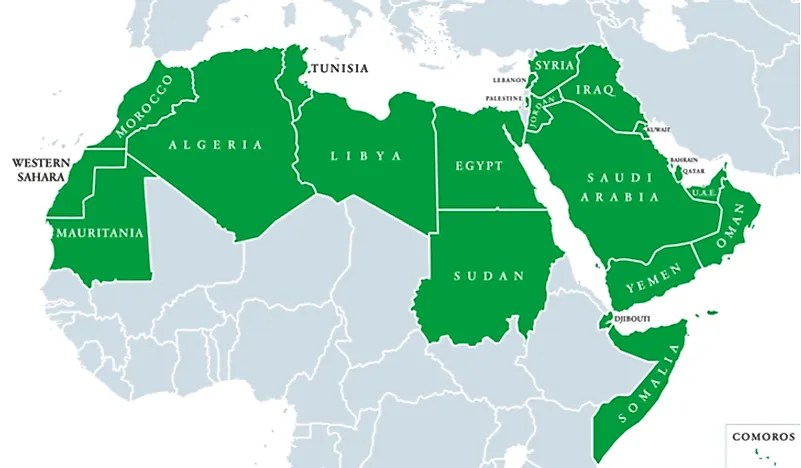
Abdoh’s novel idealizes a belief in pan Arabism with return of a borderless Middle Eastern area like Mesopotamia. His novel expresses love for Arab culture.
Whether Mesopotamia may have been a land of erudition, agriculture, domesticated animals, and social classes its culture changed with the creation of nation-states rather than singular settled communities. But, that change is unlikely to have been as quiescent as Abdoh implies.
Mesopotamia means between rivers which are known today as the Tigris and Euphrates. It was originally made of city states peopled by Sumerians between the sixth and fifth millennium BC. These city states each had their own king which implies there were borders and undoubtedly periodic conflicts.
As noted by Abdoh, the level of conflict remains today. The difference is, rather than combat with words, fists, and clubs, today’s nation-states use guns, bombs, and weapons of mass destruction to resolve disputes.
Abdoh’s main character is a reporter, sometimes combatant, who decries Iranian religious rule and Syrian slaughter of innocents. One senses the author’s visceral love for Arab culture and a yearning for return to his native country.
A large part of Abdoh’s story is to explain martyrdom to its listeners.
Most understand religious beliefs are the proximate and most obvious reason for martyrdom. Participants of a holy war are memorialized by dedicated monuments to their deaths. Their belief is that they arrive in paradise while being memorialized by those remaining in life. Abdoh explains paradise and earthly memorialization are only two of many reasons people seek martyrdom.
For some, martyrdom is penitence for a sinful life. For others, it is to escape from what they view as a meaningless existence. For a few, it is a choice to end one’s life for what they believe is a meaningful purpose.
From soldiers, to sinners, to artists, and the remaining living, Abdoh infers martyrdom is a wasted life.
Abdoh’s writing is engaging, in part because of its substance but also because of his sense of humor and point of view. He weaves a story of emotion, and disgust by using irony, humor, affection, love, disgust, and intellect of characters who keep one entertained and engaged. The engagement comes from agreement and disagreement with his character’s point of view.
The relationship between America and the Middle East is complicated.
America and the Middle East’s relationship is challenged by cultural differences that seem irreconcilable because of national and individual self-interests, made even more difficult by language. The failure of most Americans to understand more than their own language breeds ignorance and arrogance. As noted by other authors, the story of the Arab world is tightly woven into the fabric of their language.
Abdoh’s story reflects the ignorance of American policy and how it deals with the Middle East.
He does not suggest it is because of malevolence but infers it is from not caring enough and being consumed by American national self-interest. America is described by Abdoh as an apparition and nuisance to the Middle East. Without mutual cultural understanding, there is, nor will there be, peace in the Middle East or world.
Eliot Ackerman (Author, former Marine Corps Special Operations Team Leader who served in Afghanistan.)
“Green on Blue” is about America’s military experience in Afghanistan. Like America’s experience in Vietnam and Iraq, knowing one’s enemy is shown to be difficult, at the least, and impossible at the most. Whether the American military is “Green on Blue” or not, it alludes to the fog of war and complications of knowing the color of your enemy.
Ackerman gives a first-hand account of what it was like to serve as a field commander in America’s intervention in Afghanistan. As a Marine Corps Special Operations team leader in Afghanistan, he knows the subject of which he writes.
Ackerman’s novel is a fiction but bells truth and understanding of America’ intervention in Afghanistan.
Just as Ackerman explains the complexity, folly, and error of America’s good intention, he clearly criticizes American leadership’s decision to invade Afghanistan. America’s intent is to dismantle al-Qaeda leadership and possibly capture bin-Laden. It seems the mistake is not about crushing al-Qaeda but in not understanding the culture in which al-Qaeda received support from Afghanistan’s Taliban.
Ackerman creates a story of an older brother that is fatally injured by a bomb blast and is taken to a hospital for treatment.
This is a frontline hospital in Afghanistan like that in Ackerman’s story.
The younger sibling, who had been cared for, and protected by his older brother, pleads with the hospital to save him. To be saved, because the injuries are severe, requires expensive long-term care which his younger brother cannot pay. A Pashtun visitor at the hospital offers to pay for the older brother’s treatment in return for the younger brother’s recruitment into his “army”. The younger brother appeals to a person who appears to be Pashtun, the same culture of the two brothers.
This Pashtun is actually a leader of an Afghanistan military group.
The Pashtun military leader assures the younger brother of his financial support for the older brother to receive the required treatment. The younger brother agrees. The younger brother’s name is Azize. As Ackerman’s story continues, one finds leaders in Afghanistan use America’s intervention only to reinforce their self-interest. Of course, self-interest is a universal human characteristic, but in war, its dimension becomes life and death.
As one continues listening to Ackerman’s book, one doubts the older brother is alive or that any support is provided by the recruitment leader. The recruiter simply uses the hospital as a tool to acquire and retain recruits from relatives grieving for lost or injured family members. The end of Ackerman’s story tells the tale.
This is a harsh story that reminds America of how risky and unwise it is to believe America knows best for what another culture has grown to believe.
Soldiers like Ackerman remind us of how hard it is to help other countries be the best they can be. It requires more than bravery. It requires understanding of another’s culture and a willingness to let go of one’s own preconceived notions.























































 REVIEWS AND VIEWS OF LIFE