TRAGEDY’S LESSON

The sharpened point of Slade’s story is that, like the sinking of the Edmund Fitzgerald and El Faro, it takes great tragedy before change takes place.

Books of Interest
 Website: chetyarbrough.blog

“Into the Raging Sea” Thirty-Three Mariners, One Megastorm, and the Sinking of the El Faro

By: Rachel Slade

Narrated By: Erin Bennett

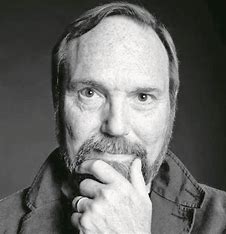
Rachel Slade (Author, winner of the Maine Literary Award for non-fiction.)

Rachel Slade begins her book with the last words of a mariner calling for help from a sinking ship in the grip of a Hurricane. The ship is the El Faro. The author writes her story based on the El Faro’s written log during a severe storm somewhere between Florida and Puerto Rico. The storm was Hurricane Joaquin, a category 4 Hurricane that had recorded wave heights of 10 meters (over 32 feet). Winds ranged from 130 to 156 mph with rough seas, roiled by rogue waves. Rogue waves are twice the size of surrounding waves and appear unexpectedly.

Slade methodically sets a table for the El Faro on a “…Raging Sea”.

Slade writes about a mariner’s desperate call for help. In its beginning, the story lags but the author offers cultural insight to the life of merchant marines, the equipment they operate, and the business of international trade. Her story explains how important and dangerous the life of a merchant marine can be, why it is important, and how mariners are dependent on equipment they use, their shipmates’ qualifications, and business owners’ drive for success.

Every person makes decisions about what they are going to do to make their way in life.

Becoming a merchant marine, like every decision in life, is based on personal circumstances, ambitions, and choices. Slade describes the El Faro mariners as adventurous and interested in seeing the world and being paid for what they do. Some are educated, others not, but all learn what they need to do to be part of a mariners’ crew.

There are schools for mariners at all levels of education but like any job, one can start at the bottom as a laborer that learns by doing. What the story of the El Faro shows is that like in any chosen job in life, some become expert at what they do, others try and fail, try again or move on. What Slade infers is that the El Faro sinks because of its crew but also because of others, both on and off the sea. As John Donne wrote in 1624, “no man (or woman) is an island”–emphasizing the interconnectedness of society.

The crew of the El Faro wanted to be paid but to some it was adventure and/or escape from a humdrum of life. Undoubtedly, mariners were motivated for different reasons. Some wished to see the world, be recognized for good work, wished to crew on bigger and better vessels, or be promoted to higher position. Motivation and ambition are different for everyone. What is lost to history are details. Slade tries to reveal some of the details about the El Faro’ crew, its owners, the ship, and the business of international trade. Why did the El Faro sink? Who and what was lost? What is it like to be in a hurricane at sea? Is somewhat at fault?

Slade’s story gains momentum as sinking of the El Faro seems imminent.

The aftermath is a careful and detailed explanation of rescues at sea, why the El Faro sank, what rescue efforts were made, how families of the lost were affected, and what changes were demanded in the industry. The loss of 33 mariners, the entire crew of the El Faro, is a horrible tragedy for the families who lost their loved ones. The causes of the tragedy range from crew mistakes to ship design to corporate malfeasance. The common thread is human nature.

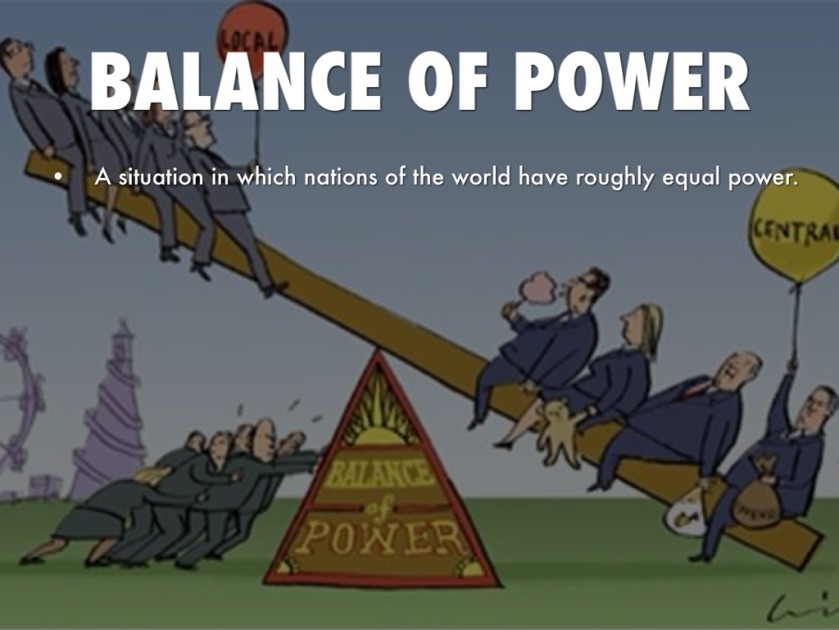
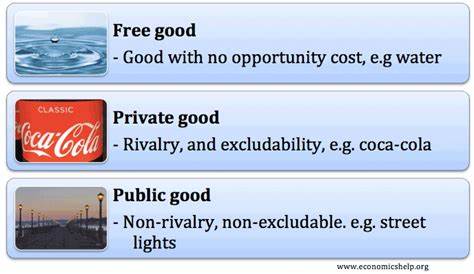
What this review suggests is that the fundamental issue in every form of government and society is balance between public and private good.

One will draw their own conclusions from Slade’s history of the loss of the El Faro. In a capitalist society, balance is dependent on prudent regulation. Prudence is meant to mean the use of human reason to balance the needs of the public with private interests. That balance is complicated by human nature that drives private interests to focus on money, power, and prestige rather than public need.

Slade shows regulation of international trade often conflicts with private interests that object to regulation and improvements in ship design.

Conflict between public good and private interest is not a new discovery. Neither is the sinking of the El Faro. The sinking of the Edmund Fitzgerald in 1975 led to changes in international shipping. Business owners were required to provide survival suits for mariners in their employ, depth finders, positioning systems, improved ship design, and inspections by the Coast Guard became mandatory. These were regulations that increased costs of shipping that rippled through the economy and initially penalized private interests. The public benefits because mariners are safer, and families are less threatened by loss. The public also suffers because transported goods become more expensive. Balance eventually occurs as private interests are compelled to pay more for labor which is part of the public.

Capitalism works because it is a process that balances public need with private interests. Capitalism’s weakness is that the process takes time to balance public needs with private interests.

The sharpened point of Slade’s story is that, like the sinking of the Edmund Fitzgerald and El Faro, it takes great tragedy before change takes place.

UNIONIZATION

Nolan clearly illustrates how important political power is in balancing corporate owner/managers’ disproportionate incomes and privileges with labor.

Books of Interest
 Website: chetyarbrough.blog

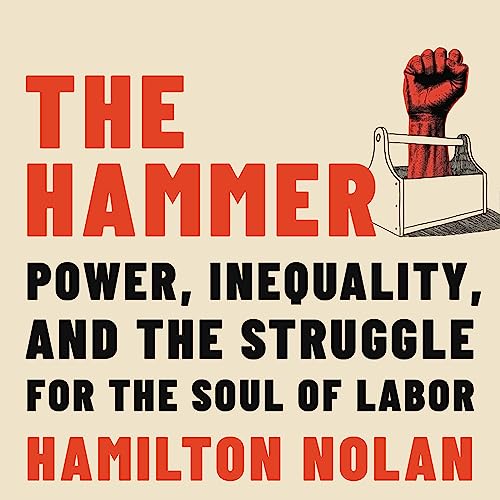
“The Hammer” (Power, Inequality, and the Struggle for the Soul of Labor)

By: Hamilton Nolan

Narrated by: Franklin Pierson

Hamilton Nolan (Author and free-lance Journalist)

“The Hammer” is a paean to unionization. Unions lost much of their political power in the early 1970s. Political power of labor was diminished by State governments, poor labor union management, and a diminishing number of labor union members. Nolan’s argument is workers have to reestablish political power to change their unfair and inequitable relationship with business.

The widening gap between rich and poor is traced to the era of President Reagan when the first deep cuts in corporate taxes occur.

Reagan fought unionization by firing air traffic controllers that sought better wages. Reagan’s supporters believed government social programs were out of control and their cost diminished the power of free enterprise. Much of the American public either agreed or were apathetic. However, as the gap between rich and poor accelerated, Americans began to complain about inequality. With extraordinary income increases for business owners and CEOs, and repressed wages for workers, the need for unionized political power became self-evident. Nolan introduces his book about unionization with a brief biography of Sara Nelson.

Sara Nelson (AFA president of the Association of Flight Attendants.)

Nolan writes about Sara Nelson who became a union member when she worked for United Airlines as a stewardess. Nelson was born and lived in Corvallis, Oregon. She applies for a job with United Airlines in St. Louis. She gets the job but her first paycheck is late. She couldn’t pay her rent. A check is given to her by a union employee to tide her over until her first check is delivered. From that day forward, according to Nolan, Nelson became a supporter of unions. Eventually Nelson becomes the president of the Association of Flight Attendants (AFA).

Liz Shuler (President of the AFL-CIO since 8/5/21.)

Ironically, the first woman President of the AFL-CIO is also from Oregon. Liz Shuler received a bachelor’s degree in journalism from U of O in Eugene, Oregon. She became a union activist after college and worked to organize clerical workers at Portland General Electric. She is elected as the President of the AFL-CIO in 2021 after serving as the first woman Secretary-Treasurer of the organization.

Nolan’s book addresses State conflicts with unionizers and family-income for low-income workers. The first states he addresses are South Carolina and California. Nolan notes South Carolina has become a haven for businesses wishing to avoid unions. South Carolina’ State laws discourage unionization which appeals to businesses wishing to relocate. Nolan notes South Carolina attracts businesses looking to improve profits by reducing labor costs. The consequence of business’s lower labor cost is to reduce South Carolina workers’ standard of living. South Carolina’s workers are among the lowest (19th out of 50 States) paid workers in the U.S. Nolan implies South Carolina’s income inequality is a consequence of the State’s policy of discouraging unionization.

California has the fourth largest income inequality in the U.S.

Nolan notes the cascading negative of unfair compensation for domestic labor. Though California now allows childcare servers to be unionized, their unionization efforts are discouraged by government regulation, as well as the fragmentation of its poorly compensated workers. The consequence of State government regulation keeps wages low and discourages entrepreneurs from starting childcare’ businesses. A compounding negative is created when users of childcare’ service, women in particular, are unable to work in regular work-day jobs. Workers are compelled to stay home to take care of their children, reducing family income and further impoverishing low-income childcare’ workers. It becomes a vicious cycle, hurting entrepreneurs trying to start a childcare service, employees wishing to increase family income, and employers needing more workers.

Nolan expands his argument by noting how service industries in Las Vegas, the State of Florida, New Orleans, and Mississippi are benefited by unionization.

Vacation and gambling meccas like Las Vegas, Florida, New Orleans and Mississippi need service industry employees. These vacation and gambling meccas depend on service quality for visiting tourists. Lack of representation for service employees diminishes employee’ standards of living which indirectly damages the reputation of the entertainment and vacation industry.

In Las Vegas, where Nolan lived for twenty years, the service industry is protected by the Culinary Union.

Nolan notes how strong the Culinary Union has become in Las Vegas and disparages casino owners like the Fertitta’s who have fought unionization. Numerous examples are given to show how union actions have improved the lives of Casino workers, many of which are immigrants from other countries.

Nolan’s argument for the value of unionization is compelling but his encomium for the union movement ignores America’s immigration crises.

The vast need for immigration reform is not being forcefully addressed by unions. Compensation inequity is a noble fight carried out by unionization, but it needs to broaden its role in immigration. Unions need to use their power and influence to change immigration policies to equitably treat a labor force that is sorely needed in America. Unions need to help educate and house legal immigrants, so they do not become a part of America’s growing homelessness. Additionally, unions could use their recruiting expertise to get Americans off the street by providing job training services and gainful employment.

Public perception of unions could be monumentally improved with a program to recruit and indoctrinate the homeless with training for jobs in the 21st century.

There is so much that unions could do to far exceed the minimalist goal noted in Liz Shuler’s plan to add a million union members over the next 10 years. Nolan pitches for Sara Nelson as a more dynamic leader for the union movement. Maybe Nelson would be better than Shuler, but growth, value, and public perception of union members could be monumentally improved with a program to recruit and indoctrinate the homeless with training and jobs for the 21st century.

Whomever the leaders of unionization may be in the future, Nolan clearly illustrates how important political power is in balancing corporate owner/managers’ disproportionate incomes and privileges with labor.

MILITARY R&D

Audio-book Review
By Chet Yarbrough

(Blog: awalkingdelight)
 Website: chetyarbrough.blog

Rise of the Machines (A Cybernetic History)

Release Date 6/28/16

By: Thomas Rid

Narrated by: Robertson Dean

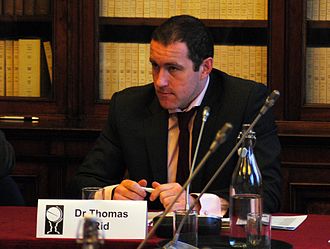
Thomas Rid (Author, political science Professor received Ph.D from Humboldt Univ. of Berlin in 2006.)

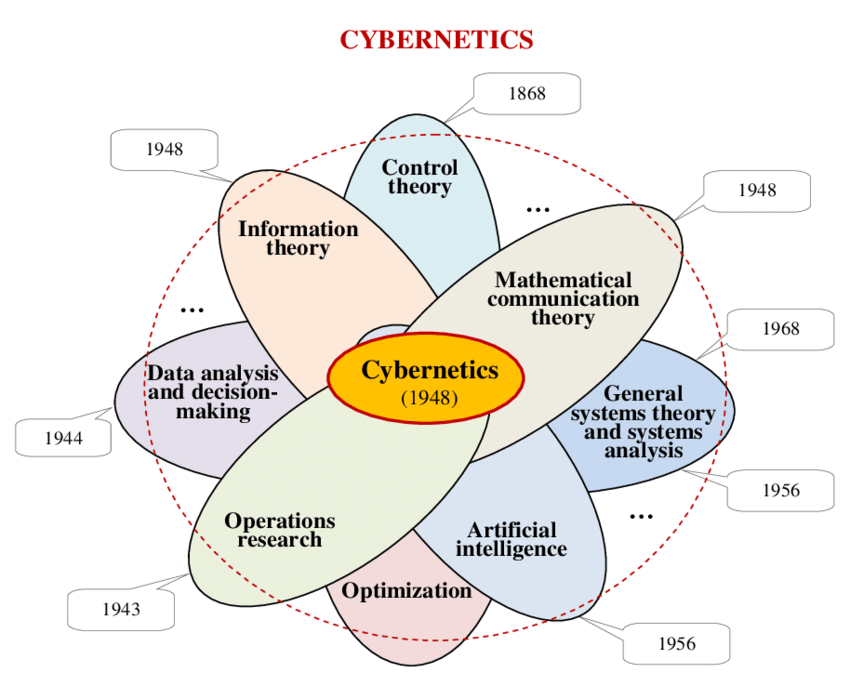
Thomas Rid’s history of the “Rise of the Machines” is a political perspective on society’s adoption of cybernetics (the science of communications and automatic control systems in both machines and living things).

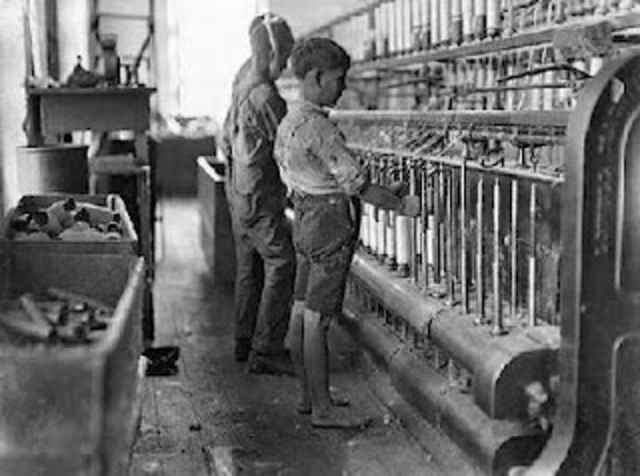
Rid begins his history with the industrial age that created machines and increased worker productivity while displacing and retraining workers to meet the needs of a growing economy.

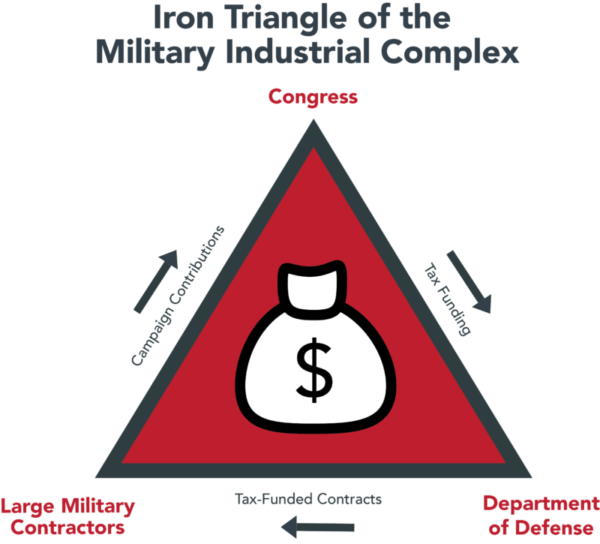
Rid’s history defines the origin and significance of cybernetics. It may be interpreted positively or negatively. Viewing the state of the world today, there is room for praise and criticism. On the one hand “Rise of the Machines” offered opportunities and prosperity, on the other, it promoted murder and mayhem. The irony of both is they come from the same source, military R & D. Like Willie Sutton said about robbing banks, military defense budgets are “…where the money is”.

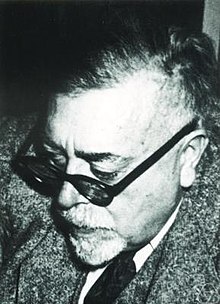
Rid recognizes Norbert Wiener’s formative role in the cybernetic age. Rid notes Wiener develops communications engineering and cybernetic theory during WWII. Rid reminds listeners of the military’s radar refinement and jet pilot cybernetic helmets, long before virtual reality became available to the public. The key to Wiener’s success is experimenters’ recognition of the importance of environmental feedback when designing machines to precisely locate an enemy target or for pilots to engage an enemy plane.

Norbert Wiener (American mathematician and philosopher, 1894-1964.)

Feedback is key to efficient machine performance because it provides information for changed response in the same way humans respond differently when circumstances or environments change.

Rid gives the example of pilot helmet refinement, partly related to ideas of the Star War’s movie.

Darth Vader’s helmet became a model for pilots of newer jet fighters.

The original helmets were unwieldy and uncomfortable. In Vietnam, the rough terrain led to GE research on motorized robots. However, what they found was the rough terrain and swampy land made them too vulnerable for practical use. GE’s research shows limitations but leads to robotic mechanization for repetitive work in fixed environments of industrial production.

Rid digresses with science fictions’ contribution to the advance of cybernetics. Timothy Leery, and Scientology were early endorsers of Wiener’s theory of cybernetics. Timothy Leery extolls the virtues of LSD as an entry to a different reality. One of Leary’s friends is Jaron Lanier who created an early version of virtual reality headwear.

L. Ron Hubbard claims Scientology’s connection to cybernetics. Wiener pointedly objects to Hubbard’s claim and forbids further association of Scientology with cybernetics.

The first computer is invented in the 19th century by an English mechanical engineer named Charles Babbage. It was an early form of number computation and analysis. It was a century ahead of its time. During WWII, British codebreakers needed to decipher German miliary communications. In 1936, Alan Turing writes a paper “On Computable Numbers…” that leads to employment by the British during WWII to decode German military communications. Turing’s computer decoded Germany’s secret enigma machine’ messages. As a result, Turing becomes known as the father of modern computer science.

The early internet years came in the 1960s from the need for a communications network for government researchers to share information.

That network is called ARPANET, which is financed by the U.S. Department of Defense. It is transformed into the world wide web, now known as the internet. Rid’s book is published in 2016. The potential of cybernetics in war is clearly demonstrated by Ukraine’s ability to resist a much larger and better equipped foreign power.

The role of the military in cybernetics research and development is shown as both critical and essential in Rid’s history.

Ukraine’s use of cybernetic surveillance for military equipment targeting and drone weaponization equalizes power and effectiveness of two mismatched powers.

Though not a subject of Rid’s history, the principal value of free speech is diminished by a cybernetic world that is not properly legislated, adjudicated and enforced by rule-of-law. Internet users have been influenced by media trolls who spew lies and disinformation. Young people kill themselves because of being dissed on the internet. The internet gives voice to hate groups around the world. Gaming is a principal revenue producer in the cybernetic world that patently discounts reality. Human value is discounted by the mayhem of computer gaming.

School children shoot teachers and students with impunity, as though they are creatures in a cyber world.

As late as yesterday, 3/27/23, another school shooting occurs in Nashville, Tennessee. Three adults and three nine-year-old children are killed.

Rid notes cybernetics’ military application both protects and exposes security of nations around the world. Rid writes about an American military intelligence penetration by foreign and domestic hackers during the Clinton administration. Hackers have the tools to disrupt both economic and military operations around the world. Of course, those tools are multiplying. With quantum computing, existing passwords will become obsolete. Intelligence services of all countries are becoming more and more capable of disrupting military or domestic affairs of any foreign power.

SLAVERY

Audio-book Review
           By Chet Yarbrough

(Blog:awalkingdelight)
 Website: chetyarbrough.blog

The Other Slavery (The Uncovered Story of Indian Enslavement in America)

By: Andrés Reséndez

                                                           Narrated by: Eric Jason Martin

Andrés Reséndez (Author, Historian, Ph.D. in history from the University of Chicago.)

One suspects “The Other Slavery” is unknown or misremembered by most Americans. “The Other Slavery” is not about America’s civil war, the Emancipation Proclamation, or Abraham Lincoln. It is about indigenous peoples and their adaptation to a world turned upside down by newcomers from foreign lands.

Andrés Reséndez mostly focuses on the North American continent, particularly west and southwestern American territories and Mexico, but he also touches on slavery in Chile.

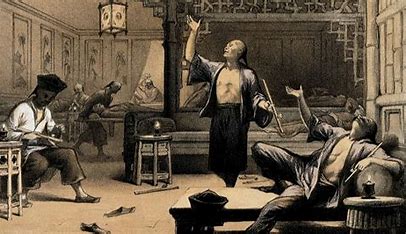
As is well known, slavery has been a societal constant since the beginning of recorded history. Today, it appears in pornography, low wage peonage, so-called re-education camps, and political/social incarcerations. What Reséndez explains is that Indian tribes of the west are increasingly incentivized by slavery with the arrival of foreigners. Though slavery may have been used by Indians earlier in history, it became a significant source of revenue for warring tribes.

Hernán Cortés de Monroy y Pizarro Altamirano (aka Cortez), 1st Marquess of the Valley of Oaxaca.

Reséndez reminds listeners of internecine wars of early America when conquistadores and Indians ruled the American southwest.

One Indian tribe captures a different tribes’ sons, and daughters to trade for money, horses, guns, and butter from the Spanish or later settlers who need cheap labor or who seek domestic help and/or carnal pleasure. Reséndez notes young women’s slavery prices are higher than young men’s because of their dual service as domestic laborers and sex objects. Over time, as Spanish land holders are replaced by American land holders, Indians remain a source and victim of the slave industry.

Men, women, and children are used by land holders and competing Indian tribes as barter for trade.

Though slavery is the primary story, Reséndez notes wars between Spanish land barons and Pueblo Indians occur over rights to the land.

Santa Fe, New Mexico becomes a focal point of conflict between Pueblo Indians and the Spanish. The victimization of Pueblo Indian slaves leads to a rebellion that removes Spain from the New Mexico territory, at least for several years. However, the lure of silver brings Spain back with a slave trade resurgence in southwestern territories of America. Reséndez  explains the slave trade becomes endemic as silver is discovered in Mexico and the southwest territories.

The need for cheap labor in silver mines multiplies the value of Indian slaves in the southwest.

The slave trade never dies. Greed drives Indian tribes to steal people from different Indian’ tribes to profit from human sales to landowners looking for cheap labor. Reséndez notes it is not just Indians victimizing Indians but American and Spanish landowners buying young men and women Indians and other human victims to serve as low-cost labor for silver mining, farming, and domestic service.

Reséndez notes male slaves were more difficult to manage than women slaves but for strength males were coveted for their labor in silver mining. Some of the mines were deep in the earth, all were dangerous. Underground mines were flooded with carcinogenic mercury tailings that shortened the lives of those who worked there.

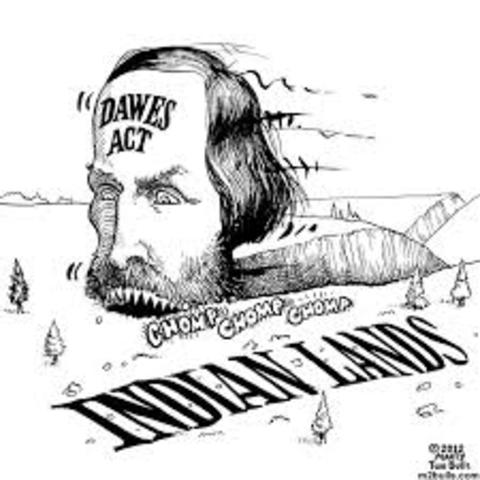
Slavery goes by many names. As is known by historians, the Dawes act further victimizes native Americans.

Reséndez reveals how slavery has always been a part of society. Self-interest is a motive force of human nature. Slavery is found in penal colonies of authoritarian governments to provide cheap labor. Slavery is also found in democratic governments that legislatively reduce the cost of labor based on corporate influence on public policy. A free market, not lobbyist influence, should determine public policy.

The hope for elimination of slavery lies in government policy that reinforces belief in human equality and a balance between corporate profit and cost of labor as determined by a free market.

A STEP TOO FAR

Audio-book Review
           By Chet Yarbrough

(Blog:awalkingdelight)
 Website: chetyarbrough.blog

   We the Corporations (How American Businesses Won Their Civil Rights)

By Adam Winkler

         Narrated by: William Hughes

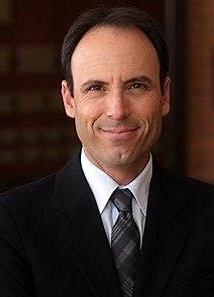
Adam Winkler (Author, Connell Professor of Law at UCLA.)

If only minorities could have kept pace with corporations’ pursuit of and success for civil rights, American society may have become more equal.

Liz Truss (Newly elected Prime Minister of the UK.)

It is announced this morning (9/5/22) that the new Prime Minister of the UK is to be Liz Truss. A primary issue in Ms. Truss’s campaign is to reduce taxes. America’s experience of reducing taxes seems a replay of the Reagan/Thatcher years. Many consider these two leaders as just what was needed at the time to advance their respective countries’ economies. As a result of their tax reduction policies, the gap between the rich and poor widened with corporations and their leaders being the primary beneficiaries. Hopefully Ms. Truss’s tax reductions do not benefit only corporations.

Experience of reducing taxes in the UK may be a replay of the Reagan/Thatcher years in America.

Corporations need to consider their responsibility for passing on those tax benefits to workers. If Ms. Truss’s tax reductions only increase the gap between rich and poor, democratic government is doomed.

It may be a surprise to many that corporate pursuit of civil rights dates to the early beginnings of American history. The first battle for corporate civil rights began with Alexander Hamilton’s drive to create the first American bank. His major political opponent is Thomas Jefferson. 

Jefferson opposes a national bank because he believes it diminishes State’s rights by ceding too much control to the national government. Winkler notes the irony of Jefferson’s objection in that Jefferson relies on national bank loans to subsidize his profligate lifestyle.

Winkler notes some level of civil rights for corporations is needed to protect the public from exploitation. If a corporation is not recognized as a singular public body, individual Americans could not sue for redress. Harm from unfair or harmful practices of corporations could not be tried in a court of law. However, Winkler explains an underlying concern is the gain of personhood for corporations. By being recognized as a person, corporations gain political influence beyond any individual person’s rights.

To many Americans, a 21st century Supreme Court decision on corporate civil rights is a step too far.

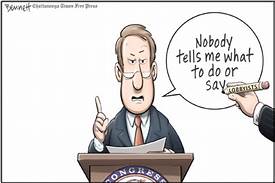
With the decision in Citizens United v. Federal Election Commission, the Supreme Court allows unlimited corporate donations to Americans running for political office.

Money is power, particularly in a capitalist economy. Elected officials become beholding to corporations rather than private citizens when running for office.

A prime example is the pharmaceutical and gun lobbies that have dominated both Democratic and Republican parties.

The rights of these corporate enterprises distort the benefits and dangers of both drugs and guns in American society. Over prescribed drugs and opiates advertised to the public by the pharmaceutical industry are more widely spread than ever before. If elected officials were not so beholding to gun lobbies, national background checks and red flag laws would not be so difficult for Congress to pass.

The opiate epidemic and the 5.25.22 Uvalde murder of 19 children and 2 adults is evidence of the harm done by granting too many civil rights to corporations.

Winkler’s book about corporate pursuit of personhood is burdened by legal explanations for non-lawyer listeners. However, his history gives one a deep appreciation of how civil rights can bring both good and harm to American society.

AMERICAN MALAISE

Audio-book Review
           By Chet Yarbrough

(Blog:awalkingdelight)
 Website: chetyarbrough.blog

The Retreat of Western Liberalism

By: Edward Luce

Narrated by: Julian Eifer

Edward Luce (Author, English journalist, Financial Times columnist and US commentator.)

Edward Luce offers a troubling picture of 21s century America.    His argument depends on one’s definition of “…Western Liberalism”.  If the definition is belief in human individuality and a relaxation of public custom, law, and authority, there is evidence to support Luce’s argument. 

Luce notes the election of Donald Trump is not an American aberration but a symptom of “The Retreat of Western Liberalism”.

The advent of the internet has reinforced a group think driven by belief in alternative facts that create conspiracy theories.  It is a discontent coming from many Americans ignored by rising wealth of a nation controlled by special interests.  Trump taps into that discontent.   

The irony of Trump’s rise is his personal wealth when the American gap between rich and poor is skyrocketing.  Putting that irony aside, Trump suggests America can be “Great Again” by returning to a past.

Trump creates a false hope of re-industrializing America with new jobs. The falseness of Trump’s pitch is that new jobs in America are not being created by industrialization but by technology and human services.  Trump’s appeal is loaded with false representations, amplified by media trolls.  Public custom, law, and authority are undermined by conspiracy theories that convince Americans they have been cheated out of their fair share of America’s wealth.  In truth, they have, and that is why Trump’s false pitch about “Making America Great Again” got him elected.

Trump’s anti-immigrant falsehoods feed conspiracy theories about jobs being taken from poor Americans.  Equal opportunity is a function of rising wealth in the hands of the few.  Public education and health care are unequally distributed in America.  The wealthy can afford higher education and the best health care, the poor cannot. 

Americans are poor because they are being denied equal opportunity, not because of immigration. 

Education and health care are critical for American labor’s adjustment to a changing world.  Private industry and the government have equal responsibility for assisting all Americans, not just those who have benefited from the technological revolution.

Job transition requires re-education and on-job training by employers that offer decent wages and health care. 

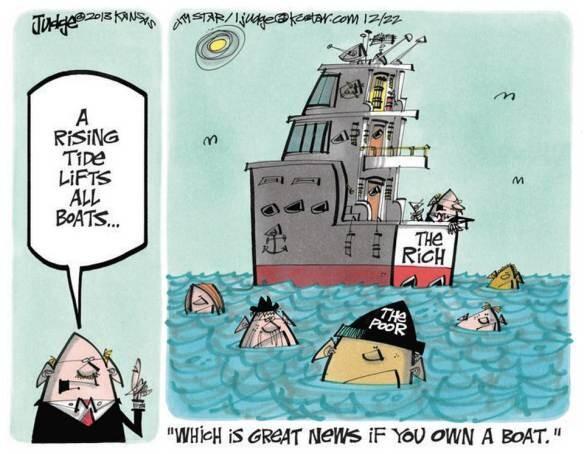
Luce’s point is a “rising tide has not lifted all boats”.  The technological revolution offers the same potential for western liberalism as the industrial revolution.  The election of Donald Trump was America’s “wake up” call. 

A large part of America’s population has been left out of the American Dream of western liberalism that came from opportunities provided by the industrial revolution. 

Western liberalism needs to be reinvented by investment in a technological revolution for all Americans, not just those who have benefited from the industrial revolution.  The question is whether private industry and the government are up to the task.  Will western liberalism be reinvented and promoted by ossified industrial leaders and elected representatives?  Most industry leaders and elected representatives are satisfied with the status quo while too many Americans struggle to make mortgage or rent payments.  Luce defines the problem but offers no solution.