Helgoland (Making Sense of the Quantum Revolution)
By: Carlo Rovelli, Erica Segre-translator, Simon Carnell
Narrated by: David Rintoul
Carlos Rovelli (Italian author, theoretical physicist.)Erica Segre (Italian author, born in 1963, deceased 2021, Professor at Trinity College)
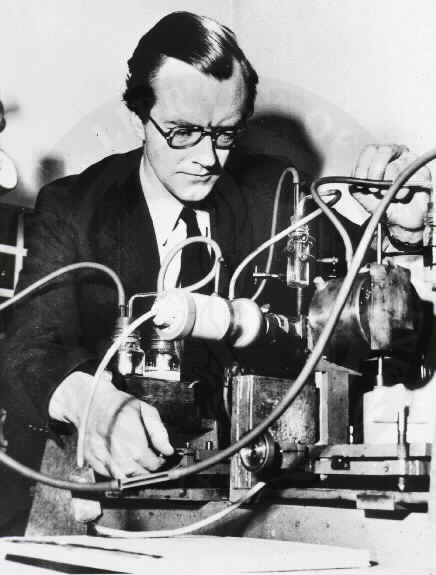
Carlo Rovelli’s book title, “Helgoland”, refers to a small island in the North Sea, off the coast of Germany. Werner Heisenberg, a pioneer in quantum mechanics theory, visits the island to think about the mystery of matter and energy and how it works at a subatomic level.
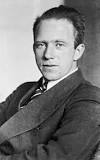
Werner Heisenberg (German theoretical physicist, pioneer of the theory of quantum mechanics. Born 1901, died 1976 at the age of 74.)
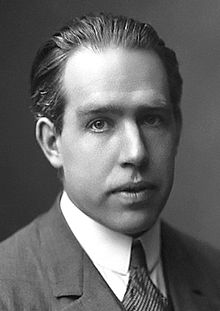
Rovelli explains this 20-year-old wunderkind had been given an assignment by Niel’s Bohr to determine how a quantum works in a subatomic environment. (A quantum is the minimum amount of a physical property’s interaction with the substance of the world.) The author suggests Heisenberg chooses Helgoland to think about his complicated assignment because he suffers from allergies which would not be aggravated by the austere island’s environment.
Rovelli argues that Heisenberg believes the known postulates of physics, rather than a new theory, held the key to the quantum world.
Using the tools of known physics, Heisenberg observed and recorded the actions of quantum particles. What he found was their actions could be measured mathematically with the addition of a matrix of numbers to finite calculations of known physics phenomena. The matrix introduced the principle of probability rather than certainty to quantum action at a sub-atomic level. This revelation overturned the certainty principles of cause and effect presumed by the Einstein’ physics community.
At a subatomic level, Heisenberg’s observation and number matrix postulate probability rather than certainty as a fundamental law guiding the principle of existence.
Rovelli goes on to explain this fundamental change in the understanding of physics is elemental but not substantively different for life as we know it. The author argues life remains relational at all scales of existence, just as it did before quantum mechanics became physics guiding principle. However, quantum physics remains mysterious and has led to new ideas like the many worlds’ hypothesis, the Copenhagen interpretation, and the Broglie-Bohm theory.
What Rovelli concludes in “Helgoland” is that what humans see, hear, feel, and think are based on relational understanding of the world.
Rovelli argues the world is a material place, but its substantive reality is based on life’s perceiver. This is a comforting and terrifying argument. It explains why humans can be so right about what is perceptually true and advantageous but also wrong and disastrous because of misleading perceptions.
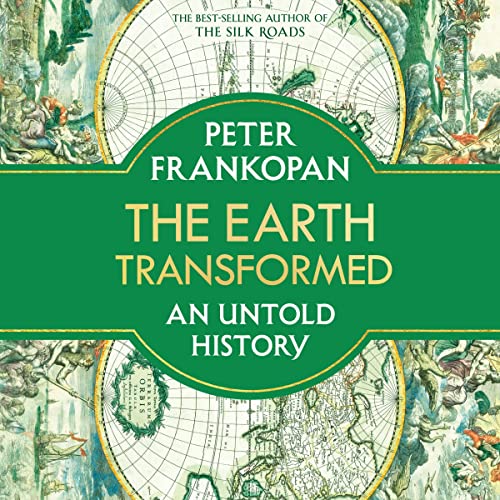
Peter Frankopan, (Author, Professor of Global History at Oxford University, Director of the Oxford Centre for Byzantine Research.)
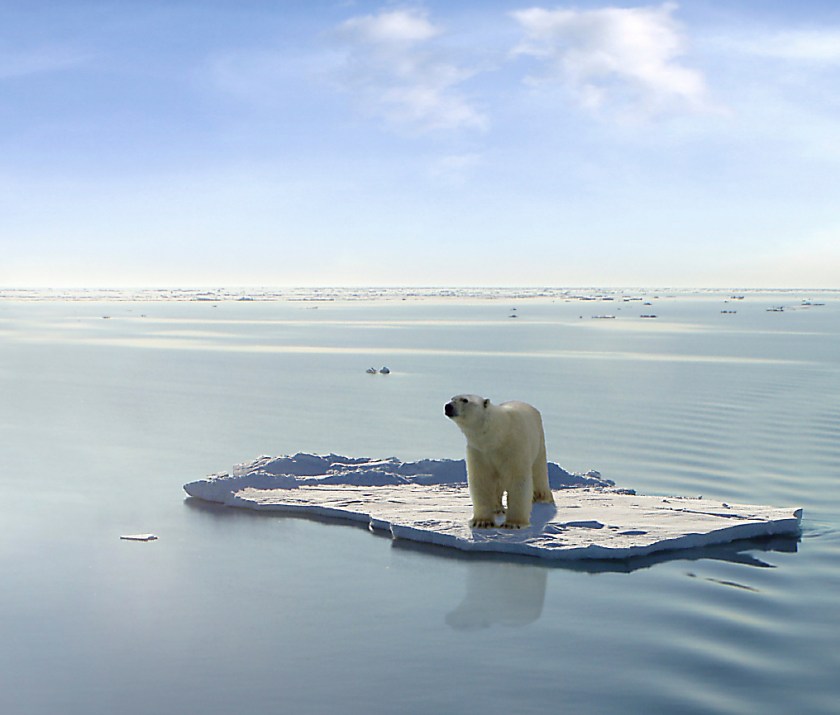
Peter Frankopan journeys from pre-history to the present to offer perspective on the earth’s global warming crisis. He reviews what is either speculated or known of disastrous world events. Frankopan recalls histories of major volcanic eruptions, earthquakes, tsunamis, droughts, famines, pandemics, and epidemics that have changed the course of history.
In the beginning, one thinks Frankopan is setting up a rationalization to argue global warming is just another world changing crisis that will be managed by humanity.
However, Frankopan is explaining the history of world crises and how humanity dealt with its eternal recurrence. In broad outline, he suggests world crises are dealt with in two ways, i.e., one, with religion or mysticism, and/or two, with adaptation. In every historical crisis, leadership is the presumed key to survival.
Frankopan explains the common denominator for crises that change the world is death.
Just as America and the world recovers from Covid-19, millions have died. We who remain carry on.
Whether a catastrophic event is geological, climatological, or pathogenic, life is a victim. Before history is written, Frankopan offers explanations of what happened to life based on fossilized remains. Causes for death are either geological (like earthquakes), climatological (like volcanic dust that blocks the sun), pathogenic (like the plague or a virus), or manmade (like the nuclear bomb). When written history begins, Frankopan’s evidence of world crises is more precisely explained. (From an objective perspective of any historian’s story, any history of the past is trapped in His/Her’s interpretation of other’s reported facts.)
Frankopan argues life on earth has come and gone through centuries of crises.
The evolution of human beings shows they have managed to ameliorate past crises by meeting them head-on. Humans have overcome crises by adapting to change, whether manmade or environmental. If the past is prologue to life’s survival, global warming’s threat will be met and ameliorated by human response. Just as all crises in world history have ended lives, the same is true of global warming. That does not necessarily mean all human life ends. Frankopan’s history infers life will be changed by global warming but leaves unanswered whether human life will end.
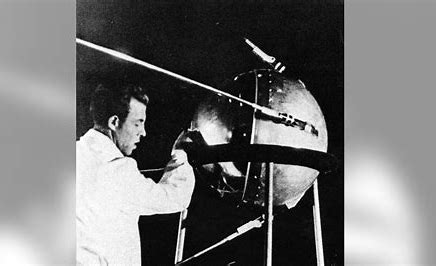
Jumping ahead in Frankopan’s scholarly review of history, the age of Sputnik emphasized the growing importance of science in the ecology of the world.
The Russian Launch of Sputnik in 1957.
Ironically, Russia’s giant step ahead of America in the space race awakened the world to the importance of science. Frankopan notes the hubris of humanity taking center stage with Khrushchev’s comments about humankind’s need and ability to control nature. To Frankopan, control of nature is a turning point in the hubris of humankind. He notes the U.S.S.R. experiments with weather control as a way to improve agricultural productivity. Frankopan suggests the real objective is to realize the potential of weather control as a weapon of war and goes on to explain how America capitalizes on that idea in the Vietnam war.
The irony and hubris of humanity in believing it can control the weather is evident in the despoiling of earth by human ignorance and action.
The profligate use of carbon-based energy for industrial growth far outstrips any science driven effort by humanity to control the weather. World ecology has proven too complex for constructive control by human beings. It is as though the world is being turned back to religion and myth to explain the phenomenon of world existence.
The last two chapters address overwhelming evidence for causes and consequences of late 20th and early 21st century world’ environmental damage.
From deforestation in the Amazon, to automobile increase in China, to waterway dams and aquifer depletion, a listener/reader’s fear and depression are kindled.
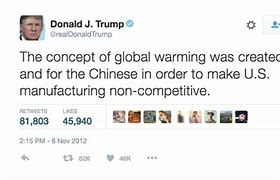
Harvard educated politicians like Ted Cruz and poorly educated Presidents like Donald Trump insist global warming is a hoax. As political power representatives of the wealthiest country in the world, one cannot but be appalled by climate change deniers.
The world’s future is based on an unknown solution to global warming.
Some suggest A.I. is key to solving global warming. Frankopan’s history suggests it is human beings that gave humanity the ability to overcome past crises. A.I. is one of humanities tools. It seems fair to suggest today’s crises will be another difficult chapter in the history of humanity. Judging by Frankopan’s history of human adaptation, global warming may not be humanities last chapter. However, Frankopan warns listerner/readers against the hubristic belief that nature can be controlled by humankind.
Stephen Hawking suggested humanity will not survive another 1,000 years on Earth and that human survival depends on colonization elsewhere in the Solar System. Frankopan seems to infer, humanity does not have that much time.
Frankopan wryly observes global warming is a crisis, but that human life is more likely to end from some other cataclysmic natural event like that which killed the dinosaurs (a meteor strike), a massive underwater volcanic eruption, or nuclear war before global warming kills us all.
One hopes histories past lessons inform a future that includes a place for the youth of this, the next, and future generations. World change brought on by crises have been overcome in the past through human adaptation. It seems reasonable to presume, despite the ignorance of some national leaders, that humanity will survive today’s global warming crisis.
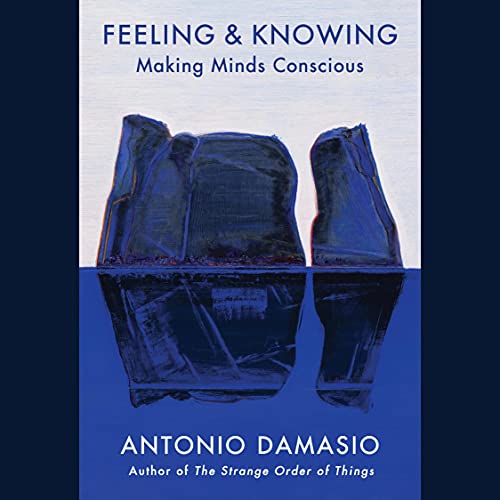
Antonio Damasio (Author, Portuguese American neurologist, Professor at the University of Souther California.)
Antonio Damasio refines the definition of consciousness in “Feeling & Knowing”. Damasio offers a more science based, experiment driven, view of consciousness than Helen Thompson’s “Unthinkable…” “Feeling and Knowing” is a shorter version of Anil Seth’s book “Being You” that also addresses consciousness.
Both Damasio and Seth argue consciousness comes from feelings.
Thompson offers a less science driven view of consciousness based on patient interviews that reinforce Damasio’s and Seth’s views. There seems a slight difference between Damasio’s and Seth’s view of consciousness in the belief that emotions or feelings are the source of thought and knowledge origination. Seth argues emotions originate in the organs of the body and inform the brain. Damasio is more circumspect and seems to argue emotions come from the body and brain in a synchronous way.
However, Damasio’s and Seth’s beliefs about consciousness seem entirely compatible. That composite view changes with additional input which suggests consciousness is not a precise representation of reality.
To Damasio, one’s view and understanding of the world comes from feelings processed and imprinted on, and by, the brain. This is not to say that the brain is only a processor but that it works synchronously with the organs of the body.
Damasio emphasizes feelings as the primary knowledge source of the human experience. Damasio’s theory suggests artificial intelligence will always be artificial because it relies on the logic of ones and zeros rather than the dynamic process of emotion interface with brain processing.
If Damasio is correct, for A.I. to become a learning machine, emotion must be a part of its programming.
If emotion can be and is programmed into a machine, there seems a probability that humanity will become servant rather than master of the universe.
Anil Seth (British professor of Cognitive and Computational Neuroscience at the University of Sussex.)
Anil Seth’s “Being You” is a difficult book to understand, in part because of its subject, but also because it requires a better educated reviewer. Consciousness is defined as an awareness of yourself and the world, a state of being awake and aware of one’s surroundings that emerges from one’s brain. Seth explains neuronal activity of the brain correlates with what “Being You” is you. Seth argues that without neuronal activity, there is no you.
Seth suggests the conscious self operates with a Bayesian view of the world.
Bayes’ theory is that decision making is based on rules used to predict one’s decisions. The example Seth gives is a person living in the desert who sees droplets of water on his lawn and presumes it either rained, or his sprinkler was left on when it should have been turned off. He looks outside and sees his neighbor’s lawn is wet and, with that added information, decides it must have rained. Then he notes his window is dirty and maybe he is not seeing water on his neighbor’s lawn. This reduces the possibility that it rained but not enough to change his mind about it having rained last night. The point is that one continually changes their state of understanding (their consciousness) based on added information.
The difficulty of a Bayesian view of consciousness is that human decisions are a function of human perception of data that is never 100 percent complete.
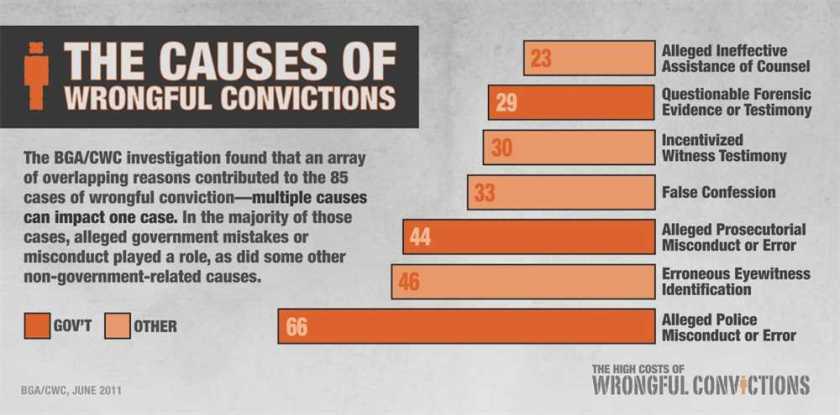
There are three fundamental weaknesses with a Bayesian view of the world as the prime mover of consciousness. One, humans do not always see clearly. Two, all that is seen is never all that there is to be seen. And three, human minds tend to pattern what they see to conform to their personal bias. The third is the most troubling weakness because, like in police line-ups used for eyewitnesses to identify perps when a crime is committed, mistakes are made. Eyewitnesses are no guarantee for identification of a criminal’s crime. None of this is to suggest Seth is wrong about what consciousness is but it shows consciousness is eminently fallible and only probabilistic.
Seth’s theory of consciousness reinforces the public danger of social websites that influence the public, particularly young adolescents trying to find their way in life. Their search for social acceptance leads them to internet sites that may lead or mislead their lives.
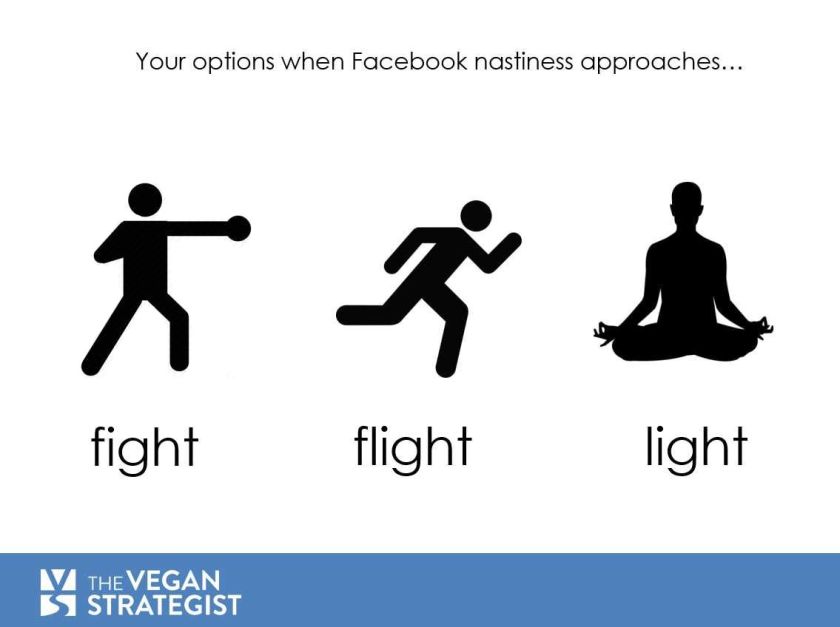
Another fascinating argument by Seth is that the mind is not the source of emotion. He suggests the mind is informed by the organs of the body. The heart begins to race, and adrenalin is released as somatic markers that send signals to an area of the brain that makes fight or flight decisions. Emotions do not originate in the brain. The brain responds to the cumulative effect of the body’s physical and chemical signals.
Seth notes various studies of human decision making that are based on external stimuli with a belief that the primary purpose of consciousness is to survive. Two methods of consciousness measurement are IIT (Integrated Information Theory) and PHI, a number meant to measure quality interconnections between bits of information of a given entity. The resulting number — the Phi score — corresponds directly to a measurement of an entities level of consciousness. A reader/listener should not be discouraged by this technical digression. Much remains in Seth’s book that is more comprehensible and interesting.
Seth explores some of the tests used for consciousness. The mirror test is one in which a living thing is shown itself in a mirror to see if it recognizes the image of itself.
Monkeys show some signs of recognition (dogs do not) which suggests a greater level of consciousness among primates. He notes the evolution of human perception of the world through the eyes of artists like Monet, Mach, and Picasso who see nature’s colors and planes of the face or body in the material world. One thinks of Monch’s insightful “Scream” that reminds some of life’s terror. He shows how a stationary drawing seems to have movement because of a trick of consciousness.
Seth shows how an inanimate rubber hand can be made to feel like a part of the human anatomy by stroking one’s real hand at the same time the experimenter strokes a rubber hand.
Seth expands that principle to show how consciousness can create a full body illusion like that of a Star Trek transporter that sends their body to another planet. A whole host of social problems can be created by image teleportation. Being able to create a perfect duplicate of one person that is televising false information might start a rebellion or start a war.
Seth argues humans have free will and that the brain’s pre-cognition for action is not because of pre-determination of life but a delay inherent in consciousness which is gathering information before acting, just like the sprinkler story alluded to earlier. As noted earlier, to Seth, consciousness is a Bayesian process, not a predetermination of action.
The end of “Being You” addresses Ray Kurzweil’s “singularity”, “a future period during which the pace of technological change will be so rapid, its impact so deep, that human life will be irreversibly transformed. Seth expresses concern and an element of optimism. The evolution of the beast machine bodes a possible end, an adaptation, or an evolutionary change of humanity.
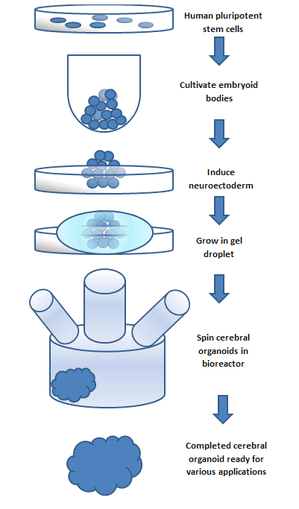
Seth touches on research being done on cerebral organoids, artificially grown miniature organs resembling the brain.
Presently they are being used to model the development of brain cancer to aid in its cure but how far is this from the next step in machine learning, supplemented by the implantation of cerebral organoids?
The beast machine is consciousness.
Genetics discoveries and research hold the potential for creation, manipulation, and destruction of human life. Artificial Intelligence is on the precipice of a marriage between all information in the world and sentient existence of beast machines. The beast machine will have greater potential for creation, manipulation, and destruction of life.
Human consciousness has created the agricultural age, the industrial revolution and now the information age. Humans have nuclear weapons of mass destruction that can end our world’s human habitation. The only note of optimism is that the history of human consciousness has generally led to positive changes for humanity, i.e., longer life spans, improved economic and social conditions, and new discoveries about life and living. The world is at its next great social and economic change.
Donald Prothero (Author, Amerivcan geologist, paleongologist,)
Donald Prothero provides a mountain of evidence informing the skeptical of the truth of evolution. Prothero explains evolution is a random and bushy process requiring time, heat, and a few basic chemicals to produce life. On the one hand, that makes life probable somewhere else in the universe. On the other hand, it implies human beings may be as ephemeral as dinosaurs, and dodo birds.
Prothero’s name makes one think of the Greek god, Prometheus, the creator of fire and mortals.
From the primordial soup of four or five billion years ago, the chemicals of life combine to create a self-reproducing cell. Within that cell, the genetic material of life is formed. As time passes, these cells combine to form life that adapts to its environment. This adaptation is the definition of evolution.
Prothero explains evolutionary adaptation both resists change, and commands change.
He gives the example of Giraffes that grow long necks but retain a nerve fiber that is longer and poorly located for its purpose. In battles for female attention, the evolutionary change of longer necks increases dominance of an evolved Giraffe over other male Giraffes with shorter necks. Though neck length improves procreation potential, the adaptive failure of the nerve fiber makes a long-necked Giraffe more vulnerable to injury. In a sense, evolution is an arbitrary process that often leaves useless remnants of body parts that do not serve a purpose and may hasten extinction.
What comes to mind as one listens to Prothero is that human beings are still evolving. Whether evolution will ensure survival or hasten extinction is unknown.
How are the human brain and body evolving? This is particularly important with a growing understanding of DNA and sciences’ ability to change DNA in a human subject. Is knowledge of DNA modification a function of evolution or revolution? Evolution has historically been a long-term process that may be less long term in the modern age.
What about Artificial Intelligence? Will A.I. become a part of human evolution? Is A.I. the next stage of human evolution or its replacement?
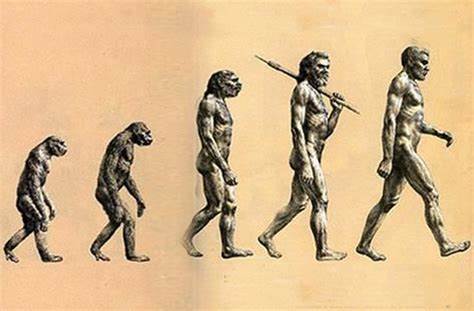
Prothero notes evolution is a bushy process meaning that variations of living organisms remain alive at the same time. Like whales, elephants, giraffes, and humans there are different evolutionary examples within species. Will there be humans that become a part of A.I. existence and others who will be exclusively human? Will one form of human become dominant? Prothero’s point is that evolution is not a linear process. There is no missing link that shows man evolving from apes. There is only one tree of life showing bushy branches with similar genetic material. Prothero notes 99.99 percent of human’s genetic make-up is the same. Chimpanzees are 98.8 percent similar, cats 90%, and honeybees 44%.
The close association of human DNA with chimpanzees shows who’s bushy tree to which we belong.
As Prothero notes, nature’s evolutionary change is not moral. Evolution is change based on nature’s random selection. Prothero suggests natural selection is a two-way street. Humans may have come from the sea, but whales are likely to have come from the land.
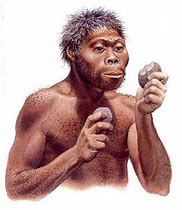
Homo Sapien image 100,000 years ago.
Prothero suggests humans have not changed much in the last thousand years. Memes have changed but little physical changes are evident. When human genetic manipulation takes control, morality becomes a human decision. With A.I., who knows where or how moral decisions will be made?
Carl Sagan (1934-1996, Author, University of Chicago entry at 16 years of age, received a Master of Science and Doctor of Philosophy in astronomy and astrophysics in 1960.)
Carl Sagan died from a bone-marrow disease at the relatively young age of 62 in 1996. One generally associates Sagan with his Cosmos series, but his education went far beyond the study of astronomy. His book reflects as much on the philosophy of life as the future of society, science, and technology.
“Women’s Right to Choose”“Right to Life”
Today’s controversial abortion question is forthrightly addressed by Sagan. He suggests “Right to Life” and a “Women’s Right to Choose” are politically and philosophically extreme ends of a rational argument on abortion. “Right to Life” followers insist all life is precious even though humans kill animals for sport and consumption. “Women’s Right to Choose” followers insist birth of a baby in utero is the sole decision of women because their body and life are only theirs to control.
Sagan suggests a baby in utero in the first trimester may be tested for brain activity and if none is found, no personhood is formed. With no brain activity of a baby in utero, the right of a woman to choose is an equal rights decision. However, to Sagan if brain activity is present, life is present, and abortion is murder. Sagan infers a science based national law could be created that avoids the extremist positions of the “Right to Life” and “Women’s Right to Choose” movements.
Sagan notes how computer gaming opens doors to the advance of computer capability and utility.
Nearly 50 years ago, Sagan’s book suggests much of what has happened in the science of brain function and technology. It seems a shorter step from Sagan’s ideas about computer function to what is presently called artificial intelligence. His view of brain and computer function might lead to a machine/brain confluence. It may be that Sagan’s belief in other forms of terrestrial life are secondary rather than primary interests of our human future.
In 1978, Sagan receives the Nobel Prize for nonfiction with “The Dragons of Eden”. In retrospect, it seems a wise decision by the Nobel panel of judges.
RICHARD DAWKINS (ENGLISH ETHOLOGIST AND EVOLUTIONARY BIOLOGIST WHO INFERS A GENE MAY BE THE SOURCE OF CONSCIOUSNESS.)
As Dawkins’ clever title infers, “River out of Eden” is a scientist’s explanation of how life began and proliferates whether God exists or not. One can argue it is neither a refutation nor affirmation of God, only that God has nothing to do with life’s persistence. Dawkins’ explanation is based on Darwinian evolution and what he characterizes as the immortal gene. A human gene’s immortality is being tested by earth’s environmental degradation. On the other hand, immortal genes may adapt to earth’s degradation.
One cannot help but think of the potential of artificial intelligence and the future of human beings as they may evolve.
The discovery of DNA by Francis and Crick may change the course of human evolution. With the discovery of CRSPR, the medical community acquired tools that can modify genes. With those discoveries, it became possible to rid humanity of disease and hasten human evolution. Some argue these discoveries will improve human life; others suggest it will end it.
The discovery of the double helix. Erwin Chargaff (1951): Rule of Base pairing. Rosalind Franklin & Maurice Wilkins (1953): X-ray diffraction pattern of DNA. James Watson & Francis Crick (1953): Molecular structure of DNA.
Dawkins offers numerous examples of species that have evolved over millenniums of earth’s existence. He argues that survival is a result of an innate characteristic of genetic material that has the sole purpose of self-preservation. Genes are reproducing engines of life based on the environment in which they exist. Dawkins argues genetic materials’ ability to modify and replicate themselves are the essence of life’s continuation.
Evidence of Dawkins belief began with Darwin and is reinforced by numerous science experiments showing generations of birds, bees, and other forms of life that have inherited behaviors through generations of existence. His argument is that life is a matter of genetic predilection and preservation, more than learning.
Brian Fagan (British Author, Profesor of Anthropology at U of C. Santa Barbara. PhD from Cambridge University.)
Brian Fagan reveals where humanity came from, the ways in which humans populated the world, and more particularly how early humans relied on fishing. Fagan exposes a trail of archaeological details that show humans have been fish eaters from their evolutionary bipedal hunter/gatherer beginnings.
Fagan suggests humanity evolves because hunter/gatherers were not only animal hunters and berry munchers but fishing people. Fagan’s research suggests humans have been fish eaters since the beginning of their self-awareness.
Fagan figuratively and literally travels the world to itemize artifacts of human remains that show fishing exists in the earliest known communities of the world. Fagan reinforces Graeber and Wengrow by noting communities of human beings were not created as a result of one thing like farming but on many activities based on survival and/or identity. (Few archeologists disagree on one fact. The human animal began in Africa. When “Lucy” or some being like her evolved, all became descendants of Africa.)
Ancient Fishing Spear Africa
Fagan notes fragments of rock in pre-history African’ sites were honed with barbs to stop fish from wiggling free after being speared.
The survival of any species is dependent on nourishment. In civilization’s beginning, archaeologists surmise human ancestors became hunter-gatherers to survive. Humanity formed into groups from a survival instinct that led to communal association. Fagan’s archeological research revealed artifacts that show hunter-gatherers found fishing as an integral part of humanity’s drive to survive. He notes fragments of rock in pre-history African’ sites were honed with barbs to stop fish from wiggling free after being speared. Fish skeletons were found near the homed spear heads. Fagan finds barbed artifacts near Kenyan and Tanzanian lakes in Africa. Fagan notes, the earliest spear heads had barbs on one side while later spear heads had barbs on both sides.
A second interesting finding by Fagan is that fish farming is found in early Chinese civilizations. In 1000 BCE, a written record by Fan Li (in the Zhou dynasty 1112-221 BCE) describes a carp farm designed to feed a popular demand for fish.
It is a surprise to find fish farming has such a long history.
Fagan notes preservation techniques used by early ancestors. Salt is used to dry fish to preserve it for sailors’ consumption on long voyages and for general consumption when harvests are greater than a market can consume.
Fagan reminds listeners/readers of the immense size of fish. One fish could serve a village for weeks. Southern and Ocean sunfish weight well over 2 tons, some sturgeon and sharp-tail molas near 2 tons, Atlantic Bluefin Tuna over 1400 pounds, Pacific Bluefin Tuna over 900 pounds, a Goliath Grouper over 600 pounds, halibut, Warsaw Grouper, and Yellow Fin Tuna over 400 pounds, while lesser size cod are nearer 100 pounds.
Fagan notes how fishing changed over the centuries. Initially fish were either caught by hand or speared, then the idea of line and hook fishing, and finally net and seine fishing.
Today, catching fish by hand or spear is limited, while all other forms are used by more serious sport and commercial fishing operations. Sport and commercial fishing, along with rising human consumption, have depleted fish populations around the world. The size of fish has fallen, along with their populations because they no longer live as long or are harvested to extinction.
A part of Fagan’s fish-eating history is shellfish harvesting and consumption. The remains of shellfish are found in ancient sites. Some cultures use the shells as a form of exchange, others as a form of adornment and sometimes as musical or tonal instruments.
Shell Fossils
Several chapters at the end of Fagan’s book recount the consequences of global warming and the insatiable demand of fish eaters that are depleting the world’s fish habitats and populations.
Fagan offers interesting insights to listener/readers on the origin of fishing’s ancient, present, and future importance to humanity.
Dirt to Soil (One Family’s Journey into Regenerative Agricultural
By: Gabe Brown
Narrated by: Gabe Brown
Gabe Brown (Author, farmer.)
“Dirt to Soil” offers a glimpse of a farmer’s life. Gabe Brown’s family manages a 5000-acre farm in North Dakota. Brown and his son’s farming experience offer insight to a branch of biology that addresses the relationship of a farm environment’s organisms. Brown is not a scientist or academic. He is a farmer.
Gabe Brown became an expert in soil conservation based on experience and insatiable curiosity. Though he went to college, it is four years of hardship that gave Brown an understanding of farming. From that experience, Brown reordered his practice of farming based on five principles.
No soil disturbance (no-till, no-synthetics).
Reinforce Soil’s Natural Defenses (the outer layer of soil protects all life)
Promote biodiversity (marry species nature’s way to keep soil healthy)
Keep living roots in the ground as long as possible and use cover crops with seasonal diversity.
Animal & Insect integration (both predator and protector) to promote natural diversity.
Brown’s journey to understand and practice these farming principles increased the profitability and durability of farmland. “Dirt to Soil” is a record of Gabe Brown’s personal farming and educational journey. Though Brown admits to being a city boy, his experience in 4H, some academic classes, and visits to his future wife’s farm sparked a lifelong interest in farming. When his wife’s parents retired from their 1700-acre farm, Gabe Brown and his wife took over management.
Gabe Brown’s farming education came from 4 years of weather-related catastrophes that nearly ended his career as a farmer. He notes his wife appeared ready to give up farming life, but he refused to give up. His experience in those years re-focused his attention on the intimate relationship between nature and farming.
Brown explains, in “non-wilding” words, how it is necessary to rewild his farm. By watching how nature preserves itself, he changes his farming practices. Without plowing, furrowing, and fertilizing with chemicals designed by farming industry, Brown rejects practices that artificially enhance dry soil that exposes it to natural diseases and the exigencies of weather. He turns to observing nature to find how it replenishes soil’s natural nutritional condition. His objective is to turn “Dirt to Soil”.
Brown reasons that raising cattle on the farm would fertilize its soil. (A caveat to Brown’s observation is that fertilization by cow manure requires frequent grazing rotation, not industrial manure concentration.)
(There is a concern about carbon dioxide increase and ground water contamination from livestock. In a 2019 overnight stay with a farm family in New Zealand, there was objection to the former Prime Minister’s attempt to burden farmers with the cost of better livestock control.)
With natural fertilizer and cultivation of different plant species, Brown finds soil nutrient value improves. That soil improvement is absorbed by newly planted crops that benefit both livestock and consumers. The planting is done without tilling the ground but planting seedlings in unplowed ground. After experimentation, Brown begins rotating crops based on soil enrichment objectives.
Brown experiments with different species of plants to find which types replenish the soil in his area of North Dakota. With these discoveries and changes in practice, Brown’s farm prospers.
Brown notes change in farming practices is a slow process because of a false belief that high productivity is more important than nutritive value. When a film crew interviews Brown, one of the film’s producers is asked to buy a dozen eggs at the market and bring them to the farm to show the difference between eggs from “free range” chickens vs. caged chickens.
This is a comparison of a cracked egg from a free-range farm and an egg from a caged chicken farm. Brown notes his rewilded farm shows a brighter yellow yoke.
“Dirt to Soil” goes on to become a teaching facility for future farmers. Brown’s son works on the farm and will inherit it when his mother and father pass. In the meantime, an internship program is started to pass on the educational experience of Gabe Brown’s farming life. Rewilding farms means paying attention to the diversity and value of nature. Brown explains the nutritive value of food has fallen in America because artificial fertilizers have replaced the natural processes of nature.
Brown’s story about eggs reminds one of a trip to a Norwegian fish farm last year. One of our fellow travelers asked the employee of the farm if there is any difference between fish-farm’ salmon and a wild salmon. His answer is there are very few wild salmon left in the sea. However, he notes wild salmon have more Omega-3 per serving than farmed salmon which have less protein.
Gabe Brown explains his goal has always been to make a good living at farming and pass that skill on to his family and every American interested in that life. He concludes the success of farmers should not be based on crop yield but on profitability. His experience shows there are many ways to make a profit in farming.
Brown explains that high crop yield is not a measure of success. With the creation of alternative income practices, he believes a small farm is as capable of making a profit as a large farm. Observing nature and farm diversity (both human and ecological) is Brown’s guide for farming success and profitability.
The Metaverse (And How It Will Revolutionize Everything)
By:Matthew Ball
Narrated by: Luis Moreno
Matthew Ball (Author, Managing Partner Epyllion Industries.)
“The Metaverse” is widely talked about but little understood by the public. In Matthew Ball’s densely packed review of todays and tomorrow’s tech future. Listeners will be surprised to find how far the metaverse is from today’s world but how life-changing it will be in the future. The metaverse has not achieved its potential but when fully developed, Ball implies the metaverse will be the most revolutionary societal change since the industrial revolution.
Ball infers metaverse’ virtual and augmented reality are at a “model T” stage of development.
Model T Ford built in October 1908.
For we who are ignorant of the inner workings of coding and computer hardware, Ball implies metaverse’ virtual and augmented reality are at a “model T” stage of development. Having to use a cumbersome headset or computer aided eyeglasses are far from accurately creating or recalling reality. Ball explains, to achieve reality in the metaverse, hardware and software development is many years from success. The computer power and coding requirements, not to mention political regulation, of a metaverse are limited by current human capability and knowledge. However, Ball notes that capability and knowledge are works in progress.
Today’s metaverse is constrained by headset utility and code limitations.
The metaverse is an expansion of the internet. Once a metaverse reaches its full potential, it will create a three-dimensional network that will be different, if not new, reality. It will encompass the world as it was, as it is, and as it will be. Ball’s explanation of the metaverse is optimistic but burdened by an unlikely change in human nature.
The internet, Facebook, Apple, Amazon, Google, and Microsoft seem at the head of the class for today’s metaverse.
Facebook creates social connection. Apple creates hardware with IPhone portability, Amazon creates a marketplace, Google and Microsoft create software. They all capitalize on internet use. They coordinate lesser-known businesses and code creators to chip away at the complexity of creating a virtual 3D world. Because five mega-corporations are at the center of metaverse’ research, they are an indicator of a political danger. Having singular controllers of the metaverse threaten societal independence and choice. Later chapters suggest a key to containing that danger is block chain computing.
Block chain is a list of interconnected records that everyone can see but cannot change. It offers transparency that theoretically allows one to judge its validity. What it does not consider is the oversight of records and how information may be hacked to distort reality or steal value.
The collapse of FTX in 2022/2023 is a prime example of block chain risk.
As coding achieves the goal of three-dimensional creation, the idea of augmented reality becomes real. The simple idea of replicating a 3D piece of clothing requires reams of ones and zeros written by teams of coders. No singular company can hire enough coders to create three dimensional animate and inanimate objects. Ball explains the key to successful metaverse creation is capitalist freedom. Coders are media users, some of which become independent contractors who create ones and zeros that detail characteristics of the world for established internet companies. They are compensated for code that details objects like a shoe with shoelaces, eyelets, a corrugated sole, colors for its various parts and everything that makes a shoe a real thing.
The roadblock to achieving virtual reality is in the laborious task of coding to replicate details of life in three dimensions.
Ball explains gaming is at the front end of today’s metaverse because it is a first step that does not require the massive input needed to create a three-dimensional world.
The irony of this observation is that the best future coders are today’s youth who are captured by the gaming industry. As these young people mature, their coding experience reinforces the future of the metaverse. Ball notes the gaming industry opens the door to a two-dimensional world which infers potential for creating the third dimension, i.e., the world in which we live.
Ball argues a key to create the metaverse is capitalism and its practice in a free society.
The wealth of nations owes its prosperity to the industrial revolution. Ball’s argument for “capitalism in a free society” as the prime mover for the metaverse is weakened by recorded history.
Authoritarian leaders like Joseph Stalin used force to industrialize Russia into the U.S.S.R. Not just capitalism in a free society is a prime mover for the metaverse. Authoritarianism is an equivalent (much harsher) prime mover for the potential of the metaverse.
President Xi in the 21st century appears to be heading in a more Stalinist authoritarian direction.
The metaverse may be the equivalent of the industrial revolution but whether that will be a good or ill omen is as difficult to know as whether A.I. will be an enhancement or threat to society.
Will the metaverse change human nature–doubtful. Money, power, and prestige have ruled the world since the beginning of history.
The metaverse is unlikely to change human nature. What Ball makes clear is the metaverse is here in a two-dimensional, gaming and internet sense. It will only become more powerful as the third dimension is added.