WHAT IS REAL

The significance of Becker’s book is in his explanation of Bell’s theory that disagrees with Einstein’s theory of locality.

Blog: awalkingdelight

Books of Interest
 Website: chetyarbrough.blog

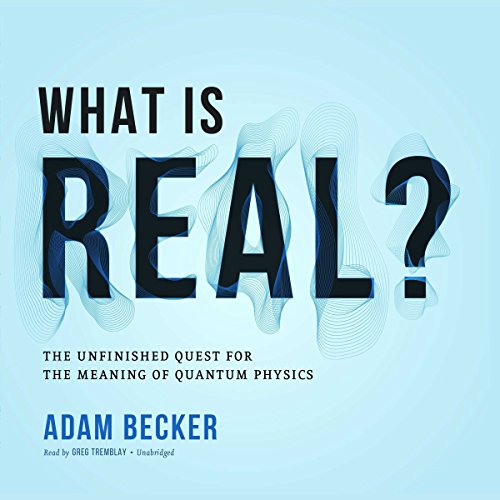
“What is Real” The Unfinished Quest for the Meaning of Quantum Physics

By: Adam Becker

Narrated by: Greg Tremblay

Adam Becker (Author, American astrophysicist, philosopher with BA’s from Cornell, and a PhD in the philosophy of physics from University of Michigan.)

Adam Becker explains a mystery that surrounds the concept of quantum mechanics. The theory of quantum mechanics continues to confound Einstein’s disagreements about quantum physics. No one, including Albert Einstein’s and Niels Bohr’s discussions, has fully agreed on the fundamentals of quantum mechanics. There are theories about quantum mechanics but proof about “What is Real” remains a mystery.

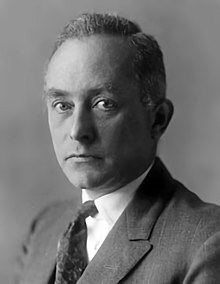
Becker explains in broad terms the Copenhagen interpretation of quantum mechanics. The Copenhagen interpretation came from the work of Niels Bohr, Werner Heisenberg, and Max Born. Study of the sub-atomic world is based on the Copenhagen mathematical theory created in 1925-1927. The theory argues quantum mechanics is inherently probabilistic, not deterministic. (The term probabilistic is only reference to a collapse or disappearance of an expected proton when sent through a split screen. It is not suggesting that quantum physics results are not reliable tools. Quantum physics has been found to be a reliable, accurate, and dependable tool for the desired effects when applied in the tech world.)

Interestingly, Becker suggests Werner Heisenberg tried to cover up his support and belief in Nazism. Becker suggests Heisenberg’s ineptitude as a manager of the research and experimentation process is the cause of Germany’s failure, not any sympathy for holocaust victims.

Einstein argues the only reason quantum mechanics appears probabilistic is because of an undiscovered fundamental law about the sub-atomic world. Einstein believes all physics theory must obey the law of locality which postulates physics laws must be based directly on related and surrounding causes.

Becker notes John Stewart Bell experimentally proves Einstein is wrong and that quantum effects violate the principle of locality.

Bell’s proof is mathematical and based on experiment. His calculations and experiment show two light particles can have spin characteristics that correlate with each other at a distance, non-locally. This quantum entanglement is dubbed “spooky action at a distance” by Einstein. Einstein, Boris Podolsky and Nathan Rosen argue entanglement (“spooky action at a distance”) is not proof of non-locality. Einstein believes there is an undiscovered cause for the appearance of non-locality’s entanglement. The argument against locality is called the EPR paradox after its theorists’ last names. Bell proves through experiment that “spooky action at a distance” is real and that the Copenhagen interpretation of quantum mechanics is wrong.

John Stewart Bell (1928-1990)

Bell’s theorem verifies that “spooky action at a distance” is no paradox by proving that quantum mechanics reflect a non-local phenomenon.

Hugh Everett, a physicist who studied under John Wheeler, published a paper with the idea that non-locality is evidence of another reality, another world with the same people experiencing a different course of life. The collapse or disappearance of a quantum particle is evidence of another reality, another world. For example, an incident of a near drowning would be survival in another reality that simultaneously exists in a different world.

Hugh Everett (1930-1982, died at age 51)

Hugh Everett proposed a many worlds theory of quantum mechanics based on Bell’s theorem of non-locality.

Everett was a student of physics professor John Wheeler who had worked with Niels Bohr.

John Wheeler (1911-2008)

Wheeler became an early supporter of Everett’s many worlds theory.

Wheeler popularized the terms “black hole”, quantum foam”, “neutron moderator”, and “it from bit”. He participated in the Manhattan Project during WWII and worked at the Hanford Site where he helped Dupont build a nuclear reactor in Richland, Washington. Wheeler became skeptical of the many worlds’ hypothesis in later years because of what he called its “metaphysical baggage”.

The significance of Becker’s book is in his explanation of Bell’s theory that disagrees with Einstein’s theory of locality. Einstein presumes missing variables will explain “spooky action at a distance”. Becker notes most physicists still believe in the Copenhagen theory of quantum mechanics despite Bell’s theory and proof that quantum mechanics allow for non-local affects. All the answers for “What is Real” proposed by Becker seem to contradict themselves or lack common sense. However, they still may be true or valid. They are just unproven or unobservable by repeated experiment.

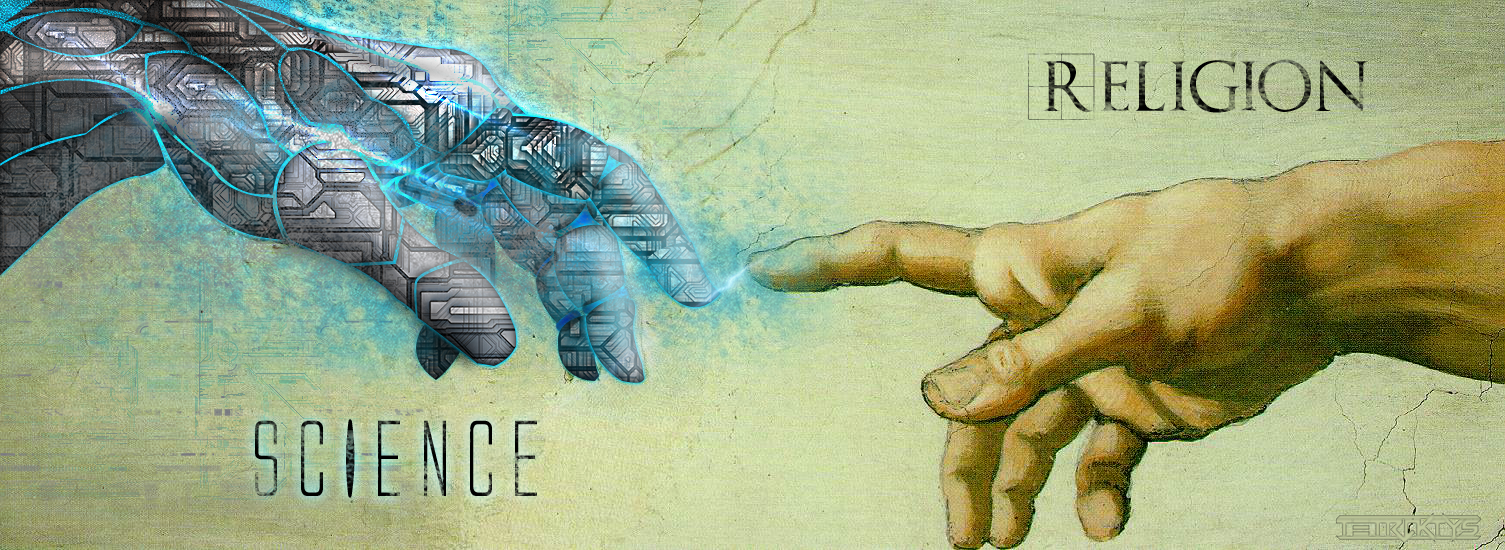
RELIGION AND SCIENCE

Evolution may ultimately reveal the truth of life and death but neither religion nor science have been historically infallible nor unerring.

Blog: awalkingdelight
 Website: chetyarbrough.blog

Scientism and Secularism: Learning to Respond to a Dangerous Ideology

By: J.P. Moreland, Dan Egeler-Forward

Narrated by: Mathew McAuliffe

J. P. Moreland (Author, American philosopher, theologian and Christian apologist.)

“Scientism and Secularism” is a disappointing polemic on an important but highly biased assessment of religion and science. No one escapes the bias of belief because of their life experience. J. P. Moreland’s life experience leads him to believe God is the proven origin of life. For many that is not how they became believers or non-believers. Belief in God is an evolutionary belief just as truths of science have evolved with newer discoveries.

The horrible consequences of religious belief have murdered millions of human beings.

Moreland’s book is a tiring replication of faith not factual certainty or proof of God’s existence. Religion, like science, has evolved over centuries of human existence.

Maybe there is God, but Moreland’s God is only Moreland’s God, a God founded on faith not proof.

Who in their right mind would not want a God that is omniscient and omnipresent that ultimately ensures the fair treatment during life and after death?

As a discipline, philosophy addresses fundamental questions about the nature of reality, knowledge, and existence. It plays an important role in science because it provides a framework for empirical evaluation, but categorization as a philosopher is not evidence of truth. At best, Philosophy is only a beginning of knowledge, not proof of knowledge.

Moreland denies evolution but history shows both religion and science have evolved over the centuries with immeasurable pain and gain for society. Moreland argues Darwin is wrong about the evolution of man. Moreland argues the randomness of genetic selection and time are not an experimentally proven explanation of the perfection and distinction of animal species. Really?

The only area of agreement one may have with Moreland is that great achievements in the world of ideas and things could not have been created without the existence of both religion and science. Evolution may ultimately reveal the truth of life and death but neither religion nor science have been historically infallible nor unerring.

DIAGNOSIS

Doctor Benaroch’s fundamental point in writing this speculative history is to emphasize the importance of a patient’s explanation of their symptoms in coming to a conclusion about a diagnosis.

Audio-book Review
 By Chet Yarbrough

Blog: awalkingdelight
 Website: chetyarbrough.blog

Medical Mysteries Across History

By: Roy Benaroch MD

Narrated by: Roy Benaroch

Roy Benaroch MD (Author, general pediatrician practitioner at Emory University near Atlanta, Georgia.

From kings to jazz singers, Roy Benaroch reviews the diagnosis of ten historical figures with a medical opinion about their cause of death. Based on written evidence of their physical complaints, Benaroch offers a medical opinion about what today’s knowledge of medicine would have revealed about their lives and causes of death.

Benaroch presents his analysis with an element of mystery by not revealing the more familiar names of the dying person until later in each chapter.

The historical figures he chooses are famous, so their medical complaints are recorded in ancient or more modern publications. With written documentation of their complaints, Benaroch gives his opinion on modern-day diagnosis with cursory notes about their accomplishments. In his review of written reports of their medical complaints, he surmises a medical diagnosis and their probable cause of death.

This interesting and brief journey through history reflects on the medical complaints of Franklin Roosevelt, Helen Keller, Marie Curie, Alexander the Great, Billie Holiday, and King Henry VIII, among four others not noted here. Roosevelt’s polio, Keller’s deafness and blindness, Marie Curie’s aplastic anemia, Billie Holiday’s addiction, and the causes of death for Alexander the Great and King Henry are interesting examples of Beneroch’s diagnosis of their diseases, its symptoms, and how their medical complaints should or could be treated today.

Though polio had been around for thousands of years, it is not identified as a virus until 1909. It usually attacks children under age 5 but can be acquired from contaminated water at any age.

Roosevelt first shows symptom of paralysis when he reaches the age of 39 in 1921. His symptoms were fever, muscle weakness, facial numbness, bowel and bladder dysfunction. Benaroch notes Roosevelt first notes symptoms after diving into water off his family’s yacht. Dr. Robert Lovett, with consultation from William Keen (a former doctor for Presidents and America’s first brain surgeon) came up with the correct diagnosis.

A practical nurse named Anne Sulivan is hired by Keller’s family because of her experience with deaf children.

Helen Keller, aka “bronco kid” because of her unruly behavior as a child, contracted an illness at age of 19 months. She exhibited a high fever and lost consciousness. She survives her symptoms but is unable to hear or see after her return to consciousness. Benaroch explains the high fever likely induced damage to Keller’s optic nerve and auditory processing system without fatally impairing her remaining nervous system. Sullivan becomes Keller’s teacher and companion who helps Keller learn how to read, write, and speak despite her lost sight and hearing. Keller becomes the first deafblind person to earn a Bachelor of Arts degree. She became a global advocate for the blind from 1924 to 1968 when she died.

Marie Curie is diagnosed with aplastic anemia, a disease that destroys bone marrow ability to create red blood cells.

Marie Curie and her husband were chemists working with radioactive material before its harmful effects were known. Her husband dies in a street accident in 1906 so is not known to have been affected by their joint experiments with radium and polonium. Later, Marie Curie works with x-ray machines during WWI. To compound her risk from exposure, she is known to have carried test tubes of radium around in her lab coat. Benaroch notes Curie dies at age 66 in 1934 which is remarkable considering her exposure to radon and other radioactive materials. Benaroch explains her symptoms are fatigue, shortness of breath, rapid heartbeat, bruising, headache, and fever. However, years after her death, Curie’s body is not found to have excessive levels of radiation in her remains. The cause of death remains obscure according to another book that notes Curie as an exemplar of women in science.

Benaroch notes drugs are miracles of pain reduction. When one becomes addicted to drugs to relieve one’s pain, humans need treatment, not incarceration.

Benaroch tells the story of Billie Holiday’s tragic life and death. As a physician, he notes a condition of human abuse that ranges from a low of 1 to a high of 10. His opinion is that Holliday nears 8 if not 10 on that scale. She was raped twice as a teenager, married three times to husbands that abused and took advantage of her fame and income from singing. She was arrested several times for drug possession and with a drug conviction in 1947, her cabaret license is revoked. Though she made a lot of money as a blues singer, Benaroch explains she died from cirrhosis of the liver at the age of 44 with $750 strapped to her leg. Benaroch notes addiction is a disease that continues to be misunderstood by the public and law enforcement. Benaroch explains America lost a national treasure when Billie Holiday died. He implies being black in America is hard but being addicted and black in America is a death sentence.

Benaroch suggests Alexander the Great drank to excess by choice, not because of addiction to alcohol.

Alexander the Great is characterized by Benaroch as a binge drinker, not an alcoholic. On Alexander’s last overindulgence, he falls unconscious, appears to quit breathing, and dies. The odd recording of his condition after death is that the body lays quiescent for several days without putrefaction. The embalmers refuse to treat his body because he appears to be something other than dead. Benaroch is unsure of whether this is a myth or accurate report of Alexander’s dead body. After considering what written record exists, Benaroch suggests Alexander probably died from blood poisoning from a former wound that never healed. Alexander appears alert up until his breathing and heartbeat stops. Benaroch suggests the slow advance of organ shutdown from blood poisoning allows Alexander to react to those who draw his attention. Benaroch infers the lack of putrefaction is likely a myth because blood poisoning could slow Alexander’s breathing and his stillness and inactivity reduce his heartbeat to the point that his body remained nourished enough to delay his actual death.

Benaroch notes jousting events in which the King of England’s head is hit with a lance. In a 1524 Henry is nearly killed in a match.

Benaroch’s diagnosis of King Henry is one of the more interesting diagnoses of his short book. Benaroch suggests Henry, in his early years as ruler of England, is an affable, intelligent, and effective monarch. However, Benaroch suggests Henry’s athletic life resulted in head injuries that changed his personality and the direction of his reign to one of erratic rule, unnecessary divorces, marriages, and behavior unbecoming a King. He is hit in the face by splinters from one jousing encounter that could have killed him. He continues to participate in jousting tournaments.

In 1533, Henry formally marries Anne Boleyn after his marriage to Catherine of Aragon. Henry marries four more times between 1533 and 1543. Benaroch suggests Henry’s behavior changes as he got older. In Beraroch’s opinion, he becomes more of an erratic tyrant than pragmatic ruler because of repeated head injuries. Jousting, like football, is a physical hard-hitting sport that has affected many of history’s athletes.

Doctor Benaroch’s fundamental point in writing this speculative history is to emphasize the importance of a patient’s explanation of their symptoms in coming to a conclusion about a diagnosis. Physical examination is important but listening to a patient’s physical and mental explanations of their condition are the best evidence for determining a correct diagnosis. This is the belief of other physician’s books that have been reviewed in this blog. There are many reasons why doctors may misdiagnose a patient’s condition. Some are too busy to take the time necessary to properly understand a patient’s comments. Doctors have various levels of experience and may not know how to interpret what a patient is saying. That does not change the point of Benaroch’s observations. It is essential for a good diagnosis to be based on the details of the patient’s history.

ECONOMIC EVOLUTION

The demographics of life demand better care of the human population and the environment. Power, whether from individual wealth or ruling authority, needs to be refocused on service.

Audio-book Review
 By Chet Yarbrough

Blog: awalkingdelight)
 Website: chetyarbrough.blog

Braiding Sweetgrass: Indigenous Wisdom, Scientific Knowledge and the Teachings of Plants

By: Robin Wall Kimmerer

Narrated by: Robin Wall Kimmerer

Robin Wall Kimmerer (Author, Professor of Environmental and Forest Biology, PhD from the University of Wisconsin-Madison.)

Robin Wall Kimmerer’s “Braiding Sweetgrass” channels a movement for economic change around the world. Capitalism and socialism are evolving in similar ways to respond to the world’s ecological crises. Neither economic system is capable of dealing with the crises because of the governing weaknesses of their evolution. Capitalism, like socialism, is driven by human nature’s self-interests. With capitalism, unbridled self-interest views individual wealth as a measure of success. Socialism views unbridled power as a measure of success. Neither freedom of capitalism nor the power exercised in socialism will stop earths’ despoliation.

Kimmerer tries to convince listeners to recognize their self-interest is in caring for the ecology of earth and its environmental and human diversity.

This is not a new argument. Sir David Attenborough, Jonnie Hughes, Joseph Marshall III, Charles Mann, Barry Lopez and others make similar arguments. Even though they may be right, human’ interest in balancing ecology and diversity will only happen with governance that is neither purely capitalist nor purely socialist.

Kimmerer, as a scientist and descendent of the Potawatomi Indian nation, has dedicated her life to nurturing the earth with her education as a botanist. She reflects on her spiritual beliefs, historic values of her heritage, and her education to change the direction of earth’s despoilation. Attenborough and Hughes write about the importance of rewilding the world. Joseph Marshall III argues science offers the opportunity to rebalance the relationship between humanity and nature. Charles Mann recalls the history of William Vogt and Norman Borlaug with Vogt arguing for conservation while Borlaug argues for scientific research to deal with overpopulation and hunger. A more sanguine view is taken by Barry Lopez who simply catalogues and implies the demise of earth because of human habitation.

At times, Kimmerer’s solutions are too mystical and spiritual. Some of her tales will dispirit listeners. On the other hand, some of the mythology she writes about is entertaining, if not actionable.

The character of “Windigo” is a representation of the weakness of capitalism and its extremity that entails the growth of greed. Her tales of the creation of humanity reflect on the strengths and weaknesses of human nature.

What Kimmerer offers listener’s is contemplation, if not realistic solutions for earth’s despoilation.

What is wrong with capitalism and/or socialism that can be corrected to stop earth’s deterioration? It is in a middle way where money and power are not ends in themselves but tools for improvement. Service to all species of life is an objective that can only be achieved with money and power. A cultural shift is required to understand what can be done. There needs to be a shift from manufacturing and industrial growth to a service-based economy. With the advent of technology, particularly A.I. that shift is happening.

Homelessness, hunger, disease, natural disasters, pollution, mental dysfunction, failing public education, racial and religious discrimination are all solvable problems in the world. Money and power are the tools that can be used to solve those problems, but it requires the will of governments to manage those tools to focus on service to society, not manufacture of things that do not conserve the environment. This is evident in the too-long story written by Kimmerer. There is an element of irony in her book because that is what her Indian heritage practiced hundreds of years ago. Indian tribes had no need for money, but their Chiefs used their power to care for land and its diversity that served their people’s needs.

Money has become synonymous with power in both capitalist and socialist economies.

Even Indian societies in America have adopted that reality with the building of Casinos. What is missing is how that power is being used. Kimmerer explains power should be used to serve the earth’s rebirth and the needs of all life. The obvious point is that without earth’s rebirth, human society ends. The future of the world is dependent on service, not manufacturing. The demographics of life demand better care of the human population and the environment. That job can be fulfilled with a reorientation of the world’s economic rewards and punishments. Power, whether from individual wealth or ruling authority, needs to be refocused on service.

HEART RENDERING

Live as healthy a life as you can because death is a part of every life, and fulfillment is in one’s health.

Audio-book Review
 By Chet Yarbrough

Blog: awalkingdelight)
 Website: chetyarbrough.blog

Heart: A History

By: Sandeep Jauhar

Narrated by: Patrick Lawlor

Sandeep Jauhar (Author, Cardiovascular Physician, opinion writer for The New York Times.)

“Heart” is a history of cardiovascular medicine, personalized by Sandeep Jauhar, a cardiovascular physician. Jauhar’s history of cardiovascular medicine is not for squeamish listeners. It is a personalized account of advances in cardiovascular medicine by a physician whose personal life is interwoven with the ravishes of heart disease. Jauhar addresses the history of heart ailments, his family, his patients, and physician/inventors who advanced the treatment of heart disease.

Heart disease remains the top medical cause of death according to the Centers for Disease Control and Prevention (CDC) and other statistical agencies.

Jauhar notes the heart is a critical organ of the human body, but its essential function is as a pump for blood. It is a muscle. With its contraction, blood carries the nutrients and oxygen of life to organs of the body. When that pump malfunctions or stops, life is in jeopardy. Jauhar’s history of the “Heart” recounts advances in medical treatment for the heart’s repair and maintenance.

There are several reasons why Jauhar’s history is difficult for listeners to hear.

  1. Many of the most important advances in cardiology are dependent on animal experimentation before human application. To animal lovers, the thought that animals, whether they have awareness or not, are used to test pacemakers, heart transplants, and human drug treatments for heart ailment. Their earts are stopped and restarted. Animals die from tests being run by doctors and clinicians searching for answers and treatments for heart disease and other medical maladies. The human reason for this method of research poses the question–who would want sons, daughters, or parents treated without tests for the unknown consequences of experimental drug treatments and physical interventions?
  2. Descriptions of pain and anxiety of heart disease symptoms are explained with details that may scare listeners who have been diagnosed with heart disease.
  3. The balance between living and dying, pain and nothingness, is a constant presence in conversations between physician and patient. Stories of individual patient and mass casualty events are a part of Jauhar’s history of “Heart” disease and treatment.
  4. Jauhar views major advances for heart disease treatment are near their end in the 21st century.

Jauhar offers many stories showing how research and great inventions have mitigated the consequences of heart disease. The key to that observation is that inventions and interventions mitigate but do not cure the disease.

Jauhar explains an abnormal heartbeat called an arrhythmia led to the invention of an implanted mechanical electrical conduction system to automatically shock the heart when an arrhythmia occurs in a patient. The shock can be painful. However, without that shock, an arrhythmia stops the flow of blood to vital organs which may lead to death or disability. The idea of the shock creates anxiety in some patients that can induce further arrhythmia which repeats the shock. Jauhar reports one patient asks to have the implant removed because of its repeating shocks. Jauhar notes the patient dies soon after the removal of the implant.

Three-dimensional echocardiography has significantly improved diagnosis of cholesterol build-up in blood vessels that can be mitigated with drugs. Statins have been shown to reduce high cholesterol. As with any drug therapy, there are unintended consequences when something new is introduced to one’s blood stream. Muscle pain, digestive problems, and mental fuzziness can be side effects from statin treatment. As one grows older, the first two may be manageable but with age who wants to be fuzzy headed. Clarity of thought seems more and more a sadly missed luxury as we age.

Jauhar notes better diet and exercise, and no smoking are important benefits to those who have hereditary heart disease. Jauhar suggests anger management and quieting one’s thoughts through meditation offers benefits to those who suffer from heart disease. Don’t get mad and don’t try to get even because both aggravate the heart muscle.

Jauhar explains a number of inventions have led to short- and long-term treatments for cardiovascular diseases. From the example of stab wounds to congenital heart malfunction, the medical profession has invented machines that can take over the hearts’ function during surgery. More time for operation on the heart is provided to the surgeon with the use of the artificial heart pumping machines.

Christian Barnard (Resident surgeon at Grotte Schuur Hospital in Cape Town, S. Africa, Born 1922. Died 2001.)

Heart transplantation’s history is reviewed by Jauhar. The first heart transplantation was by Christiaan Barnard in 1967. The patient lived for 18 days after the surgery. The average life span for a heart transplant has risen to 10 years but the supply of healthy human hearts limits its potential. Jauhar notes the Jarvik-7, named after its inventor, is the first mechanical heart pump but its refinement has failed to repeat the success of human heart transplants. Its practical use has been limited to short term use for time to find donated hearts and extend patients’ lives during surgery.

Jauhar tells of his experience in New York on 9/11. It is a horrific story told by many writers but not with any more stomach-turning clarity than that which a participating doctor imparts.

Jauhar ends his book with the loss of his mother who may have died from a heart attack. He suggests there are other conditions that may have led to her death, but his point seems to be–live as healthy a life as you can because death is a part of every life, and fulfillment is in one’s health.

LIFE’S MEANING

Ananthaswarmy’s “Through Two Doors at Once” gives hope for young scientists, like the 26-year-old Einstein, to guide humanity to the meaning of life.

Audio-book Review
 By Chet Yarbrough

Blog: awalkingdelight)
 Website: chetyarbrough.blog

Through Two Doors at Once (The Elegant Experiment That Captures the Enigma of Our Quantum Reality)

By: Anil Ananthaswamy

Narrated by: Rene Ruiz

Anil Ananthaswarmy (Indian author, and science journalist, Journalism Research fellow at MIT.)

Anil Ananthaswarmy makes a valiant effort to explain the “…Enigma of Quantum Reality” with “Through Two Doors at Once”. It takes a writer’s courage and determination to explain what science presently understands about quantum physics; particularly, to someone whose education is limited to reading and liberal arts.

Ananthaswarmy notes Einstein acknowledged the truth and value of quantum physics.

However, Einstein believes quantum mechanics proof only explains an aspect of life in the universe. Einstein insists underlying fundamental laws of physics are undiscovered which will reaffirm all life exists in a cause-and-effect, rather than probabilistic, world. Einstein is presumably surprised, if not disappointed, by the growing experimental confirmation of quantum mechanics that destroys his locality theory of physics and presents a mystery of entangled particles that seems to violate the speed of light.

SIR ISAAC NEWTON (1642-1727)

Ananthaswarmy’s history of the quantum world is like the difference between Newton’s physics laws on earth and Einstein’s physics laws in the universe.

Both Newton and Einstein argued life exists in a cause-and-effect world, but quantum mechanics theorists, Bohr (on the left below) and Eisenberg, and many of today’s scientists suggest otherwise. They believe life on a microscopic scale is probabilistic, not ordered by cause and effect as implied by the classical physics of Newton and Einstein.

“Through Two Doors at Once” is a history of experiments that confirm the probabilistic nature of quantum mechanics. The theory of quantum mechanics implies the nature of reality is probabilistic. Einstein fully acknowledges the validity of quantum mechanics as a part of the physics of life but insists there is a more fundamental law of physics, not defined as probabilistic. In Einstein’s and some scientist’s opinions that undiscovered fundamental law of physics will confirm life exists in a cause-and-effect, rather than probabilistic, universe.

Ananthaswarmy gives listeners the history of differences of opinion about the nature of reality. Some may think–why care?

Isn’t existence all that matters? Others suggest it matters because understanding the nature of reality changes belief in ourselves. Are humans in the universe more important than rocks, plants, or other forms of existence? There is no answer in Ananthaswarmy’s book, but it is a good summary of how science has different views of the fundamental laws of nature.

The point is that existence of quantum mechanics implies whatever one does in the world may not have predictive meaning, only endless probabilities.

At a microscopic level, quantum mechanics implies reality is a matter of chance, not cause and effect. Quantum mechanics denies predictability unless, as Einstein insisted throughout his life, we live in a world that has a natural law that explains all life’s consequences are based on defined actions.

Einstein’s holy grail is a physics theory that explains everything about everything.

Followers of Einstein’s classical physics may believe in quantum mechanics but only see it as a part of reality, not a complete theory of reality. After all, 68% of the universe is dark energy and 27% is dark matter. Everything observed by humans constitutes a mere 5% of the universe.

The idea of a “two split experiment” isolates a single proton or electron to test the theory of quantum uncertainty. (An experiment first performed by Thomas Young in 1801.)

What is amazing about Anathaswary’s history is how inventive scientists have been in proving quantum mechanics is real. That amazing accomplishment leads to proof that physics reactions are not only local but exhibit spooky action at a distance (entanglement). With as much of the universe’s energy and matter not observable, it seems Einstein had a point in suggesting quantum mechanics would be drawn back into a “cause and effect” world. As recent as this week, the activity of muons in dark energy suggests there is more to the story of the predictability of life.

The building of a mechanism to isolate one elemental particle of an atom for a “two split experiment” boggles the uninformed mind. Ironically, human inventiveness gives one confidence that Einstein’s goal of a unified theory of everything is conceivable. It seems a matter of time for science to discover what makes life real. Ananthaswarmy’s “Through Two Doors at Once” gives hope for young scientists, like the 26-year-old Einstein, to guide humanity to the meaning of life. Hopefully, before humanity kills itself with two-edged discoveries like e=mc2.

SOCIAL BRAIN

Is one born with a gender identity like a chicken or is one born as an egg with a chicken’ identity determined by socialization?

Audio-book Review
 By Chet Yarbrough

Blog: awalkingdelight)
 Website: chetyarbrough.blog

Gender and Our Brains (How New Neuroscience Explodes the Myths of the Male and Female Minds.)

By: Gina Rippon

Narrated by: Hannah Curtis

Gina Rippon (British Author, neurobiologist, received a PhD in physiological psychology, professor at Aston Brain Centre, Aston University in Birmingham, England.)

Gina Rippon develops an argument, reinforced by literature but indeterminant by science, that there is little intellectual or social difference between the sexes. Like white dominance of the western world, Rippon implies difference between the sexes has been institutionalized and biased by society.

Though Rippon does not reach back to fossil evidence of human beings, one might make a case for the beginning of biased human socialization in the discovery of homo habilis males and females that lived 2.4 to 1.4 million years ago in Eastern and Southern Africa. Ironically, “homo habilis” is Latin for “handy man”.

The vary choice of identification of the oldest known fossil is a reminder of the influence of socialization and gender discrimination by the actions and definitions of science researchers. ((Hardly a surprise when only 38% of the population of Science, Technology, Engineering and Mathematics’ (STEM) bachelor’s degrees are held by women.)) Conceivably, in the beginning of history men dominated women because of inherent physical strength and a division of labor that set sexual bias for generations to come.

In “Gender and Our Brains”, Rippon is raising the chicken and egg paradox for the origin of male and female identity.

Is one born with a gender identity like a chicken or is one born as an egg with a chicken’ identity determined by socialization?

Having been raised by a mother with the only consistent father figure in the family being an older brother, this reviewer’s belief is as clouded as the conclusions reached by Rippon. There is as much evidence for being born as a chicken as an egg in the history of science and sociology. The conclusion one may draw from “Gender and Our Brains” is “let people choose to be whom and what they desire to be”.

Society should neither condemn nor deny a person’s sexual preference. Just as racial and ethnic minorities should not be discriminated against, neither should those who choose a sexual identity.

Societal acceptance and equality of opportunity should be the same for all. There is no justification for denial of equal rights and opportunities based on what one becomes as an individual whether one’s life is an inherent or learned difference. The only reason sexual identity is a controversial question is because societies lean toward a “we/them” mentality. Why should one care whether one identifies as male or female if they make a positive contribution to society. America is founded on the principles of equal treatment and opportunity for all, not just a white, largely male, majority.

Rippon’s conclusion is that human beings may or may not have a sexual identity when they are born. Science experiments and studies give no distinct answer to inherent sexual identity.

If sexual identity is inherent (which is neither proven or unproven by science), socialization is shown to influence sexual identities maturation and how men and women behave toward each other. Rippon argues if sexual identity is partly determined by socialization, then socialization is where equality of the sexes should and can be reinforced.

Rippon makes a convincing argument that there is minimal difference between men and women except in their role in human reproduction.

Many literary stories believe in the equality of the sexes. Rippon’s fundamental point is that all humans are born equal whether male, female, or other. Her inference is that the world needs to get over discrimination and promote equal rights and opportunity for all because any natural origin of sexual identity remains a scientifically indeterminant puzzle.

UNCANNY VALLEY

Audio-book Review
 By Chet Yarbrough

Blog: awalkingdelight)
 Website: chetyarbrough.blog

Essential Physics (A Scientist’s Guide to Life’s Biggest Questions)

By: Sabine Hossenfelder

Narrated by: Gina Daniels

Sabine Hossenfelder (Author, German theoretical physicist, science communicator.)

Sabine Hossenfelder creates unease in listeners who struggle with understanding a world determined by the science of physics. Her first chapter is about the mystery of time. Time is an illusion created by one’s mind. Your time is not my time because our perspectives are influenced by how fast we are moving. If we are in the same room, or one of us is on a train and the other is at the station, the difference is so infinitesimally small, times’ relativity is not comprehended. However, in spacetime with the effect of gravity on radio signals and rocket guidance, time’s relativity becomes navigationally critical.

Hossenfelder notes Einstein explains time is relative and not a constant force of nature because time and space are linked in a way that infers “now” has no meaning.

One can understand the words just written but remain confused about what is called spacetime and its meaning for the past, present, and future. Hossenfelder notes the importance of this physics truth in explaining how travel in space at high velocities cannot be planned for arrivals at specific locations without understanding time’s relativity. Here is where Hossenfelder excels as a science writer. One may not understand the physics of time, but its practical application in space flight and science experiment proves its truth.

One may not understand the physics of time, but its practical application in space flight and science experiment proves its truth.

Hossenfelder, when asking questions of scientists, often asks if they believe in God. Hossenfelder notes most of the scientists she interviews are agnostic but wants to better understand where a scientist’s point of view differs from her own. The inference one draws from Hossenfelder’s question is that God may or may not exist. Her agnosticism implies today’s science neither proves nor disproves His/Her or Its existence.

Hossenfelder’s point is there is no way for science to test or measure the existence of God.

There are a number of interesting thoughts expressed in “Essential Physics”. Hossenfelder believes free will is limited, if not nonexistent, because of the laws of physics. The puzzle of that belief is that present understanding of quantum mechanics is that physics outcomes are probabilistic, not pre-determined actions and their consequences. One may believe there is an undiscovered law of physics that explains “everything about everything” as argued by Einstein. If that undiscovered law of physics is found, then life may arguably be a matter of causes and consequences. On the other hand, what about the person who chooses to do something contrary to what their conscious mind tells them to do? This is a circular argument. The circular argument is that a contrary decision may be a part of a person’s nature which infers their decision remains pre-determined. It is difficult to accept the belief that our lives are predetermined even if Einstein is right and there is an undiscovered physics law that makes quantum physics predictable.

The details of evolution show random modifications of species have determined the makeup of life on Earth.

Hossenfelder discounts belief in a universe made for humans by a superior being. As she notes, evolution suggests otherwise. “The Origin of Species” postulated by Darwin has been supported by science since its publication in 1859.

The science community has tested chemical interactions of the early chemical elements of earth to show prokaryotes and eukaryotes of cellular life can be created from chance chemical and heat interactions.

Hossenfelder raises the question of whether the cosmos has consciousness. She speculates on the origin of the universe as a creation of a superior being or the evolution of a universe from something like the “Big Bang”. Her opinion leans toward the “Big Bang” and evolutionary physics by noting scientific experiments that demonstrate how nature, rather than God, created the Universe.

In writing about consciousness, the author notes the similarity between interstellar atmospheric strings that resemble neuronal connections of the human brain.

“Essential Physics” may help some get closer to understanding the current state of science’s explanation of life, but one may choose to be skeptical because sciences’ pursuit of understanding life remains a work-in-progress. Physics study to date offers no answer to the meaning or destination of life. The truth remains in an “uncanny valley”, a psychological concept of human unease, most recently compounded by genetics discoveries, computer animations, and A.I. influence on life.

FOSSIL FUELS

Audio-book Review
 By Chet Yarbrough

Blog: awalkingdelight)
 Website: chetyarbrough.blog

Windfall (How the New Energy Abundance Upends Global Politics and Strengthens American Power.)

By: Meghan L. O’Sullivan

Narrated by: Eliza Foss

Meghan L. O’Sullivan (Author, Harvard professor, Former deputy national security adviser on Iraq and Afghanistan, worked in the George Bush administration.)

Meghan O’Sullivan offers an intelligent but flawed view of today’s world. It is true that energy is critical for economic growth and improved human life. It is also true that energy need and development cause international conflicts in the post-industrial world. O’Sullivan does a masterful job explaining the role of energy, noting its cost while explaining fossil fuels are at a turning point in history.

Fossil fuel prices fluctuated dramatically in the 20th century but O’Sullivan suggests the trend in the 21st century, despite the rise between 2000 and 2008, will trend downward for three reasons.

One is the recognition of energy’s environmental consequence and conservationists’ political response; two, energy’s extraction is becoming less costly for most fossil fuels. And three, technological advancement offers alternative sources of energy.

What O’Sullivan correctly notes is that energy will remain a driving force behind international relations.

However, her argument is flawed by suggesting governmental restrictions on discovery and growth of fossil fuels should be weakened. Even in the few years since publication of O’Sullivan’s book, the science of fossil fuel pollution is showing accelerating global warming with potential for a “no-return” human’ consequence. Global warming seems self-evident. That evidence does not change O’Sullivan’s insight to the outsize role energy plays in the real-politic world of today, yesterday, and tomorrow.

O’Sullivan loses a bet with a colleague that Russia would challenge world peace within five years of 2013. She was right, but it took a couple years longer for Russia’s re-invasion of Ukraine.

O’Sullivan correctly foretold Putin’s kleptocratic government’s intent to re-establish Russia’s place in the world by using its fossil fuel abundance to lure Europe and Asia with their need for energy. Putin’s drive to offer oil and/or gas pipelines to Germany, China, and Turkiye are meant to assuage their opposition to Ukraine’s invasion. Though China is somewhat supportive of Putin, it has little to do with its energy need but more to do with China’s opposition to U.S. involvement in their sphere of influence. In response to the Ukraine invasion, Germany found alternative sources for Putin’s pipelined energy with imported LNG (liquified natural gas). To some extent, Putin’s energy ploy worked. China, India, and Turkiye continue to buy oil from Russia despite its invasion of Ukraine. Their national interests outweigh their concern about Russia’s invasion, just as Putin undoubtedly calculated.

Energy’s role in the modern world is well documented by O’Sullivan. She notes the history and future of energy and how it will continue to roil international relations.

The cost of energy influences world leaders to exploit the environment despite its harm to society.

Exxon Valdez Oil Spill.

Coal continues to be burned for energy around the world because it is the least expensive.

Malaysia coal fire plant.

Technological innovation is decreasing natural gas costs which, though less environmental damaging than oil or coal, is becoming more widely used. Natural gas remains a pollutant. It is estimated to be 50-60 percent less polluting than coal and 20-30 percent less polluting than oil. (A caveat to the less pollution from natural gas is that it is being used in newer and more efficient energy producing facilities.) This argument does not change O’Sullivan’s flawed argument that restrictions should be removed, weakened, or moderated for further fossil fuel technological development and extraction.

Weather around the world, forest fires, and northern arctic warming are dramatic 21st century proof of continuing global warming. Science and nature tells us the world is warming. That warming is, at the least, greater because of fossil fuel use.

O’Sullivan remains correct in noting how energy is key to peace in the world. The vast natural gas find by Israel, called the Leviathan Reservoir, makes Israel’s influence in the Middle East much greater. Israelis use their natural gas’ find to improve their relationship with Middle East powers. On the other hand, it seems to give license to Israel to repress dislocated Palestinians as irreconcilable enemies.

Energy is both a weapon and tool of peace.

Where O’Sullivan’s book is less convincing is in its inference that the energy industry should be given free rein to continue developing fossil fuels. Even if energy is critical to the sovereign right of every country in the world, degradation of today’s environment makes fools of us all.

HAPPY,HEALTHY,OR DEAD

Breaking the genetic code becomes a matter of human volition rather than nature’s decree. In whose hands will humans choose to be?

Audio-book Review
 By Chet Yarbrough

Blog: awalkingdelight)
 Website: chetyarbrough.blog

The Code Breaker

By: Walter Isaacson

Narrated by: Kathe Mazur, Walter Isaacson

Walter Isaacson (American author, journalist, and professor.)

Walter Isaacson is an interesting and thorough historian as shown in his biographies of Steve Jobs and Leonardo DaVinci. “The Code Breaker” is a history of the human genetic code’s discovery and its societal importance. The stories of Francis Crick, and James Watson are fairly well known because of their discovery of the structure of DNA. They received the Nobel Prize for their discovery in 1962. Less well known are Rosalind Franklin, and Maurice Wilkins.

There are three avenues of knowledge in the book’s title “The Code Breaker”. One is the brief bios of the human genetic code breakers, two, the monumental risk in genetic code’s discovery and three, the potential reward of its discovery.

Maurice Wilkins (1916-2004)

In the late ’40s and early ’50s, as a biophysicist, Maurice Wilkins did diffraction studies of DNA.

Isaacson suggests Wilkins’ studies aided Crick’s and Watson’s discovery of DNA’s structure in 1953. However, Crick and Watson were at a standstill and may never have discovered the structure of DNA if Rosalind Franklin had not introduced X-ray crystallography to their search. Isaacson implies Franklin would have received the Nobel Prize for DNA’s structure but she died at age 37 in 1958. Isaacson notes the Nobel is not given posthumously. (That is not quite true because the Nobel Prize had been awarded posthumously, twice, i.e., once for literature and once for physiology. One wonders if inequality may not have had something to do with the Nobel decision. Isaacson notes Ms. Franklin was somewhat prickly in her relationship with others, not that it would be a reason for Franklin’s lack of Nobel recognition.)

Beyond the syllabus: The discovery of the double helix. Erwin Chargaff (1951): Rule of Base pairing. Rosalind Franklin & Maurice Wilkins (1953): X-ray diffraction pattern of DNA. James Watson & Francis Crick (1953): Molecular structure of DNA.

After discovery of the structure of DNA, the next great advance in science is made by a Spanish microbiologist, Francisco Mojica. Mojica discovers what becomes known as CRISPR in 1993. CRISPR is an acronym for “clustered regularly interspaced short palindromic repeats”. It is the arrangement of the genetic code letters in the structure of DNA that can be read forward and backward. It is a written code for the description of a single gene.

Isaacson introduces Jennifer Doudna and Emmanuelle Charpentier to his biographic history of DNA. They are co-discoverers of what becomes known as CRISPR-Cas9. This is a gene editing tool discovered by Doudna’s team of scientists that could find anomalies in a gene’s genetic code and, with the aid of a virus, implant a revised code or modify a gene that causes harm to its host. That discovery opens a door to human control of genetic code. In principle, CRISPR-Cas9 takes the place of nature’s random selection of who or what a living thing becomes. It is a tool that can change the course of life for all living things; more particularly the lives of human beings who suffer from diagnosed diseases or illnesses.

Doudna and her scientific team’s work is with prokaryotic cells rather than eukaryotic cells.

Eukaryotic cells have a nucleus with genetic material while prokaryotic cells have no nucleus with free floating genetic material. Humans have many prokaryotes but they are not enclosed within a nucleus. That leaves a door open to other scientists to claim precedent over Doudna’s pioneering work on the genetic code.

Feng Zhang (Chinese American biochemist.)

Zhang opens the door to eukaryotic cell modification with CRISPR-Cas9 which suggests he becomes the discover of human genetic code breaking before Doudna.

Doudna takes Zhang to court over a patent issue on CRISPR-Cas9 and eventually wins the patent right for genetic code breaking and its medical potential. There are a number of other scientists involved in Isaacson’s book but Doudna, Charpentier, and Zhang seem most consequential for understanding the significance of genetic code breaking.

CRISPR-Cas 9’s discovery and use gives science a tool for human’ control of evolution rather than Darwinian natural selection’s control .

The remainder of Isaacson’s history is an exploration of the good and bad potential of that discovery for the human race. Without doubt, the world’s recovery from Covid19 is due to CRISPR Cas9’s use in finding a vaccine for the pandemic. On the other hand, Cas9 opens the door to indiscriminate gene modification.

This brings up the story of Jiankui He who modified the genetic code of one of the twins of a Chinese family whose husband had AIDs.

Jiankui’s medical intervention violated Chinese law and ethics rules set by the Academic Committee of the Department of Biology. At the same time, it was found that Jiankui botched the use of the CRISPR Cas9 tool. He was sentenced to three years in prison and the equivalent of a $430,000 fine.

James Watson is now in his 90s.

The last chapters of Isaacson’s book address the controversial comments of James Watson about race and intelligence and his fall from grace despite being co-discoverer of the structure of DNA.

At a visit by Isaacson and Doudna to Watson’s home when he is 90, one cannot forget nor forgive Watson’s blind spot about race but understand his unshakable belief in the value human modification of genes to cure disease and his admittedly controversial ideas of enhancing human looks and intelligence.

Is behavioral hope a genetically identifiable characteristic by CRISPR-Cas9? Is it possible to modify human genes to create a more empathetic world? Or is gene manipulation a Mary Shelley nightmare with societies’ death like Dr. Frankenstein’s monster that dies from sorrow and guilt from the death of its creator?

The final significant note of “The Code Breaker” is Doudna’s and Emmanuelle Charpentier’s receipt of Nobel Prizes in 2020 for their discovery of CRISPR-Cas 9. By the end of “The Code Breaker”, a listener understands how the human race may become happy, healthy, or dead with control of the genetic code. Breaking the genetic code becomes a matter of human volition rather than nature’s decree. In whose hands will humans choose to be?