CHINA’S FUTURE

Audio-book Review
           By Chet Yarbrough

(Blog:awalkingdelight)
 Website: chetyarbrough.blog

   China’s Great Wall of Debt (Shadow Banks, Ghost Cities, Massive Loans, and the End of the Chinese Miracle.)

By: Dinny McMahon

         Narrated by: Jaimie Jackson

Dinny McMahon (Author, former reporter for the Wall Street Journal, Dow Jones Newswires, and former fellow of the Woodrow Wilson International Center for Scholars.)

Dinny McMahon lived in China for ten years before writing “China’s Great Wall of Debt”. He is neither the first nor undoubtedly the last chronicler of modern China’s future.

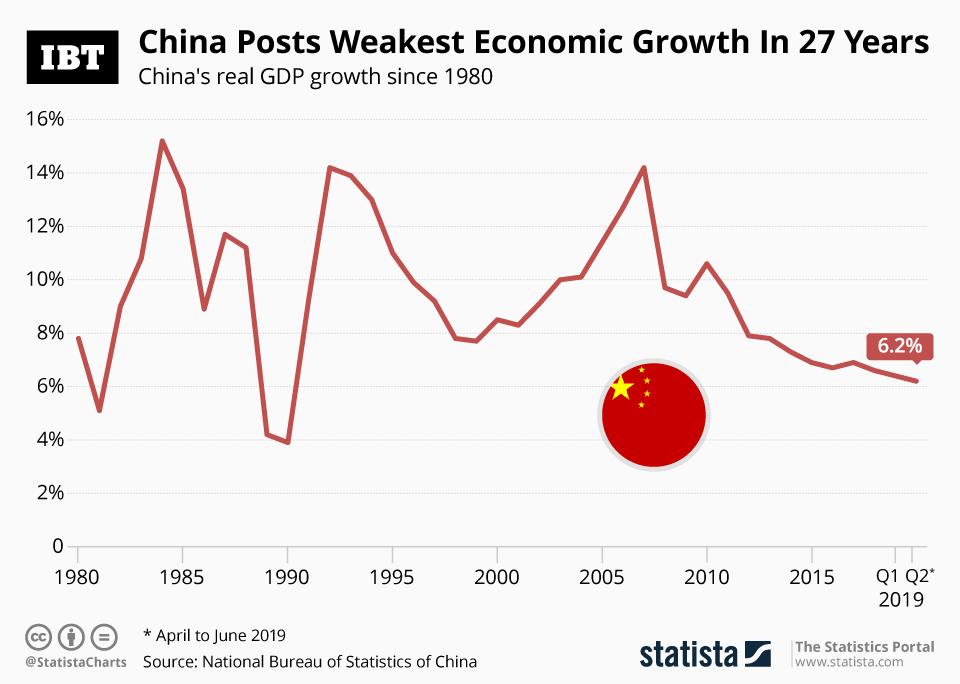
Taking his observation of China’s remarkable advance in the last 27 years, McMahon joins others who argue China is at the precipice of a cyclical economic trough.
Visiting China for the first time, one is amazed at the modern look of Beijing. Its bullet trains, wide boulevards, and streetscapes remind one of model cities like other storied capitols of the world.
On the other hand, outlying suburbs, and cities fit the description of McMahon’s “Ghost Cities” with block-to-block, mid-rise apartment buildings, no tenants, and slap-dash HVAC wall-units.

Wealth is a function of the have and have-nots in China. This is a familiar refrain to many who believe it equally describes America’s economy.

McMahon explains how the last twenty years of economic growth in China is a function of real-estate monetization that has reached a mortgage nadir, teetering on the edge of collapse. McMahon notes the difference between America’s real estate booms and busts and China’s is that it has taken America two hundred years to reach its present prosperity while China has done it in less than 3o years. He implies that time difference has benefited America by giving it more tools than China for dealing with economic inequality.

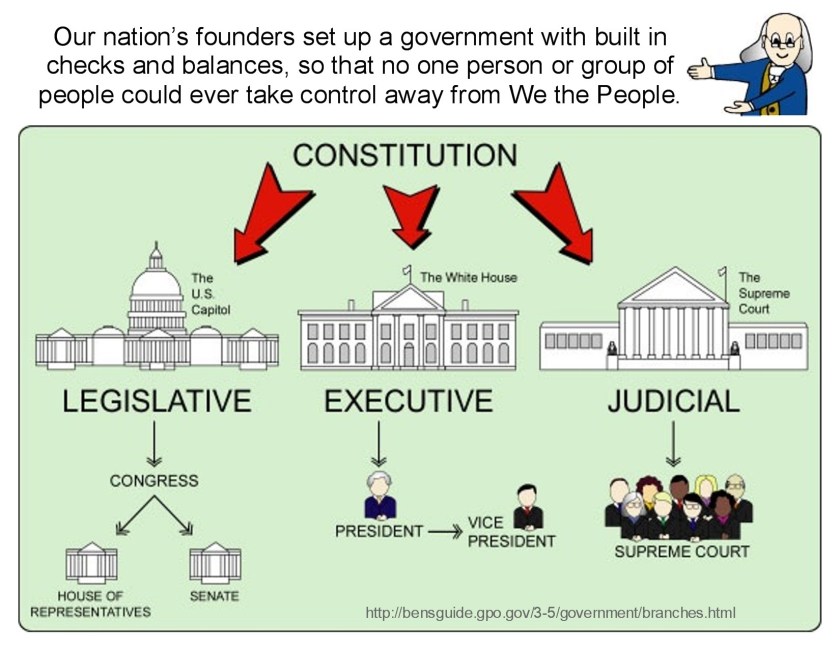
Adding to McMahon’s note about the time difference is the political difference between America and China.  America’s political system is tested by checks and balances, both by party and governmental organization.

China has a singular party with one leader who has few checks and balances, with a singularly authoritarian governmental organization.

When leadership changes in America, political and economic policies are only incrementally adjusted. In leadership change in China, political and economic policies may be dramatically altered or even abandoned. That truth is evident in China’s transition from Chiang Kai-shek to Mao to Deng Xiaoping, to Xi Jinping.

McMahon’s fundamental point is China’s rapid economic growth is founded on a financial structure dependent on real estate financed by the state and a poorly governed semi-private banking system that artificially inflates China’s assets.

McMahon notes there was pent-up demand for private real estate ownership when all land was owned by the government. That pent-up demand is the source of China’s rapid economic growth. However, in the current market, McMahon suggests real value in that real estate is diminished by a public that is not wealthy enough to afford it. A kind of Ponzi scheme is growing with consumers that are buying land without real collateral but with a ghost banking system that is condoned, if not supported, by the state.

McMahon leaves some doubt about China’s near future collapse because of adjustments President Xi is making in reducing bureaucratic corruption that allows ghost banks to prosper. McMahon also notes that President Xi is addressing the domestic needs of China’s citizens by emphasizing economic growth within China to make them less dependent on international trade. However, McMahon notes Xi Jinping is a singular leader. The question is—what happens when Xi Jinping is no longer China’s leader?

McMahon is not alone in suggesting China may be headed for trouble. Whether shadow banks, ghost cities, and massive loans will be the end of the Chinese Miracle seems less important than what a Chinese economic collapse would mean to the rest of the world.

A STEP TOO FAR

Audio-book Review
           By Chet Yarbrough

(Blog:awalkingdelight)
 Website: chetyarbrough.blog

   We the Corporations (How American Businesses Won Their Civil Rights)

By Adam Winkler

         Narrated by: William Hughes

Adam Winkler (Author, Connell Professor of Law at UCLA.)

If only minorities could have kept pace with corporations’ pursuit of and success for civil rights, American society may have become more equal.

Liz Truss (Newly elected Prime Minister of the UK.)

It is announced this morning (9/5/22) that the new Prime Minister of the UK is to be Liz Truss. A primary issue in Ms. Truss’s campaign is to reduce taxes. America’s experience of reducing taxes seems a replay of the Reagan/Thatcher years. Many consider these two leaders as just what was needed at the time to advance their respective countries’ economies. As a result of their tax reduction policies, the gap between the rich and poor widened with corporations and their leaders being the primary beneficiaries. Hopefully Ms. Truss’s tax reductions do not benefit only corporations.

Experience of reducing taxes in the UK may be a replay of the Reagan/Thatcher years in America.

Corporations need to consider their responsibility for passing on those tax benefits to workers. If Ms. Truss’s tax reductions only increase the gap between rich and poor, democratic government is doomed.

It may be a surprise to many that corporate pursuit of civil rights dates to the early beginnings of American history. The first battle for corporate civil rights began with Alexander Hamilton’s drive to create the first American bank. His major political opponent is Thomas Jefferson. 

Jefferson opposes a national bank because he believes it diminishes State’s rights by ceding too much control to the national government. Winkler notes the irony of Jefferson’s objection in that Jefferson relies on national bank loans to subsidize his profligate lifestyle.

Winkler notes some level of civil rights for corporations is needed to protect the public from exploitation. If a corporation is not recognized as a singular public body, individual Americans could not sue for redress. Harm from unfair or harmful practices of corporations could not be tried in a court of law. However, Winkler explains an underlying concern is the gain of personhood for corporations. By being recognized as a person, corporations gain political influence beyond any individual person’s rights.

To many Americans, a 21st century Supreme Court decision on corporate civil rights is a step too far.

With the decision in Citizens United v. Federal Election Commission, the Supreme Court allows unlimited corporate donations to Americans running for political office.

Money is power, particularly in a capitalist economy. Elected officials become beholding to corporations rather than private citizens when running for office.

A prime example is the pharmaceutical and gun lobbies that have dominated both Democratic and Republican parties.

The rights of these corporate enterprises distort the benefits and dangers of both drugs and guns in American society. Over prescribed drugs and opiates advertised to the public by the pharmaceutical industry are more widely spread than ever before. If elected officials were not so beholding to gun lobbies, national background checks and red flag laws would not be so difficult for Congress to pass.

The opiate epidemic and the 5.25.22 Uvalde murder of 19 children and 2 adults is evidence of the harm done by granting too many civil rights to corporations.

Winkler’s book about corporate pursuit of personhood is burdened by legal explanations for non-lawyer listeners. However, his history gives one a deep appreciation of how civil rights can bring both good and harm to American society.

PINOCCHIO’S NOSE

Audio-book Review
           By Chet Yarbrough

(Blog:awalkingdelight)
 Website: chetyarbrough.blog

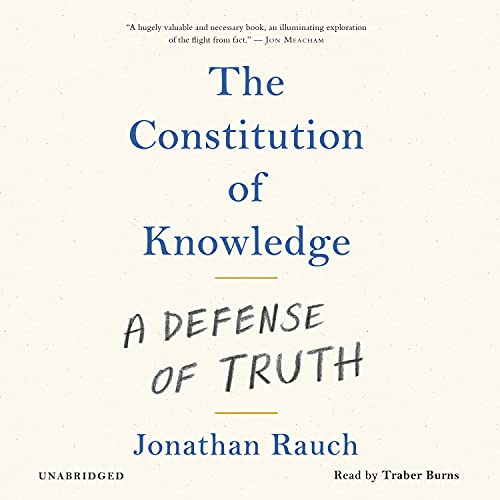
   The Constitution of Knowledge (A Defense of Truth)

By Jonathan Rauch

Narrated by: Traber Burns

Jonathan Rauch (American author, journalist, freelance writer for The Economist and senior fellow at the Brookings Institution.)

The structure of knowledge is the subject of Jonathan Rauch’s “…Constitution of Knowledge”.  What may come as a surprise to some is Rauch’s argument that knowledge is a social construct, not an inviolable fact or truth. Knowledge grows from tests of society.

As Karl Popper, a highly respected philosopher of science noted, knowledge can only be found through pursuit of its falsification.

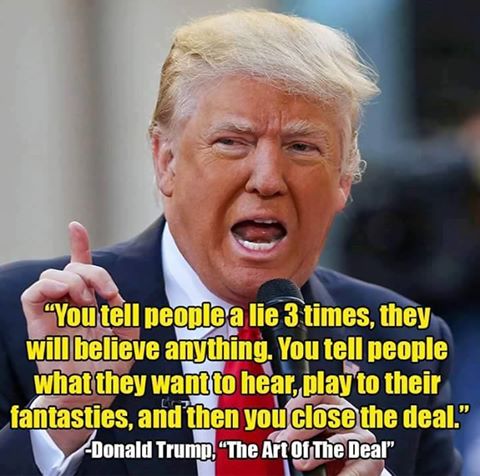
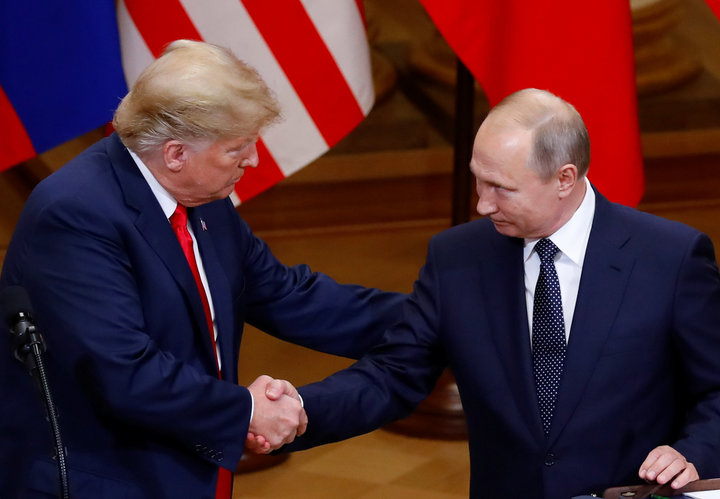
The fear that accompanies Rauch’s argument about knowledge, and Popper’s belief about science’s truth means a lie can be as influential as truth. The two greatest twenty first century examples are Trump and Vladimir Putin.

U.S. President Donald Trump and Russian President Vladimir Putin shake hands as they hold a joint news conference after their meeting in Helsinki, Finland, July 16, 2018. REUTERS/Leonhard Foeger

All human beings lie. The problem is those with preeminent power use the lie to lead others to believe what society’s tests show to be false. The problem is distinguishing a lie from societal truth. A lie is never as evident as it is with Pinocchio’s nose.

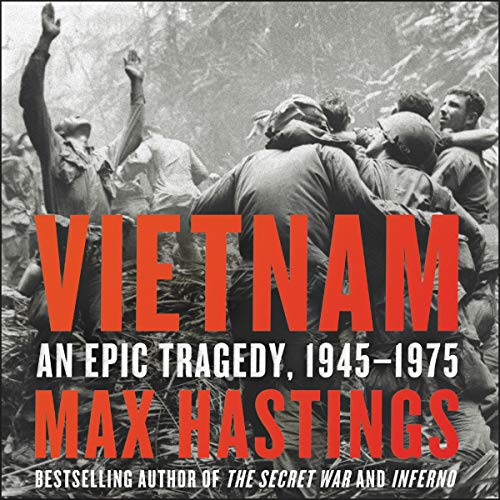
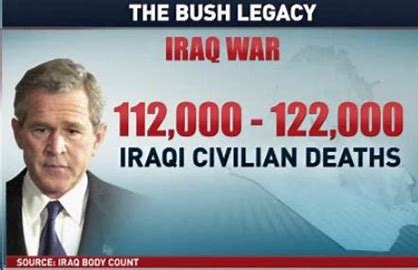
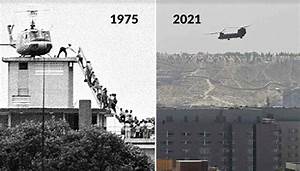
Truths should not be based on a singular view of reality.  Lies of leadership in recent history have led to tragic interventions by America, France and most recently, Russia in sovereign countries like Vietnam, Iraq, Afghanistan, Syria, and today’s Ukraine.

The great fear accompanying this view of knowledge is that truth only reveals itself as past events. It is exhibited in the death of innocent bystanders that follow leader’s lies. World wars prove how the truth is never known in real time, only in history. Society’s tests of Trump and Putin show how destructive a leader’s lies can be in both democratic and autocratic nations.

Rauch both personalizes damage that lies have on individuals and society with his experience as a gay person and combatant against cancel culture, violence, sexism, and racism. Though Rauch’s explanation notes many examples of what is wrong with society, he ends with a degree of optimism about how one can deal with leadership’ lies.

Words matter but if they don’t lead to violence, they can be logically addressed by society and rejected for their distortion of perceived truth. Rauch is careful to explain truth is a perception, not a fact or necessarily a truth. As is shown by science, the human brain does not record facts but recreates events that fit a human’s perception of reality.

What is true is tested in Popper’s theory of facts that are tested by search for falsifiability.

If a tree falls in the forest and a tape recorder records the sound, one is tempted to believe a fact has been found. If that experiment is repeated many times by different people, the falling tree makes noise, whether a human is there or not, is likely to be true. However, it is a sound that remains a perception. The difference is it has been tested many times by society with the same result.

Cancel culture is when there is a public boycott of people or organizations because of an interest group’s belief. If a group’s belief is challenged by perceptions and experience of a broader society, cancel culture can be, at least, ameliorated.

Rauch shows himself to be a free speech believer. One presumes he endorses all free speech if it does not induce or insight violence. This is not to suggest words spoken or written are not harmful, but they are not physically injuring another.

Attacking a person physically for words spoken is reprehensible but attacking an idea is societies’ way of revealing the truth and acquiring knowledge.

After listening to Rauch’s explanation of what knowledge is and how it is acquired, one wishes a signal could be sent when one is knowingly lying, e.g., something like Pinocchio’s nose.

ECONOMIC EVOLUTION

Audio-book Review
           By Chet Yarbrough

(Blog:awalkingdelight)
 Website: chetyarbrough.blog

Karl Marx (Philosophy and Revolution)

By Shlomo Avineri

           Narrated by: Roger Clark

Shlomo Avineri (Author, Professor of political science at Hebrew University of Jerusalem.)

Is economic evolution about mind or matter?

Shlomo Avineri offers a more studied view of one of the three most influential economist in history, Karl Marx. Marx’s influence extends to philosophy, history, sociology, and politics.  

Avieneri illustrates how categorization of Marx as an influential economist minimizes his historical significance. Marx is born in Trier, Germany.

His father, Hirschel HaLevi (aka Heinrich Marx), is a practicing lawyer, the son of Marx HaLevi Mordechai and Eva Lwow.

In Trier, after Napoleon is defeated at Waterloo, Germany returns to a highly discriminatory Prussian attitude toward Judaism. Karl Marx’s father, and eventually his mother, are compelled to convert to a Christian religion to advance Marx’s father’s career as a lawyer. Karl Marx’s grandfather is the rabbi of Trier who passes on that title to Karl Marx’s brother.

Avineri gives this brief family history to explain Marx’s Jewish heritage. It offers some insight to why Marx outwardly discounts his religious heritage while putting him on an intellectual journey toward political and economic reform.

Marx’s father might be considered a classical liberal because he promoted constitutional reform of the Prussian government’s denial of equal rights. Avineri implies the experience of his father leads Karl to pursue the study of history and philosophy because of discriminatory treatment of his family. The act of discrimination naturally makes one class conscious. Karl Marx’s political and economic ideas grow from that familial background.

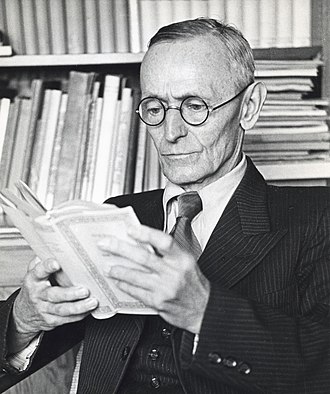
Avineri suggests Hermann Hesse and Hegel are significant influences in Karl Marx’s life. Hesse is a contemporary of Marx. Hesse is influenced by Rousseau who believed in natural equality. Hesse’s literature addresses the inequality of workers and the capitalist class. He sensed the growing political danger of that inequality and, in writing about it, became an influence on Karl Marx’s view of capitalism.

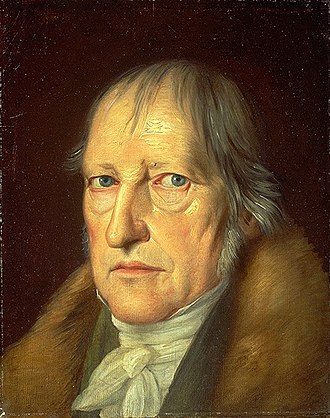
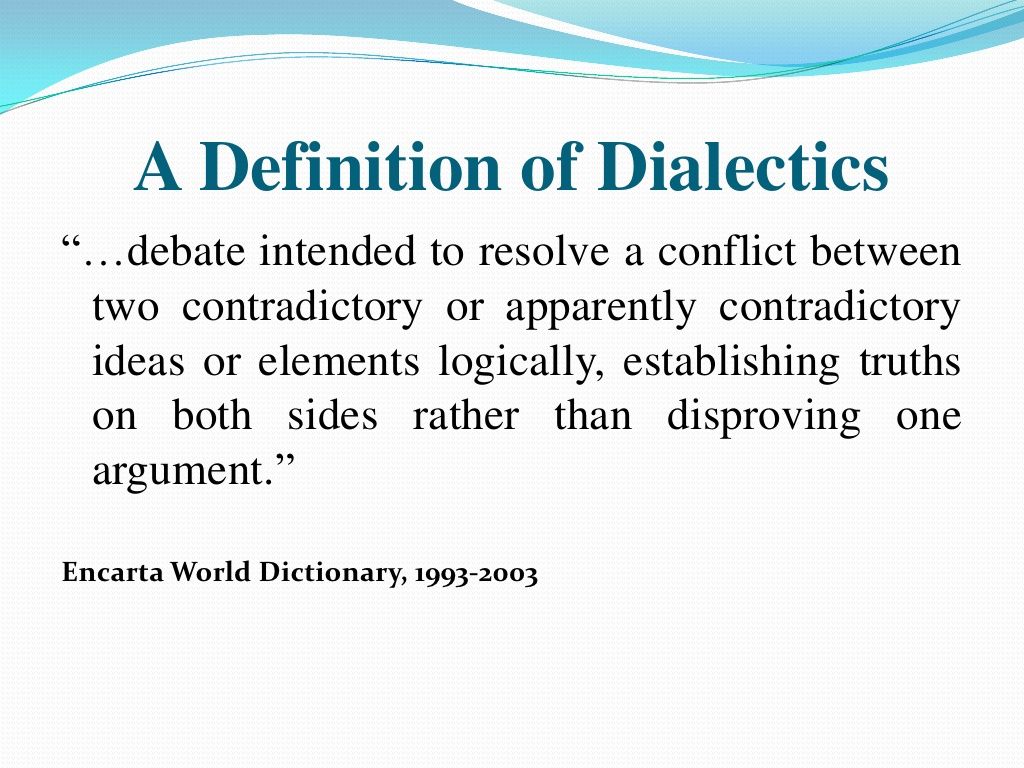
Avineri’s explanation of Hegel’s influence on Karl Marx is a little more complicated. Fundamentally Hegel believes social development is an evolution of one’s mind to recognize that all humans are created equal. In contrast Marx believes social development is an evolutionary process of society’s actions in regard to material things. Marx believes the haves of the society recognize the inequity of the have-nots and will evolve to establish common good in the distribution of material things. Both Hegel and Marx agree that there is a dialectic process, but Hegel thinks it is a state of mind that changes while Marx suggests it’s a state of equal distribution of concrete goods.

It is impossible to deny Marx’s notes about inequality. One can argue that this was truer in Marx’s lifetime than it is today. The advent of social security and national health care, and welfare programs have reduced human inequality.  However, human inequality remains a serious social problem in every society and all government systems of the present day.

Whether Marx or Hegel’s evolutionary dialectic is true remains unknown. Neither capitalism, socialism, or communism have evolved to solve the problem of inequality, whether it is the dialectic of mind or matter.

Avineri’s biography of Marx is better than the previous biography reviewed in this blog. He offers a more intimate understanding of Karl Marx’s life and how he came to believe what he believed. The answer to the question of whether economic evolution is one of mind or matter is, of course—both. Human brains must evolve, and matter must be equally available.

WORLD PEACE

           Audio-book Review
           By Chet Yarbrough

(Blog:awalkingdelight)
 Website: chetyarbrough.blog

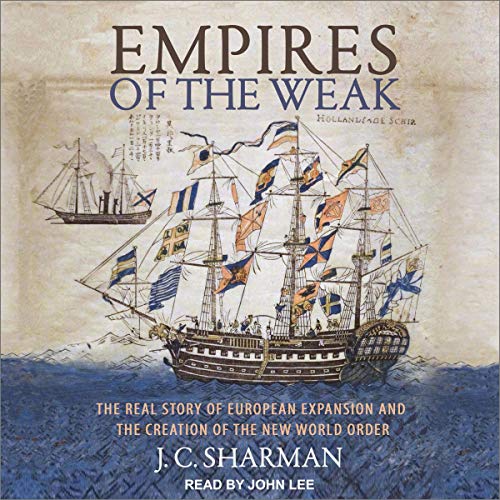
Empires of the Weak (The Real Story of European Expansion and the Creation of the World)

By: J. C. Sharman

Narrated by: John Lee

Jason Sharman (Author, Professor of Politics and International Studies at Cambridge, PhD from University of Illinois.)

Professor J. C. Sharman offers an interesting interpretation of history.  He argues one country’s domination of another in “Empires of the Weak” is widely misrepresented by historians.

Sharman argues domination of other nation-states is incorrectly believed to be the result of technical and military superiority.  Sharman suggests force of arms and technology were only a part of their success.  Their failures often came from not understanding the cultures of the countries they tried to colonize. 

Sharman notes many historians argue early European nations had better weapons and superior military training than countries which they invaded and colonized.  

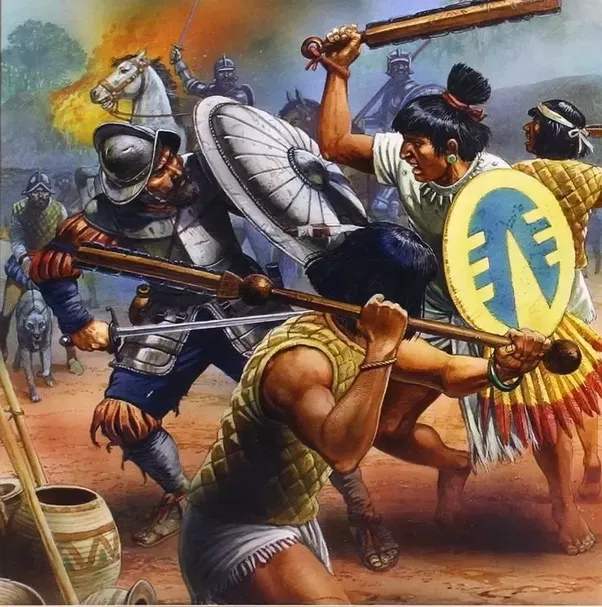
Sharman argues socio-cultural and economic interests were more determinate factors than either technical or military superiority.  He notes Aztec domination by Spain as an example.  He explains a minor military force manages to erase Aztec governance by co-opting indigenous discontented natives and rewarding those who would fight to destroy current leadership and support their colonizers and ultimate benefactors.

The resonating truth of Sharman’s observation in modern times is shown by America’s experience in Korea, Vietnam, Iraq, and Afghanistan. 

Battles can be won but wars lost. Most battles were won with American technology and force of arms but, with the qualified exception of a negotiated compromise at the 38th parallel in Korea, America’s singular wars were lost.  France’s Indochina and Russia’s Afghanistan prove the same.

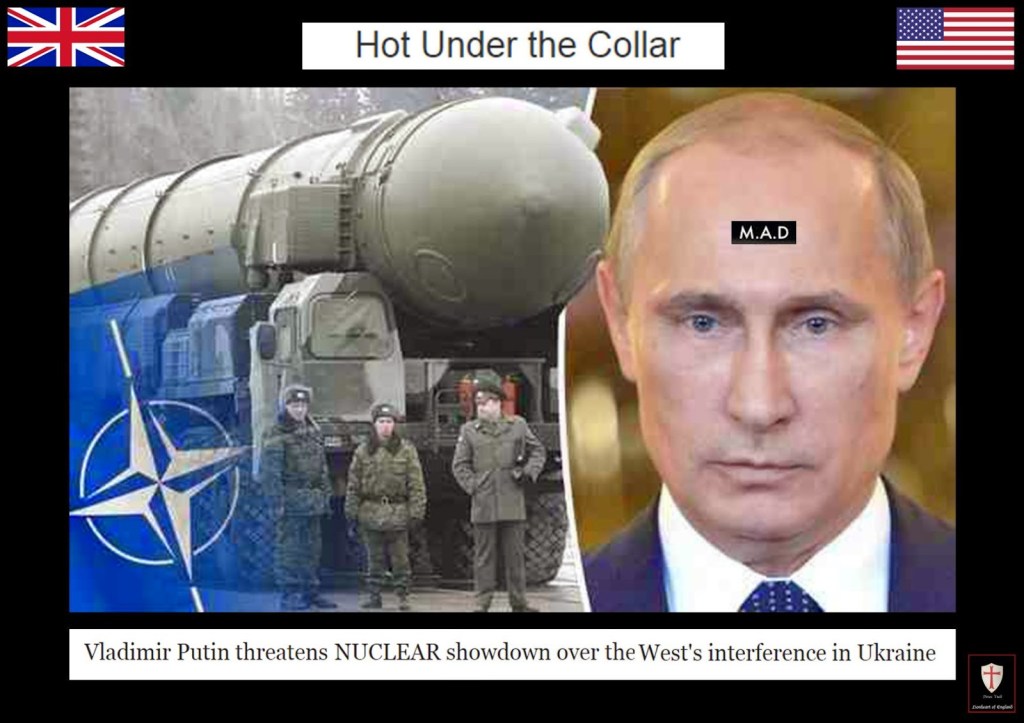
Vladmir Putin is on the verge of affirming Sharman’s argument.  Putin invades Ukraine with an experienced and well-equipped army, with superior weapons of mass destruction.  However, Russia is losing the war. 

Socio-cultural difference make domination by one country of another difficult, if not impossible.  Putin presumes Ukraine has a Russian culture when in fact it shows itself to be its own cultural nation.  Putin will fail because he ignores cultural difference and fails to co-opt discontented indigenous leaders.

One might wonder how Stalin managed to create the U.S.S.R. from disparate cultures and countries.  One suspects it is not entirely because of Stalinist repression.  Stalin eliminated leaders within Russia’s satellite countries while co-opting existing discontented natives. 

New indigenous leaders of these countries understood their citizens but were beholding to Stalin for having supported their ascension.  Putin may have been able to do the same with more patience and understanding of Ukrainian culture.  His misstep will have future consequence, both for himself, Russia, and the world.

The idea of their always being a clear cause for every effect is false. 

Precise “cause and effect” is proven untrue in quantum physics and seems equally untrue in world leadership.  Leadership success is always a matter of probability, but it must be probability based on cultural understanding.

Sharman’s limited analysis holds great promise for historians and leaders of the world.  Historians can offer more focus on socio-economic conditions of respective countries when determining causes of regime change. Leaders of acquisitive countries might think twice about military intervention or invasion. Leaders may become more selective in choosing ambassadors for other countries.

The threat of the future is that cultural understanding might be achieved in Orwell’s “1984” which implies China is an odds-on favorite as a world hegemon. 

This is a warning to Hong Kong and a threat to Taiwan.  Cultural understanding is a key to world peace.

A point made in this week’s “Economist” is that rising economic Hedgemons like China suggest Russia’s invasion of Ukraine is nothing new because there are no universal rights. President Xi recounts the atrocities of the world that shows man’s inhumanity to man is based on perceived national self-interests, not universal rights.

AMERICAN MALAISE

Audio-book Review
           By Chet Yarbrough

(Blog:awalkingdelight)
 Website: chetyarbrough.blog

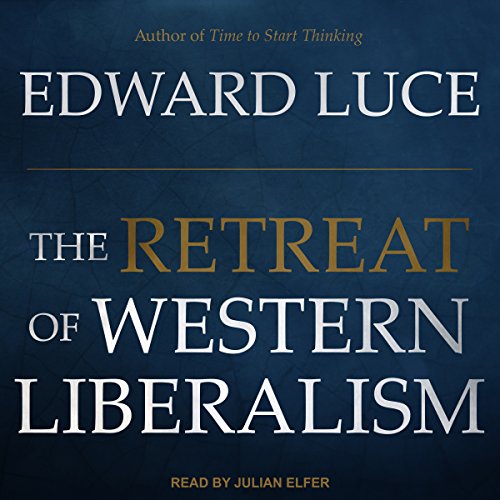
The Retreat of Western Liberalism

By: Edward Luce

Narrated by: Julian Eifer

Edward Luce (Author, English journalist, Financial Times columnist and US commentator.)

Edward Luce offers a troubling picture of 21s century America.    His argument depends on one’s definition of “…Western Liberalism”.  If the definition is belief in human individuality and a relaxation of public custom, law, and authority, there is evidence to support Luce’s argument. 

Luce notes the election of Donald Trump is not an American aberration but a symptom of “The Retreat of Western Liberalism”.

The advent of the internet has reinforced a group think driven by belief in alternative facts that create conspiracy theories.  It is a discontent coming from many Americans ignored by rising wealth of a nation controlled by special interests.  Trump taps into that discontent.   

The irony of Trump’s rise is his personal wealth when the American gap between rich and poor is skyrocketing.  Putting that irony aside, Trump suggests America can be “Great Again” by returning to a past.

Trump creates a false hope of re-industrializing America with new jobs. The falseness of Trump’s pitch is that new jobs in America are not being created by industrialization but by technology and human services.  Trump’s appeal is loaded with false representations, amplified by media trolls.  Public custom, law, and authority are undermined by conspiracy theories that convince Americans they have been cheated out of their fair share of America’s wealth.  In truth, they have, and that is why Trump’s false pitch about “Making America Great Again” got him elected.

Trump’s anti-immigrant falsehoods feed conspiracy theories about jobs being taken from poor Americans.  Equal opportunity is a function of rising wealth in the hands of the few.  Public education and health care are unequally distributed in America.  The wealthy can afford higher education and the best health care, the poor cannot. 

Americans are poor because they are being denied equal opportunity, not because of immigration. 

Education and health care are critical for American labor’s adjustment to a changing world.  Private industry and the government have equal responsibility for assisting all Americans, not just those who have benefited from the technological revolution.

Job transition requires re-education and on-job training by employers that offer decent wages and health care. 

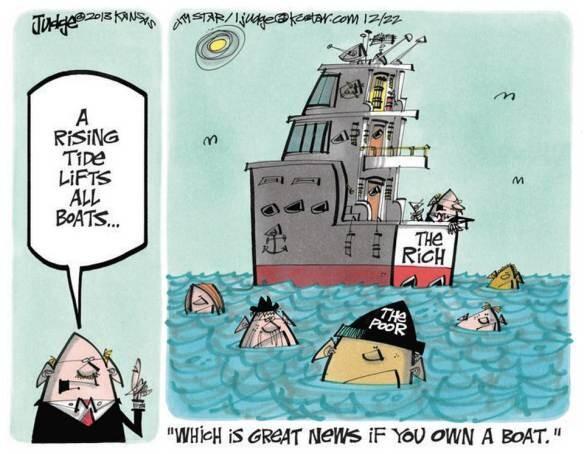
Luce’s point is a “rising tide has not lifted all boats”.  The technological revolution offers the same potential for western liberalism as the industrial revolution.  The election of Donald Trump was America’s “wake up” call. 

A large part of America’s population has been left out of the American Dream of western liberalism that came from opportunities provided by the industrial revolution. 

Western liberalism needs to be reinvented by investment in a technological revolution for all Americans, not just those who have benefited from the industrial revolution.  The question is whether private industry and the government are up to the task.  Will western liberalism be reinvented and promoted by ossified industrial leaders and elected representatives?  Most industry leaders and elected representatives are satisfied with the status quo while too many Americans struggle to make mortgage or rent payments.  Luce defines the problem but offers no solution.

CRISPR REVOLUTION

Audio-book Review
           By Chet Yarbrough

(Blog:awalkingdelight)
 Website: chetyarbrough.blog

Editing Humanity (The CRISPR Revolution and the New Era of Genome Editing)

By: Kevin Davies

Narrated by: Kevin Davies

Kevin Davies (Author, Ph.D in molecular genetics, Editor of Nature Genetics.)

The famous philosopher Søren Kierkegaard advised “Life can only be understood backwards; but it must be lived forwards.” 

He Jiankui (Chinese scientist who used CRSPR to modify genes of unborn twin girls.)

Kevin Davies reports the genie is out of the bottle with He Jiankui’s sloppy edit of genes in unborn twins.  Davies suggests science will move forward on gene modification to provide understanding Jiankui’s inept genetic experiment. With that forward movement, Davies implies human extinction will be delayed, extended, or ended by genome experimentation. Proof of Davies conclusion is in Britain’s plan to create a government owned company to investigate genetic diseases and cancer in adults. The pilot project is to sequence the genomes of 200,000 babies according to a May 14th article in “The Economist”.

What remains a danger is that evidence of genomic abnormality is a first step to experiments in changing genetic inheritance at birth. There is a great deal unknown about what some call “dark genetic matter”.

What becomes clear is the potential for great good and great harm in the CRISPR revolution.    

CRISPR-This is an acronym for clustered regularly interspaced short palindromic repeats. It is a tech tool that reads DNA sequences that are fragmentary and not normal. In identifying what appears abnormal, the fragments can be manipulated to repeat what is believed to be the correct DNA sequence.                                                                                        

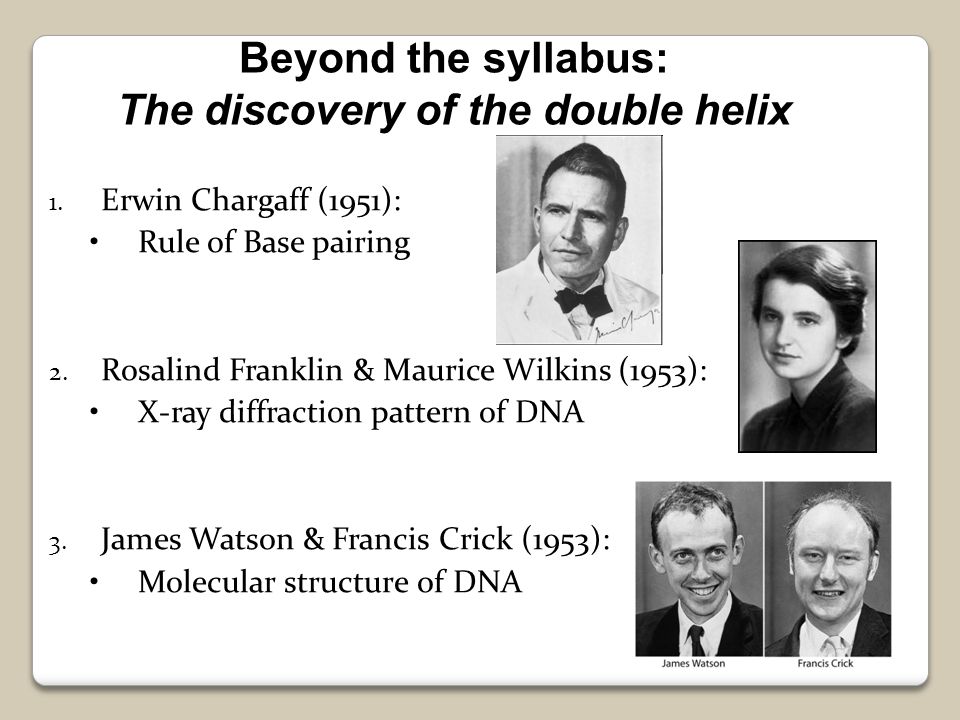
With the discovery of base pairing and the DNA double helix by Watson, Crick, and the (often-unrecognized) assistance of Rosaland Franklin, the basis for genome editing became possible. 

Beyond the syllabus: The discovery of the double helix. Erwin Chargaff (1951): Rule of Base pairing. Rosalind Franklin & Maurice Wilkins (1953): X-ray diffraction pattern of DNA. James Watson & Francis Crick (1953): Molecular structure of DNA.
Davies notes the key to editing genes are the replication errors between DNA strands.  Those spaces are indicative of disease risk that can be modified with CRISPR, a genome editing technique.

Davies offers a picture of Jiankui’s life.  He was educated at the University of Science and Technology of China and received a Ph.D. from the Department of Physics and Astronomy at Rice University in Texas.  From a humble life in China, Jiankui climbs a genetic mountain to arrive at a cliff of science.  One might characterize it as a cliff because a misstep in gene editing may injure or kill a patient and ruin a practitioner’s professional reputation.  Jiankui became a living example of a practitioner’s misstep. Jiankui is serving 3 years in prison and has been fined the equivalent of over $430,000 American dollars.  Davies notes the fate of the prenatal female twins is unknown.

Some would argue there are too many unknowns when genes are modified. As noted by Robert Plomin in “Blueprint”, the interconnection of DNA strands is complex.

Plomin notes the results of DNA modification are a matter of probability, not certainty.  Clearly identifying defective genes and modifying their code to eradicate disease or mental dysfunction is presently beyond current science understanding.

Adding to the uncertainty of results is the potential for creating a radical human cohort that defies societal norms, e.g., the creation of a destructive or superior race of humans.  An infrastructure would have to be formed to make decisions about the course of human civilization.  That infrastructure creates potential for radical authoritarian control of humanity by a select group of minders.

On the other hand, DNA modification holds the potential for eradicating disease.  The idea of eliminating HIV, and other viral diseases holds great promise for the future of humanity.  The cost and benefit will only be realized through experiment.  In one sense, it is like the experiments that doctors have taken since the beginning of medical treatment.  Heart disease and cancer treatments have become better over years of trial and error.

DNA modification is extensively used in agriculture to increase field productivity by reducing disease in plants and hardening resistance to blight.

DNA modification opens doors to regeneration when threatened by species extinction.

The light at the end of this tunnel may be a train or a new day. 

Davies’s underlying point is that CRSPR is here and will not go away.  Experiment will continue whether condoned by government or not.  All species on earth have a finite life. 

DNA modification is a fact, not just an idea.  It is here and will be used.  Science is grappling with rules to mitigate its potential downside while trying to insure its upside.  In the end, human survival will be decided by nature and the politics of control.

SPHERES OF INFLUENCE

Audio-book Revie
By Chet Yarbrough

(Blog:awalkingdelight)
Website: chetyarbrough.blog

Destined for War (Can America and China Escape Thucydides’s Trap?

By: Graham Allison

Narrated by Richard Ferrone

Graham Allison (Author, American political scientist, Professor of Government at Harvard.)

Allison briefly reviews the history of war to reinforce an argument about its causes.  He suggests wars come from the rise of competing hegemonic powers. A quibble one may have with Allison’s argument is that it diminishes reasons beyond power that led to WWII. The rise of Hitler may not have occurred if reparations for WWI had not been excessive.  However, his main point is that cultural differences are seeds from which power and conflict grows.  Allison suggests, when nation-state’ cultures are different, countries competing for political and economic power incline toward war. He gives many relevant and convincing examples.

Graham Allison suggests the cause of war is defined by Thucydides (Greek Historian of the Pelopnnnesian War, Born 460-455 B.C., Died 400 B.C.) in the fifth century BC. 

The “Thucydides’s trap” is when one country achieves a competitive level of political power it challenges existing hegemonic powers, leading to conflict and probable war. 

Allison argues that war is not inevitable but that to avoid it requires acceptance of spheres of influence.  This is not a new concept.  The terms “sphere of influence” became legally significant in the 1880s when Africa was being colonized by European countries.  It was meant to explain a colonizer’s political claim for exclusive control of a particular area of the world.

Vladimir Putin argues Ukraine is Russian territory because it was a part of the U.S.S.R. under the repressive hand of Joseph Stalin. Putin like all colonizers believes his regime has a political claim for exclusive control of another country. He makes the same mistake of ignoring Ukrainian cultural identity, i.e., the same mistake of all interventionist countries of the world.

Allison notes that China’s Chairman Xi is the same as America’s Ex-President, Donald Trump.  That “sameness” is Xi’s goal of making China “Great Again”.
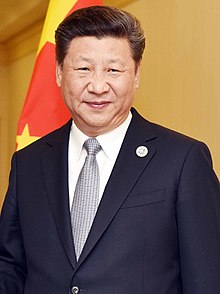
Putin joins the ludicrous “Great Again” club with the invasion of Ukraine.

Allison explains China is culturally unique based on its history, reaching back to 1600 B.C.  Like Ancient Egypt (3400-3200 B.C.), China is as culturally different as any nation-state in the world.  Allison offers a highly intelligent and informative analysis of how different Chinese culture is from American culture.

To avoid war, Allison argues America, the alleged current hegemon of the world, must couch its political behavior and power in ways that acknowledge cultural difference between itself and rising presumed hegemons of the world.

Allison recalls the history of England’s dealings with America after the 1776 revolution.  England reluctantly accepted America’s eventual rise to hegemon of the world. (Some would argue, England’s decision to remove itself from the European Union accelerates that decline.)

The United Kingdom’s economic, military, and political power (its sphere of influence) diminishes as America’s flourishes.  England remains a power in the world, but its sphere of influence steadily declines.

Russia struggles with their sphere of influence because of the collapse of the U.S.S.R.  In 2022 Russia invades Ukraine, just as they did Crimea in 2014, to re-expand its sphere of influence.  Russia maneuvers to politically enlist China as an ally to accomplish that end. Putin undoubtedly cultivates China’s objection to America’s attempt to expand its sphere of influence in the far east.

The issues of Ukraine and Georgia are more precarious for Russia than the rest of the world. Putin’s demand to expand Russia’s sphere of influence renews a cold war that will inevitably become hot. The only question is where the heat will lie.

Robert Kagan reveals the fundamental mistake made by Putin in a May-June 2022 “Foreign Affairs” article. History reveals mistakes of great nations like France, Great Britain, Germany and Japan in thinking they could remain or become world hegemons by force. All ignore the cultural identities of their respective victims.

Kagan’s point is Great Britain adjusted to its changed role from hegemon to a nation among nations. England prospered and maintained its integrity as an independent nation, capable of improving the lives of its people without falling on the sword of its hegemonic past.

Ukraine will become Putin’s American’ Vietnam. It is a war that can only be resolved at the expense of many Russian’, and Ukrainian’ soldiers’ lives. The most other countries can do is support Ukrainian resistance while pursuing a diplomatic solution that respects sovereign independence.

The inference one draws from Allison’s book is that America must recognize the cultural difference between itself China, and Russia to avoid another world war.  Like Rome, the United Kingdom, France, Spain, the former U.S.S.R., and other hegemons of world history, America must adjust its behavior to be a nation among nations, not a hegemon, but a singular influence on other nations. America effectively operates within a sphere of influence. America’s sphere of influence is indirectly challenged in the Far East by China and directly by Russia’s errant invasion of Ukraine.

Allison’s view of the world gives weight to Putin’s great concern about Ukraine’s independence and implied wish to join NATO. The fear Putin has is a reminder of even Gorbachev’s opposition to western encroachment on eastern bloc independence.

The sense one draws from Allison’s insight about culture is that no country in history has ever treated its citizens equitably.  In America, the stain of slavery and native Indian displacement remain festering wounds.  When and if those wounds heal, America’s sphere of influence will either grow or diminish.  In China, it may be the wounds of Uighur discrimination and Han superiority that wounds its future as a hegemon.  In Afghanistan, the unfair treatment of women may doom its sphere of influence.  In Russia, it will be the mistakes Putin makes in violating the sovereignty of Ukraine.

Every nation’s sphere of influence is affected by internal cultural errors and external cultural influences.  Only a state that adjusts to the demands of its culture will survive.  Culture is not exportable, but it has weight.  Foreign cultures can only be an influencer to other countries.  A culture imposed by force will fail as both America and France proved in Vietnam.  Cultural change must come from its own citizens as it did with the U.S.S.R. in 1991. 

Spheres of influence evolve.  They are not static. 

America’s goal should be to understand other cultures.  In that understanding, there must be acceptance of a competitor’s sphere of influence. Allison is not suggesting America withdraw from the world stage, but that engagement be along the lines of a containment strategy like that proposed by the former ambassador to Russia, George Kennan, in the 1950s.  Kennan’s long memorandum is born of an intimate understanding of Russian culture.

Allison argues America should pursue a policy of minimizing conflict while promoting democracy to citizens who seek freedom and equality. 

Allison recommends engagement with rising hegemonic powers with an eye on their respective cultures.  Allison argues, only with understanding of cultural difference is there a way to avoid Thucydides’ trap.

One cannot deny the economic success of China.  At the same time, anyone who has visited China in recent years knows of dissidents who object to communist monitoring and control of citizen freedom.  Tiananmen Square remains a rallying point for mainland China resistors.  Hong Kong continues to demonstrate against Xi’s influence on the lives of local business owners. Taiwan objects to Xi’s intent to repatriate their island country. Tibetans are denied their rights as followers of Buddhist belief.

In sum, one comes away from Allison’s book with the hope of a future without war.  Hegemonic powers will rise, and fall based on the evolution of their respective cultures.  History suggests governments that rely on the “rule of one” in modern times will not last.  Adding population demographics and ecological threats, China’s “rule of one” suggests the best policy for American democracy is acceptance of spheres of influence with a policy of Kennan-like’ containment.  Chairman Xi is mortal, and mortality is the penultimate harbinger of change. In the long run, freedom and equality will change the nature of even the oldest cultures.

Allison’s enlightening history of spheres of influence discounts many conflicts occurring within nations that have little to do with national interests or international conflicts. Of particular concern are tribal and religious conflicts occurring in Africa, Latin America, and parts of the Middle East. Warlord and gang-like leaders have little nationalist interest beyond self-preservation. The consequence is displacement and impoverishment of millions who have no future.

POLITICAL LEADERS

Audio-book Review
By Chet Yarbrough

(Blog:awalkingdelight)
Website: chetyarbrough.blog

A Christmas Carol

By: Charles Dickens

Narrated by Sir Derek Jacobi, Kenneth Cranham, Roger Allam, Brendan Coyle, Miriam Margolyes, Time Mcinnerny, Jamie Glover, Emily Bruni, Jenna Coleman, Joshua James, Hugh Skinner

Charles Dickens, Author.

Dickens appeal in the 21st century is magnified by economic change.

The industrial revolution, like the tech revolution, put people out of work. In Dickens’ time, Great Britain’s and the world’s industrial growth demanded change. 

Today’s tech revolution demands the same.  The change required is different in one sense and the same in another.

The industrial revolution occurred in a time of scarcity while the tech revolution takes place in a time of abundance.  Both revolutions require training for new kinds of jobs.

Smog plagued Great Britain as it grew in the18th century. 

(This is smog in today’s Beijing.)

Dickens is born in 1812 and dies in 1870.  He witnesses and writes of the squalor that existed in London during his adult years.  “A Christmas Carol” is one of many stories he wrote that reflects on the human cost of economic change.

London fog 1952

In 1952, the streets of London were enveloped in a fog caused by coal used for domestic heat and industrial production. 

An incident of London fog in the 20th century is comparable, on a local scale, to the world’s pollution crises today.  An estimated 4,000 people were said to have died, with 100,000 made ill because of unusual windless conditions in that year. 

Today, air pollution is compounded by global warming. 

“A Christmas Carol” is a reminder of the damage world leaders can do by ignoring the plight of those who are most directly impacted by economic change.  Too many American leaders are acting like Ebenezer Scrooge and Jacob Marley by ignoring the Bob Cratchit s and Tiny Tim s of the world. 

For those who may not remember, Scrooge and Marley were capitalists who believe all that matters in life is personal wealth.  Marley comes back as a ghost to offer Scrooge a picture of past, present, and future Christmases, based on how he lives the remainder of his life.

Todays’ political leaders are in Jacob Marley’s ghostly presence with a chance to change the future for the Crachits, Tiny Tims, and wage earners of the world.  The world needs leaders who are not blinded by the allure of money, power, and prestige at the expense of the jobless, homeless, and disenfranchised.

AMERICAN SPIES

Audio-book Review
By Chet Yarbrough

(Blog:awalkingdelight)
Website: chetyarbrough.blog

The Quiet Americans: Four CIA Spies at the Dawn of the Cold War-A Tragedy in Three Acts

By: Scott Anderson

                                  Narrated by : Robertson Dean, Scott Anderson

Scott Anderson (Author)

“The Quiet Americans” is an investigative reporter’s view of the American spy service.  It is written by a veteran war correspondent and son of a former foreign aid officer.  The author, Scott Anderson, is raised in East Asia.  He reviews America’s spy network during and after WWII. 

The American independent spy agency is formed after WWII to provide intelligence on growing clandestine activities of the U.S.S.R.  The author notes there were intelligence operations during WWII, but they were not independent.  During the war, Intelligence services were defined and executed by the military.  It is only after WWII that an independent branch is formed along the lines of British intelligence.

In Anderson’s opinion, President Harry Truman is an inept manager of the nascent American intelligence service. 

 There are several surprising facts and interpretations of history compiled by Anderson.    Kennan is characterized as a great diplomatic analyst, but capable of lying to protect his reputation. 

George Kennan is viewed as an influential diplomat in the creation of what becomes known as the Central Intelligence Agency.

The Dulles brothers solidify the role of the CIA in American clandestine operations in the world.  Their modus vivendi for CIA operations prevails today.  Their intent is to have an agreement allowing conflicting parties to coexist peacefully.  However, Anderson shows their action belies their intent.

Dulles Brothers (John Foster on the right, Allen on the left.)

Parenthetically, as an example of Stalinist ideology, Anderson notes Adolph Hitler’s remains were not found in a burned bunker in which Hitler is alleged to have committed suicide.  His burned remains were secreted by Joseph Stalin and placed in an archive in the U.S.S.R.  Stalin’s motive for secrecy is unknown.


An independent spy agency is initially opposed by Truman, and perennially opposed by FBI Director Hoover. 

J. Edgar Hoover–Director of the FBI from 1924 to 1972. (Died in May of 1972 at the age of 77)

Anderson notes Ambassador Kennan’s prescient analysis (the long memorandum) reflects the duplicitous nature of Joseph Stalin.  Kennan recommends a surreptitious and aggressive American containment policy enacted through the practice of espionage.  Kennan plays an important role in the formation of the American Intelligence service.  The first director of this operation is a close friend of Kennan’s, a man named Frank Wisner.

“The Quiet Americans” Anderson profiles are Edmund Michael Burke, Frank Wisner, Peter Sichel, and Edward Lansdale.  In their stories, Anderson reveals the beginnings of the CIA and a history of minor espionage successes and significant failures.  In the back of a listener’s mind is the consequence of American espionage—their cost in human lives and dollars, and American truths about what measures are taken to presumably secure freedom and equality in other countries.


This is not a pretty picture.  American efforts to change the world for the better through covert action is shown to be, at best, questionable, and at worst horribly misguided.  As an American, it seems clear that most covert activity is meant to do good but the definition of good is distorted by human nature.

America’s role in Albania, Vietnam, Iraq, and Afghanistan raises the hopes of many but at a cost of too many lives and dollars.  Hope of many of these country’s citizens becomes despair. How many lives and dollars could have been saved and repurposed for freedom and equality, rather than destruction of cultural difference.  What Anderson makes clear is that national purpose (American or other) is distorted when it is undisclosed because human beings are seduced by self-interest, whether that interest is money, power, and/or prestige. 

Government disclosure offers visibility to the public.  Disclosure offers opportunity for public  influence on government policy.  America prides itself on being a government of, and by the people–through popularly elected representatives.  Covert government action that is undisclosed to elected representatives gives no opportunity for citizens to influence government policy. 

The idea of full disclosure discounts poor intelligence like that given about “weapons of mass destruction” that compelled America to invade Iraq and depose Saddam Hussein.  False disclosure by American intelligence misled both citizens and elected officials about what America should do in Iraq.

 Dulles Brothers (John Foster on the right, Allen on the left.)

Anderson’s exposure of John Foster Dulles’s tenure as Secretary of State and his brother Allen, as the fifth CIA Director, exemplifies the worst characteristics of covert activities without oversight by elected representatives.

To Anderson, the course of the U.S.S.R. and American relationship may have been entirely different if the Dulles’s had not run Eisenhower down the wrong diplomatic road.  It is impossible to judge what may have happened if a different course had been taken, but Anderson infers the Dulles’ Road led to years of lost opportunity.  On the other hand, hindsight is always more perfect than foresight.

Anderson’s view is America’s opportunity to change the course of history after Stalin’s death is lost because of Dwight Eisenhower’s actions based on the Dulles brother’s political influence. 

Though Burke, Wisner, Sichel, and Lansdale are great patriots, Anderson implies their patriotism and actions often failed to serve American ideals.

Burke’s extraordinary life led him to Italy, Albania, and Germany. He served his country by trying to save Albania from communism, and Germany from further encroachment by the U.S.S.R. At best, his success is limited to non-existent. Albania remained in the fold of communism and success in Germany is the split of Berlin from the eastern block at the expense of food deliveries by air and an agreed upon East and West Berlin.

Wisner kept the light on for covert operations of what became the CIA but failed to get the top job or temper the excesses of secret operations.

Sichel survives them all but appears to compromise a principle of not using bad actors who participated in the holocaust that murdered over 6,000,000 Jews and Nazi resistors.

And finally Wisner, who manages to gain the trust of Philippine and Vietnamese leaders, many of which America abandons by leaving them to fend for themselves.

Trapped, as all humans are, by the times in which they live, they were the instruments of many wasted lives.  How many people must die because of undisclosed covert Intelligence operations? 

Listening to “The Quiet Americans” makes one understand how important freedom of the press is to America.  

Americans must lead by example, not by covert action. More recent episodes in Iran, Iraq, and Afghanistan show America continues to ignore history’s lessons.