The immense downside of an unpredictive future is the many setbacks that will occur because of inept political leadership. Science is not an answer. It is only a tool for understanding.
Books of Interest Website: chetyarbrough.blog
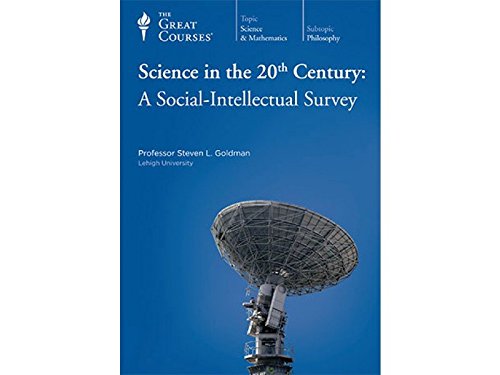
Science in the 20th Century (A Social-Intellectual Survey)
By: The Great Courses
Narrated By:Steven L. Goldman
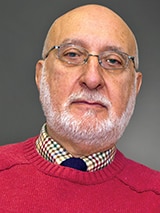
Professor Steven L. Goldman.
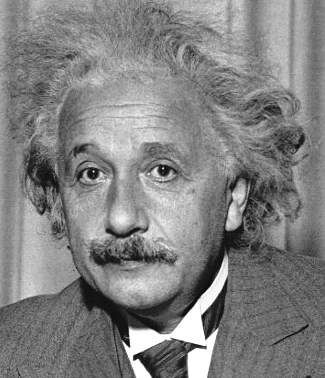
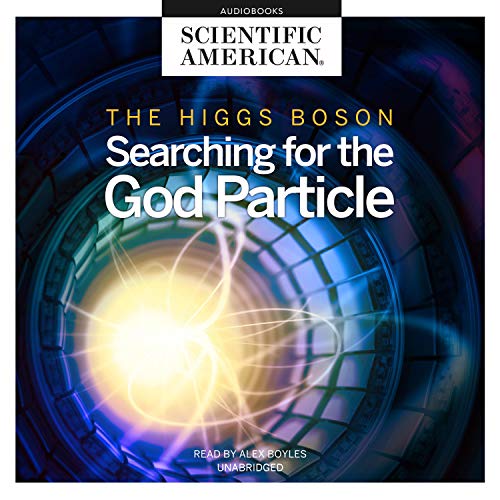
Goldman’s review of 2oth century science identifies the fundamental change that has occurred in today’s perception of reality. One wonders if Albert Einstein was wrong about the predictability of science. Even at the end of Einstein’s life, he believed quantum mechanics was just a step in scientific research and not a basis for the truth of reality. Einstein insisted there was an undiscovered law about the nature of reality that would return life to predictability. The details of Goldman’s “Science in the 20th Century” infers otherwise.
Unpredictability of life’s existence is reinforced by Professor Goldman’s summary of scientific discoveries.
What is true of physics in the world, seems true for all the sciences. Whether reviewing the physical, biological, algorithmic, social, or applied sciences, unpredictability exists. Every science seems as unpredictable for the same reason as noted in the science of the quantum world. One cannot identity both position and momentum of an atomic particle at the same time. By the same measure, popularly elected representatives or authoritarian dictatorships cannot be measured by their position and direction of action. One can see a leader’s position but not measure their direction until the direction is past. Who would have thought Hitler would be the instigator of WWII? World leaders today are just as unpredictable. Citizens cannot measure leader’s positions and direction in advance. Citizens can only see one or the other at a specific point in time–never both position and direction at the same time.
What Goldman’s history of science implies is that if we live in a world of quantum mechanics, all life is, always has been, and always will be, unpredictable.
The solace in this possible truth is that, though there is still immense societal conflict and inequality in the world, science has improved society.
Technology has improved communication, transportation and daily life.
Vaccines, antibiotics, and surgical operations have drastically improved helath and life expectancy.
The world population has become more literate and has greater access to education than ever before.
Equality and justice show some progress in human rights, gender equality and social inclusion.
Enviornmental awareness has improved to combat climate change which has led to renewal energy innovations and conservation initiatives.
The world has increased connectivity to improve cultural exchange, economic collaboration and shared global interests.
Science is not an answer. It is only a tool for understanding.
The immense downside of an unpredictive future is the many setbacks that will occur because of inept political leadership. From the perspective of quantum mechanics, one hopes leadership means do not justify humanity’s end.
Scientific discovery revealed the theory of evolution, the germ theory of disease, the laws of motion and universal gravitation, the theory of relativity, the discovery of DNA, drugs to cure disease, and quantum mechanics that imply future unpredictability. This is the daunting message of Goldman’s lectures.
Books of Interest Website: chetyarbrough.blog
Science in the 20th Century (A Social-Intellectual Survey)
By: The Great Courses
Narrated By:Steven L. Goldman
Professor Goldman received a B.S. Degree in Physics from Polytechnic University of New York and received a Master of Arts and PhD in Philosophy from Boston University.
Professor Goldman offers lectures on transformative scientific discoveries of the 20th century. He begins with great discoveries in physics by Newton, Einstein, Curie, Bohr, Planck, Heisenberg, Dirac and others who broaden a listener’s understanding of the universe, Earth, life, and humanity. He melds science into philosophy which gives a generalist an appreciation of genius and its limitations. From the limitations of microscopes, thermometers, spectroscopes, barometers, and galvanometers, Goldman draws lines between science’s experimentally reproducible facts and philosophy’s speculation.
Newton and Einstein had different understandings of the universe. Newton understood gravity as a force between two masses, subject to earth’s gravitation. Einstein redefined Newton’s gravity as a power exerted throughout the universe and between planets rather than one planet we call earth. Einstein proves the power of gravity is based on forces beyond earth though Newton’s interpretation is predictive of most physics’ phenomena on earth, it fails to predict the effects of time, space, and energy in the universe. Einstein’s discoveries lead to a theory of General Relativity where mass and energy are equal to each other and interchangeable. Newton viewed space and time as absolute while Einstein viewed them as relative. Newton’s physics were simpler to understand while Einstein’s required advanced mathematics that took into consideration the warping of space and time. To Newton, the speed of gravity was a constant while to Einstein, the only constant was the speed of light. To Newton two occurrences could occur simultaneously but Einstein recognized simultaneity is impossible. Any distance between the two occurrences will always be observed at the speed of light which means they cannot have happened at the same time because they cannot be in the same place. The speed of light controls the observation of action. Two occurrences cannot occupy the same space therefor they cannot happen simultaneously.
Professor Goldman explains the many utilitarian uses of great scientific discoveries from so many scientists that names become too numerous to be recalled.
However, without their discoveries, humanity would not have entered the age of Artificial Intelligence and the reality of information as an energy source in the world; not to mention the many scientific discoveries that have improved the lives of 8.2 billion people. (Another side of that story is the number of people killed by WMD, undiscovered cures for disease, and earth’s pollution by humanities use of known and yet to be known discoveries.)
Without fossil fuels, renewable energy, and nuclear power, humanity would still be living in caves, subject to nature’s choice. The importance of information is why we read books, listen to lectures, rely on remembrance of things past, and choose the course of our lives. As Shakespeare noted in The Tempest, “What’s past is prologue”.
Scientific discovery revealed the theory of evolution, the germ theory of disease, the laws of motion and universal gravitation, the theory of relativity, the discovery of DNA, drugs to cure disease, and quantum mechanics that imply future unpredictability. This is the daunting message of Goldman’s lectures.
Today is a time for Americans to look at their motivations to act in ways that diminish human flourishing and happiness. They need to decide whether they are choosing to be evil and act out of malice to do evil things.
Books of Interest Website: chetyarbrough.blog
Open Socrates (The Case for a Philosophical Life)
By: Agnes Callard
Narrated By: Agnes Callard
Agnes Callard (Author, American philosopher, associate professor of philosophy at the University of Chicago.)
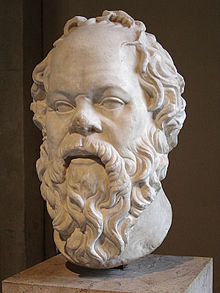
“Open Socrates” is not an easy listen but offers insight to the philosophy of Socrates as perceived by a tenured Philosophy professor at the University of Chicago.One of Socrates famous sayings is “Οἶδα τι οὐδὲν οἶδα”, “I know something that I know nothing”. The daunting meaning of the phrase is explained by Callard as something that is found through conversational engagement with others. Socrates believed what truth there is in the world is revealed through public engagement which is difficult for introverts because we fear having our ignorance exposed.
Callard notes that Socrates is an interrogator who elicits others to understand the meaning of human life.
There is a human desire to have meaning in our lives, but we don’t know where to begin or what questions to ask. Callard notes how Tolstoy is contemplating suicide despite his great fame and success as a writer because he does not believe there is any meaning to his life. Callard argues Socrates would say Tolstoy fails to ask questions in conversation with others that would offer the answer he seeks. As a listener/reader one might understand Tolstoy’s reluctance to ask others for their opinion because it exposes his vulnerability. Collard argues one must be willing to admit their errors to get to meaningful conversations with others about what they are discussing. However, few have the strength of character to expose themselves in a way that will continue further conversation.
Collard is preparing listeners for an understanding of the Socratic method, a cooperative dialogue, i.e. asking and answering questions to make one think about underlying assumptions and ideas to uncover inconsistencies to try to discover truth.
One wonders in this exercise, if Socrates is pursuing understanding or building a case to undermine human understanding. The result of a dialog with Socrates seems at best a pursuit of knowledge without finding a definitive answer. At times it seems the Socratic method only reveals the truth of human ignorance.
Collard notes that sophists as reflected in the Platonic and Aristotelian writings about Socrates were often incensed by the Socratic method because Socrates’ interrogations often made them look ignorant and uninformed. However, Socrates offers some definitions of important human characteristics like virtue and knowledge that are as relevant today as they were in ancient times.
Socrates defines virtue as a form of knowledge of right and wrong and those that use that knowledge will act virtuously.
Collard notes Alcibiades who lived in the time of Socrates. He was relentlessly interrogated by Socrates in an effort to elicit a better understanding of himself as Alcibiades, a politician and leader. Alcibiades made many political enemies because of shifting allegiances and political actions. He betrayed Athens in their fight with Sparta. After the fall of Athens, he is considered a threat to its new rulers.
Alcibiades (450BC-404BC, died at age 45 or 46, Athenian statesman and general.)
Alcibiades is known for his ambition, desire for power, and hedonistic lifestyle. He came into conflict with Socrates over belief in the values of wisdom and virtue. Though Alcibiades is noted in Plato’s “Symposium” to have admired and respected, Socrates, Collard notes he fundamentally disagreed with much of what Socrates reveals to him as his lack of wisdom and virtue. Alcibiades lacked self-discipline and moral integrity.
Socrates defines good as that which brings about human flourishing and happiness for one to live a fulfilling life.
Socrates argues evil is based on ignorance that compels human beings to act out of malice to do evil things.
Today is a time for Americans to look at their motivations to act in ways that diminish human flourishing and happiness. They need to decide whether they are choosing to be evil and act out of malice to do evil things.
Sartre seemed right when he wrote “hell is other people” in “No Exit”. Neither belief in humanism nor God seem to hold an answer for humanity’s future.
Books of Interest Website: chetyarbrough.blog
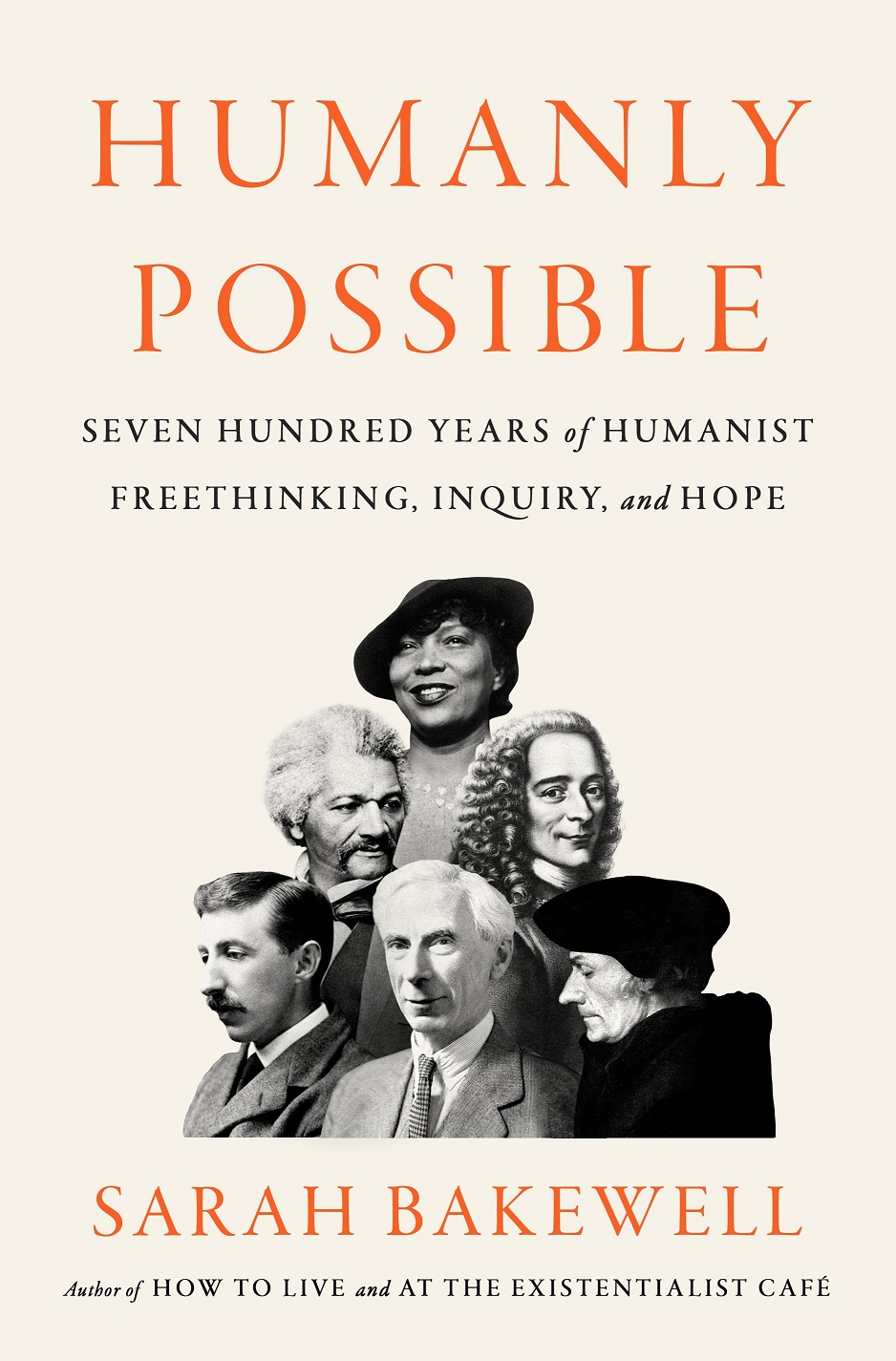
“Humanly Possible” (Seven Hundred Years of Humanist Freethinking, Inquiry, and Optimism)
By: Sarah Bakewell
Narrated by: Antonia Beamish
Sarah Bakewell (British author and professor, received the Windham-Campbell Literature Prize for non-fiction in 2018.
Sarah Bakewell provides a detailed history of humanism. To many, Bakewell’s story is a history of society falling away from God. Bakewell puts religion aside while explaining why and how humanists challenge religious belief and lean toward science as an explanation of life.
Bakewell notes humanism reaches back to the 5th century BCE with the Greek philosopher Protagoras. He was a teacher identified by Plato in a dialogue titled “Protagoras”. Through Plato’s dialogue, one finds Protagoras taught the importance of literature, and art that infers a set of moral principles to guide human behavior. Several centuries later, Diogenes Laertius writes “Lives of the Philosophers” that adds to history’s knowledge of Protagoras’s beliefs. Protagoras taught public speaking, poetry criticism, citizenship, and grammar.
Protagoras (490-420 BCE, Bakewell suggests Protagoras set the foundation for the humanist movement.)
Francesco Petrarch (1304-1374) takes up the humanist movement during the Italian Renaissance. Petrarch became internationally known as a humanist. He traveled extensively, looking for Classical manuscripts and ancient texts to recover the knowledge of Greek and Roman writers. He discovered letters that told of Cicero’s personal life–what it was like in the late Roman Republic (106-43 BCE). Cicero’s observations showed the importance of human character in the way one lives life.
Francesco Petracco (1304-1374, Italian scholar and poet and one of the earliest students and promoters of humanism.)
Collection of ancient manuscripts by Petrarch and Coluccio Salutati (1331-1406) of Florence expanded the humanist movement. Giovanni Boccaccio writes “The Decameron”, a collection of short stories that reinforces the principles of human worth and dignity, belief in reason and human ethics, and the value of critical thinking, i.e., humanist ideals.
Desiderius Erasmus (1469-1536)Sir Thomas More (1478-1535)William Shakespeare (1564-1616)
The humanist mantle is picked up in England and the wider part of continental Europe after the early 15th century. Erasmus, Sir Thomas More, and William Shakespeare, reinforce the movement. Desiderius Erasmus is a Dutch humanist. He attacks the excessive powers of the papacy. He values human liberty more than orthodoxy. He inspires the Protestant Reformation and the Catholic Counter-Reformation. He emphasizes the study of classics over medieval tradition. Erasmus has great impact on the Renaissance and its religious and intellectual climate with an eye for life on earth, more than an afterlife. He wrote “The Praise of Folly”, satirizing religious practices based on superstition and impiety. Though he hoped for divine mercy, Erasmus emphasized faith and good deeds in life, humanist ideals.
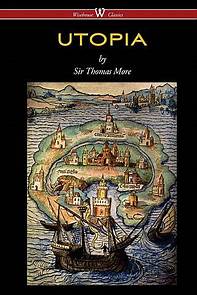
Bakewell notes Sir Thomas More writes “Utopia”, published in 1516, that describes an ideal society that addresses penology, state-controlled education, religious pluralism, divorce, euthanasia, and surprisingly, women’s rights.
Shakespeare’s plays introduce psychological realism and depth to human thought and action. Much of what he writes is secular rather than religious. Shakespeare implies life on earth is more than preparation for an afterlife.
Shakespeare suggests life on earth is more than preparation for an afterlife. Death is viewed as final, a humanist view of life and death.
Bakewell goes on to write of Denis Diderot, David Hume, Kant, Adam Smith, and Voltaire. They become leaders of humanism in the 17th and 18th centuries. Diderot emphasizes critical thinking, education, and secular values. Hume writes “A Treatise of Human Nature” to explain human morality. Adam Smith’s “Wealth of Nations” reflects on national economic growth and how the principle of “raising all boats” comes from free enterprise and free trade, humanity in action.
Denis Diderot (French philosopher 1743-1784)David Hume (Scottish philosopher, 1711-1776) Immanuel Kant (German philosopher, 1724-1804)Adam Smith (Scottish economist and philosopher, 1723-1790)VOLTAIRE aka FRANCOIS-MARIE AROUET (1694-1778, WRITER, PHILOSOPHER, PLAYWRIGHT, HISTORIAN)
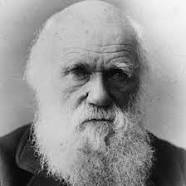
The idea of humanism is rocketed into American thought by Charles Darwin’s “Origin of Species”.
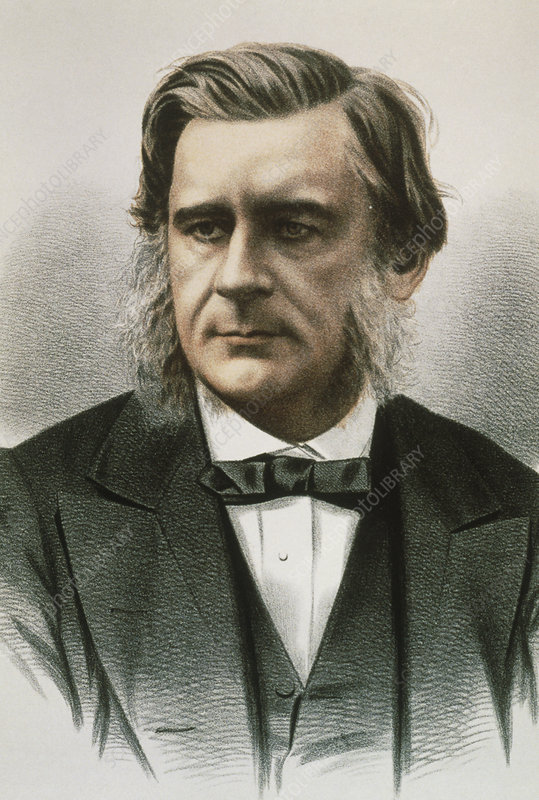
CHARLES DARWIN (1809-1882) FOUNDER OF THE THEORY OF THE ORIGIN OF SPECIES.Thomas Huxley. Coloured portrait of the British biologist Thomas Henry Huxley (1825-95). Huxley was the main advocate for the theory of evolution in scientific debates because Charles Darwin, its co-proposer, was a shy man who shunned publicity. One of the most famous debates on Darwin’s theory in which he took part occurred at a meeting of the British Association for the Advancement of Science in Oxford in 1860. Huxley’s research on primates firmly established man in this biological order, providing further scientific evidence for evolution. Huxley also did work in palaeontology and zoology. This artwork was taken from A Modern Portrait Gallery, volume 3 (1881).
Natural selection became a science-based explanation for the origin of species, including human beings. Its impact is evident in the personal transition of Darwin (the son of a medical doctor and grandson of a botanist), who planned to join the clergy, but became a person who identifies himself as an agnostic. Thomas Henry Huxley publicly endorses Darwin’s theory and coins the term “agnosticism” in 1869. Many of the scientific community joined that endorsement during Darwin’s life.
As Bakewell advances her history into the twentieth century, Thomas Mann and Bertrand Rusell carry the torch of humanism. The interesting point made about humanism by Mann is that a humanist must guard against the tendency to reason too much. The rise of Nazism in Mann’s home country and the repressiveness of Stalin’s (and now Putin’s) communism are examples of what concerned Mann. On the one hand, Mann recognizes the “unbearable pity for the sufferings of mankind” but also the danger of accepting authoritarian leaders who preach nationalist socialism or communism while promoting nationalist hegemony, forced labor, racial discrimination, ethnic cleansing, and gender inequality. The rise of Nazism and Putin’s invasion of Ukraine show how authoritarian reasoning can magnify the sufferings of humanity.
Paul Thomas Mann (1875-1955, German novelist, won Nobel Prize in literature 1929, wrote “Buddenbrooks “and “The Magic Mountain”)Bertrand Arthur William Russell (1872-1970, British philosopher, historian, social critic.)
Bertrand Russell, a British philosopher, mathematician, logician, historian, and humanist activist, warned against superstition and preached the importance of education. Both Mann and Russell advance the ideals of humanism. One still reserves judgement about humanist’ rejection of God when both religion and science have a mixed history for humanity.
Bakewell does not end with just a history of humanism. She speculates on where humanism may go from here.
She acknowledges her own beliefs as a humanist. She notes humanism has been noted in the past as a fragile vessel for transporting humanity into a future. The vessel’s fragility is in the nature of human beings.
Few can doubt we are self-interested animals that have to come to grips with what is ultimately in our self-interest.
Human self-interest must change from greed for money and/or power for humanism to work. If self-interest rests anywhere, it needs to be in the prestige that is earned by being engaged with the welfare of humanity. In light of history, human pursuit of societal welfare seems only to appear when annihilation is nigh. The war in Ukraine and human history are evidence of humanity’s failures. When perceived threats to peace and happiness disappear, humanity returns to the destructive self-interest of money and power.
Evolution may ultimately reveal the truth of life and death but neither religion nor science have been historically infallible nor unerring.
Blog: awalkingdelight Website: chetyarbrough.blog
Scientism and Secularism: Learning to Respond to a Dangerous Ideology
By: J.P. Moreland, Dan Egeler-Forward
Narrated by: Mathew McAuliffe
J. P. Moreland (Author, American philosopher, theologian and Christian apologist.)
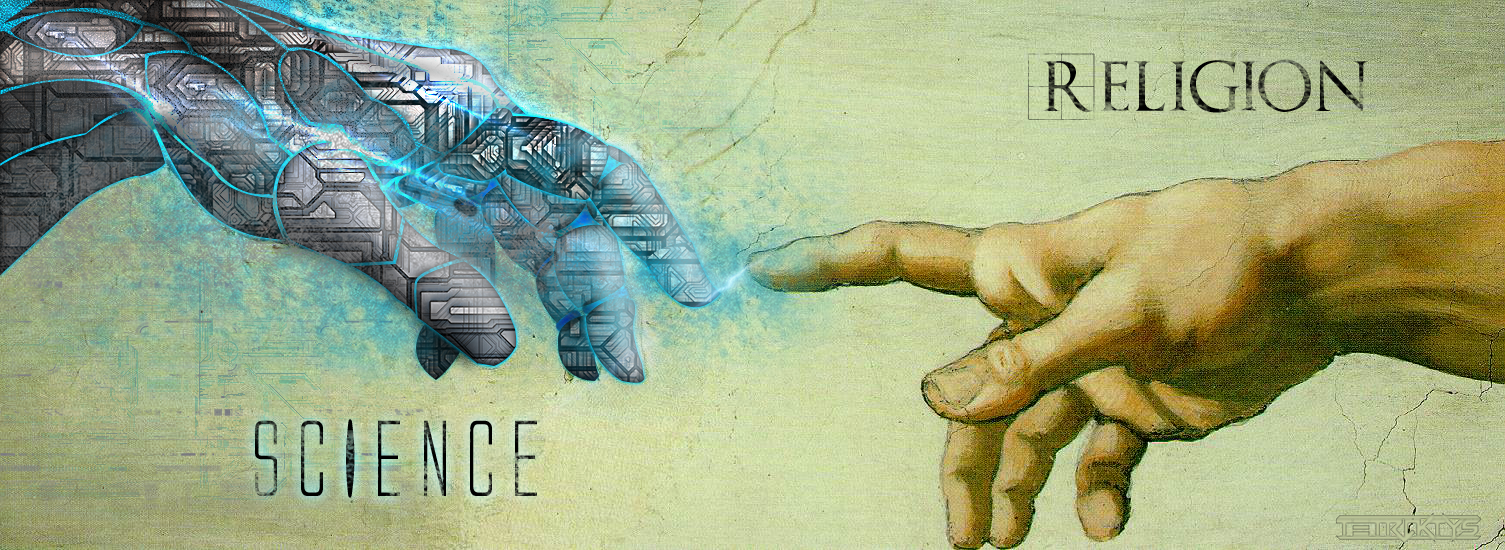
“Scientism and Secularism” is a disappointing polemic on an important but highly biased assessment of religion and science. No one escapes the bias of belief because of their life experience. J. P. Moreland’s life experience leads him to believe God is the proven origin of life. For many that is not how they became believers or non-believers. Belief in God is an evolutionary belief just as truths of science have evolved with newer discoveries.
The horrible consequences of religious belief have murdered millions of human beings.
Moreland’s book is a tiring replication of faith not factual certainty or proof of God’s existence. Religion, like science, has evolved over centuries of human existence.
Maybe there is God, but Moreland’s God is only Moreland’s God, a God founded on faith not proof.
Who in their right mind would not want a God that is omniscient and omnipresent that ultimately ensures the fair treatment during life and after death?
As a discipline, philosophy addresses fundamental questions about the nature of reality, knowledge, and existence. It plays an important role in science because it provides a framework for empirical evaluation, but categorization as a philosopher is not evidence of truth. At best, Philosophy is only a beginning of knowledge, not proof of knowledge.
Moreland denies evolution but history shows both religion and science have evolved over the centuries with immeasurable pain and gain for society. Moreland argues Darwin is wrong about the evolution of man. Moreland argues the randomness of genetic selection and time are not an experimentally proven explanation of the perfection and distinction of animal species. Really?
The only area of agreement one may have with Moreland is that great achievements in the world of ideas and things could not have been created without the existence of both religion and science. Evolution may ultimately reveal the truth of life and death but neither religion nor science have been historically infallible nor unerring.
One can choose the life of Buddha, Muhammed, Jesus Christ, Zoroaster, Rishabhanatha, Maimonides, Saint Francis of Assisi, Confucious or some other spiritual figure but it is one’s individual memories and our ability in “letting go” that will give one peace of mind and happiness in life.
Audio-book Review By Chet Yarbrough
Blog: awalkingdelight Website: chetyarbrough.blog
The Untethered Soul (The Journey Beyond Yourself)
By:Michael A. Singer
Narrated by:Peter Berkrot
Michael Alan Singer (American Author, journalist, motivational speaker, software developer.)
Michael Alan Singer’s audiobook is a reification of “Letting Go” written by David Hawkins. Hawkins, a medical practitioner, and Singer, a successful tech entrepreneur, come to similar conclusions about how to live life. Singer offers a more spiritual and ritualistic approach in working through remembered, and often suppressed, experiences of life by confronting them and letting them go.
Dr. David Hawkins posits the idea of a cosmic mind that can be tapped into by one’s thoughts to mitigate negative feelings. Singer’s approach is more direct and based on actual experience revealed by conscious thought and conscious rejection.
Singer believes every experience in one’s life is recorded by the mind, either correctly or falsely.
Singer suggests, through meditation, harmful or distorted memories can be revealed and discarded as inconsequential by the process of “letting go”. This is the same “letting go” referred to by Hawkins but located in a cosmic mind (the totality of human thought) rather than the individual mind argued by Singer.
Singer’s idea for treatment seems more therapeutically practical than Hawkins.
Both writers offer a solution to many human problems, but Singer suggests a therapeutic process exercisable by the individual, without the mysticism of a cosmic mind.
Singer introduces the idea that every experience in an individual’s life is consciously or subconsciously recorded in one’s mind.
Singer’s suggestion is that all negative feelings from life experience can be eradicated by letting them go. By “letting go” of accurate or inaccurate memory, Singer suggests one’s peace of mind, energy, and happiness improves.
One can choose the life of Buddha, Muhammed, Jesus Christ, Zoroaster, Rishabhanatha, Maimonides, Saint Francis of Assisi, Confucious or some other spiritual figure but it is one’s individual memories and our ability in “letting go” that will give one peace of mind and happiness in life.
One presumes Nietzsche’s philosophy is either right or wrong, but its insightful truth lies in the horrors of history and the consequence of forsaking God and human tradition.
Sue Prideaux (Anglo-Norwegian author, also wrote “Edvard Munch: Behind the Scream”)
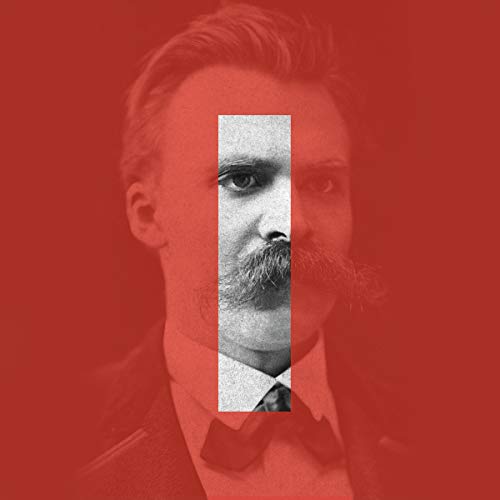
Friedrich Nietzsche’s life and philosophy is dissected by Sue Prideaux in “I Am Dynamite!”.
Friedrich Nietzsche (1844-1900, died at age 55.)
As inferred by Prideaux’s title, Nietzsche blows up a number of traditional religious and secular beliefs while battling physical and mental disorders in a complicated and contradictory life.
Nietzche’s last 11 years of life were spent in German and Swiss asylums or in his mother’s and sister’s care in Naumburg.
Some suggest he died from what is called dormant tertiary syphilis at 55 in Weimer Germany, less than 30 miles from Naumburg. Nearing the end of Prideaux’s biography, in Chapter 21, Nietzche’s plunge into madness is completed. One cannot help but think Nietzche’s philosophy and writing is hugely impacted by his ability to cope with recurrent illnesses.
The Birth of Tragedy (1871)
Early Greek philosophy & other essays (1872)
On the Future of our Educational Institutions(1873)
Thoughts Out of Season(1874)
Human, All Too Human(1875)
The case of Wagner-Nietzsche, Contra Wagner, Selected aphorisms(1876)
The Dawn of Day(1881)
The Joyful Wisdom(1882)
Thus Spoke Zarathustra(1883)
Beyond Good and Evil(1883)
The Genealogy of Morals(1884)
The Will to Power(1885)
Twilight of the Idols/The Anti-Christ (1886)
Ecce Homo(1888)
The Antichrist(1895)
By Prideaux’s account, Nietzsche is an excellent pianist.
She notes his school mates gather around Nietzsche at the piano, particularly during violent weather events, because of his exuberance and creativity in playing well-known classical, as well as his own, music compositions. In his early life, Nietzsche becomes a close friend of German composer, Richard Wagner.
Nietzsche denies both religion and Socratic rationalism (a method of systematic doubt in pursuit of truth) by arguing individuals have a right to determine life’s value and meaning, without resort to religion or tradition.
Nietzsche believes too many false assumptions come from Socratic rationalism. In Socratic rationalism, Nietzsche is saying societal religion and tradition distort the pursuit of truth. To Nietzsche, human beings are on their own. That is the major philosophical point of his philosophy. His famous aphorism is “God is dead”. Morality and the reality of life is a function of man, not God, history, or tradition.
While seemingly destined for a religious life, born to a Lutheran pastor and teacher, Frederich Nietzsche chooses atheism and particular beliefs that offend his family.
Nietzsche believes conscience humans can become Supermen or Superwomen, surrounded by followers, if they have superior ability to choose that role in life. Some argue history reinforces that truth with the rise of leaders like Augustus in Rome, Jesus in Bethlehem, Genghis Kahn in Asia, Hitler in Germany, and other male leaders in history. Early in Nietzsche’s life he might have included women, like Cleopatra in Egypt, but as he aged his view of women changes. (History shows Nietzsche is ambivalent about women as “Super”, which remains a prejudice to this day.)
“Super” does not mean either being right or wrong. A “Superhuman” overcomes worldly influences by recognizing they are their own master.
Super” is meant to connote one who goes beyond God or societies’ good and evil to create value through a Super’s leadership and action in accordance with his/her beliefs. Obviously, the ugliness of this view is in its consequence to human resistors to the “Super” human that chooses a path contrary to the best interests of society or the individual.
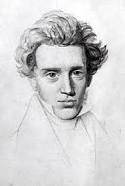
Soren Kierkegaard (1813-1855, existentialist philosopher died at age 42.)
If, as Nietzche infers, humans are on their own, Kierkegaard’s “fear and trembling” is not before God.
To Nietzche,”fear and trembling” is before the Superman, one who rises above the pettiness of self-interest to rule in the best interests of all. To Nietzsche, the human being is alone. One may either take a path to follow the Superman or become their own Superman.
Prideaux offers a comprehensive picture of a man on a mission. His mission is to disabuse human belief in a Supreme Being or societal tradition to solely rely on one’s own consciousness because that is all there is to life.
Nietzsche is shown by Prideaux to be opposed to antisemitism by breaking his close relationship with his sister and the famous composer, Richard Wagner, who was among the most famous antisemites of that era.
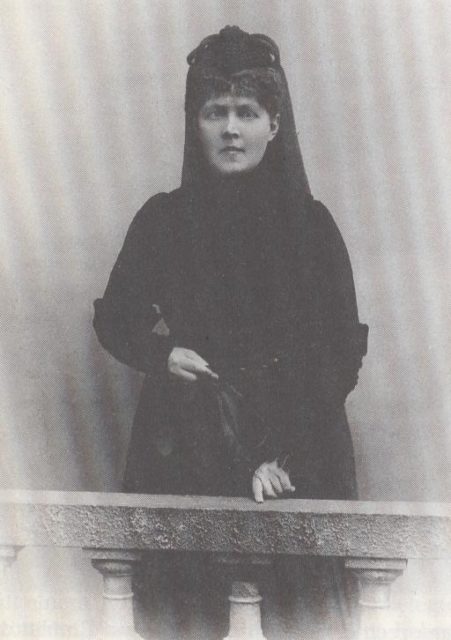
The ugly consequence of Nietzsche’s belief in the “Superhuman” is exemplified by his sister (Therese Elisabeth Alexandra Nietzsche, born in 1846, died in 1935 at age 89) who distorts her brother’s philosophy and endorses antisemitism and Adolph Hitler.
Prideaux’s biography offers details of Nietzsche’s life that allow reader/listeners to make up their own mind about Nietzschean philosophy. Prideaux shows Nietzschean philosophy is indeed “…Dynamite!”.
Nietzsche’s last decade of life is a journey into madness.
Though lovingly cared for by his mother, he is victimized by his sister who controls and distorts his contribution to philosophy. One presumes Nietzsche’s philosophy is either right or wrong, but its insightful truth lies in the horrors of history and the consequence of forsaking God and human tradition.
War is hell by any definition, but it gave philosophers focus for understanding the meaning of life. Sadly, that understanding did not change the future course of history.
Audio-book Review By Chet Yarbrough
Blog: awalkingdelight Website: chetyarbrough.blog
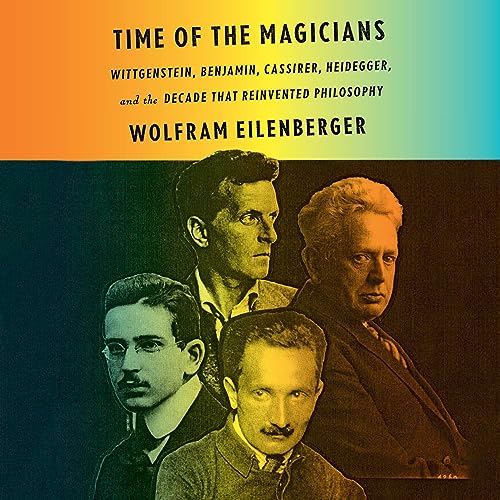
Time of the Magicians: Wittgenstein, Benjamin, Cassirer, Heidegger, and the Decade that Reinvented Philosophy
By: Wolfram Eilenberger, Shaun Whiteside
Narrated by: undisclosed.
Wolfram Eilenberger (German Author, award winning writer and philosopher.)
“Time of the Magicians” is particularly interesting because it tells the stories of four philosophers after WWI when Hitler is beginning his rise to power. Philosophers will undoubtably get more out of this book, but life experiences of these four men make it more interesting to the general public. The primary focus of “Time of the Magicians” is on Ludwig Wittgenstein and Martin Heidegger.
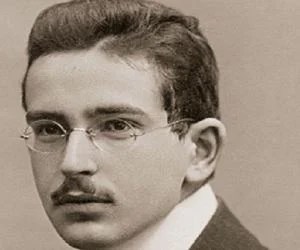
Ludwig Wittgenstein (1889-1951, Austrian-British philosopher of logic, mathematics, mind, and language, died at age 62.)
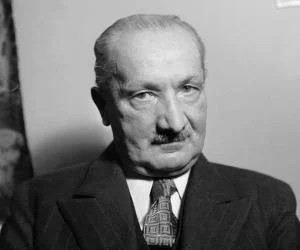
Martin Heidegger (1889-1976, German philosopher of phenomenology, existentialism, and hermeneutics, died at age 86)
Three of the four men who live in “Time of the Magicians” have a Jewish background. The two most famous philosophers are Ludwig Wittgenstein and Martin Heidegger. Heidegger supports Hitler, chooses to join the Nazi Party, and refuses to write or say anything about the Holocaust after the war. The other three philosophers leave their home countries before Hitler becomes Chancellor. Wittgenstein, as a world traveler, becomes a student of Bertrand Russell in 1911 at Cambridge. Walter Benjamin and Ernst Cassirer travel a good deal while choosing to leave Germany in 1933.
One of many interesting points in “Time of the Magicians” is that Hannah Arendt was a student of Martin Heidegger’s at the University of Marburg in Germany.
Despite Heidegger’s antisemitism, at 35 he has an affair with the 18-year-old Arendt who came from a Jewish/Catholic household. This is in the early 1920s, before Hitler’s rise, but it reflects the intellectual compartmentalization of life and human weakness that exists when it comes to sex. (At the time of the affair, Heidegger was married to Elfride Petri in 1917 and remained married until his death in 1976.)
Aside from sexual transgressions noted in “Time of the Magicians”, the biographies of these four men are about their philosophical beliefs. WWI like all wars affects people in different ways. Some, like Wittgenstein, and Cassirer join the military and fight for their countries, while others like Benjamin look for ways to avoid conscription. Heidegger didn’t join the military but served the Nazis as an academic.
Walter Benjamin (1892-1940, German Jewish essayist, philosopher, and cultural critic, commits suicide at age 48)
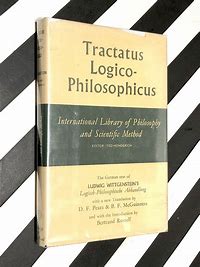
Joining or avoiding military service may come from good and bad motives. Wittgenstein and Cassirer fought for the Central Powers for reasons undisclosed. “Time of the Magicians” suggests Wittgenstein fought valiantly for the Central Powers and became a P.O.W. in Italy. While in prison, Wittgenstein began writing his most famous book on philosophy, “Tractatus Logico-Philosophicus”. However, the Central Powers lost to the Allied Powers (the U.K., France, and Russia) in WWI.
Heidegger supported Hitler through the end of World War II. One might conclude joining a war is a bad idea in any circumstance. As some authors have noted, there are no “good” wars. In any case, wars had a great deal to do with the philosophes of these four men.
Ernst Alfred Cassierer (1874-1945, German Jewish philosopher of phenomenology, and culture, died at age 70.)
The experience of war undoubtedly affected all four philosopher’s beliefs. Wittgenstein came from a wealthy industrial family. Wittgenstein is heir to a multi-million-dollar industrial empire. After the war, he chooses to give any fortune he might inherit to his mother, sisters, and brothers. He refuses his wealth and becomes employed in a small town in Austria where he teaches grade school. Wittgenstein refuses any financial help from his family or fellow philosophers. He is mired in poverty that remains his condition until his return to Cambridge.
Wittgenstein is characterized as a martinet but committed teacher of his young students.
His poverty and isolation seem surreal considering his education and family background. He actually has an engineering degree from the Technical University of Berlin which he received in 1908. His commitment to his young students forms a background to his belief in science with the dissection of animals and his focus on human language.
Today, we take dictionaries for granted, but they were nearly non-existent in Germany after WWI. Wittgenstein begins collecting words used by his students in class to create a dictionary that he intends to have published for schools in his area. The idea is nixed by the school administration.
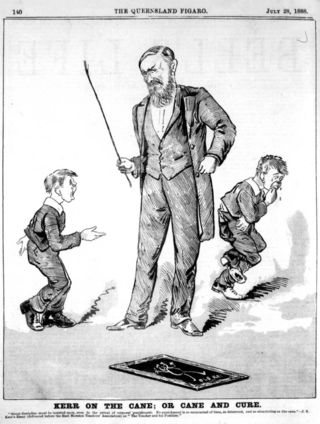
Wittgenstein leaves the grade school he is teaching after an incident that involves a student who feints after being struck by Wittgenstein. This martial treatment of students is not particularly uncommon, but the parent of the student is a wealthy matron who complains to the school. The school does not discharge Wittgenstein, but he chooses to leave in the middle of the night and abandon his teaching career.
Wittgenstein’s “Tractatus…” is published in 1921 without compensation to its author.
The purpose of the book is to explain the relationship between language and reality. At the same time, it is an attempt to show the limits of science. It is characterized as a difficult book to understand but becomes highly regarded at Cambridge University in England and becomes the basis for Wittgenstein’s return to England where he is called the “God” of philosophy. This is an interesting appellation but equally interesting is the appellation given to Heidegger as the “King” of philosophy. Obviously, both men were highly regarded at Cambridge in the 1920s, but in quite different ways.
THE HELL OF THE UKRAINE WAR 2022-2023
“Time of the Magians” is a fascinating glimpse into the lives of storied philosophers and the impact on their understanding of life which appears based on their experience in the “Great War”. War is hell by any definition, but it gave philosophers focus for understanding the meaning of life. Sadly, that understanding did not change the future course of history.
Title: Life Is Hard (How Philosophy Can Help Us Find Our Way)
Author Kieran Setiya
Narrated by: Kieran Setiya
Kieran Setiya (British Author, Professor of philosophy at MIT.)
In the beginning of Kieran Setiva’s book something seems awry. It is written by a PhD graduate of Princeton who is working as a professor at MIT. What does a philosopher who is admittedly happily married (with one child), working as a professor at a prestigious university know about life being hard? Stick with it, and by the end of the book, Setiva’s point becomes clear and worth more than one listen. The “Economist” calls Setiva’s book one of the best of 2022. Being an acolyte of the magazine, it seems prudent to review “Life is Hard”.
Every life has an individual story. Life is hard for every human being whether rich or poor, educated or illiterate, wise or foolish.
The only difference is some die young, others live to be old, but each find life is hard. Setiva explains he is stricken at 27 with an undiagnosed malady that deprives him of sleep because of recurrent pelvic pain. He learns how to cope with the pain and get on with life. In that learning and his personal education in philosophy, Setiva offers insight to what it means to live life.
Hardship is an equal opportunity malady that strikes every human life.
It just comes in different forms, either physical and/or mental. No sentient human escapes the hardship of life. Each person deals with hardship in different ways and with varying degrees of success. Setiva chooses to get on with his life by tolerating and adapting to his pain. He pursues personal goals, presumably with the hope of growing old.
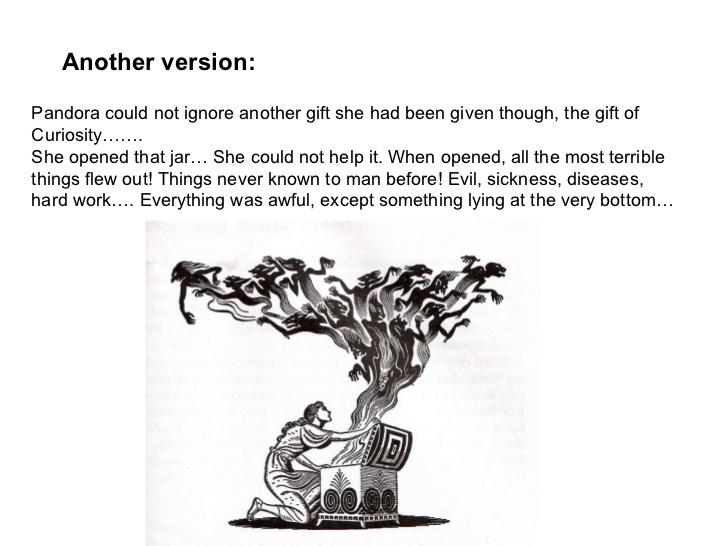
Setiva tells the fable of Pandora’s box. In the Greek legend, Pandora was created by the gods and given gifts by each of them. One of the gifts is a box which she is told never to open. From curiosity, the box is opened and all the maladies of life escape, save one, i.e., hope. Like the biblical fable of Eve’s apple and the tree of knowledge, life’s hardship becomes a part of human life. (Sadly, these are fables of ancient history and biblical tales that set the table for world misogyny.) The idea of hope is a mixed blessing that helps one cope with life but with a price paid for its failure to eliminate hardship.
Hope is the insight Setiva reveals to one who is faced with hardship in life.
Whether one is a university professor, wealthy industrialist, penniless beggar, or cloistered saint, hardship is a part of their life. Hoping to grow old is all that remains, and its value seems circumspect if not useless. Setiva’s book may be one of the best of 2022 but like the hope he describes in the last chapter, it’s a mixed blessing.
Scaling People (Tactics for Management and Company Building
By: Claire Hughes Johnson
Narrated by: Claire Hughes Johnson
Claire Hughes Johnson (Author, former chief operating officer of Stripe, lecturer on management of companies, former technology and operations manager.)
In “Scaling People”, Claire Hughes Johnson offers an insightful and actionable skill-set for both creators and managers of eleemosynary, government, and business organizations. She explains how large and small organizations can become more effective in executing their plans for development.
Johnson suggests every successful organization must have a clear statement of mission. “Mission” statements are the beginning of an entrepreneur’s creation of a company, a non-profits’ purpose, or a government’s departmental objective.
Every effective manager within an organization begins with a clear understanding of mission. Small and large organizations become successful when managers understand their organizations’ mission. The only difference is an entrepreneur’s mission is to prosper and grow a business, a minister’s mission is to ameliorate sin and grow a congregation, a charities mission is to grow and do good for others, and a government agency is to provide public service and grow as needed for those who cannot help themselves.
Johnson explains a manager’s success begins with self-understanding.
Johnson notes the ancient saying inscribed on the Oracle of Delphi in ancient Greece, “know thyself”. Knowing oneself is being aware of one’s nature and limitations. Johnson infers every good manager is a leader because, by definition, managers and leaders lead people.
Johnson works in the high growth industry of technology but her book applies to all organizations whether staid and maintenance driven or growth oriented.
When addressing growth companies, Johnson explains high performers fall into two categories. She classifies the first as “pushers” and the second as “pullers”.
Both are valuable employees but Johnson notes pushers want more money and power while pullers are subject to burn-out. Though their reasons are different, both may leave the organization. The potential cure Johnson suggests is a biannual review, designed in different ways, to motivate them to stay. The pushers should be counseled on what they can do within the company that trains them to take on more responsibility in return for more pay and power. Johnson’s counsel to pullers is to acknowledge their contribution and offer a new challenge that benefits the company and their skill without taxing their life/work balance. Johnson notes this does not always work but it directly confronts, and tries to serve the needs of employees and the organization.
Once a mission is understood by a manger, organizational missions are accomplished with the help of others.
A large part of Johnson’s book is how to make organization’ managers effective leaders of their respective management teams. Johnson explains teams are organized to achieve goals to meet an organization’s mission as a sin quo non of success. Johnson’s book about organizational management is based on her challenging experience as a manager for Google and as the Chief Operating Officer for a successful tech company called Stripe.
Johnson addresses work horses of organizations that at times are low performance employees. Johnson argues their biannual reviews require recognition of measured performance deficiencies with constructive conversation about how they can improve. Johnson suggests it is important to recognize their longevity as employees and their cultural value as longer-term employees. However, if performance does not improve by the next review, a performance plan is written that offers what may be a final opportunity for a low performance employee. If that fails, the employee may be discharged. (Second chances are in the best interest of organizations because of the investment they make in hiring and training employees, let alone continued employment for the worker.)
“Scaling people…”, is about measuring yourself as a manager and others that are a part of a companies’ team. The first step is scaling yourself and your own strengths and weaknesses. That is Johnson’s insight to her own organizational effectiveness. Good managers and leaders build on their strengths. That is why Johnson explains how important it is to know yourself. To Johnson “knowing yourself” is the source of an effective manager’s productivity. By knowing yourself, one can overcome personal weaknesses with people who have complementary skills. The key to success is in team building that achieves an organization’s defined mission.
The hard part of Johnson’s insight is in having self understanding. It is made harder by a willingness to reveal it to others. In that willingness, team cohesion is formed. Team members experience self-understanding’s value by fulfilling an organization’s mission.
Only with self-realization, does one focus on mission with the energy and will needed for organizational success. Achieving an organization’s defined mission requires team work.
A manager/leader needs to focus on strengths and weaknesses of teams in the same way he/she understands their own strengths and weaknesses.
Johnson notes self-understanding is only a beginning. “Scaling people…” requires measurement of performance against goal. Teams have to be monitored, measured, and adjusted to more effectively achieve the organization’s defined mission. Johnson offers a number of tools that can be used to monitor, measure, and adjust a team’s effectiveness.
“Scaling people…” is a great addition to the literature of organizational management. “Scaling people…” is an excellent tool for forward thinking organizations interested in growing and improving their performance.