CIVIL RIGHTS

Audio-book Review
By Chet Yarbrough

(Blog:awalkingdelight)
Website: chetyarbrough.blog

Great Figures of the Civil Rights Movement

By: The Great Courses

Narrated by: Hasan Kwame Jeffries

Hasan Kwame Jeffries (Author, associate professor of history at Ohio State University,)

A timely refresher on the civil rights movement is given by Hasan Kwame Jeffries in the “Great Figures of the Civil Rights Movement”.  It is timely because of the resurrection of the assassination of Malcolm X and its reification of a fundamental split in the black civil rights movement in America.

Viet Nguyen writes in his fictional novel, “The Committed, “I am from my mother”. Nothing else matters. Color, national origin, religious belief, or sexual orientation do not determine the value of a human being.

Marcus Garvey (1887-1940, publisher and jornalist, black nationalist.)

Jeffries reminds us of the movement initiated by Marcus Garvey.  Though the idea of a return to Africa has come up many times in the history of America, Garvey established a black movement for the creation of an independent African nation.

To one who believes in the principles of freedom and equality for all, the idea of equality through independence is wrong.  All humans live on space ship earth. It is the principle of our equal humanness that preserves civilization. Separate is not equal. The problem is human freedom, equality, and equality of opportunity are works in progress toward a goal of equal treatment by society. 

Women and minorities are not treated equally in America or in most places of the world.  Since America’s beginning as a republic, many believed in qualified freedom, and a few in universal equality, but equality is falsely preached by white power and never achieved.  Slavery is an undeniable truth in world history.  In America, atrocities of black slavery in the south and institutional discrimination in the north are well documented.  It is no wonder that Marcus Garvey successfully tapped into a desire of many black Americans to achieve equality through separation.  Separation’s appeal is in its potential as a base for political power. Even though that power is limited by being a faction in a dominant social and political power structure.
What Jeffries shows is that Garvey is the father of the idea of Black Power that is symbolized by the Black Panther movement in the mid-20th century. 

From Jeffries’ history, one can see and understand a more nuanced and broader American civil rights movement.  White American power did not exhibit much understanding of the black power movement in the 1960s. White America responded with violence. White America murdered Fred Hampton, the Chicago Black Panther Chairman and local leader.  This unjust murder lies at the feet of the City of Chicago and the FBI.

Stokely Stanford Carmichael aka Kwame Ture (1941-1968, 4th Chairman of the Student Nonviolent Coordinating Committee.)

Jeffries notes the idea of Black Power came from a Stokely Carmichael’s rallying slogan in the 1960s.  (The phrase is said by some to have originated in a non-fiction book, “Black Power”, written by Richard Wright and published in 1954.) Carmichael participates in the 1961 Freedom Rides in Alabama.  They were organized by CORE (Congress of Racial Equality) to desegregate public transit services and restaurants.  In 1961, Carmichael and others travel to Jackson, Mississippi to sit in a segregated restaurant.  Carmichael, along with other freedom riders, is arrested for disturbing the peace. He is sent to prison for 53 days in Sunflower County, Mississippi.  Because of Carmichael’s bravery and oratorical skill, he became a full-time organizer for SNCC (Student Nonviolent Coordinating Committee).

Of course, the stars of the non-violent black movement are best known as men like Martin Luther King. 

King’s history is well known but Jeffries notes there were many black women that became extremely important to the movement for black emancipation.  Ella Baker becomes involved with the NAACP (1938-53), SCLC (1957-60), and the initial foundation of SNCC (1960-66) as a black activist and highly successful recruiter. Rosa Parks becomes the face of the bus boycott in Montgomery, Alabama.  Diane Nash, as a Freedom Rider, is known for integrating lunch counters in Nashville, Tennessee.  Nash is also a co-founder of SNCC.  Fannie Lou Hamer fights for women’s rights as the vice-chair of the Freedom Democratic Party in Mississippi.  The newly formed party successfully gets several local black politicians elected in Mississippi.  Jeffries notes the FDP is less successful on a national level, but Hamer is elected to the U.S. Senate in 1964, and later serves in the Mississippi State Senate.

In order pictured left to right: Ella Josephine Baker (1903-1986, Political activist for the NAACP, SCLC, and SNCC.), Rosa Parks (1913-2005, Civil Rights Activist, best known for the Montgomery bus boycott.), Diane Judith Nash (Freedom rider and co-founder of SNCC.), Fannie Lou Hamer (1917-1977, Civil rights leader, Vice charwoman of Freedom Democratic Party, Co-founder of National Women’s Political Caucus.)

Eldridge Cleaver (1935-1998, spent 7 years in exile in Cuba, returned in 1975, joined the Church of Jesus Christ of Latter-day Saints and became a conservative Republican.)

Jeffries glosses over Eldridge Cleaver’s leadership in ambushing Oakland police officers (two officers were wounded) and his arrest and escape to Cuba to avoid trial.  However, Kathleen Neal Clever, who married and divorce Cleaver, became an active member of the Black Panther Party that helped feed people, provide family medical care services, and provide transportation for families to visit loved ones in prison.  Jeffries notes Kathleen Neal Clever came from an upper middle class black family and supported the early founders of the Black Panther organization with her father’s witting or unwitting financial support.

One of the most interesting chapters of Jeffries book is about Malcolm X, particularly because of the recent release of a wrongly accused assassin.  Jeffries implies Malcolm X is assassinated by the Nation of Islam.  Jeffries infers the assassination is related to Malcolm X’s disillusion with the founder’s (Elijah Muhammad) dissolute sexual behavior, and NOI’s belief that the races should be separated to form a black nation to compete with all nations. 

Malcolm X came to believe all people are created equal in the eyes of God, while arguing the separatist ideal of NOI and Marcus Garvey were wrong.  The history of Malcolm X’s journey through life is fascinating, short, and impactful.  One cannot help but wonder how Malcom X could have changed the course of history had he not been assassinated.

Jeffries could have gone further back in history to tell the story of American black nationalism but he has done a great job of identifying the history of the 20th century heroes of the movement.

U.S. PRESIDENTS

Audio-book Review
By Chet Yarbrough

(Blog:awalkingdelight)
Website: chetyarbrough.blog

Means of Ascent

By: Robert A. Caro

Narrated by: Grover Gardener

Robert Caro (Author)

Robert Caro is a great biographer but his history of the early years of Lyndon Johnson is diminished by his political idealism. 

Politics is the pursuit of power.  Some pursue that power by any means necessary.  Others may be less constrained, but the goal is the same–To Be Elected to Rule. 

Caro shows the young Johnson as a Machiavellian politician in the vein of Donald Trump but without a silver spoon.  History shows Johnson and Trump are willing to lie their way to power.  Both are willing to do whatever it takes.  Caro shows Johnson, like Trump, are bullies who intimidate subordinates to get what they want.  There is no moral or ethical line that these two ex-Presidents would not cross to stay in power.  Trump lost his second term because of rejection by the voters, and Johnson resigned because of embarrassment by Americans who opposed the Vietnam war.

Caro reveals Johnson’s bullying treatment of his wife and people who report to him. 

Caro shows Johnson is far superior at getting his way when compared to Trump. Caro notes Johnson stole his first election to the Senate from former governor of Texas, Coke R. Stevenson. 

Coke R. Stevenson (1888-1975, Former governor of Texas, died at age 87.)

Without big money contributors like Brown (of Brown and Root) to pay monitors to stuff ballot boxes in San Antonio, Texas, Lyndon Johnson would have lost.  With a legal maneuver by Johnson’s friend, Abe Fortas, and illegal help from election monitors, Johnson beats Stevenson for election to the Senate by 97 votes. (Fortas became an Associate Supreme Court Justice appointed by Johnson in 1965. He resigned in disgrace for unethical practice in 1969.)

In every election, the elected is beholding to someone.  Caro notes Brown and Root received a great deal of federal and State financed work in Texas because of Johnson’s support.

Johnson is shown to be a consummate politician, a good storyteller with the ability to persuade superiors like the leader of the House of Representatives, Sam Rayburn, to support his ideas.  This is no small thing because Rayburn is history’s longest serving Speaker of the House, with possibly more power and influence than any past or modern Speakers of the House.

Sam Rayburn (1882-1961, 43rd Speaker of the U.S. House of Representatives.)

President Johnson, as the Senate Leader kissing the head of Sam Rayburn.

Caro notes Johnson uses his 6-foot, 2.5-inch height, to dominate associates who are either reporting, beholding, or superior to him. 

Johnson is shown to be extraordinarily energetic when pursuing power.  Caro explains how Johnson uses helicopter visits to Texas communities when he runs for the Senate against Stevenson.  Johnson works himself into a frenzy that makes him ill (recurring kidney stones) because of an indefatigable need to do everything he can to be elected. 

In Johnson’s presence, many were awed by his stories, even when they knew the stories were lies or gross exaggerations.  During the war years, Caro notes how Johnson appeals to Texas voters by claiming he will go to the front to fight Germany and Japan.  To fulfill that pledge, he accompanies a “band of brothers” flying a bombing mission on a Japanese island off the coast of Australia. 

Johnson’s (Observer Mission in Austrailia during WWII.)

Caro explains Johnson’s only direct combat experience is as an observer in Australia.  

In Caro’s telling, the mission did occur.  There is great danger.  The plane is damaged by enemy gun fire.  Caro’s research shows Johnson maintains a cool demeanor during the flight. Johnson plays no combatant role in the mission. But, he was an observer on the plane when it is strafed by the Japanese.

Caro notes the story of the flight is changed many times. In Johnson’s retelling he explains he is a hero who fought in many bombing raids, a lie.  Caro dispels Johnson’s brave hero characterization by telling of Johnson’s childhood that shows him to be a physical coward.  Caro interviews former childhood friends who recall Johnson’s cowardice.  When confronted with violence, Johnson is reported to lay down and kick his feet out to ward off anyone who might attack him.

Caro notes Johnson’s will power is extraordinary when it comes to doing whatever it takes to be elected to public office.

Caro’s research suggests Johnson is a focused and relentless seeker and user of power.  Johnson could use his position for either good or bad depending on whether it increased or diminished his power.  One example Caro gives is Johnson’s rejection of an oil interest offered to him by a constituent.  It could make him rich.  Johnson’s concern is it would diminish his chances for election to higher office if he were recognized as an oil interest’ owner. 

In contrast to the oil interest rejection, Caro shows how Johnson acquires a radio station to become a source of income for his family and a tool for his political ambition.  Johnson had been appointed to the FCC as a junior congressman.  He used his influence with the FCC to acquire and grow the radio station, with his wife as the holder of record.  A competitor is shut out of buying that station through Johnson’s influence with the FCC.  The FCC also expedites the gift of a popular frequency that widely expands the radio station’s area of coverage in Texas.

Lady Bird and her ownership of KTBC in Texas.

“Means of Ascent” is not Caro’s finest work.  Johnson is painted too harshly in the context of American Democracy. 

Like America’s experience with Trump, there is much to hate about Johnson’s rise to the Presidency. 

No President of the United States has been totally bad or totally good.  Democracy remains, and will always be, a work in progress.

The reality is–Democracy is a messy process that brings both good and bad leaders to the world. 

POLITICAL LEADERS

Audio-book Review
By Chet Yarbrough

(Blog:awalkingdelight)
Website: chetyarbrough.blog

A Christmas Carol

By: Charles Dickens

Narrated by Sir Derek Jacobi, Kenneth Cranham, Roger Allam, Brendan Coyle, Miriam Margolyes, Time Mcinnerny, Jamie Glover, Emily Bruni, Jenna Coleman, Joshua James, Hugh Skinner

Charles Dickens, Author.

Dickens appeal in the 21st century is magnified by economic change.

The industrial revolution, like the tech revolution, put people out of work. In Dickens’ time, Great Britain’s and the world’s industrial growth demanded change. 

Today’s tech revolution demands the same.  The change required is different in one sense and the same in another.

The industrial revolution occurred in a time of scarcity while the tech revolution takes place in a time of abundance.  Both revolutions require training for new kinds of jobs.

Smog plagued Great Britain as it grew in the18th century. 

(This is smog in today’s Beijing.)

Dickens is born in 1812 and dies in 1870.  He witnesses and writes of the squalor that existed in London during his adult years.  “A Christmas Carol” is one of many stories he wrote that reflects on the human cost of economic change.

London fog 1952

In 1952, the streets of London were enveloped in a fog caused by coal used for domestic heat and industrial production. 

An incident of London fog in the 20th century is comparable, on a local scale, to the world’s pollution crises today.  An estimated 4,000 people were said to have died, with 100,000 made ill because of unusual windless conditions in that year. 

Today, air pollution is compounded by global warming. 

“A Christmas Carol” is a reminder of the damage world leaders can do by ignoring the plight of those who are most directly impacted by economic change.  Too many American leaders are acting like Ebenezer Scrooge and Jacob Marley by ignoring the Bob Cratchit s and Tiny Tim s of the world. 

For those who may not remember, Scrooge and Marley were capitalists who believe all that matters in life is personal wealth.  Marley comes back as a ghost to offer Scrooge a picture of past, present, and future Christmases, based on how he lives the remainder of his life.

Todays’ political leaders are in Jacob Marley’s ghostly presence with a chance to change the future for the Crachits, Tiny Tims, and wage earners of the world.  The world needs leaders who are not blinded by the allure of money, power, and prestige at the expense of the jobless, homeless, and disenfranchised.

WINE

Audio-book Review
By Chet Yarbrough

(Blog:awalkingdelight)
Website: chetyarbrough.blog

A History of Wine in Ten Glasses

By: Paul Wagner

                                                    Narrated by : Paul Wagner

Paul Wagner (Author, Podcaster, Lecturer)

“A History of Wine in Ten Glasses” is a journey around the world of wine. 

Paul Wagner is a wine instructor at (where else?) Napa Valley College. 

There are several revelations about wine for us amateur wine drinkers.  Thomas Jefferson tried and failed to create a good wine in his home state of Virginia.  

Jefferson’s failure is related to a grapevine disease in Virginia’ soils that attacked the roots of plants he brought with him from his diplomatic mission in France.  The root disease is discovered after Jefferson’s death.  Once the disease is diagnosed and treated, Wagner notes Virginia began producing some fine wines.

Wagner dates the production of wine back to 6000 BC in what is now known as Georgia.  Some would dispute that and suggest China had a rice and grape mixed fermented wine in 7000 BC.  Others suggest Iran may have been the origin of the first wines on the the Persian Gulf.  In any case, wine has been with us for centuries.

Wagner argues the Roman Empire is the primary disseminator of the art of wine making.

Rome’s conquest of countries surrounding the Mediterranean spread wine making throughout the known world, sometime between 27 BC and 476 AD.  Even today, the greatest wine volume comes from Italy with France and Spain, the second and third biggest producers

More than ten glasses are identified by Wagner, but the primary libations are from Italy, France, Spain, U.S., Australia, Greece, South Africa, Chile, Argentina, and Germany.  However, Wagner takes side trips to smaller countries like Portugal and New Zealand. 

Having traveled to some of these countries, his assessment of their wines seems spot on. Interestingly, his assessment of Chile’s inexpensive Malbec is a favorite of mine. In Italy, the selection of wine at dinner seems the simplest of all decisions.  Rarely is red wine in Italy served that is too bitter or too sweet.  Retsina in Greece is a horrible drink but adding water makes all the difference.  Retsina remains an acquired taste but with water it becomes palatable. Traveling to Argentina and New Zealand confirms Wagner’s assessment of the quality of their wines.

The idea of adding water to wine is a surprise but Wagner notes added water was often the habit of early wine drinkers. (Of course, watered wine is common in religious ceremony.)

Wagner also notes that a pinch of salt can smooth the acidic taste of an inexpensive wine.  Potassium chloride, not salt, is what is recommended by some wine connoisseurs.  

German wine Labeling system.

A surprising note by Wagner is that German and New Zealand wines are tightly controlled by a labeling system to assure the quality of their wine. 

Wagner reports on Germany’s and New Zealand’s precise label certification. One suspects precise wine labeling is a characteristic of the precisionist culture of Germany.  However, New Zealand’s labeling is a result of some Marlborough wines that were contaminated by runoff from lumber harvesting activities in 2005.   Both countries labeling assures the quality of their wines.  Undoubtedly, there is a concomitant cost for the right label.

Wagner lives in Napa Valley and, not surprisingly, suggests many of the best wines in the world come from Napa Valley’ vineyards.  Blind wine testing in Paris confirms his opinion.  What he says is true about many Napa Valley wines, but prices of those great tasting wines are often higher than many can afford.

“A History of Wine in Ten Glasses” is a nice introduction to the vagaries and mysteries of wine selection. For we amateurs wine selection remains hit and miss because it is only our personal taste and affordability that matters.

MUSIC

Audio-book Review
By Chet Yarbrough

(Blog:awalkingdelight)
Website: chetyarbrough.blog

Chopin’s Piano

By: Paul Kildea

                                               Narrated by : Mathew Waterson

Paul Kildea (Author, Austrailian conductor, Artistic Director of Musica Vivia Australia.)

Paul Kildea is a multifaceted talent who has written an interesting biography of Frederic Chopin and a lesser-known Polish musician, Wanda Landowska, who revivified Chopin’s  music. 

Frederic Francois Chopin (1810-1849, Composer and virtuoso pianist.)

Whether one knows anything of music or history, Kildea expertly entertains listener/readers with “Chopin’s Piano”. 

Chopin is noted as a Romanticist composer considered among the most creative of all time.    For that reason, the sound of Chopin’s work has changed with the times.

There are several ironies in Kildea’s history of Chopin.  Chopin is shown to have been pleased by being considered French though he was Polish.  Chopin is characterized as anti-Semitic though at times financially supported by Jews and resurrected by a world-renowned harpsichordist, Wanda Landowska, a proud and nationalist Pole who escaped Nazi persecution and extermination. Landowska, a woman of the Jewish faith, flees Paris when Germany invades France. 

Wanda Landowska in front of the Bauza piano owned by Chopin.

One of her treasured pianos is the Bauza piano used by Chopin to create his greatest masterpieces, the Preludes.

George Sand (1804-1876, French novelist and 10 year companion of Chopin)

Kildea reflects on Chopin’s diminutive physique and self-effacing nature. Chopin never marries but has a ten-year relationship with George Sand, a divorced woman with a broadly libertine reputation. 

One wonders what Sand’s influence is on Chopin’s creativity.  What Kildea explains is that Sand admires Chopin’s dedication to music and supports Chopin through his frail health during the most productive period of his life.  However, at the end of their ten year relationship, Sand leaves because the burden of their relationship is either too much or she just chooses to return to a life of independence.

The thread of Kildea’s history is the Bauza piano’s location in the 21st century. It’s whereabouts remains unknown.

This piano was used by Chopin between 1838-39 when living with  George Sand in Majorca.  A striking point in Kildea’s story is that the Bauza piano is a crudely formed instrument carved from local softwood.  Its innards are made of felt, pig iron, and copper but its cultural importance is extraordinary and its provenance unquestioned.  It disappeared when confiscated by Nazi Germany when they ransacked Landowska’s home in Paris.

Wanda Landowska in 1953.

The last half of Kildea’s story is about the trials and achievements of Wanda Landowska.  In reflecting on Landowska’s rise to fame, the Bauza piano is a symbol of Chopin’s creative genius. 

This flawed instrument is used to create compositions that are endlessly translated by pianoforte (soft and loud sound) from the use of harpsicords to modern Steinways.  Landowska, and many pianists of the 19th through the 21st century are listed by Kildea, showing the brilliance and variety of Chopin’s compositions.  Only a musical conductor turned author like Kildea could explain this to the public.  “Chopin’s Piano” is a small opening to a big world.

NAMING NAMES

Audio-book Review
By Chet Yarbrough

(Blog:awalkingdelight)
Website: chetyarbrough.blog

The Sword and The Shield

By: Christopher Andree, Vasilli Mitrokhin

 Narrated by : Robert Whitfield

Only historians and former secret service agents are likely to be enraptured by “The Sword and The Shield”.  The book is based on a detailed record kept by Vassilli Mitrokhin when he served as major and senior archivist for the Soviet Union’s foreign intelligence service. To a generalist, Mitrokhin’s detailed naming of names is mind numbing. 

Later chapters are more interesting than earlier chapters of “The Sword and The Shield” because they reveal details about motivation, interpretation, and consequence of spying during the cold war that have application to today’s American and Russian secret service.

What this and other recent histories imply to some is that international intelligence services rarely achieve objectives that are worth their costs. 

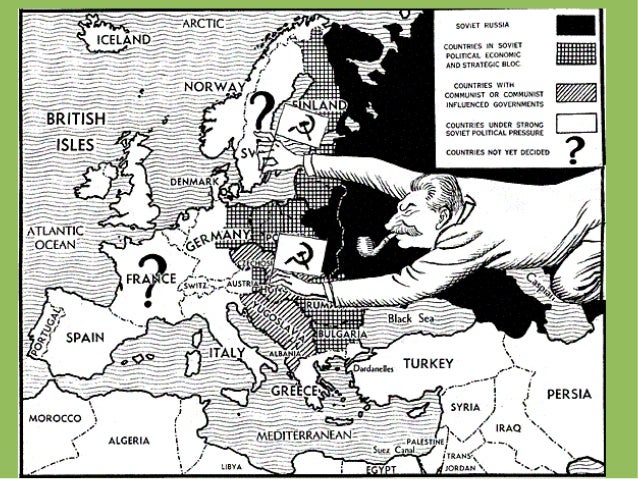
However, cost is of little concern to a national government that believes international intelligence service is critical to its survival. Modern Russia is as beholding to its intelligence service today as it was when Joseph Stalin ruled the U.S.S.R. It is suggested by the authors that Stalin successfully prepared for a hegemonic agreement (resisted by Churchill) at the end of WWII with the help of intelligence gathered by Russian spies about FDR’s secretly held intensions. There is little reason to believe Putin thinks any differently about secret intelligence on American Presidents with whom he deals. Putin, like Stalin, undoubtedly uses the Russian secret service to spy on personal beliefs and activities of America’s presidents, or as many suggest, imprison or murder Russian dissidents.

Based on current events and this book, an argument may be made that human and material cost of an American intelligence service is necessary because of Russia’s driven intent to remain a world power by any means necessary. In this era of nationalism, it seems unlikely Russia will ever become another union of independent eastern block nations. However, Russia intends to strengthen its position as a world power regardless of other nation’s concerns or interventions.

Despite Russia’s drive to maintain world power–to paraphrase Martin Luther King’s optimism “The arc of history and the moral universe is long, but it bends toward justice.” 

Some argue we are entering a second cold war today. The questions is can we learn anything from secret service failures of the first cold war.  “The Sword and The Shield” details past successes and failures. The final chapter reflects on the power of intelligence service to influence the course of history. Today’s surveillance technology certainly magnifies the power of secret intelligence services. The question is–do today’s American and Russian secret services improve results or magnify mistakes?

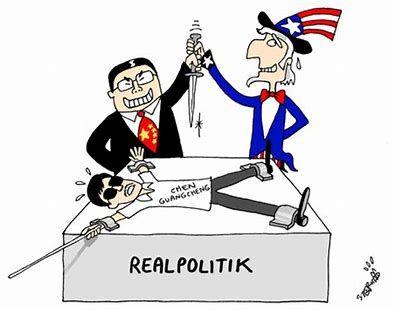
Details of “The Sword and Shield” show paranoia, as well as realpolitik, led Stalin to create a network of spies. 

Stalin’s spy network’s duty is to reveal secrets held by the west and then bend public opinion to the will of Stalinist communism with the goal of expanding and controlling Socialist Republics within the U.S.S.R. 

The authors suggest Stalin’s paranoia leads him to believe all western nations and some leaders within the Soviet Bloc are in league to destroy or weaken his regime.  Churchill’s iron curtain speech confirms some elements of Stalin’s beliefs.  The authors note that classified foreign documents provided by Stalin’s network of spies is interpreted in ways that lead Stalin to imprison or murder many of his own citizens.  Stalin’s successful use of that information is evident in the brutality of his regime and his survival until death from a presumed heart attack.

The Stalinist Soviet Union perseveres at the expense of many innocent people. The author’s infer U.S.S.R. citizens appear to respect Stalin but fear imprisonment or murder by their paranoid leader. One wonders if Putin’s regime drinks from the same poisonous cup.

Andree/Mitrokhin’s history of the U.S.S.R.’s acquisition of the atom bomb reveals Americans and Brits who willingly provide classified documents that give Joseph Stalin plans for development of an atomic bomb.  The totalitarian Stalinist’ State steals English and American secrets by seducing scientists like Klaus Fuchs with propaganda that distorts and glorifies Stalinist communism.  If political persuasion did not work, Stalinist’ money is offered to both American and British scientists, political officials, and citizens to acquire government, science, personal, and social secrets. 

In listening to “The Sword and The Shield” it seems western economies are at the forefront of most initial scientific discoveries because of relative human freedom.  No amount of secret surveillance defeats human nature whether one lives in a democratic or totalitarian state.  Every nation has dissidents willing to betray their countries.

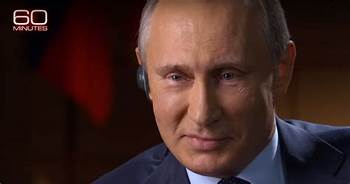
Putin once said on a “60 Minutes” interview–what he admired most about America is its innovation without seeming to understand that the heart of innovation is freedom

On the democratic side, Americans like the Rosenberg’s, and Aldrich Ames, became tools of the U.S.S.R. The Rosenberg’s reveal American nuclear research secrets, and Aldrich Ames offers the names of CIA agents to the U.S.S.R.   In England, Klaus Fuchs, Ray Mawbey, and the Cambridge Five (including Guy Burgess, Kim Philby, Donald McClain, Anthony Blunt, and John Cairncross) feed critical science and intelligence information to the KGB.  During WWII, a Latin-American double agent, Juan Garcia, uses false reports to mislead Germany on the D Day invasion by Allied forces.

On the totalitarian side, the co-author of this book betrays his own country by revealing the names of the U.S.S.R’s secret service actors and their nefarious activities.  Mitrokhin also notes the betrayal of Russian electronic engineer, Adolph Tolkachev, who reveals secret military capabilities of the U.S.S.R. to the CIA.    

Adolf Tolkachev (1927-1986, CIA agent working in the U.S.S.R.)

This history of the KGB shows the dissemination of science is a force unto itself.   No amount of secret service effort is shown by Mitrokhin to protect or retard the advance of world-wide scientific research and understanding. Motives for spies range from patriotism to greed. 

Some scientist’s betray their country’s science discoveries for what they believe is a greater good, others betray their country to be paid thousands, sometimes millions, of dollars.

“The Sword and The Shield” shows how both patriots and enemies of the state are equal partners in trading scientific discoveries for either money, power, or prestige.  There is the obvious lure of money as evidenced by Ray Mawby who is paid 100 to 400 English pounds for details about English Parliament’ gossip.  For money, over a nine-year period, Aldrich Ames is paid nearly $3,000,000 by the Soviet Union for disclosing hundreds of American CIA agents.  For power and prestige, “The Sword and The Shield” notes Kim Philby coveted the title of general in the Soviet Union when he escaped England’s arrest for espionage. (Interestingly, Philby is denied the title or the pension that would have gone with it when he arrived in the Soviet Union.  Philby died 25 years after defecting to the Soviet Union.  Some say he became a disillusioned communist.)

It is more difficult to understand Klaus Fuch’s motivation.  He eschewed Russian money.  He was a nuclear scientist who seems to have preferred working in obscurity.  One presumes he believed in Stalin’s communist propaganda or divulged critical information on the atom bomb to serve what he believed was a “greater good”. 

Fuch’s may have revealed the secrets of the atom bomb to preserve balance of power, with the presumption that no rational human being would start a nuclear war.

Much of the last section of this long book recounts the history of Soviet Union’ secret service use of propaganda and misinformation to create turmoil in countries that are opposed to authoritarian communist beliefs.  Russian effort at influencing other countries domestic affairs with misinformation and lies is recounted in detail by “The Sword and The Shield”.  Attempts to destroy personal reputations, exploit democracy’s failures, and influence domestic elections during the cold war are detailed.  America’s recent elections suggest that policy is used by Russian secret intelligence today.

Alexander Litvinenko (Former Russian Intelligence agent accuses Vladmir Putin of ordering his assassination.)

Litvinenko died in London weeks after drinking tea that was later found to have been laced with the deadly radioactive compound polonium-210.

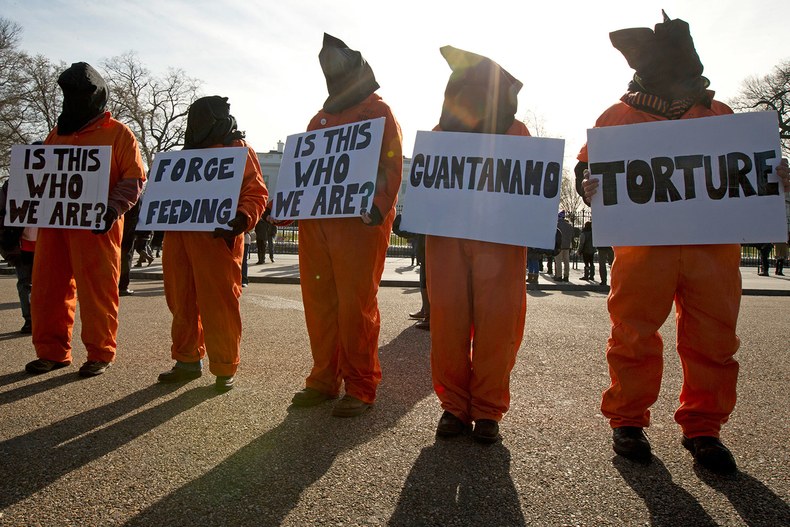
In completion of this tome about the KGB, some will be left with the thought that nothing much has changed.  The U.S.S.R. has become Russia, but its leader appears to use the same tactics as Stalin in punishing dissidents.  Accusations of murder and false imprisonment by Russia’s spy network continue to be reported in the western press.   Western countries continue to employ secret service organizations to undermine non-aligned authoritarian nations.  America, like Russia, has been accused of using torture, false imprisonment, and murder to further its political agenda.  What “The Sword and The Shield” ends with is a kind of warning. 

The dismantling of the U.S.S.R. has left few binding organizational consistencies in governance of its reformation as a nation-state.  The one system of governance that has survived the reformation is the Russian secret service.  It is no surprise that the longest serving government leader since the collapse of the U.S.S.R. is a former KGB trained officer.  Continuity and identity of a modern Russian state lies in its continued use of covert intelligence to retain its status as a world power.  The fear accompanying that realization is that secret service thought, action, and consequence is monumentally expanded and improved with the advance of surveillance technology. 

Rodney King (1965-2012, died at 57 from accidental drowning.)

Some wonder like Rodney King, who was beaten by Los Angeles police in 1992—when he said: “People, I just want to say, you know, can we all get along? Can we get along?”.  The answer lies somewhere in the cloud of surveillance technology. 

As history is revealed in “The Sword and The Shield”, secret services imprison and murder the innocent as well as the guilty. With surveillance technology, the power of the sword is exponentially more dangerous.

IGNORANCE IS NOT BLISS

Audio-book Review
By Chet Yarbrough

(Blog:awalkingdelight)
Website: chetyarbrough.blog

Half Lives

By: Lucy Jane Santos

Narrated by : Deirdre Whelen

Lucy Jane Santos (Author, Freelance writer and Historian.)

              Lucy Jane Santos recounts the perilous history of radioactivity in “Half Lives”.  Her history is not scintillating but offers a lesson in skepticism.  Her focus is the “on again, off again” love affair with radon by scientists, doctors, charlatans, and beauty product entrepreneurs.  The lesson is relevant in some ways to the Covid19 controversy of this century.

Santos recounts the discovery of radium in the late 19th century and shows how it evolved into the discovery of radiology that revolutionized surgical practice and diagnosis

A brighter part of Santos story is the discovery of X-rays (a type of radiation) and the value it gave to diagnosis and repair of internal injuries by providing interior pictures of the human body.  The idea came from an accidental discovery by Wilhelm Roentgen in 1895.  While testing whether electrons could pass through glass, Roentgen found a green light appeared on black paper which then projected onto a nearby fluorescent screen.  These electrons are the essence of what became known as radiation.

Wilhem Roentgen (Scientist who discovered x-rays, received Nobel Prize in Physics 1901)

Marie Curie, a chemist and physicist, discovered two new periodic table’ elements, radon, and polonium in developing a theory of radioactivity.  Like Roentgen’s Xray discovery of the dispersal of electrons, Curie found photons may be released from atoms to trans mutate into different elements on the periodic table.  Curie received two Nobel Prizes, one in conjunction with her husband Pierre and a physicist named Henri Becquerel, and another on her own.  She is the first woman to receive a Nobel Prize and only one of four people who have ever been awarded two Nobel Prizes. (The other three were men—Linus Pauling, John Bardeen, and Frederick Sanger.)

Marie Curie (Scientist, chemist, and physicist, received 2 Nobel Prizes, died at the age of 66.

Santos suggests Curie’s death from radiation poisoning is a myth.  She bases that conclusion on an exhumation of Curie’s body to relocate it in France.  In the exhumation, no radiation was found in her remains.

These are two positives’ Santos notes in her history of radioactivity.  With the discoveries of Roentgen and Curie, radiation is used for diagnosis, surgical care, and treatment for physical injuries and cancer. 

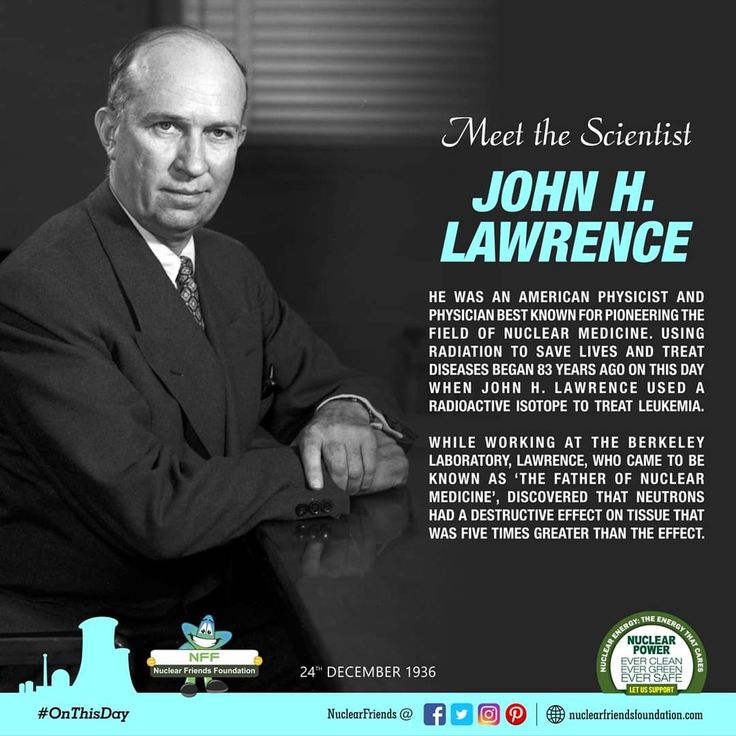
However, radioactivity discoveries are misused by many who ignore the negatives of radiation.  Prominent businesspeople, some of which are outright charlatans, suggest radiation will cure numerous diseases, can be used as a luminous paint without concern for its impact on health, and should be mixed in elixirs or emoluments for skin repair and beauty treatments.  The quest for money, power, and prestige seduces the public into using radiation treatments for unproven, often harmful health and beauty benefits.

Radioactivity’s early history reveals shortened lives of many who believed radon was a miracle cure.  Maybe the most famous is Eben McBurney Byers, a wealthy American socialite, athlete, and industrialist who died in 1932.  He was 52 years old.

Byers, at the suggestion of his doctor began drinking a non-prescription liquid called Radithor (radium infused water).  The irony of his doctor’s suggestion is that a person who identified himself as a doctor was actually a college drop-out who manufactured and sold Radithor to Byers and other un-suspecting victims.

Upon autopsy, it is found that radium does not dissipate in the body but accumulates in organs and bones.  Byers is said to have ingested over 1400 bottles in 3 years. His brain became abscessed with holes forming in his skull. He died on March 31, 1932.

Santos notes the dials of watches were painted to glow in the dark, particularly important during WWI when soldiers needed to coordinate their movements.  It was found that the radiated dials were harmful to painters of the dials, but manufacturers denied the correlation until challenged by evidence of many who were physically disfigured or died from their work.

Radium Girls (Women hired to paint watch dials with radium)

Famous beauty product producers in England and France in the 1920s and 30s were promotors of cosmetics infused with Radon.  One wonders how many of these misinformed practices are not a proximate cause of cancer increase in the world.

The cosmetic industry grew exponentially after WWI.  Radon mixing in emoluments were touted for their ability to increase blood flow to the skin to brighten one’s appearance. 

Santos’s story is a warning to humanity.  Be skeptical of cures that purport to be safe and beneficial, and review facts available from reputable sources.  Today’s vaccination for Covid19 is a case in point.  The facts are that over 650,000 Americans have died from Covid19.  Those who have received the “jab” are less likely to die if they are infected by the virus.  The virus is transmitted from person to person and can be mitigated by wearing a mask.  Consider the source of those who promote or deny those facts.  When facts are distorted by politics, we only have ourselves to blame.  Humans need to be skeptical but not ignorant.

AMERICAN SPIES

Audio-book Review
By Chet Yarbrough

(Blog:awalkingdelight)
Website: chetyarbrough.blog

The Quiet Americans: Four CIA Spies at the Dawn of the Cold War-A Tragedy in Three Acts

By: Scott Anderson

                                  Narrated by : Robertson Dean, Scott Anderson

Scott Anderson (Author)

“The Quiet Americans” is an investigative reporter’s view of the American spy service.  It is written by a veteran war correspondent and son of a former foreign aid officer.  The author, Scott Anderson, is raised in East Asia.  He reviews America’s spy network during and after WWII. 

The American independent spy agency is formed after WWII to provide intelligence on growing clandestine activities of the U.S.S.R.  The author notes there were intelligence operations during WWII, but they were not independent.  During the war, Intelligence services were defined and executed by the military.  It is only after WWII that an independent branch is formed along the lines of British intelligence.

In Anderson’s opinion, President Harry Truman is an inept manager of the nascent American intelligence service. 

 There are several surprising facts and interpretations of history compiled by Anderson.    Kennan is characterized as a great diplomatic analyst, but capable of lying to protect his reputation. 

George Kennan is viewed as an influential diplomat in the creation of what becomes known as the Central Intelligence Agency.

The Dulles brothers solidify the role of the CIA in American clandestine operations in the world.  Their modus vivendi for CIA operations prevails today.  Their intent is to have an agreement allowing conflicting parties to coexist peacefully.  However, Anderson shows their action belies their intent.

Dulles Brothers (John Foster on the right, Allen on the left.)

Parenthetically, as an example of Stalinist ideology, Anderson notes Adolph Hitler’s remains were not found in a burned bunker in which Hitler is alleged to have committed suicide.  His burned remains were secreted by Joseph Stalin and placed in an archive in the U.S.S.R.  Stalin’s motive for secrecy is unknown.


An independent spy agency is initially opposed by Truman, and perennially opposed by FBI Director Hoover. 

J. Edgar Hoover–Director of the FBI from 1924 to 1972. (Died in May of 1972 at the age of 77)

Anderson notes Ambassador Kennan’s prescient analysis (the long memorandum) reflects the duplicitous nature of Joseph Stalin.  Kennan recommends a surreptitious and aggressive American containment policy enacted through the practice of espionage.  Kennan plays an important role in the formation of the American Intelligence service.  The first director of this operation is a close friend of Kennan’s, a man named Frank Wisner.

“The Quiet Americans” Anderson profiles are Edmund Michael Burke, Frank Wisner, Peter Sichel, and Edward Lansdale.  In their stories, Anderson reveals the beginnings of the CIA and a history of minor espionage successes and significant failures.  In the back of a listener’s mind is the consequence of American espionage—their cost in human lives and dollars, and American truths about what measures are taken to presumably secure freedom and equality in other countries.


This is not a pretty picture.  American efforts to change the world for the better through covert action is shown to be, at best, questionable, and at worst horribly misguided.  As an American, it seems clear that most covert activity is meant to do good but the definition of good is distorted by human nature.

America’s role in Albania, Vietnam, Iraq, and Afghanistan raises the hopes of many but at a cost of too many lives and dollars.  Hope of many of these country’s citizens becomes despair. How many lives and dollars could have been saved and repurposed for freedom and equality, rather than destruction of cultural difference.  What Anderson makes clear is that national purpose (American or other) is distorted when it is undisclosed because human beings are seduced by self-interest, whether that interest is money, power, and/or prestige. 

Government disclosure offers visibility to the public.  Disclosure offers opportunity for public  influence on government policy.  America prides itself on being a government of, and by the people–through popularly elected representatives.  Covert government action that is undisclosed to elected representatives gives no opportunity for citizens to influence government policy. 

The idea of full disclosure discounts poor intelligence like that given about “weapons of mass destruction” that compelled America to invade Iraq and depose Saddam Hussein.  False disclosure by American intelligence misled both citizens and elected officials about what America should do in Iraq.

 Dulles Brothers (John Foster on the right, Allen on the left.)

Anderson’s exposure of John Foster Dulles’s tenure as Secretary of State and his brother Allen, as the fifth CIA Director, exemplifies the worst characteristics of covert activities without oversight by elected representatives.

To Anderson, the course of the U.S.S.R. and American relationship may have been entirely different if the Dulles’s had not run Eisenhower down the wrong diplomatic road.  It is impossible to judge what may have happened if a different course had been taken, but Anderson infers the Dulles’ Road led to years of lost opportunity.  On the other hand, hindsight is always more perfect than foresight.

Anderson’s view is America’s opportunity to change the course of history after Stalin’s death is lost because of Dwight Eisenhower’s actions based on the Dulles brother’s political influence. 

Though Burke, Wisner, Sichel, and Lansdale are great patriots, Anderson implies their patriotism and actions often failed to serve American ideals.

Burke’s extraordinary life led him to Italy, Albania, and Germany. He served his country by trying to save Albania from communism, and Germany from further encroachment by the U.S.S.R. At best, his success is limited to non-existent. Albania remained in the fold of communism and success in Germany is the split of Berlin from the eastern block at the expense of food deliveries by air and an agreed upon East and West Berlin.

Wisner kept the light on for covert operations of what became the CIA but failed to get the top job or temper the excesses of secret operations.

Sichel survives them all but appears to compromise a principle of not using bad actors who participated in the holocaust that murdered over 6,000,000 Jews and Nazi resistors.

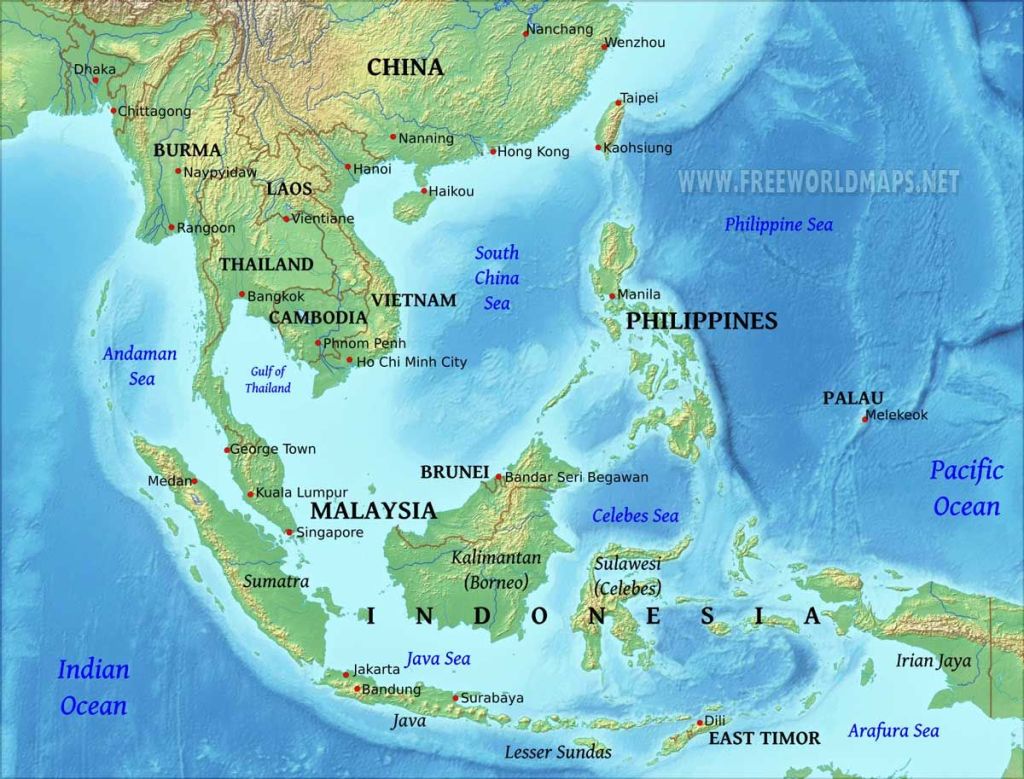
And finally Wisner, who manages to gain the trust of Philippine and Vietnamese leaders, many of which America abandons by leaving them to fend for themselves.

Trapped, as all humans are, by the times in which they live, they were the instruments of many wasted lives.  How many people must die because of undisclosed covert Intelligence operations? 

Listening to “The Quiet Americans” makes one understand how important freedom of the press is to America.  

Americans must lead by example, not by covert action. More recent episodes in Iran, Iraq, and Afghanistan show America continues to ignore history’s lessons.

TIBET

Audio-book Review
By Chet Yarbrough

(Blog:awalkingdelight)
Website: chetyarbrough.blog

Eat the Buddha

By: Barbara Demick

                                       Narrated by : Cassandra Campbell

Barbara Demick gives listeners a picture of Tibet with a darkness that rivals the narrative she creates for North Korea in “Nothing to Envy”. 

“Eat the Buddha” is a reminder of China’s insistence on Tibet’s acceptance of Communist authority in the face of Buddhist and Tibetan ethnic and religious identity.  Like the Uyghurs in mainland China, Tibetans practice a religion that conflicts with Communist atheism.  Unlike Islamist Uyghurs, Buddhists eschew violence against oppressors.

Demick addresses self-immolation as an example of Tibetan protest which does not harm others but only one self. Well over 100 men and 28 women have set themselves aflame.

Self-immolation remains a form of protest that reaches the youth of Tibet in the suicide of Tsewang Norbu, a Tibetan pop star, who sets himself on fire in front of the Potala Palace on February 25th, 2022.

Tsewang Norbu (Tibetan pop star–self-immolation in front of the Potala Palace in Lhasa.)

Demick bases “Eat the Buddha” on living seven years in Beijing, with personal visits to Tibet. She interviews Tibetans and Chinese, including the Dalia Lama who is exiled in India. 

Demick interviews many who consider Buddhist teaching a positive and integral part of their lives and culture. 

Demick’s history of the treatment of Tibetan citizens under Maoist communism reminds one of America’s treatment of Indian tribes in America.  Mao tries to erase Tibet’s nomadic culture by murdering Tibetan leaders and excommunicating the Dali Llama. Mao’s object is to thwart the influence of Buddhist religious belief and indoctrinate Tibetan citizens into the ways of Communism.

Mao era attack of Buddhism during the Cultural Revolution.

Demick tells the story of Maoist cadre’s eviction and eventual murder of a regional Tibetan King and his wife during the cultural revolution.  The daughter of the former King is one of Demick’s many interviews.  The irony of this daughter’s experience with Chinese culture offers both positive and negative memories of her early life in Tibet.  She adapts to Chinese doctrine but eventually becomes an assistant to the exiled Dali Lama in India.  She cannot abandon her Tibetan cultural beliefs.

Tibetan demonstration in 2020.

Mao, and today’s Chinese leaders, believe any ethnic self-identification, other than Communist party doctrine, conflicts with the State. 

Like America’s treatment of Indians, China’s leaders use carrots and sticks to integrate Tibetans into Communist doctrine and Chinese culture. 

Rather than accepting culture difference, both America and China suppress their ethnic minorities.  However, the suppression is qualitatively different. The significant difference is that China sees minority ethnicity and religion as a direct threat to Communist ideals.  In contrast, American history implies ethnicity and religious difference are an evolutionary characteristic, bending toward freedom and equality.  That does not make American history less violent, but it suggests hope for something better than China’s expectation of ethnic and religious absorption by Communism.

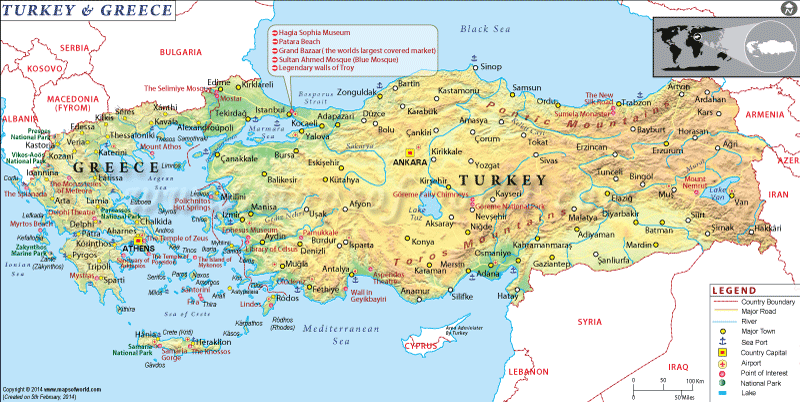
Demick suggests Tibet is currently in the carrot stage of influence by the Chinese government.  Having personally traveled to Tibet in 2019, much of what Demick describes about the modernization of Lhasa, the capitol of Tibet, is obvious. 

The restoration of the Potala Palace by the Chinese government is astonishingly beautiful.  It is the burial place of past Dalai Lamas.  Though it is no longer a practicing Buddhist temple, it is a tacit acknowledgement by China of Tibetan culture.

The last chapters of Demick’s book acknowledge her extensive research. She notes Tibetans are better off now than they were during the Mao years.  However, she explains Tibetans do not have the same economic opportunity as the ethnic Chinese.  It is important to be Chinese and even more important to be a member of the Communist party. (Our guide in a trip to China and Tibet reinforces the value of being enrolled in the Communist party. Though he abjures the tragedy of Tiananmen Square, he has a slender hope to join the Communist Party because of the opportunity if would afford him and his family.)

Demick infers Tibetans face the same discrimination as American minorities (these pics are not of Tibetans but American Asians attacked by non-Asian Americans in 2021), and presumably the same discrimination felt by many women in the world.

In Demick’s interviews of the Dalai Lama, she finds he is optimistic about Tibet’s future and survival as a Buddhist haven.  The Dalai Lama continues to negotiate with China’s leaders with hope of a return to Tibet.  (He was exiled in the 1950s by Mao’s government. That exile remains in place.)   His successor is to be chosen by the Gaden Phodrang Trust, an India-based group set up by the current Dalai Lama. However, the Chinese government says it will approve the Dalai Lama’s successor.  The Buddhist belief is that the Dalai Lama must be a reincarnation of former Dali Lamas.

GADEN PHODRANG FOUNDATION OF THE DALAI LAMA

Demick writes of a Padme Dalai Lama in Tibet with a marginal explanation of their importance in Buddhism. The Padme Dalai Lama plays an important role in selecting the next Dalai Lama. The Padme Dalai Lama is second in the hierarchy of primary Dalai Lamas. A Padme Dalai Lama is identified (chosen) by a current Dalai Lama. The 14th Dalai Lama chose a 6 year old boy but he was taken by the Chinese government after his selection. Demick explains the Chinese government chose to select the next Tibetan Padme Dalai Lama despite the 14th Dalai Lama’s choice. No one with certainty knows of the Padme Dalai’s fate.  Some suggest he is now a college graduate living an anonymous life. Theoretically, today there are two living Padme Dalai Lamas.

Today’s Dalai Lama is Tenzin Gyatso.  He is the 14th Dalai Lama. As of this writing, he is 86 years old.

Pictures of the 14th Dalai Lama are forbidden in China. Demick notes that a travel book in her carry on luggage is confiscated by a Chinese Airport inspector as she returns to the United States in 2o20. The confiscation is because the travel book had a picture of the Buddhist leader.

Demick draws an interesting picture of Tibet. It reveals both the truth and weakness of one historian’s view of China and Tibet. It is founded on the truth of what a number of Tibetans remember of the Mao’ years and the current relationship of China and Tibet. As is true of all books of history, China’s and Tibet’s past is not perfectly clear and the future, at best, becomes a cloudy past.

LUMINARIES

It is clear in this biography that Einstein’s contribution to science is as immeasurable as aforementioned luminaries of politics, arts, and science. Einstein, and Newton stand as the elite of the elite in science. One hopes there are others in this century.

Audio-book Review
By Chet Yarbrough

(Blog:awalkingdelight)
Website: chetyarbrough.blog

Albert Einstein, Creator and Rebel

By Banesh Hoffmann, Helen Dukas

Narrated by : Wanda McCaddon

CO-AUTHORS OF “ALBERT EINSTEIN, CREATOR AND REBEL”

The impact of extraordinary human beings is partly the result of chosen facts–there repetition, and future generations’ revisions of history.  The best known are men, undoubtedly due to misogyny that reaches back to the earliest writings of history.  Whether because of misogyny or other reason, mostly men have had the greatest influence on the course of politics, arts, and science. None more than Aristotle, Jesus Christ, Leonardo da Vinci, Isaac Newton and Albert Einstein.
Banesh Hoffman and Helen Dukas reveal why Einstein is among a select group of extraordinary human beings.  Presumably, Hoffman (because he is a physicist) offers explanation of Einstein’s contribution to the world of science.  However, in an equally revealing light (because Dukas is secretary to Einstein), one presumes she offers understanding of Einstein’s personal correspondence and innate humanity.  To we who are not scientists, Dukas is the star of the book.  Whether searching for understanding of E=mc2 or Einstein’s humanity, this book is worth reading and re-reading.

Newton versus quantum mechanics.

Einstein did not overturn the physics of Isaac Newton, just as he did not deny the validity of quantum mechanics. 

Einstein added to Newton’s understanding of physics by confirming belief in quantum mechanics with the caveat that quantum mechanics does not reveal everything about physics of the universe.  Einstein argues to his last days–their remains an unrevealed fundamental truth about physics. He believes physics will explain why things exist and why manifestation of things is predictable.  Like the inviolate speed of light, Einstein insists there is a physics law that gives predictability rather than probabilistic answers for ways of the world.

Baruch Spinoza (1632-1677, Dutch philosopher of the Enlightenment, biblical critic.)

Einstein believes in God but it is the God of Spinoza. Einstein believes God is not a corporeal being but a principle.

To Spinoza, God is everything in nature.  Religions look at Einstein and Spinoza as heretics, and as some argue, atheists.  However, Einstein suggests “God does not play with dice”. He is saying there is a fundamental cause for everything in the world.  That fundamental cause is God. However, that God is nature which, like energy and mass, has equivalence. Einstein believes there is an unknown fundamental law that explains life’s predictable existence which will prove God is real because, in his view, nature is real and predictable.

Einstein clearly identifies himself as a Jew but in the sense of ethnic association, not religion.  Part of Einstein’s self-identity comes from his disgust with Germany and its systemic murder of Jews in the holocaust. 

Dukas reveals Einstein’s sponsorship of Jews who wish to escape Nazi Germany.  She notes that Israel asks Einstein to serve as President of Israel.  He is deeply honored but chooses not to accept because his life experience is as a scientist, not a politician.
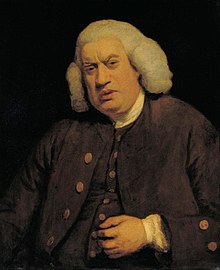
Dukas explains Einstein has an implacable belief in scientific predictability and an unstoppable drive for proof.  Both authors make it clear that Einstein’s greatest discoveries come in his early twenties. He doggedly pursues intuitive truth, even when faced with experiments that fail to support his beliefs.  Einstein does not become discouraged. He casts failed experiment and mathematical calculation aside and re-doubles his effort to confirm his intuitive beliefs.

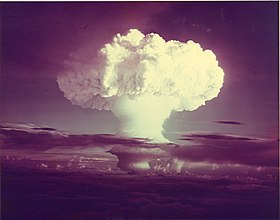
Einstein did not initially realize the potential of E=mc2 as a weapon because he thought too much energy would be required to create nuclear fission that would change mass into energy. 

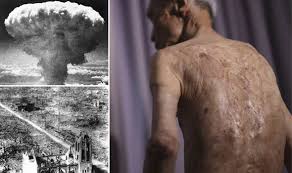
With the discovery of neutrons by Otto Hahn and Fritz Strassmann in 1938, Einstein realizes there is destructive potential in his discovery of mass and energy equivalence.  Neutrons used to bombard particular fundamental atoms demonstrate transmutation of mass into energy.   That transmutation unleashes a cataclysmic force.

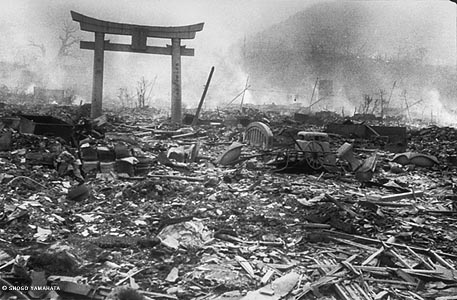
Einstein is shown to be an avid pacifist, but atrocities perpetrated by Germany in WWII leads him to recommend early efforts of America to create a nuclear bomb.  However, he is appalled by the bombs use in Japan.

The thought among Allied forces is that Germany would develop a nuclear bomb before Allied forces could end the war.  There is the suggestion by some that Germany’s last-ditch effort at the Battle of the Bulge was a desperate attempt to delay defeat to have time to develop a nuclear bomb.

It is clear in this biography that Einstein’s contribution to science is as immeasurable as aforementioned luminaries of politics, arts, and science.  Einstein, and Newton stand as the elite of the elite in science.  One hopes there are others in this century.