WRITE WHAT YOU KNOW

Audio-book Review
By Chet Yarbrough

(Blog:awalkingdelight)
Website: chetyarbrough.blog

The Story of the Lost Child: The Neapolitan Novels, Book 4THE STORY OF THE LOST CHILD

Written by: Elena Ferrante

Narrated by: Hilliary Huber

ELENA FERRANTE (AN ANOYMOUS AUTHOR--PRESUMED TO BE A WOMAN)
ELENA FERRANTE (AN ANONYMOUS ITALIAN AUTHOR, PRESUMED TO BE A WOMAN.)

Mark Twain said, “Write what you know” but fails to warn of its consequence.  Elena Ferrante completes Twain’s aphorism in “The Story of the Lost Child”.  The consequence of “writing what you know” is to reveal who you are and what you think of your family, friends, lovers, and acquaintances.  Often, that reveal is not flattering.  To “write what you know” can be psychologically, morally, and financially damaging.

“The Story of the Lost Child” is a fourth book in Ferrante’s series about two poor women who achieve economic and social independence in Italy during the sixties, seventies, and eighties. Ferrante takes the story through modern-day Italy and the events of life that change the two main characters that are growing old.

women are the sun
Without doubt, the greatest heroine of Ferrante’s novels is Lila; a street educated woman with immense energy, intelligence, and a superior perception of reality.  Lila is the sun around which others, both men and women, revolve around.

Without doubt, the greatest heroine of Ferrante’s novels is Lila; a street educated woman with immense energy, intelligence, and a superior perception of reality.  Lila is the sun around which others, both men and women, revolve. Through will and intelligence, Lila grasps the value of computers in the sixties and builds a company around its potential.

The second heroine, Elena Greco, is a college educated fiction writer.  Though both women are equally successful in achieving independence, Elena is a recorder, more than actor, in life.  Elena achieves independence through reaction.  Lila makes things happen. Elena lets things happen.  Lila chooses to stay in her neighborhood, and fights local Italian corruption that impedes her business.  Elena writes about people in the neighborhood but leaves its environment; only to return to record rather than confront her community’s dysfunction.

turning point
As is evident to anyone who lives long enough, there are turning points in life.

As is evident to anyone who lives long enough, there are turning points in life.  Ferrante reveals those turning points in Elena and Lila’s lives.  Though Ferrante suggests more women than men read her books (which may be true), her characters’ journeys and life experience resonate with all human beings.

Men and women begat children that parents raise with varying degrees of attention.  Children’s lives happen in an environment over which they have no control.  What makes Ferrante’s stories universal is the truth of her observations.

Both men and women are capable of promiscuity.  Both husbands and wives neglect their children; sometimes because of work or pleasure, and others because of overweening self-interest.  Children live life in the moment and absorb all they see and feel through a prism of parental genetics.  “The Story of the Lost Child” embarrassingly and truthfully reveals how human beings are foolishly misled by self-interest, and ephemeral pleasures.

CHILDREN
Children live life in the moment and absorb all they see and feel through a prism of parental genetics.  “The Story of the Lost Child” embarrassingly and truthfully reveals how human beings are foolishly misled by self-interest, and ephemeral pleasures.

Elena is married but falls in love with a former lover of Lila’s.  He is a married man with children but says he will leave his wife for Elena.  Elena, after divorcing her husband, finds her lover is a philandering liar.  Elena is so consumed by love she agrees to an absurd two family relationship; i.e. allowing her lover to continue his marriage and their affair.

Lila had been involved with this guy and warns Elena of his character, but Elena chooses to ignore her friend’s warning until she finds him “stooping” the maid in their apartment bathroom.

Surprisingly, Elena accepts her lover’s sexual proclivity, in part because of her pregnancy.  Elena continues the affair until it becomes clear she is merely one among many women in his sexual network.

Elena’s decision to leave her lover is complicated by the pregnancy.  Her lover remains a part of her life because of the baby.  The strength to leave her lover is bolstered by Lila’s counsel and support.  Lila’s and Elena’s friendship enters a phase of reconciliation after many breaks in continuity between childhood and adulthood.  They become allies in combating the corruption of their local community; i.e. Lila as a fighter, Elena as a recorder of nefarious acts.

parents and children
An underlying theme in Ferrante’s fourth Neapolitan Novel is the impact of parental life on children. Decent parents love their children but a parent’s love is within a context of a living and lived life.

An underlying theme in Ferrante’s fourth Neapolitan Novel is the impact of parental life on children.  Children grow into their own lives but they are both genetically and environmentally affected by their parents.

Ferrante shows human beings are by nature self-absorbed.  When adults become parents, they do not lose their own lives, their own experience, their own desires.  Decent parents love their children but their love is within a context of a their own lived life.

The title of this fourth novel is “The Story of the Lost Child” because Lila loses her daughter.  That loss is because of parental self-absorption.  Both Lila and Elena are focused on getting ahead in life.  Each’s self-absorption exhibits in different ways but both have an impact on their children’s lives.  Lila’s and Elena’s self-absorption is not criminal neglect; i.e. both Lila and Elena lose their children.  Lila’s self-absorption is in building a computer company and fighting corruption in her neighborhood.  Elena’s self-absorption is in writing books, and living a life that feeds her literary imagination.

HUMAN FAULTS
Elena Ferrante, whoever she is, has written a story that lionizes women in some ways but humanizes and degrades them in others.  Of course, all human beings are flawed; that is why “writing what you know” has consequences.

There is an obvious difference in their losses.  The loss is physical (with no chance of redemption) in Lila’s case because her youngest child dies before adulthood.  It is a relationship loss (with some chance of redemption) in Elena’s case.  Elena’s children become estranged from the consequences of their mother’s lived life.

Elena Ferrante, whoever she is, has written a story that lionizes women in some ways but humanizes and degrades them in others.  Of course, all human beings are flawed; that is why “writing what you know” has consequences.

GOD’S EXISTENCE

Audio-book Review
By Chet Yarbrough

(Blog:awalkingdelight)
Website: chetyarbrough.blog

36 Arguments for the Existence of God36 Arguments for the Existence of God
By Rebecca Newberger Goldstein
Narrated by Stephen Pinker, Rebecca Newberger Goldstein, Oliver Wyman

REBECCA NEWBERGER GOLDSTEIN

Rebecca Goldstein writes like Stephen Pinker on steroids.  (Coincidentally,  Goldstein is married to Pinker.)  Goldstein’s novel is not the story one expects from its title because “36 Arguments for the Existence of God” is about denial; not affirmation of existence.

STEVEN PINKER (Cognitive psychologist, linguist, and author)
STEVEN PINKER (Cognitive psychologist, linguist, and author who wrote “How the Mind Works”, “The Blank Slate”, “Angels of Our Better Nature”, etc.)

A more apt title for Goldstein’s book might be “The Science of Human Nature Denies the Existence of God”.

Goldstein has done a masterful job of creating “fear and trembling” in believers.  This is “fear and trembling” in the opposite sense of Soren Kierkegaard’s meaning. Kierkegaard’s meaning awakens believers in God.  Kierkegaard, an author, theologian, and philosopher, argues one should fear and tremble at the truth of God’s existence.

SOREN KIERKEGAARD (1813-1855, DANISH PHILOSOPHER, AUTHOR, THEOLOGIAN)
SOREN KIERKEGAARD 1813-1855 (Kierkegaard, an author, theologian, and philosopher, argues one should fear or tremble at the truth of God’s existence.)

On one level this is a story about a man named Cass Seltzer and his personal (sometimes romantic) relationships.

On a second level it is about human ethnocentrism. Characters, including Cass Seltzer, see through myopic eyes based on who they have become and what peer group they belong to.

On a third level “36 Arguments…” is about human nature and cultural memes (Richard Dawkins defines a cultural meme as an inherited learned behavior).

On multiple levels, Goldstein’s writing is about the elephant in the room; i.e. mankind’s belief in a Supreme Being.

The story of Cass Seltzer’s life is absorbing.  The women he loves are monumentally independent, fantastically alluring, and maddeningly self-centered (as self-centered as Cass Seltzer).  Each character believes what they believe with conviction that directs their lives.

The introduction of Felix Fidley exemplifies tribal ethnocentrism and conviction; i.e. a believer who says one way is the only way.

RELIGIOUS BELIEF
Goldstein’s introduction of Felix Fidley in her novel exemplifies tribal ethnocentrism and conviction; i.e. a believer who says one way is the only way.

Ms. Goldstein cleverly introduces the town of New Walden.  Its isolated belief system reflects the heritability of good and bad genetic markers and memes that trap people in worshipful repetition.  One might categorize it as a cult or, more politely, a commune.

Finally, Goldstein creates a straw man debate about God,  The debate is conducted in the next to last chapter.  It pits Cass Seltzer against a purportedly renowned debater. Seltzer beats his debate opponent.  Believers in God lose.  In the last chapter, 36 arguments for belief in God are stated and refuted.

SCIENCE AND RELIGION
One doubts Goldstein will change the world with her book but its rational arguments are a big add to the non-believing world’s arguments for a scientific theory of the world that explains everything about everything.

One doubts Goldstein will change the world with her book but its rational arguments are a big add to the non-believing world’s arguments for a scientific theory of the world that explains everything about everything.

PREACHER PREACHING
Faith is always a refuge but is it enough?

If you are a believer, “36 Arguments…” is a clear explanation of your battleground; it reveals the manifesto, strategy, and tactics of a non-believer.  Faith is always a refuge but is it enough?

“36 Arguments for the Existence of God” is a fascinating piece of literature.

A BRADBURY CLASSIC

Audio-book Review
By Chet Yarbrough

(Blog:awalkingdelight)
Website: chetyarbrough.blog

The Illustrated Manthe illustrated man
By Ray Bradbury

Narrated by Paul Michael Garcia

RAY BRADBURY (1920-2012)

Flights of imagination sparkle and spin in this updated 1950s  Ray Bradbury classic.  This compendium of Bradbury’ tales is titled “The Illustrated Man”.

ROD SERLING (1924-1975, SCREENWRITER, TV PRODUCER, NARRATOR)

Bradbury spins stories; reminding one of late night re-runs of Rod Serling’s “Twilight Zone”.  Every episode sparkles with stars and planets, habitable by man but riddled with fear, death, and destruction.  Bradbury grasps human nature and turns it against itself by writing stories that illustrate man’s selfishness, insecurity, wantonness, and aggression.

Tattoos come alive on rippling skin to act out a series of plays about mankind’s future.  Everyone fears the illustrated man because his tattoos expose the worst in man.  Belief that nuclear cataclysm will end life on earth blooms like a mushroom cloud.  Traveling to other planets changes mankind’s environment but man’s nature remains the same.

THE ILLUSTRATED MAN (PLAYED BY ROD STEIGER)
THE ILLUSTRATED MAN (PLAYED BY ROD STEIGER IN A 1969 MOVIE) Tattoos come alive on rippling skin to act out a series of plays about mankind’s future.
AYN RAND (1905-1982)
AYN RAND (1905-1982, AUTHOR WHO FIRMLY BELIEVED IN THE VIRTUE OF SELF-INTEREST) Unregulated self-interest is a dangled reward stolen by one to keep it from the many; in the end the reward is destroyed by the selfishness of each against the other.)

These are not happy stories but they are great flights of imagination.  Bradbury tells a story of human exile and deprivation that exacerbates selfishness when personal reward is dangled in front of exiled and deprived human beings.  The dangled reward is stolen by one to keep it from the many; in the end the reward is destroyed by the selfishness of each against the other.

Insecurity is a devouring beast in the story of a planet blessed by an appearance of a Visitor (presumably Jesus) just before a rocket ship lands on the planet that has been visited.  The captain disbelieves it has happened and is driven to track down this Visitor rather than settle in the insecure surroundings of a unblessed world.  The captain is left to wander the universe, never to arrive in time to actually see the Visitor.

INSECURITY
Insecurity is a devouring beast in the story of a planet blessed by an appearance of a Visitor (presumably Jesus) just before a rocket ship lands on the planet that has been visited.  The captain disbelieves it has happened and is driven to track down this Visitor rather than settle in the insecure surroundings of a unblessed world.
INFIDELITY
Wantonness is illustrated by Bradbury’s story of an unhappily married man. 

Wantonness is illustrated by the husband that is unhappily married.  He duplicates himself.  His duplicate takes his place beside his wife so he can buy a ticket to Rio to exercise his fantasy.  The duplicate is so perfect it becomes as human as the husband.  The duplicate places the wanton husband in a box to die, and buys a ticket to Rio for his wife to accompany it in its fantasy.

Human kind is aggressive.  Humans conquer and destroy civilizations.  One world of the future prepares for a second visit from mankind by becoming the image of a City.  This image devours the men of the second visit and assumes their bodies; i.e. the City image is transformed into the bodies of the humans from this second visit.  The City image plans to return to earth to destroy those who had destroyed them.

NUCLEAR DETONATION ABOVE TEST TARGET 1986
Human kind is aggressive.  When human’s conquer or destroy others, others rise to  destroy those who had destroyed them. An endless circle of life where agression eats itself.

Bradbury is a master story-teller.  Paul Michael Garcia’s narration is a tribute to Bradbury’s skill.

A WOMAN OF SUBSTANCE

Audio-book Review
By Chet Yarbrough

(Blog:awalkingdelight)
Website: chetyarbrough.blog

Jane EyreJane Eyre
By Charlotte Bronte
Narrated by Lucy Scott

CHARLOTTE BRONTE (1816-1855)

“Jane Eyre” replays the tautology of “life is not fair; i.e., it just is”.

Charlotte Bronte’s story comes alive with the voice of Lucy Scott. Lucy Scott becomes Jane Eyre in this audio book presentation.

MORALS
Bronte’s story emphasizes the importance of having an inner moral compass to guide one to choose between right and wrong

The author, Charlotte Bronte, captures life’s joy and hardship. The story emphasizes the importance of having an inner moral compass to guide one to choose between right and wrong. By making right choices, fulfillment comes from working through good and bad things in life.

Jane is an orphaned girl raised by an uncaring Aunt that feels burdened by her filial obligation. The orphaned girl directly confronts her Aunt’s resentment. To escape further confrontation and embarrassment, the Aunt boards Jane Eyre in an indigent’s school.

JANE EYRE AS AN ORPHAN
Jane is an orphaned girl raised by an uncaring Aunt that feels burdened by her filial obligation.
JANE EYRE DEPICTION WITH MR. ROCHESTER IN THE BACKGROUND
JANE EYRE becomes a teacher at the school she is sent to by her uncaring Aunt. Later, she is hired by a wealthy landowner to tutor a young girl alleged to be the landowner’s illegitimate daughter.

Jane Eyre is formally educated.  She becomes a teacher at the school. Later, she is hired by a wealthy landowner to tutor a young girl that is alleged to be the landowner’s illegitimate daughter. The wealthy landowner is revealed as a man with too many secrets. Jane Eyre, driven by her inner compass, flees to endure new hardship and temptation.

At the end, Jane Eyre returns to marry the wealthy landowner. She finds him blind, chastened, and older, but still in love with the Jane Eyre he had hired as his daughter’s tutor.

One might surmise a future hardship that remains to be revealed; i.e. when Eyre’s husband is ravaged by the inevitable infirmities of old age, Jane will be in the bloom and health of life. Considering the tenor of the story, Jane will deal with her husband’s infirmities and grow into her new role as caregiver with the strength of her convictions.

© Copyright 2010 CorbisCorporation
“life is not fair; i.e., it just is” (Considering the tenor of Bronte’s story, Jane will deal with her husband’s infirmities and grow into her new role as caregiver with the strength of her convictions.)                                                                                                                                                    © Copyright 2010 CorbisCorporation


An ever-present refrain in “Jane Eyre” is that all life decisions and actions have consequences. The many themes that run through Charlotte Bronte’s book are what make it a classic. Every listener will identify with some part of Charlotte Bronte’s story.

Audiobook’s version of “Jane Eyre” is a tribute to Charlotte Bronte’s story telling skill.

DISTURBING CLASSICS

Audio-book Review

By Chet Yarbrough

(Blog:awalkingdelight)

Website: chetyarbrough.blog

Native Son & Lolita 

Native Son

By Richard Wright                                                                         

Narrated by Peter Francis James                                                

The review of these books is combined because they are disturbing classics about the nature of man and society.  They are alike in regard to their genius, but their stories are difficult to write in one review; let alone two.

Native Son

“Native Son” was published in the 1940s and “Lolita” in the 1950s but either could have been written earlier or later because their stories are not of the past but of today and tomorrow.

RICHARD WRIGHT (1908-1960 WROTE-NATIVE SON)

RICHARD WRIGHT (AMERICAN/FRENCH WRITER,1908-1960 WROTE-NATIVE SON)

Story lines have many origins but Wright and Nabokov have tapped into some of the darkest parts of human nature with themes of mayhem, murder, misogyny, and misanthropy.  They created characters that reflect human nature; inherent in mankind and affected (or infected) by society.

The main character in Native Son is Bigger Thomas, an impoverished, unemployed, African-American, 20-year-old living in a 1930’s Chicago ghetto.  He lives with his mother, sister, and brother in a rat infested one room tenement, owned by a wealthy family that is about to offer him a job.

Bigger Thomas considers himself rich if he has 50 cents in his pocket.  However, he does not want to work for a living because he sees it as a dead-end street, controlled by rich white people who will never let him follow any road beyond a limit set by white America.  Bigger Thomas’s understanding is shaped by 20 years of living in substandard housing, ghettoized isolation from white society, and an education that did not go beyond the 8th Grade.

Thomas is given an opportunity to work for the owner of the tenement in which he lives.  The offer is $35 per week ($10 more than average) to be a chauffeur for the family.  Bigger takes the job but on the same night of the day he is hired, he murders his new employer’s daughter.  It shocks the listener because the listener’s anticipation is that Bigger Thomas is on his way to breaking the cycle of poverty and becoming a part of the American Dream.  But no, he chooses to kill his employer’s daughter.

The shock of the murder is so overwhelming that there is an inclination to stop listening.  The shock becomes a Richter scale earthquake when Bigger rapes, bludgeons, and throws his black girl friend down an elevator shaft (while still alive) because she can finger him for the crime.  Bigger Thomas is a rapist and a double murderer.  What redemption can there be?  What is Wright’s point?

WATTS RIOTS 8.11 TO 8.16 IN 1965. MARQUETTE FRYE, AN AFRICAN-AMERICAN MOTORIST ON PAROLE FOR ROBBERY IS PULLED OVER FOR RECKLESS DRIVING.)

WATTS RIOTS 8.11 TO 8.16 IN 1965. MARQUETTE FRYE, AN AFRICAN-AMERICAN MOTORIST ON PAROLE FOR ROBBERY IS PULLED OVER FOR RECKLESS DRIVING. THE RIOTS RESULT IN 34 DEATHS AND 40 MILLION DOLLARS IN ESTIMATED DAMAGES.) The credibility of Wright’s observation is visited in America’s future (25 years later) by the Watts’ riots of 1965, and the 2020 George Floyd Murder by Derek Chauvin.

The answer is difficult and not entirely comprehensible to a privileged majority.  But Wright’s story explains that a person who lives a minorities’ life creates an environment that breeds anger, frustration, and violent action; i.e. violent action that can be directed at an ignorant majority, or anyone who threatens one’s inner-directed life. 

Bigger Thomas is convicted and sentenced to death.  Thomas is defended by a technically persuasive lawyer but prosecuted by a rebel rousing, emotionally righteous, prosecuting attorney who inflames public fear and anger. The prosecutor ignites public condemnation, and effectively dictates a judge’s decision.

Native Son is mostly written and spoken in one and two-syllable words (the only exception is Bigger Thomas’ intellectualized legal defense). Thomas’s defender pricks a listener’s conscious. One begins to feel some sympathy for this terrible criminal.

Peter Francis James’ bass voice brings Richard Wright’s characters to life, but this is not a story to listen to for pleasure. It is a story that improves understanding of discrimination, isolation, and poverty (social ills still evident in the world) and their unintended consequences.

Lolita

By Vladimir Nabokov

lolita

VLADMIR NABOKOV (RUSSIAN AUTHOR, 1899-1977, WROTE LOLITA)

VLADMIR NABOKOV (RUSSIAN AUTHOR, 1899-1977, WROTE LOLITA)

An equally reprehensible story is told in Nabokov’s book, Lolita.  Lolita burns in your mind like Native Son, with a kindred repulsiveness.  Lolita sears your conscience because it speaks like an apology for pedophilia.

Jeremy Irons’ spoken interpretation of Lolita is breath-taking.  His voice captures the licentious nature of the main character, Humbert Humbert.  He reads Nabokov’s lines with a beautiful alliteration that reveals the poetry in Nabokov’s prose.

The subject is inherently repulsive.  The rationalizations of a confessed pedophile who admits his guilt, is difficult, if not impossible, to understand.  As with Bigger Thomas’ murder of two women, Humbert Humbert’s seduction of a 12-year-old girl makes the listener want to quit listening.  Iron’s skillful narration seductively draws the listener into an intimate appreciation of Nabokov’s prose.  But, it’s a life of a truly despicable and tragic human being.

There is no justification for pedophilia though Humbert Humbert makes his plea.  Humbert’s observation that pedophilia has been present since time began is not a plausible justification for its continuation.  The argument that some psychological trauma in one’s youth takes control of one’s libido is “psycho-babble”.  The argument that some 12 year olds are what Humbert Humbert classifies as “nymphet’s” is in the mind of a sick person. 

Humbert’s unbalanced mind projects an ignorance of the difference between a child and an adult.  The argument that Humbert Humbert truly loved Lolita, even after she is 31 years old, and married to a person of her own age, is preposterous. Based on the character’s own explanation of his child fixation, Humbert’s characterization of love is despicable.

So, what is the point of the book?  The best face is that Nabokov reveals the depth of a pedophile’s sickness, some of its causes and consequences, and the utter futility of psychological examination; the worst face is that Nabokov justifies pedophilia based on human nature.  For my own conscience, and for respect to a literary genius, I pick the first rather than the second reason for Nabokov’s decision to write this book.

justification

The story is enlightening as well as repulsive.  It tells the story of the length that a pedophile will go to satisfy an abhorrent sexual desire.  It suggests that a psychiatric examination of an intelligent psychopath is a waste of time.  It gives a face to pedophilia and evidence of how it permeates human culture, from advertising, to magazines, to movies.  And, it shows, with a character like “Q” (a movie producer), how salacious and jaded a human being can become.

Both of these books are brilliantly written.  Native Son is a masterpiece of simple and direct prose that is a literary lesson for aspiring writers.  Richard Wright is an efficient user of words to tell a story with brutal clarity.

Both are horrific stories of human nature.  Listening to them is enlightening but only our future will demonstrate whether enlightenment leads to improvement in human nature or a repeat of the bestiality we have shown so many times during, before and after the 20th century.

FAITH

Audio-book Review
By Chet Yarbrough
(Blog:awalkingdelight)
Website: chetyarbrough.blog

A Prayer for Owen Meanya prayer for owen meany

5 Star
By John Irving
Narrated by Joe Barrett

JOHN IRVING (AUTHOR, SCREEN WRITER-IN HIS 7TH SEASON OF LIFE)
JOHN IRVING (AUTHOR, SCREEN WRITER-IN HIS 70TH SEASON OF LIFE)

Like quick sand, every chapter of John Irving’s “A Prayer for Owen Meany” creates a mystery that pulls the listener deeper into its story.

Why is Owen Meany’s voice so high-pitched and single noted?  Who is the “lady in red”? Who is Owen Meany’s illegitimate friend’s father?   Why do the main characters keep practicing “the shot”?

SHOOTING A BASKETBALL
Why do the main characters keep practicing “the shot”?

What is Owen Meany’s recurring dream?    Right foot, left foot, body, and brain; soon you are consumed by Irving’s mysteries.

Joe Barrett’s spoken presentation is terrific because it enhances the written meaning of the story. James Atlas precedes the narration with an interview of John Irving, the author. The Atlas’ interview sets the table for what you are about to hear.

PREACHER PREACHING
It is an age like today with ministers preaching and not believing, parents teaching right and doing wrong, and children maturing physically and wasting mentally. Owen Meany is an exception, as this story tells the listener.

Irving writes a story about growing up in Anywhere, America where the pious are weak, the rich are intimidating and the children are indulged.  It is an age like today with ministers preaching and not believing, parents teaching right and doing wrong, and children maturing physically and wasting mentally. Owen Meany is an exception, as this story tells the listener.

Owen Meany is modeled like the little man in The Tin Drum, a book about a dwarf like German citizen observing the beginning, progress, and ending of the WWII German tragedy.  Owen Meany is a stunted American citizen living at the beginning of an evolving Vietnam American tragedy.

NAPALM USED IN THE VIETNAM WAR
The subject of Vietnam is generally understood as an American disaster.  It earned its American anti war rebellion.

The subject of Vietnam is generally understood as an American disaster.  It earned its American anti-war rebellion. Irving’s story crystallizes the anxiety and frustration of that time. He offers an answer to what we can do when we become anxious and frustrated about things that seem beyond our control. It is not an easy path but redemption for atrocity begins with people of faith who see reality, have an inner moral compass, and act with a relentless commitment to stop senseless acts of war.

The only quibble about Irving’s story is linear time distortion that weaves the story in and out of the past; the movement back and forth is like re-starting a motor that is running smoothly but stalls because of a faulty timing chain.

PLATO'S CAVE
There is more than an anti-war message in the book. It is a tale that tells how most humans live like cave dwelling shadows with little self understanding and no purposeful direction.

There is more than an anti-war message in the book. It is a tale that tells how most humans live like cave dwelling shadows with little self understanding and no purposeful direction. Owen Meany does not live like a shadow of himself. He acts decisively. Owen Meany makes concrete choices; choices that he believes reveal God’s purpose and His pre-ordained plan.  It is a matter of Faith to Owen Meany.

ANOTHER AMERICA

Audio-book Review
By Chet Yarbrough

(Blog:awalkingdelight)
Website: chetyarbrough.blog

The Harder They Come: A Novel

Written by: T. C. Boyle

Narration by:  Graham Hamilton

T. C. BOYLE (AMERICAN NOVELIST)

T. C. BOYLE (AMERICAN NOVELIST)

“The Harder They Come” is a novel about another America; not the America of idealized history but the America of three generations coping with loss in the twenty-first century. 

T. C. Boyle creates three characters who feel beaten down by American life.  Boyle reflects on their disappointments and perceptions of loss.  A young man in his twenties loses identity, a fortyish woman loses faith in government, and a seventy year old loses self-confidence.
Boyle’s imagined characters live in America today.

JOHN COLTER (1774-1813, MOUNTAIN MAN, MEMBER OF THE LEWIS AND CLARK EXPEDITION)

Adam, a 23-year-old changes his name to Colter, the name of a member of the 1804-1806 Lewis and Clark Expedition.  Colter explores Yellowstone National Park and the Teton Mountain Range in the 19th century.  John Colter is considered by some to be the first American mountain man.

Historically, a mountain man is a hermit-like explorer that exchanges fur for the necessities of life and lives off the land. Adam’s assumption of the Colter name is a trans-formative event for Adam.  He uses drugs and alcohol to escape the frustrations of his 21st century life. He uses the Colter identity to give him an anthropomorphic purpose in life.  Adam becomes a mountain man.

Sara is a fortyish divorcee who adopts the philosophy of the sovereign citizen movement.  She believes the 14th amendment of the constitution proffers absolute freedom to American citizens.


Sara, like Nevada’s Cliven Bundy, believes she is above the law and a federal level of government that interferes with her right to do as she wishes is an infringement on her independent sovereignty.

TIMOTHY McVEIGH (MEMBER OF THOMAS ROBB KLAN, PERPETRATOR OF THE OKLA. CITY BOMBING 1995)

Though Sara considers herself non-violent, she appreciates actions of domestic terrorists like Timothy McVeigh who murdered 168 men, women, and children in Oklahoma City
on April 19, 1995 .

VIETNAM WAR

Sten Stenson is a veteran of the Vietnam War.  He is now 70 years old.  As an ex-Marine and former high school principal, he is retired.  Sten is a big man; over six feet in height.

Sten dislikes getting old but has a brief turn at fame, as a hero, when he kills a robber in Latin America that is threatening fellow tourists.  In looking back at his life, he is reminded of American ridicule of Vietnam vets when he returned from war; he becomes unsure of his purpose in life and regrets having killed anyone either in Vietnam or the recent event in Latin America. 
Sten realizes every human being has a father and mother.  He questions the usefulness and value of his life.

Boyle brings these three characters together.  Adam is the son of Sten.  Sara becomes Adam’s lover.  The extreme behaviors of Adam and Sara are compatible on some level, but Adam’s violence and drug habit compel Adam to completely break from society.  Sten loves his son but they have become completely estranged and evidence mounts to show Adam has become a lost boy.

The denouement of the story reveals a great deal about another America; i.e. “another America” that is a consequence of a capitalist culture that breeds psychotic murderers, deluded fringe groups, and psychologically broken seniors.

WORLD CITIZEN

Audio-book Review
By Chet Yarbrough

(Blog:awalkingdelight)
Website: chetyarbrough.blog

The SympathizerTHE SYMPATHIZER

Written by: Viet Thanh Nguyen

Narration by:  Francois Chau

VIET THANH NGUYEN (AUTHOR)

“The Sympathizer” defines the idea of a world citizen.  It is the first novel of Viet Thanh Nguyen.  In the beginning, “The Sympathizer”, Nguyen’s fictional hero, seems like another version of a war Americans would like to forget.  Chugging through the story a listener nearly derails but the denouement spectacularly realigns one’s senses.

As widely acknowledged, America’s abandonment of Vietnam in 1973 left thousands of South Vietnamese soldiers in peril. (A scenario that may repeat itself in 2021 with America’s departure from Afghanistan, but that is another story).

In 1975, the last American marine leaves the roof of the American Embassy in Saigon.  Nguyen’s novel begins with hard decisions made by South Vietnamese commanders to identify native supporters, and their families, who would or would not be saved by American military transport.  Nguyen’s main fictional character is chosen to be one of the lucky evacuees.  The irony of that selection is that he is a communist sympathizer, a spy.

LEAVING SAIGON
 In 1975, the last American marine leaves the roof of the American Embassy in Saigon.

Nguyen’s spy is a Vietnamese outcast.  He is one of the “children of the dust” noted in the musical “Miss Saigon”.  He is a bastard son of a white American priest who seduces his teenage mother.  As a sympathizer, he becomes an undercover agent working for a committed South Vietnamese general.  It appears this communist sympathizer has gained the trust of the General by being the go-between for the murder of North Vietnam collaborators.

WHO SHOULD STAY-WHO SHOULD LEAVE
When evacuation from Saigon is imminent, the General asks the sympathizer to choose who should join them on their flight to America.

When evacuation from Saigon is imminent, the General asks the sympathizer to choose who should join them on their flight to America.  The sympathizer has two close friends.  One friend is a communist; the other is not.  The three are “blood-oath” brothers, characterized as “The Three Musketeers”.  The two friends are chosen by the sympathizer to go on the journey to America.  The communist friend declines and stays in Vietnam to be the sympathizer’s handler; the other friend agrees to leave when his wife and son become collateral damage in the war.  His communist friend tells the sympathizer to never come back to Vietnam.  The significance of that statement becomes clear at the end of the story.

FREEDOM
Most of the novel is about the sympathizer’s experience in America.  He experiences a degree of freedom and independence never felt before. 

Most of the novel is about the sympathizer’s experience in America.  He experiences a degree of freedom and independence never felt before.  But he still reports to the General.  His close non-communist friend is an assassin for actions demanded by the General.  The sympathizer is the go-between when orders are given.

The obvious irony is that this communist sympathizer carries out orders to kill suspected communist sympathizers in America when he is the penultimate sympathizer.

The General is planning an insurgent action to be organized in Thailand to attack communists in Vietnam.  The sympathizer’s best friend is selected as one of the people to go to participate in the insurgency.  The sympathizer asks the General to let him go.  However, his primary reason for going is to protect his friend.  The General initially says no but recants when another suspected spy is targeted.

The General advises the go-between sympathizer that he does not feel he is qualified for the Thailand mission because he has never killed anyone himself.  If he can murder the newly suspected spy, the General will let him go on the Thailand mission.

SLEEP DEPRIVATION TORTURE
The sympathizer, upon returning to Vietnam, is protected by his friend by using sleep deprivation to make him understand something he knows but cannot remember; the other is left to be physically tortured by camp rules, but not killed because of the camp commander’s orders.

The sympathizer haphazardly murders a suspected spy and goes to Thailand.  The valued meaning of the story becomes clearer.

The sympathizer and his friend are caught by a communist cadre.  The cadre is led by the communist friend (the third musketeer) that told the sympathizer to never come back to Vietnam.

Both the sympathizer and the non-communist friend are imprisoned, under the command of their communist friend.  Under the guise of communist re-education, the communist friend protects his two blood-brothers.  The sympathizer is protected by his friend by using sleep deprivation to make him understand something he knows but cannot remember; the other is left to be physically tortured by camp rules, but not killed because of the camp commander’s orders.

While many escaped death from America’s abandonment of the South Vietnamese, the communist friend who stayed is severely wounded from an American napalm attack.  His experience from the severe wounds and life under communist rule appears to have taught him an indelible lesson.

NAPALM USED IN THE VIETNAM WAR
While many escaped death from America’s abandonment of the South Vietnamese, the communist friend who stayed is severely wounded from an American napalm attack. 

The communist friend asks the sympathizer what is most important about being either a citizen of America or of Vietnam.  After many days of sleep deprivation, the sympathizer says it is freedom and independence.  Wrong says the friend.  After more sleepless days, the sympathizer says death.  Wrong again.  Finally, after more wakeful nights, the sympathizer answers the question correctly.

CITIZEN OF THE WORLD
All people are citizens of the world.

The answer is a seven letter word–nothing.  The answer cuts through political ideology.  All people are human beings; subject to the sins of being human.  All people are citizens of the world.

GOD IS NOT THERE

Audio-book Review
By Chet Yarbrough

(Blog:awalkingdelight)
Website: chetyarbrough.blog

Go Tell It on the MountainGo Tell It On the Mountain

Written by: James Baldwin

Narrated by: Adam Lazarre-White

JAMES BALDWIN (1924-1987 AMERICAN NOVELIST & SOCIAL CRITIC)
JAMES BALDWIN (1924-1987 AMERICAN NOVELIST, SOCIAL CRITIC)

Go Tell It on the Mountain because God is not there.  Go Tell It on the Mountain because no one listens.  Go Tell It on the Mountain because no one cares.  James Baldwin rages against culture that makes one, what one is not.  Baldwin wins fame from a book that defines the chains of discrimination.  He explains why and how culture is a curse.  Baldwin tells a story that explains why being different denies equal opportunity.

Go Tell It on the Mountain is partly auto biographical.  It tells of the author’s remembrance of his childhood and formative years.  In broad perspective, Go Tell It on the Mountain shows how Americans are born as equals but deprived of potential by culture.  Though published in 1953, the truth of Baldwin’s observations about culture is institutionalized in America.

Baldwin writes a story about three economic opportunities for early 20th century black Americans.  They are announced by Baldwin as robber, pimp, or preacher.  Today, some believe blacks are still not suited for more.

STEREOTYPING
Only when human beings are treated as equal will stereotypes disappear.

Baldwin’s story is about two fathers of the same boy.  One is the natural father; the other is a stepfather.  The birth father is characterized as naturally smart.  He moves from the rural south to the urban north with a woman he does not marry.  The father is arrested for being at a store when two black men rob it.  Because the father is in the wrong place at the wrong time, he is sent to jail for trial.  The father is accused but not convicted.  He is so shaken by the experience; he slits his wrists and dies.  What would this father have become if he had not been arrested and jailed?  The innate skill of a human being may be a combination of genetics and environment but if one’s color says you can only be a robber, a pimp, a preacher, a sports star, or an entertainer; being smart is not enough.  Only when human beings are treated as equal will stereotypes disappear.

BLACK PREACHER
The irony of a stepfather/ preacher’s abuse is that he is biblically as sinful as most human beings.  (In retrospect, knowing that Baldwin is gay, one surmises how abusive a religious stepfather might be.)

The second father of the same boy, a stepfather, also gravitates from the rural south to the north but he is older and knows success as a preacher.  He is not characterized as particularly smart but he believes in God and talks the talk of a good man who will rescue an unwed mother and her child from a life of despair.  However, the stepfather is a martinet.  He severely punishes his wife and children for what he considers sin or disrespect.  The irony of the preacher’s abuse is that he is biblically as sinful as most human beings.  (In retrospect, knowing that Baldwin is gay, one surmises how abusive a religious stepfather might be.)

What makes Baldwin’s book important is its reflection on a part of American culture that denies equal opportunity for all.  A smart man kills himself because he is black and has experienced the hate and inequality of discrimination.  A preacher beats his wife and sons because he believes he has a right, given by God, to assay sin and punish those who violate his limited understanding.

EQUAL OPPORTUNITY
What makes Baldwin’s book important is its reflection on a part of American culture that denies equal opportunity for all.

INSTITUTIONAL DISCRIMINATION

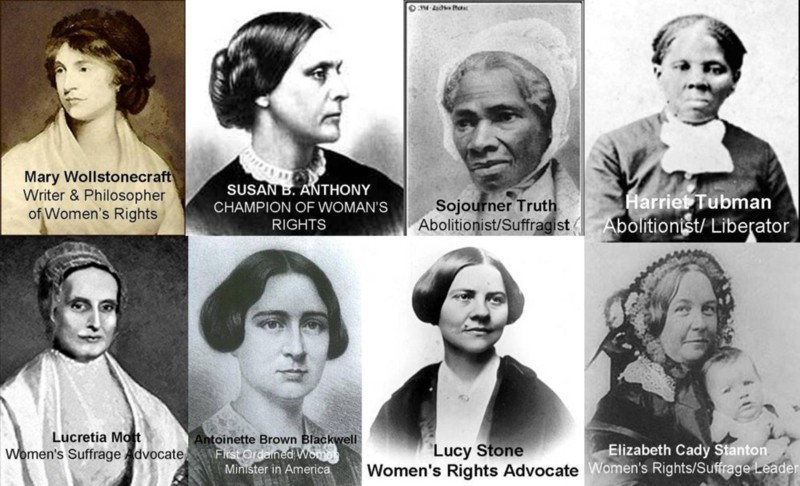
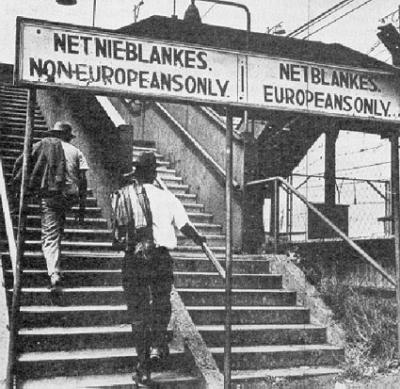
Being smart or being religious is not enough; particularly if you are a minority or a woman because cultures stultify individuality and restrict opportunity.  Individuality and opportunity are hindered by poor education and biases that are eternally engendered (institutionalized) by discrimination.  Blacks have shown they are more than criminals, preachers, sports stars, and entertainers.  And women have shown they are more than child bearers and housewives but America continues to struggle with equal opportunity for all.  Baldwin exemplifies America’s struggle in Go Tell It on the Mountain.

A CHILLING VIEW

Audio-book Review
By Chet Yarbrough

(Blog:awalkingdelight)
Website: chetyarbrough.blog

the death of the adversary

 The Death of the Adversary: A Novel

Written by: Hans Keilson, Ivo Jarosy

Narration by:  James Clamp

HANS KEILSON (1909-1970)

“The Death of the Adversary” is a chilling view of the rise of Nazism in Germany.  Hans Keilson never mentions the word Jew or Hitler in his novel about the 1930s but notions of history inform the listener of what Keilson is writing about.  Names are not named because Keilson writes the story while hiding during WWII.  He flees Germany to join the Dutch resistance when denied the opportunity to practice medicine as a Jew.

The main character of Keilson’s novel refuses to believe his father or acquaintances at work and school of the threat of the unnamed adversary in Germany.  This anti-hero pursues his life as though the threat of Nazism would pass without affecting his life.  However, as events unfold, the anti-hero hears the radio voice of “…the Adversary” and begins to understand the underlying murderous intent of a charismatic political actor who will turn German lives upside down.

words matter
The realized terror is that spoken words by one actor can lead to a genocidal mania on the part of a chosen people.

Keilson writes of a speech given by “…the Adversary” to give the reader/listener some insight to the power of words in the hands of a consummate actor.  It is a terrifying realization both to the anti-hero and the reader/listener of Keilson’s book.  The realized terror is that spoken words by one actor can lead to a genocidal mania on the part of a chosen people.

There is relevance in Keilson’s story for events today.  Pundits and politicians use words to victimize and terrify immigrants, and minorities in the same despicable language of yesterday.

Next, Keilson tells a story of a meeting at a friend’s house where several young men congregate to discuss a local incident participated in by one of the young men.  The anti-hero’s friend is a woman who is employed at his place of work.  One of the young men is her brother.  It appears the young men are relatively close friends that choose to allow the anti-hero into their conversation.  One of the youngest tells of his recruitment in an obscure organization.  He volunteers to go on a night mission under the organization’s leader.

The recruitment is for a team of hooligans to desecrate the graves of a cemetery which one presumes is a particular ethnic graveyard.  The purpose is to defile the memory of a particular graveyard and the common beliefs which it represents.  Some of the participants are ambivalent about the mission but go along with the leader’s direction.  Head stones are overturned and graves are shat on.

GRAVEYARD DESECRATION
The anti-hero of Kielson’s story volunteers to go on a night mission under the organization’s leader.  The recruitment is for a team of hooligans to desecrate the graves of a cemetery which one presumes is a particular ethnic graveyard.
BATTERED SUIT CASE
Keilson recounts the love and guilt of his anti-hero by explaining how his father prepares a suitcase for himself, his wife, and his son.

Keilson recounts the love and guilt of his anti-hero by explaining how his father prepares a suitcase for himself, his wife, and his son.  The suitcase for the parents is preparation for the knock on the door in the middle of the night.  The parents do not plan to leave their country in spite of the danger which the father knows.  The suitcase for the son is for him to escape the country.  The son seems resigned to let life happen.  He is an anti-hero that is prepared to let events control his life; even though the consequence may be the loss of his parents.

The final chapters offer the anti-hero the opportunity to kill “…the Adversary”.  He chooses not to and history shows his decision to be both right and wrong.  It is right in light of the ultimate death of “…the Adversary” because of actions of others to stop his reign of terror.  It seems wrong because of the death of many (particularly the anti-hero’s parents), and his failure to confront “…the Adversary” before it was too late.

One is compelled to wonder about oneself in listening to Keilson’s story.  Who will choose to confront the adversary?  Who will “go along to get along”?