GOVERNMENT

The inference of “Plato and the Tyrant” is that all forms of government are like the parable of the cave in “The Republic”, i.e., people only see shadows of life’s truth.

Books of Interest
 Website: chetyarbrough.blog

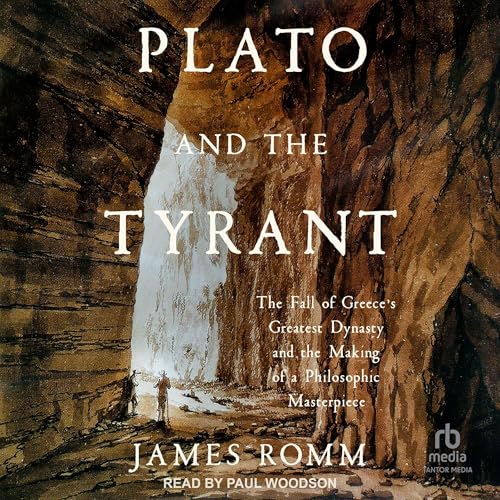
Plato and the Tyrant (The Fall of Greece’s Dynasty and the Making of a Philosophic Masterpiece)

Author: James Romm

Narrated By:  Paul Woodson

James Romm (Author, Professor of Classics at Bard College, specializes in ancient Greek and Roman culture and civilization.)

James Romm reviews Plato’s personal correspondence that offers an interesting perspective on “The Republic” as a critique of Dionysius the Elder’s tyrannic rule of the island nation of Syracuse, Sicily, and southern Italy. (Syracuse is a Mediterranean island 620 miles off the coast of Greece.) Some believe there are 13 private letters written by Plato with the most famous and debated letter being number 7. Romm’s book is about these private letters and what they reveal about Plato’s character.

Excerpt of the 7th letter to Dionisius the Elder:

Holding these right views, Dion persuaded Dionysius to summon me; and he himself also sent a request that I should by all means come with all speed, before that [327e] any others13 should encounter Dionysius and turn him aside to some way of life other than the best. And these were the terms—long though they are to repeat—in which his request was couched: ” What opportunities (he asked) are we to wait for that could be better than those that have now been presented by a stroke of divine good fortune?” And he dwelt in detail on the extent of the empire [328a] in Italy and Sicily and his own power therein, and the youth of Dionysius, mentioning also how great a desire he had for philosophy and education, and he spoke of his own nephews14 and connections, and how they would be not only easily converted themselves to the doctrines and the life I always taught, but also most useful in helping to influence Dionysius; so that now, if ever (he concluded), all our hopes will be fulfilled of seeing the same persons at once philosophers and rulers of mighty States. [328b]

By these and a vast number of other like arguments Dion kept exhorting me; but as regards my own opinion, I was afraid how matters would turn out so far as the young people were concerned—for the desires of such as they change quickly, and frequently in a contrary direction; although, as regards Dion’s own character, I knew that it was stable by nature and already sufficiently mature. Wherefore as I pondered the matter and was in doubt whether I should make the journey and take his advice, or what, I ultimately inclined to the view that if we were ever to attempt to realize our theories [328c] concerning laws and government, now was the time to undertake it; for should I succeed in convincing one single person sufficiently I should have brought to pass all manner of good. Holding this view and in this spirit of adventure it was that I set out from home,—not in the spirit which some have supposed, but dreading self-reproach most of all, lest haply I should seem to myself to be utterly and absolutely nothing more than a mere voice and never to undertake willingly any action, and now to be in danger of proving false, in the first15 instance, to my friendship [328d] and association with Dion, when he is actually involved in no little danger. Suppose, then, that some evil fate should befall him, or that he should be banished by Dionysius and his other foes and then come to us as an exile and question us in these words—“O Plato, I come to you as an exile not to beg for foot-soldiers, nor because I lack horse-soldiers to ward off mine enemies, but to beg for arguments and persuasion, whereby you above all, as I know, are able to convert young men to what is good and just and thereby to bring them always into a state of mutual friendliness [328e] and comradeship. And it is because you have left me destitute of these that I have now quitted Syracuse and come hither. My condition, however, casts a lesser reproach on you; but as for Philosophy, which you are always belauding, and saying that she is treated with ignominy by the rest of mankind, surely, so far as it depends on you, she too is now betrayed [329a] as well as I. Now if we had happened to be living at Megara,16 you would no doubt have come to assist me in the cause for which I summoned you, on pain of deeming yourself of all men the most base; and now, forsooth, do you imagine that when you plead in excuse the length of the journey and the great strain of the voyage and of the labor involved you can possibly be acquitted of the charge of cowardice? Far from it, indeed.”

Dionysius the Elder ruled for 35 years and is succeeded by his son, Dionysius the Younger. Dionysius is characterized as a combative, brutal, and authoritarian leader. Plato visited Syracuse many times with the desire to ameliorate the Elder’s style of leadership. Plato’s effort results in the Elder’s selling him into slavery, presumably because of political differences and the Elder’s tyrannical power.

Plato (428/423 BC to 348/347 BC, died near 80 years of age.)

Soon after being sold into slavery by Dionysius the Elder, Plato is rescued by Anniceris who bought Plato out of slavery. Anniceris (aka Annikeris), a wealthy Greek philosopher, apparently recognized Plato’s brilliance. Plato goes on to create his famous academy in Athens. Though the Elder successfully controlled Syracuse and much of Italy during his tyrannic rule, his son, Dionysius II, used similar but less effective tyrannical rule and was eventually defeated. Plato tried to convince Dionysius II of his errors in leadership but fails and is compelled to flee house arrest to return to Athens. (Romm suggests Plato loved Dionysius II in more than a platonic way but was unable to change his tyrannical rule.)

Plato’s ideal republic envisioned a just society led by philosopher-kings. These rulers would rule based on collective good rather than personal gain.

This ideal republic would be built on wisdom, justice, and a strict class structure where there would be rulers, soldiers, and workers. Of course, the weakness in this ideal is human nature. Whether ancient or modern culture, as Lord Acton notes in 1887–power corrupts, absolute power corrupts absolutely. People do not naturally fall into specific classes. Human beings are individually and differently self-interested which ensures conflict. That is why both communism, capitalism, and its socialist leanings work inefficiently in ways that unjustly create haves and have-nots.

At the heart of all known forms of government is power.

There are good and bad leaders in history. The good are those who shaped nations, inspired movements, and changed the course of civilization for the better. The bad are the tyrants, the incompetents, and the cruel. Both the good and bad can be found in the histories of every form of government rule. One can argue Alexander the Great, Napoleon Bonaparte, Abraham Lincoln, and Queen Elizabeth I led forms of government that changed the course of civilization for the better. By the same token, one can argue Dionysius the Elder and Hitler changed the course of civilization in the opposite direction. The common denominator for constructive and destructive leadership is power. The type of government makes little difference. Every form of government has human leaders which may lead in ways contrary to the best interest of those they rule.

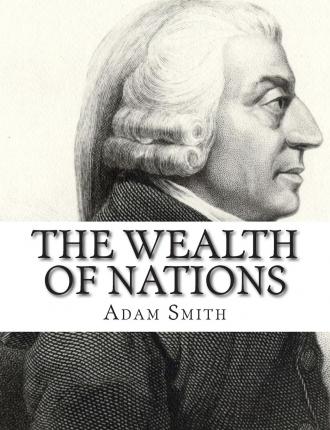
Plato’s Republic, Adam Smith’s “…Wealth of Nations”, and Adolph Hitlers’ “Mein Kamph” are ideas directed toward the exercise of power.

“Plato and the Tyrant” offers a perspective that makes one think about the history of Plato and government but does not offer anything new.

Romm’s evaluation of Plato’s “Republic” is a retelling of an ideal form of government that cannot exist because of the nature of human beings and the caves in which we live.

The private letters of Plato reveal little new about the consequences of rule by democracies, monarchies, oligarchies, dictatorships, theocracies, or anarchies. The inference of “Plato and the Tyrant” is that all forms of government are like the parable of the cave in “The Republic”, i.e., people only see shadows of life’s truth. Governance will only improve when people crawl out of the cave to see the truth of life.

THE DISMAL SCIENCE

It appears to this listener/reader, the rise of authoritarianism in the world today lays at the feet of Marx and, to a lesser extent, von Mises’ economic theories.

Books of Interest
 Website: chetyarbrough.blog

Human Action: A Treatise on Economics

By: Ludwig von Mises 

Narrated By: Jeff Riggenbach

Ludwig von Mises (Austrian-American economist, logician, sociologist, and philosopher. 1881-1973, died at age 92.)

Economics is defined as a social science that studies how individuals, businesses, governments, and societies allocate resources to satisfy the needs and desires of a community of people. Historically, one of the greatest explainers of this social science is Ludwig von Mises. Maturing at a time of the communist revolution, the advance of capitalism and both world wars, von-Mises offers one of the greatest books about economics since Adam Smith. The only economist of greater significance is Adam Smith (1723-1790) because of his origination of the principles of economics. Close behind are Karl Marx (1818-1883), and John Maynard Keynes (1883-1946).

Of course, all economists are beholding to Adam Smith with his original conception of the dismal science. Smith conceived of the “invisible hand” of economics that postulated self-interest as the primary contributor to the overall good of society. Von Mises seems to guardedly agree but suggests self-interest’ market pricing can artificially distort distribution of economic resources. Von Mises infers the “invisible hand” is inefficient at the least and may artificially distort prices in the hands of authoritarian governments and business monopolies. Karl Marx suggests the invisible hand would evolve into a production system that would be owned by the public to ensure equality of distribution in an evolutionary economy that passes from capitalism to socialism, and finally communism. Marx argues self-interest will evolve into a common interest for all. Marx’s idea of change in the nature of human beings beggars the imagination.

Smith supported limited government intervention to maintain justice, defense, and public works.

Both Smith and Marx believed in a “labor theory of value” which argues the value of a commodity is determined by the labor required to produce it. Where Smith and Marx depart is in government enforcement of a balance between labor and the cost of goods. Von Mises opposed most forms of governmental intervention in the economy. However, Keynes argues government intervention is necessary during economic downturns. After WWII, Keynes theory became an important part of the American government’s support of European reconstruction.

Von Mises believed in human individualism which carries the risk of authoritarian domination.

Von Mises believed in human individualism while Smith and Keynes support limited government intervention. Marx argues human nature could be shaped by a melding of government dictatorship with societal pressures to support communal goals.

At extremes, von Mises endorses individualism and Marx endorses dictatorship. The middle ground seems held by Adam Smith and John Maynard Keynes that endorse limited government intervention. It appears to this listener/reader, the rise of authoritarianism in the world today lays at the feet of Marx and, to a lesser extent, von Mises’ economic theories.

The length and value of von Mises’ book overwhelms a non-economist listener with his esoteric statistical and lengthy explanations of economic theory. However, comparison with a dilatant’s understanding of other renown economists is enlightening.

MARRIAGE AND MATURITY

The encompassing meaning of Homer’s “Odyssey” is the maturing of a son and marriage commitment of a husband and wife.

Books of Interest
 Website: chetyarbrough.blog

The Odyssey of Homer

By: The Great Courses

Lectures By: Elizabeth Vandiver

Elizabeth Vandiver (American classical scholar, Professor of Latin and Classics at Whitman College.)

Professor Vandiver offers an insightful review of Homer’s “Odyssey” in her “…Great Courses” lectures. Each chapter of the “Odyssey” reminds listeners of Homer’s literary skill and his masterful story of Ulyssess’s return to Pennelope and their son, Telemachus, after the Trojan war. Homer’s epic is divided into 24 books, each of which tell of the trials of Ulysses (aka Odysseus) when returning to his Greek Island kingdom of Ithaca after the Trojan War.

The Trojan War is believed to have taken place between the 12th and 13th centuries BCE.

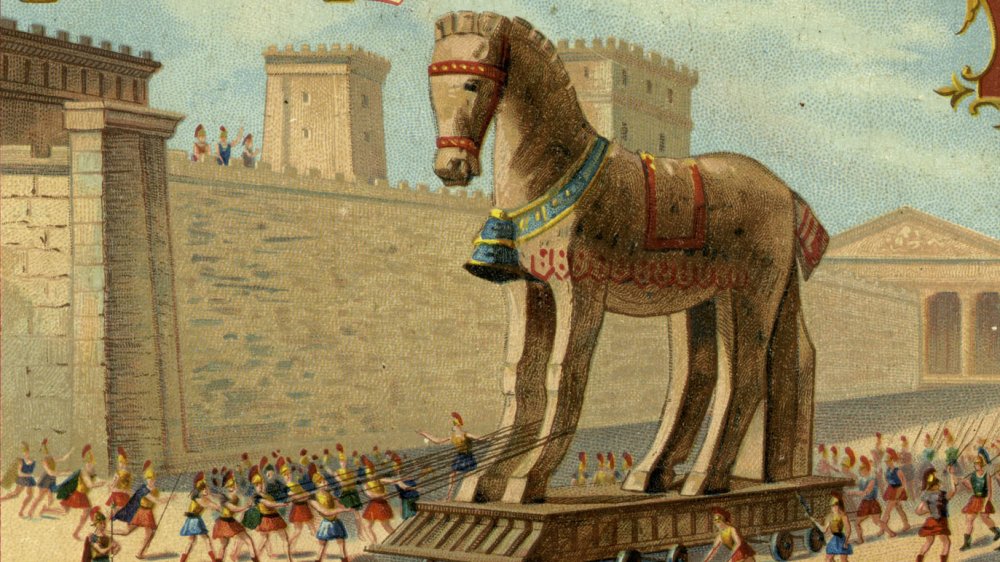
The Trojan War Finally Explained

It is said to have been caused by the Trojans when Paris (the son of the King and Queen of Troy) abducts and marries Helen of Troy, the wife of Menelaus (the Greek king of Sparta). When Paris is killed by Achilles, Helen is returned to Menelaus. Ulysses’ return to his Kingdom in Ithaca is the story of the “Odyssey”. The return takes ten years because of his companions eating of lotus flowers that make them forget their home and stay on an island where the flowers grow, his capture by Polyphemus (a one-eyed monster), an errant wind that blows him off course, giants who attack is fleet of ships and destroy all of them except one, a sorceress (Circe) who turns his crew into pigs, a trip to the Underworld to get guidance from Tiresias on how he may return to his kingdom, an island of Sirens who lure sailors to their death, an attack by Scylla and Charybdis (a six-headed monster), his men’s defiance of the sun god who told them not to eat his cattle, and finally, Calypso (a nymph who keeps Odysseus captive on her island for seven years of conjugal ambition).

Ulysses by Alfred Lord Tennyson | Ulysses poem, Ulysses, Poems

Each of Ulysses’ delays are entertainments to reader/listeners of the “Odyssey”. The encompassing meaning of the story is the maturing of a son and the marriage commitment of a husband and wife. Telemachus is twenty years old but has not grown into a man who takes responsibility for his life. Penelope is a wife who has remained true to a husband who has been lost to her during the period of the Trojan war and Ulysess’s unknown fate after his success in ending the war. Because Ulysses has not returned for ten long years after the end of the war, there are 108 suitors for Penelope’s hand in marriage. The suitors are from noble families of Ithaca and surrounding islands who have taken over Odysseus’ palace, consuming its wealth and resources while courting Penelope.

As the son of a great warrior, Telemachus fails to grow into a man that would take responsibility for ejecting disrespectful suitors in his family’s palace.

As the story progresses, and Ulysses returns to Ithaca, Telemachus becomes an ally to his returning father in a plan to kill the 108 suitors. Telemachus takes responsibility for hiding the palace weapons so the suitors would only have weapons they might have brought with them. Though Telemachus fails in his effort to hide the weapons, he takes responsibility for his error in not having successfully kept them from the suitors. Homer’s message is that Telemachus has become a man by showing valor as an ally to his father and a man who takes responsibility for his decisions.

Penelope’s commitment to marriage is illustrated by her many years of waiting for a husband who may be lost. She denies all her suitors because of the possibility of her husband’s return. In a similar vein, reunion with her husband is evidence of a man who loves his wife in the face of a temptation by a beautiful and alluring nymph who offers him immortality if he would stay with her.

Ulysses shows a commitment to marriage by returning to his wife despite their many years of separation, the offer of immortality, and his defense of a marriage between a fellow Greek King (Menelaus) and his wife, Helen of Troy. The Trojan war was an attack on marriage, for which Ulysses risked his and his army’s lives.

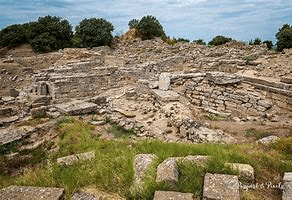
Vandiver ends her lecture by noting the German archaeologist and businessman, Heinrich Schliemann, discovered the ancient city of Troy in Turkey.

Vandiver notes Schliemann had a controversial reputation because of his destructive method of excavation and suspicious handling of artifacts. However, Schliemann significantly contributed to the study of archaeology and the understanding of ancient civilizations.

RUSSIAN SOCIETY

Alcohol consumption in Russia and a penchant for autocratic government are long-standing societal truths.

Books of Interest
 Website: chetyarbrough.blog

Dead Souls

By: Nikolai Gogol

Translated By: Richad Pevear and Larissa Volokhonsky

Nikolai Gogol (1809-1852, Ukranian novelist born in the Russian Empire, short story writer, and playwright.)

“Dead Souls” is not an enjoyable listening experience. Partly, because it is not a completed book. However, it is an insightful examination of a Russian culture in decline. It is an incomplete novel with its main character, Pavel Ivanovich Chichikov, who uses his looks, intelligence, and guile to appear prosperous in a society of rich and poor.

Agriculture is the economic foundation of society in mid-19th century Russia. The industrial revolution is at its beginning.

As a clerk in the government, Chichikov is familiar with government policy of charging a tax for deceased peasants that are owned but have died on Russian’ landowners’ farms. Social position is associated with land and peasant worker’ ownership, i.e., the more land and peasants one owned, the higher a Russian aristocrat is esteemed. Chichikov has no land but has earned and saved enough money through his work with the government to come up with a scheme to improve his status in society. His idea is to travel the country, buy dead souls, and purchase a farm to show society he is an aristocrat of substance. By buying peasant souls and land he creates an image of wealth and aristocracy. His plan is to buy land with the money he has saved over years of work as a clerk. He assumes his position in society will be secured by land ownership and owned peasant’ souls.

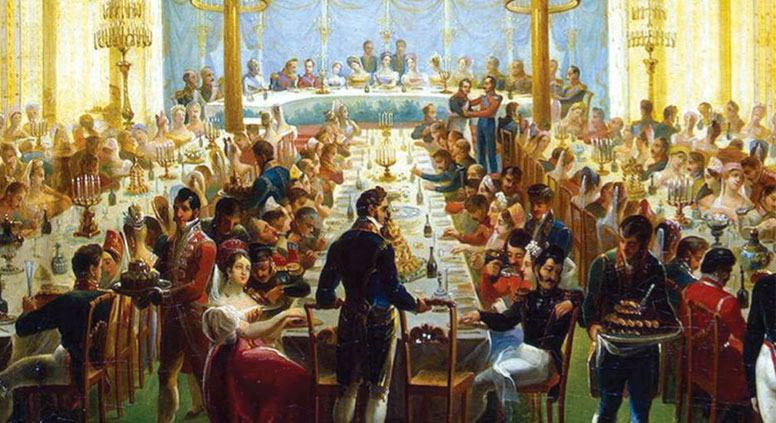
Chichikov’s false image is assumed to be true in a high society soiree.

Chichikov clownishly approaches the daughter of a regional governor because of her beauty. His attention is noticed by some of the wags at the social event. Similar to today’s social media, word spread about Chichikov’s bizarre purchase of dead souls. Rumors about Chichikov proliferate like Alex Jones spread of lies in the 2022 Uvalde school children murders.

Various stories about Chichikov’s history spread from people who were at the governor’s soiree.

Many reasons were given for Chichikov’s purchase of “Dead Souls”. One who was at the dance alleges the purchases were to show Chichikov’s intent to kidnap the daughter of the governor. Chichikov hears of these ludicrous accusations and flees the small town in which the ball had been held. In fleeing, Gogol’s story provides more examples of Chichikov’s nature and reasoning with the objective of showing the dysfunction of Russian society and its aristocratic governance.

Chichikov meets with a successful Russian farmer who capitalizes on what is known of agricultural science of that time and uses that knowledge as an aristocratic owner of many peasants who worked his land.

Chichikov persuades this prosperous farmer to lend him 10,000 rubles to finance the purchase of a failing nearby farm. However, Chichikov’s deceptions catch up with him. He is arrested and judged by a Prince of Russia who plans to make an example of him. The story obscurely ends with the prince inferring a way out of the mess Chichikov’s lies engendered. The story is never finished. Reader/listeners never learn the fate of Chichikov. The high praise of the book rests with its exposure of the societal faults of mid-ninetieth century Russia.

Every national society has strengths and weaknesses. America is as vulnerable to lies and misrepresentation as Gogol shows of Russia. The best one gets from “Dead Souls” is a vague understanding of Russian society. Alcohol consumption in Russia and a penchant for autocratic government are long-standing societal truths.

FICTIONS WONDER

Audio-book Review
 By Chet Yarbrough

Blog: awalkingdelight)
 Website: chetyarbrough.blog

Oliver Twist

By: Charles Dickens

Narrated by: Jonathan Pryce

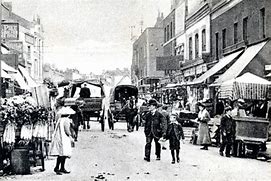
“Oliver Twist” recreates the London of Dickens’ time with detail created by a genius of storytelling, observation, and wordsmithing.

Charles Dickens is considered by some to be the greatest novelist of the Victorian era. Though Dickens stories offer magnificent glimpses of the Victorian era, he is only one of a number of literary giants of his time. There are the Bronte sisters, George Eliot, Thomas Hardy and Rudyard Kipling. Though not having recently read Kipling, Charlotte Bronte’s “Jane Eyre” and George Eliot’s “The Mill on the Floss” recall visions of a past that are as large in imagination, revelation, and erudition as Dickens’ “Oliver Twist”.

What is interesting about audio books is that actors who narrate some of these great books add a dimension to their stories that are missed when read. “Oliver Twist” “Jane Eyre” and Elison’s “The Invisible Man” are three examples of how actors add an intimate dimension to great authors’ books.

A dimension of antisemitism slaps listeners in the face when Pryce says “The Jew” as Dickens’ primary appellation for a criminal named Fagin. Narration of Dicken’s story conjures an image of every nation’s tendency to identify minorities as the “other”, i.e., whomever is not one of “us”.

Pryce’s verbalization of “The Jew” raises remembrance of Hitler’s antisemitism, WWII’s holocaust, and more recently, the Pittsburgh synagogue shooting trial, its convicted perpetrator, and the repellent idea of racial and ethnic discrimination.

Listening to Pryce’s narration of Dicken’s description of Victorian London, a listener reminds oneself that the past is always present. Discrimination is as old as time. Diminishment, abuse, and women’s discrimination remain today. “Oliver Twist” is an example of a great writer who paints a spectacular picture of his time. The squaller of London, the hateful treatment of women, poverty’s existence, ethnic discrimination, and other failures of society are artfully and unforgettably illustrated in “Oliver Twist”.
Discrimination is an irradicable fact of life reinforced by great and forgettable writers.

This complicated story of lucky happenstance, evil doing, and rewarded goodness is artfully written by Dickens and beautifully rendered by Jonathan Price. Price gives weight to the horrible truth of historic antisemitism and how it insidiously permeates the human condition. This is not a condemnation of Dickens but a geniuses’ representation of a sad truth of life and the faults of human society.

CENTS AND SENSIBILITY

Audio-book Review
By Chet Yarbrough

(Blog: awalkingdelight)
 Website: chetyarbrough.blog

Sense and Sensibility

By: Jane Austin

Narrated by: Rosamund Pike

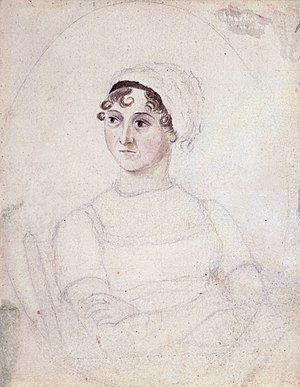
Jane Austin (English Author, 1775-1817, died at the age of 41.)

Though “Sense and Sensibility” was published in 1811, it is an eternal story. Though not intending to diminish the emotional relevance of Jane Austin’s characters, the story is about the rich and poor. Jane Austin’s book reminds modern readers of the universal truth of inequality. “Sense and Sensibility” touches customs of all cultures, governments, and societies.

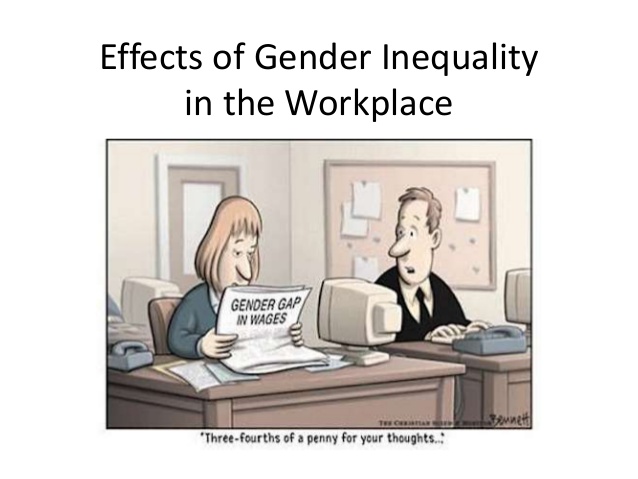
The concept of “unequal” began with inequality of the sexes.

Inequality may have originated because of physical strength differences between men and women but it evolved to encompass most, if not all, social, cultural, and economic activities.

The title of Jane Austin’s book could have been “Cents and Sensibility”. Women who have no “Cents…” are slaves to wealth. Austin illustrates how the patriarch of the Dashwood family impoverishes his second wife’s daughters by bequeathing his family’s wealth to the guardianship of his only son from his first wife.

Two of the Dashwood’ daughters, Marianne and Elinor are of marriageable age. Marianne is 17 and Elinor is in her early twenties. Marianne falls in love with John Willoughby and Elinor has strong feelings for Edward Ferrars (one of two sons that are children of the grown Dashwood estate’s heir and wife.)

John Willoughby, who is in his early twenties, appears to court Marianne in the first chapters of the book. Willoughby is a profligate debtor with a handsome face and smooth-talking demeanor.

Marianne is also being courted by a wealthy 35-year-old former officer and landowner whom she feels is too old. Marianne believes Willoughby is to become her future husband, but he abruptly leaves to marry a woman of wealth. As found later, Willoughby is a debtor and may have been in love with Marianne but realizes she cannot help him with his indebtedness. Marianne is crushed because she feels betrayed by Willoughby’s abrupt departure.

It is the “Cents…” more than “Sense…” that get in the way of Marianne’s relationship.

The real truth of Austin’s story is that to live one must have income more than love because love does not put food on the table. This is as true today as it was in Jane Austin’s time. It is not the absolute difference between wealth and poverty. It is for men and women who choose to marry to have enough wealth to allow love to flourish. Without “Cents…” love does not survive. Even Elinor and Edward realize they cannot marry without a living-wage income.

Some say, Jane Austin’s book has a happy ending because Marianne and Elinore marry men who have “Cents…” Elinore marries Edward, a minister who has a modest income and a bequest from his formally estranged mother but may never be rich. However, he is near Elinore’s age and with “Cents…” seems destined to live a happy life.

Marianne, spurned by young John Willougby, marries the 35-year-old Colonel Brandon, a man who is rich but nearly 20 years older.

Though this may diminish what current readers feel they know about Jane Austin’s story, it idealizes what it means for a 17-year-old to marry a 35-year-old. In today’s age, a 50-year marriage would mean at least 10 years of that marriage will be of one person taking care of an older person. This is not to say love does not grow but age difference at the time of marriage has a consequence.

Poverty is a harsh task master. Without enough income to feed one’s family, the worst parts of human nature ruins lives.

All citizens, of any nation or form of government, must achieve a standard of living that meets the needs of the poorest in society. Peace among nations is dependent on cents as well as “Sense and Sensibility”.

REVOLUTION

Audio-book Review
            By Chet Yarbrough

(Blog: awalkingdelight)
 Website: chetyarbrough.blog

A Tale of Two Cities

By: Charles Dickens

Narrated by: Simon Callow

(1812-1870, English Author and social critic.)

As most know, “A Tale of Two Cities” was first published as a series in the U.K. in the 19th century. Its formal publication date was 1859. In comparison to some novels, “A Tale of Two Cities” is difficult to follow because of the many characters who play important roles in Dicken’s story.

The setting is in two cities, London and Paris before, during, and after the French revolution of 1789.

The famous beginning of Dicken’s story of the French revolution is “It was the best of times, it was the worst of times….” Most of the tale is about “…the worst of times…” in France.

The picture of the London and Paris cities is dismal because of its citizens who were either very rich or very poor. The seat of power in Paris is teetering on the edge of a coming revolution. The focus of the story turns to its main theme with Alexandre Manette, a French physician, heard to be alive after being unjustly imprisoned for 18 years in Paris. The story of Manette’s imprisonment is revealed to Jarvis Lorry, a London bank manager. Lorry arranges a meeting with the jailed Manette in Paris with his daughter who lives in London.

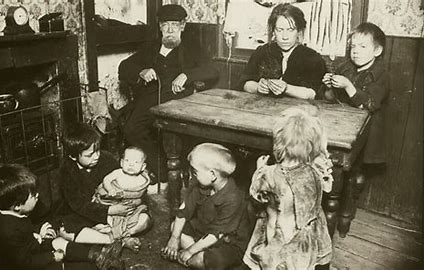
Manette’s daughter is Lucie. She goes to Paris with her governess, Miss Pross. Lucie meets with her father whom she thought was dead. Lucie brings her father back to London, but he suffers periodic mental lapses that return him to a shoemaking trade he learned while in prison. We get a glimpse of London on Manette’s return but it is of a trial that reminds one of the gaps between haves and have-nots in London. There is a trial for a spy named Charles Darnay, the nephew of a French aristocrat.

London in the 18th Century.

Lucie is a witness to Darnay’s alleged spying. She knows nothing about Darnay’s activity, but he had helped her in some minor way when he was accused of being a spy. Because of her testimony, Darnay’s character seems less spy-like and more gentlemanly. Darnay is acquitted because his defense attorney notes one of his colleagues, Sydney Carton, looks much like Darnay and could have as easily been the person accused. Darnay is released. The person, Sydney Carton, looks like Darnay but is loosely characterized as an undisciplined young bon vivant.

London court 18th century.

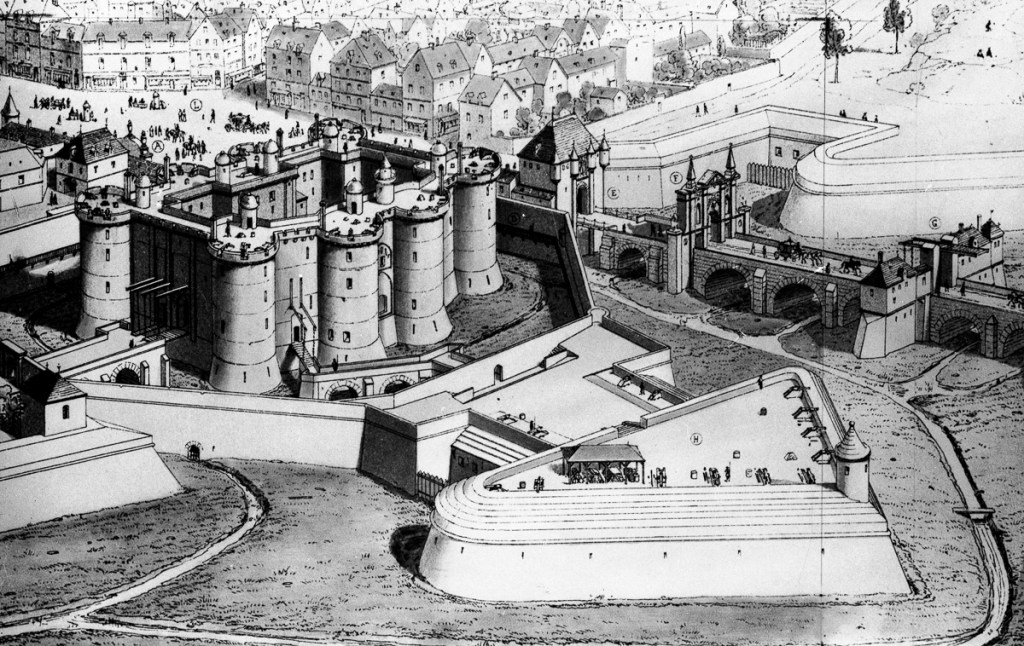
The main characters of the story are Dr. Manette, and Darnay but each character noted in these first chapters play important roles in the story. Dr. Manette had been unjustly imprisoned in the Bastille because of the death of a son and his mother caused by two French aristocrats. The remaining story largely takes place in Paris.

Dickens brings Darnay and Lucie together as husband and wife in London before the revolution in France. They have a son and daughter. The son dies, which reflects upon child mortality which is rather common in that time of the world’s history.

The reasons for the French Revolution, inferred by Dickens, are from harsh, unfair, and unequal treatment of the poor by the aristocracy. The examples given range from an aristocrat’s comment to the poor and hungry to “eat grass”, to the murder of a young boy and his mother by two “bon vivants” who hide their crime, to a murdered boy killed by an errant carriage accident caused by Darnay’s French Uncle.

Dickens creates the story of Darnay’s uncle flipping a coin to the father of a boy killed by his carriage’s collision. Darnay’s uncle is later murdered at his home by the father of the boy.

The table is set for the French Revolution of 1789. Dickens introduces the Defarge’s, Madame and Monsieur Defarge. They are republicans planning to kill as many of the French aristocracy as they can. Interestingly, the strongest and most violent of the revolutionaries is Madame Defarge.

As they storm the bastille, Monsieur Defarge demands a visit to Dr. Manette’s former cell. He knows of a secreted letter that explains why Manette is jailed and wishes to recover it. That letter incriminates Darnay’s Uncle and, by association, blames anyone that is part of that family.

Two years after the 1789 revolution in Paris, Darnay receives a letter from a servant of his murdered uncle asking for his help to be released from the Bastille. Darnay journeys to Paris and is imprisoned in the Bastille because of his association with French aristocracy. The remainder of the story is about the effort to get Darnay released. As true of other Dicken’s novels, there is a bitter-sweet happy ending.

Dickens is a masterful writer but to this reviewer, “A Tale of Two Cities” is not his best work. It is easy to lose the thread of the story because of its many characters. On the other hand, the characterization of Madam Defarge is one of the most terrifying written descriptions of revenge for social inequality. The terror of the French revolution and its causes are frighteningly vivified by Dickens’ creation of the Defarge’s.

WHITMAN’S MASTERWORK

Audio-book Review
            By Chet Yarbrough

(Blog: awalkingdelight)
 Website: chetyarbrough.blog

Leaves of Grass (1855 Edition)

By: Walt Whitman

Narrated by: Edoardo Ballerini

Walt Whitman (Poet, 1819-1892)

“Leaves of Grass” is perfectly rendered by Edoardo Ballerini. Walt Whitman’s masterpiece shines in Ballerini’s narration. Whitman lived in one of America’s most tumultuous times. He lived through the build-up of the civil war, worker displacement from American industrialization, and the assassination of Abraham Lincoln. Despite the horrors of his time, Whitman celebrated life.

Today is a good time to listen to Whitman’s masterwork. Living in the time of Covid19, Russia’s attack on Ukraine, January 6 violence in the nation’s capital, probable arrest of a former President, natural disasters, climate change, threat of Armageddon, American poverty, immigration, and homelessness—all can overwhelm one’s senses. Whitman understood the difficulties of his time but rises above them by celebrating what being American means.

Being American means having a written Constitution.
Being American means balance of power based on independent judicial, legislative, and executive branches of government.

Being American means being free within the context of rule-of-law. Being American means freedom to vote for representative government. Being American means freedom of speech and the press within the bounds of slander toward others.

Just as was true in the time of Walt Whitman, there is no guarantee of peace and tranquility, but his blank verse reflects on the many positive values of living life as an American. Whitman implies Americans should celebrate what they have, not what they want.

POLITICAL LEADERS

Audio-book Review
By Chet Yarbrough

(Blog:awalkingdelight)
Website: chetyarbrough.blog

A Christmas Carol

By: Charles Dickens

Narrated by Sir Derek Jacobi, Kenneth Cranham, Roger Allam, Brendan Coyle, Miriam Margolyes, Time Mcinnerny, Jamie Glover, Emily Bruni, Jenna Coleman, Joshua James, Hugh Skinner

Charles Dickens, Author.

Dickens appeal in the 21st century is magnified by economic change.

The industrial revolution, like the tech revolution, put people out of work. In Dickens’ time, Great Britain’s and the world’s industrial growth demanded change. 

Today’s tech revolution demands the same.  The change required is different in one sense and the same in another.

The industrial revolution occurred in a time of scarcity while the tech revolution takes place in a time of abundance.  Both revolutions require training for new kinds of jobs.

Smog plagued Great Britain as it grew in the18th century. 

(This is smog in today’s Beijing.)

Dickens is born in 1812 and dies in 1870.  He witnesses and writes of the squalor that existed in London during his adult years.  “A Christmas Carol” is one of many stories he wrote that reflects on the human cost of economic change.

London fog 1952

In 1952, the streets of London were enveloped in a fog caused by coal used for domestic heat and industrial production. 

An incident of London fog in the 20th century is comparable, on a local scale, to the world’s pollution crises today.  An estimated 4,000 people were said to have died, with 100,000 made ill because of unusual windless conditions in that year. 

Today, air pollution is compounded by global warming. 

“A Christmas Carol” is a reminder of the damage world leaders can do by ignoring the plight of those who are most directly impacted by economic change.  Too many American leaders are acting like Ebenezer Scrooge and Jacob Marley by ignoring the Bob Cratchit s and Tiny Tim s of the world. 

For those who may not remember, Scrooge and Marley were capitalists who believe all that matters in life is personal wealth.  Marley comes back as a ghost to offer Scrooge a picture of past, present, and future Christmases, based on how he lives the remainder of his life.

Todays’ political leaders are in Jacob Marley’s ghostly presence with a chance to change the future for the Crachits, Tiny Tims, and wage earners of the world.  The world needs leaders who are not blinded by the allure of money, power, and prestige at the expense of the jobless, homeless, and disenfranchised.

GOD’S RELEVANCE

Audio-book Review
By Chet Yarbrough

(Blog:awalkingdelight)
Website: chetyarbrough.blog

On Revolution

By: Hannah Arendt

Narrated by: Tavia Gilbert

Hannah Arendt (1906-1979, Author, Political Theorist, Phiosopher.)

Hannah Arendt’s “On Revolution” is a paean to religious belief.  God’s relevance is at the heart of her detailed history of revolution. 

Arendt is an ardent secularist.  Arendt’s belief or non-belief in God has no relevance except as it relates to her understanding of revolution.    

“On Revolution” compares the differences between ancient Greece and modern times.  Arendt particularly contrasts America’s 1776 revolution with France’s 1789 revolution.  She explains why one succeeded (within limits) and the other foundered.  Her explanation offers insight to the failures of past, present, and future revolutions. 

Humankind is endowed with the ability to reason.  Use of reason may be distorted by false facts and mental limitation but thought and action conform to what one thinks they know and believe.  Arendt notes social circumstance of the many, whether rich, poor, satiated, or hungry are proximate causes of revolution.  Further, she notes success or failure of revolution is eminently impacted by a nation’s cultural history. 

Arendt infers citizens become politically apathetic or active based on what they think they can control. 

“On Revolution” explains how social discontent can lead citizens to rebel against their government.  It might be because of a gap between rich and poor.  It may be because of social or economic inequality.  Revolution may come from factionalism where a particular group of citizens lack recognition.  Arendt does not label all the reasons for revolution but human desire for money, power, prestige are proximate causes.

“On Revolution” explains how social discontent leads citizens to rebel against their government. 

Arendt argues any success after a revolution depends on the institution of laws that supersede individual human desire.  She amplifies the reasons for all revolutions’ success or failure.  America’s short history as a colony with a remote King (burdened by parliament) contrasts with France’s history of a long line of King’s with divine right of rule.  America is not burdened by a King who has God’s authority to rule. 

Arendt suggests invoking God’s commandments (a superior being’s directions) allows human rule-of-law to be acceptable to America’s colonial citizens. 

 Arendt explains America makes arguments against rule by a King based on “taxation without representation” and the principal of citizen representation in government.  In contrast, Arendt notes France’s history of a King’s divine right makes leadership acceptance from a mere citizen unacceptable. 

The only philosophical backdrop for a French citizen’s authority is Rousseau’s philosophical belief in democracy, equality, liberty, and the common good of all citizens.  This is not enough to convince France to accept man-made’ rule-of-law. There is no divine right given by God to a King or any French citizen. Arendt argues rejection of divine guidance is at the heart of France’s failure.

Arendt notes American revolutionaries emphasize the importance of families and citizen groups in cooperating and joining to reject rule by King George.  Small groups of Americans congregate to create laws that supersede individual rights to accomplish their goal of independent sovereignty.  This level of group cohesion is not cultivated in France. Arendt explains America is better prepared for revolution than France.

Maximilien Robespierre (1758-1794, French lawyer and statesman.)

Even if Robespierre wishes to, Arendt explains he is unable to institute laws that protect French citizens.  Robespierre has no divine right.  There is no foundation in France’s history for rule-of-law instituted by mere citizens.  French history has little history of citizen cooperation and government opposition. 

A fundamental point made by Arendt is that many revolutions appear to succeed because they capitalize on events that occur in the uncontrolled circumstances of revolution. It is not because of a belief in a cause fomented by a great leader but by an opportunist who takes advantage of events.

Arendt suggests success of Vladimir Lenin and the Bolsheviks in 1917 is not from forethought or planning but from a leader who let events determine how force could be used to take control of a country in turmoil.

Among her many observations Arendt offers a blueprint for a revolution’s success.  Of course, success is not necessarily in the best interest of a country’s citizens.  If citizen control is the only measure of success, Russia, China, North Korea, Pakistan, and Iran have had successful revolutions.  Today’s example of revolution is Haiti. One wonders which route it will take in its revolution.

When impingement is great enough to increase economic disparity between rich and poor, the threat of revolution increases. 

Arendt illustrates how America is nowhere near a perfect nation.  Denying equal opportunity for all, disenfranchising citizens, and distrust of elected representatives are three concerns expressed in today’s media.  Arendt notes the rising apathy of American voters.  Arendt shows how God is as relevant today as when she wrote “On Revolution” in 1963.

Arendt explicitly warns America of its failure to maintain a role for citizens in government. She argues less time is committed to citizen involvement than existed at the time of the revolution. Arendt suggests direct citizen participation in American government is distorted by corporate and monied interests. Arendt argues growing lack of citizen participation works against American government stability, and longevity.

America’s history of Democracy has lasted for 3 hundred years. The Roman Empire lasted for over 14 hundred years. French monarchy lasted nearly the same number of years as the Roman Empire. The obvious question is how long will American Democracy last?