Graduate Oregon State University and Northern Illinois University,
Former City Manager, Corporate Vice President, General Contractor, Non-Profit Project Manager, occasional free lance writer and photographer for the Las Vegas Review Journal.
Sara Novic (American author, translator,and professor of creative writing at Stockton University.)
Sara Novic writes of war in Croatia that is tentatively settled by the dismantling of Yugoslavia in the early 1990s. Yugoslavia’s splits into 6 ethnic territories–Bosnia/Herzegovina, Croatia, Macedonia, Montenegro, Slovenia, and Serbia.
In a personal 22-day visit to five of the six countries, a Croatian guide tells our small group of travelers that he does not offer a trip to Serbia. (Our trip was in October 2o17. The guides’ name is not given for obvious reasons.) He explains his father was killed by Serbian soldiers in the Croatian war.
A little history gives perspective to our guide’s and Novic’s story. After WWII, Yugoslavia is set up as a federation of six republics to be ruled by one leader, Josip Broz Tito.
Josip Broz Tito (Yugoslavian ruler 1953-1980, died in May of 1980.)
Though Tito is considered a dictator, under his rule the six ethnic republics experience a period of strong economic growth and relative political stability.
In having dinner with a family in Bosnia/Herzegovina, a grandmother says she misses Tito’s government. She felt life was better with Tito as leader of the six territories.
Mass grave in Croatia in 1991.
Novic’s story is of a 10-year-old girl who loses her mother and father when stopped at a Serbian check point in the early 1990s. The Serbian army gathers a group of Croatians, lines them up in a circle around a pit, and shoots them one by one.
Serbian soldiers murder every adult and child, each of which fall into their grave. The father tells his 10-year-old daughter to hold his hand and fall into the pit when he is the next to be shot. She plays dead as the Serbs complete their circle of horror. She escapes the pit before bulldozers cover the dead and dying.
Croatian Defense Force fighting in the Croatian War of Independence.
The orphaned girl runs from the scene. She finds refuge among a group of resisters. She is recruited by fellow Croatians who have gathered to fight for independence of their country.
She becomes a soldier for a short time before finding her way back to her abandoned home. With the help of her godfather’s family, she is illegally aided by a UN representative who smuggles her to America. She is adopted by an American family, goes to college, and eventually returns to Croatia.
On return to Croatia, she renews acquaintances and finds the place where she had taken refuge after her parent’s murder. The mass grave is near where she had found refuge ten years earlier.
This is not our guide’s story, but his story reinforces Novic’s picture of Serbia’s and Croatia’s conflict. Our guide explains how the United Nations helped Croatia survive the 1991-1995 war. Interestingly, the guide denigrated America’s role in the war. In his opinion, America stood on the sidelines when Serbs were perpetrating mass killings.
Novic’s story is well written. It clearly reinforces our guide’s perception of what happened in Croatia. The concerning part of the story is its analogous relationship to America’s intervention in Vietnam, Iraq, and Afghanistan. What happened in the Serbia-Croatian conflict is being replayed in the Russia-Ukraine war today.
The troubling issue with all international conflicts is where the line is to be drawn between being “helpful Hannah’s” and exemplars of good and responsible behavior. Today, NATO’s Western Alliance is struggling with the line to be drawn in Ukraine.
Viet Thanh Nguyen (American author, 2016 winner of Pulitzer prize for fiction.)
“The Committed” carries forward the life of three Vietnamese blood brothers introduced in “The Sympathizer”, Viet Thanh Nguyen’s earlier novel. Nguyen’s story begins during America’s Vietnam war.
In the beginning of “The Committed”, the main character, Vo Danh, arrives in Paris with his blood brother Bon. Their first night’s stay is with a communist sympathizer who is Vo Dahn’s aunt. Bon is incensed by the aunt’s support of communism. Bon’s job as a Vietnamese counterspy in America was to murder communist sympathizers. Bon wishes to leave immediately, but Vo Danh calms him down and they stay the night. However, Vo Danh continues to visit his aunt and for a time lives with her.
The main character of “The Committed” believes all social beliefs one commits oneself to are corrupted by human nature. To Vo Danh, his aunt is just who she is committed to be, without being either good or bad.
Vo Danh and Bon leave the next morning to find jobs at a Vietnamese restaurant near the Eiffel tower. The restaurant is owned by a mobster. They are hired and choose to rent a room from the mobster. Bon mostly leaves Nguyen’s story until the last chapters of the book. He chooses to keep a low profile as a restaurant employee.
Vo Dahn takes an entirely different path. Vo Dahn becomes a customer procurer and seller for the mobster’s drug business.
Vo Danh’s experience in a Vietnam re-education camp taught him to believe in nothing. That teaching came from his third blood brother who is commandant of the camp during the Vietnam war.
This third blood brother is a communist sympathizer in name only. Before becoming camp commandant, this third blood brother is badly disfigured by an American napalm attack. He realizes Democracy’s liberation of Vietnam from communism is a meaningless chimera. In that realization, he re-educates Vo Danh to understand communism, authoritarianism, and democracy are fictions.
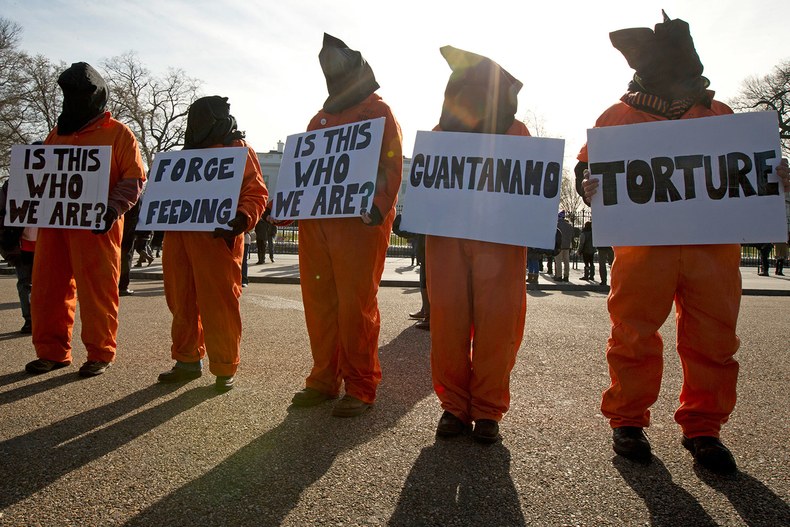
Re-education camps are a euphemism for detention and torture.
Committed beliefs about government mean nothing. One’s first thought is that the third brother is simply a nihilist. Vo Dahn understands something different. In sum, the commandant teaches Vo Dahn that commitment to any ideological belief is a trap. Even in accepting his blood brother’s re-education, Vo Dahn recalls the love of his mother. He believes the selfless love of his mother saves him from being a nihilist.
Vo Dahn does not consider himself a nihilist but agrees that believing in nothing liberates humanity.
In Paris, Vo Danh chooses to become a mobster who sells drugs for a percentage of profits. He lives life as he chooses. He expresses no personal scruple about sale or personal use of drugs or alcohol. He has no fear of the drug supplying restaurant owner, arrest as a legal consequence, or possible attack by competing mobsters. Vo Danh lives an amoral life informed by the love of his deceased mother. His life experience and studied philosophical beliefs lead him to believe in nothing as a way of living in an unprincipled world. His actions in the world are formed by the mother who loved him and a father (who is a priest) that abandoned him.
What is troubling about Nguyen’s story is that love and care is often missing or mutually misunderstood between a mother and her children. One might accept Nguyen’s story for those children who are truly loved and cared for by their mothers. However, if mothers are to be on a pedestal, what about the affect of mothers who do not truly love or care for their children. Are uncaring mothers responsible for children who become mass murderers, dictators, mobsters, and other societal miscreants?
Nguyen’s story has a strong point of view, but it diminishes the complexity of a child’s growth to adulthood. Interaction between mothers, fathers, and their offspring are interpreted though the minds of their children.
One is reminded of fictional and news worthy stories of children who are raised in perfect families who become serial killers.
A recurring truism in Nguyen’s story is that all humans are created equal. When one is asked where they are from, the only correct answer is “I am from my mother”. Nothing else matters. Color, national origin, religious belief, or sexual orientation do not determine the value of a human being. Nguyen is a great writer with a point of view worthy of many philosophers of this and past ages.
“Black Holes” is a brief compilation of 21st century “Scientific American” articles narrated in Audiobooks by Alex Boyles. At the least, these articles stimulate interest in finding out more about the history of black holes.
When were they discovered? Why is their discovery important? Why do they seem to contradict the experimentally proven theory of Quantum Mechanics? Why should we care?
Karl Schwarzschild (1873-1916, German physicist, astronomer, and mathematician.)
The idea of black holes dates to research done by scientists in the early 20th century. The first black hole is discovered by Karl Schwarzschild. Schwarzschild was the director of the Astrophysical Observatory in Potsdam, Germany.
In correspondence, Schwarzschild confirms Einstein’s mathematical theory of gravity as a form of matter that reinforces the famous equation E=mc2.
John Wheeler (1911-2008, American theoretical physicist.)
Much later in the century, fellow physicist John Wheeler explains “Space-time tells matter how to move; matter tells space-time how to curve”.
The elemental particles of gravity are not clearly understood because they are too small for current scientific observation. Black holes are evidence of gravity, but the evidence seems to conflict with experimentally proven theories of quantum mechanics.
The discovery of black holes is important because it may hold the secrets of gravity. Gravity makes planets and objects within and on planets attract and repel. Einstein explains how gravity distorts the fabric of the universe.
Einstein’s equation indicates that energy and mass are equivalent and therefor never lost.
Black holes absorb all things that fall within their gravitational field at their “event horizon”.
However, astronomical observation shows that black holes seem to disappear without any information, residual mass. or energy remaining. This defies the current theory of quantum mechanics and seemingly Einstein’s belief that mass and energy are equivalent and never lost.
Why should we care? Quantum mechanics is a theory that defies certainty. However, Einstein believed God did not play with dice. He believed a future discovery will give humankind an all-encompassing understanding of nature, just as Einstein’s “energy and mass equivalence” offers a limited theory of nature. Black hole existence and disappearance may hold the answer to an all-encompassing fundamental law of nature that explains everything about everything.
Maybe Einstein’s E=mc2 is confirmed (not denied) by the existence of black holes. Maybe, black holes do not violate the equivalence of energy and mass even though information appears to be lost when a black hole disappears.
Could all black holes in a universe act as though they are connected at a distance? Maybe energy and mass equivalence is not lost but spookily transmitted to other black holes. Einstein may yet be confirmed. Maybe there is a missed fundamental law of physics that offers a Newtonian order to the universe.
The Words That Made Us: America’s Constitutional Conversation, 1760-1840
By Akhil Reed Amar
Narrated by Fajer Al-Kaisi
Akhil Reed Amar (Author, Professor of Law and Political Science at Yale University.)
THOMAS JEFFERSON (1743-1825, 3RD PRESIDENT OF U.S., PAINTING OF IN 1786)JOHN ADAMS (1751-1826, 2ND PRESIDENT OF U.S.)JAMES MADISON (1751-1836, 5TH PRESIDENT OF U.S.)
“The Words That Made Us” spins history in ways that may offend some historians. Akhil Amar reveals interesting historical facts that arguably diminish the reputations of Thomas Jefferson, John Adams, and James Madison. On the other hand, Amar bolsters the legends of Benjamin Franklin, George Washington, and Alexander Hamilton. Along the way, Amar offers praise for lesser-known visionaries like John Jay, Edmund Randolph, John Marshall, and Joseph Story.
BENJAMIN FRANKLIN (1706-1790, PENNSYLVANIA PRES., U.S. MINISTER SWEDEN,FRANCE,ENGLAND)GEORGE WASHINGTON (1732-1799, 1ST PRESIDENT OF U.S.)ALEXANDER HAMILTON (1755-1804, AMERICAN STATESMAN, 1ST SECY. OF THE TREASURY)
Thomas Jefferson and James Madison are characterized as unrepentant slave holders who form a close friendship that reinforces the human stain of American slavery. Both are characterized as apologists for slavery who purport to write and support equality while politically endorsing and promoting American expansion of the slave trade.
Amar’s greatest praise is for Washington. Washington is noted to have been a steady influence on the drafting of the American Constitution. His experience in the revolutionary war exposed the inadequacy of the Articles of Confederation. Washington clearly understood the importance of a national government for a proper defense of the colonies. His reputation and actions taken during the revolution were well known to the framers of the Constitution. Without having to take a public stance, Washington exemplified what had to be done to correct the weaknesses of the Articles of Confederation.
Though Washington is a slave holder and acted as most colonists of his time, he emancipates his slaves upon his death. However, Amar notes Washington, in his time, pursued his fugitive slaves and sold them when they were captured.
Amar’s peon to Franklin is for his belief in science, experiment, and enlightenment. Franklin consistently promotes American independence from England in Parliament, in France, in local American meetings, and in every public forum he attends in his era.
Franklin had a point. The test of the Supreme Court on Roe V. Wade is about words used to provide abortion rights to women. Is the Supreme Court’s decision before–the truth or an error? Is abortion a political or human rights issue?
Though initially a slave buyer and holder, Franklin quits the slave trade and becomes part of the American conscience that abhorred slavery’s inhumanity. Amar’s research reveals Franklin’s last essay, one month before death, satirically attacking slavery and unequal treatment of non-white Americans. Amar implies Franklin’s advanced age is the only circumstance that prevented him from being more influential in the implementation of the American Constitution.
Washington is the Cincinnatus of American history. He eschews power in the interest of a Democratic nation-state.
Washington is characterized by Amar as a wise surrogate father for many, particularly the brilliant Alexander Hamilton who is too volatile to act as a prudent manager of public affairs. Washington brings out the best in those who offer ideas that promote and build the colonies into one Nation.
Duel between Hamilton and Burr from which Hamilton dies.
Amar channels and re-enforces Hannah Arendt’s analysis of revolution. Amar argues the American revolution’s success is based on careful preparation of American colonists. Long before Amar’s book about “…Words…”, Arendt explains in “On Revolution” that lack of citizen preparation is why France’s revolution fails and America’s succeeds. Amar’s research clearly reinforces Arendt’s observations.

Arendt argues there is no preparation for French citizens to become a Republic that rejects monarchy. As a result, France experiences anarchy, heedless bloodshed, and democratic failure after their 1789 revolution.
In contrast to the French revolution, citizens of the American colonies are psychologically and politically prepared for a nation-state Constitution before its writing, adoption, and implementation.
Colonial Americans listen to and debate many reasons for creating the Constitution that places man-made laws above the nature of man. Proliferation of pamphleteers, newspapers, and town hall meetings prepare both literate and illiterate colonists for revolution. Blood is shed in America before, during, and after the 1776 revolution but Amar explains how and why 13 independent colonies agree to become a nation-state in 1789. In Amar’s opinion, it is the result of “ The Words That Made Us”, and the men who spoke, wrote, and lived them.
Amar suggests accomplishments of Jefferson, Adams, and Madison are diminished for different reasons. Jefferson and Madison are slave holding Virginians who distort the truth of their words about equal rights for all Americans. Amar suggests Jefferson lies about his personal life and exaggerates his role as the sole source of the written Declaration of Independence. Jefferson had little to do with the final adoption of words in the American Constitution while becoming a strong advocate for States’ rights at the expense of national unity and emancipation.
Madison is acknowledged as a diligent advocate and negotiator in the creation of the American Constitution.
However, Amar notes Madison’s change of heart about states rights as he ascends to political office as the 4th President of the United States. Amar suggests Madison’s change of heart is related to his fellow Virginian’s (Jefferson’s) concern about abandonment of equal representation in Congress based on the 3/5s’ clause that allows slaves to be counted for congressional apportionment.
Amar vilifies John Adams for long absences from America in his role as Ambassador to France, the Netherlands, and England. Amar argues Adams’ discussions about the course of events in America relies on the classics of the Greek polis more than the opinion of colonists of the current day.
Amar suggests Adams’ loss of touch with colonists’ opinion distorts his judgment. Amar notes Adams’ proclivity for self-aggrandizement in his role as a revolutionary. As the 2nd President of the United States, Adams’ ego leads him to the Alien and Sedition Act that jails and fines Americans for criticizing his Presidency. Amar notes that Adams fails to get a second term, in part because of his over weaning ego but also because of secret political machinations of his professed friend, Thomas Jefferson.
To Amar, appointment of John Marshall as Chief Justice of the Supreme Court redeems much of Adams’ reputation. Amar explains even Adams expresses a belief that the best thing he did as President was to appoint Marshall.
Marshall establishes the Supreme Court as a powerful third branch of the federal government. By the same token, Amar infers appointment of Story to the Supreme Court by Madison somewhat redeems Madison’s reputation as 4th President of the United States.
In contrast to Adams, Madison is elected for a second term. However, Amar suggests Madison is too beholding to Jefferson to be an independent thinker and actor. Amar believes Madison’s selection of Story for the Supreme Court gave balance to the Court. Story is not anti-Jefferson but believes states rights do not abrogate Constitutional rights or condone singular State secession.
Though Story is not Madison’s first choice and not a favorite of Jefferson, he is selected because of his youth and perspicacity. Amar suggests Madison’s friendship with Jefferson nearly makes the federal government an instrument of Jeffersonian politics. Justice Story tempers the state’s rights movement attributed to Jefferson’s influence.
Facts of history may be immutable but new facts seem to change history with every new historian’s research. One is left with a feeling of unease about truth. “The Words That Made Us” are also words that unmake us.
Ruth Ware (aka Ruth Warburton, Author, British psychological crime thriller writer.)
“One by One” is a maudlin psychological thriller that makes a mockery of responsibility. John Green’s “The Fault in Our Stars” creates characters that truly illustrate things beyond human control.
In contrast Ruth Ware’s characters are out of control of things within their control. Both novels have two main characters. Ware’s main characters are Erin and Liz.
Erin is a chalet hostess. Liz is a guest. A media tech company organizes a corporate meeting for stockholders to decide on a private buy-out offer. Most shares are owned by two principles. A small percentage is owned by Liz. The 2 biggest stock owners disagree about the sale. The founder wants to stay private to sell shares in a public offering sometime in the future. The partner who wants to sell now needs the 2% shareholder to agree to the current offer for the sale to close. The proposed buyout will make Liz a millionaire even though she holds only 2% of the shares. The sell-now partner has a verbal agreement from Liz to agree to the sale. The selling partner is murdered or missing before a final vote is taken by the shareholders.
If a crime has been committed, Ware outlines motives for who the killer might be from a plethora of characters. That is part of the problem with her story. There are a too many vaguely defined characters.
It is not only the number of characters, but also the annoying mechanism of first-person narration of the two main characters. As an audiobook, it is often difficult to know who is talking. There is only one narrator who shows no voice inflection when the character changes. Is Erin or Liz talking?
Further, characters are not well defined in Ware’s mystery. Ware is obviously an experienced writer. She foreshadows the murder of the “selling partner” who wares a red coat when the group decides to go skiing before the final shareholder’ vote.
The obvious choice of murderer is the founder of the company who does not want to sell. However, a reader/listener of mysteries knows it is unlikely that the most obvious perpetrator is the culprit.
The search for clues revolves around motives of Ware’s characters. The disclosed motives are unremarkable. The principal motive is found to be people who fail to take responsibility for those things within their control. The annoying refrain is “it’s not my fault”.
Some may find Ware’s novel a worthy mystery. To this listener, the characters are paper dolls in lives controlled entirely by circumstance.
“In the Distance” can be viewed from different perspectives. It is a story of emigration, isolation, survival, self-identity, human nature, extortion, and distortion. The author, Hernan Diaz, is nominated for a Pulitzer Prize, but fails to win. Diaz’s writing is unquestionably evocative and compelling but there is an aimlessness in the story that diminishes its appeal.
Emigrating to America in the mid-nineteenth century, Diaz’s main character is accidently separated from his brother and arrives in California rather than New York, presumably between 1849 and 1855 (the gold rush).
The story begins when a tall and muscular Swedish immigrant swims out of frigid water to astonished travelers on an ice bound ship, sailing in Alaskan waters. The Swede’s name is Hakan Soderstrom who is known by some as a legend named Hawk. Hawk tells his life story to the astounded travelers.
Hawk is the younger of the two brothers who emigrated to America. His older brother is alleged to have gotten separated in their departure, He lands in New York while Hawk lands in California. Hawk depends on his older brother for guidance and decides to journey cross country to be reunited.
One can imagine how isolated an immigrant would be without anyone who can understand or help a young emigrant boy who only speaks a foreign language. Survival is dependent on finding one’s way in a wilderness of language and culture.
Diaz pictures gold rush days in California as a land of violence, greed, and survival.
Hawk adapts to his environment and creates a self-identity based on what he must do to survive. Hawk becomes acquainted with a family led by a miner who is looking for gold. The husband finds gold but is extorted by a gang of town thugs. The thugs abduct Hawk who becomes attracted by the woman who leads the gang. Hawk is growing into a man of extraordinary size and strength. He is corralled by the gang leader who uses Hawk as a sex slave. She sees Hawk’s future potential as an enforcer for the gang. Hawk has other ideas. He escapes captivity and heads east with the hope of finding his older brother.
As the story unwinds, Hawk grows to be a giant of a man. He never stops growing physically (a condition known as giantism today) and matures with an understanding of the natural world.
Hawk’s understanding of nature comes from an acquaintance, a naturalist who is searching for evidence of the origin of human life. This naturalist befriends Hawk and teaches him many things about human life.
The naturalist is a nature-born physician (ahead of his time) who understands the importance of sterilizing medical instruments used to treat wounds and how poultices may be used to heal infections. Hawk gains understanding of many medical treatments, but more importantly, recognizes the sanctity of human life from the practices of the naturalist. The naturalist dies and once again Hawk is isolated and on his own.
Heading east, Hawk learns how to survive in nature. He makes a great lion-head cloak from the skins of animals that he kills for food.
Hawk survives severe weather conditions by creating shelters from whatever nature has to offer.
His shelter reminds this listerner of an underground shelter photographed in Turkey in 2o19– carved in earth by ancient Christians to protect themselves.
Hawk eventually returns to society by joining a group of settlers traveling cross country. The settlers are beholding to a flimflam leader that promises land when they arrive at their destination. This leader recruits Hawk as an enforcer without Hawk fully understanding why. Hawks giant size is what the leader needs to keep the settler’s in line.
The settlers and their leader are attacked by white renegades who disguise themselves as Indians. They attack a young girl to which Hawk is drawn. Hawk reacts by murdering the white renegades. The renegades are rebels from an unspecified religion, implied to be excommunicated Mormons. The re-telling of the massacre is distorted by public reports of the incident. Hawk becomes a legend who kills brothers of the church and innocent women and children. A price is put on Hawk’s head for a crime he did not commit.
Hawk’s actions become a widely known story that becomes distorted with its re-telling.
Hawk is eventually captured by brethren of the church. He is tortured and mutilated but he survives with the help of a male brethren who believes Hawk is innocent. They become close friends, maybe lovers, but other brethren of the church eventually find them, and Hawk’s friend is killed. The legend of Hawk continues but after the loss of his friend, he returns to years of isolation. He grows older and bigger but, through self-isolation, avoids capture.
Hawk is finally found by several rebellious uniformed soldiers who try to recruit him as their leader. They reason Hawk could strike fear into anyone they choose to rob because of his legend and immense size. Hawk sneaks away from the miscreants by preparing a dinner laced with a narcotic.
The story’s ending is all that is left. It ends where it begins. “In the Distance” offers some interest to a listener. However, to this listener, Diaz’s tale is more interesting because of its prose than its content.
Salman Rushdie is an irreverent atheist who makes a strong case for science, cultural acceptance, and freedom of choice.
This memoir is somewhat diminished by Raj Ghatak’s narration of the last essays of the book. Ghatak’s presentation recounts the meaning of Rushdie’s essays, but they seem less personal without Rushdie’s narration. “Languages of Truth” is a compilation of highly personal opinions. First chapters of “Languages of Truth” are more perfectly presented by Rushdie’s unique and mellifluous voice.
GEORGE WALKER BUSH (43RD PRES. OF THE UNITED STATES)
DONALD TRUMP (45TH PRES. OF THE UNITED STATES)
Rushdie expresses strong negative opinions of America’s two most recent Republican Presidents. He ends his last essay with the hope for Donald Trump’s defeat in the coming 2021 re-election.
Narendra Modi (Prime Minister of India since 2014.)
Boris Johnson, Prime Minister of Great Britain
Rushdie argues Modi is bad for India. Contrary to the opinion of many citizens of India, Rushdie abjures Modi’s leadership. Rushdie believes Modi promotes unfair treatment of minorities, demands public fealty to Hindu nationalism, and limits freedom of choice. Rushdie is no less repelled by religious fundamentalism in the United States and its divisive influence on equal rights, freedom of speech, and freedom of choice.
In continuation of his political opinions, Rushdie suggests Britain’s Prime Minister fails the UK as badly as Trump fails America in the fight against Covid19.
There is a good deal of name dropping in Rushdie’s essays. He writes of his love for Christopher Hitchens, Harold Pinter, and Carrie Fisher. Rushdie admires Hitchens’ irreverent sense of humor and consistent atheism. Both Hitchens and Pinter support Rushdie in the writing and publication of “The Satanic Verses”.
Christopher Hitchens (1949-2011, English-American socio-political critic.)
Harold Pinter (1930-2008, British playwright.)
Carrie Fisher (1956-2016, best known as American Actress who played Princess Leia in Star Wars.)
Rushdie recounts his first meeting with Carrie Fisher with whom he becomes a close friend. He notes how friends are particularly protective of Fisher because of her personal trials. Rushdie notes his friendship with Fisher is intimate, caring, and asexual.
Parenthetically, Rushdie notes–contrary to the notion of men not being able to be friends with women, his friendship with Fisher denies the sexual-tension myth reinforced by movies.
Rushdie notes he is also an admirer and friends of well-known contemporary writers like Phillip Roth. There are other lesser-known artists of other media who become Rushdie’s friends. He speaks of Bhupen Khakhar, Grancesco Clemente, Taryn Simon, and Kara Walker. In each of these friend recollections, Rushdie emphasizes what he perceives are “Languages of Truth” expressed in movies, painting, photographs, and other artistic media.
Bhupen Khakhar (1934-2003, a self-trained artist from India.)
Francesco Clemente (Italian Painter living in Italy, India, and New York.)
Taryn Simon (American multidisciplinary artist in photography, text, sculpture, and performance.)
To this reviewer, the more interesting reveal in Rushdie’s essays are his opinions about books and plays that a listener has read. He offers reviews of Kurt Vonnegut’s “Slaughterhouse-Five”, Cervantes’ “Don Quixote” and Shakespeare’s oeuvre. He reaches back to ancient history with Heraclitus and his sparsely remaining written notes. Rushdie identifies the difference between American and India folk tales where one has a moral while the other simply recounts events without judgement.
Ayatollah Khomieni (1902-1989, the first Supreme Leader of Iran.)
Rushdie’s intellect and wit led to the infamous Islamic fatwa from Khomeini that authorized his killing for blaspheming Allah.
Rushdie’s appeal is to liberals of the world. Many conservatives will cringe at Rushdie’s rejection of religion and acceptance of social and sexual difference. However, Rushdie shows himself to be an unrepentant intellectual with a warm heart and wicked wit.
Anthony Aguirre (Author, theoretical cosmologist, Presidential Chair for the Physics of Infomration at U of C. in Santa Cruz)
Anthony Aquirre offers a modicum of insight (enlightenment) to the concept of quantum reality. The use of the word modicum is not to suggest Aquirre’a effort is insignificant but understanding quantum reality remains fragmentary and obscure.
The title of the book is a clue to Aquirre’s fragmentary insight. To begin with, one must know the definition of koan. A koan is “a paradoxical anecdote or riddle, used in Zen Buddhism to demonstrate the inadequacy of logical reasoning with the intent of provoking enlightenment”.
Aquirre tells a story of a wanderer whose peregrination leads to a meeting with a Jinn who explains life is pre-ordained and cannot be changed because of the laws of quantum reality.
The Jinn tells the wanderer he can see the wanderer’s future because fundamental quantum particles of his being are known to the Jinn. The Jinn can see how each particle interacts with the wanderer’s thoughts and action to determine what will happen in the wanderer’s future. Though there are billions of interactions the Jinn can calculate probabilities of every action the wanderer will take in the future.
Quantum physics is a science of probability that examines the fabric of space-time. Experiment confirms that infinitesimal quantum particles can be in two places at the same time.
However, the particles cannot be both measured and located without effecting their path. If the particles cannot be both measured and located, how can a future be precisely predicted? Putting aside complexity and the problem of measurement and location to predict the future, Aquirre argues quantum physics has opened a new door to the nature of reality.
Schrodinger’s cat in the box is either dead or alive but you cannot know without opening the box.
Aquirre notes humans may see the world as fictive because reality is trapped in one’s mind which cannot see the fundamental particles of nature.
The example would be “green” as a figment of an interaction of one’s mind with what the eye sees; not the essence of what is identified as color because there is no fundamental particle that is the color “green”.
Aquirre explains the arrow of time can only move forward. Time travel to the past is science fiction. Traveling to the past cannot happen based on quantum theory because the past is fixed.
Aquirre is a cosmologist. He discusses the ideas of a created and expanding universe. He refers to the science of Gallio, Newton, Schrodinger, and Einstein. There is a past and a present, but the past can never be relived, and the present is past as soon as it becomes present.
There is only a present with a probabilistic future. The future can theoretically be predicted based on fundamental particles of a quantum universe, but it requires the capacity of a mythical Jinn who can compute an infinite number of variables.
Aquirre leaves listeners in Plato’s cave that shows only shadows of reality.
One comes away from “Cosmological Koans” with the belief that reality remains unknown. Complete understanding of life’s truth (if there is one) rests in the future of science and mathematics, a supercomputer like a Jinn, or God.
Hannah Arendt (1906-1979, Author, Political Theorist, Phiosopher.)
Hannah Arendt’s “On Revolution” is a paean to religious belief. God’s relevance is at the heart of her detailed history of revolution.
Arendt is an ardent secularist. Arendt’s belief or non-belief in God has no relevance except as it relates to her understanding of revolution.
“On Revolution” compares the differences between ancient Greece and modern times. Arendt particularly contrasts America’s 1776 revolution with France’s 1789 revolution. She explains why one succeeded (within limits) and the other foundered. Her explanation offers insight to the failures of past, present, and future revolutions.
Humankind is endowed with the ability to reason. Use of reason may be distorted by false facts and mental limitation but thought and action conform to what one thinks they know and believe. Arendt notes social circumstance of the many, whether rich, poor, satiated, or hungry are proximate causes of revolution. Further, she notes success or failure of revolution is eminently impacted by a nation’s cultural history.
Arendt infers citizens become politically apathetic or active based on what they think they can control.
“On Revolution” explains how social discontent can lead citizens to rebel against their government. It might be because of a gap between rich and poor. It may be because of social or economic inequality. Revolution may come from factionalism where a particular group of citizens lack recognition. Arendt does not label all the reasons for revolution but human desire for money, power, prestige are proximate causes.
“On Revolution” explains how social discontent leads citizens to rebel against their government.
Arendt argues any success after a revolution depends on the institution of laws that supersede individual human desire. She amplifies the reasons for all revolutions’ success or failure. America’s short history as a colony with a remote King (burdened by parliament) contrasts with France’s history of a long line of King’s with divine right of rule. America is not burdened by a King who has God’s authority to rule.
Arendt suggests invoking God’s commandments (a superior being’s directions) allows human rule-of-law to be acceptable to America’s colonial citizens.
Arendt explains America makes arguments against rule by a King based on “taxation without representation” and the principal of citizen representation in government. In contrast, Arendt notes France’s history of a King’s divine right makes leadership acceptance from a mere citizen unacceptable.
The only philosophical backdrop for a French citizen’s authority is Rousseau’s philosophical belief in democracy, equality, liberty, and the common good of all citizens. This is not enough to convince France to accept man-made’ rule-of-law. There is no divine right given by God to a King or any French citizen. Arendt argues rejection of divine guidance is at the heart of France’s failure.
Arendt notes American revolutionaries emphasize the importance of families and citizen groups in cooperating and joining to reject rule by King George. Small groups of Americans congregate to create laws that supersede individual rights to accomplish their goal of independent sovereignty. This level of group cohesion is not cultivated in France. Arendt explains America is better prepared for revolution than France.
Maximilien Robespierre (1758-1794, French lawyer and statesman.)
Even if Robespierre wishes to, Arendt explains he is unable to institute laws that protect French citizens. Robespierre has no divine right. There is no foundation in France’s history for rule-of-law instituted by mere citizens. French history has little history of citizen cooperation and government opposition.
A fundamental point made by Arendt is that many revolutions appear to succeed because they capitalize on events that occur in the uncontrolled circumstances of revolution. It is not because of a belief in a cause fomented by a great leader but by an opportunist who takes advantage of events.
Arendt suggests success of Vladimir Lenin and the Bolsheviks in 1917 is not from forethought or planning but from a leader who let events determine how force could be used to take control of a country in turmoil.
Among her many observations Arendt offers a blueprint for a revolution’s success. Of course, success is not necessarily in the best interest of a country’s citizens. If citizen control is the only measure of success, Russia, China, North Korea, Pakistan, and Iran have had successful revolutions. Today’s example of revolution is Haiti. One wonders which route it will take in its revolution.
When impingement is great enough to increase economic disparity between rich and poor, the threat of revolution increases.
Arendt illustrates how America is nowhere near a perfect nation. Denying equal opportunity for all, disenfranchising citizens, and distrust of elected representatives are three concerns expressed in today’s media. Arendt notes the rising apathy of American voters. Arendt shows how God is as relevant today as when she wrote “On Revolution” in 1963.
Arendt explicitly warns America of its failure to maintain a role for citizens in government. She argues less time is committed to citizen involvement than existed at the time of the revolution. Arendt suggests direct citizen participation in American government is distorted by corporate and monied interests. Arendt argues growing lack of citizen participation works against American government stability, and longevity.
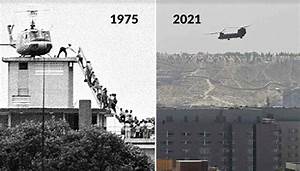
America’s history of Democracy has lasted for 3 hundred years. The Roman Empire lasted for over 14 hundred years. French monarchy lasted nearly the same number of years as the Roman Empire. The obvious question is how long will American Democracy last?
Ivan Turgenev (1818 to 1883–Russian novelist,poet, and playwright.)
Understanding the culture of other countries is aided by reading histories and literary classics. Like Tolstoy and Dostoevsky, Ivan Turgenev paints a picture of Russian culture in the mid-1800s.
Russia in 1850
In “Fathers and Sons” it is the age of Alexander II, the Russian Tsar who began his reign in 1855. He presided over emancipation of serfs in 1861.
Tsar Alexander II (1818-1881)
The Tsar’s intention is to liberate serfs from aristocratic servitude. In respect for the Tsar, some Russian farmers offer their farmland to serfs in return for rent or a percentage of profits from the sale of produce
There is great turmoil during this time in Russia.
Tsar Alexander III (1845-1894)
It is eventually quelled by Alexander III (1881-1894) who represses and reverses Alexander II’s political and social liberalization. Turgenev dies soon after Alexander III’s ascension. In “Fathers and Sons” one can see the seeds for Alexander III’s reaction to Alexander II’s liberalization.
The principal character in “Fathers and Sons” is Yevgeny Vassillievitch Bazarov. He is a young doctor who sees the world through science.
Bazarov does not believe in God and sees morality as a fiction induced by society. He is a nihilist. He purports to believe life is meaningless.
In this Russian era, serfdom created an uneducated underclass that feeds Bazarov’s beliefs. Serfs had no place in society. They were indentured to an aristocracy that used them as slaves to cultivate land holdings.
Alexander II creates change which would allow serfs to own land, work for themselves, and break their cycle of poverty. However, serfs as well as the aristocracy are unprepared. Farmers who try to free their serfs find their farmland turns fallow. The reasons for loss of productivity are complex but such a sudden change in opportunity is either not properly capitalized or resistance by aristocrats who scotch Alexander II’s liberation.
Bazarov sees serf liberation as evidence of the meaninglessness of life. Bazarov and a fellow traveler, both sons of farmers, return to their family farms after finishing their education. The fellow traveler is Arkady who idolizes Bazarov. Arkady’s father’s farm is shown to be deteriorating when the two travelers visit. Bazarov observes the indolence of former serfs who work the land. At the same time Bazarov notes the entrenched aristocratic prejudices of Arkady’s uncle who has come to live at the farm. This uncle is an immaculately dressed and groomed middle aged man who is well known in aristocratic circles.
Bazarov’s suggests Alexander II’s reform only reinforces the meaninglessness of life. To Bazarov, human nature is immutable, God does not exist, and art is an affectation. He places this argument at the feet of Basarov’s uncle. Arkady agrees with Basarov and recognizes him as a mentor and superior intellect. Both the uncle and Arkady’s father are offended by Basarov’s comments. The uncle is appalled by Basarov’s nihilism.
Turgenev introduces a doppelganger of Basarov in a wealthy young widow named Anna Odinsova. Odinsova is attracted to Bazarov’s views based on her life experience. She sees life as equally meaningless. The irony is that Basarov falls in love with Odinsova. Loving someone contradicts meaninglessness in life. Odinsova does not love Basarov but admires his intellect. Basarov’s professed love betrays his nihilist beliefs.
Turgenev accelerates his argument against nihilism by having Arkady fall in love with the sister of Odinsova. This sister has the moral strength of Odinsova but accepts Arkady’s love, and marries him. They settle on Arkady’s father’s farm. Arkady, with the help of his new wife, make his father’s farm prosperous. Arkady’s father changes his role at the farm and is eventually able to retire. Nihilism has no place in Arkady’s life. Life has meaning to Arkady.
Turgenev leaves his audience with the belief that Odinsova will overcome her belief in nihilism. She marries a prosperous and dynamic Russian businessman. Turgenev suggests she may grow to love this businessman and abandon her mistaken view of life. This is a Turgenev’ finishing nail in nihilism’s coffin.
Turgenev’s warning to humanity is that God, morality, and love makes life worth living, while ignominious death is left to nihilists.
Basarov dies from Typhoid, never to realize the wasted life he has led. His death leaves his mother and father to grieve over Basarov’s great potential and lost opportunity.