LIES AND TRUTH

Audio-book Review
 By Chet Yarbrough

Blog: awalkingdelight)
 Website: chetyarbrough.blog

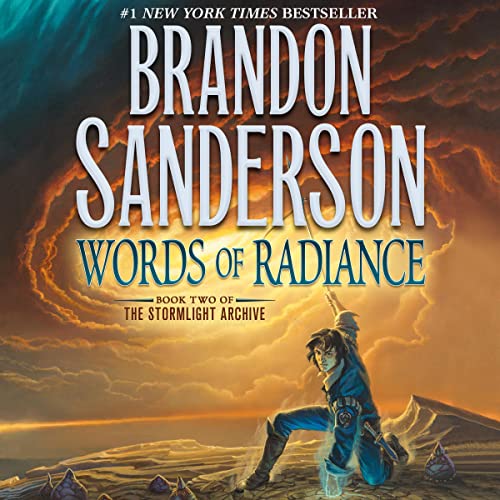
Words of Radiance

By: Brandon Sanderson

Narrated by: Michael Kramer, Kate Reading

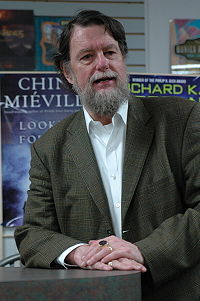
Brandon Sanderson (Author, fantasy and science fiction novelist, former BYU student majoring in biochemistry.)

“Words of Radiance” carries the same fantastical experience a reader/listener envisions when listening to “Eye of the World”. Brandon Sanderson’s “Words of Radiance” illustrates why he was chosen to finish Robert Jordan’s posthumous work. Sanderson’s book is long and may take many chapters for one to become engrossed in its story.

Brandon Sanderson finished Robert Jordan’s “Eye of the World” after Jordan’s death. “Eye of the World” is a story of imagination about the experience of a young boy in a fantasy world imagined by Jordan.
There are a great many characters in Sanderson’s story. The characters represent disparate cultures that have different societies that seem destined to compete until the end of time. Each culture is hierarchal with kings, armies, citizens, and slaves. A singular king believes all these cultures must come together for peace, and tranquility because a storm, an Armageddon like event, is coming. The goal of unity seems unlikely as the story develops. Interestingly, this king is far from perfect despite his prescient vision. He is drunk near the end of the story when all appears to be lost.

Characters in Sanderson’s story are not just kings but people who have supernatural abilities. One former prisoner in this world has those abilities which he is only beginning to understand. Sanderson adds a third principal character, a 17-year-old seer who is also only beginning to understand her powers.
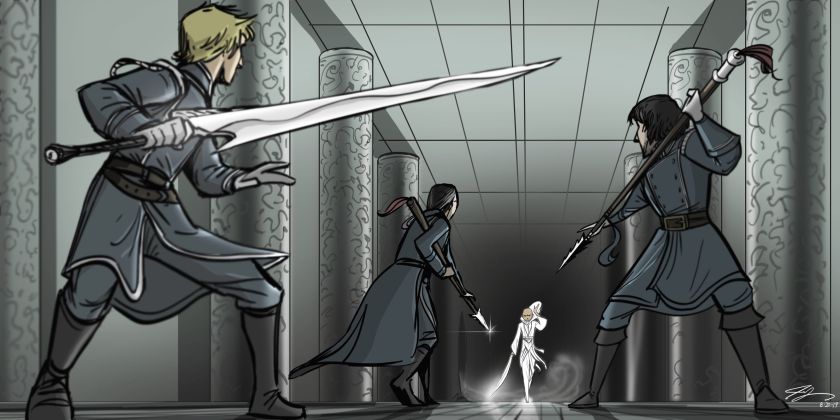
Sanderson creates a white clothed antagonist with supernatural ability who is killing leaders of this fantasy world.

The most interesting innovation by Sanderson is the invention of “spren”; i.e., spren are “ideas” who accompany characters in his story. Spren show themselves as symbols, figures, or lights. They offer guidance to the characters they follow. Spren guidance comes from their ability to slyly spy, modify their form, unlock doors, and inform their companions. There are spren who accompany both sides of the pending battle for the future of the world. The spren recognize life is driven by lies and truth, concluding both can have ethical value. Ethical value comes from lies that mislead miscreants and truths that help the helpless.

God is dead in Sanderson’s story. How or why God dies is undisclosed. The only remainder of God’s existence is a spren (the idea of God) which chooses a hero to defeat the Armageddon that is coming. The spren’s choice of heroes and heroines manages to defeat the coming storm and offers hope for world unity in the future.
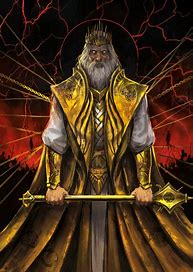
The devil is called Odium.

After the storm passes, God’s spren suggests if God can be killed, so can the devil. Odium’s possible death is “hope” for those remaining after the storm.

Loss of species are noted in Sanderson’s world because of overhunting and ignorance, a reminder of today’s culture with degrading water and land environments.

There are storms in Sanderson’s story that remind one of the cataclysmic age in which we live. Great winds, lightning, and flooding threaten nations.

At the end of Sanderson’s story, a listener recognizes this fantasy is a mythical representation of this world, i.e., good and bad leaders, poverty, environmental degradation, and ethnic inequality.


THE INTERNECINE RUSSIA/UKRAINIAN WAR

Sanderson leaves listeners with a laugh by resurrecting a character who is thought to be dead, i.e., not a God or warrior, but a seer. There remains some hope in Sanderson’s imagined world, but it is cloaked in hardship and toil.

CARL SAGAN

Audio-book Review
 By Chet Yarbrough

Blog: awalkingdelight)
 Website: chetyarbrough.blog

The Dragons of Eden

By: Carl Sagan

Narrated by: JD Jackson, Ann Druyan

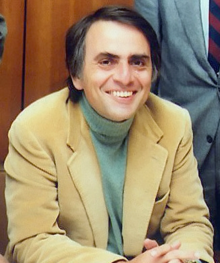
Carl Sagan (1934-1996, Author, University of Chicago entry at 16 years of age, received a Master of Science and Doctor of Philosophy in astronomy and astrophysics in 1960.)

Carl Sagan died from a bone-marrow disease at the relatively young age of 62 in 1996. One generally associates Sagan with his Cosmos series, but his education went far beyond the study of astronomy. His book reflects as much on the philosophy of life as the future of society, science, and technology.

Today’s controversial abortion question is forthrightly addressed by Sagan. He suggests “Right to Life” and a “Women’s Right to Choose” are politically and philosophically extreme ends of a rational argument on abortion. “Right to Life” followers insist all life is precious even though humans kill animals for sport and consumption. “Women’s Right to Choose” followers insist birth of a baby in utero is the sole decision of women because their body and life are only theirs to control.

Sagan suggests a baby in utero in the first trimester may be tested for brain activity and if none is found, no personhood is formed. With no brain activity of a baby in utero, the right of a woman to choose is an equal rights decision. However, to Sagan if brain activity is present, life is present, and abortion is murder. Sagan infers a science based national law could be created that avoids the extremist positions of the “Right to Life” and “Women’s Right to Choose” movements.

Though Sagan may have overemphasized the difference between left brain and right brain function, he notes the advances that have occurred in how specific areas of the brain compete and can be electrically stimulated to elicit thought and action.

Sagan notes how computer gaming opens doors to the advance of computer capability and utility.

Nearly 50 years ago, Sagan’s book suggests much of what has happened in the science of brain function and technology. It seems a shorter step from Sagan’s ideas about computer function to what is presently called artificial intelligence. His view of brain and computer function might lead to a machine/brain confluence. It may be that Sagan’s belief in other forms of terrestrial life are secondary rather than primary interests of our human future.

In 1978, Sagan receives the Nobel Prize for nonfiction with “The Dragons of Eden”. In retrospect, it seems a wise decision by the Nobel panel of judges.

WAR

Audio-book Review
 By Chet Yarbrough

Blog: awalkingdelight)
 Website: chetyarbrough.blog

48 Laws of Power

By: Robert Greene

Narrated by: Richard Poe

Robert Greene (Author, B.A. in classical studies.)

Robert Greene’s “48 Laws of Power” is an interesting journey through the history of leadership, and war. It is an interesting contrast to what some authors have written about Machiavelli’s “Prince”.

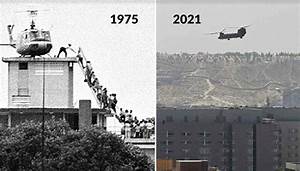
Greene’s history is timely in respect to Russia’s invasion of Ukraine and America’s Vietnam, Iraq, and Afghanistan failures. Though these events were for ideologically different reasons, Greene’s 48 laws are relevant.

Greene offers so many anecdotes, this review focuses on Wu Zetian, Mao Zedong, Charles-Maurice de Talleyrand-Perigord (aka Talleyrand), and Henry Kissinger. These are four among many accomplished leaders Greene reviews from the 7th to the 21st century. Each exercise some variation of Greene’s “48 Laws of Power”. The story of Wu Zetian is the most amazing of the four.

Wu Zetian (624 CE to 705 CE, died at age 81, Empress from 649-683, Emperor 690-704 CE)

One presumes this a mature rendering of Wu, not the young concubine who attracted Emperor Taizong.

Wu Zetian is the only female emperor in 2000 years of China’s imperial rule. She is alleged to have indirectly and directly ruled the Tang Dynasty from 649 to 704CE. She became the concubine of emperor Taizong but was exiled to a nunnery by the wife of Taizong’s son. Wu returned to marry Taizong’s son. According to Greene, Wu strangled her daughter and accused Gaozong’s wife. Upon conviction, Gaozong’s wife is executed. This paved Wu’s way to become first wife of Gaozong. Gaozong became the putative emperor from 649-683 CE.

Greene explains Wu was the power behind Gaozong’s rule. When Gaozong died in 683, Wu formally proclaimed herself emperor in 690 CE and died in 705 CE at the age of 81. Whether precisely true or not, Greene gives this as evidence of steely determination and willingness “to do whatever it takes” to gain power. Ruthless leadership is one of the “48 Laws of Power”.

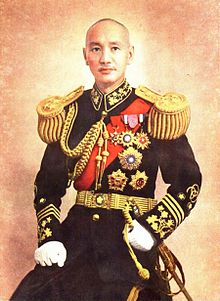
When Mao gathered a force to overthrow China’s government, he and his recruits were defeated in battle and scattered to the country by Chiang Kai-shek. (Mao in 1943 when Chiang Kai-shek was exiled to Taiwan.)

Chiang Kai-shek failed to eliminate Mao when he had the chance. (Official portrait of China’s leader in 1943.)

Mao gathers more followers and returns to force Chiang Kai-shek into exile in Taiwan. An opposing army’s leader must be eliminated to ensure security of an existing government. Greene explains this is another of the “48 Laws of Power” required to maintain leadership.

Tallyrand served France from 1789 to 1834 under Napoleon Bonaparte, Louis XVIII, and Louis Philippe I. Tallyrand’s skill in keeping his plans to himself allows him to remain a power behind the thrown throughout his adult life.

Charles-Maurice de Talleyrand-Perigord (1754-1838).

Greene notes Tallyrand’s reputation was to never talk about himself while talking to others. This is at the heart of his rise to power. Tallyrand’s purpose for talking to others is to gather information to know how to use information to accomplish his personal objectives. Greene suggests Tallyrand lured Napoleon out of his banishment in Elba because he knew Napoleon would be defeated and no longer a threat to France’s leadership. Greene notes keeping one’s own council secret is one of the “48 Laws of Power”.

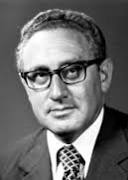
In modern times, Greene implies Henry Kissinger is a master of the “48 Laws of Power”. Greene notes Kissinger acted as a power behind the throne of Presidents of the United States.

Greene is not arguing Nixon was not the leader of America during his time as President but that much of what is accomplished in his administration is traced to the power of Henry Kissinger. Kissinger, like Tallyrand, kept his own thoughts and ambitions to himself. When necessary, he publicly praised his superiors to assure his place of power and influence. His intellectual curiosity involved him so many government’ policies beyond his role as Secretary of State that he became an indispensable source of information and counsel.

Greene notes Kissinger insured his ascendence in American government by courting both candidates for the Presidency when the war in Vietnam is raging. Kissinger would work for either a Democratic or Republican President as long as he could achieve his personal and undisclosed objectives. As noted in the biography of Kissinger by Niall Ferguson, Kissinger is closer to Nelson Rockefeller than to Nixon as he pursues his personal ambition.

As one listens to “48 Laws of Power” and Greene’s anecdotes, one realizes the Russian/Ukrainian war is unlikely to end soon. The leaders of both countries exercise their respective “…Laws of Power” at the expense of their citizen’s lives. The same seems applicable to America’s mistakes in Vietnam, Iraq, and Afghanistan.

FEAR AND TREMBLING

Audio-book Review
 By Chet Yarbrough

Blog: awalkingdelight)
 Website: chetyarbrough.blog

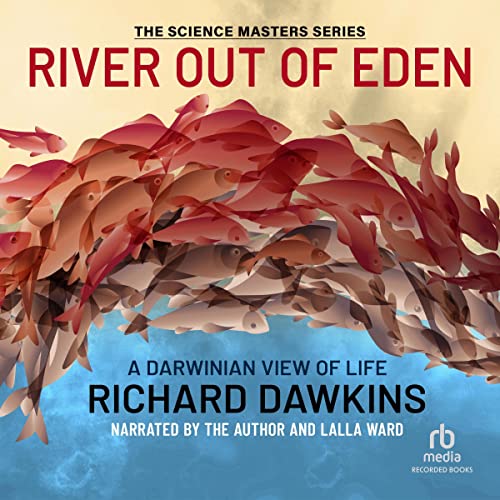
River out of Eden

By: Richard Dawkins

Narrated by: Richard Dawkins, Lalla Ward

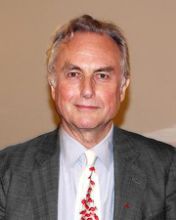
RICHARD DAWKINS (ENGLISH ETHOLOGIST AND EVOLUTIONARY BIOLOGIST WHO INFERS A GENE MAY BE THE SOURCE OF CONSCIOUSNESS.)

As Dawkins’ clever title infers, “River out of Eden” is a scientist’s explanation of how life began and proliferates whether God exists or not. One can argue it is neither a refutation nor affirmation of God, only that God has nothing to do with life’s persistence. Dawkins’ explanation is based on Darwinian evolution and what he characterizes as the immortal gene. A human gene’s immortality is being tested by earth’s environmental degradation. On the other hand, immortal genes may adapt to earth’s degradation.

One cannot help but think of the potential of artificial intelligence and the future of human beings as they may evolve.

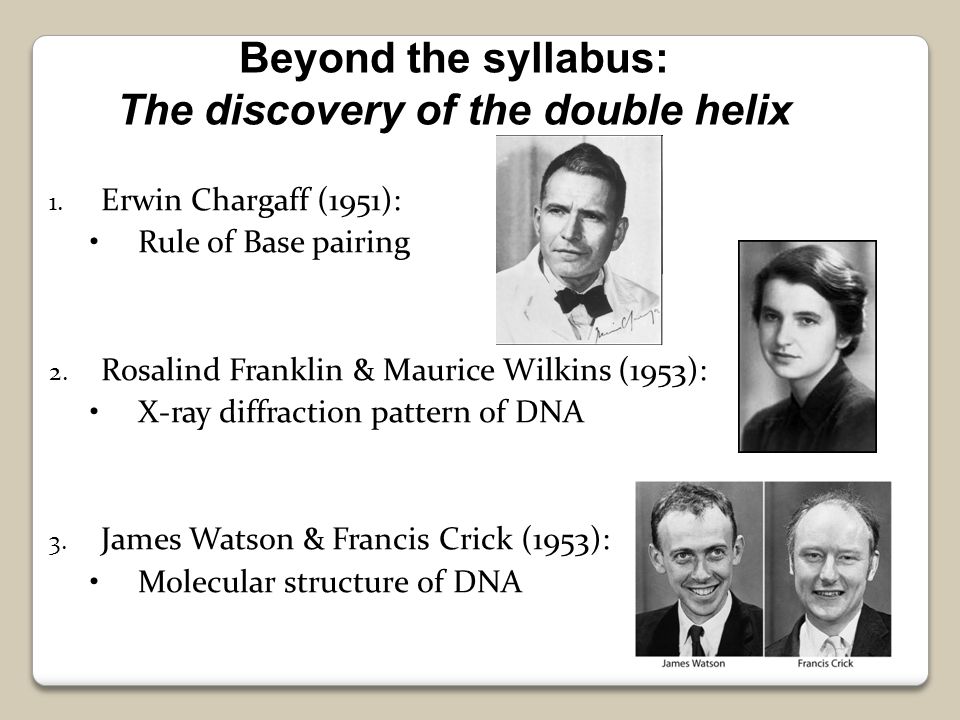
The discovery of DNA by Francis and Crick may change the course of human evolution. With the discovery of CRSPR, the medical community acquired tools that can modify genes. With those discoveries, it became possible to rid humanity of disease and hasten human evolution. Some argue these discoveries will improve human life; others suggest it will end it.

The discovery of the double helix. Erwin Chargaff (1951): Rule of Base pairing. Rosalind Franklin & Maurice Wilkins (1953): X-ray diffraction pattern of DNA. James Watson & Francis Crick (1953): Molecular structure of DNA.

Dawkins offers numerous examples of species that have evolved over millenniums of earth’s existence. He argues that survival is a result of an innate characteristic of genetic material that has the sole purpose of self-preservation. Genes are reproducing engines of life based on the environment in which they exist. Dawkins argues genetic materials’ ability to modify and replicate themselves are the essence of life’s continuation.

Evidence of Dawkins belief began with Darwin and is reinforced by numerous science experiments showing generations of birds, bees, and other forms of life that have inherited behaviors through generations of existence. His argument is that life is a matter of genetic predilection and preservation, more than learning.

The unexplored consequence of Dawkins’ belief is–what nature has provided to evolution, may soon be controlled by human beings. Genetic manipulation will no longer be determined by nature’s circumstances but by humankind’s limited knowledge. Considering human decisions that have murdered millions, earth’s ecological crisis, and human nature’s innate desire for money, power, and prestige, humanity should sense what Kierkegaard called fear and trembling.

THE LOUVRE

Audio-book Review
 By Chet Yarbrough

Blog: awalkingdelight)
 Website: chetyarbrough.blog

The Louvre (The Many Lives of the World’s Most Famous Museum)

By: James Gardner

Narrated by: Graham Halstead

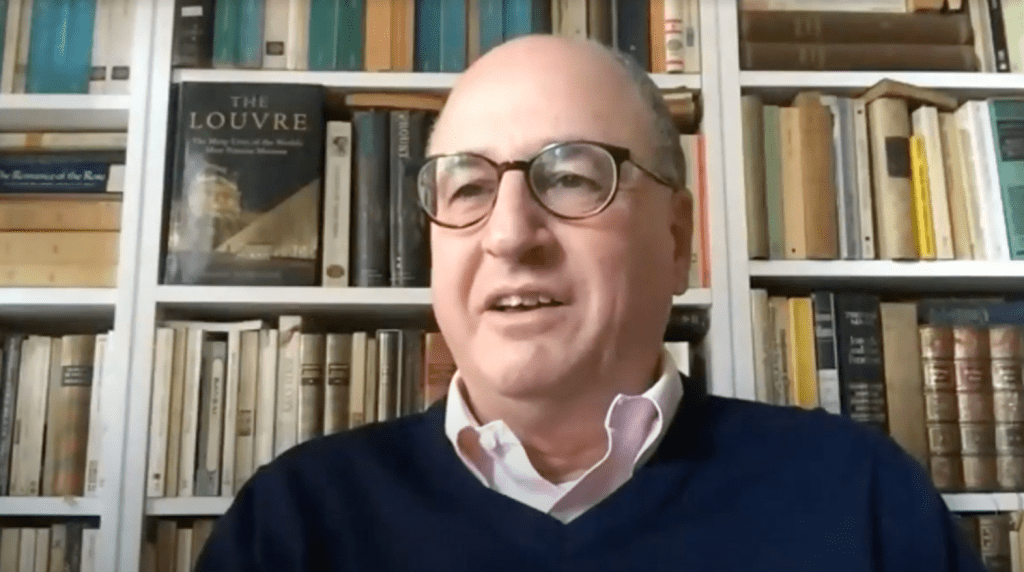
James Gardner (Author, art and literary critic.)

James Gardner is an art and literary critic based in New York and Buenos Aires. His writing has appeared in publications including the “New York Times”, the “Wall Street Journal”, and the “New Republic”.  

View from the top of Louvre Museum in a beautiful sunrise over Paris

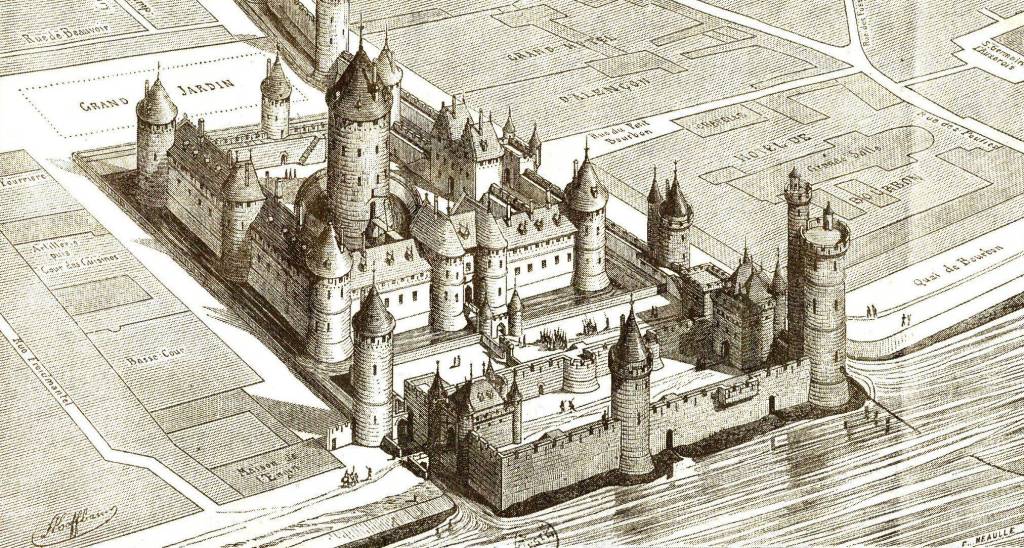
Having visited the Louvre a few years ago, it seems worth listening to James Gardner’s book about one of the world’s greatest museums. It is a surprise to find the Louvre dates to the 12th century. It began as a walled fort to protect Paris but was expanded when King Philippe Auguste decided to build a castle at the wall next to the Seine River.

The Louvre was originally planned as a fortress to protect Paris.

The origin of the name Louvre is a mystery. Gardner notes some thought it came from an association with a wolf hunting den; others thought it came from a Saxon word for watchtower (lauer) but no one knows for sure. The Louvre was neglected for several years after Louis XIV moved to Versailles. Some work was done, but King Louis’s architect spent most of his time on the new Versailles residence.  

Gardner explains the remains of King Auguste’s castle foundation can still be seen today.

The Louvre became the home of King Francois I in 1528.

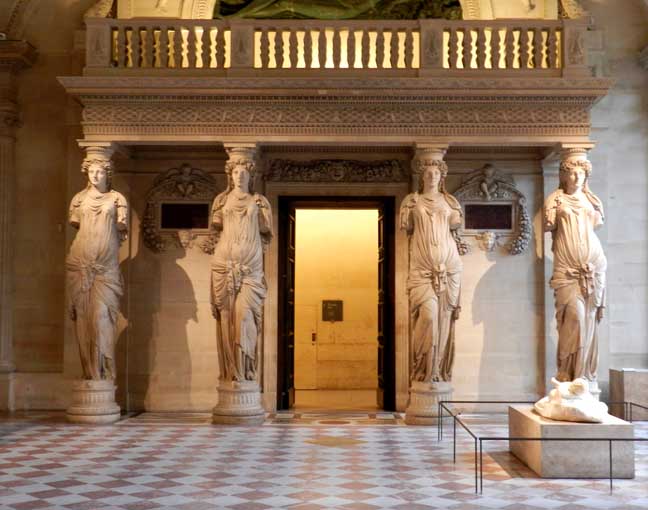
In 1550, the sculptor Jean Goujon created the caryatids (sculpted female figures as column supports) inside Francois I’s Louvre Palace.

The Louvre remained a royal residence until 1682 when Louis XIV moved to Versailles.

Gardner notes, it is after the French Revolution that the Louvre becomes classified as a museum.

The National Assembly of the nascent government republic opened the eight-acre site as a museum in 1793 with a collection of 537 paintings. Most of these paintings were from royal residences or church-property’ confiscations. Famous paintings like the Mona Lisa were not exhibited until 1797, just as Napoleon rises to power.

It is not until Napoleon Bonaparte’s 1799 coup d’état that a serious renovation of the Louvre is undertaken.

Bonaparte makes the Louvre his royal residence in Paris. Vivant Denon became the first director of the Louvre. He was a diplomat under the bourbon kings, Louis XV and Louis XVI, and then appointed director of the Louvre by Napoleon after his Egyptian campaign (1798-1801). Denon had been with Napoleon in Egypt. Denon was displaced during the Bourbon Restoration because of his association with Napoleon. Not much was done on the Louvre during the Bourbon Restoration.

Vivant Denon (1747-1825. artist, writer, diplomat, author, and archaeologist.)

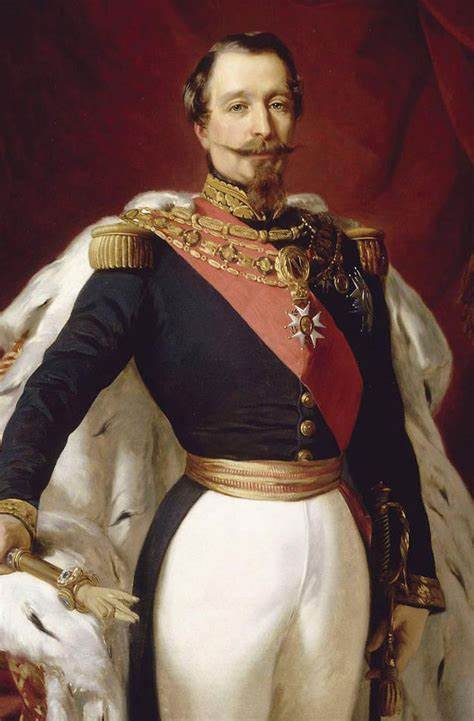
Napoleon III (1852-1870 reign, first president of France, became last emperor of France–deposed in exile. Nephew of Napoleon Bonaparte.)

Napoleon III undertakes a grand renovation of the Louvre with the building of its two major wings. The “Pavilion Denon” is dedicated at the Louvre by Napoleon III in the 1850s. Napoleon III employs Louis Visconti to design the Louvre renovation but he dies in 1853. The Visconti plan is executed by Hector Lefuel. It connects the old Louvre Palace around the Cour Carree with the Tuileries Palace to the west. The two major wings and their galleries and pavilions are completed during Napoleon III’s reign.

Francois Mitterrand (President of France 1981-1995)

WWII may have been the death nell of the Louve if it had not been for the cleverness of the French and the tacit cooperation of a German officer. The final chapters address today’s view of the Louvre and the renovations made by French President, Francois Mitterrand. Mitterrand carries the torch of French freedom and appreciation of art in the most elaborate Louvre addition since Napoleon III’s grand renovation. Mitterrand hires I.M. Pei to design the Louvre addition.

I.M. Pei (1917-2019, world renown American architect.)

It is known as the Grand Louvre Modernization project which is most noticeable because of the glass pyramid that becomes the primary Louvre entry. The pyramid seems incongruous to this tourist but is reminiscent of the Napoleonic history of France. Napoleon is more than a conqueror of countries. His political ambition entails more than power, though power is certainly a large part of his hegemonic ambition.

Gardner notes Napoleon’s inspired interest in other nation’s traditions, history, and art. His ambition in Egypt entails a consuming passion for understanding its historic rise to power and hegemonic power’s correlation with prominence in the world.

I.M. Pei’s decision is to create a symbol of the power and permanence of Egypt with a pyramid. The Louvre’s entrance is representative of Egyptian and French ambition in the world. As history shows, Egypt and France were hegemons of the world at different times.

Gardner’s book, “The Louvre”, should be on every tourist’s list before visiting the center of Paris. Gardner shows how much there is to see and how little one will understand without spending more than a day, let alone a few hours, at the Louvre.

STORY TELLING

Audio-book Review
 By Chet Yarbrough

Blog: awalkingdelight)
 Website: chetyarbrough.blog

Fault Lines (The Social Justice Movement and Evangelicalism’s Looming Catastrophe)

By: Voddie T. Bauchham

Narrated by: Mirron Willis

Voddie Baucham (Author, pastor, educator, BA from Houston Baptist Univ. and M. of Divinity from SWestern Baptist Theological Seminary.)

“Fault Lines” is a troubling book. It gives too much shade to racial and ethnic inequality in America. On the one hand, Voddie Baucham relies on story telling to counter the singular atrocity of George Floyd’s murder and on the other he tells stories of inaccurate accusations of police discrimination during traffic stops. White America has enough shade without being forgiven by a black preacher for hundreds of years of discrimination.

George Floyd’s murder.

Baucham implies unequal treatment is less odious because white people are killing white people at a higher rate than white people are killing black people. How does that look when a young teenage black boy knocks on a front door and is shot in the head by a 84-year-old white man because he is afraid?

Ralph Yarl shot in the head for knocking on a front door.

Baucham is right when he argues facts matter but untextualized facts fail to reveal the whole truth. As a preacher, Baucham chooses scriptural text from bibles that have been interpreted in many ways by different preachers and scholars. A skeptic credibly argues truth is fungible in the Bible.

Some would argue the Bible is a proximate cause for belief in inequality of the sexes and races in the world.

Baucham’s story telling may be factually correct while being fundamentally wrong. When the proof he reveals comes from the Bible, a skeptic cringes. That may be because of a skeptic’s own biases and beliefs but how many people in history have justified murder of innocents because of religious belief and biblical interpretation?

It comes as no surprise that Bauchham is a strong proponent and supporter of Thomas Sowell, an American author, political conservative, and social commentator.

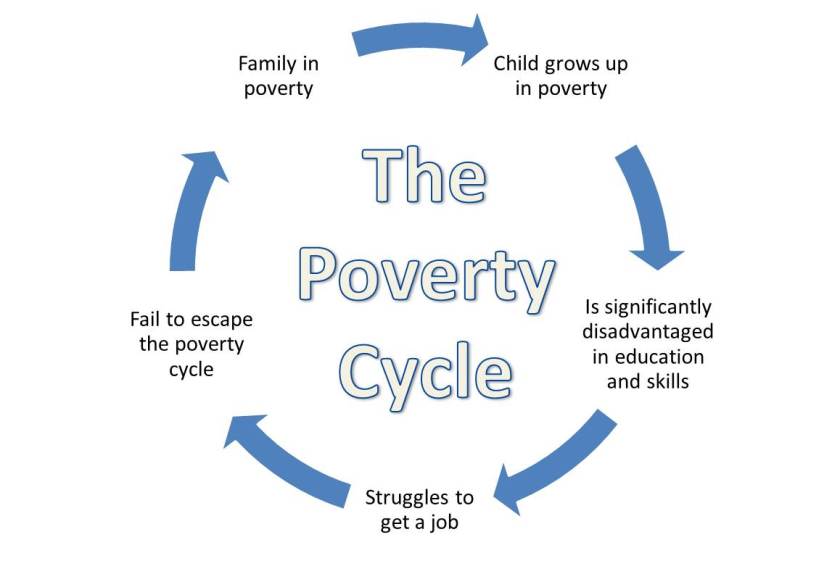
Sowell espouses many of the same views of American society that Bauchham endorses. Both are anti-abortionists despite over-population and America’s history of child neglect. Both opposed the election of Barack Obama. Both decry the absence of black Fathers from their families and the consequence to their children. (There is little doubt that absence of fathers in black families is an important issue but the poverty cycle in which black families are trapped is of greater consequence.) They may come to their political views from different angles but undoubtedly voted for Donald Trump in 2017 (Bauchham because of the abortion issue and Sowell for his political party).

Human nature drives us all.

Humans, whether Believers or heathens, strive for money, power, or prestige to differentiate themselves from others. To a humanist, belief in God and the Bible or the devil and purgatory are only tools of human nature. Baucham is a human who believes in God and the Bible who uses those tools to unjustifiably shade the iniquity of humankind.

V.A.T.

Audio-book Review
By Chet Yarbrough

(Blog: awalkingdelight)
 Website: chetyarbrough.blog

Rebellion, Rascals, and Revenue: Tax Follies and Wisdom Through the Ages

By: Michael Keen, Joel Slemrod

Narrated by: Walter Dixon

“Rebellion, Rascals, and Revenue” is a painful and laborious book to listen to, in part, because of its length but mostly because of its subject. Few citizens appreciate having their hard-earned wealth and income reduced by government taxation. However, the co-authors are well qualified and informative in explaining how important taxes are to every form of government to insure citizen’s peace, welfare, and protection. More importantly, they show how countries of the world have both aided and diminished prosperity of nation-state’ economies with good and bad tax policies.

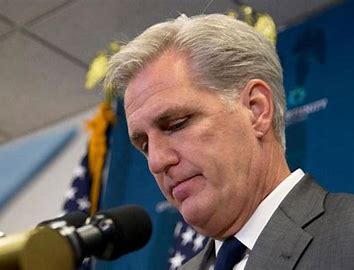
Kevin McCarthy (Speaker of the House.)

As noted by McCarthy, the deficit exceeds the annual gross national product of the United States.

Keen’s and Slemrod’s book is timely. The wide gap between America’s two major political parties is partly because of America’s deficit, which has not been higher since WWII. The solution lies in the political will to increase taxes and reduce government expenditure. The difficulty is finding an equitable balance between tax revenues and the health, education, and welfare of America’s citizens.

However, America’s homelessness is evidence of a gap between rich and poor that belies America’s great wealth.

Keen’s and Slemrod’s book illustrate the folly of many nations that have inexpertly balanced tax policy with the health, education, and welfare of their citizens. From before the French revolution to modern times, the authors recount errors made by governments that bumble their way from forcing tax collection to passing confiscatory laws that support bureaucracies that beggar rather than serve the public. Along the way, the authors show how tax collection is conducted, how some improvements were made, and how citizens were both benefited and harmed by tax policies.

After wading through the author’s history of nation-state’ tax hijinks, Keen and Slemrod conclude America’s tax system should be overhauled. Their solution is a value added tax. This is an interesting conclusion that is reinforced by T. R. Reid’s book, “A Fine Mess” which suggests the same thing. However, Reid is a reporter for the “Washington Post”, not an economist with experience like Keen’s and Slemrod’s.

A value-added tax (VAT) is a consumption tax on goods and services that is levied at each stage of the supply chain where value is added, from initial production to the point of sale. The amount of VAT the user pays is based on the cost of the product minus any costs of materials in the product that have already been taxed at a previous stage1.

Keen and Slemrod do not clearly explain why they think a VAT is the solution to a better tax system than America’s current policy. Reid explains a VAT is a broad-based low-rate tax that will reduce the need for a tax collection bureaucracy because it eliminates corporate loopholes, broadens, and reduces tax rates, and equalizes citizens’ tax burden. Reid believes more revenue would be produced to reduce America’s debt. It would also reduce the expense of America’s tax collection bureaucracy. In theory both government expense and the deficit would be aided by a VAT tax policy.

YOUTH

 Audio-book Review
By Chet Yarbrough

(Blog: awalkingdelight)
 Website: chetyarbrough.blog

Eve’s Hollywood

By: Eve Babitz

Narrated by: Mia Barron

Eve Babitz (1943-2021, Author, novelist, essayist raised and died in Los Angeles at the age of 78.)

“Eve’s Hollywood” is Eve Babitz’s memoir of life in southern California. Some names are undoubtedly changed to protect the not-so innocent. Babitz’s picture of Hollywood and her recalled life seems like a fantasy. Her story is filled with the glamour of life when young–with the 60s’ experiences of sex, drugs, and rock-and-roll.

There seems a hint of self-delusion as one hears of hook-ups, enlightenment from LSD, and her struggling year in New York.

Babitz story is of her life in Hollywood among women coveted for looks more than brains by predominantly male rainmakers. The irony is their brains, not their beauty, were the source of their success. Good looks opened doors but being a good Hollywood actor or writer required brains.

Babitz’s Hollywood is an entertaining memoir, but it is a tale that exposes the well-known character of a patriarchal world.

Babitz seems to use sex to open doors to experience and opportunity. With opened doors and intelligence, Babitz achieves a level of economic success as a writer and trend setter. Likely, even today, Hollywood women’s good looks help get jobs.

It might be that looks are less important today as powerful moguls like Epstein and Weinstein are exposed but looks still matter but more for women than men.

There seems an underlying sense of despair in Babitz memoir for women who lose their looks as they age. The doors of opportunity that once opened for women among the beautiful are discarded as their youth fades. This seems less true for Hollywood men with long careers like Robert Redford, Cary Grant, Harrison Ford, and so on.

In both the beginning and end of Babitz story, the gap between rich and poor in Los Angeles is briefly touched, though not fully explored.

Her first vignette addresses a beach in Los Angeles that is visited by gang members and how Babitz becomes friends with a young woman who introduces her to one locally famous and violent hood who returns from prison and is soon murdered.

In the last chapter, Babitz describes Watts where rich and poor meet. A married man in his forties has a two nightstand with a twenty-year-old.

He returns to his wife. That might be the end of the story, but the young woman finds he has divorced his wife. The man tries to rekindle the relationship with the young woman from Watts. She is initially overwhelmed by his renewed interest in her but senses something is not right. She plans to break the relationship with a final dinner at a Japanese restaurant, but a comedy of errors interrupts her decision to break the relationship. It is an unfinished story, but one presumes the age difference between the young beauty and the wealthy businessman dooms its consummation.

The underlying truth in Babitz memoir is that there is no difference between the sexes, whether living and working in Hollywood, New York, Seattle, Miami, Dallas, Atlanta, or elsewhere.

Each sex wishes for equal opportunity in their pursuit for money, power, or prestige (hopefully within the boundaries of rule-of-law). Coming to grips with the consequence of men and women being equal is a hard subject for men to accept. Babitz memoir may or may not help men understand that women’s ambitions and capabilities are no different than men.

SURVIVAL A POSSIBILITY

Audio-book Review
 By Chet Yarbrough

(Blog: awalkingdelight)
 Website: chetyarbrough.blog

The Man from the Future: The Visionary Life of John von Neumann

By: Ananyo Bhattacharya

Narrated by: Nicholas Camn

Ananyo Bhattacharya (Author, science writer based in London, PhD in biophysics from Imperial College London.)

Hungarian-American mathematician, physicist, computer scientist, engineer and polymath.

Another alumnus of the golden era of education in the Austro-Hungarian Empire of the early 20th century is John von Neumann. Ananyo Bhattacharya’s biography recounts Neumann’s giant contribution to mathematics in WWII explosives analysis, atom bomb design, computer functionality, and game theory. Von Neumann is formally educated as a chemist and mathematician.

In von Neuman’s early career, before the war and while still in school (1923), wrote a published paper titled “The Introduction of Transfinite Ordinals”.

The “…Transfinite Ordinals” paper introduces the now commonly defined understanding that an ordinal number is the set of all smaller ordinal numbers. To mathematicians, this concept simplified the concept of transfinite numbers. Von Neumann’s genius is in his uncanny ability to simplify complexity.

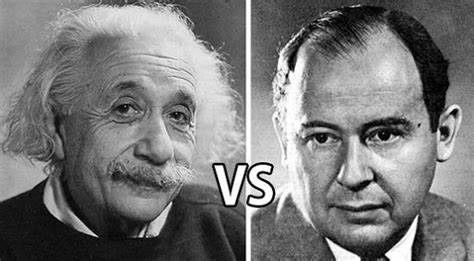
A further example of von Neuman’s genius is in a theoretical reconciliation of Erwin Schrodinger’s and Werner Heisenberg’s differing views on quantum mechanics. Von Neuman theorized “hidden variables” could not resolve the reality of indeterminacy of quantum phenomena. (Von Neumann disagreed with Einstein who believed determinacy is only a matter of not having found “hidden variables” in quantum phenomena.)

(Von Neumann disagreed with Einstein who believed determinacy is only a matter of not having found “hidden variables” in quantum phenomena.)

John Stewart Bell backhandedly affirms von Neumann’s conclusion by finding “hidden variables” are unnecessary in proving indeterminacy of quantum phenomena making the difference between Schrodinger’s and Heisenberg’s views moot.

John Stewart Bell FRS (28 July 1928 – 1 October 1990) was a physicist from Northern Ireland and the originator of Bell’s theorem, an important theorem in quantum physics regarding hidden-variable theories. 

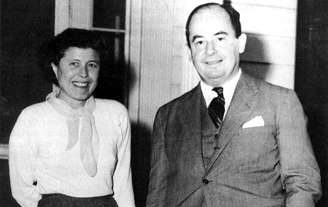
Bhattacharya notes von Neumann is asked to lecture at Princeton in 1929. He is appointed as a visiting professor (1930 to 1933) and marries Mariette Koevesi in 1930. The marriage ends in 1937 with one daughter who becomes an economist.

Von Neuman remarries in 1938 to Klára Dán who became a coder for Eniac during WWII.

In 1933, the same year Hitler rises to power in Germany, von Neumann became one of the first professors at Princeton’s Institute for Advanced Study (IAS). One of his famous colleagues is Albert Einstein.

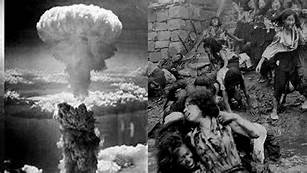
After the beginning of WWII, Bhattacharya notes von Neumann becomes a member of the “Manhattan Project” when contacted by J. Robert Oppenheimer. Because of von Neumann’s help with the British on the physics of shock waves and chemical explosives, Oppenheimer asked von Neumann to analyze the structure and altitude requirements of an atom bomb. Bhattacharya explains the atom bomb is an implosion device that is layered in different metals that have chemical reactions that emit neutrons toward the center of fissionable uranium which is meant to create an explosive chain reaction. The height of the explosion has an effect on the area of damage. Von Neumann’s experience and education are a perfect fit for that analysis. The rest is the history of war’s destruction and the Hiroshima and Nagasaki bombings.

The consequences of the zero-sum game theory of war.

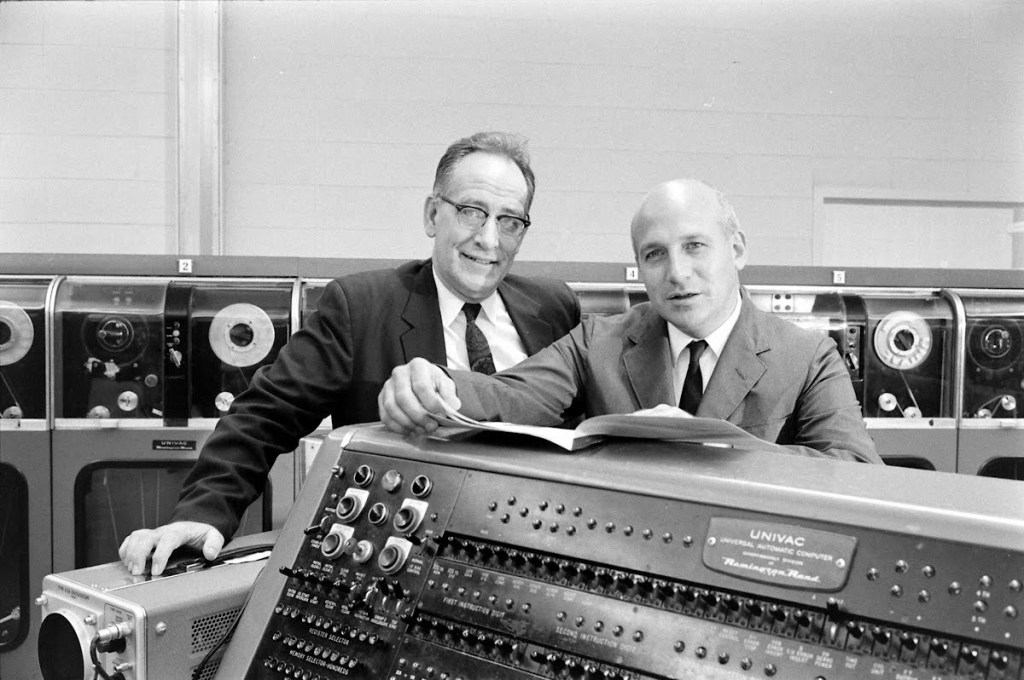
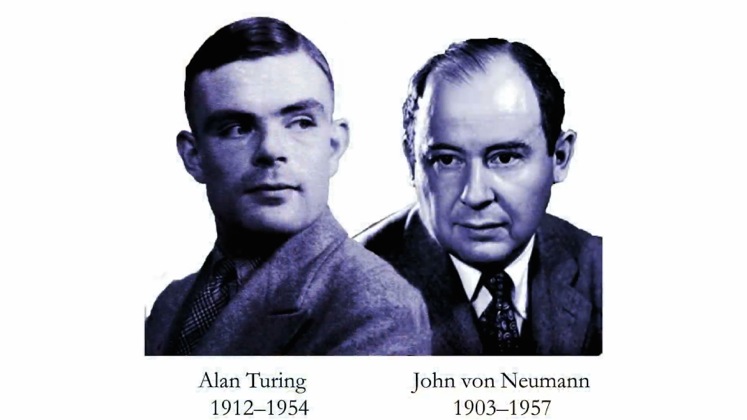
After the war, von Neumann becomes a government and industry consultant. He was acquainted with Alan Turing and viewed the computer as a critical part of the world’s future. His experience with ENIAC made him understand its potential but, at the same time, its design limitations. Von Neuman simplified computer processing by creating the idea of a stored-program computer that led to a cache system of data retrieval that reduces the time it takes to get a computed answer. Von Neumann’s idea turns ENIAC into a library of information rather than a processor. Here is where patent issues are raised by two fellow developers named Eckert and Mauchly. They were working on the same design idea as von Neumann.

J. Presper Eckert and Alfred Eisenstaedt believe they were the first to originate stored-program computers.

Bhattacharya argues von Neumann deserves the credit but Eckert and Mauchly feel they were the true originators of a stored-program computer patent. Some would agree with Eckert and Mauchly. An earlier collaboration between Alan Turing and von Neumann is the basis for Bhattacharya’s belief in von Neumann’s origination.

Von Neuman is recruited in 1948 to work on military doctrine to be used in the event of a conflict between countries. A rather astounding conclusion from von Neuman’s game theory is to use the American nuclear arsenal to eliminate Russia because he felt Russia was an imminent threat to peace. He is alleged to have said “If you say why not bomb them tomorrow, I say why not today?” This became moot when von Neuman found Russia had their own nuclear weapons and would be able to retaliate.

Bhattacharya summarizes von Neumann’s game theory beliefs. Game theory applies mathematics to analyze how decisions are made by people competing to win.

In 1954, von Neumann is appointed to the Atomic Energy Commission but within a year he is diagnosed with bone cancer. One wonders if von Neumann’s exposure to radioactive fallout from the atomic tests he witnessed on the Bikini atoll.

The last chapters of Bhattacharya’s book are terrifying. Nearing death, von Neumann speculates on the valuable discovery of the structure of DNA and suggests it is the missing link for the future of cellular level replication of artificial intelligence.

Bhattacharya reveals the two-dimensional creations of computer game theorists that focus on a replicating code that simulates creation of life. This is a fear that some scientists suggest will create an alternative form of life that will compete with human existence.

A listener who understands life comes from the evolution of DNA over centuries and has resulted in the strengths and weaknesses of who we are today, thinks machine coding that does the same may create a competitor to life as we know it. This is the essence of the concern some scientists have about the growth of artificial intelligence.

Bhattacharya biography of John von Neumann being “The Man from the Future” rings loud and clear. It reminds one of Oppenheimer’s quotes from the Bhagavad Ghita after the first test of the atom bomb–“I am become death, the destroyer of worlds.”

CENTS AND SENSIBILITY

Audio-book Review
By Chet Yarbrough

(Blog: awalkingdelight)
 Website: chetyarbrough.blog

Sense and Sensibility

By: Jane Austin

Narrated by: Rosamund Pike

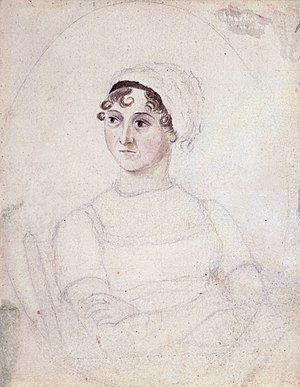
Jane Austin (English Author, 1775-1817, died at the age of 41.)

Though “Sense and Sensibility” was published in 1811, it is an eternal story. Though not intending to diminish the emotional relevance of Jane Austin’s characters, the story is about the rich and poor. Jane Austin’s book reminds modern readers of the universal truth of inequality. “Sense and Sensibility” touches customs of all cultures, governments, and societies.

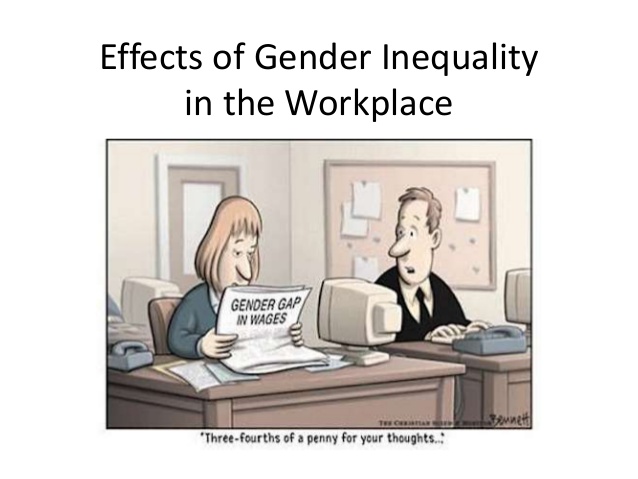
The concept of “unequal” began with inequality of the sexes.

Inequality may have originated because of physical strength differences between men and women but it evolved to encompass most, if not all, social, cultural, and economic activities.

The title of Jane Austin’s book could have been “Cents and Sensibility”. Women who have no “Cents…” are slaves to wealth. Austin illustrates how the patriarch of the Dashwood family impoverishes his second wife’s daughters by bequeathing his family’s wealth to the guardianship of his only son from his first wife.

Two of the Dashwood’ daughters, Marianne and Elinor are of marriageable age. Marianne is 17 and Elinor is in her early twenties. Marianne falls in love with John Willoughby and Elinor has strong feelings for Edward Ferrars (one of two sons that are children of the grown Dashwood estate’s heir and wife.)

John Willoughby, who is in his early twenties, appears to court Marianne in the first chapters of the book. Willoughby is a profligate debtor with a handsome face and smooth-talking demeanor.

Marianne is also being courted by a wealthy 35-year-old former officer and landowner whom she feels is too old. Marianne believes Willoughby is to become her future husband, but he abruptly leaves to marry a woman of wealth. As found later, Willoughby is a debtor and may have been in love with Marianne but realizes she cannot help him with his indebtedness. Marianne is crushed because she feels betrayed by Willoughby’s abrupt departure.

It is the “Cents…” more than “Sense…” that get in the way of Marianne’s relationship.

The real truth of Austin’s story is that to live one must have income more than love because love does not put food on the table. This is as true today as it was in Jane Austin’s time. It is not the absolute difference between wealth and poverty. It is for men and women who choose to marry to have enough wealth to allow love to flourish. Without “Cents…” love does not survive. Even Elinor and Edward realize they cannot marry without a living-wage income.

Some say, Jane Austin’s book has a happy ending because Marianne and Elinore marry men who have “Cents…” Elinore marries Edward, a minister who has a modest income and a bequest from his formally estranged mother but may never be rich. However, he is near Elinore’s age and with “Cents…” seems destined to live a happy life.

Marianne, spurned by young John Willougby, marries the 35-year-old Colonel Brandon, a man who is rich but nearly 20 years older.

Though this may diminish what current readers feel they know about Jane Austin’s story, it idealizes what it means for a 17-year-old to marry a 35-year-old. In today’s age, a 50-year marriage would mean at least 10 years of that marriage will be of one person taking care of an older person. This is not to say love does not grow but age difference at the time of marriage has a consequence.

Poverty is a harsh task master. Without enough income to feed one’s family, the worst parts of human nature ruins lives.

All citizens, of any nation or form of government, must achieve a standard of living that meets the needs of the poorest in society. Peace among nations is dependent on cents as well as “Sense and Sensibility”.