Graduate Oregon State University and Northern Illinois University,
Former City Manager, Corporate Vice President, General Contractor, Non-Profit Project Manager, occasional free lance writer and photographer for the Las Vegas Review Journal.
Sigrid Nunez (American Author, novelist, editorial assistant at The New York Review of Books.)
Sigrid Nunez’s “What Are You Going Through” resonates with many who are dealing with terminal illness or the infirmity of old age. Nunez creates a story of a friend dealing with the debilitating effects of cancer treatment. The treatment is prolonging her life but at a cost her friend is increasingly unwilling to bare. Her friend has a plan to quit the treatments and either let nature take its course or swallow a pill to end her suffering.
The friend approaches close friends to ask them to live with her for the time she has left with the understanding that she will take the pill at some point during their time together. Her close friends decline but Nunez’s main character, who is a more distant acquaintance, agrees to stay with her until the end.
The author’s subject is about life and choices humans may or may not have a right to make.
Nunez writes a story that leaves the sole choice of living or dying in the hands of women, more particularly a woman who has terminal cancer. It doesn’t seem a coincidence that a woman is the writer, and her subject is a woman’s choice of living or dying. An inference one might draw is that the choice of life is more a woman’s than a man’s decision. Of course, that raises questions beyond “right to die“.
In the main character’s agreement to live with the cancer patient, the author implies those suffering from a fatal illness do have a right to take their own life.
Euthanasia is currently illegal in all 50 states of the United States, but 10 jurisdictions, including Washington D.C., California, Colorado, Oregon, Vermont, New Mexico, Maine, New Jersey, Hawaii, and Washington allow assisted suicide. Presumably, Nunez’s character is in one of the 10 jurisdictions that allow assisted suicide.
Of course, the question left unanswered is assisted suicide a choice that should be left in the hands of an individual.
Obviously, not everyone agrees because most American states do not authorize assisted suicide. Nunez offers no definitive opinion. Her main character is helping a friend make a choice about a cancer patient’s own life, but the author leaves the choice unmade at the end of her story.
Title: Life Is Hard (How Philosophy Can Help Us Find Our Way)
Author Kieran Setiya
Narrated by: Kieran Setiya
Kieran Setiya (British Author, Professor of philosophy at MIT.)
In the beginning of Kieran Setiva’s book something seems awry. It is written by a PhD graduate of Princeton who is working as a professor at MIT. What does a philosopher who is admittedly happily married (with one child), working as a professor at a prestigious university know about life being hard? Stick with it, and by the end of the book, Setiva’s point becomes clear and worth more than one listen. The “Economist” calls Setiva’s book one of the best of 2022. Being an acolyte of the magazine, it seems prudent to review “Life is Hard”.
Every life has an individual story. Life is hard for every human being whether rich or poor, educated or illiterate, wise or foolish.
The only difference is some die young, others live to be old, but each find life is hard. Setiva explains he is stricken at 27 with an undiagnosed malady that deprives him of sleep because of recurrent pelvic pain. He learns how to cope with the pain and get on with life. In that learning and his personal education in philosophy, Setiva offers insight to what it means to live life.
Hardship is an equal opportunity malady that strikes every human life.
It just comes in different forms, either physical and/or mental. No sentient human escapes the hardship of life. Each person deals with hardship in different ways and with varying degrees of success. Setiva chooses to get on with his life by tolerating and adapting to his pain. He pursues personal goals, presumably with the hope of growing old.
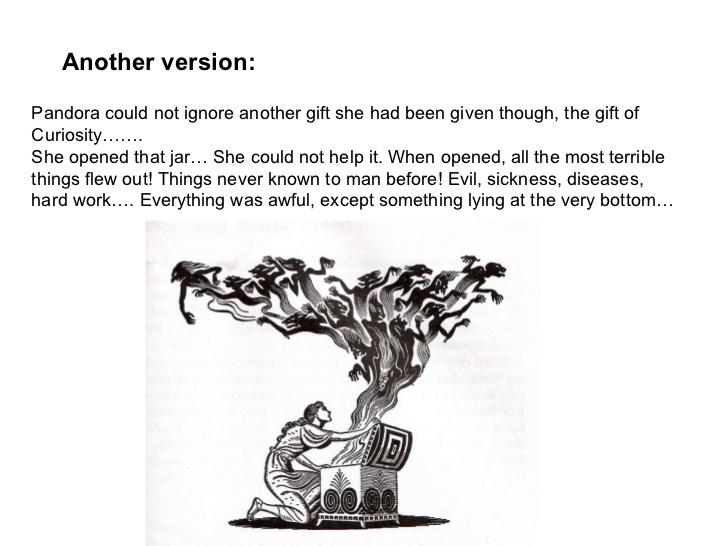
Setiva tells the fable of Pandora’s box. In the Greek legend, Pandora was created by the gods and given gifts by each of them. One of the gifts is a box which she is told never to open. From curiosity, the box is opened and all the maladies of life escape, save one, i.e., hope. Like the biblical fable of Eve’s apple and the tree of knowledge, life’s hardship becomes a part of human life. (Sadly, these are fables of ancient history and biblical tales that set the table for world misogyny.) The idea of hope is a mixed blessing that helps one cope with life but with a price paid for its failure to eliminate hardship.
Hope is the insight Setiva reveals to one who is faced with hardship in life.
Whether one is a university professor, wealthy industrialist, penniless beggar, or cloistered saint, hardship is a part of their life. Hoping to grow old is all that remains, and its value seems circumspect if not useless. Setiva’s book may be one of the best of 2022 but like the hope he describes in the last chapter, it’s a mixed blessing.
The Long Game: China’s Grand Strategy to Displace American Order
By: Rush Doshi
Narrated by: Kyle Tait
Rush Doshi (Author, founding director of the Brookings China Strategy Initiative and a fellow in Brookings Foreign Policy, fellow at Yale’s Paul Tsai China Center.
Rush Doshi’s review of China’s history in “The Long Game” is enlightening. One cannot deny the truth and logic of Doshi’s explanation of China’s commitment and success in returning to international prominence. Doshi’s proficiency in Mandarin Chinese and his thorough review of China’s history give credibility and gravitas to his assessment.
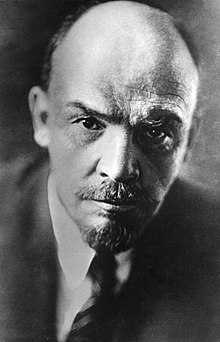
Doshi explains China’s socialist belief is grounded in Leninist communist theory. Lenin believed in the Marxist principles of history and society that show materialism leads to human exploitation.
As the Marxist/Leninist argument goes, exploitation (materialist self-interest) will alienate the majority of society which will revolt against a capitalist ruling class. The belief is that a different form of leadership will rise from the ashes of a revolution that will more fairly distribute the riches of life. In China’s history, Mao is the leader of that revolution. The key to Mao’s, and now President Xi’s belief, is top-down leadership by an enlightened ruling class will raise China’s role in the world. Doshi infers President Xi and his 20th century predecessors believe a communist party’s domination will be the basis upon which a fair distribution of life’s riches can be achieved.
Doshi implies the fundamental conflict between China and the U.S. is political.
China believes in Leninist communism. America believes in democracy. The irony is that human self-interest defeats the idealist intent of both political beliefs. Top-down management of a communist party is potentially as damaging to the public as a democratically elected representative government because of self-interest. No communist or democratic government in the history of the world has resisted the lure of money, power, and prestige that accompanies political leadership. This is not to diminish the relevance and importance of Doshi’s book but to disabuse listeners of an undeserved idealization of any form of government.
Doshi gives a clear explanation of why China is suspicious and wary of American power and influence in the world.
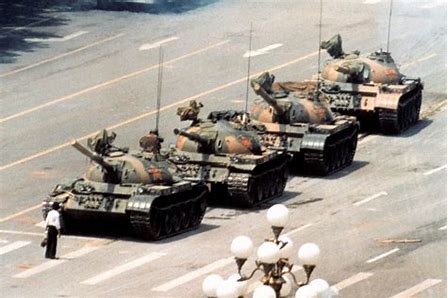
Doshi identifies a trifecta of world events in the twentieth century that influence China/American relations; making it unlikely they will ever become allies. The trifecta is the Tiananmen Square massacre, the collapse of the U.S.S.R., and the invasion of Iraq.
Deng Xiaoping was the Chairman of the Central Military Commission at the time. A secret mission by Brent Scowcroft, President George H.W. Bush’s National Security Advisor, made an effort to calm China/American relations but Doshi explains it failed. China objected to America’s interference and public rebuke of China in their response to the Tiananmen square demonstration.
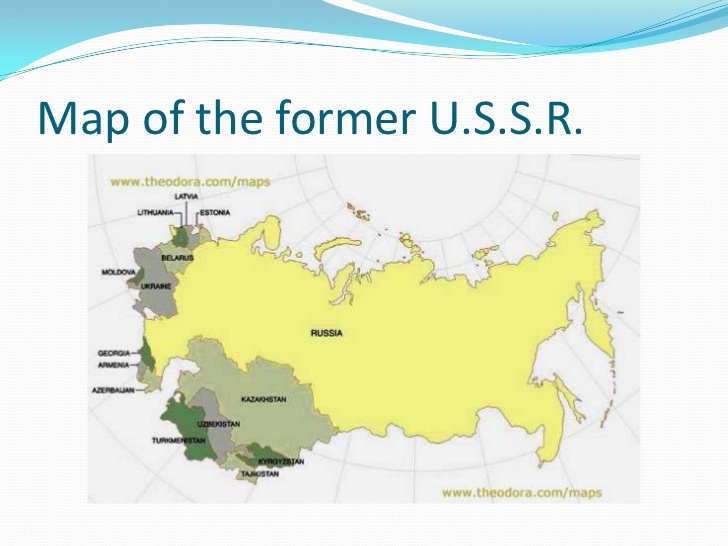
The second blow to America’s relationship with China is the collapse of the U.S.S.R.
Doshi notes that China and America secretly cooperated in America’s U.S.S.R.’ containment policy that was recommended by American diplomat George Kennan in 1947. When the U.S.S.R. collapsed in 1991, China reassessed their relationship with America. Without a common enemy, China perceived America’s intent is to be hegemon of the world, not just the West. Doshi explains, China’s view of America becomes an imminent threat to its sphere of influence.
With President George W. Bush’s defeat of Saddam Hussein’s army in less than a month and a half, China recognizes how far they were from being the hegemon they wished to be. Doshi suggests this became the third blow of the trifecta that China perceived as an imminent threat to China’s position as hegemon of Asia, if not sole hegemon, of the world.
The irony of Doshi’s history is that no form of government has been found that fairly mitigates self-interest inherent in human beings.
Just as American leaders who have put their personal interest above the interests of their country, Chinese communist leaders have been found to be corrupt and more concerned about themselves than the lives of their country’s people. Both China and America have a history of discrimination and unfair treatment of their citizens.
History has many examples of the graft and corruption that exists in both communist and democratic forms of government.
China’s history and society is unique and much older than America’s. However, each country is struggling with their governments to be better stewards of their citizens. What all national governments of the world forget is that we live on one space ship. Without better international relations, the ship is headed for oblivion. Governments can continue to argue and fight over who is captaining the ship but no government seems to know how to steer.
Sadly, Doshi ends his scholarly work with details of how America can use the same methods as China to block its hegemonic ambition. Perceived self-interest, once again, chooses opposition over cooperation to achieve comity, not peace.
The evolution of political governance offers a kernel of hope for world peace. Until a form of government equitably manages human self-interest, periodic wars and social unrest will continue. Neither China nor America have found an answer. The answer is neither “Big Brother” nor unregulated freedom.
Patricia Wiltshire (Welsh Author, forensic ecologist, botanist and palynologist.)
Patricia Wiltshire details the magic of forensic analysis while revealing the history of her life. Wiltshire bluntly and forthrightly reveals as much about her life as she does about the details of victims of crime. Her forensic analysis aids law enforcement in indicting and arresting murderers and rapists. Wiltshire explains her forensic evidence often leads to admissions of guilt or, at least, a trail of evidence for courts to judge.
Wiltshire’s gathering of evidence is gruesome and will be off-putting to some but, as she notes, the body is a chemical construct that lives, dies, and returns to the earth from which it came.
Wiltshire’s belief is that there is no heaven or hell but only being and nothingness for a life that is either well or poorly lived. Wiltshire intersperses facts of her life that help one understand why she became a scientist who eschews God but appreciates life. The implied view Wiltshire has is that society is comprised of humans who think and act rationally and irrationally, with good and bad intent.
Wiltshire reflects on a tumultuous relationship with her mother, the care of her grandmother, and the philandering nature of her father. Her remembrances give weight to why she became a scientist and why she views life as a journey filled with both hardship and satisfaction, if not necessarily joy.
Wiltshire eventually reconciles with her mother and notes, before her mother’s death, that her mother loves and respects her accomplishment. Wiltshire reflects on the hardship of her deceased grandmother and how much of an influence both had on her chosen profession.
The evidence gathered by a competent forensic scientist from a dead and discarded body are precisely explained by Wiltshire. Because of her education as a palynologist (one who studies pollen grains and other spores), Wiltshire shows that human hair, a nasal swab, and the remains of intestine, gut, and internal organs can lead to the location, cause, and details of a victim’s death. With that evidence, the law may be led to the perpetrator of the crime.
A cautionary point made by Wiltshire is that law enforcement must not bias their search for evidence to corroborate presumed guilt. The objective of forensic investigations is to reveal truth, not to confirm preconceived notions of guilt.
The collection of evidence from a deceased human requires an objectivity and dissociation that makes Wiltshire’s book enlightening but brutal.
Wilshire’s biographic notes help explain how she is able to cope with life and an important profession. Her story may not be every book-listener’s cup of tea, but it clearly explains how forensic science is a valuable tool in the search for truth, and hopefully, justice.
Scaling People (Tactics for Management and Company Building
By: Claire Hughes Johnson
Narrated by: Claire Hughes Johnson
Claire Hughes Johnson (Author, former chief operating officer of Stripe, lecturer on management of companies, former technology and operations manager.)
In “Scaling People”, Claire Hughes Johnson offers an insightful and actionable skill-set for both creators and managers of eleemosynary, government, and business organizations. She explains how large and small organizations can become more effective in executing their plans for development.
Johnson suggests every successful organization must have a clear statement of mission. “Mission” statements are the beginning of an entrepreneur’s creation of a company, a non-profits’ purpose, or a government’s departmental objective.
Every effective manager within an organization begins with a clear understanding of mission. Small and large organizations become successful when managers understand their organizations’ mission. The only difference is an entrepreneur’s mission is to prosper and grow a business, a minister’s mission is to ameliorate sin and grow a congregation, a charities mission is to grow and do good for others, and a government agency is to provide public service and grow as needed for those who cannot help themselves.
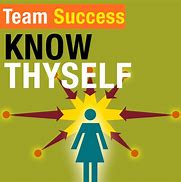
Johnson explains a manager’s success begins with self-understanding.
Johnson notes the ancient saying inscribed on the Oracle of Delphi in ancient Greece, “know thyself”. Knowing oneself is being aware of one’s nature and limitations. Johnson infers every good manager is a leader because, by definition, managers and leaders lead people.
Johnson works in the high growth industry of technology but her book applies to all organizations whether staid and maintenance driven or growth oriented.
When addressing growth companies, Johnson explains high performers fall into two categories. She classifies the first as “pushers” and the second as “pullers”.
Both are valuable employees but Johnson notes pushers want more money and power while pullers are subject to burn-out. Though their reasons are different, both may leave the organization. The potential cure Johnson suggests is a biannual review, designed in different ways, to motivate them to stay. The pushers should be counseled on what they can do within the company that trains them to take on more responsibility in return for more pay and power. Johnson’s counsel to pullers is to acknowledge their contribution and offer a new challenge that benefits the company and their skill without taxing their life/work balance. Johnson notes this does not always work but it directly confronts, and tries to serve the needs of employees and the organization.
Once a mission is understood by a manger, organizational missions are accomplished with the help of others.
A large part of Johnson’s book is how to make organization’ managers effective leaders of their respective management teams. Johnson explains teams are organized to achieve goals to meet an organization’s mission as a sin quo non of success. Johnson’s book about organizational management is based on her challenging experience as a manager for Google and as the Chief Operating Officer for a successful tech company called Stripe.
Johnson addresses work horses of organizations that at times are low performance employees. Johnson argues their biannual reviews require recognition of measured performance deficiencies with constructive conversation about how they can improve. Johnson suggests it is important to recognize their longevity as employees and their cultural value as longer-term employees. However, if performance does not improve by the next review, a performance plan is written that offers what may be a final opportunity for a low performance employee. If that fails, the employee may be discharged. (Second chances are in the best interest of organizations because of the investment they make in hiring and training employees, let alone continued employment for the worker.)
“Scaling people…”, is about measuring yourself as a manager and others that are a part of a companies’ team. The first step is scaling yourself and your own strengths and weaknesses. That is Johnson’s insight to her own organizational effectiveness. Good managers and leaders build on their strengths. That is why Johnson explains how important it is to know yourself. To Johnson “knowing yourself” is the source of an effective manager’s productivity. By knowing yourself, one can overcome personal weaknesses with people who have complementary skills. The key to success is in team building that achieves an organization’s defined mission.
The hard part of Johnson’s insight is in having self understanding. It is made harder by a willingness to reveal it to others. In that willingness, team cohesion is formed. Team members experience self-understanding’s value by fulfilling an organization’s mission.
Only with self-realization, does one focus on mission with the energy and will needed for organizational success. Achieving an organization’s defined mission requires team work.
A manager/leader needs to focus on strengths and weaknesses of teams in the same way he/she understands their own strengths and weaknesses.
Johnson notes self-understanding is only a beginning. “Scaling people…” requires measurement of performance against goal. Teams have to be monitored, measured, and adjusted to more effectively achieve the organization’s defined mission. Johnson offers a number of tools that can be used to monitor, measure, and adjust a team’s effectiveness.
“Scaling people…” is a great addition to the literature of organizational management. “Scaling people…” is an excellent tool for forward thinking organizations interested in growing and improving their performance.
Windfall (How the New Energy Abundance Upends Global Politics and Strengthens American Power.)
By: Meghan L. O’Sullivan
Narrated by: Eliza Foss
Meghan L. O’Sullivan (Author, Harvard professor, Former deputy national security adviser on Iraq and Afghanistan, worked in the George Bush administration.)
Meghan O’Sullivan offers an intelligent but flawed view of today’s world. It is true that energy is critical for economic growth and improved human life. It is also true that energy need and development cause international conflicts in the post-industrial world. O’Sullivan does a masterful job explaining the role of energy, noting its cost while explaining fossil fuels are at a turning point in history.
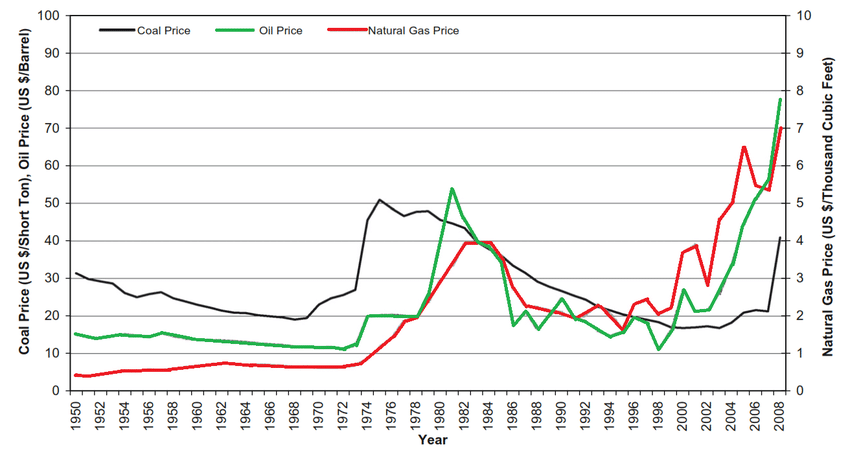
Fossil fuel prices fluctuated dramatically in the 20th century but O’Sullivan suggests the trend in the 21st century, despite the rise between 2000 and 2008, will trend downward for three reasons.
One is the recognition of energy’s environmental consequence and conservationists’ political response; two, energy’s extraction is becoming less costly for most fossil fuels. And three, technological advancement offers alternative sources of energy.
What O’Sullivan correctly notes is that energy will remain a driving force behind international relations.
However, her argument is flawed by suggesting governmental restrictions on discovery and growth of fossil fuels should be weakened. Even in the few years since publication of O’Sullivan’s book, the science of fossil fuel pollution is showing accelerating global warming with potential for a “no-return” human’ consequence. Global warming seems self-evident. That evidence does not change O’Sullivan’s insight to the outsize role energy plays in the real-politic world of today, yesterday, and tomorrow.
O’Sullivan loses a bet with a colleague that Russia would challenge world peace within five years of 2013. She was right, but it took a couple years longer for Russia’s re-invasion of Ukraine.
O’Sullivan correctly foretold Putin’s kleptocratic government’s intent to re-establish Russia’s place in the world by using its fossil fuel abundance to lure Europe and Asia with their need for energy. Putin’s drive to offer oil and/or gas pipelines to Germany, China, and Turkiye are meant to assuage their opposition to Ukraine’s invasion. Though China is somewhat supportive of Putin, it has little to do with its energy need but more to do with China’s opposition to U.S. involvement in their sphere of influence. In response to the Ukraine invasion, Germany found alternative sources for Putin’s pipelined energy with imported LNG (liquified natural gas). To some extent, Putin’s energy ploy worked. China, India, and Turkiye continue to buy oil from Russia despite its invasion of Ukraine. Their national interests outweigh their concern about Russia’s invasion, just as Putin undoubtedly calculated.
Energy’s role in the modern world is well documented by O’Sullivan. She notes the history and future of energy and how it will continue to roil international relations.
The cost of energy influences world leaders to exploit the environment despite its harm to society.
Exxon Valdez Oil Spill.
Coal continues to be burned for energy around the world because it is the least expensive.
Malaysia coal fire plant.
Technological innovation is decreasing natural gas costs which, though less environmental damaging than oil or coal, is becoming more widely used. Natural gas remains a pollutant. It is estimated to be 50-60 percent less polluting than coal and 20-30 percent less polluting than oil. (A caveat to the less pollution from natural gas is that it is being used in newer and more efficient energy producing facilities.) This argument does not change O’Sullivan’s flawed argument that restrictions should be removed, weakened, or moderated for further fossil fuel technological development and extraction.
Weather around the world, forest fires, and northern arctic warming are dramatic 21st century proof of continuing global warming. Science and nature tells us the world is warming. That warming is, at the least, greater because of fossil fuel use.
O’Sullivan remains correct in noting how energy is key to peace in the world. The vast natural gas find by Israel, called the Leviathan Reservoir, makes Israel’s influence in the Middle East much greater. Israelis use their natural gas’ find to improve their relationship with Middle East powers. On the other hand, it seems to give license to Israel to repress dislocated Palestinians as irreconcilable enemies.
Energy is both a weapon and tool of peace.
Where O’Sullivan’s book is less convincing is in its inference that the energy industry should be given free rein to continue developing fossil fuels. Even if energy is critical to the sovereign right of every country in the world, degradation of today’s environment makes fools of us all.
Walter Isaacson (American author, journalist, and professor.)
Walter Isaacson is an interesting and thorough historian as shown in his biographies of Steve Jobs and Leonardo DaVinci. “The Code Breaker” is a history of the human genetic code’s discovery and its societal importance. The stories of Francis Crick, and James Watson are fairly well known because of their discovery of the structure of DNA. They received the Nobel Prize for their discovery in 1962. Less well known are Rosalind Franklin, and Maurice Wilkins.
There are three avenues of knowledge in the book’s title “The Code Breaker”. One is the brief bios of the human genetic code breakers, two, the monumental risk in genetic code’s discovery and three, the potential reward of its discovery.
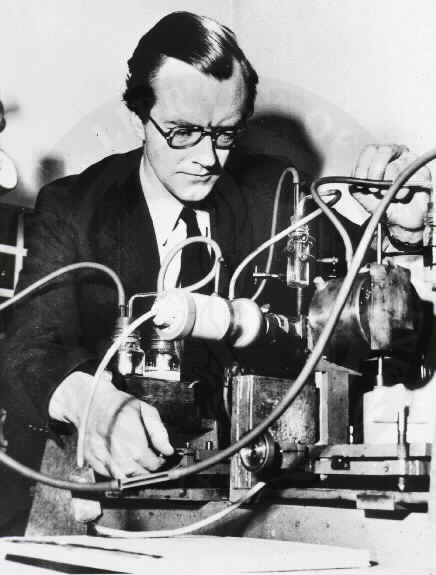
Maurice Wilkins (1916-2004)
In the late ’40s and early ’50s, as a biophysicist, Maurice Wilkins did diffraction studies of DNA.
Isaacson suggests Wilkins’ studies aided Crick’s and Watson’s discovery of DNA’s structure in 1953. However, Crick and Watson were at a standstill and may never have discovered the structure of DNA if Rosalind Franklin had not introduced X-ray crystallography to their search. Isaacson implies Franklin would have received the Nobel Prize for DNA’s structure but she died at age 37 in 1958. Isaacson notes the Nobel is not given posthumously. (That is not quite true because the Nobel Prize had been awarded posthumously, twice, i.e., once for literature and once for physiology. One wonders if inequality may not have had something to do with the Nobel decision. Isaacson notes Ms. Franklin was somewhat prickly in her relationship with others, not that it would be a reason for Franklin’s lack of Nobel recognition.)
Beyond the syllabus: The discovery of the double helix. Erwin Chargaff (1951): Rule of Base pairing. Rosalind Franklin & Maurice Wilkins (1953): X-ray diffraction pattern of DNA. James Watson & Francis Crick (1953): Molecular structure of DNA.
After discovery of the structure of DNA, the next great advance in science is made by a Spanish microbiologist, Francisco Mojica. Mojica discovers what becomes known as CRISPR in 1993. CRISPR is an acronym for “clustered regularly interspaced short palindromic repeats”. It is the arrangement of the genetic code letters in the structure of DNA that can be read forward and backward. It is a written code for the description of a single gene.
Jennifer Doudna in 2o21 @ age of 59.Emmanuelle Charpentier in 1968 @ age of 54
Isaacson introduces Jennifer Doudna and Emmanuelle Charpentier to his biographic history of DNA. They are co-discoverers of what becomes known as CRISPR-Cas9. This is a gene editing tool discovered by Doudna’s team of scientists that could find anomalies in a gene’s genetic code and, with the aid of a virus, implant a revised code or modify a gene that causes harm to its host. That discovery opens a door to human control of genetic code. In principle, CRISPR-Cas9 takes the place of nature’s random selection of who or what a living thing becomes. It is a tool that can change the course of life for all living things; more particularly the lives of human beings who suffer from diagnosed diseases or illnesses.
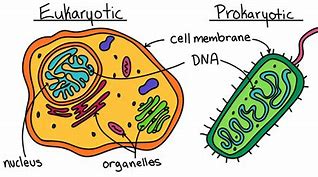
Doudna and her scientific team’s work is with prokaryotic cells rather than eukaryotic cells.
Eukaryotic cells have a nucleus with genetic material while prokaryotic cells have no nucleus with free floating genetic material. Humans have many prokaryotes but they are not enclosed within a nucleus. That leaves a door open to other scientists to claim precedent over Doudna’s pioneering work on the genetic code.
Feng Zhang (Chinese American biochemist.)
Zhang opens the door to eukaryotic cell modification with CRISPR-Cas9 which suggests he becomes the discover of human genetic code breaking before Doudna.
Doudna takes Zhang to court over a patent issue on CRISPR-Cas9 and eventually wins the patent right for genetic code breaking and its medical potential. There are a number of other scientists involved in Isaacson’s book but Doudna, Charpentier, and Zhang seem most consequential for understanding the significance of genetic code breaking.
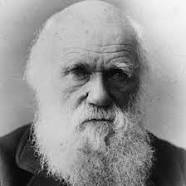
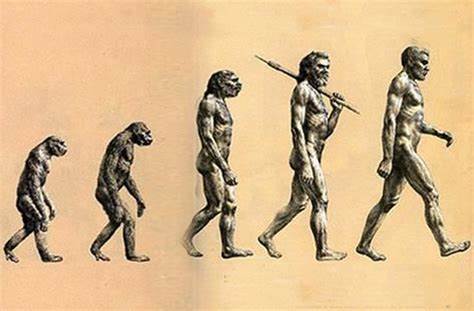
CRISPR-Cas 9’s discovery and use gives science a tool for human’ control of evolution rather than Darwinian natural selection’s control .
The remainder of Isaacson’s history is an exploration of the good and bad potential of that discovery for the human race. Without doubt, the world’s recovery from Covid19 is due to CRISPR Cas9’s use in finding a vaccine for the pandemic. On the other hand, Cas9 opens the door to indiscriminate gene modification.
This brings up the story of Jiankui He who modified the genetic code of one of the twins of a Chinese family whose husband had AIDs.
Jiankui’s medical intervention violated Chinese law and ethics rules set by the Academic Committee of the Department of Biology. At the same time, it was found that Jiankui botched the use of the CRISPR Cas9 tool. He was sentenced to three years in prison and the equivalent of a $430,000 fine.
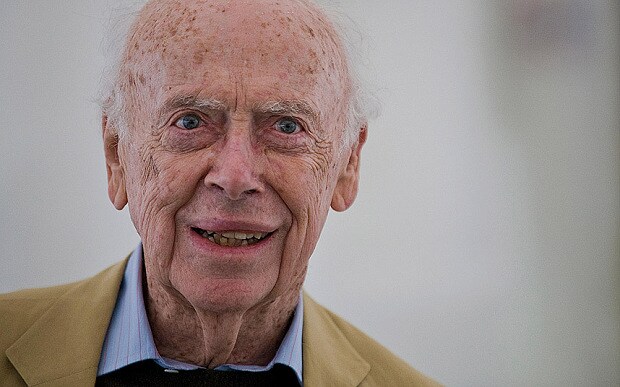
James Watson is now in his 90s.
The last chapters of Isaacson’s book address the controversial comments of James Watson about race and intelligence and his fall from grace despite being co-discoverer of the structure of DNA.
At a visit by Isaacson and Doudna to Watson’s home when he is 90, one cannot forget nor forgive Watson’s blind spot about race but understand his unshakable belief in the value human modification of genes to cure disease and his admittedly controversial ideas of enhancing human looks and intelligence.
Is behavioral hope a genetically identifiable characteristic by CRISPR-Cas9? Is it possible to modify human genes to create a more empathetic world? Or is gene manipulation a Mary Shelley nightmare with societies’ death like Dr. Frankenstein’s monster that dies from sorrow and guilt from the death of its creator?
The final significant note of “The Code Breaker” is Doudna’s and Emmanuelle Charpentier’s receipt of Nobel Prizes in 2020 for their discovery of CRISPR-Cas 9. By the end of “The Code Breaker”, a listener understands how the human race may become happy, healthy, or dead with control of the genetic code. Breaking the genetic code becomes a matter of human volition rather than nature’s decree. In whose hands will humans choose to be?
The Girls in the Wild Fig Tree (How I Fought to Save Myself, My Sister, and Thousands of Girls Worldwide.)
By: Nice Leng’ete
Narrated by: Nneka Okoye
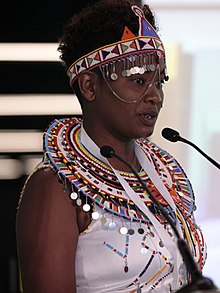
Nice Nailantei Leng’ete (Author at Age of 31 or 32, Graduate of Kenya Methodist University.)
Nice Leng’ete offers the story of her life in “The Girls in the Wild Fig Tree”. A large part of her story is about her life from age 4 to 10 years of age. She is born into a Christian family in Kenya. The final chapters address the lessons of her life and her journey to adulthood. Her father and mother die early in Leng’ete’s life. She explains both her parents died from AIDs. (Auto Immune Disease is first diagnosed in Kenya in 1984. By 1996, it is estimated that 10.5% of Kenyans were living with HIV, the virus that causes AIDs. The virus weakens a person’s immune system by destroying cells that fight disease and infection.)
Leng’ete is born into a blended family of two mothers. She explains the patriarchal Maasai culture is polygamous and her father had children from another wife.
Though her father dies when she is but 6 or 7, she recalls him as a leader of his village. Her father enriches their Maasai community by working with the Kenyan government to establish a natural preserve managed by local young men of their village. Leng’ete’s memory of both her father and mother seem to have formed her character. Her memory of her parents is that they loved each other and raised her to become the woman of this story.
Leng’ete is from southern Kenya, born into an East African tribe of the Maasai people.
Leng’ete shows herself to be an unconventional woman as well as an extraordinary Maasai. She breaks many international misogynist beliefs as well as Maasai traditional roles for women in her native country.
Coming from a rural area of Kenya, she moves to the capitol city of Nairobi, Leng’ete confronts the anonymity of big cities with a mentality to “do what ever it takes” to succeed.
Leng’ete’s poverty, youth and ambition lead her to live with three young men to afford a place to live in Kenya’s capital city. She is at once encouraged by the help she receives. On the other hand, she is surprised by the duplicity of a Nairobi’ con man that dupes her into believing he is an agent for international models. What Leng’ete does not forget is her village and Maasai traditions that suppress women and her village’s potential for cultural change.
Leng’ete returns to her village to work with local leaders to change the tradition of female genital mutilation (FGM). Leng’ete understands her culture and recruits a local male friend to open a door to some of the village elders. That door could not be opened by a woman without the help of her male friend. At the beginning of Leng’ete’s return she notes none of the elders would stay when she began to speak. With the help of her male friend’s participation in the meetings, a few elders began to listen. Without the elders’ understanding, she knows there is little chance for cultural change. The elders power and influence were needed.
Cultural change begins to show promise when a few elders stay and begin to listen to Leng’ete. Her objective is to explain how the the tradition of FGM diminishes Maasai’ culture.
Based on the advice of Leng’ete’s deceased father, she begins by asking questions of the elders to get them to think about the consequence of genital mutilation of women. She asks elders of the village if they think their partners enjoy sex. When they say no, she asks would they like their partners to enjoy sex? They say, yes. These questions open a door to understanding the consequence of women’s genital mutilation.
Leng’ete notes in her book that men are circumcised as a traditional path to manhood but the consequence is rarely death.
There are various reasons for genital cutting in different cultures. In the Maasai, FGM is a rite of passage into adulthood and a pre-requisite for marriage. In men, it is penile foreskin cutting but in females it is removal of the clitoris, a female sex organ that is a source of female sexual pleasure. Leng’ete explains to the elders how genital cutting of women’s genitals often cause excessive blood loss, infection, and high fevers that cause the death of women in their tribe. In the past, such deaths were believed to be unrelated to the cutting but to supernatural causes. In truth, Leng’ete notes many of the deaths are from unsterile instruments and imprecise cutting of the clitoris.
The broader cultural reality of FGM is that it reinforces sexual inequality.
Leng’ete tells the story of her older sister, Soila, who survives FGM and has children but is brutally abused by her husband. Her husband beats her and blames it on his drinking when it is implied to be related to Maasai patriarchal culture. Soila is trapped in the tradition of Maasai culture that says when a woman is married she is married for life. Leng’ete confronts Soila’s husband with the truth of his abuse. Surprising to Leng’ete, the husband gives up the tradition of life-long servitude of a wife by saying Soila is now Leng’ete’s responsibility. He releases Soila from their marriage, contrary to Maasai cultural tradition.
Leng’ete manages to get a college education but on her way she is hired as a social case worker in Kenya. That experience leads to organizational success that leads her to become a public speaker at a Netherlands event about women’s sexual and reproductive rights. She returns to Kenya to give another speech about the same subject to the Maasai, including village elders.
Leng’ete becomes the first woman to ever receive Kenya’s Black Walking Stick award which signifies leadership, respect and power within her community.
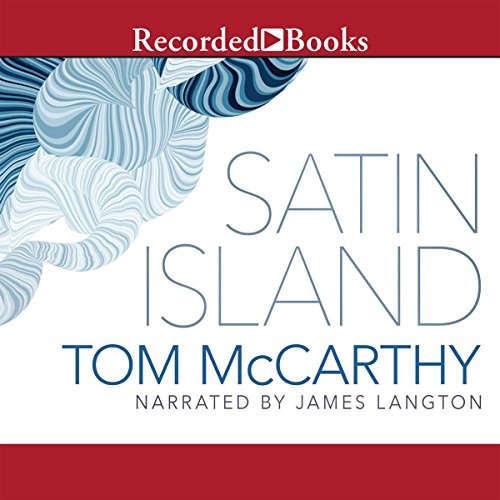
(Tom McCarthy, British Novelist, Nominated for the Booker Prize twice, One of which was for “Satin Island”.)
To this listener, “Satin Island” is an intellectual journey to nowhere. Obviously, others who determined McCarthy should be nominated for a Booker Prize for “Satin Island” disagree. Anthropology is the scientific study of human behavior, cultures, societies, and languages of the past.
Tom McCarthy seems to have sat at a desk and thought of an idea to write about, i.e., namely anthropology.
McCarthy’s main character is an anthropologist working for a fictional think tank that analyzes companies wishing to have some insight to an unknown future. His employer gives the anthropologist an assignment to write a paper that capsulizes the world’s future based on an understanding of the past and known present.
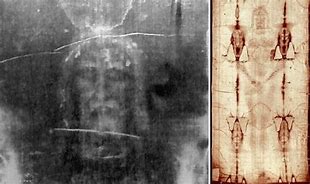
McCarthy’s story begins in Turin Italy with a brief explanation of the shroud of Turin which is alleged to have been wrapped around Jesus’s body after crucifixion.
The shroud could never have had the imprint of the remains of Jesus. The anthropologist notes it is proven fake because the shroud’s fabric is manufactured centuries after Christ’s crucifixion. The fake of the shroud is an inartful premonition to the course of the story.
The anthropologist’s assignment is a fool’s errand.
Whatever he writes in his report will be like the shroud of Turin. McCarthy tirelessly offers a series of vignettes to reinforce his message. A singular insight that one finds in McCarthy’s story is that anthropology is a science split into two disciplines. One is the acquisition of artifacts that tell an anthropologists’ interpretive story and two, anthropology is a search for written records and interviewed descendants that have first hand recollection of their ancestors’ societies. The first is clouded by interpretation. The second is clouded by understanding of language and descendants’ memories.
A recuring mystery in McCarthy’s story is of a parachutist that dies from a failed, presumably silk (like satin), parachute with nylon strings that were purposely cut.
The nylon strings holding the parachute are the threads of life’s history, like the fabric of the Shroud of Turin, and/or artifacts left for an anthropologist’s interpretation. McCarthy notes the cause of death may have been murder but it might have been suicide. Suspects are arrested. No one is convicted. The person who died is not suicidal. It becomes another mystery of the past.
The anthropologist realizes the report requested by his employer can be based on whatever he chooses to write. He begins to believe his report can be written and widely believed like the story of the shroud of Turin.
The story ends with the death of the owner who hired the anthropologist. The irony of the story is that the anthropologist is widely acclaimed for his final report meant to tell the future of life when he knows his story is like the shroud of Turin.
To this listener, there is too much intellectualism and not enough story. That may be why it did not win the Booker Prize. That is reason enough to me.
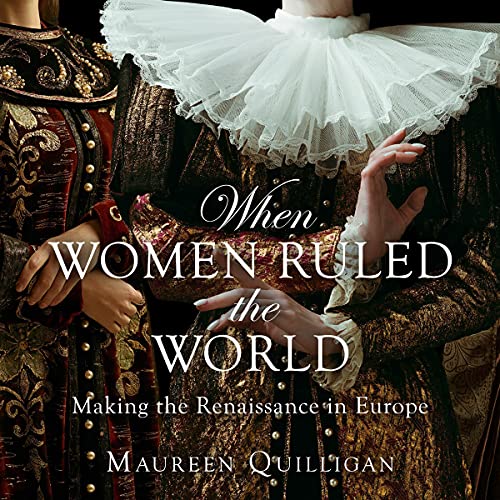
Narrated by: Suzanne Torne Narrated by: Alex Allwine, Kati Marton
Maureen Quilligan and Kati Marton illustrate how mistaken society is in forsaking women as leaders of the world. Quilligan argues four famous women “…Ruled the World” in the 16th century. “The Chancellor” addresses one woman who “…Ruled the World” in this century.
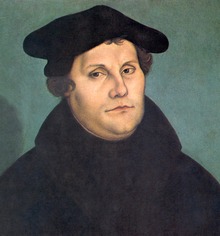
Quilligan explains an overriding conflict in the 16th century is a schism in the church. In 1517, Martin Luther posts the 95 Thesis that accuses the Catholic Church of selling indulgences to forgive sin to pave the way to heaven.
During Henry VIII’s reign (1509-1547) his first marriage to Catherine of Aragon does not produce a male heir to the throne. Henry wishes to dissolve his marriage to Catherine and marry Anne Boleyn. However, he needs an annulment from the Pope to marry Boleyn. The Pope resists.
Henry the VIII takes advantage of the growing schism in the church, exemplified by the 95 thesis. At the same time, as some historians note, Henry wishes to confiscate Catholic property in England to replenish the royal treasury. Henry the VIII creates the “Church of England” in 1534 as an alternative to the Papal Church in Rome. The Church of England annuls Henry VIII’s marriage to Catherine and the confiscation of Catholic Church property begins.
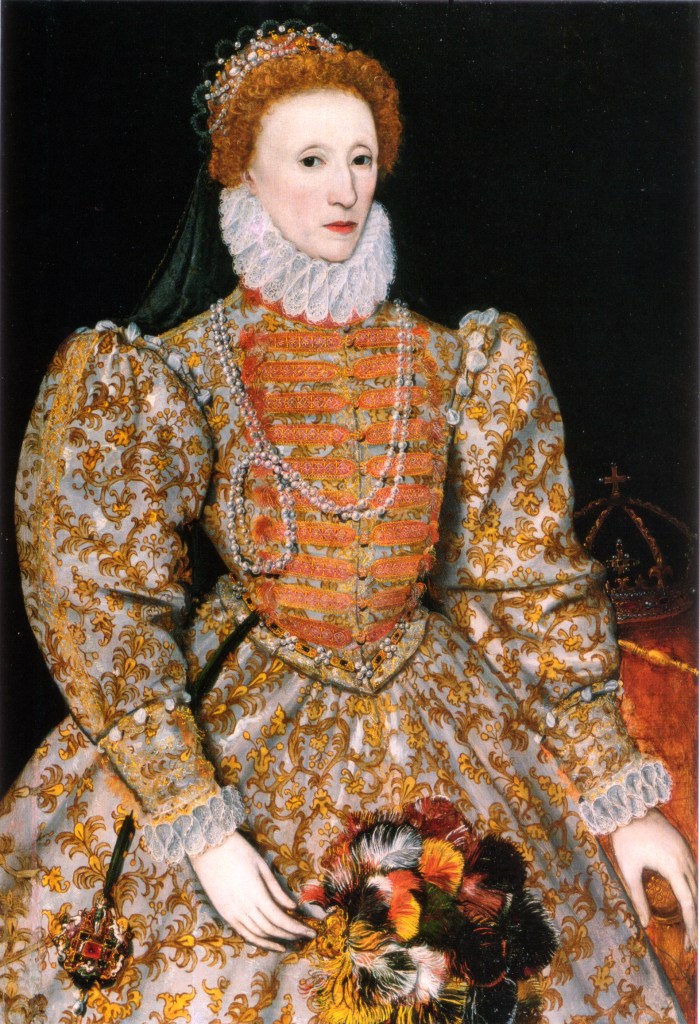
With the formation of the Anglican Church, England becomes Protestant which is the faith of Elizabeth I, the daughter of King Henry and Anne Boleyn.
Still, even after the marriage to Boleyn, there is no male heir. Catherine of Aragon remains Catholic, along with her daughter who becomes Queen Mary I of England after Henry’s death. Mary I, as a Catholic, is half sister to Elizabeth I who is Protestant. Mary I rules as a Catholic despite her half sister’s insistence on remaining Protestant.
Quilligan recounts the religious differences between Queen Mary I and Elizabeth, but Quilligan suggests they remain close, bound by their father and their sisterhood.
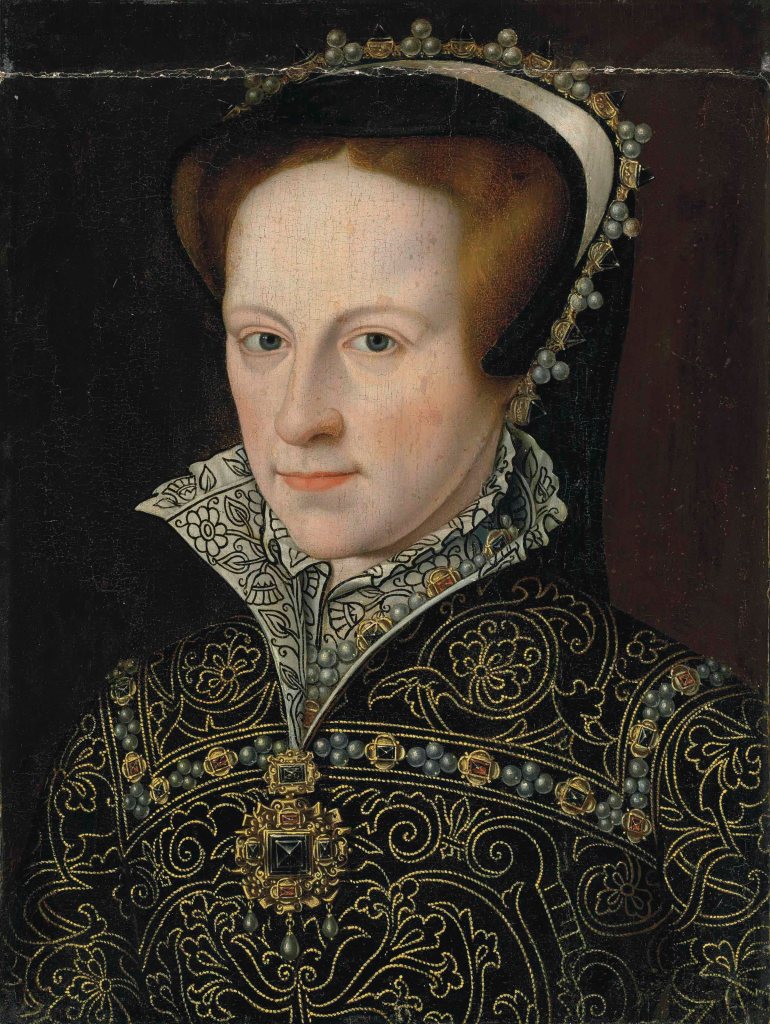
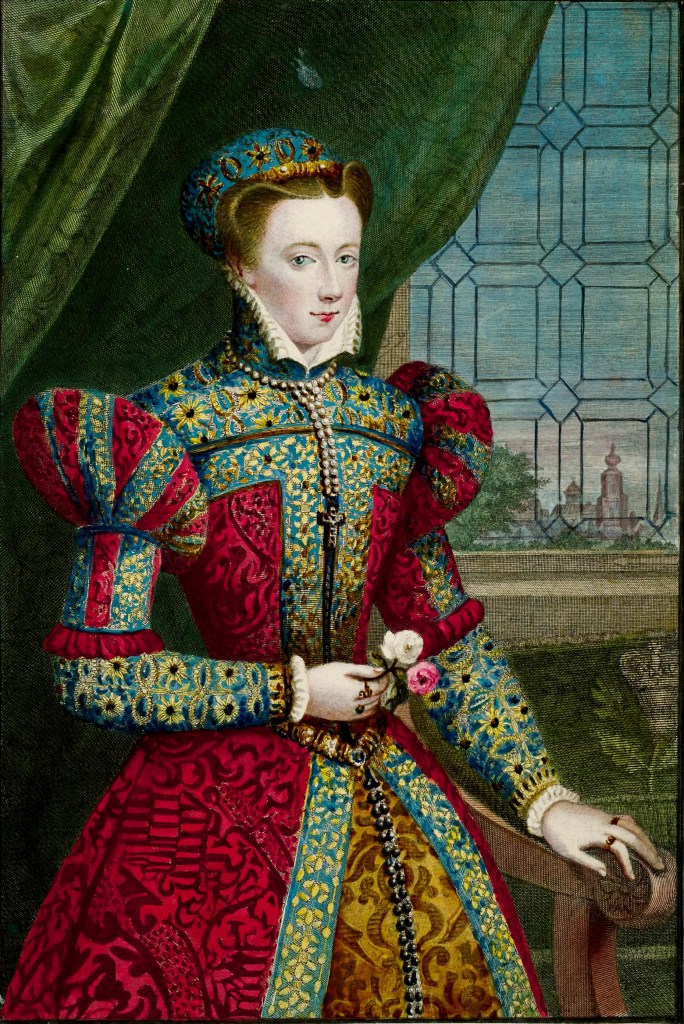
Queen Mary I of England (1516-1558)
Upon the death of Mary I, Elizabeth I ascends the throne as a Protestant Queen replacing England’s Catholic Queen. Quilligan explains religious differences were important but Mary I and Elizabeth I maintain a sister to sister relationship despite there religious difference. Quilligan implies Elizabeth I knew that maintaining a good relationship with Mary meant she would one day become Queen of England.
Quilligan then turns to Scotland’s monarch. Scotland’s history shows Mary Queen of Scots is a committed Catholic leader. She brutally persecutes Protestants during her reign and becomes known as “bloody Mary”.
Mary Queen of Scots (1542-1587)
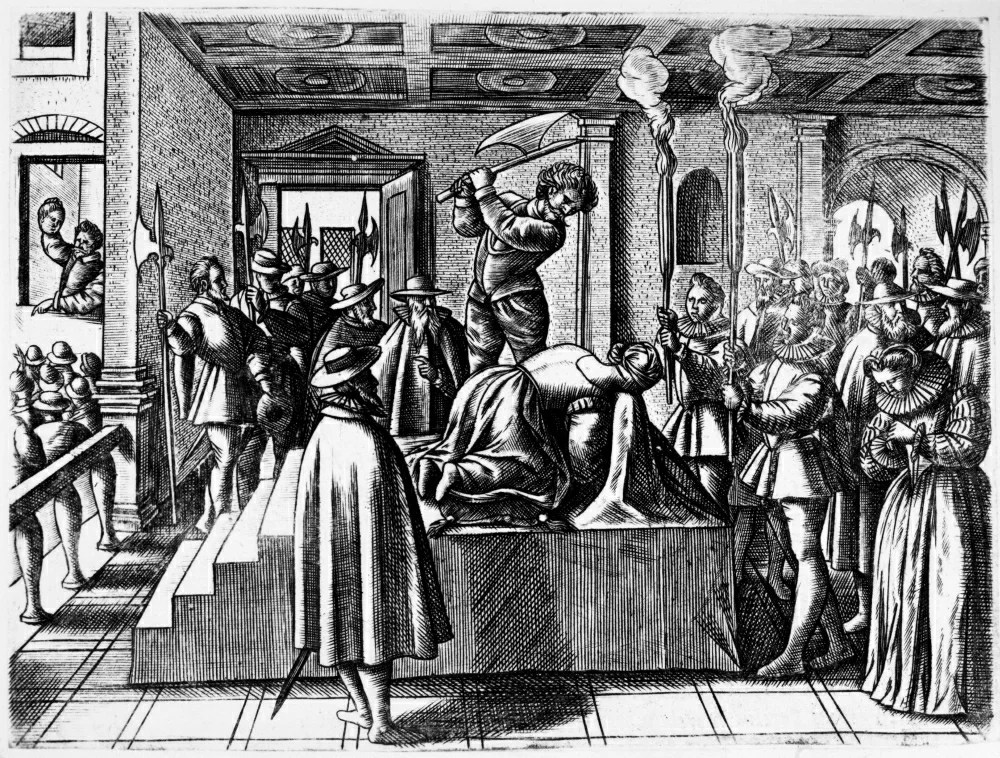
Quilligan characterizes the relationship between Mary Queen of Scots, and Elizabeth I as friendly (almost sisterly), but a plot to assassinate Elizabeth I leads to the beheading of Mary Queen of Scots. The irony of that act is that Elizabeth paves the way for Prince James, the son of Mary Queen of Scots, to become James I, King of England after Elizabeth’s death.
The beheading of Mary Queen of Scots is said to have required two strokes with the first not completely severing her head. To some, Mary Queen of Scots became a martyr.
Elizabeth is known as the virgin queen but her sister-like relationship with the beheaded Scottish Queen gave Elizabeth a somewhat motherly relationship with James. However, Elizabeth (after her long reign) refuses to identify an heir at her death. Other historians note that James I ascends the throne by presumption and selection by remaining leaders of England, after Elizabeth’s death. Quilligan notes James I is a committed Protestant rather than a Catholic like his mother.
Maureen Quilligan’s history is less convincing about women who ruled the world because it relies on recollected details from scant original documents and facts proffered by other historians.
Quilligan’s book about women that ruled the 16th century world seems hyperbolic and only marginally convincing. Quillian’s argument for at least one woman of the 16th century who ruled the world is credible–based on Elizabeth I’s long reign and her acclaim by most historians.
Quilligan explains Elizabeth I, Mary I, Mary Queen of Scots of (bloody Mary), and Queen Catherine de’ Medici of France are world leaders.
Queen Catherine de’ Medici (1519-1589)
They were leaders in the 16th century but the author’s reported facts only fit the book’s catchy title. Quilligan’s history fails to convince listener/readers that women ruled the 16th century world. Spain is noted as the strongest world power of the 16th century. Spain was largely ruled by Kings with only one Queen (Queen Isabella) who ruled for four years of the 16th century.
In contrast to Quilligan’s the gathered historical facts of 16th century leadership by women, Kati Marton has the good fortune of first person interviews of Angela Merkel’s leadership in the 21st century.
There are boat loads of original source material that confirm Merkel is a great ruler of the world. Merkel serves Germany while 3 Presidents (George W. Bush, Barack Obama, and Donald Trump) are elected in the U.S. Marton convincedly explains why Merkel is a great woman leader of the 21st century world. Marton explains how Merkel comes to power in Germany. Merkel’s remarkable rise beggars imagination.
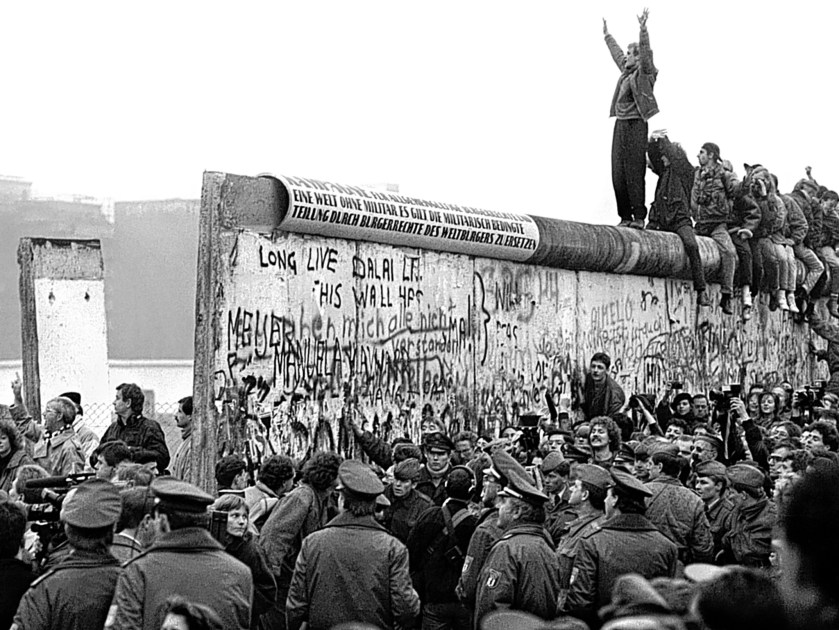
The fall of the Berlin wall in 1989 reunites Germany.
Merkel is raised in East Germany as a scientist, fluent in Russian and German, and then as an English speaker, when she chooses to become a national politician. In 16 years Merkel, an unknown quantum chemist, becomes leader of the third wealthiest country in the world with only the U.S. and Japan having higher GNPs.
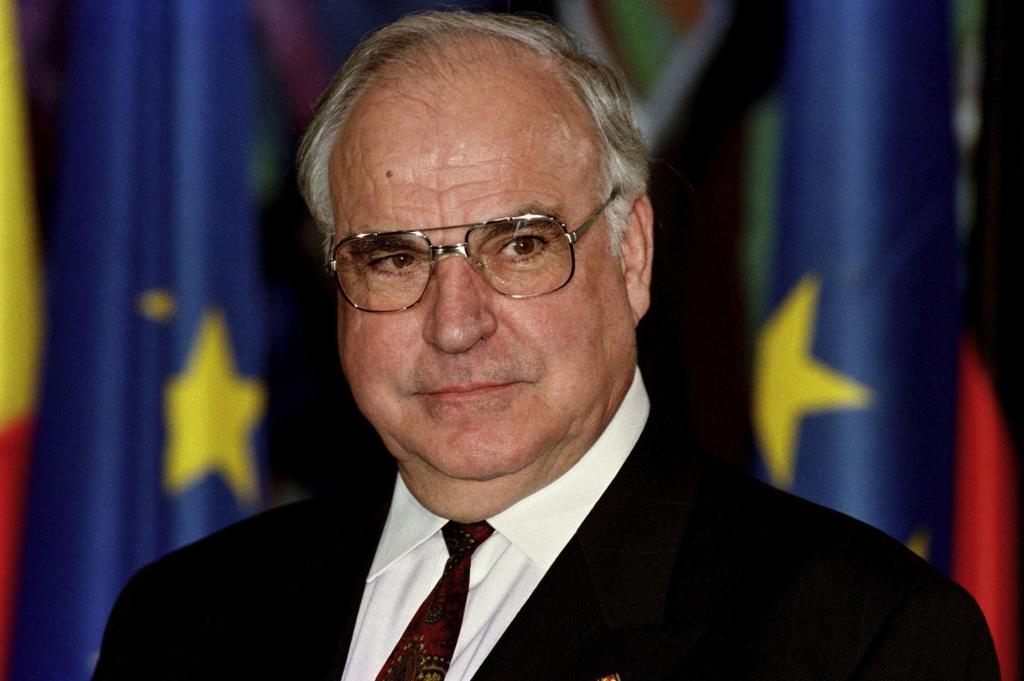
Marton notes Helmut Kohl is Chancellor of West Germany when the Berlin Wall is taken down. Kohl became Chancellor of the entire country in 1990 (originally elected in 1982) and remained Chancellor until 1998.
Kohl recognized the political value of Merkel early in her political career. She represented East Germany’s zeitgeist because she lived the life of an East German. When Kohl loses the Chancellorship to Gerhard Schroeder, the table is set for Merkel to challenge Schroder for Germany’s seat of power.
Kohl’s last race is against Schroeder. Kohl is expected to be reelected. An exposed financial scandal ruins Kohl’s chance. He is beaten by Gerhard Schroeder.
Gerhard Schroeder (Former Chancellor of Germany.)
Marton explains what you see is what you get with Angela Merkel. Though much of Merkel’s rise in politics is due to Helmut Kohl’s support and sponsorship, she forthrightly and publicly criticizes Kohl for using an intricate web of secret bank accounts to illicitly finance the party that had got him elected. Schroeder beats Kohl but is challenged by Merkel for Chancellor in 2005. Schroder loses re-election and Merkel becomes the first woman in history to become Chancellor of Germany.
Marton explains how Merkel abjures the macho machinations of Vladimir Putin and directly confronts Putin’s lies about Russia’s Ukraine incursion in 2014.
Marton shows Merkel is not a glib politician but a highly intelligent leader, with immense energy, who does what she believes has to be done. Merkel is shown to be an independent thinker who represses her emotions when confronted with the exigencies of political conflict.
Marton goes on to explain her admiration of George H.W. Bush, and Mikhail Gorbachev and their support of independence. In the beginning of Obama’s administration, Merkel initially feels Obama talks a good game but she reserves judgement until she sees positive results. Merkel grows to respect Obama’s intelligence and what he accomplishes but nearly breaks with him when she finds her personal cell phone had been tapped by the U.S.
Marton shows the humanity of Merkel by noting her decision to accept 1,000,000 Muslim refugees from the war torn Middle East in 2015.
Thousands of German citizens welcomed the refugees and offered clothes, food, and support. At the same time there is German opposition to Muslim immigration. Merkel notes the human need of her action but also explains the value of the refugees to an ageing German population that needs more young workers.
Marton’s book reveals a concern that Merkel has about the hardening of German opposition to non-German immigrants. Merkel’s concern is the rise of a right wing party like that which brought Hitler to power.
Marton reveals one of Merkel’s speeches in Israel that addresses the Holocaust. Marton implies it is the first speech by a German Chancellor in Israel since WWII.
Marton implies Merkel views Trump as trouble for American democratic values.
Marton gives some insight to reader/listeners on Merkel’s perception of Trump. Trump reinforces beliefs of right wing Germans by denigrating immigrants and supporting right wing authoritarians like Putin in Russia and Pen in France.
One comes away from Marton’s book with admiration for Angela Merkel. Merkel appears to be one of the few politicians in the world that have a “superior perception of reality”, a phrase made famous by the American political strategist Lee Atwater. (One may like the phrase but Atwater is considered by some as the most devious campaign strategist in America. He played a role in electing Republicans Ronald Reagan and George H.W. Bush. Atwater died in 1991 at the age of 40.)
What both Quilligan and Marton make clear is that the world loses half the world’s intelligence and capability by not recognizing women are equals of men. There are no giants among us. We are all human, neither omniscient nor unerringly correct.





























































 REVIEWS AND VIEWS OF LIFE