“Everyone Who Is Gone Is Here” is an indictment of American foreign policy. There are no easy solutions for immigration, deportation, or human rights in the world.
Books of Interest Website: chetyarbrough.blog
Everyone Who Is Gone Is Here (The United States, Central America, and the Making of a Crises)
By: Johnathan Blitzer
Narrated By: Jonathan Blitzer, Andre Santana
Johnathan Blitzer (Author, American journalist, staff writer for The New Yorker.)
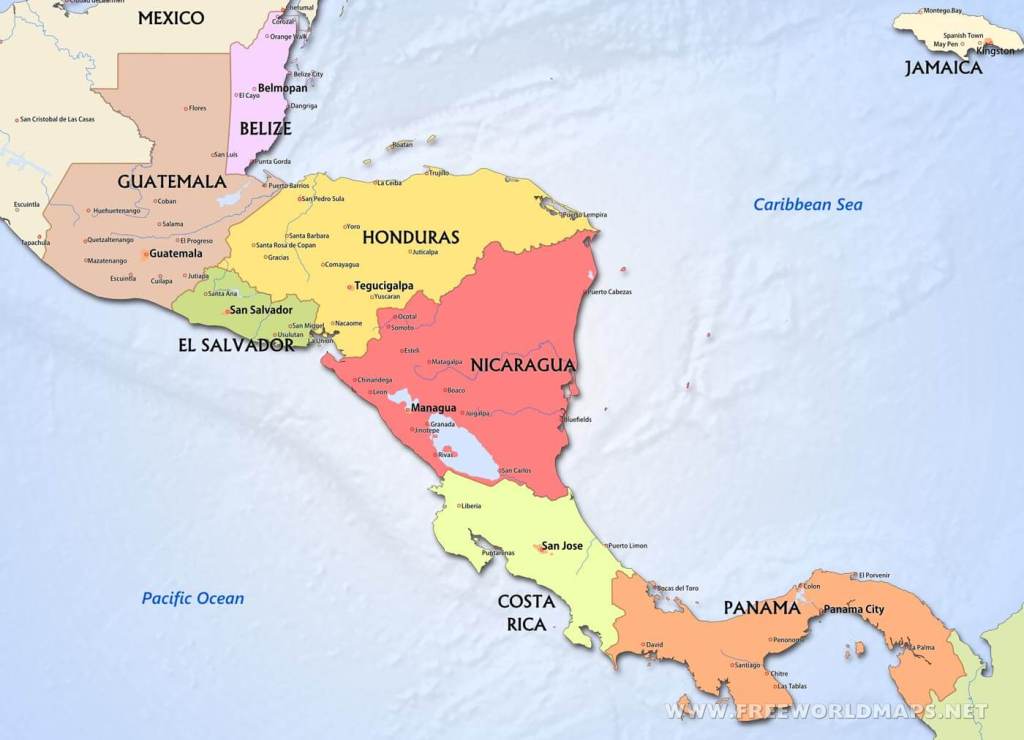
“Everyone Who Is Gone Is Here” is an indictment of American foreign policy. There seems a loss of a moral center in America with its support of other governments based solely on government type, national security, or economic interest. That is not to suggest national security and economic interest are not critically important but Blitzer’s history of America’s support of Central American governments is appalling. El Salvado, Guatemala, Honduras, and Nicaragua are democracies in title but not in reality.
Blitzer tells the story of migrants from El Salvadore and Guatemala who are imprisoned, tortured, and sometimes raped or murdered by their government’s functionaries.
El Salvadoran and Guatemalan governments purport to be representative democratic republics. They are not. They have been dictatorial and punitive victimizers of their citizens. The picture drawn by Blitzer is that both are highly autocratic and riven with exploitation and arbitrary treatment of their Latino populations.
Some immigrants came to roil American communities with the only tools they were familiar with in their native countries.
Many immigrants came to America to escape arbitrary treatment by their governments. America has benefited from its immigrant labor, but some turned to street drugs and violence because of their poverty and the experience their families lived with in their native countries. Driven by self-interest, a survival instinct, and ignorance, America has deported many Latino immigrants who chose the gang life in the California suburbs. Gang life offered identity and income. Gangs like MS-13, the 18th Street Gang and other street name gangs terrorized L.A. and Southern California. The police reacted with violence by rounding up Latinos based on gathered photographs and lists of their families and friends. Some who had proven records of crime were imprisoned or deported to their families’ countries even though they may have been born in America.
America has financially and militarily supported Central America without regard to human rights.
There is a taint of McCarthyism in America’s communist categorization of Central American countries because false categorizations hides the truth. The truth is that democratic countries like El Salvadore and Guatemala have treated citizens as harshly as yesterday’s Stalin, today’s Ayatollah in Iran, and the two Assads in Syria. Reagan’s willingness to sell arms to Iran in the 1980s for money to send to Nicaragua because communism was allegedly opposed by those in power is an example of America’s political blindness. Nicaraguan, Salvadorian, and Guatemalan leadership was as corrupt as many communist countries that practiced violence, imprisonment, torture, and murder of their citizens. Whether one’s government is communist or democratic, the important issue is how its citizens are treated, not its form of government. Bad forms of government will eventually fall from the weight of their citizens’ unequal treatment, just as Syria fell in 2024. The sufferers are always the oppressed citizens and, as interestingly noted by the author, the government perpetrators who live with the guilt they feel when they retire from their military or government jobs.
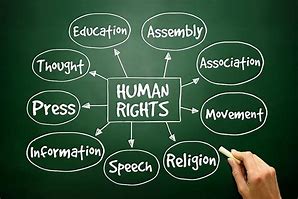
What Blitzer infers in his history of Central America is that human rights of citizens should be the primary criteria for American financial and/or military support for foreign governments whether democratic, communist, socialist, or other.
National stability comes from citizens’ support of their government. Stability is compromised when human rights are denied. Blitzer implies–America should only financially or militarily support another country only if the nativist nation and culture is working toward equal human rights for its citizens. The immigrant crises in America and the world is caused by nations that do not work toward equal human rights for their citizens.
One is somewhat conflicted by Blitzers’ argument. The conflict is in an outsiders’ understanding of a foreign countries’ culture.
Human rights may be universal, but culture is made of beliefs, values, norms, customs, language, art, literature, food, fashion, social institutions, and unique symbols and artifacts of particular nation-states. This great host of characteristics is not easily quantifiable. No nation can justify rape, torture, or murder but they do exist in all cultures. Ignorance of culture is at the heart of why any country that invades, or militarily and financially supports another country, risks failure.
There are no easy solutions for immigration, deportation, or human rights in the world.
Trump’s purposefully uninformed knowledge of history will become a greater source of conflict in the world because he has a second term’ understanding of how the American government works and how it can be subverted with loyal followers.
Books of Interest Website: chetyarbrough.blog
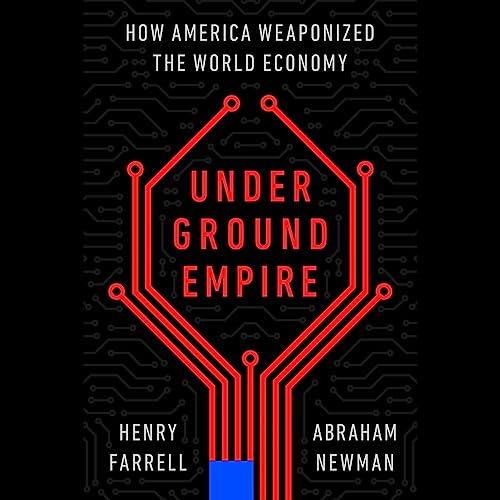
Underground Empire (How America Weaponized the World Economy)
By: Henry Farrell, Abraham Newman
Narrated By: L. J. Ganser
Henry Farrell (Professor at Johns Hopkins School of Advanced International Studies, editor at the Washington Post.)Abraham L. Newman (Professor, School of Foreign Service and Government Dept. at Georgetown University.)
“Underground Empire” is not a surprising revelation in today’s media-savvy era. Every person in the world is being surveilled by someone because of the power and influence of government. Whether a democracy that believes in freedom or an autocracy that believes in absolute control, Farrell and Newman explain how “Big Brother” is watching and acting in ways that affect your life.
The potential for ubiquitous surveillance was known and wished for by some government bureaucrats. Wide social surveillance was resisted by many in the American government until 9/11. After 9/11 that resistance weakened and surveillance of the world, more fully including American citizens, became indispensable. The creation of an “Underground Empire” has weaponized privacy and the fuel of money that can heat, cool, burn or freeze national economies.
The empire’s objective is to be in charge of the future. One may take issue with the word “…Empire”. The scale of an “Underground Empire” varies from nations like America, China, the UK, the EU, Russia, and others to a group of Al Qaeda’ terrorists, or a disparate group of Syrian freedom fighters. The common denominator is technological connection, i.e. the basis of “Underground…” organization for coordinated action that changes the world.
Ferrell and Newman’s primary focus becomes the use of surveillance to influence world policy.
Particularly, the surveillance of money, the source of power and prestige, is shown by the authors to be key to understanding what other countries and interests are planning and doing that affects society. They speculate that 9/11 could have been exposed before it happened with more surveillance of the money that was being accumulated by Al Qaeda and used by the terrorists who attacked the world trade center in New York. That might be true but there is a wider consequence of that level of surveillance. Surveillance has become a weapon in the hands of political leaders. Surveillance of the flow of money, the source of power and prestige, may make “America Great” as inferred by the pending second term President. The EU, NATO, and other international organizations are looked at differently by Trump than by former post-world war’ Presidents. Trump views the EU and NATO as users of American wealth without equivalent contribution to world defense.
On the one hand, Trump objects to NATO because of its disproportionate financial burden to the United States which pleases Putin and changes the perspective of America’s role in the world. On the other hand, the authors note Trump opposed Putin when it came to the Nord Stream 2 oil pipeline to the E.U. The difference has to do with the Trump’s transactional view of the world. Because of America’s vast gas supplies from fracking, Trump sided with Texas politicians who vociferously objected to the second Nord stream pipeline to Europe.
The “Underground Empire” is not exclusively focused on money, but the use of money is based on knowledge of what people are thinking, doing, and wanting. Accumulating information becomes actionable with money. The inference by the authors is that the government’s decision to track money, as well as private information, informs one of what will happen in the future. The problem with this narrow reasoning is that national interests of countries do not always line up with each other. The formation of the EU with its own currency becomes a competitor for America, not just a useful tool for exchange of goods between nations.
Today’s playing field is not limited to major powers. As the spread of technology is mastered by the public, anyone as small as an interest group or as large as an international alliance can influence and potentially change the world. Farrell and Newman offer important understanding of that invisible war. Obvious examples are 9/11, Ukraine’s invasion, and most recently, the overthrow and exile of Bashar al-Assad in Syria. But they also reveal another front for conflict between the U.S. and countries that have traditionally been allied with America.
Histories carriers of belief in information transparency are people like Edward Snowden, Daniel Ellsberg, Chelsea Manning, Mark Felt, and Reality Winner. Snowden, a former NSA contractor, leaked classified information about global surveillance, Ellsberg exposed the lies of Vietnam, Manning exposed the WikiLeaks, Felt exposed the Watergate scandal, and Winner exposed presidential election interference in 2016. Secrets frequently kill the truth.
Ferrell’s and Newman’s book will make many even more concerned about the Trump presidency. Trump’s purposefully uninformed knowledge of history will become a greater source of conflict in the world because he has a second term’ understanding of how the American government works and how it can be subverted with loyal followers.
To make the point clearer, Trump views the world transactionally. The measure of value is most easily understood as wealth and the influence of money. Appointing wealthy sycophants to the government ensure victimization of the poor.
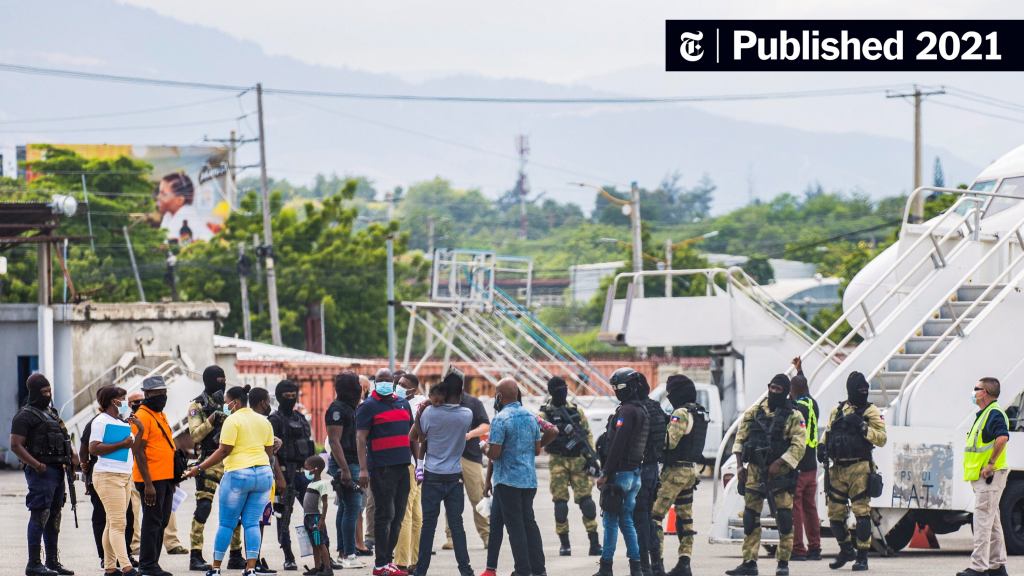
Trump’s mass deportation idea is draconian and inhumane. A system of deportation should be organized to repatriate some undocumented immigrants but not to expel them without fair consideration of their circumstances and the needs of the American economy.
Books of Interest Website: chetyarbrough.blog
Real Americans
By: Rachel Khong
Narrated By: Louisa Zhu, Eric Yang, Eunice Wong
Rachel Khong (Author, American editor in San Francisco. Born in Malaysia to a Malaysian Chinese family.)
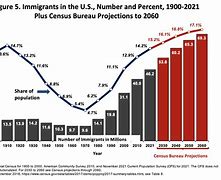
In a 1931 book, “Epic of America”, James Adams described America as a land where life should be better and richer for everyone, with opportunities for each according to their ability or achievement. This was written in the depths of the depression that began with the stock market crash of 1929. Of course, illegal immigration was nearly impossible in the 1930s, but still–there were 500,000 American immigrant arrivals in the U.S. during that decade. That amounted to 11.6 percent of the U.S. population at that time. Rachel Khong’s vision in “Real Americans” tests the next four years of Trump’s administration.
Khong writes a fictional story of a romantic relationship between an undocumented young Puerto Rican woman who is about to be deported and an equally young South Korean American who is falling in love with her.
Both are well educated by the American education system. The boy is interviewing for entrance to Yale while the girl is meeting an immigration lawyer to see what can be done to avoid deportation. The girl lives with a feckless “Wanna-Be actor” father and driven mother who is struggling to make a living in America. The daughter is shown to be quite intelligent with the ambition to become a data analyst.
Mass deportation without fair consideration of immigrant circumstance and their societal contribution is inhumane and foolish.
The developing affection between these two characters is beautifully created by the author. They are an example of why resident status needs to be treated fairly when immigrants are found to violate the immigration laws of the United States.
The idea that immigrants take jobs away from native American workers is a false flag.
The agricultural industry will be seriously impacted by mass deportation of undocumented labor.
The need for workers in America will continue to grow in the foreseeable future of the largest economy in the world. The demographics of an aging American population (that is not replacing itself) requires immigrants to grow and maintain the economy. The two characters of Khong’s story may not be every immigrant but they show how some are the future of American prosperity. Mass deportation of illegal immigrants will harm the American economy.
Immigrants have played a critical role in what America has become.
Khong is just telling a fictional story about American immigration, but it clearly illustrates how political rhetoric devolved into political lies and misinformation about the value of all human beings. America does have a history of Indian and Black murder and enslavement, but it also has a history that ameliorates discrimination and past misdeeds. One hopes the blunt force of immigrant deportation is not a policy that repeats America’s societal mistakes. American needs a carefully adjudicated immigration policy for the betterment of society.
Today, the total percentage, including 11,000,000 undocumented immigrants, is estimated at 14.3%. In the 1930s, 11.6% of the American population was immigrant. The question is whether the undocumented should be deported, regardless of the contribution they make to American productivity.
An aging population in America is not being replaced by native born Americans. Worker loss of undocumented immigrants may be harmful to American productivity.
Trump and his deportation Czar, Tom Homan.
Trump’s mass deportation idea is draconian and inhumane. A system of deportation should be organized to repatriate some undocumented immigrants but not to expel them without fair consideration of their circumstances and the needs of the American economy.
Khong’s story is entertaining fiction, but Trump’s deportation plan is a threatening work in progress.
We may be surprised by what Trump will do in four more years. The million or more voters who put him over the top deserve what good or bad comes from their choice.
Books of Interest Website: chetyarbrough.blog
A Higher Loyalty: Truth, Lies, and Leadership
By: James Comey
Narrated By: James Comey
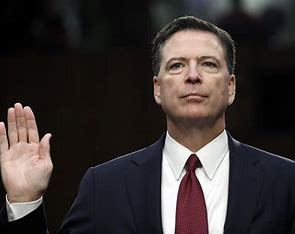
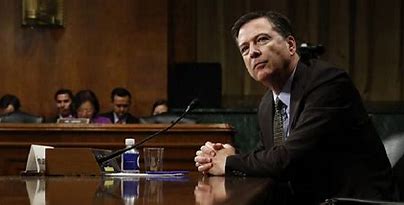
James Comey (Author, director of the FBI from 2013 to 2017, fired by then President, Donald Trump.)
With the re-election of Donald Trump, it seems time for a review of James Comey’s book to better understand his perspective on the soon-to-be new/old leader of America. This review is admittedly biased. On the other hand, Comey’s and this book-reviewer’s mutual bias are reinforced by comments of other Americans who personally served in Trump’s first administration.
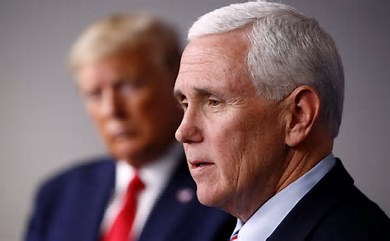
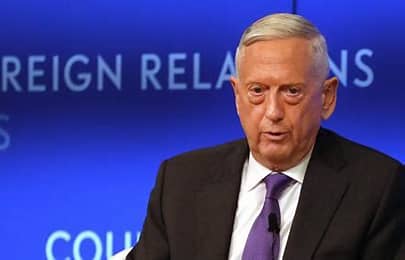
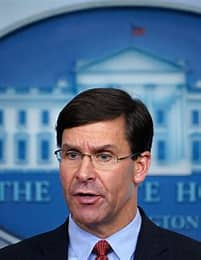
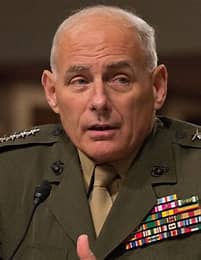
Mike Pence, Rex Tillerson, Jim Mattis, Mark Esper, William Barr, and John Kelly, were all former officials of President Trump’s first administration. As is widely known, all of these officials have guarded, if not negative, opinions about Trump’s position as the leader of the “free world”. What “freedom” is there when his former chief of staff categorizes Trump as a fascist?
John Kelly (Trump’s chief of staff from 2017-2019.)
Mike Pence refused to endorse Trump in his 2020 run for re-election. Rex Tillerson called Trump “pretty undisciplined” in 2018 and counseled Trump to not violate the laws of the land. The former Defense Secretary, Jim Mattis, warned Trump about “militarizing our response” to protests against the government. He is quoted to have said “Never did I dream that troops …would be ordered under any circumstance to violate the Constitutional rights…of fellow citizens.” Mark Esper, who succeeded Mattis, said January 6th’s run on the capitol “…threatens our democracy”. William Barr, Trump’s former Attorney General, said Donald Trump shouldn’t be near the Oval Office. John Kelly, Trump’s former chief of staff, notes Trump fits the definition of a fascist. We should remind ourselves–a fascist is a dictator who believes in centralized autocracy, militarism, suppression of opposition, nationalism, and economic control. “What freedom is there in an America led by a fascist”? America has chosen to re-elect Trump despite the aforementioned concerns by people who worked in his administration.
James Comey is fired by Trump for several reasons.
Comey is fired by Trump for several reasons. One, he mishandled the investigation of Hillary Clinton’s use of private email. He refused to admit the president was a part of the FBI’s investigation into Russia’s involvement in the 2016 presidential campaign. Additionally, Comey refuses, at the request of Trump, to drop the investigation into former National Security Advisor Michael Flynn. Trump dismisses Comey in 2017. (Ironically, Michael Flynn pled guilty in 2017 for making false statements to the FBI. President Trump pardoned him in 2020.) As a result, Trump’s Attorney General Jeff Sessions and Deputy Attorney General Rod Rosenstein recommended the firing of Comey.
The Attorney General Jeff Sessions and Deputy Attorney General Rod Rosenstein recommended the firing of Comey.
Comey’s biography is about his life from childhood to adulthood. The first chapters are about his parents and siblings. He recounts a burglary incident in his home when only he and a younger brother are in the house. The burglar enters the house with a gun and threatens both boys while looking for money and valuables. Though James grows to be six feet eight inches tall, he is not big when this incident occurs. He and his brother are naturally frightened. James tells the burglar where to look for money that he might find in the house. The boys are locked in a basement bathroom and the burglar leaves but sees the boys trying to escape through the bathroom window. The burglar returns. James runs to the neighbor’s house for help but the burglar escapes before the police arrive.
Comey notes he was bullied when in grade school.
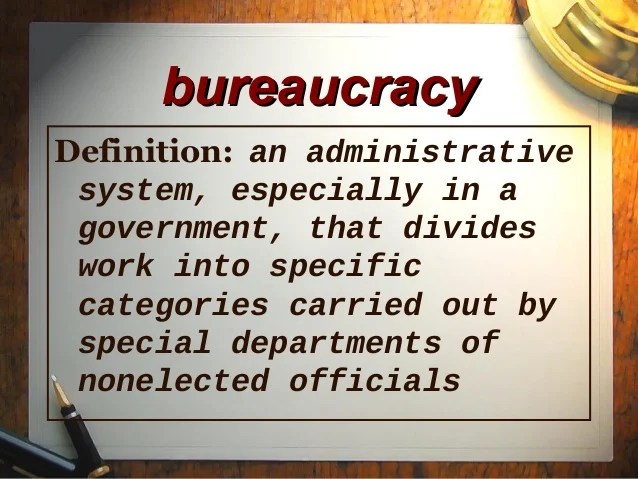
The bullying eventually stops, and one wonders if it was because of his growth spurts or because of his ability to adjust to the social environment in which he lived. He had teachers and employers during his school years that became character models for him in life. He writes of incidents that he feels became examples that led him to become the person he became. From the perspective of this listener/reader, they were experiences that made Comey an ideal bureaucrat. This is not to demean bureaucratic positions but to suggest Comey matured to be a believer in systematic analysis of human behavior.
James Comey became an ideal bureaucrat for the Federal Government because he was a believer in systematic analysis before developing institutional policy or taking consequential action.
Comey starts his professional life as an attorney. His big break comes from the George W. Bush administration when he is offered the position of the U.S. Attorney for the Southern District of New York. Ironically, he went to work for Rudy Giuliani, an unprincipled but popular mayor of New York. Giuliani became President Trump’s personal lawyer and was later convicted for defamation. (Birds of a feather?) Bush asked Comey to serve as Deputy Attorney General for the U.S. government. He was confirmed by the Senate in 2003. In 2013, Barack Obama appointed James Comey as the Director of the Federal Bureau of Investigation.
A disturbing chapter in Comey’s book is his prosecution of Martha Stewart for insider trading.
Comey tries to negotiate a deal with Stewart to keep her out of jail if she would plead guilty. She refuses and Comey orders continuation of the prosecution. Stewart was convicted and sentenced to five months in a minimum-security prison. There is a “holier than thou” sense of Comey’s action but his side of the story is that fame and wealth are no excuse for illegal behavior. This is a feeling one may or may not agree with because fame and wealth should not be a license to violate the law. (The obvious irony is that President Trump will escape punishment for his law breaking because of re-election.) In Comey’s opinion, when Stewart would not plead guilty, she became the author of her own punishment.
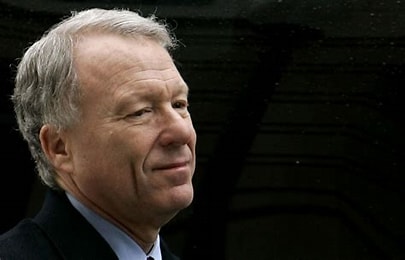
Scooter Libby (American lawyer and former chief of staff to V.P. Dick Cheney.)
Scooter Libby’s prosecution brings up another incident that tests Comey’s character more than the effect of a person’s wealth and fame. Comey’s advance in the Federal Government came from the Republican Party led by Bush. Libby is indicted for lying to the FBI about divulging the name of a CIA officer (Valerie Plame). Libby is convicted because of Comey’s investigation despite his political appointment by the Bush administration. One might argue that Comey refuses to bias FBI’ investigations based on fame, wealth, or political affiliation with these investigations. That seems apparent, considering the title of his biography, i.e. “A Higher Loyalty”.
Comey’s biography offers insight to what Trump may or may not succeed in doing when he assumes office. Like the administration of George W. Bush, the bureaucracies of America’s government will have some influence on Trump’s agenda.
THE FOLLOWING IS TAKEN FROM THE AP INFO ABOUT TRUMP’S PLANS:
to empower the National Guard and domestic police forces to deport an estimated 11 million unauthorized immigrants,
leave abortion laws to the discretion of the American States with no federal mandate,
restructure the Food and Drug administration,
eliminate taxes on earned tips, eliminate taxes on social security income, and reduce taxes on corporations from 21% to 15%,
create tariffs of 10 to 20 percent on foreign goods,
reinstitute the 2020 executive order requiring the federal government buy “essential” medications only from U.S. companies,
block purchases of “any vital infrastructure” in the U.S. by Chinese buyers,
roll back societal emphasis on diversity and legal protection for LGBTQ citizens and Title IX civil rights protections for transgender students,
reduce the role of federal bureaucrats and regulations across the country,
target elimination of the federal Dept. of Education to promote privatization of schools, while increasing regulations on what can be taught in schools,
repeal and replace the Affordable Care Act,
deny the existence of global warming while discouraging fuel efficiency standards and incentives for fuel conservation,
make it harder for companies to unionize and discourage unionization dues payments,
withdraw from world affairs with a non-interventionist military policy while increasing defense spending for a missile defense shield.
Comey explains how overreaction to 9/11’s attack led to growing suspension of human rights in America.
Abu Ghraib prisoner abuse.
Legislation drawn by the Bush administration condoned CIA’ torture of foreign nationals and anti-American demonstrators. That proposed legislation was opposed by the Attorney General’s office and did not get passed. However, the CIA and some military personnel got ahead of government policy decision in their actions at Abu Ghraib and Guantanamo Bay. The Bush administration did not give up on their desire to allow torture.
Undoubtedly, some actions will be taken before Congressional or bureaucratic approvals but there is hope for restraint based on what the Attorney General’s office (John Ashcroft) objected to when it became aware of the CIA’s actions. The threat of mass resignation by the Attorney General’s office made Bush reconsider what his staff proposed to Congress. One presumes, there will be similar bureaucratic resistance to Trump’s extreme policy recommendations.
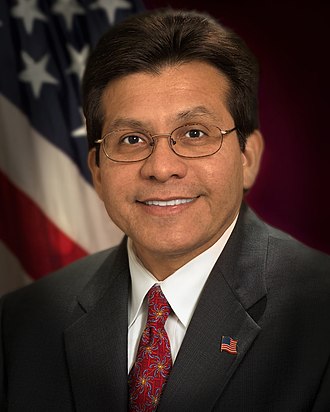
Alberto Gonzales (80th U.S. Attorney General from 2005-2007.)
However, despite objections to the torture system practiced by the CIA, Bush’s administration chose a new Attorney General, Alberto Gonzales. In that Presidential choice, bureaucratic policy changed, and torture became an acceptable form of interrogation. Changing bureaucracy leadership is the modus vivendi for Donald Trump’s threat to American Democracy and what can happen in the next four years.
Comey seems a decent person. He is no hero. He is obviously intelligent with a conscience that one would expect from a moral, if not always effective, attorney. Trump is a threat to American democracy but there have been many threats to democracy in our history. We may be surprised by what Trump will do in four more years. The million or more voters who put him over the top deserve what good or bad comes from their choice.
There are many reasons why America continues to prosper despite elections of inept political leaders.
Books of Interest Website: chetyarbrough.blog
America’s Deadliest Election (The Cautionary Tale of the Most Violent Election in American History)
By: Dana Bash, David Fisher
Narrated By: Dana Bash
DANA BASHDAVID FISHER
Dana Bash is an American journalist and news anchor for CNN. David Fisher is an accomplished author who has written twenty New York Times bestsellers.
“America’s Deadliest Election” reaches back to 1868 in Louisiana to tell the story of Henry C. Warmoth who was elected governor and later, a Congressional representative of Louisiana. Warmoth’s election in Louisiana reminds one of Donald Trump’s election in 2017. Warmoth manages to become the 23rd Governor of Louisiana in 1868. His election at the young age of 26 made him one of the youngest governors in U.S. history. Of course, age is not the reason one might compare Trump’s election to Warmoth’s, but it is Warmoth’s unrestrained rhetoric and purposeful lies that got him elected.
Henry C. Warmoth (1842-1931, died at age 89. He was the Reconstruction governor of Louisiana and later Louisian State Representative.)
In Louisiana a large unrepresented minority were black Americans. Warmoth’s term ended with allegations of corruption and dishonesty but his rhetoric for disenfranchised blacks gave him the governorship and later a position as Louisian State Representative in congress. His political career extended through 10 years of Civil War Reconstruction and corruption.
Depiction of a US Army Officer Meeting with African Americans in Louisiana after the Emancipation Proclamation.
As a wealthy American, Trump and many rich business leaders and industrialists believe lower taxes and less government regulation improves opportunity and raises the living standards of the poor. Many wealthy Americans believe John F. Kennedy’s 1963 line that “a rising tide lifts all boats”. History shows a different picture, i.e. with lower taxes, the rich got richer, the middle class remained middle class, and the poor increased. America is nearing the point where it will have its first trillionaires while this richest country in the world has an increasing number of poor and a burgeoning homeless crisis.
In modern times, Trump’s rhetoric disingenuously appeals to blue-collar workers but with an underlying appeal to the rich who believe in “trickle down” economics.
Freedom allows American citizens to lie as well as tell the truth. The problem with truth is “truth is in the eye of the beholder” or what Timothy Leary called a human’s “reality tunnel”. Warmoth and Trump had their own “reality tunnels” with the objective of getting them elected. Their objective is to gain power, money, or prestige. Both Warmoth and Trump are willing to lie to themselves and others to gain their objective.
In American democracy, freedom is the holy grail of its success.
As pointed out in “The Economist” earlier this week, Democracy is messy. Democracies like France, Great Britain, and the European Union are struggling to find their way in the 21st century. Representative government is difficult because voters cannot know if candidates for office are telling a follower only what they want to hear or if what is said is what the candidate believes. Additionally, voters cannot be sure an elected person is capable or willing to walk the talk after their election.
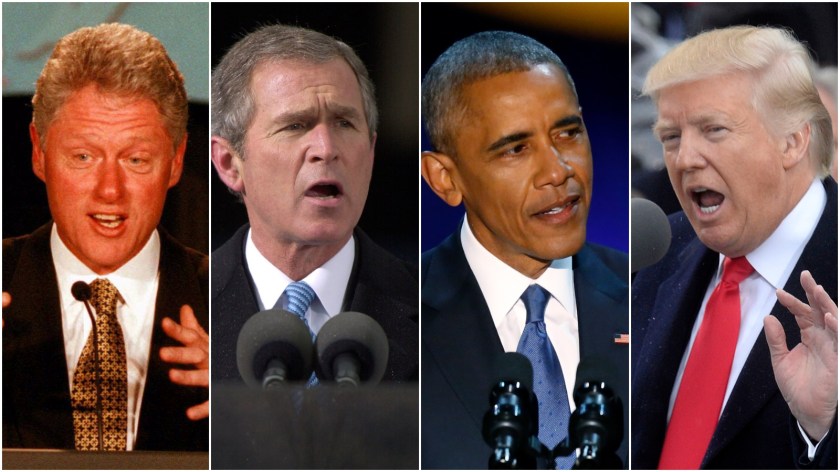
Recent Presidential elections in America before Biden replaces Trump.
Many Blacks had never been able to vote but Warmoth (a former Union Civil War’ veteran) became instrumental in supporting the 15th amendment that prohibited states from denying the vote based on race, color, or previous condition of servitude. For the first time in America, Blacks could vote. Naturally, Blacks voted for Warmoth despite his reputation for corruption. However, Warmoth’s support and actions create a split between his Republican followers and slavery proponent Democrats that remind listeners of today’s political party intransigence.
An irony of the story of Governor Warmoth is that he is clearly a scofflaw, but his lawlessness helped bring black Americans into the electoral process.
Warmoth was a criminal. He speculated in state bond and treasury notes which were a conflict of interest for a governor. He profited from a partnership given by a newspaper that had a contract for state printing. Warmoth created what was called the “State Returning Board” that had the authority to discard legitimate votes to keep Louisiana Republicans in power. One might suggest President Trump had similar conflicts of interest.
The authors explain what made Warmoth a crook. It was for the reward of money and power.
Inept and unethical practices are mitigated by the foresight of the framers of the Constitution. The acts of legislators since the beginning of America’s creation have bent the arc of history toward freedom and equality. Balance of power between branches of government, election of honest and ethical leaders, media that exposes political rhetoric for its understanding of truth and lies have helped Americans to live free and prosper. America is blessed with natural resources that have made America become a great Democratic success.
There are many reasons why American Democracy continues to prosper despite elections of inept and unethical political leaders.
The last chapters of Bash’s and Fisher’s book show what can happen when there is a sharp split between Democrats and Republicans that roils the American democratic process. What this history shows is that we have been at this crossroad before, and America pulled itself together. Warmoth was not the ideal representative of American Democracy, but he played a part in history that began the movement for Black freedom in the South and their right to vote.
Trump reminds one of Warmoth’s history. One hopes the split between political parties will be mended by the election of a President that can heal the vituperative factionalism of the Democratic and Republican parties in 2025.
It is up to Americans to vote or not vote. The choice today is between two old men. American Democracy will not fail because of either man’s election.
America’s Presidential debate on June 27th, 2024, was a painful reminder of advancing age. Whether to choose Donald Trump or Joseph Biden to be the next President of the United States is a “Hobson’s Choice”. Americans are compelled to vote for one of these two men or stay home and do nothing. Doing nothing means other Americans will decide who will represent Democracy to the world for the next four years.
It is up to Americans to vote or not vote for a President of the United States. The choice today is between two old men. Either will have the help of the three branches of the American government to do their job. American Democracy will not fail because of either man’s election to the office of President of the United States.
NATO is not an American Marshall Plan but a bulwark for nation-state self-determination.
Books of Interest Website: chetyarbrough.blog
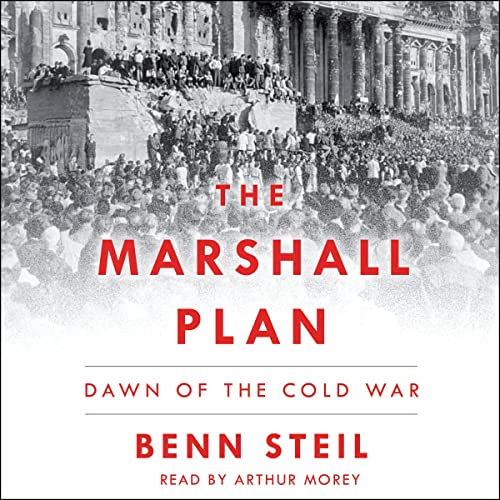
“The Marshall Plan” (Dawn of the Cold War)
By: Benn Steil
Narrated by: Arthur Morey
Benn Steil (Author, American economist, senior fellow and director of international economics at the Council on Foreign Relations.)
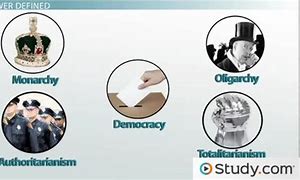
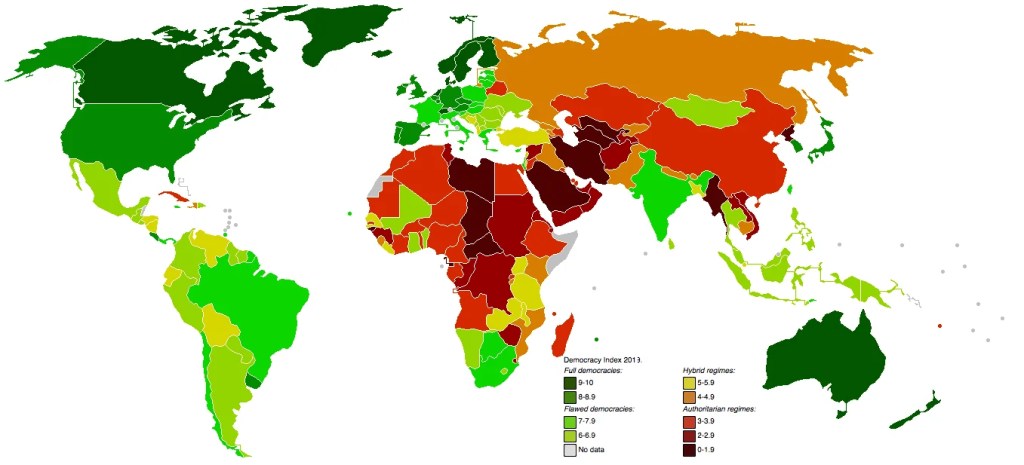
Along with an excellent history of America’s “…Marshall Plan”, there is an underlying message about two fundamental forms of government, i.e., one is democratic, and the other is authoritarian. By democratic, the point is not to suggest an idyllic understanding of American Democracy or Russian Authoritarianism. America and Russia have experienced government leadership that has been both authoritarian and democratic in the last 248 years.
One can justifiably argue America’s authoritarianism was experienced during the four years of the Trump administration (2017-2021).
In contrast Russia’s democratic experience was with Mikhail Gorbachev between 1985 and 1991. Before and after Gorbachev, democratic experience in Russia has been limited and largely authoritarian. What history of “The Marshall Plan” shows is the superior value of American democracy’s checks and balances that limit the power of authoritarian leadership by preserving deliberations of the many as opposed to the one. Trump is not the first U.S. President that was an authoritarian.
George Catlett Marshall Jr. (1880-1959, American army officer and statesman, became Secretary of State and Secretary of Defense during the Truman administration.)
History of “The Marshall Plan” shows the resilience of democratic versus authoritarian governance. Steil shows “The Marshall Plan” is created in a boiling cauldron of disagreement among branches of the American government. The conflicts between American political parties and departments of government hammered out a plan that improved the economies of both America and Europe after the war. America became the economic hegemon of the world as Russia’s economy collapsed in the early 60s.
MAO ZEDONG (1893-1976, FOUNDING FATHER OF PEOPLE’S REPUBLIC OF CHINA)Deng Xiaoping and Xi Jinping
One might argue the success of China came as a result of the more inclusive economic decision-making policies of Deng Xiaoping after Mao Zedong’s death. With Deng’s opening the economy to market-oriented reforms in 1978, worker efficiency and productivity created an economic boom in China. China’s danger today is the autocratic rule of Xi Jinping. His one-man rule nearly collapsed the economy during Covid 19. America certainly suffered from Covid, but Trump’s authoritarian character was mitigated by political resistance to unilateral Presidential decision-making.
Steil explains how Molotov delayed negotiations on “The Marshall Plan” with a clear understanding that only one person, Joseph Stalin, made decisions in Russia.
Steil notes “The Marshall Plan” is singularly disparaged and reviled by the Russian government. That disparagement is directed by one person, Joseph Stalin. There is no one to oppose the autocratic rule of Stalin’s leadership. Stalin’s opposition was either sent to the Gulag or murdered. A more balanced power structure in Russia could have taken advantage of “The Marshall Plan” but by singular fiat of one person (Stalin) implementation was impeded after WWII. The errors inherent in communism and authoritarian rule are being recreated by Putin in the 21st century.
What Steil shows is that many elected officials in America fought the principles of “The Marshall Plan”. However, the constant back and forth of government policy arguments in Congress aided European recovery after the war in a way that stabilized Europe and monumentally improved the economic growth of America.
Autocracies can certainly improve their economic growth at a pace that is superior to governments ruled by democratic ideals. However, autocracies have a much greater risk of following the wrong path because of their singular focus on one person’s decisions.
With an autocrat’s decision-making process, economic growth is either stultified or accelerated by one person’s decision. The give and take of democracies offer the benefit of different policy maker’s perspectives that may slow policy decisions but ultimately improve the odds of forward economic growth.
However, it is more than the availability of natural resources that made America economically successful. It is the give and take of a democratic process that protects America from the giant missteps that can come from autocratic rule. America has had some good to great rulers, but it has also had some ignorant, bigoted autocrats that offered minimal support for the ideals of freedom and equality. Checks and balances are the strength of American democracy. Presidents can make a difference, but they cannot destroy America’s future.
Ben Steil’s history of “The Marshall Plan” is not limited to an explanation of how important and difficult it is for America to pass important and consequential legislation.
The last chapters of Steil’s history of the Marshall Plan explains why Russia, China, and North Korea resent American encroachment on their spheres of influence. From the era of Stalin, Mao, and Kim Jong II, there has been a growing concern over the expansion of America’s sphere of influence. Steil explains how the Marshall Plan has morphed into a deepening concern about NATO expansion in Europe. As noted in an earlier, the Marshall Plan is created to aid recovery of countries that were impacted by WWII’s destruction. In reality it aided America to become the hegemon of the world. Because of the economic stimulus that revived the countries damaged by WWII, America created new markets for their industrial growth and international trade.
NATO is viewed as another vehicle for America’s economic growth and ideological threat to Putin, Xi, and Kim Jong Un’s control of their countries.
NATO is viewed as another invidious way for America to expand their influence and power. That seems an unfair evaluation of NATO. NATO is a military defense plan saying one country within NATO that is attacked by another country is an attack on all NATO countries. Every nation that has managed to become an independent country should be able to pursue there own interests.
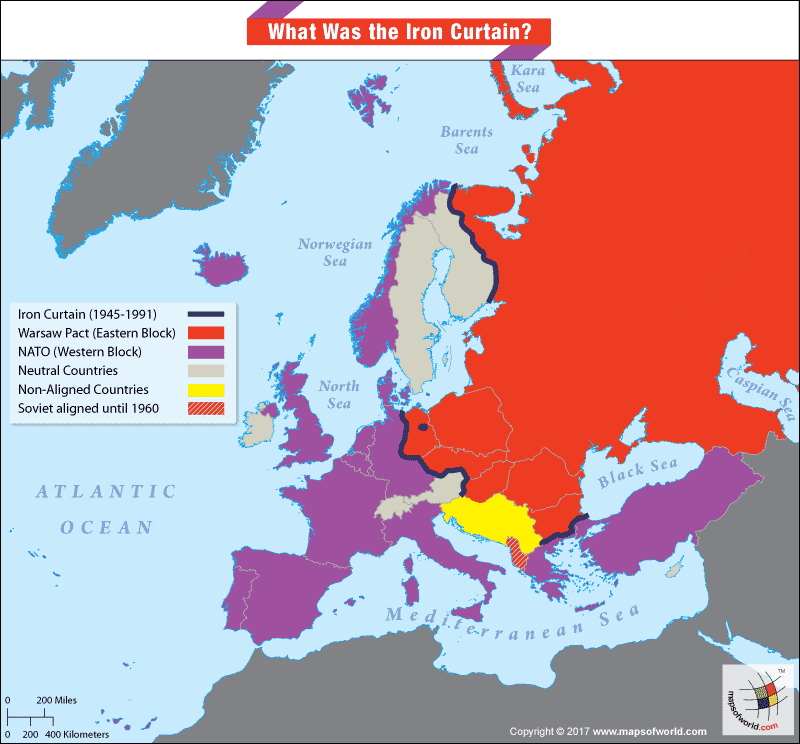
The iron curtain is rusting but its characteristic strength remains a barrier to international cooperation.
The rusting of the iron curtain comes from the tears of societies ruled by authoritarians. The authoritarians are leaders who believe their way of life is threatened. NATO is viewed as a trojan horse at the front gates of non-aligned countries.
One decries Putin’s slaughter of Ukrainians in an unjust war. Life of innocents have no value to today’s Russian leadership that believes their power and way of life is threatened.
The real-politic of authoritarian’s desire for stability and power outweigh the value of human life. The same is seen in the plight of Palestinians who are not part of the October 7th’ terrorists’ killings and kidnappings but are in the way of Israel’s retaliation against Hamas.
In my amateur opinion, China, Russia, North Korean, or other authoritarian governments have a right to rule their countries as they wish. Their citizens are the key to every leader’s longevity. NATO is an effort to offer freedom of choice to established independent countries but if the citizens of a country support their leaders, there is little NATO, or any alliance can do, except to support the sovereignty of all nations.
NATO is not an American Marshall Plan but a bulwark for nation-state self-determination.
Steil argues George Kennan is right in suggesting NATO expansion would be “the most fateful error of American policy in the entire post-Cold War era”. Kennan believed it would inflame nationalist beliefs and reinvigorate the Cold War. And so, it has–as evidenced by Russia’s invasion of Ukraine, China’s expressed intention and action toward Taiwan, and North Korea’s armaments support of Russia.



































 REVIEWS AND VIEWS OF LIFE