Harmony and pragmatism undoubtedly remain important characteristics of Chinese society. Time will tell whether societal harmony can be maintained by an increasingly authoritarian leader.
Books of Interest Website: chetyarbrough.blog
The Chinese Looking Glass (The most illuminating book yet written on China and her enigmatic people.)
By: Dennis Bloodworth
Dennis Bloodworth (1919-2005) Author, journalist, British writer at The Observer, first British journalist allowed to visit China in 1955.
“The Chinese Looking Glass” is a whirlwind journey across the vast history of China by the first British writer allowed to visit China in 1955. It is a primer for a general understanding of China that was originally published in 1966 and updated in 1980. The author’s marriage to Liang Ching Ping adds credibility to his view of Chinese culture.
One reads Bloodworth’s book and is somewhat overwhelmed by its breadth. So many generations of Chinese culture are too much to cover in a 400+page book.
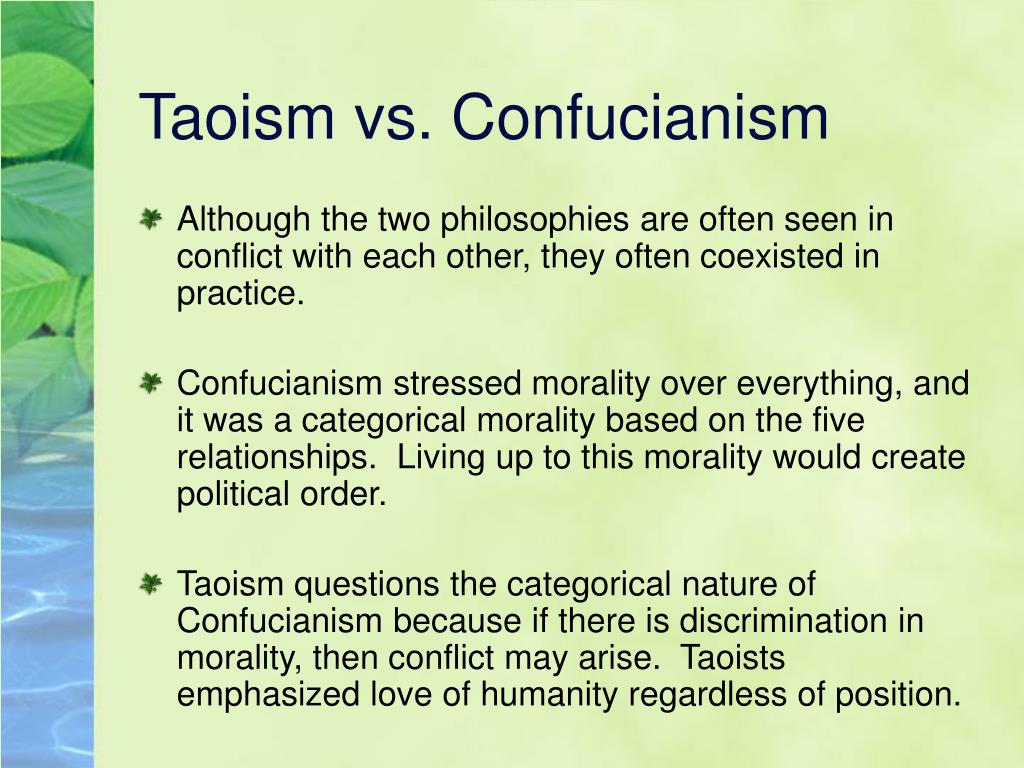
The author manages to give a broad understanding of a Chinese worldview that is shaped by Confucian and Taoist history, a collective identity that often conflicts with the Western culture of individualism. He notes Chinese traditions are based on filial piety (meaning duties, respect and devotion of children to their parents). Bloodworth notes, through many generations of Chinese culture, behavior and decision-making there is a focus on social harmony. Both Confucianism and Taoism play significant roles in shaping Chinese society.
Bloodworth notes Confucianism and Taoism shape Chinese society.
Piety, respect for hierarchy, education, and a focus on societal harmony were philosophical foundations of Chinese governance. Piety led governance toward strict rules and centralized authority. Historical figures like Confucius, Laozi, and Sun Tzu influenced Chinese culture and thought. The spiritual tradition of Buddhism reinforced the teaching of these cultural influencers. Buddhism emphasizes the suffering of life is caused by desire, and attachment. Buddhist teaching is that desire and attachment must be replaced by understanding and rejection of both through meditation and mindfulness.
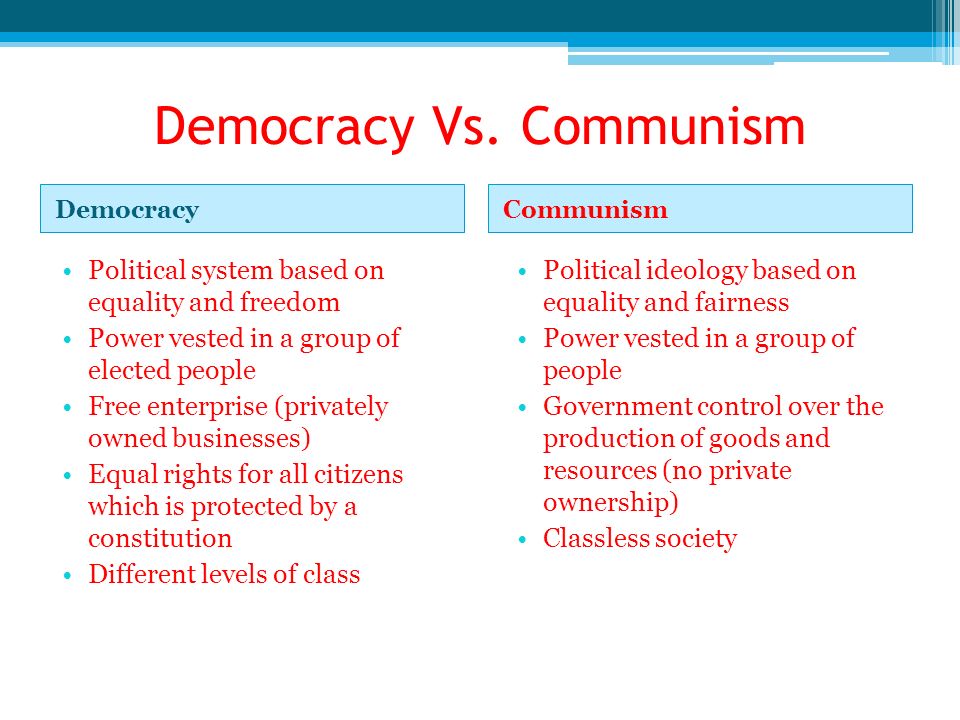
Because democracy focuses on individual rights and freedoms, the ideals of collective harmony, hierarchical structure, and centralize authority make communism a better fit for Chinese culture.
Mao Zedong (1893-1976)
Mao unified China after decades of war and instability. Bloodworth suggests Mao Zedong had a nuanced impact on China.
However, Mao’s centralized power resulted in big economic mistakes like the famine of the Great Leap Forward that caused misleading food production reports meant to please the government when production was much less than what was needed to sustain life for Chinese citizens. With famine, the Cultural Revolution is unleashed, and China’s growth and stability were set back. Bloodworth had observed China’s governing always included pragmatism and adaptability to their drive for cultural harmony.
Though Bloodworth mentions Deng Xiaoping in the last chapters of his expanded edition of “The Chinese Looking Glass”, he does not foresee the opening of the Chinese economy and its rapid economic expansion.
The pragmatic realization that collectivization of farming led to misleading information about production compelled Deng to open agricultural production to a more market-driven incentive to preserve social stability. Deng was an authoritarian as is evidenced by his decision on the Tienanmen Square crises.
Though Bloodworth did not live to see the next iteration of China’s leadership, an element of recidivism enters with Xi’s control of the government.
Harmony and pragmatism undoubtedly remain important characteristics of Chinese society. Time will tell whether societal harmony can be maintained by an increasingly authoritarian leader.
Today is a time for Americans to look at their motivations to act in ways that diminish human flourishing and happiness. They need to decide whether they are choosing to be evil and act out of malice to do evil things.
Books of Interest Website: chetyarbrough.blog
Open Socrates (The Case for a Philosophical Life)
By: Agnes Callard
Narrated By: Agnes Callard
Agnes Callard (Author, American philosopher, associate professor of philosophy at the University of Chicago.)
“Open Socrates” is not an easy listen but offers insight to the philosophy of Socrates as perceived by a tenured Philosophy professor at the University of Chicago.One of Socrates famous sayings is “Οἶδα τι οὐδὲν οἶδα”, “I know something that I know nothing”. The daunting meaning of the phrase is explained by Callard as something that is found through conversational engagement with others. Socrates believed what truth there is in the world is revealed through public engagement which is difficult for introverts because we fear having our ignorance exposed.
Callard notes that Socrates is an interrogator who elicits others to understand the meaning of human life.
There is a human desire to have meaning in our lives, but we don’t know where to begin or what questions to ask. Callard notes how Tolstoy is contemplating suicide despite his great fame and success as a writer because he does not believe there is any meaning to his life. Callard argues Socrates would say Tolstoy fails to ask questions in conversation with others that would offer the answer he seeks. As a listener/reader one might understand Tolstoy’s reluctance to ask others for their opinion because it exposes his vulnerability. Collard argues one must be willing to admit their errors to get to meaningful conversations with others about what they are discussing. However, few have the strength of character to expose themselves in a way that will continue further conversation.
Collard is preparing listeners for an understanding of the Socratic method, a cooperative dialogue, i.e. asking and answering questions to make one think about underlying assumptions and ideas to uncover inconsistencies to try to discover truth.
One wonders in this exercise, if Socrates is pursuing understanding or building a case to undermine human understanding. The result of a dialog with Socrates seems at best a pursuit of knowledge without finding a definitive answer. At times it seems the Socratic method only reveals the truth of human ignorance.
Collard notes that sophists as reflected in the Platonic and Aristotelian writings about Socrates were often incensed by the Socratic method because Socrates’ interrogations often made them look ignorant and uninformed. However, Socrates offers some definitions of important human characteristics like virtue and knowledge that are as relevant today as they were in ancient times.
Socrates defines virtue as a form of knowledge of right and wrong and those that use that knowledge will act virtuously.
Collard notes Alcibiades who lived in the time of Socrates. He was relentlessly interrogated by Socrates in an effort to elicit a better understanding of himself as Alcibiades, a politician and leader. Alcibiades made many political enemies because of shifting allegiances and political actions. He betrayed Athens in their fight with Sparta. After the fall of Athens, he is considered a threat to its new rulers.
Alcibiades (450BC-404BC, died at age 45 or 46, Athenian statesman and general.)
Alcibiades is known for his ambition, desire for power, and hedonistic lifestyle. He came into conflict with Socrates over belief in the values of wisdom and virtue. Though Alcibiades is noted in Plato’s “Symposium” to have admired and respected, Socrates, Collard notes he fundamentally disagreed with much of what Socrates reveals to him as his lack of wisdom and virtue. Alcibiades lacked self-discipline and moral integrity.
Socrates defines good as that which brings about human flourishing and happiness for one to live a fulfilling life.
Socrates argues evil is based on ignorance that compels human beings to act out of malice to do evil things.
Today is a time for Americans to look at their motivations to act in ways that diminish human flourishing and happiness. They need to decide whether they are choosing to be evil and act out of malice to do evil things.
It appears to this listener/reader, the rise of authoritarianism in the world today lays at the feet of Marx and, to a lesser extent, von Mises’ economic theories.
Books of Interest Website: chetyarbrough.blog
Human Action: A Treatise on Economics
By: Ludwig von Mises
Narrated By: Jeff Riggenbach
Ludwig von Mises (Austrian-American economist, logician, sociologist, and philosopher. 1881-1973, died at age 92.)
Economics is defined as a social science that studies how individuals, businesses, governments, and societies allocate resources to satisfy the needs and desires of a community of people. Historically, one of the greatest explainers of this social science is Ludwig von Mises. Maturing at a time of the communist revolution, the advance of capitalism and both world wars, von-Mises offers one of the greatest books about economics since Adam Smith. The only economist of greater significance is Adam Smith (1723-1790) because of his origination of the principles of economics. Close behind are Karl Marx (1818-1883), and John Maynard Keynes (1883-1946).
KARL MARX (BORN TRIER, GERMANY 1818-DIED LONDON, ENGLAND 1883)JOHN MAYNARD KEYNES (1883-1946)
Of course, all economists are beholding to Adam Smith with his original conception of the dismal science. Smith conceived of the “invisible hand” of economics that postulated self-interest as the primary contributor to the overall good of society. Von Mises seems to guardedly agree but suggests self-interest’ market pricing can artificially distort distribution of economic resources. Von Mises infers the “invisible hand” is inefficient at the least and may artificially distort prices in the hands of authoritarian governments and business monopolies. Karl Marx suggests the invisible hand would evolve into a production system that would be owned by the public to ensure equality of distribution in an evolutionary economy that passes from capitalism to socialism, and finally communism. Marx argues self-interest will evolve into a common interest for all. Marx’s idea of change in the nature of human beings beggars the imagination.
Smith supported limited government intervention to maintain justice, defense, and public works.
Both Smith and Marx believed in a “labor theory of value” which argues the value of a commodity is determined by the labor required to produce it. Where Smith and Marx depart is in government enforcement of a balance between labor and the cost of goods. Von Mises opposed most forms of governmental intervention in the economy. However, Keynes argues government intervention is necessary during economic downturns. After WWII, Keynes theory became an important part of the American government’s support of European reconstruction.
Von Mises believed in human individualism which carries the risk of authoritarian domination.
Von Mises believed in human individualism while Smith and Keynes support limited government intervention. Marx argues human nature could be shaped by a melding of government dictatorship with societal pressures to support communal goals.
At extremes, von Mises endorses individualism and Marx endorses dictatorship. The middle ground seems held by Adam Smith and John Maynard Keynes that endorse limited government intervention. It appears to this listener/reader, the rise of authoritarianism in the world today lays at the feet of Marx and, to a lesser extent, von Mises’ economic theories.
The length and value of von Mises’ book overwhelms a non-economist listener with his esoteric statistical and lengthy explanations of economic theory. However, comparison with a dilatant’s understanding of other renown economists is enlightening.
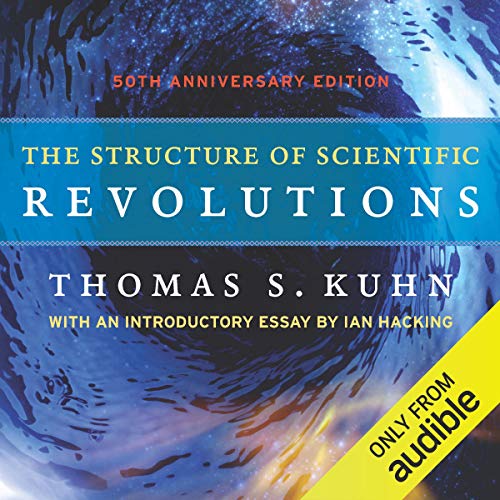
The point of “The Structure of Science Revolution” is that a paradigm begins science exploration, new paradigms challenge old paradigms, old paradigms persist, new paradigms demonstrate improved knowledge over old paradigms, old paradigms are overturned, and a new paradigm begins further search for knowledge
Books of Interest Website: chetyarbrough.blog
The Structure of Scientific Revolutions
By: Thomas S. Kuhn
Narrated By: Dennis Holland
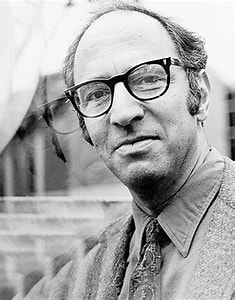
Thomas Kuhn (Author, 1922-1996 died at age 73, American historian and philosopher of science at Harvard and the University of California, Berkeley.)
This is a tough ten-hour listen. It does offer an overview of the evolution of science and how new discoveries have changed human understanding of the physical universe in a revolutionary way. Kuhn suggests every revolution in science begins with a paradigm, a model or framework that offers a clearer understanding of the physical universe.
Kuhn suggests every revolution in science begins with a paradigm.
The momentous discoveries of Newton, Einstein, Darwin, and Galileo are a few of the revolutionary leaders that Kuhn offers as examples. Newton developed a paradigm of earth’s laws of motion and universal gravitation that revolutionized understanding of forces and momentum on earth. Einstein developed a paradigm of the universe by introducing theories of special and general relativity that revolutionized our understanding of space, time, and gravity. Darwin developed a paradigm of animal evolution and natural selection that revolutionized biology and life’s diversity. Galileo developed a paradigm of our universe that revolved around the sun that revolutionized our view of the cosmos and humans place in it.
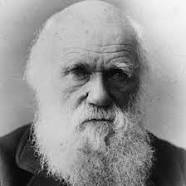
SIR ISAAC NEWTON (1642-1727)ALBERT EINSTEIN (1879-1955)CHARLES DARWIN (1809-1882) FOUNDER OF THE THEORY OF THE ORIGIN OF SPECIES.GALILEO GALILEI (1564-1642)
All of these geniuses created new, often more comprehensive, paradigms than predecessors like Aristotle, Ptolemy, and Democritus. New paradigms about air, the planets, and atoms improved predictability of results from new paradigms of thought, and experimentation that became more comprehensive and accurate than thoughts and experiments on older paradigms. Kuhn argues new paradigms foment science revolutions.
Kuhn explains how a new paradigm is challenged because of generally predictable results from older science discoveries.
The argument is made that the older discovery is better because it did have predictable results and the only reason there is an aberration is because of an undiscovered anomaly that will be discovered and explained by further thought, observation, and experimentation. However, as evidence from experiment grows to show older science discoveries are not as comprehensively predictable of results as the new paradigm, the new paradigm replaces the old one and a revolution ensues.
This is an insightful story but one gets bogged down by the number of examples that repeat similar revolutions.
The objections from old paradigm believers, failed old paradigm predictions, and ultimate revolution by new paradigms are repeated too many times.
The point of “The Structure of Science Revolution” is that a paradigm begins science exploration, new paradigms challenge old paradigms, old paradigms persist, new paradigms demonstrate improved knowledge over old paradigms, old paradigms are overturned, and a new paradigm begins further search for knowledge.
One chooses how they live life, but death is nature’s or God’s choice, a thing beyond human’ control.
Books of Interest Website: chetyarbrough.blog
“The Theater of War” What Ancient Greek Tragedies Can Teach Us Today
By: Bryan Doerries
Narrated By: Adam Driver
Bryan Doerries (Author, Artistic Director of Theater of War Productions, an evangelist for classical literature and its relevance to today’s lives.)
The title and book cover of “The Theater of War” is as puzzling as Bryan Doerries’ beginning vignette of his personal life. Doerries graduates from Kenyon College where he majors in the classics. He goes on to earn a Master of Fine Arts in Directing from the University of California. “The Theater of War” recounts Doerries’ journey to become cofounder, artistic director, and historian for creation of a theatrical teaching tool about life and death. The trigger for his understanding comes from the last days of his personal relationship with Laura Rothenberg who dies at 22 from cystic fibrosis. Her death is the introduction to why “The Theater of War” is created.
Doerries and Phyllis Kaufman are co-founders of “The Theater of War” Productions. Ms. Kaufman was the producing director from 2009 to 2016. She died at the age of 92 in 2023 but was instrumental in organizing production events, coordinating actors, and ensuring practical aspects of theatrical presentations.
“The Theater of War” is about the living and how to deal with permanent disability or death. Death comes in many forms from different causes but as the Latin expression says “Memento mori”, “Remember you must die” because death is a part of every life. Doerries explains how famous Greek tragedies were, and still are, teaching tools for those who have life and death influence over others. What “The Theater of War” creates are acted reproductions of classic Greek tragedies for living life when you or someone you know is permanently disabled or killed.
With the help of actors like Adam Driver (who narrates the book), the great tragedies of Sophocles and Aeschylus are presented to military, penal, and nursing audiences across America.
Combat veterans, prisoners, and terminally ill patients face extreme conditions of life. Combat may end in death or future disability. Prison life is about loss of control of oneself and being under the control of others. Terminal illness is also about loss of control of oneself when one is diagnosed as destined for death.
The suicide of Ajax as depicted on an ancient vase in the British museum in London.
Sophocle’s tragedy, “AJax”, offers the truth of psychological trauma and moral injury from battle. In despair, Ajax kills himself because he feels deeply humiliated by the gods for not being given the armor of Achilles who is killed in the Trojan war. Achilles’ armor was given to Odysseus rather than him.
Sophocle’s “Philoctetes” explains the pain and personal isolation that comes from the physical and emotional damage from war. Today, it is diagnosed as PTSD.
Sophocles “Antigone” deals with civil disobedience, justice, and conflict between personal and state ethics. These conflicts are reflected in mobs of unruly citizens demonstrating against what they perceive is wrong.
Aeschylus’s “Prometheus Bound” reflects on the unfairness of a penal system that infringes on human rights.
The recited dramas offer cathartic release and potential change to those who are personally affected by their situational experience. That is the purpose of the presentations. Doerries creates theatrical readings of these classics before military, penal, and nursing personnel.
The presentations lead to questions and answers about the truth of societal disagreement, death’s inevitability, and how to live with their consequences.
Some military generals and prison guards are offended by the implications of their mistakes, but the plays recitals provide a forum for discussion that offer potential for improved human understanding and societal decisions and action.
The Greeks understood dying is part of life. One chooses how they live life, but death is nature’s or God’s choice, a thing beyond human’ control.
Machiavelli describes effective governance as brutal, manipulative, and amoral. St. Augustine infers good governance comes from belief in God and adhering to scripture.
Books of Interest Website: chetyarbrough.blog
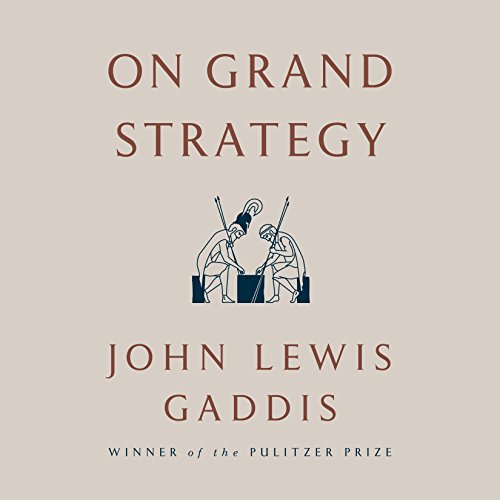
“On Grand Strategy”
By: John Lewis Gaddis
Narrated By: Mike Chamberlain
John Lewis Gaddis (Author, historian, political scientist, professor of Military and Naval History at Yale University.)
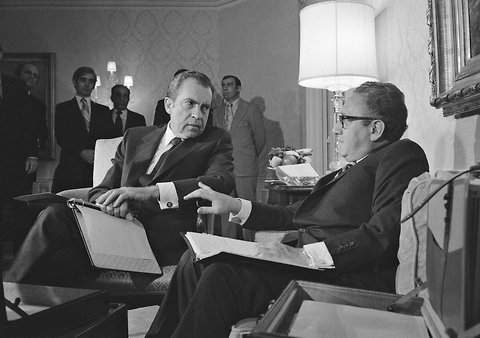
In a September 21, 2021 article in “The New York Times” Beverly Gage resigned as the course leader for “…Grand Strategy” (where Gaddis is a professor), “…saying the university failed to stand up for academic freedom…” She is noted to have said ‘I am not teaching “…Grand Strategy” the way Henry Kissinger would.’
Beverly Gage, in her resignation from Yale is noted to have said ‘I am not teaching “…Grand Strategy” the way Henry Kissinger would.’
The book author, John Lewis Gaddis, implies every accomplished political leader has a Grand Strategy. Historians can always criticize another’s study of political leaders or their place in history but having a strategy is a paramount requirement whether one is an American President or course leader at Yale. So here is a puzzle about the Gage’s resignation and her critical comment about Yale’s Grand Strategy for a teacher’s academic freedom.
One wonders what Ms. Gage meant in referring to Kissinger.
In any case, this is a review of John Lewis Gaddis’s book, “The Grand Strategy”. He begins with an animal analogy by suggesting good governance relies on being like a fox or a hedgehog when acting as a political leader. A fox characteristic is surreptitious and sly while the hedgehog is straightforward and aggressive. He argues governance that uses only one of these characteristics achieve singular objectives but balance between the two achieves the best results. The entire book is about the history of governments that have prospered or declined based on the presence or absence of balance.
In the beginning of “On Grand Strategy”, one becomes somewhat bored with Gaddis’s history of Athens’ and Sparta’s conflicts with Greece and its defeat of the Persian army (492 BCE and 449 BCE). However, mid-way through the book, one becomes engrossed in Gaddis’s evolutionary theory of nation-state’ governance.
In the Persian Army and its defeat by the Greeks and Spartans, Gaddis explains Xerxes neglected the common sense of moving his vast army across the Mediterranean, let alone feeding and supplying its needs. Xerxes was thinking like a hedgehog. Later, Gaddis explains Napoleon makes the same mistake as Xerxes by attacking Russia without considering the vast size of the country and logistic difficulties in feeding and supplying his army. Gaddis notes Tolstoy’s “War and Peace” chapters that explain how the battle of Borodino is a turning point in Napoleon’s hedgehog action.
Gaddis notes the need for political leaders to keep their eye on the prize. He gives the example of Civil War policies by Lincoln who sought end games for union of the States and emancipation.
When endorsing government policy or ordering military action, Gaddis suggests Lincoln was a leader who understood the need for common sense, i.e., always balancing what can be done with what could be done. Gaddis notes there are times when it appears Lincoln is contradicting himself when, in fact, he is being the fox rather than the hedgehog. For example, some argue Lincoln went back and forth on emancipation, but Gaddis infers he was being a fox because of the political heat surrounding the question and the government’s action.
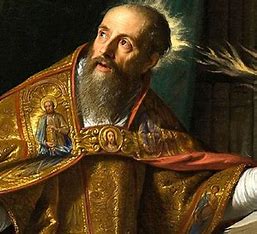
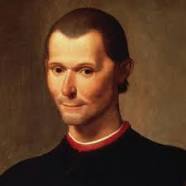
SAINT AUGUSTINE (354-430, DIED AT AGE 75)NICCOLO MACHIAVELLI (1469-1527 DIED AT AGE 58)
At this mid-point, Gaddis’s history becomes more interesting. He recalls the history of two important characters in modern theory of society, i.e. St. Augustine and Machiavelli. Of course, they lived centuries apart, but each represent critical beliefs that impact nation-state governance. In the 4th century, St. Augustine wrote two influential works, “Confessions” and “City of God” that outline why God was important to him and why everyone should become followers of Christianity to save themselves for the reward of eternity in heaven. Christianity begins to replace leadership beliefs based on the Great Caesars of civilization. Rome does lead the world for another 70 years, but Christianity and other religions redefine the relationship between citizens and their rulers. The centralization of Catholicism by Emperor Constantine in the 4th century diminished the power of secular governments. Life on earth became secondary to the possibility of eternal life in St. Augustine’s “City of God”.
Jumping to the 15th century, Machiavelli’s concept of “The Prince” exemplifies power of governance by secular leaders.
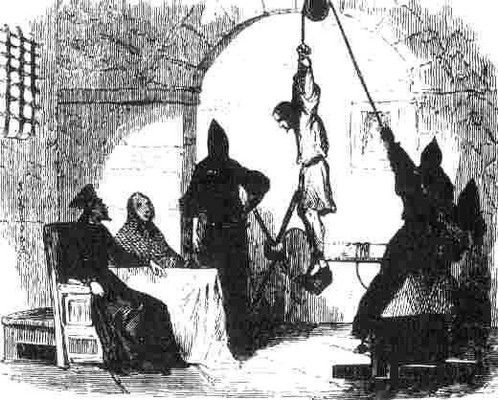
Machiavelli returns political leadership to life on earth in “The Prince”. It is not an abandonment of the “City of God” but a recognition of leadership as it is in this world. Machiavelli experiences the power of political leaders in this world by being imprisoned and tortured for alleged conspiracy to overthrow the Medici family in Italy. Machiavelli’s “The Prince” explains a political theory and leadership of rulers in the “city of man”. “The Prince” returns the idea of governance to the beneficence and cruelty of life here, i.e. not in heaven.
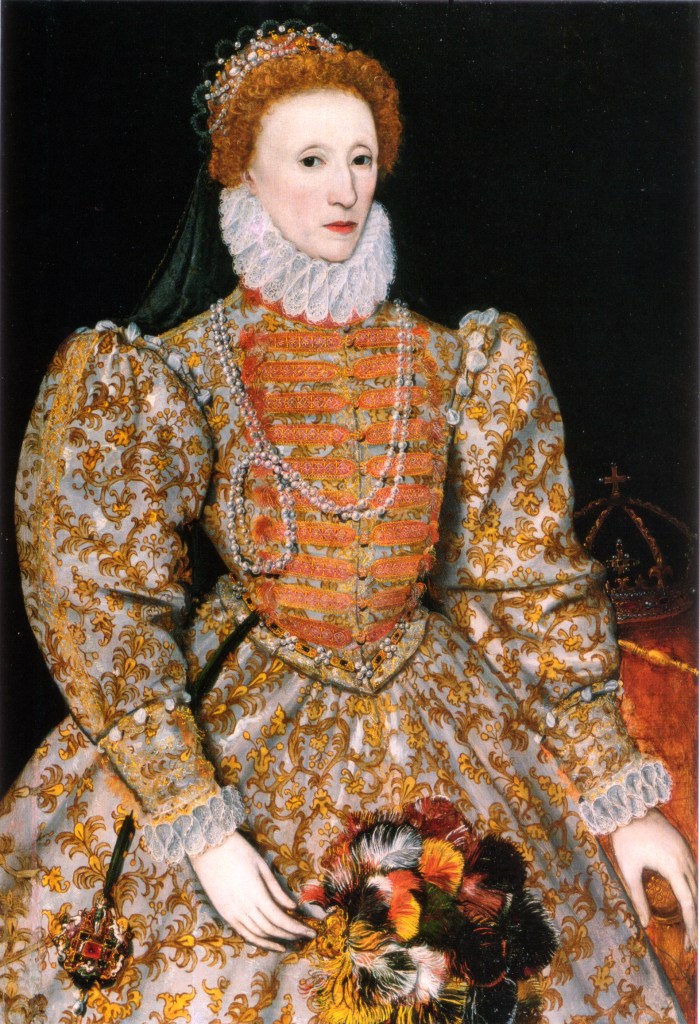
Queen Elizabeth I is Gaddis’ s next example of the changing nature of governance.
Contrary to her half-sister, Mary Queen of Scots who supported Catholicism, Elizabeth reestablished the Protestant Church of England. Elizabeth recognizes the fundamental importance of England’s citizens to her reign as Queen of England. Elizabeth practices the less punitive aspects of “The Prince” to build a foundation for love and respect from England’s protestant, if not Catholic, citizens. The city of God is replaced by the city of man in Elizabeth’s rule.
One can think of many examples that reinforce Gaddis’s theme in “The Grand Strategy” as practiced in America. The senior Bush carefully planned the ejection of Sadam Hussein from Kuwait by building international support for America’s action in the first Iraq war. America’s generals carefully planned the movement of a massive military force, including supply lines, to remove Iraqi forces from Kuwait. The senior Bush did not make Xerxes mistakes. In contrast John F. Kennedy, Lyndon Johnson, and H. W. Bush’s son, failed to use common sense in America’s mistakes in Vietnam and Iraq. It took a sly fox in the Nixon administration to get America out of Vietnam. This is not to suggest any of these actions were wholly good or bad, but a reflection on the balance between using fox or hedgehog thought and actions to achieve common sense results.
Isaiah Berlin (1909-1997, Russian-British social and political theorist, philosopher, and historian of ideas.)
Gaddis takes reader/listeners through WWI and WWII from America’s perspective. On several occasions, Gaddis refers to Isaiah Berlin and his intellectual contributions to political theory and history. Berlin was born in Russia and educated in Great Britain. He spoke several languages and was particularly fluent in Russian, French, German, and Italian. He believed in individual freedom but explained conflicting values coexist and that there is no single universal truth in life. This reminds one of Machiavelli and makes one wonder if Berlin, who is alleged to have a strong sense of Jewish identify, was an atheist.
Woodrow WilsonAbraham LincolnFranklin Roosevelt
Gaddis suggests America has had a series of foxes and hedgehogs that have become American Presidents. Some have been intellectuals, others not. Considering President Wilson was a racist hedgehog while Lincoln and Franklin Roosevelt were at times foxes and hedgehogs, America survived and prospered through three disastrous wars. Gaddis’s point is that America’s best Presidents have been both foxes and hedgehogs, while most have been one or the other. It may be that America survives because, with the brief exception of Franklin Roosevelt, none have served more than two terms. One President may be a hedgehog while the next President is a fox.
Machiavelli describes effective governance as brutal, manipulative, and amoral. St. Augustine infers good governance comes from belief in God. Gaddis’s history of governance explains why and how both qualities are evident and have served America well.
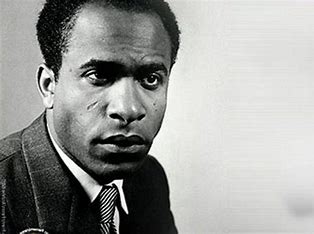
Frantz Fanon decried colonization and racism to promote individual dignity and family reconnection in his psychiatric practice
Books of Interest Website: chetyarbrough.blog
“The Rebel’s Clinic” The Revolutionary Lives of Frantz Fanon
By: Adam Shatz
Narrated By: Terrence Kidd
Adam Shatz (Author, editor, professor at Bard College)
Adam Shatz introduces Frantz Fanon to listeners. Fanon was a Black Frenchman, born in the colony of Martinique, an island in the Lesser Antilles of the West Indies. Fanon may be classified in many ways but first and foremost one understands he would want to be known as a Frenchman, i.e., a Black individual of French heritage.
Frantz Fanon (1925-1961, graduated from the University of Lyon in France.)
Shatz tells the story of Fanon’s life. Fanon is educated as a psychiatrist who was influenced by Aimé Césaire, a leader of a movement titled Négritude. Négritude was a protest against French colonial rule and assimilation in the early to mid-twentieth century. Fanon lives life by asserting himself as a Black Frenchman with a sense of Black cultural pride.
After an affair with Michele Weyer in college, a daughter is born. The daughter becomes Mirelle Fanon Mendes-France.
Mirelle Fanon Mendes-France (Born in 1948 to Michele Weyer and Frantz Fanon.)
Fanon later marries Marie-Josephe Duble in 1952. Duble was an intellectual, a journalist, and liberation fighter who died in 1989. Fanon and Duble have a son named Olivier who is thought to be engaged with his father’s legacy. Weyer’s and Fanon’s daughter is a scholar and member of the Frantz Fanon Foundation who also works with a United Nations Working Group on African Descent.
Fanon marries a Marie-Josephe Duble. Duble, aka Josie, married Fanon in 1952.
Shatz explains how much more Fanon was than a psychiatrist. Some suggest Fanon was a Marxist because of his anti-colonial beliefs but Fanon’s philosophy extended far beyond Marxist belief in society as an economic class struggle. Fanon was equally concerned about sexism, racism, and colonialism. He embraced a form of humanism. Fannon believed in self-identification as an acculturation process. He considered himself a Black Frenchman, born on a French colonialist island in the West Indies. His life experience as a minority in a colonial country led him to become a practicing psychiatrist in Algeria.
In the 1950s, Algeria was largely populated by Muslim Arabs with a minority of European nationalities.
Arabs in Algeria were poorly treated at a hospital Fanon joined in 1953. He gradually improved their treatment by opening doors to their ethnic identify. Algeria began a fight for independence in 1954. The movement was for social democracy within an Islamic framework that would offer equal citizenship for all citizens of the country. Fanon did not align himself with any religion in what became a violent conflict between French colonization and those who identified themselves as Algerian.
Fanon conflated imperialism and colonialism with racism by institutionalizing control over another based on cultural and/or racial bias.
Shatz shows who Fanon became in the way he treated his patients in Algeria. Fanon argued mentally troubled patients needed to be reconnected to their families and community rather than institutionalized.
Fanon’s focus was on the psychological impact of human torture and the tit for tat revenge of French occupiers and the Algerian resistance.
Fanon was sympathetic to the Arab desire for freedom and independence for citizens of a country searching for its own identity. Shatz shows Fanon abhorred colonization and its social restrictions. Shatz infers he equally abhorred the revolution’s leaders and followers who tortured and murdered non-combatants, including children. What happened in Algeria reminds one of today’s daily slaughter of children and non-combatants in Ukraine and Gaza.
WAR IN UKRAINEWAR IN GAZA
Algeria became an independent nation in 1962 with its own government, culture, and identity. Its ethnic and cultural identity remains the same today as then. It is considered a Muslim country with a majority being Sunni Muslims whose practices play a prominent role in their daily life.
Frantz Fanon dies at the age of 36 from leukemia in 1961, 7 years after the Algerian uprising.
An interesting point in the biography of Fanon is that he recognizes himself as Black in a country that does not commonly describe themselves as people of color but as Algerian Arabs, Berbers, or Europeans. Fanon grows to believe he is Algerian but identifies himself as Black. Black is a broader category of race that makes his story applicable to a wider world but magnifies real-world discrimination based on the color of one’s skin rather than the truth of equal humanness. Of course, as the author notes, the color of skin in Africa is predominantly black and became a frontier for colonization between 1884 and the 1960s.
AFRICA BECAME THE FRONTIER FOR COLONIZATION BETWEEN 1884 AND THE 1960s.
Shatz infers Fanon fought the good fight. He decried colonization and racism to promote individual dignity and family reconnection in his psychiatric practice. He wrote about and aided people who were different, underserved, and underrepresented. He wrote two books about his life experience to explain why colonialization and racism were culturally wrong and socially destructive. “Black Skin, White Masks” was published in 1952, and “The Wretched of the Earth” in 1961.
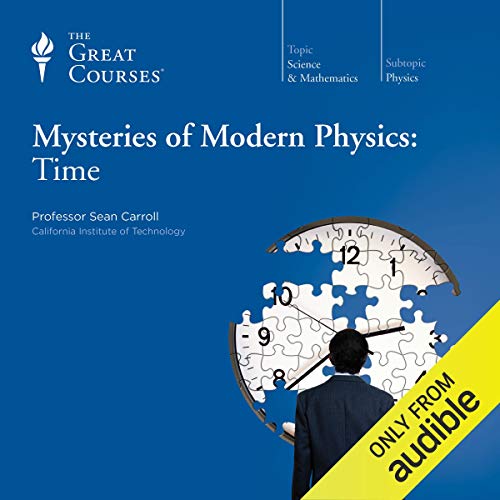
Infinity time with vintage clock. Digital generatedxr:d:DAFUp8OtUOE:4,j:43587237971,t:22121315
Carroll explains there are four physical dimensions in the world. There is length, width, depth, and a fourth dimension called time. The first three are easy to understand because they are physical characteristics while time is not. Time cannot be seen, touched, or tasted.
Time is a fourth dimension measured by calendars and clocks that divide the past and present into days, hours, minutes, and seconds. Carroll notes knowledge of length, width, and depth are of the past and present while time points to an unknown future as well as the present and past. Einstein refined the definition of time by renaming it space time which combines physical dimensions with observers’ perception of events, i.e., where and when observations occur and where the observer is located. The significance of Einstein’s space time is that the location and traveling speed of the observer affects the perceived time of events. Carroll’s attention is about time as an arrow that only points forward. Carroll explains how events of the present and past can be defined while the future is unknown. An extended meaning of the arrow of time is that it seems unlikely (though not impossible according to Carroll and the current state of physics) that we can physically return to a past.
There is a significant distinction between entropy and loss of energy. Energy is always conserved but it may not be useable for work. Entropy is about increased disorder and randomness of energy states. Carroll defines entropy as a characteristic of matter in the world which is in a state of molecular disorder, randomness, and uncertainty. This definition is reinforced by the discovery of quantum mechanics which experimentally illustrates probabilities rather than certainty at atom-level interactions. (Einstein never accepted quantum mechanics as a truth of life but only a step of discovery in physics. Einstein believed there would be a discovery that incorporates quantum mechanics in an ultimately predictive physics world.) Carroll notes a theory that explains gravity along with the proof of quantum mechanics holds a key to whether Einstein is wrong when he suggested God does not play with dice.
An interesting note by Carroll is that transition from low to high entropy has an interesting effect in an experiment with two separate enclosures that are connected. One has gas molecules in it while the other does not. There is a hole between the enclosures through which molecules can enter. Over time the two boxes will have the same amount of gas through a process of equilibration. This reinforces the idea of conservation of energy while demonstrating energy transformation.
Transformation of energy is exhibited in animal life by its eventual death, but Caroll explains it equally applies to all matter in the universe. The idea of entropy is reinforced by the arrow of time that only points in one direction.
At an atomic level, all matter transforms over time.
Entropy does not mean loss of energy. Energy is always conserved but it may not have a useful work purpose. The second law of thermodynamics, postulated by Rudolf Clausius in the 1850s, explains that heat always flows from hotter to colder through the process of entropy. For example, a low-level heat energy may not serve a work purpose, but it still conserves energy balance. Raising the heat on a cube of ice transforms its molecules from a frozen state to water to steam which conserves energy that can generate working steam molecules to power an engine.
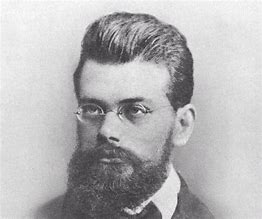
Much of Caroll’s lectures are an examination of Ludwig Boltzmann’s theory of statistical mechanics and kinetic theory. Much of Boltzmann’s contribution revolves around the concept of entropy and a detailed understanding of the behavior of particles in gases, liquids, and solids. He performed experiments that proved the conservation of energy and the equilibration of atoms and molecules as an observable phenomenon.
Boltzmann speculated that in the beginning of the universe, the chaotic activity of its beginning transformed into a lower state of entropy to create what we see in the world.
Ludwig Edward Boltzmann (1844-1906, Austrian physicist and philosopher.)
Boltzmann’s idea came before the theory of the Big Bang. The idea of the Big Bang actually presumes less entropy rather than more before the creation of the universe. Boltzmann’s idea is that the universe began in chaos (high entropy) to form what became known as a Boltzmann brain (low entropy), a thought experiment where a highly advanced brain formed in a void, from which the universe evolved. The Boltzmann brain is like the singularity of the Big Bang where cosmic dust condensed into a low entropy state and then exploded into our universe.
The origin of the universe may, in one sense, come from either a Boltzmann brain or a Big Bang. Both suggest the universe began in a low entropy state.
However, the Big Bang seems more reliably built on evidence by the measurement of an expanding universe with proven remnants (cosmic radiation) from a massive explosive event. Either theory implies the potential for a multiverse that began from a low entropy theory of our universe’s origin.
At this point in Carroll’s lectures, one’s head begins to hurt. He addresses the many ramifications of the origin of life. As one gets older, the principle of entropy takes on a personal meaning. Getting older may make one wiser but not smarter.
Sartre seemed right when he wrote “hell is other people” in “No Exit”. Neither belief in humanism nor God seem to hold an answer for humanity’s future.
Books of Interest Website: chetyarbrough.blog
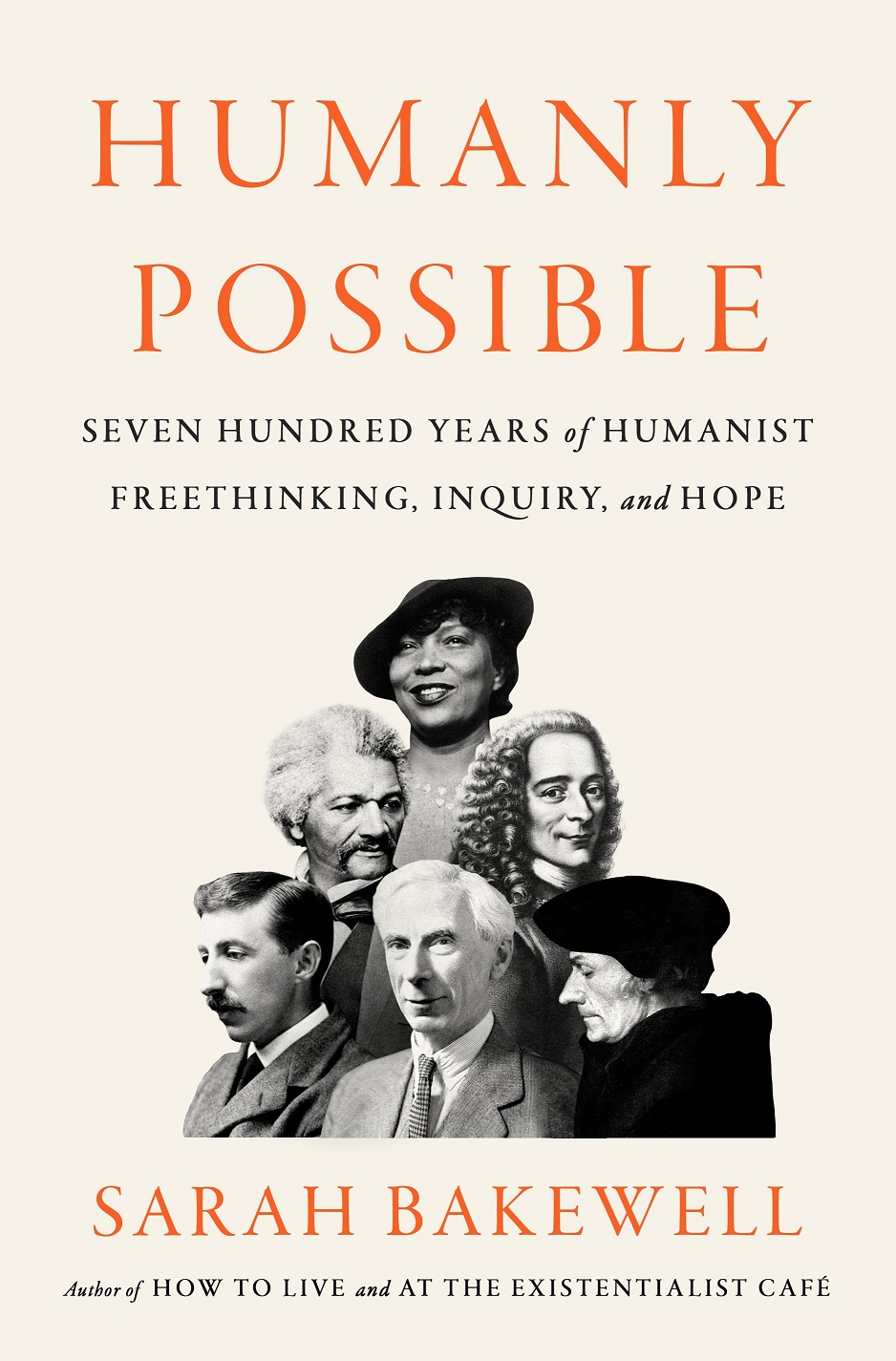
“Humanly Possible” (Seven Hundred Years of Humanist Freethinking, Inquiry, and Optimism)
By: Sarah Bakewell
Narrated by: Antonia Beamish
Sarah Bakewell (British author and professor, received the Windham-Campbell Literature Prize for non-fiction in 2018.
Sarah Bakewell provides a detailed history of humanism. To many, Bakewell’s story is a history of society falling away from God. Bakewell puts religion aside while explaining why and how humanists challenge religious belief and lean toward science as an explanation of life.
Bakewell notes humanism reaches back to the 5th century BCE with the Greek philosopher Protagoras. He was a teacher identified by Plato in a dialogue titled “Protagoras”. Through Plato’s dialogue, one finds Protagoras taught the importance of literature, and art that infers a set of moral principles to guide human behavior. Several centuries later, Diogenes Laertius writes “Lives of the Philosophers” that adds to history’s knowledge of Protagoras’s beliefs. Protagoras taught public speaking, poetry criticism, citizenship, and grammar.
Protagoras (490-420 BCE, Bakewell suggests Protagoras set the foundation for the humanist movement.)
Francesco Petrarch (1304-1374) takes up the humanist movement during the Italian Renaissance. Petrarch became internationally known as a humanist. He traveled extensively, looking for Classical manuscripts and ancient texts to recover the knowledge of Greek and Roman writers. He discovered letters that told of Cicero’s personal life–what it was like in the late Roman Republic (106-43 BCE). Cicero’s observations showed the importance of human character in the way one lives life.
Francesco Petracco (1304-1374, Italian scholar and poet and one of the earliest students and promoters of humanism.)
Collection of ancient manuscripts by Petrarch and Coluccio Salutati (1331-1406) of Florence expanded the humanist movement. Giovanni Boccaccio writes “The Decameron”, a collection of short stories that reinforces the principles of human worth and dignity, belief in reason and human ethics, and the value of critical thinking, i.e., humanist ideals.
Desiderius Erasmus (1469-1536)Sir Thomas More (1478-1535)William Shakespeare (1564-1616)
The humanist mantle is picked up in England and the wider part of continental Europe after the early 15th century. Erasmus, Sir Thomas More, and William Shakespeare, reinforce the movement. Desiderius Erasmus is a Dutch humanist. He attacks the excessive powers of the papacy. He values human liberty more than orthodoxy. He inspires the Protestant Reformation and the Catholic Counter-Reformation. He emphasizes the study of classics over medieval tradition. Erasmus has great impact on the Renaissance and its religious and intellectual climate with an eye for life on earth, more than an afterlife. He wrote “The Praise of Folly”, satirizing religious practices based on superstition and impiety. Though he hoped for divine mercy, Erasmus emphasized faith and good deeds in life, humanist ideals.
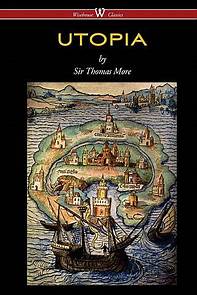
Bakewell notes Sir Thomas More writes “Utopia”, published in 1516, that describes an ideal society that addresses penology, state-controlled education, religious pluralism, divorce, euthanasia, and surprisingly, women’s rights.
Shakespeare’s plays introduce psychological realism and depth to human thought and action. Much of what he writes is secular rather than religious. Shakespeare implies life on earth is more than preparation for an afterlife.
Shakespeare suggests life on earth is more than preparation for an afterlife. Death is viewed as final, a humanist view of life and death.
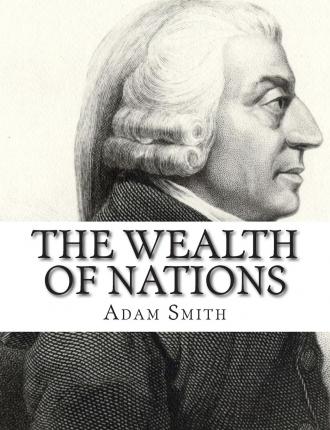
Bakewell goes on to write of Denis Diderot, David Hume, Kant, Adam Smith, and Voltaire. They become leaders of humanism in the 17th and 18th centuries. Diderot emphasizes critical thinking, education, and secular values. Hume writes “A Treatise of Human Nature” to explain human morality. Adam Smith’s “Wealth of Nations” reflects on national economic growth and how the principle of “raising all boats” comes from free enterprise and free trade, humanity in action.
Denis Diderot (French philosopher 1743-1784)David Hume (Scottish philosopher, 1711-1776) Immanuel Kant (German philosopher, 1724-1804)Adam Smith (Scottish economist and philosopher, 1723-1790)VOLTAIRE aka FRANCOIS-MARIE AROUET (1694-1778, WRITER, PHILOSOPHER, PLAYWRIGHT, HISTORIAN)
The idea of humanism is rocketed into American thought by Charles Darwin’s “Origin of Species”.
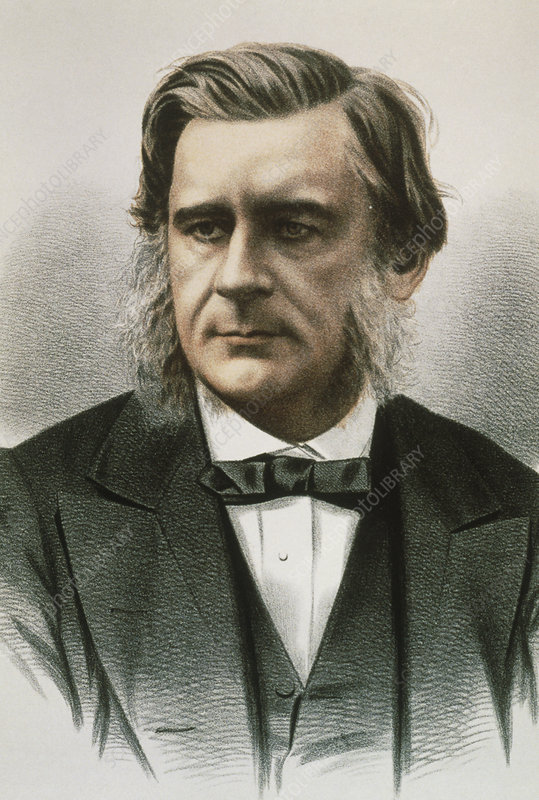
CHARLES DARWIN (1809-1882) FOUNDER OF THE THEORY OF THE ORIGIN OF SPECIES.Thomas Huxley. Coloured portrait of the British biologist Thomas Henry Huxley (1825-95). Huxley was the main advocate for the theory of evolution in scientific debates because Charles Darwin, its co-proposer, was a shy man who shunned publicity. One of the most famous debates on Darwin’s theory in which he took part occurred at a meeting of the British Association for the Advancement of Science in Oxford in 1860. Huxley’s research on primates firmly established man in this biological order, providing further scientific evidence for evolution. Huxley also did work in palaeontology and zoology. This artwork was taken from A Modern Portrait Gallery, volume 3 (1881).
Natural selection became a science-based explanation for the origin of species, including human beings. Its impact is evident in the personal transition of Darwin (the son of a medical doctor and grandson of a botanist), who planned to join the clergy, but became a person who identifies himself as an agnostic. Thomas Henry Huxley publicly endorses Darwin’s theory and coins the term “agnosticism” in 1869. Many of the scientific community joined that endorsement during Darwin’s life.
As Bakewell advances her history into the twentieth century, Thomas Mann and Bertrand Rusell carry the torch of humanism. The interesting point made about humanism by Mann is that a humanist must guard against the tendency to reason too much. The rise of Nazism in Mann’s home country and the repressiveness of Stalin’s (and now Putin’s) communism are examples of what concerned Mann. On the one hand, Mann recognizes the “unbearable pity for the sufferings of mankind” but also the danger of accepting authoritarian leaders who preach nationalist socialism or communism while promoting nationalist hegemony, forced labor, racial discrimination, ethnic cleansing, and gender inequality. The rise of Nazism and Putin’s invasion of Ukraine show how authoritarian reasoning can magnify the sufferings of humanity.
Paul Thomas Mann (1875-1955, German novelist, won Nobel Prize in literature 1929, wrote “Buddenbrooks “and “The Magic Mountain”)Bertrand Arthur William Russell (1872-1970, British philosopher, historian, social critic.)
Bertrand Russell, a British philosopher, mathematician, logician, historian, and humanist activist, warned against superstition and preached the importance of education. Both Mann and Russell advance the ideals of humanism. One still reserves judgement about humanist’ rejection of God when both religion and science have a mixed history for humanity.
Bakewell does not end with just a history of humanism. She speculates on where humanism may go from here.
She acknowledges her own beliefs as a humanist. She notes humanism has been noted in the past as a fragile vessel for transporting humanity into a future. The vessel’s fragility is in the nature of human beings.
Few can doubt we are self-interested animals that have to come to grips with what is ultimately in our self-interest.
Human self-interest must change from greed for money and/or power for humanism to work. If self-interest rests anywhere, it needs to be in the prestige that is earned by being engaged with the welfare of humanity. In light of history, human pursuit of societal welfare seems only to appear when annihilation is nigh. The war in Ukraine and human history are evidence of humanity’s failures. When perceived threats to peace and happiness disappear, humanity returns to the destructive self-interest of money and power.
The significance of Becker’s book is in his explanation of Bell’s theory that disagrees with Einstein’s theory of locality.
Blog: awalkingdelight
Books of Interest Website: chetyarbrough.blog
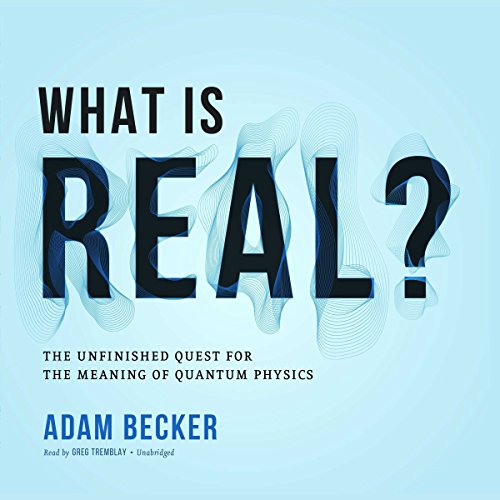
“What is Real” The Unfinished Quest for the Meaning of Quantum Physics
By: Adam Becker
Narrated by: Greg Tremblay
Adam Becker (Author, American astrophysicist, philosopher with BA’s from Cornell, and a PhD in the philosophy of physics from University of Michigan.)
Adam Becker explains a mystery that surrounds the concept of quantum mechanics. The theory of quantum mechanics continues to confound Einstein’s disagreements about quantum physics. No one, including Albert Einstein’s and Niels Bohr’s discussions, has fully agreed on the fundamentals of quantum mechanics. There are theories about quantum mechanics but proof about “What is Real” remains a mystery.
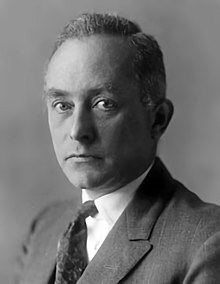
Niels Bohr (1885-1962)Werner Heisenberg (1901-1976)Max Born (1882-1970)
Becker explains in broad terms the Copenhagen interpretation of quantum mechanics. The Copenhagen interpretation came from the work of Niels Bohr, Werner Heisenberg, and Max Born. Study of the sub-atomic world is based on the Copenhagen mathematical theory created in 1925-1927. The theory argues quantum mechanics is inherently probabilistic, not deterministic. (The term probabilistic is only reference to a collapse or disappearance of an expected proton when sent through a split screen. It is not suggesting that quantum physics results are not reliable tools. Quantum physics has been found to be a reliable, accurate, and dependable tool for the desired effects when applied in the tech world.)
Interestingly, Becker suggests Werner Heisenberg tried to cover up his support and belief in Nazism. Becker suggests Heisenberg’s ineptitude as a manager of the research and experimentation process is the cause of Germany’s failure, not any sympathy for holocaust victims.
Einstein argues the only reason quantum mechanics appears probabilistic is because of an undiscovered fundamental law about the sub-atomic world. Einstein believes all physics theory must obey the law of locality which postulates physics laws must be based directly on related and surrounding causes.
Becker notes John Stewart Bell experimentally proves Einstein is wrong and that quantum effects violate the principle of locality.
Bell’s proof is mathematical and based on experiment. His calculations and experiment show two light particles can have spin characteristics that correlate with each other at a distance, non-locally. This quantum entanglement is dubbed “spooky action at a distance” by Einstein. Einstein, Boris Podolsky and Nathan Rosen argue entanglement (“spooky action at a distance”) is not proof of non-locality. Einstein believes there is an undiscovered cause for the appearance of non-locality’s entanglement. The argument against locality is called the EPR paradox after its theorists’ last names. Bell proves through experiment that “spooky action at a distance” is real and that the Copenhagen interpretation of quantum mechanics is wrong.
John Stewart Bell (1928-1990)
Bell’s theorem verifies that “spooky action at a distance” is no paradox by proving that quantum mechanics reflect a non-local phenomenon.
Hugh Everett, a physicist who studied under John Wheeler, published a paper with the idea that non-locality is evidence of another reality, another world with the same people experiencing a different course of life. The collapse or disappearance of a quantum particle is evidence of another reality, another world. For example, an incident of a near drowning would be survival in another reality that simultaneously exists in a different world.
Hugh Everett (1930-1982, died at age 51)
Hugh Everett proposed a many worlds theory of quantum mechanics based on Bell’s theorem of non-locality.
Everett was a student of physics professor John Wheeler who had worked with Niels Bohr.
John Wheeler (1911-2008)
Wheeler became an early supporter of Everett’s many worlds theory.
Wheeler popularized the terms “black hole”, quantum foam”, “neutron moderator”, and “it from bit”. He participated in the Manhattan Project during WWII and worked at the Hanford Site where he helped Dupont build a nuclear reactor in Richland, Washington. Wheeler became skeptical of the many worlds’ hypothesis in later years because of what he called its “metaphysical baggage”.
The significance of Becker’s book is in his explanation of Bell’s theory that disagrees with Einstein’s theory of locality. Einstein presumes missing variables will explain “spooky action at a distance”. Becker notes most physicists still believe in the Copenhagen theory of quantum mechanics despite Bell’s theory and proof that quantum mechanics allow for non-local affects. All the answers for “What is Real” proposed by Becker seem to contradict themselves or lack common sense. However, they still may be true or valid. They are just unproven or unobservable by repeated experiment.

























































 REVIEWS AND VIEWS OF LIFE
