TO BE FREE

The neglect and brutal treatment of Lithuanian citizens by Russia during WWII is graphically depicted in “Between Shades of Gray”.

Books of Interest
 Website: chetyarbrough.blog

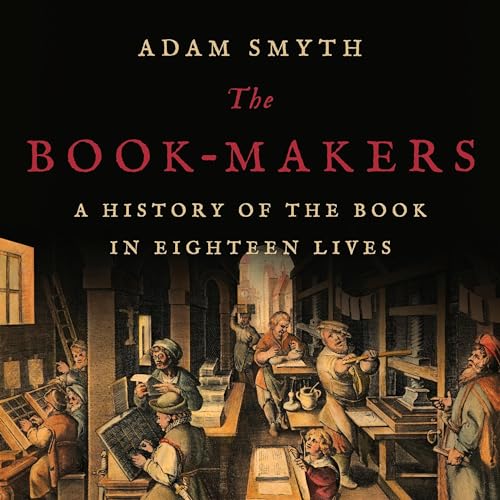
Between Shades of Gray 

By: Ruta Sepetys

Narrated By: Emily Klein

Ruta Sepetys (Author, Lithuanian American writer of fiction, daughter of a Lithuanian refugee.)

This is a novel that many Americans will choose not to read. It is so relentlessly brutal that one is inclined to stop listening to, or reading, the novel. Many Americans take freedom for granted. Sepetys’ story reveals how ignorant the generational free are about what it is like to exist in a nation ruled by an unrestricted authoritarian leader. Sepetys recreates a story from a young girl’s notes and drawings of a Lithuania family’s loss of freedom during Stalin’s authoritarian rule.

The weight of “…Shades of Gray” makes one’s heart go out to the many Ukrainians losing their freedom and lives at Vladimir Putin’s monomaniacal direction.

Sepetys makes one see and understand how fortunate Americans are to live in a democratic country. The broad outline of the story is about the rounding up of Lithuania citizens during WWII to be sent to work camps in Siberia under the control of the Russian NKVD, the precursor of today’s Russian SVR (Foreign Intelligence Service) and GRU (General Staff of the Armed Forces). At the beginning of WWII, Stalin orders the taking of the Baltic States into the U.S.S.R. by dismantling the in-place governments of the acquired countries. Any political opposition is to be arrested and deported to labor camps designed to serve the Russian economy.

Sepety’s novel is the story of one group of Lithuanians that are rounded up, sent to Siberia, and later moved to an even more hostile camp inside the Arctic Circle.

The essence of the story is based on a young girl’s notes and drawings about her experience. The neglect and brutal treatment of Lithuanian citizens by Russia during WWII is graphically depicted in “Between Shades of Gray”. The title alludes to the few Russian guards that surreptitiously aid the work camp prisoners. It is only gray because the help is often in return for cooperation or favor from the un-free.

HARSH ASSESSMENT

No one can kill an idea. Ideas come from human beings who believe, rightly or wrongly, they are being victimized.

Books of Interest
 Website: chetyarbrough.blog

Homeland (The War on Terror in American Life)

By: Richard Beck

Narrated By: Patrick Harrison

Richard Beck (Born in 1987, received a BA from Harvard in 2009, Masters Degree in music from the University of North Texas, and Doctorate in performance and pedagogy from University of Iowa.)

On September 11, 2001, Richard Beck was 14 years old, living in a suburb of Philadelphia. In remembering life before 9/11, Beck looks at that tragedy as a reminder of life and America’s struggle to become a free and independent nation. “Homeland” uses the tragedy of 9/11 as an introduction to what might be interpreted as American Cowboyism.

Beck suggests the myth of American cowboys exemplifies who and what American society has been and will always be.

His recollection of 9/11’s news coverage is a distortion of reality. The reaction of the fire department, rather than heroic, is characterized as a matter of clean-up and ducking from falling debris and bodies, not of climbing stairs or entering buildings engulphed in fire and nearing collapse. Beck suggests like the myth of cowboys ridding America of Indian savages, expanding, and conquering the West, that firemen and rescuers did little to save workers in the towers collapse.

Beck’s history smacks of not being there but watching tv, reading echo chamber books, and listening to and watching news of the 9/11 tragedy.

Heroism is being there when the planes hit the towers, when smoke and debris were choking firefighters and police trying to cordon the area from surrounding businesses and people. This is the same fault Beck has of writing of unreasonably lionized frontiersmen and later leaders of America and the mistakes made by America’s leaders in the Civil War, Korea, Vietnam, Cambodia, Iraq, Iran, and Afghanistan. Horrible things have happened in America’s history that have been caused by humans who are not gods but fallible, self-interested strivers for a better life. The meaning of life in America evolves just as it does in every country of the world. No society is proud of their failures, but failures are part of being human. Obviously, it is how we overcome failures that makes society.

Beck’s inference that Martin Luther King’s “…arc of the moral universe is long but bends towards justice” as a false observation breaks a listener’s heart.

Many would disagree because life for native Americans, women, non-white minorities, and the white majority have improved over the years since the founding of American democracy. This is not to say, there are not miles to go for America to realize equality-of-opportunity for all its citizens.

Beck uses the great tragedy of Gaza and Israel’s occupation and murder of innocents as a primary example of American Democracy’s failure.

There is little to argue that Israel is crossing a Rubicon of regret for their slaughter of Palestinians in Gaza. Palestine has as much right to exist as the nation of Israel.

America’s position has been to support Israel because they are a bastion against systems of government that have little to no interest in equality of opportunity for all. The author fails to appreciate America’s guilt for turning away Jewish immigrants fleeing Europe during WWII when six million Jewish people were slaughtered in concentration camps.

Beck’s history disregards and diminishes the history of Jewish ethnicity that has given so much to societies’ advance of science, literature, and political theory.

This is not to argue Israel is right in thinking that ridding Hamas or Hezbollah leaders can be accomplished with ethnic cleansing while murdering innocent bystanders. No one can kill an idea. Ideas come from human beings who believe, rightly or wrongly, they are being victimized. Israel is making the same mistake Nazi’s made when they began exterminating Jews in WWII.

DISABILITY AND DEATH

One chooses how they live life, but death is nature’s or God’s choice, a thing beyond human’ control.

Books of Interest
 Website: chetyarbrough.blog

“The Theater of War” What Ancient Greek Tragedies Can Teach Us Today

By: Bryan Doerries

Narrated By: Adam Driver

Bryan Doerries (Author, Artistic Director of Theater of War Productions, an evangelist for classical literature and its relevance to today’s lives.)

The title and book cover of “The Theater of War” is as puzzling as Bryan Doerries’ beginning vignette of his personal life. Doerries graduates from Kenyon College where he majors in the classics. He goes on to earn a Master of Fine Arts in Directing from the University of California. “The Theater of War” recounts Doerries’ journey to become cofounder, artistic director, and historian for creation of a theatrical teaching tool about life and death. The trigger for his understanding comes from the last days of his personal relationship with Laura Rothenberg who dies at 22 from cystic fibrosis. Her death is the introduction to why “The Theater of War” is created.

Doerries and Phyllis Kaufman are co-founders of “The Theater of War” Productions. Ms. Kaufman was the producing director from 2009 to 2016. She died at the age of 92 in 2023 but was instrumental in organizing production events, coordinating actors, and ensuring practical aspects of theatrical presentations.

“The Theater of War” is about the living and how to deal with permanent disability or death. Death comes in many forms from different causes but as the Latin expression says “Memento mori”, “Remember you must die” because death is a part of every life. Doerries explains how famous Greek tragedies were, and still are, teaching tools for those who have life and death influence over others. What “The Theater of War” creates are acted reproductions of classic Greek tragedies for living life when you or someone you know is permanently disabled or killed.

With the help of actors like Adam Driver (who narrates the book), the great tragedies of Sophocles and Aeschylus are presented to military, penal, and nursing audiences across America.

Combat veterans, prisoners, and terminally ill patients face extreme conditions of life. Combat may end in death or future disability. Prison life is about loss of control of oneself and being under the control of others. Terminal illness is also about loss of control of oneself when one is diagnosed as destined for death.

The suicide of Ajax as depicted on an ancient vase in the British museum in London.

Sophocle’s tragedy, “AJax”, offers the truth of psychological trauma and moral injury from battle. In despair, Ajax kills himself because he feels deeply humiliated by the gods for not being given the armor of Achilles who is killed in the Trojan war. Achilles’ armor was given to Odysseus rather than him.

Sophocle’s “Philoctetes” explains the pain and personal isolation that comes from the physical and emotional damage from war. Today, it is diagnosed as PTSD.

Sophocles “Antigone” deals with civil disobedience, justice, and conflict between personal and state ethics. These conflicts are reflected in mobs of unruly citizens demonstrating against what they perceive is wrong.

Aeschylus’s “Prometheus Bound” reflects on the unfairness of a penal system that infringes on human rights.

The recited dramas offer cathartic release and potential change to those who are personally affected by their situational experience. That is the purpose of the presentations. Doerries creates theatrical readings of these classics before military, penal, and nursing personnel.

The presentations lead to questions and answers about the truth of societal disagreement, death’s inevitability, and how to live with their consequences.

Some military generals and prison guards are offended by the implications of their mistakes, but the plays recitals provide a forum for discussion that offer potential for improved human understanding and societal decisions and action.

The Greeks understood dying is part of life. One chooses how they live life, but death is nature’s or God’s choice, a thing beyond human’ control.

INDIGENOUS

Orange’s book shows how culture can kill. What citizens of the world need to do is understand how a broader culture can be built.

Books of Interest
 Website: chetyarbrough.blog

There There: A Novel

By: Tommy Orange

Narrated By: Darrell Dennis, Shaun Taylor-Corbett, Alma Ceurvo, Kyla Garcia

Tommy Orange (Author, received a Master of Fine Arts from the Institute of American Indian Arts, winner of the 2019 American Book Award for “There There…”)

Tommy Orange illustrates how culture is the god of creation and destruction. “There There…” offers a glimpse of what it is like to be poor and indigenous in Oakland, California. The name “Indians” for the indigenous of America is said to have been created by Christopher Columbus in the 1400s. Orange has the idea at a gathering of native Americans to have each write their stories, i.e., their memories of what life has been for them in Oakland, California in the 20th and 21st centuries. Their stories are the substance of Orange’s book. They reveal the crushing reality of being descendants of the indigenous in Oakland, and believably all of America. A grant from Oakland becomes the funding source for Orange’s idea. Fighting to making a living as an author is at the core of “There There…” Orange undoubtedly calls “There There…” a novel to protect the story tellers.

Orange shows recycling-poverty, addiction, and misogynistic abuse are big problems for “Indians” in Oakland. The stories reveal an underlying frustration, if not anger, of indigenous Americans who are being molded by government programs that ignore native traditions and emphasize integration into whatever American society has become. There is justification for anger among American minorities. However, there is a fundamental misunderstanding when suggesting government programs are meant to mold Americans. The goal of government is not to mold its citizens but to create cultural norms for a diverse culture. Government fails because ethnic norms of minorities protect American citizens who are treated unequally.

Names like “Two Shoes”, “Red Feather” and the “Indian symbol” that once tested color on televisions are interesting examples of the significance of native influence in American culture.

Though America has and continues to try to Americanize natives, cultural influence is a two-way street. The stories in “There There…” illustrate how everything from influence of addiction to spousal abuse to abortion to overeating to violence are revealed as problems in native American’ lives. This is a hard novel to listen to because it denigrates Indian heritage and justifiably blames American culture.

One is drawn to wonder what can be done to correct the truth of American culture’s blame. The answer is in the Constitution of the United States.

All men are created equal, and the job of government is to provide for the health, education, and welfare of its citizens. American government is struggling to find a way of doing what it is meant to do because of the nature of human beings. Neither capitalism, utopianism, socialism, or communism change human nature. Ironically, only culture has the potential for achieving the goal of equality and fraternity.

Orange’s stories illustrate how Indian poverty is destructive and ethnic cultural inheritance is destroying native Americans.

One presumes Orange would object to the category of American when referring to indigenous peoples. However, it is only with change in culture that all citizens become more socially cohesive than one ethnic identity. If America can institute policies that genuinely provide equality for health, education, and welfare of all, culture will heal itself. When that is achieved, one can be Black, white, Latino, indigenous, or whatever ethnic group one wishes–but within broader American culture.

Orange’s book shows how culture can kill. What citizens of the world need to do is understand how a broader culture can be built.

BEING HUMAN

Robinson shows society treats people unequally, wages war for power, lacks control over behavior, and deceives itself about human nature.

Books of Interest
 Website: chetyarbrough.blog

Gilead

By: Marilynne Robinson

Narrated By: Tim Jerome

Marilynne Robinson (Author, received the 2005 Pulitzer Prize for fiction for “Gilead”.)

“Gilead” is a Pulitzer Prize winning novel. It is cleverly written by Marilynne Robinson and beautifully narrated by Tim Jerome. Some listeners may have a hard time getting through its religious point of view. It is largely about belief in God. However, it’s truth about human nature makes it a classic regardless of one’s religious beliefs.

In broad outline, it is about three generations of preachers, a grandfather, his son, and a grandson, who live in Gilead, Iowa.

There is the grandfather who fights on the Union side of the Civil War in Kansas, presumably because of belief in human equality and union. However, it appears his son cannot justify killing of any human being, for any reason. Later, a listener/reader finds there is a rift between the Civil War’ preacher and his son who also becomes a preacher. The son becomes a father who has his own son. This book is like a letter to his son to explain his journey through life and what he has learned. The story begins by recalling a trip he and his son take to discover the grandfather’s grave in Kansas.

The journey is in the late 19th century.

The grandson accompanies his father on the arduous journey from Gilead to Kansas. They begin in a horse drawn carriage but because of weather leave the horse and carriage to walk the last miles. It is hot. One realizes the father’s decision to travel with his son is for many reasons beyond companionship. One presumes the father is ambivalent about the grandfather’s decision to join union soldiers with a willingness to kill secessionists opposed to abolition. One wonders if the father is saying there is no justification for War. The story gains broader interest at this point.

KILLING IS NEVER JUSTIFIED.

After having found the grave, the father relates a story of burying his father’s gun and some shirts. The gun and clothing are dug up. The bloodied and dirty clothes are washed, but they do not come clean. The wife of the letter writer and preacher finally throws them away, but the gun is reburied, dug up again, dismantled and thrown into a lake by the preacher. The vignette suggests the father believes killing is never justified, even in a war meant to preserve union and abolish slavery.

Preachers.

The father’s writing suggests there is a gap in ages between him and his wife. We find he is 67 when he marries his wife who is in her 30s. The preacher is nearing death by the time of the letter to his son is written. With the gap in their ages, there is a hint of jealousy about a man raised by the preacher’s best friend, who is also a preacher of the cloth. The son is Jack Boughton. Jack often played baseball with the preacher’s son, but the preacher had been told by Jack Boughton’s father to be wary of Jack.

The carrot and stick of parenting.

The impact of neglectful parenting is referred to in a sermon noted in the preacher’s story. Jack Boughton’s intelligence and education combined with parental neglect is inferred to be a cause of atheism and a penchant for illicit behavior. This creates a tension between the preacher and his close friend’s son, particularly when the childhood friend visits the preacher’s wife and son.

One comes away from Robinson’s story with a summary of the flaws of humanity. At the end of the author’s story, Jack Boughton has created a second human nature crises that will resolve itself in either happiness or tragedy. Robinson shows society treats people unequally, wages war for power, lacks control over behavior, and deceives itself about human nature.

M.A.D. (Mutually Assured Destruction)

The near assassination of Trump is a harbinger of a world unduly influenced by today’s technology and media influence.

Books of Interest
 Website: chetyarbrough.blog

Playing with Reality

By: Kelly Clancy

Narrated By: Patty Nieman

Kelly Clancy (Author, graduate of MIT in physics with a Ph.D. in biophysics from U.C. Berkley.)

Kelly Clancy has a distinct point of view as a scientist. Her understanding of game theory and the mathematics of probability may steer reader/listeners away from her interesting book. “Playing with Reality” is less like playing and more like hard work, at least in the first chapters. Clancy begins by defining game theory and its permutations. Then she explains how it is a flawed tool for understanding human behavior. As one gets through the first chapters of her book, a reader/listener realizes Clancy is offering more than gaming theory history.

Clancy offers a detailed history of the growth of computer technology through the use of gaming programs designed to educate, entertain, and enrich private companies, public conglomerates, and individuals.

Clancy reveals the growth of chess playing gaming programs like Deep Thought, Big Blue, and Deep Blue to expose the battle line between human and artificial intelligence. Clancy is a skeptic of gaming technology–with a warning.

Clancy’s skepticism lies in mistaking game-theory’ studies as proof of predictive human behavior.

Clancy notes human behavior is not predictable for many reasons; one of which is human irrationality, and another is a human’s sense or understanding that he/she is being manipulated for prescribed responses. For example, in the first instance, a person may be irrationally afraid of all snakes even though there are no poisonous snakes in their State. In the second instance, a person who knows the theory of something like the “Prisoner’s Dilemma” can choose to modify their behavior and respond based on knowledge of previous experimental studies.

John von Neumann (1903-1957, Hungarian American mathematician, physicist, computer scientist, engineer and polymath.)

The troubling part (the warning) revealed by Clancy is that brilliant people like John von Neumann, an intellectual giant of the twentieth century, can have bad ideas. Clancy notes von Neuman considered preemptively nuking the Soviet Union because he reasoned it would (and it did) successfully create a nuclear bomb soon after America’s bombing of Nagasaki and Hiroshima. Neuman presumably considered this a rational option based on game-theory thinking.

Today, one wonders what Russia’s leader is capable of with nuclear weapons if he considers them just another tool of war.

Clancy notes Putin, like the President of the United States, is legislatively authorized to unilaterally choose to use nuclear weapons to protect what they believe is a threat to their countries. The gaming industry and the growth of A.I. are not the problem. Human nature is the problem. There are not enough checks and balances to keep well intentioned Presidents or bad actors from making bad decisions.

Clancy shows how the computer gaming industry has obscured the tragic consequence of violence by returning murdered life in a game back to life so they can play the game again. The game is not real, but the lesson is that gun violence is ok because it is just a game that can be replayed. Computer gaming has become a gateway to violence in the world. Easy access to guns is a problem in America but guns are instruments of violence, not the cause of violence. Among the causes are, poor education, poverty, mental dysfunction, and gaming that distorts reality.

Political position and power are dangerous in the face of human irrationality, a not uncommon characteristic of intelligent, ill-informed, or uncaring political leaders. In this age of computer drones and face recognition, three American citizens, one Iranian citizen, and an Egyptian’ Al Quada leader were killed by drone strikes at the order of American Presidents.

These murders may or may not have been justified but they exemplify the danger of gaming, face recognition, and the future of artificial intelligence. Clancy tempers her assessment of gaming in the last chapters of her book, but some will come away from her positive comments with a sick feeling in their stomach.

The near assassination of former President Trump is a harbinger of a world unduly influenced by today’s technology and media influence.

GOVERNANCE

Machiavelli describes effective governance as brutal, manipulative, and amoral. St. Augustine infers good governance comes from belief in God and adhering to scripture.

Books of Interest
 Website: chetyarbrough.blog

On Grand Strategy

By: John Lewis Gaddis

Narrated By: Mike Chamberlain

John Lewis Gaddis (Author, historian, political scientist, professor of Military and Naval History at Yale University.)

In a September 21, 2021 article in “The New York Times” Beverly Gage resigned as the course leader for “…Grand Strategy” (where Gaddis is a professor), “…saying the university failed to stand up for academic freedom…” She is noted to have said ‘I am not teaching “…Grand Strategy” the way Henry Kissinger would.’

Beverly Gage, in her resignation from Yale is noted to have said ‘I am not teaching “…Grand Strategy” the way Henry Kissinger would.’

The book author, John Lewis Gaddis, implies every accomplished political leader has a Grand Strategy. Historians can always criticize another’s study of political leaders or their place in history but having a strategy is a paramount requirement whether one is an American President or course leader at Yale. So here is a puzzle about the Gage’s resignation and her critical comment about Yale’s Grand Strategy for a teacher’s academic freedom.

One wonders what Ms. Gage meant in referring to Kissinger.

In any case, this is a review of John Lewis Gaddis’s book, “The Grand Strategy”. He begins with an animal analogy by suggesting good governance relies on being like a fox or a hedgehog when acting as a political leader. A fox characteristic is surreptitious and sly while the hedgehog is straightforward and aggressive. He argues governance that uses only one of these characteristics achieve singular objectives but balance between the two achieves the best results. The entire book is about the history of governments that have prospered or declined based on the presence or absence of balance.

In the beginning of “On Grand Strategy”, one becomes somewhat bored with Gaddis’s history of Athens’ and Sparta’s conflicts with Greece and its defeat of the Persian army (492 BCE and 449 BCE). However, mid-way through the book, one becomes engrossed in Gaddis’s evolutionary theory of nation-state’ governance.

In the Persian Army and its defeat by the Greeks and Spartans, Gaddis explains Xerxes neglected the common sense of moving his vast army across the Mediterranean, let alone feeding and supplying its needs. Xerxes was thinking like a hedgehog. Later, Gaddis explains Napoleon makes the same mistake as Xerxes by attacking Russia without considering the vast size of the country and logistic difficulties in feeding and supplying his army. Gaddis notes Tolstoy’s “War and Peace” chapters that explain how the battle of Borodino is a turning point in Napoleon’s hedgehog action.

Gaddis notes the need for political leaders to keep their eye on the prize. He gives the example of Civil War policies by Lincoln who sought end games for union of the States and emancipation.

When endorsing government policy or ordering military action, Gaddis suggests Lincoln was a leader who understood the need for common sense, i.e., always balancing what can be done with what could be done. Gaddis notes there are times when it appears Lincoln is contradicting himself when, in fact, he is being the fox rather than the hedgehog. For example, some argue Lincoln went back and forth on emancipation, but Gaddis infers he was being a fox because of the political heat surrounding the question and the government’s action.

At this mid-point, Gaddis’s history becomes more interesting. He recalls the history of two important characters in modern theory of society, i.e. St. Augustine and Machiavelli. Of course, they lived centuries apart, but each represent critical beliefs that impact nation-state governance. In the 4th century, St. Augustine wrote two influential works, “Confessions” and “City of God” that outline why God was important to him and why everyone should become followers of Christianity to save themselves for the reward of eternity in heaven. Christianity begins to replace leadership beliefs based on the Great Caesars of civilization. Rome does lead the world for another 70 years, but Christianity and other religions redefine the relationship between citizens and their rulers. The centralization of Catholicism by Emperor Constantine in the 4th century diminished the power of secular governments. Life on earth became secondary to the possibility of eternal life in St. Augustine’s “City of God”.

Jumping to the 15th century, Machiavelli’s concept of “The Prince” exemplifies power of governance by secular leaders.

Machiavelli returns political leadership to life on earth in “The Prince”. It is not an abandonment of the “City of God” but a recognition of leadership as it is in this world. Machiavelli experiences the power of political leaders in this world by being imprisoned and tortured for alleged conspiracy to overthrow the Medici family in Italy. Machiavelli’s “The Prince” explains a political theory and leadership of rulers in the “city of man”. “The Prince” returns the idea of governance to the beneficence and cruelty of life here, i.e. not in heaven.

Queen Elizabeth I is Gaddis’ s next example of the changing nature of governance.

Contrary to her half-sister, Mary Queen of Scots who supported Catholicism, Elizabeth reestablished the Protestant Church of England. Elizabeth recognizes the fundamental importance of England’s citizens to her reign as Queen of England. Elizabeth practices the less punitive aspects of “The Prince” to build a foundation for love and respect from England’s protestant, if not Catholic, citizens. The city of God is replaced by the city of man in Elizabeth’s rule.

One can think of many examples that reinforce Gaddis’s theme in “The Grand Strategy” as practiced in America. The senior Bush carefully planned the ejection of Sadam Hussein from Kuwait by building international support for America’s action in the first Iraq war. America’s generals carefully planned the movement of a massive military force, including supply lines, to remove Iraqi forces from Kuwait. The senior Bush did not make Xerxes mistakes. In contrast John F. Kennedy, Lyndon Johnson, and H. W. Bush’s son, failed to use common sense in America’s mistakes in Vietnam and Iraq. It took a sly fox in the Nixon administration to get America out of Vietnam. This is not to suggest any of these actions were wholly good or bad, but a reflection on the balance between using fox or hedgehog thought and actions to achieve common sense results.

Isaiah Berlin (1909-1997, Russian-British social and political theorist, philosopher, and historian of ideas.)

Gaddis takes reader/listeners through WWI and WWII from America’s perspective. On several occasions, Gaddis refers to Isaiah Berlin and his intellectual contributions to political theory and history. Berlin was born in Russia and educated in Great Britain. He spoke several languages and was particularly fluent in Russian, French, German, and Italian. He believed in individual freedom but explained conflicting values coexist and that there is no single universal truth in life. This reminds one of Machiavelli and makes one wonder if Berlin, who is alleged to have a strong sense of Jewish identify, was an atheist.

Gaddis suggests America has had a series of foxes and hedgehogs that have become American Presidents. Some have been intellectuals, others not. Considering President Wilson was a racist hedgehog while Lincoln and Franklin Roosevelt were at times foxes and hedgehogs, America survived and prospered through three disastrous wars. Gaddis’s point is that America’s best Presidents have been both foxes and hedgehogs, while most have been one or the other. It may be that America survives because, with the brief exception of Franklin Roosevelt, none have served more than two terms. One President may be a hedgehog while the next President is a fox.

Machiavelli describes effective governance as brutal, manipulative, and amoral. St. Augustine infers good governance comes from belief in God. Gaddis’s history of governance explains why and how both qualities are evident and have served America well.

SHAMING

Sexuality is the boon and bane of human society. The boon is human procreation. The bane is the shame visited upon human beings.

Books of Interest
 Website: chetyarbrough.blog

The Mothers

By: Brit Bennett

Narrated By: Adenrele Ojo

Brit Bennett (Author, New York Times Bestseller, graduate of Stanford University and University of Michigan.)

In one sense, “The Mothers” is about the serendipity of life. In another it is about human shaming. Brit Bennett’s book infers life’s happiness comes as much from chance as by effort. Of course, human life begins with “…Mothers” but as science explains, a part of who we are and who we become is from fathers. Bennett’s story is a view of life through the eyes of a daughter who loses her mother through suicide. The daughter’s genetic inheritance is intelligence and ambition. The daughter is born in a lower middleclass family. She lives through her high school years when her mother dies. She lives with her father and remembers her mother’s disappointment with life. Her mother’s wish for herself and daughter is to become more than what the circumstances of life seem to offer.

The main female characters of “The Mothers” are the daughter, Nadia Turner and her friend, Aubrey Evans.

The main male character is Luke Sheppard, a high school football athlete who is seriously injured in a sports accident. He is 21, living at home with his father who is a minister and his mother who manages the household and helps her husband with the ministry. Nadia is 17 and in high school. She is academically near the top of her class. Luke becomes Nadia’s boyfriend. Nadia becomes pregnant. Aubrey Evans becomes a close friend sometime after Nadia’s abortion. It is Nadia’s decision to have the abortion. Luke is ambivalent about Nadia’s decision but, with the help of Luke’s mother, $600 is given to Nadia for the abortion.

Luke leaves the decision to Nadia on the abortion but limits his involvement to giving her the required $600 fee.

Luke regrets his behavior as the father of an unborn child and his absence during and after the abortion. Nadia goes on to college at the University of Michigan after having become friends with Aubrey in high school. Nadia and Aubrey become close friends. While Nadia is going to college and seeing the world, Luke and Aubrey meet and become a couple. They eventually marry. Nadia never tells Aubrey of her relationship with Luke or the abortion.

Once listeners become acquainted with the three main characters, human shaming takes over the story.

Every major and minor character shames themselves and others by their acts or ignorance. Both mothers and fathers are guilty, but the author infers mothers are the most shaming. Mothers shame children rather than try to understand and guide their human nature.

Human sexuality dominates lives whether male or female, young, middle aged, or old.

The story is well written, but its theme misses the mark. Mothers and fathers (all humans) are equally blame-worthy when it comes to shaming. Sexuality is the boon and bane of human society. The boon is human procreation. The bane is the shame visited upon human beings. Bennett’s characters show there is plenty of shame to go around. Shaming is popular which explains why Bennett’s book became a bestseller.

RUSSIAN SOCIETY

Alcohol consumption in Russia and a penchant for autocratic government are long-standing societal truths.

Books of Interest
 Website: chetyarbrough.blog

Dead Souls

By: Nikolai Gogol

Translated By: Richad Pevear and Larissa Volokhonsky

Nikolai Gogol (1809-1852, Ukranian novelist born in the Russian Empire, short story writer, and playwright.)

“Dead Souls” is not an enjoyable listening experience. Partly, because it is not a completed book. However, it is an insightful examination of a Russian culture in decline. It is an incomplete novel with its main character, Pavel Ivanovich Chichikov, who uses his looks, intelligence, and guile to appear prosperous in a society of rich and poor.

Agriculture is the economic foundation of society in mid-19th century Russia. The industrial revolution is at its beginning.

As a clerk in the government, Chichikov is familiar with government policy of charging a tax for deceased peasants that are owned but have died on Russian’ landowners’ farms. Social position is associated with land and peasant worker’ ownership, i.e., the more land and peasants one owned, the higher a Russian aristocrat is esteemed. Chichikov has no land but has earned and saved enough money through his work with the government to come up with a scheme to improve his status in society. His idea is to travel the country, buy dead souls, and purchase a farm to show society he is an aristocrat of substance. By buying peasant souls and land he creates an image of wealth and aristocracy. His plan is to buy land with the money he has saved over years of work as a clerk. He assumes his position in society will be secured by land ownership and owned peasant’ souls.

Chichikov’s false image is assumed to be true in a high society soiree.

Chichikov clownishly approaches the daughter of a regional governor because of her beauty. His attention is noticed by some of the wags at the social event. Similar to today’s social media, word spread about Chichikov’s bizarre purchase of dead souls. Rumors about Chichikov proliferate like Alex Jones spread of lies in the 2022 Uvalde school children murders.

Various stories about Chichikov’s history spread from people who were at the governor’s soiree.

Many reasons were given for Chichikov’s purchase of “Dead Souls”. One who was at the dance alleges the purchases were to show Chichikov’s intent to kidnap the daughter of the governor. Chichikov hears of these ludicrous accusations and flees the small town in which the ball had been held. In fleeing, Gogol’s story provides more examples of Chichikov’s nature and reasoning with the objective of showing the dysfunction of Russian society and its aristocratic governance.

Chichikov meets with a successful Russian farmer who capitalizes on what is known of agricultural science of that time and uses that knowledge as an aristocratic owner of many peasants who worked his land.

Chichikov persuades this prosperous farmer to lend him 10,000 rubles to finance the purchase of a failing nearby farm. However, Chichikov’s deceptions catch up with him. He is arrested and judged by a Prince of Russia who plans to make an example of him. The story obscurely ends with the prince inferring a way out of the mess Chichikov’s lies engendered. The story is never finished. Reader/listeners never learn the fate of Chichikov. The high praise of the book rests with its exposure of the societal faults of mid-ninetieth century Russia.

Every national society has strengths and weaknesses. America is as vulnerable to lies and misrepresentation as Gogol shows of Russia. The best one gets from “Dead Souls” is a vague understanding of Russian society. Alcohol consumption in Russia and a penchant for autocratic government are long-standing societal truths.

KKK

American Democracy is a work in progress and remains at risk of failure.

Books of Interest
 Website: chetyarbrough.blog

“A Fever in the Heartland” 

By: Timothy Egan

Narrated By: Timothy Egan

Timothy Egan (American Author, journalist, former columnist for the New York Times, won the National Book Award, the Carnegie Medal, and a Pulitzer Prize for National Reporting.)

Timothy Egan’s “A Fever in the Heartland” is about the Ku Klux Klan and its growth in Indiana, the American Midwest, and Oregon in the early 1920s. Soon after the Civil War and death of Abraham Lincoln, a group of former Confederate veterans formed a social club in Pulaski, Tennessee.

The Ku Klux Klan grew into an underground movement that peaked in the 1920s with white American membership estimated at over 4 million.

Egan’s history is about the rise and fall of David Curtis “Steve” Stephenson who became the Grand Dragon of the Indiana Klan in 1923. Stephenson endorsed and promoted public hate toward immigrants and minorities. He became a proven liar who lied about his past and his actions as a leader. Egan’s history of Stephenson is an American political’ warning. Egan shows how character and honesty are as important in today’s politics as they were in the 1920s.

Egan’s choice of David Curtis Stephenson as a KKK’ leader illustrates how “A Fever in the Heartland” can grow to threaten American Democracy.

Stephenson is a man who smoothly lies his way to the top of a weak KKK’ chapter in Indiana by pandering to anti-immigration and anti-minority sentiments in the country. (The same sentiment seen in today’s America.) Stephenson became a rich man by recruiting the public into the KKK with a $10 fee for a white hooded garment ($4 for the garment, with $6 in his pocket) for membership to an exclusive group of American white men who would terrorize and murder non-whites, non-protestants, and immigrants. The KKK used secrecy to hide membership in this exclusive white American group.

The KKK hid their private reputations while (as an organization) publicly funding American celebrations and charities to feed its membership.

With membership dues and a persuasive personality, Stephenson (within 3 years) became a powerful and influential KKK’ leader. Stephenson convinced members of the KKK to become elected officials to gain control of government and public offices in Indiana. KKK’ members subsidized and promoted the election of like-minded white Americans. With control of government agencies, public services like the police and judiciary, the KKK controlled much of what happened in the State of Indiana. The wealth and influence of Indiana’s KKK planned a Presidential run in the late 1920s. The Indiana leader of the Republican Party was a member of the KKK and kowtowed to Stephenson as Grand Dragon of Indiana’s KKK.

Egan explains Stephenson was a persuasive carpetbagger who moved to Indiana from Texas while inferring he was an Indianan to become the Grand Dragon of Indiana’s KKK’ chapter.

Stephenson lied about his education and past but with success in increasing membership, he gained support of the National KKK’ organization. The truth of his background is that he abandoned his first wife and child when he left the lone star state. He was remarried to a second wife who leaves him. Stephenson beat his second wife who returned only to be beaten a second time when she attempted reconciliation. Egan noted Stephenson was a heavy drinker and abusive molester of women who worked for him. Stephenson was ultimately convicted of second-degree murder of Madge Oberholtzer, who was the creator and manager of a lending library.

Madge Oberholtzer (Stephenson is ultimately convicted of second-degree murder of Madge Oberholtzer for brutalization and rape.)

In the middle of the night, with the help of fellow Klansman, Madge Oberholtzer was kidnapped by Klansman working for Stephenson to take a train to Chicago. On the train, Stephenson rips Oberholtzer’ clothes off and rapes her. He used his teeth to bite her breast and parts of her body.

After being returned to Indianapolis, Overholtzer went to a drug store to buy bichloride of mercury, a slow acting poison. She chose to take the poison to end her life.

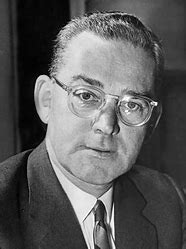
The taller man in this picture is Ephraim Inman, the defense attorney for Stephenson. He is standing next to Will Remy the prosecuting attorney, dubbed the “boy prosecutor” who successfully convicted Stephenson for 2nd degree murder.

Will Remy told the crowded courtroom that Stephenson “destroyed Madge’s body, tried to destroy her soul” and over the course of the trial tried to “befoul her character.” Overholtzer’s left breast and a bleeding right cheek were bitten by Stephenson when she was raped. Remy argues Stepheson’s teeth were a murder weapon. Attorney Asa Smith, a Overholtzer-family’ friend prepared a dying declaration for Madge Oberholzer that was placed into evidence.  Judge Sparks admitted the declaration and allowed Remy to read it to the jurors. (Sparks was not a Klansman.)

Stephenson considered himself, not only above the law, but as the law in Indiana. (That is a familiar refrain in the 21st century.) Stephenson was convicted for second degree murder. It was second degree murder because the cause of death was Madge Oberholzer’s decision to take her own life.

The Klan still exists in America.

James Alex Fields Jr. plowed into a crowd of demonstrators in Charlottsville, Va in 2017. He killed one of the protestors.

Fields admitted to being a member of the KKK. Though the Klan remained a political power in Indiana for some years after Stephenson’s trial and conviction, its Indiana’ power and influence was diminished. The national position of the Klan has declined in America as is believed in modern times, but it still exists.

Speaking about the white nationalist groups rallying against the removal of a Confederate statue, former President Trump said, “You had some very bad people in that group, but you also had people that were very fine people, on both sides.”

As Egan’s history of Grand Dragon Stephenson illustrates, American Democracy is a work in progress and remains at risk of failure. Honesty of elected officials and “there being no person or elected official above the law” remain important for America to remain a Democracy.