EDUCATION’S BOUNTY

Ibram Kendi’s book is about Malcolm X’s transformation from a poorly educated Black youth to man of erudition and importance–a remarkable tribute to the equality of all human beings.

Books of Interest
 Website: chetyarbrough.blog

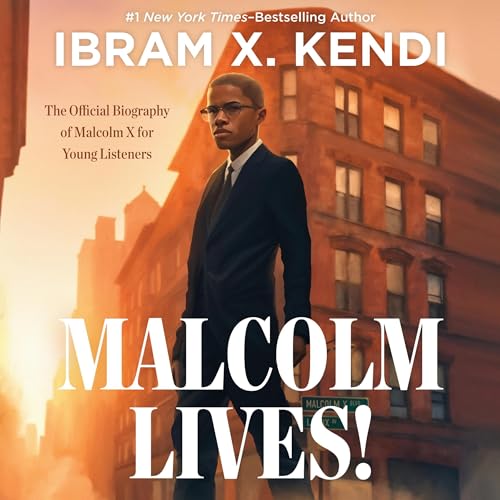
Malcolm Lives! (The Official Biography of Malcolm X for Young Listeners)

Author: Ibram X. Kendi

Narrated By:  Ibram X. Kendi

Ibram X. Kendi (Author, American professor and historian of race at State University of New York.)

Though Kendi’s book does not have the erudition of Manning Marable’s “Malcolm X”, his book reveals much more about Malcolm Littles’ challenging childhood and his pilgrimage to Pano-Africanism, global human rights, and belief in Sunni Islamism. The Sunni belief in community and the scholarship of study, along with the rough early experience of Malcolm Little’s life, changes him and, to a degree, America’s racist belief in human inequality.

Malcolm X (born Malcolm Little, 1925-1965, human rights activist.)

Kendi's book is about Malcolm's transformation from an uneducated Black youth to man of erudition and importance is a remarkable tribute to the equality of all human beings.

Kendi explains how Malcolm Little was an uneducated hoodlum when young. Manning Marable shows how insightful and intelligent Malcolm became as a man. A listener/reader of “Malcolm Lives!” gives listener/readers a glimpse of how great they can be if they put their minds and hearts into a life that can make a difference in flawed society. Little becomes self-educated by reading and adopting a belief in something greater than himself.

In some ways, Malcolm is aided by his innate ability to separate the kindness of people he knew from the ignorance of their prejudice.

Interestingly, it is a helpful teacher that changes the direction of Malcolm’s life by encouraging him to be a part of society. On the other hand, this early teacher discourages Malcolm from becoming a Lawyer because he believed the color of Malcolm’s skin would get in his way. Malcolm learned lessons of self-reliance and independence that diminished his regard for the help of a teacher he formally admired. Kendi explains this is just the beginning of Malcolm’s life that evolves from hoodlumism to caring about society that is riven with inequality, but capable of change. Kendi explains how Malcolm’s life exemplifies that capability.

Malcom Little’s life begins in 1925 in Omaha, Nebraska. This is a time in America when the Ku Klux Klan is at its greatest strength.

Malcolm is in the eighth grade experiencing disillusionment from a teacher he respected. He drops out of school and learns how to live off the land by working minimum wage jobs. The work is at night clubs and pool halls that feed his hunger for excitement while growing angrier and angrier about a world of injustice. He covets a white girlfriend who is seduced by his charm but lets him down when she rats him out for house robberies while she and two girlfriends are parties to the crimes. Little is sentenced to eight years in prison for the crime. The lesson he learns from that experience is that friendliness is no protection from the ignorance of prejudice.

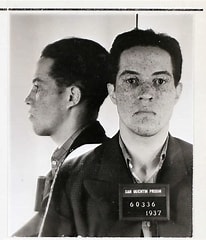
John Elton Bembry (aka Bimbi, an inmate who befriended Malcolm and encouraged him to read and educate himself while serving his sentence.)

The irony of Little’s imprisonment is that the teacher he needed when young came in the guise of a fellow prisoner who is recognized by others as someone who commanded respect because of his book learning, intellect, and eloquence. His name was John Elton Bembry, aka “Bimbi”. Bimbi’s leadership by example and eloquence led Little back to what was seen by his early teacher, the capability of a young man willing to work hard to better himself. Little began re-educating himself by reading books from the prison library. Soon after, one of Little’s brothers introduces him to the Nation of Islam.

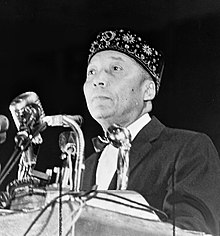
Elijah Muhammad (1897-1975, American religious leader and self-proclaimed Messenger of Allah)

Kendi reveals the spotty history of the founding of NOI, which ultimately leads to Little’s break with NOI and his adoption of the Sunni faith. Though religion means nothing to some, Little’s adoption of Sunni beliefs and his self-education through reading and travel (when released from prison) changes his life. NOI gave Malcom purpose and discipline while in prison because it reinforced his belief in Black pride and self-reliance. However, the rigidity of its teaching of Black separatism and the personal conduct of its leader, Elijah Muhammad, who fathered children out of wedlock, alienated Little. In 1964, Malcolm went on a pilgrimage to Mecca. He found Muslims of all races praying together. The universality of Sunni Islam showed the narrowness of NOI’s view of society.

This is the capture of the NOI follower who is convicted of Malcolm X’s assassination. He is paroled after serving 45 years in a prison cell.

In the last chapters of Kendi’s book there is mention of the establishment of the nation of Israel and the resistance of Palestinian’ Muslim followers to the taking of land for the formation of Israel. The land that became Israel and Gaza were occupied by an early ethnic group known as the Canaanites. Many Palestinians and Israelites descended from the Canaanites. What some may argue is that people of the Jewish faith were first to create a religious force and formal government in the holy lands of Jerusalem. In Malcolm X’s opinion, the rights of the Palestinian people were being violated in the same way as Blacks in America. Whether that is fair judgement remains a question.

Without hegemonic control by the Palestinian leadership of disputed holy lands, no Palestinian State could be created. Today–Jews, Palestinians, and the world are paying a price for that disagreement.

An argument can be made that in ancient times Jews chose to create a form of government in Jerusalem while Palestinians did not. The same is true today. Yassa Arafat and his followers refused an opportunity to create a separate Palestinian State. Arafat would not agree because of conflicts over full sovereignty over holy lands that were disputed by both Jews and Palestinians.

Kendi ends his book with a story about NOI and Malcom X’s assassination. Malcolm had split from NOI and formed his own movement. The fact that members of NOI were involved in the murder of Malcolm X seems damning. However, Kendi’s book is about Malcolm X’s transformation from a poorly educated Black youth to man of erudition and importance–a remarkable tribute to the equality of all human beings.

PROGRAMMED

Every human being has their own story. Are we free if we choose to be free or are we all just programmed?

Books of Interest
 Website: chetyarbrough.blog

Washinton Black (A Novel) 

By: Esi Edugyan

Narrated By: Dion Graham

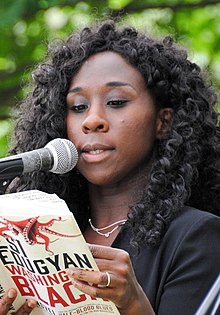
Esi Edugyan (Canadian novelist, two-time winner of the Giller Prize for “Half-Blood Blues” and “Washington Black”, the Giller Prize is a Canadian literary award of $100,000 for the winner.)

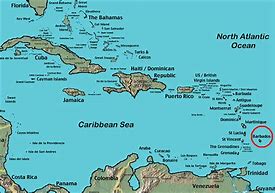
“Washington Black” is about a young slave growing to adulthood in the 19th century. It begins on a Barbados sugar plantation and ends in England and Morrocco after a journey that stretches one’s imagination to its limits.

“Washington Black” is an imaginative journey but it steps a bit too far when the author writes of a steerable airship carrying its two passengers into an Atlantic Ocean storm that luckily lands on a slave trader’s vessel instead of plunging into the ocean.

Despite Edugyan’s implausible rescue of Washington Black and his white English protector, there is enough interest in the main characters to keep listeners listening and readers reading. At five years of age, Washington Black who is called Wash, is rescued by a tall black slave named “Big Kit”. None of the slaves on the Barbados sugar plantation mess with Big Kit. Only the “big boss”, the manager of the plantation is powerful enough to bloody her nose without being intimidated. Big Kit becomes Wash’s protector. Wash has no idea who His real mother is, but Big Kit becomes his early guide through life.

When Wash reaches the age of 10 or 11, the plantation is visited by Christopher “Titch” Wilde who is the brother of Erasmus Wilde, both of which are the sons of John Wilde, a famous explorer-scientist who travels the world. “Titch is somewhat of a scientist himself. He meets with Wash and decides it would be good to have Wash as his aide while he pursues his scientific research.

Erasmus Wilde has responsibility for running the plantation which he dislikes but is ordered to because it supports the Wilde wealth for their father’s research. Erasmus and Titch have an older brother named Phillip that comes to the plantation to see his brothers. Phillip kills himself in front of Wash, presumably so Wash can show the brothers where his body can be found. Wash is devastated by the suicide and brings “Titch” to the site where it occurred. “Titch” realizes Wash will be accused of murdering the brother. “Titch” has found Wash to be a natural artist and can produce documentation for some of his science research. He does not want Erasmus to take Wash away and makes plans to escape. The escape is in the dirigible mentioned earlier.

The adventures of Wash accelerate from here.

As “Titch” had expected, Erasmus accuses Wash of murdering their older brother.

Both Wash and “Titch” become fugitives. The suicide of Phillip is a “red flag” that suggests the Wilde family is, at the very least, psychologically troubled. Those troubles revisit the Wilde family with events of the father, mother, Erasmus and “Titch”.

Titch’s father is declared dead because of a mistaken belief that a storm in Alaska killed him. He was not dead but chose to stay in Alaska despite the public reports of his death.

The father makes no effort to correct the mistake of his reported death. “Titch” finds that out and travels with Wash to find his father. His father is glad to see his son but is not inclined to return to civilization because of a comfort he feels in his new environment. “Titch” is pushed over the edge by his father’s lack of concern about others, including “Titch”, his mother, and remaining brother. “Titch” abandons Wash just like his father abandoned everyone in the family. “Titch” disappears in a storm and presumably dies. The father actually dies while Wash is there. Wash chooses to return to civilization and becomes a free man or at least a man who is free of slavery.

More surprises come toward the end of Edugyan’s story as Wash grows to manhood, but the author stretches one’s imagination a little too far for those who will be entertained by her creativity but disappointed by its implausibility.

Edugyan makes one wonder if anyone is truly free. Are we only programed by genetics and our experiences in life?

Every human being has their own story. Are we free if we choose to be free or are we simply programmed?

SOCIAL CHANGE

Social change for human equality is a long and arduous process. The election of 2025 will either be a step forward or backward.

Books of Interest
 Website: chetyarbrough.blog

Unexampled Courage” The blinding of Sgt Isaac Woodard and the Awakening of President Harry S. Truman and Judge J. Waties Waring

By: Richard Gergel

Narrated By: Tom Zingarelli

Richard Gergel (Author, American lawyer, assumed office 2010 as US District Court Judge for the District of South Carolina, graduate of Duke University School of Law in 1979.)

The Emancipation Proclamation was issued on January 1, 1863, as an executive order by Abraham Lincoln. It purportedly ended slavery, but it was only the beginning of a generational fight that is still being waged. “Unexampled Courage” is a history of a twentieth century turning point in the fight for equal treatment of Black Americans. The blinding of a Black veteran of WWII, Sergeant Isaac Woodard, in 1946 signified another major turning point for equal treatment of former American slaves. On July 26, 1948, President Harry Truman signed Executive Order 9981 which banned racial discrimination in the military. The blinding of Woodard by a white Sheriff in South Carolina and Harry Truman’s executive action are connected by Gergel’s history of Woodard’s horrid and brutal experience.

In 1946, a South Carolina police chief beat Sergeant Isaac Woodard’s head and used the butt of a Blackjack handle to gouge Woodard’s eye sockets.

Sergeant Woodard was beaten and blinded by a Batesburg, South Carolina police chief for drinking (and alleged disorderly conduct) on a Greyhound bus. Several white and Black soldiers were drinking and talking among themselves while returning from the service after the end of World War II. Woodard asked for a bathroom break from the bus driver and was refused. At a Batesburg, South Carolina bus stop, the driver left the bus to report Woodard to the police chief. The police chief attacked Woodard and beat him around his head and eyes with a leather Blackjack similar to the one shown above. Gergel reports Woodard’s eyes were directly poked and grinded by the butt of the police chief’s Blackjack before being thrown unconscious in a jail cell. The next morning, a local physician examined Woodard and he was taken to a veteran’s hospital, but any care provided was ineffectual. The assault on Woodard’s eyes is later determined to have caused an incurable blindness.

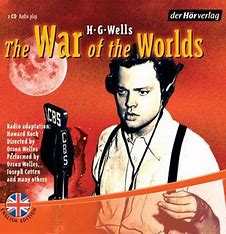
Orson Wells becomes aware of the horrid treatment of Woodard and chooses to broadcast the incident to American listeners. Orson had become famous for his 1938 “…War of the Worlds” radio broadcast.

When Wells broadcast the Woodard’ incident on public radio, he mistakenly identified the wrong South Carolina’ town in which the incident occurred. However, he continued investigating the incident and committed to correcting his error and identifying the police chief who battered Woodard to the point of blindness. The police chief and the town of Batesburg were correctly identified, and the wheels of justice slowly turned toward injustice, rather than justice.

Julius Waties Waring (1880-1968, U.S. District Court judge for the Eastern District of South Carolina.)

Though the police chief was tried for beating Woodard, he was acquitted by a South Carolina’ court. The story of Woodard’s blinding was prosecuted in the U.S. District court of Judge, J. Waites Waring. Waring was outraged by the inept prosecution by the federal prosecutors. After the acquittal, Waring began a movement in South Carolina for Black Americans’ equal rights. Waring’s outrage was supplemented by President Harry Truman who convened a commission on civil rights. After the report from the commission, Truman arranged a speech before the NAACP to reveal the findings of the commission and actions the Federal Government would take to address unequal treatment of Black Americans.

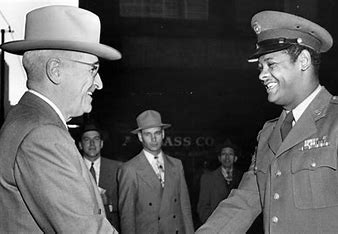
Harry S. Truman (1884-1972, 33rd President of the U.S.)

Truman is in the midst of a campaign to be re-elected as President of the United States in 1948. Gergel argues Truman decides to use his speech before the NAACP to announce his plan to fight for Negro equal rights, in part because of the blinded Woodard, but also because of many unjust southern murders and discriminatory actions against Black Americans.

Thomas E. Dewey (1902-1971, American lawyer and politician, 47th governor of New York 1943 to 1954.)

As most Americans know, President Truman was expected to lose to Thomas Dewey in his re-election campaign. A major reason for that belief was because of executive action to integrate the military and the opposition from southern voters who insisted on the inequality of Black Americans. From a coalition of labor, Blacks, Jews, mid-western farmers, and some number of southern states, Truman won re-election by a slim margin.

Gergel makes it clear that a fight for equal rights is not won and in fact was resisted by military leaders who tried to stop integration of the military after Truman’s executive action.

The military leaders fail to change Truman’s mind and military leaders finally took the required steps to integrate and assure a level of equality among white and Black Americans. Of course, equal treatment remains an issue in the military, as well as throughout America. Social change seems to conflict with genetic inheritance, compounded and multiplied by human ignorance.

Gergel shows social change for human equality is a long and arduous process.

The Civil War only dated the beginning of the American fight for equality. It has become a broader effort, including racial, gender, LGBTQ, marriage, civil, economic, natural, and political equality. One wonders if humans, let alone Americans, will ever get there. The election of 2025 will either be a step forward or backward.

EQUALITY

The Craft’s story is an inspiration for the anti-slavery movement before and after the civil war. Their story reinforces the principle of equality of opportunity for all.

Books of Interest
 Website: chetyarbrough.blog

“Master, Slave, Husband, Wife

By: Ilyon Woo

Narrated by: Janina Edwards & Leon Nixon

Ilyon Woo (American author, Received BA in Humanities from Yale College and has a PhD in English from Columbia University.)

“Master, Slave, Husband, Wife” will disabuse any listener who may think the American Civil War was not about slavery. Ilyon Woo’s detailed research of Ellen and William Craft reveals the many reasons why no one can deny the fundamental cause of the Civil War in America, i.e. it was slavery.

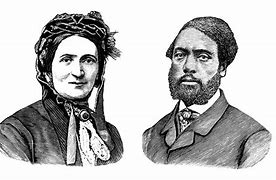
Ellen and William Craft

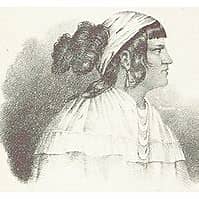
Ellen and William Craft were slaves until escape from their slave master in 1848. William was enslaved by a white land holder named Robert Collins who held a half interest in Craft’s ownership with another southerner. Ellen was the child of a white owner and black slave that gave her a fair-skinned white racial appearance. However, Ellen was classified as a slave because of her mixed racial parentage. Her mother was a slave to a white slaveholder who was her putative father. At the age of eleven, Ellen was gifted as a valued piece of property to a sister who later became Collin’s wife.

Ellen missed her birth mother but only after years of being on the run, did she manage to re-unite with her mother, Maria Smith.

In 1846, Ellen reached the age of 20 and agreed to marry William who was a skilled cabinet maker.

William was allowed to work for a portion of his wages in return for a cut of his income to be paid to his owners. In 1848, with the money William saved from his outside work, the married slaves planned an escape from Collin’s household. The plan was for Ellen to dress herself as a white man with William as her slave on a journey to Philadelphia, Boston, and possibly Canada.

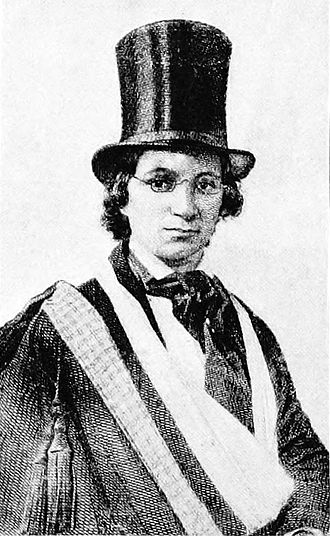
Ellen Craft dressed as a white man with an accompanying slave who is actually her husband.

The fugitives succeed in their escape, but their success is challenged. The challenge came from the morally misguided attempt by the American government to avoid a war between the North and South by passing the “Fugitive Slave Act of 1850”.

That act would allow capture and return of runaway slaves to their putative owners. The Act was a compromise between the north and south, supported by President Millard Fillmore, who was willing to sacrifice black Americans to slavery in order to preserve the Union. Storied and respected leaders of America like Daniel Webster, who had freed his slaves, supported the “Fugitive Slave Act”. Webster believed, like the majority of a white Congress, that union was more important than human equality.

Woo’s detailed research reveals how Ellen and William had both black and white supporters who recognized the iniquity of slavery and helped them escape bounty hunters hired by Robert Collins to return the Crafts to slavery. Ellen and William were in Boston. They were helped to escape by Boston’s anti-slavery Americans of conscience.

The anti-slavery movement extended into some of the city of Boston’s government officials. Some local government officials refused to cooperate with bounty hunters trying to fulfill the legal requirements for recovery of escaped slaves. Woo infers Boston boiled with demonstrations against the “Fugitive Slave Act”.

The danger of recapture remained palpable because some officials were concerned more about preservation of the union than the iniquity of slavery. Ellen and William chose to flee to England. Their escape is aided by Quakers and the support of famous black Americans like Fredrick Douglass and William Wells Brown. Douglas publicized the story of the Crafts. William Wells Brown, an equally famous slave escapee, supported the Crafts by using them in traveling presentations that spoke of the iniquity of slavery and how they escaped its clutches. Ellen and William remained in England for 18 years. With the support of Lady Byron and Harriet Martineau, the Crafts learned how to read and write.

The Crafts spent three years at Ockham School in Surrey, England where they taught handicrafts and carpentry.

The Crafts respected each other in ways that defy simple explanation. Though they strongly supported each other, they were often separated for long periods of time. William and Ellen became self-educated writers and teachers who started schools. William traveled to Africa on his own and started a school without his wife. He was gone for months at a time but never broke with his wife who stayed in England.

After 18 years, Ellen and William return to the U.S. The civil war was over. They had five children together with two who remained in England. The Crafts started Woodville Cooperative Farm School in Bryan County, Georgia. The school failed but they continued to farm and wrote a book about their lives titled “Running a Thousand Miles for Freedom…” which became popular in both England and the U.S.

The Craft family’s story of their flight to freedom.

Ellen Craft died in 1891. She was buried in Bryan County, Georgia. William Craft died in 1900 but was denied burial in Bryan County next to his wife. William was buried in Charleston, South Carolina. Though separated in death, they seem as tied to each other as they were in life. The Craft’s story is an inspiration for the anti-slavery movement before and after the civil war. Their story reinforces the principle of equality of opportunity for all.