A MISOGYNIST SEA

Audio-book Review
By Chet Yarbrough

(Blog:awalkingdelight)
Website: chetyarbrough.blog

A Room of One’s Own

Written by: Virginia Woolf

Narration by:  Juliet Stevenson

VIRGINIA WOOLF (1882-1941, BRITISH AUTHOR, A WOMAN AHEAD OF HER TIME)

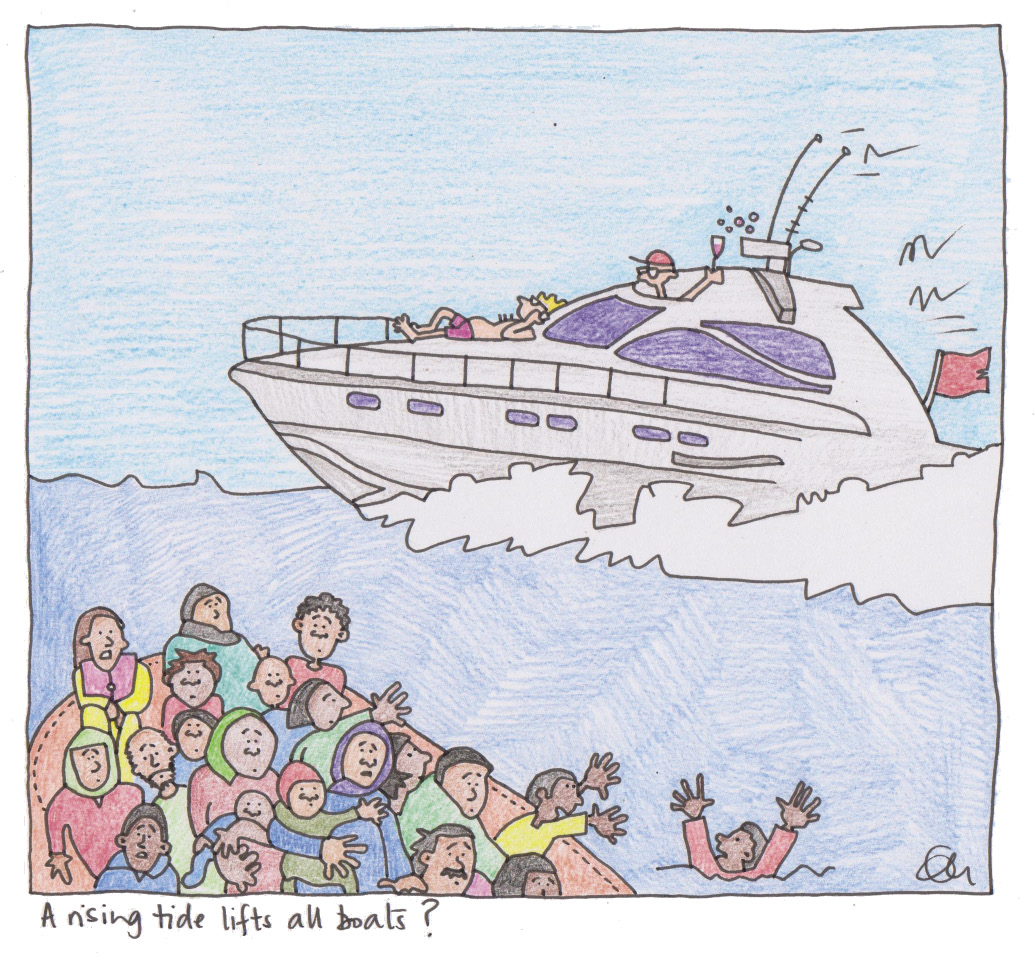
Virginia Woolf is a woman outside of time.   As Woolf implies in the early twentieth century, women are drowning in a misogynist sea.  Woolf is born when female inequality breaches the existential threat with a first wave; i.e. Women’s Suffrage in 1920.  The preeminent feminist, Betty Friedan, is just born (actually, 1921).  (Friedan later writes “The Feminine Mystique”–published in 1963.)

“A Room of One’s Own” is a contemplation on why women are underrepresented as great poets or fiction writers.  With the exception of Harriet Beecher Stowe, Woolf suggests there are no 19th century women renowned for fiction.  Apocryphally, the unlikely story of Lincoln saying “So you’re the little woman who wrote the book that made this Great War” is an apt coda for the insignificance of the public’s view of women writers.

EMILY DICKINSON (1830-1886, AMERICAN POET, PRODUCED 1,800 POEMS IN 40 HANDBOUND VOLUMES)

(As one listens to her complaint, one thinks about Emily Dickinson.  However, Dickenson did have a room of her own.)

Woolf wittily skewers male paragons of the pen and their misogynist comments about women.  She sets the table for an explanation of why there is no female Shakespeare’, erudite Johnson’, or Longfellow word smiths. 

Woolf’s point is that women had no money because they were dependent on men or family inheritance.  Often, young ladies are discouraged from college by their families who feel marriage and bearing of children are their primary duties.  Without educational support and few opportunities for gainful employment, women only had money if they inherited it or married a wealthy husband.  Without money, there is little opportunity for independence; without money, there is little chance of having “A Room of One’s Own”.

MeToo

There are many examples to support Woolf’s observation about money and the luxury of contemplation, having a room of your own.  Michel de Montaigne’s essays are spectacular observations of life and living but the key to his success is in wealth that allows him time for observation and contemplation of life.  He had a room of his own.  In Woolf’s lifetime there were few women who had such luxury.  Have things changed?  Maybe, but #MeToo suggests women’s independence and wealth still involves misogyny.

In the last section of her lecture Woolf notes women write fiction with a mixture of public disdain and admiration.  Disdain from implied colorlessness in writing but admiration for a twist in a story that suggests a first-time female author has potential.

MISOGYNY

Misogyny still roils the sea but more women writers have a room of their own.  The second wave is forty years in the future but Friedan steadies the helm-bearing toward equality.  At $.79 cents to the dollar in the 21st century, there is still a long way to go.

The frightening prospect of a Taliban government in Afghanistan is more threatening than wage differences in the U.S. The only concession they have recently made is to ban forced marriage of women. This is not to diminish America’s misogynist history but to show how backward and unfair the world can be to women.

However, for realization of potential, Woolf suggests the author needs to have a room of her own to have time to think and reflect.  To prove Woolf’s bona fides, she ends “A Room of Her Own” with short stories.  They are beautifully written and worthy of the theme of which she writes. 

As Aristotle once said, contemplation is the highest form of activity for the soul.  Woolf implies great literature; great fiction, and poetry come from authors who have time and a room of their own.

WIRED TO CREATE

Audio-book Review
By Chet Yarbrough

(Blog:awalkingdelight)
Website: chetyarbrough.blog

Wired to Create: Unraveling the Mysteries of the Creative MindWired to Create

Written by: Scott Barry Kaufman, Carolyn Gregorie

Narration by:  Nick Podehl

CAROLYN GREGORIE (SCIENCE WRITER FOR THE HUFFINGTON POST)

SCOTT BARRY KAUFMAN (AMERICAN PSYCHOLOGIST, AUTHOR, SCIENCE WRITER)

The book “Wired to Create” is an internet sensation.  It began as an article in the Huffington Post; written by Carolyn Gregorie.  Based on the article, she co-writes a book with psychologist Scott Kaufman.  The book is promoted as a loss leader (no charge) to attract customers to Google e-books and other internet savvy vendors.  The book’s popularity is in the argument that intelligence is only one characteristic of a creative mind.  With IQ as only one characteristic of creativity, the field of human subjects who fit the definition of creative is broadened.

PICASSO'S BULL'S HEAD
PICASSO’S BULL’S HEAD

Scientists, inventors, artists, sales people, mechanics, technicians, sports stars, and other unnamed categories of people are “Wired to Create”.  This is no revelation.  It is not unusual to find friends or acquaintances that are able to think in three dimensions, rotate objects in their mind, come up with solutions to complex problems, or create art out of ordinary things.  Some of these creative people are great explainers; others are introverted and non-communicative.  Some recall events in perfect detail; others only remember broad outlines.  Some create art out of nothing; others say nothing about art but build cathedrals.

ST. SERNIN, TOLOUSE, FRANCE
ST. SERNIN, CATHEDRAL IN TOLOUSE, FRANCE

Kaufman and Gregorie identify some characteristics of creative minds.  There is the ability to hold opposing concepts in mind while rendering something never thought of before; i.e. like a work of art that shows planes of a human face from every angle in two dimensions.  There is a disruptive quality in a person with a creative mind.  That disruption is often seen in school students who cannot sit still, are always talking, and are constantly interrupting class activities.  It is the creative teacher who handles the disruption to gain participation of all students, including the disrupter.

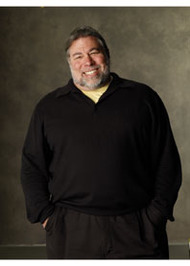
STEVE WOZNIAK
STEVE WOZNIAK

STEVE JOBS (1955-2011)

Kaufman and Gregorie mention famous creative geniuses like Einstein, Edison, Wozniak, and Jobs who exhibit creativity in varied but similar ways.  Einstein may rise above the others because of a creative universality but each exhibit a passion and intensity for what they think and do.  Edison and Jobs are super salesmen; Wozniak is a tinkerer; Einstein is a conceptualizer. To varying degrees each practices the others’ skills.

“Wired to Create” notes that creativity is not restricted to either introverts or extroverts.  Creativity encompasses all sociological categories.  Creativity comes from persistence and resilience; driven by passion.

MIND DECONSTRUCTION AND RECONSTRUCTION OF EVENTS
(Competing theories of learning suggest human brain interaction with environment is too complex to measure; i.e. the way the brain reacts when stimulated by the environment is, at best, an evolving mystery.)

THOMAS EDISION (1847-1931, AMERICAN INVENTOR, BUSINESSMAN CONSIDERED BY SOME TO BE AMERICA'S GREATEST INVENTOR)
THOMAS EDISION (1847-1931, AMERICAN INVENTOR)

The authors note the many failures of creative people; e.g. people like Edison and J. K. Rowling.  The authors note that only a handful of Edison’s thousands of patented inventions were successful.

J. K. ROWLING (MOST FAMOUS FOR THE HARRY POTTER SERIES)

Rowling had many publishers turn Harry Potter down until one publisher accepted her work. The tortured personality theory of creativity is addressed by the authors but it is only one of many factors that make people think what they think and do what they do.  As noted with Einstein, Edison, Wozniak, Jobs and Rowling not all creative people are aberrantly affected by hyper activity, repeated failure, or intense focus.   Kaufman and Gregorie imply some creative people may have tortured personalities but correlation is not causation.

PAUL GAUGUIN (1848-1903, PAINTER, SCULPTUR)
PAUL GAUGUIN (1848-1903, PAINTER, SCULPTOR)

Gauguin is financially unsuccessful as an artist in his lifetime because of the public’s rejection of his work.  Gauguin’s paintings are sold for millions today.  Kaufman and Gregorie imply creativity is no guarantee of money, success, or happiness. Gauguin’s lack of success may have led to use of drugs but it seems as likely that penury and failed acceptance, rather than misunderstood creativity, is the proximate cause of death.  Taking drugs is a malady of the uncreative as well as the creative.

Vincent van Gogh, a contemporary of Gauguin, commits himself to an asylum in which he paints one of his most revered works of art, “The Starry Night”.  However, like Gauguin, van Gogh is never financially successful.  Gauguin and van Gogh succumb to the stresses of life; not because they are creative but because they are poor and unable to cope with their perceived failure.

VINCENT VAN GOGH (ONE OF MANY RENOWNED SELF PORTRAITS BECAUSE VAN GOGH COULD NOT AFFORD MODELS.)

Kaufman and Gregorie broaden the definition of creativity.  However, there seems little revelation in their suggestion that creativity comes from intense interest, average or higher IQs, hard work, and persistence in the face of rejection.  Talk of left brain, right brain activity, and frontal lobe brain waves are unconvincing physiological origins of creativity.  Play theory seems passé.  Competing theories of learning suggest human brain interaction with environment is too complex to measure; i.e. the way the brain reacts when stimulated by the environment is, at best, an evolving mystery.  Mysteries of the creative mind remain undiscovered.

UNDERRATED MASTERPIECE

Audio-book Review
By Chet Yarbrough

(Blog:awalkingdelight)
Website: chetyarbrough.blog

Breakfast of Champions

Written by: Kurt Vonnegut

Narration by:  John Malkovich

KURT VONNEGUT (1922-2007)

KURT VONNEGUT (1922-2007)

The author, Kurt Vonnegut, offers a fascinating glimpse of a mind teetering on, and then falling over the edge of reality into insanity.  One might classify “Breakfast of Champions” as a surreal satire but that diminishes its insight to insanity.

JOHN MALKOVICH (ACTOR, DIRECTOR WHO HAS APPEARED IN OVER 70 MOTION PICTURES)

“Breakfast of Champions” is an imaginative and underrated masterpiece.  The underestimation is realized by the listener in John Malkovich’s excellent narration. 

There are no heroes in “Breakfast of Champions”.  There are three main characters.  There is the teller of the tale, Kilgore Trout, and Dwayne Hoover.

Vonnegut clearly satirizes the maladies of the American twentieth century but he concretely reveals how wealth, poverty, and escapism grind people down and compel abhorrent, often violent, and insane acts.  He exposes the American dream’s illusion of happiness. 

In Vonnegut’s story, our Creator is a tinkerer who creates machines that are known as human beings.  These human beings are set in motion, endowed with consciousness, and no longer controlled by the Creator.  They are machines that follow the laws of physics and are self-sustaining, reincarnating machines that live forever without recollection of past lives.

CREATOR.png

The teller of the tale is not revealed until the last chapters of the book.  It is the Creator of humankind. 

Kilgore Trout is a science fiction writer who is invited by an admirer of his books to receive an award, in a coal mining town, for his pornographic science fiction stories.  The award is for the greatest writer of all time.  Trout is at first reluctant to take the trip to the coal mining town but succumbs to their acclaim for his fame and begins hitchhiking across the country to receive the award.

COAL MINERS

Dwayne Hoover is one of the richest men in the coal mining town from which Trout is receiving the award.  Hoover is an auto dealer.  He is the best employer in town, with the best employment package; including employee health plans.

However, the largest employer in town is a coal producer.  The coal company is an environmental polluter, low wage provider, and the biggest cause of citizen illness in town.

Trout and Hoover may or may not know each other but the Creator knows what is going to happen when Trout finally arrives.  In Trout’s hitchhiking progress he meets fellow machines (people who are coping with life).  Their stories are of middle class lives that remind reader/listeners of the passions, weaknesses, and desires of all human beings.  At the same time, the Creator explains what it is like for people that live in coal mining towns.  There is Hoover’s “girl Friday”, the homosexual piano player, and an artist who is recently awarded $5,000 for a painting.  Each machine (person) plays a role in a developing crisis that approaches at the speed of Trout’s hitchhiking progress.

BAD THINGS WILL HAPPEN

A reader/listener feels bad things are going to happen as the story progresses.  Hoover is taking what the Creator calls “bad chemicals”. 

At one point Hoover cannot speak except to repeat one word of a sentence said to him by another.  Hoover crosses the street and feels, with each step, he is sinking into the earth.  Hoover returns to his office, calls his girl Friday, and says he needs her to come with him to a local motel room to relieve a persistent erection.  Both Hoover and his girl Friday have lost their spouses; i.e. Hoover’s wife by suicide; girl Friday’s by war.  They have been lovers for some time.

BAR PIANO PLAYER

Hoover continues taking bad chemicals.  The Creator arrives at a bar in town.  Trout arrives at the same bar.  The piano player is playing.  It is somewhat unclear but Hoover shoots the piano player in the back of the head, and bludgeons his girl Friday. 

Trout tries to stop the beating of the girl, and the tip of Trout’s finger is bitten off by Hoover.  Hoover is arrested.  The piano player is dead.  Girl Friday is concussed, and Trout has his hand wrapped in a bloody handkerchief.  Hoover is taken to jail; girl Friday, the dead piano player, and Trout are on their way to the hospital.

FREEWILL

Vonnegut seems to be explaining that money is not happiness.  Human beings have free will to be good, bad, morally upright, or insanely brutal. 

Having a job that barely offers the basic necessities of life only reinforces machine-like living.  Destruction of the environment diminishes those who work for dirty industries and those ancillary businesses that suck off polluter’s productivity.  Drugs are a way of escaping reality but they have consequences. Some machines (people) fall off the edge of sanity, become violent, and sometimes murder innocent bystanders.

STEPHEN CRAIG PADDOCK (PERPETRATOR OF THE LAS VEGAS, NEVADA MASSACRE.)

STEPHEN CRAIG PADDOCK (PERPETRATOR OF THE LAS VEGAS, NEVADA MASSACRE.)

“Breakfast of Champions” is not only a story of the 1970s.  It is the story of yesterday’s school shootings, postal syndrome killings, the Paddock atrocity in Las Vegas, and Donald Trump’s delusional attempt to void America’s 2020 Presidential election.  Vonnegut suggests a human being, whether there is a Creator or not, has free will.  Vonnegut implies humans are choosing to be machines.

THE VITAL QUESTION

Audio-book Review
By Chet Yarbrough

(Blog:awalkingdelight)
Website: chetyarbrough.blog

The Vital Question: Energy, Evolution, and the Origins of Complex LifeTHE VITAL QUESTION

Written by: Nick Lane

Narration by:  Kevin Pariseau

NICK LANE (AUTHOR, BRITISH BIOCHEMIST)

Nick Lane, a biochemist, offers a science driven explanation for the origin of life.  A non-scientist listening to Lane’s book may be overwhelmed by technical jargon without some additional research.  The additional effort offers a better understanding of Lane’s explanation for a chemical theory of life’s origin.  Though Lane’s story is laced with biochemical terms, he occasionally uses words that are understood by all; i.e. he argues the beginning of life comes from rock, water, and carbon dioxide that interact with each other when energy is introduced.

Planet earth is estimated to be four billion plus years old.  At earth’s earliest, rock, and water were present.  With an earthen core of molten rock, carbon dioxide is created from the interaction between rock and water.  Modern evidence of that interaction is observable in

THERMAL VENTS:  

Those early elements lead to microscopic unicellular prokaryotes (bacteria and archaea) which have no nucleus (a center with a membrane), and only one chromosome (a genetic characteristic).  Prokaryotes have DNA and an outer membrane with some of the elements of a bigger cell called eukaryotes.

PROKARYOTES AND EUKARYOTES:  

Lane argues that over some period of time the constant motion of prokaryotes leads to a merge between one prokaryote and another to create a eukaryote; i.e. a new cellular formation with a nucleus (an internal element with its own membrane) and some added elemental features.  One of the preeminent features of a eukaryote is its ability to become molecularly more complex; i.e. to become multicellular with multi-chromosome capability.

CHEMISTRY AS THE ORIGIN OF LIFE:

Lane argues, along with other biochemists, that the role of energy in the chemical creation of life is misunderstood until more recent times.  

Lane reminds listeners of the physics law that says “energy cannot be created and cannot be destroyed”.  With the growth of eukaryotes, energy became an integral part of cellular function.  Adenosine Tri-Phosphate (ATP) became the power plant of the cell.   

With a built-in energy source, a race began to create life with permeable cellular membranes that allowed molecular interior change and exterior growth.  Interior changes included mitochondrial DNA.   

Exterior changes included molecular bonding and sustained energy for evolution.

Lane also explains why sex is important for evolutionary survival.  However, he doubts life can be extended beyond the age of 120 without taking the risks of genetic manipulation.  Lane’s “…Vital Question” remains a question at the end of his story.  If life is just chemistry, where did the first prokaryotes come from?  If they came from the big bang, what was there before the big bang?

MOLECULAR BONDING AND ENERGY:

CELL MEMBRANE& ATP (ADENOSINE TRI-PHOSPHATE) TRANSPORT:

ATP, THE POWER PLANT OF THE CELL: BACTERIA AND ARCHAEA (PROKARYOTES)- AND PROTISTS (EUKARYOTES):

THE CAPITALIST VEIL

Audio-book Review
By Chet Yarbrough

(Blog:awalkingdelight)
Website: chetyarbrough.blog

THE SOULS OF BLACK FOLK

The Souls of Black Folk

Written by: W. E. B. Du Bois

Narration by:  Mirron Willis

W. E. B. DU BOIS (1868-1963, AUTHOR, SOCIOLOGIST, HISTORIAN, CIVIL RIGHTS ACTIVIST, CO-FOUNDER OF NAACP)

W. E. B. DU BOIS (1868-1963, AUTHOR, SOCIOLOGIST, HISTORIAN, CIVIL RIGHTS ACTIVIST, CO-FOUNDER OF NAACP)

Eventually, doctors will find a coronavirus vaccine, but black people will continue to wait, despite the futility of hope, for a cure for racism.

Editorial comment in the NYT Sunday edition 5/21/2020 by Roxane Gay.

“The Souls of Black Folk” describes a veil of discrimination that covers the face of white America.  Published in 1903, it reflects on the 1863 Emancipation Proclamation, America’s reconstruction failures after the civil war, and a veil that fell like an iron curtain between black and white America.  It is a veil that distorts the truth of human equality.

Slave Family In Cotton Field near Savannah

W. E. B. Du Bois is a great American who finally abandoned his country late in life because he could no longer tolerate the capitalist consequence of social, political, and economic discrimination. He describes discrimination in “The Souls of Black Folk” as a veil, a fine gauzy material that hides the details of black Americans who have the same potential as white overlords. The details are political, social, and economic discrimination imposed by a majority on a minority.  Du Bois identifies that minority as people of color; i.e. specifically black Americans.

THOMAS JEFFERSON AND SLAVERY

THOMAS JEFFERSON AND SLAVERY (Slave owner that believed blacks are inherently less equal than whites.)

Du Bois is the first black American to receive a PhD from Harvard University.  First he received a bachelor’s degree from Fisk University, a storied black college; went to Harvard to receive a second bachelor’s degree, and on to a PhD.  Du Bois studied black history and wrote “The Souls of Black Folk” to explain what it is like to be black in America.  He began with the end of the civil war and carries it through 1903 when the book is published.

PRISON

Du Bois studied black history and wrote “The Souls of Black Folk” to explain what it is like to be black in America.

Du Bois explains how black Americans are treated, how they feel about it, and how they react to it.  In the clarity of his writing, Du Bois presumes readers will understand humans, of any color, are the same.  Du Bois notes that black Americans are offered freedom without a way of making a living, without education, without any respect by fellow Americans.  Though they were no longer slaves by law they remain slaves to potential employers who see them as less equal, and less capable.  Du Bois notes blacks are denied the tools of education, opportunity for work at a living wage, and the right to participate in the politics of leadership.

SHUCK & JIVE

Without money, power, or prestige blacks are left with deception as their only defense against oppression.  “Shucking and jiving” became a pejorative description of black behavior without white’s understanding its necessity.

Without money, power, or prestige blacks are left with deception as their only defense against oppression. 

COMMUNISM IN THE USA

Du Bois misunderstood the difference between Russian and Chinese revolutions and American capitalism.  The future proved promises of communism were false.  This does not change the truth of Du Bois’s realization that a white majority denies minorities with false promises of capitalist equality of opportunity.

It is little wonder that Du Bois wandered to the idealism of communism with its false promise of equality for all.  White America gave Negroes little alternative.  However, Du Bois misreads history.  The revolution of 1917 may have started with a minority of people called Bolsheviks but they were a part of a white majority.  They promised a future of plenty to an uneducated population who were members of a majority. 

Du Bois clearly shows how black American education, employment, and political participation are subverted at every turn in American history.  Du Bois chastises Booker T. Washington for being an apologist for white suppression. Du Bois sees that, though education is improving for black Americans, they are still denied equal opportunity for employment, and are failing to capitalize on the potential of political power.  Nearing 90 years of age, Du Bois gives up on America.  Ironically, this is in the 1960’s when the Black Panther’s movement is forming.

GREED

The inherent nature of man “to be greedy” makes fools of us all.

Du Bois is a great American because he understood how American capitalism undermines core political beliefs like equality of opportunity and the equality of all human beings.  Du Bois understood the importance of education, equal economic opportunity, and political power.

Du Bois misunderstood that the drive for money, power, and prestige distorts pursuit of the “good” in all forms of government.  Communism, socialism, and capitalism require a Hobson’s choice; i.e. “a choice of taking what is available or nothing at all”.  Even for minorities, it seems capitalism offers the best hope because it attempts to regulate the worst parts of human nature.

CREATIVE ADULT

Audio-book Review
By Chet Yarbrough

(Blog:awalkingdelight)
Website: chetyarbrough.blog

Words without Music: A MemoirWords without Music

Written by: Philip Glass

Narration by:  Lloyd James

PHILIP GLASS (AMERICAN COMPOSER)

“Words without Music” is a memoir of Philip Glass’s transformation to creative adult.  This is a journey taken by every child–with greater and lesser degrees of actualized creativity.  Glass explains how love by others transforms his life and why self-actualization is the fountain of creativity.  This is certainly not a new revelation.  Socrates, through the words of Plato, characterizes self-actualization in the dictum of “know thy self”.   Self-actualization is explained as the penultimate goal of life by Abraham Maslow.

Glass recounts his childhood with a description of his ex-Marine father, and school teacher mother.  Glass’s father is a small business man who raises his children in a rough New York neighborhood.  Strength, determination, and adventurousness come from Glass’s father.

PHILIP GLASS (WITH HIS FATHER, A RECORD STORE OWNER, WHO SENT HIS SON TO HIGH-END MUSIC SCHOOLS)

The soul of Glass’s family is his mother.  She is the conservator, the method-of-living key to Glass’s growth as an artist.  Glass explains how his father feared little in a neighborhood of gangs; while managing his record business with an iron hand.

Glass learns how to overcome fear in working in his father’s record shop and taking the proceeds of the day to the bank at the end of the day.  Glass sees himself, as though in a mirror, when he chooses not to tell his father of a customer’s theft of a record.  Glass knows his father will act reflexively by overzealously punishing the thief.

women are the sun
WOMEN ARE THE SUN, THE SOURCE OF ENERGY AROUND WHICH MEN REVOLVE.    (In Glass’s  pursuits, he notes that his mother is his rock, his supporter and adviser.)

Glass strives to be a good student and is accepted by the University of Chicago based on academic tests rather than high school graduation.  Glass chooses to become a musician based on early experience as a flutist, and later as a pianist.  He finds from counseling, from a Julliard alumnus, that composing music rather than playing music is more conducive to his innate ability.  In these pursuits, Glass’s mother is his rock, his supporter and adviser.

After graduating, Glass chooses to travel to Paris in pursuit of a composer’s education.  He is mentored by an older woman who provides the technical skill and stern loving support he needs to continue his journey toward actualization.  Glass chooses to leave his mentor with a woman of his own age and travel to India.  Glass sees himself in a way that requires reinforcement from others.  “Others” are teachers of the ancient practice of yoga.

PHILIP GLASS AND HIS FAMILY IN 1973

Glass returns to America with a wife, with whom he has two children.  He lives in New York and works as a furniture mover and taxi driver while pursuing his education as a composer.  Glass is approaching thirty.  He begins to have serendipitous success.  The first big break is an opera called “Einstein on the Beach”.

JEAN COCTEAU (1889-1963, NOVELIST, POET, ARTIST, FILM MAKER)

Glass’s journey is symbolized by his dissection of the works of Jean Cocteau; i.e. particularly La_Belle_et_la_Bête (Beauty and the Beast).  Glass argues that Cocteau’s works are about human creativity and transformation.  The symbolism in La_Belle_et_la_Bête is the story of Glass’s life.  The rose in Cocteau’s movie symbolizes beauty (Glass’s body of work). The key is the method (Glass’s mother). The horse is strength, determination, and speed (Glass’s father). The glove is nobility (Glass’s renown as a composer). The castle is a prison that can only be escaped with love from another (Glass’s three wives, his children, his mentors, and friends). The Mirror symbolizes who you truly are (this memoir of Glass’s life).

This is a nicely written and narrated memoir of Philip Glass; considered by many as the most influential composer of the late twentieth century.

ARE YOU BLACK ENOUGH

Audio-book Review
By Chet Yarbrough

(Blog:awalkingdelight)
Website: chetyarbrough.blog

Negroland: A Memoir

Written by: Margo Jefferson

Narration by:  Robin Miles

MARGO JEFFERSON (AUTHOR, FORMER THEATRE CRITIC FOR NYT, PULIZER PRIZE WINNER FOR CRITICISM, PROFESSOR @ EUGENE LANG COLLEGE)

Margo Jefferson’s memoir is a perspective on growing up in America.  Jefferson is born in 1947.  She is raised in Chicago by two professional middle class parents; i.e. one is a doctor; the other a teacher.  What makes Jefferson’s memoir interesting is her middle class upbringing.  It sharply defines answers to many questions never asked by Americans.

Are you black enough?  Are you white enough?  Are you female enough?  Are you male enough?  Are you American enough? 

MARGO JEFFERSON (CLASS OF '71 COLUMBIA UNIVERSITY GRADUATE)
MARGO JEFFERSON (CLASS OF ’71 COLUMBIA UNIVERSITY GRADUATE)

Jefferson wrestles with many of the same baby to teenage insecurities all Americans face in their generation.  However, there is an extra layer of complexity for Jefferson because of her color.  Jefferson lightly touches on the history of slavery and its societal consequence but she personalizes that history in explaining how she became Margo Jefferson, an accomplished theatre critic and professor.

Chicago is a microcosm of America.  Discrimination, crime, poverty, and failure in equality of opportunity are the same in Chicago neighborhoods as anywhere in America. 

MARGO JEFFERSON AS CHEERLEADER IN THE 60'S (CENTER, TOP ROW)

What Jefferson does in “Negroland” is explain how American society makes her life different because of her color.

Like most girls and boys in high school, Jefferson wants to be popular.  She tries to become a cheerleader.  With success in her senior year, she wonders about the reasons for it taking so long.  Is it because she is not pretty enough?  Is it because she is nearsighted and has astigmatism?  Or, is it because she is not white enough?

RACISM

Jefferson recalls her family’s trip to Atlantic City for a doctor’s conference.  Reservations were made but when they arrive, the hotel gives the family a poorly appointed room and suggests the restaurant would be off-limits for dining.  They checked out of the hotel the next morning.

Jefferson notes concerns of her mother about how other people of color talk and act while warning her daughter not to emulate their speech or style.  Jefferson becomes aware of the potential stigma of not being black enough among people who are proud to be black.

Jefferson explains how she becomes best friends with a handsome gay white man and revels in the looks black men give that seem to question her interest in being with a white man when she is black.  At the same time, she notes how beautiful women hit on her friend without understanding that he has no interest in them.

LARRY WILMORE (COMEDIAN AND SOCIAL CRITIC)

In listening to Jefferson’s memoir the day after Larry Wilmore’s routine about Obama at the White House Correspondents’ Dinner, one gains better insight to Wilmore’s send-up of President Obama.  Wilmore is unfairly criticized for his tart-tongued stand-up when thought of in light of Jefferson’s memoir.

The last part of Wilmore’s presentation seriously praises Obama’s accomplishment and then uses a pejorative word for black Americans to categorize Obama.  Wilmore’s comment is badly interpreted by some.  Wilmore is saying Obama is great enough to be both the President of the United States (in the sense of acceptance by all Americans) and black enough (in the sense of being accepted by blacks).

Jefferson’s memoir, and Wilmore’s routine shows that being American enough, black enough, white enough, male or female enough, is just being a part of the human race.

NARCONOMICS

Audio-book Review
By Chet Yarbrough

(Blog:awalkingdelight)
Website: chetyarbrough.blog

Narconomics: How to Run a Drug Cartel

Written by: Tom Wainwright

Narration by:  Brian Hutchison

TOM WAINWRIGHT (BRITISH AUTHOR, EDITOR OF THE ECONOMIST)

TOM WAINWRIGHT (BRITISH AUTHOR, EDITOR OF THE ECONOMIST)

“Narconomics” is about the business of illegal drugs. 

Tom Wainwright notes drug cartels are modern businesses. They benefit rich owners while liberally rewarding middle class managers with money, power, and prestige.  The difference is–middle managers brutally terrorize employees, kill their customers, and murder innocent bystanders. 

Drug Cartel murders Mormon Family living in Mexico in 2019.

Picture from the New York Post, Nov. 6, 2019.

These business conglomerates systematically brutalize the public. The manufacture and sale of illegal drugs is a growth industry, diversifying its practices and products while becoming global enterprises.  An irony of Wainwright’s story is the ugliness and economic success of drug cartel businesses are abetted by bribe-taking government leaders. 

President Enrique Peña Nieto (Former President of Mexico– accused of bribery from the Oil Industry and Sinaloa Drug Cartel.)

The substance of Wainwright’s book is that cartels are run with many of the fundamental principles (aside from overt terror and murder) that make international companies richly successful.

DRUG CARTELS (ONE OF SEVERAL MONOPOLIES IN THE WORLD)

Though policies like the war on drugs and alcohol prohibition were meant to save people from themselves, Wainwright suggests they failed. 

ADDICTS SHOULD BE TREATED; NOT JAILED

When desire for money, power, or prestige is unmet, humans compensate with drug use; or other escapist behaviors.

METHODOLOGY OF DRUG REHABILITATION

Wainwright argues that understanding drug cartel business practices will show how their industry profits can be disrupted. 

Wainwright suggests changing the focus from a war on drug producers and sellers to a policy for treating, educating, and rehabilitating users.

Wainwright shows how drug cartels capitalize on fundamental human drives and weaknesses.  He goes on to suggest how drug cartels can be destroyed.

Rather than spending billions to militarize national police forces, Wainwright suggests those dollars be spent to treat, rehabilitate, and educate accused and/or incarcerated users. 

An encouraging article in the WSJ (12/15/21) notes that Mexico and U.S. drug interdiction agencies are working on a framework to combat drug cartels “… likely to focus more on drug addiction”. In destroying the drug cartel’s consumer base, they lose profit.  Without profit there is no money, no power, and no prestige.  There is only a failed business model.

Wainwright goes on to suggest that drug use be decriminalized and regulated by the government.  This is no panacea but history shows that the war on drugs is a failure.  The heart of success for drug cartels is its adoption of business practices that generate profit.  The reality of the fundamentals of well-run business organizations is that they do not disappear.  Remove the source of profit and businesses either fail or are compelled to change.

LONG REACH OF DRUG CARTELS

Wainwright explains that the business of illegal drugs is a global enterprise.

 A global level of government cooperation is needed for effective elimination of drug cartels.  No single nation can eradicate cartels because of globalization.  One nation’s success in the drug war only compels cartels to move to neighboring countries.  The solution lies in treating, rehabilitating, and educating drug users.  Only with decriminalization, user medical treatment, and public education will the source of profit for drug cartels be cut off.

DOLLAR SIGN

Wainwright offers a compelling argument for attacking drug cartels by removing the source of their profits.  The source of profits is the consuming public; not the illegal drug manufacturers and distributors.

The fact that drug cartels are run like businesses reveals an infrastructure that allows diversification.  Once profits are reduced for drug manufacture and distribution, cartels will change to survive.

Wainwright notes that drug cartels have already diversified; i.e. they are human traffickers, and extortion consortiums.  Government agencies and the general public are equally repulsed by human trafficking, murder, and extortion.  Governments and the general public are more likely to cooperate in eradicating that type of criminal activity; less so with drug addiction.

DRUG ADDICT

The glimmer of hope is that cartel diversification does not pander to the desire for escape from reality offered by drugs.

There is no simple or cheap alternative to “the war on drugs” but there is a history that shows in its current form, war does not work. The drug war is no joke, neither is it a solution.

Illegal drug manufacturers and distributors are just the cost of doing business; not the source of profit. Cure the public of its need for drugs, decriminalize drug use, or at least treat the addicted, and drug cartels have no motive to be in the business. 

SPACE AND TIME

(Blog:awalkingdelight)
Website: chetyarbrough.blog

Audio-book Review
By Chet Yarbrough

Spooky Action at a Distance: The Phenomenon That Reimagines Space and Time-and What It Means for Black Holes, the Big Bang, and Theories of Everything

Written by: George Musser

Narration by:  William Hughes

GEORGE MUSSER (AUTHOR, CONTRIBUTING EDITOR SCIENTIFIC AMERICAN)

GEORGE MUSSER (AUTHOR, CONTRIBUTING EDITOR SCIENTIFIC AMERICA)

“Spooky Action at a Distance” (also called entanglement) collapses the theory of space just as Einstein’s theory of relativity collapsed time.  George Musser argues that experimental evidence suggests neither space nor time have form or matter in an Aristotelian sense.  Aristotle explains the nature of things by suggesting an object perceived by the senses has form and matter.  By Aristotle’s definition, both space and time are perceived by the senses; therefore they have form and matter.  Einstein’s theory (experimentally confirmed) shows that time is relative which denies precise form or matter.  Time changes based on an observer’s relative location, and the speed of observer and observed.

ALBERT EINSTEIN (1879-1955, Einstein’s theory (experimentally confirmed) shows that time is relative which denies precise form or matter.  Time changes based on an observer’s relative location, and the speed of observer and observed. )

Musser notes that with the advent of quantum theory, in Einstein’s view, the same holds true for space because of the experimental proof of “Spooky Action at a Distance”.

John Stewart Bell and David Bohm note how elemental particles, separated by wide distances, can be manipulated to mimic or oppose each other’s spin.  It is as though there is no space between two particles because the action occurs simultaneously; in other words, faster than the speed of light. 

The ramification of this “Spooky Action at a Distance” is that space has no inherent meaning.  Both space and time are a fiction created by the senses.

With Bell and Bohm, the apple still falls to the ground but it may have nothing to do with gravity but because of an unseen phenomenon; i.e. something that is non-local and unrelated to Newtonian locality’s cause and effect (maybe dark energy or dark matter that connects everything to everything).

Musser broadly explains this phenomenon as the difference between locality and non-locality in the cause and effect relationship of existence.  With Newton, all action is presumed to be based on locality with gravitation of the earth causing an apple to fall to the ground. 

“Spooky Action at a Distance” calls into question the need of space or proximity.  It also raises questions about the speed of light as a limitation in the area of cause and effect; i.e. if “Spooky Action at a Distance” reflects instantaneous change; then cause and effect have no speed limitations. Parenthetically, the idea of inflation at the big bang is replaced by principle of spooky action.

BLACK HOLE

Black holes are also re-imagined with the principle of “Spooky Action at a Distance”.  Maybe black holes are the source of new galaxies being formed in other universes.  It may be that this is still a cause and effect universe but a theory of everything escapes us at the moment because of its undiscovered nature.

One of many things that are interesting in Musser’s book is that Einstein may have been ahead of Niels Bohr in appreciating Quantum Theory even though the idea set Einstein on edge.

There is hope for an undiscovered truth that will bring the nature of things into a theory of everything that is more predictable than the probabilities of quantum mechanics.  This may still be a “cause and effect” universe.  Maybe Smollin is right and too much research and investment is committed to string theory at the expense of other “theory of everything” ideas.

Musser’s story reminds one of research done on Einstein’s brain.  The size and number of dendrites and synapses of Einstein’s brain were found to be the same as in normal human brains. However, every human has glia cells in their brain that have a function that does not comport with normal electrical connections but still transmit information to the autonomic and cognitive functions of the brain.

Neuroscientists found that the glia cell-count in Einstein’s brain is higher than the average for most human beings.  The glia cells were found to be the source of a different mind/body connection that transmitted information in a different way. 

One wonders, is that why Einstein could see what others could not?  Re-imagining is what Musser infers is needed in today’s physics’ departments.

SELF-PRESERVATION

Audio-book Review
By Chet Yarbrough

(Blog:awalkingdelight)
Website: chetyarbrough.blog

God’s Bankers: A History of Money and Power at the Vatican

Written by: Gerald Posner

Narration by:  Tom Parks

GERALD POSNER (AMERICAN INVESTIGATIVE JOURNALIST)

GERALD POSNER (AUTHOR, AMERICAN INVESTIGATIVE JOURNALIST)

“God’s Bankers” delves into the history of Vatican City to show there is little difference between religious institutions and any organization that puts self-preservation above ethics and morality.

Leaders of religious institutions are as capable of being corrupt and venal as any who manage organizations.  Just as some CEOs of private industry and elected officials of public institutions morally and ethically fail; some Popes lapse as moral and ethical leaders of the Roman Catholic Church.

The Roman Catholic Church has had both good and bad leaders.  From a willingness to look the other way, 6,000,000 Jews are murdered, mob money is laundered, and children are exploited.  No single organization, neither church, financial institution, or elected official is responsible for these immoral and unethical acts but many are complicit.

The Catholic diocese and its brethren have committed every sin known to man (gender identity intended).  The source of their perfidy is not unique to their religion or any system of belief or non-belief; i.e. the source is human nature’s drive for money, power, and prestige.  Popes, CEOs, and public servants are equally seduced by human nature’s drives that influence action.  Human nature is bound, like breath to life, to act immorally and unethically.

ROBERTO CALVI (1920-1982, ITALIAN BANKER CALLED -GOD'S BANKER- BY THE PRESS BECAUSE OF HIS ASSOCIATION WITH THE HOLY SEE)

ROBERTO CALVI (1920-1982, ITALIAN BANKER CALLED -GOD’S BANKER- BY THE PRESS BECAUSE OF HIS ASSOCIATION WITH THE HOLY SEE)

Gerald Posner begins his history of Vatican City with death, by suicide or murder, of Roberto Calvi in 1982.  Calvi’s death is related to the financial practices of the Vatican Bank (aka Institute for the Works of Religion or, sometimes abbreviated, IOR).  From Calvi’s Death, Posner takes church history back to the 1900s when the Vatican Bank is created. 

IOR HOME (THE BASTION OF NICHOLAS V.)


(Calvi’s death is related to the financial practices of the Vatican Bank (aka Institute for the Works of Religion or, sometimes abbreviated, IOR).

The IOR is meant to consolidate the land and money of Vatican City to preserve and expand the wealth of the Church.  

The Bank is a collection and distribution center for money donated, invested, and exchanged (legally or illegally) for preservation and expansion of the Holy Sea.

The primary purpose of the Vatican Bank is to preserve and expand the power and influence of Catholicism.  The fuel for that purpose is money.  Posner’s facts do not deny good works of the Catholic Church.  However, his story exposes the sinful nature of some wearing the robes of Papal authority, and many (employees and consultants) hiding behind cloaks of Papal secrecy.  Posner’s facts imply “being human” is the root of all evil with money as its fuel.

The purpose of the IOR is “to provide for the safekeeping and administration of movable and immovable property transferred or entrusted to it by physical or juridical persons…”  The IOR’s creation is meant to provide money for maintenance and growth of the Roman Catholic Church.  Income is intended to come from charitable activities of the church; paid for by parishioner and lay public contributions, and from legitimate business transactions.  However, Posner shows that charitable contributions and legal business transactions are not enough to sustain Vatican City and its global evangelist goals.

The drive for money is distorted by an implied license to commit any sin necessary to increase income and pay-off any who threaten exposure of illegal activity.  No crime seems out-of-bounds for the Church e.g. its complicity in Nazi occupation of the Balkans; a failure to confront German and Croatian isolation, transport, and murder of Jews; the use of the Vatican Bank to launder money for crime syndicates, the clandestine support of Nazi criminals in return for gold bullion (surmised to have been stolen during the war), espionage participation with American Presidents to subvert communist growth in Eastern Europe, Africa, and South America.  Many of these actions and non-actions increase the wealth of the Church at the expense of Catholicism’s morality and ethics.

POPE PIUS XI (1857-1939)

POPE PIUS XI (1857-1939. Pope Pius XI sells tacit support for the Nazis when the German people are taxed by Hitler to benefit Vatican City at the rate of an estimated 100 million dollars per year.)

Pope Pius XI is consumed by the desire to return Vatican City to a state and is willing to condone and support Mussolini to attain that goal.  Pope Pius XI sells tacit support for the Nazis when the German people are taxed by Hitler to benefit Vatican City at the rate of an estimated 100 million dollars per year.  Though late in Pius XI’s papacy, Hitler and Mussolini’s mistreatment of the Jews is denounced in a Decree that never sees the light of day because of Pius XI’s death.  His successor Pope, Pope Pius XII, fails to register Pius XI’s decree and refuses to condemn Hitler for the final solution during WWII.

POPE PIUS XII (1876-1958, FORMERLY CARDINAL PACELLI)

POPE PIUS XII (1876-1958, FORMERLY CARDINAL PACELLI, Pope Pius XII, fails to register Pius XI’s decree and refuses to condemn Hitler for the final solution during WWII.)

Posner brings us back to 1982 and the death of Roberto Calvi.  Calvi, as a consultant for IOR, launders money for the mafia during his tenure.  Calvi creates bogus charities to hide the transactions.  He recommends Vatican Bank investment in risky ventures that frequently fail.  On balance, until some of Calvi’s activities became public, the Vatican condoned his illegal activity; presumably because ill-gotten gains were greater than losses.  Or, the threat of money laundering exposure is a threat that would tarnish the image of the Church.

NAZISM AND CHRISTIANITY (FAITHS COOPTATION BY HITLER)

Though late in Pius XI’s papacy, Hitler and Mussolini’s mistreatment of the Jews is denounced in a Decree that never sees the light of day because of Pius XI’s death.  His successor Pope, Pope Pius XII, fails to register Pius XI’s decree and refuses to condemn Hitler for the final solution during WWII.

POPE JOHN PAUL II (1920-2005, FORMER POLISH ARCHBISHOP BECAME POPE IN 1978)

Pope Paul II does not come away from Posner’s characterization without some stains.  Though Pope Paul II is highly revered for his charismatic character and willingness to confront communism in Poland, he fails to unwind IOR and its nefarious operations or aggressively attack pedophilia of errant bishops.

ARCHBISHOP PAUL MARCINKUS (1922-2006, BORN CICERO, IL., DIED IN SUN CITY, AZ, PRESIDENT OF THE VATICAN BANK 1971-1989)

ARCHBISHOP PAUL MARCINKUS (1922-2006, BORN CICERO, IL., DIED IN SUN CITY, AZ, PRESIDENT OF THE VATICAN BANK 1971-1989)

Further, Posner notes Paul II’s support of the American Bishop, Paul Marcinkus, when his judgment is questioned in regard to the Vatican Bank.

POPE BENEDICT XVI (ELECTED 4.19.2005, RESIGNS 2.28.2013, THE PRESSURES OF OFFICE SEEM TO OVERWHELM THE PONTIFF)

Pope Benedict, Pope Paul’s successor, is equally tarnished for failing to confront IOR corruption and lack of regulation.  An additional note by Posner is that Benedict fails to expose a homosexual faction of the Roman Catholic Church that coerces the Papacy into promoting Bishops based on fear of exposure; i.e. rather than promotion for ability as members of the hierarchy.

ETTORE GOTTI TEDESCHI (2009-2012 PRESIDENT OF IOR, DISCHARGED AFTER POLITICAL INFIGHTING AT THE VATICAN OVER HIS THEATENED EXPOSURE OF MONEY LAUNDERING)

ETTORE GOTTI TEDESCHI (2009-2012 PRESIDENT OF IOR, DISCHARGED AFTER POLITICAL INFIGHTING AT THE VATICAN OVER HIS THREATENED EXPOSURE OF MONEY LAUNDERING)

In the end, Posner suggests IOR is becoming a more conventional bank with the support of the current Pope, Pope Francis.  The beginning of the end appears with Ettore Gotti Tedschi who became President of IOR in 2009.  Tedschi, an Italian economist and banker, begins the clean-up of IOR.  He is discharged in 2012 but not before a whistle is blown.

POPE FRANCIS (AN ARGENTINIAN, 266TH POPE OF THE ROMAN CATHOLIC CHURCH, NAMED IN HONOR OF FRANCIS OF ASSISSI)

Today’s Pope Francis may be better than yesterdays but tomorrow is another day.  One doubts human nature will change.  Humans are unlikely to escape moral and ethical weaknesses.  An ethical bank, like an ethical church, is an oxymoron.  They both require money to operate and they are managed by human beings.

Steps have been taken to regulate the Vatican Bank and stop its use as a money-laundering center for criminal enterprise.  Francis has ordered the firing and replacement of IOR board members and improved the transparency of Vatican Bank transactions.

After Cardinal Pell is exonerated for alleged pedophilia, Pope Francis returns to Cardinal Pell’s recommendations for restructuring Vatican finances. One wonders how much of the accusations against Pell were initiated by the Catholic church’s resistance to oversite of Vatican finances.

As the ancient saying goes, “Fish Rots from the Head”. With Pope Francis, light is being shed on the perfidy of the Roman Catholic Church. The question is-will it be enough and will it change 100 years of IOR malfeasance; not to mention, the generations of sexual abuse by Bishops and Priests of the order.