MAD SCIENCE

Audio-book Review
By Chet Yarbrough

(Blog:awalkingdelight)
Website: chetyarbrough.blog

The Island of Dr. Moreau

By H.G.Wells

Narrated by: Simon Prebble

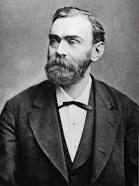
H. G. Wells (English Author, 1866-1946)

The Island of Dr. Moreau is an apocryphal story; i.e. it raises many human’ issues—like morality, ethics, meaning of life, and the boundaries of civilization. 

The original story is mired in 1896’ science but the story remains relevant for 21st century cloning and genetic manipulation.  Wells envisions a brilliant physiologist who finds a way to meld the physiological characteristics of man with beast.  This extraordinary feat is not technically revealed which diminishes the sense of suspended belief but the idea opens a Pandora’s Box of evil that is only mitigated by hope.

Dr. Moreau’s demented intent is to civilize the animal kingdom by creating “humanimals” that offer opportunity for animals to talk and resist thoughtless instinctive actions.  The idea is crazy on many levels–not the least of which is the evil that lurks in human’ minds that compel equally animalistic instinctive actions; but, Wells tells an apocryphal and believable story about science run amok.

In the 21st century, science advances to the point of cloning and creating an identical living animal.  “Dolly”, the sheep is cloned in 1996.  Science is on the edge of creating new life forms, if not human copies.  The only obstacle appears to be politics; political resistance to the idea of creating life in a test tube. 

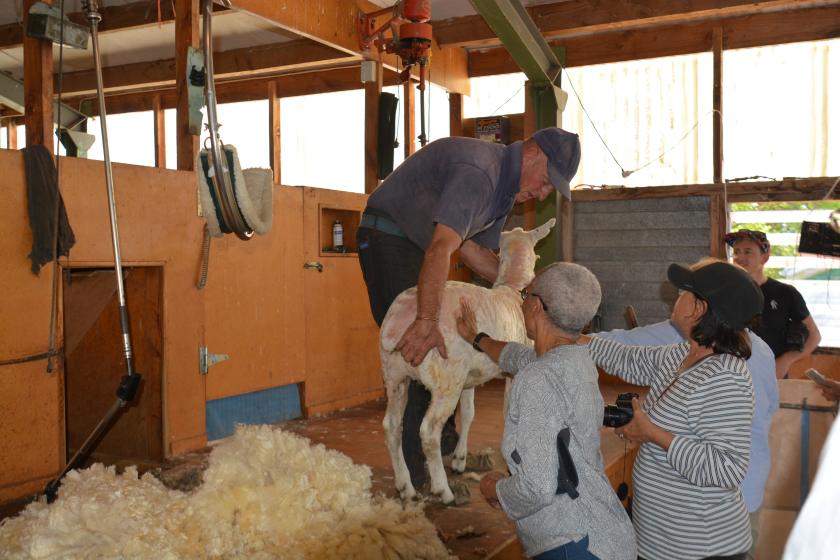
Dolly (Born in 1996, dies in 2003 from lung disease and severe arthritis. Her 6 year life span compares unfavorably with the 10 to 12 years of most sheep.)

Political resistance to cloning is weakening as evidenced by the first clone of a man’s leg cell and a cow egg in 1998.  The embryo is destroyed after 12 days but a level of viability is proven.  (Coincidentally, Wells includes a bovine human in The Island of Dr. Moreau.)

In 2008, a biotechnology company created five mature human embryos from the nucleus of skin cells planted into a human egg.  The embryos are allowed to mature to a viable inner cell mass called a blastocyst which is an early structure of mammals.  They were destroyed at that stage but the experiment shows viability at a later stage of human cloning than in 1998.  In 2013, scientists successfully cloned adult human cells.

It is possible to create duplicates of living animals, and human’ cells; add to that the potential of modifying genetic material–a feat achieved, but politically reviled by most scientists and the general public.  For science, “humanimals” seem a viable and potential human creation.
“Humanimals” is a mad-scientist idea.  The seductive interest in this science is that cloning and genetic modification offer opportunities for regeneration of damaged nerve cells, medical cures, organ and limb replacements; etc.  Fear accompanies this avenue of research because the “thrill of discovery” seduces scientists’ into pursuit of knowledge without philosophical, moral, or ethical consideration of consequence. 

Chinese scientist, He Jiankui, uses CRSPR to modify the human genome in 2018. On December 30, 2019 He is sentenced to 3 years in prison for “illegal medical practice”.

A host of moral and philosophical conflicts are raised as science advances toward the creation of life.  When does life become life and what right does a living human being have to end or create life?  One might answer–society already has laws which allow life to end life; so why not create laws that allow creation of life.  There lays the restraining influence of politics; i.e. not all agree with life taking life, right to choose life, right to choose death; so on and so on. 

Politics mitigate the consequence of mad science. However, money, power, and prestige motivate the good and bad of humankind.
Growth of skin cells save a 7 year-old’s life by replacing 60 percent of skin loss from disease in 2015.

Doctor De Luca cultures skin cells from a portion of the boy’s body that is not diseased.

Ray Kurzweil suggests the future of human beings will involve a merger of human’ DNA and micro-technology.   The Island of Dr. Moreau may be re-titled “The Island of Dr. Anonymous” with island earth populated by “humanimals” and “humotics”. 

Like Well’s hero, Edward Prendick, surviving humans may have to leave island earth if they want to remain “only” human.  The fable of Pandora explains that “hope” is the politics of the possible. It may be all that is left at the bottom of the box.

UNNATURAL CAUSES

Audio-book Review
By Chet Yarbrough

(Blog:awalkingdelight)
Website: chetyarbrough.blog

Unnatural Causes

By Dr. Richard Shepard

Narrated by Dr. Richard Shepard

Dr. Richard Shepard (Author, UK Pathologist who investigated many celebrity deaths including Princess Diana.)

Dr. Richard Shepard is an English forensic pathologist.  In a cathartic examination of his profession, Shepard reveals how obsessiveness is a boon and bane in life.  From youth to late middle age, Shepard reflects on his life.

In “Unnatural Causes”, Shepard examines the causes of others’ death. With ever-present foreshadowing, a listener recognizes a man who is going to experience a mid-life crisis. 

In Shepard’s dissection of life, many male listeners will see their own narcissistic lives.  The expense of self-absorption is delusion, and often divorce.  For a male obsessed with a career, the cost of delusion is a crisis of personal identity. 

The cost of divorce is different for men than for women.  The biggest cost of divorce is paid by a wife.  She not only loses a part of her identity; she loses the security of family, friends, and most often family income.

Shepard does not overtly acknowledge the inequity of divorce, but one senses his feeling of guilt.

The personal part of Shepard’s story is a sad commentary on relationship between men and women in the modern world.  It is a picture of many men who grow old with their first wife and abandon them when youth has been spent. 

The primary purpose of Shepard’s book is not to explain men’s narcissism but to explore the profession of forensic science

There is no question that Shepard’s experience qualifies him as an expert in the field.  From terrorist events in England and 9/11 in the U.S. to the death of Princess Diana, Shepard practices his profession as a revered and respected pathologist.  He explains his obsession for “cause for death” from childhood. 

Having lost his mother at an early age, her absence motivates Shepard to understand what causes death. Though unsure of himself when he first encounters dissection of a human being, Shepard notes how curiosity shuts out any discomforting feelings in cutting and examining internal organs of a human corpse.  His focus is on finding the true cause of death.

In the course of Shepard’s career, his search for “cause of death” is found to be difficult, but not because of death’s pathology. 


Shepard explains how political pressure from the public, the police, and the judicial system influences diagnosis of death. The public may want to know the “cause of death” because of preconceived notions.  The police may want to know the “cause of death: because of their perception of someone’s guilt or innocence.  The judicial system may want “cause of death” based on witnesses for the defense or prosecution.  To Shepard, what someone wants is not relevant.  Only the truth is relevant.

Shepard’s conviction that truth is all that matters leads to a professional crisis. 

A less than reputable couple lose their child to what Shepard concludes is SIDS (sudden infant death syndrome).  Based on Shepard’s diagnosis, the couple is set free.  Years later, the couple has another child.  Both parents are alcoholics according to reports given in Shepard’s account of the case.  Years after Shepard’s SIDS determination, a second pathologists reviews the record and finds what he believes to have been child abuse.  The court agrees with the new pathologist and the child is taken from the parents.  Shepard is brought before a board of inquiry to determine whether he should keep his license.

Shepard’s book is worthy of a listener’s time to find out what the board of inquiry decides.  Both the personal and public crises Shepard faces will resonate with anyone who has obsessively pursued a career and had his/her personal integrity challenged.

There is a poignant relationship between Shepard’s story and the grilling of Amy Coney Barrett’s pursuit of a seat on the Supreme Court.

Her truth is not everyone’s truth. To challenge her belief in the role of a justice of the Supreme Court places her squarely in Shepard’s story of judgement by a board of inquiry.

There is the added benefit of hearing how “inequality of the sexes” is a deeply rooted social phenomena.

JOBS TODAY AND TOMORROW

Audio-book Review
By Chet Yarbrough

(Blog:awalkingdelight)
Website: chetyarbrough.blog

The Industries of the Future

By Alec Ross

Narrated by Alec Ross

Alec Ross (Author, American technology policy expert)

Alec Ross’s book about future industries is founded on world travel and observation.  Ross is an historian by education. His wide-ranging view of sociological change is from personal experience with technology and the information-age.

Ross observes social change around the world as a senior adviser to then Secretary of State, Hillary Clinton.  His dizzying travels explain how mobile phones connect the world and change economic, political, and social opportunity for both third world, and highly industrialized countries. 


Ross’s fundamental argument is that “…Industries of the Future” will be based on information technology.  The forefront of that technology rests on software (coding) and human evolution (genetics).

Despite nationalism and the horrendous consequence of Covid19 on the world, Trump-like government leaders who focus on nationalist independence and existing manufacturing jobs are job destroyers; not creators. 

New jobs will not come from expanded labor-intensive manufacturing but from the accumulation and use of data.  Ross suggests coding and genetics will determine jobs of the future. 

Ross infers creators of code are tomorrow’s laborers.  Today, learning how to code is a valuable skill that insures employment through and beyond the 21st century. 

Though there is hyperbole in Ross’s suggestion that today’s coders make a high wage of $100,000+ a year, they do make an entry level living wage with vertical mobility.  As the market matures, coder’s income will undoubtedly keep pace with expanding economies.

Ross shows how coding opens the door to automating the manufacturing world.  Human labor to make things will change to coding labor that ultimately leads to machines building machines.

Artificial Intelligence is common today and will be ubiquitous tomorrow.

The automobile industry is increasingly relying on machine assembly of automobiles.  The manufacturing process still requires human supervision, but physical labor will be increasingly code driven.

Numerous examples are noted by Ross.  Driving a car is simpler because of A. I.  Using GPS maps shorten travel time, gauge traffic congestion, and locate lost devices.   The obvious effect of information technology is reduction in physical labor with employee job change, reeducation camps, and new employment. This is a tough reality for today’s laborers; particularly those who work hard every day.  The rise of A. I. contradicts the industrial age’s moral belief that character is enhanced by hard labor. 

The laborer says, “I am not going to lose my job to a machine”.  From a production line laborer or steel worker of a certain age, it is a message once said by Luddites in the nineteenth century. In the industrial age Luddites began dismantling machinery that cost their jobs.

Job upheaval is frightening.  However, Ross suggests the information-age offers the greatest opportunity for the world since the industrial revolution. President Trump’s populist effort to turn back time creates false hope for many hard working Americans.  

Employees in dying professions should be helped by private industry and the government to retrain and embrace inevitable market changes. America needs a Rooseveltian and internationalist response to Covid 19 and the advance of technology.

What Ross shows is that industrialized nations that choose not react positively; to be proactive to the information age are destined to decline.  Ross shows how third world countries in Africa see opportunities that were never seen before because of technology. 

With a mobile phone, African men and women have become entrepreneurs because they can communicate with wider circles of influence and support. Their phones become banks for loans and payments; and more importantly, for investment in themselves.

Ross explains another opportunity presented by the information age in farming.  As has been known for centuries, farm productivity is improved by appropriate management and use of natural resources and man-made fertilizers.    That customization increases the world’s food supply in ways that could only be approximated in the industrial age.  Coded farm machines replace day laborer planting, cultivation, and harvesting,

With the advent of automated farm management systems, soil preparation, planting, and harvesting operations can be more precisely customized.

The second fundamental argument in Ross’s book regards genetics.  Understanding of genetic science and our ability to manipulate genetic markers is a wild-west opportunity. 

In theory, genetic modification can be a threat to the ecology of the earth, a monumental environmental catastrophe. 

To Ross, genetic modification is a boon for agricultural and human productivity that will lead the world out of environmental and human crises. 

Giant steps have been and are being made in genetic modification of agricultural products.    Ross notes reports of crop productivity increases due to disease resistance coming from genetically modified seeds.  Ross argues that GMO opponents are wrong in suggesting “natural” agricultural products are any safer than genetically modified food products.

Ross sites reports of GMO foods that show they are equally or more nutritionally beneficial to humankind than non-GMO foods.

Many would agree with Ross’s assessment of the success of GMO production.  However, modification of the human genome opens a much higher level of concern. 

There are moral and ethical questions raised by science and religion with experimentation on the human genome.  On the one hand, it raises the possibility of erasing the diseases of humankind.  On the other, there is the fictional account of the “Island of Dr. Moreau”.  Both concerns are expressed in the controversy surrounding the 2018 human gene editing in Hong Kong by Dr. He Jiankui, a Chinese researcher.

Dr. He Jiankui (Claims to have conducted the first human genome-editing of a human embryo)

Ross approaches “The Industries of the Future” from a more historical than scientific perspective.  His book sees great opportunity in information technology, but proof is largely unborn history.  The technological revolution is not like the industrial revolution because it goes beyond Newton’s laws and only touches Einstein’s.  Ross seems more likely right than wrong but only the future will tell, and only history will prove it.

CORPORATISM

Audio-book Review
By Chet Yarbrough

(Blog:awalkingdelight)
Website: chetyarbrough.blog

The Price of Civilization

By Jeffrey Sachs

Narrated by Richard McGonagle

Jeffrey Sachs (Author, American economist, Columbia University Professor)

Jeffrey Sachs skewers modern Presidents and lionizes John Kennedy.  Written before 2016, one wonders what Sachs might have written about President Trump.

One may agree with some of Jeffrey Sachs’ observations of what is wrong with America but his solutions are academic; not pragmatic. Sachs is an idealist. Corporatism is an out sized economic benefactor for the United States.

Government checks and balances are America’s only defense against corporatism.

“The Price of Civilization” is an unsatisfying audio book.  Not because it is irrelevant but because it’s saccharine idealism and disconnection from the real world.

Though much of Sach’s criticism of Obama, George Bush, Bill Clinton, and Ronald Reagan is deserved, his professorial economics is cloying because it ignores political reality and the truth of human nature.

The father of American economics, Adam Smith, is the first to have recognized the critical role of politics in economics.

Politics is a social science of give-and-take in both democratic and autocratic societies. The difference is–politics in democracy is practiced among the many; while in autocracy, politics is practiced among the few.

Just as Adam Smith’s “Wealth of Nations” includes politics in economics, Thomas Hobbes’ “Leviathan”, introduces human nature to government. Thomas Hobbes notes Human nature is both good and bad. As logic dictates, politics in economics is both good and bad.

Sachs is spot-on as an academic economist. Trump and many elected officials ignore political reality.  Public policy has always been a matter of “who’s ox is getting gored” whether Democrats, Republicans, or despots are in control of government.

Sachs cleaves to Platonic and Aristotelian platitudes like “all things in moderation”. To suggest that a philosophical awakening of the millennial generation (those born between 1977 and 1992) will cure American lassitude and political apathy is naive.


Sachs optimistically believes the millennial generation will eschew the luxuries of American dreamers (owning hot cars, nice homes, and beautiful clothes) to become voters for change.  Obama represents those voter’ beliefs but fails politically for the same reason Sachs’ book is a mess.

Changing public policy is not going to occur with an American generation that magically begins believing less is more. Re-election of a new President, whether Democrat or Republican, will not fundamentally change America’s system of choosing corporate winners and losers.

One can agree with Sachs’ observation on 2010’s “Citizens United v. Federal Election Commission” decision. The Supreme Court erred in identifying corporations as individuals with the rights of unlimited corporate donation to electors.

Defeat of gun control legislation shows how entrenched lobbyist organizations can steer the course of public policy, regardless of a democratic majority’s support of policy change.

Sachs is right in his assessment of the wrong-headedness of what he calls “corporatocracy”; i.e. the institutionalization of an election process that is founded on money rather than public representation. 

Human nature gets in the way of doing the right thing.  Humankind naturally seeks freedom.  (Las Vegas demonstration to reopen the economy during the pandemic.)

When freedom of choice is impinged upon, human beings are reluctant to change.   Of course, this is an over simplification but Sachs minimizes mankind’s innate desire for freedom. 

Las Vegas mayor Goodman wants to re-open the economy in the face of Covid19. She believes freedom and survival of the fittest is a matter of human nature; not government fiat.

She infers–if its your time to die, so be it.

Regulation of human activity impinges on free choice whenever one person thinks they know what is best for another.

Human nature is not going to change; i.e. it will always contain good and evil intention. Bernard Madoff comes from the same culture as Warren Buffet. 

Trump and the Republican party’s approved tax law and Covid19′ fiscal response illustrates contempt for the middle-class, and ignores the needs of the poor.

Many Americans are disgusted with the political process in 21st century America.  Even the super rich and rich are not satisfied with the status quo.  The rising gap between rich and poor embarrasses those who believe in equal opportunity for all.

How can America justify a social security tax for a movie actor’s (or sports star’s) income of millions per year when a middle income family makes $40,000 to $132,900 per year and has to contribute the same amount as a multi-millionaire.

A person with a middle class income will pay 6.2 percent of their income for social security. There is a maximum cap of $8,239.80/year/person. One who makes millions of dollars per year will not have to pay more than that $8,239.80/year; i.e. the same maximum amount a middle income person pays. No wonder social security is going broke.

When one is elected to congress every two years, fund raising becomes the elector’s primary focus of attention.  When corporations speak, electors listen.  Lobbyists and corporate money are more important than the aggregate input of voters.  No wonder American voters are apathetic.

Sachs notes Oliver Wendell Holmes dictum about taxes.  Holmes wrote that he loved to pay taxes because taxes are the cost of civilization.  The weakness of that generalization is in the definition of civilization.  If civilization is that stage of human social and cultural development and organization that is considered most advanced, why does the richest country in the world:

  • 1)have citizens living on the street,
  • 2)have citizens imprisoned-to only isolate and punish, and
  • 3)have children dying because of poor medical care.

When an investor turns a portfolio over to a brokerage company, that investor has to “trust but verify” the actions of the brokerage company in regard to overall portfolio performance.  If the broker under performs the market, the investor knows it is time to change brokers. 

When a government under performs when public tax dollars are invested, voters cannot, without revolution, change governments. 

Sachs accurately notes there is no difference between Democrats and Republicans in the United States.  Both parties talk the talk but fail to walk the walk. Elected officials are too beholding to lobbyists and corporate America.

Americans are reluctant to pay higher taxes because they see no discernible improvement in their lives.  Why invest in a government (pay more taxes) that fails to produce improved results?

Sachs ideas for correcting America’s ills—

  1. Reduce the deficit by cutting military spending and increasing taxes.
  2. Reduce wealth disparity by investing in and retraining an obsolescent work force.
  3. Invest in and improve education with emphasis on primary and secondary graduation.
  4. Create jobs through infrastructure investment.  He argues that dependence on carbon-based energy is to be reduced by conservation with increased investment in alternative energy sources and more scientific research and development. 
  5. He argues that medical insurance should be provided to all Americans with a plan crafted by the medical community.

All of these goals are exemplary but to get there requires a massive (and unlikely) re-invention of human nature.   One could argue that many of these policies were promoted by the Obama administration, but little changed.

It is counterintuitive for a free society to choose moderate consumption.  Add mistrust of the American government and the likelihood of turning more money over to a government that does not work seems stupid to any rationale human being.

Hitler wrote in Mein Kampf, “Industry, technology, and commerce can thrive only as long as an idealistic national community offers the necessary preconditions.  And these do not lie in material egoism, but in a spirit of sacrifice and joyful renunciation.”  Sach’s idealism is a threat to an American economy that ignores the poor. It hides behind idealized Hitlerian propaganda.

Hitlerian characters are a threat to America when corporatism is the basis of public policy.

Of course, this analysis of Sach’s book is also a form of idealism.

MORAL FRAGILITY

Audio-book Review
By Chet Yarbrough

(Blog:awalkingdelight)
Website: chetyarbrough.blog

The Age of Innocence

By: Edith Wharton

Narrated by Lorna Raver

Edith Wharton (American novelist, playwright, and designer, Pulitzer Prize winner, 1862-1937.)

Wharton’s “The Age of Innocence” exposes false notions of equality of the sexes in America and reflects on the human frailty and strength of men and women.

Edith Wharton lived through the turn of the 19th and 20th century in America.  She lived an adult life of luxury in New York, and later in France. 

Wharton writes about American society; i.e. she exposes New York’s “upstairs, downstairs” snobbery in the early 20th century.


Newland Archer is engaged to be married to May Welland when a childhood friend comes to visit relatives in New York.

In telling the tale, Wharton sharply defines the battle of the sexes, duplicity of romance, and folly of youth.  Though writing of a sliver of wealthy American’ society in the early 20th century, Wharton’s story rings as true about men and women today as it did when she won the Pulitzer Prize.

The battle of the sexes is repeated today in the Gates’ divorce. Their wealth and notoriety make them news. News that is invisibly repeated in many American households.

This is Wharton’s story, maybe a fiction, but as true to life yesterday as it is today. A childhood friend is Ellen Olenska, a 30-year-old married countess that left New York in her youth.  Newland begins to question his love for May Welland.  His reasons for questioning are not clear to himself.  Wharton infers the reasons are idealized romance and lust.

Archer idealizes Olenska.  His idealization comes from unrequited lust.  Olenska is a married woman.  She is not available.

Archer knows his soon-to-be wife, May, is committed to him and takes her for granted.  Archer’s lust for Olenska conflicts with Archer’s morals. The nature of unrequited lust is that the thought or idea of sex is perfect.  In Archer’s mind, Olenska becomes an objectified sex object (a perfect fantasy), and May will never be good enough.  Archer is psychologically prepared to abandon May and pursue a “perfect” relationship with Olenska.

Olenska, in one respect, is Archer’s alter-ego.  She views Archer as a perfect companion because Archer is not available.  Archer is committed to another woman.  Olenska lusts for Archer but with better insight to the truth.  Her life experience tells her to resist infatuation.  She knows that once lust is satisfied, social reality returns.

Archer views May as a complacent woman that will make a boring wife.  In contrast, Wharton shows May to be a perceptive woman that understands Archer’s and Olenska’s relationship.  May correctly diagnoses Archer’s false idealization and subtlety maneuvers Archer to quash the burgeoning affair with Olenska.

In the end, Wharton shows Archer to be morally shallow.  Archer chooses to keep his innocent memory; i.e. his deluded vision of romance, commitment, and love.

Governor of New York–Andrew Cuomo

Cuomo reflects much of what Edith Wharton illustrates in “The Age of Innocents”. Power and inequality distorts the relationship between men and women today, just as it did in the early 20th century.

May and Olenska are shown to understand the difference between lust and romance; commitment, and love.  Archer never does.  Archer never gets over “The Age of Innocence”.

POWER OF THE PEN

Audio-book Review
By Chet Yarbrough

(Blog:awalkingdelight)
Website: chetyarbrough.blog

Jonathan Swift: His Life and His World

By: Leo Damrosch

Narrated by David Stifel

Leo Damrosch (American author and professor of Literature at Harvard)

Leo Damrosch’s biography of “Jonathan Swift” illustrates the power of the pen.

Jonathan Swift (1667-1745, Anglo-Irish satirist, essayist, political pamphleteer, poet and cleric.)

Jonathan Swift is principally remembered for “Travels into Several Remote Nations of the World”, better known as “Gulliver’s Travels”.  What is less known of Swift is that he was and is a revered Irish hero.

Damrosch has written a comprehensive biography of Jonathan Swift’s life.  Damrosch searches for what is known, while expressing reservation about what others speculate about Swift’s life.  Jonathan Swift is recognized as an ordained Anglican priest that reluctantly accepts a position as Deanery of St Patrick’s church in Ireland. 

Swift lives an ironic life.  He was born in Ireland but preferred living in England.  His life reflects humanity’s ambivalence about money, power, and prestige. 

Irony lies in Swift’s desire to become rich, powerful, and respected while skewering the rich, powerful, and respected.

Swift reveres the Anglican Church while he hates the memory of King Henry VIII’s duplicitous murder of Saint Thomas of Canterbury in the 12th century.  Irish Catholics are tolerated rather than accepted as religious equals by Swift.  Swift’s appellation for Irish Catholics is “those Irish”.

England’s leaders grew to fear Swift’s power of the pen. He became a respected, if not rich, Irish cleric. Religious satire was Swift’s sword but it had two edges.

Just as Swift is endearing himself to English leadership, he writes a satiric book about western Christianity.  The book is called “A Tale of a Tub”.  It is widely read by literate England.  Queen Anne considers the book blasphemous because of its parodies about religion and religion’s use and abuse in politics. 

Damrosch believes “A Tale of a Tub” burns Swift’s chance for ever becoming an English Bishop, a well-paying and respected position in the Anglican Church.  Without Royal endorsement, Swift has little chance of promotion in England.

An irony of Swift’s life is that he gained a reputation as a maker and breaker of English’ politicians and noblemen by writing “A Tale of a Tub”; i.e. Damrosch notes several examples of English’ leaders that either solicit mention in Swift’s writing or fear pillory by Swift’s pen.  The good consequence is respect for Swift’s writing skill; the bad consequence is English Royalty’s disdain for Swift’s writing substance and his ultimate lesser-posting in an Anglican Church in Ireland.

In today’s news, Pope Benedict implies deterioration of the church is caused by 1960’s sexual liberation.

Swift embraces religion but denigrates its leadership.  

Irony follows irony in Swift’s life.  Swift is a Tories’ sympathizer that evolves into an Irish hero that decries Tory treatment of Ireland in the early 18th century.  He hated Ireland but became Ireland’s hero.  Swift promotes Ireland’s boycott of British goods when England forbids export of Irish wool to anywhere but England.  Swift decries Irish poverty but suggests poverty is an Irish moral failing. 

The climax of Damrosch’s biography is Swift’s publication of “Gulliver’s Travels”.  Swift’s dissection of societies’ follies is as relevant today as it was in the 18th century.  One might argue that “A Tale of a Tub” is equally important but “Gulliver’s Travels” resonates with all who read for pleasure, politics, or enlightenment; whether young or old.  “A Tale of a Tub” is more relevant to the time of its writing.

There are other biographical details about women in Swift’s life, his stories, and Swift’s idiosyncratic habits but power of the pen is the thematic giant in Damrosch’s book.  Damrosch shows how Swift became a feared satirist by England’s leaders.

CHAUCER-AHEAD OF TIME

Audio-book Review
By Chet Yarbrough

(Blog:awalkingdelight)
Website: chetyarbrough.blog

The Modern Scholar: Bard of the Middle Ages: The Works of Geoffrey Chaucer

By: Michael Drout

Lectures by Michael Drout

Michael Drout (Professor of English and Director of the Center for the Study of the Medieval at Wheaton College).

Geoffrey Chaucer (1343-1400, author, poet, philosopher, bureaucrat, diplomat).

Geoffrey Chaucer is a master of ambiguity.  Michael Drout, in the Modern Scholar series, offers an informative and laudatory appreciation of Chaucer as the Bard of the Middle Ages.  Drout notes that Chaucer’s view of life is best revealed in The Canterbury Tales.

Drout offers high praise for Chaucer, suggesting The Canterbury Tales seeds centuries of fictional narratives; in part because of Chaucer’s prescient understanding of human nature but also because of life’s ambiguous truths.  Drout considers Chaucer equal to William Shakespeare, widely believed the greatest poet and playwright of all time.

Drout gives a brief narrative about what is known of Chaucer’s life.  Chaucer mingles with all classes of society.  From an upper middle-class upbringing as the son of a wine merchant, Chaucer bridges lower and upper-class English life. 

Chaucer went to war for England in France.  He was captured but freed with the payment of ransom because of his family’s royal connections.  Through marriage and familiarity, Chaucer begins a career in the English court. 

Hundred Years War between England and France (1336-1453).

Clockwise, from top left: The Battle of La Rochelle,
The Battle of Agincourt,
The Battle of Patay,
Joan of Arc at the Siege of Orléans

Though Drout touches on other Chaucer works, particularly Troilus and Cressida, Drout’s primary focus is on The Canterbury Tales.

Drout explains that Chaucer’s wide social experience, and ability to charm the upper class appeals to the general public. It affords him income as an appointed representative of the government.  He works as a diplomat, and later Justice of the Peace.  His positions allow him time to observe and write about English life.  The culmination of Chaucer’s observations about life is in The Canterbury Tales. 

In reviewing The Canterbury Tales, Drout notes how Chaucer cleverly conceals his opinions by distancing himself from the characters he creates. One can look at the tales and see an underlying criticism of the church, support for women’s rights, seeds of class conflict, and nascent relativism.

Chaucer was ahead of his time.


One clearly sees how Chaucer must have been an extraordinary diplomat.  All of these tales suggest seditious acts; each in opposition to the culture of Chaucer’s time.  If not presented in the entertaining and ambiguous guise of The Canterbury Tales, Chaucer may have been ridiculed rather than lauded.

Take heart Dave Chappelle.

Poets Corner in Westminster Abby.

Geoffrey Chaucer is buried in the south transept (or south cross) of Westminster Abbey, now known as Poets’ Corner.

Though Drout does not suggest Chaucer endorses cultural’ transgressions, it appears Chaucer is ambiguous about his character’s opinions.  Drout suggests Chaucer may have been repentant in The Parson’s Tale (the last of the Canterbury Tales that endorses the religion of Chaucer’s era) because he is nearing the end of his life.  In any case, it is clear that Chaucer is ahead of his time; earned his place in West Minster Abbey (the first poet to be buried there), and deserved his reputation as the Father of English Literature.

Immigration

Audio-book Review
By Chet Yarbrough

(Blog:awalkingdelight)
Website: chetyarbrough.blog

Little Failure: A Memoir

By Gary Shteyngart

Narrated by: Jonathan Todd Ross

Gary Shteyngart (American writer)

“Little Failure” may seem humorous to some but it is really about the angst and hardship of immigration. Immigration is a particularly difficult subject in today’s America. After all, President Trump claims “our country is full”.

At the age of 38, a memoir of one’s life seems hubris-tic.  “Little Failure” might be a case in point, but the author, Gary Shteyngart, shows more self-loathing than excessive self-pride in his story of coming from Russia to New York at the age of six.

Shteyngart has the good fortune of going to a Jewish grade school (Solomon Schechter) to help him transition from being a Russian speaking immigrant to an English speaking writer.

Solomon Schechter, more than many American schools, appreciates and works on transitioning children from one culture to another.   Shteyngart seems to devalue Solomon Schechter’s help in his immigrant transition. Helping a child transition from a smaller culture to a different and larger culture is a big challenge for both school and immigrant. 

Shteyngart writes a great deal about his relationship with his father and mother that resonate in some ways with all boys growing into manhood. Both parents love their son.

In Shteyngart’s memoir, his father tells imaginative stories, but also physically punishes him for perceived insubordination and bad behavior.  Shteyngart remembers passive/aggressive actions by his mother; e.g. a habit of not talking to him as a way of punishing perceived transgressions.

As with some maturing male children, Shteyngart is obsessed with sex.  He covets attention of older men as father figures.  He desires women that never give him a serious look until he is 20 years old.  He compensates for inattention by being a class clown; which is one of many coping mechanisms used by adolescents with low self-esteem.

Sthteyngart writes that he is the apple of his grandmother’s eye and his parents have high expectations for him.  Sthteyngart is expected to excel in school to become a doctor or lawyer.  However, he finds he does not have enough interest or ability to achieve those goals and turns to writing. 

He goes to Oberlin College, partly because of a girl, but primarily because it offers escape from home and the potential for meeting his parent’s expectation.  He takes two majors, the first is political science and, presumably, the second is English or literature.  The political science is for his parent’s push for law school.  His other  major is to feed his natural interest.

Sthteyngart becomes something of a hippie; i.e. smoking dope, drinking, and generally goofing off, but he manages to keep his grades high enough to satisfy his parents and feed his ambition to be a writer. (This is not a picture of Sthteyngart but and example of hippies of his day.)

He actively supports the first Bush’s election campaign as a confirmed Republican.  He covets a financial patron, a father figure, to support his vices and the pursuit of writing. He turns to psychoanalysis for better understanding of his inner-life.  He believes psychoanalysis helps him cope with his insecurities. 

The valuable part of the story is about being an immigrant in a strange land. From the time of George Washington, many American Presidents have discouraged immigration. The grounds for their opinions range from fear of cultural contamination to national security threat–to today–when our President says America is full.

Immigration fear is not a partisan issue; it is a human issue. In 1939, President Roosevelt turned away an estimated 900 Jews on the M.S. St. Louis. Roosevelt turned them away because they were a national security risk. (Over 200 of those 900 immigrants were executed in Nazi extermination camps during WWII.)

Of course, today’s national security risk is religious affiliation or gang membership. Trump does not care if you are escaping poverty, violence, or death because America is full.

Mr. Trump implies every Muslim is a terrorist and every Latino south of the border is a gang member.

Shteyngart’s first book is published with good reviews.  The best that can be said about “Little Failure” is that it tells a story of growing to manhood in 20th century America; before Donald Trump.

“Little Failure” is as its title says, a memoir, but it seems more like displaced hubris in the light of today’s American government.  Aside from the immigrant parts of Shteyngart’s life, little new coming-of-age’ ground is broken. Few teaching-moments are harvested to lead listeners out of the lacuna of President Trump’s mind.

The Korean War

Audio-book Review
By Chet Yarbrough

(Blog:awalkingdelight)
Website: chetyarbrough.com

The Korean War

By Max Hastings

Narrated by Frederick Davidson

Max Hastings (Author, British Journalist)

Max Hastings’ book reports the tragedy of the Korean War (1950-1953) fought by United Nations forces against North Korea and China. The end of the Korean War is a return to its beginning with no winners and mostly losers at the 38th parallel.

Hastings begins by suggesting that South Korea ultimately benefited from the war but one wonders if the cost of human blood and treasure is worth today’s North and South Korean reality.

Karl Marx said that “History repeats itself, first as tragedy, second as farce”.

Syngman Rhee (Last Head of State of the Provisional Government of the Republic of Korea)

Hastings characterizes Syngman Rhee, the Republic of Korea’s leader (1948-1960), as corrupt, though less corrupt and venal than his North Korean counterpart, Kim il sung (1945-1994).

What is of concern to some Americans is President Trump’s relationship with North Korea’s new leader, the son of Kim il sung. Is the stage set for history to repeat itself?

Koje-do POW Camp

Hastings reports overcrowding, abuse, and neglect of North Korean, and Chinese P.O.W.s on Koje-do Island during the Korean war. 

Hastings notes the use of the least competent military personnel as guards while the more competent soldiers were fighting the war.  Hastings tells of prisoners at Koje-do being hung by their testicles and drowned by water hoses secured to their mouths.  How different is that to a naked prisoner at Abu Ghraib or reported water boarding of enemy combatants?

Abu Ghraib prison treatment.

How similar is Koje-do Island’s P.O.W. camp in the Republic of Korea to Iraq’s Abu Ghraib prison?

America repeats many of Korea’s mistakes in Vietnam and Iraq.  The question is–are military interventions new history or the second coming of a repeat tragedy?

How similar is America’s support of Vietnam’s Ngo Dinh Diem (1955-1963), and Iraq’s Saddam Hussein (1979-2003)? 

Summary execution of a Vietcong in Saigon (Gen. Nguyen Ngoc Loan shoots Nguyen Van Lem)

Vietnam’s Ngo Dinh Diem history is one of corruption as totalitarian and politically repressive as Rhee’s Republic of Korea’ government.   The wars in Korea and Vietnam are over.  Are Korea and Vietnam safer or better today than before outside military intervention?  Vietnam re-unified after the war; Korea did not.

America supported Hussein because he opposed Iran.  America’s relationship to Rhee is similar in that Vietnam historically opposed communist China.

Hussein gassed Kurds in northern Iraq and terrorized his country’s Shiite majority. Rhee declared martial law in the Republic of Korea and murdered an estimated 14 to 30,000 Koreans.

The question one may ask themselves, with Hussein dead, is Iraq safer or better today than before intervention?

Are South and North Korea safer or better as a result of the Korean war? From an economic standpoint South Korea is better and safer. That is not true in North Korea.

Francis Fukuyama, in a book titled “Political Order and Political Decay”, argues that violation of sovereign borders violates one of three pillars of a modern state. America’s invasion of Iraq destroyed the government’s ability to exercise power. The United Nations invasion of Korea results in a two state solution. That solution seems good for only some Korean citizens.

Whenever one thinks they know what is good for another there is a cognitive dissonance between what one wants and what one gets.

Hussein was a horrid ruler by American standards, but he was the head of a sovereign state. North Korea’s Kim Jong Un demonstrates the same qualities of leadership as Hussein.

Where will Trump lead America on the question of Kim’s reign? To paraphrase Samuel Clemens–history may not repeat itself, but it does rhyme.

When did human beings become “Gooks”, “Charlies”, and “Towel Heads”?  War brings out the worst in human beings by demonizing and animalizing the enemy making killing more socially acceptable.

Hastings shines a bright light on the ugliness and heroism of war.  Hastings immortalizes the Irish 1st Battalion RUR (Royal Ulster Rifles’) battles in Imjin and Kapyong in 1951 with a heart rending and inspiring story of determination and bravery.  However, his stories of fighting in subzero weather, being captured by the enemy, suffering from dysentery, seeing friends mutilated and killed, and fighting to the death for meaningless plots of ground are stomach turning episodes of despair.

After the 65th Chinese Army had exhausted itself attempting to smash through the defensive positions on the River Imjin held by the British 29 Brigade, the Brigade withdrew to a new line south of the River Han where, on 26 and 27 April, it rested and refitted for future operations. The Brigade had sustained over one thousand casualties at Imjin.

The glaring hubris of General MacArthur and his replacement with General Ridgeway by President Truman reinforces belief in the importance of good leadership.

A recurring theme in Hastings’ Korean history is the importance of ground forces’ confidence and spirit in the success of individual battles.  (This is a theme portrayed in Leo Tolstoy’s “War and Peace” which is equally well narrated by Frederick Davidson.)

Was the Korean War worth it?  Hastings fails to give a definitive answer but he provides an interesting historical background for one to consider its value.

WRITING

Audio-book Review
By Chet Yarbrough
(Blog:awalkingdelight)
Website: chetyarbrough.blog

Stein on Writing
By Sol Stein
Narrated by Christopher Lane

Sol Stein (Author, Publisher, and Editor-in-Chief for Stein and Day Publishers)

Sol Stein’s book offers a road map to readers and writers. In reviewing books, one begins to understand what makes one better than another. One also realizes how much easier it is to be critical than objective about those who write..

Readers/Listeners/Writers will find the crossroads of commercial and literary success in “Stein on Writing”. Not all literary classics are commercially successful and not all commercially successful books are literary classics.

Stein’s book is a writer’s road map. Stein’s map reveals where a story begins, which roads to follow, and where a story ends. He explains how to write action-ably.

Writers that follow Stein’s map see the highways and streets of writing a good story. An interpretation of what Stein explains would be: Do not write “he was upset”, write, “He hurled an ash tray through a living room window, sprinkling wet shards of glass across a brown patch of grass”.

The first line, “he was upset” is vague. It tells the reader what to think. The second line, “He hurled an ashtray…”, lets a reader come to their own conclusion. It makes the reader decide about a character’s mood. It offers a scene that stimulates a reader’s imagination.

The action of the line above uses what Stein calls “particularity” to focus a reader’s attention. The scene offers clues about a character’s life (an ashtray and a brown patch of grass). The value of using “particularity” sparks interest in knowing more about the ash tray thrower.

Sol notes that a good writer is emoting readers. A good writer wants the reader to feel a character’s emotion. To Stein, a good writer does not tell the reader what to think. Stein wants the writer to make the reader feel what the character feels. On Stein’s map, this is the beginning of good story telling.

Think about Charles Dickens and “David Copperfield” and how a reader becomes invested in David’s life; i.e. how David’s sad and happy feelings invest in the reader’s emotions.

Stein acknowledges some writing details may be lost in commercially successful books but no highways and few streets are lost by a great writer. Interestingly, Stein suggests the techniques of commercially successful and literary writers are the same.

  1. A cohesive theme ties a story together.
  2. The use of particularity provides a trail of clues to a story’s theme.
  3. The use of suspense draws a reader deeper into a story.

Stein notes differences between commercial and literary writing appear in accurate use of language, in universal emotive qualities of story, and in insight to human nature. However, Stein argues that a commercially successful book can miss many of these characteristics; while a classic misses few.

Stein explains the craft of writing is a store owner’s job; always there because he/she owns the business.

  • Write every day.
  • Rewrite every day.
  • Use the dictionary.
  • Use the thesaurus.
  • Look for the perfect word that precisely defines the meaning of the idea.
  • Strive for perfection by finding the right hook to begin a report, a book, or story; keep striving with each paragraph.

Stein offers more and says it better.  This is a book for the reference shelf; to be read; to be listened to; again and again.