CARROLL AND FEYNMAN

Audio-book Review
By Chet Yarbrough

(Blog:awalkingdelight)
Website: chetyarbrough.blog

Something Deeply Hidden (Quantum Worlds and the Emergence of Spacetime

By: Sean Carroll

Narrated by Sean Carroll

Sean Carroll is a theoretical physicist.  He explains the science of physics to the general public with unusual clarity for non-scientists.  “Something Deeply Hidden” explains a theory that has the potential for explaining everything about everything.

Carroll touches on the theoretical history of Quantum Mechanics.  He notes the fundamental objection to Quantum Mechanics raised by Einstein and his followers.

Einstein insists that Quantum Mechanics is an incomplete theory of space, time, and motion.  Einstein’s famous quote is “God does not play dice with the universe.”  Carroll agrees. 

Neither Einstein or Carroll are talking about belief in God but belief that there is a deeply hidden secret in Quantum Mechanics that may explain everything about everything.

Carroll recalls the history of the 1927 Fifth Solvay International Conference where quantum theory was discussed by the world’s most notable physicists. 

The confrontation between Niels Bohr and Einstein results in agreement on the truth of Quantum Mechanics as a construct for calculation of space, time, and motion in the sub-atomic world.  The disagreement comes with Bohr’s opinions about Quantum Mechanics.  Einstein suggests Quantum Mechanics is an incomplete description of subatomic unpredictability. 

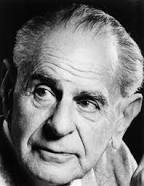
Carroll explains that Quantum Mechanics has been reinforced as true by every experiment tried since its discovery.  It fulfills Karl Popper’s dictum that a theory of anything must be falsifiable to be called science. 

The many experiments on Quantum Mechanics have proven its validity as a theory of time, space, and motion in the sub-atomic world. 

However, Quantum Mechanics remain a subject that Richard Feynman said no one can clearly explain or understand. 

Carroll accepts Feynman’s and Einstein’s views.  The theory of Quantum Mechanics is not explainable and (as Einstein suggested) it may simply be an incomplete theory.

Carroll suggests Quantum Mechanics remains unexplainable because of human inability to observe its truth from what is called a superposition.  We cannot look at Quantum Mechanics outside the realm of personal cognition.

His answer is to acknowledge its truth by adhering to the Schrodinger equation which insists that a cat in a box is both dead and alive.  Carroll argues that scientists waste their time challenging Schrodinger’s equation.  Carroll suggests the cat in the box is both dead (actually Carroll prefers asleep) and alive.

Carroll argues that probability is an essential ingredient of Quantum Mechanics but he explains it is not the “probability” often understood by the public.  Carroll’s view of probability is in knowing our human limitation of not being able to look at nature outside of what we understand as nature.

Humans cannot be in a superposition to see the effect of Quantum Mechanics because humans are trapped in their own sense of space, time, and motion.  Probability, rather than certainty, is a function of a personal observation trap.

What Carroll suggests is other worlds are created because of the nature of Quantum Fields that are the essence of everything that exists in the universe.

Carroll explains particle physics were once considered the holy grail of understanding nature.  Now, there is wide recognition that fields; not particles, are the building blocks of nature.  Every particle vibrates like a string and emits a wave that permeates all space; including a vacuum where no particles exist. 

Empty space is simply a low state of energy with no extant particles within its emptiness (aka a vacuum).  It is not to suggest particles are not important.  They are the source of the waves that permeate space. 

Finding the Higgs-bosun is confirmation of the importance of particles in showing that it is undiscovered glue that holds atoms together.

Carroll’s books are excellent physics primers for non-scientists because they reduce science complexity to understandable examples; at least most of the time.  (Space-time remains a mystery to me; even with Carroll’s valiant effort to explain it.) He may not be right about everything he explains, and a listener/readers’ interpretation of his writing may be wrong, but Carroll’s explanations are fascinating. 

Feynman is said to have had the ability to explain the complexity of physics to the non-scientist. Carroll is today’s Feynman.  

BAD PARENTING

Kevin Wilson (American writer from Sewanee, Tennessee).

Bad parenting is endemic in America. Wilson offers four examples in “Nothing to See Here”.

In the richest country in the world, Americans waste their lives seeking money, power, and prestige at the expense of their children.

The heroine of Wilson’s story is a child raised by a neglectful single parent. The “friend” is an acquaintance from an exclusive and expensive school that the heroine attends because of her superior intelligence.

The two young girls become “friends” in the boarding school. The “friend” is from a wealthy and privileged family. She has great ambition, superior athletic skill, and extraordinary beauty. The “friend” slips into the thrill of drugs and is caught with a bag of cocaine. Her father comes to her rescue by bribing the mother of the heroine with $10,000 to say it was her daughter and not his that had the cocaine.

The young heroine has no say in the matter but she idolizes her “friend” and chooses to go along with the lie. She is expelled from the school, returns to her mother’s home, and works at odd jobs until several years later when she hears from her childhood friend. The heroine is now twenty eight with few prospects in life.

The parenting quality of Wilson’s next two families is revealed when the heroine’s friend calls to ask a favor. The favor is to take care of two children that literally catch on fire when frustrated or angry.

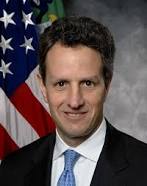
The “friend” marries a rich southerner who divorces his wife and marries the “friend” because she is beautiful and a highly capable manager of her husband’s campaign as a Senator. He is a Senator with interest in becoming a Secretary of State; and maybe future President of the U.S.

However, his ex-wife commits suicide, leaving their two children to her aged parents who are too old and unhealthy to raise the children. His ex-wife home-schooled the twins because of their penchant to catch on fire. The children are isolated from society, and are now being raised by incompetent grandparents.

The rich southerner becomes Secretary of State but chooses to abandon his two children because of their “catch on fire” notoriety. He now has a new wife and son by his second marriage. One presumes the “catch on fire” character of his former wife’s children is a genetic anomaly that came from his ex-wife. However, it turns out–the child of the Senator’s new wife also catches on fire. The genetic anomaly, if that is the cause of the “fire” children, came from the father.

A new favor is asked by the heroine’s “friend”. Please take care of the twins for the rest of your life, and keep them out of the Secretary of State’s daily life. The twins are abandoned by their father and his new wife.

The irony of Wilson’s story is the resurrection of the heroine as a parental surrogate for the abandoned children. She becomes a parent that outshines the four dysfunctional families of the story. At least, we hope so.

A PUNCH IN THE FACE

Audio-book Review
By Chet Yarbrough

(Blog:awalkingdelight)
Website: chetyarbrough.blog

American Carnage (On the front-line of the Republican Civil War and the rise of President Trump)

By: Tim Alberta

Narrated by Jason Culp

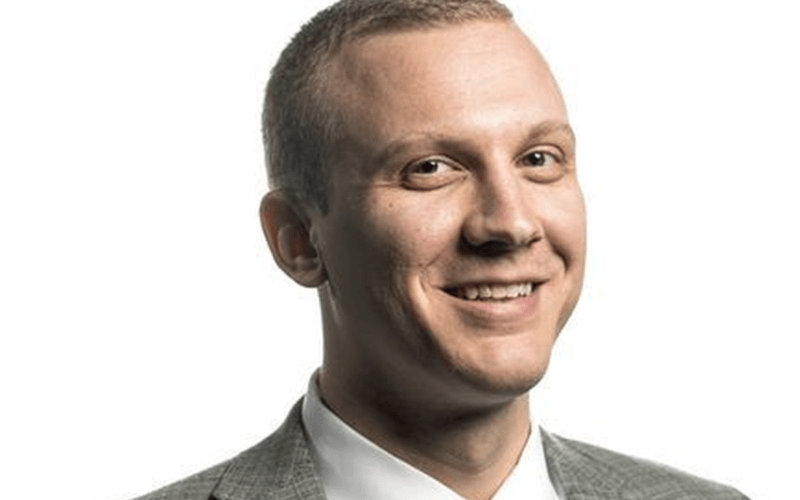
Tim Alberta (Author, Politico reporter, contributor to the National Review, National Journal, and Wall Street Journal.)

Alberta welcomes reader/listeners to a grudge match in American Carnage

Alberta details the rise of President Trump. 

In Alberta’s analysis of the rise of Trump, he details Republican discontent with the idea of a Trump nomination.  Some Republicans object to Trump’s rise.  However, there is greater discontent with the direction of American government than the election of a President. 

In the best light, the rise of Trump punches American government in the face; in its worst light, it denigrates the institution of Democracy.

Some Americans will be offended by Alberta’s book. 

Americans might argue Alberta impugns the reputation of the “MAKE AMERICA GREAT AGAIN” President.  In their minds, government deserves a punch in the face.  Trump gives voice to many American workers. Particularly, Americans who have been marginalized by corporate America.

Some say American Democracy needs reform because Americans are being left behind by their political leaders.  Many support Trump for his political speeches identifying that truth.

Others are appalled by Trump’s unfair characterization of American government workers and tacit support of extremists.

Trump is characterized as a “showman” with no moral center who panders to the ugliest instincts of humankind. Democracy judged Trump’s performance in November 2020, but he refuses to acknowledge his defeat. Trump demeans himself and American Democracy by falsely claiming election fraud

Arguably, American government does deserve a punch in the face.  However, even if true, Democracy remains the best form of government in the world.

Alberta implies Trump’s punch to government fails to address the real causes of job loss. Creating a trade war has not, and will not, increase American manufacturing. 

Contrary to Trump’s belief that the balance of trade will improve with increased trade sanctions, America’s balance of trade worsened during his term of office. Other countries are exporting more while America is exporting less.

Reality suggests re-education of workers are what America needs; not trade-wars, and border walls. 

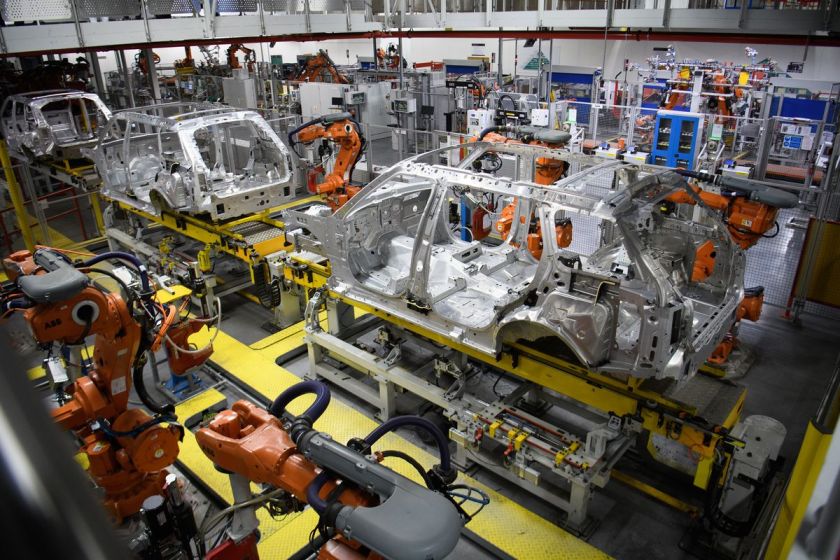
Trump’s ubiquitous tweets offer titillation and news coverage without providing solutions. Technology is displacing manufacturing which means job skills must be changed.  Alberta, in detailing Trump’s rise, shows Trump is more show than go.

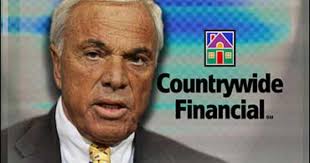
In 2008, loss of homes from unscrupulous lenders hurt working Americans who could not fight back. They lost their jobs and could not pay their mortgages.  Countrywide Financial became the face of lenders accused of misleading marketing to sell mortgages to people who could not afford them.

Angelo Mozillo (Former Chairman of the Board and of Countrywide.)

One might argue Obama, Bush, and their administrations manage to keep American out of a deep depression but at the same time–banks and corporate America were bailed out at the expense of most Americans. 

In the 2016 election, Trump capitalizes on worker discontent while Democrats ignore their grievances as something in the past that will be changed in the future.  To every person who lost their home or job, the future is now.

Hillary Clinton and most Democrats, in the previous election, failed to understand how working middle class and lower income Americans felt let down by their government.    One might argue many Trump votes were simply anti-Clinton votes. 

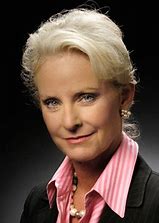
Today, the Republican party is unquestionably standing behind Donald Trump.  He might even be re-elected.  But Alberta illustrates there are Republicans, like Cindy McCain, who decry many of Trump’s racist, misogynistic, and xenophobic comments.  These Republicans will not disappear.  Their time may not be a majority today, but they will carry water in future elections.

Whatever happens in the next election, Democracy will prevail.  Tim Alberta offers many facts that illustrate the resilience of American Democracy.  There are, and always will be, good people on both sides of the political aisle in America.  One hesitates to use that phrase in view of Trump’s ugly remark about the South Carolina conflict between white supremacists and the public.

History shows the Democrats will rise again; and so will Republicans. That is the strength and weakness of Democracy in America.

EGYPTS REVOLUTION

Audio-book Review
By Chet Yarbrough

(Blog:awalkingdelight)
Website: chetyarbrough.blog

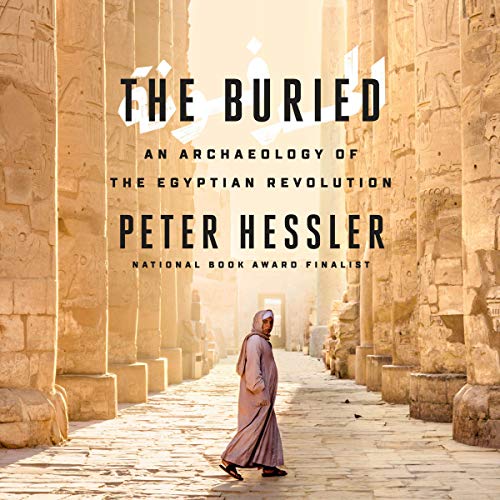
The Buried-An Archaeology of the Egyptian Revolution

By: Peter Hessler

Narrated by Peter Hessler

Peter Hessler (American Author, and journalist.)

Peter Hessler chooses to move from China to Egypt just before the 2011 Egyptian revolution.  He, his wife, and twin newborns live in Egypt for five years.

Hessler worked for The New Yorker as a staff writer from 2000 to 2007 and became the magazine’s correspondent for China from 2011 to 2016. 

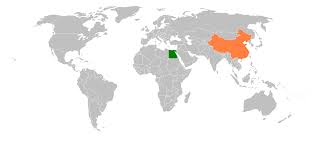
Hessler looks at Egypt through the eyes of an American who lived in both China and Egypt as a reporter.  His perspective melds Chinese and American acculturation with interesting incite to Egypt’s history, language, and politics.

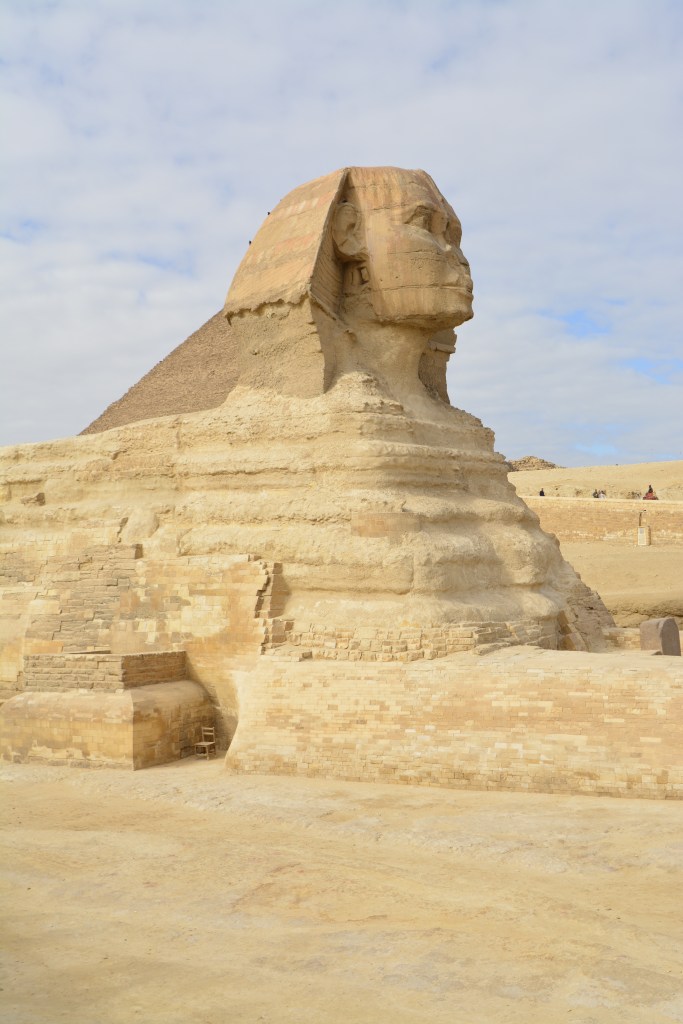
Egypt is a fascinating country for anyone who has visited or read about its ancient civilizations.  With brief comments about Egypt’s historic monuments and museums, Hessler touches the culture of modern Egypt. 

Hessler notes the extraordinary ability of Egyptians to hold two opposing thoughts and adjust behavior to accommodate both beliefs.  On the one hand, there is a sense of “let it be” when minor or major events occur in the lives of modern Egyptians.  On the other, there is a history of autocratic Egyptian rulers who insist on strict control of society.   In view of the many non-Egyptian’ governments after the Pharohs, it comes as no surprise that Egyptians are adaptive.

Sadat, Mubarak, & Nasser were military dictators before the election of Morsi who is deposed in the revolution by today’s military leader, Abdel Fattah el-Sisi.

Hessler comments on the ability of Egyptians to learn languages at varying ages of maturity.  Language skill is the lingua franca of the ability to adapt. 

From ancient times of the Assyrians, Persians, and Greeks; to more modern times of the Ottomans and British–Egypt remains Egyptian despite their adaptability.

Hessler offers an understanding of Egypt through the eyes of its citizens.  He recounts the tumultuous relationship of an entrepreneurial garbage collector and his wife.  The garbage collector is illiterate.  His wife can read and write.

The garbage collector is in his 30s when he marries his 18-year-old wife.  Their marriage leads to three and then four children.  The garbage collector is exiled from his children with the threat of divorce initiated by his conservative wife.  His wife follows Egyptian culture in covering her face but rejects some of the discriminatory aspects of a patriarchal society.

Hessler’s garbage collector is a great source of information about Egyptian culture because of the details he knows of other lives based on what Egypt’s citizens throw away.  The collector is scrupulously honest about the garbage he collects.  When he finds something in the trash that has value he returns to his customer.  It is a matter of pride; stoked by belief in a cosmic or religious wheel in his mind that tells him what is right.  However, the wheel seems to stop when it comes to relationship with his wife and children.  This leads to what Hessler suggests is a fundamental flaw in modern Egypt; i.e. women’s inequality. 

Because the collector’s wife knows how to read and write, she files an appeal to the court to strip her husband of his house and property.  She files for divorce but recants after finding the consequence of such action would make her and her children destitute.

Surprisingly, their tumultuous relationship becomes less combative as their life together matures. Their personal trials seem a paradigm of Egypt’s “let it be” and autocratic culture.

Hessler reports on the ponderous, corrupt justice system that both aids and thwarts the intentions of married couples seeking help.

Women are discriminated against based on their sex in Egypt. 

Women are raised to believe their role in life is to have and raise children, and take care of their husbands and families.  Girls are not afforded the same educational opportunities as men.  Women are expected to sacrifice their entrepreneurial right to a job when they are married.  Hessler notes female children are routinely genitally mutilated. This is a tradition based on a belief that sexual pleasure and desire are a threat to society. Hessler compares the torture of genital mutilation to the Chinese tradition of binding women’s feet.


Hessler compares Chinese with Egyptian culture to expose the consequence of sex discrimination.  The potential of women’s contribution to the economy in Egypt is eviscerated by its culture of discrimination.

In an adults most productive years, Egyptian housewives cannot work for pay outside of the home.  If a woman has a good job, she is expected to relinquish it when she is married.  In contrast, Chinese women are full participants in the economy.


Parenthetically, Hessler notes Egyptian homosexuals are persecuted for their sexual preference.  The irony of that homosexual persecution is in Egypt’s patriarchal culture that discourages social contact between the sexes.  Putting aside genetic predisposition, without social contact with women, male relationships become the only acceptable form of intimate relations.

Egypt’s demonstration against a crackdown on LGBT’ rights.

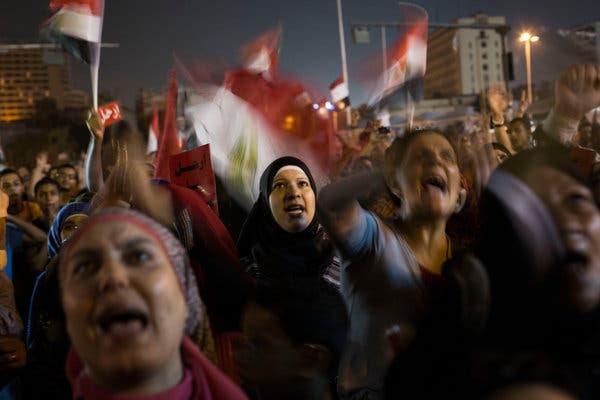
Hessler’s book is interesting because of his firsthand knowledge of the revolution that removes Morsi from the Egyptian Presidency.  In many conversations with Egyptian residents, Hessler notes the weakness of the Brotherhood in Egypt; both in number and in qualification for political leadership. 

Hessler contrasts the military with the Muslim religion of the Brotherhood.  The military has a long history in modern Egypt.  The tradition of strong leaders has an even longer history.  The Brotherhood is characterized by strong leaders who only press religion; without understanding the nature of society that desires order, safety, and economic opportunity. Order, safety, and economic opportunity are a “good despot’s” alleged intent.

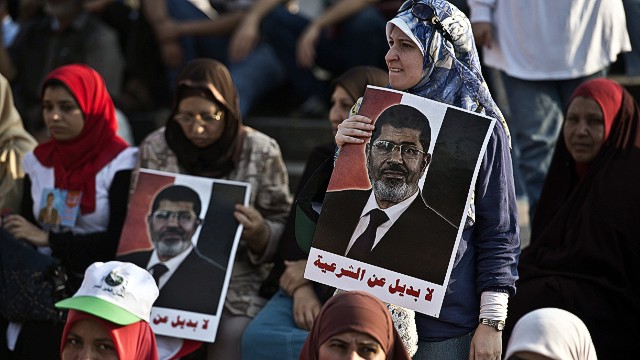
Mohammed Morsi (Fifth President of Egypt for 1 year until removed from office by General Abdel Fattah el-Sisi. Morsi dies of a heart attack in 2019.)

Hessler shows the Brotherhood as an association of religious believers that have little organizational skill.  They are not educated to lead.  They are educated to worship.  That educational limitation exhibits itself in Morsi’s weak government.  Egypt flounders economically with the election of Morsi.  One can argue it is still floundering under el-Sisi but Hessler shows the military is more prepared to lead based on the tenants of worldly desire rather than religious worship.

Egyptian Brotherhood Rally

(In a population of 80,000,000, there are an estimated 600,000 dues paying members of the Brotherhood; of which 100,000 are considered militant.)

Hessler explains there are many conspiracy theories surrounding the Brotherhood’s influence in Egypt. Their small numbers and inept management skill seem unlikely to create a successful uprising in Egypt. The Brotherhood’s revolutionary impact seems symbolic more than real. However, one realizes Russian Bolsheviks were a small minority in 1917.

Abdel Fattah el-Sisi (Current President of Egypt)

Hessler notes that el-Sisi’s popularity is diminished by missteps in funding infrastructure improvements at the expense of more direct economic need.  He cites the expansion of the Suez Canal as an example of a prudent long-term aid to the economy but a neglect of medical services, justice reform, and housing needs for today’s general population.

There is also the issue of repression by el-Sisi.  Hessler recalls the incident of a tortured, and then killed, foreign student that criticizes the current government.  The author notes that el-Sisi’s defenders suggest the murder was an accident caused by young and inexperienced supporters of el-Sisi. 

In recalling my personal trip to Egypt in 2019, the Brotherhood is a big concern of the government. Tourism is a big industry for Egypt. That industry nearly dies with the election of Morsi. Some Egyptians feel something is getting done with el-Sisi; while no economic progress happened with Morsi.

Hessler offers a glimpse of the hardship Egypt faces in the 21st century.  His observations are at a local level of Egyptian society; not at the obscure level of a thirty-day tourist.  Time will tell if el-Sisi is the answer to Egypt’s failing economy. 

Sisi is acknowledged by Hessler as a good communicator.  Sisi is truly an Egyptian focusing on his perception of what Egypt needs now; not the religious salvation of the eternal.  The biggest criticism of Egypt’s leadership in Hessler’s book is the unequal treatment of women.  There seems no action taken by el-Sisi to address that reality. One wonders if the economy is likely to grow quickly enough to avoid another revolution without gender discrimination reform.

MEDIA TROLLS

Audio-book Review
By Chet Yarbrough

(Blog:awalkingdelight)
Website: chetyarbrough.blog

Antisocial Online Extremists, Techno-Utopians, and the Hijacking of the American Conversation

By: Andrew Marantz

Narrated by Andrew Marantz

Andrew Marantz (American author, staff writer for The New Yorker magazine)

Marantz researches social media trolls in his book “Antisocial”.

For those who are not familiar with the meaning of #media Trolls, they are people who use the internet to create, no matter what, discord by writing or saying something false and misleading.

Of course, what is said in the media does not have to be true.  The difference is, the measure of success on the internet is an increase in the number of clicks one receives and the number of follower’s gob smacked by the messenger.  It has zero to do with truth.

The internet lists 8 of the greatest internet trolls of all time.  Their media names, like QAnon, are irrelevant but their duped followers are legion.  All hide behind the rubric of a free press.  

What makes internet trolls a societal cancer is their distortion of truth.  Internet trolls are a societal cancer. Some trolls believe “buyer beware”. To a troll, the truth of speech is the responsibility of the individual. Separating the truth from a lie becomes an uninformed public’s responsibility.

A troll feels no compunction for lying, misleading, or stretching the truth.  A committed troll argues that everyone should have the choice to believe or not believe.

With the Communications Decency Act passed by Congress in 1996, Section 230 protects free expression on the internet. The consequence of that Act is under advisement by Congress because it protects malicious purveyors of lies from prosecution. As noted by columnist Christopher Mims, it is a problem with no clear solution.

Trolls argue truth is fungible because of inherent bias in the messenger.  At best, trolls view their role is to mitigate corporate and government brain washing; at worst, they create a forum for massing hate and discrimination.

Say anything is the terrifying thing about social media.  The irony of America’s free speech is its only defense is free speech. 

Marantz interviews numerous trolls that believe all media communication is good, or at least useful communication.  Marantz explains trolls argue media has historically distorted the truth. 

Marantz notes the fallacy of the Troll’s argument is in the release of white supremacist and hate-filled speech that aims at changing the norms of society.

Trolls say the unsayable for wealth and notoriety; not for the betterment of humanity, or the search for truth. 

White supremacy becomes a flag around which a small minority of society can join to become a political force. 

The risk to the American electorate from media trolls is that they create a disillusioned and apathetic public that doesn’t know who or what to believe.

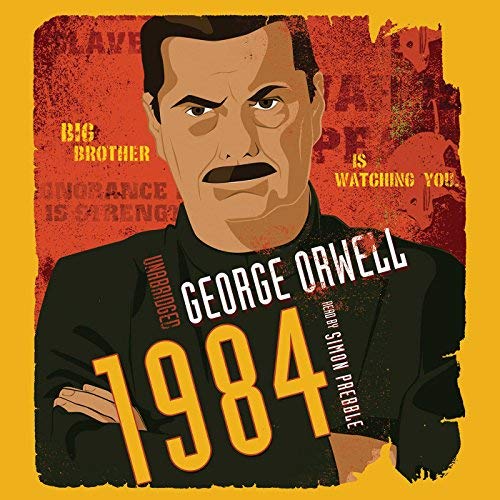
In the book “1984” Orwell showed how media control is dangerous. Marantz shows how no control is equally dangerous; particularly in the internet era. 

Marantz makes listeners realize how dangerous internet trolls are to America, and any nation trying to improve the quality of life for their citizens. 

Twenty first century American democracy seems particularly at risk.  Americans believe in the critical importance of freedom, but American freedom has always been qualified by rule of law in “doing no harm” to others. 

The infancy of the internet needs regulation.  The government must fight the hijacking of the American electorate by internet trolls.  The internet is driven more by popularity and money than morality and truth.

Marantz convinces a listener that American freedom of speech is not a license for anarchy.

CHEMISTRY OF LIFE

Audio-book Review
By Chet Yarbrough

(Blog:awalkingdelight)
Website: chetyarbrough.blog

Great Courses Lecture Series

Chemistry and Our Universe

Presented by Ron B. Davis Jr., Ph.D. Associate Teaching Professor of Chemistry Georgetown University

Ron B. Davis Jr. ( Associate Teaching Professor of Chemistry Georgetown University)

Professor Davis’s lectures successfully interest a layman in the field of chemistry.  However, this is not a simple introduction to chemistry.

Davis’s lectures are well done.  Davis provides a lot of information with a summary of what has been said at the end of each lecture.  His lectures offer interesting facts about chemistry, the world’s origin; its survival, and hopeful continuation.  Where it loses some of its utility for a non-chemist is in calculations for chemical reaction, equilibration, and energy expenditure.  Not that these calculations are not important, but they become too detailed for the merely curious.

At best, Davis’s lectures will spark a dilettante’s interest; at worst, they will lead a non-chemist to look elsewhere for easier understanding of the subject.

In his first 6 lectures, Davis breaks the science of chemistry into its most elementary particles. 

The role of atoms in chemistry is explained at the sub-atomic level of neutrons, protons, and energy producing electrons.

On the 7th lecture, Davis notes the fascinating history and utility of the periodic table.  As of 2002, the known elements on the periodic table come to 118. Over 90 of those elements are naturally occurring.  They are organized in the periodic table by number of protons (atomic number) in each nucleus with hydrogen being first (no. 1) and oganesson (a synthetic chemical) being the last (no. 118).

Davis explains the importance of the periodic table by their grouping.  The groups are vertically and horizontally organized with each family of atoms beginning in a line from left to right and in columns from top to bottom.

The horizontal line reflects one of seven periods. Each atom in these periods has the same number of electron shells (aka orbitals) constituting the same energy level.  To a degree, the horizontal rows share the same chemical characteristics. 

The vertical rows begin with hydrogen and are generally classified as groups.  The first group is classified as Alkali metals.  The far right which is row 18 are called noble gasses; beginning with helium. 

Elements in the same family (the vertical row) have the same electron configuration in their outer shell.  A shell is what is called a valence shell, an orbiting electron around a nucleus.  Elements in the same family tend to have a shared chemistry. 

Davis notes that the vertical orientation of the periodic table indicates electrons get farther from the nucleus as you go down the table.  The effect is to lower ionization energy as you go down the group; making electrons more easily released to other atoms.  However, Davis notes this is not an iron clad rule; i.e. there are exceptions. 

The next several lectures deal with chemical reactions, formations, and randomness and how they can be calculated.  You enter the realm of chemistry mathematics.  This is where listening for some of us meets ignorance, and understanding escapes.

Energy generation reawakens a listener’s interest.  Davis explores the history of nuclear fission and fusion. 

He explains the great promise and threat of Einstein’s insight to the equivalence of energy and mass.  Fission leads to the destructive force of atomic bombs during WWII. 

Nagasaki and Hiroshima show what uncontrolled fission can do in time of war.

Fukushima shows what uncontrolled fission can do in time of peace.

Three Mile Island, Chernobyl, and Fukushima were uncontrolled fission events that destroyed buildings and contaminated the environment. To date, fission has been found to be a viable source of energy but admittedly dangerous, and in disasters, highly polluting.

The principle of nuclear fusion may be the solution for a non-polluting, less dangerous, supply of energy.

However, fusion has not been achieved because of the high energy demand (heat) required to compel atoms to fuse.  Only the heat of the sun has successfully produced fusion. The hope is that a method of cold fusion will be discovered.  The fundamental point made by Davis is that the production of nuclear energy is all chemistry.

In the next lectures, Davis addresses polymers, medicinal chemistry, poisons, chemical weapons, fuels, and explosives. 

Davis explains why trees grow to be over a hundred feet tall while not being overturned by weather.  It is largely due to cellulose which is one of the longest polymers in nature.

Davis notes DNA is one of the most complex of the natural polymers in chemistry. DNA contains all of the characteristics of carbon-based life forms.

He also notes chemistry is used to directly attack or fool human cancers that invade human DNA.  These compounds have the potential for curing cancer.

Poisons are next.  Davis notes that poisons have been around since the beginning of recorded history.  He explains there are three classifications for this category of chemicals; e.g. poisons, toxins, and venoms.

Poisons are substances that cause death, injury, or harm at a molecular level.  The key to their effect is dosage.  Toxins are substances produced within living cells that are contracted by touching or ingesting plants, or by contact with animals carrying microorganisms that cause disease. Davis explains venoms are secretions produced by animal’ or insect’ predators for defense or predation.

Fuels are lightly touched on by Davis with an examination of the discovery of fire; beginning with wood and progressing through other carbon-based materials. 

Davis notes the evolution of coal, oil, and plant-based derivatives that produce fuel for industry and automobiles.  He delves into the consequence of pollution in using these fuels, and their threat to humanity.  He touches on global warming and its ecological consequence.

War is noted as impetus for the weaponization of chemicals, and explosives.  A listener is introduced to Fritz Haber, a Jewish German genius that introduced chlorine gas (phosgene) to WWI.  Haber became known as the father of chemical warfare. 

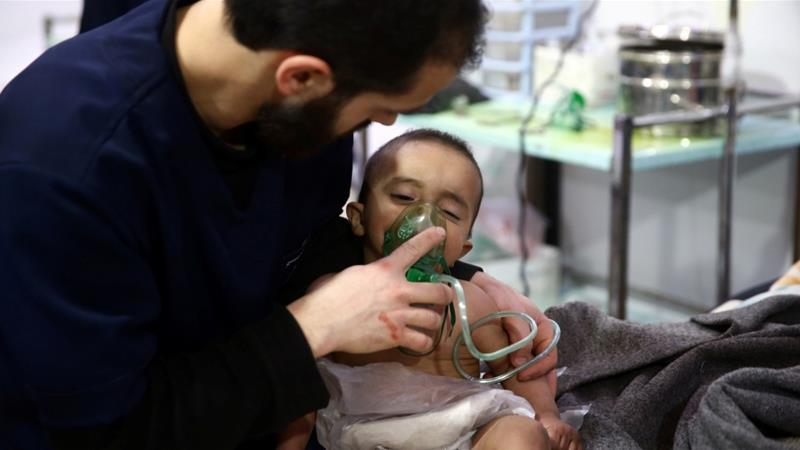
Chemical warfare in Syria

Alfred Nobel, a Swedish chemist invented and patented dynamite. However, Davis notes high explosives were first discovered by Christian Schonbein in 1846. Schonbein’s discovery, like many chemical discoveries noted by Davis, is accidentally found when Schonbein spills hydrochloric acid in his lab and wipes it up with cloth apron.  He puts the apron next to a stove to dry it out and it bursts into flame.

Alfred Nobel (Swedish chemist who invented dynamite and plastic explosives.)

Gunpowder cotton is discovered with Schonbein’s accident.  The problem is that gunpowder cotton was too volatile.  It is left to Nobel to come up with a stabilizing compound for gunpowder cotton to create sticks of dynamite.  Nobel invents an igniter fuse to start the explosive potential of dynamite. Further discovery by Nobel leads to nitroglycerin and plastic explosives in the late 19th century.

Davis ends his lectures with the chemistry of earth.  He notes how life may have begun with chemical building blocks introduced to earth from fragments of meteorites.  Meteorites are created from exploding stars.    Where water exists, he argues organic life is possible. Davis concludes–human exploration of the Universe holds hope for the future.

Davis speculates that there could very well be a habitable planet that has the same characteristics as early earth.  He suggests, with the building blocks of life coming from meteorites, only water needs to be added to create and sustain life.

GARDEN OF EDEN

Yarbrough (Blog:awalkingdelight)
Website: chetyarbrough.blog

New Zealand in 2019

Written by: Chet Yarbrough

Having the wonderful experience of visiting New Zealand as an America tourist was like visiting a biblical Eden. However, no country is without political controversy.

On the one hand, New Zealand has the ambition of being an ecological Eden with no natural predators and a perfectly balanced environment.

Is that realistic? How can nature be nature without predation? From times untold, wild animals have eaten each other.

And then, there are humans. Humans are by nature predators. Environmental degradation is accelerated by economic prosperity.

American media gives positive marks to the current Prime Minister of New Zealand, Jacinda Ardern. In part because of her immediate response to the Christ Church mass shooting but also because of her environmental effort to reduce greenhouse gases and pollution.

Ardern is also lauded for her response to the Covid19 crises.

Looking back to a 2019 trip, first impressions are renewed by today’s headlines about New Zealand’s democracy. Elections in New Zealand reinforce egalitarian ideals Americans covet. The NYTs’ headline notes “…Ardern’s 2nd Term…Seats Most Diverse Parliament Ever.” Election of women and indigenous Kiwis is a message to all democracies.

Nanaia Mahuta (New Zealand elected official, indigenous Maori politician, Minister of Foreign Affairs,).

New Zealand is blessed with renewable energy sources from geothermal-power, hydro-power, and a burgeoning wind and solar power industry. Not that this is something only the Prime Minister has done in her short term, but it illustrates the environmental sensitivity of the country.

Prime Minister Ardern is not universally applauded by fellow New Zealanders. Contrary to Ardern’s press coverage in the U.S., some New Zealand farmers seem quite upset with Ardern. We had the happy opportunity to spend a day and night with a farming family in New Zealand.

The farming family we spent time with explains there is a conflict between New Zealand’ farmers and the current administration. Over 45 percent of New Zealand is farm land. It is distributed among farmers that have an average size farm of over 350 acres. An important distinction between our countries is that American corporations may use farms as a tax shelter while New Zealanders use farm land to produce more product. There are few if any corporate farms in New Zealand. New Zealand farms are owned by real farmers.

However, farming is a major polluter of land in America; as well as New Zealand.

Over 50% of methane and nitrous oxide in the world comes from farm animals. Adern puts the burden of correction on private farms. Over 50% of methane and nitrous oxide in the world comes from farm animals. Cattle, sheep, goats, deer, alpaca, llamas, goats, and chickens are common farm animals raised on New Zealand farms. Land, water, and air quality issues being raised by the current administration are a big concern of the farming community.

New Zealand farmland regulation is creating a furor among some farmers that are being told to change their practices to reduce pollution. The cost of these changes are to be borne solely by the farmer according to the farm family we visited.

Real farmers in both America and New Zealand have a reputation for being independent. That independence is distorted by corporate ownership in America but not in New Zealand. The New Zealand farming community is made of farmers who work the land. One gets the impression they will not re-elect Ms. Ardern unless she changes direction.

The irony of what we were hearing is that farmers like all people are concerned about the environment. The problem is in the cost of adjusting farming practices to accommodate environmental concern.

From an outsider’s perspective, the solution seems simple. Farmers in New Zealand are not constrained by corporate farming practices like America. New Zealanders do not farm to shelter income but to produce product. It would seem reasonable for the government to assist New Zealand’ farmers financially to adjust to less environmentally damaging practices. The perception we had from the family we spent the night with was that the current government wants all of that cost to be borne by the farmers.

When the word subsidization is mentioned, both husband and wife of the New Zealand farm family seem to wince. Without knowing the history of farming subsidization in New Zealand, one wonders what happened in its history.

As long as real farmers are producing groceries there seems every reason for tax dollars to be used to help farmers mitigate pollution. Farmers are as concerned about the environment as environmentalists. Where would the world be without food production and real farmers?

Visiting other countries is a guilty pleasure. It is an expensive undertaking that many cannot afford. We loved our time in New Zealand. One sees there is no perfect country. Every country has its discontents; America, not withstanding.

AUSTRALIA AND NEW ZEALAND 2019

Yarbrough (Blog:awalkingdelight)
Website: chetyarbrough.blog

Australia and New Zealand in 2019

Written by: Chet Yarbrough

Traveling from America to Australia and New Zealand is exciting and exhausting.  You arrive on the same day you leave but only because you have crossed the International Date Line. 

Not to be missed but not to be envied, it takes over 19 hours to reach Australia/New Zealand by plane.  What you experience when you explore these fabulous countries is worth every minute of your flight. 

Australia is a vast country that equals the size of the continental United States.  Though there are only 6 states and 2 territories, the diverse geography and beauty of Australia equals the geographic size and beauty of continental America.

Many surprises await uninformed Americans who choose to make the trip. 

INDIGENOUS PEOPLE AUSTRALIA AND AMERICA.

There are many common characteristics, both good and bad, in the history of America and these two nations.  The bad is the displacement and discrimination of indigenous populations in Australia, and New Zealand.  Just like the American treatment of the Indians, Australia and New Zealand disenfranchised and discriminated against their indigenous population.

The good is the economic progress of all three nations and the intent to redress the harm that has been done. Its a slow process of reconciliation that will never be resolved in a way that satisfies the conscience of every American, Australian, and New Zealander. One gets the feeling that Australia and New Zealand, like America, are struggling with how to equitably deal with generations of white discrimination.

From farmlands, to deserts, to lakes, to rain forests, to Pacific seascapes, to mountain water falls, to cityscapes, Australia and New Zealand shine as brightly as any place in America. 

Warm reception of Americans by Australians and Kiwis make every day a new and enjoyable adventure.  Having an opportunity to meet and learn about the culture of Aboriginal and Maori indigenous minorities holds the same fascination that Americans have in meeting indigenous American Indians. 

The story of Australian Aborigines is as heart rending as early American treatment of Indians.  A similar story is told by Maori tribe leaders in New Zealand.  However, the Aboriginal and Maori interests and experience are as diverse as America’s Black and Indian interests and experience in America.

Life is entirely different between the Aboriginal and Maori cultures.

Aboriginal Rain Forest Guide

Aborigines look to accepting and nurturing their relationship with nature. Their wealth is in their love of land, nature, and their unique culture.

Mauri Elder whose son is an elected village leader.
Maori look to improvement in their standard of living through economic growth. They, like many Americans, focus on the creation of wealth to improve their standard of living.

Both have deep concern for the environment, but one culture primarily looks for reward from living with nature. The other looks for reward from human works and a relationship with nature.  Each recognizes the importance of the environment but the first chooses to live with nature as it is; the second chooses to exercise some control over nature to improve their economic well-being.

Aboriginal culture is diverse but not hierarchically organized. Maori culture is democratically hierarchical.  Another way of understanding this difference in cultures is that an Aboriginal leader is one among equals while a Maori leader is part of a democratically elected hierarchy. A common thread is both Aborigine and Maori people wish to retain their culture. There may always be a difference in cultures but each culture will be changed by the influence of nature. Intermarriage and environmental change are inevitable dilutions of people’s ethnicity and culture. That can be seen in facial feature changes and out-of-culture marriage stories told by Aboriginal and Maori people.

Both indigenous cultures are acknowledged as poorly treated in the history of Australia’s and New Zealand’s largely white governments. The Aborigines and Maori people were subject to physical mistreatment, land confiscation, and discrimination.  Both governments are trying to amend their historic mistakes.  Evidence of that effort is in returning control of public lands to Aborigines in Australia and allowing Maori culture to build their own economic successes.

What can compensate for hundreds of years of discrimination? What can compensate for a land that was once owned by indigenous peoples? Who is to say all self-interest is the same? These questions apply to all countries with displaced indigenous populations; none seem answerable.

Control of Ayres Rock in Australia is returned to the Aborigines. This is one of two sacred sites that were previously controlled by Australia’s white government.

November 17, 2019 is the last day any tourist could climb Ayres Rock. We had the privilege of being a part of Australia’s history by seeing the last rock climbers.

Pictures speak for themselves in showing how independent, and economically self-sufficient Australia and New Zealand have become.  Aside from Australia’s and New Zealand’s effort to correct indigenous mistakes, both countries are self-sufficient economies; blessed with extraordinary beauty.  From shore to shore, Australia’s and New Zealand’s beauty equals America.

No country of the many we have visited exceeds the splendor of these nations.

Our hearts go out to Australia. The fires were just beginning when we left Sydney. The smoke obstructed clear views of the Opera house but were far from the devastation that has occurred since we left.

LIFE AFTER DEATH

Audio-book Review
By Chet Yarbrough

(Blog:awalkingdelight)
Website: chetyarbrough.blog

Lincoln in the Bardo

By: George Saunders

Narrated by Nick Offerman, David Sedaris, George Saunders, Carrie Brownstein, Miranda July, Lena Dunham, and others

GEORGE SAUNDERS (American writer, winner of many awards including Booker Prize and National Bood Award for Fiction.)

The New York Times gives high praise to George Saunders’ book, “Tenth of December”. There are reviewers that disagree with Kakutani’ and Cowles’ laudatory comments about Saunders’ book of short stories but once a listener steps on the cracked ice of “Tenth of December’s” last story, he/she becomes a Saunders’ fan.

Saunders seduces a listener with simple phrasing–pulling one into a story and then ambushing the unwary with crystal clear insight to human foibles, self-delusions, and false dependencies. Saunders sees that measuring one’s success by possessions defines you as an inanity, an empty symbol of humanity. What we do; not just what we think is what we become.

Like “Tenth of December”, George Saunders surprises with a new way of looking at ourselves– where we have been, and where we are going.  Lincoln in the Bardo reflects on a Tibetan Buddhist belief in a “…state of existence between death and rebirth”. 

A host of humanity is represented by voices of famous and not-so-famous actors.  They assume the roles of rich, poor, educated, and unschooled Americans living and dying during the Civil War.  The two major characters are Willie (Lincoln’s dying son) and the great man himself.  The ugliness of discrimination, the desire for freedom, and the trials of living are embodied in Saunders’ netherworld.

Willie Lincoln (Third son of Abraham Lincoln.

As Willie nears death from typhoid fever, listeners are introduced to a Bardo civilization. 


It is a community of disparate characters who believe they are alive but must, for unknown reason, return to their “sick boxes” (graves) every night.

In the beginning of the story, we are introduced to the idea of a sick box when a man in his forties marries a woman of 18.  It seems unclear why such a marriage should take place. But the reader/listener hears a confession of the groom that he would be a companion, rather than a conjugal partner, of his new wife.  As their relationship progresses, the young woman expresses her desire to consummate the marriage.  On the day of the intended consummation, the husband is struck dead by a falling beam.

Saunders leaves the story of the struck groom and introduces many voices that reflect on the mood and experience of America during the Civil War.  You hear from people who lived lives as slaves, merchants, politicians, miscreants, preachers, prostitutes, and soldiers.  Some are rich; some are poor.  All exist in the Bardo.  A common understanding among these characters is that they are alive but constrained from acting on the natural world around them. 

In one sense, many of these people remind one of Jean-Paul Sartre’s play “No Exit” in which hell is described as eternal life with other people you cannot stand.  However, the Bardo is not hell. 

The Bardo seems a place between heaven and hell.  Something is keeping people from leaving the Bardo.  Willie is the key to the door by which one may leave. 

As history records, Willie dies.  Willie is the first to tell those in the Bardo that he, as well as they, are dead.  Willie found he was dead by entering his father’s mind.  After dying, Willie hears of his death in the grief of his father.  Willie explains the truth to all those who did not know they were dead. 

Those who live in the Bardo cannot leave until they recognize they are dead.  In that recognition, they can leave but they do not know whether it will be to heaven, hell, or (in the Hindu sense) some form of reincarnation.

The beauty of Saunders creativity is expressed by his creation of a nether world of lives who have an ability to occupy the minds of those still living.  The occupation of the living is more as receiver than transmitter of information.  It offers a literary tool for reading the mind of historic figures. It also presents the idea of lost historic figures, friends, or family influencing the living.

Lincoln and his wife are devastated by Willie’s death.  Lincoln is consumed by early failures of the Civil War which occupy his mind as Willie nears death.

However, Lincoln’s desire for unifying the country is unbent by the tragedy of his son’s passing.  In a return to the cemetery, Lincoln is riven with remorse over the death of Willie. Willie enters Lincoln’s living body and realizes his father is grieving for him. Willie realizes he is dead.

The consequence of being a receiver in the Bardo, rather than transmitter of action or information. is that those in the nether world cannot reliably change the livings’ thoughts or actions.  There is a hint in Saunders’ story that there is a chance of a Bardo resident changing a living person’s mind, but it is only a slim chance. This is made clear by a Mulatto woman who has been beaten, raped, and murdered by many men. She desires revenge and chooses to remain in the Bardo to accomplish that end.

Living in the Bardo is not necessarily unpleasant because it is like living in the world except you must return to your sick box every night.  The possibility of affecting the real world’s direction, though slim, still offers some appeal to Bardo residents. 

Some flee the idea of knowing they are dead because of the choice that must be made once they acknowledge their death.  All who acknowledge their death must weigh the risk of heaven, hell, or (in Hindu belief) reincarnation.  If they choose to stay in the Bardo the only negative is having to return to their sick box every night.  Otherwise, life in the Bardo is like living in the world except for a limited effect you have on the world you have left.

Many ideas are exercised in Saunders’ creative story.  An insight plainly explained by Saunders is in many quotes produced from other books about Lincoln.  Saunders shows how facts of history change based on a writer’s perception of histories events, places, and people. 

In Saunders’ creative mind, there is life after death in the Bardo. He opens a door to heaven, hell, or reincarnation.  On the other hand, Saunders may be wrong. Death may just be death. 

BULLY OF THE WORLD

Audio-book Review
By Chet Yarbrough

(Blog:awalkingdelight)
Website: chetyarbrough.blog

The Accidental Superpower

By: Peter Zeihan

Narrated by Peter Zeihan

Peter Zeihan (Author, American geopolitical strategist)

“The Accidental Superpower” is a wild ride.  Peter Zeihan is a geopolitical strategist and futurist who argues that geography is destiny.  His prognosis for America is perversely positive.

Zeihan suggests America is in the “cat bird” seat for this and the next (yet to be born) generation.  The “cat bird” seat implies a superior position of survival in a world headed toward crises.

“The Accidental Superpower” is a cautionary tale that suggests the tail will wag the dog. 

If America’s current actions and future intent is to abandon Bretton Woods’ history, then Zeihan implies wars will continue, famine and pestilence proliferate, millions will die, and self-interest will be humanities’ only interest.  In the era of Trump, Zeihan shows the reach and potential of bullies in the world. 

Zeihan builds a credible and terrifying argument.  The Bretton Woods Agreement was created in 1944.  Its purpose was to set up a system of rules to ensure economic stability around the world.  Zeihan notes that America has steadily abandoned the principle of Bretton Woods since 1973 when the U.S. suspended the gold standard for the American dollar. 

It is not to suggest that the gold standard should be re-instituted but that the American dollar became the new standard for world economies.  In part, because the basis for economic wealth became the American dollar.

The American dollar gives the United States an outsize influence in the world. That influence is reinforced by an unparalleled military/industrial complex.

The resources of America became a primary standard for economic stability in the world.  Zeihan argues the legitimacy of Bretton Woods is replaced by the geographic existence of the United States.  America is bordered by two oceans, blessed with an internal river transport system, natural energy resources (including Shale oil which makes the U.S. oil independent), a replenishing labor force (supplemented by immigration), and economic growth. Therein, Zeihan explains America is capable of ignoring the rest of the world.  

Realpolitik opens the door to a world dreamed of by ignorant nationalist like the past President of the United States and today’s Vladimir Putin.

This is a disturbing view of realpolitik.  Zeihan infers the United States can be the bully of the world because of its military superiority.  Military superiority is an illusion.

Putin and Trump are cut from the same cloth.

“Making America Great” changed the beneficent image of America as the land of the free to the land of autocratic whim. What history demonstrates is democracy and autocracy are riven with contradictions. Democracy is as subject to self-interested hegemonic geopolitical action as autocracy. America’s election of Trump shows how democracy can be as autocratic as Russia.

Empathy is an essential characteristic missing from a nationalist credo that believes it is “my way or the highway”. With a belief system based on “self-interest”, and the mantra of philosophers like Ayn Rand, the world seems destined to destroy itself. 

The question is — Will President Biden’s more supportive view of American government and empathetic support for the poor and lower middle class really change Zeihan’s perverse view of the world’s future? Zeihan infers no American President, whether empathetic or uncaring, will make much difference.

Zeihan supports his future predictions with a logic borne from geographic facts, history, and philosophical belief.  Zeihan’s perception of the world’s future creates fear and trembling in any who choose to believe it.

A few of Zeihan’s predictions are:

  1. China will not grow to be a superpower and will follow the path of Japan with an aging population that cannot maintain its economic growth.  The diverse nature of its population is hidden by the false belief that the Han people are of one mind.  Internal dissension will rise.  China is subject to river flooding and hemmed in by mountains and narrow waterways.
  2. Russia will covet the land of other nations because of an economy that rests on dwindling natural resources, a harsh environment, and lack of international trading ports.  The Tatar and Chechen populations will continue to plague consolidation of power in Russia.
  3. South African nations will suffer from starvation because of its lack of arable land.  Angola is one of the few African nations that may escape that fate because of its fertile land and young population.
  4. The European Union will fail because of nationalism, a lack of a viable common currency, and its failure to consolidate political power.
  5. Great Britain will become more dependent on the U.S. for trade and survival.
  6. Turkey will strengthen its influence and control over the Middle East through military strength and a young and growing population.
  7. Uzbekistan will become a more powerful independent nation because of its relatively young population and abundant clean energy (largely from hydroelectricity).
  8. Australia and New Zealand will prosper because of its vibrant agricultural economies, and ocean-bound isolation.
  9. Saudi Arabia will fail as an economic powerhouse because of its dependence on foreign labor for all industrial development. Saudi citizens are minor participants in the labor market, and unprepared to compete in an industrialized world.
  10. Iran is demographically young but burdened by an arid climate.  Its religious intolerance will be an impediment to economic growth.
  11. Spain, Portugal, and Italy are vulnerable to outside influence, inflation, high unemployment, and growing economic weakness.
  12. Germany may once again rise as a belligerent state because of its need to expand to continue its economic growth.  Its driven and well educated population reinforces industrial and technological growth.
  13. Canada will become a failed nation because of its aging demographics and diverse population.  Failure will only be abated by its relationship with the U.S.  Zeihan suggests Alberta should consider becoming part of the U.S. because of its one industry dependence (oil).
  14. The relationship between Mexico and the U.S. will improve because of proximity and mutual trade benefits.  The drug war will continue and perversely improve the Mexican economy. Drug war areas will be isolated to narrow parts of the country.
  15. Climate change is real, but its impact will be mitigated in the U.S. with hardening infrastructure in coastal cities that will mitigate or abate flooding.  Most of Florida will disappear under water.  Many island archipelagos will also disappear.
  16. Pakistan’s diverse population will continue to disrupt political control of the country.  Its conflict with India will continue despite diminishing financial support from the U.S.
  17. India’s economy will suffer from environmental degradation.

In conclusion, Zeihan suggests America will remain a superpower with outsize influence on the success or failure of other nations. 

A caveat might be America may become the bully of the world; at least until a nuclear war or accident decimates the environment. 

There is good reason to have fear and trembling for this world’s future if “self-interest” is the only criteria for well-being.