MERCHANTS OF POPULARITY

Audio-book Review
By Chet Yarbrough

(Blog:awalkingdelight)
Website: chetyarbrough.blog

Merchants of Truth (The Business of News and the Fight for Facts)

By: Jill Abramson

Narrated by January LaVoy

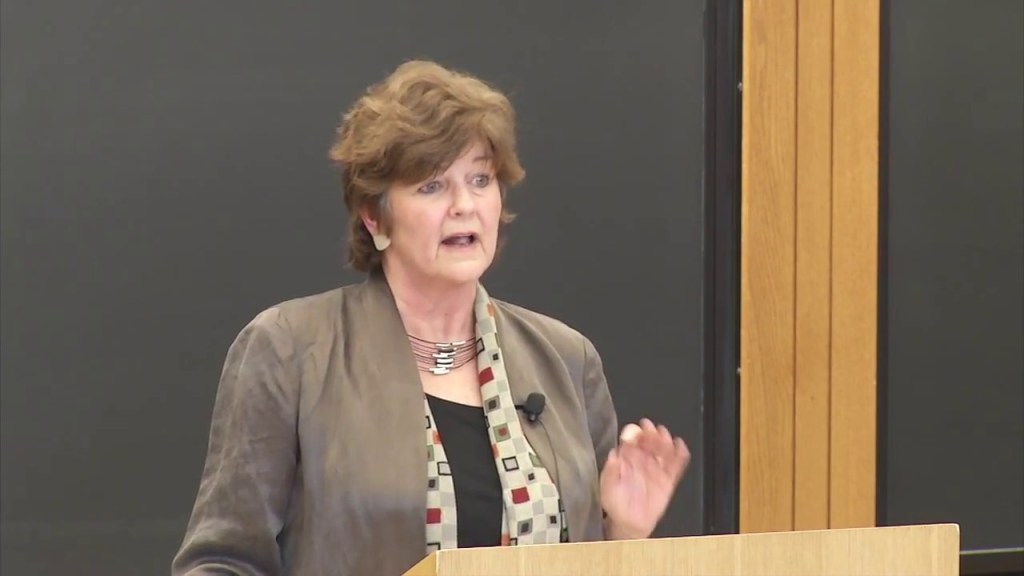
Jill Abramson (American author and journalist, first female executive editor of the NYT serving from 2011-2014.)

Jill Abramson describes a “near death” experience for print media in “Merchants of Truth”.  She begins with the rise of BuzzFeed and Vice, with a newspaper reporter’s view of YouTube, and a vignette about Jackass.  Then, she zeroes in on the “New York Times” and “Washington Post” and how their news coverage has changed.  Abramson explores the principles of the new “Merchants of Truth”.

It is disappointing to see “click bate” from Apple, Amazon, YouTube, and Facebook competing with news about local, and worldwide events that mean something. 

To some, Abramson’s brief history of BuzzFeed and Vice is a cringe worthy exploration of how vapid we are and how easily we are distracted by titillating, often idiotic, and sometimes false facts. However, Abramson shows that BuzzFeed and Vice make a contribution to news gathering that appeals to a wide audience, particularly a younger audience.

The criticism Abramson launches against BuzzFeed, and particularly Vice, is that both slip into Gonzo (exaggerated and fictionalized) reporting.  The public is titillated but not accurately informed. 

BuzzFeed and Vice are becoming bigger players in the media news business. The key to their success is public attention but advertising revenue is its vehicle for growth. Pleasing advertisers encroaches on the objectivity of news.

BuzzFeed and Vice have reduced the barrier between advertising and news. That barrier breach is exhibited by Abramson’s story of The New York Times apology to China, and the Washington Post’s turn to the metrics of popular news coverage.

Abramson pulls no punches in her judgement of The New York Times’ bow to economic necessity in kowtowing to China when a reporter’s story is critical of Chinese suppression. She recounts Arthur Ochs Sulzberger’s letter apologizing to President Xi for a reporter’s story about Chinese government repression. Abramson implies the apology is for potential loss of revenue.

Arthur Ochs Sulzberger Jr. (Publisher of The New York Times.)

The implication is advertising revenue influences NYT’s and Washington Post’s reporting in the same way as clicks on Apple, Amazon, Facebook, YouTube, BuzzFeed and Vice. The concern is in the bending and blending of news to attract wider audiences for advertisers who have little concern about the accuracy of news that impacts society.

On the other hand, Abramson suggests Sulzberger as a publisher of “All the News Fit to Print” may have been more concerned about losing a foreign outpost for the paper’s news reporters. One suspects, it is both concern about loss of a news site and bending to the demands of a political and revenue producing hegemon. There has always been a tacit concern about advertising revenue and news reporting in the media. One might recall “60 Minutes” initial rejection of an expose on smoking. They eventually aired the episode, but fear of loss from a major advertiser was in play.

Vice reporting of a trip to North Korea with Rodman (the former Bull’s basketball player) is one of several examples of click bate reporting.  It offers titillation but hides the brutality of a murderous government regime.

As a fossil (oldster), one might read the New York Times, Wall Street Journal, a local paper, the Economist, and Foreign Affairs.  The reason for variety is perspective.  Each covers most aspects of news (culture, business, local and international). 

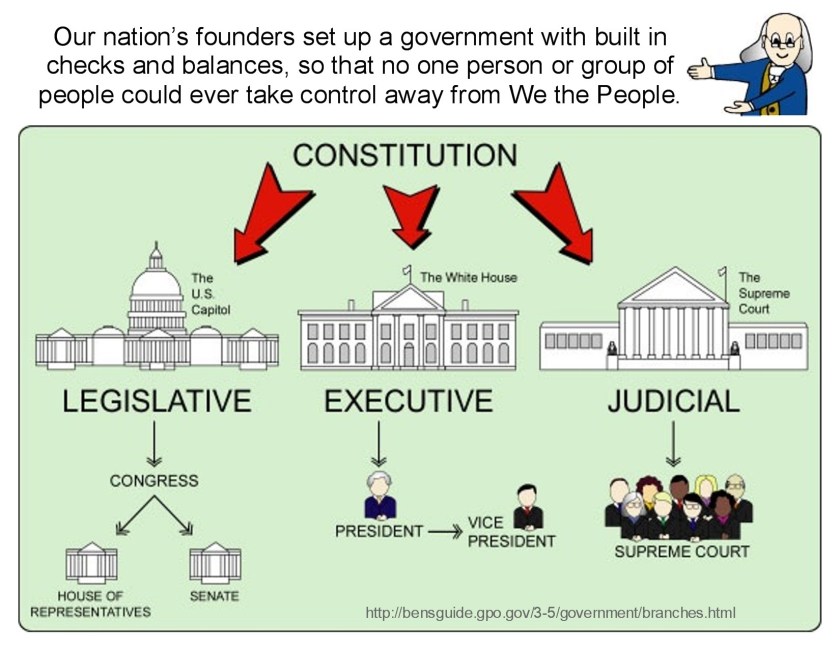
Abramson explains reputable media outlets have checks and balances. They try to insure objectivity and accuracy in their reporting.  The checks and balances sometimes fail as they did with the NYT’s Jason Blair.  However, BuzzFeed, Vice, YouTube, Facebook, and other newcomers are just beginning to establish checks and balances.

Jayson Blair (Former journalist with The New York Times, fired for fabrication and plagiarism.).

New media argues all societal beliefs should have equal expression. That is a distortion of America’s freedom of speech. Americans have regulated freedom, just as they have regulated free speech. Freedom Of Speech is to DoNoHarmToOthers.

Another failure Abramson notes is the paucity of critical reporting by the New York Times and Washington Post of WMD in Iraq. Checks and balances did not work in either paper because of investigative failure.

All news media fight for facts.  However, for many reasons, the facts chosen create spin.  

With the addition of BuzzFeed, Vice, and YouTube the inherent bias of chosen facts is accelerated and amplified by emotion.  Abramson implies spin is not the intent of reputable media like the New York Times and the Washington Post. One might disagree because all facts are not included in every report that is posted. All news reporting has some level of distortion.

Every merchant might report facts, but a listener/reader comes away with subtly, and sometimes, widely different understandings of the same story.  It is not that facts are necessarily untrue, but choice of facts and the addition of emotion infects the story. 

Additionally, there is inbred bias in the mind of listeners and readers of the news. Those listed as liberals, conservatives, or libertarians bring their personal beliefs into everything they read, hear, and say.

The difference between traditional news sources, and BuzzFeed or Vice, is elicited emotion. There is less fight for facts with BuzzFeed and Vice.  Their fight is for attention whether the facts are correct or not.

Abramson shows how BuzzFeed and Vice, and similar “news” gatherers are willing to manufacture facts to get attention.  BuzzFeed measures public expression and interest.  BuzzFeed tailors’ articles to magnify whatever is popular. BuzzFeed’s and Vice’s objective is to get the reader to click their feed.  It has less to do with a fight for facts than what Big Data tells these new “Merchants of Truth” is the public’s interest. 

Videos, like Jackass that play on YouTube, fit into the titillation genre.  However, as a merchant of truth, YouTube’s platform generates often useful information.  Its platform offers do-it-yourself help, from people who demonstrate how they did it themselves. 

YouTube also offers educational programming on current events, history, and science.  As a “Merchant of Truth”, it is not fighting for facts.  It, like BuzzFeed and Vice, is looking for clicks to increase advertising revenue.

BuzzFeed and Vice fight for attention, not facts.  They make money for clicks whether facts are right or wrong.  Advertisers are interested because attention drives sales. 

Like BuzzFeed, it resists control of content to increase popularity under the cloak of freedom of speech.  Both BuzzFeed and Facebook are struggling to keep hate out of their content without acting as Big Brother monitors of vitriol.  Neither are focused on a fight for facts or truthful news.  Both seek user clicks to give interest to vendors that will pay to advertise.

Facebook is a ubiquitous forum meant to connect society.  In actuality, it appears Facebook is a forum that often reinforces and magnifies difference in society.

The New York Times, Wall Street Journal, Washington Post, The Economist, and Foreign Affairs have video and online feeds.  Most offer those feeds to subscribers.  Some, like Foreign Affairs want an additional fee for the online service.  The degree of adoption of emotion by traditional media varies, but it creeps into all “Merchants of Truth”. All media serves what big data shows the public wants.

Abramson shows that national TV and newspaper coverage of the news have adopted some of the characteristics of BuzzFeed, Vice, and YouTube to improve their income, and economic viability. 

Somewhat more ominously, Abramson explains how traditional media is adopting measurement metrics that tell publishers how many clicks or engagements reporters get from their writing. If news reports do not achieve a certain level of interest, the reporter’s continued employment and/or compensation becomes a topic for discussion. News is in danger of being measured by popularity, not substance.

Getting back to Abramson’s personal experience at The New York Times, she acknowledges not having much management experience when she became the Executive Editor of the paper.  She notes former employers never offered management graduate courses for her to broaden her education.  Undoubtedly, she was an excellent employee that got things done.

Abramson devotes a part of her book to air grievances about an “old boys club” in the news business.  Other writers, as well as Abramson, have reported a double standard for women in the media industry. Women are viewed differently when they exhibit the same aggressiveness that men show as managers. 

Abramson acknowledges she does not listen as carefully as she should when confronted with opposition. That is a characteristic of both men and women who have come up through the ranks of an organization. They are superstars. They get things done and are promoted to become managers. 

In well managed companies, mentor-ships or management development programs are offered rising stars. They offer employees an opportunity to see the difference between doing things yourself to having things done through others, a skill set that can be taught.

Women and men rise in organizations to become managers by getting things done. Abramson notes that aggressiveness is judged differently in women.  Women are called pushy while men are called forceful and effective.

Becoming a manager is a difficult transition because it involves ceding control that is the hallmark of an employee’s success as a doer of things.  A manager needs to trust others to do the things that need to be done.  One suspects it is more difficult for women to develop trust in others because of generations of unequal treatment. Whether a man or woman, when an employee becomes valuable as a person who gets things done, it is difficult to give up one’s control to others.

Being a manager requires trust in employees that may not do their jobs exactly the way a new manager (a former “doer of things”) believes they should be done. This is where skill-set adjustment is needed.

If an employee fails at a task, a new manager needs to help the employee overcome the failure. If the employee continues to fail, he/she will eventually be fired. If the employee succeeds, he/she goes on to the next task. Abramson’s dismissal may have been as much a function of unequal treatment as inadequate training. Her analytic and reporting skill is proven by her history and her analysis of media news in “Merchants of Truth”.

In a fight for facts, what a consumer can take from Abramson’s analysis is how important it is to read and listen to more than one “Merchant of Truth”.  Finding truth is what Americans of conscience seek.

Freedom of speech cannot be an excuse for unvetted news. 

Much of what Abramson’s personal experience is at The New York Times is reinforced by her analysis of the evolution of the Washington Post. This century has not been kind to traditional news media. It is in a state of transition. Some of us hope it evolves, and is not relegated to the trash bin of history.

The media for this generation is changing.  What one hopes is that the best of each is eventually adopted. Every news source must be measured against truth.  Determining truth is made up of true facts that no singular news outlet is capable of compiling.

“All the news that is fit to print” is an apt logo for the New York Times but it is misleading. History is continually revised because new facts are discovered, and the perspective of society changes. Americans need to be diligent in seeking the truth. The truth does not lie in one source.

RUSSIAN ESPIONAGE

Audio-book Review
By Chet Yarbrough

(Blog:awalkingdelight)
Website: chetyarbrough.blog

In the Enemy’s House (The Secret Saga of the FBI Agent and the Code Breaker Who Caught the Russian Spies

By: Howard Blum

Narrated by David Colacci

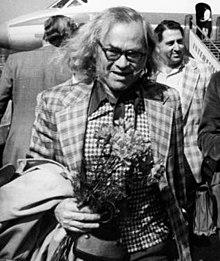
Howard Blum (American author and former reporter for NYT and The Village Voice)

Howard Blum offers some clarity and historical perspective on the infamous Rosenberg spy case.  One might argue it is as much a revision of history as a clarification.  Blum accesses historical files not available in the past to write this book. 

These files explain how a Russian spy network was set up, who the agents were, why and how American collaborators were recruited, and the way information was transmitted.

Though the Rosenberg’s may be guilty of espionage, their motive appeared ideological, not economic.  Blum raised the question whether the Rosenberg’s betrayal of America warranted execution.

“In the Enemy’s House” reveals some facts about the halcyon days of the FBI.  A listener finds how FBI agents are chosen, the internecine conflicts that occur when investigations go awry, and how difficult it is to live an agent’s life.

FBI agents are chosen from the general public.  Some may be highly educated, others less so, but all are patriotic, loyal, and committed to American ideals and pursuit of truth.  They are subject to judgement errors in their personal lives, their suspect’s lives, and in their understanding of the truth. They, like all human beings, make mistakes. 

Expertise in the field for FBI agents varies.  The example is in the way suspects are followed, how long suspects are tracked, and how suspects are questioned.  As in all life’s endeavors, some are better than others in doing their jobs.

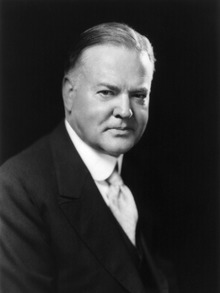
The isolation of agents and the long hours of suspect’ investigations have an impact on personal lives.  Like police work in general, stress is put on family relationships.  In the era the author covers, being married makes a wife a potential liability because of inadvertent disclosure of classified information.  Blum notes that Robert Lamphere, the principle agent in the story, is personally warned by Herbert Hoover about disclosure risks because of marriage’ intimacy.

Robert J. Lamphere (1918-2002, FBI Agent.)

Lamphere joined in 1941.  In 1945, he is assigned to the Washington, DC office to investigate Soviet atomic espionage, particularly regarding the Manhattan Project.  In 1947 he is assigned to supervise Soviet code breaking and is introduced to Meredith Gardner, who is considered by many to be a linguistic genius. 

Meredith Gardner (working among mostly women in the cryptographic Arlington bldg) provides leads to the FBI that reveal two of the most famous names in communist espionage history, the Rosenberg’s, and Karl Fuchs. Gardner dies in 2002.

A looming issue in Blum’s history is the decision to execute the Rosenberg’s for spying for the Russians.  Blum tells the story of an FBI investigation of Russian espionage, code name Venona.  Russia’s spy network recruited western scientists and ideological converts who believed communism is the future.

Blum describes “Operation Enormoz” as a Russian spy network that recruited Julius and Ethel Rosenberg, and Karl Fuchs to pass information about the nuclear bomb to agents of the U.S.S.R.

The judge in the Rosenberg case warranted execution for both Julius and Ethel Rosenberg. The judge reasoned, with the advent of the Korean war and communist China’s invasion of the northern peninsula, the Rosenberg’s gave license to Americans who might betray their country.

Irving Robert Kaufman (1910-1992–Presiding judge in the Ethel and Julius Rosenberg case.)

Blum infers, even if that judgement is correct, the facts revealed in his book suggest Ethel Rosenberg was not an active participate in her husband’s betrayal of America.  Blum’s research shows deciphered encryption from Russian messages show Ethel Rosenberg did not participate in the spying activity of her husband. 

An FBI agent and a brilliant linguist expose the Russian spy network in America by deciphering coded messages. The agent and linguist could not provide evidence that might have exonerated Mrs. Rosenberg because the Russians did not know their coded messages had been cracked.  If the evidence the FBI agent had were revealed, America would have lost a critical source of intelligence.

One of the greatest surprises in Blum’s book is that the spy network that led to Stalin’s atomic bomb has little to do with financial bribery.  It had more to do with the success of communist propaganda. 

In the internet age, Russia’s success in the 1940s suggests how dangerous Russian interference in American elections is in the 21st century.

Blum touches on growing communist hysteria gripping America after the war.  As history books reveal, Stalin tries to thread a needle by entering an alliance with Germany to expand the Russian empire and avoid a ground war with Germany. 

Stalin realizes his mistake in 1941 when Germany invades the U.S.S.R. Stalin is compelled to join the Allied Powers against Germany.  Both Americans and Brits are suspicious of Stalin. However, Stalin’s change in sides becomes critical to the outcome of the war. 

The Russian army is the only effective fighting force on the eastern front.  Russia is estimated to have lost 16,825,000 civilians and soldiers in WWII.   The WWII’ casualty estimate (both Allied and Axis powers) is 60,000,000.  If these estimates are correct, over 20% of WWII casualties were U.S.S.R. soldiers and citizens. 

By any measure, the eastern front and Russia’s fight with the Germans was critical to Allied success in WWII.

Some Americans were sympathetic to the ideological goals of Russian communism.  The truth of Stalin’s Russian gulags and the KGB were generally unknown to many Americans before, during, and immediately after the war.

Some civilians were seduced by communist propaganda to become tools of a Russian spy network.  Blum recounts the two most notorious Russian spy’ incidents.  Blum tells the story of the discovery and prosecution of the Rosenberg’s and an British scientist named Karl Fuchs.

Klaus Fuchs (1911-1988, served nine years in prison for providing theoretical information on nuclear weapons to Russia in the 1940s.)

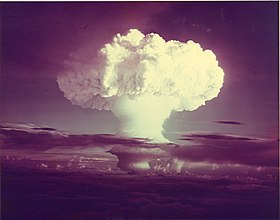
America’s realization of the Russian spy network’s existence became widely confirmed with Russia’s detonation of its first atomic bomb in 1949.  This is during the McCarthy era when Russian spies were alleged to be under every bed and in every government agency. 

Joseph McCarthy (Republican Wisconsin Senator who fanned the flames of communist infiltration in America).

President Truman initially did not believe the Russian’s had the scientific capability to create the bomb. 

But the facts prove otherwise.  In one sense Truman may have been right.  Russia’s atomic bomb success does not strictly come from Russian scientists. Stalin creates a world wide spy network to steal other countries’ scientific work. 

Daniel Patrick Moynihan (1927-2003, NY State Senator)

Blum notes that Patrick Moynihan said Russian scientists, with German expatriate help, would have discovered the bomb anyway.  

The point is science is a universal pursuit.  (After all, America used Wernher Von Braun to accelerate experiments in rocketry that led to America’s moon landing in 1969. This is the Von Braun who created Nazi Germany’s V-2 rocket program that terrorized London.)  

What is surprising to America is a nuclear detonation by Russia, only four years after Hiroshima.  Blum suggests Russia could not have done it in such a short time without stealing American and British scientist’s work.  On the other hand, Blum infers Russia would eventually succeed in creating a nuclear bomb, without stolen scientific documents. 

As most will recall, trade secrets have always been an issue in international trade.  In the past, Japanese, South Koreans, and now Chinese are accused of stealing American trade secrets.  Of course, weapons of mass destruction are a more serious threat, but the principle is the same.  

All nations seek economic and social advantage, with science as a universal pursuit.

“In the Enemy’s House”, there is a nagging feeling that execution of the Rosenberg’s was wrong. The inference is that if all the facts were known, the Rosenberg’s execution would have been commuted to a term in prison. Blum’s argument is not particularly compelling when taken out of the context of its time. However, considering no one else was executed for treason in the Venona investigation, the Rosenberg execution seems unjust.

AMERICAN TRIBALISM

Audio-book Review
By Chet Yarbrough

(Blog:awalkingdelight)
Website: chetyarbrough.blog

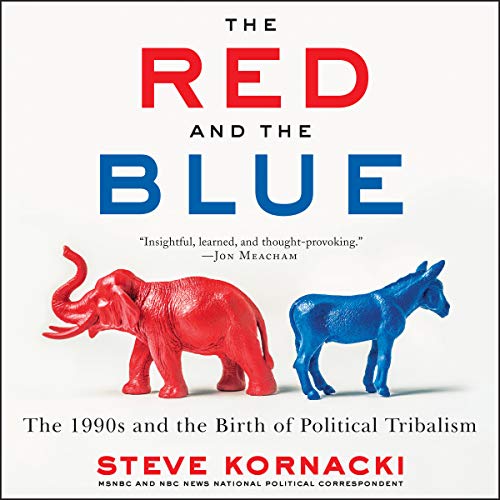
The Red and the Blue (The 1990s and the Birth of Political Tribalism)

By: Steve Kornacki

Narrated by Steve Kornacki, Ron Butler

Steve Kornacki (American political journalist and correspondent for NBC News.)

Steve Kornacki identifies the source of 21st century political tribalism in his book, “The Red and the Blue”.  

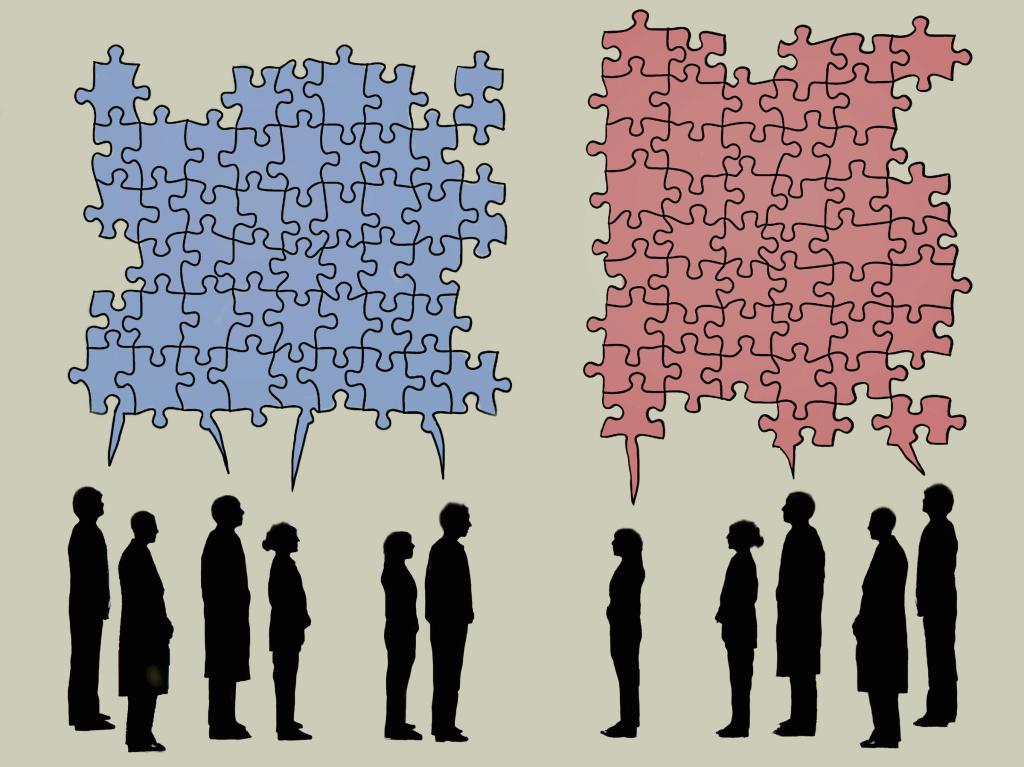
Political tribalism is not new.  Political tribalism shows itself many times in history. Tribalism is shown in the early days of political party formation, in the American Civil War, in the South’s reconstruction after the Civil War, and in the 1929 depression’s aftermath. Though Lindsay Graham has been wrong in pandering to Trump, he seems right to vote against trial of Trump in the Senate.

As reprehensible as Trump’s actions were on January 6, 2021, impeachment seems an inappropriate way of addressing political tribalism represented by misinformed and misled Trump supporters.

Granted, the twenty first century is not the eighteenth. The #internet and its wide open falsehoods unquestionably mislead the public. But, 70,000,000 Trump2020 Americans act on what they believe is truth. Most are not criminals. Trump will be punished by history and a state judicial system that will prove his guilt for crimes as an dishonest human being and business man.

In the late 18th century, it was the Federalist Party versus the Democratic-Republican Party.  Alexander Hamilton’s tribe is the Federalist’ party.  Thomas Jefferson’s tribe is the Democratic-Republican’ party.  Hamilton’s tribe insists on a strong central government.  Jefferson’s tribe insists on State’s rights. 

In the Civil War, the stage is set for the northern state’s political tribe (largely Republican) versus the southern state’s political tribe (largely Democrat).  In some sense it is a continuation of the two tribes represented by Hamilton and Jefferson.  The respective leaders of the northern and southern tribes are Abraham Lincoln and Jefferson Davis.

During the Franklin Roosevelt years, the followers of Herbert Hoover headed the Republican tribe, rallying against Roosevelt’s National Industrial Recovery Act.

The vituperative relationship between earlier political tribes was as vicious then as it is now. What Kornacki tells us in “The Red and the Blue” tribalism is revivified, if not reborn, in the 1980 s and is playing out in today’s America. 

Of course, tribalism in America goes beyond political parties.  Tribalism exists in the long history of American discrimination. Kornack touches on that reality with his recollection of Jessie Jackson’s 1984 and ’88 presidential campaigns.

Discrimination is a tribal conflict.  It is not exclusively held by any political party but by a cultural divide. 

Murder and isolation of Indians, and slavery are the most egregious examples of cultural tribalism in American history.  That conflict is seen when a tribe with political power discriminates against another.  Indians, blacks, Italians, Japanese, Hispanics, and Indians (not to mention various religions) have experienced tribal discrimination because of their weaker political power.

In America, the tradition of slavery began in mid-17th century.  Indian discrimination dates to the American revolution and reaches a peak with President Andrew Jackson’s enforced “Trail of Tears”.

Donald Trump and Andrew Jackson are polarizing political figures that drink from the same trough. They reflect the tribalism of both Red and Blue political power brokers against minorities. 

Trump’s attack is disingenuous chest thumping that is being supported by Republicans and sycophants hoping to receive some of the public contributions received by the Trump campaign to overturn the election.

Andrew Jackson is the Father of the spoils system in which the president uses his power and position to appoint civil servants. 

Trump is a “spoils to the victor” and “loyalty above all else” President. Jackson, like Trump, appoints civil servants based on loyalty to the President, without necessary qualification.  To Trump and Jackson, the goal is to win, and when they win, they expect all who report to them to be loyal to their President. Trump and Jackson consider themselves Kings in their roles as Presidents. Neither defer to Congress, or the Judiciary.  They use their power and position to prove their “royalty”. 

Sexual discrimination is the oldest tribal conflict of all.  It is shown in the beginning of recorded history, and undoubtedly began with humanities’ dawn. 

The 20th and 21st century exemplars of sexual tribalism are the behaviors of Clinton and Trump.  Kornaki’s book reminds listeners of Paula Jones. Her story is no less reprehensible than Trump’s dalliance with Stormy Daniels when his wife is pregnant. Many men use power and position to disrespect women. Men’s reasons are many but the consequence reinforces the world’s history of gender inequality.

What is striking about “The Red and the Blue” is its political spin.  Living through the years of which Kornaki writes, one is struck by how much one forgets.  From Kornaki’s reminder of Clinton’s caricature as “Slick Willie”–to his conclusion that Newt Gingrich is the source of 21st century tribalism–to Patrick Buchanan’s “make America Great Again” campaign—to Ross Perot’s “Bloomberg like” pitch for the presidency, Kornacki’s reminders are revelatory.

Clinton seems heir to Franklin Roosevelt, while Trump seems heir to Andrew Jackson.  (This is a personal observation; not Kornaki’s suggestion.)  Clinton is a dissembler, like Roosevelt.  Clinton and Roosevelt knew what they wanted and pursued it through manipulation of legislators, either by the clever use of words or through the power of office. 

Bill Clinton (42nd President of the Untied States.)

Clinton understands politics and how to translate the will of Washington’s Red and Blue tribal leaders. 

In contrast, Trump bulls his way through the Presidency. Trump bypasses, intimidates, or co-opts Washington’s Red and Blue leaders. 

One realizes after listening to Kornaki’s book, Clinton is twin to Trump in respect to moral turpitude.  However. Clinton is a cleverer and more effective President.  Trump, like Perot, finds politics is not for sissies. History shows politics cannot be separated from governance. Neither Trump or Perot understand politics.

Kornaki reflects on Clinton’s rise to the presidency.  Kornaki shows how politically astute Clinton is in dealing with the scrutiny of candidates for public office.  Kornaki artfully illustrates the era by recalling the details of Reagan’s appeal and defeat of Mondale, the weakness of the Dukakis’s campaign, Jesse Jackson’s misreading of Clinton, Patrick Buchanan’s tribal speech at George H.W. Bushes second nomination, the Clinton “White Water” and Lewinski scandals, and other stories. Kornacki shows how the table is set for deep Red and Blue conflicts in the 21st century.  Kornacki explains how and why Bill Clinton defeats George H.W. Bush and Bob Dole despite Clinton’s disingenuous dodge of military service, extramarital affairs, budget crises, and ultimate impeachment. 

Clinton is considered by some to be the greatest politician of the 20th century.  His intelligence, charisma, and ambition overcome personal sexual scandals, draft dodging accusations, Red and Blue tribal conflicts, and the tumultuous effects of minority discrimination. Despite all of his personal challenges, Clinton manages to become a two term President.

The national debt grew to over 1.4 trillion dollars during the Reagan years. After the election of George H.W. Bush, the deficit remained high which led Bush to raise taxes when he has said “read my lips-no new taxes”. That and Clinton’s political skill derailed Bush’s election for a second term. Some would argue America prospered under Clinton.

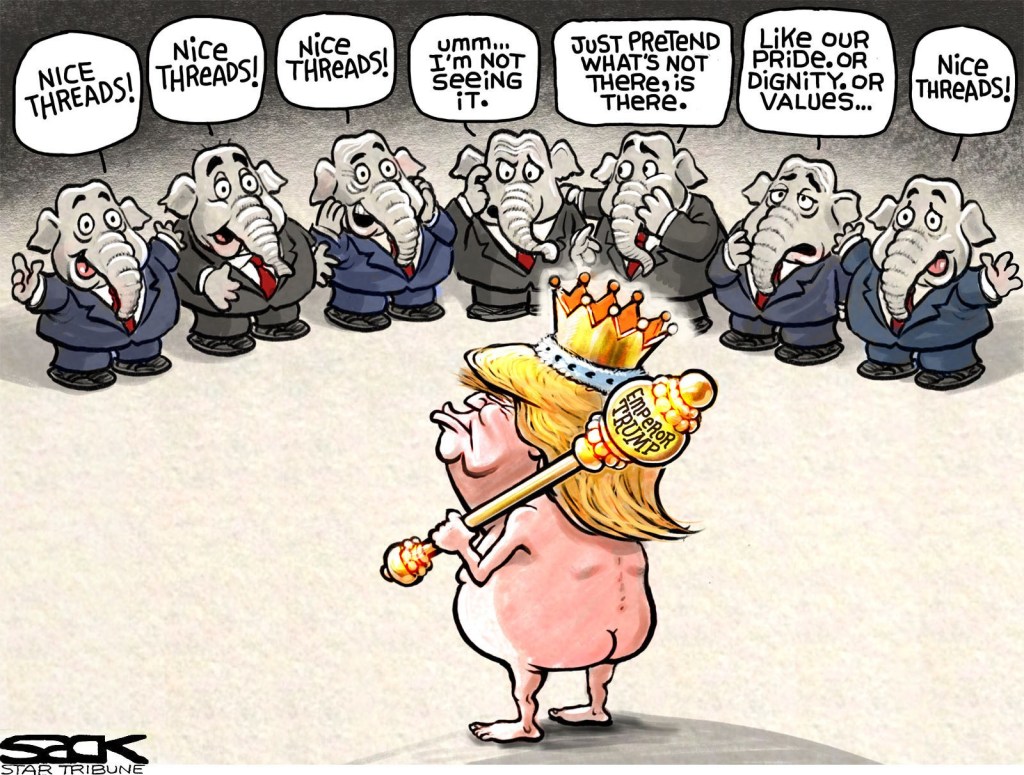
“The Red and the Blue” is not about the birth of tribalism.  Trump shows himself to be an inept politician. The emperor has no clothes. To overcome tribalism, American leaders must have political skill.

In the foreseeable future, tribes will exist. Steve Kornacki shows America is a Red and Blue nation disrupted by political tribalism.  It is its strength and its weakness.  Politics is the art of getting things done despite tribal differences.  What is needed in America is a leader who can bridge tribal differences.

Democrats believe Joe Biden is the person to bridge tribal differences. Republicans seem not to care and continue to support President Trump.

The only way forward is through politics (the activities associated with the governance of a country).

ENTERTAINMENT

Audio-book Review
By Chet Yarbrough

(Blog:awalkingdelight)
Website: chetyarbrough.blog

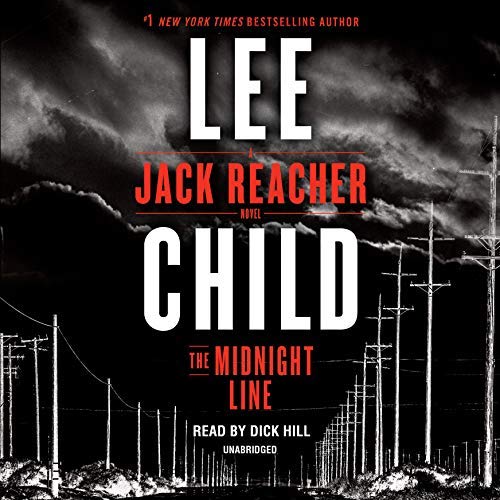
The Midnight Line

By: Lee Child

Narrated by Dick Hill

Lee Child (British Author of the Jack Reacher novels.)

Let Lee Child entertain you. 

“The Midnight Line” is Child’s latest chapter of the Jack Reacher series.  This is the first Lee Child novel for this reviewer.  Reacher is put at risk by a drug dealer who tells a hit man to be on the lookout for “big foot” or the “hulk”.

Child suggests 6′ 4″ Lawrence Dallaglio (Retired English Rugby Player) is the image of who he thought of as Jack Reacher.

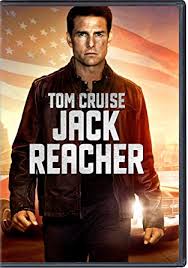
Having seen a Jack Reacher movie, one understands why many Reacher fans are disappointed with Tom Cruise’s billing. The diminutive 5′ 7″ Tom Cruise does not fit Child’s characterization, but Cruise became Reacher in a film from Child’s book, “One Shot”.

In two senses, Lee Child is a spartan writer.  He writes short, clear, precise sentences, and creates a Herculean “spartan like” character.  “The Midnight Line” is a guilty entertainment for mystery and action addicts.

Jack Reacher is a loner.  Reacher is a combat veteran with an investigator’s curiosity.  He is a West Point graduate who left the military after 11 years.   He is a former major in the Military Police. He lives in the moment.  He travels the roads of America without a suitcase and often without a ticket to ride.  He hitchhikes.  He wears one set of clothes until he needs a new set.  He discards the old and buys new. 

The story begins with a tiny ring that Reacher happens to see in a pawn shop.  The ring is from a former cadet at West Point.  From there, the listener hitches a ride with Reacher to South Dakota and Wyoming.

Reacher is a phenom.  Not only because he is big but because he forgets nothing and sees everything.  With remembering and seeing, he intuits what is going to happen next. Whether in a fight or personal crises, Reacher assesses details and sees the future.

Lee Child places Reacher in a story of addictive drug manufacturing, illegal distribution, and human destruction. 

The author’s dialog is short and to the point.  Reacher is almost supernatural but just believable enough that a listener identifies with his heroics.  Child adds mystery to his characters.  His terse sentences makes listeners want to know more. 

“The Midnight Line” is partly about a missing person (a twin of a beautiful woman).  The missing person is a former graduate of West Point that has pawned her ring. Reacher knows something is wrong because he knows how difficult and psychologically rewarding it is to graduate from West Point.

The missing person is involved in an interstate illegal drug trade for reasons that are not clear until the end of Child’s story.  It’s a good guy, bad guy story with twists. 

A listener learns something about the illicit drug business in the United States. How and why it works.  Particularly how it feeds off a culture that insists all human pain must be medicinally treated.  And, how an injured veteran of war, with a distinguished service record, can become an addict.

In the end, “The Midnight Line” is an entertainment.  However, it also says something about addiction–its causes, its consequences, and the amoral businesses that serve it. 

ILLUMINATED MANUSCRIPTS

Audio-book Review
By Chet Yarbrough

(Blog:awalkingdelight)
Website: chetyarbrough.blog

Meetings with Remarkable Manuscripts

By: Christopher de Hamel

Narrated by Christopher de Hamel

Christopher de Hamel is a British academic librarian.  He is an expert on mediaeval manuscripts.  De Hamel takes listeners on an international journey to view ancient illuminated manuscripts.  

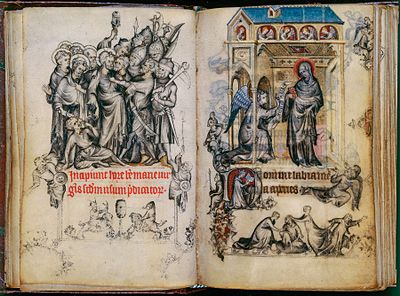
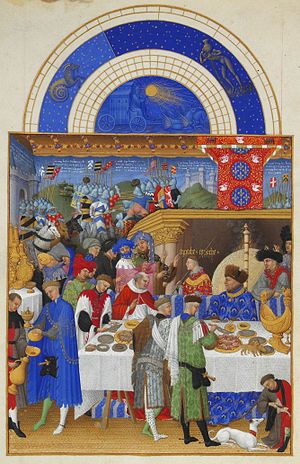
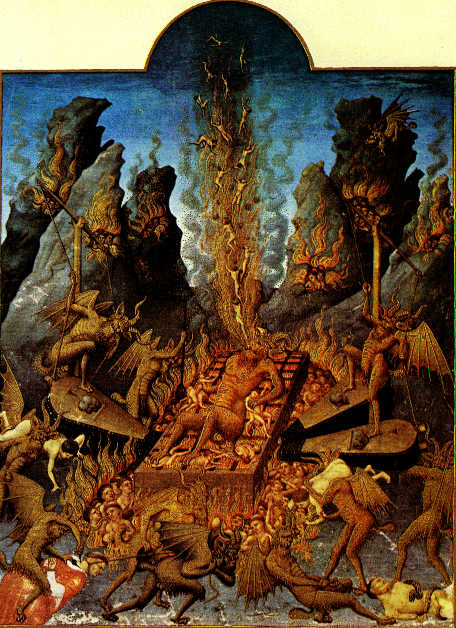
De Hamel’s peregrinations are fascinating, in part because of his excellent recitation.  But also because of interesting stories about manuscript’ provenance, purpose, and location.  (A listener’s regret–there are no illuminated manuscript’ plates in the audio book appendix. This review is meant to partially address that regret.)   

Illuminated manuscripts are held for safekeeping in controlled access libraries and museums around the world. These manuscripts are called “illuminated” because they were hand-made with images and script drawn in gold and silver. They were made by Western European scribes between 500 and 1600 CE (common era). 

They vary in size from as large as three feet tall (Codex Gigas with 310 leaves of vellum made from 160 donkeys) to one so small it could fit into the palm of one’s hand; e.g. the “Prayer Book of Claude de France” produced in the 16th century.

De Hamel reviews 12 manuscripts.  The most famous is the “Book of Kels” found in Ireland.  The most interesting might be the “Spinola Book of Hours” because the author plays a role in its discovery and collation.  The “Spinola Book of Hours” is a 16th century manuscript with 88 miniature paintings.  It is presently located in the J. Paul Getty Museum in Los Angeles.

The purpose of ancient manuscripts is to educate and enlighten medieval populations. Just as today, the greatest benefit is to the rich. The rich could afford the manuscripts but the poor were offered limited exposure through the few religious schools that served the poor. Many ancient manuscripts were used to teach the young how to read while educating them in the history of the world and the religion adhered to by royalty.

(The invention of the Guttenberg press in 1440 CE was the beginning of the end of the illuminated manuscript but the art of the handmade manuscript survives into the early 17th century.)

De Hamel tells 13 stories about 12 illuminated and one technically not-illuminated manuscript (the “Codex Amiatinus”). All entertain and inform interested listeners.

The following list shows de Hamel’s chosen manuscripts. An interesting manuscript that reflects on modern times is Tres Riches Heurees du Duc de Berry. It reflects on the Black Plague’s European devastation.

  1. BOOK OF DURROW (7th century book of hours, biblical tales and Virgil/Homeric tales, most well known. Located in Dublin @ Trinity College – is the oldest completed illuminated transcript)
  2. CODEX AMIATINUS (created by missionaries, 8th century, North Umbria creation. Bible.) technically not illuminated-no silver or gold.
  3. LINDISFARNE GOSPELS (Somehow saved) 8th century New Testament, stolen by the Vikings. Contains the gospes of Mark, John, Luke, and Matthew.)
  4. THE BOOK OF KELLS (most famous, 9th century, greatest of any era)
  5. ST. ALBANS PSALTER (12th century, detailed art work)
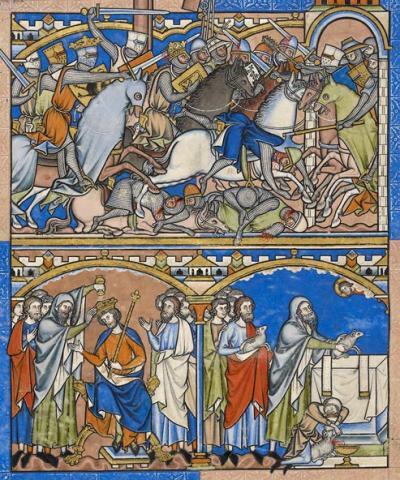
  6. MORGAN CRUSADER BIBLE (13th century) artistic masterpiece about the Old Testament crusades
  7. WESTMINISTER ABBEY BESTIARY (164 illustrations, 13th century, real and imaginary animals)
  8. THE BOOK OF HOURS OF JEANNE d’Evreux (14th century) life of Jesus.
  9. THE BLACK HOURS (15th century) created in Greece, purchased by Piermont Morgan and housed in the Morgan Museum in New York.
  10. TRES RICHES HEURES du Duc de Berry (15th century, master work, unfinished because of the plague.)
  11. Grimani Breviary (16th century, religious and secular stories, made in Flanders. Over 1600 pages – stories from the bible)
  12. PRAYER BOOK OF CLAUDE DE FRANCE (16th century) fit in the palm of one’s hand. Magnifying glass needed.

AMERICAN CONSCIENCE

Audio-book Review
By Chet Yarbrough

(Blog:awalkingdelight)
Website: chetyarbrough.blog

The Water Dancer

By: Ta-Nehisi Coates

Narrated by Joe Morton

Ta-Nehisi Paul Coates (American author & journalist, winner of the 2015 National Book Award for Nonfiction with–BETWEEN THE WORLD AND ME).

This is Ta-Nehisi Coates’ first book of fiction.  What makes “The Water Dancer” a fiction is its hero’s mystic ability.  He is a water dancer. 

Coates’ story is a history that stains American conscience.  It is about the tragic sequel of slavery.  Slavery is introduced to America in the British colony of Virginia in the 17th century. 

Though Virginia tobacco plantations were first created in the 17th century, Coates story is undoubtedly set in the early 19th when plantations were in decline.  In 19th century Virginia, soil is depleted by poor farming practices and mismanagement.  White property owners turned to sale of their slaves to pay their debts.  The ugliness of slavery is compounded by the breakup of black families and friends that shared a common history.  Though that history is blooded with servitude and violence, Coates illustrates how slaves created close-knit communities. They were close; in-spite of their sorrowful condition.

Just as soil depletion reduced plantation owner’s income, they increased sale of slaves to sustain their standard of living.  Though black slaves had always been treated as property, the crash of the tobacco industry accelerated their sale. 

(Thomas Jefferson is a prime example of an American slavery apologist who sold slaves to reduce debt.) 

Sons, daughters, husbands, and wives were sold to other white slave holders.  Many families were broken apart; some sent to other States after being sold; others escaped to the North. 

Some were caught by slavers.  Coates writes–runaway slaves were sometimes caught and thrown into makeshift prisons and sold back into slavery.  In Coates’ story, prison is a hole in the ground for its hero. Hiram (Hi) is not sold back into slavery but tested for a critical role in the underground.

To compound the humiliation of being caught, Coates writes of slaves who betrayed their own race. Their purpose was to maintain some level of freedom from harsh conditions on the plantation.

Black women were subject to the whims of their owners.  Women could be raped by their owners without repercussion, or sold to the Fancy industry, i.e. brothels.

Coates reveals the depth and breadth of what Philip Roth called a human stain, i.e., broadly known as discrimination.  Slavery may have been abolished in 1865 but its institutionalization lives on in the 21st century.  It is a stain that resists removal.

Murder of a black jogger , Ahmaud Arbery, on February 23, 2020 in Brunswick, Georgia. A white father and son are charged with murder on May 7th, 2020.

Coates’ story reveals much about America, the abolitionist movement, the growth of the underground, and the human toll of slavery.  Coates suggests some wealthy white southerners participated in the underground to salve their conscience.  They were heroes but they hid behind the degradation being felt every day by black Americans subject to an economic system based on slavery.

Coates shows how southern white abolitionists were important to the growth of the underground.  Their role grew out of a first-hand view of human beings being treated as property. 

Elizabeth Van Lew (1818-1900, Richmond, VA Abolitionist.)

Coates fills many gaps in the history of slavery by seeing it through the eyes of extraordinary slaves. 

Harriet Tubman (American abolitionist who rescued an estimated 70 enslaved people. Unknown date of birth; Died in 1913.)

Families were torn apart, men and women were degraded by their enslavement, husbands had to cope with plantation owner abuse of their wives, blacks victimized their own people, and mothers suffered from guilt for the life their children had to live.  These are irremovable stains on the American conscience; for both Black and White Americans–each are stained in their own way.

IT’S THE ECONOMY, STUPID

Audio-book Review
By Chet Yarbrough

(Blog:awalkingdelight)
Website: chetyarbrough.blog

Good Economics for Hard Times (Better Answers to Our Biggest Problems)

By: Abhijit V. Banerjee, Esther Duflo

Narrated by James Lurie

Abhijit Banerjee’s and Esther Duflo’s book, “Good Economics…”, seems like a play book for Bernie Sander’s, and Andrew Yang’s campaigns for President.  It is not, but much of what they write resonates with their campaigns.

These two authors are professors of economics at MIT.  They received a Nobel Prize in 2019 for their work on an “…experimental approach to alleviating global poverty”. Both are obviously well respected for their research and economics acumen.  Professor Barnerjee  is a research affiliate of Innovations for Poverty Action. Professor Duflo specializes in Poverty Alleviation and Development Economics.  Their credentials speak for themselves.

Now, with the election of President Biden, one wonders if Banerjee and Duflo’s ideas will be tested. The leader of the Senate, Mitch McConnell, is quoted as having said “One hundred percent of my focus is on stopping this new administration”.

McConnell’s comment suggests the poor and lower middle class should be left on their own, a kind of Marie Antoinette view of life.

Sadly, this is a somewhat ponderous work for a layman interested in the future of American prosperity.  In the face of supporters of Reaganomics and today’s Trumpist’ “trickle down” economics, a listener hopes for a definitive answer to inequality, rising poverty, and homelessness in the United States.

With the defeat of Trump, a new economic plan is proposed by President Biden. As expected, Republican leadership argues “hands off” on the American economy that appears to be improving without government help.

The concern one may have with a “hands off” approach to a weakened economy is that it offers little hope for those at the bottom of the economic ladder. Those who have a job (namely congress men and women) seem to have little empathy for the poor. It is a view based on belief that the poor are poor because of their failure to take advantage of American opportunity to work and prosper.

Banerjee and Duflo note that a rising tide does not lift all boats.  “Trickle down” economics do not work. 

Banerjee and Duflo cite several studies that suggest there might be a solution, but the scope and conclusions of the studies seem ill-suited for the largest economy in the world.  The authors’ conclusions are based on small social experiments that show mixed results.

On the one hand, self-interest and freedom have made America’s standard of living among the highest in the world.  On the other hand, it seems self-interest and freedom mitigate against fairness in the American economy. 

The problem is self-interest and freedom have brought out the worst in human nature—greed.  Greed has left middle class and poor Americans poorer than they were in the 1960 s and 70 s. 

Banerjee and Duflo cite studies of the Reagan years that show wealth became more concentrated with tax cuts for the rich. 

Human nature gets in the way of understanding what lower income Americans need to survive Covid19. For the President of the United States to say “It is what it is..” reflects on our lack of empathy for a loved-ones’ death caused by the pandemic.

The Senate drinks from the same trough when they argue the economy is getting better. Over 1,000,000 Americans remain unemployed. It is getting better for whom? Certainly not for restaurant workers, small business owners who closed their doors, or the nurses and teachers who are compelled to go to work despite the risks of a deadly virus. (That is not to mention the children who are going back to congested class rooms with potentially catastrophic consequence for their families and others.)

Trump and the Republican party continue to believe the wealthy will reinvest their wealth to benefit the poor and middle class with jobs. 

Job creation benefited the rich after Reagan’s tax cuts.  Wages of workers did not increase but the stock market rose, corporate executive salaries skyrocketed, and dividends to stockholders increased. Workers in the middle class and the poor were left behind.  Banerjee and Duflo argue that tax cuts for the rich are unfair and they exacerbate the gap between the rich and poor. 

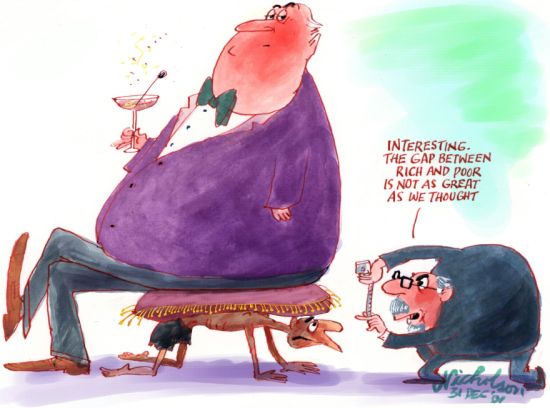
The rich get richer; the middle class lives paycheck to paycheck, and the poor remain poor.

Both Banerjee and Duflo infer there is a path to economic equality, or at least fairness.  They argue for incentivizing corporate interests for the common good, disincentivizing executive compensation, modifying the federal tax structure, and subsidizing employment for the unemployed (or those who are soon to become unemployed because of technology).  They argue that taxes should be increased to create public works programs that benefit the general welfare of the nation. 

Banerjee and Duflo go on to suggest a guaranteed basic income (like that proposed by Andrew Yang) should be considered.

Banerjee and Duflo go on to explain how technology reduces jobs.

They argue that America needs to realign their employment objectives.  Service jobs are outgrowing manufacturing jobs. 

Environmental concerns reduce jobs. 

Through a combination of public works projects and improved public services (childcare, elder care, environmental clean-up; etc.) the unemployed, and soon to be unemployed, should be bolstered by a basic minimum wage and retrained to take 21st century jobs. 

A guaranteed basic income is to mitigate the hardship of retraining and leaving areas of the nation that cannot sustain economic growth.

Banerjee and Duflo argue that most Americans associate jobs with identity and self-respect.  Without a job, Americans lose a part of their identity and self-respect.  With a guaranteed basic income, the unemployed will continue to seek employment because of their need for self-respect.  As they become employed, their guaranteed basic income could be reduced in proportion to their rising income.

Without income, people are fearful of leaving the areas they have lived in for most of their lives; e.g. a coal camp in Virginia. 

The authors cite studies that show economic improvement correlates with worker mobility.

There is a great deal to commend Banerjee and Duflo’s ideas. 

Whether the American government is willing to act as a change agent is unlikely without perception of a clear and present danger.  Political change comes with perceived threat.  The current Senate’s discounting of environmental threat to the world does not bode well for change. 

Believing in a “rising tide theory” of economics continues to distort the truth of qualified freedom and unregulated self-interest. Freedom has always been qualified in America. The intent of the founding fathers is to provide freedom for those who do no harm to their neighbors. Unregulated self-interest harms our neighbors.

Banerjee and Duflo offer an economic plan to America, but it is founded on sociological studies that are often small in scope. When the economic theories are tested on broader scales, the conclusions are mixed. Though belief in a guaranteed basic income makes sense in light of the studies shown by Banerjee and Duflo, the impact on American innovation remains unknown. On the other hand, the many jobs the government could create–from public works, to environmental clean-up, to elder care, to medical care, and housing for the homeless–are widely needed in America.

ANTARCTICA

Yarbrough (Blog:awalkingdelight)
Website: chetyarbrough.blog

Argentina, Antarctica, and Brazil 2020

Written by Chet Yarbrough

Landing in Argentina’ sunshine with 70 to 80-degree weather is not unusual in February, but in that same month Antarctica’s temperature reaches its record high.  On February 6, 2020 , where we were, Antarctica reaches 64.9 degrees Fahrenheit; the highest in recorded history. (In 2015, Antarctica reached 63.5 degrees Fahrenheit.)

Some would argue Antarctica’s rise in temperature is a harbinger; others deny the science–like President Trump who suggests science is wrong.

Sailing to Antarctica is not for the feint of heart.  You begin from “The World’s End” in an Argentine town called Ushuaia (pronounced U-swy-ahhh).

Ushuaia is beautiful in February.

To its residents, Ushuaia is beautiful all year round. Residents have grown from 5,000, forty years ago, to an estimated 150,000 today.

However, you must enjoy the cold, its remoteness; winter snow, spectacular scenery, and ski slopes to die for (or from). 

If seasickness plagues you, taking the Drake Passage will test your resolve.  If you begin in Ushuaia, there is no other sea passage to Antarctica. 

In your crossing of the Drake Passage, the grandeur of ice caps, ice bergs, landscapes, and sea creatures are a welcome consolation to wobbly walks on the deck.

Our group reaches the Arctic Circle and is rewarded with an excursion to the top of a lower peak with a spectacular view of an ocean inlet. A research vessel is anchored in the harbor. Several crew members set up the first (to our knowledge) soccer game to be played within the Arctic Circle.

Because our vessel carries less than 500 people, landing is permitted. We landed on this frigid land several times on our journey.

February temperatures in the high 60 s is typical for Los Angeles or Las Vegas, but not at the bottom of the world.

Not that the world will end in a foreseeable future, but catastrophic change is here. Kolbert’s “…Sixth Extinction” seems eminently possible. 

A 24-day excursion to Antarctica convinces most people that global warming is real and present. 

Seabirds, shorebirds, whales, seals, sea-lions, penguins, and landscapes will entertain and astound you.  Stories of others’ tortuous journeys to the south pole make you realize how easy a tourist’s passage to this vast wilderness is today. 

At every excursion from your boat, you are confronted with the hardship earlier travelers must have endured.  At times of the year, Antarctica’s temperature can fall to -70.6 degrees F with an average temperature of 14.0 degrees F.  As predicate of the future, our trip averaged 30 to 36 degrees Fahrenheit.

No humans permanently live on Antarctica. There are no polar bears.  Only penguins, seals, nematodes, tardigrades, and mites can handle the extreme cold.  However, 1,000 to 5,000 people live on science stations from various nations around the globe. 

Antarctica is not a nation-state and is not officially owned by any country.  However, over twelve countries claim rights to a portion of the land. 

A 1961 Antarctic Treaty between governments recognizes there is no indigenous population.  The Treaty formed a pact that allows intellectual and scientific exchange, while banning military activity or mineral prospecting. 

Russia, according to recent newspaper reports, is significantly increasing their exploration of natural resources in Antarctica. Its days of exclusive scientific exploration may be limited. Though America and Russia are thousands of miles from the Antarctic continent, distance and harsh winter conditions are no longer an impediment to economic exploitation.

Interestingly, 11 children were born on Antarctica between 1978 and 1983.  Their parents were from either Argentina or Chili.  The idea was for parents of respective countries to perfect their nation’s right to portions of Antarctica.

The Antarctic Treaty holds such claims in abeyance.  Medical facilities are virtually non-existent in the remote camps of the Arctic Circle. With added recognition of environmental danger to an unborn child, no further births occurred after 1983.

Upon returning to South America, we tour the Iguazu Falls.  It is the highest average water flow fall in the world.  It is taller than Niagara Falls and is twice as wide.  To us, it rivals the beauty and grandeur of Victoria Falls in Africa (between Zambia and Zimbabwe; on the Zambezi River).

The fun at Iguazu Falls is taking a river boat on Iguazu River that takes you under the falls.  It is thrilling and moisturizing (actually, drenching).  You are given a dry bag for your camera and anything you do not want to get wet.

And finally, there is a trip through the rain forest in Argentina’s Iguazu jungle.  Birds, caiman, catfish, trees, and spiders, oh my. 

A little mosquito spray is a must at certain times of the year, but February is not a bad month because of cooler weather.  Our guide explains the importance of the rain forest and its protection of the environment.   

The Argentina rain forest not only absorbs carbon dioxide from the air we breathe, but it is a river of water above the ground.  It nourishes the earth and replenishes underground aquifers.

As the rain forest disappears, the lungs and water filtration system of the world diminishes.  At the end of our trip, we wonder if the “…Sixth Extinction” is not only possible but probable.

Seven continents — what a thrill it is to see how different and interconnected nature is and how fragile and insignificant we human beings are in the world.

HUMANITIES SELF-IMMOLATION

Audio-book Review
By Chet Yarbrough

(Blog:awalkingdelight)
Website: chetyarbrough.blog

Assad or We Burn the Country

By: Sam Dagher

Narrated by Gary Tiedemann

Sam Dagher (Author, senior correspondent for the Wall Street Journal)

Humanity is at war with itself.  Sam Dagher’s examination of Syria and the Assad government exposes the depth of humanities self-immolation.  Bashar Assad’s atrocities in Syria represent the indecency of power and money in the hands of autocratic leaders.  Autocrats are never exactly alike but each is corrupted by money and power.

Bashar Hafez al-Assad (Syrian President since 2000, son of Hafez al-Assad)

Hafez al-Assad (Syrian President 1971-2000.)

For Syria’s atrocities, every country in the world is guilty.  All are guilty because of apathy, support, or complicity. Dagher spares no one.  America, Russia, Turkey, France, Great Britain, Iran, Syrian generals, and indigenous Syrian leaders are complicit in the slaughter of innocents.

Russian atrocity in Syria is being repeated in Ukraine. The probability of further destruction and terror seem inevitable with the introduction of a Russian military commander being identified by the press as “The Butcher of Syria”.

General Alexander Dvornikov (Taking Charge of the Russia’s invasion of Ukraine)

SOME SAY AS MANY AS 500,000 SYRIANS HAVE BEEN MURDERED WITH OVER 11 MILLION NEEDING EMERGENCY AID.

Hafez first son is groomed to takeover after Hafez’s death. Bassel was a Syrian engineer, colonel, and heir apparent but he dies in a car crash before Hafez’s death.

Seated are Hafez and his wife Anisa Makhlouf. From left to right in the back row are Maher, Bashar, Bassel, Majid, and Bushra.

Dagher paints a picture of a feckless son of Syria’s deceased brutal dictator.  Bashar al-Asaad assumes power as President of Syria after the death of his father. He is characterized by Dagher as an effete leader with poor leadership skill who inherits a job for which he is ill qualified. (Bashar graduated from medical school in 1988 and worked as a doctor in the Syrian army. He had little military training.)  

Dagher suggests Bashar inherits money and power with the sole purpose of aggrandizing himself and his family.  Political, military, and economic wealth and power are bequeathed to Assad family members. Syrian money and power rest with relatives ranging from distant cousins to the President.

Dagher notes that Bashar uses his power and position to order imprisonment, torture, and murder of anyone opposing him. Dagher suggests Bashar sleeps with any woman he wants (married or not). In the mean time, he, his wife, and family live in isolated luxury. 

Bashar al-Assad Palace (aka Shaab Palce overlooking Damascus)

With Bashar’s inherited money, power, and position, he rewards his family, bribes his generals, arrests, tortures, and murders his opposition. To complete Dagher’s picture, he notes Bashar fawns on world leaders who socially or militarily support his rule.  

Dagher reports on Bashar’s murder of Syrians.  Bashar is shown as a vengeful leader playing one faction against another to maintain his power and position.  Today’s Putin threatens Ukraine Invasion and may murder many Russians, as well as Ukrainians–just as Bashar murdered his countrymen.

Religion is used as a tool to hide Bashar’s intent to remain in power.  Bashar paints himself as a protector of Christians from Muslim fanatics when his real motive is to cover brutal treatment of Muslim believers.

Bashar is shown to hide behind terrorism preached by Dash (aka ISIS) to justify gassing of his own people.  Dagher shows Bashar’s duplicity when he encourages Russian and Iranian intervention when his own people will not defend his regime.  Every country, including America, has their own agenda in the Syrian war.  Syrian war victims are fertilizer for Bashar’s ambition.

There are many complicit stories about America in Dagher’s exposure of Assad’s cruelty.  President Obama’s red-line statement about use of poison gas with no response from America; President Trump’s support of Russian intervention in a war that uses chlorine bombs to kill Syrian people; Turkey’s support of Bashar in return for repatriation of Kurdish territory; Iran’s intervention in Syria to put down Dash in return for political support from Bashar. Abu Bakr al-Baghdady-once a compatriot of Bashar and then the leader of Dash (Isis).

Though Obama faced a great deal of criticism for his red-line statement in Syria, his decision not to respond militarily was correct. It is up to the Syrian people to decide what they want to do with the Assad administration.

Dagher paints a frightening picture of Bashar and his wife.  It is a picture of self-delusion that endorses murder of their own people.  Bashar and his wife live in luxury while the Syrian people are murdered and starved.  Dagher contrasts Bashar’s wife’s placation of Syrian mothers with Syrian army atrocities. It reminds one of the French Revolution when Louis the XVI, and Marie Antoinette live in luxury while the public starves.

Asma al-Assad is the First Lady of Syria.  Born and raised in London, a graduate in computer science and French literature from King’s College.

Asma supports her husband’s atrocity.  She sees it as a justified means to modernize Syria.  A cynic would suggest her justification has more to do with Assad wealth and privilege than modernization.


Raslan’s faces trial in Koblenz as the first court proceeding against a senior member of the Assad regime. Raslan is one of two Syrians being tried for crimes against humanity. How long before Assad has to face the same fate?

The tragedy of Syria is graphically portrayed in the new television series “Transplant”.

On the one hand it tells the story of highly talented Syrians who are compelled to leave their home country. On the other, it reflects on the hardship faced by immigrants in the U.S. that are struggling to reestablish their lives.

Humanity is at war with itself.  There seems no end to violence in the world.  What is the solution?  Neither real-politic nor “let it be” answer the question.

BULLIES AMONG US

Audio-book Review
By Chet Yarbrough

(Blog:awalkingdelight)
Website: chetyarbrough.blog

The Topeka School

By: Ben Lerner

Narrated by Nancy Linari, Peter Berkrot, Tristan Wright

Ben Lerner is a writer with academic and literary awards that attest to his intelligence and accomplishment. 

“The Topeka School” appeals to those who are blessed with intelligence, raised by accomplished parents, and unburdened by financial insecurity.  It is a story of a child bully that grows into adulthood.

To paraphrase Leonardo da Vinci “…men who desire nothing but material riches are absolutely devoid of wisdom, which is the food and only true riches of the mind.”

“The Topeka School” makes one wonder what makes a child become a bully.  Does affluence have anything to do with it?  Is it because of superior intelligence?  Is it because of genetic pre-disposition?  Lerner creates a boy’s childhood that suggests some bullies do come from the aforementioned. 

Trump’s penchant for bullying is unrequited in spite of being among the most influential leaders in the world.

Adam Gordon is Lerner’s main character in “The Topeka School”.  Adam is a highly competitive youth who excels in public debate because of his innate intelligence, training, and articulateness.  His mother and father are accomplished professionals. 

Unlike Donald Trump, by the end of Lerner’s story, Adam has grown into a responsible adult. 

In a pique of self-righteous indignation, Trump refuses to accept defeat in a race for a second term.

Even as a “Lame Duck”, Trump compounds his self-righteousness by firing and replacing government leaders who have questioned his judgement.

In contrast to America’s Presidential bully, the “Topeka School” hero’s journey involves many experiences that resonate with most boys who grow to manhood.  To a large extent, Adam outgrows his penchant for bullying by resorting to reason rather than force when confronted with opposition.  However, he can still lose his temper when reason and polite argument are ignored. 

“The Topeka School” largely takes place in the 1990 s but is brought current with a reference to family separation actions of ICE; warranted by President Trump. 

Adam and his foreign born wife and two children attend an ICE’ protest. Adam confronts an ICE officer who tells him to have his daughter stop drawing on the sidewalk outside of the ICE office. Adam engages the officer with arguments about public space and the erasable nature of chalk on a sidewalk. Adam handles the confrontation as a mature adult; not a bully.

The structure of “The Topeka School” is disconcerting and may make some reader/listeners put the book down.  The book will lose some who cannot identify with Lerner’s characters because of their social status and accomplishment in life.  The struggles of the Gordon family seem distant from the lives of many people who do not come from families as smart or financially accomplished as those in Lerner’s story.