“On the Run” is a picture of life in a low to no income inner-city neighborhood in America. Its focus comes from a white sociologist’s immersion in black families lives.
Alice Goffman chooses to live with a black family to create an intimate portrait of life as a black youth in a poor inner-city neighborhood.
What Goffman finds is that young black Americans are taught by older siblings to distrust and evade the police. Older siblings have experience with living in a neighborhood with few jobs, a lot of time, and limited legal economic opportunity. The way of making a living is to deal drugs, steal from the few neighbors that have anything, and run from anyone who can accuse or arrest a fugitive for breaking the law.
Once the law is broken and a perp is caught, arrested, indicted, and convicted, Goffman explains “a record” makes running the only way to survive.
Goffman explains running, to many born in this environment, entails lying about your name, where you are going, who your family and friends are, and where you stay at night. The reason is that who you know, and where you sleep makes you vulnerable to the police or anyone searching for you. A good policeman will ask questions and take notes on everyone he/she talks to about someone they are looking for in the neighborhood.
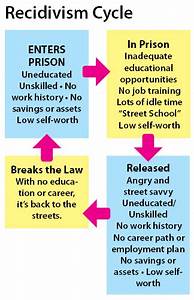
Those who get caught for a crime are trapped in a circle of arrest, incarceration, bail, parole, non-payment of fines, re-arrest, more incarceration, more unpaid fines, and re-arrest.
This systematic recycling of arrest and release is maddening and disturbing to reader/listeners of Goffman’s book. On the one hand you have people committing crimes against other people and on the other you have law enforcement doing its duty to reduce crime.
This disturbing picture with “no exit” is accompanied by physical restraint, twisted arms, and face plants on pavement, bare floors, and carpet that reinforces fear and hate between police and the public.
Most Americans do not see this cycle of madness. Those within the madness see it only as a way of life. To political conservative and liberals, the answer is law enforcement, education, and job creation. To a low-income/no-income neighborhood boy or girl, law enforcement is a recycling dead end, and education, or legal employment are either not available or poorly provided.
All that is remaining in these neighborhoods seems to be personal relationships. Mother’s love their children, fathers are in jail or on probation, boys have guarded relationships with everyone and no one, girls are left to look after the next companion that offers escape from loneliness.
Goffman offers a dismal picture of life in big city poor neighborhoods that recycle themselves with little hope for those seeking a better life.
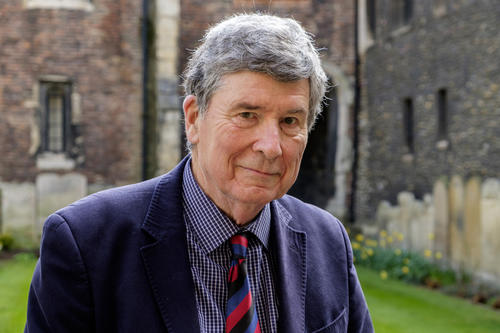
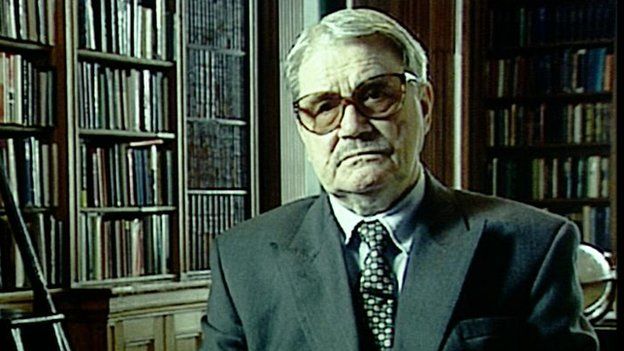
Christopher Andrew (British Author, 80 years old, Professor at Cambridge University.) Photography by Jason Bye t: 07966 173 930 Vassilli Mitrokhin (1922-2004, Former Major and Senior Archivist for the U.S.S.R. KGB)
Only historians and former secret service agents are likely to be enraptured by “The Sword and The Shield”. The book is based on a detailed record kept by Vassilli Mitrokhin when he served as major and senior archivist for the Soviet Union’s foreign intelligence service. To a generalist, Mitrokhin’s detailed naming of names is mind numbing.
Later chapters are more interesting than earlier chapters of “The Sword and The Shield” because they reveal details about motivation, interpretation, and consequence of spying during the cold war that have application to today’s American and Russian secret service.
However, cost is of little concern to a national government that believes international intelligence service is critical to its survival. Modern Russia is as beholding to its intelligence service today as it was when Joseph Stalin ruled the U.S.S.R. It is suggested by the authors that Stalin successfully prepared for a hegemonic agreement (resisted by Churchill) at the end of WWII with the help of intelligence gathered by Russian spies about FDR’s secretly held intensions. There is little reason to believe Putin thinks any differently about secret intelligence on American Presidents with whom he deals. Putin, like Stalin, undoubtedly uses the Russian secret service to spy on personal beliefs and activities of America’s presidents, or as many suggest, imprison or murder Russian dissidents.
Based on current events and this book, an argument may be made that human and material cost of an American intelligence service is necessary because of Russia’s driven intent to remain a world power by any means necessary. In this era of nationalism, it seems unlikely Russia will ever become another union of independent eastern block nations. However, Russia intends to strengthen its position as a world power regardless of other nation’s concerns or interventions.
Despite Russia’s drive to maintain world power–to paraphrase Martin Luther King’s optimism “The arc of history and the moral universe is long, but it bends toward justice.”
Some argue we are entering a second cold war today. The questions is can we learn anything from secret service failures of the first cold war. “The Sword and The Shield” details past successes and failures. The final chapter reflects on the power of intelligence service to influence the course of history. Today’s surveillance technology certainly magnifies the power of secret intelligence services. The question is–do today’s American and Russian secret services improve results or magnify mistakes?
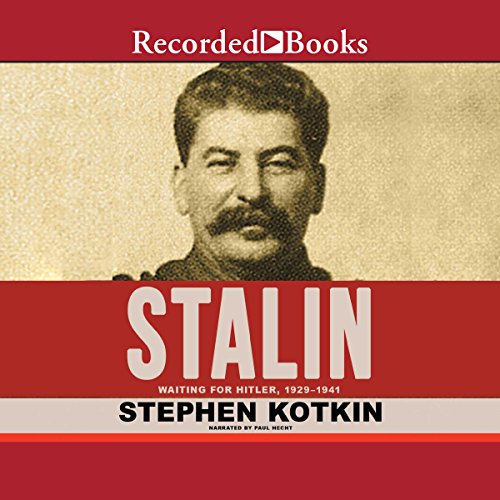
Details of “The Sword and Shield” show paranoia, as well as realpolitik, led Stalin to create a network of spies.
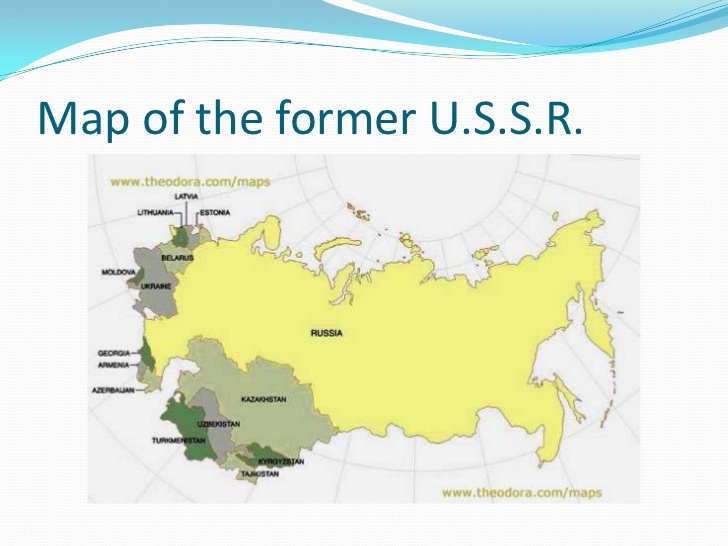
Stalin’s spy network’s duty is to reveal secrets held by the west and then bend public opinion to the will of Stalinist communism with the goal of expanding and controlling Socialist Republics within the U.S.S.R.
The authors suggest Stalin’s paranoia leads him to believe all western nations and some leaders within the Soviet Bloc are in league to destroy or weaken his regime. Churchill’s iron curtain speech confirms some elements of Stalin’s beliefs. The authors note that classified foreign documents provided by Stalin’s network of spies is interpreted in ways that lead Stalin to imprison or murder many of his own citizens. Stalin’s successful use of that information is evident in the brutality of his regime and his survival until death from a presumed heart attack.
The Stalinist Soviet Union perseveres at the expense of many innocent people. The author’s infer U.S.S.R. citizens appear to respect Stalin but fear imprisonment or murder by their paranoid leader. One wonders if Putin’s regime drinks from the same poisonous cup.
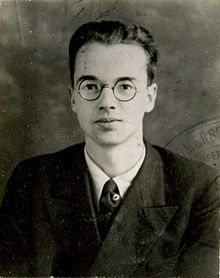
Andree/Mitrokhin’s history of the U.S.S.R.’s acquisition of the atom bomb reveals Americans and Brits who willingly provide classified documents that give Joseph Stalin plans for development of an atomic bomb. The totalitarian Stalinist’ State steals English and American secrets by seducing scientists like Klaus Fuchs with propaganda that distorts and glorifies Stalinist communism. If political persuasion did not work, Stalinist’ money is offered to both American and British scientists, political officials, and citizens to acquire government, science, personal, and social secrets.
In listening to “The Sword and The Shield” it seems western economies are at the forefront of most initial scientific discoveries because of relative human freedom. No amount of secret surveillance defeats human nature whether one lives in a democratic or totalitarian state. Every nation has dissidents willing to betray their countries.
Putin once said on a “60 Minutes” interview–what he admired most about America is its innovation without seeming to understand that the heart of innovation is freedom.
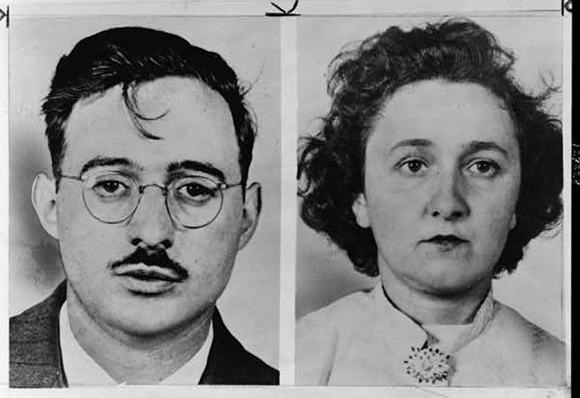
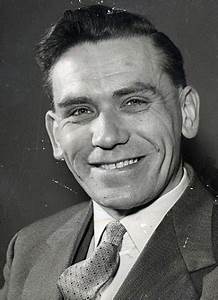
On the democratic side, Americans like the Rosenberg’s, and Aldrich Ames, became tools of the U.S.S.R. The Rosenberg’s reveal American nuclear research secrets, and Aldrich Ames offers the names of CIA agents to the U.S.S.R. In England, Klaus Fuchs, Ray Mawbey, and the Cambridge Five (including Guy Burgess, Kim Philby, Donald McClain, Anthony Blunt, and John Cairncross) feed critical science and intelligence information to the KGB. During WWII, a Latin-American double agent, Juan Garcia, uses false reports to mislead Germany on the D Day invasion by Allied forces.
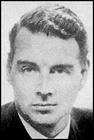
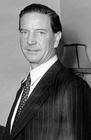
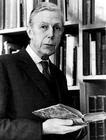
Rosenberg’s executed by the U.S. for Russian EspionageAldrich Ames (American charged with espionage, imprisoned without parole.)Klaus Fuchs (English Scientist who revealed secrets of the atom bomb to the U.S.S.R.)Ray Mawbey (1922-1990. British Member of Parliament who was in the pay of the U.S.S.R.)Guy Burgess (1911-1963, Part of the Cambridge 5)Kim Philby (1912-1988, Cambridge 5)Donald Maclean (1913-1983, Cambridge 5)Anthony Blunt (1907-1983, Cambridge 5John Cairncross (1913-1995, Cambridge 5)
On the totalitarian side, the co-author of this book betrays his own country by revealing the names of the U.S.S.R’s secret service actors and their nefarious activities. Mitrokhin also notes the betrayal of Russian electronic engineer, Adolph Tolkachev, who reveals secret military capabilities of the U.S.S.R. to the CIA.
Adolf Tolkachev (1927-1986, CIA agent working in the U.S.S.R.)
This history of the KGB shows the dissemination of science is a force unto itself. No amount of secret service effort is shown by Mitrokhin to protect or retard the advance of world-wide scientific research and understanding. Motives for spies range from patriotism to greed.
Some scientist’s betray their country’s science discoveries for what they believe is a greater good, others betray their country to be paid thousands, sometimes millions, of dollars.
“The Sword and The Shield” shows how both patriots and enemies of the state are equal partners in trading scientific discoveries for either money, power, or prestige. There is the obvious lure of money as evidenced by Ray Mawby who is paid 100 to 400 English pounds for details about English Parliament’ gossip. For money, over a nine-year period, Aldrich Ames is paid nearly $3,000,000 by the Soviet Union for disclosing hundreds of American CIA agents. For power and prestige, “The Sword and The Shield” notes Kim Philby coveted the title of general in the Soviet Union when he escaped England’s arrest for espionage. (Interestingly, Philby is denied the title or the pension that would have gone with it when he arrived in the Soviet Union. Philby died 25 years after defecting to the Soviet Union. Some say he became a disillusioned communist.)
It is more difficult to understand Klaus Fuch’s motivation. He eschewed Russian money. He was a nuclear scientist who seems to have preferred working in obscurity. One presumes he believed in Stalin’s communist propaganda or divulged critical information on the atom bomb to serve what he believed was a “greater good”.
Fuch’s may have revealed the secrets of the atom bomb to preserve balance of power, with the presumption that no rational human being would start a nuclear war.
Much of the last section of this long book recounts the history of Soviet Union’ secret service use of propaganda and misinformation to create turmoil in countries that are opposed to authoritarian communist beliefs. Russian effort at influencing other countries domestic affairs with misinformation and lies is recounted in detail by “The Sword and The Shield”. Attempts to destroy personal reputations, exploit democracy’s failures, and influence domestic elections during the cold war are detailed. America’s recent elections suggest that policy is used by Russian secret intelligence today.
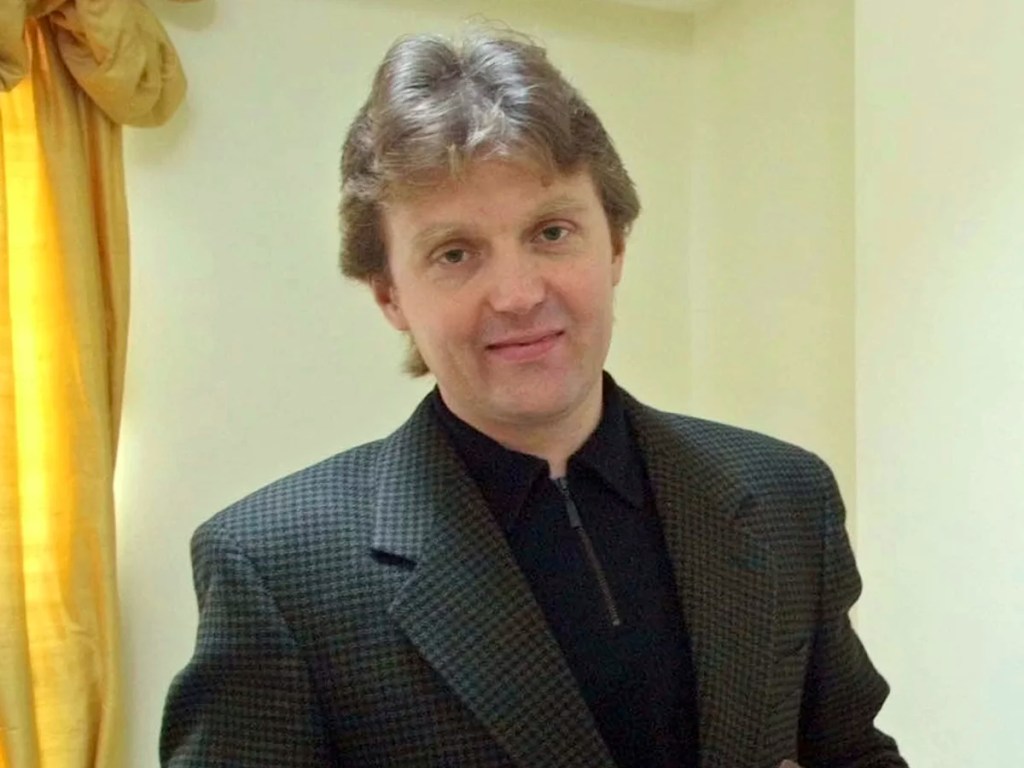
Alexander Litvinenko (Former Russian Intelligence agent accuses Vladmir Putin of ordering his assassination.)
Litvinenko died in London weeks after drinking tea that was later found to have been laced with the deadly radioactive compound polonium-210.
In completion of this tome about the KGB, some will be left with the thought that nothing much has changed. The U.S.S.R. has become Russia, but its leader appears to use the same tactics as Stalin in punishing dissidents. Accusations of murder and false imprisonment by Russia’s spy network continue to be reported in the western press. Western countries continue to employ secret service organizations to undermine non-aligned authoritarian nations. America, like Russia, has been accused of using torture, false imprisonment, and murder to further its political agenda. What “The Sword and The Shield” ends with is a kind of warning.
The dismantling of the U.S.S.R. has left few binding organizational consistencies in governance of its reformation as a nation-state. The one system of governance that has survived the reformation is the Russian secret service. It is no surprise that the longest serving government leader since the collapse of the U.S.S.R. is a former KGB trained officer. Continuity and identity of a modern Russian state lies in its continued use of covert intelligence to retain its status as a world power. The fear accompanying that realization is that secret service thought, action, and consequence is monumentally expanded and improved with the advance of surveillance technology.
Rodney King (1965-2012, died at 57 from accidental drowning.)
Some wonder like Rodney King, who was beaten by Los Angeles police in 1992—when he said: “People, I just want to say, you know, can we all get along? Can we get along?”. The answer lies somewhere in the cloud of surveillance technology.
As history is revealed in “The Sword and The Shield”, secret services imprison and murder the innocent as well as the guilty. With surveillance technology, the power of the sword is exponentially more dangerous.
Lucy Jane Santos (Author, Freelance writer and Historian.)
Lucy Jane Santos recounts the perilous history of radioactivity in “Half Lives”. Her history is not scintillating but offers a lesson in skepticism. Her focus is the “on again, off again” love affair with radon by scientists, doctors, charlatans, and beauty product entrepreneurs. The lesson is relevant in some ways to the Covid19 controversy of this century.
Santos recounts the discovery of radium in the late 19th century and shows how it evolved into the discovery of radiology that revolutionized surgical practice and diagnosis
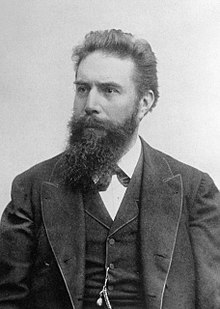
A brighter part of Santos story is the discovery of X-rays (a type of radiation) and the value it gave to diagnosis and repair of internal injuries by providing interior pictures of the human body. The idea came from an accidental discovery by Wilhelm Roentgen in 1895. While testing whether electrons could pass through glass, Roentgen found a green light appeared on black paper which then projected onto a nearby fluorescent screen. These electrons are the essence of what became known as radiation.
Wilhem Roentgen (Scientist who discovered x-rays, received Nobel Prize in Physics 1901)
Marie Curie, a chemist and physicist, discovered two new periodic table’ elements, radon, and polonium in developing a theory of radioactivity. Like Roentgen’s Xray discovery of the dispersal of electrons, Curie found photons may be released from atoms to trans mutate into different elements on the periodic table. Curie received two Nobel Prizes, one in conjunction with her husband Pierre and a physicist named Henri Becquerel, and another on her own. She is the first woman to receive a Nobel Prize and only one of four people who have ever been awarded two Nobel Prizes. (The other three were men—Linus Pauling, John Bardeen, and Frederick Sanger.)
Marie Curie (Scientist, chemist, and physicist, received 2 Nobel Prizes, died at the age of 66.
Santos suggests Curie’s death from radiation poisoning is a myth. She bases that conclusion on an exhumation of Curie’s body to relocate it in France. In the exhumation, no radiation was found in her remains.
These are two positives’ Santos notes in her history of radioactivity. With the discoveries of Roentgen and Curie, radiation is used for diagnosis, surgical care, and treatment for physical injuries and cancer.
However, radioactivity discoveries are misused by many who ignore the negatives of radiation. Prominent businesspeople, some of which are outright charlatans, suggest radiation will cure numerous diseases, can be used as a luminous paint without concern for its impact on health, and should be mixed in elixirs or emoluments for skin repair and beauty treatments. The quest for money, power, and prestige seduces the public into using radiation treatments for unproven, often harmful health and beauty benefits.
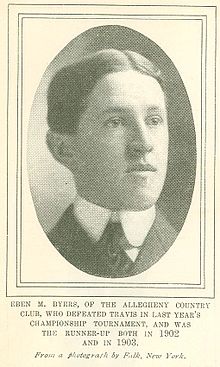
Radioactivity’s early history reveals shortened lives of many who believed radon was a miracle cure. Maybe the most famous is Eben McBurney Byers, a wealthy American socialite, athlete, and industrialist who died in 1932. He was 52 years old.
Byers, at the suggestion of his doctor began drinking a non-prescription liquid called Radithor (radium infused water). The irony of his doctor’s suggestion is that a person who identified himself as a doctor was actually a college drop-out who manufactured and sold Radithor to Byers and other un-suspecting victims.
Upon autopsy, it is found that radium does not dissipate in the body but accumulates in organs and bones. Byers is said to have ingested over 1400 bottles in 3 years. His brain became abscessed with holes forming in his skull. He died on March 31, 1932.
Santos notes the dials of watches were painted to glow in the dark, particularly important during WWI when soldiers needed to coordinate their movements. It was found that the radiated dials were harmful to painters of the dials, but manufacturers denied the correlation until challenged by evidence of many who were physically disfigured or died from their work.
Radium Girls (Women hired to paint watch dials with radium)
Famous beauty product producers in England and France in the 1920s and 30s were promotors of cosmetics infused with Radon. One wonders how many of these misinformed practices are not a proximate cause of cancer increase in the world.
The cosmetic industry grew exponentially after WWI. Radon mixing in emoluments were touted for their ability to increase blood flow to the skin to brighten one’s appearance.
Santos’s story is a warning to humanity. Be skeptical of cures that purport to be safe and beneficial, and review facts available from reputable sources. Today’s vaccination for Covid19 is a case in point. The facts are that over 650,000 Americans have died from Covid19. Those who have received the “jab” are less likely to die if they are infected by the virus. The virus is transmitted from person to person and can be mitigated by wearing a mask. Consider the source of those who promote or deny those facts. When facts are distorted by politics, we only have ourselves to blame. Humans need to be skeptical but not ignorant.
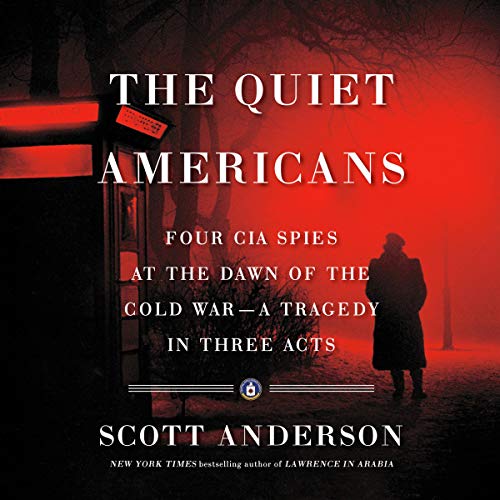
The Quiet Americans: Four CIA Spies at the Dawn of the Cold War-A Tragedy in Three Acts
By: Scott Anderson
Narrated by : Robertson Dean, Scott Anderson
Scott Anderson (Author)
“The Quiet Americans” is an investigative reporter’s view of the American spy service. It is written by a veteran war correspondent and son of a former foreign aid officer. The author, Scott Anderson, is raised in East Asia. He reviews America’s spy network during and after WWII.
The American independent spy agency is formed after WWII to provide intelligence on growing clandestine activities of the U.S.S.R. The author notes there were intelligence operations during WWII, but they were not independent. During the war, Intelligence services were defined and executed by the military. It is only after WWII that an independent branch is formed along the lines of British intelligence.
In Anderson’s opinion, President Harry Truman is an inept manager of the nascent American intelligence service.
There are several surprising facts and interpretations of history compiled by Anderson. Kennan is characterized as a great diplomatic analyst, but capable of lying to protect his reputation.
George Kennan is viewed as an influential diplomat in the creation of what becomes known as the Central Intelligence Agency.
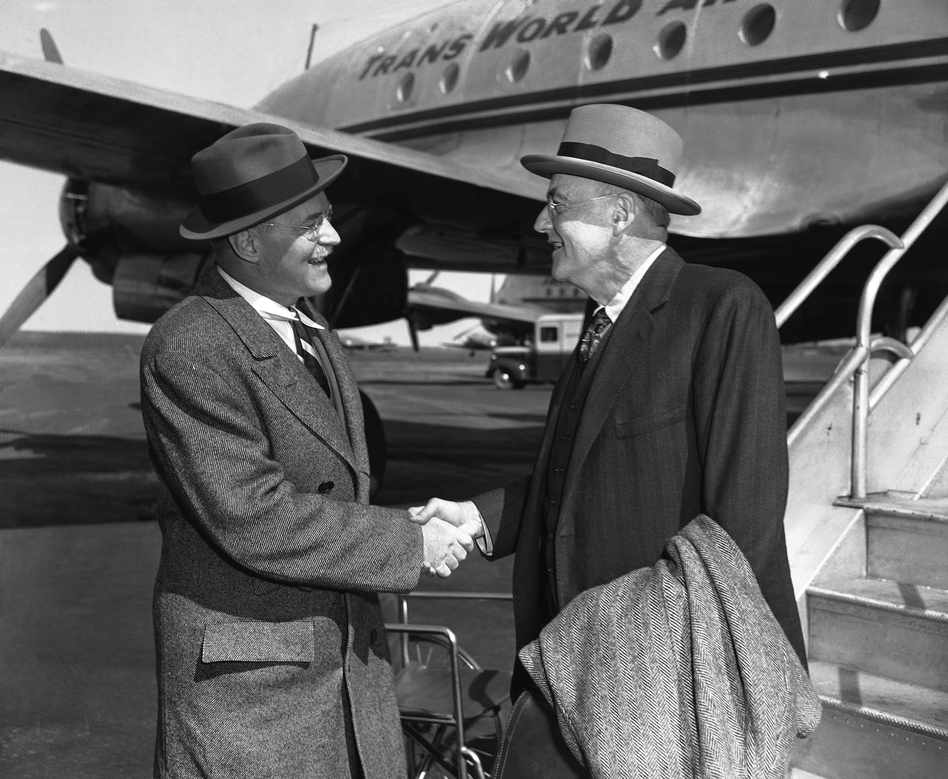
The Dulles brothers solidify the role of the CIA in American clandestine operations in the world. Their modus vivendi for CIA operations prevails today. Their intent is to have an agreement allowing conflicting parties to coexist peacefully. However, Anderson shows their action belies their intent.
Dulles Brothers (John Foster on the right, Allen on the left.)
Parenthetically, as an example of Stalinist ideology, Anderson notes Adolph Hitler’s remains were not found in a burned bunker in which Hitler is alleged to have committed suicide. His burned remains were secreted by Joseph Stalin and placed in an archive in the U.S.S.R. Stalin’s motive for secrecy is unknown.
An independent spy agency is initially opposed by Truman, and perennially opposed by FBI Director Hoover.
J. Edgar Hoover–Director of the FBI from 1924 to 1972. (Died in May of 1972 at the age of 77)
Anderson notes Ambassador Kennan’s prescient analysis (the long memorandum) reflects the duplicitous nature of Joseph Stalin. Kennan recommends a surreptitious and aggressive American containment policy enacted through the practice of espionage. Kennan plays an important role in the formation of the American Intelligence service. The first director of this operation is a close friend of Kennan’s, a man named Frank Wisner.
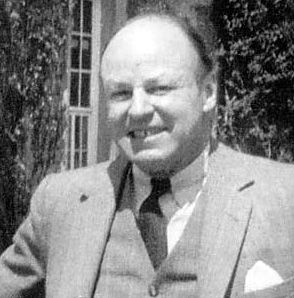
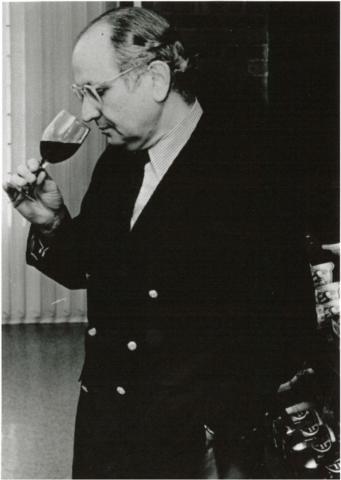
“The Quiet Americans” Anderson profiles are Edmund Michael Burke, Frank Wisner, Peter Sichel, and Edward Lansdale. In their stories, Anderson reveals the beginnings of the CIA and a history of minor espionage successes and significant failures. In the back of a listener’s mind is the consequence of American espionage—their cost in human lives and dollars, and American truths about what measures are taken to presumably secure freedom and equality in other countries.
Edmund Michael Burke (1916-1987, O.S.S. Agent, manager of Ringling Bros. Circus, Pres. of NY Yankees, and the NY Nicks.)Frank Gardiner Wisner (1909-1965, Head of the Directorate of Plans of the CIA in the 1950s.)Peter Sichel (German American wine merchant, former operative of the US secret service.)Edward Lansdale (1908-1987, US Army and USAF officer, served WWII and Vietnam, CIA operative in the Philippines and Vietnam, specializing in psychological warfare.)
This is not a pretty picture. American efforts to change the world for the better through covert action is shown to be, at best, questionable, and at worst horribly misguided. As an American, it seems clear that most covert activity is meant to do good but the definition of good is distorted by human nature.
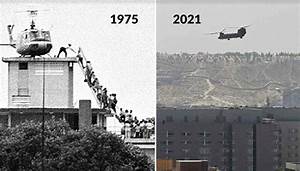
America’s departure from Vietnam and AfghanistanExecution in VietnamExecution in Afghanistan
America’s role in Albania, Vietnam, Iraq, and Afghanistan raises the hopes of many but at a cost of too many lives and dollars. Hope of many of these country’s citizens becomes despair. How many lives and dollars could have been saved and repurposed for freedom and equality, rather than destruction of cultural difference. What Anderson makes clear is that national purpose (American or other) is distorted when it is undisclosed because human beings are seduced by self-interest, whether that interest is money, power, and/or prestige.
Government disclosure offers visibility to the public. Disclosure offers opportunity for public influence on government policy. America prides itself on being a government of, and by the people–through popularly elected representatives. Covert government action that is undisclosed to elected representatives gives no opportunity for citizens to influence government policy.
The idea of full disclosure discounts poor intelligence like that given about “weapons of mass destruction” that compelled America to invade Iraq and depose Saddam Hussein. False disclosure by American intelligence misled both citizens and elected officials about what America should do in Iraq.
Dulles Brothers (John Foster on the right, Allen on the left.)
Anderson’s exposure of John Foster Dulles’s tenure as Secretary of State and his brother Allen, as the fifth CIA Director, exemplifies the worst characteristics of covert activities without oversight by elected representatives.
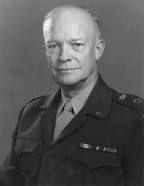
To Anderson, the course of the U.S.S.R. and American relationship may have been entirely different if the Dulles’s had not run Eisenhower down the wrong diplomatic road. It is impossible to judge what may have happened if a different course had been taken, but Anderson infers the Dulles’ Road led to years of lost opportunity. On the other hand, hindsight is always more perfect than foresight.
Anderson’s view is America’s opportunity to change the course of history after Stalin’s death is lost because of Dwight Eisenhower’s actions based on the Dulles brother’s political influence.
Though Burke, Wisner, Sichel, and Lansdale are great patriots, Anderson implies their patriotism and actions often failed to serve American ideals.
Burke’s extraordinary life led him to Italy, Albania, and Germany. He served his country by trying to save Albania from communism, and Germany from further encroachment by the U.S.S.R. At best, his success is limited to non-existent. Albania remained in the fold of communism and success in Germany is the split of Berlin from the eastern block at the expense of food deliveries by air and an agreed upon East and West Berlin.
Wisner kept the light on for covert operations of what became the CIA but failed to get the top job or temper the excesses of secret operations.
Sichel survives them all but appears to compromise a principle of not using bad actors who participated in the holocaust that murdered over 6,000,000 Jews and Nazi resistors.
And finally Wisner, who manages to gain the trust of Philippine and Vietnamese leaders, many of which America abandons by leaving them to fend for themselves.
Trapped, as all humans are, by the times in which they live, they were the instruments of many wasted lives. How many people must die because of undisclosed covert Intelligence operations?
Listening to “The Quiet Americans” makes one understand how important freedom of the press is to America.
Americans must lead by example, not by covert action. More recent episodes in Iran, Iraq, and Afghanistan show America continues to ignore history’s lessons.
David Rock (Author, business consultant, received a doctorate in the Neuroscience of Leadership from Middlesex University in the UK)
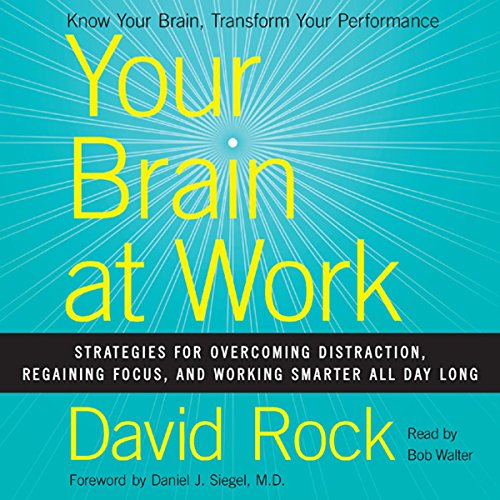
“Your Brain at Work” was originally released 2009 and revised in 2020. This review is based on the 2009 edition. David Rock is a business-management consultant and co-founder of an institute called NeuroLeadership Institute. Rock brings together neuroscientists and leadership experts to reveal works of the human brain that improve business management skills.
MAPPING THE BRAIN Rock suggests the mind is an imprecise memory machine that can be trained to improve thought and action of managers.
What Rock suggests is that human neurological activity is at the heart of effective business management. The expressed objective of Rock’s recommendations is to produce more effective and efficient businesses. His method for explaining this process is a case study of a husband and wife who represent two kinds of managers. One is a self-employed, and cybernetic systems designer. The other is a mid-level manager, recently promoted to manage a business division.
The first manager is a solely-owned business entrepreneur. The second is a division manager within a larger business. The first is a line manager. The second is a staff manager.
Rock shows there are crossovers in their management skills but their goals are different. Though Rock does not mention it, the first person’s job is zero-sum with profit as a measure of success. The second manager is within a larger organization where effectiveness and efficiency, rather than profit, are measures of success. Both are intent on being good managers but profits are of incidental importance to a staff manager. Both managers desire positive results. Rock suggests both can train their minds to use similar management methods to achieve their different business objectives.
Rock argues that both managers must better understand how their minds work to mitigate bad business decisions.
There are an estimated 100 million cortical columns in the neo-cortex that transmit information to different parts of the brain through neurons in each column.
The example Rock gives for the entrepreneur is in the sales pitch and planning for automating billing and sales for 200 stores. The entrepreneur is given an opportunity to bid a job that requires cybernetic and management skill. The entrepreneur has done similar jobs but none quite as large as this one.
In a first meeting with the customer, the entrepreneur is not mindfully prepared.
When the request for bid is received, the entrepreneur underestimates the complexity of the proposal. The entrepreneur rushes to prepare a proposal after procrastinating for 4 days with only 30 minutes left to complete a proposal before meeting with the buyers. In the rush, the entrepreneur runs into printer problems, typos, and miscellaneous minor problems that conflict with mindfulness required to complete and present the proposal.
Rock goes into the mechanics of thought to explain how stressors distort self-awareness and make one lose sight of reasoned performance.
The entrepreneur is nearly late for the meeting which is another stressor that affects the sales presentation. When the customer asks if a deadline can be met, the entrepreneur hesitates because of the stressors accompanying lack of mindful preparation. The entrepreneur’s thoughts are momentarily derailed because of an inability to recall a former memory, a similar client experience that had a tight deadline that the entrepreneur met.
The entrepreneur’s thoughts and actions did not come from quiet self-understanding but from fear of losing a sale. Rock introduces the idea of a mind’s “director” that tells one to relax and remember relevant experiences that give confidence to sellers and measured acceptance by buyers. Rock emphasizes the importance of mind preparation before arriving at an important meeting. He goes on to explain how to train one’s mind to be calm to thoughtfully review what is laying dormant in one’s recollections. A good manager should practice mindfulness.
A similar story is created for the newly promoted staff manager. Many people in this newly formed division were fellow workers of this newly promoted manager.
The promoted manager has ideas based on personal knowledge of some of the employees about who should get particular jobs to make the new project a success. With little self-reflection, the promoted manager assigns a job to one of the employees without preparing everyone for their new roles.
Rock suggests first meetings should be designed to allow people to reacquaint themselves with each other in a new management arrangement. He suggests letting the flow of reacquaintance influence job assignment for productivity of the team.
Though the promoted manager may have made a good decision based on previous experience with someone who is now a subordinate, the decision creates unnecessary conflict between aspirational division employees.
Rock argues that the mind’s “director” can be trained to interrupt bad decisions through contemplation of prior experience, and a period of mindfulness can lead a team of people to become more comfortable with their roles in the company’s management change.
Rock goes on to explain the importance of social connection and how status needs to become a constant presence in a manager’s mind when steering a team toward a corporate goal.
The author uses the stories of two managers showing how failure to recognize the role of social contact and status can threaten success.
Much of what Rock explains is summarized by the ancient phrase “know thy measure” (more colloquially known as “know thyself”). Regardless of one’s status in a company or in life, a better understanding of oneself is at the core of human success and failure. Rock’s point is that successful managers develop their inner “director” with mindfulness (“Your Brain at Work”) as a guide to what the author argues is a predetermined future.
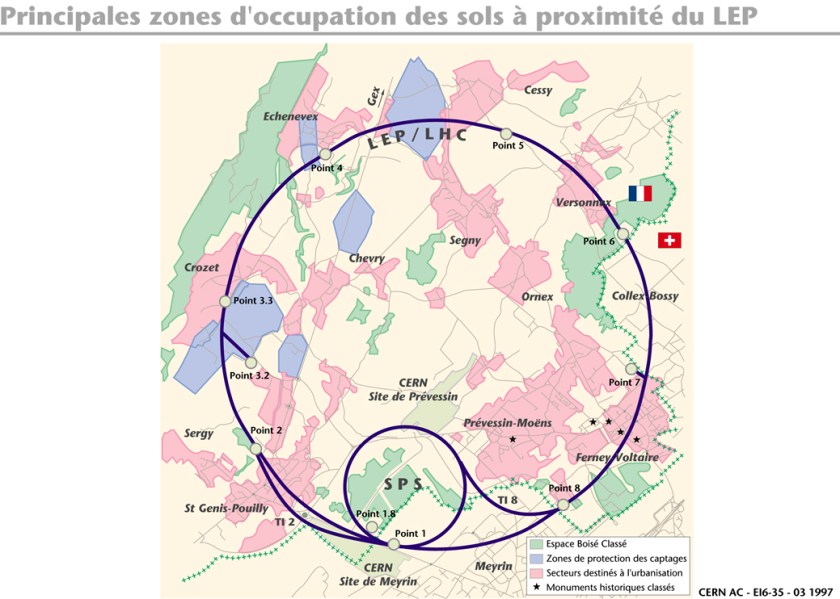
It’s difficult to believe but it has been nine years since the Higgs Boson particle was discovered. The Large Hadron Collider (LHC) in Cern, Switzerland bombarded atoms with protons to reveal a new fundamental particle of atoms known as Higgs Boson.
Alex Boyles offers an excellent narration of several “Scientific American” articles written by scientists about the significance and limitations of the Higgs Boson’ discovery.
Higgs Boson is an elementary particle produced by excitation in what is called the Higg’s field. It is a particle that decays into other particles which makes it difficult to identify. It was theorized by Peter Higgs with five other scientists in 1964. It is a particle that gives mass to what we see in the world. One of the articles cited in this narration suggests the particle that was discovered had less weight than was expected which led to speculation that another, different Higgs Boson, will be found in the future.
As of this date, though many particles have been seen, no new elementary particles have been confirmed by an improved higher velocity LHC at Cern, Switzerland.
One broad category of scientists is defined as reductionist. Scientist’s pursuit of fundamental particles of atoms like the Higgs Boson falls into the reductionist scientist’ category. This category of scientists believes the door to a better understanding of physics can only be opened with the use of fundamental particles in experiments that reliably predict the same results.
Reductionist’ thought is that more fundamental particle discovery will provide an experimental base upon which a provable “theory of everything” can be developed.
Albert Einstein, and other scientists, offer many scientific theories that have been proven by reproducible experiments, either later in their lives or after their deaths.
Without discovery of the fundamental particles of nature, reductionists argue it is impossible to create repeatable experimental results. They believe repeatable experimental results are the heart of truth. However, reproducible experiment is no guarantee of truth. There is the threat of science bias to confirm theories. There is error in experimental set-up. There is the lure of money, power, and prestige of science experimenters that deny or confirm test results.
However, whether denied or confirmed, reproducible experimental results give weight to knowledge, if not absolute truth.
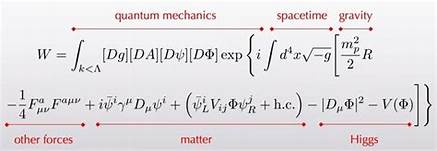
Einstein’s E=mc2 theorized energy and mass are equivalent. The theory is proven by experimentally repeatable destruction by atomic bomb detonations. To discover a “theory of everything” requires proof. Einstein unsuccessfully searched for a “theory of everything” to the end of his life. He theorized there is a “theory of everything”, but he never discovers why quantum mechanics, and the principle of gravity would not fit into a predictable equation like E=mc2.
Einstein believed quantum mechanics and gravity did not fit because of undiscovered knowledge. He dies believing a natural law would be discovered that gave certainty, rather than quantum probability, to natural events.
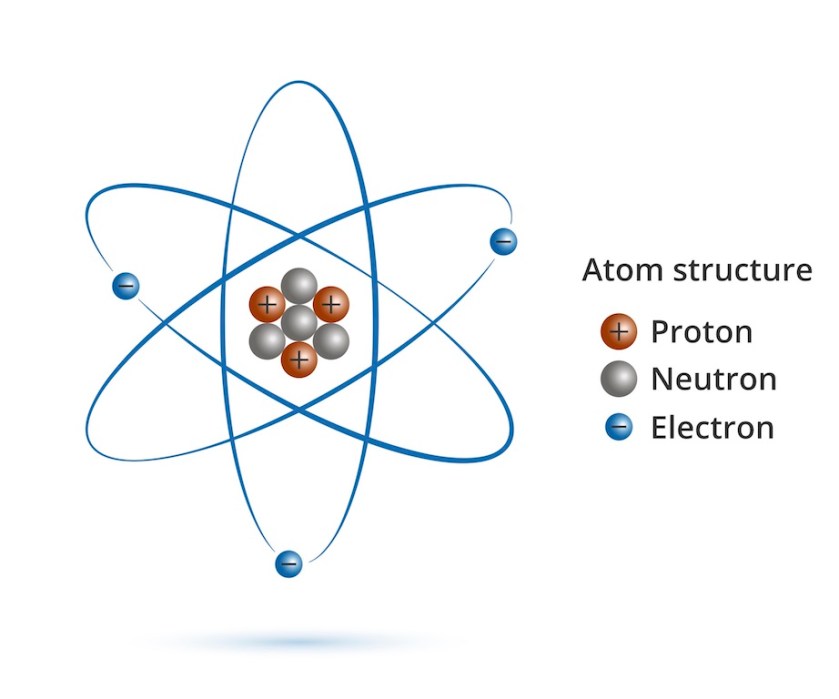
To science reductionists, the answer lies in understanding the fundamental particles of nature and how they relate to each other. However, not all scientists are reductionists. Some suggest the atom and its electrons, protons, and neutrons are all that is needed to pursue the fundamental laws of nature. Some scientists suggest understanding atoms has little to do with understanding nature. To these scientists, Higgs Bosun is of little consequence.
A “theory of everything” is presumably something all scientists are interested in, but their theories range from invention by mind, to the thermodynamics of entropy, to God.
What seems relevant in listening to these “Scientific American” articles is –Different ways of looking for the truth is critical to the future of humanity. To many, pursuit of natural laws by scientists is key to human survival. Whether a science’ reductionist, entropic theorist, believer in God, or philosopher, a provable “theory of everything” offers growth to science and a possible future for humanity.
In “No One is Talking About This”, Patricia Lockwood shows mind is life’s portal to the world.
Every human being perceives the world though their mind. Her book offers three hours of introduction to a mind’s amorphous perception of the world, followed by one hour of clarity. Lockwood writes three hours of “stream of consciousness” to introduce one hour of personal belief in the sanctity of human life.
The author gives listener/readers a point of view about a subject that, contrary to the title of Lockwood’s book, is talked about by everyone.
Nearly everyone is talking about women’s rights. She makes a compelling case for limited women’s rights by telling the story of a pregnant woman that finds she has an unborn baby who is affected by the rare disease of elephantiasis. The unborn baby has a heartbeat but shows the unmistakable growth characteristics of elephantiasis in her mother’s womb. The State in which the mother lives does not allow abortions. Whether the State would allow abortion or not is not the story. The story is the mother’s decision to keep the baby.
In the end, Lockwood’s story implies women’s rights stop at the door of human conception.
Lockwood alludes to many of the trials of having a health compromised baby that will require special care. She notes the high medical costs that a family may incur. However, cost is irrelevant in this story because there is an unbreakable filial bond that sustains parents, grandparents, and siblings of the family. They love this stricken child. Added to that bond is religion. In their minds eye (the portal) the thought and action of abortion is inconceivable.
In some families, there is an unbreakable filial bond that sustains parents, grandparents, and siblings.
“No One is Talking About This” is a compelling argument against abortion. The flaw in Kisten Seih’s argument is it is one family’s point of view. Lockwood implies it is God’s commandment to preserve life. However, what if God is a manifestation of mind-not the creator and ruler of the universe? It becomes a question of faith to a believer but a case of reason to an agnostic.
Some suggest, God is nature, a complex manifestation of a physical world. The argument for “a right to abortion” is a singular choice by humans which are a part of the mind’s perceived physical world. “A right to abortion” rests with humans (a part of nature) who believe women should have a choice.
The argument for “a right to abortion” is conceived by some as a singular choice by humans which are a part of nature which, in their mind, is God.
Making Sense: Conversations on Consciousness, Morality, and the Future of Humanity
By: Sam Harris
Narrated by : Sam Harris, David Chalmers, David Deutsch, Anil Seth, Thomas Metzinger, Timothy Snyder, Glenn C. Loury, Robert Sapolsky, Daniel Kahneman, Nick Bostrom, David Krakauer, Max Tegmark.
Sam Harris (American author, philosopher, neuroscientist, and podcast host.)
This audio presentation is a series of podcast interviews by Sam Harris of some remarkable students of humanity. They discuss the meaning of morality, consciousness, and the future. Listeners will come away with a degree of wonder, appreciation, and hopefully understanding of what these men (sadly no women) say about human intelligence, A.I., and the future.
David Chalmers (Australian philosopher and cognitive scientist.)David Deutsch (British physicist, Professor in the Department of Atomic and Laser Physics at Oxford.)Anil Seth (British professor of Cognitive and Computational Neuroscience at the University of Sussex.)Thomas Metzinger (German philosopher, professor of theoretical philosophy.)Timothy Snyder (American author, Professor of History at Yale.)Glenn Loury (American author, economist, Professor of Economics at Harvard.)Robert Sapolsky (American author, neuroendocrinology researcher, Professor of Neurology at Stanford.)Daniel Kahneman (Israeli-American author, psychologist, and economist._Nick Bostrom (Swedish philosopher at University of Oxford, author.)David Krakauer (American evoluttionary biologist, President of Complex Systems at the Santa Fe Institute.)Max Tegmark (Swedish-American physicist, cosmologist, and machine learning researcher, MIT professor.)Sam Harris
Three explained points of view can be taken to work tomorrow morning–1) Human intelligence is not adequately represented by I.Q. tests. 2) Interviews of prospective candidates for a job will not tell an employer how well a prospective candidate will do his/her job. 3) Machines can be programed to be more efficient and less error prone than humans in the production of goods and services.
Less immediate but more consequential points of view are–A) The advance of artificial intelligence has potential for both good and evil, a secular rather than religious morality to these scientists. B) Leadership in A.I. is critical to the future of humanity. C) The future of work is indeterminate but is based on the physics of existence.
1) Intelligence comes from a brain gathering information and experience and using that gathering to provide order to thought nd action. An I.Q. number is a measurement with limited insight to one’s ordered thoughts and actions.
1– Human intelligence is not adequately represented by I.Q. tests. 2– Interviews of prospective candidates for a job will not tell an employer how well a prospective candidate will do his/her job.
2) Job applicant interviews tells little about a candidate’s ability to think and act based on the needs of a job. Experience in similar jobs is of some value but interviews only reinforce an interviewer’s prejudices and biases.
3) Machines can be programed to be more efficient and less error prone than humans in the production of goods and services.
A) Intelligence comes from sentient life gathering information and experience to inform thought and action. A.I. designed to only act without thought is not intelligent. It is simply software for a machine designed to perform a task, like vacuuming the floor, turning a lathe, or assembling an automobile. Intelligence in those performances only come from human supervisors. The only good or evil in that circumstance is from the human supervisor.
The advance of artificial intelligence has potential for both good and evil.
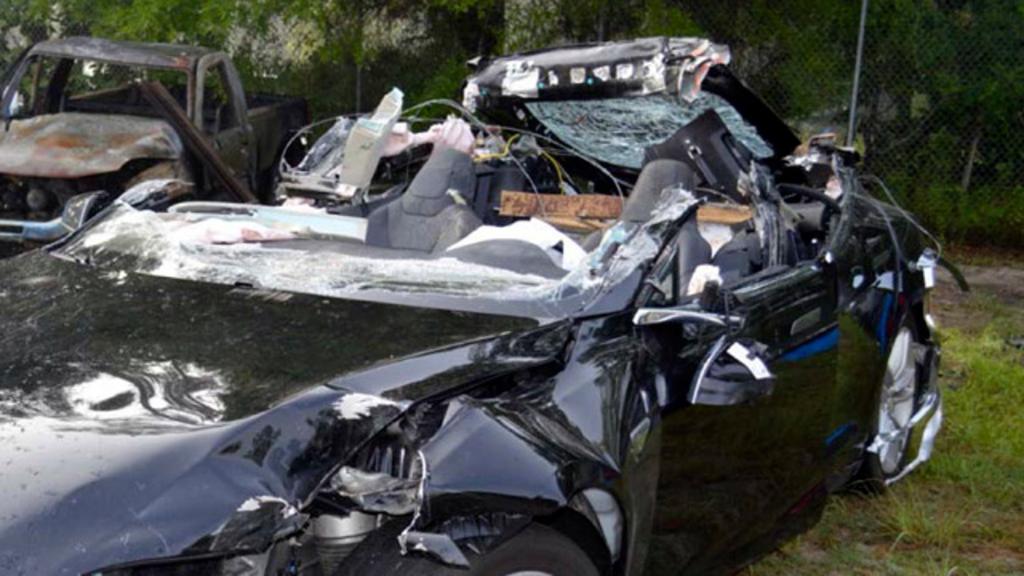
In contrast, when a machine is programmed to gather all information available in its environment and acts in accordance with that environment, it begins to reach beyond the intelligence of human control. A machine acquires some level of control over its own thought and action. The consequence can be death in the case of a car driven by A.I. On the other hand, accidents also occur with human drivers. What is the difference?
Self Driving Tesla car wreck causing a deadly crash.
The difference is that true A.I. will learn from past incidents and self-correct. This is a first step to creation of thought and action for intelligent machines. In the short term, in the case of automobiles, it benefits society by having fewer accidents. In the long term, software programing that gathers information and acts, independent of humans, may give rise to a conscious “self” in machines that could replicate themselves to the point of a kind of evolution that mirrors human nature’s gene replication. Neither the private nor public sector is adequately investing in safety when new A.I. products are created.
Expressed concern in these interviews is that little is being spent by either the private or public sector to design safety into software development. The evidence of that failure is criminal hacking. Not enough investment is made to secure private information when proprietary information or software is stolen and/or modified by criminals.
There is a brief allusion to the idea of melding man and machine but no discussion of the ramification of a machine equipped with human emotion. Humans have historically killed each other. That ability may only be enhanced by melding a human brain with a machine. The black box of consciousness and the mechanics of consciousness are not revealed in these interviews.
It appears these podcast interviews were either prior to the idea of cortical columns in the brain noted by Jeff Hawkins (a neuroscience engineer) who wrote “The Thousand Brains”. Or, the scientists who are interviewed by Harris do not believe Hawkins’ experimental proof is convincing.
An optimistic view struck by Max Tegmark suggests there is potential for abundance created through development of A.I. Humans have squandered much of the world’s resources that could be better managed by A.I. The need for human work could be exchanged for life’s enjoyment if A.I. were safely employed to balance human life with natural resources of the world.
B) A.I. leadership is at a critical juncture. Software development needs to include more investment in transparency and safety. Boundaries must be defined and established to mitigate potential for conflict between human intelligence and machine intelligence. There is a human as well as machine threat of authoritarianism without investment in software transparency and boundary imposition.
C) History shows the future is indeterminate. The hope is that human thought and action will mitigate Luddite-like resistance to the productive potential of A.I. Leadership knowledge and experience when an evolving technology requires equal investment in transparency and safety in the growth of A.I. Without leadership, the potential for a dystopian future, wrought by technology and the fundamental physics of life, becomes as likely as its opposite.
Leadership in A.I. is critical to the future of humanity.
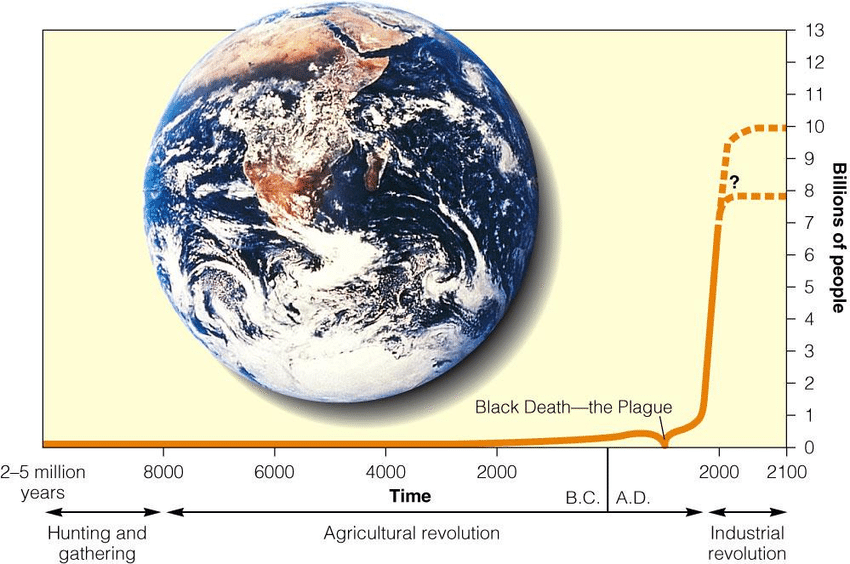
Future prediction is an oxymoron, as evidenced by the history of change in agriculture and the industrial revolution. No one can reliably foresee the impact of A.I. on humanity. The future of A.I. is like God to Kierkegaard, humanity waits with fear and trembling.
This is only a cursory and inadequate review of Harris’s fascinating interviews of fellow scientists.
The Wizard and the Prophet: Two Remarkable Scientists and Their Dueling Visions to Shape Tomorrow’s World
By: Charles C. Mann
Narrated by : Bronson Pinchot
Charles C. Mann (Author, journalist, contributing editor fo Science, The Atlantic Monthly, and Wired.)
“The Wizard and the Prophet” is a cogent analysis of an environmental fork in the road. Charles Mann chooses two twentieth century scientists to represent this fork in the road. One road is to limit economic growth by conserving the environment. The other advocates economic growth by using technology to ameliorate environmental resource diminution and degradation. Both Mann’s scientists are advocating preservation of human life.
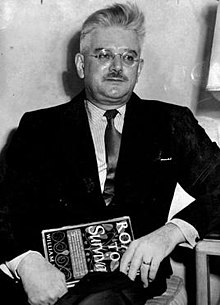
William Vogt (1902-1968, zoologist, ornithologist, and environmentalist.)
Norman Borlaug (1914-2009, Nobel Peace Prize winner, agronomist.)
Mann’s detailed history of the two representatives of conservation and amelioration of natural resources are, at times, tedious and unrewarding. The prophet Mann chooses is William Vogt. He is a prophet because he predicts environmental catastrophe from humanity’s overuse of natural resources. The wizard is Norman Borlaug who uses science to improve agricultural production.
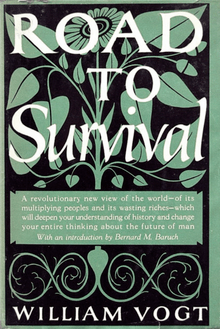
Vogt is famous for writing the best-seller “Road to Survival”. Borlaug is famous for culturing a wheat variety that saves millions of people from starvation.
Mann recalls Borlaug’s research and seed hybridization that hugely increases wheat productivity in Mexico and throughout the farming world.
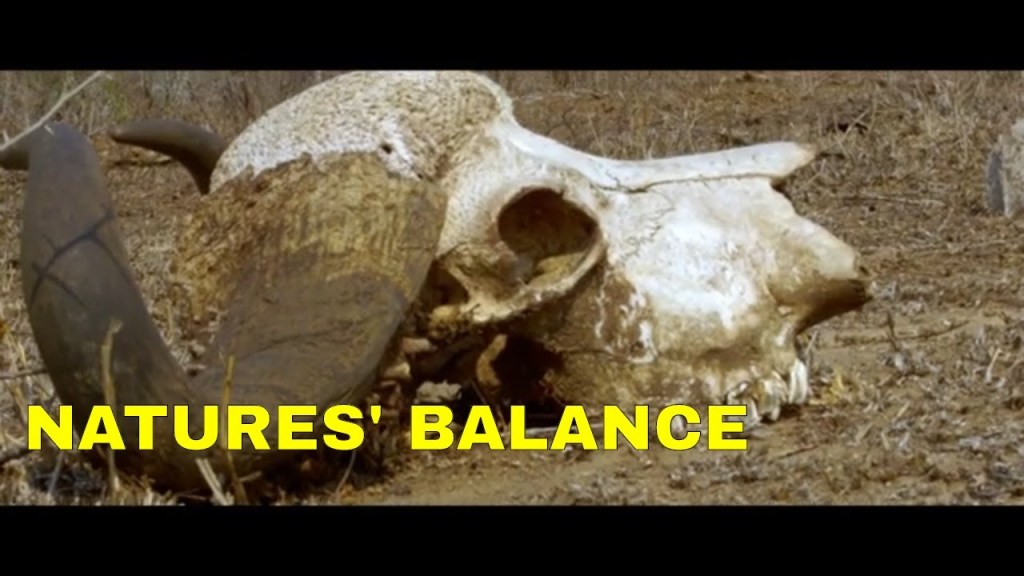
In listening to “The Wizard and the Prophet”, the fundamental difference between these two protagonists is Vogt believes less is more while Borlaug believes more is better because it improves the quality of life for current generations. Both agree nature seeks balance, but one chooses conservation through science while the other chooses technological innovation.
In their differences of opinion, Mann suggest both men believe nature’s balance can only be achieved by an either/or, not a common, proposition. To Vogt, balance of nature requires living within one’s environment without upsetting nature’s balance. Mann explains how Vogt and others explain human overpopulation is a principle cause of nature’s imbalance. Mann recalls Vogt’s history of telling nation-state leaders that humans should not deplete natural resources or interrupt natural process because imbalance of nature threatens human existence. In contrast, Borlaug, believes nature’s balance can be maintained through technology. The inference from Borlaug is that nature will rebalance on its own if resources are depleted or natural processes are interrupted. Borlaug argues use of resources benefits people who will have a better life, while innovation can and will re-balance nature’s depletion and process.
Population growth is a clear and present danger. Mann argues life is a cycle.
What Mann shows as weaknesses in both visions of the environment is that nature’s balance is a moving target. Neither conservation nor technology assures humanity’s future. Mann recounts experimental speculation that reaches back to the 4th century BC. All living species follow an “S curve”. (It’s not an “S” but that is what it is called.) A new species begins at the bottom, achieves a certain level of success, slows down, and begins recovery, declines again, and then disappears. Presuming humanity follows other animal species that have disappeared over the centuries, so will humans.
Human life has always been ephemeral. Improving children’s lives today at least improves living standards for one more generation. Each generation should focus on the best lives for the next generation. Nature will always be in control of humanity’s destiny in this and other universes.
Mann chooses not to take sides, but it seems clear that whatever the wizards of science can find that improves the lives of today’s generation (wherever humans are on that “S” curve) is better than Vogt’s argument for conservation by any means necessary.
Be a pessimist if you must, be an optimist if you can, or be a realist, and know where we are is who we are.
Jeffrey Hawkins (Author, electrical engineer, neuro-science researcher, business person.)
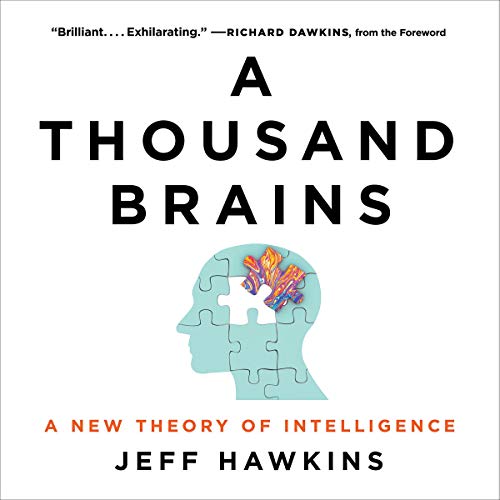
Jeff Hawkins presents an enlightening and, to some, frightening view of humanity’s current condition and future existence.
Enlightenment is in the explanation of how the brain works. Fear is in Hawkins explanation of how human beings make their own choices, with inference that humans have free will.
Jeff Hawkins explains a brain has two fundamental parts. One is a brain stem that extends from the limbic center of the brain. The new part is the neocortex.
The brain stem is the “old brain”, the seat of control for body function, with connection to the limbic mid-brain which contains emotion. The “new brain” is an evolutionary consequence of “old brain” origin. The neocortex surrounds and sits on top of the brain stem and constitutes approximately 70% of the human brain. The neocortex is Jeff Hawkins characterization as a “new brain”.
The remarkable insight of the author is that these two brains are interconnected by cortical columns that give humans superior intelligence. That insight opens the door to consciousness and the possibility of creating a dynamic relationship between man and machine.
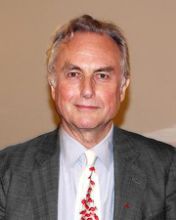
Richard Dawkins, a British evolutionary biologist, writes a laudatory forward to “A Thousand Brains”.
Richard Dawkins comments give listeners clues to the momentous potential of Jeffrey Hawkins experimentally reproducible theory of how the brain works. Richard Dawkins ground-breaking explanation of “The Selfish Gene” explains why Jeff Hawkins theory of “A Thousand Brains” has two fundamental parts, an “old brain” and a “new brain”. Both brains are made up with cells with genes that have a singular purpose. Genes purpose is to genetically replicate themselves. Jeffrey Dawkins implies genes in the cells of the “old brain” came first and the “new brain” came later through natural selection.
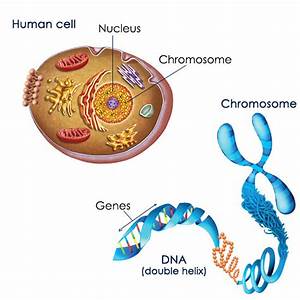
Genes are deeply imbedded in cells, the basic building blocks of life.
Jeff Dawkins argues an old brain is the seat of life sustaining action with direct connection to the mid-brain below the neocortex. To Jeff Dawkins, a new brain is an evolutionary change for humans to reach beyond emotions and action for gene survival. The purpose of survival evolves with interaction between old and new brains to accommodate social change. The new brain recognizes gene survival requires more than a “kill or be killed” mentality inherent in “old brain” evolution.
Jeff Dawkins experimentally proves there are synaptic connections between new and old brains within cortical columns that offer choices for change to ensure gene survival. That synaptic connection allows humans to draw on thousands of recorded memories from a person’s life. These memories are hundreds of thousands of models of everything a human brain experiences. As models they are only representations of reality, but humans make decisions based on those remembrances.
The flaw is that human decisions are made based on representations of reality, not necessarily true reality. Experience models in human’ memory can be completely wrong.
The implication of Jeff Hawkins’ research is two edged. One edge leads to fictional characters like Dr. Moreau and Dr. Strangelove. (Moreau is a mad scientist who creates “humanimals” and Strangelove is a fictional Nazi American advisor who wants to drop a nuclear bomb on the Soviet Union during the cold war.) The other edge may lead to a possible eternal future for humankind with travel to other worlds should this one become uninhabitable.
The first edge implies an “old brain” mad science geneticist who creates a software program for cortical columns to rule the world with an “old brain” use of force.
The second edge is a software program for cortical columns that provides rational control of the “old brain” by the “new brain”. Both are intended to make decisions based on perceived circumstances for survival. However, the “old brain” uses force, while the “new brain” uses memory of past experience and reasoned accommodation to circumstance. In either case, humans take advantage of genes survival imperative. That imperative reinforces Richard Dawkins’ theory of the immortal gene that will do whatever it takes to survive.
Though the Dr. Moreau and Strangelove future is obviously negative, there is a flaw in Hawkins second edge. It is the unreliability of human memory. Hawkins answer to this flaw is that a meld between human and machine mind can improve the accuracy of memory. If memories are quickly and accurately recalled, machine/human choice is more likely to preserve life, at least a form of human life.
Still, one wonders who wins when there is conflict between human and machine memory. Does the “old brain” overtake “new brain” cortical column software and respond with emotion and violence?
Jeff Hawkins endorses Richard Hawkins explanation of “The Selfish Gene”. Evolution is simply a reflection of a gene’s desire to survive. Jeff Hawkins infers a “new brain” uses a genetic survival meme that controls “old brain” inclinations. The question is—will the selfish gene of an “old brain” recognize this change as consistent with gene’s evolutionary imperative.
Jeff Hawkins believes A.I. research fails to follow the path of the “I” (intelligence) in A.I. Jeff Hawkins has significantly contributed to human understanding of how the brain works. His remarkable engineering perspective posits immense potential for artificial intelligence. However, if machines can truly be made to think and adapt, will they be allies or adversaries as their thinking evolves? Hawkins, to avoid that possibility, suggests human brains and machines might be integrated to avoid extinction. With Richard Hawkins’ theory of gene survival instinct, a meld between human and machine assures, if not guarantees, human survival.
With true A.I, constructive work can be done in inhospitable human environments like Mars. However, to unleash machine intelligence requires a leap of faith. Can humans trust machines without melding minds with machine technology?
Dawkins notes it is impossible for A.I., as it is presently being developed, to be capable of terra-forming another planet for human survival. Machines have to be able to think like humans in order to deal with the unknown difficulties of terra-forming another planet. Using cortical column programing to create thinking machines might offer the human race many worlds but nature has always gotten in the way of species immortality.
This is an easily understood book for non-scientists to appreciate where genetic science may lead humans. To some, it offers hope. To others, it denies existence of species demise (nature’s cycle of life and death), pre-destination, and belief in God.




































































 REVIEWS AND VIEWS OF LIFE