THOUGHT IS A BEGINNING

Audio-book Review
By Chet Yarbrough

(Blog:awalkingdelight)
Website: chetyarbrough.blog

The Secret Garden

By: Frances Hodgson Burnett

Narrated by: Carrie Hope Fletcher

Frances Eliza Hodson aka Frances Hodgson Burnett (1849-1924, Author, British American citizen died in New York.)

              “The Secret Garden” is a period piece.  One should read/listen to “The Secret Garden” with an understanding that it is a story of its time, not of the 21st century.  It tells of wealth’s privilege at a time when poverty is ignored and perceived as a natural part of civilization.  “The Secret Garden” was serialized in a 1911 publication called “The American Magazine”. 

“The Secret Garden” is a story of childhood privilege and neglect.  The story begins in India and ends in an English manor house.  It is a story of how some children overcome the circumstance of parental neglect. 

The first character introduced is Mary who lives in India with her British parents. 

The second is Colin who lives with his father in England. 

              Because of implied wealth and virtual absence of parents, two ten-year-old cousins are raised by servants.  Their early perception of the world is that they are masters of their domain.  At the age of ten, both children have been neglected by their parents.  Mary is characterized as unattractive with a beautiful mother who has turned her parental responsibility over to Indian servants.  Mary’s father is never a part of the story. 

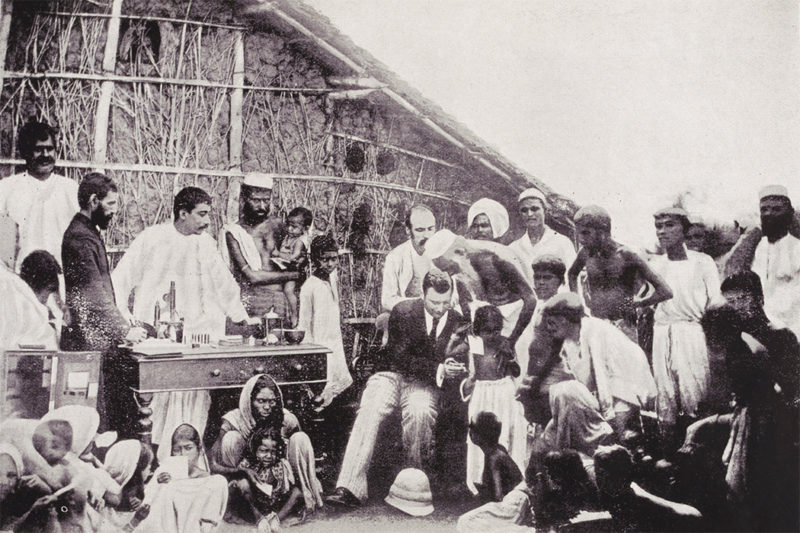
Cholera strikes India in 19th century. Both of Mary’s parents die from Cholera, and she is carted off to England to live with her uncle.

Mary’s uncle lives in a 100-room mansion in the English countryside.  Mary arrives at the manor and is greeted by servants, not her Uncle.

              Her Uncle lost his beloved wife in the birth of their son.  The son, Colin, is isolated in one room of the mansion, cared for by servants, and rarely visited by his father.  Colin believes he is going to die because of a physical affliction that is presumed to have come from his father’s unspecified condition, a condition of melancholy more than physical being. 

                Mary begins to recognize people who care for her are not slaves when she returns to England.  Her realization comes from being taken out of India’s way of life into an English countryside where servants are noted as somewhat independent while handcuffed by low wages paid by employers and the independently wealthy.

The consequence of Mary’s and Colin’s neglected upbringing is their characterization as imperious martinets who order their care givers as though they were slaves.

              Mary begins to realize English servants are more than order takers.  They have lives of their own.  She begins to realize one must treat others as she wishes to be treated. 

The author makes it clear that Mary’s steely imperiousness has not left her but that she tempers its use as she becomes better acquainted with the poor who must work to live.

A secret garden is the center of the story because it is a symbol of life’s resurrection. 

               Even the most neglected and spoiled children can be metaphorically planted in a different environment to become more caring and understanding.  A secret garden changes Mary and Colin into better human beings.

The key to understanding “The Secret Garden” is that thought makes humans who they are and what they become.   

              Colin is introduced as an invalid that is unable to cope with the world as it is.  He is neglected by a father who may blame him for the death of his beloved wife.  Colin is ten but acts like a two-year-old.  He is as imperious as Mary when she lived in India.  Because of Mary’s experience in India, she understands Colin’s reasons for acting as a two-year-old.  In that understanding she uses her experience in India and her newly acquired knowledge of English life to lure Colin out of his melancholy.  She talks of a secret garden that was created by Colin’s mother before her untimely death.  Mary found the key to the Secret Garden and the metaphorical key to Colin’s health and happiness.

               Frances Burnett created a story that explains how children who are neglected by parents can change the direction of their lives.  The course of one’s life begins with thought.  Good thoughts lead to good actions.  Bad thoughts lead to bad actions. After Burnett’s story, a final thought is–weather neglected or not, it is a child’s choice.

MIDDLE EAST AGENDAS

Audio-book Review
By Chet Yarbrough

(Blog:awalkingdelight)
Website: chetyarbrough.blog

Black Wave (Saudi Arabia, Iran, and the Forty-Year Rivalry)

By: Kim Ghattas

Narrated by: Kim Ghattas, Nan McNamara

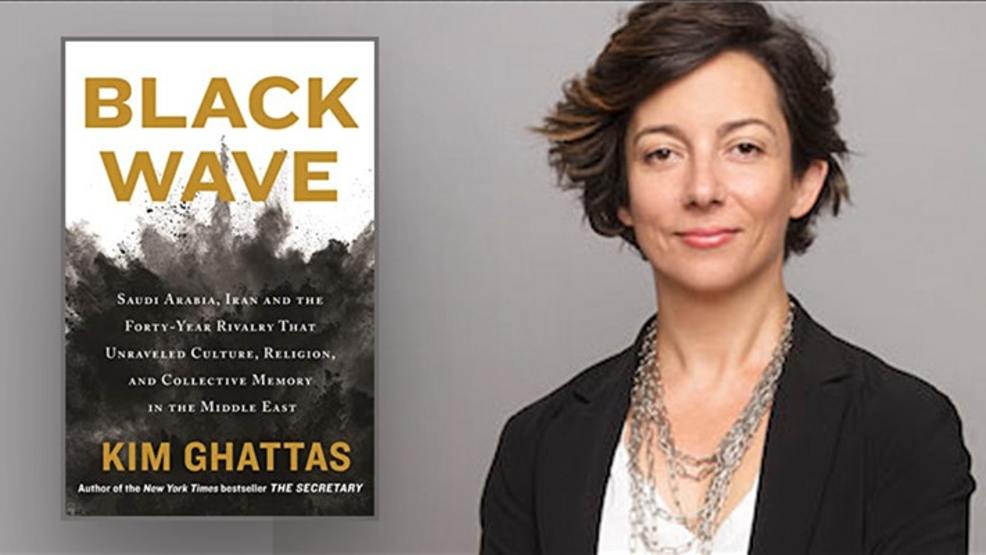
Kim Ghattas (Author, Dutch Lebanese Journalist for the BBC)

Kim Ghattas capsulizes the causes of cultural and religious conflict in the Middle East. Her complex explanation of politics in the Middle East shows the importance of religious freedom and the negative consequence of mixing religion in nation-state governance.  Ghattas’s intimate understanding and experience in the Middle East illustrates how ignorant America has been in confronting Middle Eastern leaders in their struggle for peace in their own countries.

“Black Wave” is a difficult book to summarize.  Some reader/listeners will conclude from Gattis’s book that the heart of Middle Eastern conflict is religious intolerance.  However, it is not religion itself but political leaders who distort religious belief for personal power that roils the world.  America has its own religious zealotry, but it is tempered by a political culture that demands freedom of religion, independent of political governance.  It does not keep American political leaders from distorting religion for their own agendas, but it tempers its potential for state acceptance of orchestrated violence.

Osama bin Laden used religion to justify his directed murder of innocents.  He sought political power at the expense of religion. 

Ghattas dances around America’s bungled effort to democratize the Middle East.  Some would argue Iran democratically elected an Imam to lead their country. Ghattas notes the Kingdom of Saudi Arabia clearly fears popularly elected leaders.

In ancient times, the middle east is known as Mesopotamia, the Arabian Peninsula, the Persian Empire, and Babylonia (Iran, Iraq, Syria, Turkey, Egypt, Afghanistan, Pakistan, and today’s Saudi Arabia). 

America’s self-interest has made many enemies in the Middle East.  America is a cultural and political baby in respect to the ancient cultures of the Middle East. The birth of the Islamic religion dates to 7th century in Saudi Arabia. 

As is true of all religions that have stood the test of time, the Islamic religion has broken into different factions that consider themselves Islamic but with different interpretations of their faith. 

The added dimension of poverty, cultural identity, and economic inequality encourage belief in religion. A religious believer’s purpose in the world is to gain some peace in this world, with hope for eternal life in the next. Therein lies the source of much violence within and among all countries of the world. There can be little peace in a world where people are being indiscriminately murdered, starving and treated unequally.

An example of how violent and unfair nations can be is Syrian leaders’ murder of its own people.

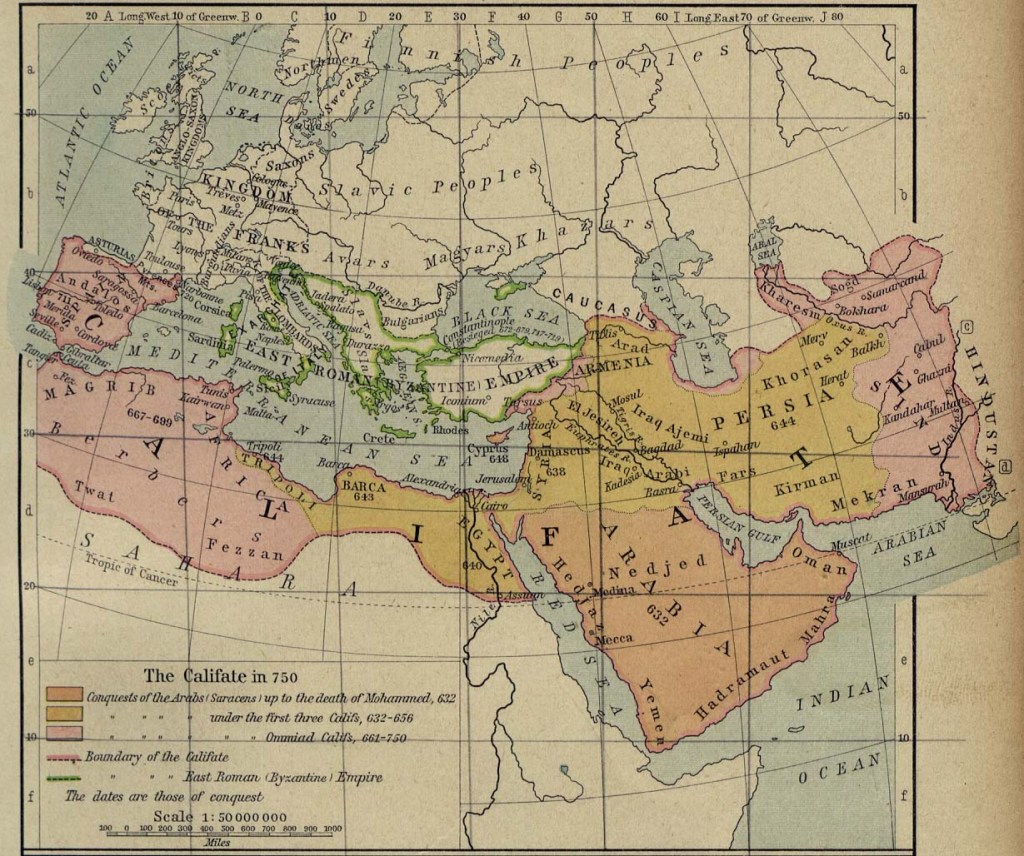
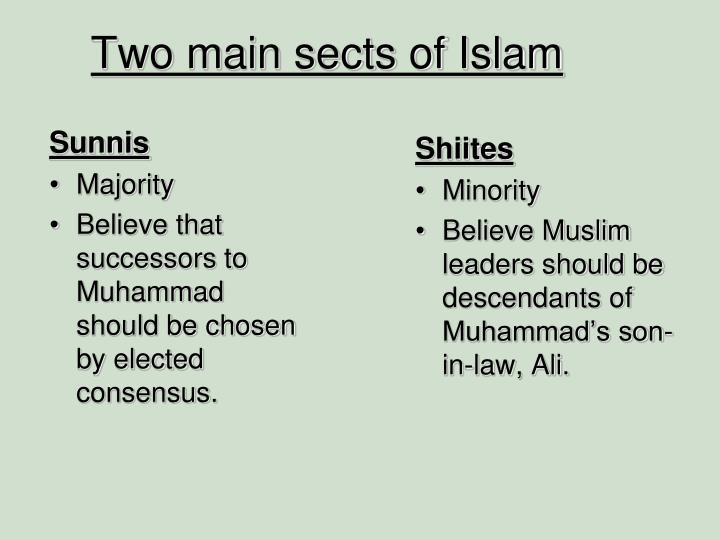
Ghattas explains there are two major versions of the Islamic religion in the Middle East.  One is Sunni, the other is Shite. 

The hegemon for the Sunni Islamic religion lies in several countries but its center of power is Saudi Arabia.  The center of power for Shite belief is Iran.  “Black Wave” recounts a history of both power centers and how they use religious belief to increase their influence and power in the Middle East.

 Ghattas argues religious interpretation is a tool used by Saudi Arabian’ and Iranian’ leadership to gain power and influence in the Middle East.  Ghattas infers the leaders of Iran and Saudi Arabia do not believe in peaceful coexistence but in hegemonic power.  They use the Islamic religion to maintain control of their power.  When state power is threatened, their leaders’ resort to interpretations of Islam that preserve their control. 

Citizens of any country may be murdered by zealots, domestic terrorists, or foreign invaders. Leaders seeking power care little for those who believe in an afterlife or the luxury of their current life as long as they are obedient servants of the state.

Ghattas recounts many examples of Middle Eastern leadership that show little concern for their citizens, e.g., Saudi Arabia’s murder and dismembering of Jamal Khashoggi, Syria‘s gassing of Syrian citizens, and Iran’s imprisonment and torture of citizens who choose not to follow political leaders’ interpretations of the Koran.

 Ghattas’s book implies the consequence of American ignorance of Islamic beliefs victimizes the poor, powerless, and disenfranchised.  A western country that does not understand the subtlety of religious beliefs in the Middle East has little influence on the course of events.  With a better understanding of Islamic faith and how it is being used by Saudi Arabia and Iran, there is some hope for peace. 

Understanding and acceptance of those who fervently believe in a religion, along with economic opportunity for those who are victimized by hardship and/or violence, offers some hope for peace.  Without understanding of foreign cultures and economic assistance for those victimized, world conflagration is an ever-present danger. One must ask oneself–how wise is it to use political policy, religion, or trade to victimize the poor and disenfranchised?

BRAIN SKEPTIC

Audio-book Review
By Chet Yarbrough

(Blog:awalkingdelight)
Website: chetyarbrough.blog

The Idea of the Brain (The Past and Future of Neuroscience)

By: Matthew Cobb

Narrated by: Joe Jameson

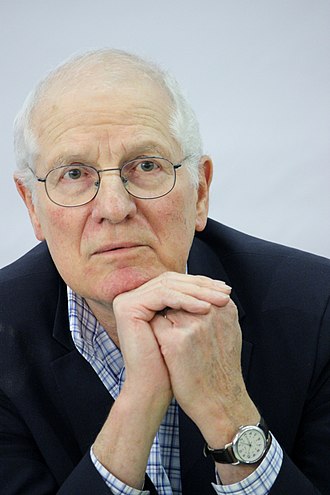
Matthew Cobb (Author, British zoologist, professor of zioology at University of Manchester.)

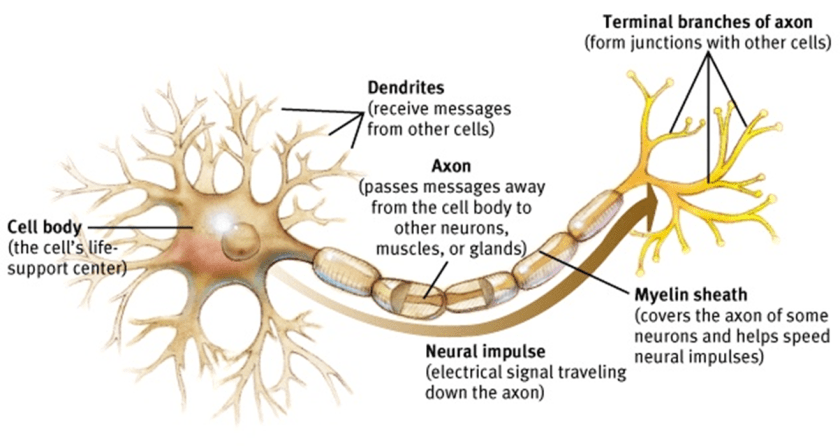
Matthew Cobb is a skeptic.  “The Idea of the Brain” cautions the public about claims of doctors, psychologists, chemists, neuroscientists, philosophers, and technologists who claim breakthrough understandings of the brain.  Cobb explains the history of how, where, and why the brain creates thought and action. Even to this day in the 21st century, brain function remains a mystery to science and the general public.  Cobb does not deny progress has been made but his history of “The Idea of the Brain” shows progress has been slow, often misleading, and sometimes flatly wrong.

He explains how, in the time of Aristotle, the source of human’ intelligence and emotion were believed to be in the heart.

As the present takes hold, it becomes clear that intelligence and emotion come from chemistry and neuronal activity of the brain and body with its primary loci in the brain.  The shift in understanding from heart to brain is proven by science, but details remain as much a mystery in the present as in the past.

MRI

Cobb skeptically reviews modern science’s explanation of brain function.  He questions the detail value of brain imaging (MRI), and researchers’ comparison of computers with brain function.    MRI does not analyze brain function at a neuronal level.  It offers broad information about areas of the brain that influence action.  It fails to reveal anything about the brain at a neuronal level.

Cobb acknowledges brain imaging offers some insight to specific areas of the brain that process information for thought and action.  However, Cobb notes MRI is a blunt instrument of analysis because it only indirectly notes stimulus by showing increased blood flow to specific areas of the brain.

“The Idea of the Brain” recalls the history of patients who have been treated for epileptic seizures. The seizures are partially abated by brain surgery.

The consequence has been mixed in that the seizures are reduced but some motor skills or memory functions are diminished.  Cobb also explains a consequence of separating the two lobes of the brain.  When they are separated, the surgery literally makes the person of two minds, one of which knows little about the other’s thoughts and actions. The separation of the two halves of the brain confirms the differences in perception and utility of each lobe of the brain in viewing and understanding the world.

Cobb goes on to criticize comparison of brains to computers by noting neuronal activity is much more complex than the most sophisticated computer programs. 

He notes a brain’s network of neuronal activity is different from a computer’s processing of information in fundamental ways.  A brain predetermines future action of the body before it knows what action will be taken.  There is no predetermination in a computer.   

Cobb explains a human brain processes information through chemical as well as electrical impulses.

Cobb notes brains create reality from past recollection and present perception. A brain reconstructs the past from experience and interpretation.  A computer does not interpret the past or create thought.  Input to a computer is based on coding past and present information that is interpreted and input by humans. There is no homunculus in the human brain. A human brain mysteriously creates the past and present to form thoughts and action.  Human thoughts and actions are based on emotion, imprecise memory, and intellect.  Computers only correlate, not create, information. A computer devises plans based on correlation rather than creative thought implied by human neuronal activity.

Cobb makes the point that today’s computers do not think in a human sense.  Computers do not create but only correlate information with results that are plans for action and execution. 

Cobb suggests a computer singularity like that suggested by some futurists is too far into the future to be predictable.  Until there is testable proof and understanding of human neuronal action, computers will remain lifeless tools of humankind.

Cobb’s research makes him skeptical of chemical treatment for psychological disorders because of their unsuspected side effects.  He acknowledges some of their success in abating Parkinson’s symptoms and other chemically caused maladies.  However, Cobb forthrightly warns anyone taking prescribed drugs for mental disorder to continue taking their drugs under the supervision of qualified physicians.  Cobb notes two major pharmaceutical companies have abandoned research for chemical treatment of mental disorders because of their imprecise medicinal benefit.

In the end, Cobb is optimistic about science’s ability to fully understand the brain.  However, he suggests it will be centuries before full understanding is achieved.  Cobb believes the avenue for further research should be on living things which have fewer brain cells.  He argues the complexity of neuronal function requires understanding at a neuronal level before expecting a breakthrough that will reveal the mystery of consciousness and human thought and action. 

To Cobb, science requires experimental proof.  That proof must begin with repeatable experiments that result in the same answers by different experimenters.  He argues understanding at a neural level will be key to understanding brain function and its chemical and electrical activity. 

Cobb implies present-day computer comparison to the brain is a dead end.  He infers–when neuronal brain activity is understood, today’s comparison of computers to brains will be the equivalent of science recognizing the brain, not the heart, is the source of thought and action.  Cobb’s implication is that with an understanding of neuronal brain function, artificial intelligence may, in the far future, create life and consciousness. The ramification of that thought is that human procreation may be a thing of the past.

CIVIL RIGHTS

Audio-book Review
By Chet Yarbrough

(Blog:awalkingdelight)
Website: chetyarbrough.blog

Great Figures of the Civil Rights Movement

By: The Great Courses

Narrated by: Hasan Kwame Jeffries

Hasan Kwame Jeffries (Author, associate professor of history at Ohio State University,)

A timely refresher on the civil rights movement is given by Hasan Kwame Jeffries in the “Great Figures of the Civil Rights Movement”.  It is timely because of the resurrection of the assassination of Malcolm X and its reification of a fundamental split in the black civil rights movement in America.

Viet Nguyen writes in his fictional novel, “The Committed, “I am from my mother”. Nothing else matters. Color, national origin, religious belief, or sexual orientation do not determine the value of a human being.

Marcus Garvey (1887-1940, publisher and jornalist, black nationalist.)

Jeffries reminds us of the movement initiated by Marcus Garvey.  Though the idea of a return to Africa has come up many times in the history of America, Garvey established a black movement for the creation of an independent African nation.

To one who believes in the principles of freedom and equality for all, the idea of equality through independence is wrong.  All humans live on space ship earth. It is the principle of our equal humanness that preserves civilization. Separate is not equal. The problem is human freedom, equality, and equality of opportunity are works in progress toward a goal of equal treatment by society. 

Women and minorities are not treated equally in America or in most places of the world.  Since America’s beginning as a republic, many believed in qualified freedom, and a few in universal equality, but equality is falsely preached by white power and never achieved.  Slavery is an undeniable truth in world history.  In America, atrocities of black slavery in the south and institutional discrimination in the north are well documented.  It is no wonder that Marcus Garvey successfully tapped into a desire of many black Americans to achieve equality through separation.  Separation’s appeal is in its potential as a base for political power. Even though that power is limited by being a faction in a dominant social and political power structure.

What Jeffries shows is that Garvey is the father of the idea of Black Power that is symbolized by the Black Panther movement in the mid-20th century. 

From Jeffries’ history, one can see and understand a more nuanced and broader American civil rights movement.  White American power did not exhibit much understanding of the black power movement in the 1960s. White America responded with violence. White America murdered Fred Hampton, the Chicago Black Panther Chairman and local leader.  This unjust murder lies at the feet of the City of Chicago and the FBI.

Stokely Stanford Carmichael aka Kwame Ture (1941-1968, 4th Chairman of the Student Nonviolent Coordinating Committee.)

Jeffries notes the idea of Black Power came from a Stokely Carmichael’s rallying slogan in the 1960s.  (The phrase is said by some to have originated in a non-fiction book, “Black Power”, written by Richard Wright and published in 1954.) Carmichael participates in the 1961 Freedom Rides in Alabama.  They were organized by CORE (Congress of Racial Equality) to desegregate public transit services and restaurants.  In 1961, Carmichael and others travel to Jackson, Mississippi to sit in a segregated restaurant.  Carmichael, along with other freedom riders, is arrested for disturbing the peace. He is sent to prison for 53 days in Sunflower County, Mississippi.  Because of Carmichael’s bravery and oratorical skill, he became a full-time organizer for SNCC (Student Nonviolent Coordinating Committee).

Of course, the stars of the non-violent black movement are best known as men like Martin Luther King. 

King’s history is well known but Jeffries notes there were many black women that became extremely important to the movement for black emancipation.  Ella Baker becomes involved with the NAACP (1938-53), SCLC (1957-60), and the initial foundation of SNCC (1960-66) as a black activist and highly successful recruiter. Rosa Parks becomes the face of the bus boycott in Montgomery, Alabama.  Diane Nash, as a Freedom Rider, is known for integrating lunch counters in Nashville, Tennessee.  Nash is also a co-founder of SNCC.  Fannie Lou Hamer fights for women’s rights as the vice-chair of the Freedom Democratic Party in Mississippi.  The newly formed party successfully gets several local black politicians elected in Mississippi.  Jeffries notes the FDP is less successful on a national level, but Hamer is elected to the U.S. Senate in 1964, and later serves in the Mississippi State Senate.

In order pictured left to right: Ella Josephine Baker (1903-1986, Political activist for the NAACP, SCLC, and SNCC.), Rosa Parks (1913-2005, Civil Rights Activist, best known for the Montgomery bus boycott.), Diane Judith Nash (Freedom rider and co-founder of SNCC.), Fannie Lou Hamer (1917-1977, Civil rights leader, Vice charwoman of Freedom Democratic Party, Co-founder of National Women’s Political Caucus.)

Eldridge Cleaver (1935-1998, spent 7 years in exile in Cuba, returned in 1975, joined the Church of Jesus Christ of Latter-day Saints and became a conservative Republican.)

Jeffries glosses over Eldridge Cleaver’s leadership in ambushing Oakland police officers (two officers were wounded) and his arrest and escape to Cuba to avoid trial.  However, Kathleen Neal Clever, who married and divorce Cleaver, became an active member of the Black Panther Party that helped feed people, provide family medical care services, and provide transportation for families to visit loved ones in prison.  Jeffries notes Kathleen Neal Clever came from an upper middle class black family and supported the early founders of the Black Panther organization with her father’s witting or unwitting financial support.

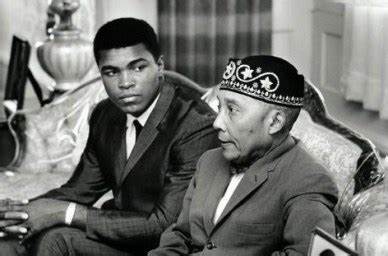
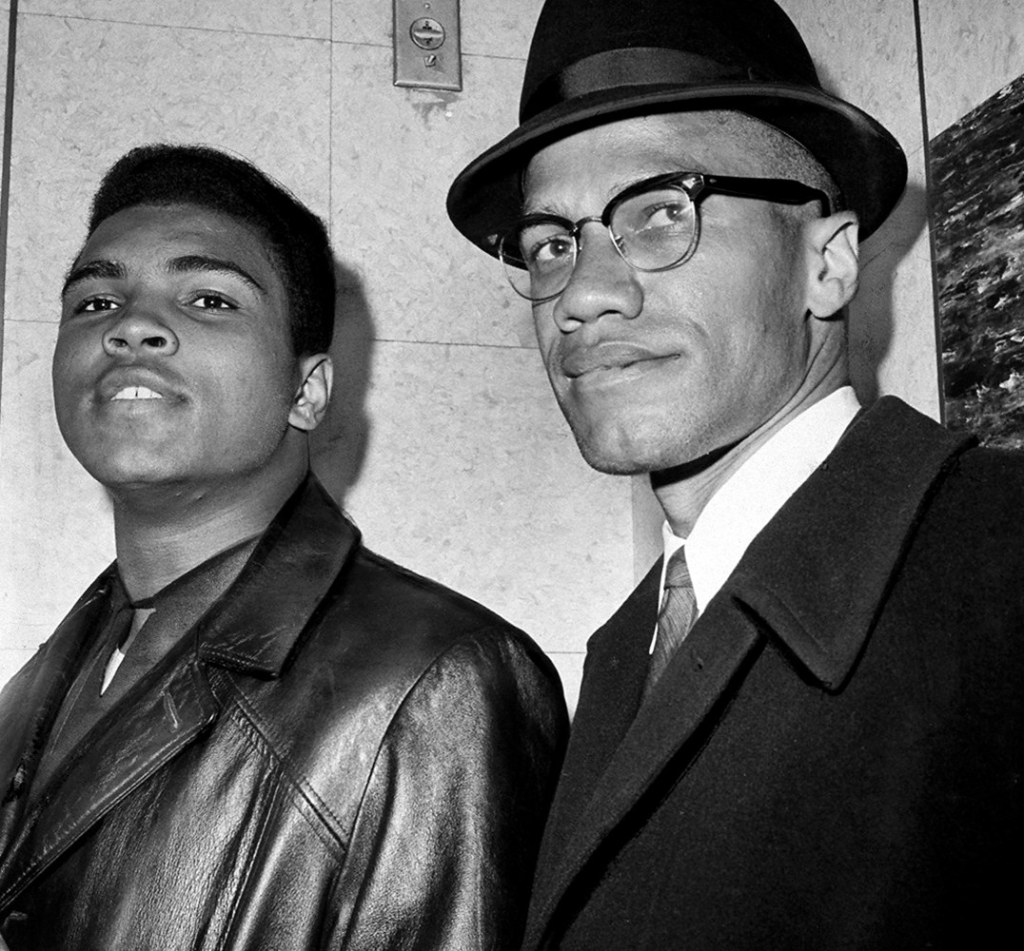
One of the most interesting chapters of Jeffries book is about Malcolm X, particularly because of the recent release of a wrongly accused assassin.  Jeffries implies Malcolm X is assassinated by the Nation of Islam.  Jeffries infers the assassination is related to Malcolm X’s disillusion with the founder’s (Elijah Muhammad) dissolute sexual behavior, and NOI’s belief that the races should be separated to form a black nation to compete with all nations. 

Malcolm X came to believe all people are created equal in the eyes of God, while arguing the separatist ideal of NOI and Marcus Garvey were wrong.  The history of Malcolm X’s journey through life is fascinating, short, and impactful.  One cannot help but wonder how Malcom X could have changed the course of history had he not been assassinated.

Jeffries could have gone further back in history to tell the story of American black nationalism but he has done a great job of identifying the history of the 20th century heroes of the movement.

FORMULA FOR PEACE

Audio-book Review
By Chet Yarbrough

(Blog:awalkingdelight)
Website: chetyarbrough.blog

The Anatomy of Peace

By: The Arbinger Institute (Third Edition: Resolving the Heart of Conflict)

Narrated by: Kaleo Griffith

The Arbinger Institute was founded in 1979 by Dr. C. Terry Warner.  He co-authored “Leadership and Self Deception”.  In 1967 he received his Ph.D. from Yale University and is a professor at Brigham Young University. 

          The Arbinger Institute offers leadership training and consulting to organizations, families, and individuals around the world.   

              In “The Anatomy of Peace” a story is told about an Israeli and Palestinian who run a  youth camp for troubled children.  One presumes this is a story, not an actual event, that is designed to advise reader/listeners of the “…Institutes” beliefs.

“The Arbinger Institutes” objective is to identify the causes of human conflict and how it can be resolved.

              As the world knows, the Israeli/Palestinian conflict continues to rage without any evidence of resolution.  Some argue the solution is splitting the area into two states.  Others insist only one state is necessary with representation by resident voters.  “The Anatomy of Peace” argues neither solution addresses the fundamental cause for conflict, nor will it result in peace.

              Before explaining the camp leader’s histories in the middle east, the story begins with a young girl arguing with her family about being left at the camp for two weeks.  The young girl refuses.  The camp is in Arizona where temperatures rise well above 100 degrees in the summer.  This young girl runs away with no shoes on her feet.  She is followed by two young people who were once miscreates enrolled at the camp but are now employees.  They follow her, and catch up after several hours of flight to find her feet bloody and burned.  One of the two camp employees offers the shoes she is wearing to the runaway.  The runaway refuses.  Both employees choose to take their shoes off and continue running after her.  When she stops in a shopping center where she sees a friend of hers, they all come together.  The runaway looks at the camp employees and is shocked to see her pursuers had taken off their shoes.  The runaway agrees to stay for two weeks at the camp.  Her reason for staying is symbolic.

              The troubled children’s camp is run by an Israeli and a Palestinian who are at peace with each other despite the conflict in their home country.  Both have lost their fathers because of war.  In their younger adult lives, both harbored hate for their enemies, the killers of their fathers and countrymen.  Their respective stories are about how each overcomes their hate.  It is same as the story of the runaway.  They recognize each other as human beings.  They refer to Martin Buber who wrote the book “I and Thou” which recognizes the importance of reverencing the humanness of all human life.

Martin Buber (1878-1965, Author, 20th century philosopher.)

              The point is made that all people conflict with themselves when they treat others as objects rather than fellow members of humanity.  The principle of meditation is raised to get in touch with yourself, to understand yourself, to realize that in-common humanness is what must be recognized for peace to come among combatants.

              What the authors argue is that humans create boxes that carry the weight of who they are–which is not who they really are or mean to be.  In knowing oneself and the boxes we create for ourselves, we act in ways that defy the truth of all people’s humanness.  This idea is old.  It is the same idea that ancient Greeks spoke of when saying “know thyself”.  The Institute teaches that in self-understanding (knowing what boxes one is in) and realization of all people’s humanness, one can find peace. 

              The idea is to stay out of boxes that define you. This seems too simple. However, it is not simple or easy because of our inability to break out of boxes that have been formed over years of experience.   The first step is to not objectify other human beings.  Human labeling puts one in a  box.  The box creates someone who is an object, not a fellow human being.  The second is to know yourself and understand your boxes.  The last step is to get rid of the boxes.  Have empathy and do the things that make you feel good about your humanness.

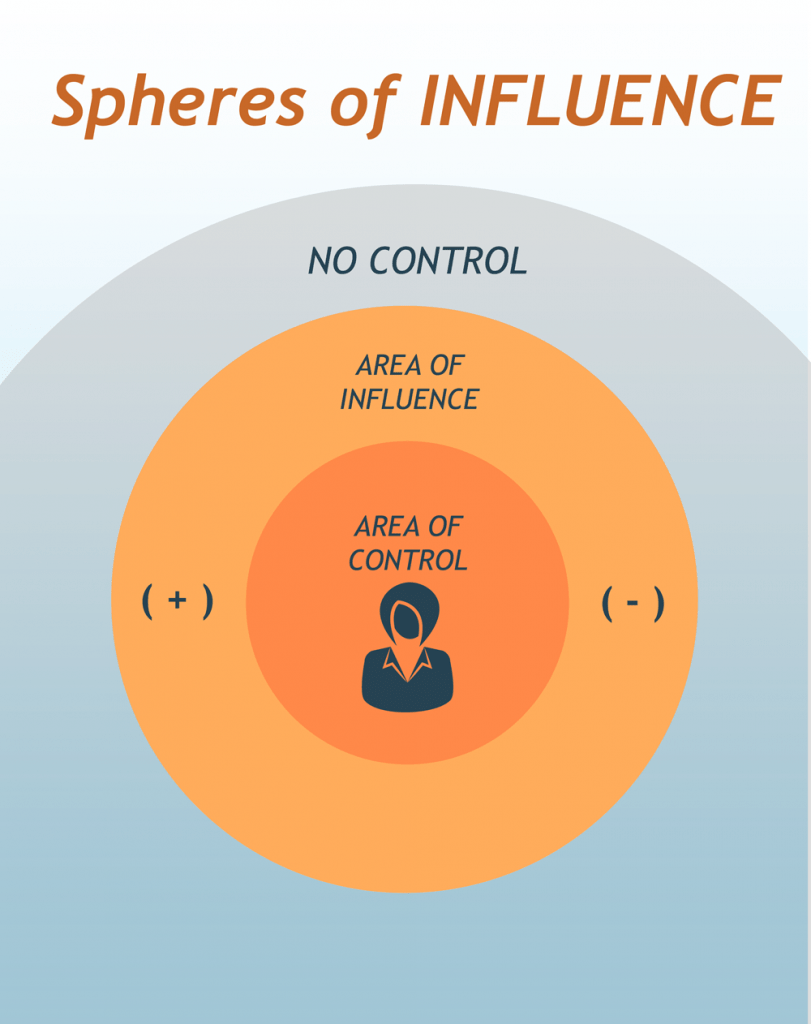
The author makes the point that many things in life are beyond our control but those thoughts and actions that are within our control should be done in ways that make us feel good about ourselves.

                They argue you are in a box if you do not feel good about what you do.  Self-awareness sets one free to find peace.  There is a great deal to offer leaders and managers of other people in the teachings of the Arbinger Institute. A skeptic may find the Arbinger Institute’s formula for peace Pollyannaish. It will only change those who choose love and self-understanding in the face of human nature’s desire for money, power, and prestige.

Does the Arbinger Institute’s formula for peace have any application to the realpolitik of Russia’s interest in Ukraine and Georgia?

In Tolstoy’s view leaders are great because they rise to the circumstances of their times; not because they are wiser, more intelligent, all powerful, or omniscient, but because their decisions appear right in light of history.

What boxes inhibit President Zelensky and Putin?

BRAIN FUNCTION

Audio-book Review
By Chet Yarbrough

(Blog:awalkingdelight)
Website: chetyarbrough.blog

The Secrets of Consciousness

By: Essays in Scientific American

Narrated by: Coleen Marlo

A lot of ground is covered in “The Secrets of Consciousness” but for many who are interested in the subject, little new is revealed. 

Many articles and books have been written about the easy and hard part of the theory of consciousness. 

The easy part is knowledge of the physical characteristics and mechanics of brain function–the “how and where” of information that is stored and transmitted by the brain. 

The hard part remains the explanation of what consciousness means, particularly the “whys”. Why are living things aware of themselves, others, and the world from information transmission within a brain.  Why do humans get angry?  Why do we love?  Why do we hate?  Why are we sad or happy?  Is everything in the universe conscious?

(It is somewhat surprising that “A Thousand Brains” theory is not revealed in “The Secrets…” but it may be timing of publication. Or it may be scientist’s discounting of an engineer’s qualification for understanding consciousness.)

Consciousness is explained as an all-encompassing part of nature.  There is an avenue for consciousness in A.I., once the mechanics of consciousness are fully understood. The focus of first chapters are on scientific experiments showing all living things exhibit consciousness through their actions. 

For example, bees show consciousness by seeing red and in choosing the site of their nests with an ability to consciously navigate the world.

Following chapters explain parts of the brain and the mechanics of brain function.  They explore the complexity and interconnections of the brain and how different parts of the brain have specific functions.  This is the easy part of understanding consciousness because it is something that can be physically measured through brain scans and experiments that correlate actions with brain stimuli.  

Next, there are explanations of how experiments with brain stimuli offers potential for reading one’s mind without verbal communication. 

It opens the door for a consciousness meter that may allow some level of predictability and mind control.  In a positive sense, stimulus experiments might hold a key to reawakening consciousness in comatose patients.  The negative sense is the potential for brain washing a non-conforming human being.

Section 4 of these “Scientific American” articles is about “Altered States of Reality”. 

A particularly bizarre and threatening chapter suggests someone who sleepwalks can murder another person without being legally guilty of murder.

The last two sections of articles deal with psychoactive drugs, spiritual belief, and their effects on brain function.  A listener might view these articles as incentive to experiment with consciousness in two fundamentally different ways. One is with the use of psychedelic’s. The other is to join a monastery or convent.

The last article deals with the end of life. It reveals a possible explanation of why some see a white light just before dying.

Science argues the end of life is the end of consciousness. There is nothing after death–no heaven, no hell, just nothingness.

As an introduction to consciousness, this compendium is interesting.  However, after completion, the hard part of consciousness remains a secret.

COWBOY TALES

Audio-book Review
By Chet Yarbrough

(Blog:awalkingdelight)
Website: chetyarbrough.blog

The Trail to Crazy Man

By: Louis L’Amour

Narrated by: Jim Gough, Christopher Lane

Louis L’Amour (LaMoore) (1908-1988, Author.)

Louis L’Amour has been gone for many years but “The Tale of Crazy Man” is a good introduction to an entertaining storyteller.  L’Amour tells two short stories. Christopher Lane’s narration and twists of the second story make it the better of the two, but L’Amour’s skill pleases reader/listeners in both.

Recalling L’Amour’s Sackett family saga (seventeen stories) makes a reader/listener appreciate cowboy tales where honest, upright heroes always win.  

L’Amour’s stories are of an idealized American west where good always overcomes evil.  Though his heroes are preternaturally perfect, L’Amour satisfies a human desire for wholesomeness.

The first story in “The Trail..” is about a wild west gang leader’s adopted son who is to take over his criminal empire.  L’Amour infers the putative father lives in the American west when only the strong survive by being the most ruthless in the era in which they live.  The adopted son is shielded from that early western belief by being formally educated while being taught to be a great tracker who is fast and accurate with a gun.  As the father grows older, he grooms his adopted son to takeover the gang and a ranch that covers a wide area of the country.

The adopted son chooses not to follow his mentor’s outlaw ways. L’Amour implies the west is evolving, with education making a difference. By the end of the story, the father appears reconciled to the change. The adopted son seems destined to make future use of the former outlaw’s acquired wealth for peace and an improved society.

The second tale is about two cowboys that have been drugged and indentured by a tyrannical sea captain docked in San Francisco.  One cowboy dies on the ship with a commitment from the other cowboy to take care of his wife and daughter who he left in Wyoming. Before being highjacked, the dying cowboy had gone to San Francisco to pay off a mortgager on the ranch on which his wife and daughter were living.

When the deceased cowboy’s friend and some fellow captives escape their indenture, two of the cowboys stay together to travel from the west coast to Wyoming to fulfill the dead father’s last wish.  What the friends find is a small town, in which the wife and daughter live, is controlled by two men.  One of the men is the mortgage lender that had been paid off. He pocketed the payment without telling the wife and daughter that the mortgage had been paid. Then, he arranged for the dead father’s kidnapping by the San Francisco Sea captain. 

These two town leaders are evil men but their evilness is different.  One is an uneducated thug who relies on violence to control the town.  The other is an educated thug who relies on stealth and cleverness to control the town.  The two thugs do not like each other but are partners in control of the town. 

The deceased father’s wife is dead.  The educated thug plans to marry the daughter who views the lying mortgage lender as a benefactor by not foreclosing on their ranch.  The uneducated thug plans to take the daughter by force. There are several plots in this second short story.    Both thugs are indirectly and directly dealt with by the cowboy who had made the commitment to the deceased father.

L’Amour writes with clarity and concreteness.  His stories are simple allegorical tales about good and evil.  They are wonderfully entertaining and leave one happy with the thought that good always overcomes evil.

U.S. PRESIDENTS

Audio-book Review
By Chet Yarbrough

(Blog:awalkingdelight)
Website: chetyarbrough.blog

Means of Ascent

By: Robert A. Caro

Narrated by: Grover Gardener

Robert Caro (Author)

Robert Caro is a great biographer but his history of the early years of Lyndon Johnson is diminished by his political idealism. 

Politics is the pursuit of power.  Some pursue that power by any means necessary.  Others may be less constrained, but the goal is the same–To Be Elected to Rule. 

Caro shows the young Johnson as a Machiavellian politician in the vein of Donald Trump but without a silver spoon.  History shows Johnson and Trump are willing to lie their way to power.  Both are willing to do whatever it takes.  Caro shows Johnson, like Trump, are bullies who intimidate subordinates to get what they want.  There is no moral or ethical line that these two ex-Presidents would not cross to stay in power.  Trump lost his second term because of rejection by the voters, and Johnson resigned because of embarrassment by Americans who opposed the Vietnam war.

Caro reveals Johnson’s bullying treatment of his wife and people who report to him. 

Caro shows Johnson is far superior at getting his way when compared to Trump. Caro notes Johnson stole his first election to the Senate from former governor of Texas, Coke R. Stevenson. 

Coke R. Stevenson (1888-1975, Former governor of Texas, died at age 87.)

Without big money contributors like Brown (of Brown and Root) to pay monitors to stuff ballot boxes in San Antonio, Texas, Lyndon Johnson would have lost.  With a legal maneuver by Johnson’s friend, Abe Fortas, and illegal help from election monitors, Johnson beats Stevenson for election to the Senate by 97 votes. (Fortas became an Associate Supreme Court Justice appointed by Johnson in 1965. He resigned in disgrace for unethical practice in 1969.)

In every election, the elected is beholding to someone.  Caro notes Brown and Root received a great deal of federal and State financed work in Texas because of Johnson’s support.

Johnson is shown to be a consummate politician, a good storyteller with the ability to persuade superiors like the leader of the House of Representatives, Sam Rayburn, to support his ideas.  This is no small thing because Rayburn is history’s longest serving Speaker of the House, with possibly more power and influence than any past or modern Speakers of the House.

Sam Rayburn (1882-1961, 43rd Speaker of the U.S. House of Representatives.)

President Johnson, as the Senate Leader kissing the head of Sam Rayburn.

Caro notes Johnson uses his 6-foot, 2.5-inch height, to dominate associates who are either reporting, beholding, or superior to him. 

Johnson is shown to be extraordinarily energetic when pursuing power.  Caro explains how Johnson uses helicopter visits to Texas communities when he runs for the Senate against Stevenson.  Johnson works himself into a frenzy that makes him ill (recurring kidney stones) because of an indefatigable need to do everything he can to be elected. 

In Johnson’s presence, many were awed by his stories, even when they knew the stories were lies or gross exaggerations.  During the war years, Caro notes how Johnson appeals to Texas voters by claiming he will go to the front to fight Germany and Japan.  To fulfill that pledge, he accompanies a “band of brothers” flying a bombing mission on a Japanese island off the coast of Australia. 

Johnson’s (Observer Mission in Austrailia during WWII.)

Caro explains Johnson’s only direct combat experience is as an observer in Australia.  

In Caro’s telling, the mission did occur.  There is great danger.  The plane is damaged by enemy gun fire.  Caro’s research shows Johnson maintains a cool demeanor during the flight. Johnson plays no combatant role in the mission. But, he was an observer on the plane when it is strafed by the Japanese.

Caro notes the story of the flight is changed many times. In Johnson’s retelling he explains he is a hero who fought in many bombing raids, a lie.  Caro dispels Johnson’s brave hero characterization by telling of Johnson’s childhood that shows him to be a physical coward.  Caro interviews former childhood friends who recall Johnson’s cowardice.  When confronted with violence, Johnson is reported to lay down and kick his feet out to ward off anyone who might attack him.

Caro notes Johnson’s will power is extraordinary when it comes to doing whatever it takes to be elected to public office.

Caro’s research suggests Johnson is a focused and relentless seeker and user of power.  Johnson could use his position for either good or bad depending on whether it increased or diminished his power.  One example Caro gives is Johnson’s rejection of an oil interest offered to him by a constituent.  It could make him rich.  Johnson’s concern is it would diminish his chances for election to higher office if he were recognized as an oil interest’ owner. 

In contrast to the oil interest rejection, Caro shows how Johnson acquires a radio station to become a source of income for his family and a tool for his political ambition.  Johnson had been appointed to the FCC as a junior congressman.  He used his influence with the FCC to acquire and grow the radio station, with his wife as the holder of record.  A competitor is shut out of buying that station through Johnson’s influence with the FCC.  The FCC also expedites the gift of a popular frequency that widely expands the radio station’s area of coverage in Texas.

Lady Bird and her ownership of KTBC in Texas.

“Means of Ascent” is not Caro’s finest work.  Johnson is painted too harshly in the context of American Democracy. 

Like America’s experience with Trump, there is much to hate about Johnson’s rise to the Presidency. 

No President of the United States has been totally bad or totally good.  Democracy remains, and will always be, a work in progress.

The reality is–Democracy is a messy process that brings both good and bad leaders to the world. 

WHAT THE DEVIL

Audio-book Review
By Chet Yarbrough

(Blog:awalkingdelight)
Website: chetyarbrough.blog

Living with the Devil ( A Meditation on Good and Evil)

By: Stephen Batchelor

Narrated by: Stephen Batchelor

Stephen Batchelor (Author, Scottish Buddhist, teacher.)

Stephen Batchelor offers a view of religion and reality in an attempt to move beyond the “let it be” implication of a meditative life.  Batchelor places Buddhism in the context of most religions’ beliefs.  He explains Buddhism personifies the devil as a master of seven dimensions of heaven. 

The devil assigns one of the seven heaven’ disciples to inspire sin in human life.  That disciple is Mara who is directed by the devil to seduce Siddhartha, the founder of Buddhism. Mara assumes the visage of a woman but fails to distract Siddhartha from “the way” and, like Christ in Christian belief, Siddhartha becomes a symbol and guide for humanity.

Image of Mara who takes the image of a woman to seduce Gautama Buddha, (Siddhartha).

Batchelor explains Buddhism is the door to “the way” which recognizes the devil as a part of life’s yin and yang.  Hardship and death are part of life.  Those seeking eternal life delude themselves.  It is not possible to have life without death.  It is not possible to have “the way”, a path without evil because evil defines good by being its opposite.  This leads to a “let it be” mentality of those who meditate on “the way”.  Batchelor is not condoning the evil of violence, destruction, or death but explains its role in defining “the way”. Therein lies a criticism by some.

Buddhist guidance is described as “the way”  by Batchelor. 

One presumes, it is the same “way” referred to in the adventures of Disney Studio’s “The Mandalorian”. 

Batchelor describes the path that most of humanity takes is deflected in the same way as a human walking with one leg shorter than another.  The path of humanity is circular which suggests why history seems to repeat itself. (To paraphrase Mark Twain–history may not repeat itself, but it certainly rhymes.)

One who is not a Buddhist is not comforted by Batchelor’s explanation of “the way” or his acknowledged acceptance of living with the devil.  Batchelor, like Buddha, Jesus Christ, and a Divinity, may be correct in their knowledge about human life but it does not give one comfort.  It proffers fear that violence and destruction is to be tolerated by humanity because it is a part of living life as a human being. 

Batchelor implies homelessness, despair, and human degradation are incurable and acceptable because the devil’s work helps define “the way”. 

Accepting Buddhism seems to encourage meditation at the expense of human effort to give succor to those in need.  All religions and societies should be focused on social and economic equality for all.  Accepting less is failure. “The devil made me do it” is a cop out. 

BUDDHISM

Audio-book Review
By Chet Yarbrough

(Blog:awalkingdelight)
Website: chetyarbrough.blog

Being Peace

By: Thich Nhat Hanh

Narrated by: Edoardo Ballerrini

Thích Nhất Hạnh (Author, Buddhist Monk, Zen Master, Political Activist.)

“Being Peace” is a layman’s introduction to Buddhist belief.  Thích Nhất Hạnh offers a “let it be” philosophy of life while being a political activist.  Hanh’s philosophy of peace comes through meditation. Hanh finds through meditation human life is found to be neither good nor bad. 

There is no evil in Hanh’s world.  In one sense that reminds one of Christian’s belief in “turning the other cheek”.  The difference is that Christian’s believe there is evil in the world, and it must be punished.

Hanh tells a story of a Sudanese pirate that rapes a girl-child and throws her into the sea to drown.  Hanh suggests he could have become a Sudanese sea pirate by having experienced Sudanese poverty and depredation.  Hanh’s view is that the circumstances of life and environment create miscreants, rapists, and murderers.

Contrary to belief in evil and punishment for moral transgression, Hanh finds empathy for those who pillage, torture, murder, and rape. 

Hanh’s solution is to accept Buddhist belief in peace through meditation.  In accepting life as it is, evil doers disappear.  This is certainly an oversimplification of Hanh’s teaching. 

Hanh notes world leaders squander world resources that could be used to create and sustain peace for all people in the world.  He decries wasted dollars for military defense.  His argument is predicated on abundance that is unevenly distributed.

Hanh lives through the French and American atrocities in Vietnam.  

Hanh undoubtedly observed the senseless murder of innocents by both western powers and communists.  

Ironically, until more recently, Hanh was banned from Vietnam because of the crowds he attracted to his teaching.  Fear of competition from someone independent of the government frightens communist bureaucrats.  Hahn is now allowed in Vietnam, but his forums are restricted to small groups of believers.

Money, power, and prestige seduce the poor, middle class, and rich, whether in a democracy or autocracy.  There are few exceptions–maybe only Buddhist meditators, and Socratic philosophers–not the general public.

Hanh’s book is insightful but inadequate when measured against the innate nature of humankind.  On a personal level, one can accept the value of meditation in seeing things as they are and how they should be.  However, on a global level, it is difficult to imagine broad acceptance of meditation.