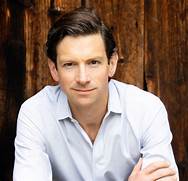
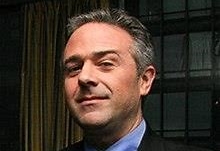
John Kaag, (Author, Professor of Philosophy at UMass Lowell)
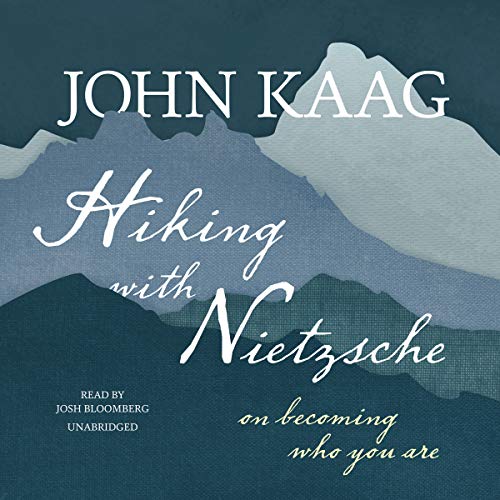
John Kaag’s view of romantic love seems slightly askew when taken in the context of his two books, published two years apart. “American Philosophy” is published in 2016 while “Hiking with Nietzsche” is published in 2018. Having listened to both, one finds “Hiking with Nietzsche” belies the conclusion of romantic love characterized in “American Philosophy”.
In “American Philosophy, Kaag professes understanding the harm done to romantic love by male self-absorption and then ignores that realization in “Hiking with Nietzsche”.
Kaag’s male self-absorption is flaunted in “Hiking with Nietzsche”. Kaag seems quite dismissive of his second wife in his “Hiking…” adventure.
Kaag seems mostly in love with himself and his pursuit of philosophy.
Kaag becomes an organizer of a library of first editions for the Hocking family. The descendants wish to donate the volumes to a library of their choosing but the contents must be organized for appraisal purposes.
Kaag ensconces himself in Hocking’s library of 10,000 books with many philosophical “first edition” writings.
The story of “American Philosophy” is about the life and times of William Ernest Hocking and his 400-acre estate in New Hampshire.
William Ernest Hocking (1873-1966, American idealist philosopher.).
400 Acre Hocking Estate in New Hampshire
Kaag accepts the task. The library becomes a refuge from his first marriage which ends in divorce. As Kaag reviews the philosophies of greater and lesser philosophers like Emerson, Royce, Kant, and Hocking, he reflects on his failed marriage. He concludes his failure is self-inflicted.
As Kaag begins cataloging the 10,000 volumes, he is joined by a fellow philosopher (who becomes his 2nd wife) from a university for which they teach.
Hocking library on the 400 Acre Estate.
What Kaag realizes is philosophy looks to the supernatural and, in its pursuit, romantic love suffers. Kaag exhibits eating, sleeping, and drinking disorders that reflect a self-absorption that damages romantic love. This is an ironic realization because it seems Kaag celebrates romantic love but cannot partake of it.
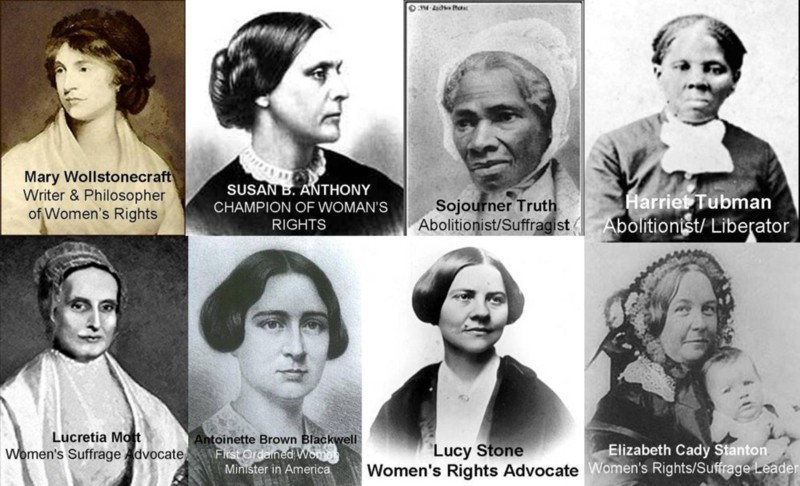
Society treats women as less equal than men. Oddly, Kaag shows understanding without behavioral modification. This seems societies’ tragic flaw.
Women are the equal of men, but society does not treat them equally. The consequence is the loss of romantic love and women’s rightful place in society. The resurrection of the Taliban in Afghanistan, Putin’s militancy, Middle Eastern, Eastern, and Western society show the likelihood of change seems remote, if not unlikely.
Some argue Kaag’s book is a celebration of romantic love, but it is not. Kaag’s story is about male societies’ inability to overcome the history of misogyny. The implication is when women are treated as equal, society will change. Reviewing Kaag’s two books suggests the world is not ready.
Edward Luce (Author, English journalist, Financial Times columnist and US commentator.)
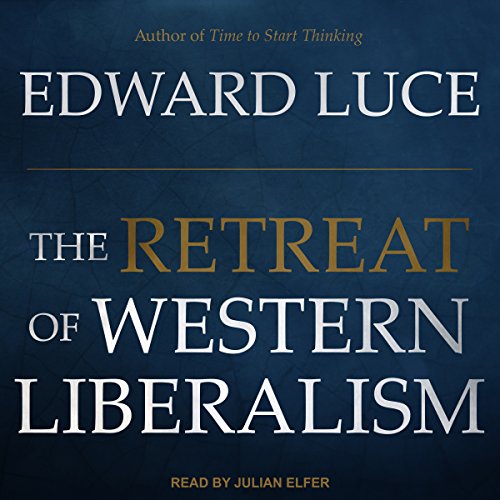
Edward Luce offers a troubling picture of 21s century America. His argument depends on one’s definition of “…Western Liberalism”. If the definition is belief in human individuality and a relaxation of public custom, law, and authority, there is evidence to support Luce’s argument.
Luce notes the election of Donald Trump is not an American aberration but a symptom of “The Retreat of Western Liberalism”.
The advent of the internet has reinforced a group think driven by belief in alternative facts that create conspiracy theories. It is a discontent coming from many Americans ignored by rising wealth of a nation controlled by special interests. Trump taps into that discontent.
The irony of Trump’s rise is his personal wealth when the American gap between rich and poor is skyrocketing. Putting that irony aside, Trump suggests America can be “Great Again” by returning to a past.
Trump creates a false hope of re-industrializing America with new jobs. The falseness of Trump’s pitch is that new jobs in America are not being created by industrialization but by technology and human services. Trump’s appeal is loaded with false representations, amplified by media trolls. Public custom, law, and authority are undermined by conspiracy theories that convince Americans they have been cheated out of their fair share of America’s wealth. In truth, they have, and that is why Trump’s false pitch about “Making America Great Again” got him elected.
Trump’s anti-immigrant falsehoods feed conspiracy theories about jobs being taken from poor Americans. Equal opportunity is a function of rising wealth in the hands of the few. Public education and health care are unequally distributed in America. The wealthy can afford higher education and the best health care, the poor cannot.
Americans are poor because they are being denied equal opportunity, not because of immigration.
Education and health care are critical for American labor’s adjustment to a changing world. Private industry and the government have equal responsibility for assisting all Americans, not just those who have benefited from the technological revolution.
Job transition requires re-education and on-job training by employers that offer decent wages and health care.
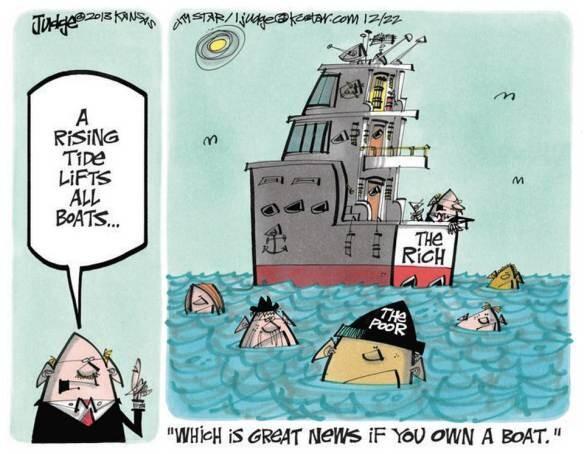
Luce’s point is a “rising tide has not lifted all boats”. The technological revolution offers the same potential for western liberalism as the industrial revolution. The election of Donald Trump was America’s “wake up” call.
A large part of America’s population has been left out of the American Dream of western liberalism that came from opportunities provided by the industrial revolution.
Western liberalism needs to be reinvented by investment in a technological revolution for all Americans, not just those who have benefited from the industrial revolution. The question is whether private industry and the government are up to the task. Will western liberalism be reinvented and promoted by ossified industrial leaders and elected representatives? Most industry leaders and elected representatives are satisfied with the status quo while too many Americans struggle to make mortgage or rent payments. Luce defines the problem but offers no solution.
Editing Humanity (The CRISPR Revolution and the New Era of Genome Editing)
By: Kevin Davies
Narrated by: Kevin Davies
Kevin Davies (Author, Ph.D in molecular genetics, Editor of Nature Genetics.)
The famous philosopher Søren Kierkegaard advised “Life can only be understood backwards; but it must be lived forwards.”
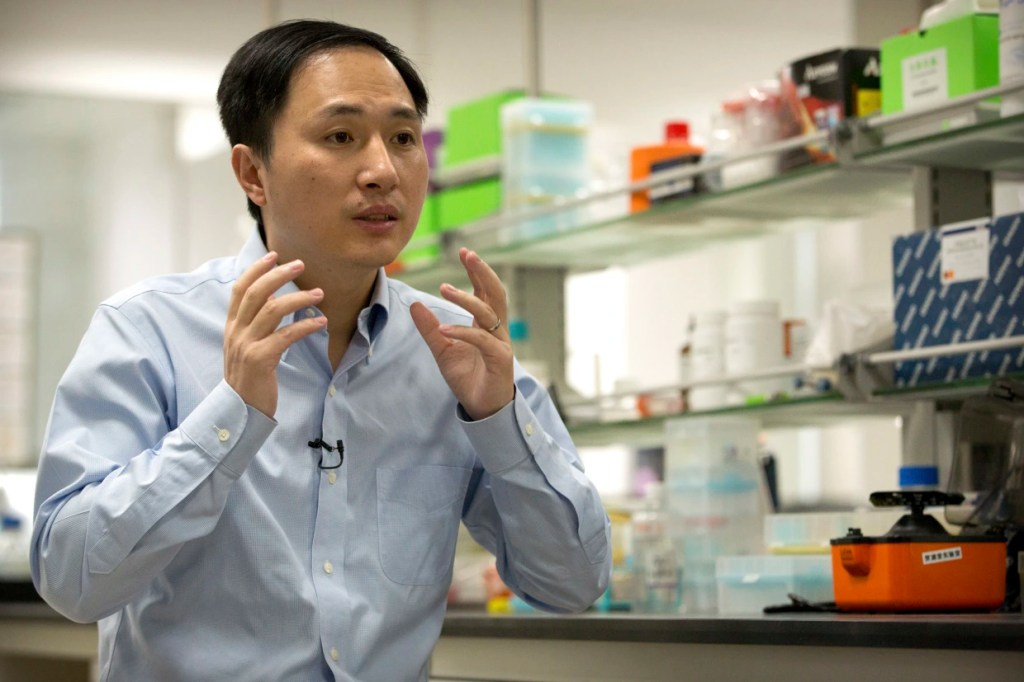
He Jiankui (Chinese scientist who used CRSPR to modify genes of unborn twin girls.)
Kevin Davies reports the genie is out of the bottle with He Jiankui’s sloppy edit of genes in unborn twins. Davies suggests science will move forward on gene modification to provide understanding Jiankui’s inept genetic experiment. With that forward movement, Davies implies human extinction will be delayed, extended, or ended by genome experimentation. Proof of Davies conclusion is in Britain’s plan to create a government owned company to investigate genetic diseases and cancer in adults. The pilot project is to sequence the genomes of 200,000 babies according to a May 14th article in “The Economist”.
What remains a danger is that evidence of genomic abnormality is a first step to experiments in changing genetic inheritance at birth. There is a great deal unknown about what some call “dark genetic matter”.
What becomes clear is the potential for great good and great harm in the CRISPR revolution.
CRISPR-This is an acronym for clustered regularly interspaced short palindromic repeats. It is a tech tool that reads DNA sequences that are fragmentary and not normal. In identifying what appears abnormal, the fragments can be manipulated to repeat what is believed to be the correct DNA sequence.
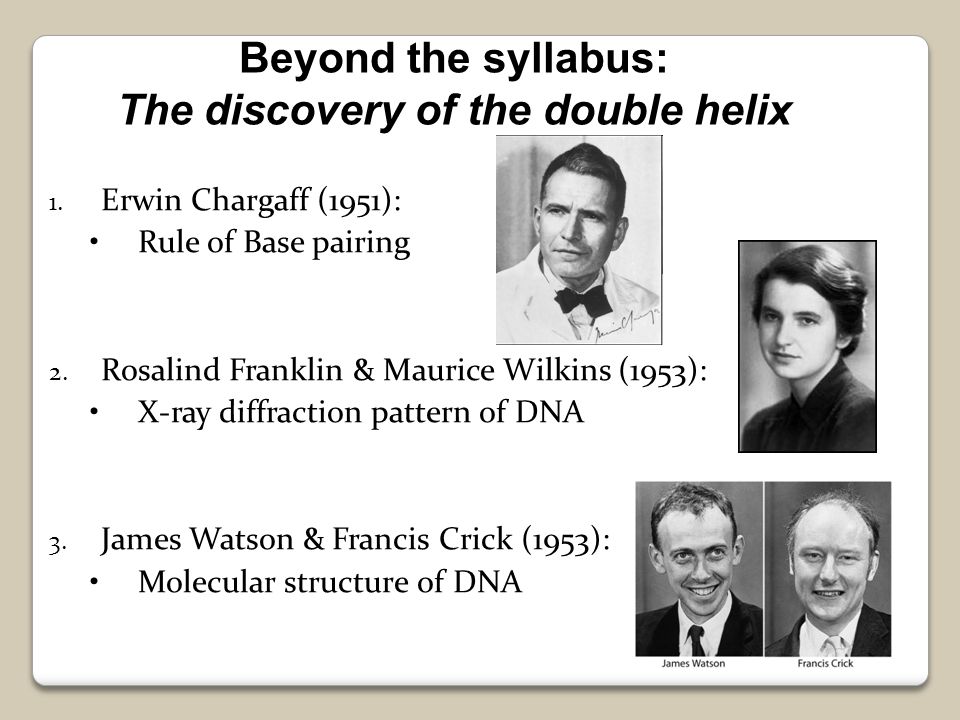
With the discovery of base pairing and the DNA double helix by Watson, Crick, and the (often-unrecognized) assistance of Rosaland Franklin, the basis for genome editing became possible.
Beyond the syllabus: The discovery of the double helix. Erwin Chargaff (1951): Rule of Base pairing. Rosalind Franklin & Maurice Wilkins (1953): X-ray diffraction pattern of DNA. James Watson & Francis Crick (1953): Molecular structure of DNA.
Davies notes the key to editing genes are the replication errors between DNA strands. Those spaces are indicative of disease risk that can be modified with CRISPR, a genome editing technique.
Davies offers a picture of Jiankui’s life. He was educated at the University of Science and Technology of China and received a Ph.D. from the Department of Physics and Astronomy at Rice University in Texas. From a humble life in China, Jiankui climbs a genetic mountain to arrive at a cliff of science. One might characterize it as a cliff because a misstep in gene editing may injure or kill a patient and ruin a practitioner’s professional reputation. Jiankui became a living example of a practitioner’s misstep. Jiankui is serving 3 years in prison and has been fined the equivalent of over $430,000 American dollars. Davies notes the fate of the prenatal female twins is unknown.
Some would argue there are too many unknowns when genes are modified. As noted by Robert Plomin in “Blueprint”, the interconnection of DNA strands is complex.
Plomin notes the results of DNA modification are a matter of probability, not certainty. Clearly identifying defective genes and modifying their code to eradicate disease or mental dysfunction is presently beyond current science understanding.
Adding to the uncertainty of results is the potential for creating a radical human cohort that defies societal norms, e.g., the creation of a destructive or superior race of humans. An infrastructure would have to be formed to make decisions about the course of human civilization. That infrastructure creates potential for radical authoritarian control of humanity by a select group of minders.
On the other hand, DNA modification holds the potential for eradicating disease. The idea of eliminating HIV, and other viral diseases holds great promise for the future of humanity. The cost and benefit will only be realized through experiment. In one sense, it is like the experiments that doctors have taken since the beginning of medical treatment. Heart disease and cancer treatments have become better over years of trial and error.
DNA modification is extensively used in agriculture to increase field productivity by reducing disease in plants and hardening resistance to blight.
DNA modification opens doors to regeneration when threatened by species extinction.
The light at the end of this tunnel may be a train or a new day.
Davies’s underlying point is that CRSPR is here and will not go away. Experiment will continue whether condoned by government or not. All species on earth have a finite life.
DNA modification is a fact, not just an idea. It is here and will be used. Science is grappling with rules to mitigate its potential downside while trying to insure its upside. In the end, human survival will be decided by nature and the politics of control.
Robert Plomin (Author, American Psychologist and behavioral geneticist.)
As a psychologist and clinical geneticist, Robert Plomin seems well suited to explain how understanding of DNA has the potential of mitigating (possibly curing) many human psychological maladies.
The scientific community notes that 70% of human variability is based on genetic differences among people.
With a perfect picture of a person’s DNA, there is potential for reducing human mental disorders. However, Plomin’s argument seems weakened by his research and experience.
Plomin has spent a great deal of his life researching DNA and genetic inheritance.
What “Blueprint” reveals is how much progress has been made but, at the same time, how far science must advance to clearly understand what the other 30% of human experience has to do with who we are, how we think, and why we act as we do.
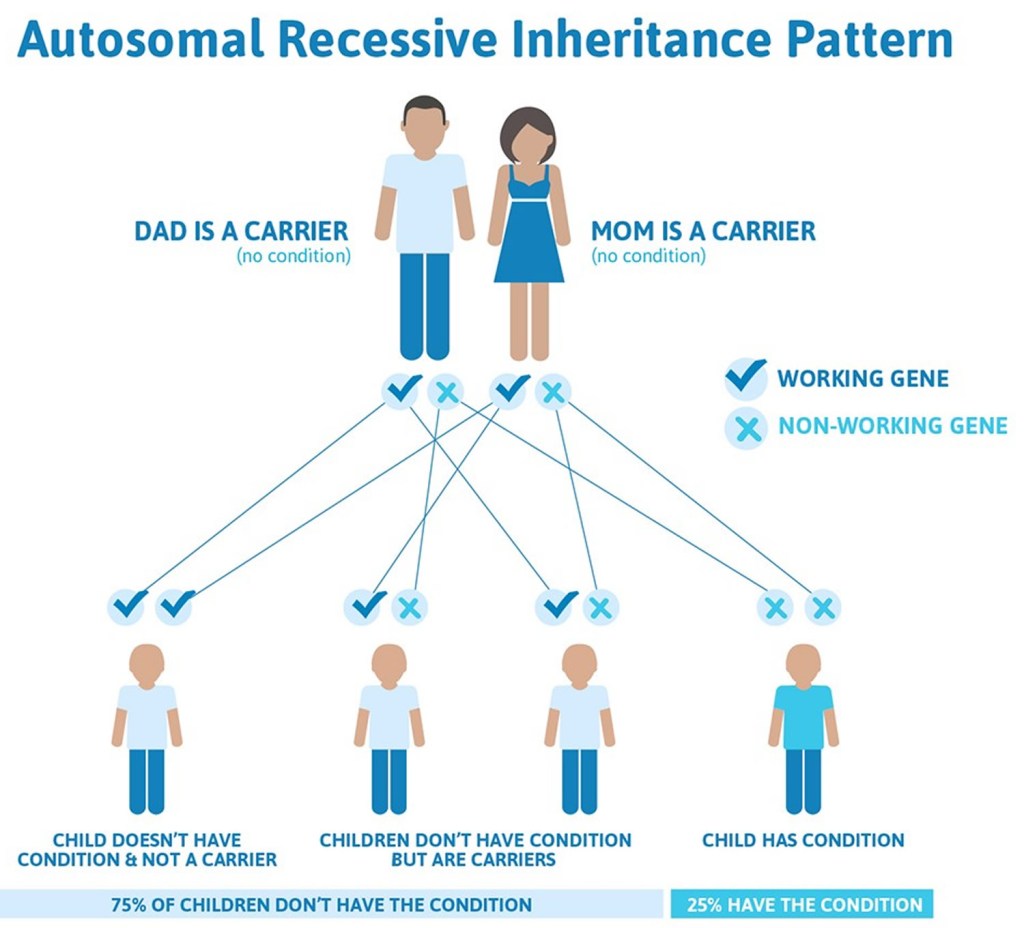
Plomin acknowledges there are different patterns of genetic inheritance. These patterns show susceptible psychological maladies and other genetic anomalies that cause Huntington disease, Marfan syndrome, cystic fibrosis, sickle cell disease, hemophilia, and others. The inheritance patterns suggest those diseases are probabilities, not certainties.
Plomin acknowledges DNA analysis remains too complex for precise understanding of the correlation between cause and effect. Without precise understanding of genetic manipulation there will be unintended consequence, ranging from disability to death. Further, there is the ethics of gene splicing that implies creation of a utopian society.
Who would have the right to determine another’s role in society? Whether as a philosopher king envisioned in Plato’s “…Republic”, or an Aryan race envisioned by Hitler, genetic manipulation opens a door to predetermined roles for human beings. Who will make these decisions? Is a planned society a good thing? Does a human being want to be classified as a worker, a leader, a thinker, a doer because someone suggests society needs those classifications?
Plato’s Republic
Listening to “Blueprint” leaves little doubt that understanding DNA is important. What is in doubt is how that understanding is used. Humanity has survived an estimated five or six million years. To date, human survival has been based on random modifications of DNA and life experience.
Maybe genetics offer the next stage in human survival, but abandoning natural selection carries risks based on human thought and action rather than natural selection. Should science open Pandora’s box?
Arkady Ostrovsky (Author, Russian-born, British journalist spent 15 years reporting for the Financial Times from Moscow.
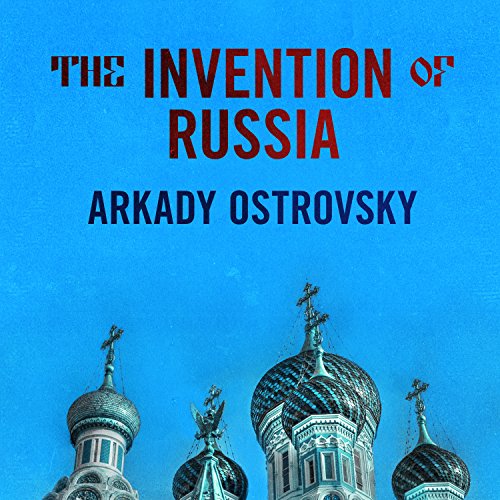
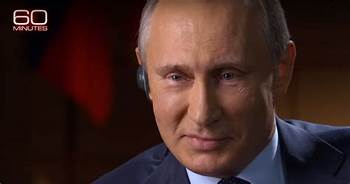
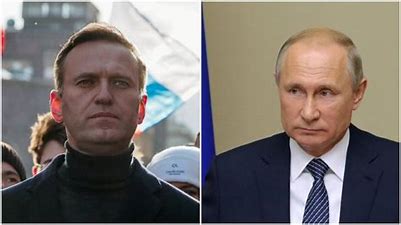
Arkady Ostrovsky’s book offers a personal perspective on post-1917 Russian political history. Of particular interest today is in how Vladimir Putin came to power and how he may become an author of his own destruction.
Some listeners may conclude Putin’s invasion of Ukraine will doom his future as Russia’s leader. Others will conclude Putin will survive this political mistake because of Russia’s political history.
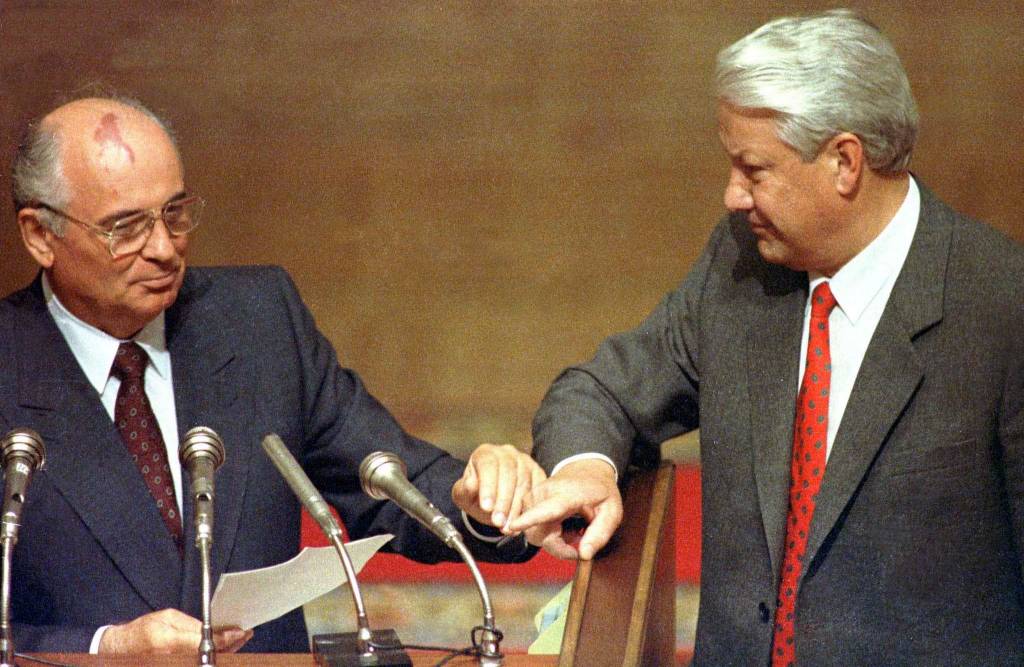
Putin’s ascension after Gorbachev/Yeltsin seems foretold by Russian history. As noted in Mark Steinberg’s lectures on Russian governance–since the 16th century, popular leaders (whether Czars or revolutionaries) prudently balanced authority and freedom.
Though Gorbachev and Yeltsin were quite different as Russian leaders, they led Russia with an emphasis on freedom. Both offered freedom without adequate economic support for Russian Citizens. In contrast, Ostrovsky argues Putin emphasizes authority with a measure of economic support that improves Russian lives.
Yeltsin fails because his reforms were largely political with little improvement in economic security for most citizens. Yeltsin’s support base came from oligarch’s economic gain rather than from policies designed to improve Russian citizens’ lives. The early years of Putin’s reign emphasize authority with the help of media to influence public perception.
Putin uses secret service personnel and media to detain and restrain public opposition to the government.
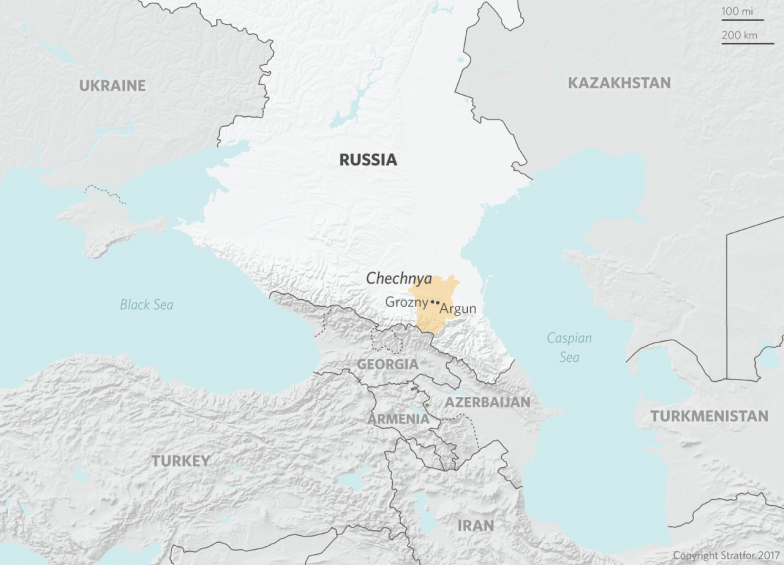
Ostrovsky notes the Chechen uprising is brutally suppressed by Putin. Chechens opt for a level of peaceful coexistence as a part of greater Russia.
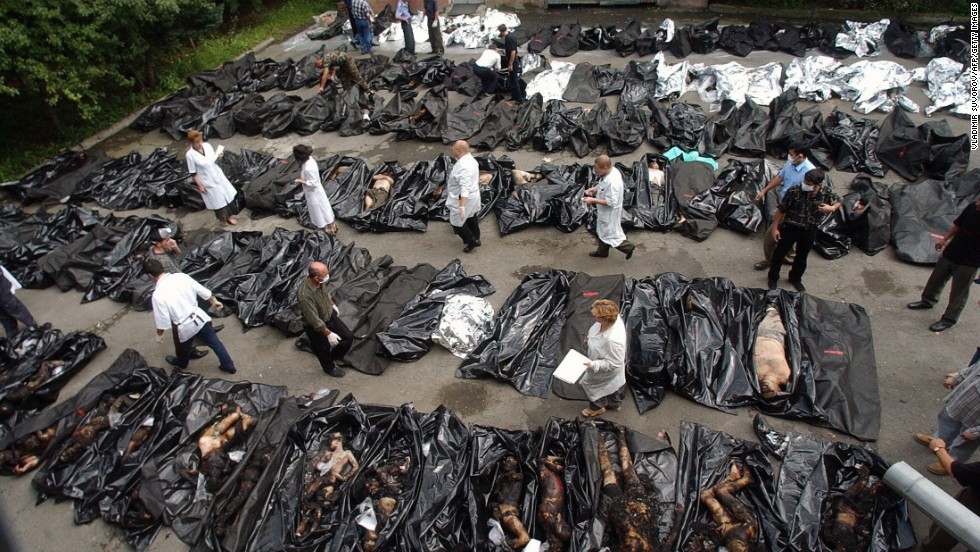
Russian government control of media coverage emphasizes Chechen brutality while lauding Russian soldiers’ success in abating Chechen independence. Ostrovsky suggests the reality of Chechen brutality is real but Russian soldier’s success in abating brutality is exaggerated by government-controlled media. Ostrovsky reports many Russian’ innocents are murdered in the process of rescuing children and teachers from a school attacked by Chechen rebels.
In 2004–Besian school massacre in Russia.
Ostrovsky explains the first President of Russia, Boris Yeltsin, personally endorses Putin as his successor. Yeltsin is nearing the end of his life after a fifth heart attack. He views Putin as the best hope of Russia to return to national prominence because of Putin’s relative youth and experience as a former KGB officer. Putin has political experience as an aid to the former Mayor of Moscow.
However, Ostrovsky notes Yeltsin discounts the paranoia of Putin and how his experience as a KGB officer makes him suspicious of any activity over which he has no control. Ostrovsky suggests KGB training gives Putin the ability to hide behind a persona adopted to sooth the concerns of whomever he meets. That ability disguises Putin’s personal thoughts when dealing with controversial issues.
(The KGB is dismantled in 1991 but its apparatchiks remain in Putin’s government.)
The media during the Gorbachev/Yeltsin years grows as an independent oligarchic organization. The two edges of power in media are telling convincing truths as easily as lies. Yeltsin owes his electoral success to media according to Ostrovsky. Yeltsin, before his last election as President, has a single digit approval rating from the Russian public. With the help of a media oligarch and Yeltsin’s populist skill, he wins the election. On election day, Ostrovsky notes Yeltsin is nearly dead from a fifth heart attack.
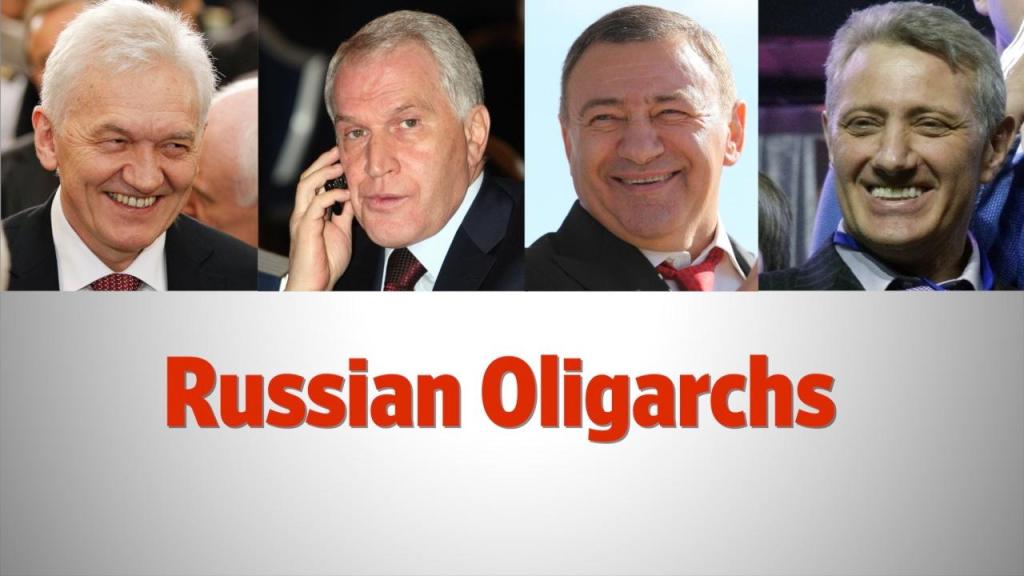
Ostrovsky explains the growth of oligarchs begins with Gorbachev and gains momentum with Yeltsin. The communist party leaders are losing their hold on governance, but they are well positioned to understand how things get done and can be controlled with acquired individual wealth. Some of these former communist party leaders use their position to start personal companies with the financing of government money over which they have control. They become behind-the-scenes movers and shakers for the Russian economy. Their personal wealth grows, and the general economy begins to improve.
In the short term, these new barons of wealth improve the lives of many Russian citizens. However, this unrestrained capitalist revolution begins to rot at its core. Political power follows money. Money supports political leaders that kowtow to oligarchic demand. An oligarch’s demand may or may not benefit the general public.
When political leaders act in ways that support oligarchic demand, they improve their prospect for re-election. In some cases, dynamic political leaders gain some independence based on their popular appeal. Putin seems to have achieved some level of that power. With the help of popular appeal, public support can become a source of power to challenge oligarchic demand. It seems Putin may have achieved both power bases, but invasion of Ukraine may change that support.
Robert Kagan finely reveals the fundamental mistake made by Putin in a May-June 2022 “Foreign Affairs” article. History reveals the mistakes of great nations like France, Great Britain, Germany and Japan in thinking they could become world hegemons by force.
Robert Kagan (A neoconservative Republican scholar and member of the Council on Foreign Relations of the Brookings Institute.)
Kagan notes America became a world force by virtue of economic growth which led to a choice by other nations to recognize American hegemony. Rather than capitalizing on the natural resources of Russia, Putin chooses to waste his country’s wealth on a war Russia will lose. It is a lesson one hopes China realizes in its pursuit of its sphere of influence. Sphere of influence is determined by economic growth, not military power.
Ostrovsky argues media is reality in Russia. World media is not the same as the Russian media that is tightly controlled by government leadership. Further Ukraine invasion is not a Chechnian rebellion. Chechnya is a small area within Russia–with an estimated 1.2 million people. Ukraine is an independent country of 44.3 million.
Russian media might be controlled within Russia, but the world’s news will seep into Russian citizen’s knowledge, either by the internet or other means.
Russia may be an invention as Ostrovsky suggests but all nation-states in the course of history are inventions. History changes with information. Dissemination of information is increasingly uncontrollable.
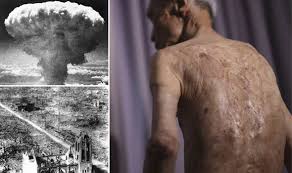
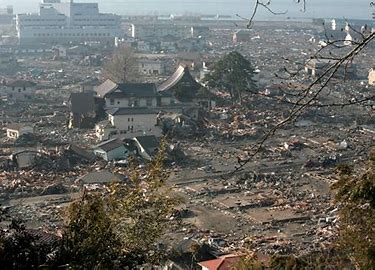
In time of war, Nagasaki and Hiroshima show what uncontrolled fission can do in the event of a nuclear bomb. Fukushima shows what uncontrolled fission can do in time of peace.
Nagasaki and Hiroshima Nuclear BombFukushima Nuclear Accident
Invading Ukraine may lead to loss of Putin’s power and influence in Russia. The tragic consequence of Putin’s decision is the unnecessary death of many Ukrainians and Russians. The decision to invade Ukraine may lead to Putin’s dismissal, imprisonment, or execution. It has certainly changed his reputation in the world.
A History of Russia: From Peter the Great to Gorbachev
By: The Great Courses
Lecturer: Mark Steinberg
Mark Steinberg (History professor at University of Illinois, Urbana-Champaign)
It is timely to review Steinberg’s lecture series on the history of Russia because it offers perspective on Russian leadership. Professor Steinberg reveals a dichotomy in Russian leadership that reaches back to the Czars.
When Czarist Russia is replaced by Leninist communism, Russian citizens continue to demand centralized authority but with greater personal freedom, both of which are inherently in conflict. There is no government in history that has achieved a perfect balance between authority and freedom.
Either centralized authority or freedom are compromised by human nature.
America’s answer is “checks and balances”. Russia’s answer, with few exceptions, is to strengthen centralized authority at the expense of individual freedom.
The natural human desire for money, power, and prestige demand balancing centralized authority with freedom.
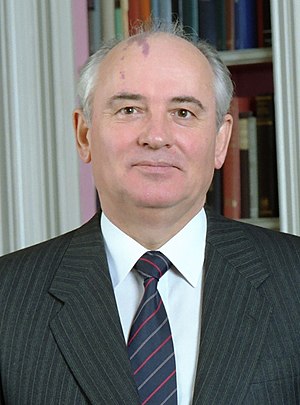
The most recent exception for more freedom within centralized authority is Gorbachev. Gorbachev tries to keep the U.S.S.R. together by authoritatively demanding meritocratic government that focuses on improvement in Russian citizen’s freedom. In contrast, Putin looks to define freedom only for those who get things done in accordance with government dictate. The “things done” are meant to improve the economy and power of the nation. Steinberg suggests Putin reduced corruption in his redefinition of freedom, but the rise of oligarchs diminishes his success. Neither leader finds the right balance between authority and freedom.
12/8/1987 President Mikhail Gorbachev in the White House LibraryVladimir Putin, President of Russia
Steinberg recounts the leadership of Peter the Great and Catherine the Great that appear more like precursors to Gorbachev’s style of government. All three demand a powerful centralized authority but they temper that demand with their desire to make Russian citizens’ lives better. Though Putin is not addressed by Steinberg, as a leader, Putin seems more like Ivan the Terrible and Nicholas the First who looked at what was best for government leadership rather than what benefits the general population.
Steinberg exudes love for Russia in his profile of its past. He reinforces one’s belief that an intimate understanding of another countries culture is necessary for there to be any hope for success in diplomacy.
Putin is at a crossroad in Ukraine. Professor Steinberg implies that a crossroad is not for one direction or another but a middle way that serves the best interests of all Russian citizens, not just those in leadership positions.
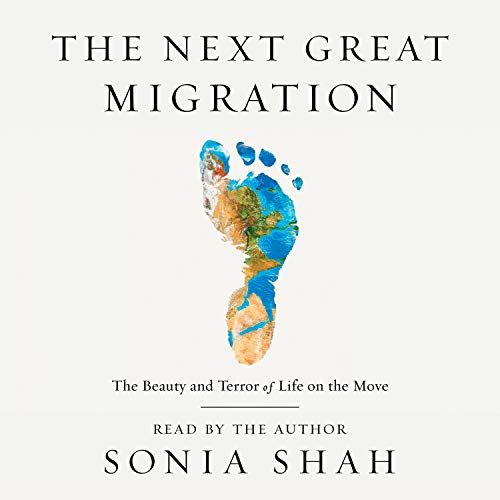
The Next Great Migration (The Beauty and Terror of Life on the Move)
By: Sonia Shah
Narrated by Sonia Shah
Sonia Shah (Journalist-born in NYC to Indian Immigrants.
Sonia Shah takes a broad look at migration. She personalizes her view and, at the same time, writes about the broad tableau of nature’s migratory imperative. Myths and misunderstandings are exposed by Shah.
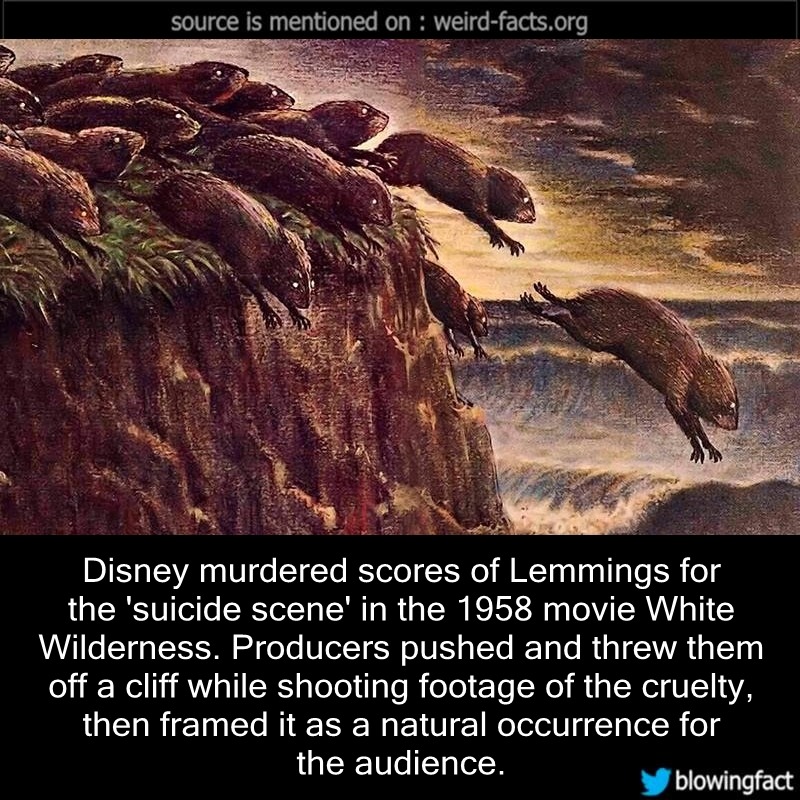
The lie of Disney’s lemming suicide documentary is largely forgotten in the 21st century. Disney implied overpopulation leads to a deep-rooted impulse to compel millions of lemmings to jump off a cliff to their death. She notes the documentary is a staged lie. The only truth is that scarcity and fear compel animals to migrate. There is no mass instinct for death. There is only an instinct for species survival.
Shah notes the fundamental motivation for migration is survival. Whether writing about butterflies or human beings, the animal kingdom chooses to migrate because of changes in their environment that degrade their way of life. It is not an easy choice to move.
Shah explains humans fear change. One imagines what it is like for a young adult to move to a foreign country that speaks a different language, is exposed to a different culture, knows only a few fellow countrymen, and is thrown into a job market that makes or breaks their future.
Shah correctly identifies the idiocy of Trump’s classification of migrants that are “…bringing drugs, they’re bringing crime, they’re rapists, and some, I assume, are good people”.
That is true of all people in the world, whether American or foreign born. Human nature “…is what it is” as Trump’s callous comment about Covid19 deaths reiterates.
A young person may have left his home country because of economic, environmental, or political changes that threatens life, but it is a life he/she understands. Shah notes, that is the “…Terror of Life on the Move”.
Though it is cliché—America is founded by migrants. Even Trump’s parents were migrants. Shah’s parents are doctors from India that migrated and made a life in America in ways that serve the needs of their new home. They gave birth to an American-born daughter who has contributed to America’s understanding of migration’s beauty and terror. Migrants are not America’s burden. They are America’s hope.
Buckminster Fuller (1895-1983, American architect, systems theorist, author, futurist.)
Shah’s purpose in “The Next Great Migration” is not to solve the world’s problems but to explain all life migrates to survive. As Buckminster Fuller noted, we live on “Spaceship Earth”. Human life on “Spaceship Earth” depends on how humans are treated if we are destined to survive.
Narrated by Cassandra Campbell, Adenrele Ojo, Hilliary Huber, Ramiz Monsef, Kate Reading, R.C. Bray
Joan Silber (Author, winner of the 2017 National Book Critics Circle Award in Fiction and the Pen/Faulkner Award for Fiction for her book “Improvement”.)
“Improvement” is a compilation of characters in the formative years of their early adult lives.
The primary character is Reyna who lives in Harlem, New York. It is a story of her life and the lives of several who are in that age group. All characters in the novel are directly or indirectly connected to Reyna. None are “movers and shakers” of the world, but each represent what life is like for many young adults in the 21st century.
Reyna is a single mother with a young son named Oliver, and a boyfriend who is not the son’s father.
The boyfriend, Boyd, is serving time in prison for drug possession. Her attachment to Boyd comes from personal attraction but is cemented by Boyd’s attention to her son. The four-year-old idolizes Boyd.
Boyd also lives in Harlem. Reyna is white. Boyd is black. They are both living on the edge of poverty. Reyna is a secretary at a veterinary clinic.
Cigarette Smuggling in New York
After being released from prison, Boyd and friends decide to become smugglers by buying cigarettes in Virginia and selling them in New York.
The cigarette tax difference between States goes into the pockets of smugglers. If caught, they are fined and put in jail. This illegal activity, either directly or indirectly, sets events in motion that affect all the characters in Silber’s story.
Reyna is called upon to drive the smuggler’s transport truck when their regular driver is unavailable.
Reyna initially agrees but at the last moment decides she cannot make the trip because of her responsibility as a parent. She fears being arrested and having her son taken from her. Claude, one of the smugglers, says he will drive even though he has little experience driving, and no experience driving a truck. Claude also has no driver’s license.
On the trip to Virginia, the truck is t-boned by a commercial truck driver. Claude is killed, others are permanently injured.
The result of the accident is to reveal more information about everyone in the accident and people who are affected by the death of Claude. Claude had found a girlfriend in Virginia. She knows nothing of the accident and wonders why Claude has not contacted her. Claude’s sister is heartbroken by his death.
Claude’s girlfriend meets someone else to replace her affection for Claude. Reyna feels guilty for Claude’s death. Boyd breaks up with Reyna. Reyna’s son misses Boyd. The commercial driver becomes deeply in debt to repair his truck. The consequence of the accident reaches into the details of many lives. Claude’s sister leaves Harlem with money she unknowingly received from Reyna who feels guilty for Claude’s death. Claude’s sister starts her own business in Philadelphia.
One draws conclusions about life from Silber’s story. Seemingly unrelated events have consequences beyond one’s knowledge.
This is a story of people at the bottom of America’s economic ladder but what is true for the poor is true for all humanity. Everyone’s life is affected by what happens to others.
Empathy will not cure the ills of society, but knowledge of life’s interconnection offers hope for life’s “Improvement”. Silber shows how all human actions have consequence. One cannot predict the consequence of one’s actions, but Silber implies moral actions offer a chance for human “Improvement”.
David Auerbach (Author, software engineer, writer for various publications.)
David Auerbach wishes not to be categorized. However, Auerbach is an author, ivy league graduate, computer geek, software coder, gamer, philosopher, and more. The point is categorization does not explain the real Auerbach. Auerbach offers a wide-ranging conception of what is real and not real in the world.
Auerbach criticizes categorization because it is fictive. His example is the wrong-headed categorization of sexuality. What social or cultural value can come from such categorization? Auerbach notes at one point Facebook insists users identify their sexual predilection from a list of hundreds of categories.
Auerbach pursues the concept of what is real in “Bitwise”. He fails to clearly define real but identifies what real is not. Real is not simply what the mind’s eye beholds and it is not the mathematics of reproducible experiment. There is a concreteness to real in Auerbach’s belief. However, real remains a mystery because it is to be revealed in a future not yet written.
To Auerbach, real lies somewhere within the triptych of human’ thought, mind, and language.
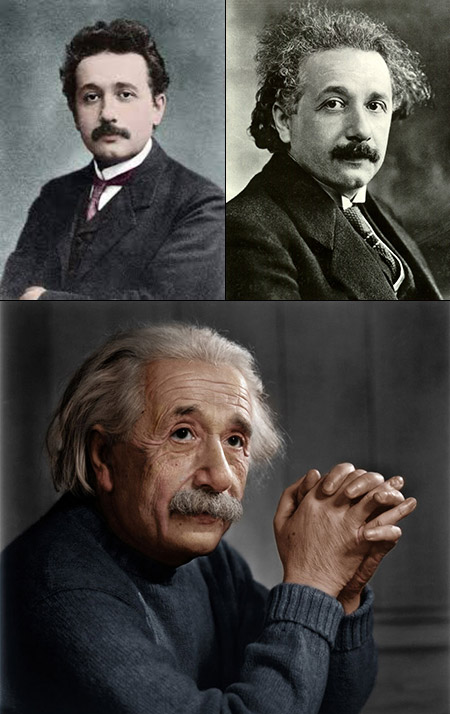
Auerbach’s philosophical argument for real is partly supported by the evolution of scientific understanding of the world. Newton discovered a partial truth about the physics of moving bodies. Einstein expanded Newton’s partial truth with a more comprehensive understanding of space and time. Einstein’s truth is changing with the discovery of quantum mechanics. All of these discoveries came from the interplay of human’ thought, mind, and language. This triptych gives concreteness to what is real.
SIR ISAAC NEWTON (1642-1727)ALBERT EINSTEIN (1879-1955)
Auerbach questions the advance of software algorithms as a method for finding truth about what is real. An algorithm is only a tool of human’ thought, mind, and language. Auerbach infers there may be a time when a computer becomes more human with the ability to define reality but not until they are more than algorithmic machines. That, of course, raises many more questions.
An algorithm is a set of calculations meant to define reality or conduct problem solving operations when in fact they neither define reality nor solve anything.
A revelation one has from Auerbach’s “Bitwise” is that gamers have become important to a younger generation because algorithms offer insight to the concreteness of existence. One can experiment with life’s outcomes without consequence in the real world.
Auerbach gives the example of a gamers use of a nuclear war game to show how world diplomacy decisions lead to world conflagration. Early versions are refined but remain blunt predictive instruments that only mimic human’ thought, mind, and language.
In his early career, Auerbach’s software experience comes from working with Microsoft. He suggests the stewardship of Balmer diminished Microsoft’s innovative history. Auerbach leaves Microsoft to join Google. He finds Google to be a more cutting-edge software developer by recognizing the value of data gathering and mining.
“Bitwise” is a clarion call to the public. Big Brother is here. It has the face of Google and the power of a nation-state.
The near future is dependent on software coding. The long future is dependent on human’ thought, mind, and language.
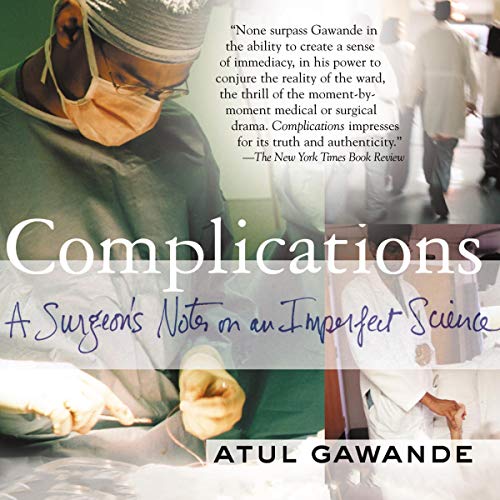
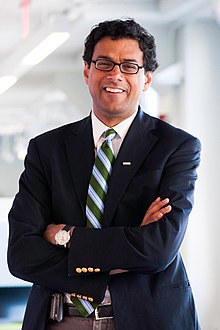
Several years ago, “Being Mortal” was reviewed with appreciation of what the author had to say about a doctor’s responsibility for improving the quality of life for the elderly and terminally ill. Atul Gawande reinforces the double meaning of “Being Mortal” in his “Complications…Notes on the Imperfect Science”.
Gawande explains doctors are not superhuman beings. They are well-educated mortals that practice medicine with the intent of making the right decisions through attentive communication with patients.
Knowledge from teachers and practitioners is helpful but it is through practice on patients that doctors become proficient for those needing help. Gawande’s reflective words “practice on patients” are frightening to one who’s life is threatened by injury or disease.
Gawande notes decisions are not based on omniscience but on a doctor’s education and experience.
Gawande offers notes on the imperfect science of medicine. He explains why even the most conscientious physicians, let alone bad practitioners, make mistakes. To become a skilled physician, as with any skill, requires practice. The monumental difference is medical practice directly affects human lives. Other professional practices are indirect.
The compounding difficulty of the science of medicine is that even the most experienced physicians make mistakes. It may be because of missed diagnosis or motivations inherent in human nature (the drive for wealth, power, or prestige) but it is always at the expense of a patient.
Gawande reflects on the intuitive nature of medicine by telling the story of the fire captain that tells fellow fire fighters to leave a building when he senses the building is going to collapse (an anecdote also told in “Thinking Fast and Slow”). An experienced doctor often must rely on the same sense and can be perfectly right or catastrophically wrong.
Gawande tells the story of a young woman who is diagnosed with cellulitis in a leg that is swollen and inflamed. The attending physician asks Gawande to look at the patient to confirm the diagnosis.
Gawande questions the patient about how she might have acquired the infection. He suspects it may be from a rare flesh-eating virus even though all the symptoms are consistent with cellulitis which can be easily treated with antibiotics. Gawande suggests a biopsy and the diagnosis is changed. It is found to be to the rare flesh-eating virus. It is Gawande’s intuition that leads to treatment that successfully saves the young woman’s life.
A medical patient listening to Gawande appreciates his candor but fears the truth of human fallibility of a profession one relies upon.
Most realize all humans make mistakes. What is disconcerting is the lack of disclosure by many physicians and the doubt raised by Gawande in some doctor’s veracity in seeking what is best for their patients.
Gawande explains some organizational methods used to minimize mistakes and modify future medical practices. However, public disclosure of those mistakes (particularly regarding specific doctors and hospitals) is largely undisclosed.
Gawande is challenging his profession to do better. To that, the public should be grateful.



















































 REVIEWS AND VIEWS OF LIFE